TopPodcast.com
Menu
  • Home
  • Top Charts
  • Top Networks
  • Top Apps
  • Top Independents
  • Top Podfluencers
  • Top Picks
    • Top Business Podcasts
    • Top True Crime Podcasts
    • Top Finance Podcasts
    • Top Comedy Podcasts
    • Top Music Podcasts
    • Top Womens Podcasts
    • Top Kids Podcasts
    • Top Sports Podcasts
    • Top News Podcasts
    • Top Tech Podcasts
    • Top Crypto Podcasts
    • Top Entrepreneurial Podcasts
    • Top Fantasy Sports Podcasts
    • Top Political Podcasts
    • Top Science Podcasts
    • Top Self Help Podcasts
    • Top Sports Betting Podcasts
    • Top Stocks Podcasts
  • Podcast News
  • About Us
  • Podcast Advertising
  • Contact
Not in our directory?
Add Show Here
Podcast Equipment
Center

toppodcastlogoOur TOPPODCAST Picks

  • Comedy
  • Crypto
  • Sports
  • News
  • Politics
  • True Crime
  • Business
  • Finance

Follow Us

toppodcastlogoStay Connected

    View Top 200 Chart
    Back to Rankings Page
    Courses

    Speech and Language Kids Podcast

    The Speech and Language Kids Podcast is BACK and better than ever! Learn how to treat communication challenges in children without losing yourself in the process. Speech-language pathologist Carrie Clark shares her best tips, tricks, and strategies to help children improve their communication skills in all areas: speech, articulation, phonology, language, literacy, social communication, stuttering, voice, AAC, functional communication, and more! Plus, Carrie will walk you through the best ways to save time and streamline what you do so your clients make faster progress and you can be more effective in less time (and stop taking work home)! Listen to the live recordings inside The Hub at Hub.SpeechAndLanguageKids.com

    Advertise

    Copyright: © Copyright: Speech and Language Kids 2013

    • Apple Podcasts
    • Google Play
    • Spotify

    Latest Episodes:
    Speech Therapy for Non-Verbal Children: Building Functional Communication Apr 11, 2016
    Show notes

    Therapy for Non-Speaking Children: How to Boost Functional Communication Skills

    Do you know a child with autism who isn’t able to communicate basic wants and needs? Does the child lack the social skills to participate in social interactions? Do you need a guide for how to improve functional communication in a young child with autism?

    Well don’t you worry, you’ve come to the right place! I’m going to show you the top four skills to start targeting to improve functional communication in a young children with autism or suspected autism. Let me show you what those four skills are and how to work on them. Click “play” on the player below to hear the entire episode, or scroll down to get the show notes below.

    AAC Curriculum for Speech/Language Therapy

    AAC Curriculum and Mini-Course

    Teach a child to start communicating using an AAC/Communication Device or System

    $19 ~ Buy Now!

    Non-Speaking Therapy 1:
    Establishing a Functional Communication System

    All children have the right to communicate. No disorder, disease, or physical limitation should be able to take that right away from them. For that reason, it is our obligation to make sure that all children with autism have SOME way to communicate with us. Speaking may be too hard for them so sometimes we need to come up with other ways of helping them communicate. Here’s how we can do that:

    Step One: Will Speech Work?

    The first thing that we need to consider for a non-verbal or minimally-verbal child with autism is whether or not speaking is real option for them. We can do this by asking the child to imitate basic speech tasks, like saying words or making sounds. If the child is able to say words or make sounds in order to get something that he or she really wants, then we can say that speaking is definitely the best way to go to help that child communicate with us. Speech is always the first option and we would love for all of our students with autism to speak to us. However, some children simply aren’t able to talk right now, but that doesn’t mean that we give up on them and don’t provide them with an alternative. If speech isn’t a viable option for the child you’re working with, move on to step two:

    Step Two: Find an Alternative Means

    Options for AAC Devices, Methods,
    and Systems:

    • Gestures/Body Language
      When the child uses natural gestures or body language to communicate with those around him. This often happens naturally but may need to be taught if the child isn’t even doing this.
    • Sign Language
      A formal sign language is used where the child forms signs with his hands that convey meaning. These signs are used by the child as well as by the adults who are
      communicating with the child.
    • Object Symbols
      Simple objects or small 3D models of objects are glued to cards or a board. The child then touches the object that represents what he wants. This is ideal for children with vision or cognitive problems.
    • Picture Boards
      The child is given a simple board with a selection of pictures. The child touches the picture that represents what he wants.
    • Picture Exchange
      The child hands a picture that represents what he wants to the communication partner.
    • Written Messages:
      The child writes or types a message on paper or on a computer/screen.
    • Single Button Voice-Output Devices
      The child is presented with a single button. When the button is pushed, a single message is spoken out loud (pre-recorded).
    • Multi-Button Voice-Output Devices
      The child is presented with a device that contains several buttons. Each button represents a different communication intent and the student pushes the button to hear the message.
    • Dynamic-Display Voice-Output Devices
      The child is presented with a device that has a touch screen full of buttons. When the child pushes a button, a message is spoken or the entire screen changes to present different buttons based on the one pushed.

    Step Three: Teach the AAC Method

    Once you’ve found what works, use these steps to teach it:

    How to Help a Child Use AAC at Home or in the Classroom (Hint: It’s easier than you think!)

    1. Get Familiar with the Child’s Device
    2. Model use of the device around the child
    3. Encourage the child’s exploration of and attempts to use the AAC
    4. Have the device present at all times
    5. Set up opportunities for the child to use the device
    6. Get all adults on board

    Non-Speaking Therapy Part Two:
    Following Simple Directions

    Click Here to Learn More about Teaching Following Directions

    1. Make a list of common directions given to the child throughout the day
    2. Take/Make pictures of those directions
    3. Teach each direction individually
    4. Work those directions into daily routines using picture cues
    5. Fade the picture cues
    6. Work on following directions with more than one step

    Non-Speaking Therapy Part Three:
    Improving Imitation Skills

    1. Start with imitation of easy, whole-body actions. Reinforce with highly preferred objects or activities
    2. Work on more complex actions like fine motor, speech/communication, or play (depending on what the child needs to work on)
    3. Work imitation into daily, functional activities

    Non-Speaking Therapy Part Four:
    Basic Turn-Taking and Requesting

    1. Help the child take turns with adults by helping the child say or use AAC to communicate “my turn” when it’s the child’s turn
    2. Increase the amount of time that the child will tolerate the adult having the item and get the child to communicate “my turn” independently
    3. Introduce turn-taking with another child including handing it over when the other child says “my turn” (or saying “in a minute” for older children)
    4. Work on games that require each player to wait for a turn and work on knowing whose turn it is
    AAC Curriculum for Speech/Language Therapy

    AAC Curriculum and Mini-Course

    Teach a child to start communicating using an AAC/Communication Device or System

    $19 ~ Buy Now!Carrie Clark, Speech-Language Pathologist

    About the Author: Carrie Clark, MA CCC-SLP

    Hi, I’m Carrie! I’m a speech-language pathologist from Columbia, Missouri, USA. I’ve worked with children and teenagers of all ages in schools, preschools, and even my own private practice. I love digging through the research on speech and language topics and breaking it down into step-by-step plans for my followers.

    Connect with Me:

    The post Speech Therapy for Non-Verbal Children: Building Functional Communication appeared first on Speech And Language Kids.


    Communication Repair Strategies ~ Speech Therapy Activities Mar 13, 2016
    Show notes

    Communication Repair Strategies ~ Speech Therapy Activities

    “What did you say?”

    “You did what?”

    Sometimes a conversation breaks down and we have to find ways to repair it.

    But this can be a hard skill to learn!

    On this page, we’ll give you a list of communication repair strategies that you can teach children and teens to use during communication breakdowns. Plus, we’ll show you how to teach these strategies in speech therapy.

    Conversational Skills Curriculum for Social Skill Therapy

    Conversational Skills Curriculum

    A Structured Program for Teaching Conversational Skills to Children and Teens

    View the Conversation Curriculum

    What are Communication Repair Strategies?

    “Communication Breakdown” is what we call it when something goes wrong in a conversation and there is a misunderstanding. Our communication can break down for a number of reasons but most of the time, we are able to clarify the confusion and keep going.

    “Communication Repair Strategies” are the techniques we use to fix the conversation so that everyone is on the same page again.

    Children with communication challenges or social interaction difficulties may have trouble with this. They may not recognize that the communication has broken down. Or they may not know how to get it back on track once they’ve lost the thread.

    We can help children learn to recognize and repair the communication by teaching them this skill directly.

    Speech Therapy for Communication Repair Strategies:

    Below are the steps for teaching communication repair strategies in speech therapy or at home.

    Step 1: Introducing Communication Repair Strategies

    • Ask students what “communication breakdown” and “communication repair strategies” means and what they normally do when it happens. Ask for some common reasons that communication breakdowns happen.

    Step 2: List Communication Repair Strategies

    • Students talk first about how to recognize when a communication breakdown has occurred. List out the signs that someone is confused.
    • Next, outline several strategies that the students can use when a breakdown occurs. Have the students come up with as many ideas as they can and then add your own (see above)

    Step: Practice Communication Repair Strategies

    • Start with recognizing pictures of people as confused or not. When the students are able to do this in pictures, give them a buzzer (or the buzzer app on your smart phone or tablet) and tell them to buzz in whenever they notice that you look confused. Hold a small conversation and unexpectedly look confused to help them recognize it. Stay on this step until they can do it (may be several sessions)
    • Analyze social scenarios to determine when a communication breakdown has occurred. Use activities that target topic maintenance to identify when someone says something that doesn’t make sense with what was already said. Once the student can do this with given situations, hold a conversation with the student and unexpectedly say something completely off topic to indicate the communication breakdown and have the students buzz in to indicate they heard it. Stay on this step until able to do this.** Need some practice scenarios? Our SLK Curriculum has an AI-Powered Social Scenario Generator! It will create endless social scenarios for you to use for discussions and role play!
    • Have students purposefully practice each communication breakdown strategy in a staged conversation (use scripts if needed).
    • During normal conversation, stop students when you didn’t understand something and ask them which strategy would be best to try to fix the breakdown.
    • Once the student can demonstrate all strategies on command and can list of the strategies on command, start pointing out opportunities in normal conversation when a breakdown occurred and help the student repair it.

    Step 4: Assign Homework to Use Communication Repair Strategies

    • At the end of each session, assign the student to write one journal entry explaining a time that he practiced the skill from that day or a time that communication broke down and he wasn’t able to fix it.

    Step 5: Review Use of Communication Repair Strategies During your Next Session

    • During the next session, have the students read their journal entries and discuss what went well and troubleshoot what went wrong as a group.

    A Structured Program for Teaching Conversational Skills

    I know you don’t have a lot of free time.

    That’s why I’ve already created an entire program to teach communication repair and other conversational skills.

    Grab our Conversational Skills Curriculum inside the SLK Curriculum.

    You’ll also get access to our social scenario generator for creating custom practice scenarios during your sessions.

    Conversational Skills Curriculum for Social Skill Therapy

    Conversational Skills Curriculum

    A Structured Program for Teaching Conversational Skills to Children and Teens

    View the Conversation Curriculum

    Listen to the Podcast Version Here:

    Carrie Clark, Speech-Language Pathologist

    About the Author: Carrie Clark, MA CCC-SLP

    Hi, I’m Carrie! I’m a speech-language pathologist from Columbia, Missouri, USA. I’ve worked with children and teenagers of all ages in schools, preschools, and even my own private practice. I love digging through the research on speech and language topics and breaking it down into step-by-step plans for my followers.

    Fun Fact: I sunburn very easily, it’s kind of ridiculous. I have to be very careful when out in the sun, especially if we travel South at all.

    Connect with Me:

    The post Communication Repair Strategies ~ Speech Therapy Activities appeared first on Speech And Language Kids.


    Improving Summarizing Skills in Children Through Literacy Feb 08, 2016
    Show notes

    Improving Summarizing Skills in Children through Literacy Instruction

    Today, speech-language pathologist Carrie Clark explains how to help a child learn to summarize an event or story through the use of literacy activities. Listen below!

    Free activity main idea and supporting details worksheets

    Free Activity: Main Idea and Details

    Get the 4-page workbook for teaching main idea and details

    Download for Free!

    Or, Get the Full Language for Literacy Curriculum

    Show Notes:

    Step One: Teach Main Idea

    • Click Here to See How to Teach Main Idea

    Step Two: Sequencing Two Events from a Picture Book

    • Get a simple children’s book that has pictures and at least two main events
    • Read the story to the child
    • Give the child two events to choose from and ask which happened first and which happened last (which happened first? Did she vacuum the floor or go to the store first? Ok, so which one happened last)
    • Have the child retell the two events in order
    • If the child is able to write, have him write the main idea as a single sentence and then write two more sentences, one for each of those two events. Help the child use transition words like “first” and “last”.

    Step Three: Sequencing Pictures of 3-5 Events from a Picture Book

    • Get a picture book that has at least 3-5 events (depending on the difficulty level the child is ready for)
    • Take pictures of 3-5 events from that book and print them out so you can show the child the pictures individually
    • Read the book to the child
    • Bring out the pictures and mix them up. See if the child can put them in the correct order based on how they happened in the story
    • Have the student verbally tell you the events in order while looking at the pictures

    **For younger children, work on taking the pictures out and summarizing the story without seeing the pictures. This is a good place to stop for younger children.

    Step Four: Pulling Important Details from a Story and Sequencing Them

    • Get a developmentally-appropriate story (maybe a bit on the easy side) and a piece of paper
    • Read the story with the child
    • Have the child identify the main idea and write it at the top of the paper
    • Have the child recall important details from the story and write them on the paper in circles or bubbles. They don’t need to be in order at this time.
    • Once he has all of the important details written down, have him number them in the order they occurred. Have the child use the book as a guide if needed.
    • Pull out another piece of paper and have the student write one sentence that includes the main idea. Then, have the student write sentences to summarize all of the main details from the story (in order)

    Step Five: Is it Too Long?

    • Pull out the child’s final piece of work from the last step. Ask the child if the summary is too long. If the summary is close to the length of the original story, it’s definitely too long. Otherwise, it’s really a judgement call.
    • If the story is too long, have the student go through and cross out less important details or combine details where possible to make the story shorter
    • Have the student re-write the story

    **At this point, you can work on having the student summarize events and stories verbally since he knows the entire process now (if that’s one of his goals)

    Free activity main idea and supporting details worksheets

    Free Activity: Main Idea and Details

    Get the 4-page workbook for teaching main idea and details

    Download for Free!

    Or, Get the Full Language for Literacy Curriculum

    The post Improving Summarizing Skills in Children Through Literacy appeared first on Speech And Language Kids.


    Working Smarter to Help Children with Speech and Language Skills Jan 11, 2016
    Show notes

    Learn how to reduce burn-out and stress whether you’re a speech therapist or a parent of a child with speech and language delays. (Episode 55 of the Speech and Language Kids Podcast)

    Manage Your Time

    Parents:

    • Break practice sessions up into small chunks. 5 minutes in the morning and 5 at night is perfect
    • Set a timer or visual checklist so your child knows how much is needed to do before he can be done https://itunes.apple.com/us/app/choiceworks/id486210964?mt=8
    • Don’t feel like you have to nag your child on his speech skill all day long, just work on it during practice sessions

    Therapists:

    • Break up those crazy groups into 5-minute individual sessions: https://www.speechandlanguagekids.com/5-minute-speech-therapy-how-long-should-speech-therapy-sessions-last/
    • Use text expanders for reports and notes: www.phraseexpress.com or https://smilesoftware.com/textexpander
    • Make home communication easier:
    Download the “What We Are Working On In Speech” Handouts for Free!

    Prepare your Environment

    Parents:

    • Choose one part of the house that will be your spot for doing speech. You can do other stuff in that spot as well but try to always do speech there.
    • Get a tub or caddie and put everything you need to do speech in that one spot. Make sure everything goes back in there when you’re done.
    • Reduce distractions during “speech time”. Turn off the TV, radio, and other electronics and try to get one-on-one if possible

    Therapists:

    • Tidy your office when you walk in the door each day. A tidy office will help you stay calm and organized throughout the day.
    • Consider de-cluttering and re-organizing your space: https://www.speechandlanguagekids.com/declutter-and-organize-your-speech-therapy-space/
    • Turn off harsh overhead lights and bring in calmer lighting like lamps and natural sunlight

    Keep Track of Your Progress

    Parents:

    • Take a recording of your child when he/she first starts speech (or as soon as you think of it if he’s already started). Just have a normal conversation with your child and record it. Every once in a while, go back and listen to see how far your child has come.
    • Every once in a while, take data on 10 trials of your child’s homework. Compare these numbers or graph them on a bar graph so you can see the progress your child is making.
    • At the end of each week, write a win for your child’s communication on a piece of paper and put it in a jar. At the end of the year (or whenever you need a boost), get those back out to see all the AWESOME stuff your child has done

    Therapists:

    • Make a memory board:

    Memory Board Pic

    • Add to your win jar every day
    • Take recordings of your students when they first start speech and play those at their parent teacher conferences or IEPs to show parents the progress!

    Find Pre-Made Activities to Make Planning Easier

    Parents:

    • Ask your child’s therapist to send homework home
    • Check out the free resources on Speech and Language Kids plus the Speech and Language Therapy Guide
    • Home Speech Home has some good stuff as well: http://www.home-speech-home.com/speech-therapy-activities.html

    Therapists:

    • Check out the free resources on Speech and Language Kids plus the Speech and Language Therapy Guide
    • Teachers Pay Teachers has a bunch of great stuff made by speech therapists

    More Resources for Speech-Language Pathologists:

    Looking for more therapy ideas and resources to help you provide the BEST services to your clients? Join us in The SLP Solution, our membership program for speech-language professionals! Inside the membership, you’ll find:

    • Step-By-Step Guides for teaching a variety of speech/language/communication skills
    • Pre-Made Worksheets and Therapy Activities for hundreds of different topics
    • Training Videos for dealing with difficult disorders or problems
    • Answers to Your Questions in our exclusive SLP community
    • Tools and Resources to help you with your paperwork and admin tasks
    • Continuing Education through our monthly webinars and webinar recordings

    To join us in the full SLP Solution, or to snag a free membership, click on the button below!

    JOIN THE MEMBERSHIP TODAY!

    The post Working Smarter to Help Children with Speech and Language Skills appeared first on Speech And Language Kids.


    Articulation and Phonological Therapy Approaches: How to Choose Nov 09, 2015
    Show notes

    Articulation Therapy or Phonological Therapy: Which Therapy Approach to Use

    Which therapy approach should you use when a child struggles to say sounds correctly?

    Articulation Therapy Approach?

    Phonological Therapy Approach?

    Something else?

    This page will explain the difference between an articulation therapy approach and a phonological therapy approach (along with a few others). We’ll also help you decide which approach is right for each client you work with.

    The Hardest Sounds: /r/, /s/, and “sh”

    Therapy Program + Mini-Course:
    Strategies and materials for teaching the /r/, /s/, and “sh” sounds

    $19 ~ Buy Now!

    Speech Sound Screening Checklist:

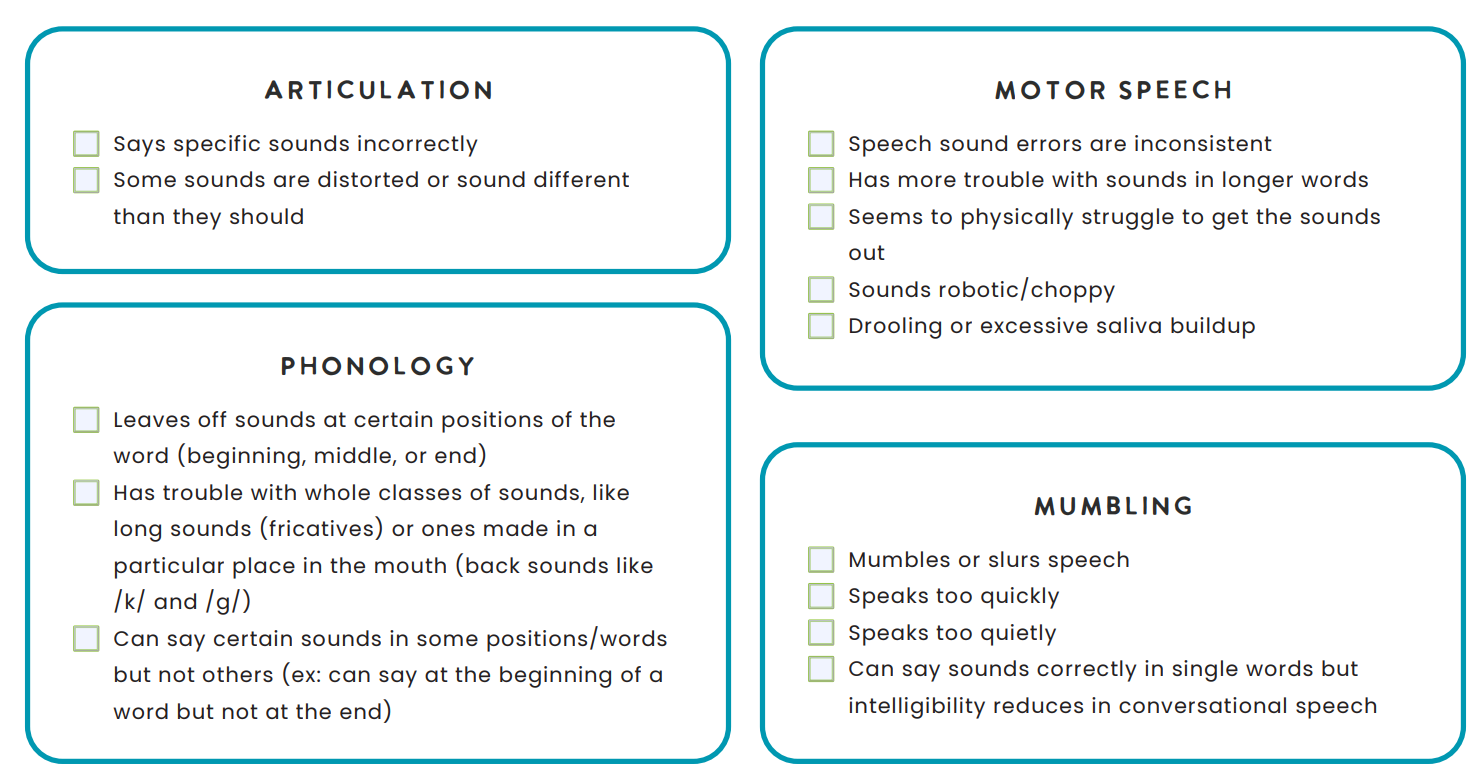
    There are four main approaches to working on speech sounds with children and teens.

    Use the following checklist to determine which path is most appropriate for each client:

    Speech Sound Screening Checklist for Speech TherapyDownload the Printable Screening Checklist Inside our Curriculum

    Articulation Therapy Approach

    Choose this if the individual has difficulty with specific speech sounds, producing them incorrectly or with noticeable distortions.

    This is the best pathway for traditional sound-by-sound therapy.

    In articulation therapy, we focus on teaching children how to produce individual speech sounds correctly, starting with isolated sounds and gradually working up to using them in words, sentences, and conversation. This structured approach helps build muscle coordination and sound awareness, making speech clearer and more intelligible over time.

    Choose the Articulation Therapy Approach if the Individual:

    • Says specific sounds incorrectly
    • Has certain sounds that are distorted or sound different than they should (such as a lisp)
    articulation curriculum for speech therapy

    Articulation Curriculum

    A Structured Program for Using the Articulation Approach to Speech Therapy

    View the Articulation Curriculum

    Phonological Therapy Approach

    • For children who have phonological processes, or problems with entire classes of sounds
    • These children are often difficult to understand due to many sound errors
    • All children use phonological processes up to certain ages but they disappear between 3-5 years
    • Therapy differs from articulation because you don’t start with sounds in isolation, you start with minimal pairs of whole words to show the difference between the correct production and the child’s error
    • Therapy Phases: Auditory discrimination, production at the single word level, phrase, sentence, unstructured conversation, structured conversation
    Phonology Curriculum for Speech Therapy

    Phonology Curriculum

    A Structured Program for Using the Phonological Approach to Speech Therapy

    View the Phonology Curriculum

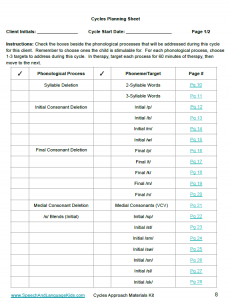
    Cycles Therapy Approach to Phonology

    • For children who meet the following criteria:
      • Highly unintelligible (very difficult to understand)
      • Frequently leave out or omit speech sounds
      • Replace some sounds with other sounds
      • Don’t use very many different consonant sounds
    • Instead of working on one phonological process until it is mastered, the children works on each process for a few sessions before moving on to the next. Then, processes are cycled through and targeted again
    • This approach is supposed to mirror typical phonological development

    Click Here to Learn More About Using the Cycles Approach

    Cycles Approach to Phonology Curriculum for Speech Therapy

    Cycles Approach Materials and Course

    A Structured Program for Using the Cycles Approach to Phonology

    View the Cycles Curriculum

    Motor Speech Therapy Approach

    Motor speech disorders, such as childhood apraxia of speech (CAS) and dysarthria, affect a child’s ability to plan, coordinate, and produce speech sounds accurately. Unlike articulation or phonological disorders, which stem from difficulties with specific sounds or patterns, motor speech disorders are rooted in challenges with motor planning, sequencing, and execution of movements needed for clear speech. These difficulties can result in inconsistent speech errors, trouble producing longer words, difficulty transitioning between sounds, and even physical struggle during speech production.

    Intervention for motor speech disorders focuses on building motor planning skills, increasing speech accuracy and consistency, and supporting smooth and natural speech movements. Therapy in this pathway follows a structured, motor-based approach that emphasizes repetition, multisensory cueing, and carefully sequenced speech practice. Unlike traditional articulation therapy, which focuses on individual sounds, motor speech therapy targets the movement between sounds to improve speech fluency and intelligibility.

    Free CV, VC, CVC, CVCV Flashcards and Worksheets

    Free Flashcards: CV, VC, CVC, CVCV Words

    Practice cards and worksheets for children with Apraxia and other motor speech disorders

    Download for Free!

    Or, Get the Full Motor Speech Curriculum

    Mumbling Therapy Approach

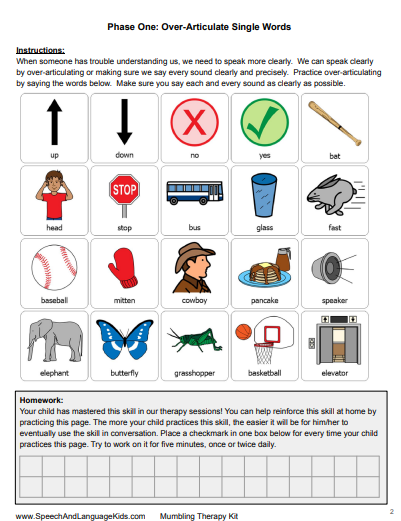
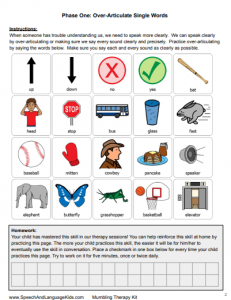
    Mumbling occurs when speech is unclear, slurred, or too quiet, making it difficult for others to understand. Children who mumble may drop sounds, speak too quickly, or fail to fully articulate words, often without realizing it. While their speech may technically be correct, the lack of clarity, volume, or articulation can interfere with communication, leading to frustration in academic and social settings.

    The goal of this Curriculum is to help children recognize when their speech is unclear and develop strategies to improve clarity and volume. Unlike articulation or phonology therapy, which focuses on correcting specific speech sound errors, mumbling therapy targets overall speech clarity, awareness, and self-monitoring. This process involves intentional over articulation, cued corrections, and ultimately independent self-correction in conversation.

    Mumbling Curriculum for Speech Therapy

    Mumbling Curriculum

    A Structured Program for Helping Children and Teens who Mumble

    View the Mumbling Curriculum

    Other Speech Sound Therapy Approaches

    • Core Word Therapy Approach: Good for children with very severe speech problems (like severe childhood apraxia of speech) or those with limited attention for drill and practice. Also helpful for children who make very slow progress in speech or who only say a few words because of their speech problemsA short list of common words that the child mis-pronounces is assembled

      These words are practiced in isolation and then the child gets to play with whatever he wants (as long as he will talk with the therapist). When those words come up in conversation, they are practiced with correct production

    • Contextual Utilization: Pair the target sound in syllables with other sounds that will make it easier for the child to produce it (For example, production of a “t” may be facilitated in the context of a high front vowel)
    • Minimal Oppositions Contrast Therapy: also known as “minimal pairs” therapy, uses pairs of words that differ by only one phoneme or single feature signaling a change in meaning, in an effort to establish contrasts not present in the child’s phonological system
    • Maximal Oppositions Contrast Therapy: uses pairs of words in which one speech sound known and produced by the child is contrasted with a maximally opposing sound not known or produced by the child
    • Treatment of the Empty Set: similar to maximal opposition contrasts, but uses pairs of words containing two maximally opposing sounds that are unknown to the child—ideally, an obstruent with a sonorant (e.g., /l/ vs. /s/
    • Multiple Oppositions Contrast Therapy: a variation of the minimal opposition contrast approach that uses pairs of words contrasting a child’s error sound with three or four strategically selected sounds that reflect both maximal classification and maximal distinction
    • Distinctive Feature Therapy: Target distinctive features that are missing in the child’s repertoire (frication, nasality, voicing, and place of articulation)
    • Metaphon Therapy: Metaphon therapy is designed to teach metaphonological awareness, the awareness of the phonological structure of language. You teach the child about phonological rules, like the difference between noisy and quiet sounds for voiced vs. voiceless
    • Naturalistic Speech Intelligibility Intervention: During natural activities, the child’s errors are recast when the child is most likely to repeat them but the child is not demanded to do so

    More Information on the Additional Approaches Here: https://www.asha.org/practice-portal/clinical-topics/articulation-and-phonology/#collapse_6

    The Hardest Sounds: /r/, /s/, and “sh”

    Therapy Program + Mini-Course:
    Strategies and materials for teaching the /r/, /s/, and “sh” sounds

    $19 ~ Buy Now!Carrie Clark, Speech-Language Pathologist

    About the Author: Carrie Clark, MA CCC-SLP

    Hi, I’m Carrie! I’m a speech-language pathologist from Columbia, Missouri, USA. I’ve worked with children and teenagers of all ages in schools, preschools, and even my own private practice. I love digging through the research on speech and language topics and breaking it down into step-by-step plans for my followers.

    Fun Fact: At the last ASHA convention I went to, I purchased a double-wide booth so I could fill it with inflatable lounge chairs and phone chargers to create a hangout space. Did you see me there???

    Connect with Me:

    The post Articulation and Phonological Therapy Approaches: How to Choose appeared first on Speech And Language Kids.


    Social Skills Lessons for Middle School | Speech Therapy Goals and Activities Oct 15, 2015
    Show notes

    Social Skills Lessons for Middle School | Speech Therapy Goals and Activities

    What social skills should middle school students have?

    What can we do to help 11-14 year-olds who are struggling with social skills?

    What are some social skill lessons for middle school that we can use in speech therapy or in the classroom?

    On this page, we’ll show you what social skills to work on with middle school students. We’ll include sample goal ideas, activities, and lesson plans.

    Social Communication Curriculums for Speech Therapy

    Social Communication Curriculums

    Structured, No-Prep Programs for Teaching Social Skills to Middle School Students

    View the Social Communication Curriculums

    How to Teach Social Skills to Middle School Students:

    Many of our children with language delays also have trouble with social skills.  This may be due to certain conditions that impair social skills, like autism, or it may just be because these children have trouble learning language and social interactions rely heavily on language skills.  Whatever the cause, one of the best ways to help improve social skills is through the use of social skills groups.  Doing social skills training in a group setting allows children to practice new skills with their peers instead of just talking about them theoretically.  Practice is crucial for these children to actually be able to use those skills in real life.

    However, knowing exactly how to run a social skills group can be tricky.  I’m going to present you with some great social skills activities for middle schoolers (ages 11-14 years).

    Listen to the Social Skills for Middle Schoolers Podcast:

    What Social Skills Should Middle School Students Learn?

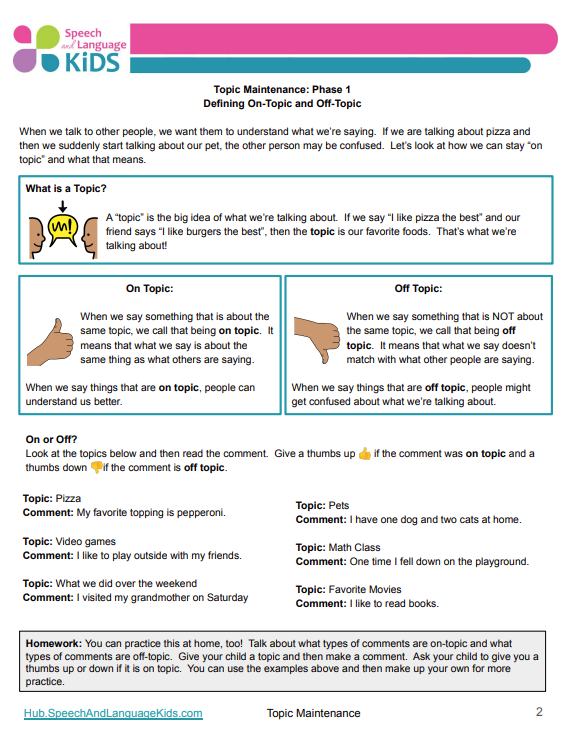
    • Topic Maintenance
    • Announcing Topic Shifts
    • Not talking too much (ask the other person questions)
    • Responding to others with relevant information
    • Not asking personal questions
    • Keeping secrets and respecting someone’s privacy
    • Including enough information for the listener to know what you’re talking about
    • Using clear speech with complete sentences
    • Beginning and Ending Conversations
    • Vocal Volume
    • How to Listen
    • Thinking about others
    • Using clues in conversations (making inferences)
    • Approaching and entering a group conversation
    • Not perseverating on a topic
    • Making small talk

    How Should I Choose Social Skill Targets and Goals for Middle School?

    • Observe student in natural interactions with peers (host a lunch group or push-in (“supervise”) during lunch or free time)
    • Ask teachers what social problems they’ve noticed
    • Ask the child what he has trouble with in conversation or when things seem to break down
    • Ask the child’s friends (with his permission)
    • Observe other children his age in typical interactions and see what they are doing that the student is not

    How to Run a Social Skills Group for Middle Schoolers:

    1. Choose one topic per session (or one topic for several sessions)
    2. Read a story or watch a video about the topic or give a scenario where the skill was not used correctly and have the students identify what went wrong
    3. Explain the skill to the children and write out rules for the situation or scenario
    4. Have one or two students come up to the front to demonstrate the skill in a staged scenario that you control and plan out
    5. Ask the students questions about the rules of this topic
    6. Have students pair off and practice the skill while you watch and provide feedback
    7. Come back together and ask questions again to ensure comprehension. Watch the video again or read the book again.
    8. Assign each student to write in a journal about one time that they used the skill (either correctly or incorrectly) and review at the beginning of your next session
    9. Check to see if the students retained the info during the next session. If not, repeat these steps.

    A Structured Program for Teaching Social Skill Lessons to Middle School Students:

    The SLK Curriculum has five different structured programs for teaching social skills to middle school students.

    Each Curriculum focuses on a different aspect of social communication and comes with everything you need to teach those social skills.

    Our SLK Curriculum Platform even includes AI-Powered Social Scenario Generator, which will give you endless practice examples of social scenarios based on specific skills.

    Subscribe to the SLK Curriculum today to get all of the Social Communication Curriculums.

    Social Communication Curriculums for Speech Therapy

    Social Communication Curriculums

    Structured, No-Prep Programs for Teaching Social Skills to Middle School Students

    View the Social Communication CurriculumsCarrie Clark, Speech-Language Pathologist

    About the Author: Carrie Clark, MA CCC-SLP

    Hi, I’m Carrie! I’m a speech-language pathologist from Columbia, Missouri, USA. I’ve worked with children and teenagers of all ages in schools, preschools, and even my own private practice. I love digging through the research on speech and language topics and breaking it down into step-by-step plans for my followers.

    Fun Fact: When my son was three, he once got mad at me and told me he was going to send me to Antarctica in nothing but a t-shirt. He had an overly large vocabulary for a 3-year-old….along with an overly large amount of sass. He still has both to this day.

    Connect with Me:

    The post Social Skills Lessons for Middle School | Speech Therapy Goals and Activities appeared first on Speech And Language Kids.


    Speech Therapy Goals for Autism: 5 Areas to Consider Sep 06, 2015
    Show notes

    Speech Therapy Goals for Autism: 5 Areas to ConsiderAutistic children and teens can benefit from speech/language therapy to boost their communication skills. But what goals should we write for these clients? This page contains suggestions for 5 different speech therapy goals for autistic children and teens. We’ll walk you through the goal areas to consider when working with these clients. AAC Curriculum and Mini-CourseTeach a child to start communicating using an AAC/Communication Device or System $19 ~ Buy Now!Or, Download the Free Sample What to Target in Speech Therapy for AutismSince social communication impairments are a defined feature of the autism diagnosis, speech therapy is a common recommendation for children with autism. Speech therapy for autism will target improving the child’s social communication and interaction skills and helping them become more independent and confident in their environment. The following speech therapy goals that should be considered for all clients with autism spectrum disorders. Speech Therapy Goal 1: Establish Functional, Spontaneous CommunicationThe first goal with any child who has autism is to make sure that he or she can communicate functionally, and spontaneously. This means that the child needs to be able to communicate his basic wants and needs to those around him without needing to be prompted through it (the adult shouldn’t have to say “what do you want?” or “use your words”). If the child already has that down, awesome! You can move on. If not, stop here! Do not pass go, do not collect $200! This step is a MUST! Each child with autism will need this area of speech therapy to look slightly different. Some children will need alternative means to communicate because they won’t be able to speak. Others will speak just fine but will help learning the right words to use in the right situation. A speech-language pathologist will be able to customize therapy to meet the needs of each individual child with autism. Using AAC for Children with Autism If a child’s speech is not adequate for functional speech (meaning that the child isn’t talking or isn’t able to communicate all of his/her wants and needs), it can be helpful to introduce various forms of augmentative-alternative communication (AAC) until you find a method that works for the child. Remember, each child is different so different methods will work differently for each child. Here are a few options to try: Voice-Output AAC Device: This device will speak a message when the child pushes a button or hits a switch. These can be as simple as a single button with a single message and as complicated as a touch-screen device with buttons and folders that change as the child pushes certain buttons. See examples of AAC devices here. Picture Communication System: Some children benefit from using pictures to communicate. This makes communication much more concrete for them. You can start by using a simple communication board and having the child point to what he wants. Or, you can use a more complex system like the Picture Exchange Communication System (PECS). Sign Language: Some children benefit from using their own body to communicate by using sign language. This has been used very successfully with children with autism and has even been shown to get kids talking with their mouths more quickly than they would have without using sign language. Helping Children Use Language Spontaneously (without being prompted): Children with autism often have difficulty with using language spontaneously. They may speak when told to or in response to specific questions but won’t speak up when they need something or when they are upset. For these children, it’s important to work on fading the amount of prompts that you are giving so that the child does more and more independently each time. For example, at first you may have to tell the child exactly what to say in each situation. Then, you can fade back to a prompt like “use your words”. Then, you can fade back to a visual cue like a picture that says “use your words” or shows someone talking. There are many ways to fade cues so that is just an example. Another alternative for helping children who are having trouble using language spontaneously is to use a PECS system like mentioned before. This structured program has been very successful with increasing spontaneous communication in children with autism. It also may be helpful to start with teaching the child basic requests (as those will be the most motivating for him) and then move on to other types of communication such as commenting, greeting, asking, etc. once requesting has been established. AAC Curriculum and Mini-CourseTeach a child to start communicating using an AAC/Communication Device or System $19 ~ Buy Now!Or, Download the Free Sample Speech Therapy Goal 2: Improve Social Communication Throughout the DayThe next thing that all children with autism will need to some degree is social instruction. Children with autism often have a problem with understanding socially acceptable behavior. They don’t always know how to act or behave in various social situations. Since school is basically just one big social situation, that can make learning environments especially hard for them. Again, the specific therapy techniques and strategies for this area will vary depending on the child and their individual needs. But the key is for this social instruction and support to continue throughout the day. Children with autism often have difficulty transferring skills learned in one setting to a different setting. For that reason, they need to work on social interactions in more places than just during speech therapy sessions. Educators and caregivers should carry-over social instruction in other settings as well. Direct Instruction of Socially Acceptable Behaviors: It is important to teach children what behavior is socially acceptable in various environments. This includes what the child should do and say in social situations as well as how he should listen and attend. For young children, you will choose goals for basic skills like listening to a teacher, answering questions, and following directions. For older children, you will choose goals like group conversations and being a good friend. Again, the social skills chosen will depend on the needs of the child. Here are several strategies that have been proven effective methods of social instruction for children with autism: Visual Supports: Visual reminders placed in the room or presented by adults help the child remember the expectations for that situation. Social Stories: Books designed to teach a child the expected behavior in various situations Video Modeling: The student watches videos that demonstrate the expected behaviors Role Playing: We can set up situations in which the child can practice necessary skills before using them in real life situations Speech Therapy Goal 3: Improve Peer InteractionsSince children with autism often have a difficult time with peer interactions, these skills must also be directly taught. All children with autism struggle with this to some extent as part of the nature of autism. However, you will target significantly different skills depending on the age and developmental level of the child you are working with. Peer Interaction Goals for Younger Children: Here are some goals for children who are just beginning their peer interaction training: Play skills: Teach the child how to play with other children and get along during play. Responding to Name: Teach the child to respond when someone says his name. Establish Joint Attention: Help children tune into those around them. Peer Interaction Goals for Older Children: These activities are better for older children who are struggling with peer interactions: Target Conversational Skills: Look at social skills that the child is lacking during normal interactions with other students and adults. Teach Perspective-Taking: Help these children understand how to see things from another perspective Speech Therapy Goal 4: Generalize Skills to the Regular Education EnvironmentOne of the most common requests I hear from parents of children with autism is “My child needs more time with the speech-language pathologist”. I completely understand why they want this! The speech therapist is the person who is helping their child communicate better so more time with that person should equal better communication, right? Unfortunately, that’s not exactly how it works. The Trouble with Generalizing Children with autism tend to have trouble generalizing skills. For example, if you teach a child with autism to count to 5 using the same 5 yellow cups at the kitchen table and you never practice counting anywhere else, the child will do great at counting to 5 in that exact situation but may not be able to transfer that to counting anything else. The same goes for communication. If a speech-language pathologist teaches a child with autism to communicate with her in the speech therapy room, it doesn’t necessarily mean that the child will then start communicating with other people and in other settings. Instead, the child must practice the same communication skills with a variety of different people and in a variety of different settings. For that reason, it is vital that the child does not spend every waking moment with the speech therapist. We want the child to communicate in any situation, not just when the speech therapist is present. How to Help Children with Autism Generalize Communication Skills If the child needs to work on communicating better, then the answer is not necessarily just to add more time with the speech-language pathologist. Instead, the speech therapist must train the other adults that interact with the child on how to do the same types of instruction, prompting, and modeling that she does. When the speech therapist trains the other adults, the child will make faster progress with his communication skills because he will be getting the same instruction from multiple sources and he’ll be able to practice those skills in the natural environment (at home and in the classroom as opposed to just in the therapy room). Educator and Caregiver Training for Children with Autism Speech therapy services for children with autism can look very different depending on a lot of factors. Each speech therapist will need to determine which services will be best for each child. Here are some different ways that speech therapy services may be assigned to help the child make optimal progress: Direct Therapy Minutes: The therapist provides direct therapy to the child, often in an isolated setting like the therapy room. This is often best for introducing a new skill when fewer distractions are necessary. Push-In Therapy Minutes: The therapist provides therapy to the child within the regular education environment. This is often best for generalizing new skills to a more natural environment and modeling teaching strategies for the classroom teacher. Consultation Minutes: These may be called different things but these minutes are written into the IEP as time when the speech-language pathologist will work with the classroom teacher (or parents) to show them the techniques that they can use to help the child learn to communicate in other settings. As you can see, there are many different ways to serve children with autism and adding more direct therapy minutes isn’t always the best solution. Each student needs an individualized plan including a combination of different services. Speech Therapy Goal 5: Target Remaining Speech/Language Skill DeficitsFinally, we look at other communication skills that may be impacting the child with autism. Once the child begins to make progress on these larger items, we can begin to address some of the smaller issues that may also be impacting the child’s communication. Here are a few areas that may need to be addressed: Speech Sound Errors Errors in Grammar Problems Asking and Answering Questions Difficulty with Figurative Language Source: http://www.asha.org/Practice-Portal/Clinical-Topics/Autism/ AAC Curriculum and Mini-CourseTeach a child to start communicating using an AAC/Communication Device or System $19 ~ Buy Now!Or, Download the Free Sample Which Curriculums are Best for Autistic Children and Teens?While every autistic child is different, there are some skills that often cause trouble for children and teens on the autism spectrum. The following SLK Curriculums are perfectly suited to address the communication needs of autistic youth (when support is needed in these areas): Functional Communication Curriculums: Early Interactions Curriculum: For helping children begin to engage with those around them First Words Curriculum: For children who are just starting to speak their first words Shaping Echolalia Curriculum: For children who repeat phrases and scripts that they’ve heard before AAC Curriculum: For children using alternative means to communicate Social Interaction Curriculums: Social Awareness and Interaction Curriculum: For children learning to interact with others Emotional Regulation and Self-Advocacy Curriculum: For children who need help calming themselves and speaking up for what they need Conversational Skills: For children who need help conversing with others Abstract Language: For children who struggling with sarcasm and figurative language Other Curriculums that May be Helpful: Speech Sound Curriculums: For children who need help pronouncing sounds clearly Language Curriculums: For children who struggle with grammar, vocabulary, or other language skills Fluency Curriculums: For children with stuttering and other fluency challenges About the Author: Carrie Clark, MA CCC-SLPHi, I’m Carrie! I’m a speech-language pathologist from Columbia, Missouri, USA. I’ve worked with children and teenagers of all ages in schools, preschools, and even my own private practice. I love digging through the research on speech and language topics and breaking it down into step-by-step plans for my followers. Fun Fact: My family’s favorite vacation spot when I was a kid was Myrtle Beach, South Carolina. My favorite restaurant there is Sea Captain’s House. They used to have a shrimp in phyllo dish that was my favorite, but sadly they stopped serving it! We still love going though and it’s been fun to bring my kids there now, too! Connect with Me: The post Speech Therapy Goals for Autism: 5 Areas to Consider appeared first on Speech And Language Kids.

    Full show notes at the publisher

    Speech Therapy Materials List | Speech and Language Therapy for Kids Aug 29, 2015
    Show notes

    Speech Therapy Materials List | Speech and Language Therapy for Kids

    What speech therapy materials do I need to work with kids?

    What are the must-have therapy materials for speech and language?

    On this page, we’ll share our speech therapy material lists with the must-have resources for speech-language pathologists who work with children. Plus, we’ll show you how to access our full SLK Curriculum with materials for every skill.
    Speech and Language Therapy Curriculum

    SLK Curriculums

    Structured Programs and Materials for Every Area of Speech/Language Therapy (Seriously, it's all you'll ever need!)

    View the Curriculums

    What speech therapy materials do I need to work with children?

    Speech-language pathologists and assistants use a lot of tools and resources to teach speech and language skills to children. What speech therapy materials and tools do we need to do our jobs? And how can we find free speech therapy materials? We all know we don’t have a huge budget (or any at all!). This page will show you exactly what speech therapy materials you need as a speech-language pathologist along with links to our best freebies available.

    Speech Therapy Materials List:

    Check out our speech therapy materials list below for our recommendations on what speech therapy materials and speech therapy tools that you need as an SLP or SLPA.

    Activities for Every Skill:

    The most important thing you need in your therapy bag is materials that will allow you to teach specific skills. Since we work on communication (and communication happens all day long), it is possible to work on those skills without specific therapy materials. But our jobs become a whole heck of a lot easier when we have pre-made lessons already laid out.

    Here are the areas you’ll want to make sure you have materials for:

    Speech Sounds (Articulation/Phonology):

    We work on teaching speech sounds a lot. The therapy can go much quicker if we already have pre-made worksheets that pictures of words that contain target sounds or minimal pairs for specific phonological processes.

    Language:

    Another essential speech therapy material is worksheets that will allow you target various language skills. We teach language skills by breaking them down into step-by-step plans and scaffolding our clients up to being able to do those skills independently.

    Other Areas:

    You also may need to treat other areas such as functional communication, social communication, fluency, voice, etc. Having pre-made materials for those areas can help as well.

    A Full Set of Pre-Made Activities:

    Feeling overwhelmed?

    That’s reasonable, there’s a lot we need to cover as pediatric speech-language pathologists!

    Fortunately, here at Speech and Language Kids, we’ve created a Curriculum with every skill already covered!

    We have pre-made lessons and teaching materials for every communication skill you need.

    Subscribe today and have everything at your fingertips:

    Speech and Language Therapy Curriculum

    SLK Curriculums

    Structured Programs and Materials for Every Area of Speech/Language Therapy (Seriously, it's all you'll ever need!)

    View the Curriculums

    AI-Powered Material Generators:

    While we’re on the topic of therapy materials, let’s talk about how artificial intelligence (AI) can make this area SO much easier.

    How to Use AI to Make Customized Therapy Materials in Seconds:

    We live in a magical age where technology is advancing at lightning speed. And we can use those technological advancements to make our jobs easier.

    AI tools can now generate customized therapy materials for you in seconds. As long as you know how to teach the skill (such as using the step-by-step lessons in our Curriculums), then you can ask the AI for an image, word list, story, or other material that targets the exact skill you need. PLUS, you can customize it to the client’s interests so you capture their attention as well! Clients make faster progress when we can connect their speech goals back to something they’re interested in.

    Pre-Built AI Bots for Generating Custom Materials:

    When you subscribe to our SLK Curriculum, you’ll also get access to our AI-powered speech bots that are pre-built to create custom therapy materials for you!

    AI Powered Therapy Material Generators for Speech Language TherapyStart your Free Trial to Access our Curriculum and Material Generators

    Speech Therapy Tools and Equipment:

    There are several different types of tools, equipment, and manipulatives that help us do our jobs as speech-language pathologists. Here are a few of our must-haves:

    Tools for Better Speech Sounds:

    • Mirrors: These are incredibly helpful when showing children where to place their tongue, lips, and jaw to produce certain sounds.
    • Tongue Depressors: Sometimes we need to give the child tactile feedback to show him where his tongue needs to touch/go. Tongue depressors can be helpful for that. They can also be helpful to getting a good look inside a child’s mouth to make sure the structures look the way they should. You can even buy light up tongue depressors and flavored ones!
    • Coffee Stirrers: If you find that those tongue depressors are a bit too big to get great placement, try coffee stirrers instead! These can function similarly to those Speech Buddy tools I was mentioning before because they are small enough that they can be in the child’s mouth while he/she produces the sound. For example, you can touch the tip of a coffee stirrer up to the alveolar ridge and have the child push his tongue forward along the roof of the mouth until he touches it. Then, have him say the sound while he keeps his tongue there (and you keep the coffee stirrer there as well).

    Tools for Smoother Sessions:

    • Dry Erase Board: I use these all of the time in therapy! You can draw something you want the child to say or write things down to demonstrate or outline a concept for the child. You can also use them to allow children to draw for some extra fun and motivation during your session.
    • Clicker Counters: These are great for data collection AND for helping children catch their mistakes. If you are collecting data, grab two clickers, one for correct and one for incorrect. Click away while your client is practicing. To work on awareness, tell the child that you’ll click every time you hear an incorrect production. The audible click will serve as a reminder! Plus, it is somehow less offensive to many children for the clicker to tell them they were wrong than to hear us correct them over and over again.
    • Visual Timers: Let’s admit it, our clients aren’t always thrilled to be with us. Sometimes, a visual timer can help them see exactly how much longer they have to work before they get to play.

    Click Here to View All of our Recommendations for Tools and Equipment

    Speech Therapy Games, Toys, and General Activities:

    The bulk of my speech therapy materials consist of games and general activities that can be used while I target various skills. I’m a big fan of “no-prep therapy” or “child led therapy” where I go into the session knowing what skill I want to work on but I let the child choose the activity. For that, I need toys, games, crafts, and other activities that keep us engaged and allow us to practice communication skills.

    Here are some great ideas for toys, games, and other general activities for speech therapy:

    • Toys and Games: I love having a collection of toys and games available in my room for children to choose from. Click here to check out my favorite toys and games for speech therapy.

    For more information on how to organize all of your speech therapy materials, click here!

    Everything you Need, All in One Place:

    Let’s be honest, I know you don’t have time to go scouring the internet for all of these things.

    Our SLK Curriculum is specifically built to provide you with all of the therapy materials, training, and support you need to be an AMAZING speech-language pathologist or SLPA.

    Subscribe today and get access to everything you need.

    (No more late nights scouring TPT, I promise!)

    Speech and Language Therapy Curriculum

    SLK Curriculums

    Structured Programs and Materials for Every Area of Speech/Language Therapy (Seriously, it's all you'll ever need!)

    View the CurriculumsCarrie Clark, Speech-Language Pathologist

    About the Author: Carrie Clark, MA CCC-SLP

    Hi, I’m Carrie! I’m a speech-language pathologist from Columbia, Missouri, USA. I’ve worked with children and teenagers of all ages in schools, preschools, and even my own private practice. I love digging through the research on speech and language topics and breaking it down into step-by-step plans for my followers.

    Fun Fact: I feel the most at peace when walking on a trail in the woods at my local State Park. There’s something magical about leaving the rush and hustle of modern life to spend time in nature.

    Connect with Me:

    The post Speech Therapy Materials List | Speech and Language Therapy for Kids appeared first on Speech And Language Kids.


    Waiting Cards: Language-Boosting Alternatives for Screen Time Aug 22, 2015
    Show notes
    • You’re driving in the car and your kid is growing antsy. Quickest solution: Hand him your smart phone!
    • You’re waiting for your food a restaurant and the little ones are throwing the sugar packets at each other. Easiest solution: Turn on some cartoons on the tablet!
    • It’s a rainy Saturday morning and you can’t send the kids outside to play. Instant peace and quiet: Turn on the television.

    Screen Time: The Savior of our Eardrums

    Let’s face it: children don’t like wait time. Make a young child wait for something and it won’t be long until you’ve reached a full-on meltdown. (Trust me, I have a 18-month-old, I know!)

    Enter: Screen Time! Screen time has appeared on the scene and seems to be a magic cure for this age-old parenting dilemma. Pop a screen in front of a toddler and he’s instantly quiet and calm. He’ll sit happily while you drive across town, finish your meal, or get some housework done. Woo Hoo!

    Why Our Children Can’t Sit and Wait:

    Unfortunately, there’s an unseen problem with this plan. It turns out that forcing a child to wait (through meltdowns, tears, etc.) actually ends up teaching the children how to wait. It’s not a skill that comes easily to them so it takes many battles during the toddler and preschool years, but eventually they learn how to wait and how to entertain themselves when they do have to wait.

    When you give a child a screen instead of forcing them to wait and entertain himself, you’re taking away that opportunity he had to learn to wait. What we’re seeing is a whole generation of children who are 5, 6, or 7 years old and have never had to wait for something without being constantly entertained by a screen.

    Learning to wait is developed in the toddler years. By the time children are 7 years old, it’s way too late to try to learn that. They’ve never had to wait so trying to do so now is WAY harder!

    What’s the Alternative?

    So what can we do as parents to help our children learn how to wait?

    TURN OFF THE SCREENS!!

    (If I don’t have you convinced yet, click here to read my article about how screen time could be damaging your child’s language skills and potential)

    In order for us to help children learn how to wait, we must show them things that they can do to entertain themselves when it’s time to wait. These must be things that require the child to think and do something as opposed to just sit passively in front of something that will entertain them.

    The added bonus of this is that they get to learn, develop, and grow as a person during this time, as well!

    What to Use to Help Children Wait

    The following items are great ideas for helping children entertain themselves while they wait. You can pack a bag full of these items whenever you go somewhere that the child will have to wait:

    • Books
    • Coloring books
    • Travel-sized games
    • Small snacks
    • A journal
    • Small activities that fit into ziplock baggies
    • Waiting Cards (See Below)

    Enter Waiting Cards

    In an effort to help my 18-month-old through wait time, I have created a set of waiting cards for him. These are cards that ask him questions or give him directions. They contain a variety of skills including a nice mix of things I know he can do easily and skills that are slightly harder for him.

    I keep these cards in a small pack in my purse that I can pull out whenever I need them. They have been a LIFESAVER! Plus, my son loves them and he’s learned a few new words and skills from them already.

    Here’s the video of our waiting cards so you can see how they work:

    How to Make Your Own Waiting Cards

    It’s quite easy to make your own waiting cards. You’ll just need to get some index cards and write questions on them. For older children, you can just write the questions but for younger children, you may want to include pictures to keep them interested. I used simple clip art or pictures I found on Google Image Search.

    Try to include a good mix of skills that will be easy for the child (confidence boosters) and skills that will challenge him. This will be entirely dependent on the language skills of your child and what he can and can’t do.

    Below, I am going to list the types of cards that may be good for children of different ages. However, feel free to use questions from older or younger age brackets if your child is working on different skills. Every child develops at different rates!

    I also recommend including cards in your set for other family members as well so that the child can learn how to take turns.

    1-2 Years:

    • Animal Sounds: What does a ___ say?
    • Body Parts: Where’s your _____?
    • Familiar People: Who is he/she?
    • Receptive Vocabulary: Touch the ____.
    • Basic Emotions: Show me your happy/sad/mad face.
    • Identifying Objects: What is this?
    • Basic Function Questions: Which one do you eat/drink? (have two choices)
    • Following Directions: Blow a kiss or clap your hands

    2-3 Years:

    • Expressive Vocabulary: What’s this?
    • Receptive Vocabulary: Touch the ___.
    • Function Questions: What do you wear on your head? (Offer 3-4 choices)
    • Critical Thinking Questions: What do you do when you’re cold? (Offer 2-3 choices if needed)
    • Where Questions: Where do you sleep? Where do you eat?
    • Actions: What is she doing
    • Who Questions: Who is this? Or Who is sitting?
    • Body Parts: Show me your ____.
    • Two-Step Directions: Touch your nose then clap your hands.
    • Pretend Skills: Pretend to brush your hair.
    • Questions about Self: What’s your name? How old are you?
    • Logos: Show a familiar logo (like a favorite restaurant or food) and ask the child what it means.
    • Concepts: Show pictures and ask questions like “which one is in the box” and “what is on his head”?

    3-4 Years:

    • Vocabulary: What’s this?
    • Wh- Questions: Answer a variety of who, why, where, and how questions
    • If…What Questions: If it starts raining, what do you do?
    • Function Questions: What are shoes for? What do you do with a fork?
    • Two-Step Directions: Clap your hands and then touch your nose
    • Tell about a past event: What did you have for breakfast?
    • Emotions: How do you feel if someone ____?
    • Letters: Identify a few letters, like the first letter in the child’s name
    • Rhymes: Complete a rhyme or say a word that rhymes with ____.
    • Follow directions with colors: Touch the blue ball.
    • What’s Different: Choose the one of a set that’s different.
    • Location Concepts: Identify which is behind, in front, etc.

    4-5 Years:

    • Vocabulary: What’s this?
    • Answer all question types, including “when” and “how many” (along with other wh- questions)
    • Repeat four words in a row: apple, dog, cat, ball
    • 3-Step Directions: Clap your hands, then touch your nose, then say your name
    • Social Situations: Describe what you would say in certain social situations (like, How would you ask a friend to play)
    • Recognize letters and identify what sound they make (start with just a few and build up to more)
    • Syllable segmentation: How many syllables in “butterfly”?
    • Syllable blending: What word is this? “bu….tter….fly” (said out loud)
    • Come up with words that start with the same sound: What starts with /t/?
    • Come up with rhyming words
    • Time Concepts: Ask what the child did yesterday, this morning, or is going to do tonight or tomorrow.
    • Show a line of people and ask who is first, next, and last.

    Ages 5+:

    At this age, you can start using questions that target similar things to what they are working on at school. Use school/unit vocabulary and concepts as the basis for your cards. You can also get store-made cards for kids aged 5+ that will allow you to ask even more questions. Products like Brain Quest are a good example of this!

    How to Use the Cards:

    Once you have your waiting cards ready, just bring them with you wherever you go. Whenever your child needs to wait, pull out the cards and start asking. As your child gets older, you’ll be able to pass more of the responsibility off to your child and have him start asking himself the questions.

    You may need to create more cards as your child gets better at them or cycle through a few sets of cards so they don’t get boring.

    Also, make sure you include everyone in the fun and let each person take turns doing cards. This will help your child learn how to take turns, even with Mom and Dad!

    Your Next Steps:

    Ok, you know what to do, get going!

    Make your own card deck, or start with my question cards if you’re feeling stuck. These are cards with pictures of various objects plus all types of questions to go along with each card. It will give you ideas of the types of questions you can ask!

    Click here to download the Vocabulary and Question Cards for free!

    More Resources for Speech-Language Pathologists:

    Looking for more therapy ideas and resources to help you provide the BEST services to your clients? Join us in The SLP Solution, our membership program for speech-language professionals! Inside the membership, you'll find:

    • Step-By-Step Guides for teaching a variety of speech/language/communication skills
    • Pre-Made Worksheets and Therapy Activities for hundreds of different topics
    • Training Videos for dealing with difficult disorders or problems
    • Answers to Your Questions in our exclusive SLP community
    • Tools and Resources to help you with your paperwork and admin tasks
    • Continuing Education through our monthly webinars and webinar recordings

    To join us in the full SLP Solution, or to snag a free membership, click on the button below!

    JOIN THE MEMBERSHIP TODAY!

    The post Waiting Cards: Language-Boosting Alternatives for Screen Time appeared first on Speech And Language Kids.


    How to Use Sock Puppets to Improve Grammar (Pronouns and Verb Tenses) Aug 16, 2015
    Show notes

    This fun therapy activity will let you work on grammar skills like pronouns and verb tenses while you’re playing with sock puppets. It’s cheap, it’s easy, and it’s SUPER fun! Check it out:

    Materials:

    • Two Sock Puppets: Use tube socks and hot glue eyes and hair onto them. Make sure one looks like a boy and one looks like a girl. I added pigtails and a necklace to my girl (well, until my 18-month-old pulled the pigtails off). Also, make sure to cut a hole in the mouth of each puppet so the food can go all the way through. For complete instructions on how to do this, click the button below to download the PDF instructions.
    • Tiny play food: I used Barbie food but you could also use the paper food I have included in the PDF instructions for this activity:
    Click Here To Download Sock Puppet Instructions and Food Cut-Outs

    Set Up:

    1. Put one puppet on each hand
    2. Keep the food in a separate container that the child doesn’t have access to. You want to give him the food one piece at a time.

    Target Skills:

    This activity is good for working on all kinds of grammar, but specifically these goals:

    1. Use of “he” or ”she” in response to “who will eat this one?”
    2. Use of “his” or “her” in response to “whose ___ is this?”
    3. Use of possessive ‘s in response to “whose ___ is this?”
    4. Use of proper verb tenses like future tense (he is going to eat), present tense (he is eating), and past tense (he ate).

    Video Example:

    This video shows how to use the sock puppets to work on “he” and “she” as well as to model verb tenses:

    How to Work on He/She:

    1. Ask the child “who is going to eat the ___? Is HE going to eat it or is SHE going to eat it?”
    2. When the child indicates which puppet will eat it, respond with “HE is going to eat it” or “SHE is going to eat it”. Then, tell the child why you say he or she (example: “This is a boy so we say “he”).
    3. Encourage the child to imitate the sentence (he is going to eat it) or just the pronoun by itself (he).
    4. Let the child feed the puppet and then start over again.

    How to Work on His/Her:

    1. Ask the child “Whose ___ is this? Is it HIS ___ or HER ____?”
    2. When the child indicates which puppet it belongs to, respond with “It’s HIS ___” or “It’s HER ____”. Then, tell the child why you say his or her (example: “This is a boy so we say “his”).
    3. Encourage the child to imitate the sentence (it’s his banana) or just the pronoun by itself (his).
    4. Let the child feed the puppet and then start over again.

    How to Work on Possessive ‘s:

    1. Give the puppet random names.
    2. Ask the child “Whose ___ is this? Is it Bobby’s ___ or Sally’s ____?”
    3. When the child indicates which puppet it belongs to, respond with “It’s Bobby’s ___” or “It’s Sally’s ____”. Then, tell the child why you say the /s/ sound (example: “When we’re talking about something that belongs to someone, we add a /s/ sound”).
    4. Encourage the child to imitate the sentence (it’s Bobby’s banana) or just the word by itself (Bobby’s).
    5. Let the child feed the puppet and then start over again.

    How to Work on Verb Tenses:

    ** You can model this during any of the other activities or do this separately.

    1. Choose one puppet to use for this activity. You can choose a name for the puppet or use the pronouns “he” and “she”.
    2. Put one piece of food in front of the puppet. Say “he is going to eat the ___” or “he will eat the ____”.
    3. Then, have the child put the food in the puppet’s mouth and while it’s in the mouth say “he is eating the ____”.
    4. Then, “swallow” the food by pushing it down the hole and show the child that the puppet’s mouth is empty. Say “He ate the ____”.
    5. Do this again but this time, ask the child “what’s happening?” each step of the way and see if he can use the correct verb forms.

    Your Next Steps:

    Click the button below to download the PDF instructions for how to make the puppets and how to do the activities. It also includes printable pictures for miniature food you can use during this activity.

    Click Here To Download Sock Puppet Instructions and Food Cut-Outs

    More Resources for Speech-Language Pathologists:

    Looking for more therapy ideas and resources to help you provide the BEST services to your clients? Join us in The SLP Solution, our membership program for speech-language professionals! Inside the membership, you'll find:

    • Step-By-Step Guides for teaching a variety of speech/language/communication skills
    • Pre-Made Worksheets and Therapy Activities for hundreds of different topics
    • Training Videos for dealing with difficult disorders or problems
    • Answers to Your Questions in our exclusive SLP community
    • Tools and Resources to help you with your paperwork and admin tasks
    • Continuing Education through our monthly webinars and webinar recordings

    To join us in the full SLP Solution, or to snag a free membership, click on the button below!

    JOIN THE MEMBERSHIP TODAY!

    The post How to Use Sock Puppets to Improve Grammar (Pronouns and Verb Tenses) appeared first on Speech And Language Kids.


    Previous 1 3 4 5 6 7 10 Next

    Related Podcasts

    Coffee Break French

    1

    Coffee Break French Courses
    EconTalk

    2

    EconTalk Courses
    TED Talks Education

    3

    TED Talks Education Courses
    The Torch: The Great Courses Podcast

    4

    The Torch: The Great Courses Podcast Courses
    LSE: Public lectures and events

    5

    LSE: Public lectures and events Courses
    Homeschool Better Together

    6

    Homeschool Better Together Courses
    footer-logo

    Contact Us

    Toll Free: 844-670-7747

    Links

    • Home
    • Top Charts
    • Networks
    • Apps
    • Independents Podcasts
    • Podcast Advertising
    • Podcast News
    • Contact Us
    • About Us
    • Analytics & Insights

    Stay Connected

      Privacy, Terms of Use & Our Code of Ethics Protecting Content Creators Copyrights