TopPodcast.com
Menu
  • Home
  • Top Charts
  • Top Networks
  • Top Apps
  • Top Independents
  • Top Podfluencers
  • Top Picks
    • Top Business Podcasts
    • Top True Crime Podcasts
    • Top Finance Podcasts
    • Top Comedy Podcasts
    • Top Music Podcasts
    • Top Womens Podcasts
    • Top Kids Podcasts
    • Top Sports Podcasts
    • Top News Podcasts
    • Top Tech Podcasts
    • Top Crypto Podcasts
    • Top Entrepreneurial Podcasts
    • Top Fantasy Sports Podcasts
    • Top Political Podcasts
    • Top Science Podcasts
    • Top Self Help Podcasts
    • Top Sports Betting Podcasts
    • Top Stocks Podcasts
  • Podcast News
  • About Us
  • Podcast Advertising
  • Contact
Not in our directory?
Add Show Here
Podcast Equipment
Center

toppodcastlogoOur TOPPODCAST Picks

  • Comedy
  • Crypto
  • Sports
  • News
  • Politics
  • True Crime
  • Business
  • Finance

Follow Us

toppodcastlogoStay Connected

    View Top 200 Chart
    Back to Rankings Page
    Natural Science

    Rationally Speaking Podcast

    Rationally Speaking is the bi-weekly podcast of New York City Skeptics. Join host Julia Galef and guests as they explore the borderlands between reason and nonsense, likely from unlikely, and science from pseudoscience. Any topic is fair game as long as we can bring reason to bear upon it, with both a skeptical eye and a good dose of humor!
    We agree with the Marquis de Condorcet, who said that in an open society we ought to devote ourselves to “the tracking down of prejudices in the hiding places where priests, the schools, the government, and all long-established institutions had gathered and protected them.”Rationally Speaking was co-created with Massimo Pigliucci, is produced by Benny Pollak, and is recorded in the heart of New York City’s Greenwich Village.

    Advertise

    Copyright: © Copyright 2020 New York City Skeptics

    • Apple Podcasts
    • Google Play
    • Spotify

    Latest Episodes:
    Rationally Speaking #143 - Scott Aaronson on "The theorem that proves rationalists can't disagree" Sep 20, 2015
    Show notes

    Can rational people disagree? This episode of Rationally Speaking features guest Scott Aaronson. Scott is a professor of computer science at MIT and has written about "Aumann's Agreement Theorem," which is related to Bayesian probability theory and seems to imply that two people cannot rationally disagree after they've shared their opinions and information with each other. Julia and Scott discuss how to reconcile Aumann's theorem with real-world disagreements, and explore the disconcerting question: Why should you favor your own beliefs, just because they're yours?


    Rationally Speaking #142 - Paul Bloom on "The case against empathy" Sep 06, 2015
    Show notes

    "I'm writing a book on empathy," psychologist Paul Bloom tells people. They respond warmly, until he follows up with, "I'm against it." On this episode of Rationally Speaking, Julia and Paul discuss what empathy is, why Paul is concerned that it's a terrible guide to moral decision making, and what the alternatives are.


    Rationally Speaking #141 - Dan Sperber on "The Argumentative Theory of reason" Aug 23, 2015
    Show notes

    The traditional story about reason is that it evolved to help humans see the world more clearly and (thereby) make better decisions. But on that view, some mysteries remain: why is the human brain so biased? Why are we so much better at defending our pre-existing views than at evaluating new ideas objectively?

    In this episode of Rationally Speaking, Julia talks with guest Dan Sperber, professor of cognitive and social sciences, who is famous for advancing an alternate view of reason: that it evolved to help us argue with our fellow humans and convince them that we're right.

    Dan Sperber is a social and cognitive scientist. His most influential work has been in the fields of cognitive anthropology and linguistic pragmatics. Sperber currently holds the positions of Directeur de Recherche émérite at the Centre National de la Recherche Scientifique and Director of the International Cognition and Culture Institute.


    Rationally Speaking #140 - Kenny Easwaran on "Newcomb's Paradox and the tragedy of rationality" Aug 09, 2015
    Show notes

    This episode of Rationally Speaking features philosopher Kenny Easwaran, who delves into the notorious "Newcomb's Paradox" -- the puzzle about which it was once said, "To almost everyone it is perfectly clear and obvious what should be done. The difficulty is that these people seem to divide almost evenly on the problem, with large numbers thinking that the opposing half is just being silly." Kenny and Julia explore how Newcomb's Paradox is related to other puzzles in decision theory, like the Prisoners' Dilemma; what its implications are for free will; and what Kenny calls the "deep tragedy" at the heart of rationality.

    Kenny Easwaran is an Associate Professor in the Philosophy Department at Texas A&M University. He works on several topics relating to epistemology and decision theory, and the role of probability in helping to understand these and related concepts.


    Rationally Speaking #139 - Eric Schwitzgebel on "Moral hypocrisy: why doesn't knowing about ethics make people more ethical?" Jul 26, 2015
    Show notes

    You might expect that professional ethicists -- people whose job it is to determine which behaviors are ethical and why -- would behave more ethically than other people. You'd be wrong! This episode features philosopher Eric Schwitzgebel , who is well known for his work studying whether experts in ethics live up to their own standards. He and Julia discuss why the answer is "no," and explore questions like, "How do you decide how moral you're going to try to be?"

    Eric Schwitzgebel is a Professor of Philosophy at University of California at Riverside. He is the co-author (with Russell T. Hurlburt) of Describing Inner Experience?: Proponent Meets Skeptic and blogs at The splintered Mind.


    Rationally Speaking #138 - Ian Morris on, "Why the West rules -- for now" Jul 12, 2015
    Show notes

    For several centuries, historians have tried to answer the question: "Why is Western Europe (and later, North America) the dominant world power?" Past explanations cited culture, or "great men" who influenced the course of history. Stanford historian Prof. Ian Morris casts doubt on those explanations, instead taking a data-driven approach to the question that attempts to measure "social development" over history and find explanations for it. In this episode of Rationally Speaking, Julia delves into Morris' method and conclusions, and asks: can we make causal inferences about history?

    Ian Morris is Willard Professor of Classics and Fellow of the Archaeology Center, Stanford University. He is a historian and archaeologist. He has excavated in Britain, Greece, and Italy, most recently as director of Stanford's dig at Monte Polizzo, a native Sicilian site from the age of Greek colonization. He is also the author of a number of books, among them: "Why the West Rules--for Now". "War! What Is It Good For?", and "Foragers, Farmers, and Fossil Fuels."


    Rationally Speaking #137 - Marc Lipsitch on, "Should scientists try to create dangerous viruses?" Jun 28, 2015
    Show notes

    A controversial field of research is "gain-of-function," in which scientists take a virus (like a strain of flu) and attempt to make it more dangerous, for example by making it transmissible in mammals when it had previously been solely an avian flu. The motivation is to learn how viruses might mutate in nature so that we can be prepared -- but what if those engineered "superbugs" escape the lab and start a pandemic? In this episode of Rationally Speaking, Harvard professor of epidemiology Marc Lipsitch argues that the risks outweigh the benefits, and that we should halt gain-of-function research as soon as possible.

    Marc Lipsitch is Professor of Epidemiology with primary appointment in the Department of Epidemiology and a joint appointment in the Department of Immunology and Infectious Diseases. He directs the Center for Communicable Disease Dynamics, a center of excellence funded by the MIDAS program of NIH/NIGMS. He is also the Associate Director of the Interdisciplinary Concentration in Infectious Disease Epidemiology.


    Rationally Speaking #136 - David Roodman on Why Microfinance Won't Cure Global Poverty Jun 15, 2015
    Show notes

    Can we pull the world's poor out of poverty by giving them access to financial services? This episode features a conversation with economist David Roodman, formerly a fellow at the Center for Global Development and senior advisor to the Gates Foundation, currently senior advisor to the Open Philanthropy Project, and the author of Due Diligence: An Impertinent Inquiry into Microfinance. Roodman casts a critical eye on the hype about microfinance as a panacea for global poverty. He and Julia explore why it's hard to design a good study, even a randomized one; three different conceptions of "development,"; and why Goodman doesn't think we should give up on microfinance altogether.


    Rationally Speaking #135 - Robin Hanson on: "Most human behavior is signaling" May 31, 2015
    Show notes

    In this episode, economist Robin Hanson explains the signaling theory of human behavior: That our motivations for our choices, about school, shopping, medical care, and so on, evolved primarily to shape other people's perceptions of us. In the process Robin and Julia discuss what makes a good theory: How to decide what you should (a priori) expect to see, and why simplicity is a virtue.

    Robin Dale Hanson is an associate professor of economics at George Mason University and a research associate at the Future of Humanity Institute of Oxford University. He is known as an expert on idea futures and markets, and he was involved in the creation of the Foresight Exchange and DARPA's Future MAP project. he blogs at Overcomng Bias.


    Rationally Speaking #134 - Michael Shermer on: "Science drives moral progress" May 17, 2015
    Show notes

    Common wisdom holds that the world is getting more violent, but is that really true? Leading skeptic Michael Shermer, professor and author of many books on science, morality and skepticism, argues to the contrary. Shermer's thesis in his recent book, "The Moral Arc: How Science Leads Humanity Toward Truth, Justice, and Freedom," is that as science has advanced our understanding of the world, we have become more willing to expand our circle of empathy beyond our own provincial "tribes," and more able to design our societies to encourage human flourishing.

    Dr. Michael Shermer is the Founding Publisher of Skeptic magazine, a monthly columnist for Scientific American, a regular contributor to Time.com, and Presidential Fellow at Chapman University. His new book is The Moral Arc: How Science and Reason Lead Humanity Toward Truth, Justice, and Freedom.


    Previous 1 11 12 13 14 15 27 Next

    Related Podcasts

    Radiolab

    1

    Radiolab Documentary
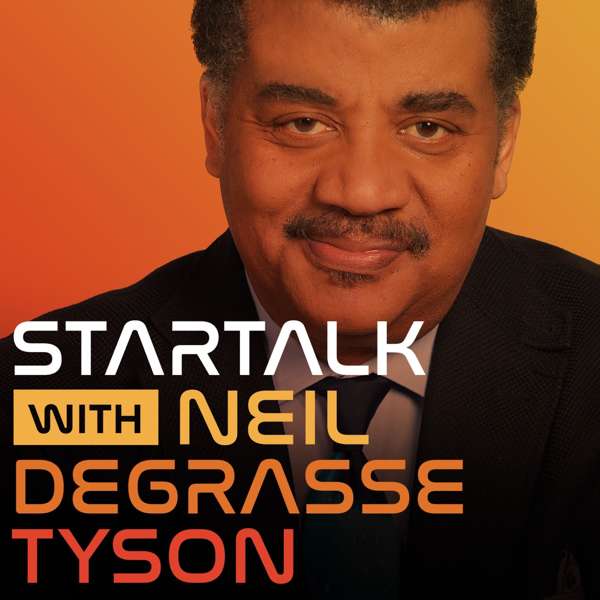
    StarTalk with Neil deGrasse Tyson

    2

    StarTalk with Neil deGrasse Tyson Natural Science
    footer-logo

    Contact Us

    Toll Free: 844-670-7747

    Links

    • Home
    • Top Charts
    • Networks
    • Apps
    • Independents Podcasts
    • Podcast Advertising
    • Podcast News
    • Contact Us
    • About Us
    • Analytics & Insights

    Stay Connected

      Privacy, Terms of Use & Our Code of Ethics Protecting Content Creators Copyrights