TopPodcast.com
Menu
  • Home
  • Top Charts
  • Top Networks
  • Top Apps
  • Top Independents
  • Top Podfluencers
  • Top Picks
    • Top Business Podcasts
    • Top True Crime Podcasts
    • Top Finance Podcasts
    • Top Comedy Podcasts
    • Top Music Podcasts
    • Top Womens Podcasts
    • Top Kids Podcasts
    • Top Sports Podcasts
    • Top News Podcasts
    • Top Tech Podcasts
    • Top Crypto Podcasts
    • Top Entrepreneurial Podcasts
    • Top Fantasy Sports Podcasts
    • Top Political Podcasts
    • Top Science Podcasts
    • Top Self Help Podcasts
    • Top Sports Betting Podcasts
    • Top Stocks Podcasts
  • Podcast News
  • About Us
  • Podcast Advertising
  • Contact
Not in our directory?
Add Show Here
Podcast Equipment
Center

toppodcastlogoOur TOPPODCAST Picks

  • Comedy
  • Crypto
  • Sports
  • News
  • Politics
  • True Crime
  • Business
  • Finance

Follow Us

toppodcastlogoStay Connected

    View Top 200 Chart
    Back to Rankings Page
    Natural Science

    Rationally Speaking Podcast

    Rationally Speaking is the bi-weekly podcast of New York City Skeptics. Join host Julia Galef and guests as they explore the borderlands between reason and nonsense, likely from unlikely, and science from pseudoscience. Any topic is fair game as long as we can bring reason to bear upon it, with both a skeptical eye and a good dose of humor!
    We agree with the Marquis de Condorcet, who said that in an open society we ought to devote ourselves to “the tracking down of prejudices in the hiding places where priests, the schools, the government, and all long-established institutions had gathered and protected them.”Rationally Speaking was co-created with Massimo Pigliucci, is produced by Benny Pollak, and is recorded in the heart of New York City’s Greenwich Village.

    Advertise

    Copyright: © Copyright 2020 New York City Skeptics

    • Apple Podcasts
    • Google Play
    • Spotify

    Latest Episodes:
    Rationally Speaking #163 - Gregg Caruso on "Free Will and Moral Responsibility" Jul 10, 2016
    Show notes

    If people don't have free will, then can we be held morally responsible for our actions? And what would happen to society if we were to collectively shed our belief in free will? In this episode Julia talks with philosopher Gregg Caruso, who advocates a position of "optimistic skepticism" on the topic. Skepticism because people don't have free will as a sense of moral responsibility, but optimistic because society would be better off if we accept that we do.


    Rationally Speaking #162 - Sean Carroll on "Poetic Naturalism" Jun 26, 2016
    Show notes

    Naturalism is the stance that everything that exists in the universe arises from "natural" causes, of the sort observable by science -- not supernatural ones. It's practically a foundational tenet of skepticism. But does it imply that there can be no meaning, or purpose, or morality in the universe? This episode features physicist Sean Carroll, author of the recent bestseller The Big Picture: on the Origins of Life, Meaning and the Universe Itself. Sean and Julia talk about the new "ism" he introduces in the book, "poetic naturalism," and how it attempts to resolve the apparent conflict between science on the one hand, and things like morality, free will, consciousness, and meaning on the other.


    Rationally Speaking #161 - Tom Griffiths and Brian Christian on "Algorithms to Live By" Jun 12, 2016
    Show notes

    Julia chats with the authors of Algorithms to Live By, about how to apply key algorithms from computer science to our real life problems. For example, deciding which apartment to rent, planning your career, and prioritizing your projects. In the process, they discuss the assumptions that underlie those algorithms (and what to do about the fact that those assumptions are inevitably violated by the messy real world), and why procrastination might actually be the right algorithm for the wrong problem.


    Rationally Speaking #160 - Live at NECSS -- Jacob Appel on "Tackling bioethical dilemmas" May 29, 2016
    Show notes

    It's the annual live Rationally Speaking episode, taped at the Northeast Conference on Science and Skepticism in NYC! This year features returning guest Jacob Appel, a bioethicist (and lawyer, and psychiatrist). Jacob and Julia discuss various bioethical dilemmas, such as: How do you handle parents who want to withhold medical treatment from their child for religious reasons? Is it unethical for American doctors to test new medications in the third-world? And what kinds of principles does a bioethicist use to justify their decisions, beyond "that's just my personal opinion"?


    Rationally Speaking #159 - Colin Allen on "Do fish feel pain?" May 15, 2016
    Show notes

    In this episode Julia talks with philosopher of cognitive science Colin Allen about whether fish can feel pain. In the process they explore a cluster of related questions: Are fish conscious, and how could we tell? What's the difference between pain and suffering? And are there evolutionarily adaptive reasons why animals would have the subjective experience of pain, as opposed to just instinctive reflexes to avoid potentially harmful stimuli?


    Rationally Speaking #158 - Dr. George Ainslie on "Negotiating with your future selves" May 01, 2016
    Show notes

    Ever make a plan to diet, or exercise, or study, and then -- when the scheduled hour rolls around -- decide, "Nah, I'll just put it off another day"? If you said "no," I don't believe you! This episode features behavioral psychiatrist (and economist) George Ainslie, who demonstrated the existence of this ubiquitous phenomenon in human willpower, called hyperbolic discounting, in which our preferences change depending on how immediate or distant the choice is. George and Julia discuss why hyperbolic discounting exists, and how it can be modeled as a negotiation between your current self and your future selves. In the process they explore some of the benefits and risks of this "intertemporal bargaining" approach to willpower, and how it relates to philosophical thought experiments such as the Prisoner's Dilemma and Kavka's Toxin.


    Rationally Speaking #157 - Dr. Herculano-Houzel on "What made the human brain special?" Apr 17, 2016
    Show notes

    For centuries, scientists have wondered what makes humans so much smarter than other species. Some proposed it was the size of our brain (though that didn't explain why whales weren't smarter than us); others thought it was the size of our brain relative to our body size (but there were problems with that explanation as well). In this episode, neuroscientist Suzana Herculano-Houzel lays out the mystery of the "Human advantage," and explains how a new technique she invented several years ago has shed light on some of these longstanding mysteries.


    Rationally Speaking #156 - David McRaney on "Why it's so hard to change someone's mind" Apr 03, 2016
    Show notes

    You're probably already aware that it's hard to change someone's mind with logical arguments and evidence, especially about emotionally charged topics. But are there exceptions? David McRaney, bestselling author of "You Are Not So Smart" (and host of the blog and podcast by the same name) describes his experiences with people who have done an about-face on some important topic, like 9/11 conspiracy theories. He and Julia discuss a technique for changing someone's mind with evidence, how individual mind-change mirrors scientific progress, and what happens when you confront Trump fans with facts that contradict their narrative.


    Rationally Speaking #155 - Uri Simonsohn on "Detecting fraud in social science" Mar 20, 2016
    Show notes

    He's been called a "Data vigilante." In this episode, Prof. Uri Simonsohn describes how he detects fraudulent work in psychology and economics -- what clues tip him off? How big of a problem is fraud relative to other issues like P-hacking? And what solutions are there?


    Rationally Speaking #154 - Tom Griffiths on "Why your brain might be rational after all" Mar 06, 2016
    Show notes

    You've probably heard about cognitive biases -- the systematic errors human brains make when we try to reason or make decisions. But what if our biases are actually a sign of rationality? This episode features Tom Griffiths, professor of cognitive science at University of California, Berkeley and the director of the Computational Cognitive Science lab. Tom makes the case for why our built-in reasoning strategies might be optimal after all.


    Previous 1 9 10 11 12 13 27 Next

    Related Podcasts

    Radiolab

    1

    Radiolab Documentary
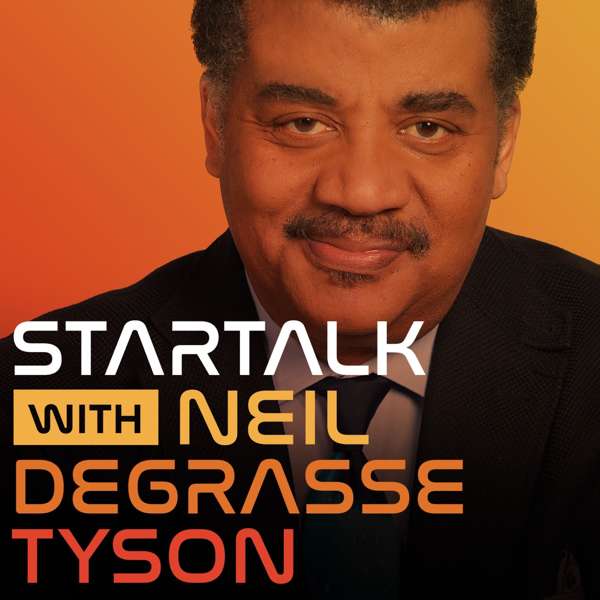
    StarTalk with Neil deGrasse Tyson

    2

    StarTalk with Neil deGrasse Tyson Natural Science
    footer-logo

    Contact Us

    Toll Free: 844-670-7747

    Links

    • Home
    • Top Charts
    • Networks
    • Apps
    • Independents Podcasts
    • Podcast Advertising
    • Podcast News
    • Contact Us
    • About Us
    • Analytics & Insights

    Stay Connected

      Privacy, Terms of Use & Our Code of Ethics Protecting Content Creators Copyrights