TopPodcast.com
Menu
  • Home
  • Top Charts
  • Top Networks
  • Top Apps
  • Top Independents
  • Top Podfluencers
  • Top Picks
    • Top Business Podcasts
    • Top True Crime Podcasts
    • Top Finance Podcasts
    • Top Comedy Podcasts
    • Top Music Podcasts
    • Top Womens Podcasts
    • Top Kids Podcasts
    • Top Sports Podcasts
    • Top News Podcasts
    • Top Tech Podcasts
    • Top Crypto Podcasts
    • Top Entrepreneurial Podcasts
    • Top Fantasy Sports Podcasts
    • Top Political Podcasts
    • Top Science Podcasts
    • Top Self Help Podcasts
    • Top Sports Betting Podcasts
    • Top Stocks Podcasts
  • Podcast News
  • About Us
  • Podcast Advertising
  • Contact
Not in our directory?
Add Show Here
Podcast Equipment
Center

toppodcastlogoOur TOPPODCAST Picks

  • Comedy
  • Crypto
  • Sports
  • News
  • Politics
  • True Crime
  • Business
  • Finance

Follow Us

toppodcastlogoStay Connected

    View Top 200 Chart
    Back to Rankings Page
    Natural Science

    Rationally Speaking Podcast

    Rationally Speaking is the bi-weekly podcast of New York City Skeptics. Join host Julia Galef and guests as they explore the borderlands between reason and nonsense, likely from unlikely, and science from pseudoscience. Any topic is fair game as long as we can bring reason to bear upon it, with both a skeptical eye and a good dose of humor!
    We agree with the Marquis de Condorcet, who said that in an open society we ought to devote ourselves to “the tracking down of prejudices in the hiding places where priests, the schools, the government, and all long-established institutions had gathered and protected them.”Rationally Speaking was co-created with Massimo Pigliucci, is produced by Benny Pollak, and is recorded in the heart of New York City’s Greenwich Village.

    Advertise

    Copyright: © Copyright 2020 New York City Skeptics

    • Apple Podcasts
    • Google Play
    • Spotify

    Latest Episodes:
    Is cash the best way to help the poor? (Michael Faye) Dec 23, 2021
    Show notes

    The idea of giving poor people cash, no strings attached, is "very unappealing" for most donors, admits economist Michael Faye -- but it's still one of the best ways to help the poor. Michael and Julia discuss the philosophy behind his organization (GiveDirectly), the evidence we have so far about cash transfers as an anti-poverty intervention, and the various concerns people have about it: How long-lasting are the effects? Does it make recipients less likely to work? Does it cause inflation?


    Humanity on the precipice (Toby Ord) Dec 10, 2021
    Show notes

    Humanity could thrive for millions of years -- unless our future is cut short by an existential catastrophe. Oxford philosopher Toby Ord explains the possible existential risks we face, including climate change, pandemics, and artificial intelligence. Toby and Julia discuss what led him to take existential risk more seriously, which risks he considers underrated vs. overrated, and how to estimate the probability of existential risk.


    Dangerous biological research - is it worth it? (Kevin Esvelt) Nov 30, 2021
    Show notes

    Kevin Esvelt, a scientist at MIT, argues that research intended to prevent pandemics is actually putting us in a lot more danger. Also discussed: Kevin's own research on engineering wild animal species. Are the risks worth the benefits?


    Why we're polarized (Ezra Klein) Nov 05, 2021
    Show notes

    Ezra Klein explains how Republican and Democrats in the US became so different from each other, ideologically and demographically, and why that trend + our institutions = political gridlock. Questions covered include: Is polarization necessarily bad? Has the left polarized more than the right? And what should we make of polls that seem to show Republicans and Democrats used to agree on immigration policy?


    The genetic lottery (Kathryn Paige Harden) Oct 15, 2021
    Show notes

    Kathryn Paige Harden, author of "The Genetic Lottery: Why DNA Matters for Social Equality" explains what scientists have learned about how our genes affect our educational success. Why is this research so controversial? And is it worth doing anyway?


    How to reason about COVID, and other hard things (Kelsey Piper) Sep 14, 2021
    Show notes

    Journalist Kelsey Piper (Future Perfect / Vox) discusses lessons learned from covering COVID: What has she been wrong about, and why? How much can we trust the CDC's advice? What does the evidence look like for different drugs like Fluvoxamine and Ivermectin? And should regular people really try to evaluate the evidence themselves instead of deferring to experts?


    "Price gouging" in emergencies Aug 19, 2021
    Show notes

    Every time there's an emergency, the prices of certain goods skyrocket -- like masks and hand sanitizer during COVID -- and the public gets angry about price gouging. In this episode, two economists (Raymond Niles and Amihai Glazer) make the case for why "price gouging" is actually a good thing, and Julia raises potential counterarguments.


    How to be a data detective (Tim Harford) Jun 10, 2021
    Show notes

    When you see a statistic reported in the news, like "10% of University of California Berkeley students were homeless this year," how do you evaluate it? You shouldn't blindly accept every statistic you read. But neither should you reject everything that sounds surprising. Tim Harford, economist and author of The Data Detective: Ten Easy Rules to Make Sense of Statistics, talks about the heuristics he recommends using, and the mistakes people tend to make.


    Are Uber and Lyft drivers being exploited? Apr 09, 2021
    Show notes

    How much do Uber and Lyft drivers really earn, after expenses? Are they getting a raw deal by being classified as 'independent contractors' instead of employees? I explore the debate over these questions with three guests: Louis Hyman (Cornell), Veena Dubal (UC Hastings College of the Law), and Harry Campbell (The Rideshare Guy).


    Unfair laws / Why judges should be originalists (William Baude) Mar 19, 2021
    Show notes

    Is there any justification for seemingly unjust laws like "qualified immunity," which allows cops to get away with bad behavior? William Baude, a leading scholar of constitutional law, explores how these laws came to be and why they're so hard to change. Also, Baude makes the case for originalism, the view that judges should base their rulings on the original meaning of the Constitution. And Baude explains how rationalist principles have influenced his teaching and legal scholarship.


    1 2 3 27 Next

    Related Podcasts

    Radiolab

    1

    Radiolab Documentary
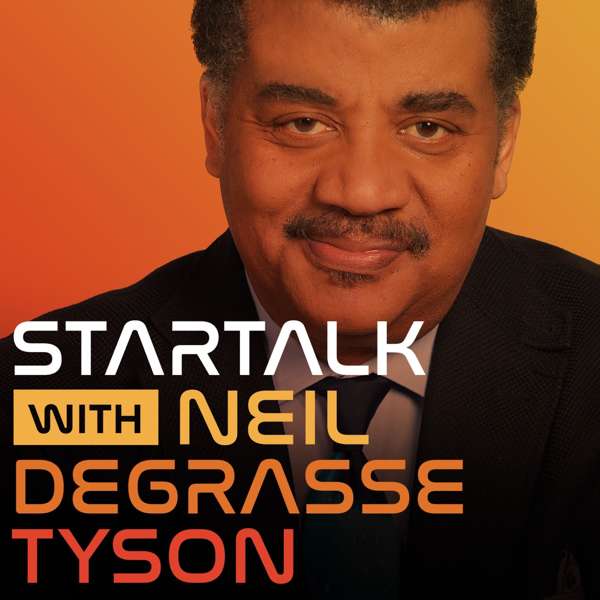
    StarTalk with Neil deGrasse Tyson

    2

    StarTalk with Neil deGrasse Tyson Natural Science
    footer-logo

    Contact Us

    Toll Free: 844-670-7747

    Links

    • Home
    • Top Charts
    • Networks
    • Apps
    • Independents Podcasts
    • Podcast Advertising
    • Podcast News
    • Contact Us
    • About Us
    • Analytics & Insights

    Stay Connected

      Privacy, Terms of Use & Our Code of Ethics Protecting Content Creators Copyrights