TopPodcast.com
Menu
  • Home
  • Top Charts
  • Top Networks
  • Top Apps
  • Top Independents
  • Top Podfluencers
  • Top Picks
    • Top Business Podcasts
    • Top True Crime Podcasts
    • Top Finance Podcasts
    • Top Comedy Podcasts
    • Top Music Podcasts
    • Top Womens Podcasts
    • Top Kids Podcasts
    • Top Sports Podcasts
    • Top News Podcasts
    • Top Tech Podcasts
    • Top Crypto Podcasts
    • Top Entrepreneurial Podcasts
    • Top Fantasy Sports Podcasts
    • Top Political Podcasts
    • Top Science Podcasts
    • Top Self Help Podcasts
    • Top Sports Betting Podcasts
    • Top Stocks Podcasts
  • Podcast News
  • About Us
  • Podcast Advertising
  • Contact
Not in our directory?
Add Show Here
Podcast Equipment
Center

toppodcastlogoOur TOPPODCAST Picks

  • Comedy
  • Crypto
  • Sports
  • News
  • Politics
  • True Crime
  • Business
  • Finance

Follow Us

toppodcastlogoStay Connected

    View Top 200 Chart
    Back to Rankings Page
    Natural Science

    Rationally Speaking Podcast

    Rationally Speaking is the bi-weekly podcast of New York City Skeptics. Join host Julia Galef and guests as they explore the borderlands between reason and nonsense, likely from unlikely, and science from pseudoscience. Any topic is fair game as long as we can bring reason to bear upon it, with both a skeptical eye and a good dose of humor!
    We agree with the Marquis de Condorcet, who said that in an open society we ought to devote ourselves to “the tracking down of prejudices in the hiding places where priests, the schools, the government, and all long-established institutions had gathered and protected them.”Rationally Speaking was co-created with Massimo Pigliucci, is produced by Benny Pollak, and is recorded in the heart of New York City’s Greenwich Village.

    Advertise

    Copyright: © Copyright 2020 New York City Skeptics

    • Apple Podcasts
    • Google Play
    • Spotify

    Latest Episodes:
    Rationally Speaking #3 - Can History Be a Science? Feb 28, 2010
    Show notes

    Our guest, Prof. Peter Turchin from the University of Connecticut, joins Massimo and Julia to discuss whether history can be studied and understood in a scientific manner. In an article in Nature (3 July 2008) on what he termed "cliodynamics," he discusses the possibility of turning history into a science. In it, he proposes that history, contrary to what most historians might think -- is not just one damn thing after another, that there are regular and predictable patterns, from which we can learn and that we can predict. Of course, he is not the only scientist to have turned to history in an attempt to make that field more scientific, Jared Diamond's Guns, Germs, and Steel and Collapse immediately come to mind. And naturally, many historians vehemently object to what they perceive as a crude scientistic attempt at interdisciplinary colonization.


    Rationally Speaking #2 - Love, a Skeptical Inquiry Feb 14, 2010
    Show notes

    Will science ever really be able to explain love? Science has already found correlations between particular hormones and certain forms or stages of love. However, no matter how many correlations we find between brain activity and love, correlation does not imply causation. And what does it mean to explain love scientifically -- would that change our attitude towards it? We realize that raising this subject risks fueling the widespread and irritating misconception that "skeptic" = "cynical killjoy," which is the last thing we want to do. As good skeptics though, what do we do when faced with a mysterious and unexplained phenomenon? We look for explanations!


    Rationally Speaking #1 - Why be rational? Jan 21, 2010
    Show notes

    Why is "speaking rationally" a worthwhile goal anyway? It's not self-evident, at least not to many people. Human beings certainly don't seem made for it. Aristotle may have famously dubbed us "the rational animal," but cognitive science tells a different story, with plenty of evidence that our brains blithely flout logic all the time and are excellent at rationalizing our irrational decisions after the fact. Indeed, it is reasonable to ask why fight our irrational natures to begin with? After all, some argue that irrationality can make us happier, at least in certain situations. Then again, perhaps there is a problem with the whole idea of arguing for irrationality...


    Previous 1 25 26 27

    Related Podcasts

    Radiolab

    1

    Radiolab Documentary
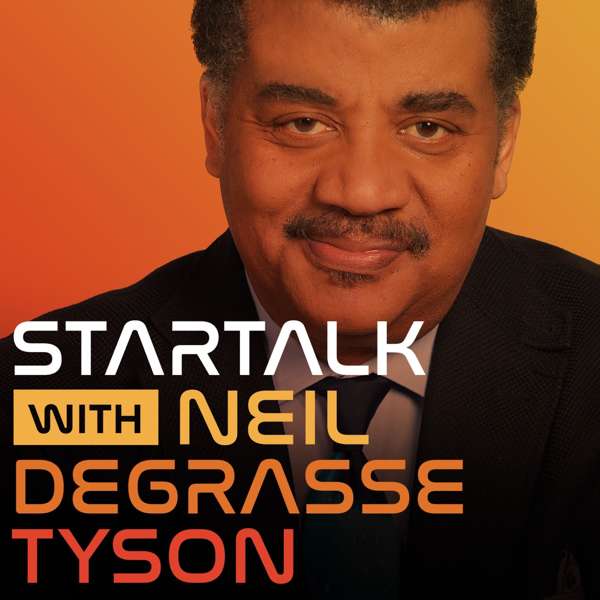
    StarTalk with Neil deGrasse Tyson

    2

    StarTalk with Neil deGrasse Tyson Natural Science
    footer-logo

    Contact Us

    Toll Free: 844-670-7747

    Links

    • Home
    • Top Charts
    • Networks
    • Apps
    • Independents Podcasts
    • Podcast Advertising
    • Podcast News
    • Contact Us
    • About Us
    • Analytics & Insights

    Stay Connected

      Privacy, Terms of Use & Our Code of Ethics Protecting Content Creators Copyrights