PMP226: Year in Review and Power of Masterminds with Jeff Springer, Part 2
Dec 30, 2020
Show notes
This past semester, Dr. Jeff Springer has helped me facilitate the weekly book study portion of our Principal Matters Mastermind. In this week’s podcast episode, we share Part 2 of a conversation about the benefits of Masterminds for education leaders. Dr. Springer’s dissertation was on the power of play at the secondary level. As we planned for this show, Jeff asked me, “What if we took each tenet of ‘play’ and tied it into the benefits and results of participating in a Mastermind?’ The Power of Masterminds, Part 2 For a quick overview, Dr. Springer explains P.L.A.Y. and its connections to a Mastermind as follows: People – A Mastermind community helps members establish and identify who your people are. Love – A Mastermind helps members verbalize how are you care and love for your team and others. Acknowledge – A Mastermind helps participants acknowledge success, failures, and develop a plan for areas of improvement and investigation. Yearn – A Mastermind helps members establish a platform to reconnect educators why they became educators in the first place, renewal with passion. It’s a reminder of what gets them out of bed in the morning and gives them purpose! Listen in to this week’s podcast episode to enjoy these takeaways and more! Principal Matters, 2020 Review Some of you have been readers of the Principal Matters blog or have listened to the podcast for a long time. Others may be brand new members to the community. I began blogging in 2013 and podcasting in 2016. At the beginning of my blogging journey, I had just been named Oklahoma’s Assistant Principal of the Year. I continued sharing blogs and podcasts as a high school principal. In 2017, I began the fulltime work I do with my state principal association. Principal Matters, LLC, has always been and continues to be a passion project for me. I dedicate time in the evenings and weekends to writing and recording. If I’m invited to present or keynote, I take vacation time from my full-time work, which means my time is somewhat limited. To date, my blog posts have been downloaded 345,885 times and my podcast episodes 495,784. On average, between 2,000-2,500 education leaders are digesting my weekly posts. I like to think about how many students are being impacting by our collective learning. If each Principal Matters podcast listener, for instance, represents 300 to 500 students, it is possible we are influencing the lives of over 1 million students. Whether you are a long-time subscriber or first-time listener, I want to thank you for learning along with me. It seems odd to be celebrating at the end of such a crazy and difficult year, but as I look back on the past 12 months, I am amazed at the opportunities we had to grow together through a global pandemic, school shutdowns, and re-openings or hybrid settings. I have so many people to thank for the wins of 2020. These include my guests, partners, Mastermind members, and executive coaching clients. Guests A special thanks to the 20 friends who shared on my podcast this past year, including: Juan David Campolargo, Tim Elmore, Anthony Fisher, Marlena Gross-Taylor, D.J. Klein, Jethro Jones, Jeremie Kubicek, Sonia Lopez Morales, Andrew McPeak, Patrick McLaughlin, Anthony Muhammad, Jena Nelson, Don Parker, Brad Ruttman, Carolyn Sattin-Bajaj, Jen Schwanke, Jeff Springer, Josh Stamper, William Stubbs, Justin Thomas. Early 2020 Masterminds I had the privilege of managing three separate Masterminds this year. Thank you to Cathy Blankenship, Anthony Fisher, Barbara Hawley, Eric Harrison, and Terrence Simmons – all principals who were a part of my first Mastermind offerings. Re-Opening Mastermind Over the summer of 2020, I switched to a free Mastermind offering to help principals navigate school re-openings. What a privilege to connect with education leaders from coast to coast. A special shout out to Kim Doepker, Cythina Winchester, Brighid Gates, Joy Wright, Dennis Shug, Eddie Trygar, Jessica Johnson, Brayden Savage, Eric Hoops, Sonia Lopez-Moralez, Kimberly Miles, Andrew O’Farrel, Sam Fuller, and Angie Garrison for the incredible learning we accomplished together. We created an amazing shared Google Doc with school plans and practices. Fall 2020 Mastermind The fall semester began with a new Mastermind offering as schools pivoted to both virtual and in-person options. This included another power-packed group of leaders from across the U.S. Thank you to Samantha Bartrom, Yolonda Dawson, Andrew O’Farrell, Erin Igoe, Kimberly Miles and Jeff Springer for ending out 2020 with such amazing learning! Partnerships One of my most exciting moments of the year was the publishing of my third book, Pause. Breathe. Flourish.: Living Your Best Life as an Educator. My goal was to self-publish this book, but when my friend Jimmy Casas read the manuscript as a reviewer, he reached back with an offer to join him and Dr. Jeff Zoul in publishing the book through ConnectEdd Publishing. What an honor to collaborate with these two education leaders. I hope you’ve picked up your own copy and would love more reviews on Amazon if you have time to leave one! Guest Appearances With the new book came invitations to present on other podcasts. I’m grateful to Justin Baeder or Principal Center Radio, Joshua Stamper at Aspire Leadership, and Jethro Jones at Transformative Principal for hosting me on their podcasts this fall. Presentations and Keynotes A global pandemic changes a lot of plans. Any in-person events I had planned were either cancelled or switched to virtual offerings. I am grateful to Sheila Vitale, Director of the Office of Ohio School Sponsorship for an invitation to train select school leaders in Ohio this past year through the Principal Matters Academy. These monthly half-day trainings allow us to dig deeply into each of the essential roles of school leaders based on the ‘8 Hats’ content I’ve shared with education leaders for the past 8 years. In addition, I am thankful for invitations I had to present virtual sessions for friends at Tulsa Technology Center and Southern Nazerene University’s Education Leadership Alumni Association. (Contact me if you are interested in discussing any of these offerings for yourself or your team members.) Executive Coaching In addition to Masterminds, I have had select opportunities to connect with some amazing leaders through one-on-one coaching. What’s In Store? As I look ahead to 2021, I’m excited to share a new Pause. Breathe. Flourish. Study Guide which will be a companion for anyone wanting to lead a book study. ConnectEdd will post the new resource after the New Year. Also, I already have a couple of invitations for virtual presentations in the months ahead. My monthly virtual Principal Matters Academy trainings will continue with my Ohio education leaders. My current Mastermind group will continue throughout the new semester, and applications open for anyone interested in additional offerings with my friend Dr. Jeff Springer facilitating as a Principal Matters Coach. If you’re interested in any of the resources or trainings for your growth or for your own leadership teams, reach out by email at will@williamdparker.comor see links on my website at williamdparker.com. 2020 Episodes For those who want to go back into the archives of this past year or share with others, here is a list of the Principal Matters episodes for 2020: PMP225: 4 Wishes for Your Much-Deserved Break (Plus Will’s Bonus Christmas Hymns) PMP224: The Power of a Mastermind with Jeff Springer PMP223: A Fighter Pilot’s Lessons for Leaders, Part 2 PMP222: A Fighter Pilot’s Lessons for Leaders PMP221: Designing Leadership Outcomes with Jethro Jones PMP220: Aspire in Leadership with Joshua Stamper PMP219: Pause. Breathe. Flourish. Part 2 with Jen Schwanke PMP218: Reflections on Pause. Breathe. Flourish. with Jen Schwanke PMP217: 57 Years Together, A Tribute to My Parents PMP216: A Principal’s Toolbox with Justin Thomas PMP215: Reflections from Pause. Breathe. Flourish. with Sonia Lopez-Morales PMP214: Pause. Breathe. Flourish. Part 2, Review with Dr. Jeff Springer PMP213: Pause. Breathe. Flourish. A Review with Dr. Jeff Springer PMP212: Strategies for Helping Gen Z Students with Dr. Tim Elmore PMP211: Reflections on Reopening Schools, Part 2, with Jen Schwanke PMP210: Re-opening Reflections with Jen Schwanke PMP209: Supporting Students from Immigrant Families in a Pandemic PMP208: New School Year Celebrations and Challenges PMP207: Equity in Education During a Pandemic PMP206: Growing Through a Mastermind with Anthony Fisher PMP205: Preparing the Start-of-School Year in a Pandemic PMP204: We are all Pioneers and Tweeners this school year! PMP203: Cultivating PLAY in Leadership with Jeff Springer PMP202: Transforming School Cultures with Dr. Anthony Muhammad PMP201: Rebooting for the Summer with Jen Schwanke PMP200: Looking Back at Distance Learning with Jen Schwanke PMP199: Panel Discussion on Equity & Racism, Part 2 PMP198: Panel Discussion on Equity and Racism, Part 1 PMP197: 10 Tips for New Assistant Principals PMP196: Generation Optimism with Juan David Campolargo PMP195: Instruction from a Distance with Jena Nelson PMP194: Lessons from Leading in New York with Principal Patrick McLaughlin PMP193: Taking a Music Break from COVID-19 PMP192: Leading from a Distance, Part 2 with Jen Schwanke PMP191: Reflections on Leading from a Distance PMP190: 5 Tips for Running the Uncertain Leadership Roads Ahead PMP189: Building Bridges to Reach Students with Dr. Don Parker PMP188: COVID-19 Update, Principal Reboot, Finding Balance Continued PMP187: Reboot for Principals, Part 2 PMP186: Reboot for Principals with Jen Schwanke PMP185: The Power of Sharing Your Own Story PMPEncore151: Hiring High Quality Educators, Part 2 PMPEncore150: Hiring High Quality Educators, Part 1 PMP184: 5 Voices for Leading Teams with Jeremie Kubicek PMP183: Gen Z Unfiltered, Part 2 with Andrew McPeak PMP182: Generation Z Unfiltered with Andrew McPeak Encore099: Collaborating for Results – Interview with Dr. Judi Barber PMP181: Finding Your Swing – How Leadership & Teamwork Go Hand-in-Hand PMP180: Tipping Points and Why Small Things Matter PMP179: Special Edition – Principal Matters 2019 Year In Review Now It’s Your Turn: Share and Rate on iTunes The best way to grow a community of learners is by sharing with one another. If you have found value in our learning together this past year, would you take a moment to share the podcast with others? Also, please leave a review on iTunes or wherever you listen to podcasts. When you do, the show becomes more visible to others. Thank you for doing what matters! The post PMP226: Year in Review and Power of Masterminds with Jeff Springer, Part 2 appeared first on Principal Matters.
PMP225: 4 Wishes for Your Much-Deserved Break (Plus Will’s Bonus Christmas Hymns)
Dec 22, 2020
Show notes
As you are wrapping up the semester, I wanted to send this note of encouragement.
Photo by Brooke Lark – Creative Commons No known copyright restrictions https://unsplash.com/@brookelark?utm_source=haikudeck&utm_medium=referral&utm_campaign=api-credit
This semester you have managed school in ways you never have before. Some of you have served students who have been at home all semester. Others have been in-person or in hybrid models. Whatever your circumstance, I have heard from many principals that this has been the most challenging year of their education career. With that in mind, I want to wish you the following during your much-deserved break:
1. I wish you rest from unending decision-making.
For some of you, you will still manage a lot of family to-do’s over break. But give yourself permission to turn off your technology. Put an automatic reply on your email that you are on vacation until the New Year. And then ignore your inbox. You deserve this time off.
2. Do something that recharges your emotional batteries.
If you are an extrovert, it will be hard to avoid crowds, but find an outlet that brings you joy. If you are a hunter, hunt. If you love exercise, start a new workout. Whether it is: dancing, knitting, reading, or taking long walks – find that thing and do it.
3. Make a list of what has been challenging and what has been a blessing this past year.
Sometimes it’s helpful to see the pros and cons of your experience. Accept the things you could not or cannot change, and then celebrate the experiences that were still happy moments this past year.
4. When you’ve had time to re-charge, think of something outrageously optimistic you’d like to accomplish this year.
Mike Mattos, Solution Tree author, calls this a ‘BHAG’ – a Big Hairy Audacious Goal. I like to encourage leaders to apply this to your personal life too: Maybe you want to run a marathon, start a YouTube channel, earn your doctorate, write your first book, or climb a mountain. If it’s a school-wide goal you’ve always dreamed of reaching, go for it. I can’t tell you what that dream is, but think of a BHAG, and give yourself permission to pursue it. Even if you don’t accomplish the goal, you’ll always go farther when you take action and learn a lot about yourself in the process of trying.
On behalf of the Principal Matters community, I want to wish you a much deserved time-off. As a bonus to this week’s podcast episode, I have included an additional 15 minutes of Christmas piano music from my home to yours (with ‘Yours Truly’ playing, mistakes and all).
I look forward to continuing to learn together in the year ahead. In the meantime, cheers to your Christmas Break & Happy New Year!
PMP224: The Power of a Mastermind with Jeff Springer
Dec 16, 2020
Show notes
This past semester, I had the honor of leading a Mastermind with principals from across the U.S.
Photo by Viviana Rishe – Creative Commons No known copyright restrictions https://unsplash.com/@vivirishe?utm_source=haikudeck&utm_medium=referral&utm_campaign=api-credit
Like eating a meal with family members each week, a Mastermind is a way for consistent growth with people you trust and admire. Dr. Jeff Springer has helped facilitate the Principal Matters Mastermind by leading our weekly book study portion. In this week’s podcast episode, we spend time talking about the benefits of Masterminds for education leaders.
Welcome Back Dr. Jeff Springer
An educator for 34 years, Dr. Jeff Springer is the founder of Spring Strategies LLC and the G.O.A.L. TEAM (Getting Others to Achieve Higher Levels), created for helping high school students and young adults to maximize their personal leadership potential. Jeff, a former Texas High School Head Football Coach and eleven-year veteran of the classroom, is also formerly the Principal at Magnolia High School (2002-2016), in Magnolia, Texas. In 2013, he was selected as the State of Texas TASSP State Principal of the year. Jeff resides in Montgomery, Texas with his wife of 38 years. They have two children, and two grandchildren.
Community, Engagement, Transformation and Collegiality
WDP: One of my friends Jethro Jones compared the Mastermind to eating a great meal. A conference or workshop can be a great event or experience, like a quick meal. But a Mastermind can be like a family meal shared every week with people you trust, admire and respect.
Dr. Springer: Yes, I like that analogy. The opportunity to sit around the table with leaders from across the country who bring their own flavors to the feast. We enjoy several courses, and each week we experience new recipes from each other. And you walk away with one new idea to apply every time!
WDP: I know we want to talk about how Masterminds building community, engagement, transformation and collegiality. Can you start with how a Mastermind builds community?
Dr. Springer:The ability to share what you learn is a powerful opportunity. To listen to leaders share where they are – the different localities, grade levels, experiences that can inform others. That support provides a community approach to leading your campus.
WDP: Yes, it seems every time you are together, you discover something new about the other members you didn’t know before. During our book study of my new book Pause. Breathe. Flourish., for instance, we build community through exploring areas each of us is discovering in self-reflection.
Dr. Springer: There is the professional growth. But the bonus is knowing each other on a personal level. Between meetings you also share via Voxer messages. This Mastermind is a great model for carrying into your in-person relationships with your teams and schools.
WDP: Can you unpack how Masterminds lead to engagement?
Dr. Springer:What I have seen and hear from our Mastermind members is that this is vital part of their week. Whether they are principals or assistant principals, they make this a priority. They are so involved in the process, they don’t want to miss a week. If duty requires them to miss, they ask for the recording so they can keep learning.
WDP: I love how the Mastermind also facilitates additional conversations. Even outside the hot-seat moments, people continue connecting after the meetings for further learning and collaboration.
Dr. Springer:That leads to our next area, which is transformation. We didn’t do this intentionally, but community builds engagement. And you cannot have transformation without engagement. Even though you come to the table with an idea, you discover there is plethora of ideas because there may be more than one idea for a solution. Now you have more tools in your toolbox because of the conversations that happen in a Mastermind.
WDP: During the pandemic, principals have brought ideas that have helped one another with lessons that can help them as they face new challenges that others may have already faced. Can you unpack our final takeaway: the benefits of collegiality?
Dr. Springer:Collegiality and community are closely related. The professional growth that happens in these meetings leads to a group of professionals who care deeply what is happening in each others’ schools. This happens with confidentiality and a commitment to helping each other grow, which is why the resulting collegiality of a Mastermind is so powerful.
WDP: One of things I’m excited about for 2021 is the possibility of opening an additional Mastermind with you, Dr. Springer, leading as a Principal Matters Coach. If school leaders are interested in these offerings for the new semester, they can visit the “Mastermind” tab on my website for more information.
Now It’s Your Turn
Listen to the entire podcast episode for more takeaways. Whether or not you join a Mastermind, you can always find more growth when you are willing to connect with others and to be vulnerable about the challenges you are facing and lessons you are learning. What is one way you can commit to connecting with others in the coming semester so that you continue growing?
This week, he unpacks more of his “Pocket-List for Leading a New Command” as well as some of his favorite leadership quotes.
Meet Colonel Brad Ruttman
Col. Brad Ruttman is a 21-year veteran of the US Air Force and currently serves as the Operations Group Commander for the 138th Fighter Wing. He has commanded at the tactical, operational, and strategic levels and is a graduate of Air War College. As an F-16 fighter pilot, Col Ruttman has 5 combat tours and over 100 combat sorties in Iraq and Afghanistan. He is the recipient of several military awards to include 2 Meritorious Service Medals, 4 Combat Air Medals, the Aerial Achievement Medal and the Iraq and Afghanistan Campaign Medals. He resides in Owasso, OK with his wife Stephanie and their five children: JJ, Christian, Coleman, Savannah, and Dawson. All five of his children attend Owasso Public Schools.
Part 2 of the Leadership Pocket-List
WDP: Thank you again for being on the show. Last time you shared several takeaways, including setting boundaries/instilling discipline, project empathy/right any wrongs, and building trust. Can you take us through the other elements of your list?
Col. Ruttman:Sure. Let’s talk next about “Leading Your People Where They Are.” For strategic leaders, it is very important you think about your tactical team members from their perspective. That means understanding your people, what they do, and your own limitations. You cannot just assume you know how to do their work. In my own experience, I have seen officers or commanders show up to enlisted personnel and tell them why they need to work harder because of the global, strategic outcomes needed around the world. This kind of feedback is not helpful. Most people at the tactical level, however care about purpose, security and relationships. Don’t spend time trying to convince others of strategy. Meet them in the ways that matter most to them.
WDP: I’ll give an education application. When I was a high school principal, I would visit our cafeteria staff to thank them for the good work they were doing in feeding our students. Sometimes we would have lunch together or a quick meeting so that I could hear any concerns. I did not try to burden them with academic targets, for instance, as they were really not interested in the organizational or strategic plans I was working on. They were most interested in making sure every student was eating.
Col. Ruttman:That’s a great segue to the next area: “Seek first to understand, then to be understood” (Covey). I think many times as leaders, especially brand-new leaders, someone may have been a teacher for a long time, and when they become a principal, they cannot wait to lead a school the way they always dreamed of it being. The challenge is finding ways to influence others because most of them will not be inspired by your ideas. As a leader, it is your job to take your ideas and influence others. The best ways to influence are to first understand what their priorities are, understanding their history, and showing empathy for their experiences. If you can convince others that new ideas are ones they suggested, then they will be more committed to new outcomes.
WDP: Yes, ownership has to happen for accountability to be meaningful. You also talk about the “Staying sharp” with several bullets:
Never think “you’ve arrived”
Think like your boss’s boss
Beware of the Bathsheba Syndrome
Study Psychology
What lessons would you unpack from those areas?
Col. Ruttman:‘Sharpening the saw’ is another Covey takeaway. It is very easy when you are younger to set a goal for a higher level of leadership. When you finally have that position, however, it is easy to exhale and think you have nowhere to grow. You have to keep finding ways to be a better leader than you were yesterday. This happens by studying others, reading good books, and accepting that you never arrive. The ‘Bathsheba Syndrome’ came from an article I read on how leaders often fall from grace when they do not know how to hand the responsibility of their own position of leadership. When you think you have no more to learn, you start compromising to hold onto your position, instead of staying sharp and continuously being self-awareness and self-management.
On the area “Think like your boss’s boss,” I believe it is important to be aware of those you are leading as well as those whom you answer to at the operational level. It means thinking two-levels above yourself.
WDP: For school leaders, one of our greatest fears should be becoming someone no one would want to work for. Even the strongest leaders can slide. Can you explain how you’ve seen that happen?
Col. Ruttman:Yes, the foundation for that article on the ‘Bathsheba Syndrome’ was in response to General Petraeus, a four-star General who everyone respected. After all of his success, he had an affair with a news reporter while in Afghanistan and lost his entire command. How does this happen? It happens when people do not stay self-aware.
WDP: Entire organizations disintegrate around lack of trust and character. If the outcomes we want for others requires those we lead to behave with integrity, then we have to model integrity as well.
In addition to your ‘Pocket list,’ you also keep a running list of great leadership quotes, including this one from Colin Powell: “Never let your ego get so close to your position that when your position goes, your ego goes with it.” What does that mean to you?
Col. Ruttman:The reason I love that is quote is because I have seen it happen. For fighter pilots, for instance, sometimes they can wrap their identity in that position. I’m sure there are educators who wrap their entire ego into that position. What happens when they retire or no longer have that seat? If your identity is wrapped into that position, you may feel like your life has fallen apart. The most successful leaders can lead without placing all their marbles in that own ‘bowl’ of their leadership position. They learn to find meaning outside of work.
WDP: Yes, investing in all those other areas of your life (outside of leadership), make you a better leader. As we wrap up, what is one of the most meaningful experiences you have had as a leader?
Col. Ruttman:It’s funny because as a fighter pilot, you are not trained to care about relationships. You are trained to accomplish a mission. You want your front-line pilots to be the best. But as you get older, you have to learn how to work with others. What I think has been most important is that in the end, it is the relationships that matter most. Another of my favorite quotes is: “The axe forgets, but the tree remembers.” – African Proverb
Every relationship you have has impact. This is especially true when you are a leader. What you may think is insignificant may be significant to others. When I look back on my career, I am proud that I’ve been able to bridge the relationships between others.
WDP: Another quote from your list is: “The two most important days in our lives are the day we are born and the day we find out why.” – Mark Twain. If you can help someone find the purpose in their life, you are the greatest leader ever, in their eyes! Col. Brad Rutman, it is an honor to call you a friend. Thank you for sharing these lessons with leaders.
Col. Ruttman:It is so important we reach as many people with these important lessons. Don’t let these ideas end with your leadership. We must share them with others!
Additional Quotes
Colonel Ruttman also shared several leadership quotes he carries in his pocket-list:
– Resist complaining (only up, never down), resist the need to explain your decisions unless you need to repair a relationship
– Resist the need to win at all costs. Sometimes losing will help you more in the long run. Leadership is a contact sport and a constant negotiation.
– Realize that sometimes subordinates bring ideas to impress you, not to make themselves look smarter than you. Even if you’ve already thought of it, praise their idea and push it forward if it’s good.
– Get mad, then get over it (Colin Powell); 90% of things I got upset about in my career really weren’t that bad.
– Never let your ego get so close to your position that when your position goes, your ego goes with it. (Colin Powell)
– ALWAYS appear approachable.
– Show up to work and leave work on time… to the max extent possible. Not excessively early, not excessively late…on time. If you are unable to get your work done in your allotted duty day then you are not using your time wise.
– Never use hyperbole in electronic messages. It almost always gets misconstrued.
– Be careful about using exaggerations and conjecture to get your point across. Most individuals will be argumentative and defensive and will focus on your data than on the bigger picture. Then they will call you out on the data instead.
– As a leader your words will matter more, so choose them wisely. But keep in the back of your mind, you’re not as cool as you think you are.
– The large majority of your troops don’t want you in their house or want to be social media friends. It’s not that they don’t like you, they just don’t like you in their personal lives!
– A society grows great when old men and women plant trees whose shade they know they shall never sit in. – Greek Proverb
– “You can train a bright, willing novice in the fundamentals of your business fairly readily, but it’s a lot harder to train someone to have integrity, judgment, energy, balance and the drive to get things done” – unknown
– “The axe forgets, but the tree remembers.” – African Proverb
– “The two most important days in our lives are the day we are born and the day we find out why.” – Mark Twain…If you can help someone find the purpose in their life, you are the greatest leader ever, in their eyes!
Now It’s Your Turn
What is one step toward self-awareness you can practice to avoid the pitfall of thinking you have arrived? What is one step you can take today to invest cultivating positive relationships with those whom you are serving and leading? Thanks again for doing what matters!
PMP222: A Fighter Pilot’s Lessons for Leaders
Dec 02, 2020
Show notes
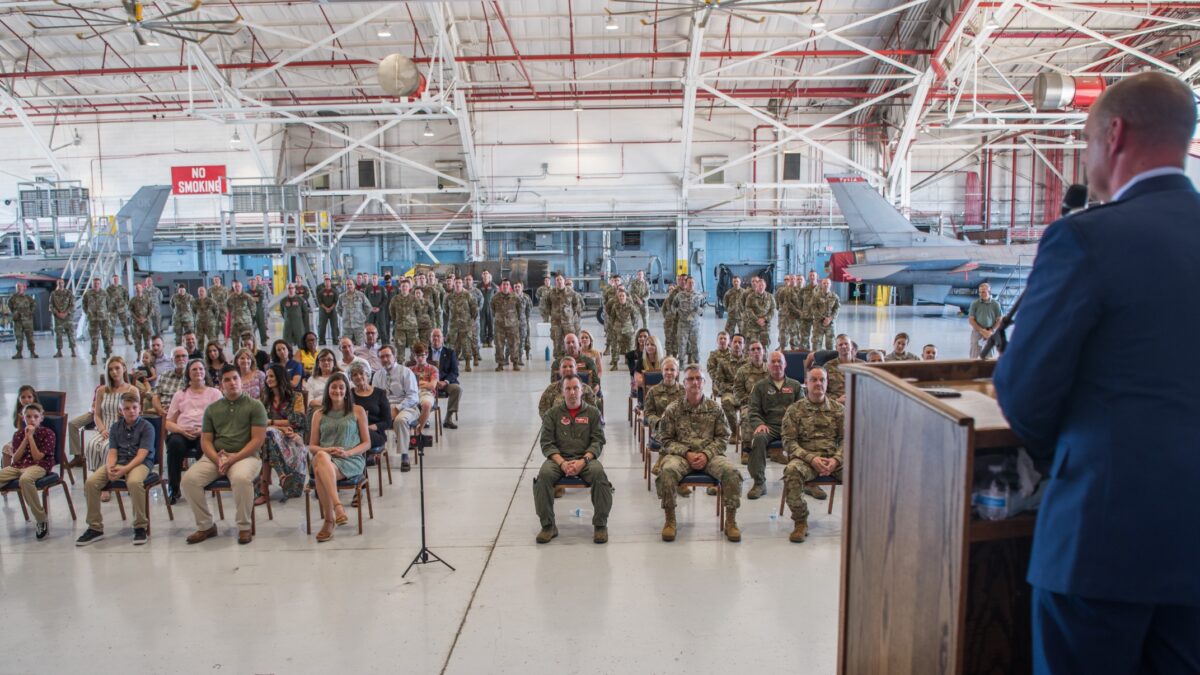
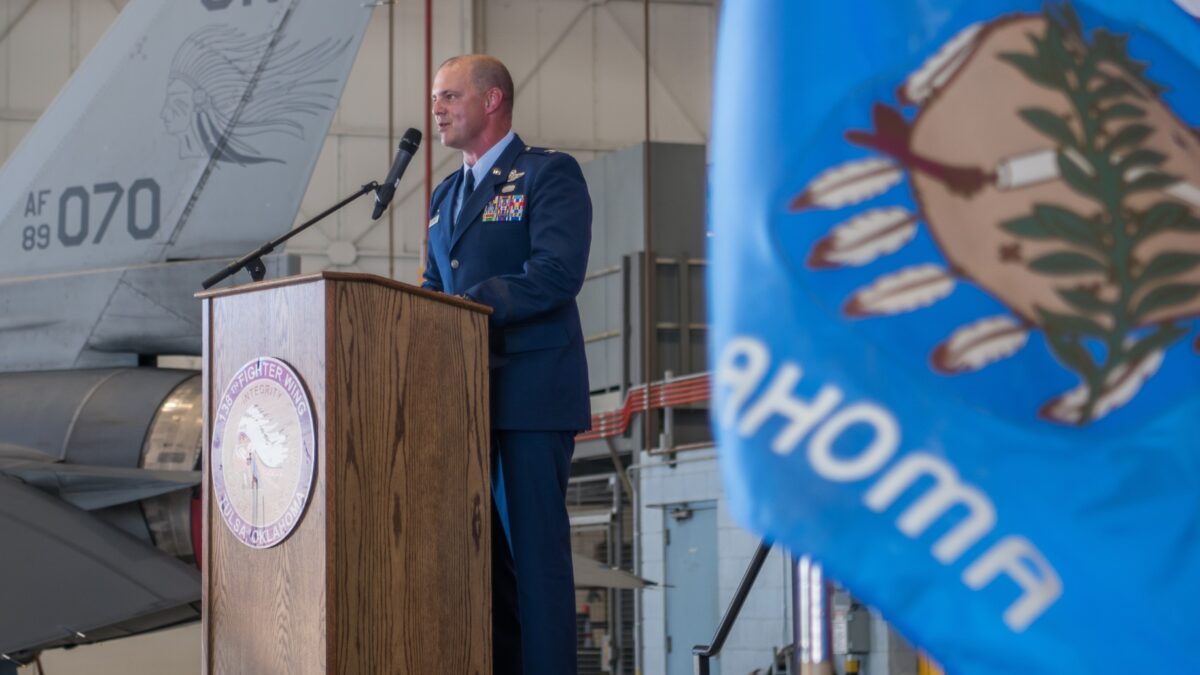
Leadership is tactical, operational and strategic. These are three words Colonel Brad Ruttman has learned as the framework for understanding how to help others accomplish their goals. In this week’s episode, I had the privilege of learning lessons from a fighter pilot that also apply for all leaders, including in education.
Col. Brad Ruttman is a 21-year veteran of the US Air Force and currently serves as the Operations Group Commander for the 138th Fighter Wing. He has commanded at the tactical, operational, and strategic levels and is a graduate of Air War College. As an F-16 fighter pilot, Col Ruttman has 5 combat tours and over 100 combat sorties in Iraq and Afghanistan. He is the recipient of several military awards to include 2 Meritorious Service Medals, 4 Combat Air Medals, the Aerial Achievement Medal and the Iraq and Afghanistan Campaign Medals. He resides in Owasso, OK with his wife Stephanie and their five children: JJ, Christian, Coleman, Savannah, and Dawson. All five of his children attend Owasso Public Schools.
A Leadership Pocketbook
Listen to the entire podcast episode for the full conversation. Here is a short summary of our talk:
WDP: Thank you again for being on the show. School leaders have a lot to learn from other leaders. As I think about strategic and operational leadership, I wanted to ask you to unpack areas that may help any leaders apply lessons to their own teams. Let’s jump in:
Col. Ruttman:When I finished college with a degree in engineering, I was looking for my first job in the field. I always wanted to be in the military. When I realized the Air Force also had an engineering squadron, I decided to enlist for four years. I discovered I loved being in the Air Force, but I didn’t enjoy being an engineer. When I saw how much fighter pilots loved their work, I thought that is what I want to do. Through some hard work and the grace of God, I was able to do that. It definitely wasn’t the normal path to becoming a fighter pilot.
WDP: First of all, thank you for your service to our country. In addition to your training as a pilot, you’ve also learned a lot about leadership. You keep a running list of lessons you think about when considering managing a new command. What are those areas, and then can you choose one or two to unpack?
Col. Ruttman: In the military and in education, you go from follower to leader quickly. As I have gone through leadership training and conferences, I have kept a running list that I call ‘pocket leadership’ that I share with others in my work. At a Commander’s Development course, I heard presentations from other officers, and it inspired me to begin writing down lessons I could share with others. Here is a short summary:
Leadership steps for a new command:
Set boundaries/instill discipline
Project empathy/right any wrongs
Build trust
Lead your people where they are
Seek first to understand, then to be understood (Covey)
Stay sharp
Never think “you’ve arrived”
Think like your boss’s boss
Beware of the Bathsheba Syndrome
Study Psychology
WDP: From that list, can you talk about “Set boundaries/instill discipline”?
Col. Ruttman:I remember going through officer training school and watching a movie about a stoic, stone-faced leader. That’s what most of us envision as young leaders, but leaders are more than that. They are tactical, operational, AND strategic. In schools, you may think of teachers as tactical, principals as operational and superintendents as strategic. To be a better leader at the operational and strategic level, you must first learn at the tactical level. It is important to set boundaries and be clear about your vision and expectationsat the beginning. Brene Brown’s video on boundaries is a great resource for leaders. Once you’ve set boundaries, then you can find ways to meet needs and challenges.
WDP: That’s so true. Good educators create strong processes and expectations before learning can happen. You also talk about projecting empathy/righting any wrongs. How do you unpack those?
Col. Ruttman:You could really place together the areas of ‘project empathy/right any wrongs’, ‘build trust’, and ‘lead your people where they are’. When Colin Powell was asked the most important element of leadership, he said, “Trust.” When people trust you, then they will follow you, and you can find out what they need and serve them where they are.
When I became a fighter pilot, I learned to do the best job I could as a weapon in the arsenal of the U.S. Air Force. When I moved into the operational sector, my first job in the squadron was to be a scheduler. This meant with working with people who were and were not fighter pilots, including maintainers. There was a lot of friction among some of those who flew, those in maintenance, and some in strategic leadership.
Because I believe relationships are important, it was alot of work constantly trying to keep the peace and finding win-win outcomes. Later I was selected as one of the maintenance squadron commanders, even though I was a pilot. This meant I was now the boss over the maintainers I was previously have to negotiate with. At first they were suspicious of me, so my #1 priority was to build trust. I spent my first year just keeping my mouth shut and building relationships. By the end of my command, I feel like I strengthened the pilot/maintainer relationships and has also made lifelong friends.
Because I had taken the time on the front end to build relationships, they knew my requests were not based on an agenda, but what I felt was best for them and the overall mission.
WDP: What a great reminder of how trust allows us to accomplish operational goals. As we wrap up, could you share some books or resources you would encourage leaders to read?
Col. Ruttman:I have several favorite leadership books:
WDP: Would you be willing to come back for a follow-up episode to unpack more lessons in leadership?
Col. Ruttman:Absolutely! I think leaders only grow when they are willing to take time for introspection.
Now It’s Your Turn
Listen to the entire podcast episode for the full conversation with Col. Ruttman and more takeaways. As you are serving others this week, what is one way you can keep building trust so that others are willing to accomplish the goals you set together? How can you practice ‘understanding before being understood’? Thanks again for doing what matters!
Five years ago, I had the privilege to talk to Jethro Jones, host of the Transformative Principal Podcast, about my first book. That conversation began a friendship that we have enjoyed since then. Jethro has been a guest on my podcast, including Episode 74, on July 26, 2017, as well as episode 163 on September 5, 2019. What a joy to catch up with him this week and share takeaways from his new work and new book!
Meet Jethro Jones
Jethro Jones is an education leader and consultant who helps schools and districts to find simple solutions to complex problems. Named a Digital Principal of the Year in 2017 by the National Association of Secondary School Principals, he has served students as a teacher, district coach, media and distance learning specialist, and principal, with experience at every level of public education. He has been hosting the Transformative Principal podcast since 2013 and is the founder of the Transformative Leadership Summit. Jethro is married and has four children.
As always, listen to the podcast episode for our full conversation. But here are several takeaways:
How Leaders Facilitate Change
WDP: Welcome back to the show! Congratulations on your new book. What is one tool or strategy you find yourself using the most when helping principals facilitate change in their schools?
Jethro:The first area I would focus on is gaining empathy. Understand what others are experiencing so you have a better position for facilitating change. Here’s a quick tip: Walk up the front of a school and ask yourself how you feel when you walk into the school. Do you see threatening or intimidating signage? Do you feel welcomed?
WDP: You’re so right. That’s where leadership helps others move from understanding to change. As leaders are seeing these needed changes, how do they help others move forward to change?
Jethro: Normally, when something is negative, no one will complain when it is gone. Take down those negative signs in your school entrance and see what happens. This same rule applies in other ways. What if your district has a policy for turning in lesson plans if there is no purpose in the accountability? If you trust your teachers are doing good work, stop collecting their plans. See what happens when you stop doing things that don’t seem to have a positive purpose or meaning for your school. Ask the question: If we didn’t do X anymore, what would happen?
WDP: That makes me think about encouraging listeners to do an action audit.
Jethro:Yes, but sometimes simple changes don’t require a lot of consensus. Think about the small changes that move you closer to the desired result, and do that.
Lessons from the Pandemic
WDP: Now that we are heading into the end of the first semester, what are some lessons or takeaways you are seeing as principals manage so many different scenarios connected to educating during a pandemic?
Jethro: This may seem controversial but I’m convinced that learning loss is not a reality for our students. Students will progress and learn within their own abilities. In the minds of educators, we may see students as “behind,” but if we operate from that mindset, we are setting up students for failure. You cannot prove a negative. No matter what your situation, remember students are always ready for the next step in learning. No student ever strictly follows the scope and sequence we have set up for them. Whether they have been out of school or not, they will be ready to learn what’s next. Focus on what’s next, not get bent out of shape on what has not been covered yet.
WDP: Yes, I agree children are resilient. You must accept you cannot control what’s beyond your control. Our students need us to believe in their capacity. That positive mindset will help them more than despairing over what has been lost in school closures.
Learning from Failure
WDP: You tell a story in your book when you were a teacher and made the mistake of complaining about your students on social media – and you were surprised when they not only saw it but asked you about it. (Link to Jethro’s blog on this: Twitter Backfires!) It takes a lot of courage to share vulnerable moments like that. Education seems to provide daily opportunities for us to succeed or fail. It’s hard work. I’m curious what motivates you to consistently face obstacles in ways that lead to growth?
Jethro: I have thought a lot about deleting that post. But I haven’t because I believe when we own our mistakes, we learn more. Twelve years ago, when I was a teacher, I was new to Twitter. I had a really difficult group of students, and one day I caught some students cheating and I ripped up their tests in front of the whole class. The morale of the class just tanked. A few months later during a fire drill, I posted on Twitter about being on a fire drill with my “worst class”. It was a horrible moment, and I’m embarrassed at how I behaved then. I have had 12 years since then to post positive feedback about my students and school. I share that lesson because I want people to understand the power you have for goodness or for negativity.
WDP: What I love about that story is your willingness to hold that failure up in the light for other educators to dissect. Ironically, several years later your positivity on social media and podcasting resulted in your distinction as a National Digital Principal of the Year. Thank you for your vulnerability in helping others see how we can learn from failure. What lessons would you share with principals who feel like they are managing a mess of their own?
Jethro:There are so many lessons there. Reach out to me if you feel like that kind of leader. These things happen to everyone. No matter how good of a leader you are, you will run into difficult moments. If your goal is to just keep the school from burning down, you probably won’t do much as a leader. But if you are making a difference, you’ll will step on toes – even when you’re staying positive. That is the reality of leadership.
WDP: Strong leaders are people who are willing to learn from failure. In your own work, Jethro, you have been willing to take lots of risk, including putting your work out in such public settings. What motivates you to keep taking risks in learning even when you know you may face more failure?
Jethro:Our work is not just about helping others. I believe every human being is a child of God, and they deserve to live to their potential. My mission is based on that belief. The key is to not take rejection or criticism personally. People will reject you because of themselves. If someone is not ready for what you are offering, it is not a judgment on you.
WDP: What I like about that is the reminder I often tell leaders: You are not as important as you think you are (your school will exist long after you are gone). But you are more important than you think you are (your integrity, trust, and humility matter because the smallest things you do can influence others for positive or negative outcomes). Those statements seem like contradictions, but they keep you leading with humility. The condition of who you are as a person will drive the way you behave as a leader.
Lessons as an Education Consultant
WDP: Many listeners may know you from the Transformative Principal Podcast. Can you catch us up on what is happening with your work in education consulting?
Jethro:Most of my consulting is happening through my Masterminds. I like to compare learning at a conference or workshop, for instance, to a microwave dinner. The real joy comes from a slow-cooker experience – the Mastermind is like that. These are places where leaders meet every week to talk about how to become better. Because it is a closed, confidential space, people can be open and honest, not trying to score points with others. Everyone is working toward the same goal.
WDP: I talk to education leaders who have an interest in sharing, presenting, or consulting. What tips would you have for them in ways to get started on that journey?
Jethro:First, don’t wait for someone else to choose you. You have to choose yourself. When I started my podcast, I realized that I wanted to learn from other school leaders and I couldn’t find a podcast providing me with that feedback every week. So I chose to do it myself. Second, network with people and find out how you can help them. Ask others for help and offer help. When you do that, you start learning more about what you want to do and how to do it. You have value, expertise and knowledge to give. I believe everyone should have a podcast. It helps you grow and helps you celebrate what’s happening in your schools. Finally, if you are interested in education consulting, be courageous. At some point, ask to be compensated for your work – even it’s just a Subway gift card. Each small step is one step closer to reaching the top of any “mountain” you want to climb.
Let’s Wrap This Up
If you listen to Jethro Jones, you will hear practical advice on a lot of areas: influencing change, learning from failure, leading during a pandemic, and taking risks in order to grow. You can find all his resources at jethrojones.com.
Now It’s Your Turn
What is one area where you want to see more growth personally or professionally? What is one action, even if a small one, you can take today toward that goal? As Jethro says, how can you “choose yourself” for some of the dreams or aspirations you have for helping others?
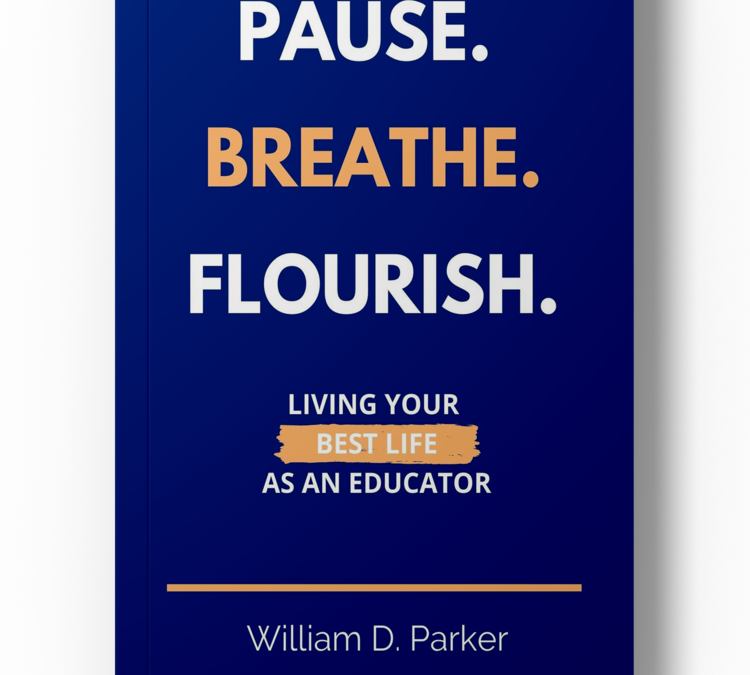
When our mutual friend, Jimmy Casas, from ConnectEdd.org, encouraged us to talk about my new book, I was in for a real treat. Not only did we discuss Pause. Breathe. Flourish.: Living Your Best Life as an Educator, but also, we unpacked several other topics together. In fact, Josh agreed to make this a simulcast – an episode we would both share out with our listeners. I am very grateful to bring you this episode that Josh so generously allowed me to post here as well.
Joshua Stamper is a middle school Assistant Principal for a North Texas School District, where he’s had the amazing opportunity to work at four campuses, two districts, and with hundreds of students, teachers, and administrators.
Prior to Joshua’s current position, he was a classroom educator and athletic coach for 6 years working with students in grades 6-8. He and his wife, Leslie are the proud parents of five children. In addition to his administrative position, Joshua is a podcaster, blogger, leadership coach and education presenter.
Here are some takeaways from our conversation:
Lessons in the leadership journey
Joshua Stamper:First of all, can you share your origin story in leadership?
WDP: I guess my first lessons in leadership came from the influence of my father who was a veteran and a small business owner. Also, during college, I received leadership training as a college resident advisor. Later, I was quickly overwhelmed with the responsibilities of leadership when I moved from teacher to school administration. Over time, you learn that leadership is not really about you. It’s about serving others. With that perspective, you begin to find more balance in doing what leadership is really about: helping others.
Joshua Stamper:What are some things that can help new leaders find balance?
WDP: First, remember you’re not as important as you think. Second, remember you are more important than you think. I know those statements sound contradictory. But if you unpack those statements, you’ll realize they are not as contradictory as they sound. Your school will still exist when you are no longer there so it’s important to walk into leadership with humility. At the same time, the small actions you take each day are so important because who you are as a person will influence the effectiveness of your leadership.
Joshua Stamper:Balance is hard to find. Can you explain more about finding balance in leadership?
WDP: My listeners are familiar with my story as a young administrator when my wife shared with me that I had become a shell of the man I had once been. Because of that frank conversation, I wrote a resignation letter to my school district. I took the letter to school, placed it in a folder, and set it on the corner of my office at school. I told myself I would either begin to find more balance in taking care of myself and family, or at the end of the year, I would resign and find a new profession.
That letter became a reminder of the new habits I needed to employ for self-care and investment in my life outside of school so that I could be better at my work. As a result, I began to reinvest in other areas of my life. I believe that helped me be a better person and a better leader. When you invest in your own areas of self-care, you will discover more energy and inspiration for the work you do at school.
Joshua Stamper: Yes, my own burnout in school leadership was saved when I began podcasting. Because I had a passion project, I found more joy in work at school. Tell us more about your book.
WDP: The concept for this book came as I was sitting on airplanes listening to flight attendants explaining that if the cabin loses pressure, an oxygen mask would drop down, and you should place it on yourself first before helping others. I see so many leaders who are helping others while forgetting to breathe. When you fail to breathe first, you will eventually pass out. In leadership, that means you need to invest in your body, mind, resources, friendships, intimacy, spirituality, and legacy. As you do, you find you keep developing as a person.
Joshua Stamper:What is a way you’ve applied one of those lessons in your own journey?
WDP: Let’s talk about friendships as an example. When my oldest brother died unexpectedly at the age of 46, I faced the most difficult grief I had ever experienced to that point. Friendships became such an important way for me to experience healing. I will never forget a friend of mine, a former student resource officer at my school, who sat with me after my brother’s death. He wanted to know the entire story. When I finished, this strong, uniformed friend just began crying. That was a poignant moment that brought me so much comfort. Those kind of moments do not happen unless you are taking time to invest in relationships.
Joshua Stamper:Can you share how you began podcasting as a passion project?
WDP: When I was still a school principal, I loved listening to leadership podcasts by people like Michael Hyatt and Dave Ramsey. Through their shows, I discovered a podcaster, John Lee Dumas, from Entrepreneur on Fire and later, Pat Flynn from the Smart Passive Income Podcast. Through their work, I began exploring how to podcast. Through Pat Flynn’s YouTube tutorial on how to podcast, I took the time during a school break, and over one-week I learned all the steps necessary for recording and publishing a podcast. With 220 episodes now, I am still enjoying it and learning so much.
While we are on the subject, Joshua, could you give us your quick origin story in podcasting too?
Joshua Stamper:Sure, when I was a new school administrator, I was a part of developing an aspiring leaders program for my district. I have remained interested in ways I could share lessons with aspiring leaders. A few years ago, I had the opportunity to visit Todd Nesloney at his school, and he was interviewing Adam Welcome about his book, Kids Deserve It. Afterwards, he encouraged me to think about podcasting for aspiring leaders. I began to study the process, and now it’s a passion area for me too. In fact, it is due to podcasting, I rediscovered joy in my work as a school leader.
Next question: What advice do you have for aspiring leaders?
WDP: Here are three quick takeaways:
First, be excellent in your work right now. Your reputation will proceed you in whatever opportunity you’re looking toward stepping into later.
Second, make every situation an interview moment. You may be in the room today or tomorrow who can collaborate with you or open doors for a future opportunity.
Third, listen to feedback from others. Ask other leaders for their history and stories. When others provide you feedback, be open to constructive feedback.
Let’s Wrap This Up
You can hear more of my conversation with Josh Stamper by listening to the week’s episode or by checking out Josh’s episode of the conversation at his website: https://joshstamper.com. Or you can find him on Twitter @joshua_stamper. Take a minute to give his podcast a 5-star rating on iTunes and share it out with others!
Pause. Breathe. Flourish. Testimonial
I want to end this week’s post with an encouraging message from Principal Matters listener Eddie Trygar, Assistant Principal, at North Chatham Elementary in North Carolina. Here is some feedback he sent me after reading my new book:
Dear Will: This is Eddie Trygar from the Re-opening Mastermind. I wanted to write and tell you a way that Pause. Breathe. Flourish. has impacted me. I ran cross country in high school and college. After college, I ran two marathons. And then I bought a house, had kids, etc. The next thing I knew, I hadn’t been running in 20 years. When I read about your running routine, I was inspired to buy a new pair of running shoes and make exercise a priority again. I have found that a run after work reduces my stress and helps me sleep better. Best of all, my 10-year-old son has asked if he can run with me. It has opened the door to some great conversations with him as well. Running has allowed me to take care of myself AND spend quality time with my son. We have signed up for a 5K in December and I am so excited to share that experience with him. Thanks for the reminder that there is more to life than what happens at school. Thank you, Eddie Trygar, Assistant Principal, North Chatham Elementary
Now It’s Your Turn
What is a passion area for you where you find joy and encouragement? How can you prioritize time for that focus this week so that you can be leading from a place of positivity? Even it is just a few minutes today, what is one thing you can do to invest in your own self-care?
Photo by Andrew Neel – Creative Commons No known copyright restrictions https://unsplash.com/@andrewtneel?utm_source=haikudeck&utm_medium=referral&utm_campaign=api-credit
In Part 2 of our conversation, Jen asks me to explain my writing process and asks me questions about remaining positive during challenging times. Here are some takeaways:
Jen:You’ve written three books now and two of them while still a principal. I’m curious what is your writing process?
WDP: Every week for almost seven years, I have been sharing content on lessons learned in my education journey through my blog. I try to write 500 to 1,000 words each week as a way to journal my experiences. Over the years, I have taken that content and shaped into the books I’ve written. I look for concepts, themes or lessons that might help others. I encourage school leaders to have a way to log the lessons you’re learning. When you look back at previous challenges, you can apply them to ones you’re currently facing.
Jen:Recently, I shared a post about a teacher at my school who was working on the weekend. Then I was criticized for promoting ‘toxic’ positivity. You are such a positive and empowering leader. You always root for others. You seem genuinely happy when good things happen to other people. Is this something you need to work toward, or does it come naturally? How do you remain positive while also being authentic and not be accused of ‘toxic’ positivity?
WDP: That’s a great question, but first of all, let me say how sad it makes me that people have started weaponzing social media instead of using it to encourage others. If you haven’t seen the documentary Social Dilemma on Netflix, I highly recommend it for understanding how this is happening on a global scale.
To answer your question, though, I’m not sure if my positivity is natural. Let’s face it. In school leadership, we manage negative situations all the time. But if we only amplify the negative, how do we ever amplify the overwhelming positives that are also happening? I don’t want leaders to be fake or inauthentic. It’s important to be honest about our struggles, but what you publish in newsletters or social media should highlight the reasons people want their children attending your schools.
Also, one of the reasons I choose to celebrate the work of others is that I believe all boats rise with tide. In other words, when I take time to share out the success or achievement of someone else, everyone benefits, including me. That may seem selfish, but I believe in the principle that you reap what you sow. When we are willing to encourage the work and success of others, we will inevitably see our own work improving as a result.
Jen:You have built an impressive professional career outside of your work as a principal and principal leader. You write, you podcast, you mentor, you present… Do you think having “something else” is important? Why? How has it helped you grow as a professional and on a personal level?
WDP: We don’t have time to unpack that question fully this episode, but I will just say here that I know many school leaders who yearn to help others outside their normal school work. Years ago, I heard an author and education leader who was asked how could other educators learn to do the kind of work he was doing. He said this work is not for everyone – just be good at your work and eventually you might have an opportunity to do something like he does. His answer was not helpful. The truth is that if you want to grow in your professional outreach, there are practical steps you can be taking to reach those goals. Yes, I think it’s important to keep stretching yourself professionally. I’d love to unpack that more in a future episode.
Let’s Wrap This Up
This week’s episode was recorded before the recent national elections. We unpack a lot more than in this short post so listen to the conversation for more takeaways.
Elections, pandemics, and just managing school – you have a lot of stress and anxiety in the important work you do each day. In the middle of it all, however, do not forget the reason you show up to school. You can still take one step to help someone today.
No matter what else is happening that you cannot control, choose to amplify the positives happening in your own school community, and thanks again for doing what matters!
PMP218: Reflections on Pause. Breathe. Flourish. with Jen Schwanke
Nov 04, 2020
Show notes
When Jen Schwanke and I sat down to talk about my new book this week, Jen turned the microphone to ask me some questions.
Photo by Jonathan Farber – Creative Commons No known copyright restrictions https://unsplash.com/@farber?utm_source=haikudeck&utm_medium=referral&utm_campaign=api-credit
Jen:Your new book Pause. Breathe. Flourish. Living Your Best Life as an Educator came out just two months ago. Congratulations! Let’s talk about it. I know you’ve done some reviews of your recent book on your podcast, but I want to ask you some questions about why you thought this book was an important one to share with the universe. What was your drive to write it?
WDP: This book was a response to the consistent question education leaders ask: How do I take care of myself in this very difficult work? Pause. Breathe. Flourish.: Living Your Best Life as an Educator explores the habits, practices, and mindset necessary for growth as both an educator and a person. Research shows that teachers and principals are leaving the profession of education at alarming rates.
Some of the causes stem from the rising expectations and demands that educators find difficult to manage. Unfortunately, for many educators, taking care of others often means neglecting their own health and well-being. How can educators continue doing work they love while also making sure they are protecting themselves in the process? Pause. Breathe. Flourish. provides practical strategies and common-sense approaches for taking better care of yourself so that you can better serve and lead others.
Jen: I feel like a lot of damage is done when we tell others to just “chill” out. But asking them to breathe seems more appropriate. Even when we cannot relax, we can at least breathe. You take it another step by sharing lessons from your own life and from others on how to flourish. What is it you are sharing about living your best life?
WDP: In the book, I unpack categories on health, mindset, resources, relationships, and legacy among others. This is really a book that applies to all people, not just educators. In it, educators will discover how your thoughts, relationships, commitments, values, and habits play an essential role in who you are as a person. Understanding ‘who you are’ plays heavily in your ability to weather storms, maintain perspective, work with purpose and effect meaningful change in the lives of others. Applying those insights can be challenging. This book will help you reconsider your mindset, reading habits, personal health, financial commitments, relationship priorities, and legacy building.
Jen:For those who haven’t yet had the chance to read your book, will you tell the story about writing your resignation letter and how that helped you keep your sanity and soul?
WDP: My moment of reckoning came my second year as an administrator when I was spending so much time focused on school at the expense of my own health and family life. One night my wife told me, “Will, the kids and I have accepted that you are a dad and husband on the weekends only. In fact, you’ve become a shell of the man you used to be.” She said this with no bitterness or resentment, just simple resignation. That night I wrote a letter of resignation. I took it to work and placed it in a folder that set on the corner of my desk. Each day I began telling myself: I’m either going to find a way to reconnect with those areas of my life outside of work or I will find another occupation. That was a turning point for me that helped shape the message of this book.
Jen: Your book is a very personal one. You tell a lot of stories, share memories, and make connections to your work. Why do you feel this personal approach is so helpful to administrators?
WDP: Vulnerability is an important part of building trust. Just like good classroom teachers connect with students through trusting relationships, the same principle applies in all relationships, including sharing lessons with educators. It’s not easy being transparent about my own challenges and struggles, but those personal stories are hopefully building trust so those lessons really connect.
Jen:Your book is meant to be a source for self-reflection. What role has self-reflection had on your role as a school and state educational leader?
WDP: Self-reflection is a mindset. It’s important in the classroom and in school leadership. As a creative writing teacher, I would teach my students to really “see” and observe their environments. Closely examining your surroundings is a helpful practice for really being in the moment. When we apply this to teaching, it means we reflect on what we are teaching, what students are learning, and how we must change instruction to take them to their next level. That cycle of self-reflection applies to school leadership and life as well.
Jen:One of the things I feel is important for administrators is to stay connected to the teacher experience. How do you do that?
WDP: There is a tension for every leader to be student centered while also supporting teachers. It’s important we put ourselves back into the shoes of those whom we are leading. Resistance is not always personal. As you say Jen, ‘Just because I disagree with you doesn’t mean you’re wrong.’ Hearing and accepting are essential for staying connected to teachers. We also have to ask ourselves how are we modeling acceptance and resistance. Teachers mirror the behavior of their leaders. So reflect on how you are modeling what you want to see in them.
Jen: Next week, we’ll unpack even more. Thanks for the opportunity to learn more about the new book!
Now It’s Your Turn
As you reflect on your own practice in education, how has self-reflection become a part of your own learning cycle? How are you able to integrate your own personal experience to build trusting relationships? What ways are staying connected with the work of teachers so you keep perspective on what it is like to walk in their shoes?
PMP217: 57 Years Together, A Tribute to My Parents
Oct 28, 2020
Show notes
This year’s pandemic has made it difficult to see my parents as they live a long distance and are both in a vulnerable age group. Instead of posting about education this week, I want to share some personal reflections here instead. It was Sunday, October 27, 1963, 57 years ago at the time of this writing.
Polly Kathryn & J.D. Parker, 1963
My mother, Polly Kathryn Carter, with wispy brown shoulder length hair in her Sunday dress, stood 5 feet 2 inches tall, assuming she was wearing heels. Standing beside her my dad, Jesse Darden Parker, stood a foot higher, 6 feet, 2 inches of sunbrowned muscle. He had tight curly black hair, high on top and short on sides and back. He wore a suit jacket, a dress shirt with a straight black tie. When they posed for a photo, J.D.’s tie clip rested just above Polly’s collarbone.
Polly had wanted a church wedding, but when her father had died of leukemia a year before, the hopes were lost of having him walk her down the aisle. So after J.D. had ended his work on the farm that weekend, they had driven across the Tennessee state line into Kentucky and then across two rivers, the Ohio and the Mississippi till they came to Cairo, Illinois. At the time, it was a bustling river town where travelers could find hotels and gambling, bootlegged whiskey and plenty of churches to choose from.
At the first church where they stopped, they found a minister who eyed them suspiciously. He interviewed the couple for a few minutes and told them they would have to find another minister if they wanted to elope. He didn’t give them a reason. But J.D. nursed an uncomfortable feeling that his dark skin and curls gave the minister the false impression he would be performing an interracial marriage – a union that would still be illegal in many Southern states until 1967.
The couple moved down the street to another church. The minister there took them to his house. There in the presence of his wife as witness, he performed the small ceremony. I doubt my parents knew that on the same day they were married on Sunday, October 27, 1963, on the other side of the globe, U.S. Ambassador Henry Cabot Lodge, Jr. stationed in Saigon, received what historians would later call the “green light” telegram. The telegram message, approved by U.S. Under Secretary of State George W. Ball would authorize Lodge to not oppose a coup against South Vietnam President Ngo Dinh Diem.
When they arrived back at the farmhouse in west Tennessee where my dad lived with his foster parents, the older couple welcomed the new couple home. The guest bedroom became theirs for the next few months as the Old House across the field was prepped and old furniture located for their first home together.
The “Old House” as it was called had been built before the turn of the century. My mother’s grandparents had once owned it. Her mother was raised there. But during the Great Depression, her family had lost the home. Later when my father began working on the farm of his then foster family the Bowdens, the Bowdens owned the land and the Old House that once belonged to my mother’s family.
Now in a circle ending for my mother’s family history, the Old House became the first place where my parents began their first years together. Less than one month after their marriage, on November 22, 1963, my parents celebrated my father’s 23rd birthday. That same day, John F. Kennedy was assassinated in Dallas, Texas. The nation and world stood still. And my dad drove tractors, fed cattle and started a family. By 1967, they had two boys and one on the way.
My dad had been enlisted in the U.S. Navy, at age 17, in 1957 when he had dropped out of high school to join the military. His tour of duty had taken him to Japan, and he was eager to return to farming when his enlistment had ended. As a young farmer with a few years of seeing the world, he was ready to settle down when he started dating Polly Kathryn.
When I was a boy, I found a notebook where my mother had written the story of dad’s decision to reenlist in the Navy. It was sometime in late 1966 or early 1967. My dad had attended the funeral of a neighboring farmer. When he came back home to the Old House, she could hear his shoes clicking on the hardwood floor as he made his way to the back bedroom. When she stepped in, he was loosening his tie and unbuttoning his dress shirt.
He stood there a minute, holding his loose tie in his hand.
“We stood around the grave today, and I looked at the faces of the other men,” he said. “Many of them old and weary. Most have never left their farms or this county even. I kept asking myself, ‘Is this where I want to spend the rest of my life?’”
He raised his head and looked at Polly.
“I feel like there must be something more for us. I think it’s time for me to reenlist.”
That year my father reenlisted in the U.S. Navy and took the young family to San Diego, California. By 1967, the U.S. involvement in the Vietnam war had sent so many U.S. troops into combat that President Lyndon B. Johnson signed the Selective Service Act, which prompted thousands of young American men to either destroy their draft cards or leave the country to avoid the draft. My dad never explained to me whether or not he was concerned about the draft when he re-enlisted in 1967. The way he told it, it was just time for a change.
During this new tour of duty, he was a young husband and father. My third brother would be born in July 1967 at the San Diego Naval Hospital, one month after the assasination of Robert Kennedy at the Ambassador Hotel in Los Angeles. In another horrific moment for the nation, that spring, on April 4, 1968, Martin Luther King, Jr. would be assassinated in Memphis, TN. Nine months later, I was born in January 1969 at the same Naval hospital as my older brother. And my sister would follow 14 months later.
By this time, my parents owned a home in La Mesa, California. My father was stationed on several ships as an electrician’s mate, including a naval torpedo retriever. Little did I know that four short years later, we would be returning back to West Tennessee as my father was ready for another change.
In 1974, President Nixon announced his resignation. At the same time, my father purchased 120 acres just southeast of the Old House, and he and his brother built a basement with a flat roof on top. It became our home for the next six years. My dad framed walls, ran the electricity through our home, dug and installed a sewage tank, plumbed the kitchen and bathroom, and dug the well that eventually ran water into our home. Dad worked odd jobs as an electrician until he landed a permanent maintenance position at a small engine manufacturing factory in Paris, Tennessee.
By 1980, Gerald Ford and Jimmy Carter had served their terms, and Ronald Reagan had won his first Presidential election. That same year, my father hired builders who erected a two-story home onto the basement structure. The new house had five bedrooms and three bathrooms. We moved in when I was eleven years old, and I thought I was one of the luckiest boys in the world.
Today as I’m writing this my parents are celebrating 57 years of marriage. Over 57 years, they have raised six children. They endured another tour of duty when my father reenlisted again in the U.S. Navy during the late 1980’s and moved us to New York, Virginia, and then back to Tennessee to start a business and then retire. They have been blessed with fifteen grandchildren and three great grandchildren. They have grieved the loss of their oldest son, endured my mother’s life altering brain surgery and recovery. They have suffered through my father’s terrible stroke and learned to live with home nurses and new medications.
While I was growing up, my parents kept us moving in a circle between our farm in West Tennessee and the outside world. They showed us New York City. We stood atop the Empire State Building and saw the awe inspiring cityscape marked by the Twin Towers. We rode waves and built sand castles in Virginia Beach. We drove the beautiful Appalachian Mountains. We sat on the shores of Chesapeake Bay and watched the sky explode with brilliant red, white and blue sparks – the flaming fireworks of an Independence Day.
We worshipped together, sang together, and did life together. When dad returned to Tennessee in the late 80’s to start his own boat marine salvage business, I began diving for mussel shells in the Tennessee River area on the Kentucky Lakes. Dad taught me how to back a boat trailer, maintain my equipment, market my shells, and save money for my first car. Mom taught me how to pray for God’s direction, treat others with dignity and as equals, and pursue my dreams.
Little did I know then that we were living through anything historical. I barely remember the elections of Jimmy Carter, Ronald Reagan or George H.W. Bush. By the time I went to college, politics was still just the background noise for events we faced each day at work, school, church and life. By the time Bill Clinton came onto the scene, cable news was also making its debut. For some reason, politics began making more noise. I began teaching high school, and later became a school principal. As we lived through George W. Bush years and the Presidency of Barack Obama, my mom and dad slowly unplugged from the rest of the world on their farm in West Tennessee.
This month my mom turned 80 and my father will be 80 in November. They live in the same two-story house built 40 years ago. It’s much older now and so are they. My mom’s brown hair has actually stayed mostly brown. Although she is a few inches shorter now, her hazel green eyes still show the spark and laughter of her youth. My father’s black curls have turned to locks of white. He wears a beard like Santa Clause now, and he moves much slower and often with a walking stick.
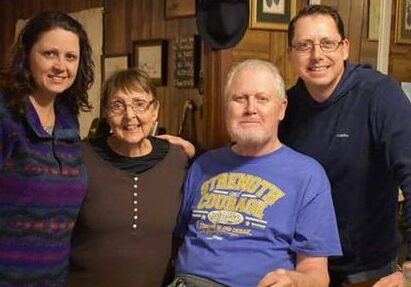
My parents, Polly and J.D. Parker, pictured here with my sister and me in December 2019
This brief account doesn’t give nearly enough context for why I respect and admire them both so much on their 57th wedding anniversary.
I have failed to tell the stories of watching my mother walk barefoot through our pastures so she could feed our Jersey cows and provide us with gallons of fresh milk – pails of brimming, frothing white she would carry to the house for skimming cream to make into butter.
I have failed to recall how my father would sit with us at the end of a long day while we children piled onto our beds to listen to him read fairy tales or sing with us.
I have not told the stories of how he fell the trees and taught us to split and carry the wood that heated our home each winter. Or the meat he would salt and cure in Spring. Or the red potatoes we planted in early summer and later gathered in the soft warm soil of late summer. Or the nights he would erect his telescope and show us the craters of the moon or the red of Jupiter in the milky night sky.
When I was a little boy, I remember my dad always wore a suit on Sundays. He would stand at his mirror and tie a Windsor knot. I would stand by and imagine what I might look like someday in a suit and tie. One day I asked him, “Daddy, when you die someday, can I have your suit?” He laughed and said, “Sure, hot-shot, if you’re big enough by then.”
For what it’s worth, I have never grown as tall as my dad. I can honestly say I have never been and never will be big enough to inherit one of his suits. In fact, it is safe to say, I will never be big enough to fill the shoes of either of my parents. But I am thankful for the opportunity to have watched some of the steps they’ve taken in fifty-seven years together.

 Our TOPPODCAST Picks
  Stay Connected