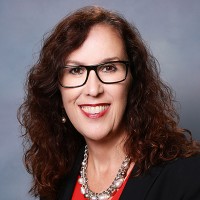
PMP255: Reconstructing Place and Space, Part 2 with Jen Schwanke
Jul 28, 2021
Show notes
This week, Jen Schwanke, author and education leaders, shares the second half of a conversation on Reconstructing Place and Space.
With credit to Dr. Miller, director of the EdD in Educational Administration and an assistant professor – clinical in the Department of Educational Studies at The Ohio State University, Jen probes into several questions his feedback has generated.
Listen to the entire episode for more context, but here is a short summary of this week’s conversation:
WDP: As a quick review, can you explain again the difference between space and place?
Jen:Space is something abstract…you can’t touch it. Place is how we internalize space. In a nutshell, place is space with meaning. For example, your house is an actual place, but the aspects of your house that cause you to feel safe, warm, loved, happy, maybe sad, etc. all constitute your home as a space to you.
WDP: When we think how educators influence environments for student learning, how reconstructing space and place be helpful?
Jen: We know we don’t have control of a lot of things that happen in our world. But we are in control of how we exist in that space. This is true for educators and students. Sometimes we get stuck in certain spaces and need to break free. My friend, Kevin, for instance reflected on his school’s dress code. He began to see how the dress code primarily corrected the dress of girls in his school more than on the dress of boys. He began to ask questions and rewriting dress code policy to encourage students to be their best but to rethink some of the social constructs that previously guided policy.
WDP: That reminds of a story from a principal who told me she and began to question their practices on head coverings when she had two male students who politely challenged the practice. She began to consult students and her own teachers on what they believed worked best in their community. This led to a consensus to change policy.
Jen:Leadership is a willingness to see a need for change and address it, where management is often about maintaining the status quo. Applause to school leaders who are willing to listen and apply solutions based on the feedback. With the right skills and the willingness to evolve, leaders have real opportunities to reconstruct practices.
WDP: Let me play the devil’s advocate. Why should we be considering change when we’ve already had a whole year of change?
Jen:You’ve asked the essential question: Why? Not for a second do I think leaders need to push forward quick change. People do not change that is forced on them. They want transparency. They want safe and welcoming environments. But now is the time to be asking what we should keep or discard from all the changes that happened in our schools this past year.
WDP: One of my trusted mentors, Superintendent Rick Thomas, would consistently ask our leadership teams each year where we wanted to grow. It can be stressful to think about change, but there are some areas each of us should be willing to reexamine for reconstruction. What other areas of change would you want leaders to consider in addition to the ones you mentioned in Part One?
Jen: Examine your resources and practices and consider what may be evaluated and reconstructed in your practice:
Evaluating resources and texts for bias or exclusion
Not grading every single assignment; grading doesn’t validate learning. Instead, going for efficiency and quality rather than quantity; letting students seek their own feedback; posting answer keys and being thoughtful about how they are used; allowing retakes with proof of re-learning the content; choice in what is used to assess their knowledge
Grading for the learning process, rather than a finished product. Measuring student effort and mastery for whom the A-F system might not serve.
Using technology to enhance the classroom experience (embracing that knowledge can be found online, but using peers and modeling to enrich their understanding and processing of information and become more critical absorbers of information)– shifting the teacher role from providing content to providing context, connections, and applications
Assessment cycle: Using pre-assessments, formative assessments, and ongoing student self-reflection to develop extensions, enrichment, and intervention plans
Project based learning: Instruction that provides meaning and purpose to learning, typically with a culminating event or capstone project
College and career readiness: Working with students of all ages to identify interests and engagement
Technical and workforce education: Exposure to opportunities, apprenticeships, and employment opportunities
Global connections: Giving students audience and perspective of learners and opportunities outside their classrooms and communities
Let’s Wrap This Up
Reconstruction of space and place is a team effort. There is no way you can reconstruct or evolve something as rich as teaching all by yourself. These need to be team discussions.
Now It’s Your Turn
Have fun this year as you consider areas for growth. Think about ways you can reconstruct space in the school building. What are some changes needed in how to make it an even better place for students?
PMP254: Reconstructing Place and Space with Jen Schwanke
Jul 21, 2021
Show notes
This week, Jen Schwanke, author and education leader, shares thoughts on why education leaders should consider how ‘place and space’ play a role in learning outcomes.
With credit to Dr. Miller, director of the EdD in Educational Administration and an assistant professor – clinical in the Department of Educational Studies at The Ohio State University, Jen probes into several questions his feedback has generated.
Listen to the entire episode for more context, but here is a short summary of the conversation with several applications for education leaders:
WDP: What is the difference between space and place?
Jen:Think about it this way:
Space is something abstract…you can’t touch it
Place is how we internalize space. In a nutshell, place is space with meaning
For example, your house is an actual place, but the aspects of your house that cause you to feel safe, warm, loved, happy, maybe sad, etc. all constitute your home as a space to you.
Place, as a space, is fueled by memory and carries significant meaning (good and bad) for us. Simply stated, we have a relationship with place. We are nostalgic for places we have left, we protect places where we are, and we fully understand how to enact our lives in those places (e.g., where to play football, where to shop, where to fart).
Place, as a space, is socially constructed, which means they have politics, emotions, and meaning
What meaning does your school building have as a space for students, teachers, and parents? Consider ‘Social Construction’:What we take to be the truth about the world importantly depends on the social relationships of which we are a part. Sometimes that gets us stuck. Sometimes we need to break out of what we’ve already known to be the best way.
WDP: This is one reason our offices should be welcoming places where parents and others feel like guests, not intruders. For instance, our school had a habit of making a fresh pot of coffee and keeping water and sometimes fresh baked cookies on hand. How else should this influence the ways principals consider place?
Jen: For principals, it’s usually about a place of belonging.
Think about what that means for your school, your place, your space. What are some ideas and changes you can make? Consider the terms: Leadership, management, and reconstruction. Only you, your staff, your community can speak to what might need to be reconstruction. But you’re the leader. What does that mean?
a. Is it your job to represent the ideals of your school community?
b. Is it your job to adhere to best educational practice?
c. Is it your job to do what is best for students…at all cost?
Leadership is change/Management is holding down the fort. As a leader, do you have the ability to step outside the your own culture? What roles do you play?
historian – interprets current events against the backdrop of the past
anthropologist – finds meaning in the behavior of organizational participants
visionary – projects aspirations for others
marketer – models and provides ceremonies and routines
WDP: What is reconstruction?
Jen: For me, it’s evolution. It’s adapting. It’s keeping those students in mind. Changes aren’t hard to defend if they are done for students.
Will: So, is there anything principals should consider reconstructing?
Jen:Some principals are grappling with students of color, transgender, social relationships, mental health, instruction, athletics, hiring. For me, I want to evolve our instructional practices, including the following:
Academics:
Sit down and review some of the instructional practices that should be re-examined or adjusted to better fit the needs of today’s students.
Classroom setup (student input on classroom setup, options for flexible seating and collaboration, but also spaces for students to work quietly and independently)
Packets (Consolidated work tasks for rote and repeated practice)
Homework (work that has no value beyond gathering points for grades)
Worksheets
Whole class, whole period instruction
Packets and worksheets
Homework
Busy work (crossword puzzles, word finds) as a supplemental resource
Grading
Textbooks
Closed classroom doors, overhead projectors,
Teacher as master
Students as absorbers
Learning environment created by teacher
Filing cabinets and folders with grade, assessment data, worksheets
Reading logs
Presentation of rules to students
Punishment/rewards for things out of a student’s control; punishing the whole group for the actions of a few
2. What might be a better fit?
Interleaving: a technique for learning through curricular integration, giving the student the power to direct their interest and engagement. Interleaving can be considered a purposeful combination of differentiation, personalization and voice.
Teacher as mentor/coach; students as researchers, readers, writers, mathematicians, scientists, learning experts. Teacher provides resources or insight to support/supplement, and complement the learning.
Learning environment developed collaboratively
Blended Learning (mixture of digital and face-to-face instructional settings) – including online tutoring
On-demand video responses (Flipgrid, Marco Polo)
Video meeting (Google Meet, Zoom)
Review and recording via video (Screencastify, EdPuzzle)
Look for applications allow for closed captioning, translation, or subtitles to ensure accessibility)
Learning Management Systems: (Canvas, Schoology, Google Classroom)
To not expose students to learning management systems is to
1:1 Technology
Ensuring every child has the technology they need to participate in instruction and develop skills needed for college or career
*BYOD can help in a pinch, but aren’t as accountable to school firewalls.
Targeted instruction based on pre-assessment, addressing only what students don’t yet know
Discussion diagrams
“Think time” for students to collaboratively or independently process information and develop responses; students processing content together, and teacher allowing “fights” when kids argue about the content
Working with students to collaboratively develop standards for classroom behavior norms
Classroom libraries for secondary classrooms (much like classroom libraries at elementary)
Rewards or earned results for behaviors; rapport and private conversations with students who need privatized behavior support
Teacher focus on student learning vs. lesson planning
Allowing joy and laughter
Let’s Wrap This Up
The above ideas are just the beginning of suggestions Jen shares. Listen to the entire episode and share it with others if you find valuable takeaways! Remember that the key to changing practice is collaboration, not isolation.
Now It’s Your Turn
What would happen if you used the above list as a way to reflect on your school practices? Can you identify areas you would like to encourage ‘reconstruction’ to improve instruction and learning? Is there a team of other educators with whom you could brainstorm ideas for reconstructing practices at your school?
One year later, D.J. Klein has finished his first year as Assistant Principal and Athletic Director at Terry High School, south of Jackson, Mississippi. As the 2020-2021 school year has ended for D.J., we reconnected to reflect on lessons he learned from his first year in the role of school administrator. Below is a summary of 10 new lessons D.J. generously shared:
10 Lessons I’ve Learned in my First Year as Assistant Principal by D.J. Klein:
1) “Be aware of your strengths and weaknesses. Know your leadership style, natural strengths, and areas in which you can grow. Although it may seem elementary, having a strong sense of self-awareness of who you are will pay dividends as you develop relationships with more stakeholders than ever before. Take the time to take several personality tests (such as the one on 16personalities.com that is based on the Myers-Briggs theory) and speak to those who have worked close to you for a long time.”
2) “Be visible and accessible. While I was a teacher, my former superintendent once offered me this piece of advice as I prepared to enter the principalship: ‘If I come to visit your school and you are in your office, you better have a good reason for being in there.’ Being visible and accessible as a school leader to your teachers, students, and support staff throughout the day may sound simple, but it is essential. Although meetings, student discipline, and other matters will require your time, it is important to see and be seen.”
3) “Know available resources that benefit students. Learn all you can about the resources that are available in the community and allocate those resources to your students’ benefit. Although I am only a year into it, I am continuing to discover new resources that can be utilized to the benefit of our teachers and students.”
4) “Develop a routine and stick to it to the best of your ability. I learned very fast that there is really no such thing as a “normal” day for an assistant principal. Some days are very fast paced with many things on your daily agenda that need to be addressed. On the contrary, there will be some days when you are wondering why the day is going by as slow as it feels. Despite this, have a designated time frame set apart to complete specific tasks that require your attention: teacher observations, e-mails, returning phone calls from parents, etc.”
5) “Prepare for the unexpected. To piggyback on the last point: In the book ‘Extreme Ownership,‘ Navy Seals Jocko Willink and Leif Babin introduce the four laws of combat. After going through the school year in the midst of the COVID-19 pandemic, I’ve learned to prepare for the unexpected. Even if you take the pandemic aside, I am sure this is a rule of thumb that veteran principals will stand by. On the days that one is facing a large number of unforeseen circumstances (whether severe or minor), it is important to follow the third law of combat: ‘Prioritize and Execute.’ Prioritize the most urgent tasks and execute the means of getting these tasks knocked out.”
6) “Share your leadership with others. With the number of clubs, sporting events, extra-curricular activities, etc that are available on the secondary level, awesome opportunities to step in and lead will present themselves throughout the year. However, it is impossible for you to be able to take point on all of them. Look for opportunities to delegate leadership to other adults in your school. While still serving in a supervisory role, this gives individuals to use their unique talent and gifts that they may have never realized they had.”
7) “Listen more than you speak. Before I started, I really had no idea just how many people I would be working with (whether in a close capacity or not) and how many numbers I was going to add to my contact list on my phone. When you factor in students, parents, teachers, counselors, support staff, upper-level administration, central office personnel, transportation service personnel, vendors, custodial personnel, and other administrators from neighboring districts, you come to a realization of just how big the network really is. One thing that all of these great individuals have in common is this: they all have a story to tell. Take time to sincerely listen to each and every one of them. Every second builds a strong foundation of positive relationships that will directly impact your school and your students.”
8) “Ask for feedback from experienced admins. When second-guessing any decision that you are about to make, it is best to ask as many experienced administrators as you can. I was blessed to work with a great assistant principal here who took it upon himself to take me under his wing and serve as a mentor figure. He was recently promoted to be the head principal at the same school and he continues to be my go-to guy whenever I have a question.”
9) “Celebrate teacher and student success. Find ways to celebrate teacher and student success in as many ways as you can. Social media, e-mail shout outs, and small gift cards in a teacher’s mail box in the morning can go a long way.”
10) “Maintain a healthy life-work balance. Yes, the order in that phrase is correct. As the school year goes by, it will be easy to become overwhelmed with keeping up with the day-to-day responsibilities of the profession. Mr. Parker mentioned a piece of advice during our interview last year that parallels this lesson: commit to positive habits now (working out, practicing an instrument, reading, praying, etc). Yes, this is extremely important, but I would also add this: don’t forget those in your immediate family and close circle of friends that have invested in you and your personal journey. A vacation every now and then is nice, but commit your evenings and weekends outside of work to those who matter the most. The biggest lesson I’ve learned this year sounds simple in writing, but is of the utmost importance for any administrator.”
Let’s Wrap This Up
As D.J. finished his first year, he was contacted by a high school in Ocean Springs, Mississippi, and offered a new AP role there for the 2021-2022 school year. Located between Biloxi and Pascagoula, the school has four Assistant Principals, and D.J.’s new role will involve more focus on curriculum, which is a passion area for him as well. Congratulations, D.J.!
Now It’s Your Turn
Do you know someone stepping into the AP role for the first time? Please share this episode with them. What lessons have you learned from this past year? I’d be honored to hear other first-year stories as well. You can reach me by email at will@williamdparker.com
PMP252: Bomb-Proof Constructive Feedback with Chris Zervas
Jul 07, 2021
Show notes
Leadership requires relationships, understanding others, and negotiating through conflicts. This week I am privileged to share a conversation from Chris Zervas about his book, Bomb-Proof Constructive Feedback.
Chris Zervas helps busy leaders improve their communication, leadership and employee engagement to impact their organization’s bottom line.
Chris’s trainings have helped organizations increase efficiencies, productivity, and retention valued at hundreds of thousands of dollars by his clients.
From Army National Guard Bureau, US Bank, and ConocoPhillips to small family owned businesses, Chris empowers leaders to communication relationally rather than transactionally. He is the author of the book, Bomb-Proof Constructive Feedback, and received his Master’s Degree in Communication from Wheaton College after graduating from the University of Oklahoma as a student/athlete. He has served two college communication faculties, worked in fundraising for over 10 years and has been trained in conflict resolution by the Administrative office of the courts of the Supreme Court of Oklahoma. Chris is a Cherokee Citizen and lives in Oklahoma with his wife and five children.
In this episode, we discuss several takeaways, including:
Knowing the right time, setting, and delivery for giving critical feedback
Using praise and constructive criticism as leadership tools
Minimizing stress and major confrontation through effective communication
Knowing what must be present for feedback to be effective
Now It’s Your Turn
What are ways you are cultivating strong relationships with others so that hard conversations happen within the context of mutual trust? What is one practical step you take in the days ahead to reach out to others (before a conflict) so that you are building bridges that may help later (during a conflict)? Listen to the episode for even more takeaways!
More information about Chris Zarvas and his keynote speaking, employee development and coaching can be found at ChrisZervas.com.
PMP251: You Can Do Hard Things, featuring Samantha Bartrom
Jun 30, 2021
Show notes
This week marks the end of June 2021, and just today I heard from a principal friend, Andrew O’Farrell, West Islip Unified School District in Massapequa, New York, who is enjoying his first week of summer vacation. Other schools across the U.S. have been enjoying break since the end of May.
Wherever you are, I bet it is safe to say that graduation has been one of the most exciting times as you wrap up your school year. And 2021 has a special place of significance for graduating classes and the educators and communities who have served them through a year like no other.
With that well-earned celebration in mind, I am really excited that Principal Samantha Bartrom from Coastal Academy High School in Oceanside, California, shared a link to her graduation ceremony with the Principal Matters Mastermind community and me. Watching her speech was a moment of poignance and sentimentality. In fact, I was so moved by listening to her words to her school community, I asked permission to re-broadcast the speech as this week’s podcast episode.
As you listen, please give yourself permission to rewind the clock on this past year. Think about the lessons you and your school community learned together. Think about the resilience, hard work and dedication you saw demonstrated. And give yourself permission to congratulate yourself on being able to do hard things.
Thank you, Samantha Bartrom and Coastal Academy High School for permission to share your speech with Principal Matters listeners. A copy of the speech script is printed below, or you watch the speech via Youtube at this link: https://www.youtube.com/watch?v=vVJULpj5ZL0
Good afternoon Class of 2021:
“Congratulations on making it to this momentous and special day — your high school graduation! After this unforgettable and unpredictable school year, I am elated and grateful that l we are able to gather in person today to celebrate the resilient and inspiring Class of 2021.
I’d like to take you back to March 2020, your Junior year. On March 4, 2020 Governor Newsom declared a state of emergency. Out of extreme precaution, on March 13th, 2020, Coastal Academy High School transitioned to home-based learning until after Spring Break. At this point, COVID-19 was still very new. Some students were disappointed and even a little worried. Others were not distraught at all. Perhaps you welcomed the break from your day to day grind and hustle. Maybe you embraced the opportunity to do school in your PJs or with your best dog or cat friend on your lap.
At that point in time, I don’t think any of us expected to spend 448 days doing the distance learning shuffle, pivoting back and forth between at-home, hybrid and in-person learning.
448.
There have been exactly 448 days since March 13, 2020. During those 448 days there should have been school dances, athletic events, spirit days, Food Truck Fridays and so much more.
Class of 2021: I am so sorry you didn’t get to experience all of the many rights of passage that come with your Senior Year.
Rather than focus on what you have missed or lost this school year, I’d like to draw your attention to just a few of the things you’ve gained.
In the past 448 days, the Class of 2021 has exemplified the true meaning of a self directed learner. You set goals, created new routines & adjusted to Zoom class. I think we’d all agree the hands down quote of this school year is, “You’re on mute.”
In the past 448 days, the Class of 2021 has shown inspiring grit and resilience. This school year threw curveball after curveball to our Stingray family. It was really difficult at times to see a light at the end of this tunnel wasn’t it?
Now Class of 2021, I’m not sure how much you know about baseball, (shout out to the Stingray Baseball team for winning the League Championship) but the thing about a curveball, is you don’t see it coming. You think you know the exact direction and speed the pitch is coming, when all of a sudden, in a split second, it changes. When this happens, you have two choices: you adjust to the curveball coming your way or you strike out.
Class of 2021, the curveball I just described sums up your past 448 days. Seniors, you were presented with two choices. Accept and adjust to the massive learning curveball that came with distance learning. Or give up.
Where there is a will there’s a way and the class of 2021 proved this, every day, in every possible way. Seniors, this year you acknowledged and mourned the loss of what you expected your final year of high school to be. Then, you pivoted. You moved forward with grace and class.
You welcomed the opportunity to attend Mr. Whittaker’s Zero Period Government class from bed. You amused Mrs. E’s enthusiastic requests for participants to read King Lear. And when given the green light to return to campus 4-days per week, the Class of 2021 returned to school quicker than any other class at CAH. As a Principal, nothing made me prouder than to see the Seniors reminding the younger classes of what an incredible community we have here at CAH. Because of the example each of you set, we had over 80% of 4-day students return to school for in-person learning this semester.
Ultimately, you demonstrated your ability to think critically, communicate effectively, and achieve excellence, anywhere, at home, in school and for some of you, on your break at work! Class of 2021, you have proven time and time again, YOU CAN DO HARD THINGS.
Speaking of hard things, how can we forget your Sophomore year, the 2018-2019 school year. What do the letters QLN mean to you? We launched our 4-day, Summit and athletics program, all while starting our school year in a temporary facility. Do you remember the handbell I would ring to signal the end of class? Or what about getting lost in our maze of temporary classrooms trying to find your next class? That year we all grew through adversity and embraced what it means to be STINGRAY STRONG.
Class of 2021: I say again, you can do HARD things!
Congratulations on being the fourth graduating class of Coastal Academy High School! Many of you are graduating today having served as club officers, having played on multiple sports teams and taken many AP and/or community college classes. As individuals, you are a hard working, dedicated group who thoroughly deserves every ounce of success and celebration that comes with this momentous day. Take pride in how far you have come!
I’d like to recognize the entire Coastal Academy High School team of teachers and support team members for their dedication to our Stingray family. COVID-19 revealed the undeniable strength and commitment of Team Stingray. This team was truly willing to do whatever it takes to serve students, even if that meant pushing past their own fears, in the spirit of what’s best for students. We have a truly remarkable group of professionals. Stingray team, please stand. Students & parents, please join me in recognizing the CAH team with a round of applause.
I’d also like to thank the families of the graduates.
By the way, parents, the sign with your graduate’s name on it is yours to take as a memento from this special occasion.
Parent partners: Your continued partnership via conferences, emails, home based support and donations is so appreciated. When I reflect on this school year, while challenging, I am profoundly grateful to have navigated distance learning with this special group of parents. Our collective partnership was the glue that held us together and kept our program moving STINGRAY STRONG, all the way to the finish line. Students, please join me in recognizing your parents with a round of applause.
Now, back to the class of 2021: This is a truly defining moment for you. Each generation tends to have one. My generation’s defining moment was 9/11. Now this is yours. One day you will tell your kids and grandkids: “Back in my day, there was a global pandemic that led to the great toilet paper quarantine, everyone wearing masks and 448 days of the distance learning shuffle.”
All of this to say, I hope you can find time to allow yourself to feel and recognize how significant of a moment this truly is. But also be sure to take time to have fun and recharge your batteries before your next big challenge begins.
We wish you everything that you so richly deserve in the years ahead. It has been an honor and a privilege watching your progress and success! Congratulations Class of 2021!
Now, having met and exceeded the graduation requirements set by the State of California as well as the expectations of Coastal Academy High School, it is my honor to present the class of 2021.
We will now confer the diplomas. Will the first row of seniors please stand and prepare to receive your diplomas.” – Principal Samantha Bartrom, Coastal Academy High School
Now It’s Your Turn
As you wrap up your school year, thank you for doing hard things. You deserve to re-charge and re-fresh for the days ahead. Thank you for doing what matters!
PMP250: Principal Reboot, Part 2 with Jen Schwanke and Mastermind Members
Jun 23, 2021
Show notes
In this episode, Jen Schwanke, principal of Indian Run Elementary in Dublin, Ohio, and author of two books on school leadership, joined me for a conversation with two principals from the Principal Matters Mastermind community: Samantha Bartrom, Principal of Coastal Academy in Oceanside, California, and Erin Igoe, Assistant Principal at Piedmont High School in the San Francisco Bay Area.
Listen to episode 249 for part one of this conversation where we discuss a chapter of The Principal Reboot: 8 Ways to Revitalize Your School Leadership, by Jen Schwanke with the author herself. This week, however, we share conversations about women in leadership, imposter syndromes, and how to pursue ideas for your own career growth.
In particular, I asked Jen to talk to education leaders considering their futures and what thoughts or advice she has for leaders who may want to write or tackle creative projects like she has.
Jen responded, “I have talked to principals all over this country who ask me how I was able to write a book or teach university classes while being a principal. My answer is that I did not wait for these things came to me. I wanted a piece of me to work for myself, not just serve as a principal. For me, I needed to be a writer. I reached out to ASCD and placed a proposal. I connected with Will and it led to podcasting. I decided that I wanted to teach at the university level, so I reached out and asked. It’s hard to stick your neck out, but I encourage people if there is something you want to do, don’t wait for it to come to you.”
Jen Schwanke also spends several minutes reflecting with Samantha and Erin about their dreams and passions, and she provides advice that may apply to any leaders.
Listen-in to the entire conversation for more takeaways on ways to pursue your interests and ideas in your leadership growth, including leaders interested in writing or creative projects.
Now It’s Your Turn
As you think about your future in leadership, what questions do you have about taking action on your dreams or creative ideas? Feel free to reach back by email and let me know other questions you would like to explore in future episodes!
PMPEncore028: Four Reasons Your Vacation Matters
Jun 16, 2021
Show notes
This week’s post is an encore episode I shared a few years ago. Since I’m hoping you can enjoy some well-deserved vacation this summer, I thought I would remind you why your time away from school may help you better serve your school.
Photo by Holly Mandarich – Creative Commons No known copyright restrictions https://unsplash.com/@hollymandarich?utm_source=haikudeck&utm_medium=referral&utm_campaign=api-credit
Regardless of whether someone is an educator or not, or whether your vacation time is long or short, taking time away from work is healthy for a number of reasons. Here’s why:
4 Reasons Why Your Vacation Matters
1. Vacation reminds you of who you really are.
Sometimes it is too easy to identify ourselves completely by our work. When we introduce ourselves to someone new, we almost always end up explaining what work we do. That’s not bad, but it also exemplifies how common it is to build our identities around our work.
Getting away for personal or family time allows us to come back to some of the priorities motivate us to do good work. For me, it gives me time to see my children play, to explore together, to read books, to have longer conversations with my wife, and to pray. All of these connections can help you rediscover what is important and ultimately give more meaning to your work when you return.
2. Vacation allows you mental and emotion detox.
There is something healthy about days of not accomplishing work-related projects, reading emails, answering questions, solving problems, attending meetings, etc. Like exercising different muscles in your body helps you discover where you need to gain strength, vacation allows you to exercise different mental and emotional muscles. It gives your brain and emotions a break from the normal “work-out”.
3. Vacation stimulates creativity.
For me, I find myself having more time to write, play music, travel, or spend time with friends and family. Suddenly, I am finding time for those areas I love that may often get ignored.
For instance, one morning during a Colorado vacation, I was able to reflect on my surroundings and write the following:
This morning the panorama of mountains is breathtaking. Peaks in the distance show ridges still covered with snow. The jagged, gothic, jutting, massive gray of a 14-er hides behind the closer green aspen covered hills. Mountains to my north and east alternate with colors of green and exposed red dirt and bare rock. And meadows below them all are covered with wildflowers: brilliant yellows, whites, and purples. As I write this, humming birds are alternating between feeders nearby. Shimmering greens, browns, and ruby-throated buzzing back and forth. Yesterday morning, I saw a deer bouncing away in the meadows below. And two nights ago, we watch as a copper colored fox prowled around looking food treasures.
These kind of reflective moments are possible outside of vacation too, but getting away is also a great time to experience them.
4. Vacation creates great memories.
One of my teammates at work has a great practice of putting his vacation photos on his lap-top computer as a screen saver. He keeps it nearby his desk during the day. When he has time to work at his desk, vacation memories consistently greet him.
Although we should never live simply for the pleasure of playing, vacation is a great way to rediscover your priorities, detox mentally, stimulate creativity, and create new memories.
So as the new school year is about to begin, don’t forget to put some photos of your favorite memories nearby while you are working as a good reminder of the importance of making memories in and out of school.
Can I share a song with you?
One summer when I took my family to mountains, I wrote this song to share with friends who live in Crested Butte, Colorado. If you’d like to hear an amateur recording, listen to the end of the podcast episode with this post. I’ll share it here as a way to offer vacation best-wishes to you and those important to you:
Crested Butte Is Calling by William D. Parker, Copyright 2013, All Rights Reserved
1. I can see the jutting peaks of Gothic Mountain While the hummingbirds flit softly with the breeze And the wildflowers paint the meadows with their colors It’s a Rocky Mountain morning here with me
Chorus: It’s a Rocky Mountain morning here with me As the snow peaked ridges beckon us to sing Lift your eyes and see that Crested Butte is calling It’s a Rocky Mountain morning here with me
2. Walk the Snodgrass, see the dirt trails banked with Aspen Feel the sunshine as it warms the mountainside Dip your feet in the icy waters of Lake Erwin Gather friends and fill your soul with their sweet smiles
3. Autumn’s aspen leaves are the beauty of the seasons Their roots are joined together by one common bond Green to red and then to yellow as they’re spreading They remind us how God joins us one and all
4. Hear the laughter of the children on the snowbanks Feel of the hush of winter’s hibernating call Slide your way down slopes of icy covered landscape Warm your hands by fires, hot chocolate drinks for all
5. Say goodbye but know it’s only until next time For the mountains have worked magic on us all Carry memories of God’s beauty back home with us This is a taste of something greater after all
Now It’s Your Turn
What are some ways you can relax and unplug from your work this summer so that you can recharge your emotional batteries? What are some of your favorite vacation memories? How can you use those memories as ways for your school family to learn more about what motivates you?
PMP249: Principal Reboot with Jen Schwanke and Mastermind Members
Jun 09, 2021
Show notes
On May 27, 2021, Jen Schwanke, principal of Indian Run Elementary in Dublin, Ohio, and author of two books on school leadership, joined me for a conversation with two principals from the Principal Matters Mastermind community: Samantha Bartrom, Principal of Coastal Academy in Oceanside, California, and Erin Igoe, Assistant Principal at Piedmont High School in the San Francisco Bay Area.
This entire school year, Principal Matters Mastermind members have been joining together once a week for book discussions, collaboration and problem solving. This week, two members joined me to ask Jen questions and discuss a chapter of The Principal Reboot: 8 Ways to Revitalize Your School Leadership, by Jen Schwanke with the author herself.
Each principal discussed updates on closing out the school year as well as content from Jen’s book in Chapter 7: Revisit Operations.
First, efficiency matters. As Jen says on page 134, “…if we are spending our time addressing repercussions of inefficient operations, then we’re not doing things we should be doing.”
Next, consider the following issues that principals should examine for efficiency:
Outdated practices
Overseeing technology
School safety and security
Transportation
Discipline referral systems and management
Staff allocations, schedules, and responsibilities
In our discussion, we explored areas from the list where principals have been able to address and improve efficiency as well as areas on the list where your school experiences challenges and why.
At the end of this week’s episode, Jen Schwanke also shared surprising news of an upcoming position she has been asked to fill in the 2021-2022 school. Listen-in to find out the great news!
Now It’s Your Turn
As you step into the summer, I hope you are taking time to rest. As you think about the next school year, give yourself permission to dream about ways to make your work more efficient. You can check out other great recommendations in Jen’s book, The Principal Reboot: 8 Ways to Revitalize Your School Leadership. Thanks for doing what matters!
PMP248: Inspiring and Leading Learning with Latrese D. Younger
Jun 02, 2021
Show notes
Latrese D. Younger is an instructional lead learner in Virginia.
Her passion is English language arts and she believes that she will always be a teacher at heart. Latrese has a servant mindset, spirit, and attitude that she believes helps keep her grounded. She resides with her son, husband, and English bulldog. In her spare time, she loves writing, reading, and social media curating.
WDP: What has leading through a pandemic looked like for you and your school community?
Latrese Younger:As an assistant principal, my goal has involved a lot of grace giving – focusing first on the care and safety of our students and families. It was about the 4th quarter when students were allowed to return to in-person learning. One of our goals has also been to make sure our teachers know how important they are, and that we recognize how hard they have worked this year.
WDP: How are you responding to decision-fatigue and/or teacher exhaustion this time of the school year?
Latrese Younger: First, you must acknowledge the reality. One outlet for me has been listening to podcasts so that I don’t feel isolated in the experience we have had this year. Also, as a person of faith, I believe it is so important to tap into that source of strength. Admit you will not always have all the answers during uncertain times, and be all right with that.
WDP: What prompted you to begin your outreach via Black Women Education Leaders, Inc.?
Latrese Younger:This was not meant to be an organization. In November 2019, I began a Twitter page to amplify the voices of black women education leaders. Only between 11-13% of education leadership positions are held by black educators – most of those in elementary education or in the role of assistant principal. To change that trajectory, I have joined together with other women to form an organization, Black Women Education Leaders to feature and highlight black women education leaders. (See additional research on diversity in education leadership here.)
It is important to remember that representation matters. As much as possible, school leadership needs to reflect the diversity the schools they value. Even in communities with predominantly white populations, students need to see this diversity represented in educators and education leaders.
WDP: In a politically charged climate, how are you navigating barriers to meaningful conversations on race or equality?
Latrese Younger: The goal is to educate. One of my colleagues and I taught our district leadership on the criminalization of black female students. We were able to relay our own implicit biases as educators and some class issues that we had to get over. We were successful in helping others understand this perspective. When we think of ourselves as educators, how can we not have these conversations? Our students do not understand what is happening, and it is the role of adults to model constructive conversations about important issues.
The way I manage difficult conversations is to affirm and to understand. Listen and ask parents, for instance, to explain what makes them uncomfortable or concerned. I come to the table with an understanding of our school’s curriculum and the importance of critical thinking. Even in the conversations I’ve had with parents over curriculum and race, we have walked away not frustrated. The goal is to support the students, the teachers, and the parents.
WDP: As you look at leading in post-pandemic conditions, what are some of your hopes and plans?
Latrese Younger:We would really like to host a retreat for our educators so that our team has an opportunity to relax, refocus and redirect our attention for the year ahead. It’s important for me to get out of the school building to re-group and gain a new perspective. Give yourself grace. You have lived and survived educating through a pandemic. Make sure you use this summer time to refresh.
Now It’s Your Turn
Listen to the entire episode for more valuable feedback from Latrese Younger on instructional leadership, school culture and more! What ways are you planning to rest and refocus in the months ahead? How can lead important conversations about race with others that is built around connection and relationship? You can connect with Latrese D. Younger via Twitter @LatreseYounger or the Black Women Education Leaders website: https://www.blackwomeneducationleaders.com
PMP247: Leading Through ‘Unfinished Learning’ with Kimberly Miles
May 26, 2021
Show notes
Dr. Kimberly Miles is the Principal of East Gresham Elementary in Gresham, Oregon.
A former elementary teacher and reading coach, she transitioned into a district instructional coach before becoming a principal. She has eleven years of experience in school leadership, and is a turnaround principal – having led a school community that has seen marked improvement in student outcomes.
Balancing Needs for Safety with Learning
WDP: You have so much passion for teaching and learning. As a guest on episode 246, you shared in a group discussion about the challenges of re-visiting teaching priorities even in the midst of a pandemic. How are you planning ahead to regain ground in student learning?
Kimberly Miles: It is important to remember that learning never stops. I need to model first for my students and staff. How do we accelerate learning for them? Learning is definitely different during a pandemic, but we’re also meeting social-emotional needs. It is a dance we are doing each day to make sure students have both emotional and academic health.
WDP: As you manage the tension of managing caring and teaching, what advice do you have for principals as they are strategizing unfinished learning?
Kimberly Miles:We must really prioritize the time teacher have together for time to analyze student outcomes and strategize next steps. As a leader, I have to ask what can I take off the plates of teachers so that they more time for collaborating around ways to help student learning improve. How can I help provide them that time?
WDP: What works for your school may not be the same actions that work for others, but you have discovered strategies that work for your school, including a great master schedule you’ve developed for unfinished learning. Can you talk about how you developed that kind of planning?
Kimberly Miles:Teachers need time to collaborate, and principals need that time as well. Each of our children needs access to core content and opportunities. As a district team, we shared priorities we would share in common across the district. When we brought our master schedule to our leadership team, we analyzed it based on whether it addressed our core values, including blocks of time for Language Arts, Math, and social-emotional learning.
I’m really proud of the priority we have for teachers to collaborate together. Our master schedule reflects that priority to meet within the school day. Also, we have allocated time for literacy, comprehension, vocabulary, and writing.
WDP: When you look at your master schedule for addressing unfinished learning from the perspective of a third grader in your school, what kind of schedule would he or she encounter?
Kimberly Miles:First, we need to consider school culture. Are we making school a place where students want to attend? These settings may including classrooms with quiet music playing, personalized goals placed on boards, check-in times for students, and transitions into reading goals.
Core literacy instruction may be followed by small groups. Brain breaks include movement or dancing to make place for energy. Reading practice may be followed by a special like P.E., music or library time. This may be followed by writing and math – making sure it is relevant.
After lunch, we want time for recess and play. Maybe experience some hands-on learning as we integrate science, social and health into our core literacy standards. We also provide language development. As a Title 1 school, we also provide individualized Tier-2 instruction. We are a school where students have full, active days for learning.
WDP: From the perspective of a teacher, how are you structuring time for them?
Kimberly Miles:We are focused on professional learning communities with a deep-dive into what the data tells us about student learning. But developing a community where families and students want to come is so important for teachers to facilitate learning. This also includes shared leadership. We make decisions together. We look at each child so that we can decide what we need to do to facilitate what they need for learning. We also share our school story on social media a lot so that parents can see the experience and culture of our school.
WDP: What concerns do you have as students and families try to reconnect with learning post-pandemic?
Kimberly Miles:I want them to know we will do whatever it takes to help them reach their goals. First, we must create warm, welcoming places where they want to be. Our staff is relentless in the pursuit of making students feel appreciated for who they are.
WDP: How can other leaders stay connected with you?
Kimberly Miles:You can connect via Twitter at @afewthingsworth or by email at miles16@gresham.k12.or.us. Do not feel alone. I enjoy connecting with other educators across the country. If there is any way I can help, please reach out.
Now It’s Your Turn
Listen to the entire episode for even more takeaways from Principal Miles. Check out Kimberly’s great blog at http://afewthingsworthreading.blogspot.com. Like Dr. Kimberly Miles says, “You are not alone.” As you step into this next season of learning at your school, please stay connected with other leaders as you plan ahead. Take time to refresh yourself, and thank you for doing what matters!

 Our TOPPODCAST Picks
  Stay Connected