TopPodcast.com
Menu
  • Home
  • Top Charts
  • Top Networks
  • Top Apps
  • Top Independents
  • Top Podfluencers
  • Top Picks
    • Top Business Podcasts
    • Top True Crime Podcasts
    • Top Finance Podcasts
    • Top Comedy Podcasts
    • Top Music Podcasts
    • Top Womens Podcasts
    • Top Kids Podcasts
    • Top Sports Podcasts
    • Top News Podcasts
    • Top Tech Podcasts
    • Top Crypto Podcasts
    • Top Entrepreneurial Podcasts
    • Top Fantasy Sports Podcasts
    • Top Political Podcasts
    • Top Science Podcasts
    • Top Self Help Podcasts
    • Top Sports Betting Podcasts
    • Top Stocks Podcasts
  • Podcast News
  • About Us
  • Podcast Advertising
  • Contact
Not in our directory?
Add Show Here
Podcast Equipment
Center

toppodcastlogoOur TOPPODCAST Picks

  • Comedy
  • Crypto
  • Sports
  • News
  • Politics
  • True Crime
  • Business
  • Finance

Follow Us

toppodcastlogoStay Connected

    View Top 200 Chart
    Back to Rankings Page
    Education

    Principal Matters: The School Leader’s Podcast with William D. Parker

    With William D. Parker and Friends

    Advertise
    • Apple Podcasts
    • Google Play
    • Spotify

    Latest Episodes:
    PMP342: Never Stop Learning with Dr. Nick Davies May 03, 2023
    Show notes

    Dr. Nick Davies, Ph.D., is an elementary associate principal for Vancouver Public Schools and an adjunct Faculty Member at Pacific University. He has a Ph.D. in Education and Leadership and wrote his dissertation on Curriculum Implementation. Nick has previously held roles as a high school associate principal/athletic director and was a high school math teacher and head track and field coach. He was a two-time state track and field coach of the year in Oregon. Nick also served as a reservist in the U.S. Coast Guard and currently serves on the Emerging Professionals Board at the Blanchet House, which supports people experiencing homelessness.

    Nick’s district serves more than 21,000 students. He splits his day between two campuses as Associate Principal. His district is committed to building student engagement in learning, and he shares some of the innovative ways they are doing that with new programs, including an emphasis on inclusion in learning with special education students. The district is opening two new schools.

    In his own research in leadership, Nick has been engaging education leaders in conversations that he shares in weekly posts on LinkedIn, and in a short weekly podcast called “Mondays Mornings with Dr. Nick: Authentic Leadership in Action”. You can find it here.

    Through these conversations with more than 50 leaders, Nick has learned several meaningful lessons, including:

    • Reimagining What Success Means
    • Investing in Your Own Learning
    • Looking for Opportunities
    • Adding Value to Others
    • Aligning Your Values, Goals and Passions
    • Taking Action

    As Nick explains, Serve must be at the center of all you do. Leave no one behind. Without students and learning communities, we have no mission as school leaders.

    Listen-in to the entire episode for examples and takeaways!

    Connect with Nick on LinkedIn

    Nick and Will are both presenting at the Ignite Conference with the National Association of Secondary School Principals in Denver, Colorado, July 12-15, 2023. Please let them know if you are attending! Find out more or register here.

    The post PMP342: Never Stop Learning with Dr. Nick Davies appeared first on Principal Matters.


    PMP341: The Power of Shared Leadership with Cissy Goodridge and Deirdre Timusk Apr 26, 2023
    Show notes

    Cissy Goodridge is passionate about the Middle Years and the Performing Arts. She has taught instrumental (band) and vocal music for 30 years in both single-sex and co-ed independent schools in Toronto, Oakville, and in Melbourne, Australia. Cissy holds a Bachelor of Musical Arts in Music Ed from Western University and a Masters in Education from the University of Victoria. She has worked with students from Junior Kindergarten to Grade 12 and finds joy in helping students find their voices. In her 30 year career, Cissy has held many leadership roles, including, Assistant House Advisor, Department Head of Music, Director of Performing Arts and most recently, the Head of Middle School at Havergal College in Toronto.

    Deirdre Timusk has been teaching since she was just seven years old, starting with her younger sister as her first and only student. For years, she conducted lessons on reading, math, and science from a school desk in their basement. She later earned a B.Sc. in Physics from Queen’s University and a Masters of Arts in Curriculum Design and Education from the University of Toronto. Deirdre began her formal teaching career in Medellin, Colombia, where she taught math. She later moved to the Hazelwood School District in St. Louis, Missouri before returning to Canada to teach at an all-boys school in Toronto. During her 19 years at the school, Deirdre held various leadership positions, including Department Chair of Mathematics, Senior House Advisor, Director of Community Service, and Assistant Head of the Upper School in charge of Operations and Strategic Projects. In her most recent career move, Deirdre became the Head of the Senior School at Havergal, an all-girls institution in Toronto, Canada, just 18 months ago.

    Can you fill in the gaps on the intros and tell listeners something else they may be surprised to know about you?

    • Deirdre – I’ve lived in Medellin, Colombia in the late 90s and taught there for two years a love for Spanish and Latin dancing and am currently taking Salsa lessons.
    • Cissy – I was nominated for a Juno (Cdn equivalent of Grammy) and Much Music Video Award and spent the first decade of my teaching career moonlighting as a pop singer.

    What offerings and experiences are available at Havergal College that you would like other education leaders to know about?

    • Deirdre
      • HC-X, our innovation hub which is designed to support students and faculty through new contemporary programs and innovative learning experiences. As a lead-learning organization, we believe in providing the tools to adapt and thrive no matter what the future brings.
      • We are a Round Square school with a thriving exchange program
      • We have a Forum for Change which helps to connect our students with meaningful volunteer opportunities with our community partners as well as outside opportunities
    • Cissy
      • We are a boarding school with students from 7 countries around the world
      • We have a robust Arts program that spans JK – 12, band, vocal, strings, drama, dance and visual arts.
      • Our competitive athletic program, with over 75 teams, begins in grade 5

    Can you share the stories of transition in your leadership journeys that brought you into your current roles?

    • Deirdre
      • Never thought I would be an administrator
      • Wanted to make the school better and kept getting involved and putting my hand up
      • Began in a pastoral role as a senior house advisor at an all-boys school in charge of 80 students
      • Took on an academic leadership role and loved to create a vision and help the department work towards it
      • needed new challenge – went to a conference and was inspired by this advice: you leave or you try another area in the same organization – expand your skill set
      • Moved into a totally different area that needed a facelift; knew nothing about it
      • Moved into operations and strategic projects – another area I knew nothing about
      • Wanted a new challenge to round out my experience.
      • Ultimately I’d love to be a Head of an independent school and am growing and working each day towards that goal.
    • Cissy
      • I started teaching in a day / boarding school 30 years ago. I was asked if I would take on the role of Assistant Director to an all girls’ Boarding House. That was my first experience in administration and working with students outside of music.
      • I am curious by nature and love working with young people. I was at that school for 14 years and my Principal gave me many opportunities to grow my experience.
      • I led exchanges, organized large music trips around the world and each time, I met new people and gained more experience. It seemed as though with every opportunity I took, a new door opened and I just kept walking through them.
      • Head of Music, Head of Arts, Worked closely with Director of Community service and Outreach
      • From there I moved to Australia to do a 6 month exchange, 7 years later I returned to my current school with a husband and child in tow.
      • I moved back to T.O. went back to teaching and left administration for a few years, Director of PA, Co-ordinator of DEI, Head of MS
      • I’ve learned that I still don’t know what I want to be when I grow up.
      • I love working with young people, figuring out what makes them tick and how their school experience can help to shape the person they will become

    For those seeking their first roles in education leadership – or for those thinking about a transition in their careers – what advice would you share?

    • Deirdre
      • Don’t wait to get experience– think about your transferable skills; if you organized X you can organize Y; just apply anyways
      • Talk to people– they want to help you – everyone likes to give advice – don’t be to too shy to ask – ask them about their jobs and what is great/not so great
      • Test the waters – Ask to take on projects to test the waters: organizing something large (I took 130 kids on a math trail through downtown Toronto), write curriculum, volunteer to help organize the accreditation visit; tell people you are interested in taking on more and try it.
      • Prepare properly for interviews – at that level – practice, research, get questions, get your stories ready
    • Cissy
      • Say yes, when you are approached by an administrator – Even when you aren’t sure that you are ready. Sometimes people will see in you what you don’t see in yourself. Some of my best learning has come from opportunities that leaders have asked me to take on.
      • Volunteer –get involved in all areas of the school. You may surprise yourself and find that you have a new skill or develop a new passion
      • Don’t be afraid to ask for what you want, or to challenge traditions –110 students to a band competition in Vancouver Canada. Prior to that, the school had never sent the students to a national band competition. Now, the band goes every year.
      • Know that your journey won’t be a straight line –A career can span decadesand every experience is a step toward your goal. Take all learning as a gift towards understanding your students and colleagues better.

    What lessons have you learned in your experiences that you would pass along to other leaders – new or experienced?

    • Deirdre
      • Find mentors for yourself who you can ask for advice
      • Find your people and help to develop them; I always wanted to help those who I hoped would replace me when I moved on
      • Pause, breath and flourish! Slow down- decisions don’t need to be made today; listen to others but don’t react too quickly; take time to think; breath; take care of yourself – choir, salsa, plays, seeing friends, exercise
      • You can’t over communicate; communication is so important to helping everything move smoothly.
    • Cissy
      • Listen to hear, not to answer
      • Always acknowledge people’s feelings
      • Representation matters
      • Relationship, relationship, relationship, there is nothing you can’t solve if you have a strong relationship. That is the foundation to good communication
      • Find someone you trust. You need a mentor, but you need a sounding board more.

    How has Principal Matters been a helpful resource for you in your leadership? How can listeners stay connected with you and any parting words of wisdom?

    • Deirdre
      • Listen to it every week; specific pieces of advice that are applicable tomorrow
      • Helps me to know that I am not alone
      • Parting words of wisdom: listen to others but ultimately listen to your gut and lean into your values.
    • Cissy
      • I have Deirdre to thank for your podcast. As soon as I got my new role, she sent me your link. I’ve listened to it every day since.
      • I always have to stop and enter an anecdote that I have heard on your podcast in my notes on my phone. ( I walk the dog while I listen to you) Many of these anecdotes are written on my white board in my office. They serve as reminders, or inspiration when I need support, or help in a situation. Eg. people then profession.
      • Listeners can reach me at cgoodridge@havergal.on.ca, or they can get on our website Havergal College and look us up.

    Here’s an extra photo from our time together. Note the great choices in glasses from Cissy and Deidre! 🙂

    The post PMP341: The Power of Shared Leadership with Cissy Goodridge and Deirdre Timusk appeared first on Principal Matters.


    PMP340: Prioritizing Work with Dr. Scott Beck Apr 19, 2023
    Show notes

    Dr. Scott Beck is an educator with 24 years of experience as a teacher, coach, assistant principal, head high school principal, central office administrator, and adjunct professor at the University of Oklahoma. He became a proud National Board certified social studies teacher in 2008 and was selected as the 2019 Oklahoma Secondary Principal of the Year.

    Scott currently serves in the capacity of Employee Engagement Officer for the Department of Commerce in the Chickasaw Nation and continues to teach principal preparation courses for aspiring leaders as an adjunct faculty member at the University of Oklahoma.

    Questions we explore:

    As a former principal of the year, what were some of the experiences you were most proud of from your work with students and teachers?

    I’ve been doing a series of interviews on transition in education. What ideas do you consider when you’ve transitioned in positions of leadership?

    As you work in a new industry, what similarities and differences do you have in your leadership tasks/responsibilities?

    Can you share how prioritizing tasks in work have helped you and others stay focused on what matters?

    Other takeaways:

    • Learn about the partnership Norman High has had with the Institute for the Study of Human Flourishing
    • Why someone who is not inspired cannot inspire others
    • Essential questions in work: Am I still growing? Do I have the energy for this time and place? Do I know myself? Do I know my vision? How is my work connected to those values?
    • Intentionality is critically important to outcomes.
    • Scott shared the following takeaways from John Maxwell’s work:
    1. Organize or agonize
    2. Prioritizing Work
    3. “A life in which anything goes will ultimately be a life in which nothing goes.” – John Maxwell
    High Importance / High Urgency
    Tackle these projects first.
    High Importance / Low Urgency
    Set deadlines for completion and get these projects worked into your daily routine.
    Low Importance / High Urgency
    Find quick, efficient ways to get this work done without much personal involvement. If possible, delegate it to a “can do” assistant.
    Low Importance / Low Urgency
    This is busy repetitious work such as filing. Stack it up and do it in one-half hour segments every week; get somebody else to do it; or don’t do it at all. Before putting off until tomorrow something you can do today, study it clearly. Maybe you can postpone it indefinitely.
    (Taken from Developing the Leader Within You, John Maxwell)

    Stay connected with Scott Beck via his LinkedIn page

    The post PMP340: Prioritizing Work with Dr. Scott Beck appeared first on Principal Matters.


    PMP339: Digging Deeper into the 3 R’s with Jen Schwanke Apr 12, 2023
    Show notes

    This week Jen Schwanke and Will Parker share updates from their work, travels and lives. They talk about Will’s dad who passed away recently, and they share updates (including changes from last week’s announcements) on the professional development each of them is participating in over the summer.

    In addition, they share lessons related to the three R’s from Dr. Bill Daggett, the founder of the International Center for Leadership in Education (ICLE). Dr. Daggett is well known for his research on Model Schools. He shares that effective schools display three R’s: Rigor, Relevance and Relationship in the way students engage with learning (Dewitt, 2012).

    Listen-in to the entire conversation as Jen and Will both tell stories about their dads, and how your service in leadership is leaving a lasting legacy for others.

    Will also references a book by Emily Paschall, Eyes on Culture: Multiply Excellence in Your School. Listen to his interview with the author here.

    Find out more about Will’s services through Principal Matters here.

    Stay connected with Jen’s work here.

    Below is a full post of the story Will shares to set up this week’s conversation:

    Leaders Digging Deeper with the Three “R’s”

    By William D. Parker

    When I was growing up, we enjoyed a spring-fed creek that flowed below the woods near our house. In the summer, you could wade into the water on the hottest day, and you’d still be startled by the frigid cold.

    We had a trail marked from our house and through the woods to this area we called the swamp. The cool waters were filled with lily pads that bloomed yellow blossoms all summer, and an open space was our place for swimming and fishing. A large oak tree stood at the base of the trail that followed the water’s edge. It was at the bottom of this oak where my father dug earthen steps that led to a source of water flowing directly under the bank and into the boggy waters beyond.

    When we first moved there, my father took a shovel and began digging in this spot below the oak and its bank. With the mud removed, he soon found a layer of golden sand. Here my father dug three feet in depth and four to five feet in diameter. Together we cleared the mud and leaves around the hole and placed rocks and bricks around the edges to form a small pool. Then we dug a small trench for overflowing water from the small pool to drift away into the swampy creek bed.

    The next day, we returned and found the small pool a glistening clear basin of spring water. Dad brought a small aluminum drinking dipper that he hung from the nearest tree. The spring became the place where we dipped water into a thermos jug we would carry back to the house for drinking water. After my dad installed plumbing in our home, the spring was still our favorite place to go for a special drink.

    One day in my 7th grade class at school, my teacher, Mr. Adams was reading a poem that contained a line about water. Although I cannot remember its title or author, the poem said something about water’s lack of taste, and my teacher paused to emphasize the writer’s meaning.

    “As you know,” he said, “Water doesn’t have a taste. So the author is making the point here that this moment or experience must have had little or no meaning for him.”

    I raised my hand.

    “Yes, William?”

    “Well,” I said, “I don’t agree. You see, when we drink water from the spring back home, it has the freshest and most wholesome taste of any water I’ve ever had.”

    Mr. Adams paused to peer at me over the glasses perched on the end of the nose. At first he looked puzzled. Then his expression softened into a smile.

    “You know, that’s a good point, William.” Then he paused again, before continuing.

    “I’d say that most people have probably never given much thought to the taste of water since we can find it so easily. Has anyone else here had the privilege of drinking water from a spring?” No one raised their hand.

    “William, you’ve had some life experiences some of us might consider hard, haven’t you? But I’d dare say you’ve enjoyed a lot of adventure growing up – like the joy of camping out.”

    “Yes, sir.” I replied.

    I had never thought of my life as an adventuresome campout, but I liked the way Mr. Adams appreciated my thoughts. I think we both recognized the awkward moment. I had objected to the theme he raised from the poem while I had also said something that brought puzzled looks from my classmates.

    Looking back, I now recognize some ways Mr. Adams leveraged that moment for learning.

    First, he invited a different perspective on the poem we were reading together. Second, he allowed me to bring my own experiences into the conversation. And finally, he reassured me in a way that I helped me feel safe to share those ideas in his classroom.

    Dr. Bill Daggett, the founder of the International Center for Leadership in Education (ICLE), is well known for his research on Model Schools. He shares that effective schools display three R’s: Rigor, Relevance and Relationship in the way students engage with learning (Dewitt, 2012).

    My teacher, Mr. Adams, had probably not read Bill Daggett’s work, but he practiced all three R’s in his classroom that day.

    How are you practicing the three R’s in the way you lead learning?

    A Three R’s Inventory

    Here are some questions to consider when practicing the three R’s in the way you lead learning.

    Take a moment to do a short inventory of your own practice by reflecting on these questions:

    Rigor

    • How are you setting and communicating clear expectations?
    • How do your teachers, students and community members know the learning standards covered at each grade level?
    • What maps, routines, rituals and schedules are available to help guide daily practices?
    • How is student learning supported by equitable assessment and reteaching practices?

    Relevance

    • How is student learning connected to ideas, experiences or contexts that ‘hook’ them for deeper learning?
    • How are practices in teacher professional development tied to the kinds of solutions and outcomes they really need for improved student learning?
    • In what ways are you collaborating with design-thinking or innovative solutions in the way you pilot programs, beta-test ideas, or invite collaboration?
    • How are forming partnerships, internships or apprenticeships among post-secondary or industry with students seeking opportunities beyond academics or extracurricular activities?

    Relationships

    • Do you know those whom you serve, and do they know and trust you as a person, not just a professional?
    • Are you prioritizing your schedule so that you are visible with every student, every teacher, everyday?
    • How are you taking advantage of the small moments throughout each day to give someone your undivided attention – even for 60-seconds?
    • When are you scheduling time into your calendar for feedback from students, teachers and community members in order to stay connected with their ideas and concerns?

    Let’s Wrap This Up

    A few years ago, I was visiting my parents along with my son Jack who was 12 years old at the time. We were walking the trail beneath the house when we found the large oak and the place where my father had dug the spring. Years had passed with no one cleaning or caring for the space. In fact, it looked just as it had the first time I saw my father dig it out: a dark, wet space surrounded by swamp grass.

    Later, we were telling my dad about our walk, and he asked Jack if he wanted to dig out the spring. We found a shovel, and my dad explained the process and sent Jack back into the woods where he began the long process of clearing the original space where Jack worked the shovel. He dug deeply, removing all the leaves and twigs that now covered the dark ground.

    Soon he found the rocks and bricks that had once lined its edges. With the trench re-opened, the muddy water flowed again into the swamp and creek bed beyond. The next day we returned to find a clear, beautiful pool of spring water. We even found the aluminum dipper and cleaned it. We drank from the spring and agreed that it was the best water we had ever tasted.

    Learning moments happen around us everyday. Sometimes the ones that stay with us the longest require us to dig deeply, to get our hands dirty, and to wait patiently.

    When we take time to lead and learn through hard work (rigor), meaningful experience (relevance), and human connection (relationships), we build lasting memories together.

    Now It’s Your Turn

    In the important work you do each day in leadership, what outcomes are you most committed to in the days and weeks ahead? How can you help learning to be more relevant to the experiences of others? In what ways can you be mindful of those around you today even as you dig deep in building a learning community together?

    To learn more about the three R’s, read: Rigor, Relevance & Relationships: An Interview with Bill Daggett, by Peter DeWitt — January 04, 2012

    The post PMP339: Digging Deeper into the 3 R’s with Jen Schwanke appeared first on Principal Matters.


    PMP338: Supporting RTI with Jen Schwanke & Will Parker Apr 05, 2023
    Show notes

    This week’s discussion topic came to us in a question from a listener: As a prospective administrator (and someone who is coming from an elementary music background) what should I know about the RTI process and more specifically what should an assistant principal know about the RTI process? How would an AP go about overseeing this process/leveraging teachers/staff/teacher leaders etc. to support this process?

    Feedback from Will & Jen:

    Will: Check out helpful resources or attend training with groups like Solution Tree or my friends at First Education for good PD on implementing RTI.

    You definitely want this to be collaborative.

    This cannot be a top-down approach. Think about how interventions are already working for you in the classroom – music is a good example – and how to apply that to RTI in other classroom settings.

    Admit when you need to learn.

    Also think MTSS, Multi-tiered systems of support, not just RTI. ASCD also has great resources – What Every School Leader Needs to Know About RTI, by Margaret Searle.

    Commit to non-negotiables for ways educators are willing to ensure student learning.

    Remember the ability of the classroom teacher to differentiate is the most important intervention before bringing in outside resources or other interventions.

    Don’t forget the interview process allows you to explore solutions with others with whom you may be working.

    Not everyone has the same approaches to implementation and strategy – so use these learning opportunities to stretch your understanding and gain new knowledge.

    Also, listen-in as Will and Jen talk about a recent conference where they were able to meet in-person for the first time and present together.

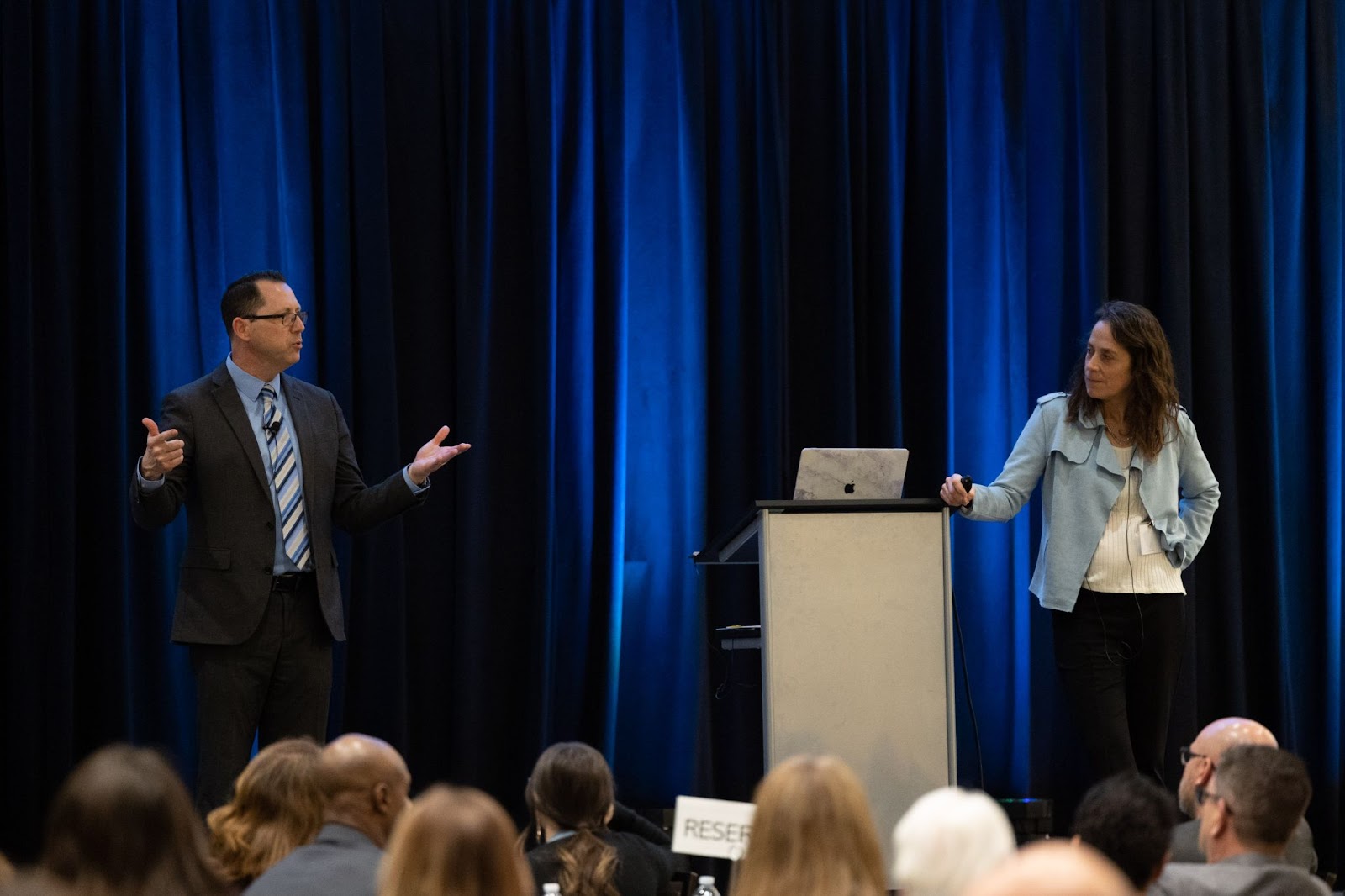
    Will was surprised that Jen is tall! Here’s a photo of them presenting together:

    Listen to the entire show for more takeaways!

    The post PMP338: Supporting RTI with Jen Schwanke & Will Parker appeared first on Principal Matters.


    PMP337: Helping Leaders Improve Wellbeing with Dr. Helen Kelly Mar 29, 2023
    Show notes

    Helen Kelly is an author, speaker, consultant, coach and researcher in the field of school wellbeing and culture. She was a principal in international schools in Asia and Europe for 15 years and has been conducting research in the field of principal and teacher wellbeing for almost a decade. Prior to becoming a teacher, she spent ten years as a lawyer in the field of workplace health and safety.

    From this diverse experience, Helen brings a unique and valuable perspective to her writing, workshops and consulting. She works with schools around the world, in both the public and private sectors, to help them to maximize staff wellbeing and improve workplace culture. She also works with leadership teams and individual leaders to help them to make their leadership more sustainable.

    She is the author of the new book School Leaders Matter: Preventing Burnout, Managing Stress and Improving Wellbeing, published by Routledge. Helen is from the UK but is in the process of moving to the west coast of Ireland.

    Can you fill in the blanks on that introduction and tell listeners something else they may be surprised to know about you?

    I experienced a burnout in 2019 and had to cut my career in education short.

    You spent a career practicing law before becoming an educator, and you’ve served in international settings. How has your time in different career paths provided you a perspective that may be helpful for school leaders to consider in their own practice?

    Having worked as a lawyer in the field of workplace health and safety, I have an understanding of how we should be treating stress as a health and safety risk in the same way as other risks. Working in international schools really helped me to understand the emotional demands of the principal’s role. You are responsible for all these people, staff, students and parents who are living away from their support networks. The emotional demands are huge. We talk so much about workload in relation to the amount of work we have to do as leaders but if governments, schools and leaders are to support leader wellbeing effectively, they need to acknowledge, understand and take steps to support emotional and psychological health.

    Your new book focuses on several areas concerning the stress and workloads of school leaders. What causes burnout, how can people recognize it and how can it be prevented?

    Understand burnout as a continuum.

    3 dimensions

    6 areas of worklife

    Book contains details on signs and symptoms of each of the 3 dimensions

    What advice do you have for educators for providing a framework to support thriving and resilience?

    For individual educators it is about understanding 2 things, your work demands and your work recovery.

    Identify areas of mismatch in 6 areas of worklife and take steps to address the imbalance

    Understand their work recovery – 4 areas and 4 periods when we can be experiencing this

    What practical coping strategies do you use or suggest for leaders who are feeling overwhelmed?

    Get your work recovery in place. Sleep. Look for social support – coaching, supervision, networking, mentoring.

    What parting words or advice would you have for leaders and how can they stay connected with your work?

    Your wellbeing matters to the whole community. Schools and leaders need to start taking strategic approaches to improve working conditions for leaders but we also need to start seeing self-care as a core leadership attribute – an investment in the whole school community, rather than being embarrassed about it.

    You can connect with Dr. Helen Kelly at Dr.HelenKelly.com

    The post PMP337: Helping Leaders Improve Wellbeing with Dr. Helen Kelly appeared first on Principal Matters.


    PMP336: Lessons in Influencing Change with Pete Dunlap Mar 22, 2023
    Show notes

    Pete Dunlap lives in beautiful Dayton, Ohio. His 15 years in education includes being a junior high teacher, Principal and CEO of Catholic Central School, in Springfield, Ohio, and High School Assistant Principal at Lehman Catholic School in Sydney, Ohio. It was as an assistant principal that Pete began developing his ideas for better ways to publish learning materials. He retired from school administration to start Better Learning Education, a publishing company based in Dayton, Ohio. Now, three years later, BLE’s workbooks are used by thousands of students all across the country, and Pete splits his time as Head of Research and Development and Director of School Accounts for Better Learning Education. Pete describes himself as a family man and an education nerd.

    Pete and I met through his work with Better Learning Education, specifically his Summer Pops Math Workbooks. In this episode, he tells about his own story of education leadership. As a former principal, he shared lessons he learned in that work that may benefit leaders serving as principals today. He also shares the story of how his work in school leadership led to creating powerful education resources for schools.

    Listen in for Pete’s feedback on these questions and more!

    Topics we discussed:

    • The power of mentorship in your own work and working with others
    • The smartest person in the room is the room
    • Leadership can be lonely; we need others
    • Shout out to Pete’s former leaders Mike, Jim and Denise who encouraged Pete to go into leadership
    • What is moving up? And wanting to do more
    • How can I have a bigger influence?
    • Focus on impact of work, not job title
    • Keeping family a priority over work
    • The search for differentiation, good customer service, and retention of learning
    • Collaborating with others to build Summer Pops Math Workbooks
    • Ask yourself: who can help you do this work? Never solve problems alone

    Check out the Summer Pops Workbooks for your teachers and students. Here’s a message directly from Pete:

    A message from our friend Pete over at Summer Pops Math Workbook:

    Demand is high this year. And if you want to order Summer Pops for your students, you need to place your order soon! If you have not contacted Summer Pops, you should do it this week. Principal Matters listeners can work with Pete directly, his email is Pete@BetterLearningEducation.com or visit their website, SummerPopsWorkbooks.com to learn more. Summer Pops are designed for your students to practice math over the summer. They are engaging, easy-to-use, and content rich. Summer is almost here, visit SummerPopsWorkbooks.com to learn more.

    Stay connected with Pete Dunlap:

    Pete@BetterLearningEducation.com

    Go to SummerPopsWorkbooks.com to request free samples.

    Listen to previous episodes on transitions in education:

    PMP319: Tips for Seeking a New Education Positition with Jen Schwanke

    PMP320: Tips for Seeking a New Education Position with Jen Schwanke (part 2)

    The post PMP336: Lessons in Influencing Change with Pete Dunlap appeared first on Principal Matters.


    PMP335: Branding & Marketing Your Schools with Tyler Vawser and Britanny Keil Mar 15, 2023
    Show notes

    Tyler Vawser is the Vice President of Marketing at Apptegy. Tyler leads Apptegy’s Marketing & Media teams, which offer a number of resources to school leaders including guides to school marketing and SchoolCEO suite including a print magazine, website, and podcast, SchoolCEO Conversations . Tyler was the VP of People and focused on recruiting, onboarding, and culture for 3.5 years at Apptegy. Prior to Apptegy, Tyler worked in NYC in higher education and for startups including Museum Hack and Sticker Mule.

    Brittany Keil is a writer, and researcher with SchoolCEO, a research and perspectives magazine for school superintendents and other K12 leaders published by Apptegy. Prior to working as a writer full-time, Brittany taught English and Special Education for eight years in Arkansas and in Washington, D.C. Brittany is an alumna of Johns Hopkins University, the University of Central Arkansas, and is a former Fulbright Scholar.

    Here are a few questions we explore:

    What are your respective journeys into education and what led you to your work with Apptegy?

    Both Tyler and Brittany’s families have worked in the fields that they are currently working in. Tyler’s grandparents had a long history of education leadership in rural Colorado, while Brittany’s family has a history of working in media development. Brittany’s side job as a copywriter while teaching led her to the work she does today. Tyler’s work with startups in NYC led to him working with Apptegy in Arkansas. Since beginning to work there, Apptegy has grown from a small company to one with 400 employees.

    Can you explain what topics SchoolCEO covers and what guidance you provide school leaders on school marketing?

    Apptegy has created tools to help leaders navigate easier ways to communicate their values. Marketing is every experience others are having in our school. Principals are often the most trusted persons in a community. You must know your core identity and communicate those values to your community. These impressions of your school also influence how others feel about public education in particular.

    How is a school like a brand? How can principals play an important role in that?

    Schools are a brand; the question is are they being intentional about shaping that brand or is it being shaped for them? Brands are very much fueled by the community that a school serves and how that community feels about the school. School leaders can help play a role in shaping the brand of schools by highlighting the positive stories that happen in their school.

    What lessons have you learned in your own education/leadership experiences and transitions in work that may benefit other leaders? What are some of your favorite takeaways from leaders influencing education today?

    Most education leaders love their work and are dedicated to the best for all students they serve. The difficulties of the work should not overshadow the good outcomes happening in your schools. The power of curiosity is what leads to learning – especially when people are given permission to fail while trying new ideas or learning experiences.

    Any parting words of advice for listeners, and how can they stay connected with you and your resources?

    Stay connected through their website: https://www.schoolceo.com/ for podcasts, a newsletter for leaders and more! Here’s a free resource from Tyler and Brittany: The Principal’s Guide to School Marketing.

    The post PMP335: Branding & Marketing Your Schools with Tyler Vawser and Britanny Keil appeared first on Principal Matters.


    PMP334: Questions on Student Behavior with Jen Schwanke Mar 08, 2023
    Show notes

    A listener who is an administrator on the middle and high school level who has the opportunity to become a Vice Principal wrote to Will and Jen:

    “As a classroom teacher this year has been quite challenging because there are some students who resist learning and either not coming to class prepared or asking to go to the bathroom repeatedly during the lesson, distracting or socializing during instruction, regardless how many times I go over expectations with them. What are some policies I can incorporate or I can tell teachers to incorporate as a future Vice Principal so that teachers would get support with similar types of issues?

    There’s two questions being asked by this listener:

    Question 1: What do you do about student discipline?

    As a teacher managing a classroom, acknowledge that with every student comes a new adventure and a new journey, so there is no one size fits all when it comes to student discipline. However there are practices that will help provide consistency, predictability, and help provide students with an environment that they feel is stable and safe for learning. Give yourself the grace to realize that even when you’re doing things right, there will still be challenges.

    As an administrator, it is important to understand trauma informed discipline (see resources below for a great book about this subject). Having a lack of understanding of what’s going on behind a student’s behavior can sometimes make it difficult to know what to do about the behavior. As a school, ask yourself about discipline, “What are our common definitions and what do we mean by them?”

    Question 2: What should you say in an interview?

    There is no one right answer to this question in an interview setting. The answer is to be truthful and authentic. What do you believe? How can you be confident and vulnerable? Being yourself and answering the question truthfully are what will show interviewers that you are the right candidate for the position.

    Even though there is not going to be a right answer, there are principles that can be practiced that can create a better environment for student learning. As an interviewee, it can be helpful to focus on those principles instead of trying to find the right answer to the discipline question.

    Resources for classroom management and student behavior:

    Harry Wong, author of The First Days of School: How to Be an Effective Teacher, reminds us of seven questions every student asks about his or her teachers:

    1. Am I in the right room?

    2. Where am I supposed to sit?

    3. Who is the teacher as a person?

    4. Will the teacher treat me as a human being?

    5. What are the rules in this classroom?

    6. What will I be doing this year?

    7. How will I be graded?

    Reaching and Teaching Children Exposed to Trauma by Dr. Barb Sorrels

    Connect with Jen Schwanke

    Twitter: @JenSchwanke

    Email: schwanke_jennifer@dublinschools.net

    The post PMP334: Questions on Student Behavior with Jen Schwanke appeared first on Principal Matters.


    PMP333: Understanding ChatGPT with Naheed Bardai Mar 01, 2023
    Show notes

    Naheed Bardai is the Principal of UWC Atlantic and arrived in south Wales in August 2021 from Upper Canada College in Toronto, where he was head of upper school for six years. Before that, he served as dean of students and senior school principal during his 10 years at the Aga Khan Academy in Mombasa, Kenya. For Naheed, education is a deeply moral endeavor and the exercise of leadership demands a thoughtful, ethical foundation. His own rests on the tenets of pluralism, integrity, generosity and trust.

    He holds a Bachelor degree in Business Administration from the Western University, Canada; a Bachelor degree in Education from the University of British Columbia, Canada; Masters of Arts from the Institute of Education, University College London, UK; Masters of Educational Leadership from Teachers College, Columbia University, USA.

    I invited you on the show after a listener benefited from a webinar on understanding ChatGPT. Before we go there, can you give a brief summary of your work at UWC Atlantic and some examples of unique offerings there for listeners to know more about the school community?

    UWC Atlantic is a college that serves students from ages 16-19 that creates intentional diversity among students. They are serving 360 students from 80 countries. There are 18 UWC schools at the moment. They focus on creating a better and more diverse world with a focus on sustainably.

    Like many school leaders, ChatGPT has become the latest AI software to assist or disrupt the way we interact with information, content-creation and potential learning. For those who are new to the technology, can you give an overview for school leaders on ChatGPT and its effects or potential effects on schools?

    ChatGPT is an AI that interacts in a conversational way with the user. Many educators are facing fear-based responses. How do we build trust and determine what to embrace, integrate or restrict?

    What obstacles and advantages do you see or anticipate as students and teachers use ChatGPT?

    Some of the challenges really sit around deciding the ways in which we embrace, integrate, or reject AI such as ChatGPT. Another challenge is the ways in which students may use ChatGPT to produce inauthentic work. It also presents a potential opportunity for students to learn how to ask questions and become fact checkers for work produced by an AI. There’s opportunities for a different kind of learning to happen when using ChatGPT and other AI software.

    What advice would you have for leaders navigating these pros and cons?

    Pros with ChatCPT involve assistance for language learners, synthesizing information, use of lesson planning, writing report card comments, university reference letters, fundraiser campaigns, interview guides with rubrics. Principal Naheed Bardai has encouraged his campus by starting a dialogue with a committee of teachers and students. The explore: How will we guide our community? How will we allow these principles to guide our actions? What advice should we give in light of these principles? Be flexible: the technology is going to change very quickly and you must be adaptable.

    As we wrap up, I’d also like to talk about your own leadership journey. You’ve been a school leader with an international perspective. What lessons or ideas in leadership may be helpful for others (experienced or beginning) to keep in mind in the places where they serve?

    When I have energy from students, I know I am in the right place. I firmly believe that leading a school is a deeply moral endeavor. Schools are complex systems and we have a responsibility to design them with equity in mind. Compassion is the core. Leading is a deeply human endeavor and requires us to create safe spaces for student learning.

    Any parting words or thoughts you’d like to share with other school leaders? How can listeners stay connected with you?

    You can reach Naheed Bardai via email: naheed.bardai@uwcatlantic.org

    UWC Atlantic social accounts are:

    Instagram: @uwcatlantic

    Twitter: @UWCAtlantic

    Linkedin: UWC Atlantic College

    The post PMP333: Understanding ChatGPT with Naheed Bardai appeared first on Principal Matters.


    Previous 1 28 29 30 31 32 50 Next

    Related Podcasts

    Making Sense with Sam Harris

    1

    Making Sense with Sam Harris Education
    Grammar Girl

    2

    Grammar Girl Education
    Good Life Project

    3

    Good Life Project Education
    Explain It to Me

    4

    Explain It to Me Education
    Team Never Quit

    5

    Team Never Quit Comedy
    Optimal Living Daily – Personal Development and Self-Improvement

    6

    Optimal Living Daily – Personal Development and Self-Improvement Alternative Health
    footer-logo

    Contact Us

    Toll Free: 844-670-7747

    Links

    • Home
    • Top Charts
    • Networks
    • Apps
    • Independents Podcasts
    • Podcast Advertising
    • Podcast News
    • Contact Us
    • About Us
    • Analytics & Insights

    Stay Connected

      Privacy, Terms of Use & Our Code of Ethics Protecting Content Creators Copyrights