TopPodcast.com
Menu
  • Home
  • Top Charts
  • Top Networks
  • Top Apps
  • Top Independents
  • Top Podfluencers
  • Top Picks
    • Top Business Podcasts
    • Top True Crime Podcasts
    • Top Finance Podcasts
    • Top Comedy Podcasts
    • Top Music Podcasts
    • Top Womens Podcasts
    • Top Kids Podcasts
    • Top Sports Podcasts
    • Top News Podcasts
    • Top Tech Podcasts
    • Top Crypto Podcasts
    • Top Entrepreneurial Podcasts
    • Top Fantasy Sports Podcasts
    • Top Political Podcasts
    • Top Science Podcasts
    • Top Self Help Podcasts
    • Top Sports Betting Podcasts
    • Top Stocks Podcasts
  • Podcast News
  • About Us
  • Podcast Advertising
  • Contact
Not in our directory?
Add Show Here
Podcast Equipment
Center

toppodcastlogoOur TOPPODCAST Picks

  • Comedy
  • Crypto
  • Sports
  • News
  • Politics
  • True Crime
  • Business
  • Finance

Follow Us

toppodcastlogoStay Connected

    View Top 200 Chart
    Back to Rankings Page
    Education

    Mastering Business Analysis

    Your key to advancing your career as a Business Analyst and beyond

    Advertise

    Copyright: © MasterClass 247 LLC

    • Apple Podcasts
    • Google Play
    • Spotify

    Latest Episodes:
    MBA056: Design Thinking for Better Business Analysis Jan 26, 2016
    Show notes

    In this episode, Blair Loveday and Kupe Kupersmith discuss the benefits of design thinking and show us how to apply design thinking for better business analysis.

    

    After listening to this episode, you'll understand:

    • What design thinking is and how it applies to business analysis
    • The benefits and value proposition of design thinking
    • How to get started with design thinking
    

    Show Notes

    Design thinking is a creative approach to solution-based problem solving and innovation that puts people at the center. It allows you to create solutions that customers truly want and need.

    Design Thinking is quickly becoming a leading approach for product development, innovation, and problem solving. Business problems are getting more complex and harder to solve. Without innovation and a human centered focus, we will find it difficult to satisfy and delight our customers in the future.

    A Design Thinking approach allows you to focus on tackling a problem with a people lens and a customer experience angle. In the end, Design Thinking is just good business analysis applied the right way.

    Design Thinking is the New Agile

    Many organizations have adopted an agile approach to product and project delivery. Most are now focusing on maturing their agile practices. While Design Thinking has been around for several decades now, there has been a big push lately to develop Design Thinking skills. It has been highlighted by research and training organizations as a major trend and “The Next Big Thing”.

    There’s not one way to apply a Design Thinking approach. It’s taking the principles of Design Thinking and figuring out what works for you. Design thinking and agile go well together due to some of their similarities, but you don’t need to use an agile approach to apply design thinking.

    A lot of the success in agile comes from collaboration and understanding what skills you bring. Similarly, Design Thinking allows you to apply a number of lenses to look at problems in different ways, apply different skills and perspectives, and focus on solutions that address customer needs.

    Design Thinking gives Business Analysts a ticket to get involved earlier to project conception. It allows you to express an idea in a way that creates a shared understanding and develop that idea into something that the customer wants.

    Design Thinking vs. UX Design

    Many people have a misconception that Design Thinking is the same as User Experience (UX) or Customer Experience (CX) design. While UX Design deals with how the customer will interact with the solution, Design Thinking comes before the solution is identified and ensures that the right solution is built.

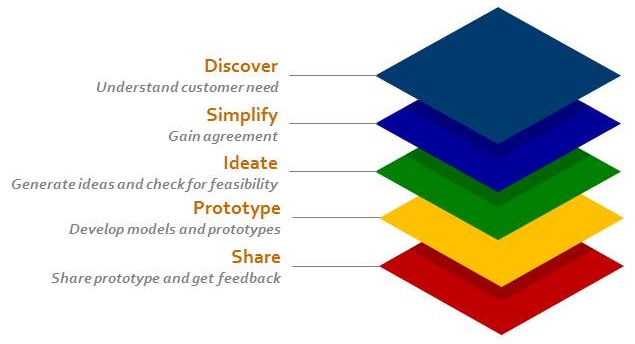
    Blair and Kupe’s five-step Design Thinking process

    Design thinking approach

    This approach is something Business Analysts should be doing anyway – just possibly using different tools. The techniques of Design Thinking are not a big jump from what Business Analysis professionals do today.

    People have a perception that Business Analysts work is exclusively in the domain of requirements. Business Analysts have the skills to apply Design Thinking and find opportunities to get a seat at the table and involved earlier in shaping projects and solutions.

    Get your Design Thinking Guide now.

    Click Here to Get Your Free Guide to Getting Started with Design Thinking

    The Design Thinking Value Proposition

    Design Thinking brings value to organizations by allowing you to innovate and create a solution that meets the customer’s needs. This is predicated on the ability to understand who your real customers are and understanding their point of view. You must get the right people in the room; and the right people are customers.

    To be successful, focus on the customer and take them on your journey. It creates a fail-fast-and-learn culture and helps you build products that our customers really want and will consume.

    Listen to the full interview to hear all of Blair and Kupe’s advice on Design Thinking and how to get started.

    http://traffic.libsyn.com/masteringbusinessanalysis/MBA_056.mp3

    Z

    Your Homework

    Kupe’s Tip: Learn more about Design Thinking and how you can incorporate a Design Thinking approach into your work. Don’t be afraid to try new approaches and learn. Having a supportive network helps with this.

    Blair’s Tip: Just do it. Imbed something into your day to day routine, such as visualizations or adjust the way you facilitate. Surround yourself with like-minded individuals.

    Links mentioned in this episode:

    • Blair’s company, Redvespa
    • Kupe’s company, B2T Training
    • BATimes
    • Kupe’s radio show – Technology Expresso Café
    Blair Loveday

    Blair Loveday

    Chief Designer at Redvespa

    Blair thrives at the intersection of inspired design, business, and people. He has an insatiable curiosity for design and design thinking and combines his expertise and passion for business analysis, alongside a multi-disciplined design thinking approach to help clients to not just realize solutions, but design them.

    • X
    Kupe Kupersmith

    Kupe Kupersmith

    President & Principal, B2T Training

    Kupe has over 15 years of experience in software systems development. Kupe is a Certified Business Analysis Professional (CBAP®) and co-author of Business Analysis for Dummies.

    • X

    Click below to get your guide to Getting Started with Design Thinking

    Thank you for listening to the program

    To get more valuable content to enhance your skills and advance your career, you can subscribe on iTunes.

    Also, reviews on iTunes are highly appreciated! I read each review and it helps keep me motivated to continue to bring you valuable content each week.

    The post MBA056: Design Thinking for Better Business Analysis appeared first on Mastering Business Analysis.


    MBA055: The Agile BA – Interview with Ryland Leyton Jan 19, 2016
    Show notes

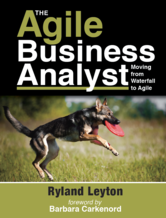
    In this episode, Ryland Leyton, author of The Agile Business Analyst: Moving from Waterfall to Agile, joins us to talk about what it means to be an agile business analyst and how to be successful in an agile environment.

    

    After listening to this episode, you'll understand:

    • How a business analyst can support organizational change
    • How to use the Discovery and Delivery framework in an agile environment
    • How to be transparent in your analysis work
    • Why agile isn’t simply a series of short waterfall phases
    • How to use an elevator pitch to show your value proposition
    

    Show Notes

    How can a business analyst support organizational change in the move from waterfall to agile?

    Think in terms of enterprise analysis. The business analyst is well-positioned to think about all of the impacts of the project across the enterprise including funding, managing, supporting, training, and any number of business processes affected by the product. By keeping enterprise analysis in mind, were able to interface with all affected groups and individuals to ensure any impacts are identified and addressed.

    Because of our nature of being communicators and interacting with many areas of the organization, we’re well positioned to help the various groups within our organization to understand the change needed and how to adapt to those changes.

    Applying the Discovery and Delivery Framework

    The Discovery and Delivery Framework provides a way of thinking about what you’re doing in an agile context. The Discovery and Delivery Framework provides several concepts including:

    • See the whole – Are we looking at everything in the context of the entire system? One technique to use for this is value stream mapping.
    • Think as a customer – Understand who is going to use the product and the value that the customer expects to get out of it. Personas and story mapping are techniques you can use to think like a customer.
    • Get real with examples – Do you have an example of how the customer will use the product? This allows you to have a better understanding of how the customer will use the product and any impacts or challenges. Behavior Driven Development (BDD) is a frequent technique used here.
    • Understand what is valuable – Understanding who the customer is and the challenges they face will help you to understand what will be valuable to the customer and design the product to provide that value in the fastest way possible. Some of the techniques that support this concept are backlog management and Kano analysis.
    • Analyze to understand what is doable – Understanding what can be done to provide value given what we know about the other areas of the Discovery and Delivery Framework. One technique you can use here is real options.

    Keeping these concepts in mind helps you maintain an agile and value mindset when speaking with customers and stakeholders.

    Make Analysis Visible with the Analysis Wall

    The Analysis Wall is very similar to the development wall, which is a physical wall (or electronic version of one) that shows the progress of a user story. The progress can include stages such as ready, development, testing, and deployed.

    Instead of showing progress of a piece of development work, the Analysis Wall shows the progress of analysis work in getting a user story ready to be picked up by the development team. Stages on the analysis wall may include backlog, analysis, sent to Product Owner, sent to UX, ready to estimate, ready to play.

    The analysis wall allows you to prioritize analysis work, avoids creating a full analysis upfront, and makes transparent the progress of getting a story to a ready state.

    Iterative vs. Phases

    People often ask “Isn’t iterative development just waterfall done in very short phases?” On the surface, there are many similarities between iterative development and a phased approach. It can also be a step in the right direction to make your waterfall projects a little more adaptable.

    What’s missing with simply implementing small phases is the ability to learn. With iterative development, the cycles are very short (usually between one and four weeks) to product a tested, working product. Users can then interact with the working software and provide real feedback that can be incorporated into the backlog and prioritized to adapt the product to the user’s needs.

    The faster feedback loops allow you to learn and adapt the product so that you build the product for customer value and don’t build shelf ware.

    The Business Analyst’s Value Proposition

    Ryland has developed a short elevator pitch to articulate the value proposition of the Business Analyst role in an agile environment. The elevator pitch can help others to understand how you as an agile business analyst can support the team, organization, and its customers.

    “As a BA, I free the product owner to focus on the needs, desires, and interests of the end customer. The product owner can then maximize the value of the full suite of products and features that our company offers.
    “While they’re doing that, I’m making sure the project deliverables are analyzed all the way from marketing through ordering, delivery, billing, accounting, and customer support.
    “My focus is on making sure internal and external customers will be satisfied, that the impacts identified and managed so the company has no blind spots, and that the development team has a smooth flow of work to deliver”

    Elevator pitch from The Agile Business Analyst: Moving from Waterfall to Agile by Ryland Leyton

    Don’t forget that as business analysts, we can help coach everyone on prioritization issues and proving out the value of the product. This may include defining minimum viable product (MVP) and prototyping to get early feedback.

    Listen to the full episode to hear all of Ryland’s tips and advice.

    http://traffic.libsyn.com/masteringbusinessanalysis/MBA_055.mp3

    Z

    Your Homework

    A lot of what a business analyst can do in an agile space is around collaboration. Here’s are few suggestions from Ryland.

    1. If you’re on a team that’s just starting out, start by explaining to them the value that you bring to the team. This helps to level set expectations within the team.
    2. For more experienced teams, observe changes from iteration to iteration to have a longer term view. This allows you to see the big picture while knowing the details and gives you line of sight if the team is going off track.
    3. Above all, you should look for opportunities to collaborate and get feedback.

    Links mentioned in this episode:

    • Ryland’s website RylandLeyton.comThe Agile Business Analyst by Ryland Leyton
    • Ryland’s book, The Agile Business Analyst: Moving from Waterfall to Agile
    Ryland Leyton

    Ryland Leyton

    Consultant, Slalom Consulting

    Ryland Leyton is a Certified Business Analysis Professional and a consultant with Slalom Consulting. He’s also an agile coach for the Atlanta IIBA nonprofit volunteer program and a frequent presenter at industry conferences. Ryland is the author of The Agile Business Analyst: Moving from Waterfall to Agile.

    • Facebook
    • X
    • LinkedIn

    Thank you for listening to the program

    To get more valuable content to enhance your skills and advance your career, you can subscribe on iTunes.

    Also, reviews on iTunes are highly appreciated! I read each review and it helps keep me motivated to continue to bring you valuable content each week.

    The post MBA055: The Agile BA – Interview with Ryland Leyton appeared first on Mastering Business Analysis.


    MBA054: Strategy and its Role in Business Analysis Jan 12, 2016
    Show notes

    In this episode, Adrian Reed speaks with us about organizational strategy, why it’s important for business analysis, and how to link your efforts to the overall organizational strategy for greater influence and alignment.

    

    After listening to this episode, you'll understand:

    • Why understanding organizational strategy is critical
    • How to trace your projects back to your organization’s vision and mission
    • How to better understand your organization’s strategy and gain alignment
    

    Show Notes

    Strategy can become an abused word; something used to make things sound more important. Understanding what strategy is and how it traces back to organizational objectives, you can gain alignment within your project team and move the organization closer to it’s vision.

    According to Richard Rumelt, author of the book Good Strategy, Bad Strategy, a strategy is a cohesive response to an important challenge. Unlike a standalone decision or goal, a strategy is a coherent set of analyses, concepts, policies, arguments, and actions that are in response to a high-stakes challenge.

    It’s about the thread from the organizations mission and vision to the projects that helps deliver upon the mission and get you closer to the vision. Strategy is what drives everyone in the same direction.

    Without clarity into the mission, vision, and strategy, how can we be sure that we’re not working on several projects that are pulling the organization in many different directions?

    Often we’re handed a project (or a solution to implement). We need to help stakeholders step back from that solution illusion and articulate the need and expected outcomes. Once outcomes are understood, you can verify if the outcomes are aligned to the strategy, mission, and business environment. If there is misalignment, you should bring this to the attention of stakeholders and the sponsor for discussion.

    The Business Analyst is in a great position to be a guardian for strategic alignment.

    By applying systems thinking, you can see the big picture of how your organization delivers value and the individual pieces (processes and projects) that contribute to value delivery. You can also see how each projects aligns (or fails to align) with the organizational strategy.

    VMOST

    Adrian uses an approach called VMOST to ensure alignment from the organization’s mission to its projects. VMOST is an acronym and stands for Vision and Mission, Objectives, Strategy, and Tactics.

    Vision and Mission Objectives Strategy Tactics

    The mission is the organization’s core purpose and the vision is an envisioned future state. The mission likely won’t change whereas the vision may be updated from time to time. The vision and mission help provide clarity and alignment within the organization. However, they’re not directly executable. They need to be decomposed to take action.

    The objectives are the measurable goals that move us closer to the mission and vision. Objectives are still too big and aspirational to directly action. Objectives are therefore decomposed into multiple strategies.

    The strategy provides direction as to how the organization will achieve the objectives. Strategies are further decomposed into tactics.

    The tactics are the actionable projects and tasks that will be done to achieve the strategy and objectives.

    Through an understanding of VMOST, you can trace your projects and tasks back to the strategy, objectives, mission, and vision to ensure that they align and question those that do not align. Projects should have an objective or opportunity statement that traces back to a higher level.

    Gaining Alignment

    Starting off a project with a kick-off meeting in which you explain the project and tie it back to an organizational objective and the company mission is a great way to gain alignment within the project team.

    You can also start a project by developing a strategic problem statement such as the one below to get all stakeholders aligned with what you’re doing, the expected outcomes, and how it aligns with organizational objectives.

    The problem of ___________ is affecting ____________. The impact of which is _____________. A successful solution would _____________. This aligns with our stated strategy by ______________ and would help us to meet our objectives of _____________.

    Listen to the full interview to get all of Adrian’s tips and advice.

    http://traffic.libsyn.com/masteringbusinessanalysis/MBA_054.mp3

    Z

    Your Homework

    Get to know your organization’s VMOST. If you don’t know it, ask. This has many benefits included being seen as a leader and strategic thinker.

    Links mentioned in this episode:

    • Adrian’s blog
    • Blackmetric Business Solutions website
    Adrian Reed

    Adrian Reed

    Director and Principal Consultant at Blackmetric Business Solutions

    Adrian is Principal Consultant at Blackmetric Business Solutions, providing business analysis consultancy and training solutions to a range of clients in varying industries. He is President of the UK chapter of the IIBA and speaks internationally on topics related to business analysis and business change.

    • X
    • LinkedIn

    Thank you for listening to the program

    To get more valuable content to enhance your skills and advance your career, you can subscribe on iTunes.

    Also, reviews on iTunes are highly appreciated! I read each review and it helps keep me motivated to continue to bring you valuable content each week.

    The post MBA054: Strategy and its Role in Business Analysis appeared first on Mastering Business Analysis.


    MBA053: Use Cases and Beyond – with Ivar Jacobson Jan 05, 2016
    Show notes

    In this episode, Ivar Jacobson shares with us the birth of Use Cases, how to apply Use Cases in agile environments, and what lies beyond Use Cases.

    

    After listening to this episode, you'll understand:

    • How the concept of a Use Case was first developed
    • How to use Use Cases in an agile environment
    • Why Use Cases can be a powerful tool in agile development
    

    Show Notes

    The term ‘Use Case’ has become a common term even outside of software development. To project professionals, it’s a way of describing the interaction between a user/role and the system and is a powerful tool for analyzing and documenting requirements. But where did the idea of Use Cases come from?

    The Birth of Use Cases

    In the mid-1980s, Ivar Jacobson was working in telecommunications and needed a way to describe the flow of events for a system function. Ivar decided to treat the system as a black box. He was less concerned about the internal working of the system and more concerned with how users would interact with the system and the value that users get from the system.

    From his abstraction, he created a generic construct (Use Cases) that could be used in many situations to describe a system’s functionality through its interaction with the user. Ian Spence and others helped iterate on the Use Case concept through the popular tool it has become today.

    Use Cases not only allow you to specify requirements; they are the beginning of test cases. As we describe the system interactions with Use Cases, the corresponding test cases emerge in a way similar to test first design.

    Use Case 2.0 for Agility

    As Ivar began looking at Use Case analysis and development, he realized that each Use Case may be made up of multiple threads (flows of events, scenarios, or slices). The best approach is to start with the most important thread an only about 10% of threads represent the architectural baseline.

    By slicing Use Cases, the system can be developed and tested in small, valuable pieces that represent the architectural baseline.

    In looking at scrum, Ian Spence connected Use Case slices to a product backlog. Each slice represented one or more user stories. This makes it possible to scale by seeing the whole system through a Use Case Diagram and delivering the system in small slices that can be used in iterative development.

    Ivar and Ian wrote a book (Use Case 2.0) describing how to apply Use Cases in agile environments while including testing and reusable elements.

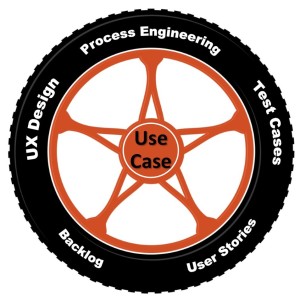
    Use Cases apply to other areas like spokes

    Listen to Ivar’s full interview for more details and find out what lies beyond use cases.

    http://traffic.libsyn.com/masteringbusinessanalysis/MBA_053.mp3

    Related content: Episode 34 – Use Case 2.0

    Z

    Your Homework

    Learn about applying Use Case 2.0 so that you can apply this approach in either traditional or agile environments. It allows you to see the big picture while also slicing large efforts into smaller, prioritized pieces.

    Links mentioned in this episode:

    • Use Case 2.0 eBook (Free Copy)
    • Ivar Jacobson website: http://www.ivarjacobson.com/resources/
    • Use Case 2.0 Training from Ivar Jacobson International
    Dr. Ivar Jacobson

    Dr. Ivar Jacobson

    Founder, Ivar Jacobson International

    Dr. Ivar Jacobson is a father of use cases, the Unified Modeling Language, and the Rational Unified Process. He has contributed to modern business modeling and aspect-oriented software development. He is the principal author of seven influential and best-selling books including Business Process Reengineering with Objects, Object Oriented Software Engineering: A Use Case Driven Approach, and Aspect-Oriented Software Development with Use Cases. Most recently, Ivar has been working on how to deal with methods and tools in an agile and lean way.

    Thank you for listening to the program

    To get more valuable content to enhance your skills and advance your career, you can subscribe on iTunes.

    Also, reviews on iTunes are highly appreciated! I read each review and it helps keep me motivated to continue to bring you valuable content each week.

    The post MBA053: Use Cases and Beyond – with Ivar Jacobson appeared first on Mastering Business Analysis.


    MBA052: Portfolio Management & The Agile Extension Dec 29, 2015
    Show notes

    In this episode, Shane Hastie helps us to better understand how to use the Agile Extension to the BABOK and shows us how Business Analysts can benefit organizations through better portfolio management.

    

    After listening to this episode, you'll understand:

    • What kind of information is in The Agile Extension to the BABOK
    • How to get and use The Agile Extension
    • How to apply agile principles and backlog management to portfolios
    • Why fixing portfolio management can have a big impact
    

    Show Notes

    The Agile Extension to the BABOK®

    The team creating the Agile Extension to the BABOK® looked at some of the techniques that are unique to or applied differently to business analysis in agile environments. While it started as an effort by the International Institute of Business Analysis (IIBA), in 2011 it became a joint effort between the IIBA and the Agile Alliance.

    The agile extension provides more depth than is in the Guide to the Business Analysis Body of Knowledge® (BABOK® Guide). Whereas the BABOK provides information on what to do, the agile extension provides information on how to do it.

    Certified Business Analysis Professional™ (CBAP®) or Certification of Competency in Business Analysis™ (CCBA®) exams, only information in the core BABOK is examinable. Information in the Agile Extension will not be on the exam.

    There are two aspects to the Agile Extension to the BABOK; a broad guideline as to what you would be doing as part of analysis in an agile environment and a framework heavily influenced by Ellen Gottesdiener’s and Mary Goreman’s Discover to Deliver approach.

    Discover to Deliver

    Projects or initiatives broadly have two aspects; discovery and delivery. When you’re doing analysis work, you’re either doing it for discovery (to figure out where next to go) or delivery (getting to the needed just in time detail). You would move between discovery and delivery at a regular cadence as an analyst.

    Information in the Agile Extension to the BABOK includes techniques for discovery such as personas and value stream mapping and techniques for delivery such as Behavior Driven Development (BDD) and Real Options. The extension describes the techniques and how to apply them.

    Portfolio Management in Agile

    In agile, we need to be prepared to constantly adapt our plans. That approach works extremely well at the project or initiative level, but at an organizational level, budgets and plans tend to be longer term and less adaptable.

    The current rate of change often means that those plans are negated and organizations find it difficult to adapt quickly to changing market conditions. We need to take the concept of backlog management and apply it at a higher level to programs and portfolios so that we are able to adaptively respond to changes in the world around us.

    The traditional definition of project success has been on time, on scope, and on budget. Those constraints still exist, but they are not the driving factors today. Instead, we look at maximizing customer value and producing a quality product before focusing on the constraints within which we need to work.

    Changing to a value focus changes our mindset about the way we work. If we apply this thinking to the portfolio level, we are able to chunk it down and deliver the most valuable pieces first while constantly reviewing what we delivered and determining if we need to shift team backlogs to focus on something else.

    Where Can We Start Impacting the Portfolio?

    The first thing we need to do to allow more adaptability at a portfolio level is to express the portfolio backlog in terms of discrete chunks of value. The chunks of the portfolio, which can be referred to as epics, features, or capabilities, should be no longer than half of the typical release cycle (often three months). These smaller chunks of value allow the organization to frequently get feedback and adjust their backlog.

    Consider the metaphor of a roadmap. If you know where you are and where you want to go, a roadmap can show you several ways to get there. You will need to adapt your journey based on your experience in the moment. You may need to take a different route based on traffic conditions or construction.

    Applying similar thinking to portfolio roadmaps, you need to have small enough pieces or value to be able to adapt your route and make rapid changes as the environment around you changes.

    Listen to the full episode to hear all of Shane’s advice.

    http://traffic.libsyn.com/masteringbusinessanalysis/MBA_052__Portfilio_Management_and_th.mp3

    Z

    Your Homework

    Find ways to visualize the backlog not as a linear queue, but as a map. You can do this through Story Mapping, a powerful yet often underutilized technique. Story Mapping is great for visualizing the work to create a shared understanding, seeing the big picture with the ability to also see the details, and provides an opportunity to prioritize group backlog items into MVP, releases, or features.

    What’s your take?

    Have you used The Agile Extension to the BABOK or any of the portfolio management approaches Shane mentioned? Please share your experience and comments in the section below.

    Links mentioned in this episode:

    • Software Education website
    • Shane’s InfoQ content http://www.infoq.com/author/Shane-Hastie
    • IIBA website
    • Agile Alliance
    • Agile Extension download page for Agile Alliance members http://www.agilealliance.org/programs/agile-extension-to-the-babok-guide
    • Shane’s Agile Portfolio Management class http://www.softed.com/nz/courses/view/adaptive-portfolio-management

    Shane will be delivering this as a workshop at Agile India in March 2016 – http://2016.agileindia.org/#

    Shane Hastie

    Shane Hastie

    Chief Knowledge Engineer at Software Education

    Shane Hastie is the Chief Knowledge Engineer and Agile Practice Lead for Software Education, a training and consulting company working in Australia, New Zealand and around the world. Since first using XP in 2000, Shane has been passionate about helping organizations and teams adopt Agile practices. In 2011 Shane was elected as a Director of the Agile Alliance.

    • LinkedIn

    Thank you for listening to the program

    To get more valuable content to enhance your skills and advance your career, you can subscribe on iTunes.

    Also, reviews on iTunes are highly appreciated! I read each review and it helps keep me motivated to continue to bring you valuable content each week.

    The post MBA052: Portfolio Management & The Agile Extension appeared first on Mastering Business Analysis.


    MBA051: A Visit From the Business Analyst Dec 22, 2015
    Show notes

    In this poem adapted from Clement Clark Moore’s “A Visit from St. Nicholas”, we get the Business Analyst version and find out what happens when the BA visits a struggling project team.

    

    A Visit From the Business Analyst

    ‘Twas the night before planning and all across the floor
    People were in a panic; the sponsor, stakeholders, and more.

    The team was certainly trying their best
    While secretly hoping to get out of this mess.

    The developers at their computers, not sure what to do
    Because the vision was lacking – no one had a clue.

    The product owner was sitting, with palm against face.
    Nothing made sense; not even the business case.

    When out from the conference room there rose so much chatter
    I looked up from my iPhone to see what was the matter.

    Up from my seat to the conference room I flew
    And peered in the window to see what I can view.

    The reflection from the whiteboard lit up faces and feet
    While attendees were sitting at the edge of their seat.

    And to whom were attendees all shouting hooray?
    It was none other than our friend the BA.

    With facilitation so engaging and the way he behaved
    I knew in a moment that our project was saved.

    More rapid than eagles the diagrams he drew
    To get better context and collaborate too.

    Now process flows, scenarios, context diagrams, and rules
    On whiteboards, on post-its, Visio and other tools.

    Up from their seats and out to the hall
    Now together in small teams, dash away all.

    As ideas they strike when you’re in the shower,
    When inspiration hits, you waste not an hour.

    So out from the conference room attendees they flew
    With a few great ideas and the analyst too.

    And then at their desks they collaborated more.
    The goal was now clear there was a buzz ‘cross the floor.

    As I spun around, turning my head
    Past flew the business analyst with markers of red.

    He was dressed in a suit, how smart he did look;
    Carrying a laptop and markers and a leather notebook.

    A stack of post-its he held in his hands.
    He was a rock star with plenty of fans.

    His eyes how they twinkled giving an inspiring talk.
    His movements were confident from his stance to his walk.

    His words like a song the lyrics we all know.
    His network was vast, not one was a foe.

    The way his mind worked, he knew what to do;
    He saw the big picture, and details too.

    I went to shake his hand for all he had done;
    He just cocked his head saying “To me this is fun”.

    He had a smile on his face and a grip of my hand.
    I smiled when I met him; we can go on as planned.

    With a shared understanding and the goal so clear,
    Soon gave me to know I had nothing to fear.

    He wasted not a word but cut right to the chase;
    He helped adjust the backlog and cheers filled the place.

    I asked him candidly “how’d you pull off such a feat?”
    He answered quite simply “it’s easy – I cheat”.

    “When people collaborate and work well together
    We accomplish our goals. Alone? No, never.”

    But I heard him exclaim as he walked out of sight
    Let’s change projects for good . . . and to all a good night.

    http://traffic.libsyn.com/masteringbusinessanalysis/MBA_051__A_Visit_From_the_Business_A.mp3

    Thank you for listening to the show. Merry Christmas and happy holidays however you celebrate. I wish you, your family, and your organization a joyful and prosperous New Year!

    The post MBA051: A Visit From the Business Analyst appeared first on Mastering Business Analysis.


    MBA050: The T-Shaped Business Analyst Dec 15, 2015
    Show notes

    In this episode, David Mantica shows us why it’s important for a Business Analyst to be T-shaped and how to develop the broad professional skills needed to be successful.

    

    After listening to this episode, you'll understand:

    • What a referent power base is and how to use it
    • The five tangible professional skills you need to be successful
    • How to make changes and quickly adapt to your environment
    • What steps to take to build your professional skills
    

    Show Notes

    The business analysis profession is built upon being T-shaped. That means that the position requires both deep technical knowledge along with the core analysis skills and a broad set of professional skills and human understanding to deal with the complexities of the role.

    T-shaped skills are critical for problem-solving positions, creative positions, and roles that need to bring alternate sides of a table together to collaborate and quickly come up with a high quality solution.

    The T-Shape
    When we look at a T-shaped employee, the top part of the T is comprised of two sections. On one side is the whole self and the other side is professional skills. The whole self deals with your understanding of stress. That includes an understanding of stress management and the way the brain processes information as well as nutrition and health. The site also includes a servant and pay it forward mindset.

    The whole self is important because it allows you to deal with the stress that could otherwise lead to illness and loss of productivity. It also helps you to better understand some of the biases that influence our decision making.

    Some tools for developing the whole self include meditation and even hobbies and activities outside of work. These tools allow you to enhance your cognitive skills which will allow you to be more effective in your role. There are real and tangible benefits to developing this side.

    The professional skills side is made up of five skills that build upon each other. It starts with emotional intelligence which then builds and the conflict management. From there you build facilitation and negotiation skills. From those skills you develop change management and finally influencer skills. These five skills are the bedrock upon which you need to build your professional toolkit you need to be successful.

    t-shaped business analyst

    The five professional skills
    The foundation of the professional skills side is emotional intelligence. Emotional intelligence ties into biochemical elements as well as professional management. The biochemical portion includes an understanding of brain function and reactions to stress including the fight or flight response. It also includes tools that you can use to cope with some of those unconscious reactions.

    Emotional intelligence has four levels. Those four levels are self understanding, self management, situational understanding, and relationship management. You use emotional intelligence when you’re managing conflict, when you’re negotiating, when you’re dealing with change management, and to influence others.

    Soft skills are hard
    The five areas on the professional skills side can be difficult to develop. It’s not as easy as learning a new technique.

    Start by developing emotional intelligence. This can be done by creating a better understanding of yourself, your hot buttons, and how you deal with others. Taking time to be introspective and reflect on your thoughts and behaviors can help develop emotional intelligence.

    The next step is to use stretch assignments. Stretch assignments are great tool to get someone to go beyond their limits. The stretch assignment may put you in an environment or situation with which you are unfamiliar. You may even make mistakes and fail. The mistakes and failures allow you to learn and adapt as long as you are provided a safety net in the support you need. This creates a learning experience that will make you more productive and effective going forward.

    Role-playing is also an effective way to develop professional skills. Role-playing allows you to practice certain skills in different situations and allows you to quickly get feedback and adapt.

    The fourth action that you could take to develop your professional skills is to find a mentor. Find someone who is strong in the skills that you’re trying to develop and engage in a mentoring relationship.

    Of course, reading and taking training classes can help you to understand theories and practice some of these soft skills. Understanding the theories behind some of these soft skills allows you to develop your awareness and self-awareness and recognize the behaviors in yourself and in others so you can take action to adapt.

    Listen to the full episode to hear all of David’s tips and advice for building your skills and career success.

    http://traffic.libsyn.com/masteringbusinessanalysis/MBA_050__T-Shaped_Business_Analyst.mp3

    Z

    Your Homework

    On the whole self side . . .

    • Read Dan Brown’s book 10% happier and look at the secular side of meditation, which reduces stress and allows you to better control negative self talk.
    • Begin to understand more about our brains and our brains function, which includes stress reactions and how to break habits and biases.

    On the professional skills side . . .

    • Understand emotional intelligence and how to build that skill
    • Be aware that the bottom of the T, your professional discipline, may change three or four times in your career. You can no longer count on the bottom of your T to take you through your professional career. We may have to reinvent that deep professional discipline every six years.

    What’s your take?

    Do you have any suggestions for building your professional skills or human understanding? What actions are you going to take to build your skills and advance your career? Please share your thoughts and comments in the section below.

    Links mentioned in this episode:

    • ASPE website
    • ASPE article on being T-Shaped
    David Mantica

    David Mantica

    President, ASPE-SDLC

    David Mantica has more than 20 years of experience in B2B continuing education. He has participated in and supported the work of numerous certifying bodies including the Scrum Alliance, PMI, IIBA, TrueSecure, and CompTIA. David also is a regular speaker at IIBA and PMI chapters.

    • X
    • LinkedIn

    Thank you for listening to the program

    To get more valuable content to enhance your skills and advance your career, you can subscribe on iTunes.

    Also, reviews on iTunes are highly appreciated! I read each review and it helps keep me motivated to continue to bring you valuable content each week.

    The post MBA050: The T-Shaped Business Analyst appeared first on Mastering Business Analysis.


    MBA049: The First Line of Defense Against a Security Breach Dec 08, 2015
    Show notes

    In this episode, Hans Eckman helps us to understand how the Business Analyst is perfectly suited to be the first line of defense in preventing security breaches. Hans also shares some approaches and advice for handling security related requirements.

    

    After listening to this episode, you'll understand:

    • How your application may be used to gain access to another system
    • How to use systems thinking to discover security needs
    • Why records retention is an important security consideration
    • Where to start when looking for security needs.
    

    Show Notes

    By the time you tried to build security into your product, it’s probably already too late. The business analyst needs to be the advocate for security-related requirements as well as fraud prevention. The business analyst also needs to understand what data is at risk and the impacts of data retention.

    It’s often not your system that gets breached but another system on the network and the interconnectivity of applications on the network have made all systems vulnerable. The business analyst should understand the relationship and connectivity between applications to appropriately understand the risk.

    Think not only of the system aspect but the process as a whole. We need to consider all aspects of the process including the technology, the access of internal personnel, and paper used in the process. Take ownership and consider the security-related risks for the entire process to develop security-related nonfunctional requirements as well as record retention requirements.

    Where do we start?

    A good place to start is with the context diagram. This helps you to see the interrelation between the people and the systems within a process. You can then start drilling down to identify the risk and focus on the highest value and highest risk areas.

    Once you identify the high-risk areas, you can work with subject matter experts from security teams to better understand security policies and record retention requirements. Developers and architects can also help you to understand security needs.

    The basic goal of security is to keep people out. However, there will be people who need access. As a business analyst, you need to understand the various roles and levels of access needed. We also need to understand what needs to happen when the user makes a change. Do we need to log that change or update the version?

    Start to think of the data as an actor itself. This goes beyond abuser stories which we discussed in episode 43. This access control model will drive out most of the value you’ll have in a project.

    Capturing Requirements

    When it comes to capturing some of the security requirements, we often use functional or nonfunctional requirements. In agile, you can do the same with user stories or acceptance criteria. A good approach is to get together with a tester any security representative to try and pick apart the requirements and find security holes.

    Any time you can build a set of baseline security requirements, you will likely be able to reuse those requirements for future enhancements or other projects. Essentially, you are establishing the security and records retention policy in a set of requirements that can be maintained in a repository for future use.

    With the prevalence of identity theft and stolen data, guarding against a security breach is everyone’s responsibility. The more we learn from each other, the harder it will be for criminals to gain access to critical data.

    Listen to the full episode to hear all of Hans Eckman’s advice for defending against a security breach.

    http://traffic.libsyn.com/masteringbusinessanalysis/MBA_049__The_First_Line_of_Defense_A.mp3

    Z

    Your Homework

    We don’t have to learn by ourselves from our own mistakes. There are plenty of resources on the Internet, through podcasts, through industry associations such as the IIBA, and conferences that we can use to build our skills and share information. Leverage your network and the work that’s been done by others; start with some of the effective practices in your industry.

    What’s your take?

    What’s your approach to discovering and capturing security requirements? Please share your tips, experience, and comments in the section below.

    Links mentioned in this episode:

    • Hans Eckman’s website
    • Hans’ presentation slides and video
    Hans Eckman

    Hans Eckman

    GVP at SunTrust Bank

    Hans Eckman provides linchpin leadership and consulting for rapidly evolving companies, with 19 of his 25+ years’ experience creating workflow & support optimization solutions across diverse industries. Hans rejoined the Innovation Programs team at SunTrust Bank, where he helps develop disruptive programs and products that drive innovation, process improvement, and engagement across the enterprise. Hans co-founded the SunTrust BA Center of Excellence. His presentations can be viewed at http://hanseckman.com.

    Thank you for listening to the program

    To get more valuable content to enhance your skills and advance your career, you can subscribe on iTunes.

    Also, reviews on iTunes are highly appreciated! I read each review and it helps keep me motivated to continue to bring you valuable content each week.

    The post MBA049: The First Line of Defense Against a Security Breach appeared first on Mastering Business Analysis.


    MBA048: Finding the Minimum Viable Product Dec 01, 2015
    Show notes

    In this episode, Jeff “Cheezy” Morgan helps us to understand why the Minimum Viable Product (MVP) concept is so important and how to find the MVP for your project.

    

    After listening to this episode, you'll understand:

    • The real meaning of Minimum Viable Product (MVP)
    • How to use the MVP to ensure you build the right solution
    • How to find the MVP – even on legacy projects
    

    Show Notes

    Most teams have a misconception about what the Minimum Viable Product (MVP) is. The MVP is really the simplest way possible to prove a hypothesis. That hypothesis is often related to the software solution we’re trying to build and our assumption that the solution will meet customer needs.

    Finding the Minimum Viable Product allows teams and organizations to create the simplest thing possible to prove or disprove their assumption that their solution is viable by getting customer feedback.

    The thought behind the MVP is to rapidly get feedback from customers in the cheapest and fastest way possible without having to build a full, final product that might not meet customer needs.

    Some examples of companies that used the MVP concept are Apple, Zappos, and Dropbox.

    Zappos, an online shoe retailer, started without have any shoes in stock. When a customer placed an order, they went to a local shoe retailer to purchase the shoes and sent them to the customer. For Zappos, their MVP was a website from which customers could see information about shoes and place an order. They used this MVP approach to prove that customers would be willing to buy shoes online.

    When Dropbox started, they weren’t sure that people would be comfortable storing their files on the cloud. Instead of investing to build out their infrastructure before they knew that their product would be viable, they started with a very small MVP; a video. They went live with a website and a three-minute video.

    MVP isn’t just for startups and new products

    Many organizations don’t use the Minimum Viable Product concept because they don’t think it applies to them. They may be working on legacy systems and established products with existing customers.

    The MVP requires a different way of thinking about products and solutions. Any enhancements to existing products or existing systems are unknowns and can be tested using an MVP.

    We need to think about shorter release cycles and simple ways to test for some of our hypotheses. MVP allows you to make sure you’re on the right track and course correct when needed very quickly and at lower cost.

    The belief that we know what the customers want has been proven wrong again and again. There are hundreds of products in the market with features that are rarely or never used.

    Finding the MVP

    To discover the MVP, have an experimentation mindset. Start with a hypothesis stating we expect to happen by implementing a solution and how we will measure the outcome. Once you have a hypothesis, think of small ways that you can test that hypothesis to prove (or disprove it).

    Question assumptions about what the customer needs and would find valuable and come up with small, cheap experiments to prove

    Possible options may include simple prototypes (physical or paper) or anything you can show to customers to get feedback and make adjustments based on that feedback.

    One possible way of expressing a hypothesis is:

    We believe that by [creating this solution] we will [solve this problem] which will have [these benefits] as measured by [these metrics]

    Listen to the full episode to hear all of Cheezy’s tips.

    http://traffic.libsyn.com/masteringbusinessanalysis/MBA_048__Finding_the_MVP_-_Interview.mp3

    Z

    Your Homework

    1. Understand that just because we believe users will value something doesn’t mean it’s correct. Question that assumption and come up with ways to test that idea.
    2. Become familiar with continuous delivery as the ultimate form of MVP. This is the essence of putting small things in front of users and getting feedback to make small adjustments.

    What’s your take?

    Have you used any techniques to find the MVP or similar approaches? Have you had any challenges in discovering the MVP? Please share your experience and comments in the section below.

    Links mentioned in this episode:

    • Cheezy’s website CheezyWorld
    • ExtremelyCheezy YouTube Channel
    Jeff "Cheezy" Morgan

    Jeff "Cheezy" Morgan

    Chief Technology Officer of LeanDog

    Jeff “Cheezy” Morgan is the Chief Technology Officer and a co-founder of LeanDog. He has been teaching classes and coaching teams on agile and lean techniques since early 2004. Most of his work has focused on the engineering practices used by developers and testers. He has authored several popular Ruby gems used by software testers and the book Cucumber & Cheese – A Testers Workshop.

    • X

    Thank you for listening to the program

    To get more valuable content to enhance your skills and advance your career, you can subscribe on iTunes.

    Also, reviews on iTunes are highly appreciated! I read each review and it helps keep me motivated to continue to bring you valuable content each week.

    The post MBA048: Finding the Minimum Viable Product appeared first on Mastering Business Analysis.


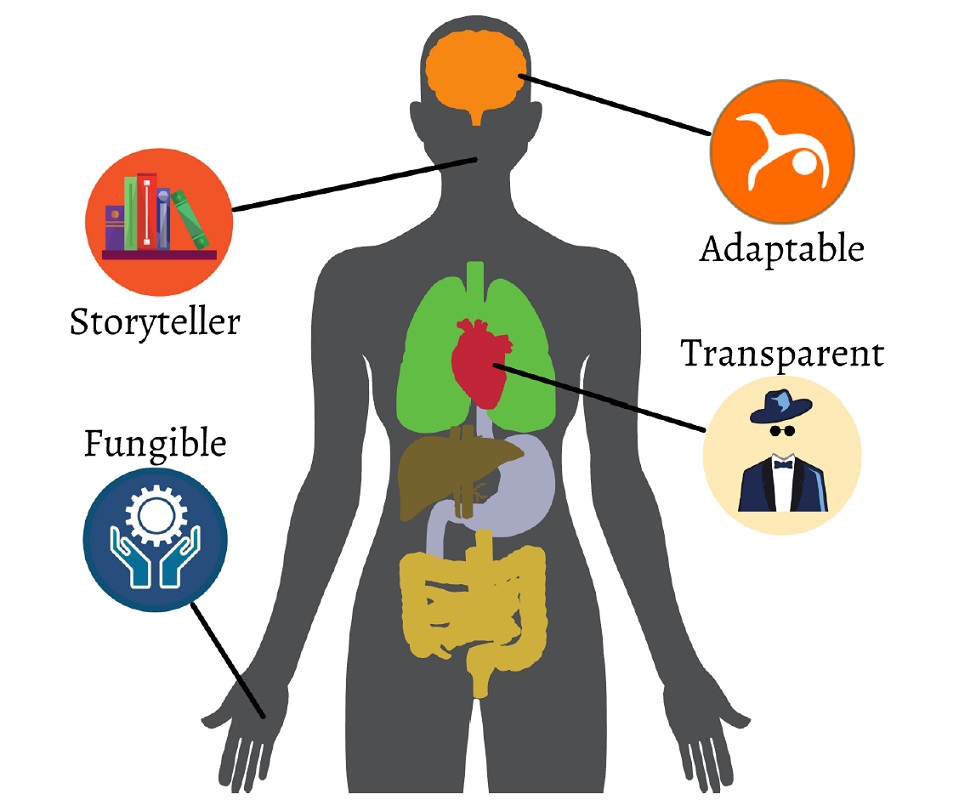
    MBA047: The DNA of a Great Agile Business Analyst Nov 24, 2015
    Show notes

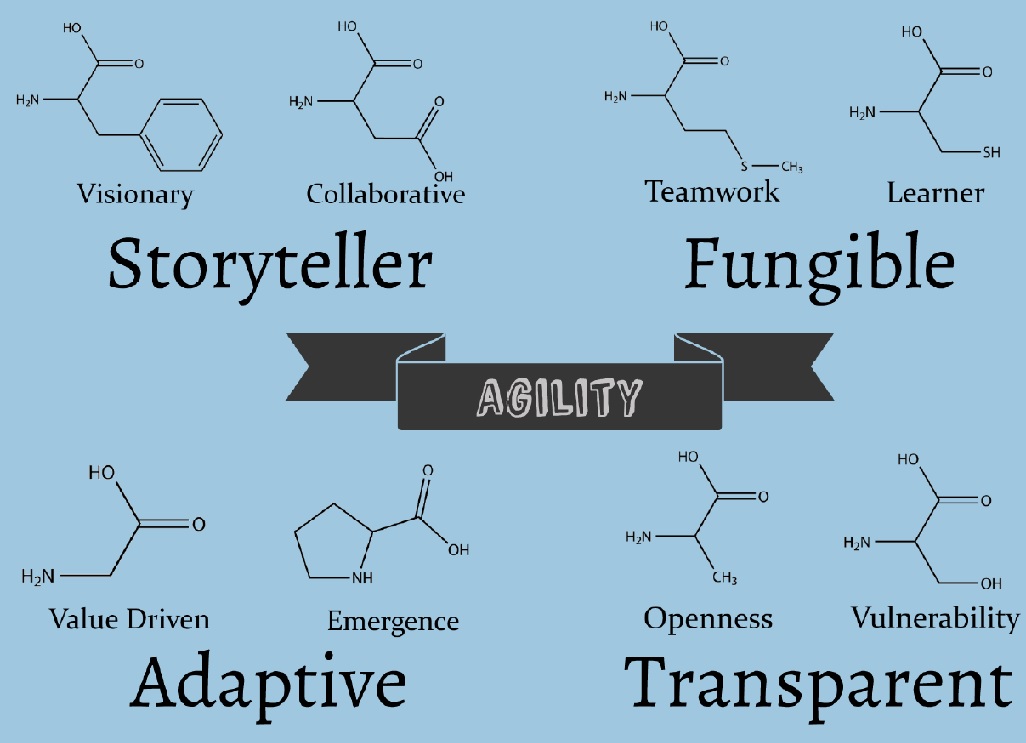
    In this episode, we’ll explore the elements that make up the DNA of a great Agile Business Analyst, help you understand the impact of having (or not having) these traits, and find out what you can do if you or other team members don’t have these traits as part of their DNA.

    

    After listening to this episode, you'll understand:

    • Understand the mindset and key traits you need to become a great agile business analyst
    • Discover how combinations of traits will allow you to bring more value to your team and organization
    • Find out what you can do if you don’t have these agile characteristics as part of your DNA
    

    Show Notes

    Agile is more than a way of delivering a product to customers faster. It’s a mindset, a philosophy based on a set of values and principles. The best Business Analysts in agile environments have several key characteristics in common that allow them to bring value to their teams and organizations.

    Watch this video of the presentation.

    http://traffic.libsyn.com/masteringbusinessanalysis/Video_-_DNA_of_a_Great_Agile_Business_Analyst.mp4

    DNA of a great agile business analyst

    Great Agilr Business Analysy behaviors

    Z

    Your Homework

    Reflect on your own traits to determine if you have any weaknesses related to the key traits and behaviors of a great agile business analyst. For any shortcomings, devise a plan to pair with someone or develop your skills in that area.

    Thank you for listening to the program

    To get more valuable content to enhance your skills and advance your career, you can subscribe on iTunes.

    Also, reviews on iTunes are highly appreciated! I read each review and it helps keep me motivated to continue to bring you valuable content each week.

    The post MBA047: The DNA of a Great Agile Business Analyst appeared first on Mastering Business Analysis.


    Previous 1 21 22 23 24 25 28 Next

    Related Podcasts

    Making Sense with Sam Harris

    1

    Making Sense with Sam Harris Education
    Grammar Girl

    2

    Grammar Girl Education
    Good Life Project

    3

    Good Life Project Education
    Explain It to Me

    4

    Explain It to Me Education
    Team Never Quit

    5

    Team Never Quit Comedy
    Optimal Living Daily – Personal Development and Self-Improvement

    6

    Optimal Living Daily – Personal Development and Self-Improvement Alternative Health
    footer-logo

    Contact Us

    Toll Free: 844-670-7747

    Links

    • Home
    • Top Charts
    • Networks
    • Apps
    • Independents Podcasts
    • Podcast Advertising
    • Podcast News
    • Contact Us
    • About Us
    • Analytics & Insights

    Stay Connected

      Privacy, Terms of Use & Our Code of Ethics Protecting Content Creators Copyrights