Our TOPPODCAST Picks
 Audio narrations of LessWrong posts. Includes all curated posts and all posts with 125+ karma.
If you’d like more, subscribe to the “Lesswrong (30+ karma)” feed.

 Stay Connected
Audio narrations of LessWrong posts. Includes all curated posts and all posts with 125+ karma.
If you’d like more, subscribe to the “Lesswrong (30+ karma)” feed.
Copyright: © 2023 LessWrong Curated Podcast


[This is our blog post on the papers, which can be found at https://transformer-circuits.pub/2025/attribution-graphs/biology.html and https://transformer-circuits.pub/2025/attribution-graphs/methods.html.]
Language models like Claude aren't programmed directly by humans—instead, they‘re trained on large amounts of data. During that training process, they learn their own strategies to solve problems. These strategies are encoded in the billions of computations a model performs for every word it writes. They arrive inscrutable to us, the model's developers. This means that we don’t understand how models do most of the things they do.
Knowing how models like Claude think would allow us to have a better understanding of their abilities, as well as help us ensure that they’re doing what we intend them to. For example:
About nine months ago, I and three friends decided that AI had gotten good enough to monitor large codebases autonomously for security problems. We started a company around this, trying to leverage the latest AI models to create a tool that could replace at least a good chunk of the value of human pentesters. We have been working on this project since since June 2024.
Within the first three months of our company's existence, Claude 3.5 sonnet was released. Just by switching the portions of our service that ran on gpt-4o, our nascent internal benchmark results immediately started to get saturated. I remember being surprised at the time that our tooling not only seemed to make fewer basic mistakes, but also seemed to qualitatively improve in its written vulnerability descriptions and severity estimates. It was as if the models were better at inferring the intent and values behind our [...]
---
Outline:
(04:44) Are the AI labs just cheating?
(07:22) Are the benchmarks not tracking usefulness?
(10:28) Are the models smart, but bottlenecked on alignment?
---
First published:
March 24th, 2025
Source:
https://www.lesswrong.com/posts/4mvphwx5pdsZLMmpY/recent-ai-model-progress-feels-mostly-like-bullshit
---
Narrated by TYPE III AUDIO.
---
(Audio version here (read by the author), or search for "Joe Carlsmith Audio" on your podcast app.
This is the fourth essay in a series that I’m calling “How do we solve the alignment problem?”. I’m hoping that the individual essays can be read fairly well on their own, but see this introduction for a summary of the essays that have been released thus far, and for a bit more about the series as a whole.)
1. Introduction and summary
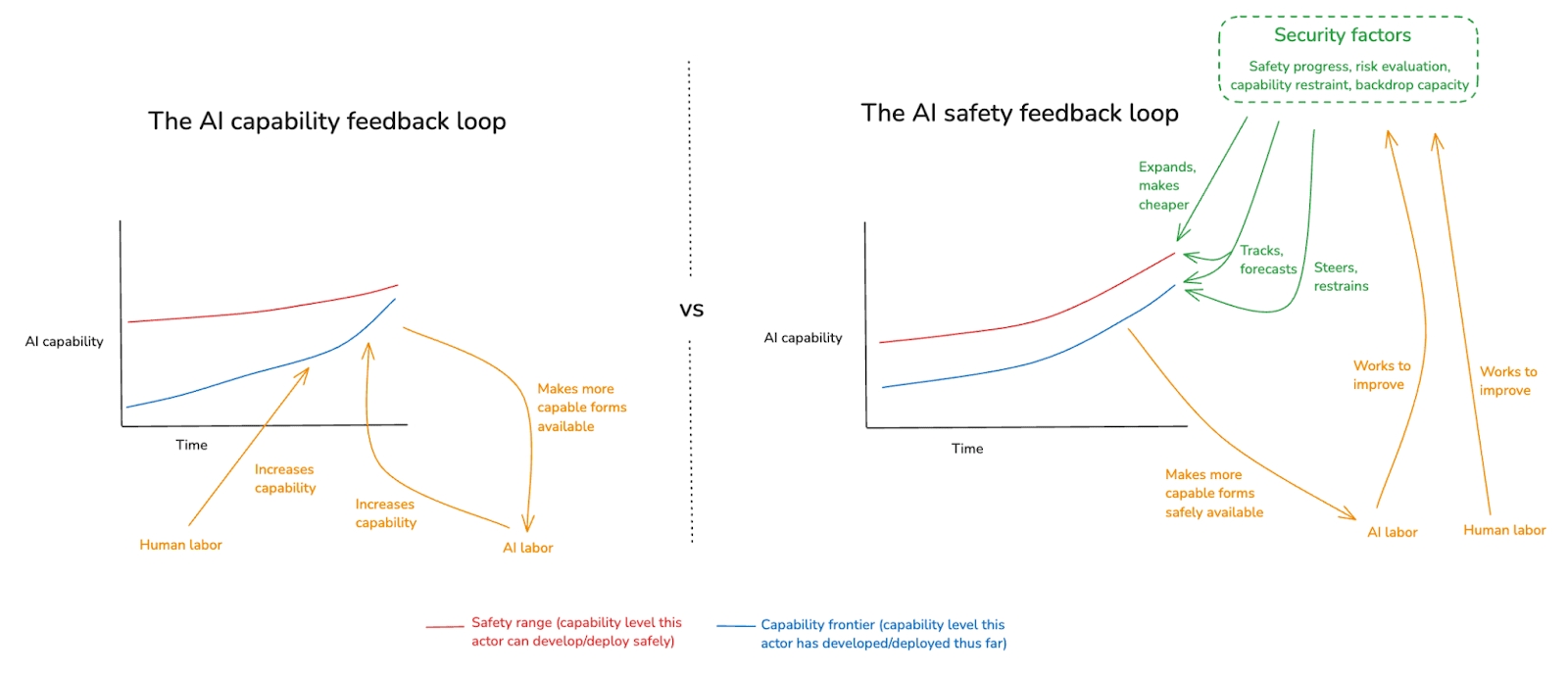
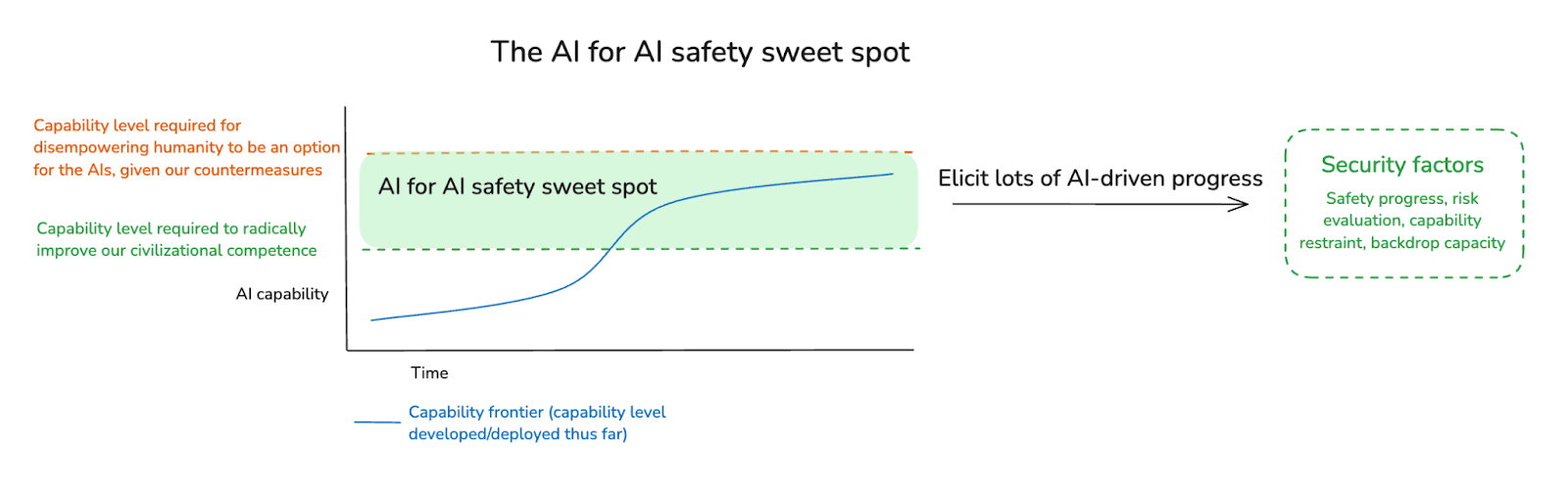
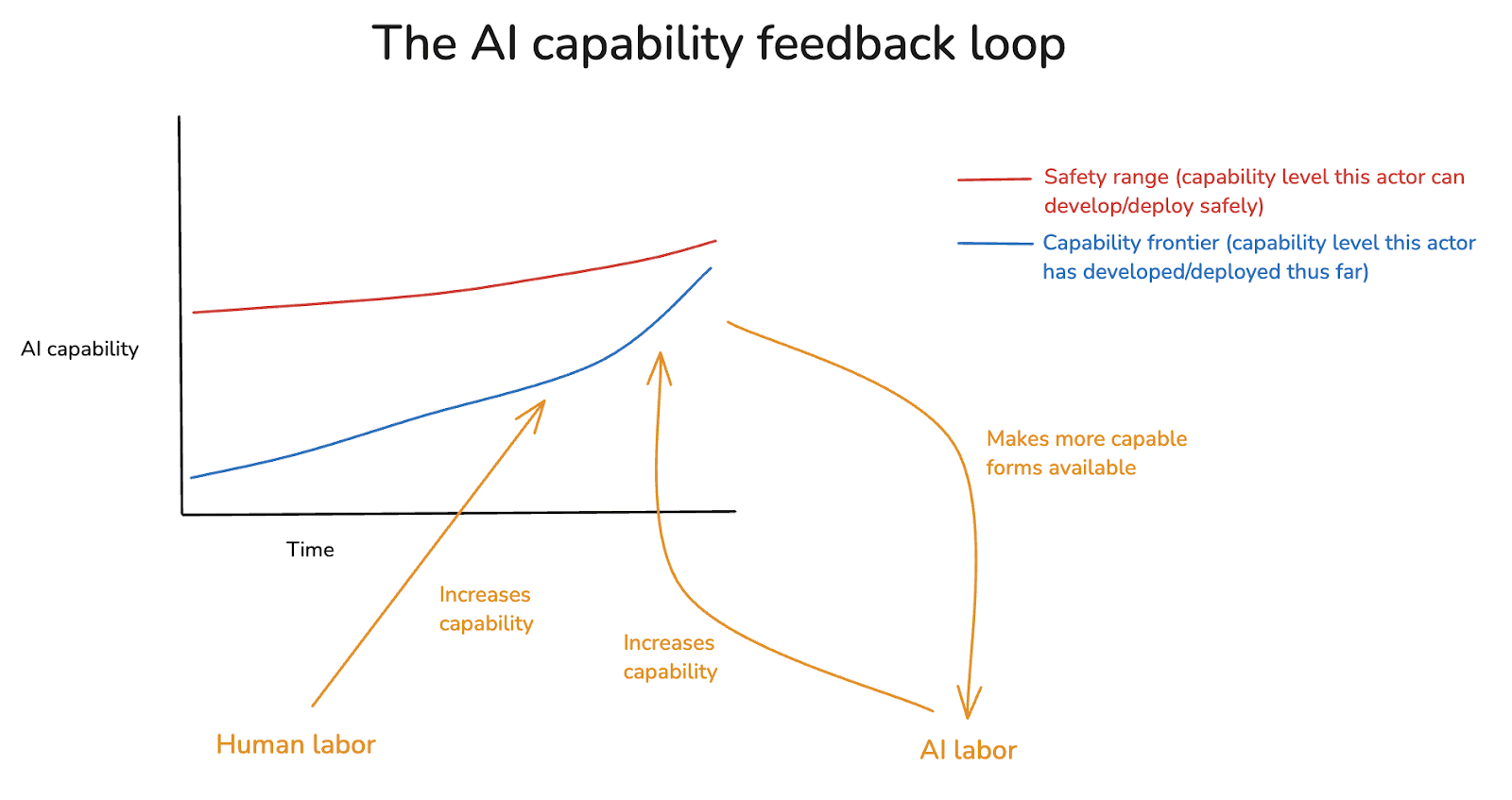
In my last essay, I offered a high-level framework for thinking about the path from here to safe superintelligence. This framework emphasized the role of three key “security factors” – namely:
LessWrong has been receiving an increasing number of posts and contents that look like they might be LLM-written or partially-LLM-written, so we're adopting a policy. This could be changed based on feedback.
Humans Using AI as Writing or Research Assistants
Prompting a language model to write an essay and copy-pasting the result will not typically meet LessWrong's standards. Please do not submit unedited or lightly-edited LLM content. You can use AI as a writing or research assistant when writing content for LessWrong, but you must have added significant value beyond what the AI produced, the result must meet a high quality standard, and you must vouch for everything in the result.
A rough guideline is that if you are using AI for writing assistance, you should spend a minimum of 1 minute per 50 words (enough to read the content several times and perform significant edits), you should not [...]
---
Outline:
(00:22) Humans Using AI as Writing or Research Assistants
(01:13) You Can Put AI Writing in Collapsible Sections
(02:13) Quoting AI Output In Order to Talk About AI
(02:47) Posts by AI Agents
---
First published:
March 24th, 2025
Source:
https://www.lesswrong.com/posts/KXujJjnmP85u8eM6B/policy-for-llm-writing-on-lesswrong
---
Narrated by TYPE III AUDIO.
---
Thanks to Jesse Richardson for discussion.
Polymarket asks: will Jesus Christ return in 2025?
In the three days since the market opened, traders have wagered over $100,000 on this question. The market traded as high as 5%, and is now stably trading at 3%. Right now, if you wanted to, you could place a bet that Jesus Christ will not return this year, and earn over $13,000 if you're right.
There are two mysteries here: an easy one, and a harder one.
The easy mystery is: if people are willing to bet $13,000 on "Yes", why isn't anyone taking them up?
The answer is that, if you wanted to do that, you'd have to put down over $1 million of your own money, locking it up inside Polymarket through the end of the year. At the end of that year, you'd get 1% returns on your investment. [...]
---
First published:
March 24th, 2025
Source:
https://www.lesswrong.com/posts/LBC2TnHK8cZAimdWF/will-jesus-christ-return-in-an-election-year
---
Narrated by TYPE III AUDIO.
---
TL;DR Having a good research track record is some evidence of good big-picture takes, but it's weak evidence. Strategic thinking is hard, and requires different skills. But people often conflate these skills, leading to excessive deference to researchers in the field, without evidence that that person is good at strategic thinking specifically.
Introduction
I often find myself giving talks or Q&As about mechanistic interpretability research. But inevitably, I'll get questions about the big picture: "What's the theory of change for interpretability?", "Is this really going to help with alignment?", "Does any of this matter if we can’t ensure all labs take alignment seriously?". And I think people take my answers to these way too seriously.
These are great questions, and I'm happy to try answering them. But I've noticed a bit of a pathology: people seem to assume that because I'm (hopefully!) good at the research, I'm automatically well-qualified [...]
---
Outline:
(00:32) Introduction
(02:45) Factors of Good Strategic Takes
(05:41) Conclusion
---
First published:
March 22nd, 2025
Source:
https://www.lesswrong.com/posts/P5zWiPF5cPJZSkiAK/good-research-takes-are-not-sufficient-for-good-strategic
---
Narrated by TYPE III AUDIO.
When my son was three, we enrolled him in a study of a vision condition that runs in my family. They wanted us to put an eyepatch on him for part of each day, with a little sensor object that went under the patch and detected body heat to record when we were doing it. They paid for his first pair of glasses and all the eye doctor visits to check up on how he was coming along, plus every time we brought him in we got fifty bucks in Amazon gift credit.
I reiterate, he was three. (To begin with. His fourth birthday occurred while the study was still ongoing.)
So he managed to lose or destroy more than half a dozen pairs of glasses and we had to start buying them in batches to minimize glasses-less time while waiting for each new Zenni delivery. (The [...]
---
First published:
March 20th, 2025
Source:
https://www.lesswrong.com/posts/yRJ5hdsm5FQcZosCh/intention-to-treat
---
Narrated by TYPE III AUDIO.
I’m releasing a new paper “Superintelligence Strategy” alongside Eric Schmidt (formerly Google), and Alexandr Wang (Scale AI). Below is the executive summary, followed by additional commentary highlighting portions of the paper which might be relevant to this collection of readers.
Executive Summary
Rapid advances in AI are poised to reshape nearly every aspect of society. Governments see in these dual-use AI systems a means to military dominance, stoking a bitter race to maximize AI capabilities. Voluntary industry pauses or attempts to exclude government involvement cannot change this reality. These systems that can streamline research and bolster economic output can also be turned to destructive ends, enabling rogue actors to engineer bioweapons and hack critical infrastructure. “Superintelligent” AI surpassing humans in nearly every domain would amount to the most precarious technological development since the nuclear bomb. Given the stakes, superintelligence is inescapably a matter of national security, and an effective [...]
---
Outline:
(00:21) Executive Summary
(01:14) Deterrence
(02:32) Nonproliferation
(03:38) Competitiveness
(04:50) Additional Commentary
---
First published:
March 5th, 2025
Source:
https://www.lesswrong.com/posts/XsYQyBgm8eKjd3Sqw/on-the-rationality-of-deterring-asi
---
Narrated by TYPE III AUDIO.
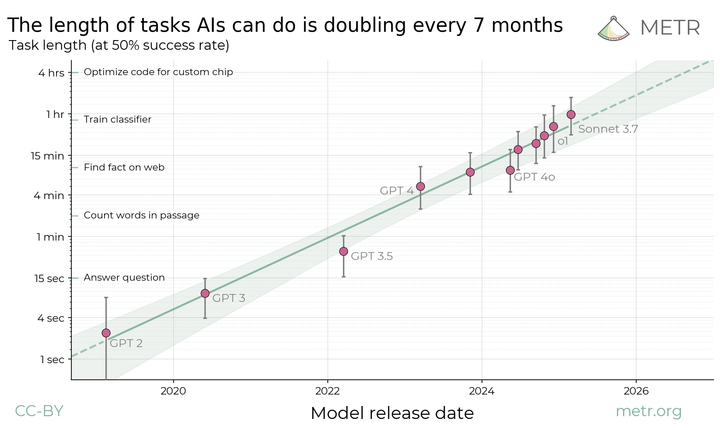
This is a link post. Summary: We propose measuring AI performance in terms of the length of tasks AI agents can complete. We show that this metric has been consistently exponentially increasing over the past 6 years, with a doubling time of around 7 months. Extrapolating this trend predicts that, in under a decade, we will see AI agents that can independently complete a large fraction of software tasks that currently take humans days or weeks.
Full paper | Github repo
---
First published:
March 19th, 2025
Source:
https://www.lesswrong.com/posts/deesrjitvXM4xYGZd/metr-measuring-ai-ability-to-complete-long-tasks
Linkpost URL:
https://metr.org/blog/2025-03-19-measuring-ai-ability-to-complete-long-tasks/
---
Narrated by TYPE III AUDIO.
---
 Apple Podcasts and Spotify do not show images in the episode description. Try Pocket Casts, or another podcast app.
I have, over the last year, become fairly well-known in a small corner of the internet tangentially related to AI.
As a result, I've begun making what I would have previously considered astronomical amounts of money: several hundred thousand dollars per month in personal income.
This has been great, obviously, and the funds have alleviated a fair number of my personal burdens (mostly related to poverty). But aside from that I don't really care much for the money itself.
My long term ambitions have always been to contribute materially to the mitigation of the impending existential AI threat. I never used to have the means to do so, mostly because of more pressing, safety/sustenance concerns, but now that I do, I would like to help however possible.
Some other points about me that may be useful: