Animal Weapons – The Evolution of Battle (Doug Emlen)
Dec 02, 2014
Show notes
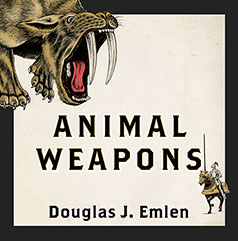
We talk with biologist Douglas Emlen, who says that the evolution of animal weapons, in everything from dung beetles to saber tooth tigers, has him very worried about our HUMAN weapons (starts 4:20)
Hosts: Jane Palmer, Beth Bennett Producer: Shelley Schlender Engineer: Shelley Schlender Executive Producers: Kendra Krueger, Jane Palmer
Listen to the show:
Green Chemistry (extended version)
Nov 25, 2014
Show notes
Listen here for an extended conversation with John Warner about the difference between enthalpy and entropy and how it relates to our scientific world view.
Green Chemistry
Nov 25, 2014
Show notes
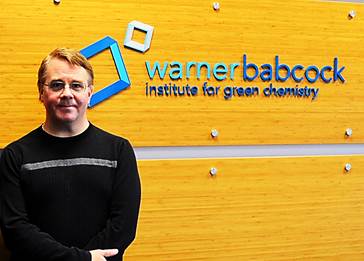
There’s a lot of attention right now on creating environmentally friendly technology, non-toxic and sustainable manufacturing, but as Dr. John Warner explains it, it all has to start with the chemistry.
John Warner is a chemist, professor and co-founder of the Warner-Babcock Institute for Green Chemistry. He speaks profoundly about learning methods from nature to create safer, more resilient and more elegant chemistry. John was also the recipient of this year’s Perkin Medal, one of the highest honors in the field of chemistry.
Executive Producer: Jane Palmer and Kendra Krueger Producer: Kendra Krueger Engineer: Kendra Krueger Headlines: Beth Bennett, Jane Palmer
Listen here:
Science of Booze // Rosetta Mission
Nov 19, 2014
Show notes
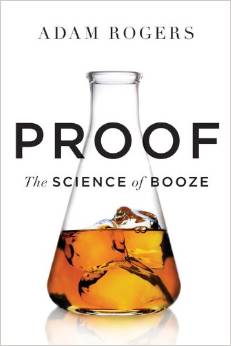
Proof: The Science of Booze (starts at 8:09): Science journalist Adam Rogers, who claims to have taken a liking to single-malt whiskey when he reached drinking age, has immersed himself further into alcohol–particularly, the history and science of making booze, tasting it, and enjoying–or suffering—the effects of it. Booze is a big story: Indeed, making it was a key piece of the dawn of human civilization, as Rogers, who is articles editor at Wired magazine, shows in his inaugural book, called Proof: The Science of Booze. Rogers talks with How On Earth host Susan Moran about fascinating fungi, sugar molecules and other key ingredients, as well as our human taste buds for alcohol. We have a couple of copies of Proof from our recent pledge drive, so call KGNU (303-449-4885) this week and pledge at least $60 to get your own copy.
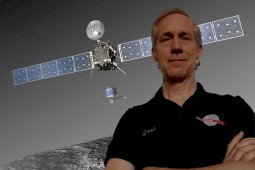
Joel Parker (SwRI) is the Deputy Principal Investigator of the “Alice” ultraviolet spectrograph instrument on the Rosetta spacecraft. Photo credit: Joel Parker
Rosetta’s Rendezvous (start time: 17:40): How On Earth’s own Joel Parker, whose “real” job as a planetary scientist is a director at the Southwest Research Institute, a collaborating partner on the Rosetta Mission. The mission last week successfully became the first to land a craft on a comet flying through our solar system. It was a well earned landing: Rosetta left earth in March of 2004 and has traveled about 3 billion miles to rendezvous with this moving target. To learn more, read this recent Q&A with Joel in the New York Times.
Also, Shelley Schlender offers a special headline (starts at 3:39), an interview with CU-Boulder’s Dr. Kenneth Wright, an integrative physiologist, about his new study offering new clues about why shift work can lead to extra weight.
Hosts: Susan Moran, Kendra Krueger Producer: Susan Moran Engineer: Kendra Krueger Additional contributors: Beth Bennett, Shelley Schlender Executive Producers: Kendra Krueger, Jane Palmer
Listen to the show:
Frontrange Bioneers // Green Electricity or Green Money?
Nov 04, 2014
Show notes
(4:00) Kendra talks with local organizers about the upcoming Front Range Bioneers conference
Hosts: Shelley Schlender, Kendra Krueger Producer: Shelley Schlender Engineer: Shelley Schlender Executive Producers: Jane Palmer and Kendra Krueger
Gulp
Oct 29, 2014
Show notes
Gulp [starts at 4:25] Bestselling author, Mary Roach has been billed as American’s funniest science writer. In “Gulp: Adventures on the Alimentary Canal” she takes readers on a journey through the alimentary canal, extolling the marvels of spit on the beginning end, then moving on to the man who had a hole in his stomach that allowed a doctor to observe his digestion. And . . . on. Roach even interviews a prison inmate about “rectal smuggling” (including cell phones). So get ready – here’s Shelley Schlender’s conversation with Mary Roach, author of “Gulp”.
Hosts: Shelley Schlender, Beth Bennett Producer: Joel Parker Engineer: Shelley Schlender Executive Producers: Jane Palmer and Kendra Krueger
Listen to the show:
Do Fathers Matter Pt. 2 // Mercury in Water
Oct 21, 2014
Show notes
Do Fathers Matter? (start time: 3:07) If you’re a father or a son or daughter – which pretty much covers everyone – this interview should hit home. Science journalist Paul Raeburn’s latest book — “Do Fathers Matter? What Science Is Telling Us About the Parent We’ve Overlooked” – explores what seems like a no-brainer question. But the answers he discovers surprised even him. After last week’s pledge drive teaser, we now offer the extended version of host Susan Moran’s interview with Raeburn.
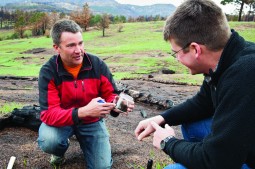
Joe Ryan (left) with Jack Webster. Credit: CU Boulder
Mercury in Waterways (start time: 15:20) Next time you take a sip of mountain spring water or catch a wild trout, you might be getting a bit more than you bargained for. Scientists have found mercury in Colorado waterways and in the fish that swim in them. And recent research shows that wildfires in recent years may have added to the problem. How on Earth’s Jane Palmer talked with Joe Ryan, an environmental engineering professor at the University of Colorado. Dr. Ryan also directs AirWaterGas, a project studying the impacts of oil and gas drilling on the environment.
Hosts: Ted Burnham, Susan Moran Producer: Susan Moran Engineer: Ted Burnham Executive Producers: Jane Palmer and Kendra Krueger
Listen to the show:
Do Fathers Matter?
Oct 15, 2014
Show notes
Do Fathers Matter? (start times: 9:55 and 20:58) Today’s How on Earth show is part of the KGNU fall membership pledge drive. During this show we preview an upcoming feature of the book: “Do Fathers Matter? What Science Is Telling Us About the Parent We’ve Overlooked” by science journalist Paul Raeburn. It may seem obvious that fathers matter. And of course, they do. But just how they are affected by parenthood, and how they in turn affect their kids, is not so obvious, as Raeburn shows. He looks at the latest research in anthropology, animal behavior, neuroscience and genetics to uncover many surprises.
Hosts: Joel Parker, Susan Moran, Kendra Krueger, Shelley Schlender Producer and Engineer: Joel Parker Executive Producers: Jane Palmer and Kendra Krueger
Listen to the show:
Buddhist Geeks and The Future Earth Initiative
Oct 07, 2014
Show notes
Vincent Horn and Buddhist Geeks (starts at 4:42):On October 16th the Buddhist Geek Conference comes to boulder. Founder Vincent Horn speaks to us about how mindfulness, compassion and contemplative practice can be integrated into the technical world. http://www.buddhistgeeks.com/conference/
Future Earth (starts at 12:58): On our second feature, CSU Professor Dennis Ojima talks to Susan Moran about the Future Earth Initiative. A lofty project which aims to connect scientists, policy makers and the business sector to design activities to tackle global environmental change at local and regional levels.
Hosts: Beth Bennett and Susan Moran Producer: Kendra Krueger Engineer: Maeve Conran Additional contributions: Joel Parker Executive Producers: Jane Palmer and Kendra Krueger
Listen to the show:
Living Planet Report // Finding Exoplanet Water
Sep 30, 2014
Show notes
Living Planet Report (starts at 5:50): The environmental organization World Wildlife Fund just released its science-based biennial Living Planet Report. It doesn’t paint a rosy picture overall; WWF shows that, for instance, wildlife populations across the globe are roughly half the size they were 40 years ago. And although rich countries show a 10 percent increase in biodiversity, lower-income countries are suffering a drop of nearly 60 percent. The report also ranks the ecological footprints of 152 nations, and warns that the world is living beyond its means. But there are bright spots in the report, too. Even in the absence of national legislation and international treaties, some cities in the U.S., including Boulder, and around the world are making progress toward sustainability and greenhouse gas reductions. Co-host Susan Moran interviews Keya Chatterjee, director of WWF’s renewable energy and footprint outreach program.
Finding Exoplanet Water (starts at 18:15): For the first time, scientists have detected water vapor on a cold exoplanet the size of Neptune. Previously, it had only been possible to measure the atmospheres of larger, Jupiter-sized exoplanets, but these findings from the Hubble and Spitzer Telescopes bring scientists a significant step closer to studying the atmosphere of Earth-sized planets orbiting other stars. Understanding the atmosphere of exoplanets may tell us more about their evolution and formation – Eliza Kempton, assistant professor of physics at Grinnell College in Iowa, explains in this report from Roland Pease of the BBC’s Science In Action.
Executive Producer: Joel Parker Producer: Ted Burnham Co-Hosts: Susan Moran, Ted Burnham Engineer: Ted Burnham Headlines: Beth Bennett, Jane Palmer

 Our TOPPODCAST Picks
 Stay Connected


 Proof: The Science of Booze (starts at 8:09): Science journalist

 Gulp [starts at 4:25] Bestselling author,
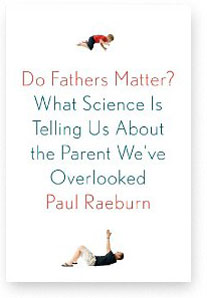 Do Fathers Matter? (start time: 3:07) If you’re a father or a son or daughter – which pretty much covers everyone – this interview should hit home. Science journalist Paul Raeburn’s latest book — “Do Fathers Matter? What Science Is Telling Us About the Parent We’ve Overlooked” – explores what seems like a no-brainer question. But the answers he discovers surprised even him. After last week’s pledge drive teaser, we now offer the extended version of host Susan Moran’s interview with Raeburn.


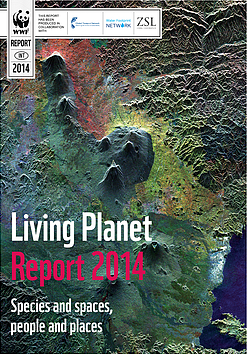 Living Planet Report (starts at 5:50): The environmental organization World Wildlife Fund just released its science-based biennial





