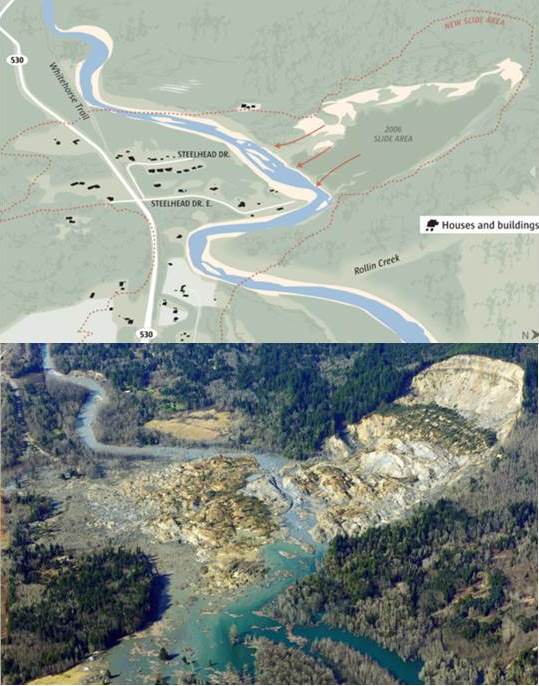
Jim Pullen speaks with Dr. David Montgomery, Professor of Earth and Space Sciences at the University of Washington about the landslide that buried Oso, Washington, in March 2014.
Host: Kendra Krueger Producer: Jim Pullen Engineer: Maeve Conran Executive Producer: Joel Parker
Listen to the show:
The Ocean Is Us #2 : Endocrine Disruptors in Drinking Water
Jul 09, 2014
Show notes
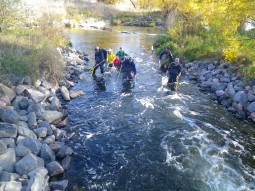
Dr. Alan Vajda (CU Denver) and Dr. David Norris (CU Boulder) dissecting fish from Boulder Creek to evaluate effects of wastewater effluent exposure. Photo courtesy Alan Vajda
Endocrine Disruptors and Drinking Water (starts at 3:12) Today we continue our series called The Ocean is Us, which explores our vital connection to the oceans. Alan Vajda, an environmental endocrinologist at the University of Colorado Denver, talks with How On Earth’s Susan Moran about a rare success story: why fish in Boulder Creek are acting and looking more sexually normal. We also explore broader water-quality issues in Colorado and beyond, and the implications for human health. For more information on studies conducted by CU and USGS scientists on endocrine disruptors related to Boulder Creek, South Platte River and elsewhere, visit BASIN. Check our website for the previous interview in the “The Ocean is Us” series, on Teens4Oceans. And check out KGNU’s year-long series on Colorado water issues. It’s called Connecting the Drops. It’s at kgnu.org and yourwatercolorado.org. To learn more or become active in preserving our watershed and the oceans, go to Colorado Ocean Coalition.
All features in The Ocean Is Us series can be found here.
Hosts: Susan Moran, Kendra Krueger Producer: Susan Moran Engineer: Maeve Conran Executive Producer: Joel Parker
Listen to the show:
Astronomy Through the Ages
Jul 01, 2014
Show notes
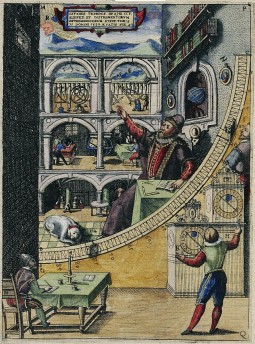
Tycho Brahe’s observatory at Uranienborg (Wikimedia Commons)
Astronomy Through the Ages (starts at 4:10): If I ask you to close your eyes and imagine an astronomer, what do you see? Maybe you think of a lone figure hunched all night over the eyepiece of a telescope in a big, domed observatory. Maybe you think of Jodie Foster, as Ellie Arroway in the movie Contact, wearing headphones to listen in on cosmic radio waves at Arecibo.
My mind always wanders back to a woodcut of Tycho Brahe’s 16th-century observatory, filled with intricate equipment for making naked-eye observations of the night sky.
But do any of these ingenious images actually resemble the life of an astronomer today? And how are new technologies and “big data” changing the way we study stars today and in years to come?
To discuss those questions, we’re joined in our Boulder studio by Dr. John Bally, a professor of astronomy at the University of Colorado, and Dr. Seth Hornstein, director of the Sommers-Bausch Observatory on the CU campus.
Hosts: Shelley Schlender, Ted Burnham Producer: Ted Burnham Engineer: Shelley Schlender Additional Contributions: Jane Palmer Executive Producer: Joel Parker
Listen to the show:
The Ocean Is Us #1 : Teens4Oceans – Marine Science Education
Jun 26, 2014
Show notes
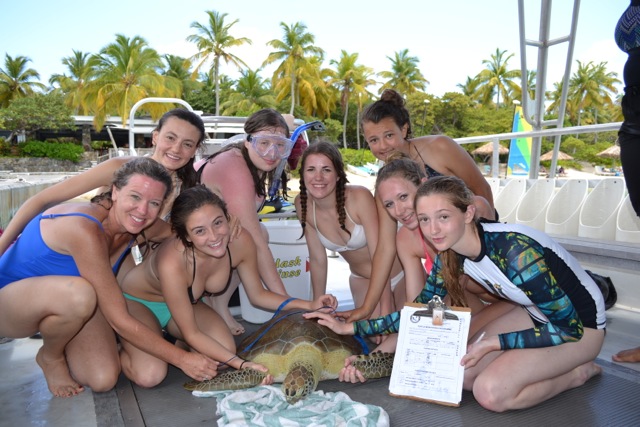
high school students measuring a juvenile green sea turtle off of Virgin Gorda in the British Virgin Islands Photo courtesy of Mikki McComb-Kobza
Teens4Oceans (starts at 9:15): Today, we’re kicking off a series of interviews on the show called The Ocean Is Us. We’ll explore how all of us living in land-locked Colorado are connected to the ocean — whether it’s through our watershed that flows into the Gulf of Mexico, or the fish we buy at the grocery store, or the carbon dioxide we emit that acidifies the oceans. Teens4Oceans is a nonprofit organization based in Colorado that is inspiring teenagers nationwide to become passionate ocean lovers and scientists through experiential learning — doing real marine research in the field.
How On Earth’s Susan Moran interviews Mikki McComb-Kobza, a marine biologist and executive director of Teens4Oceans, and Shelby Austin, who recently graduated from Ralston Valley High School in Arvada. For more information on our inland connection to the ocean and you can get involved, visit Colorado Ocean Coalition. And check out KGNUs year-long series, called Connecting the Drops, on Colorado water issues, at kgnu.org and yourwatercolorado.org.
All features in The Ocean Is Us series can be found here.
Hosts: Susan Moran and Joel Parker Producer: Kendra Krueger Engineer: Joel Parker Executive Producer: Joel Parker
Listen to the show:
Caffeine and Athletics
Jun 17, 2014
Show notes
Caffeine and Athletics (starts at 4:35): Chances are you’ve already had a cup of coffee this morning or, if you are like me, it was a cup of tea. Or maybe, if you are truly hedonistic, you started the day with a bar of chocolate. Either way, if any of these options are part of your daily routine you’d be one of the 90 percent of people in this country that regularly consumes caffeine, America’s drug of choice.
In this week’s show we talk to Murray Carpenter, author of the book Caffeinated: How Our Daily Habit Helps, Hurts and Hooks Us. Although he covers the history and culture of caffeine in his book, he is specifically going to be talking about the science of caffeine and how this powerful drug affects our cognition and physical health. In particular, for all you runners, cyclists and swimmers out there – there maybe a few of you in Boulder – he’s going to discuss how the right dose of caffeine can help an athlete’s performance. Apparently, for you runners who can run a 40-minute 10K without caffeine, ingesting the drug can help knock 72 seconds off your time. That would put you at least 100 places higher in the Bolder Boulder.
Hosts: Jane Palmer and Ted Burnham Producers: Jane Palmer and Ted Burnham Engineer: Ted Burnham Additional Contributions: Beth Bennett Executive Producer: Joel Parker
Listen to the show:
Hope On Earth
Jun 10, 2014
Show notes
Hope On Earth (starts 7:08): Few people have thought as critically and deeply about the state of Earth and our role on it than Paul Ehrlich. Over the course of several decades, the Stanford University biologist and ecologist has written many books, including 1968’s controversial The Population Bomb, in which he predicted that hundreds of millions of people would starve to death in the 1970s due to overpopulation and limited resources.
He has just come out with a new book, which he co-wrote with Michael Charles Tobias, an ecologist, filmmaker, book author and animal rights advocate. The book is called Hope On Earth: A Conversation. And indeed, it is a conversation between Ehrlich and Tobias. In fact, their conversation –many of them — took place here in a research outpost just outside of Crested Butte.
Both men join us by phone to discuss the book and the most pressing environmental issues of the day that it explores.
Producer: Ted Burnham Co-Hosts: Ted Burnham, Susan Moran Engineer: Ted Burnham Executive Producer: Joel Parker
Listen to the show:
Wireless Dawn or Electronic Silent Spring?
Jun 04, 2014
Show notes
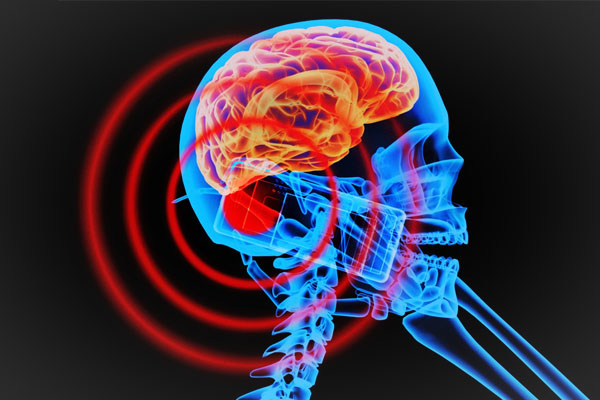
Brain Radiation from a Cellphone courtesy wiki/my broadband
(1:00) Cell Phone Radiation – Headphones please? Chris Farnsworth uses a microwave meter to measure cell phone radiation, to urges people to at least use headphones with a mobile phone.
Wireless Technology – Extended Version of Interview with Frank Barnes and Katie Singer
Jun 03, 2014
Show notes
CU-Boulder Electrical Engineering Emeritus Professor Frank Barnes is the past president of the BioElectroMagnetics Society. He recently chaired a National Research Council panel on research priorities related to the potential health effects of exposure to radio frequency energy from the use of wireless technology, such as cell phones. As a scientist, Frank Barnes recently talked with a citizen activist, Katie Singer, about her new book, An Electronic Silent Spring. This is an extended version of the interview we broadcast on June 3rd 2014. — Shelley Schlender
Massive Stars
May 27, 2014
Show notes
Massive stars (start time 6:45) Dr. Emily Levesque is an astronomer who studies big stars, distant stars, exploding stars, and truly weird stars called Thorne–Żytkow objects. All of these topics relate to massive stars – stars that are more than eight time more massive than our Sun. Dr. Levesque is a postdoctoral Hubble fellowship and Einstein fellowship researcher at the University of Colorado at Boulder. She received a physics degree from MIT, and a PhD in astronomy from the University of Hawaii, which resulted in the Astronomical Society of the Pacific awarding her the Robert J. Trumpler award for outstanding PhD thesis, and this year she was awarded the Annie Jump Cannon award by the American Astronomical Society for her work studying gamma-ray bursts. Dr. Levesque, is here in the studio with us today to talk about her favorite weird astrophysical phenomena and the life of an observational astronomer.
Producer, Engineer, Host: Joel Parker
Listen to the show:
Colorado’s Science Fair Stars // Rosetta Comet Mission
May 20, 2014
Show notes
Colorado’s Science Fair Stars (starts at 3:18)
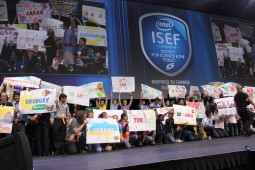
Students celebrate their countries of origin at the Intel International Science and Engineering Fair. Credit: Intel Brasil (CC)
As the end of the school year approaches for high school students, it’s a good time to celebrate the achievements and passion of students in Colorado who have excelled in science, technology, math and engineering (STEM). Two of them — Hope Weinstein, a senior at Fairview High in Boulder, and Michael Brady, a senior at Cherry Creek High School in Greenwood Village — were finalists at a renowned global competition last week. It’s the Intel International Science and Engineering Fair, which is a program of Society for Science & the Public. Hope and Michael talk with co-host Susan Moran about their research and their message to other students.
Rosetta Comet Mission (starts at 15:16)
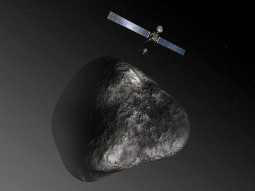
Artist’s impression of the Rosetta orbiter deploying the Philae lander to comet 67P/Churyumov–Gerasimenko. Credit: ESA–C. Carreau/ATG medialab
When he’s not busy volunteering with How On Earth, Joel Parker is an astronomer with the Southwest Research Institute — and that’s the hat he has on today as our in-studio guest. He joins us to talk about the European Space Agency’s Rosetta mission, which will tag along with comet 67P/Churyumov-Gerasimenko as it swings nearer to the sun later this summer.
Joel is the Deputy Lead Investigator for ALICE, the ultraviolet spectrometer aboard the spacecraft. He’s also the featured presenter at Cafe Scientifique tomorrow night. So think of this conversation as a preview of what you might hear if you join him tomorrow at Brooklyn’s down in Denver. Joel will give a very informal talk starting at 6:30 pm, and will try to answer all your tough questions about comets, Rosetta, or anything else. CafeSci is free and open to the public.

 Our TOPPODCAST Picks
 Stay Connected


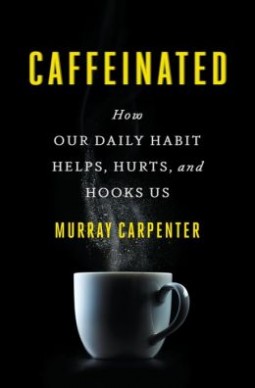 Caffeine and Athletics (starts at 4:35): Chances are you’ve already had a cup of coffee this morning or, if you are like me, it was a cup of tea. Or maybe, if you are truly hedonistic, you started the day with a bar of chocolate. Either way, if any of these options are part of your daily routine you’d be one of the 90 percent of people in this country that regularly consumes caffeine, America’s drug of choice.
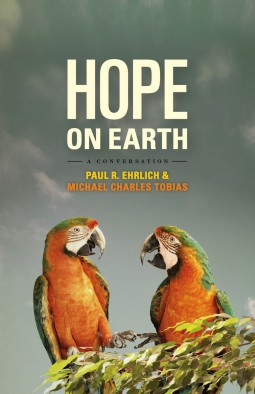 Hope On Earth (starts 7:08): Few people have thought as critically and deeply about the state of Earth and our role on it than
 Massive stars (start time 6:45)