TopPodcast.com
Menu
  • Home
  • Top Charts
  • Top Networks
  • Top Apps
  • Top Independents
  • Top Podfluencers
  • Top Picks
    • Top Business Podcasts
    • Top True Crime Podcasts
    • Top Finance Podcasts
    • Top Comedy Podcasts
    • Top Music Podcasts
    • Top Womens Podcasts
    • Top Kids Podcasts
    • Top Sports Podcasts
    • Top News Podcasts
    • Top Tech Podcasts
    • Top Crypto Podcasts
    • Top Entrepreneurial Podcasts
    • Top Fantasy Sports Podcasts
    • Top Political Podcasts
    • Top Science Podcasts
    • Top Self Help Podcasts
    • Top Sports Betting Podcasts
    • Top Stocks Podcasts
  • Podcast News
  • About Us
  • Podcast Advertising
  • Contact
Not in our directory?
Add Show Here
Podcast Equipment
Center

toppodcastlogoOur TOPPODCAST Picks

  • Comedy
  • Crypto
  • Sports
  • News
  • Politics
  • True Crime
  • Business
  • Finance

Follow Us

toppodcastlogoStay Connected

    View Top 200 Chart
    Back to Rankings Page
    Natural Sciences

    KGNU – How On Earth

    The KGNU Science Show

    Advertise
    • Apple Podcasts
    • Google Play
    • Spotify

    Latest Episodes:
    Sage Grouse Saga // Ocean Health Apr 28, 2015
    Show notes

    grouse-med-8592919590_620829867e_z
    Male greater sage grouse courting females on a lek.
    Photo credit: US Fish & Wildlife Service

    Sage Grouse Saga (start time: 4:04): One of the most spectacular and flamboyant rites of spring is, arguably, the mating ritual of a the greater sage grouse, a chicken-like bird with a long tail, with spiky tail feathers. Its historic range spans 11 Western states, including Colorado. But that sagebrush-dominated habitat has been chopped up and degraded by oil and gas development, mining operations, cattle grazing and even wind farms–causing grouse populations to plunge. Since 2010 the bird has waited for a milestone decision, due by Sept. 30, by the U.S. Fish & Wildlife Service to list it as threatened or endangered. Biologist Noreen Walsh, director of the Service’s Mountain-Prairie Region, discusses with How On Earth host Susan Moran the biology of this curious bird and a range-wide collaborative conservation initiative aimed at preserving the grouse and its habitat. Oh, check out this live “lek-cam,” from The Nature Conservancy.

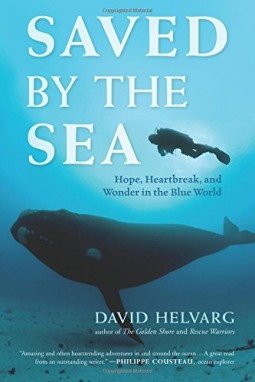
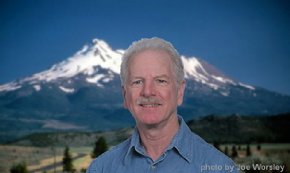
    Saved By SeaFragile Ocean (start time: 17:21) David Helvarg, a journalist and author of several books focusing on the ocean—its magnificent and imperiled creatures–discusses his books Saved By the Sea: Hope, Heartbreak and Wonder in the Blue World, and 50 Ways To Save the Ocean. Founder and executive director of Blue Frontier Campaign, Helvarg shows how residents of land-locked Colorado depend on and affect the ocean. He will speaking in Boulder this Thursday, April 30, at 6:30 p.m. at Ocean First Divers. It’s a “Blue Drinks” event put on by the Boulder-based nonprofit, Colorado Ocean Coalition.

    Hosts: Susan Moran, Kendra Krueger
    Producer: Susan Moran
    Engineer: Kendra Krueger
    Executive Producer: Susan Moran
    Headline contributions: Beth Bennett

    Listen to the show here:


    Are Ketones the Key? Apr 23, 2015
    Show notes

    Steve-Phinney-Portrait_Ketones (start time 6:40) A growing body of scientific research demonstrates health benefits for many people with a diet that’s lower in carbohydrates, and higher in fats. In fact, some of this research indicates great therapeutic benefits,. One reason why may be that, when carbohydrate consumption is low enough, the body enters a state of “nutritional ketosis,” where it transforms fats into a molecule called, beta-hydroxy-butyrate, or “ketones”. In the absence of sugar and carbs, the body can use ketones as its primary fuel.

    One of the scientists who has pioneered research into nutritional ketosis is Dr. Steve Phinney, and one of the populations who he believes gets special benefits from a ketone-producing diet is endurance athletes. For 30 years, Phinney has studied nutritional ketosis and athletic performance — including performance among bicycle racers, the winners of 100-mile ultra-marathons, and recently, a two-person rowing team that was among the top finishers in a rowing race that went from California to the Hawaiian Islands – rowing the whole way on a very low-carb, high fat, ketone-producing diet.

    Hosts, Producer, & Engineer: Joel Parker
    Executive Producer: Susan Moran
    Additional Contributions: Beth Bennett

    Listen to the show:


    Biomimicry: A New lens on Technology and Innovation Apr 08, 2015
    Show notes

    Farnsworth2015Institute_logo_bannerToday’s special edition of How on Earth, brought to you in conjunction with this week’s Conference on World Affairs is a conversation on Biomimicy as a new lens to view science and technology with Margo Farnsworth.

    Margo has coached two Top Twelve graduate teams for the International Student Biomimicry Challenge and currently serves as a Biomimicry Institute education fellow. She is also on the board of both the Missouri Prairie Foundation and South Carolina’s Experience Green. She has worked as a park ranger, science teacher, and mammalogist. With degrees in science education and parks administration, her professional accomplishments include research in environmental education, qualitative mammal studies, and involvement in numerous local and state environmental boards and committees. Farnsworth has written pieces for the Center for Humans and Nature as well as Treehugger, and has two biomimicry book projects pending. She joins us live for an in-depth talk about how Biomimicry has the potential for changing scientific culture.

    Moderated, Produced, Engineered by Kendra Krueger
    Executive Producer: Susan Moran

    Listen Now!


    Island On Fire: The Story of Laki Mar 31, 2015
    Show notes

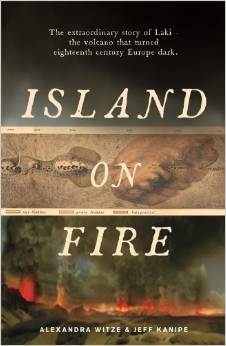
    Island On Fire book coverIsland on Fire (04:45): In 1783, a crack opened up in the Earth, began to spew out lava and ash and poisonous gases, and didn’t stop for eight months. The volcano was Laki, one of many volcanoes in Iceland, and the effects of the eruption went global. Laki’s story is one of geology, chemistry, atmospheric science, and biology. Co-host Beth Bartel talks with long-time science writers and co-authors Alexandra Witze and Jeff Kanipe about what we’ve learned from Laki and how we can apply the lessons of Laki today.

    For more on the book, check out the Island on Fire website.

    Hosts: Jane Palmer and Beth Bartel
    Producer: Beth Bartel
    Engineer: Shelley Schlender
    Executive Producer: Kendra Krueger

    Listen to the Show:


    Polar Bears // Climate Scientists Mar 24, 2015
    Show notes

    Climate Scientists (starts at 1:00): Climate scientists (scientists in general) tend to steer clear of speaking out as activists about concerns that are politically volatile. But that’s changing. Many climate scientists are stepping out of their research comfort zone to offer personal stories of why they care and what we all can do about the crisis. A group of scientists launched a video campaign last week. It’s called More Than Scientists. We speak with Dr. Josh Lawler (University of Washington), who one of the founders of the campaign.

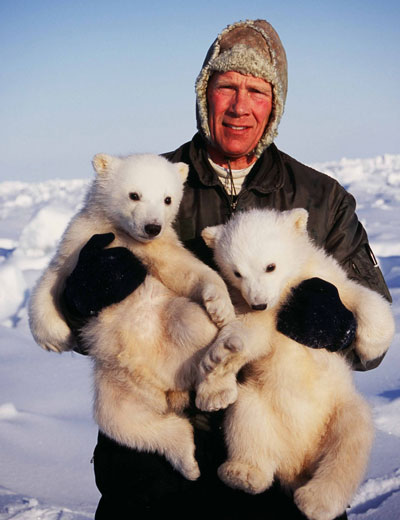
    StevenAmstrupPolar Bears (starts at 6:30): It is well known that, right now, life for polar bears looks bleak. Warming temperatures mean the season for sea ice cover in the Arctic has become shorter and shorter. As sea ice provides a home and hunting ground for polar bears, both the number of bears and their health has suffered. There is even talk of them becoming extinct. But is this something that we should worry about in Colorado and other non-arctic regions around the world? We don’t have bears, right now we don’t have ice, and we have plenty of other concerns. Dr. Steven Amstrup, the Chief scientist for Polar Bears International, joins us on How on Earth to explain why we should care. He thinks that polar bears are the sentinels of global health and that they provide advance warning of some of the challenges coming to all species. That includes us humans. But he thinks if we act soon, we can save both the bears and ourselves.

    Dr. Amstrup also will be giving a talk in the Old Main auditorium on the CU Boulder campus on Friday, April 3rd at 4:00 pm. His talk is titled: “Why Should We Care About Polar Bears?” More details about the talk can be found at:
    http://cires.colorado.edu/news/events/events/dr-steve-amstrup/?eID=163

    Hosts: Jane Palmer and Joel Parker
    Producer and Engineer: Joel Parker
    Additional Contributions: Susan Moran
    Executive Producer: Kendra Krueger

    Listen to the Show:


    Using Worms to Study Neurodegenerative Diseases Mar 22, 2015
    Show notes

    C. elegans worm

    Nematode worms for studying Alzheimer’s (start time 4:57). Beth Bennett interviews Dr Chris Link from CU Boulder on his research into the genetic basis of Alzheimer’s Disease, ALS, and other neurodegenerative disorders.

    Hosts: Kendra Krueger, Beth Bennett
    Producer: Beth Bennett
    Engineer: Kendra Krueger
    Executive Producer: Kendra Krueger

    Listen to the show:


    Rust: The Longest War // The Moral Arc Mar 10, 2015
    Show notes

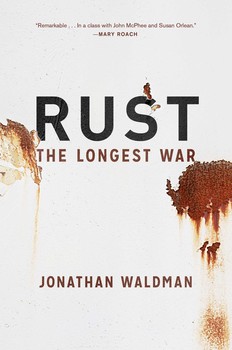
    rust-9781451691597_lgOn today’s spring pledge-drive show we offer segments of two feature interviews. See extended versions also below. Both books are available to those who pledge at least $60 to KGNU. Call 303.449.4885 today.

    Rust: The Longest War (start time: 4:25) It is arguably the most destructive natural disaster in the modern world. And it’s the topic of local journalist Jonathan Waldman’s debut book, which has just been published. It’s called Rust: The Longest War. Jonathan talks with How On Earth host Susan Moran about the book, which included fascinating tales of the “smart pig” that inspects the Alaska pipeline, as well as Ball Corp’s Can School in Golden, Colo. Catch Jonathan tonight 7:30 at the Boulder Book Store.

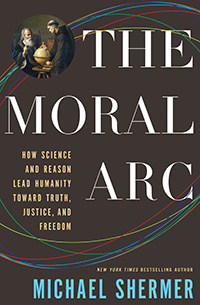
    bc_moral_arc_coverThe Moral Arc (start time: 13:21) Author and renowned skeptic Michael Shermer talks with How On Earth contributor Shelley Schlender about his The Moral Arc: How Science and Reason Lead Humanity toward Truth, Justice, and Freedom. The book addresses a wide range of modern issues, including just how science and reasons can help to pave the way toward further reductions in nuclear warheads, toward greater equality for people with different gender and sexual orientations, and toward the abolishment of the death penalty. That’s pretty optimistic for the nation’s best known skeptic!

    Hosts: Kendra Krueger, Susan Moran
    Producer: Susan Moran
    Engineer: Kendra Krueger
    Executive Producer: Kendra Krueger

    Listen here to the show.


    The ATLAS Institute // Firefighters and Climate Change Feb 25, 2015
    Show notes

    btu_900w_DSC07621_72ATLAS Institute Today we are joined in the studio with Mark Gross of the Alliance for Technology, Learning and Society institute at CU and Alicia Gibb Director of The Blow Things Up Lab, one of the spaces part of the ATLAS department.
    ATLAS was formed in 1997 as a university wide initiative to integrate information technology into social endeavour.

    ATLAS events: http://atlas.colorado.edu/wordpress/?page_id=99

    BTU Lab: http://www.btulab.com/about

    Firefighters and Climate Change Snowy frigid weather here in February may put wildfires way on the back burner for many of us here in Colorado. But as fire managers have been telling us, wildfire season has become a year-round phenomenon.

    In the last decade or so wildfires have been getting more intense, and more dangerous, and more frequent. No one knows this better than the firefighters themselves. Climate change—making the region hotter and drier—has a lot to do with it. But so does fire management—namely, fire suppression over recent decades. And humans living in houses in the so-called wildland-urban interface is another culprit. A new documentary that will be screened in Boulder this week documents the changes taking place with wildfires and the impact they’re having. The film is called “Unacceptable Risk: Firefighters on the Front Lines of Climate Change.” One of the film’s creators, journalist Dan Glick, joins us in the studio. Dan was also the science editor of the National Climate Assessment that came out last year. Our other guest is Don Whittemore, a long-time firefighter. He was incident commander on the massive Fourmile Canyon Fire of September 2010.

    More about the film can be found at unacceptableriskfilm.org.

    Hosts: Kendra Krueger and Susan Moran
    Executive Producer, Producer and Engineer: Kendra Krueger
    Additional Contributions: Beth Bennett and Jane Palmer

    Listen here:


    Ancestors in Our Genome Feb 18, 2015
    Show notes

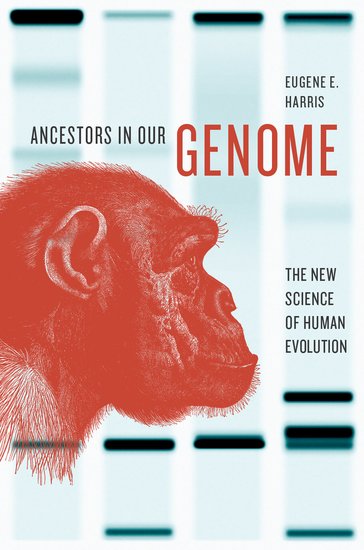
    9780199978038We speak with Eugene Harris, Professor in the Department of Biological Sciences and Geology at Queensborough Community College – part of the City University of New York – about his new book, Ancestors in Our Genome. In this feature, we discussed the methods used by molecular anthropologists to determine human evolution from our primate ancestors and several fascinating examples of the application of these techniques, including a discussion of the rise of lactose digestion in northern Europeans.

    Hosts: Joel Parker and Beth Bennett
    Producer and Engineer: Joel Parker
    Additional Contributions: Kendra Krueger
    Executive Producer: Kendra Krueger

    Listen to the Show:


    War of the Whales: A True Story Feb 11, 2015
    Show notes

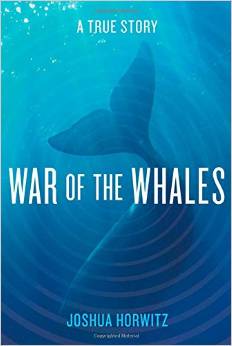
    War of the Whales: A True StoryWar of the Whales: A True Story (starts at 3:35): In the early hours of March 15th, of the year 2000, a Cuvier beaked whale washed ashore a mere 100 feet from Ken Balcomb’s house on the island of Abaco in the Bahamas. It was, for the whale, a fortuitous coincidence: Balcomb was a marine mammal researcher who was uniquely placed to rescue the creature. But that day 17 more whales of various species washed up on nearby islands and some of them weren’t quite so fortunate. The event was the largest mass stranding in recent history but what might have caused it was a total mystery. To Balcomb, it was a mystery that cried out for a solution.

    So begins the book “War of the Whales: A true story.” It’s a book that has been described by critics as a tense, page turning eco-thriller, even though it is a work of non-fiction. How On Earth’s Jane Palmer talks with author Joshua Horwitz about what happened after Ken Balcomb’s discovery, and the attempts to solve the mystery.

    Hosts: Beth Bartel, Jane Palmer
    Producer: Beth Bartel
    Engineer: Maeve Conran
    Additional Contributions: Beth Bennett
    Executive Producer: Kendra Krueger


    Previous 1 53 54 55 56 57 79 Next

    Related Podcasts

    Science Friday

    1

    Science Friday Astronomy
    Radiolab

    2

    Radiolab Documentary
    BrainStuff

    3

    BrainStuff Natural Sciences
    StarTalk with Neil deGrasse Tyson

    4

    StarTalk with Neil deGrasse Tyson Games & Hobbies
    Radiolab

    5

    Radiolab Documentary
    Stuff To Blow Your Mind

    6

    Stuff To Blow Your Mind Life Sciences
    footer-logo

    Contact Us

    Toll Free: 844-670-7747

    Links

    • Home
    • Top Charts
    • Networks
    • Apps
    • Independents Podcasts
    • Podcast Advertising
    • Podcast News
    • Contact Us
    • About Us
    • Analytics & Insights

    Stay Connected

      Privacy, Terms of Use & Our Code of Ethics Protecting Content Creators Copyrights