Joel Parker & Space // Carl Safina – Beyond Words
Oct 14, 2015
Show notes
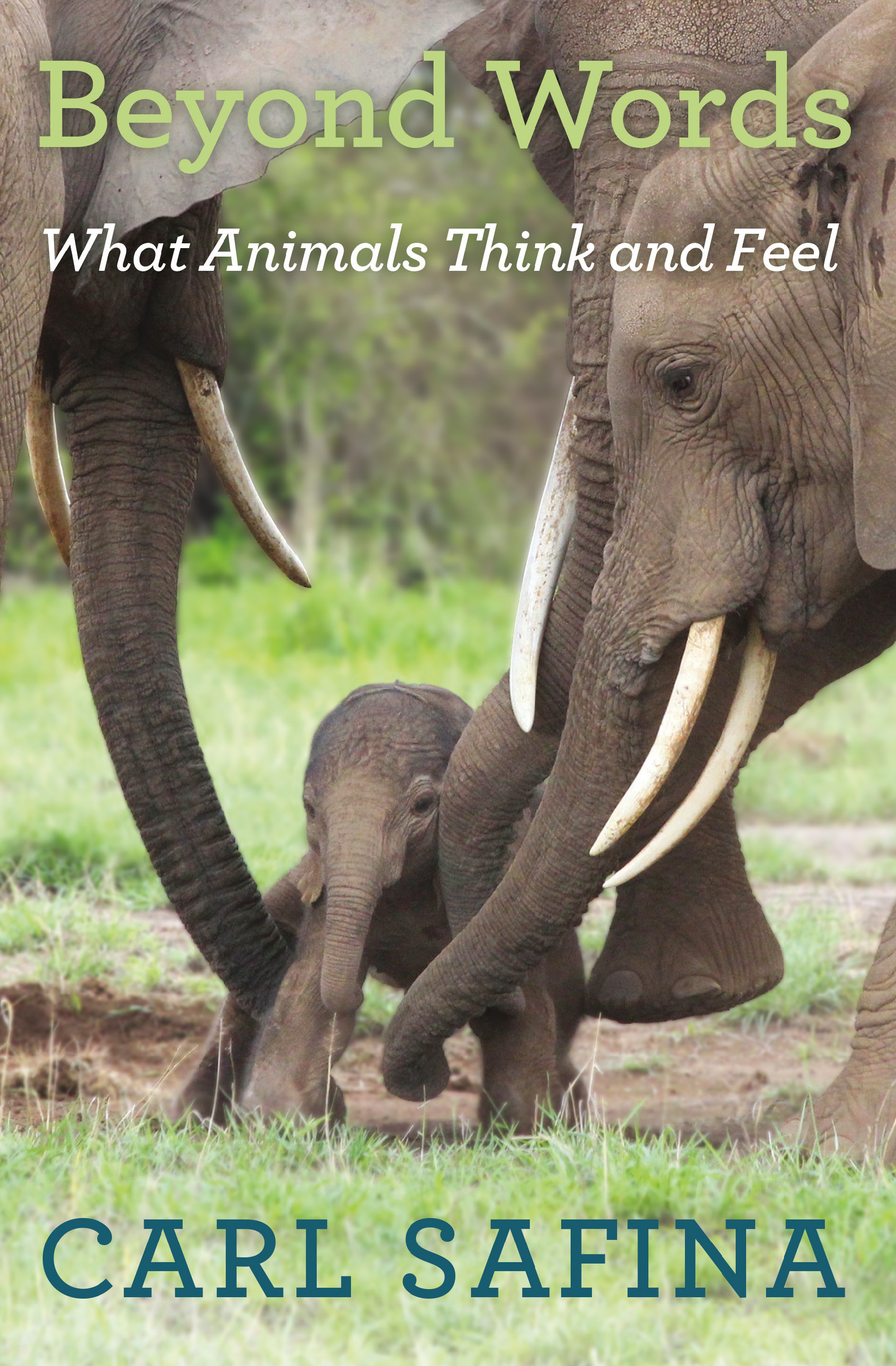
HANDOUT IMAGE: “Beyond Words: What Animals Think and Feel” by Carl Safina (credit: Henry Holt) ***ONE TIME USE ONLY. NOT FOR RESALE
Up Close and Personal – Astrophysicist Joel Parker (starts 3:00)talks about why he volunteers to educate people about science and outer space.
Beyond Words: What Animals Think and Feel, by Carl Safina. (starts 4:10) We talk with MacAurther Grant winner, naturalist and scientist, Carl Safina, about his new book. His publisher has kindly offered a limited number of these books as a gift to listeners who call and pledge their support to KGNU.
Hosts: Shelley Schlender and Joel Parker Producer: Shelley Schlender Engineer: Shelley Schlender Executive Producer: Beth Bennett
Are GMOs Environmentally-friendly?
Oct 07, 2015
Show notes
Genetically-modified crops
GMOs (start time 5:35) An interview with Dr Sharon Collenge, an ecologist at the University of Colorado. Dr Collenge is an advocate of using new genetic technologies to make slight modifications to plant genomes which can increase yield, protect against disease and reduce pesticide use.
Rock Arch Stability // Neonicotinoids and Silent Spring
Sep 30, 2015
Show notes
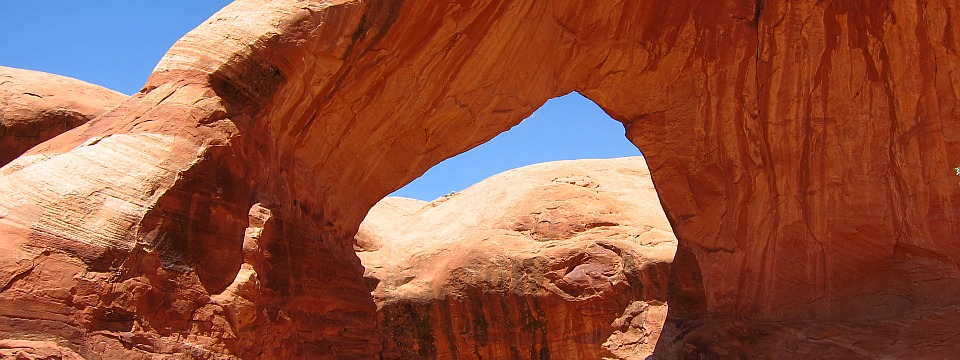
Rock Arch Stability (Starts 5:24) How on Earth’s Daniel Strain talks to Jeffrey Moore, a geologist who studies the West’s iconic rock arches — and watches them for signs that they’re about to collapse.
Neonicotinoids and Silent Spring – (Starts 15:33) We share a story from H2O radio warning about a pesticide that’s linked to the collapse of honeybee colonies, and growing concerns that it’s dangerous for other forms of life, it’s persistent in the environment and might bring about a new Silent Spring. This information will be part of this week’s Western Apicultural Society conference in Boulder.
Hosts: Shelley Schlender and Daniel Strain Producer: Shelley Schlender Engineer: Shelley Schlender Executive Producer: Susan Moran
Listen to the show:
Neurobiology of Alcohol Abuse
Sep 16, 2015
Show notes
Raising drinking glasses to celebrate – drinking? Image courtesy of Huffington Post
This week on How on Earth, we speak with Dr Paula Hoffman, a neuropharmacologist – she’s scientist who studies what drugs do in the brain- who works on the genetics of alcohol and other drugs of abuse. Paula reviews the action of alcohol on different neurotransmitter systems of the brain then describes some of the genetic issues which predispose people to risk for becoming alcoholics. Finally she talks about research done in her lab which has resulted in preliminary understanding of genetic networks involved.
Quantum Biology: Life on The Edge // Science and Art with Monica Aiello
Sep 15, 2015
Show notes
Quantum Biology: Life on the Edge
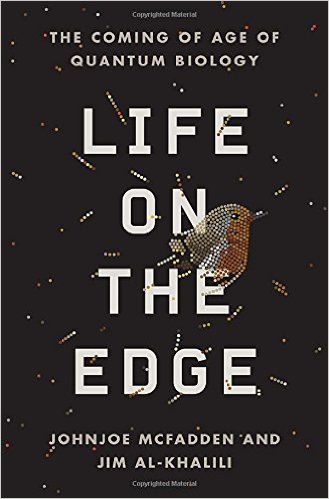
What do Enzymes and photosynthesis have in common? Both are biological process that happen to rely on quantum mechanisims. That’s right, particles tunnling through walls, shifting between particle and wave states: The weirdness of the quantum world isn’t as isolated as we once thought. This past summer Life on The Edge, a book about the frontiers of quantum biology was released to US audiences. How on Earth corespondent Kendra Krueger caught up with one of the authors Johnjoe Mcfadden to talk more about the book and the weird science of quantum biology.
Science and Art with Monica Aiello
Monica Aiello is a visual artist who has worked with numerous scientific agencies to re-incorporate art into science. She and her husband work closely with earth scientists and NASA mission scientists, including scientists involved in NASA’s Voyager, Galileo, Messenger and Magellan missions. Their collaboration with scientists doesn’t just inform their art work, but is also part of their community outreach programs. Monica and Tyler Aiello’s work is featured in an upcoming exhibition called “Confluence” at the Space Gallery in Denver. Their work focuses on the Colorado River and the surrounding plateau.
Hosts: Susan Moran, Leslie Dodson Producer: Kendra Krueger Engineer: Kendra Krueger Headline Contributors: Susan Moran, Beth Bennett Executive Producer: Susan Moran
Listen to the show:
Habitat Exchanges // More Frequent Wildfires
Sep 01, 2015
Show notes
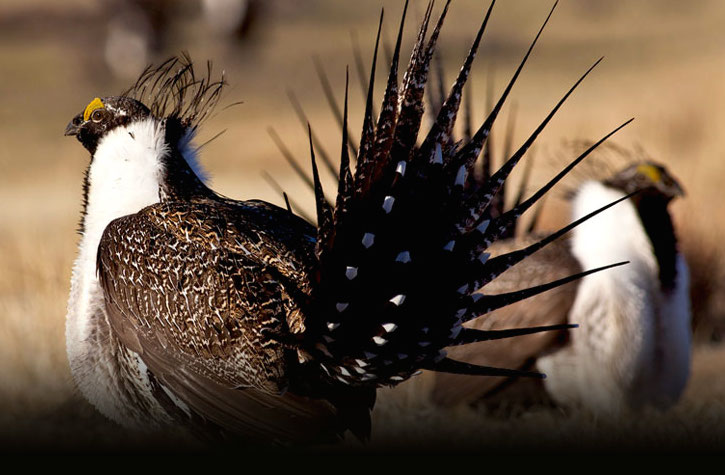
photo credit: U.S. Fish and Wildlife Service
Habitat Exchanges (starts at 3:00): The greater sage grouse is ruffling feathers all the way to Washington. September 30th is the deadline for the US Fish & Wildlife Service to determine whether to list the grouse under the Endangered Species Act. More than a third of the sage grouse’s shrinking range is on private land. Which is why many ranchers, oil and gas developers and other landowners have been scrambling to keep the grouse from getting listed. Listing would mean tighter restrictions on land use. The Environmental Defense Fund (EDF) is one of several environmental organizations that are trying to help come up with ways to preserve the sage grouse and its habitat without cramping the livelihood of ranchers and other land owners. One of the newest voluntary tools is what is called a habitat exchange, a marketplace with buyers and sellers of conservation credits. How On Earth’s Susan Moran talks with Eric Holst, associate vice president of EDF’s working lands program, about these exchanges.
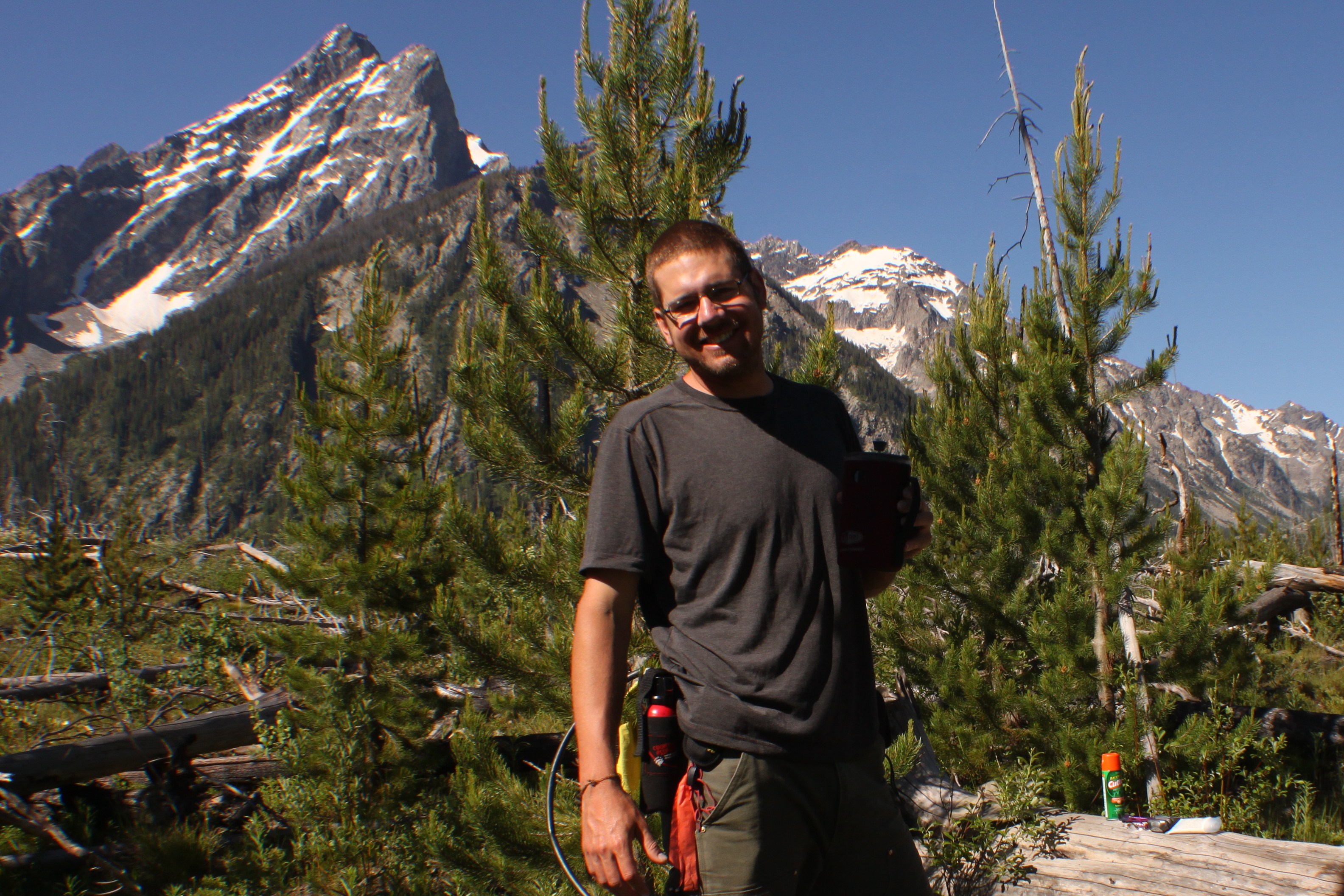
photo credit: Brian Harvey
More Frequent Wildfires (starts at 15:30): This summer, fires have raged across much of the Northwestern U.S. The towering blazes, many of which are nowhere near being contained, have already charred more than two million acres of land. It’s a story that’s becoming increasingly common. Big fires like these are erupting more often than they did just decades ago, scientists say, and many place the blame on climate change. On today’s show, Brian Harvey, a forest ecologist at the University of Colorado Boulder who studies the causes and consequences of extreme fires, talks with us about why wildfires have grown more frequent in recent years — and what that means for the recovery of the nation’s forests.
Hosts: Susan Moran, Daniel Strain Producer: Joel Parker Engineer: Joel Parker Headline Contributors: Joel Parker, Daniel Strain Executive Producer: Susan Moran
Listen to the show:
Fingerprint Hand Gun // High Altitude Observatory
Aug 25, 2015
Show notes
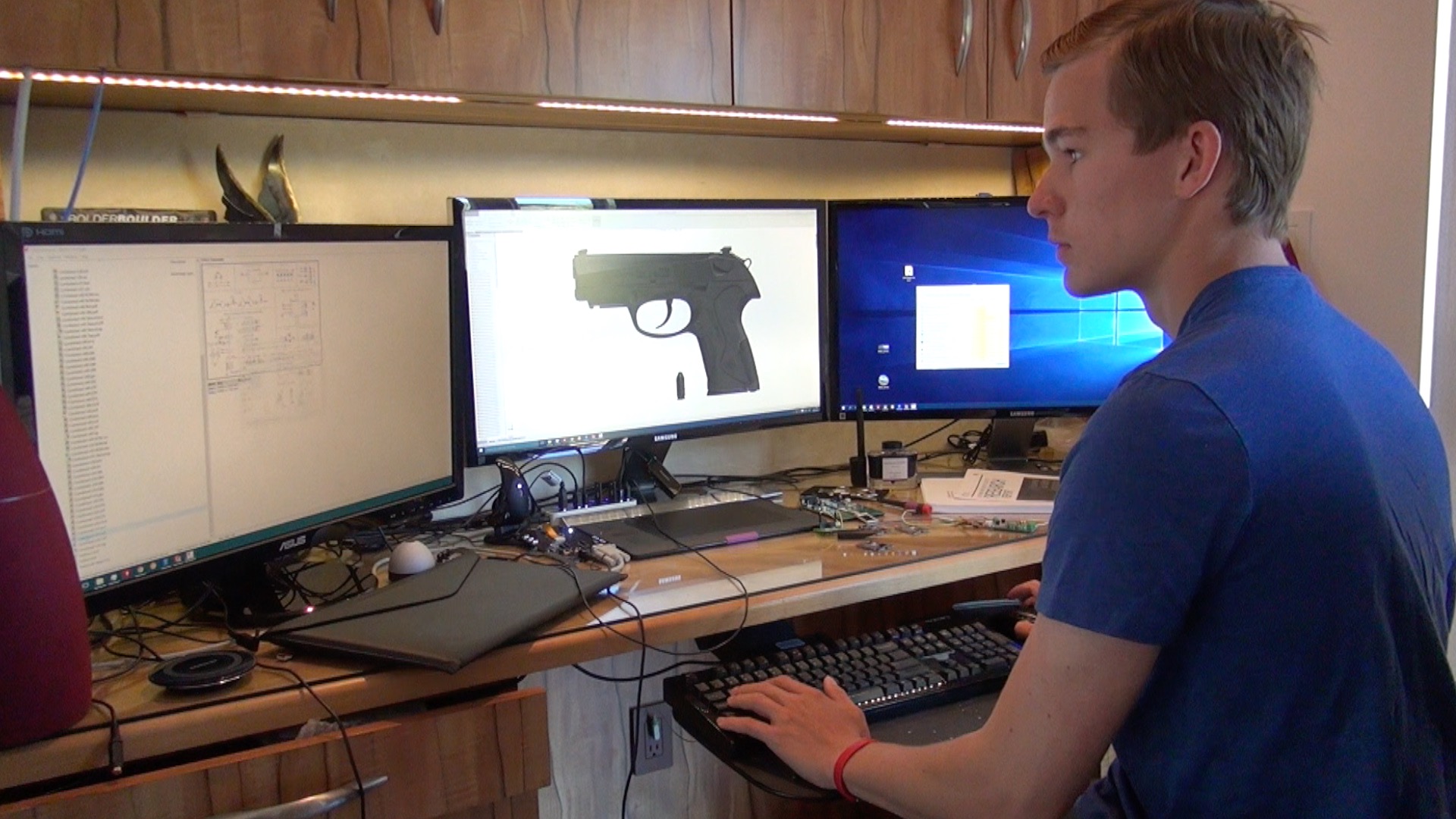
Kai Kloepfer – Designer of Fingerprint Smart Firearm Technology
Fingerprint Hand Gun. (starts at 5:45) How on Earth’s Shelley Schlender talks with Boulder teen scientist Kai Kloepfer, who is creating a “Smart Gun” that won him first prize in engineering at the INTEL international science fair and a $50,000 grant from the Smart Tech Challenges Foundation. Kloepfer’s goal is to prevent accidental shootings of children. His gun fires only when the user’s fingerprint is authorized.
High Altitude Observatory – Hawaii location
High Altitude Observatory. (starts at 11:35) Director Scott McIntosh talks with How on Earth’s Joel Parker about the observatory and its 75th year celebrations.
Hosts: Joel Parker, Kendra Krueger Producer: Shelley Schlender Engineer: Shelley Schlender Headline Contributors: Shelley Schlender Executive Producer: Susan Moran
Listen to the show:
Gold King Spill, Mining Prospects
Aug 19, 2015
Show notes
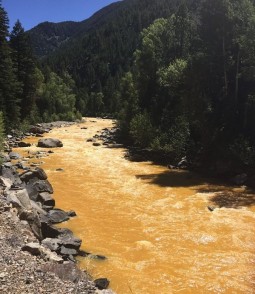
Contaminated Animus River following Gold King Mine spill. Photo credit: RiverHugger/Creative Commons
Science and Politics of Mining (start time: 6:49) On August 5 an inactive mine named Gold King, which had been leaking toxins for years, spewed more than 3 million gallons of toxic sludge into a creek that feeds into the Animus River in southwest Colorado. Its neon orange path of wastewater was shocking. But also shocking is the long history of acid mine drainage pollution and the lax regulations that allow mining companies to basically walk away from their disasters. Dr. Mark Williams, a professor of geography at CU Boulder, and an expert in mountain hydrology and hydrochemistry., has worked on remediation of several mines in the state. He speaks with How On Earth host Susan Moran about the anatomy of mines, how this disaster happened, what it suggests about the many other precarious mines in the state, and what should be done to prevent such disasters from happening.
Hosts: Susan Moran, Joel Parker Producer: Susan Moran Engineer: Joel Parker Headline Contributors: Kendra Krueger, Joel Parker, Daniel Strain Executive Producer: Susan Moran
Listen to the show:
Global Climate Models & Climate Change
Aug 13, 2015
Show notes
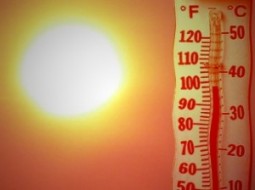
Events like heat waves are more likely with climate change. Image courtesy of Heartlander Magazine
Beth Bennett speaks with Claudia Tebaldi, a climate scientist at NCAR, about her work analyzing climate models to project climate change in the future. She addressed heat waves and local conditions and how these models can be used to make projections in these areas. Start time approx 5 min.
Host: Beth Bennett Producer: Beth Bennett Engineer: Maeve Conran Additional contributions: Joel Parker Executive Producer: Susan Moran
Listen to the show:
Historical Analysis of Agriculture and Greenhouse Gases
Aug 05, 2015
Show notes
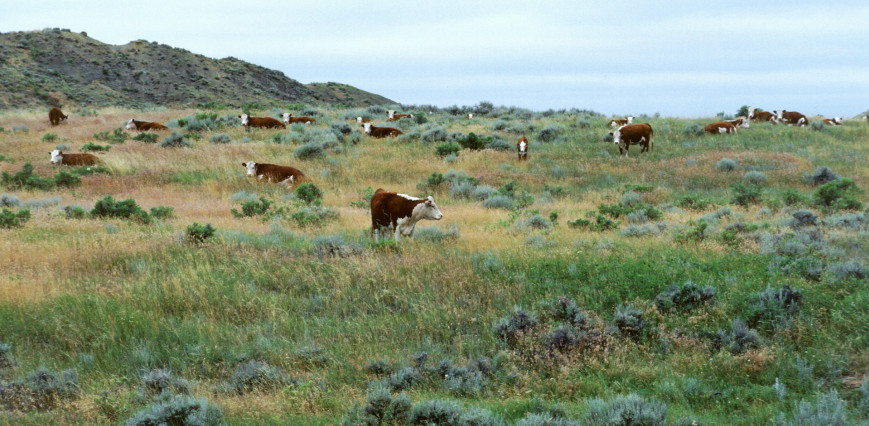
When it comes to reducing greenhouses gases, every little bit helps, and that includes managing the greenhouse gases produced by how we grow our food. Raising livestock and growing crops both generate greenhouse gases, and to gauge their impact, a new study takes the long range view. The results were published in a paper: “Measuring and mitigating agricultural greenhouse gas production in the U.S. Great Plains, 1870-2000” in the Proceedings of the National Academy of Sciences. It analyzes 100 years of agricultural production, and it takes this look at farming close to home – it focuses on the bread basket of the United States – the Great Plains, which includes eastern Colorado. Here to tell us more are scientists Myron Guttman (University of Colorado) and Bill Parton (Colorado State University)
Hosts: Shelley Schlender, Kendra Krueger Producer and Engineer: Joel Parker Executive Producer: Susan Moran Headline contributions: Beth Bennett, Kendra Krueger, Joel Parker

 Our TOPPODCAST Picks
 Stay Connected






 When it comes to reducing greenhouses gases, every little bit helps, and that includes managing the greenhouse gases produced by how we grow our food. Raising livestock and growing crops both generate greenhouse gases, and to gauge their impact, a new study takes the long range view. The results were published in a paper: “Measuring and mitigating agricultural greenhouse gas production in the U.S. Great Plains, 1870-2000” in the Proceedings of the National Academy of Sciences. It analyzes 100 years of agricultural production, and it takes this look at farming close to home – it focuses on the bread basket of the United States – the Great Plains, which includes eastern Colorado. Here to tell us more are scientists





