Arctic Frontiers // Wind Forecasting
Feb 04, 2015
Show notes
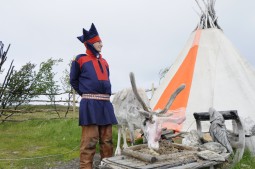
Sami and reindeer in Finnmark, Norway. Photo credit: Thomas Nilsen/The Barents Observer
Arctic Dispatch (starts at 2:18): There is no question that the Arctic is thawing faster than anywhere on the planet, except the western Antarctic Peninsula. But there are still so many unknowns regarding how things are actually changing in different places, and to what effect. How On Earth’s Susan Moran recently attended the Arctic Frontiers conference in Tromso, Norway. Among the scientists who discussed research on how the receding and thinning ice in the Arctic will likely affect different species was George Hunt, a research professor of biology at the University of Washington. Aili Keskitalo, an indigenous Sami from Finnmark, Norway and president of the Sami Parliament, discussed how energy projects, including windmill parks, are negatively affecting reindeer and Sami culture. Hunt and Keskitalo discussed these issues with Moran.
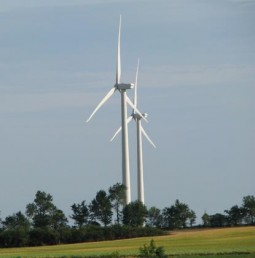
Wind turbines, Photo credit: National Renewable Energy Laboratory
Wind forecasting (starts at 10:40): The wind industry in the U.S. faces several hurdles, including a technical one: discovering how the wind is going to blow near the mountains. For power systems to be reliable, operators must know when to expect the blustery gusts or when to expect a still breezeless calm day. That means they need accurate wind forecasts. The Department of Energy has just given a substantial grant to a coalition of organizations in Colorado to help improve wind energy forecasting in mountain and valley regions. Julie Lundquist, a professor of atmospheric and oceanic sciences at the University of Colorado, discusses the current and planned research with co-host Jane Palmer.
Hosts: Susan Moran, Jane Palmer Producer: Susan Moran Engineer: Kendra Krueger Executive Producer: Kendra Krueger
Click here to listen to the show:
Other Rocky Planets are Common!
Jan 30, 2015
Show notes
We talk with astronomer Travis Metcalfe about finding the oldest known planetary system in the Galaxy, and what it means about the formation of planets, the possibilities of extraterrestrial life, and how does one actually find planets around other stars? Headlines include switches in the man-made biological organisms that could possibly be used for bioterrorism, and the finding that chronic malaria infection in migrant great reed warblers damages telomeres, shortening life in both the adult bird and its offspring.
Hosts: Joel Parker and Beth Bennett Producer: Beth Bennett Engineer Beth Bennett with help from Kendra Kruger Additional Contributions: Jane Palmer, Shelly Schlender Executive Producer: Kendra Krueger
Listen to the Show:
Moonshine // Parkinson’s Network Exercise
Jan 20, 2015
Show notes
Former moonshiner explaining a still at American Folklore Center (courtesy wikimedia)
The Science of Moonshine (starts 3:55) We talk with a Boulder scientist who has a home still for making high-proof brandy from backyard apples. It’s illegal to make your own liquor, even if you only sip it with friends and never sell it. So our moonshiner remains anonymous.
Gary Sobel leading warm up session for Parkinson’s Network Exercise Class (courtesy Shelley Schlender)
Parkinson’s Network Exercise Class(starts 7:35) Gary Sobel leads an exercise class for people with Parkinson’s Disease. He talks about his own experience with exercise, and movement disorder specialist Heather Ene, MD, PMR/Neurology, shares the reasons physicians have moved from asking Parkinson’s patients to avoid exercise, to encouraging exercise.
The Rightful Place of Science: Disasters and Climate Change
Jan 14, 2015
Show notes
The rightful place of science (starts at 6:22): In 2014, the world certainly saw more than a few costly weather disasters. Flooding in India and Pakistan in September killed more than 600 people and resulted in economic losses of more than $18 billion. Super Typhoon Rammasum, which hit the Philippines, China and Vietnam in July caused more than 200 deaths and losses of $6.5 billion. And, closer to home, in August, rainfall and flooding in Detroit, Baltimore and Long Island damaged homes and cities leading to economic losses of about $2 billion.
At the same time, the United Nations Weather Agency states that 2014 was the warmest year on record. So, the question is: Are these natural disasters related to the warming climate? And are natural disasters becoming more costly because of climate change?
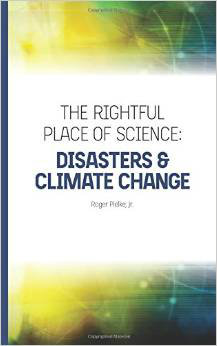
These are questions that Roger Pielke Jr., an environmental sciences professor at the University of Colorado, addresses in his new book “The Rightful Place of Science: Disasters and Climate Change.” He talks with HOE’s Jane Palmer about his book and why he believes it is important to maintain scientific integrity while engaging in the climate debate.
Hosts: Kendra Krueger, Jane Palmer Producer, Engineer: Kendra Krueger Executive Producer: Kendra Krueger Additional Contributions: Beth Bennett, Jane Palmer, Joel Parker
Listen to the show:
Coral Climate Clues // Tropical Carbon Sink
Jan 07, 2015
Show notes
On today’s show we offer three feature interviews, including a short opening interview.
Credit: Russell Kane, Creative Commons
Alcohol and weight gain (starts at 3:34): Science journalist Jill Adams shares the latest science on the connection between alcohol and weight gain. The science is murky, as she states in her recent column in the Washington Post.
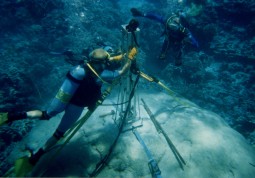
Scientists drilling a coral sample from Jarvis Island. Photo credit: Julia Cole
Climate Clues in Coral (starts at 9:02): Despite certain appearances and rumors to the contrary, global warming has not been on holiday for the past decade. But increases in temperature at the Earth’s surface have slowed down, prompting scientists to work hard to figure out why. It seems that a lot of heat that has been building up in our planet’s climate system due to greenhouse gas emissions has winded up deep in the Pacific Ocean. Why? Diane Thompson, a post-doctoral scientist at NCAR and lead author on a new study, discusses with HOE’s Tom Yulsman how a sample of coral from a remote atoll in the tropical Pacific revealed some important answers.
Tropical forest in the Serra do Mar Paranaense in Brazil. Photo credit: Deyvid Setti e Eloy Olindo Setti via Wikimedia Commons
Tropic forests love CO2 (starts at 16:04) It’s been known for some time that tropical forests are not only rich in biodiversity, but they also absorb a lot of carbon dioxide that humans spew into the atmosphere. But just how much greenhouse gases—namely CO2–these forests take up, say, compared with temperate and boreal forests, has been eluding researchers. Britton Stephens, an atmospheric scientist at NCAR, discusses with HOE’s Susan Moran a new study he co-authored. It suggests that tropical forests may be absorbing far more CO2 than many scientists had previously thought.
Hosts: Susan Moran, Tom Yulsman Producer: Susan Moran Engineer: Shelley Schlender Executive Producer: Kendra Krueger
Red Meat & Mice // Loren Cordain – The Paleo Diet
Dec 30, 2014
Show notes
Ajit Varki UC-San Diego
“Sugar” in Red Meat – Cancer in Mice? (starts at 6:10) We talk with Ajit Varki, a researcher at the University of California in San Diego whose latest mouse studies reveal a potential inflammatory compound in red meat — a “sugar” called sialic acid. (For more, listen to our extended version of this interview)
Loren Cordain Founder of the Paleo Diet movement
Paleo Diet – Avoid Grains and Beans (starts at 9:10) We talk with Colorado State University scientist Loren Cordain, founder of the Paleo Diet movement. He and his colleagues have study humans and the influence of diet. For health and athletic performance, Loren recommends avoiding modern foods that are high in grains, sugar, salt, legumes and additives. Instead, he says, eat like our paleo ancestors – fruits and vegetables and fats and meat. (For a fee, you can subscribe to Loren’s latest podcasts at his website. Fro free, you can listen to older podcasts. Find out more at thepaleodiet.com.
Today’s show also includes a look back at some of our favorite science stories from 2014.
Hosts: Shelley Schlender, Susan Moran Producer, Engineer: Shelley Schlender Executive Producers: Jane Palmer, Kendra Krueger
Red Meat Sugar Glycans and Inflammation – Extended Version
Dec 30, 2014
Show notes
I’m Shelley Schlender for How on Earth. Up next is an extended interview with University of California in San Diego scientist Ajit Varki about his team’s new mouse study that indicates that a “sugar” in red meat, called sialic acid, can trigger inflammation when fed to mice. This sugar is intriguing because it’s a molecule that two million years ago, our human bodies made on their own. It differs from the current sialic acid made in our bodies by just one atom of oxygen. Yet the mouse studies indicate that might be enough to cause an immune system reaction in the lab mice. More research and human studies will be needed, to determine whether or not a similar reaction occurs in susceptible humans. Now here’s Ajit Varki.
Himalayan Glacial Lakes
Dec 24, 2014
Show notes
Himalayan Glacial Lakes (starts at 5:20) Some scientists conduct their experiments in a laboratory — think clean white walls, artificial lighting, A.C. and a convenient coffee pot not far away. Not so for Ulyana Horodyskyj, a graduate student at the University of Colorado. For the last few years she’s been looking at glaciers and the lakes on top of them in Nepal. Last year she spent a year looking at how pollution affects glaciers high in the Himalayan Mountains. She hoped to set up the ultimate high-altitude laboratory on the oxygen-thin slopes of Mount Everest, but a fatal accident intervened. On this edition of How on Earth, she talks about her latest research, Himalayan glaciers and what it is like to do science at the top of the world.
Hosts: Jane Palmer, Joel Parker Producer, Engineer: Joel Parker Executive Producers: Jane Palmer, Kendra Krueger Additional Contributions: Beth Bennett, Shelley Schlender
Listen to the show:
Weather Drones // The late Dr. Theo Colborn
Dec 17, 2014
Show notes
Weather drones (start time 5:10) Brian Argrow, former professor and Associate Dean of engineering at CU Boulder, joins us in the studio to talk about the recent formation Unmanned Aircraft Systems and Sever Storm Research Group. The group is a collaboration between the CU Boulder and the University of Nebraska-LIncoln who have been working together since 2006. The group now consists of a large number of members including local national labs and university groups. The purpose of their research is to learn more about storm formation in order to improve emergency response time.
Dr. Theo Colborn (start time 15:22) Dr. Theo Colborn passed away on Sunday December 15th at the age of 87. She was a scientists, activist and founder of The Endocrine Disruption Exchange (TEDX). The exchange served to collect and disseminate scientific evidence on the effects of exposure to low-levels of industrial chemicals. During this pre-recoreded interview from our colleagues at KVNF Paonia Public Radio, she talks about the lack of scientific testing methods for fracking fluids.
Host, Producer, Engineer: Kendra Krueger Theo Colborn Interview courtesy of: KVNF Paonia Public Radio Executive Producers: Kendra Krueger, Jane Palmer
Listen Here!
Want to Save the Amazon? Think Like an Ant.
Dec 08, 2014
Show notes
Local guides take visitors deep into the Yasuni National Park where they share knowledge about wildlife and traditional uses of native plants.
The Yasuni National Park in Ecuador is one of the most biodiverse places on earth, but it is currently at risk from oil development. Some of the park’s inhabitants, however, are trying to forge a more sustainable, and less destructive path out of poverty. These indigenous Kichwa people, who have already been caretakers of the rainforest for hundreds of years, have developed ecotourism in the region, providing all the jobs, schools and healthcare that they need. How did the community find the commitment and tenacity required for such a project? By thinking like Leafcutter ants.
To find out about the award winning model of conservation and sustainability H20 Radio’s Frani Halperin and Jamie Sudler visited the region earlier this year and produced the podcast Want to save the Amazon? Think like an Ant. We play this feature [4:15] on this week’s show and afterward [18:30] talk with Frani and Jamie about the project and what Coloradoan’s can learn from the Kichwa community’s efforts.
Hosts: Jane Palmer, Beth Bennett Producer: Jane Palmer Engineer: Maeve Conran Executive Producers: Kendra Krueger, Jane Palmer

 Our TOPPODCAST Picks
 Stay Connected








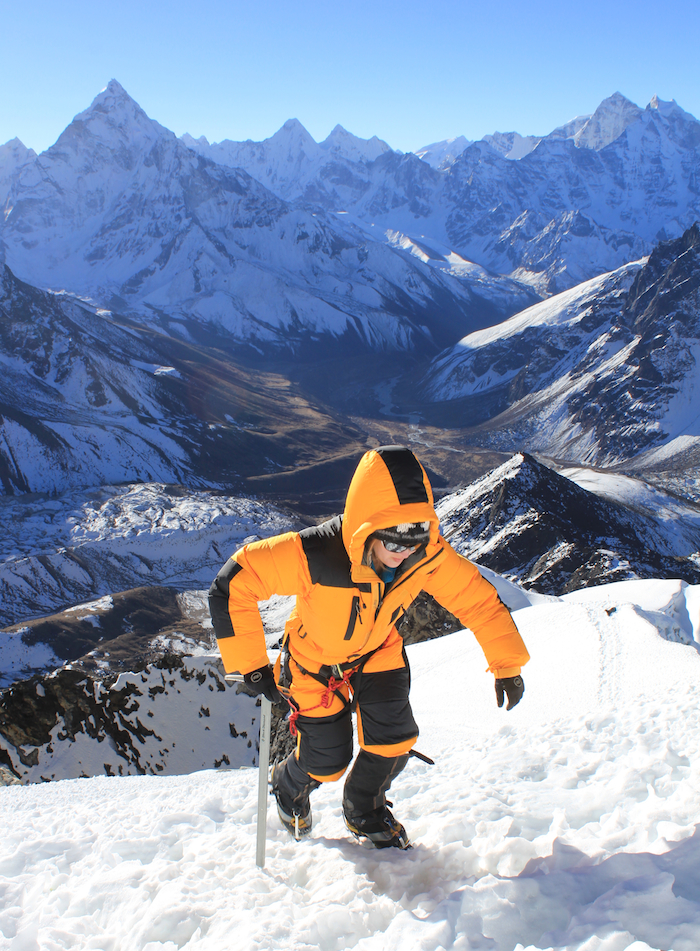 Himalayan Glacial Lakes (starts at 5:20) Some scientists conduct their experiments in a laboratory — think clean white walls, artificial lighting, A.C. and a convenient coffee pot not far away. Not so for Ulyana Horodyskyj, a graduate student at the University of Colorado. For the last few years she’s been looking at glaciers and the lakes on top of them in Nepal. Last year she spent a year looking at how pollution affects glaciers high in the Himalayan Mountains. She hoped to set up the ultimate high-altitude laboratory on the oxygen-thin slopes of Mount Everest, but a fatal accident intervened. On this edition of How on Earth, she talks about her latest research, Himalayan glaciers and what it is like to do science at the top of the world.