Idaho Matters is a wonderful way to stay up to date, meet people and understand there’s much more to this great state. Hosted by Gemma Gaudette on Boise State Public Radio News, it features arts and politics, growth and education, and the interesting stories that make Idaho unique. Send us your questions, comments or story ideas by emailing idahomatters@boisestate.edu or sending us a voicemail using the “Talk To Us” feature on the free Boise State Public Radio app.
Climate justice: How Native American youth are making a difference
Oct 21, 2024
Show notes(Linda Owen / Flickr)
For the past three years, the Center for Native American Youth has been offering kids the Brave Heart Fellowship. It’s a chance for native youth voices to be heard as they look for ways to help preserve our environment.
Ten kids in the Pacific Northwest will get grant money and support to make their own climate projects a reality. Katy Stewart with the Center for Native American Youth joined Idaho Matters to talk more.
How beavers are assisting in wildfire crisis
Oct 21, 2024
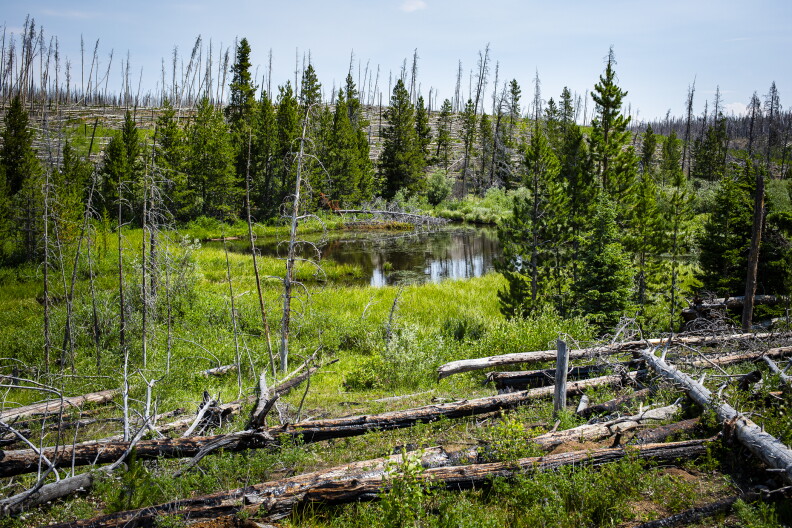
Show notes One of the beaver ponds along Bear Creek, with signs of the 2020 Mullen Fire clear on the horizon.(Murphy Woodhouse / Boise State Public Radio )
Increasingly destructive wildfires are a major issue in the American West. However, some researchers say that land managers have an unlikely ally in their efforts to confront the crisis: the beaver.
When words fail us, there's Peter Cole: ‘One needs to face this brutal moment.’
Oct 21, 2024
Show notes The MFA Reading Series presents renowned poet and translator Peter Cole, winner of a MacArthur Fellowship.( Boise State Creative Writing MFA Program)
Honored as a “major poet-translator,” Peter Cole’s scholarship includes the translations of medieval and modern Hebrew and Arabic. His honors and awards include fellowships from the National Endowment for the Arts, the Guggenheim Foundation, plus a genius grant from the MacArthur Foundation.
And Boise State’s acclaimed MFA Creative Writing Program will be hosting the world-class poet on Oct. 24 and 25. Prior to his visit, Cole spoke to Morning Edition host George Prentice from Yale University where he spends part of his year, splitting his time there with another home in Jerusalem. To that end, Cole views the “hell on earth” that is the Middle East crisis:
“I think one needs to face this extremely, extremely difficult, painful, brutal moment. And one has to just face it down right now,” said Cole. “It's a challenging time to do that for a lot of people across the spectrum here.”
Cole was also kind enough to read from two of his more recent works.
Read the full transcrip9t below:
GEORGE PRENTICE: It's Morning Edition. Good morning. I'm George Prentice. One of our absolute pleasures is tapping into inspiration and thought provoking, often challenging works of ar;, and the Boise State MFA Creative Writing program continues to bring to the university… and to us… some of the finest poets on the planet. And this morning, we are honored to spend some time with one of the best. Peter Cole is a MacArthur winning poet and is affiliated with Yale University, where he joins us this morning from New Haven. He is the author of six collections of poems. His most recent, “Draw Me After,” has garnered wide acclaim. We are very happy to report that he is coming to Boise State this month, and for all of us, there will be a public event on Friday, October 25th at the Hemingway Center. Peter Cole, good morning.
PETER COLE: Good morning.
PRENTICE: You spend so much of your time with students… and I'm curious about the experience of when you do get the opportunity to visit a different campus - different than Yale. I'm curious about that experience… and what you look forward to in that engagement… and quite frankly, how you inspire those who someday will probably inspire us.
COLE: Interesting. Interesting way to frame...poetry. Period. I love teaching, I consider the occasion of teaching… the space of teaching… to be a kind of adjacent activity to poetry, a similar kind of concentrations involved. And I approach readings very much in the way with students, the same way I approach readings in the public. So it doesn't really matter where, where I'm teaching and maybe whether it's a place like Yale or Boise the I look forward to that, that the engagement with whoever happens to be in the room at a given time and try to turn that into something of a learning experience makes it sound a little too didactic, although didactic is not a not a bad word in relation to poetry in the way some people think it is. I suppose the difference is that when I'm teaching at a place like Yale, I'm building a relationship from week to week, and we're building a kind of collective relationship. And it has its own dynamic. Whereas when you're giving a reading, you come onto a campus that you've never been to before. The people are new. People wander in, sometimes randomly. That's kind of got its own set of constraints and dynamics and expectations and surprises. But I think structurally there are a lot of similarities and a lot of pleasures that they have in common.
PRENTICE: With your permission, I have asked you to share something with us this morning. I'm not certain what it will be, but… can you tell us what it will be?
COLE: Sure. I'll read a poem or two. And I thought of first to read a poem called “Eden Songs,” which is the first poem in "Draw Me After." And it is very much a poem about this kind of sort of connectivity when we start talking about with teaching. It was born out of a commission, which is, you know, not the way we think of…. You mentioned inspiration early on. We think of inspiration maybe as something that comes spontaneously. And it does, of course, when it comes. But commissions sometimes can be helpful. And I was asked to write a libretto for an oratorio for a composer named Aaron Jay Kernis. And we decided to build this work around a notion of Eden, of Gardens of Eden, broadly construed. Eden, as I think of it, is a kind of place of first response and responsibility. The poem is a kind of Edenic situation. Emily Dickinson said that “Eden is always eligible.” She's writing to a friend one summer. She said “Eden is always eligible.” And so that kind of place in consciousness that is always available, but which we have locked ourselves out of in many cases a place of, as I say, first response and responsibility. So, “Eden Song” goes like this:
I should also say that one of the interesting things that part of the connectivity of poetry, the sort of essential valence of poetry, is that it's born in one situation and then wanders on its own without, you know, sort of uncontrollably, in a certain sense, to providential addressees, to other situations. So, when I wrote this poem, it was the height of the Covid….the first COVID outbreak. That was the kind of interconnectivity gone haywire, right? Starting from some wet market in China, and then reaching out and collapsing the lungs of the world in a certain sense. And now, as I think about it… October 7th, a year into this awful war, in the second part, the other part of the world where I live, Jerusalem, it seems to apply to this situation as much as to the situation that was born in. So… “Eden song” :
“Wanting song in the beginning, beginning to end.
Now we are falling through. What's to come. Needing Eden.
Now we are drifting Eden undone. As if from the ends of earth.
Hearing Eden's calling to tend and attend.
Now we are sprawling through what we've done.
Through what we're losing. As what we've won as we are.
Falling as Eden is calling.
Earth and heaven. Wanting.”.
PRENTICE: “Needing Eden. And we are drifting…”
COLE: Yeah. There's a sense here that I have of you know that,Eden is not a thing in the past. Eden is a thing in the present. Eden is a thing in the future. The fall, which is not necessarily a theological kind of position that I identify with, but sort of in terms of mythic consciousness. It is something I think we all feel. The fall is not behind us. The fall is now. The fall is ahead of us. It's always so. It was a kind of recuperation of that, that the power of, of the and the possibility of Eden that I was getting at. And there's a kind of catastrophe here, I think, that gave rise to the poem, the sense of that we all had in COVID, and certainly we have it now, whether it's climate change, whether it's these wars, um, whether it's the American election. It seems it seems to recur.
PRENTICE: Thank you for that. May I ask for another?
COLE: So, the other poem I thought I would share with our listeners is a poem called “Vav”. Vav is the sixth Hebrew letter.
PRENTICE: I'm sorry…Vav?
COLE: Vav. V A V. to spell it in English. And one of the challenges I set for myself in this book was you mentioned, um, translation as, as something I do. So, a lot of I deal with Arabic and I deal with Hebrew, and I get tremendous pleasure from both the literatures of both of those languages, but also just from the materiality of them, from the letters, from the sounds, but writing the letters in Hebrew is particularly potent. Well, so is Arabic. But on that material level, the sort of value that's seen, that's recognized in individual letters and then how they're strung together. And it's something I grew up with and, and I thought, mm. Can I, can I translate the pleasure, the richness that I get out of a foreign language. It could be any other language. And, and so I set myself that task over a couple of years to try to do that. And I wrote poems for each of the 22 Hebrew letters, which in Jewish mysticism, are considered the sort of building blocks of the world, the kind of DNA of the world. The world is built not in the beginning. God created the heaven and the earth that came. That's already a later story. The earlier story is out of the 22 letters and some other things. God made the universe. So, I tried to get some of that in and this poem that I'm going to read. Sometimes I would look at the letters, the Hebrew letter I've chosen and describe it visually. Sometimes I would just riff on some sort of associative thing that I had in mind, but the idea was that it should be accessible to an English, a reader of English, without knowing anything about the Hebrew or Hebrew culture or anything like that. So, this poem started out as the… I'll just say that the letter of Vav… when it's written out, looks a bit like an index finger held up in the air, with the top joint, maybe a little arthritic, just pointing down a little bit. So I'm describing that, but it really ended up being in the. This is the epigraph of the poem for Geoffrey Hartman. In Memoriam. Geoffrey Hartman was one of the great readers of the 20th century. It was a literary critic, a scholar of Wordsworth, and a man who could look at texts and see things that most of us didn't see and then sort of open worlds within it. So, it started out as being a portrait of the letter above the six letter Hebrew letter, and it ended up being a portrait of Geoffrey Hartman, much to my surprise, and really ended up being a portrait of, or an evocation of something much larger than either one of them.
“Above this upright letter bows its head ever so slightly
out of humility, much like Geoffrey toward the page it's fixed itself to
as though by a hook or being hooked, really a summoning from within it, or him
to listen hard to what's barely there
and maybe not quite yet between the lines
to sit, taking a stand and read.
Learning straightness and when to bend.
So, we come not to the end, but once again and again to end.”
PRENTICE: My takeaway there is..."...to listen hard to what is barely there."
COLE: Exactly. Which is one of the things that poetry is very good for. It focuses you, it brings you. It takes us into a kind of another level of listening. And that's what Geoffrey did. Geoffrey Hartman did. As a reader, I think that's what poems help us do, is to hear things that are barely there. And where they there before we heard them, is one of the questions that comes up.
PRENTICE: Peter Cole, your work… your extensive work in translation of medieval and modern Hebrew and Arabic work, I'd be remiss if I did not note… and I think you referred to it earlier… that you do spend time between New Haven and Jerusalem. So, I. I be remiss if I did not ask about the lens…that very particular lens that you look through when you see the hell on Earth that is currently the Middle East?
COLE: Hell on Earth is…if you wanted to make a portrait of hell on Earth, that would certainly give you the images right now. It’s a catastrophe. It's a disaster. It's not a surprise. People who have been paying attention… who've been listening to the text of what that place, the various texts that place has to offer, could see this coming for a long time. I'm speaking as someone who is both a very proud Jew and someone who is deep into Arabic culture and loves Arabic literature and has friends all around the ethnic spectrum in Israel-Palestine. But it is a disaster. It's a disaster. It's crushing. It's crushing in terms of buildings and places and the people being crushed. It's crushing for the cultures and for the cultural legacies and just the existential possibilities. And it's hard to be optimistic. I mean, I think one needs to face this extremely, extremely difficult, painful, brutal moment. And one has to just face it down right now. To, in terms of literature, one tries to do what one does best and put it to the extent that seems right and seems natural to one in the service of the things you believe in, the values you hold dearest, It's a challenging time to do that for a lot of people across the spectrum here. We people have stopped listening to each other. We talked about that already, about listening to what's barely there. That's one of the real victims here is and one of the greatest tragedies here and the war that's just seems to kind of mushroom keeps on mushrooming in the south…in the north… threatening to go all over the Middle East. These are very, very, very tough times.
PRENTICE: I wish you safe journey always…in particular, and probably more recently to Idaho. Peter Cole will visit Boise State University on October 24th and 25th. Safe journey to you. Great good luck. It has been an honor to spend some time with you this morning. Thank you so very much.
COLE: Likewise, George. Thank you. And I look forward to being in Boise.
Idaho Matters Reporter Roundtable: October 18, 2024
Oct 18, 2024
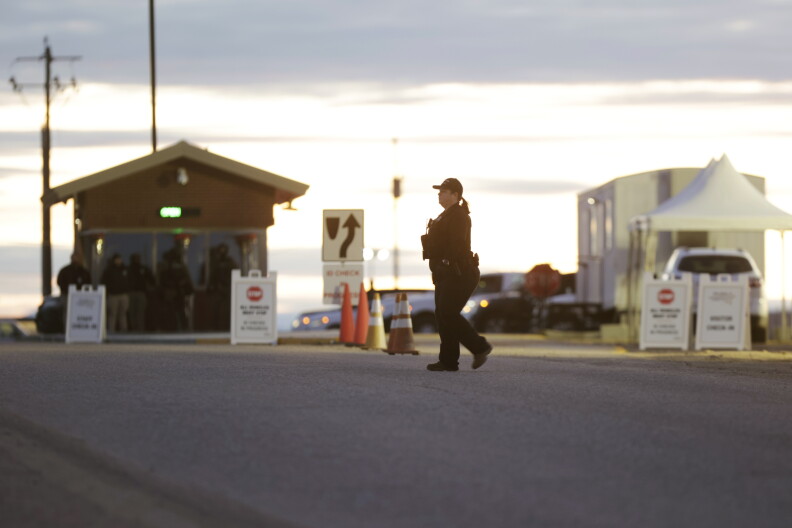
Show notesA prison officer patrols near the entrance to the Idaho Maximum Security Institution near Kuna, Idaho on Wednesday, Feb. 28, 2024. (Kyle Green / Associated Press)
It’s Friday, which means it's time for our Reporter Roundtable when Idaho Matters gets you up to date on all the news that made headlines this past week.
The center offers 24/7 assistance to those impacted by interpersonal violence, providing access to crucial resources like forensic medical exams, safety planning, counseling and more—all in one place.
Trina Allen, executive director of the Ada County Victim Services Center, as well as Anne Wardle, supervising nurse manager with the Ada County Community Safe Team at St. Luke's, and Molly Kaczmarek, practice manager with St. Luke's Cares/DVSA Clinics, joined Idaho Matters to talk more about the center and the important work they are doing.
What to Watch: Love on the screen
Oct 17, 2024
Show notes( Kelsey Thomson)
As the weather turns colder, it's the perfect time to curl up with a good film or TV show.
Resident movie critic George Prentice joins Idaho Matters to give us some recommendations on what to watch this fall. Plus, we take a look at some of the best scary movies to watch on Halloween.
Idaho Matters Doctors Roundtable: October 16, 2024
Oct 16, 2024
Show notesThis combination of photos shows Republican presidential nominee former President Donald Trump, left, and Democratic presidential nominee Vice President Kamala Harris during an ABC News presidential debate at the National Constitution Center, Tuesday, Sept. 10, 2024, in Philadelphia. (Alex Brandon / AP)
With just 20 days to go until this year’s presidential election, questions are swirling about the candidates’ health.
Over the weekend, the White House released the medical records for Vice President Kamala Harris, with her physicians describing her health as excellent.
In the meantime, former president Donald Trump has not released his medical records in spite of promising numerous times to do so.
However, how important or newsworthy are these medical reports, and what information can we actually gather from them?
Dr. David Pate, former CEO of St. Luke's Health System and co-author of the book "Preparing for the Next Global Outbreak," joined Idaho Matters to talk more.
Pace for Peace: Running for a cause
Oct 16, 2024
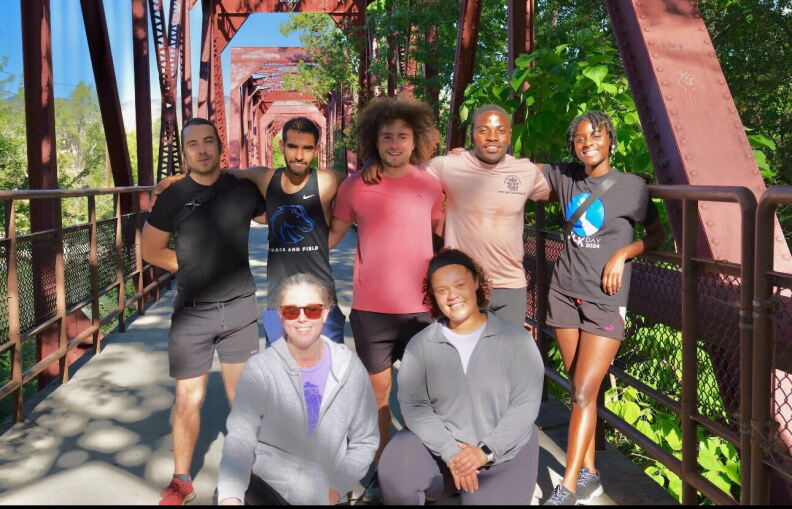
Show notesGem State Joggers and the Pace for Peace team.( Pace for Peace)
Many of the refugees who have come to Idaho in the past few years came from the Congo, a war-torn African country facing a humanitarian crisis caused by violence and natural disasters that have forced millions of people out of their homes.
After fleeing their home country, these refugees still face challenges as they adjust to a very different life in Idaho, and a group of dedicated people are hoping a new 5-k run in Boise will help build bridges between our community and its newest members.
Samuel Bisoka is the founder of "Gem State Joggers" and is an organizer of this Saturday's Pace for Peace 5k, but he says it’s more than just a run or a fundraiser. He calls it a "powerful call to action for solidarity, understanding, and community building."
He joined Idaho Matters along with Pace for Peace organizer Sayed Mirbacha.
'Beyond the Buzz:' The role Idaho bees play in our environment
Oct 16, 2024
Show notes( Samantha Wright)
Bees are all around us during the summer months, but we don’t always pay much attention to them.
However, as pollinators, they’re essential when it comes to the food we eat. They’re in trouble though, both in Idaho and around the world, and everyone from scientists to backyard gardeners are trying to help them.

 Our TOPPODCAST Picks
  Stay Connected