Idaho Matters is a wonderful way to stay up to date, meet people and understand there’s much more to this great state. Hosted by Gemma Gaudette on Boise State Public Radio News, it features arts and politics, growth and education, and the interesting stories that make Idaho unique. Send us your questions, comments or story ideas by emailing idahomatters@boisestate.edu or sending us a voicemail using the “Talk To Us” feature on the free Boise State Public Radio app.
How is climate change impacting our health?
Oct 30, 2024
Show notes(<a href="https://www.flickr.com/photos/leonardo4it/">leonardo4it</a> / Flickr)
It’s no secret that climate change is impacting our landscapes, but did you know it’s also affecting our health?
As extreme weather events become more common, so do threats to our air, water and food quality — all of which create a domino effect.
Understanding the consequences of these stressors is more important than ever, which is why St. Luke's Director of Sustainability, Dr. Ethan Sims, will be hosting a lecture on the topic next week at the Osher Lifelong Learning Institute. He joined Idaho Matters for a preview.
Here’s the real ‘News of the Universe.’ La Luz will light up Boise Halloween night
Oct 30, 2024
Show notes(La Luz / Wyndham Garrett )
Create a word cloud from reviews of "News of the World" or the current world tour of La Luz, and you’ll see the larger-than-life words: “Solid,” “Sweet,” “Weighty,” and “Easy to Love.”
To be sure, "News of the World" songs, and particularly the lyrics, reflect how lead Shana Cleveland’s off-stage life was blown apart (spoiler alert: she’s doing amazing now).
“It was something that really caused a lot of changes in my life and caused me to have to come to a new sort of acceptance of the reality of change,” said Cleveland.
Meanwhile, La Luz has spent the better part of 2024 lighting up stages around the world; and come Halloween night, they’ll be coming to Boise to perform at the Knitting Factory.
“I want to have a costume contest. I want to do a ‘Soul Train line’ with everybody in their costume,” said Cleveland. “I do really enjoy Halloween … just the idea that everybody can just express themselves in way that they don’t feel comfortable normally.”
Cleveland visits with Morning Edition host George Prentice to talk about their Halloween visit to Boise, how, post-"blown apart," her life changes informed some of her most inspired art, and even how she’s a bit of a “snake charmer” with her guitar cable.
Idaho Decision 2024: Preparing for the November election
Oct 29, 2024
Show notes(Robyn Beck / AFP/Getty Images)
It’s exactly one week until Election Day, but tens of thousands of people have already voted in Idaho, either in early voting or by mail with an absentee ballot.
We’ll find out more, plus how does the state test our voting system? And can you wear your campaign t-shirt to the polls next week?
Because it’s a presidential election year, there’s been a lot of focus on not just who gets elected but also on how our election system works at both a national and local level.
To answer the questions that have come up this election season, we asked Idaho’s Secretary of State, Phil McGrane, to join Idaho Matters for a breakdown.
Read the full transcript below:
GAUDETTE: From the studios of Boise State Public Radio News. I'm Gemma Gaudette. This is Idaho Matters. It's exactly one week until Election Day, but tens of thousands of people have already voted here in Idaho, either in early voting or by mail with an absentee ballot. We'll find out more today. Plus, how does the state test our voting system? And here's another question. Can you wear your campaign t shirt to the polls next week? Well, because it is a presidential election year, there has been a lot of focus on not just who gets elected, but also on how our election system works, in particular the national and local level. So to answer those questions that have come up this election cycle, we asked Idaho Secretary of State Phil McGrane to join us every Tuesday to take a closer look at these issues. And he's joining us once again. Hi, Phil.
MCGRANE: Hey, Gemma.
GAUDETTE: Okay, so where are we with early and absentee voting? Are you seeing a historic turnout so far this year?
MCGRANE: We really are. Especially in person early voting. It's been awesome to see. Today happens to be vote early day. So it's just a national day to encourage people to vote in person and early. I took advantage of it myself today, but many, many other Idahoans have done the same. I know talking to Trent Tripple, the Ada County clerk, as well as other clerks throughout the state, they've seen huge numbers and lines at each of the early voting locations because so many people are turning out. And honestly, we're watching it closely today because we think we might eclipse the number of people who voted total in the primary election by today. So between absentee and early votes, we're already at 267,000 people having voted and seeing a lot more as we head into this final week of early voting.
GAUDETTE: Okay, that is a big number there. So I want to talk next Phil, about how you go about testing Idaho's election system. I mean, this is something where there has been such rhetoric about elections not being safe, not being secure, you know, all of that. So we want folks to understand and know that our election system is vetted, it is tested. So what kind of test do you do to make sure everything's working properly and that it is safe and secure?
MCGRANE: Yeah. You know, we've talked about security in the past, but it really is a timely question this week that all of the counties. So in addition to the testing and the safety measures we've put in place leading up to the election this week, the counties will be doing testing. It's their public logic and accuracy testing to make sure that the machines are all working properly, leading into Election Day. It gives the public and candidates an opportunity to see how the machines are working, and part of this process is just ensuring that, you know, a vote cast for President Trump goes to President Trump. A vote cast for Vice President Kamala Harris goes to Kamala Harris, and so on, really proving out that the systems are ready and working, and then they will zero out the machines, get everything set so that next Tuesday we're all ready to go for big Election Day.
GAUDETTE: So the next thing I want to discuss is electioneering very quickly. For maybe folks who aren't familiar, electioneering is basically like a it's called a kind of like a passive form of campaigning, right? Wearing, um, uh, you know, a shirt, something like that. However, my understanding, Phil, is we've got a new rule about, um, campaign signs or wearing, you know, a certain type of candidate's hat to the polls when you vote.
MCGRANE: You know, I think it really this all boils down to this is a major election. Obviously, we've got president on the ballot. We have proposition one, other things that have garnered attention and really everyone just being respectful of one another when it comes to actually voting at the polls. We know we're going to see a wide variety of opinions and thoughts in terms of voters headed there. And so part of it, our electioneering laws are really to just create a safe bubble for everybody to be able to go cast their vote without interruption. So this is what prevents people from handing out fliers or having big signs or anything else at any of the polling locations, and it really does extend all the way down to the individual voters. You know, I know for all of the clerks and the poll workers, we ask voters just to be mindful when they head to their polls not to bring their their campaign signs, their campaign literature, their shirts or other things with them. Um, if someone sees someone with a t shirt, most likely they're just going to be asked to vote and get in and get out quickly so that they don't disrupt other voters. Um, you can appreciate Gemma from all our conversations, we're not looking for conflict at any of the polls. We really are trying to help facilitate everyone having the opportunity to cast their ballot and have their voice heard, regardless of what their opinions are on any given issue. And so, you know, I'm really hoping that voters will be mindful and respectful of each other as we gear up, whether it's for early voting this week or for Election Day next week.
GAUDETTE: So you mentioned Trent Tripple and our Morning Edition George Prentice actually spoke with uh, with Trent recently. Again, he is the county clerk, and he said a lot of people actually don't even understand that electioneering is illegal. So let's take a listen to this.
TRIPPLE: It's just common sense approach to folks as they walk in. Most citizens, if not all of them, they're proud of who they are and what they represent and the parties. And they just want to be, you know, representing properly. Many of them don't know that they can't even do that. And so when they show up, we're not accosting them or calling the police. We want them to come in and vote. But we also want to maintain a safe space within the precinct for people to feel like they can vote without feeling pressure from from anybody else.
GAUDETTE: And bottom line, Phil, is that exactly it? Right? Is it? It is. You don't want anyone to feel intimidated about being able to vote.
MCGRANE: Yeah, that's exactly it. We don't we want everybody, regardless of their opinions, to be able to cast their ballot in peace. And you know, we did expand our electioneering space. It used to be 100ft from the polling location. Now it's 250ft from the door that voters enter. And really that's to create a space that, you know, anybody, whether it's you or me or our grandma, they can pull up, get out of their car, go vote and do so uninterrupted. And so hopefully we'll have a very peaceful election day. Everyone will get to have their voice heard, and then we'll all be watching closely when we see the news and see what the results are as they come in.
GAUDETTE: So have you heard of any electioneering concerns so far this campaign cycle?
MCGRANE: Um, we've seen, uh, little things. They always pop up a little bit. But so far, I think you've been talking to Trent and some of the other clerks. It's gone really smoothly for this election. You know, last about a year ago, we had some incidents in some local elections that really triggered us to update our laws. We haven't seen anything like that this cycle. I mean, every now and then you'll get someone pull up with a truck with a giant sign and try to park it near a early voting location. But we're pretty quick to remedy those situations, so I really expect most voters aren't going to see anything like this when they head to the polls, and hopefully it'll go smooth for everyone.
GAUDETTE: One other question that has come up in regards to voting. A Treasure Valley restaurant has put up a post on X that is offering a free beer for anyone who voted for Donald Trump. Um, is this legal?
MCGRANE: You know, I think it raises an important question for anybody is there are laws that prohibit, uh, incentives to either incentivize somebody to vote or to not vote. Doesn't really matter what direction. Um, you know, our country has had a long history going back to the 1800s of bribes and beer for voting. We've stopped that over the years. And so I want to encourage, whether it's a business owner or anybody else, not to incentivize voting for this election. I mean, we all want to encourage people. Of course, I've been doing that going around the state. Um, but there in offering somebody anything of value, it becomes problematic whenever we see situations. You know, our approach is really just to reach out to people, to let them know so that they don't find themselves in a position they don't intend to be, because I think most people are really trying to encourage voting. Um, but that doesn't mean they always understand the environment that they're doing it in. And we don't want anybody to face any issues, whether it's a business owner or, like you said, somebody wearing a shirt at the polls.
GAUDETTE: Mhm. Uh, a couple of other quick questions. Uh, early voting ends this week. Yes.
MCGRANE: Yes. It uh for Friday at five will be the end of early voting. So if you want to get in before Election Day, now is the time to do it.
GAUDETTE: Okay. And then what about absentee ballots? When are they due.
MCGRANE: Absentee ballots are due at 8 p.m. on Election Day. The polls close at 8 p.m. on Election Day. Absentee all voting stops in Idaho. Then there is no postmark or delays afterwards in terms of Idaho. So especially for people who've moved from other states, it's important to know now is the time to get your absentee ballot in if you have one, especially if you're going to be mailing it. I know the Postal Service is monitoring, but it takes time for many ballots to travel around the state. So I really encourage anybody who has an absentee ballot get it in now. Get it in the mail. There are drop boxes throughout the state, or you can drop it off at your local elections office or alternatively, visit early voting sites. I will caution the last day of early voting Friday is always the busiest day, so if you want to wait in line, Friday is probably the day to do it. Otherwise, go to your polling location on Election day. We don't expect huge lines on Election Day. I think we've got everything well in place for a huge turnout. I mean, really with early voting and absentee so far, we should have record setting turnout for the state of Idaho for this election.
GAUDETTE: Wow. So what about when ballots start being counted? Phil and I asked this question because we have two time zones in Idaho. So even though the polls close at 8 p.m., they close 8 p.m. local time. So in the Treasure Valley, you know, they close. They close at 8 p.m.. But if you're in North Idaho, it's 9 p.m. when the polls close up in Coeur d'Alene. I mean, here in Boise. So how does that work?
MCGRANE: There's so many layers to the question you asked. I think that you're right. All of the time, standards are applied wherever you live. So if you live in the Panhandle, it's an hour different than it is here down in Boise. Um, one of the things that voters will note is on Election day, we won't release results until 8 p.m. Pacific time. So 9 p.m. Mountain time, 8 p.m. Pacific time. And that's so that we wait until all voting is finished in the Panhandle. It's interesting doing this in a state that crosses 2 time zones. Um, so we've got all that in terms of, you know, really for the election, absentees are all still sealed up nicely in their envelopes. All the early voting votes have not been tallied at this point. All of that will be reserved for Election Day. And the first results will be known even to the election officials following 8 p.m. on Election Day. So there's a lot of processes in place that we're working on to make sure that everyone can vote, and no one's influenced by trying to know, like, who's ahead or how are things trending. Um, we make sure everything is level for everybody, no matter where you are in the state of Idaho.
GAUDETTE: And when do polls open? Next Tuesday. If folks have an absentee ballot or they haven't voted early?
MCGRANE: Yeah. One of the big things we are encouraging is visit Idaho Gov. So you can make a plan, see your sample ballot and then know when to vote. So early. Voting is from 8 a.m. to 5 p.m. throughout this week until five on Friday, and then next Tuesday. Voting will begin at 8 a.m. and the polls close at 8 p.m. so if you need to find your polling place, vote Idaho is a great site to visit to get ready.
GAUDETTE: Well, as always, Phil, we so appreciate you coming on and talking with us about all of this. We've been talking with Idaho Secretary of State Phil McGrane on how our state is getting ready for the November election. He will, of course, be back next Tuesday to answer more questions about the process. Thanks so much for listening to Idaho Matters. Boise State Public Radio and Idaho Matters are members of the NPR network. It's an independent coalition of public media podcasters. You can find more shows in the network wherever you get your podcasts. I'm Gemma Gaudette. We'll see you tomorrow.
Idaho has a constitutional amendment on the ballot about noncitizen voting
Oct 29, 2024
Show notes
In the past few weeks, we’ve been doing a lot of reporting on Proposition One - the citizens initiative that would open Idaho's primaries and establish a ranked choice voting system in Idaho.
You’ll see it on the ballot labeled as “Proposed Idaho Constitutional Amendment SJR 102” and here to help break it down for Idaho Matters is McKay Cunningham, constitutional scholar and graduate professor at the College of Idaho.
Read the full transcript below.
GAUDETTE: More Idaho Matters now from the studios of Boise State Public Radio News. I'm Gemma Gaudette. In the past few weeks, we've been doing a lot of reporting on proposition one. This is the citizen's initiative that would open Idaho's primaries and also establish a ranked choice voting system here in Idaho. However, there is another statewide question on the ballot this year. It has to do with whether non-citizens should be allowed to vote in Idaho. Now you will see it on the ballot labeled as proposed Idaho Constitutional Amendment, SJR 102. And here to help break it down for us today is McKay Cunningham, constitutional scholar and graduate professor at the College of Idaho. Mckay. Nice to have you back on the program.
CUNNINGHAM: Hi, Gemma. Nice to be here.
GAUDETTE: So, McKay, tell us about the amendment. What exactly would it do?
CUNNINGHAM: It's a pretty simple amendment. It's just one sentence to be added to Idaho's constitution, and it would essentially make certain that non-citizens cannot vote in an election here in Idaho.
GAUDETTE: Okay. This is the part that that confuses me as to why this is even on the ballot. And that is. Isn't this already in Idaho's constitution? I mean, what's the difference between what's now in our state constitution and what is in this amendment?
CUNNINGHAM: Yeah, that's a great point. Yes. It's all I mean, non-citizens are already barred from voting in Idaho as our Constitution stands today without this proposed language. And so a lot of opponents are questioning why we need to do this. If the law, even in our Constitution, already prohibits non-citizens from voting. Um, one of the arguments that the proponents have put forward is that we need to clarify or to be extra direct, and making sure that everyone knows that non-citizens can't vote in Idaho's elections. But I'll read for you if you like what our current constitution states without this amendment as it relates to to non-citizens. It says every male or female citizen of the United States, 18 years old, who's resided in the state, etc., is a qualified elector. So yes, Gemma it's already prohibited in our Constitution already.
GAUDETTE: And to clarify, this is also federal law. I mean, non-citizens cannot vote.
CUNNINGHAM: Yeah. I mean, I'm glad that you brought that up. Um, there's a federal statute that prohibits non-citizens from voting in federal elections, for example, for the president of the United States. Now that federal statute only prohibits non-citizens from voting in federal elections. In other words, there's nothing in the US Constitution and there's nothing in the federal statutes that prohibits states or local governments from allowing non-citizens to vote. Now, to be clear, every state, all 50 of them, disallow non-citizens to vote in their state elections as well. But one of the things that not a lot of people know is that's not always been the case. I mean, during the 1800s and early 1900s, at least 40 states had provisions in their constitutions specifically allowing non-citizens to vote. Isn't that interesting? In Pennsylvania, for example, their constitution in the 1800s said this, quote, all free men. That's something there to all free men. I mean.
GAUDETTE: There there's that.
CUNNINGHAM: Mackay having a sufficient evident common interest with and attachment to the community, have a right to elect officers and be elected in office. Alabama had a constitutional provision like that. Massachusetts. Massachusetts. Illinois. Ohio. Lots of states before World War One had constitutional provisions that specifically allowed non-citizens to vote. It's really only since World War One that that has completely flipped. Mhm.
GAUDETTE: Okay. I want to look at what supporters and opponents are saying about this constitutional amendment. So according to the Idaho Secretary of State website. Supporters of the amendment say it's needed, quote, because the current language does not expressly prohibit non-citizens from voting, unquote. Can you speak on that a bit more? Because you literally read us the statute and it seems fairly clear.
CUNNINGHAM: Yeah, I have trouble with that, quite frankly. Gemma. Um, I guess technically the the Idaho Constitution does not prohibit. It just says the same things, one in an affirmative way and one in a negative way. So what we currently have is an affirmative postulation. It says these people can vote and it says you have to be a citizen to vote. This this proposed constitutional amendment says the same thing but from a negative affect, saying, uh, non-citizens cannot vote in Idaho. So I guess technically, um, there is a difference there, but practically there's not one. The argument Gemma that they have, um, that proponents have forwarded that may have a little more, um, uh, um, uh, justification is that it is true that there are a small number of local governments of cities, typically, that have allowed non-citizens to vote in them, that definitely not in Idaho. Um, but that has occurred in other places in the United States. And so there is an argument that this provision would make it clear that no state here or no city, excuse me, no city or local government within Idaho could change their specific election provisions to allow non-citizens to vote. Um.
GAUDETTE: Well, in fact, um, as you mentioned, there are some places that do this. The Idaho Capital Sun actually reported and found that, uh, found that to actually be true in places like Maryland, Vermont and San Francisco. So with supporters wanting to make sure that doesn't happen here in Idaho. Um, again, for clarification, that doesn't happen in Idaho as right now, but is this a growing concern? Mckay.
CUNNINGHAM: Well, I don't know if it's a growing concern in Idaho. I mean, Secretary of State Phil McGrane has said it has never occurred in any municipality, any city, any local government, and that Idaho has never even considered allowing non-citizens to vote in any local elections. So I guess the argument is that this proposal would preemptively block any Idaho localities from potentially allowing non-citizens to vote in local elections. I mean, you say, is this a trend? And I think a lot of it stems from the the immigration debate that we are having as a as a country right now. And some of the suggestions that immigrants are are flooding into the country. And so I think this kind of provision, even though practically it will have little consequence, is really, um, uh, forwarded for that kind of a purpose.
GAUDETTE: So I want to talk about what opponents of this constitutional amendment are saying. So one of their arguments is, is that, uh, in the state of Idaho, we already have to provide, quote, citizenship and proof of residency, unquote, to register to vote in Idaho. Opponents also say that this amendment would, quote, foreclose any opportunity in the future, unquote, to allow non-citizens to vote in certain elections. So, McKay, can you talk about those two issues as well, in particular, uh, needing to already show proof of citizenship and residency to vote?
CUNNINGHAM: Yeah, yeah, for sure. I think opponents are, first of all, saying this is a solution in search of a problem. We already outlaw, um, non-citizens from voting. And to your point or your question about the processes that are put in place, such as voter registration, which requires, upon penalty of perjury, uh, attestation that you are, in fact, a citizen of the United States. Um, Senator McGrane has stressed that Idaho election officials have a lot of processes in place to make sure that only citizens can vote. These processes have been in place for a long time now. They are double checked with regard to the information that we have on individuals through the Department of Motor Vehicles, through Social Security Administration, through the Idaho State Police, and even with interactions with the United States Department of Homeland Security. So, yeah, we already have a prohibition against non-citizens voting, and we already have a very robust system to ensure that that doesn't take place. I mean, the next question is in my mind, like, does it happen? Do we have a lot of non-citizens voting historically, uh, in Idaho? And I haven't seen that data. Again, Secretary of State Phil McGrane and elected republic Republican, has suggested there is a handful of such instances. Um, but that's that's as far as I've been able to tell with regard to what has happened in Idaho. There are some nationwide surveys, one done by the Heritage Foundation, a conservative think tank that said that they found only 77 times that a non-citizen has voted over a four year span. That's from 1999 to 2023. And that was a study done by the Heritage Foundation, all of which to say, um, I don't think that there is a lot of proof or any proof really, that there's widespread voting by by non-citizens. And part of the reason is because you can go to jail and or be deported. Um.
GAUDETTE: So, right, right. And we should note that, um, that the Secretary of State did say that, um, in past elections in Idaho, 36 very likely non-citizens are being removed from the rolls this year. Uh, now, Secretary McCrane was on was on our program every Tuesday right now, I believe last week or the week before when this number came up, he did say, well, actually, one person was put back on the voter roll because they are a citizen. So even with that, that is a significantly small number, um, of non-citizens trying to vote in elections. Um, with that, said McKay, several states have a question like this on the ballot to ban non-citizens from voting. So is that a growing trend in the United States? I've got about two minutes left with you.
CUNNINGHAM: Yeah, it is a growing trend. I mean, we've heard a lot, um, nationally about the vote being rigged or it cannot be trusted. And I think some of this trend that you're talking about is responsive to that rhetoric of, of our elections being insecure or rigged. Um, those eight states, including Idaho, that are currently considering ballot measures just like Idaho in each of those eight states, it's already illegal for non-citizens to vote. So it's a very similar process that these other eight states, which are Iowa, Kentucky, Missouri, North Carolina, Oklahoma, South Carolina and Wisconsin are going through right now.
GAUDETTE: So I want to ask you two more quick questions. This is a constitutional amendment, not a proposition. Does that require more votes to pass in the election or is it still a simple majority?
CUNNINGHAM: It's still a simple majority.
GAUDETTE: Okay. And finally, if this amendment fails, I want people to understand this. Will this allow non-citizens to vote.
CUNNINGHAM: No if this amendment fails? Non-citizens can still no can still not vote in Idaho, either a city or a local or state or federal election. Non-citizens can still not vote even if this proposition fails.
GAUDETTE: All right. Really appreciate the conversation about this because, um, you know, just having more understanding of what's on the ballot is always helpful for all of us. So appreciate your time.
CUNNINGHAM: Yeah. It's also nice to get a break from proposition one.
GAUDETTE: Oh my goodness. Right. Thanks, McKay. We've been speaking with McKay. Cutting with McKay Cunningham, constitutional scholar and graduate professor at the College of Idaho. Talking about the proposed constitutional amendment, which will be on the ballot. The amendment is to keep noncitizens from voting in Idaho. Thanks so much for listening to Idaho Matters. Boise State Public Radio and Idaho Matters are members of the NPR network. It's an independent coalition of public media podcasters. You can find more shows in the network wherever you get your podcasts. I'm Gemma Gaudette. We'll see you tomorrow.
What might voters learn from Idaho government students? ‘The decorum has been great’
Oct 29, 2024
Show notes Morning Edition host George Prentice is joined by Todd Simis, Ella Houston and Carter Maness(Boise State Public Radio)
In what has become a jaw-dropping election season, including more than a few inappropriate moments, what should America’s next generation of voters think of our electoral system?
“This [election] is more interesting,” said Todd Simis, veteran educator and teacher of American Government and Advanced Placement Government and Political at Boise’s Capital High School. “Yes, there’s a convergence this year. It’s exciting. I will say that elections have changed.”
But he’s quick to add how proud parents would be of the respectful nature of those classes.
“The decorum has been great,” said Simis. “The students have been awesome; and as we get closer, it’s exciting for sure.”
And while a good many voters may be targeted by agenda-driven social media, these students really don’t want any part of that.
“Recently I stopped using social media … purposely,” said Carter Maness, Capital High senior. “I don’t think anyone wants to really have a fight … or something.”
And these students also have more than a few ideas about how to engage more voters, particularly
“I think, at a base level, the Electoral College is unrepresented,” said Tessa Houston, Capital High junior. “I think it is furthered and empowered by the winner-take-all method. It can erase nearly half of a state population’s votes.”
With days before the marathon election season comes to a climax, the students and educator visit with Morning Edition host George Prentice to talk about what it’s like to consider the concepts of American politics in the shadow of a contest for the ages.
New system makes voting more accessible to tribal communities
Oct 29, 2024
Show notes
In the Mountain West battleground state of Nevada, the first votes of the 2024 general election have already been cast. Earlier this month, tribal members living in the state’s 28 tribal communities gained access to the state’s digital absentee voting system. It’s part of an effort to improve access to the ballot for indigenous voters across the state.
KNPR’s Paul Boger reports for the Mountain West News Bureau.
Treasure Valley task force works to reduce rise in drunk driving
Oct 28, 2024
Show notes(<a href="https://www.flickr.com/photos/holmesbartonholmes/">Christine Barton-Holmes</a> / Flickr)
In the last five years, the Treasure Valley has seen a 26% increase in drunk driving, and 42% of fatal car crashes were related to someone driving while impaired.
Valley law enforcement agencies want to bring those numbers down, so they’ve created the new Treasure Valley DUI Task Force.
A similar task force in north Idaho has seen a big drop in fatal car crashes due to impaired driving, so now agencies from Garden City to Meridian to Canyon County are joining together to educate the public about the dangers of driving while intoxicated.
Lt. Crapo and Lt. Horst from the Idaho State Police joined Idaho Matters to talk more.
New resource reveals how your state and local tax dollars are being spent
Oct 28, 2024
Show notes(<a href="https://www.flickr.com/photos/68751915@N05/">401(K) 2012</a> / Flickr)
Did you know that Caldwell’s mayor makes $40 an hour? Or that Boise spent more last year on sewer and wastewater costs than it did for its police department? Or that you can make $17 an hour as a seasonal golf clubhouse worker in McCall?
Well, now you can know all that and more thanks to a new addition to the Transparent Idaho website, your one-stop-shop for how your state and local tax dollars are spent, that now includes financial data from Idaho’s 198 cities.
The website is the brainchild of Brandon Woolf, Idaho’s state controller, who has been making transparency in government a central theme of his administration. He joined Idaho Matters to talk more.
'A Good Guy:' Revisiting the January 6 insurrection
Oct 28, 2024
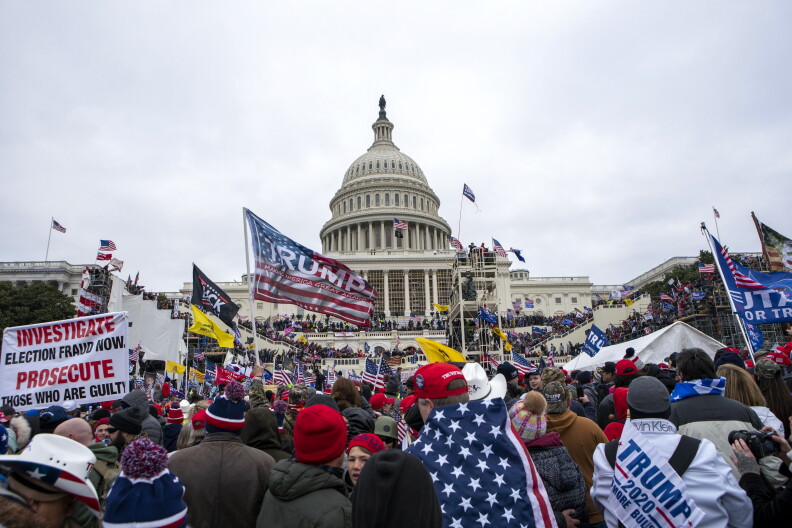
Show notesThe U.S. Capitol on Jan. 6th, 2021. (Jose Luis Magana / AP)
A new podcast titled "A Good Guy" tells the story of active-duty marine sergeant, Joshua Abbott. He was part of the January 6th attack on the U.S. Capitol. What was he doing there? That’s the question the podcast wanted to answer.
It’s hosted by NPR Pentagon correspondent Tom Bowman and reporter and co-host Lauren Hodges. The podcast dropped last week morning edition host George Prentice sat down with Bowman and Hodges to find out more about it.
Timberline Wind Symphony fundraises for chance to play at national festival
Oct 28, 2024
Show notesThe 2023 Timberline Wind Symphony Band. ( Timberline High School)
Now they’re trying to raise enough money for the trip. Band Director, José Rodríguez II, along with Timberline High students Matias Vidal-Russel and Grant Cardoza, joined Idaho Matters to talk more about this opportunity.

 Our TOPPODCAST Picks
  Stay Connected