Hosted by Gemma Gaudette on Boise State Public Radio News, this weekday public affairs podcast serves as a gathering place where ideas are shared, stories are told and conversations thrive. Whether you’re curious about local government, inspired by the arts or invested in your community, Idaho Matters is where the voices of Idaho come together to inform, engage and celebrate the people and places that make the Gem State unique.
Send us your questions, comments or story ideas by emailing idahomatters@boisestate.edu or sending us a voicemail using the “Talk To Us” feature on the free Boise State Public Radio app.
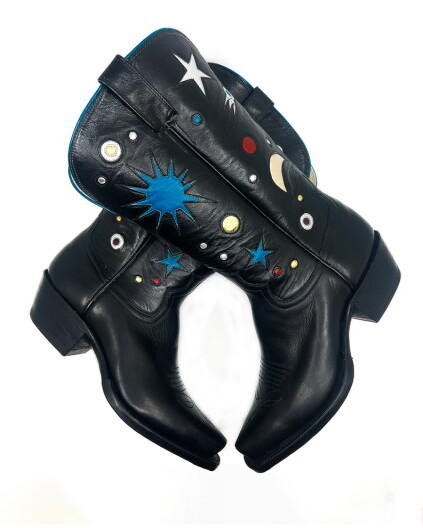
The art of making cowboy boots
Nov 21, 2024
Show notes Earlier this year Morgan Buckert was the recipient of the "2024 Nest Heritage Craft Prize: Women of the West" for her "Cosmic Cowboy" boots. (Morgan Buckert Custom Boots)
For more than a century, cowboy boots have been an iconic part of American Western culture. And in recent years they’ve had a resurgence in mainstream fashion thanks to musical artists like Beyonce and popular shows like "Yellowstone."
Which for craftsman Morgan Buckert is a good thing. She’s a custom bootmaker based out of Hailey, Idaho and makes gear so beautiful that it's literally been displayed in museums.
Buckert joined Idaho Matters to talk more about her craft.
What to Watch: Wicked and the Oscars!
Nov 21, 2024
Show notesCynthia Erivo, left, and Ariana Grande arrive at the premiere of "Wicked" on Saturday, Nov. 9, 2024, at Dorothy Chandler Pavilion in Los Angeles. (Jordan Strauss / Invision/AP)
As we reported a while back, the Sun Valley Film Festival has moved to December, and now they have announced their full line-up for this year’s star-studded extravaganza.
“Wicked” is coming to the big screen. Plus it’s time for the Oscars! Well, not all the Oscars, it's time for some of them.
Our resident movie critic, and Morning Edition host, George Prentice joined Idaho Matters to explain everything and help us figure out “What to Watch.”
Idaho Matters Doctors Roundtable: November 20, 2024
Nov 20, 2024
Show notes(<a href="https://flickr.com/photos/lunaspin/" target="_blank" link-data="{"cms.site.owner":{"_ref":"00000176-cd8c-dd4d-a7f6-fdbc82e80000","_type":"ae3387cc-b875-31b7-b82d-63fd8d758c20"},"cms.content.publishDate":1732127905173,"cms.content.publishUser":{"_ref":"00000192-d3d5-d08a-ad9a-f3f571c30000","_type":"6aa69ae1-35be-30dc-87e9-410da9e1cdcc"},"cms.content.updateDate":1732127905173,"cms.content.updateUser":{"_ref":"00000192-d3d5-d08a-ad9a-f3f571c30000","_type":"6aa69ae1-35be-30dc-87e9-410da9e1cdcc"},"cms.directory.paths":[],"anchorable.showAnchor":false,"link":{"attributes":[],"cms.directory.paths":[],"linkText":"looseends","target":"NEW","attachSourceUrl":false,"url":"https://flickr.com/photos/lunaspin/","_id":"00000193-4ade-db6b-a1fb-4bde34d30001","_type":"ff658216-e70f-39d0-b660-bdfe57a5599a"},"_id":"00000193-4ade-db6b-a1fb-4bde34d30000","_type":"809caec9-30e2-3666-8b71-b32ddbffc288"}">looseends</a> / Flickr)
A new strain of mpox has hit the U.S., there’s troubling news about a human case of bird flu and contaminated carrots have made people sick in 18 states.
Dr. David Pate, former CEO of St. Luke's Health System, joined Idaho Matters to talk more about these issues.
Idaho's abortion trial enters second week
Nov 20, 2024
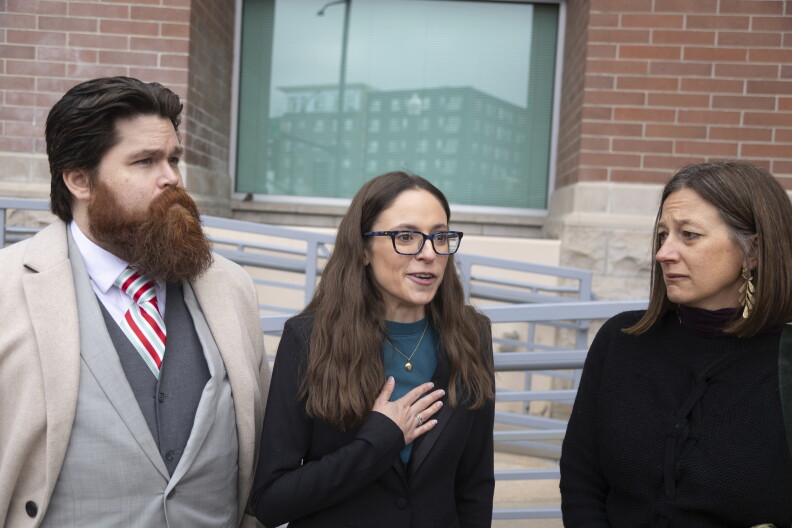
Show notesFILE - John Adkins, left to right, and his wife Jennifer, along with family physician Julie Lyons, talk to the media outside the Ada County Courthouse, Dec. 14, 2023, in Boise, Idaho. (AP Photo/Kyle Green, File)(Kyle Green/AP / FR171837 AP)
This is the second week of a trial in Idaho where four women are challenging the state’s abortion laws.
Tuesday, a doctor for the plaintiffs testified the language of the laws is narrow and unclear, something the state disputes. Much of the testimony in court has been emotional and hard to listen to.
Sarah Varney, a special correspondent with KFF Health News, was in the courtroom last week during the trial and joined Idaho Matters for an update.
Exploring Lincoln's strategy to abolish slavery
Nov 20, 2024
Show notes(<a href="https://flickr.com/photos/jbparrott/" target="_blank" link-data="{"cms.site.owner":{"_ref":"00000176-cd8c-dd4d-a7f6-fdbc82e80000","_type":"ae3387cc-b875-31b7-b82d-63fd8d758c20"},"cms.content.publishDate":1732133574847,"cms.content.publishUser":{"_ref":"00000192-d3d5-d08a-ad9a-f3f571c30000","_type":"6aa69ae1-35be-30dc-87e9-410da9e1cdcc"},"cms.content.updateDate":1732133574847,"cms.content.updateUser":{"_ref":"00000192-d3d5-d08a-ad9a-f3f571c30000","_type":"6aa69ae1-35be-30dc-87e9-410da9e1cdcc"},"cms.directory.paths":[],"anchorable.showAnchor":false,"link":{"attributes":[],"cms.directory.paths":[],"linkText":"<bsp-line>Jack Parrott</bsp-line>","target":"NEW","attachSourceUrl":false,"url":"https://flickr.com/photos/jbparrott/","_id":"00000193-4b34-d145-a993-7bb4bbe80000","_type":"ff658216-e70f-39d0-b660-bdfe57a5599a"},"_id":"00000193-4b34-d145-a993-7bb4bbe70000","_type":"809caec9-30e2-3666-8b71-b32ddbffc288"}">Jack Parrott</a> / Flickr )
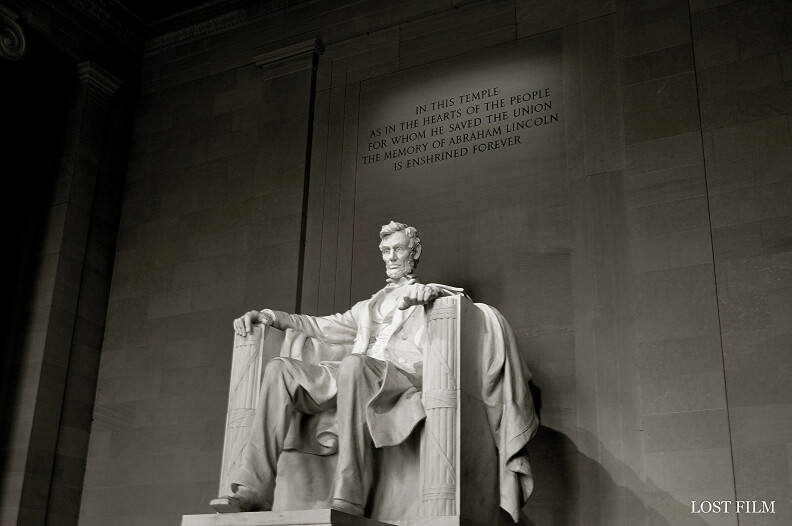
Freeing the slaves in America was not done with the stroke of a pen. President Abraham Lincoln and other anti-slavery politicians of the time used the constitution, which did not condemn slavery, in a very deliberate and strategic way to make their arguments.
College of Southern Idaho professor Justin Vipperman will be exploring this topic at the Idaho State Archives in Boise; he joined Idaho Matters for a preview, along with Angie Davis from the Idaho State Archives.
'Story Story Night' returns for 15th season
Nov 20, 2024
Show notes(Darren McEvilly / Flickr)
This month, Story Story Night is back for their 15th season, and it will be full of strategy.
In the game of chess, much like in life, it’s important to know when to make a move and when to be patient. Which is something that this year’s storytellers are experts at.
Jodi Eichelberger, artistic director of Story Story Night, joined Idaho Matters to talk more about this flagship season.
Idaho-Phoenix deal: Will the purchase still happen?
Nov 19, 2024
Show notesThe University of Idaho in Moscow, Idaho.(Geoffrey von Zastrow Photography / Flickr)
The $685 million deal to buy the for-profit online university got off to a rocky start with Idaho lawmakers and is still in the middle of a Supreme Court lawsuit.
As far as we know, Idaho's Board of Education and the University of Idaho are still talking to Phoenix, but details are vague. And the November election may play a part in the chance that sale goes through.
Idaho Education News has been tracking the proposed phoenix sale since the beginning. Kevin Richert, senior reporter and blogger with Idaho Education News, has a new story out about whether the phoenix sale will rise from the ashes.
How a new project is keeping birds safe with art
Nov 19, 2024
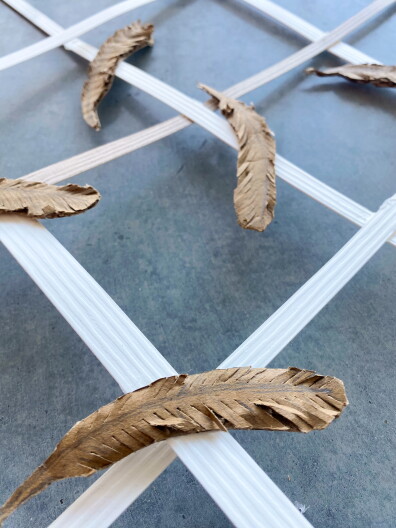
Show notes Eryn Pierce submitted her own design for the Scrap to Sculpture Challenge. Her piece, “Birds of a Feather Fall Together,” is a delicate lattice of feathers. In her artist statement she wrote, ” This work serves as both a tribute to these birds and a call to action, encouraging us to rethink how we design and interact with our surroundings to create safer spaces for the natural world.”( Eryn Pierce)
Wild birds often fly straight into windows, not realizing there’s a pane of glass between them and the light or reflection they see inside, which can be a dangerous and often deadly problem, especially for large buildings with lots of windows.
At Boise State University for example, some buildings see 20 birds a day crash into windows and die.
So students teamed up with the Intermountain Bird Observatory to find ways to save the birds, including designing special decals to put on windows to keep the birds from trying to fly in.
Heidi Carlisle, the Education and Outreach Director at the Intermountain Bird Observatory at Boise State, and Eryn Pierce, an assistant professor of graphic design, joined Idaho Matters to talk more about how they are addressing this problem.
How studying Grouse DNA, and a kinder approach to research, may help declining birds survive
Nov 19, 2024
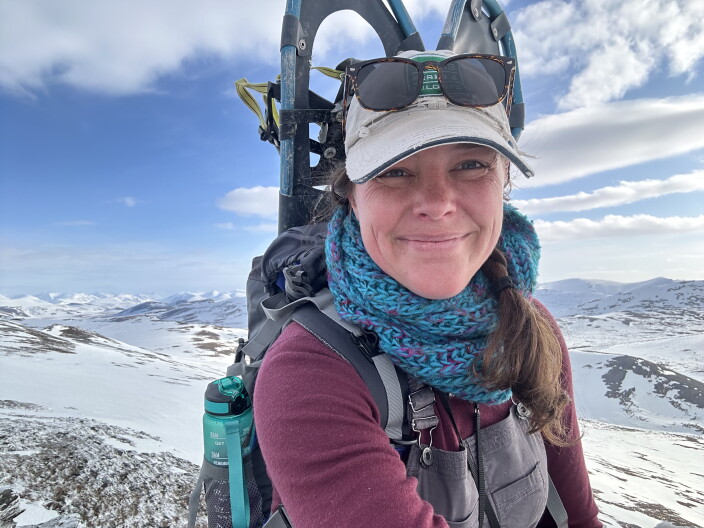
Show notesA Columbian Sharp-Tailed Grouse displaying its feathers and performing a rhythmic mating ritual. (Stephanie Galla / Boise State )
Many bird species around the world are struggling, trying to adapt to a world that’s changing around them, as humans encroach on their homes. The West is seeing this happen with the Columbian Sharp-Tailed Grouse, where birds can only be found on 5% of the habitat where they once roamed.
Meanwhile in the Arctic, Gyrfalcons are getting more bird flu, as warmer weather brings more insects and disease in Alaska and Greenland. Are birds like these able to adapt to change? How can we predict if they’ll be resilient enough to survive?
Conservation Genetics Lab at Boise State University is made up of researchers who are using DNA to map the story of bird decline.
“Our lab group uses many different genetic and genomic tools to better understand the story of the diversity of birds and how they may be adapting to a changing world,” said Galla.
She’s been studying Columbian Sharp-Tailed Grouse and says they are a very colorful and rhythmic species.
Grouse leave footprints in the snow after their mating dance.(Stephanie Galla / Boise State )
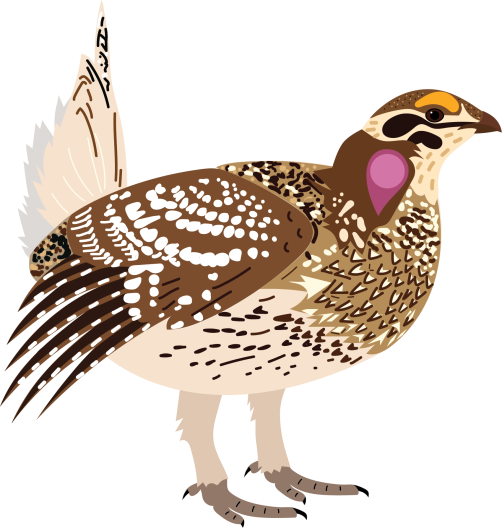
“The male grouse will stomp their feet on the ground, put their wings out wide, rattle their tail, and inflate air sacs on the sides of their necks that are bright purple,” said Galla. “They also have eye combs, sort of like eyebrows, that are bright yellow. So these are incredibly charismatic birds that are found here in Idaho and one of the best dancers that you'll see.”
Galla said that the grouse has seen significant decline in Idaho and Washington and it’s important to study them now.
“We have a really precious resource here that we can manage, and we can make sure that they stick around for as long as they can.”
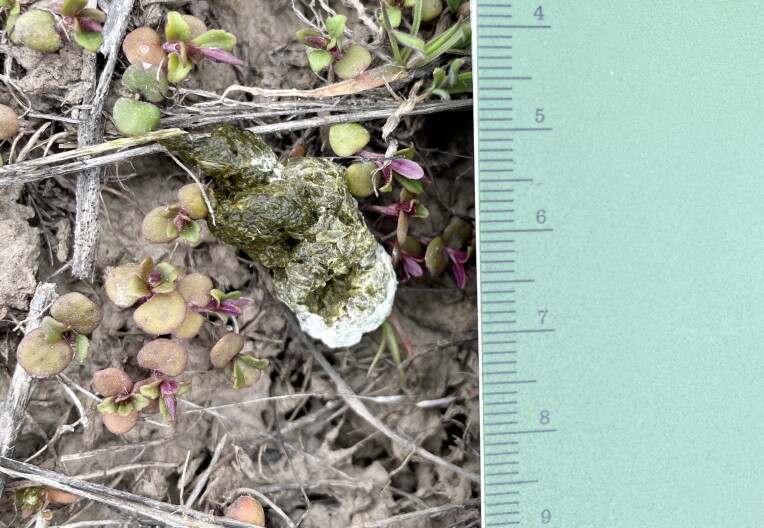
Stephanie Galla uses Grouse poop to identify DNA for her research.(Stephanie Galla / Boise State)
Avian researchers are utilizing DNA to identify diversity in different grouse populations.
"We often use DNA to understand what diversity looks like to identify populations that have lower diversity and may be less resilient and in need of conservation prioritization in a changing world,” Galla explained.
She said grouse DNA can be painlessly sampled through their poop.
“Within a single fecal pellet, we can understand the diversity of what birds are eating and how they're responding to changing habitats over time. We can also get a good idea of their gut microbiome, or all of the diversity of microbes that live in their gut.”
Galla calls it a noninvasive approach to research.
“You don't need to catch a bird to find their poop. You can find it by looking at the areas where they congregate or the areas where they sleep at night, their roosting spots.”
Stephanie Galla also creates illustrations many of the birds she studies.(Stephanie Galla / Boise State )
Galla built a diet database of what the birds eat in Idaho and Washington.
“We're really interested in seeing what the diet looks like across space and time,” she said. “We've discovered roughly 120 different plant species across their range so far.”
That’s important because “if we know what populations are doing well and what they're eating and how that might compare to populations that aren't doing well. We can figure out whether or not food might be a contributor to population success, or population decline, or fitness of birds over time.”
Gyrfalcon chicks in Iceland.(Stephanie Galla / Boise State)
Stephanie Galla and her Conservation Genetics Lab at Boise State are also studying Gyrfalcons in the Arctic and how they’re adapting to a warming climate. And she’s a co-founder of the Kindness in Science project, a project that started when she was in Aotearoa, New Zealand as a PhD student.
“We started this initiative to define a culture where we are prioritizing diversity and maintaining diversity of people and science over space and time. Where maybe we have single individuals that are prioritized more than a group,” Galla explained.
Although Columbian Sharp-Tailed Grouse are not federally threatened or endangered yet, they are currently experiencing a steep decline.
“We have an opportunity here to step in and actually make a difference, make a difference so that we don't end up with just a few hundred left. If there are tens of thousands of them here in Idaho, we have an opportunity to characterize their diversity, understand it better, and work with conservation practitioners,” Galla said.
Galla says studying birds in three different parts of the world can bring not only conservation efforts together, but people as well.
“They give us a really great sense of wonder and connection and home,” she said. “The great part about studying DNA is that every bird has it, no matter where in the world you are, so we can take lessons learned from other countries, from other systems.”
She said researchers and resource managers can apply those lessons locally in Idaho.
“The more we come together as a global community with these different approaches, the better we can be equipped to address these big challenges and biodiversity loss that we're seeing around the world.”
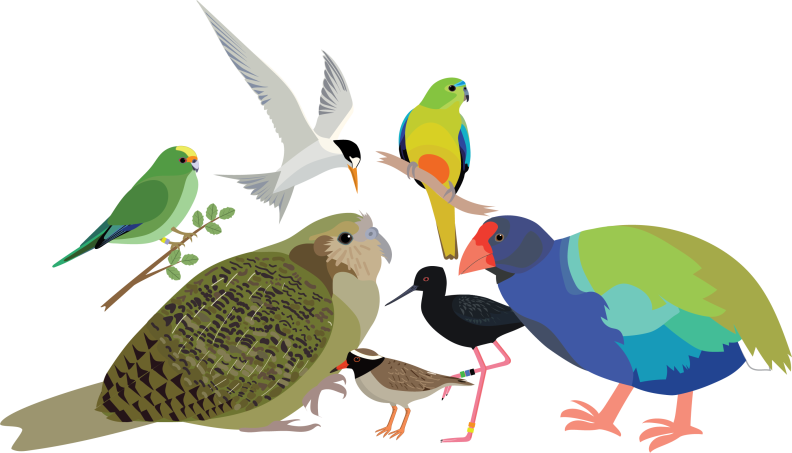
Illustration by Stephanie Galla(Stephanie Galla / Boise State )
Thousands turn out for Boise’s first Open Streets event, highlighting the appeal of a global car-free movement
Nov 19, 2024
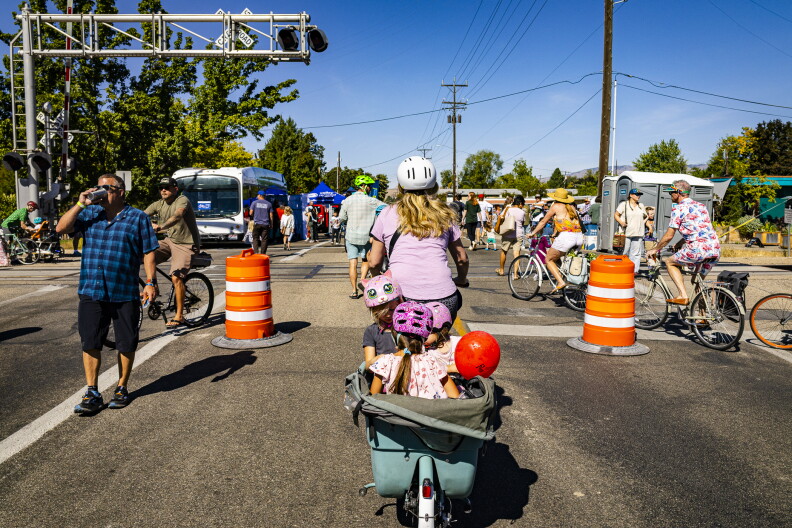
Show notesCyclists and pedestrians take over Latah near the railroad crossing. (Murphy Woodhouse / Boise State Public Radio )
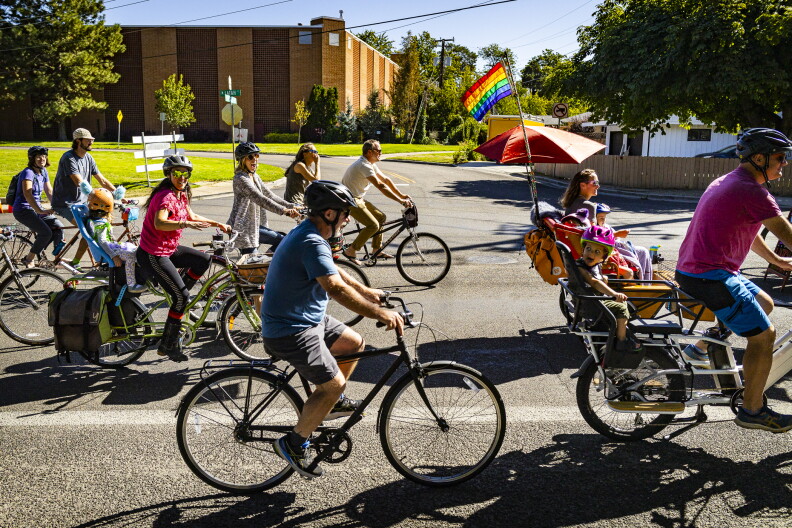
Right around noon on a bluebird September Sunday in Boise, a pack of cyclists dozens strong turned south onto Latah Street, a chorus of bike bells sounding.
A large group of cyclists cruises south on Latah around noon on Sunday, Sept 22, when Boise held its first Open Streets event.(Murphy Woodhouse / Boise State Public Radio )
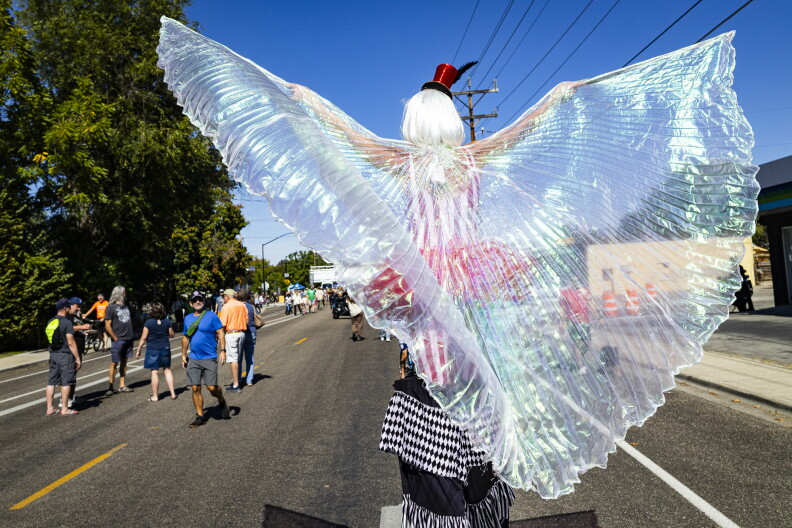
They cruised past a barricade, where police and volunteers were turning motorists away. Several hundred yards in, the Boise Good Times Street Band welcomed riders with a jaunty rendition of Give My Regards to Broadway. Wide, business-lined Latah is soon packed with bikers, walkers, roller skaters and at least one person on stilts.
Food trucks and other stands line the one-mile segment of the street, and long lines stretch out of the cafes and restaurants on the route.
Long lines stretched out of the cafes and restaurants on Latah during the event.(Murphy Woodhouse)
Lindsey Lind and her family – husband Eric, their two young children, and two dogs – had walked from their nearby home. They’re standing in line for some birria tacos.
“It's kind of weird,” she said, standing in the middle of the road. “Like, I feel like I keep needing to move over to the side.”
Eric described Latah on a normal day.
“It's busy, and usually people aren't doing 30 miles an hour,” he said. “It's, you know, 35, 40.”
“Or more,” Lindsey interjected.
They loved the vibrant sense of community surrounding them, and the promotion of green alternatives to driving.
“I think it helps people slow down a little bit and see kind of what's out here as far as businesses and, you know, it kind of puts maybe some of these businesses on the map,” Eric said.
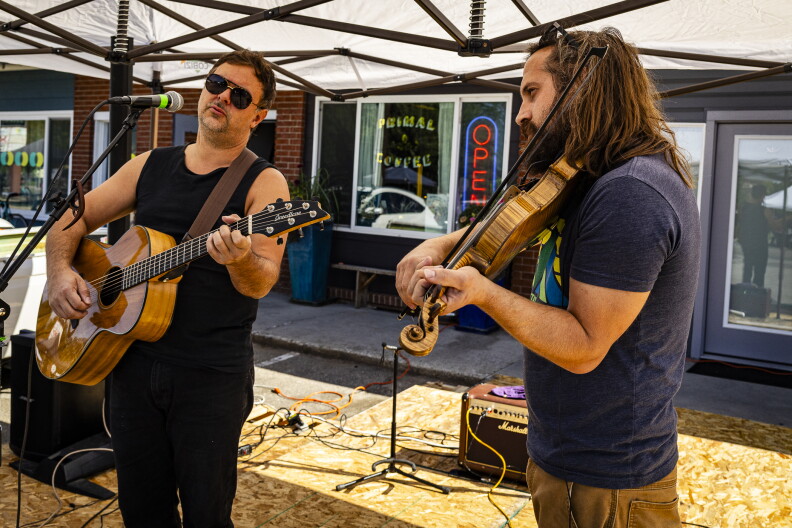
Austin Clark, owner of Primal Coffee on Latah, plays fiddle with his friend Matt Hopper's band The Roman Candles in front of his cafe during the Open Streets event. "I think I knew it would be a good coordinated event, so I was happy to be a part of it and see where it goes," he said.(Murphy Woodhouse / Boise State Public Radio )
“I think it's really awesome for Latah’s business, this kind of exposure,” said Austin Clark, owner of Primal Coffee, located on the street. “Maybe a lot of people don't come up onto Latah ever, you know, because there's no reason to. But now they've got a reason to come.”
Sending a message
These are exactly the sorts of sentiments organizers of Boise’s first Open Streets event were hoping to inspire.
“All the chips fell into place. It worked out really well. And here we are today with close to, I would say like 3000 people,” said Nina Pienaar, advocacy director at the Boise Bicycle Project (BBP). Several days after the event, organizers later provided an updated figure of over 6,000.
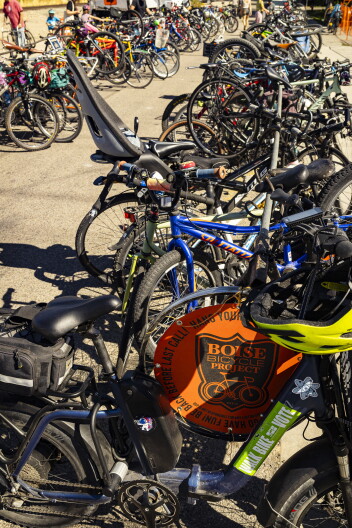
Bike racks were packed tight on Latah Street during the event.(Murphy Woodhouse / Boise State Public Radio )
BBP worked closely with Ada County, Boise, and other local officials to develop location criteria, then surveyed neighborhoods to find a spot with local buy-in. They ultimately landed on Latah.
Pienaar said the strong turnout “sends the message loud and clear that like, ‘Hey, the Boise community, we're out biking, we're out walking. We want to see more infrastructure. We want to be able to choose to bike and to walk rather than choosing to get into our vehicles.’”
The second Open Streets event is already planned for next year, according to an official with the City of Boise, which sponsored the event. But with thousands in the street for the first event, Pienaar said there’s huge potential for a more regular schedule, perhaps even biweekly during the summer, adding: “The more the better.”
Social animals
“The concept is really, really simple. You open streets to people and you close them to cars. And the magic happens,” said Gil Penalosa. “You get young and old and rich and poor and fat and skinny, and you get everybody.”
Penalosa is an urban planner who now lives in Toronto, where he was the runner-up in the 2022 mayoral election. But as an official in the Colombian capital of Bogotá in the late 1990s, he helped dramatically expand the city’s weekly ciclovía program, credited as the seed of the global Open Streets movement. Every Sunday some 1.5 million Bogotanos cruise around 80 miles of car-free roads.
“Why is it spreading?” he asked. “I think because humans are social animals, and we want to be with other people.”
A winged stilt walker makes their way down Latah. (Murphy Woodhouse / Boise State Public Radio )
The many benefits of Open Streets are best achieved with frequent repetition, especially the health benefits, Penalosa argued. But in a time of often ugly divisiveness, he said anything that brings a diverse swath of a community together is good.
“The possibility of people meeting as equals is really, really, really important,” he said.
He acknowledges that some officials and businesses can blanch at shutting down significant stretches of roadways to cars, but encourages cities that haven’t tried it to be gutsy.
“I've seen it [be] successful … in cities of 50,000 people or 500,000 or 5 million, 20 million. It works everywhere,” Penalosa said. “I've seen it in poor cities, in wealthy cities, and it makes everybody happier and healthier. And also to keep in mind that this is low-risk, this is low-cost and has very high benefits.”
Terra Reed, an organizer of the Albuquerque Open Streets event Ciclovía – now in its 10th year – similarly encouraged other cities to give it a go, saying that it doesn’t have to be huge to be a success. From their experience, she said “having strong ties” with local governments is especially important to start and maintain such efforts.
“Try to build those relationships early,” she advised.
Just keep pedaling
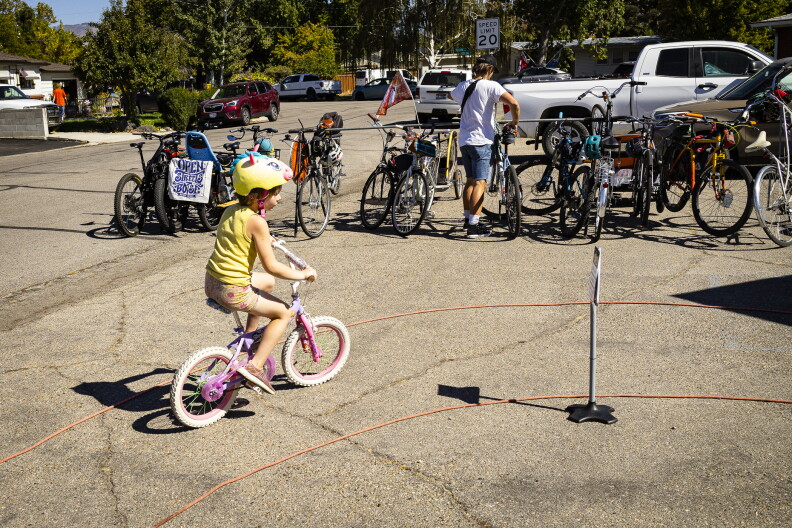
In a parking lot off Latah, young kids are buzzing around a bicycle skills course.
6-and-a-half-year-old Margot Mace makes her way around a bicycle skills course.(Murphy Woodhouse / Boise State Public Radio )
Margot Mace, who’s 6-and-a-half years old, is getting frustrated trying to ride her bike over a teeter-totter obstacle.
“You can do it, keep pedaling,” her mom, Beth Edwards, encouraged.
“It doesn't let me do it,” Margot shouted in frustration after another failed attempt.
Beth said they had ridden to Latah with dozens of others – and got a taste of the danger cyclists face in the city.
“We were trying to get across Orchard (Street) and a car almost ran us down,” she recounted. “We were a big group of bikers, so we weren't just one cycling family or one person. There was 40 of us and a car still almost ran us down.”
Edwards had heard of Open Streets, but didn’t really know much about the idea until that Sunday. She loved its emphasis on safety for all road users.
“We are just kinda constantly living with that ‘Llook out! Look out!’” she said. “Coming here and being free and seeing her just riding safely and freely is a pretty awesome feeling.”
After three failed attempts, Margot backed up to give it one more go. She rolled up and over to the applause of spectators.
“I just love how she never gives up,” Beth said. “That's all it takes.”
This story was produced by the Mountain West News Bureau, a collaboration between Wyoming Public Media, Nevada Public Radio, Boise State Public Radio in Idaho, KUNR in Nevada, KUNC in Colorado and KANW in New Mexico, with support from affiliate stations across the region. Funding for the Mountain West News Bureau is provided in part by the Corporation for Public Broadcasting.

 Our TOPPODCAST Picks
 Stay Connected