Idaho Matters is a wonderful way to stay up to date, meet people and understand there’s much more to this great state. Hosted by Gemma Gaudette on Boise State Public Radio News, it features arts and politics, growth and education, and the interesting stories that make Idaho unique. Send us your questions, comments or story ideas by emailing idahomatters@boisestate.edu or sending us a voicemail using the “Talk To Us” feature on the free Boise State Public Radio app.
Idaho Matters Reporter Roundtable: June 21, 2024
Jun 21, 2024
Show notes( Ashley Ahearn)
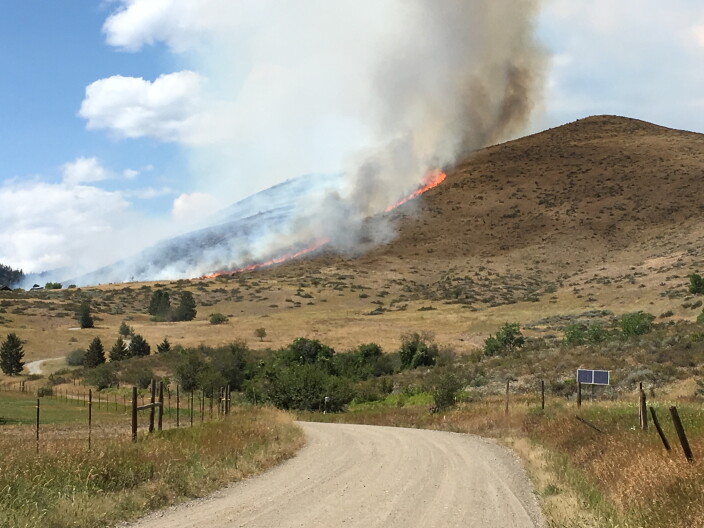
Dorothy Moon was reelected as Idaho's Republican Party chairwoman, the Gem State is using a new business system, certain areas of the state are at higher risk of wildfire and construction on the College of Western Idaho's new expansion is underway.
It’s Friday, which means it's time for our Reporter Roundtable when Idaho Matters gets you up to date on all the news that made headlines this past week.
Food insecurity spikes in Idaho
Jun 20, 2024
Show notes(Maria Lin Kim / Unsplash)
Since last year, the number of people in Idaho experiencing food insecurity has increased by more than three percent, leaving over 200,000 Idahoans without enough to eat.
And as the price of groceries and living costs continues to remain high, it's likely that the problem is here to stay, at least for a little while. Which is why the Idaho Food Bank is working to help fill the gap.
Morgan Wilson, the Chief Development Officer for the Idaho Food Bank, joined Idaho Matters to talk more about this effort.
Studying how does drought impact forests in Idaho
Jun 20, 2024
Show notes( Flick/NPS Climate Change Response)
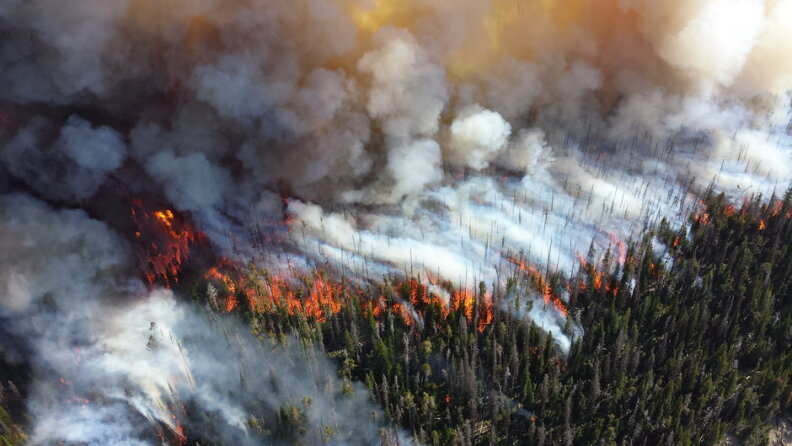
A diverse group of researchers led by the University of Idaho are coming together to study the effects that drought and fires have on forestland.
A $15 million grant from the National Science Foundation will create what's being called the Ember Institute to study the issue while also reaching out to underserved communities and people across the political spectrum.
Tara Hudiburg, principle investigator for Ember and professor in U of I's Department of Forest, Rangeland and Fire Sciences, as well as Laurel Lynch, assistant professor in U of I's Department of Soil and Water Systems and Co-principle investigator on the Ember Project, joined Idaho Matters to talk more.
Bruneau Dunes State Park designated International Dark Sky Park
Jun 20, 2024
Show notes(Bruneau Dunes Observatory / Randy Davis)
This very rare certification means the park's two telescopes and the landscape around them can take advantage of very dark night conditions to see far into space.
Greg Harman, a park ranger at Bruneau Dunes State Park, joined Idaho Matters to talk more.
Nevada conservationists work to protect rare wildflower losing habitat to development
Jun 20, 2024
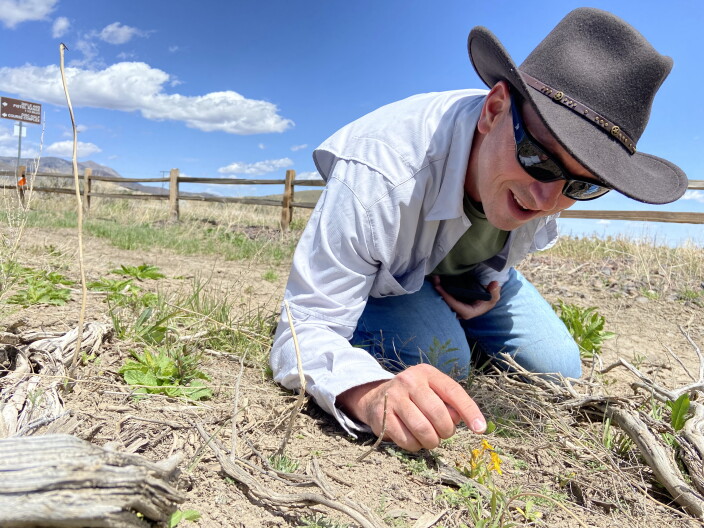
Show notesPatrick Donnelly, Great Basin director for the Center for Biological Diversity, finds a small cluster of Carson Valley monkeyflowers outside of Carson City, Nev., on Thursday, May 2, 2024.(Kaleb Roedel / Mountain West News Bureau )
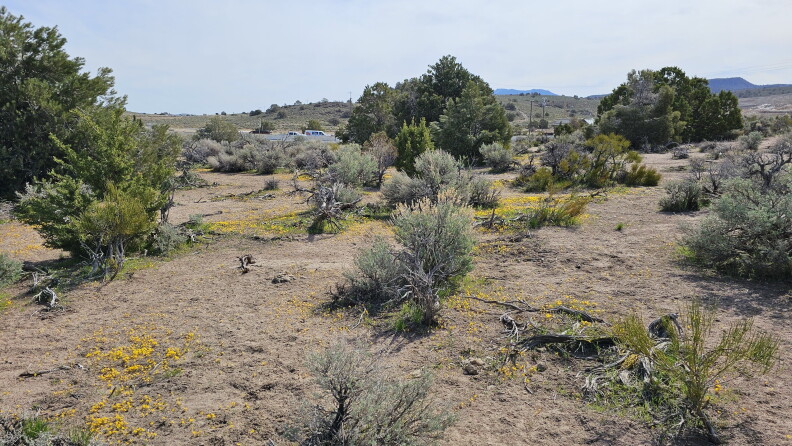
It’s a sun-soaked afternoon in Carson City, Nev., and Patrick Donnelly is walking down a brush-covered slope between a highway and a large shopping center.
Just over a decade ago, these grocery stores, retail shops, and restaurants weren’t here. The area was 86 acres of untouched desertland.
It also served as a habitat for a rare Nevada wildflower: the Carson Valley monkeyflower.
“This was documented monkeyflower habitat 12 years ago,” says Donnelly, the Great Basin director for the Center for Biological Diversity. “And now it’s covered in trash, there's the Trader Joe's and the Dollar Loan Center. This is ultimately what will drive the species extinct; habitat loss is what's going to push it over the edge.”
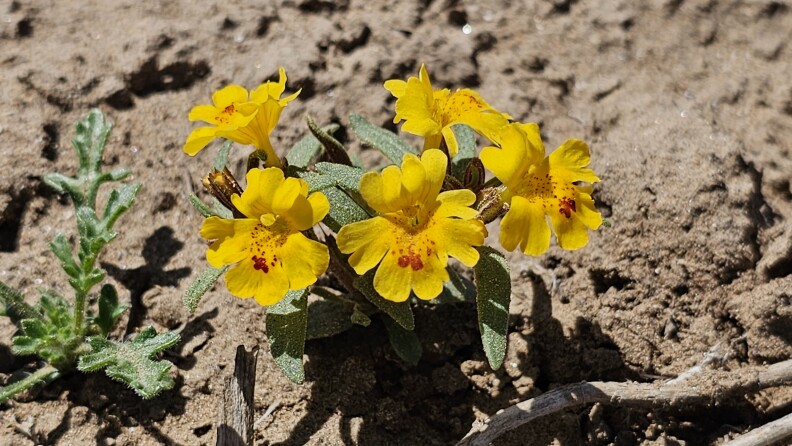
The Carson Valley monkeyflower faces more threats than any rare plant in Nevada, according to state researchers.(Patrick Donnelly / Center for Biological Diversity )
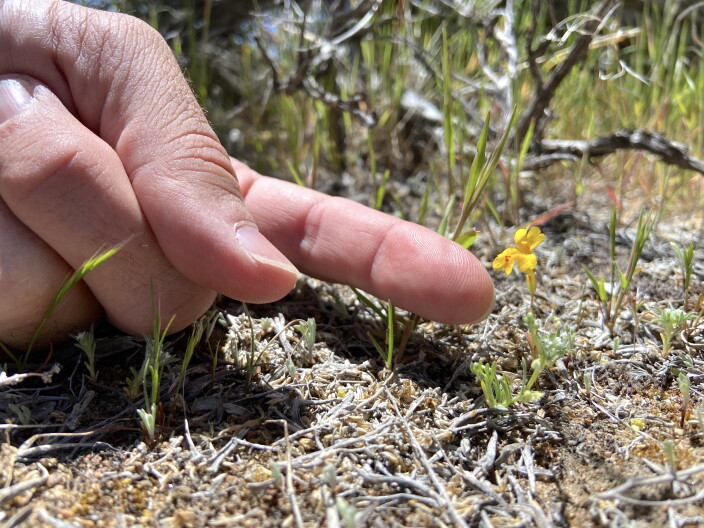
Earlier this year, Donnelly and the conservation group petitioned the U.S. Fish and Wildlife Service to add the Carson Valley monkeyflower to the endangered species list. The tiny flower, ranging from 1 to 3 inches tall, has bright yellow blossoms, freckled with red dots.
“They have this beautiful patterning – these red dots,” Donnelly says. “And those dots are an indicator to bees to come on in.”
But they provide more than nectar to bees, and a pretty sight to Donnelly. They play a critical role in the biodiversity that gives people clean air and water and need federal protections as the Carson City area expands, he says.
“It doesn't mean that we can't have Trader Joe's and we can't have Walmart, it just means there needs to be some limits on our growth,” he adds.
In fact, more than 40% of the Carson Valley monkeyflower’s habitat has already been destroyed, and they grow on only 1,000 acres in northern Nevada and a corner of California, according to a 2018 report by the Nevada Division of Natural Heritage.
Report author Janel Johnson, now a researcher for national nonprofit NatureServe, says threats to monkeyflower’s terrain are mounting.
“Unfortunately, those places that are gentle slopes with sandy soils also happen to be good places to build city parks and housing developments and freeways and all the other things that make a city,” she says.
Carson Valley monkeyflowers had a strong bloom last year (seen here), but the rare plant is losing habitat to the development of roads and buildings.(Patrick Donnelly / Center for Biological Diversity)
In recent decades, the greater Carson City area has expanded rapidly. New homes, roads and warehouses continue to unfold across this desert like a growing pop-up book.
Johnson says that doesn’t mean imperiled plants like the monkeyflower should be ignored, adding that “it’s kind of arrogant of humans to decide what gets to live and what doesn't, just on a whim of where do we want to build our next warehouse or subdivision.”
That’s a rising conflict in the fast-growing Mountain West: Developers targeting land and people trying to conserve it for plants and animals.
Back in Carson City, Donnelly, sporting an Indiana Jones-like hat and using a rustic walking stick, is now hiking in an area of monkeyflower habitat that isn’t threatened by development – at least not yet.
Last spring, blankets of the yellow wildflower covered these hills.
“We had just thousands and thousands of them everywhere you looked,” Donnelly says.
But that’s not the case this year, which is why he’s searching high and low to find some sprouting from the sandy soil. After a lengthy search for the elusive flower, Donnelly breaks into giddy laughter as he spots tiny yellow blossoms with red dots.
“I can't believe you could wander around Carson City for three hours looking for plants, and this is what you find. That's the Carson Valley monkeyflower,” Donnelly says as he leans in to get a close look at the plant, which is barely an inch tall and slightly wilting. “That is a struggling wildflower right there – it is not living to its full potential.”
Carson Valley monkeyflowers, like this inch-tall plant, are struggling to sprout and survive amid hotter and drier conditions. (Kaleb Roedel / Mountain West News Bureau)
Donnelly says a lot of the blame goes to another increasing threat to the monkeyflower: climate change. Rising temperatures, declining precipitation, and drought make it difficult for them to know if and when to sprout.
“Some of them will adapt every year, no matter how crazy it is,” he says. “Maybe it's one out of millions. But that resiliency is the only chance these plants have at surviving climate change.”
He says that’s why it’s more important than ever to protect the Carson Valley monkeyflower, which is also threatened by wildfires, livestock farming and ranching, and invasive species.
But federal protections won’t happen anytime soon. The average time it takes the U.S. government to list a species after a petition is filed? More than a decade, Donnelly says.
This story was produced by the Mountain West News Bureau, a collaboration between Wyoming Public Media, Nevada Public Radio, Boise State Public Radio in Idaho, KUNR in Nevada, KUNC in Colorado and KANW in New Mexico, with support from affiliate stations across the region. Funding for the Mountain West News Bureau is provided in part by the Corporation for Public Broadcasting.
'Extremely American:' Inside the Christian nationalist movement
Jun 19, 2024
Show notes
The Christian nationalist movement is growing in America; its schools can be found around the country, and there are YouTube channels devoted to the idea.
Some church leaders have extreme views, including that women are subordinate to me and only Christians can hold public office.
One of the centers of the movement is Christ Church in Moscow, Idaho, where the church is hoping to make the city a church town by buying up prime real estate and opening businesses there.
Heath Druzin, the host and creator of the podcast Extremely American, wanted to take a deep dive into this topic in season two of his podcast, and our own reporter, James Dawson, joined him as they spent a year inside the Christian Nationalist Movement. Their podcast drops soon, and they joined Idaho Matters for a preview.
Charging electric vehicles poses many challenges. A recent expo showcased some solutions.
Jun 19, 2024
Show notesA few electric vehicle charging stations are on display at the EV Charging Summit in Las Vegas in March 2024. The expo attracted people from more than 30 countries and showcased the various companies trying to make EV charging more accessible to people.(Yvette Fernandez / KNPR )
Transitioning to electric vehicles – or EVs – is much more complicated than simply adding more charging stations across the country. Those on the cutting edge of this effort talked about the challenges and potential solutions at the EV Charging Summit in Las Vegas, where people from more than 30 countries attended in March.
Federal Highway Administrator Shalien Bhatt told participants that China and Europe are ahead of the United States when it comes to EV production and infrastructure.
“Just because we won the 20th century in the automotive industry is not a guarantee that we win the 21st century in the automotive industry if we're not building the vehicles that the world wants,” Bhatt said.
The federal government is allocating $7.5 billion to enhance the nation’s EV charging network. Last year there were 170,000 charging stations across the country. Bhatt said 500,000 are slated to be installed within the next couple of years.
“What we need to do is make sure that we develop and build a charging network so that anybody can drive from New York City all the way to L.A,” he said.
Industry analysts estimate at least 2 million charging stations will be needed by the end of the decade to significantly reduce emissions. And America's EV infrastructure is fragmented. Different types of chargers make it a challenge to find the one that works at the appropriate speed for a particular situation.
Oscar Rodriguez is with NOVA Charge, a company focused on fleet charging. He said America's system has had some success with fleets, like school buses that can charge overnight and between shifts.
“But there's another kind of fleet that really has not been well served in the industry," Rodriguez said. "And that fleet is the quick turn fleet, the fleet that's got to be at the ready, not overnight the next morning, but at the next shift. So first responders have this problem."
Charging individual vehicles in fleets isn't always practical. But Tallis Blalack with the Central Florida Expressway Authority said there are a handful of locations across the country where “electrified roadways” are planned. On these roads, charging coils are placed in the pavement and vehicles are equipped with receivers.
“So just as I can take my iPhone and I can put it on a wireless charger and I can charge it, we can charge a semi doing 70 miles an hour on the freeway,” said Blalack.
This is particularly important since 70% of America's goods are transported by trucks. But Blalack says building more electrified roadways at convenient locations like rest stops will literally take an act of Congress. That’s because of a 1950s law that prohibits “commercial activity.”
“What it means is that when you're driving out here in the West and you come in to a rest stop area, there's nothing there because it's commercial activity. It's been modified three times by Congress to allow putting in payphones, to allow vending machines. And the third one, which all drivers need, which was to allow the sale of lottery tickets,” Blalack said, partially joking.
Blalack hopes this can change in 2026 when lawmakers take up a major transportation funding bill.
Another issue is finding a way to add more charging options without overtaxing the electric grid. Sandra Peterson with Beam Global said the company has come up with the “EV Arc” – an autonomous, off-grid charger that looks like an outdoor lamp post on wheels, topped with a solar panel.
“Right now construction, electrical upgrades can take months. This deploys in about 2 hours — you have EV charging," Peterson said. "Another thing that's a benefit is that it's transportable. Which, you put in ground charging — you can't move it."
How is all this going to be accomplished? Dwayne Norris of Soulful Synergy said his consulting company provides a trained workforce, ready to take on this new industry's charge.
“There is a shift that's coming in the way that we produce energy, the way that we use energy, the way that we think about, you know, all these things and how they intersect,” said Norris. "What is it without people?”
This story was produced by the Mountain West News Bureau, a collaboration between Wyoming Public Media, Nevada Public Radio (KNPR) in Las Vegas, Boise State Public Radio in Idaho, KUNR in Nevada, KUNC in Colorado and KANW in New Mexico, with support from affiliate stations across the region. Funding for the Mountain West News Bureau is provided in part by the Corporation for Public Broadcasting.
From war-torn Iraq to Boise, this refugee says World Refugee Day ‘is like my birthday’
Jun 18, 2024
Show notes World Refugee Day will be celebrated in Boise on Saturday, June 22.( Idaho Office for Refugees)
It’s challenging to find enough words to describe the wonderment and joy of World Refugee Day in Boise. It’s cleverly located in the downtown Grove, but it’s difficult to tell where the traditional Saturday market ends and the World Refugee Day festivities begin.
As a result, thousands of people, strolling through the market, suddenly come upon kiosks of crafts, food and fashion. Music from a nearby stage heightens, and aromas from some global delicacies tempt the taste buds.
Tack on top of that — a naturalization ceremony where men and women from nearly every corner of the globe become America’s newest citizens.
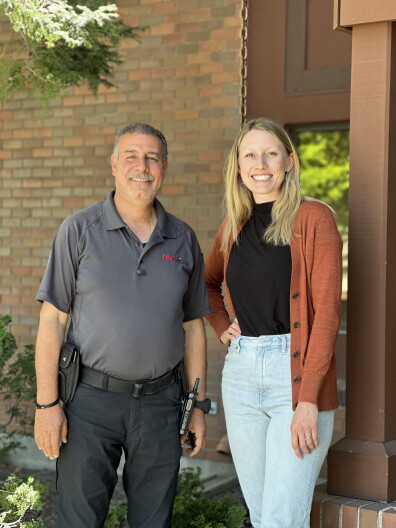
Holly Beech (right) and Saaed al-Azzawi (left)( Idaho Office for Refugees)
“It’s a chance for people who came from refugee backgrounds and now live in Idaho to celebrate and share some of the favorite parts of their cultures and traditions,” said Holly Beech, communications director at the Idaho Office for Refugees. “It has a vibe of connection, appreciation and solidarity. But it’s also a chance to pause and reflect and respect the fact that millions of people around the world are still displaced.”
Saaed al Azzawi knows that challenge all too well.
“I’m from Baghdad. I used to work at the U.S. Embassy In Iraq,” said al-Azzawi, who suffered his own share of wounds in his battle-scarred home nation. “We are lucky to survive. We lived a very tough life.”
But after relocating to Idaho with his family, and becoming a U.S. citizen, he has an ear-to-ear smile.
“The World Refugee Day? It’s like my birthday. The feeling of freedom … the feeling of humanity,” he said.
The two visited with Morning Edition host George Prentice to preview this week’s World Refugee Day celebrations in Boise and Twin Falls.
Raising awareness of elder abuse in Idaho
Jun 18, 2024
Show notes(Canva )
June is Elder Abuse Awareness Month, a time set aside to help the one in ten Americans over the age of 60 who are targeted by elder abuse, and some estimates say that fewer than one out of every 24 cases of abuse is ever reported.
Alyssa Groen, the assistant program manager of the Nampa Family Justice Center; Patrice Harris, an elder advocate; and John Yaros, Security Bureau Chief with the Idaho Department of Finance, joined Idaho Matters to talk more about this effort.
Anyone who suspects senior financial exploitation in Idaho can call 208-332-8000/Idaho toll free at 1-888-346- 3378 or email Finance.InternetMail@finance.idaho.gov.
Take a walk through history on Boise's River Street
Jun 18, 2024
Show notes A neighborhood birthday Party on River Street in 1973.( Photo courtesy <a href="https://www.boiseartsandhistory.org/programs/archives/">Boise City Archives,</a> John Hardy Family Collection, MS084.)
Many areas of Boise have a rich history, but one in particular has a very important story.
Paula Benson, with the Preservation Idaho Board of Directors, and Dan Everhart, Idaho State Historic Preservation Office Outreach Historian, joined Idaho Matters to talk more about this new resource.

 Our TOPPODCAST Picks
  Stay Connected