TopPodcast.com
Menu
  • Home
  • Top Charts
  • Top Networks
  • Top Apps
  • Top Independents
  • Top Podfluencers
  • Top Picks
    • Top Business Podcasts
    • Top True Crime Podcasts
    • Top Finance Podcasts
    • Top Comedy Podcasts
    • Top Music Podcasts
    • Top Womens Podcasts
    • Top Kids Podcasts
    • Top Sports Podcasts
    • Top News Podcasts
    • Top Tech Podcasts
    • Top Crypto Podcasts
    • Top Entrepreneurial Podcasts
    • Top Fantasy Sports Podcasts
    • Top Political Podcasts
    • Top Science Podcasts
    • Top Self Help Podcasts
    • Top Sports Betting Podcasts
    • Top Stocks Podcasts
  • Podcast News
  • About Us
  • Podcast Advertising
  • Contact
Not in our directory?
Add Show Here
Podcast Equipment
Center

toppodcastlogoOur TOPPODCAST Picks

  • Comedy
  • Crypto
  • Sports
  • News
  • Politics
  • True Crime
  • Business
  • Finance

Follow Us

toppodcastlogoStay Connected

    View Top 200 Chart
    Back to Rankings Page
    Home & Garden

    GREEN Organic Garden Podcast

    The GREEN Organic Garden Podcast will inspire, teach, and promote earth friendly techniques by interviewing organic gardeners who share their journeys, tips, and tricks to simplify the process of growing your own delicious healthy food. Whether you want to have a small bed in your backyard or a full grown farming operation, our guests will help you reach your gardening goals and offer you resources and solutions to everyday gardening challenges, and inspiration to dig down in the dirt and get growing!

    This podcast uses the following third-party services for analysis:

    Spotify Ad Analytics – https://www.spotify.com/us/legal/ad-analytics-privacy-policy/

    Advertise

    Copyright: © 2015

    • Apple Podcasts
    • Google Play
    • Spotify

    Latest Episodes:
    Replay of interview 132 with The Permaculture Student | Matt Powers | Yosemite and Fresno, CA Sep 27, 2019
    Show notes

    Matt Powers is an experienced teacher, family guy, author, consultant, farmer, seed saver, plant breeder, musician, blogger, & permaculturist and creator of the permaculture student curriculum and online course. Permaculture Student Online Curriculum The Permaculture Student Curriculum is focused on starting resilient small businesses and homesteads from scratch. Students of all ages and families learn through weekly collections of videos, worksheets, coloring pages, projects, activities, & critical thinking with teacher’s guides, recipes, plant focus, seed saving, & Q&A. Mike found a great guest on Facebook yesterday, we are having a bit of a tech issue, but he is dropping lots of “golden seeds” about everything from gardening to promoting an online business, and running a positive Kickstarter campaign! Plus he’s a fellow educator!Interesting that you guys found me yesterday!!! Tell us a little about yourself. I’m a seed saver, a plant breeder, and an organic gardener, I’m also a teacher. I was an English teacher at high school for many years, a tenured teacher at a local district 15 minutes from my house. I live with my in-laws and my father -in -law’s parents on family land, 4 generations. My wife and I live here with our 2 sons. We have about 2-3 acres of garden area I’m heading towards becoming a farmer, a subsistence farmer. I’m a teacher, before that I was a musician. I played with SNL house drummer, Shaun Pelton, their house drummer for 20 years now… but this was back in the day when I was a young man… I was just a traveling musician. It was my dream to do all that. What kind of instrument? I was a bass player. I played with Rachel Ray’s husband, John Kusimano for 7 years. I did lots of other things, my music is still on the Major league baseball channel everyday, I still get checks in the mail, it’s like pocket change… It was a thing for young people to do. It was great and I loved it, but then I had a family! And I was like I can’t tour for 2 months, I got to be a dad! That was like a generational moment for me. What happened was, I basically quit that band when I was in NYC and my wife got cancer the first time, and then when she got cancer for the second time we knew we needed to change a lot more because what the doctors were telling us wasn’t accurate, they were just reading from a list. From there we went out west to recover from cancer, I didn’t know what else to do so I was still doing music, but I was trying to figure out someway to be more present to take care of my wife. She wanted me to do substitute teaching, I hated school. I just hated school, I loved certain teachers and I loved certain classes. But the framework, of compulsory education where I’m being held against my will for 8 hours a day for the purposes of tax dollars for funding that school district mostly the salary of administrators. I didn’t agree with that. I don’t want to go… I just felt obligated, but as soon as I did, I fell in love with the kids, but I feel like we weren’t educating them. I had this crazy education that my dad gave me, they’re amazing, ones a University Professor, one’s a financial advisor for people with incredible amounts of money they’re just unbelievable people. They were both were stellar athletes so they had coaches. I got a lot of that bleed over and that education stuff. I applied all that to my music. I applied all that to my business. I want to pass that on to kids. And I show up as a substitute in Fresno, and I freak out, because those kids are cheated and robbed of their education, meanwhile the school district is getting the same amount of money as a good district right IDK what kind of education I had till that point, I went to NYU, I was an english major there. I couldn’t believe it. I started subbing everywhere, I wouldn’t turn down any job…I went to the areas people said were dangerous. I had a great time, especially in the places people said were dangerous, because that’s where they need you the most. I would literally go in with my guitar and play music I was at this radical school where we were teaching with laptops and had no curriculum and the kids had laptops, so I was writing my own curriculum. Using my NYU curriculum with sophomores in one of the lowest performing districts, and I just kept doing things to prove these kids were amazing. And the scores started jumping higher and higher! I didn’t do like homework. I was having issues with answers that weren’t politically socially charged. If you’re a teacher in high school, their adults, their young adults. They have adult questions and they have pertinent questions, and they are hard to answer without the people in the room, wanting to create things out of it so I learned to talk in this spectrum. They believe this and they believe that. And I became this very pc person, it was like I became a picture frame… And the kids were like Well, which is true Mr. Powers? Well, that borders on opinion… Until Permaculture, I didn’t know how to prove that my food was better, then non-organic food was better, that nutritional quality was higher… I didn’t know how to prove it… Wanting answers and I didn’t have answers like, how to pay for college all these sorts of things. I didn’t have the answers, or a method for them to scurry around what is going on, narrow restriction of most kids… we’re still that good I discovered permaculture, world hunger is not an issue and we can fix this at the source! Well we can prove that GMO’s are genetically solution not based upon science … on top of permaculture and the way things work. We can repair the decertified landscapes, the degraded landscapes… Permaculture’s already done it. I was able to find videos … I played them in class… We have kids in the classroom that burned down that year… and they’re watching videos of places that burned and get turned into a paradise in a course of 7 years. It’s also the size of the central valley which is decertified itself and which is the bread basket of america which were’s assaulting. Tulare Lake, once the largest body of fresh water, drained it from growing cotton… all the aquifers are… I don’t know if we told listeners where you are. So I am imagining you are in California where the wildfires burned down houses last summer. Oh yeah! The ones you saw on tv last summer those are 15 min from my house. The ones that were 150,000 acres last summer. We went up to Sonoma county to get away from, because our kids were breathing it constantly and you could;n’t get fresh air. People had squash, that didn’t produce fruit that year because the squash flowers smelled the smoke so they went dormant and just shut down. Lots of plants did that last year. All my big tomatoes last year didn’t do well, for a few reasons. The overhead water is only good for small tomatoes and perennial nitrates. But I left for 3 months, put sprinklers on and walked away but came back to 300 pounds of squash Gallons of amaranth seed and gallons of aztec spinach seed got to pick your polyculture carefully. My wife got cancer, my kids really needed me, my wife has no thyroid, they removed it surgically, gave her melanoma, later, upper leg her hip and she’s a Mormon doesn’t sunbathe. So I started doing research and using all the education, the coaching….I turned all that on I had been listening passively. . . Little Powers as I was called as a child, because I was no longer a musician … Working on my wife’s health and children’s health … My kids have a much higher chance of having cancer because my wife’s had cancer 3 times Continuing cycling of ecosystems both Economically socially biologically hasn’t really changed everything but I am able to communicate to my brothers … much more with greater depth and clarity, because I understand their systems better … pattern of literacy I got form Permaculture, I have an ecosystem language, which is the economy of everything … Even sociology… One of my brother is a social science professor at U Iowa. My mom was a politician in Connecticut. So I have all these people in my life who are doing all these thing. I was just a musician and a substitute teacher, it just exploded. I took Geoff Lawton’s online course, I said Geoff, I’m a school teacher and I don’t see anything for kids. I write curriculum everyday, I think I can do this. But I need someones an authority to peer review it. He’s the leading permaculture teacher in the entire world. With is initial encouragement, turned into his family helping and this entire community over 500 people peer reviewed and edited the book! The first volume. Right now the Kickstarter … First high school permaculture text book ever High school kids are plugged in and they’re racing they have no contacts, they are like Idk what I want to do. . . they have no framework … they have no way to guide them .. . they have no way to take an apple and another apple and say which is better … this book and this series gives the tools for regenerative living in a modern world, in a city, in the past 10 years, that radically updates Bill Mulligans’ original permaculture manual For organic gardeners this is where you switch from a bicycle to a car. Literally I was gardening, it was like I had my 10 speed, it was awesome, i had my mountain bike! I got a car! It’s called permaculture! I have fruit trees with legumes that are edible between them, so they are fixing nitrogen nodules with the soil, … bacteria forms a symbiotic relationship with a tree. Can happen with poppies or clovers, but with trees! Black locust, Siberian pea shrub, between two fruit trees and it will feed them nitrogen! Just that alone! I was like What? I knew about cover crops you chop the beans down But I didn’t know about the root nodules! didn’t know about the trees! I’m gonna set up a system that’s protected by perennials, that uses the mulch from the perennials, because then I don’t bring in mulch… It’s like oh yeah! You made compost that’s great! Do you want to multiply it by 1000 with your efficacy You know what I mean? No? r. Elaine Ingham is making rye grass grow 11 -12 feet deep in ph soils in Nevada. She’s doing incredible things with just compost tea! Open this door and gusts of air crushes in! Curtis Stone is doing spin farming! He’s putting back in, he’s keeping, he’s using people’s front and back yards in the middle of Canada in the middle of the city …The Urban Farmer: Growing Food for Profit on Leased and Borrowed Land Making $70,000 on part of an acre and on a full acre he’s making over $100,000! Realm of possible is! Jean Martin Fortier in Quebec, he’s doing $140,000 on an acre and a half in the middle of the city where it’s snowing there a a lot of the year. Her’s the Market Gardener Guy Curtis Stone is the Urban Farmer Friends Peer reviews I read their books! translate it into … Governors James Joyce, taking excerpts form college … bringing it down to sophomore, they can do it but its all about engagement and motivation. It’s all about understanding how these things connect … if a child doesn’t have any context. I was gonna say since it’s written for high school students, that listeners might be interested cease it will broken down into an easy understand absorb, easy to follow basic steps. On the weekend, my first choice to read is usually YA novels, IDK why exactly. I never heard of permaculture until I started this podcast and Mike found your video because Kelly had shared the post and that’s where Mike found it in his Facebook feed. I was telling Matt in the pre-chat… you’re response about your Kickstarter campaign was that he would have read it… volume 1 I didn’t give you the backstory. I had a permaculturist in San Diego ask me to turn all 13 hours of my course, into deaf ready format. He wanted the curriculum wanted closed captioning just starting I should have it written it out, I put it up. So they’re gonna read it because they read it they’re gonna click on it, so I’m saying it as it’s being read there’s no gap as really works well as a way to reach people…. so if you’re I run an entrepreneurs group. Permaculture Entrepreneurs Facebook group I’m just trying to launch my Organic Gardener Podcast Facebook group. They might be interested in yours or differently. Let me give you the definition: Permaculture is a design science based upon the patterns of nature that benefit people and the earth. Regenerative pattern based literacy. Permaculture is the holistic concept. Instead of learning about history as just what happened, you would learn history what happened, why it happened, who it effected, and what you felt was right, what they felt was right… How it affected things social, economically. You would look at it holistically… Critical thinking is part of my permaculture course, it doesn’t go into the hypothetical … It’s action based so it’s always solution based… Schools are a place that a place that are safe… Handbook for living on earth regeneratively. Have you told everyone, tell people why they want to support your KickKickstarterstarter campaign. What is your Kickstarter campaign. My Kickstarter campaign is for the first high school permaculture textbook, its a handbook for living on earth regeneratively. It can be used for business, see it’s a holistic manual for living !. Illustrated by Wayne Fleming My first book check out at permaculturestudent.com my first book free video samples for my course there’s...

    Full show notes at the publisher

    Replay of interview 106 with Rockstar Millennial Regan Emmons | Terra Birds School Gardens & a Seedling CSA| Flagstaff, AZ Sep 27, 2019
    Show notes

    Terra BIRDS educates and empowers youth through gardening to help prepare them as the stewards of a sustainable future for humanity. Regan Emmons is here to share her story of teaching elementary and high school students how to garden as well as about her seedling CSA model! Tell us a little about yourself. My first podcast! So very exciting! I live in Flagstaff, AZ, I have really awesome job very fortunate to work with elementary school students, high school students and I run a 100 member seedling CSA farm, that runs about Jan through the end 0f May. The rest of the year I’m doing a lot of planning and educating and so forth. Tell me about your first gardening experience? I am from Tennessee. One of my formative experiences of being in a garden, working in a garden, I was in high school and I was living with my mother. We had to move into s small apartment on the ground floor. And my mother being the tenacious woman she is, talked the landlord into tilling up the little space in the back of our apartment. She grew mostly tomatoes and peppers and if she grew other things I don’t remember, but the tomatoes were amazing and I just remember’d them for so long. They were big and juicy and ripe and a revelation! I just remember my friends would come over in summer and we would make these tomato sandwiches. I remember leaning over the sink was this beautiful memory that I have that my mother grew in this tiny space wasn’t mind blowing I thought everyone did that and later amazing how productive wasn’t even, wasn’t even 10 square feet. And I didn’t really help her very much, I was one of those teenagers who didn’t really care about helping my mother. I didn’t help my mom either, she’s still wondering how I ended up with a gardening podcast I’m sure. My husband wonders that too, but I definitely help him more then my mom. What does organic gardening/earth friendly mean to you? I believe in my realm it really means growing without adding a lot of things, pesticides and chemicals and really trying to work on soil amendments and soil health and to let that dictate the health of the plants. I feel like it really has to come with the soil and I’ve learned that through my work with the garden starts. using fertilizers sparingly, and the fertilizers you do use need to be well sourced from natural sources, I really really dislike synthetic sources. I really don’t like to use them at all. To me, organic gardening is not using additives and working with the space that you have, definitely have some permaculture training, it’s all part of that gardening sensibility. Who or what inspired you to start using organic techniques? Back when I was living in Hawaii, and I met my husband there. I was working in Hawaii, on the island of Maui. I met my husband there and we were getting to know each other. He came from a place and a family where they really cared about what they put into their body. I grew up caring about what I put in my body, but not really thinking about the food and what was in the food that I was eating. I didn’t really think about additives in my meat, and things like that. And it really stemmed from that, learning about food system and our industrial food system, and that was a challenging place to eat anymore. If we weren’t trying to grow our own food or trying to eat more locally, it was really detrimental. How did you learn how to garden organically? I read a lot, I’m still learning, I consider myself a novice gardener and novice grower. But in my career, I have had a lot of jobs where I grew things. In Hawaii I grew a lot of native plants at my job at the park service. As a community gardener here in Flagstaff, working with other people in the garden a lot! Great mentors along the way. Worked one on one with business management end of things, helping with the watering, from my mentors who offered a lot, in my current job, picked up a lot from my coworkers. I’m curious to learn about your job at the park service because work is always the best way to meet your spouse and then also the Park Service has my favorite commercial out, if you can have a favorite commercial. I am, I always had an interest in plants, had been working in Tennessee, working on invasive plant issues, my boyfriend at the time, I went sort of following him he went to Hawaii first, I really needed a change and needed to get out of dodge. I had a family connection, my mother grew up in Oahu, I always wanted to visit, and never thought I’d actually live there, but it just worked out. I applied for a job before I got there, met the guy who would be my future boss, and we got along really well, I went out into the field with him on volunteer basis and did a couple of volunteer trips with the group I ended up working with for 7 years. I was really lucky, and lucky was able to get a job. I also had some undergrad experience with propagation, working on an American Chestnut trees and I had a lot of really good references and I really wanted that job and worked really hard to get that job and tried really hard and got it! That’s interesting because my guest right before you Anna Peach is from Hawaii and also I found you because Bill McDorman talked about your seedling CSA so I wanted to hear about that too but I also want to hear about the schools so which every you want to talk about first! 2016 will be the 5th year that I managed it. This is kind of an opportunity that fell into my hands. This Garden Starts CSA Started by a business here called Flagstaff Native Plant seed. They really had a heart for the program and wanted it to continue but didn’t want to do the work, it’s a lot of work, and with all they were doing it was just too much for them. So they approached a non-profit called Flagstaff Food-Link, and I was on the board and still am of Flagstaff Food- Link. So they approached us because they needed a non-profit partner so with this business, they worked together to see how it would work out and if it would work? That year I was not involved with the CSA, I was just involved with Food Link, but after the first year, the grower didn’t want to continue growing. So they approached me, would you like to run with this? And I said sure this sounds amazing! Food Link really wanted to bring in the community more and have them help with the sowing, and a lot more help with operations CSA also community members and volunteers from community at large where able to participate in it. Before that nobody had brought volunteers into this arena. They had a grower who was in charge of the green house, I was in charge of finding volunteers. The CSA had always had 60 members so I was charged with the task of getting 100 members! That sounds like a lot! first year was a lot of fun, learned a lot, grower at the time, I’m still really good friends with! We made a lot of mistakes, but we also made a lot of decisions so that was a success that year. I’ve been doing it ever since 2012! We’ve changed growers around, but I’ve been still involved, it’s one of the most amazing experiences I’ve ever had! We have volunteers who still come back, and often members as well! We involved students form Northern AZ university, and students from terra birds. high school students give seeds for direct sewing as part of the CSA share. I get to meet all kind of people and it’s just been really fun! A person I went to grad school with owns a compost company, so we use some of their soil for some of our seedling mix! He was also the same person went to go look at land that is for sale in Flagstaff that was preciously farmed for years, we actually did have an agricultural economy here in Flagstaff that was mostly beans and potatoes. He went to look at this land, spoke to widow of the Walter Brandeis. Walter grew pinto beans, and she said I have this really old bag of pinto beans and it turned out to be this 50 lb. bag of pinto beans, he started getting them out in the community. I was excited because I wanted someone to grow a fresh batch of them I could distribute them to the CSA. So Patrick got the word out, asked the community if any one can grow out some seeds, I will pay market price for them. I want to give fresh seed, I didn’t know how old the seeds were but we wanted to give members fresh seed. Sure enough I had a backyard grower grow out the beans, and he gave me about 5lbs which is more then enough to give our members for 2016. So we are going to be able to grow beans that have been grown here for decades! It’s really excited side projects have come out of this really fulfilling and exciting program itself now operates through terra birds So how does it work? What do you grow? A Seedling CSA The growing season in Flagstaff is incredibly short! We are sitting at 7000 feet, not like the rest of Arizona, in some places the growing season is 60 days, in some neighborhoods. It’s very diverse in some micro-climates, the mountains here in Flagstaff really changes and in season temps. if they are really interested in growing and having food gardens, and vegetables, they need to get their starts from somewhere. A lot of people grow their own in side but a lot of people don’t have the space etc. Like in my house I can’t start don’t have enough south facing exposure, and I don’t want to buy a light machine. So the options were before the CSA you would go to the nursery and buy vegetable seedlings They weren’t grown here so to nothing agains CALI but it’s not Flagstaff not always appropriate for Flagstaff, not grown here at this elevations, To get a plant a cold hardy variety, that might be drought tolerant and all these other things are going to be a lot more successful in your garden, thorough native plants seeds Kim Costion, has been doing it even longer, and we’re all friends here and we all get ideas from each other. We start registering members in January, we start growing thousands of seedlings. A share consists of about 120 plants, we do everything from kale to tomatillos seedlings! We did tomatillos for the first time this year! We distribute at the end of April, which is early for here, and then our last distribution day right before Memorial day weekend, which is actually a little early for some things, but people can coddle their seedlings if they want to for a little bit, they don’t have to plant it that weekend. We will distribute the cold hardy stuff at the end of April, warm season things like tomatoes at the last pickup Last frost day is June 10th pretty late We like to say it gives Flagstaff gardens a jump start! If you we’re to plant a tomato seeds on June 10th you’re probably not gonna get tomatoes, by the time they start to get ready to produce it’s gonna be getting cold already. So it’s pretty much a necessity here in Flagstaff, you gotta get the starts from somewhere. You could if you don’t want to how much is a share? offering It changes every year but it’s about $100 a share. Wow that’s a great deal! So about 3 years ago I wanted to be able to offer scholarships, so I said how can we do this? Because we did not have any extra money, it was basically a break even deal. We were talking to other people to see how it would work, so we asked people to donate to the scholarship fund when they signed up. based upon availability of farm use every year we have been able to offer more scholarships, every year we have enough member donating, we were able to offer 8, and it doesn’t come out of our income which is really good because we are breaking even. It’s a really good deal, you could not get that good of a deal at the nursery. That’s what I was thinking you would never get that deal anywhere, they’re usually like $2-3 a plant except at the end of the year when it’s too late to plant. That’s less then a $1 a plant! There is a cost of uncertainty, there could be a die off of something. Some times you might only get one of a certain kind, instead of 3 or you might not get any. I’ve had a few guests say CSA stands for Community Supported Agriculture nobodies’ really mentioned that it means your taking part in the risk, but also a theme is that there’s always something that doesn’t go right the way you wanted but there’s always things that work well. And then just some things just don’t do as well. this past year I tried this cress, this mustard cress I thought it looked fun! It didn’t grow, nobody liked it, I didn’t even ask about it on our member survey, I was like oh, and I got so many emails about it, it was a grand experiment for better or worse. do you want to say something about that because if you are getting emails at least you are getting feedback and people are reaching out to you! We do everything by email. I will send out an email, to tell people how to grow all of our starts, some people find out about our program and maybe they just moved here. It seems like everywhere else its easier to grow stuff then Flagstaff? or they never grew before, and they want to know how to transplant a seedlings into their garden. I’m sure many members don’t read, but we try to always work at the basic level, because one of the ideas is to get people gardening so we want to offer people as much opportunity for success as possible. this is what plants your going to picking up, and this is how to grow them and how to transplant them etc. We always do a member survey in August/September, at the end of the year. It’s always interesting to read. But my members are always writing me to say things like my broccoli hasn’t done a thing what is wrong? They write me, usually really positive they’re loving the program! Some of it’s good feedback, like my mustard cress is not doing anything what’s wrong? And it’s like It’s ok nobody’s is! Terra BIRDS I feel a little funny talking because I am the newest employee everybody slowly 2010, became a non-profit in 2013 John Taylor the founder and director of Terra BIRDS, saw a need in the schools and just all this work that could and should be done around the schools. It’s a really sustainable idea, anymore schools are so strapped for funds. So to take all the 4th kids to a museum could cost several hundred dollars. And those are great experiences and they will always be happening and should be happening but we can also take these great programs to the schools! That’s where this whole idea came out of, John saw all this work needs to be done on the schoolgrounds! all these learning experiences Basically we will go, we work with the teachers and school administrators and we work with a class to build and design a food garden, for example! We will work them maybe an hour a week per class for a whole academic year, well maybe not a whole year from Sept – Nov and then pick up again in March until the end of the school year. Because it’s still cold outside. We grow food gardens with them. There’s been a huge push in the world around pollinator gardens to support monarch butterflies and other pollinator species that have been in decline. We’ve been working with the local arboretum here to build pollinator gardens. Do you want to explain to listeners what a pollinator garden is? It will have native plants to the area known as pollinator species that provide nectar to pollinators, monarchs, bees, all of those pollinators. Because pollinators have been in decline, it’s all the more important and it’s a great way to teach students about pollination species and pollination period. It’s a great learning tool and there’s also a lot of funding for it now, so that always kind of helps! The other thing we do, which I’m still learning how to do this, is to work with local hydrology and if there are erosion problems on the school grounds which there usually are! So TerraBIRDS works using a lot of permaculture techniques like building water basins and building swales. And the idea is to make these landscapes more beautiful, more functional and low maintenance. Again schools are strapped and so they don’t have money to spend on great landscaping and to…

    Full show notes at the publisher

    Brian Moody from Montana’s AERO talks about the 2019 AERO Expo coming in October in interview 295 Sep 23, 2019
    Show notes

    Brian Moody shares his passion for organic food gardening and AERO Montana in this must listen interview. A rockstar millennial to boot, he worked at Terra Birds in Arizona where Reagon Emmons worked as well. Listen to my interview with her here as well.

    Tell us a little about yourself.

    East of Yellowstone in Wyoming

    avid gardeners

    looking back on it is pretty impressive now all throughout the rocky mountain

    early and late frosts lots of other challenges

    I remember growing up and eating fresh carrots and peas from the garden, big influence on me.

    We moved around quite a bit

    moving back to Montana and then

    Flagstaff, Arizona ~ down there, I gained a whole other perspective on farming

    indigenous folks down there and hopi people. Learning about how they farm and gardenI I never had my own farm or garden business

    How do we connect with you?

    you can connect though my work email

    bmoody@aeromt.org

    a lot of what

    missions

    gardening comes into that

    been around since 1974

    comes out of the early years of AERO

    original founders

    alternatives of how to generate electricity

    wind turbines

    educate folks about alternative

    in the 80s added the sustainable agriculture side

    changes and shifts

    AERO’s newest focus

    alternative energy and agriculture come together

    strong community food systems

    production distribution

    dealing with food waste

    local scale

    so much of our energy use comes from producing and shipping food

    strong local food systems

    deal with energy use as well

    AERO is focused on doing workshops and meetings and communities

    where their food comes from

    all of the above

    • when you make food peelings
    • stuff that doesn’t get put in
    • food leftover in meals
    • school cafeterias and hospitals
    • anything we don’t eat
    • doesn’t get sold in grocery stores

    directly from farmers

    damaged

    past its expiration date

    food waste comes out of commodity food system doesn’t make it to market

    • never makes it to the market
    • food that goest to waste

    The food system is so complex – food sates conversation gets pretty complicated

    personal use

    businesses

    lots of different ways

    feeding it to livestock


    This podcast uses the following third-party services for analysis:
    Spotify Ad Analytics - https://www.spotify.com/us/legal/ad-analytics-privacy-policy/

    Jesse Frost ~ host of the No Till Market Garden Podcast and one half of Rough Draft Farmstead | Interview 286 Aug 25, 2019
    Show notes

    I’m so excited! It’s Monday March

    My guest has been here before but he’s started his own podcast the No-Till Market Gardener Podcast and from Kentucky he’s here to tell us about their

    garden journey and a rockstar millennial right? There’s Jesse Frost to tell us about his podcast and farmstead!

    Tell us a little about yourself.

    I am one half of the farm team, my wife Hannah Crabtree is the other half, arguably the better half.

    We’re in Central Kentucky

    about 25 min

    hour from Louisville

    nw of lexington.

    Kind of in the middle of the state it’s a pretty hopping spot as far

    as Kentucky goes.

    We have 3/4 of an acre

    mixed vegetables

    Our 4 year old has 10 chickens!

    Mostly we have vegetables.

    Our entire farm is 100% no tillage

    I’m happy to talk about that

    The podcast is geared towards that

    No-Till Market Gardener Podcast

    growers like ourselves who are small production but trying to make a living off our vegetables.

    farm ecologically

    eliminate

    tillage

    various people

    all over the country

    all over the world

    And talk about their methods and it seems that everyone does it a bit differently.

    Growing for Market Magazine

    market gardening stuff

    Andrew said

    publishing articles

    since way back

    cutting edge trend setter

    Rest of show notes coming ASAP!

    Make sure you listen to the No-Till Market Gardener Podcast and give it a great review on iTunes!


    This podcast uses the following third-party services for analysis:
    Spotify Ad Analytics - https://www.spotify.com/us/legal/ad-analytics-privacy-policy/

    Replay of 262. School Gardens Grants Available | An Edible Education | Whole Kids Foundation | Nona Evans Aug 15, 2019
    Show notes

    Chemical Free by ’53! 100% Organic | Grain By Grain | Interview #287 Bob Quinn Returns | Big Sandy, MT Aug 09, 2019
    Show notes

    Today I am so excited to introduce my guest Bob Quinn who is back to tell us about his new book

    Grain by Grain: A Quest to Revive Ancient Wheat, Rural Jobs, and Healthy Food

    You can read the Golden Seeds Issue #7 here if you prefer!

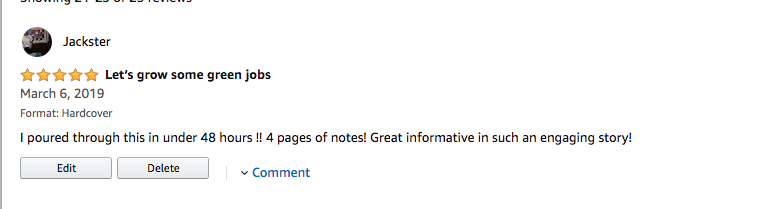
    Here’s my 5 star review, make sure you write yours!

    MY REIVEW ON amazon of Grain By Grain by Bob Quinn

    Thanks so much for sending me your book, you were worried if I would be able to read it and then I whipped through it in under 48 hours was so engaging!

    Thanks Jackie!

    It was a lot of fun to write with Liz who is a great partner who made the story easy to read. She was able to keep it free flowing from one topic to another.

    There’s so many things to discuss, it’s a bit of a challenge to meet the limitations that they place on us from keeping the book from being a gone with the wind version with so many topics.

    We tried to hit the highlights of subjects I’m passionate of

    • The High Cost Cheap Food
    • Decline of Rural America and the
    • Disappearance of Our Farms

    all because we have been encouraged to look at our farms like factories and industrial agriculture food systems.

    I love the relationships you build and people you talk to. I love biographies, I’ve had a lot of time to read this year, I’ve been to the library a lot this year!

    Liz Carlisle http://amzn.to/1QDkvgG

    Along with Liz Carlisle author of the Lentil Undergound

    Why don’t you tell listeners a little about yourself?

    Well I was raised on a wheat and cattle ranch in Big Sandy about 12 miles out of town. Near Havre Great Falls. It’s South of Canadian border where Alberta and Saskatchewan meet. My father was raised here and I started after him and now I raised my children so 3 generations ~

    I don’t see any of my children coming back. I have 18 grandkids, maybe one of them. I leased out my farm to a couple of my employees, that I have trained.

    I had a great time! I had my turn in farming! It was fantastic now it’s time for the next generation to learn! I’ve gone from 4000 acres down to 4 acres. I continue some of my experiments throughout my life and try to grow all my own food:

    • dry-land vegetables
    • grow melons drylands
    • storage
    • non storage like tomatoes

    in a field with no irrigation which is a total challenge.

    We’re sort of like that here, my husband grew up on a 1200 acre ranch and we have the last 20 acres and we have very limited water. You’re such a scientist and talk about how you try 40 lbs of potatoes and narrow it down to five.

    If we look at food as a health component and they have different criteria to add to that there are all kinds of things we can learn. with different types of food. What we have looked at in recent years is the cost of food and making it cheap and high yielding in order to have it cheap.

    High cost to the Cheap Food

    Starts with the farmers aren’t paid enough to stay in business and make a living

    consumer

    artificially cheap food at the check out counter

    That’s only the first parts of it. I’m interested in teaching people

    food should be ear health and medicine and medicine should be your food. If we could reduce the cost of medicine and health care while food has decreased in price.

    The cost of food in the average budget has decreased 61% while the extra money we saved on health care we didn’t get to spend it on boats etc the cost of health care has increased 61% and those are astounding statistics!

    what we have done to make food cheap.

    Is it true in drylands farming something new farmers would be interested in. They’re not getting watered down so they increase in nutrient value?

    Reduce Inflammation

    I’ve compared tomatoes I’m raising tomatoes in my field with no irrigation side by side, the flavor intensity in the drylands tomatoes is really noticeable

    what makes

    secondary

    polyphenols are very strong antioxidants attributed to reducing inflammation

    choosing higher nutrition in almost aliases vegetables and foods by their aromas

    one criteria

    one thing we notice in drylands

    organic non-organic

    People often comment on the intensity of the flavor and that’s what were seeing which is connected with health.

    There’s no way they could grow dry-land vegetables non-organically could they?

    I suppose but the value of non-organic

    People are willing to pay more and they’re higher value and so they’re actually getting more for they money.

    What we do is give those vegetables about 3xs more space then you would normally do in an irrigated field or in places like the midwest where they don’t even water their lawns

    density

    vegetable

    3 times more space then they normally receive

    produce and each plant will produce as much as an irrigated.

    1/3 per many per acre but we have lots of acres so that’s not a problem. Really reducing the cost of our farming except the labor to control weeds.

    But the cost of inputs like water is just nil.

    That makes sense because clean water is becoming more scarce, and so people might want to learn about this drylands farming. I feel like if we were practicing more of these practices we wouldn’t see so many fires and smoke in summers.

    We are seeing that on our own farm. There’s no time to debate about climate change farmers need to respond to it. What we see, generally, what we see are the rains are ending sooner and the heat is coming sooner. So our spring crops are becoming higher and higher risk. One thing we’re trying is planting traditional spring crops in the fall so they can get through the winter and benefit from early spring rains and start maturing before the heat really hits.

    Yeah this year we still have 2-3 feet of snow in our yard and 2 weeks ago we were below 0º at the beginning of March.

    It’s not really correct to just refer to climate changes as global warming per say. Although the glaciers are melting in Glacier Park and also in the ice caps.

    What we are seeing more of are the extremes.

    A few years ago we went from the extreme a high amount of rain that we would normally have on the top of the rain cycles to the very next year was an extreme drought which would normally be at the other end of the cycle and 5-6 years off.

    And you are definitely the data man to know all that kind of thing.

    GrainByGrain

    Grain by Grain: A Quest to Revive Ancient Wheat, Rural Jobs, and Healthy Food

    What do you want to tell us about our book?

    I’ve seen a lot of people write a lot of books to tell their story. I spent 5 years trying to put something together that would be the story of our

    • KAMUT® story and
    • ancient wheat story and what I have
    • learned in organic agriculture
    • importance of food as medicine
    • lots of these different things I have learned along the way.

    I didn’t have any luck finding a publisher.

    Finally I bumped into Liz Carlisle, author of the Lentil Underground who is from Montana we bumped into at that field day and many of the people in the book she wrote about we were having reunion and I asked her if she would partner with me.

    The bigger story is what we have done to our food system.

    So we dive into the high cost of things:

    • the high cost of cheap food
    • the high cost of farmers the high cost of going out of business
    • farmers who went out of business
    • next high cost to our planet

    global climate change ~ a vehicle to tell the bigger story

    • My listeners are always interested in learning what they can do to be more productive and better farmers and I’m sure many of them are wondering how can they become a Kamut farmer, I know one thing I am interested in is the hemp project and how is that coming along?

    Montana Hemp Farming Project

    Well, for us a little bit slow we started out with 7 acres that took us 2 years to sell that crop. I always caution my friends to be sure you have a market before you sell it.

    That’s interesting because there’s actually a big CBD plant here in Eureka and they were saying they couldn’t get their hands on enough hemp and had to start their own farm in Shelby kind of near you.

    Well now CBD that’s a different product then we were growing. We were just growing the industrial plant for the seed and with the CBD oil you have to harvest the plant green and then you extract the CBD oil with alcohol. So it’s a completely different process then waiting for the plants to mature and gather the seeds so that you harvest the mature plant for seeds and we were crushing those seeds for oil. Cut and bail your hemp crop as it’s quite immature just as it’s beginning to flower you have to know what’s your market.

    Industrial Hemp

    We were involved in distributing industrial hemp this spring. Maybe a 100, couple of thousand acres. I don’t know if they were sure they knew where they were going to sell that product.

    I was thinking you were so good at making connections and building relationships and I love that picture of you and your parents at the farm show in California and how you were willing to get out there and find markets and talk to people, starting out with your Kamut and have just gone on from there.

    Well you mentioned a story about not everybody gets to be a farmer but I like to remind folks if you are eating, you’re actually a co-producer. As Carlo Petrini in the slow food movement in Italy if you are not a farmer but eat you are a coproducer

    That’s a connection not often thought about but very important.

    The eaters in this country are really in the drivers seat!

    what they order at restaurant

    what they eat at home

    really drives what the farmers are planting

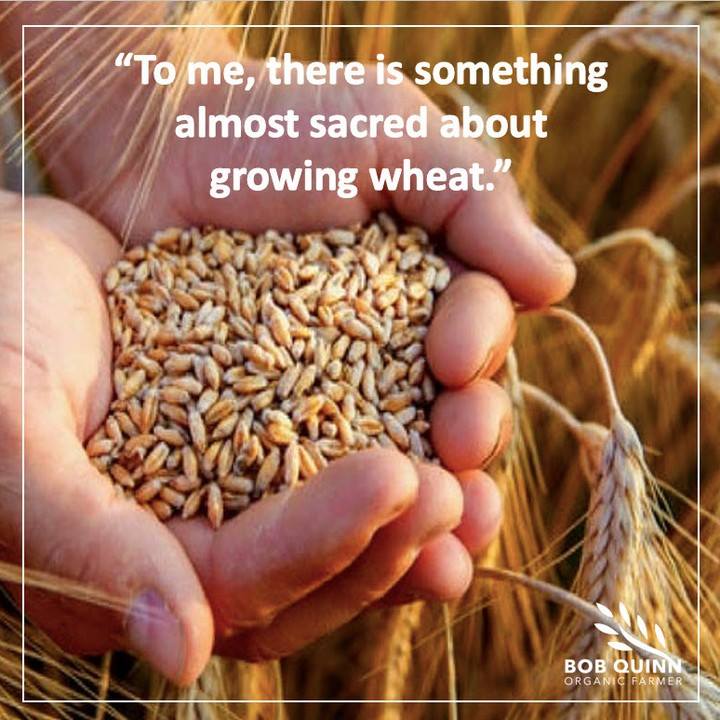
    GrowingWheatIsSacred.jpg

    That’s the vast majority of farmers now only about 1%. So we’re looking at the 99%

    If they want a regenerative organic agriculture and renewable systems that don’t pollute the earth we have to grow food more that’s actually nutritious all they need to do is buy more organic food

    All they need to do is just buy one additional product then you did the last time that will begin to make an enormous difference!

    But isn’t that part of what you re talking about, I can’t afford to buy organic food a lot of the time. I’m lucky Mike grows for me a lot of organic food.

    Just one more organic item

    If your at 0 buy one more item.

    Those incremental differences don’t make that big of a difference on your bottom line. If you are on a reduced budget just buy things that are less processed and therefore less expensive.

    Our KAMUT® brand grain is a very expensive grain, it costs a couple of dollars a pound were to buy the it in the store. But if you were to buy that and take it home and crack it and make hot cereal you could feed a family of four for less then 50¢, so it’s not a big cost.

    So if you look at the drivers if we start increasing the amount of organic available the transportation and handling costs will start to come down the more we have available and it becomes less of a specialty item.

    Do you want to talk about your fruit trees and 4 acres you are gardening on now?

    Sure, I also like to experiment with what else can we do in the prairies of northern Montana besides wheat and barley. One thing I have been experimenting with for 10 years is fruit trees. We have about

    • 21 different varieties of apples
    • pears
    • plums
    • sour cherries
    • fruit bushes

    We can’t grow sweet cherries here but we can grow sour cherries.

    I have about 20 different types of native berry bushes.

    All the way from:

    • seed buckthorn from Siberia
    • buffalo berries
    • currants
    • chokecherries
    • service berries that are native berries available here in the coolies on our farm. We want to see what berries grow best.

    We grow grapes!

    Some varieties my daughter is making red wine vinegar out of the grapes and sour cherries which is just fantastic!


    Andrew Mefferd Organic No-Till Farming Revolution Winner Announcement + August Update 2019 Aug 05, 2019
    Show notes

    Happy August!

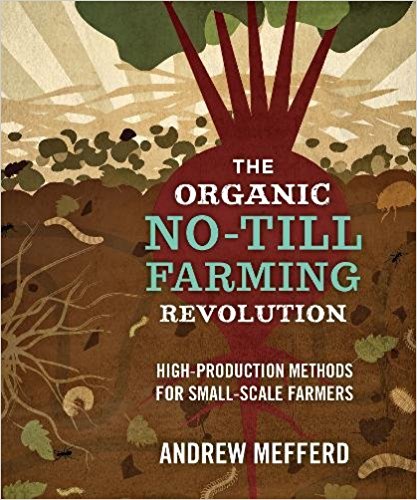
    Announcing the winner of Andrew Mefferd’s new book:

    https://amzn.to/2LOXNqG

    The Organic No-Till Farming Revolution: High-Production Methods for Small-Scale Farmers

    And the Winner is

    drumroll please

    John Keith!

    Remember you can get a 20% discount by using the code: garden on a subscription to Andrew’s awesome publication Growing for Market magazine or any of his books or the books in their online store.

    Greenhouse and HoophouseGrower'sGuide

    The Greenhouse and Hoophouse Grower’s Handbook: Organic Vegetable Production Using Protected Culture

    Congratulations to a listener, Organic Gardener Podcast Challenge participant and hopefully future guest!

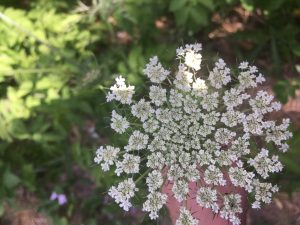
    Carrots going to seed make great flowers for beneficials that eat pests

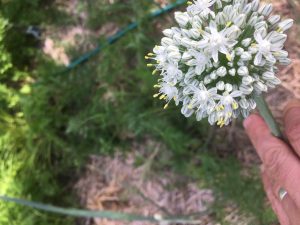
    Scott Mann and I just talked about how he plants onions and other umbel shaped flowers at the end of his rows of vegetables

    because they attract a parasitic wasp that eats pests.

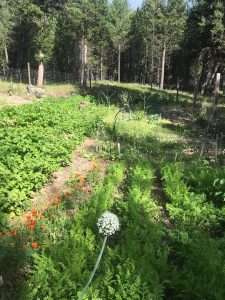
    onion in mini farm 2019

    Herbs in the garden

    Should have mulched my lavendar…


    This podcast uses the following third-party services for analysis:
    Spotify Ad Analytics - https://www.spotify.com/us/legal/ad-analytics-privacy-policy/

    August 4, 2019 Update at Mike’s Green Garden Aug 05, 2019
    Show notes

    So in this update I go through the questions I usually ask others on my way to work.

    Tell me about your first gardening experience?

    Clark gardens and I hated it.

    How did you learn how to garden organically?

    My mom, Mike and Organic Gardening Magazine

    Tell us about something that grew well this year.

    So far potatoes and carrots.

    Is there something you would do different next year or want to try/new?

    Strawberries

    Tell me about something that didn’t work so well this season.

    My blueberries and raspberries

    Which activity is your least favorite activity to do in the garden?

    Anything that requires me to get down in the dirt. I like raised beds and keeping my jeans clean.

    What is your favorite activity to do in the garden?

    Eat the food. I’m not the biggest fan of harvest I just like to cook it.

    What is the best gardening advice you have ever received?

    Water your blueberries.

    A favorite tool that you like to use? If you had to move and could only take one tool with you what would it be.

    The broadfork, although I’m still a big fan of the wheelbarrow. I want 4


    This podcast uses the following third-party services for analysis:
    Spotify Ad Analytics - https://www.spotify.com/us/legal/ad-analytics-privacy-policy/

    284. Fencing for Critters and Pests | Jennifer Smith | DeerBusters | Waynesboro, PA Aug 05, 2019
    Show notes

    Jennifer Smith a Rockstar Millennial is here from DeerBusters today to tell us about fencing.

    DeerBusters has been leading the fencing industry for over 30 years with reliable DIY garden fence in poly and metal fence materials for homes, farms, forests, colleges, orchards, vineyards, and gardens. We are proud to work with wildlife conservation agencies and landscape architects as well as deer farmers who are looking to keep in deer and elk herds with our fencing.

    Don’t forget to ask about Jon Moore – portable fence

    Tell us a little about yourself.

    I was born and raised in S Florida, I was always an outdoor enthusiast.

    I was brought up with this preconceived notion that Bambi is innocent and cute. Then I grew up and realized:

    Deer are very destructive most come about animal between farmers and gardeners

    IDK I still think deer are pretty cute, they are all over the place although we have had our struggles with deer in the garden and can cause a lot of heart break, also, lyme disease is a very dangerous disease.

    No, you’re right it’s not just a problem for gardeners, lyme disease is certainly an issue for

    • campers
    • hikers
    • pet owners

    A lot of owners are not aware their pets can get lyme disease because they are not aware that deer can drop the ticks in the yard.

    tick species out there

    vector dieseases

    pets and humans

    other wireline

    reroute the deer

    reduce the amount of diseases

    animal and animal and people

    Tell me about your first gardening experience?

    I remember growing strawberries with my mom in our backyard. That was something that was very touching and personal for me

    We never really had a deer problem in South Florida, I grew up on the beach, I never saw a deer until I went to College around Tampa.

    new to me

    moved up north

    mid-atlantic region in Maryland

    deer are everywhere

    deer destruction in gardens

    It is a serious problem

    Not just Florida, or Maryland or penn

    How can DeerBusters help people with their deer problems?

    DeerBusters is located in Waynesboro, PA

    We work with many different

    • homeowner
    • pet owners
    • landscapers

    to protect

    We offer

    do it yourself deer fencing and plastic and metal fence options

    offer for unique gardener.

    You’re right Long Island is a huge problem, deer love the landscape there! It’s a huge territory for us.

    I think one of the reason on Long Island there’s lots of amazing nature walks and places that probably encourage the deer. They can be vicious when they have their babies born they can fight off our dogs.

    Deer breeding season happened at the end of the year

    People should start to see baby fawns in the next couple of weeks

    even more deer

    does are protective of their young

    stay with mother before they go off on their own

    more deer

    deer movement is going to bring wildlife encounters with pets

    Do you want to talk about the diy fences a little? I know my husband is really good at putting up fences that last a long time, but if it was me it’d be falling down in not much time.

    so for do it yourself project

    you don’t need to be that handy

    fun instructions on the website

    I’ve even done it

    You need just a

    • few basic tools
    • maybe some helpful friends
    • within a day or tow

    Tell us about something that grew well this year.

    Yes, I actually grew tomatoes and ironically, deer love tomatoes.

    I was a little nervous, and I was like I’ll just go down and do it, so I grew these beautiful tomatoes and now I love gardening!

    I encourage anyone who is interested in starting a vegetable garden, to go out there and try it, it will get you in touch with nature and you will have more appreciation of where your food comes from and being sustainable.

    That’s something I love about my podcast it gets me out in the garden more!

    Is there something you would do different next year or want to try/new?

    I think I want to try peppers. I’m really into peppers and salads so that might be my next venture.

    I think peppers and tomatoes go really together.

    Is it cold in Pennsylvania? That’s something we struggle with getting tomatoes to ripen.

    so the cold weather can be challenging

    various techniques

    • move plants inside
    • cold frame
    • drape them over with sheets

    something to insulate the plants

    Something to think about as you move forward

    Tell me about something that didn’t work so well this season?

    I only grew tomatoes it was a starter project for my new house. It was successful so I am going to continue the trend and work my way up!

    I think that is a good point for beginning gardens

    don’t get too ambitious

    It’s a labor of love and it can get expensive quickly

    try a few techniques

    Which activity is your least favorite activity to do in the garden?

    I’m so bad about pulling weeds but it’s such an important part

    It might be the most important

    suffocate plants and completely kill off your entire garden

    Watering?

    I was so bad about watering when I first started I just assumed they would get all their nutrient

    Watering especially when it’s getting warm outside, it’s important to water early in the morning

    heat of the sun scoops up all the moisture

    I love that, I created this book called the Green Queen, I ran into this friend of mine, who was watering in the afternoon instead of evening and the water was just evaporating as we stood there. I’ve been wondering all along what do you do if you go no-till, what do you do with the weeds. I finally learned is don’t pull the weeds, cut the weeds, and let it sit there. Don’t actually pull the weeds out of the ground, cover it with a good mulch.

    A lot of people have said their favorite tool is a good hoe.

    I considered growing them in pots

    just outside in the backyard

    What is your favorite activity to do in the garden?

    Yes, that’s funny that you said that.

    I absolutely love the fruit of my labor so to speak

    It’s so amazing to see your handwork and enjoying

    You really get to see how sustainable

    You realize that gardening can feed a family of four for over a month!

    It takes a lot of maintenance but it’s totally worth it!

    I love that. Mike likes to grow our food for a year but we’re not all the way there yet. Mike spoils me, I didn’t have to go to the store from August till November, even longer this year and now I am having to go buy produce again and it’s so frustrating.

    IT’s a cost savings

    If you would just start your garden, you would realize how much you’re saving and your feeding your family more nutritious food and better quality things

    you know

    chemicals

    this that and the other

    sustainability

    What is the best gardening advice you have ever received?

    The best gardening advice I have ever received was

    • to take things slowly
    • not put all your eggs in one basket
    • take one step at a time

    If you want to plant tomatoes just do one thing

    Do your research before you dig into the ground!

    if you do not do your research it’s going to fall apart

    read up on the type of vegetable

    do they need direct sunlight?

    Do they need water?

    Certain soil types?

    All of these are going to affect whether your garden is going to grow or not!

    You are so right there! Mike and I have been pouring through the seed catalogs, I love do your research and start small!

    A favorite tool that you like to use? If you had to move and could only take one tool with you what would it be, didn’t you just move?

    I did, yes, I have a new house.

    I think there are many tools that are great starter tools

    first of all you need a great pair of gloves

    I started out with cheap gloves and doesn’t cut it

    You will really appreciate it after a couple of hours in the garden

    • great watering can
    • great shovel
    • wheelbarrow

    top three

    I would definitely get a wheel barrow to move things around.

    Bionic Garden GlovesBionicGlovesCutting.jpg
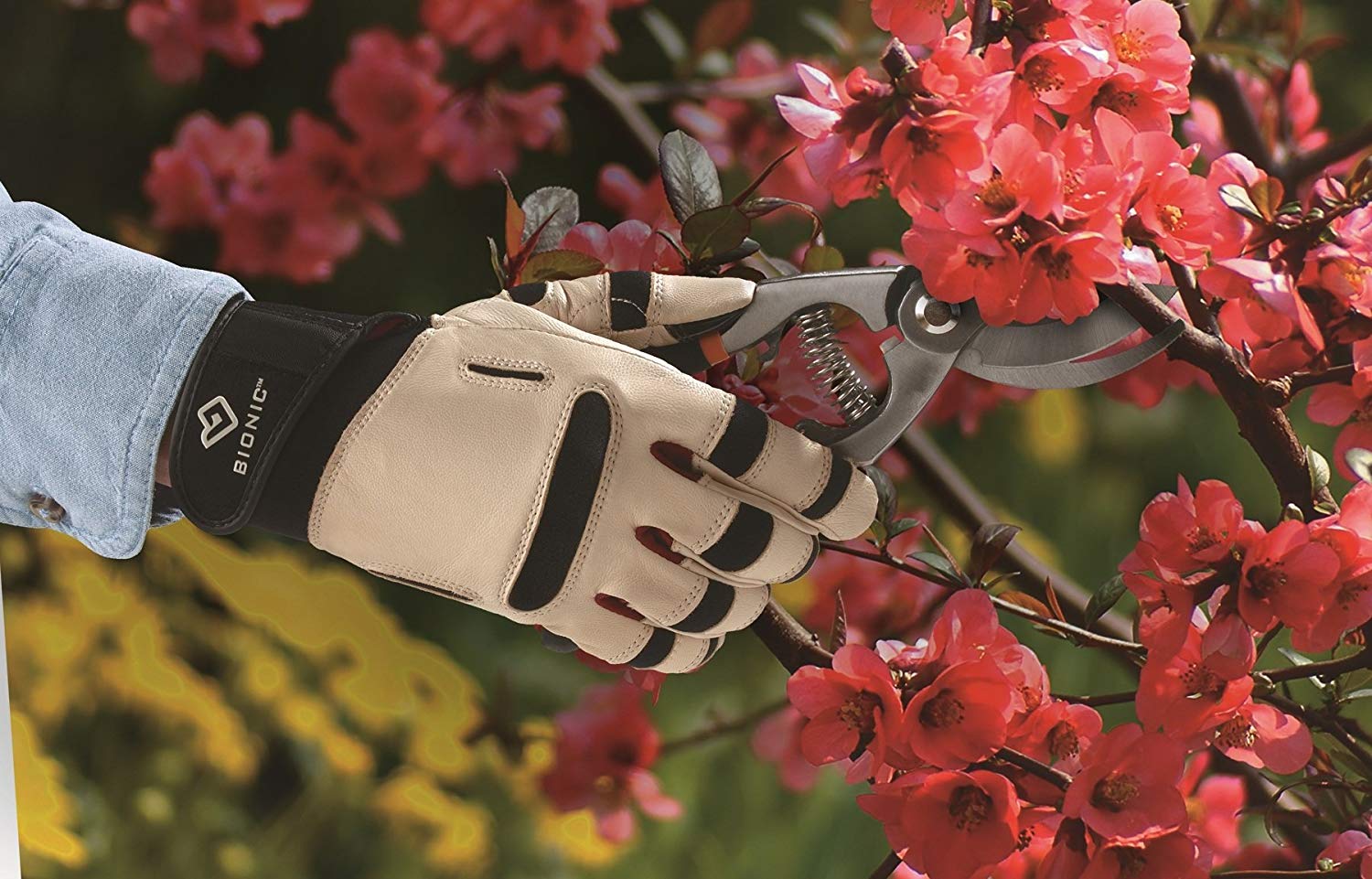
    Have you ever heard of bionic gloves I’ve been wanting to get those for my mom?

    Yes, I’ve used those, those are perfect.

    A favorite recipe you like to cook from the garden?

    I’m really into Italian food so just making my own tomato sauce is beautiful, I love cooking.

    Mmm yeah, I love homemade tomato sauce with a little garlic and olive oil yum!

    A favorite internet resource?

    I’m I actually float around to different Dept of Wildlife and Forest Websites

    they don’t just give tips on gardening

    Yes so for white tailed deer the most effective is a fence

    people want a 7 1/2′ to 8′ foot high fence

    coyotes and wolves

    can get away with a 6 foot high metal fence

    For Rabbits only need like 2-3 feet high

    but the main problem with rabbits and even ground hogs

    burrow and create tunnels

    These pesky critters can be troubling and can be a headache for gardeners

    Should dig a trench a rabbit 6-12” to prevent borrowing

    fencing

    the second thought for wildlife management

    is to plant deer resistant flowers

    • marigolds
    • daffodils
    • verbena
    • garlic

    deer and rabbits hate the taste and smell of

    They may take a few bites but they hate the taste and smell will turn their nose and walk away

    The last thought is they can sprinkle deer repellents around the yard

    granular or liquid based

    usually have:

    • hot pepper
    • garlic

    I interviewed another Rockstar Millennial Kristi Waterworth in episode 169 from GardenKnowHow and she said:

    Natural Deer Repellant

    There are so many deer there!

    One of the ways they say is to put a fence up and hang onions on it. I think it works if you don’t actually have deer. But what does work is if you have old pie pans and you hang them off the fence, anything that will make a lot of noise and that will scare the deer because they’re skittish pest animals.

    also things that ed

    yes, even laser pointers

    As long as there’s a noise or some kind of light that will startle them

    shinny paper or even scare crows that get rid of birds

    It’s to startle them and derail them! Those are all good tactics

    What about the portable electric fencing? I know Jon Moore was interested in portable electric fencing. And I know the problem we have is predators getting into our chickens.

    so electric fencing is a really good technique

    It’s actually the number one technique for people in bear country.

    I go so crazy, I’m like we live in the woods if you don’t want a bear in your yard why are you living here?

    bears are coming out of hibernation

    been away for a couple of months

    electric fencing for bear deterrent

    Gardeners also use electric fencing for deer management

    peanut butter

    deer at bay

    Use electric fencing for coyotes

    especially for poultry farmers who have chickens or turkeys

    any other type of bird

    electric fencing

    doesn’t have to be plastic or metal

    Any sort of deterrent to keep animals at bay


    RAW Episode 285. Using Permaculture Zones for Design | Scott Mann host of The Permaculture Podcast |The Possibility Handbook: A Toolkit for Transformation Jul 28, 2019
    Show notes

    The Permaculture Podcast host Scott Mann shares his amazing journey into permaculture and podcasting in this must listen episode.

    Learn about The Possibility Handbook: A Toolkit for Transformation

    So I ask myself today what lesson can I learn since all the work I did this weekend evaporated when my computer crashed yesterday. I am going to release it so I can listen on my way to work tomorrow and hope for the best. Sorry if there are any mistakes but I think Scott was an amazing guest you will enjoy hearing from unedited!

    To see my unedited notes click here.

    But I did put on my rose colored glasses on my way to work and ended up enjoying the sunny skies and beautiful Montana forests! Enjoy Green Future Growers! Here’s to technology challenges and hopefully better solutions! At least I didn’t lose my whole computer as I still have about 6 episodes in the bank to release!

    Show notes coming someday!

    I did want to make sure I include some important links Scott mentions. Two books and a website.

    David Holmgren’s site and info at Permaculture Principles and the Poster Download that lists the principles to follow along as we talk.

    David Holmgren’s book:

    Permaculture: Principles and Pathways Beyond Sustainability

    and

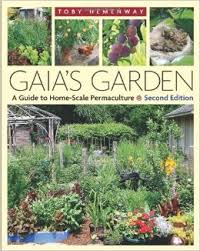
    Toby Hemenway’s

    Toby Hemenway Permaculture

    Gaia’s Garden: A Guide to Home-Scale Permaculture


    This podcast uses the following third-party services for analysis:
    Spotify Ad Analytics - https://www.spotify.com/us/legal/ad-analytics-privacy-policy/

    Previous 1 23 24 25 26 27 30 Next

    Related Podcasts

    The Fine Homebuilding Podcast – Fine Homebuilding Magazine

    1

    The Fine Homebuilding Podcast – Fine Homebuilding Magazine Education
    The Money Pit Home Improvement Podcast

    2

    The Money Pit Home Improvement Podcast Education
    Gardenerd Tip of the Week

    3

    Gardenerd Tip of the Week Games & Hobbies
    Encyclopedia Botanica

    4

    Encyclopedia Botanica Arts
    kiwimana Buzz Beekeeping Show – A Beekeeping Podcast/Show

    5

    kiwimana Buzz Beekeeping Show – A Beekeeping Podcast/Show Games & Hobbies
    Small Farm Nation

    6

    Small Farm Nation Education
    footer-logo

    Contact Us

    Toll Free: 844-670-7747

    Links

    • Home
    • Top Charts
    • Networks
    • Apps
    • Independents Podcasts
    • Podcast Advertising
    • Podcast News
    • Contact Us
    • About Us
    • Analytics & Insights

    Stay Connected

      Privacy, Terms of Use & Our Code of Ethics Protecting Content Creators Copyrights