Ep 33 Roshcast Emergency Board Review
Oct 11, 2017
Show notes
People who are crazy enough to think they can change the world, are the ones who do.
-Rob Siltanen
Welcome back to Roshcast Episode 33! This episode marks an incredible milestone for Roshcast. Exactly 365 days ago, Roshcast was born (Apgars 7 and 9). It is wild to look back and think about how much we have covered – hundreds of questions, thousands of pearls, dozens of test-taking strategies, regular tweets, etc.
We couldn’t be more excited about where Roshcast has been or where it is going. In honor of hitting one year, we are doing another trauma ring tone competition. During episodes 34 to 38, listen for a trauma ring tone, and tweet the exact time to us or e-mail the time to us. A few weeks ago, we also launched a new partnership with the EM Clerkship podcast as a core EM corollary for selected topics. This week, we are doing another crossover episode, in which we return to cardiac arrhythmias — specifically, bradycardia. Let’s get the episode started with a rapid review of some essential vitamins, which were recently covered on the Rosh Blog.
The fat-soluble vitamins are A, D, E, and K.
Vitamin D deficiency can lead to rickets in children and osteomalacia in adults. Vitamin D deficiency is classical seen in the elderly, those with insufficient sunexposure, malnutrition, malabsorption, breastfeeding infants, and those who take anticonvulsants.
Vitamin E deficiency can present with areflexia, peripheral neuropathy, gait abnormalities, ophthalmoplegia, and decreased proprioception.
Vitamin A deficiency is associated with night blindness, xerosis (dryness of the skin, mucous membranes, and conjunctiva), as well as Bitot’s spots (white patches on the conjunctiva).
Now onto this week’s podcast
Question 1
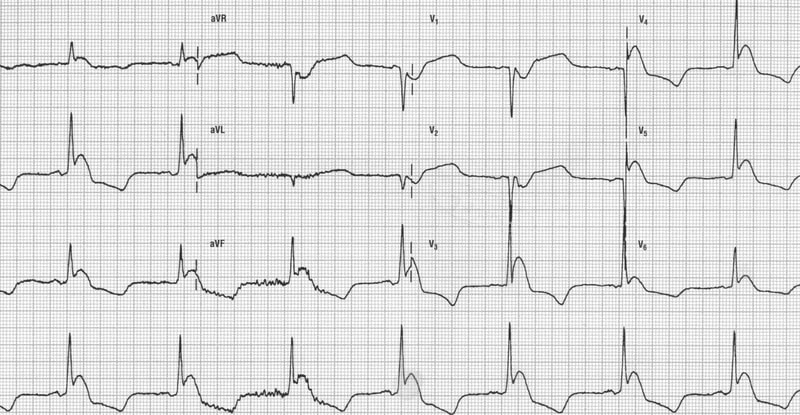
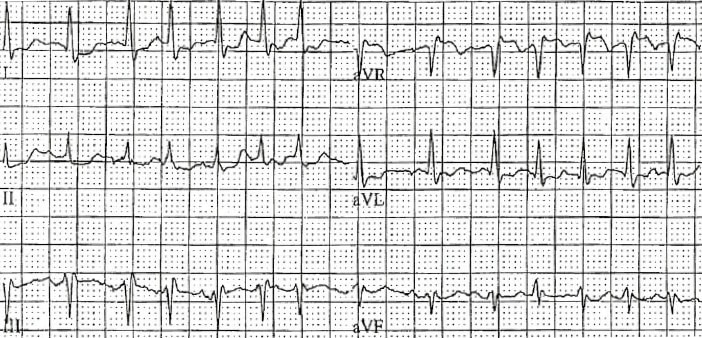
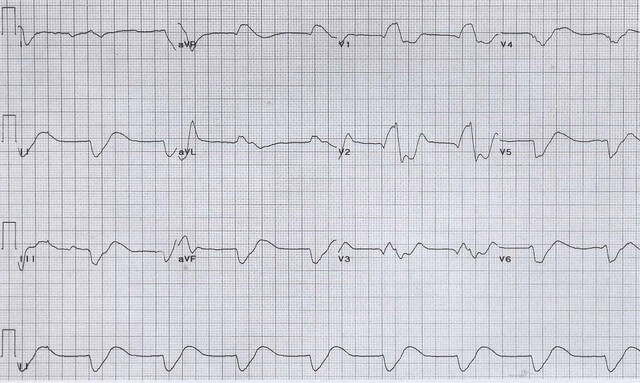
A 66-year-old woman presents with generalized weakness and dyspnea on exertion for 2 weeks. Vital signs are BP 80/45, HR 40, RR 16, and pulse oximetry 97% on room air. Her ECG is shown above. There are no other ST-segment abnormalities. Which of the following is the most appropriate next step in management?
A. Administer aspirin, heparin and admit for acute coronary syndrome
B. Cardiac catheterization laboratory activation
C. Observation and arrange for follow up with cardiology
A 52-year-old man presents from his primary care physician’s office for evaluation of an abnormal electrocardiogram. His ECG is seen above. He has no symptoms. What is the appropriate intervention?
An infant with episodes of cyanosis and respiratory difficulty is diagnosed with Tetralogy of Fallot. Which of the following defects would you expect to see on echocardiographic examination?
A. Aorta-pulmonary artery transposition
B. Atrial septal defect
C. Left ventricular hypertrophy
D. Overriding aorta
Question 7
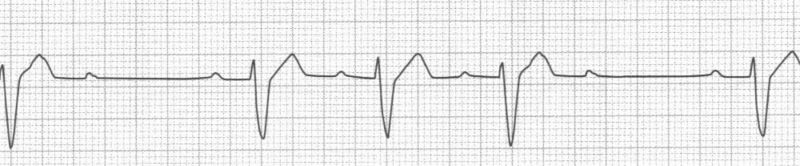
A 50-year-old woman presents to the ED with minor chest pain. She lifted some heavy groceries from the car yesterday. She has a history of hypertension that is controlled with metoprolol. In the ED, her vital signs are BP 120/80, HR 68, RR 14, and oxygen saturation 99% on room air. Her rhythm strip is seen above. Which of the following is the represented rhythm?
Second-degree type 1 block may be related to increased vagal tone or medications that block the AV node.
Second-degree type 2block and complete heart block require a pacemaker. If symptomatic or hemodynamically unstable, patients with such high degree AV block require immediate transcutaneous or transvenous pacing until a permanent pacer can be implanted.
Medications that block the AV node include adenosine, beta-blockers, calcium channel blockers, and digoxin.
Osborn waves, also known as late delta waves or J waves, are positive deflections of the J point that are characteristic of hypothermia and are usually only seen at temperatures below 32° Celsius.
Concurrent bullous myringitis and pneumonia is associated with Streptococcus pneumoniae. Treating the pneumonia will also treat the otalgia.
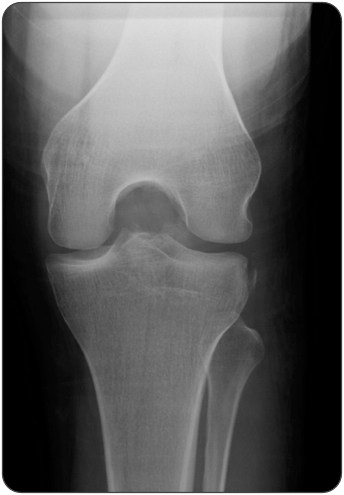
A Segond fracture is pathognomonic for ACL injury.
To test for ACL injury, perform either the Lachman or the anterior drawer test. The Lachman test is more sensitive.
Remember the PROVe mnemonic for the cardiac defects seen in Tetralogy of Fallot (ToF): Pulmonary stenosis, RV hypertrophy, Overriding aorta, and VSD.
That wraps up Episode 33, marking one full year of Roshcast. We will be at ACEP at the end of the month and hope to see many of you there. Definitely swing by the Rosh Review booth (1442) to say hi and give us some feedback or any suggestions you might have to improve the podcast! Don’t forget to follow us on Twitter @Roshcast and @Roshreview. We can also be reached by email at roshcast@roshreview.com. Remember that you can help us pick questions by identifying ones you would like us to review. To do so, write “Roshcast” in the submit feedback box as you go through the question bank. And finally, if you have a minute, make sure to rate us and leave comments on iTunes to help spread the word about Roshcast.
Ep 32 Roshcast Emergency Board Review
Sep 28, 2017
Show notes
Somewhere, something incredible is waiting to be known.
-Sharon Begley
Welcome back to Roshcast Episode 32! We are returning to our regular format – letting the question back randomly generate this week’s material. We will have another collaborative episode with the EM Clerkship podcast soon. We start this episode off with another rapid review based on a recent blog post by Yehuda Wolf. Make sure you keep checking the blog for rapid reviews.
Rocky Mountain spotted fever often presents with an abrupt onset of severe headaches, photophobia, vomiting, diarrhea, and myalgias, along with a maculopapular eruption on the patients’ palms and soles.
Rocky Mountain spotted fever is transmitted by the Dermacentor tick.
Rocky Mountain spotted fever is treated with doxycycline, even in children.
Now onto this week’s podcast
Question 1
A 2-year-old boy is brought to the emergency department by his pregnant mother with complaints of hematemesis and bloody diarrhea and an episode of shaking that looked like a seizure. The patient has no past medical history; immunizations are up-to-date. His vital signs are BP 68/32 mm Hg, HR 170 beats per minute, RR 30 breaths per minute, temperature is 36.8°C, and oxygen saturation is 96% on room air. On physical exam, the child appears pale and lethargic. HEENT exam is normal with moist mucosa. His abdomen is nondistended but tender on palpation with active bowel sounds. His skin is cool and clammy. Laboratory results are as follows:
Sodium
137 mEq/L
WBC
17,000/µL
Potassium
5 mEq/L
Platelets
250/µL
Chloride
99 mEq/L
Stool guaiac
Neg
BUN
10 mg/dL
UA
Neg
Creatinine
0.5 mg/dL
UDS
Neg
CO2
16 mg/dL
Serum tox screen
Neg
Glucose
280 mg/dL
aPTT, PT w/INR
Normal
Which of the following arterial blood gases is most consistent with the patient’s diagnosis?
A 3-week-old boy presents with two days of nonbilious projectile vomiting. Examination reveals a mass in the infant’s right upper quadrant. On a barium upper GI series report, the radiologist states a “string sign” is present. Which of the following is this infant at greatest risk of developing?
A 47-year-old previously healthy man is transferred to your facility in Arizona with acute respiratory distress syndrome and cardiogenic shock. Two days ago, symptoms began with muscle aches, fever, chills, cough, nausea, vomiting, and diaphoresis. Two weeks earlier he was camping in an old, unkempt cabin in the San Rafael Valley, AZ. His two friends who stayed with him eventually began to show similar symptoms. Which of the following tests will confirm the suspected diagnosis?
A 16-year-old woman arrives to the ED via EMS after she collapsed at a Rave party. Her vital signs are 105.2°F, HR 160 RR 22, and BP 180/100. She is confused, agitated, combative, diaphoretic and has mydriasis. Her reflexes are 4/4 and clonus is noted. Her extremities demonstrate rigidity. Which of the following is the most likely diagnosis?
Iron overdose can cause an anion gap metabolic acidosis. Severe cases can lead to dehydration and shock.
Iron overdose should be treated supportively. In severe cases, IV deferoxamine can be given.
The fundal height at 12 weeks is approximately at the pubic symphysis. At 20 weeks, it is at the umbilicus. At 36 weeks, it is at the xiphoid process. And between 37 and 40 weeks, the fundal height regresses slightly.
Pyloric stenosis can cause a hypochloremic, hypokalemic metabolic alkalosis. Make sure you resuscitatebefore sending the patient to the operating room.
Pyloric stenosis presents with bilious, projectile vomiting. It typically occurs between 2 weeks and 2 months of age, and it is more common in males. Diagnosis is made with ultrasound or an upper GI series.
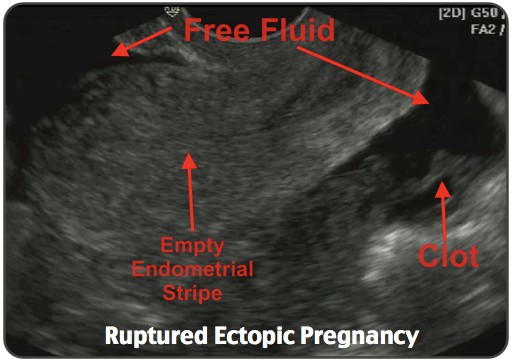
Hemoperitoneum can lead to relative bradycardia thought to be due to irritation of the vagus nerve.
The double decidual sign is a normal finding in early pregnancy. Later in the pregnancy, you can expect to see a gestational and yolk sac in the uterus.
B lines are indicative of pulmonary edema. A lines are a normal horizontal artifact.
Absence of lung sliding can be seen in the setting of pneumothorax, apnea, and superficial pneumonias.
Hantavirus is transmitted by feces and urine from deer mice and is found west of the Mississippi River. It can cause cardiopulmonary disease, renal disease, and hemorrhagic fevers. ECMO can be useful in severe cases.
Serotonin syndrome presents with fever, tachycardia, hypertension, agitation, and confusion. Treatment is with benzodiazepines, hydration, and aggressive cooling. MDMA or ecstasy can cause serotonin syndrome.
That wraps up Episode 32. Don’t forget to follow us on Twitter at @Roshcast and @RoshReview. We can also be reached by email at roshcast@roshreview.com. Please send over any feedback, corrections, or suggestions. You can also help us pick questions by identifying ones you would like us to review. To do so, write “Roshcast” in the submit feedback box as you go through the question bank. And finally, if you have a minute, make sure to rate us and leave comments on iTunes to help spread the word about Roshcast.
Ep 31 Roshcast Emergency Board Review
Sep 13, 2017
Show notes
The only journey is the one within.
-Rainer Maria Rilke
Welcome back to Episode 31! We are continuing our collaborative effort with the EM Clerkship podcast, focusing this week on tachydysrhythmias in addition to a mixture of random topics. We start the episode off with another rapid review of a few of the recent blogposts by Yehuda Wolf.
In a gravid female, the uterus will be palpable at the umbilicus at around 20 weeks. At 12 weeks, the fundal height will be around the pubic symphysis. Lastly, at 36 weeks the fundus will be at the xiphoid process.
Patients with polycystic ovarian syndrome are often obese and complain of hirsutism, irregular menses, acne, and sleep disordered breathing. You might also notice acanthosis nigricans and fatty liver disease.
Management for PCOS is typically done in an outpatient setting, but a common regimen could include OCPs, metformin, and lifestyle modification.
Now onto this week’s podcast
Question 1
A 58-year old man is brought to the ED for chest pain that started 30 minutes prior to arrival while he was jogging in the park. Initially, the patient’s cardiac monitor shows sinus tachycardia with a rate of 120 beats per minute. However, while you are interviewing the patient in the resuscitation bay, he suddenly becomes pale, pulseless, and the below rhythm is seen on the cardiac monitor. Which of the following is the definitive next step to manage this rhythm?
In a patient with traumatic brain injury, which of the following secondary insults should be given the highest priority for correcting in the ED?
A. Hypercarbia
B. Hyperpyrexia
C. Hypotension
D. Hypothermia
Question 4
A 45-year-old man with a history of opioid abuse presents to the ED with new onset syncope. While you are evaluating the patient, he becomes unresponsive and you note the rhythm below on the monitor. Which of the following medications is the most likely cause of this presentation?
An 84-year-old man presents from a nursing home. The patient is lethargic and unable to provide any history. The transfer record reports a new cough and chills. His vital signs are T 102°F, BP 88/42, HR 118, RR 22, and oxygen saturation 95% on room air. In addition to an intravenous normal saline bolus of 30 cc/kg, which of the following is the most appropriate empiric treatment?
In a witnessed cardiac arrest for a patient in ventricular fibrillation, immediatedefibrillation should be performed.
In an unwitnessed cardiac arrest with an unknown downtime, regardless of rhythm, chest compressions should be initiated immediately.
The defibrillating dose for a biphasic defibrillator is 200 J, whereas 360 J are required with a monophasic defibrillator. Biphasic defibrillators are preferred as they cause less cardiac damage and have higher first shock success.
In atrial fibrillation with WPW, avoid AV nodal blocking agents, like amiodarone, beta-blockers, calcium channel blockers, and digoxin.
For an unstable patient in atrial fibrillation with WPW, synchronized cardioversion should be performed.
In patients with traumatic brain injury, hypoxia and hypotension are associated with worse outcomes.
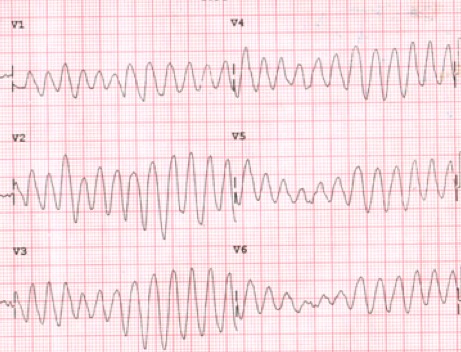
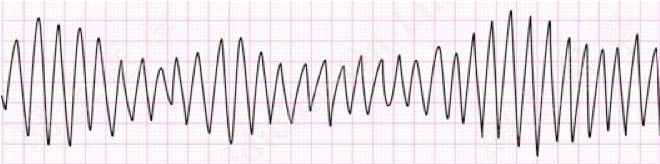
Torsades de Pointes is often caused by drugs that prolong the QT. Other risk factors for Torsades de Pointes include female gender, hypokalemia, hypomagnesemia, structural heart disease, stroke, brain injury, and bradyarrhythmias.
Torsades de Pointes should be treated with magnesium if the patient is stable. In an unstable patient, synchronized cardioversion or overdrive pacing should be performed.
There are four criteria to think of for healthcare-associated pneumonia:
Infection occurring within 90 days of a 2-day or longer hospitalization.
Resident from a nursing home or long-term care facility.
Infection within 30 days of receiving IV antibacterial therapy, chemo, or wound care.
A patient on hemodialysis.
HCAP should be treated with three drugs: one covering gram negatives including Pseudomonas, one for MRSA coverage, and lastly a third for atypical coverage.
Always draw blood cultures before giving antibiotics when treating suspected sepsis and start a 30 cc/kg bolus assuming they do not have contraindications.
Multifocal atrial tachycardia is often associated with COPD.
That wraps up Episode 31. Do not forget to follow us on Twitter @Roshcast and @Roshreview. We can also be reached by email at roshcast@roshreview.com. We are open to any feedback, corrections, or suggestions. You can also help us pick questions by identifying ones you would like us to review. To do so, write “Roshcast” in the submit feedback box as you go through the question bank. And finally, if you have a minute, make sure to rate us and leave comments on iTunes to help spread the word about Roshcast.
Ep 30 Roshcast Emergency Board Review
Aug 31, 2017
Show notes
Only I can change my life. No one can do it for me.
-Carol Burnett
Welcome back to Episode 30! First, we must congratulate Sean for winning the trauma ring tone challenge by being the first to respond after the episode release. An honorable mention goes out to Nich and Dhinakar. Stay tuned for future contests and prizes!
Today’s episode also marks the launch of a new partnership with the EM Clerkship podcast. Going forward, we are going to occasionally focus episodes on a specific topic—a topic that was recently covered by EM Clerkship. We will cover a few questions on that specific area and fill in the rest of the episode with the usual random assortment. You can listen to the podcasts in either order. Either start with Roshcast to see where you stand and then head over to EM clerkship for more detail—or alternatively, start with EM clerkship to learn the nuts and bolts, and then head back here to test yourself. Any time we do these joint releases, we will plan to match our mid-week release with their release a few days earlier on Sunday. Hopefully you enjoy our new collaboration!
Enough announcement. Let’s get going with the rapid review!
To diagnose Kawasaki disease, you must have a fever for five or more days and four of the following five criteria: bilateral bulbar conjunctival injection, oral mucous membrane changes, peripheral extremity changes, polymorphous rash, and cervical lymphadenopathy.
Kawasaki disease is treated with IVIG and aspirin.
Ocular findings associated with Wernicke’s encephalopathy include nystagmus, lateral rectus palsy, and conjugate gaze palsies.
When treating Wernicke encephalopathy, you should replace thiaminebefore repleting their glucose.
Now onto this week’s podcast.
Question 1
You are caring for a 60 kg patient who has been seizing for 30 minutes. You have already administered 4 mg of IV lorazepam and 1200 mg of phenytoin without termination of seizure activity. Which of the following should most likely be your next step?
A 33-year-old man presents with a seizure lasting for 5 minutes. EMS administered 2 mg of lorazepam with cessation of seizure activity. On presentation, the patient is confused. The patient’s medication list includes metoprolol and isoniazid. During the evaluation, he has another seizure lasting for 10 minutes and then a third seizure lasting for another 10 minutes. What adjunctive therapy should be given?
A 75-year-old nursing home patient presents with abdominal distension. Vital signs are normal and the patient is “nontoxic” appearing. An abdominal X-ray is obtained. What management is indicated?
A. Endoscopic detorsion
B. Intravenous antibiotics
C. Observation and reassessment
D. Surgical resection
Question 4
A 26-year-old woman with a history of dysmenorrhea and depression presents to the ED after having a seizure witnessed by her husband. He reports finding her on the bedroom floor with an empty pill bottle. Which of the following non-steroidal anti-inflammatory (NSAIDs) medications did she most likely ingest?
A. Celecoxib
B. Ibuprofen
C. Mefenamic acid
D. Rofecoxib
Question 5
An 8-month-old child presents to the emergency department having generalized tonic-clonic seizure activity. Her mother reports that she is bottle-fed and has been diluting her formula secondary to financial strains. Her serum sodium is found to be 120 mEq/L. She weighs 8 kgs. She is actively seizing. What is the most appropriate dose of 3% hypertonic saline to administer the patient?
A. 16 mL of 3% hypertonic saline
B. 4 mL of 3% hypertonic saline
C. 64 mL of 3% hypertonic saline
D. 80 mL of 3% hypertonic saline
Question 6
A full-term 3-week-old girl is brought in by her parents who report that she has been “acting funny” for 2 hours. They noticed that she has been moving her lips nonstop. She was a full-term, normal, spontaneous vaginal delivery and has been feeding well with adequate wet diapers since hospital discharge. She is afebrile and vital signs are normal. The anterior fontanelle is flat, and red reflexes are present. Heart, lung, and abdominal exams are normal. Her neurologic exam is positive for root, suck, and Moro reflexes, upgoing Babinski reflexes, and rhythmic lip-smacking movements. What is the most appropriate next step to take with this baby?
A. Administer phenobarbital
B. Initiate EEG monitoring
C. Perform a CT scan of the brain
D. Provide reassurance that this is normal behavior
Status epilepticus is defined as 2 or more continuous seizures without full recovery or continuous seizure activity for greater than 5 minutes.
Benzodiazepines are the first-line agents for status epilepticus. Midazolam has the fastest onset, but lorazepam has a longer half-life.
Second-line agents for status epilepticus include phenytoin, fosphenytoin, valproic acid, phenobarbital, or levetiracetam. Fosphenytoin is preferred as it can be given more quickly.
Third-line agents for status epilepticus include pentobarbital and propofol along with likelyintubation.
All seizing patients need to have their blood glucose checked.
In patients on INH having seizures, pyridoxine should be administered.
For sigmoid volvulus, the treatment of choice is endoscopic detorsion, typically a flexible sigmoidoscopy.
On a barium enema of a patient with sigmoid volvulus, the classic finding is a bird’s beak appearance.
Mefenamicacid is an NSAID given for menstrual pain. Overdose can cause seizures 2–7 hours after ingestion. Treatment is with benzodiazepines.
For seizures related to hyponatremia, 3% hypertonic saline at 2 mL/kg should be given with a max of 100 mL over 10–60 minutes.
Neonatal seizures are more likely to be focal than tonic-clonic. Look for signs like lip smacking, eye deviation, staring, rhythmic blinking, and bicycling movements.
Phenobarbital is the drug of choice for neonatal seizures.
First neonatal seizures require a full septic workup. Empiric antibiotics should be given.
That wraps up Episode 30. Don’t forget to follow us on Twitter at @Roshcast and @RoshReview. We can also be reached by email at roshcast@roshreview.com. Send over any feedback, corrections, or suggestions. You can also help us pick questions for the podcast by identifying ones you would like us to review. To do so, write “Roshcast” in the submit feedback box as you go through the question bank. And finally, if you have a minute, make sure to rate us and leave comments on iTunes to help spread the word about Roshcast.
Ep 29 Roshcast Emergency Board Review
Aug 03, 2017
Show notes
Success is the sum of small efforts, repeated day in and day out.
-Robert J. Collier
Welcome back to Episode 29! This week we are starting out with a bit of psychiatry before swinging over to the Pediatric ER for a quick neonatal resuscitation. We may even stop by the trauma bay to see what is happening there and give you a chance to win a prize. We’ve said enough already. Let’s get warmed up with a rapid review. This week, we are trying something new – we will be reviewing some of the recentRapidReviews that Yehuda has been uploading to the blog. Make sure to check them out going forward too!
With primary hypothyroidism, you would expect a high TSH and a low T4. On physical, you may see periorbital edema, dry skin, and coarse brittle hair. Patients often complain of weakness, fatigue, facial swelling, constipation, cold intolerance, and weight gain.
With acanthosis nigricans, you would expect thickened, velvety, darkly pigmented plaques on the neck or axillae.
Cushing’s syndrome most commonly caused by hypercortisolism from an ACTH-secreting pituitary tumor. Cushing’s syndrome is diagnosed by a 24h urine cortisol and serum ACTH levels.
Now onto this week’s podcast.
Question 1
You are working in the ED when the police bring in a 26-year-old man who was involved in a bar fight. The patient is well known to staff as he frequently seeks treatment in the ED for injuries related to fights and alcohol abuse. He has been caught smoking cigarettes in the ED bathroom, has urinated on the floor, and been known to steal food trays and other patients’ belongings. As you enter his examination room, you overhear him giving the registration clerk a false identity. Which of the following personality disorders best fits with this patient’s behavior?
A term pregnant patient presents to the ED in active labor and delivery. There is no meconium seen, but the baby has a weak cry and poor tone initially. After clearing the airway, drying the baby vigorously, and providing warmth, the poor tone persists. On exam, the heart rate is 85 and the newborn appears apneic. Which of the following is the most appropriate next step?
A 13-year-old boy with no past medical history presents with a headache 3 days after a closed head injury. The patient states that he stood up from kneeling and hit the top of his head on a wood cabinet. There was no loss of consciousness or seizure activity. In addition to the headache, he complains of difficulty concentrating at school and dizziness. His physical examination is unremarkable. What management is indicated?
An 18-year-old man presents with red eyes. He has been sick with upper respiratory symptoms for two days. Examination is notable for bilateral conjunctival injection with scant discharge. He has rhinorrhea and sounds congested. He has a palpable preauricular lymph node on the left. Which of the following is the most likely cause of his red eyes?
Those with antisocial personality disorder often display a blatant disregard for others, violate societal norms, and lack a remorse for their actions. They are of often aggressive, irritable, and impulsive.
Borderline personality disorder is a cluster B personality disorder and is characterized by self-destructive, impulsive behavior. They often have erratic emotions and may come off as being overly sexual and are frequently in crisis.
Paranoid personality disorder is a cluster A personality disorder. Paranoid patients are often cold, humorless, and suspicious.
Schizoid personality disorder is also a cluster A personality disorder. Schizoid patients are often loners with fewfriends who are indifferent to praise and criticism.
In a neonatal resuscitation, the first step is to warm, dry, and stimulate the neonate and clear the airway if necessary. If there is no response to these measures, begin positive pressure ventilation at a rate of 40–60 breaths per minute.
Bradycardia in a newborn is often a sign of hypoxia.
In a child over 2 with a GCS less than or equal to 14or if are there signs of a basilar skull fracture or signs of AMS, there is a 4.3% chance of a clinically important traumatic brain injury. These children require head imaging.
Postconcussive syndrome may present with many nonspecific symptoms, including headache, dizziness, confusion, amnesia, difficulty concentrating, and blurry vision without a focal neurologic finding.
All patients with postconcussive syndrome should be referred to a neurologist for functional testing and tracking of symptom resolution. Caution patients about returning to contact sports too soon to prevent a second impact.
The most commonlyinjured organ in adult blunt abdominal trauma is the spleen. The liver is the second most commonly injured organ.
Splenic lacerations are graded 1-5. Most can be managed non-operatively. Hemodynamic instability warrants an exploratory laparotomy.
Conjunctivitis most commonly presents with redness, foreign body sensation, drainage, swelling of the lid, and even crusting in the morning. Treatment is supportive with compresses and artificial tears.
The most common cause of conjunctivitis is a viral infection, with adenovirus being the most common virus.
There are four cardinal signs of acute flexor tenosynovitis: 1) tenderness along the course of the flexor tendon 2) fusiform or symmetrical swelling of the finger 3) pain with passive range of motion 4) a flexed posture of the finger.
Flexor tenosynovitis is most commonly caused by penetrating trauma and direct inoculation of the actual sheath, but direct spread from other areas of the hand occur as well.
Flexor tenosynovitis is a surgical emergency and requires antibiotics and hand surgery consultation.
So that wraps up Episode 29. From neonatal resuscitation to personality disorders with a brief stop in the trauma bay, we have covered quite a bit. Hope you all enjoyed. Don’t forget to email us or tweet us if you caught the time of the trauma ring tone to win the prize.
Ep 28 Roshcast Emergency Board Review
Jul 20, 2017
Show notes
Welcome back to Episode 28! We are already well into intern year. Remember it is a roller coaster, with ups and downs, but in the end, you will really appreciate just how far you have come. This week we start off with a quick ophthalmology review and then dive into the new material, covering OB/GYN, pediatric dermatology, torsades de pointes, and much more. Let’s get started.
Acute angle closure glaucoma classically presents with painful monocular vision loss. The pupil would be fixed and mid-dilated with a hazy cornea and perilimbic injection.
Optic neuritis is characterized by central vision loss with preserved peripheral vision. Patents may also have pain with eye movement and reduced color vision.
Retinal detachment is associated with painless monocular vision loss with floaters and flashing lights. The retina can appear dull and gray. Call ophthalmology immediately for any retinal detachment.
Now onto this week’s podcast.
Question 1
A 27-year-old woman presents with vaginal bleeding. Her last menstrual period was eight weeks ago. On physical examination, there is a small amount of blood in the vaginal vault with an open internal cervical os. Bedside ultrasound reveals an intrauterine pregnancy with a fetal pole but no heartbeat. Which of the following is the most likely diagnosis?
How does the Diagnostic and Statistical Manual (DSM-V) code personality and developmental disorders?
A. Axis I
B. Axis II
C. Section I
D. Section II
Question 3
A 35-year-old woman with a known history of seizure disorder is actively seizing in the ED. Which of the following is the first-line medication and route to treat her seizure?
Which of the following statements is true regarding airway management in children?
A. Adults are more susceptible to airway obstruction than children
B. Children have a lower basal oxygen consumption compared to adults which results in relative protection from hypoxia and decreased need for pre-oxygenation
C. The glottic opening in children is more anterior compared to that of adults
D. The vocal cords are the narrowest portion of the airway in children compared to the cricoid ring in adults
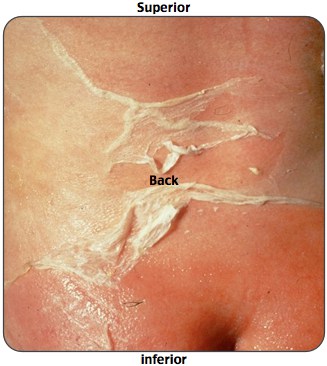
An 11-month old male is brought in by his mother for fever, irritability, and rash. She reports that other children at his daycare have similar symptoms. You see the following on physical exam as seen above. Which of the following is true regarding this condition?
A. Intravenous steroid administration is the mainstay of therapy
B. It is less common in children over 6 years of age
An incomplete abortion occurs before 20 weeks when the os is open and POC are visible either in the OS or in the vaginal canal.
An inevitable miscarriage presents with an open oswithout passage of any products of conception.
A missed abortion is a broader term that describes several conditions, in which the fetus is no longer viable, but remains intrauterine with a closed OS.
A threatened abortion is defined as any vaginal bleeding during pregnancy with a confirmed intrauterine pregnancy and a closed OS.
DSM-V is organized by sections. The multiaxial system of DSM-IV is gone. In DSM-V, Section 2 covers diagnostic categories and Section 3 covers conditions that need additional research.
In an actively seizing patient the first priority is airway protection – roll the patient onto the left lateral decubitus position to prevent aspiration.
The first line pharmacologic management for a patient in status epilepticus is a parenteral benzodiazepine. Midazolam has the fastest onset.
Second line agents for status epilepticus includes phenytoin, fosphenytoin, valproic acid, phenobarbital, or levetiracetam.
Do not forget to check a finger stick and consider INH toxicity in those in status epilepticus.
The glottic opening in children is more anterior to that of adults.
The narrowest portion of the pediatric airway is the cricoid cartilage.
As compared to the adult airway, in the pediatric airway, the tongue is proportionally larger and the epiglottis is longer and narrower.
Staph scalded skin syndrome most commonly affects those under 2 years of age, and it rarely occurs in those over 6 years of age.
Staph scalded skin syndrome is treated with IV fluids, aggressive wound management, and an anti-staphylococcal antibiotic.
Torsades de pointes is associated with a prolonged QT interval, hypomagnesemia, and hypokalemia.
Torsades de pointes is treated with intravenous magnesium.
That wraps up Episode 28. From psychiatry to obstetric emergencies to pediatric dermatology, we have covered the entire spectrum of emergency medicine this week. Hope you all enjoyed. Do not forget to listen for the trauma phone ring tone in the coming weeks for a chance to win a Rosh Review Subscription. Remember to tweet us @Roshcast or email us at Roshcast@roshreview.com the exact time you hear the ring to win the prize.
Ep 27 Roshcast Emergency Board Review
Jul 06, 2017
Show notes
It is during our darkest moments that we must focus to see the light.
-Aristotle
Welcome back to Episode 27 and a big welcome to all the new interns who are only about 1 week into residency! We hope you find Roshcast to be easy to listen to and helpful in your education. As we have said from the outset, we want this to be as high-yield as possible to not only improve your in-training scores but also improve your care at the bedside. We are open to any suggestions, so please reach out.
Let’s get warmed up with a rapid review – this week, we are going over some HIV-related illnesses.
Toxoplasmosis is rarely seen with CD4 > 200. Be concerned in those with CD4 < 100.
Toxoplasmosis is transmitted through cat feces. It is treated with pyrimethamine, sulfadiazine, and folinic acid.
The classic X-ray finding for PJP pneumonia is diffuse interstitial infiltrates in a “bat wing” appearance.
In PJP pneumonia, if the PaO2 is less than 70 or the A-a gradient is greater than 36, treat with steroids in addition to trimethoprim-sulfamethoxazole.
Now onto this week’s podcast
Question 1
A 67-year-old man with hypertension and end-stage renal disease presents after an incomplete dialysis session secondary to shortness of breath. His vital signs are BP 110/95, HR 65, RR 22, T 37.3°C, and oxygen saturation 99% on 2L NC. You obtain the ECG shown above, which shows a widened QRS, almost resembling a sine wave. Which of the following is the most appropriate next step in this patient’s management?
EMS calls notifying you that there is a mass casualty situation. There was an explosion at a construction site and they will be bringing 20 ambulatory, asymptomatic patients to your emergency department. After checking airway, breathing and circulation, what test, if normal, would allow you to rapidly discharge patients?
A. Abdominal ultrasound
B. Ophthalmoscope evaluation of the eye
C. Otoscope evaluation of tympanic membranes
D. Oxygen saturation
Question 3
A 42-year-old woman with sickle cell anemia presents to the ED complaining of unilateral knee pain. You are worried she might have septic arthritis. Which of the following organisms is most likely to be responsible?
A 29-year-old man presents to the ED with partial-thickness burns to his entire back and right arm. The patient weights 70 kg. Based on the Parkland formula, how much crystalloid solution is required in the first 24 hours?
EKG changes seen in patients with hyperkalemia include peaked T waves, QRS widening, dropped P waves, and bradycardia.
Temporizing measures for managing hyperkalemia include calcium, insulinand glucose, sodium bicarbonate, and albuterol.
Furosemide and dialysis can be used to permanentlyremovepotassium from the body.
For blast injuries, make sure to examine the tympanic membranes. They are damaged at lower pressures than other parts of the body.
Primary blast injuries occur from blast overpressure. Secondary blast injuries are caused by flying debris. Tertiary blast injuries are caused by victims being thrown. And lastly, quaternary blast injuries are caused by environmentalhazardscaused by the explosion.
The most common cause of septic arthritis is Staphylococcus aureus in adults and children over 2, except for sexuallyactive younger adults, in which case Neisseria gonorrhoeae is more common.
On joint aspirate of a septic joint, the white blood cell count is typically greater than 50,000 and the aspirate appears purulent. Remember that if clinical suspicion is high, start antibiotics, consult an orthopedist early, and defer to the gram stain and culture for definitive diagnosis.
The most common extra-articular manifestation of ankylosing spondylitis is uveitis.
The narrowest part of the pediatric airway is the cricoid.
As compared to the adult airway, the pediatric airway has a proportionally smaller larynx, which is more anterior, the epiglottis is longer and narrower, the tongue is proportionally larger, the neck is typically shorter, and the adenoids are often larger.
The pediatric endotracheal tube should be placed to a depth of 3 x the endotracheal tube size.
The parkland formula can be calculated by the formula 4 x % TBSA burned x weight (kg). Give the first half in the first 8 hours and the second half over the next 16 hours.
Although, the parkland formula is a good guide, fluid resuscitation in burns should ultimately be guided by vital signs andurine output. In children, target 1–2 mL/kg/hr, and in adults, target 30 mL/hr.
That wraps up Episode 27. From blast injuries to hyperkalemia, we have covered the entire spectrum of emergency medicine this week. Hope you enjoyed. Do not forget to listen for the trauma phone ring tone in the coming weeks for a chance to win a Rosh Review Subscription. Remember to tweet @Roshcast or email Roshcast@roshreview.com the exact time when you hear the ring to win the prize.
Ep 26 Roshcast Emergency Board Review
Jun 22, 2017
Show notes
There are two ways of spreading light: to be the candle or the mirror that reflects it.
-Edith Wharton
Welcome back to Episode 26! Remember to listen for a trauma ring tone and if you hear one send us the time via email or tweet us @Roshcast with the time you hear it. This week, we start out with a brief ultrasound review and then get into some ophthalmology, ID, and toxicology. We will discuss a challenging cyanide toxicity question thanks to a suggestion from one of our listeners. Hope you enjoy it!
Lung sliding on bedside ultrasound is a normal finding. Absence of lung sliding is indicative of a pneumothorax.
A lines are a normal finding on lung ultrasound. They are horizontal lines that are reflections of the pleura. B lines are concerning for pulmonary edema and appear as “vertical headlights” throughout the thorax.
Any pregnant patient with lower abdominal pain or vaginal bleeding who doesn’t already have a confirmed intrauterine pregnancy requires a pelvic ultrasound to rule out an ectopic pregnancy.
Now onto this week’s podcast.
Question 1
A 72-year-old man complains of decreased painless vision in his left eye associated with flashing lights and floaters. Visual acuity in the left eye is 20/200 and in the right eye is 20/30. Which of the following is the most likely diagnosis?
A 17-year-old man presents to the ED 30 minutes after intentionally ingesting an unknown amount of drain cleaner. The active ingredient is sodium hydroxide; the pH of the product is 13. Upon arrival, the patient is afebrile, heart rate is 120 beats per minute, blood pressure 130/70 mm Hg, respirations 22 breaths per minute, and oxygen saturation 97% on room air. He appears uncomfortable and reports chest discomfort. There are superficial burns of the oral mucosa and inflammation in the posterior oropharynx, but he is in no respiratory distress. Which of the following is true regarding this patient’s care?
A. Activated charcoal should be administered because the patient presented within an hour of ingestion
B. Dilution with milk or water may be performed
C. Gastric lavage should be performed to prevent systemic toxicity
D. He should be kept NPO in preparation for endoscopy
E. Induction of vomiting with ipecac may be attempted
A 45-year-old man is rescued from a house fire. He was unresponsive at the scene and was intubated by paramedics. Upon arrival, he is afebrile, tachycardic to 130 with a blood pressure of 90/60. His arterial blood gas is significant for a pH of 7.16, a carboxyhemoglobin level of 20%, and a lactate level of 11.5 mmol/L. What is the most appropriate treatment for potential cyanide toxicity in this patient.
A. Administer hydroxocobalamin as a 5 g IV infusion
B. Administer sodium bicarbonate to correct the acidosis
C. Administer the cyanide antidote kit (amyl nitrate, sodium nitrite, sodium thiosulfate)
D. Arrange for the patient to receive immediate hyperbaric oxygen therapy
E. Hyperventilate the patient and maintain FiO2 at 100%
Question 5
An 85-year-old man presents via ambulance after a reported fall. He is non-verbal, bed-bound, and incontinent of urine and stool at baseline. He requires round-the-clock care, which is primarily provided by his daughter, a retired nurse. There are also several grandchildren that assist with his care on a daily basis. The EMS team is concerned for elder abuse and alerts you of their concerns on arrival to the ED. Which of the following factors is associated with a greater likelihood of underlying elder abuse?
Retinal detachment is associated with painless monocular vision loss with floaters and flashing lights. The retina appears as a dull and gray. Retinal detachment is treated surgically or with laser therapy. Consult ophthalmology immediately.
Acute angle closure glaucoma classically presents with painful monocular vision loss. The pupil would be fixed and mid-dilated with a hazy cornea and perilimbic injection.
Optic neuritis is characterized by central vision loss with preserved peripheral vision. Patents may also report pain with eye movement and reduced color vision.
Temporal arteritis is a vasculitis that causes monocular vision loss and is associated with unilateral headaches and polymyalgia rheumatica.
In neonates, 75% of cases of meningitis are caused by Group B strep. Other causes include E. coli, Listeria, and other gram-negative bacilli. Treatment is with cefotaxime and ampicillin or gentamycin and ampicillin
In infants, bacterial causes of meningitis additionally include S. pneumoniae, N. meningitidis, and H. influenzae. Treat this age group with vancomycin, ampicillin, and cefotaxime or ceftriaxone.
In children 3 months to 18 years, the three most common causes of bacterial meningitis are S.pneumoniae,N. meningitidis, and H. influenzae. Treatment is with either ceftriaxone and vancomycin or cefotaxime and vancomycin.
In adults 18 to 50 years old, S.pneumoniae and N. meningitidis, are the most common pathogens. Treat them with ceftriaxone and vancomycin.
In those over 50, in addition to S.pneumoniae andN. meningitidis, gram-negative bacilli and Listeria are also more common cause of bacterial meningitis, so ampicillin must be added to the ceftriaxone and vancomycin.
After an alkali ingestion, early endoscopy is critical as it determines the extent of the injury and helps guide management, disposition, and follow up decisions. All patients should be kept NPO following their ingestion.
Cyanide toxicity can be treated by giving either hydroxocobalamin or with the traditional kit which includes a combination of amyl nitrite, sodium nitrite, and sodium thiosulfate.
For fire victims who also have elevated carboxyhemoglobin levels, cyanide poisoning should be treated with hydroxocobalamin.
In the traditional cyanide overdose kit, the nitrites cause a methemoglobinemia, regenerating the mitochondria, while the thiosulfate aids in excretion.
Elder abuse can come in any form: physical, sexual, emotional, neglect, abandonment, and even financial, failure to recognize it can lead to significant morbidity and mortality.
The lesions of chickenpox appear over days with multiple stages present at once. They first appear at the hairline and spread caudally.
Chickenpox is caused by the varicella-zoster virus, or human herpesvirus type 3. Treatment is supportive with antipyretics, antipruritics, and analgesia.
There are two vaccines for chickenpox – both are live attenuated vaccines and are recommended for all immunocompetent infants over the age of 1 and in all non-infected immunocompetent adults.
That wraps up Episode 26. As always, feel free to submit questions for us to review. Don’t forget to listen for the trauma phone ring tone in the coming weeks for a chance to win a Rosh Review Subscription. Remember to tweet us @Roshcast or email us at roshcast@roshreview.com the exact time you hear the ring to win the prize.
Ep 25 Roshcast Emergency Board Review
Jun 07, 2017
Show notes
No act of kindness, no matter how small, is ever waster.
-Aesop
Welcome back to Episode 25—our silver anniversary episode! It was great connecting with a few listeners recently at SAEM. At the beginning of this week’s episode, we announced a new contest – be the first to tweet to us (@Roshcast) or email (Roshcast@roshreview.com) the exact time in episodes 26-30 that you hear a trauma phone ring tone to win a 30-day subscription to Rosh Review! First, let us get started with a rapid review covering fish poisonings.
Hot and cold sensation reversal is classically associated with ciguatera poisoning.
In scombroid poisonings, patients have reported a metallic, bitter, or even peppery taste.
In scombroid poisonings, histidine is broken down into histamine. Treat patients supportively with antihistamines.
Now onto this week’s podcast
Question 1
You are on a 10-day mountain climbing excursion in Colorado with one of your 55-year-old coworkers. After ascending to an altitude of 9200 feet, your coworker develops a mild bifrontal headache associated with nausea. He reports feeling “hung over” but denies drinking any alcohol the previous night. He has no other symptoms. On examination, there are no focal neurologic deficits. He desires to continue the climb. Which of the following is the most appropriate next step in the management of your coworker?
A 27-year-old woman, G2P1, presents with vaginal bleeding and right lower quadrant pain. She reports a positive pregnancy test and LMP 6 weeks prior to her evaluation. Vital signs are T 98.6°F, BP 110/68, HR 72, and RR 16. Her abdomen is soft with mild tenderness in the right pelvic area. Pelvic examination is notable for a small amount of red blood in the vagina and mild right adnexal tenderness. Bedside ultrasound shows an empty uterus and adjacent to the right ovary a gestational sac with yolk sac and fetal pole. Which of the following is a contraindication to methotrexate administration?
A. Fetal heart activity
B. Gestational sac greater than 2.5 cm in diameter
A 32-year-old woman, G2P1, at 33 weeks gestation presents to the emergency room for sharp abdominal pain. She has not had any prenatal care during this pregnancy. Her symptoms include vaginal bleeding, uterine pain between contractions, and fetal distress. Her first pregnancy was uncomplicated, with a vaginal delivery at term. Which one of the following is the most likely diagnosis?
An 18-year-old woman presents with fever, confusion, weight loss, and palpitations. Her vital signs are T 100.7°F, HR 140, BP 143/93, RR 20, oxygen saturation 95%, and finger stick glucose of 118. Physical examination reveals a thin woman who is alert and oriented x3 with a regular, fast heart rate, and brisk reflexes. Her roommate tells you that the patient has been taking a friend’s levothyroxine in an attempt to lose weight. What management should be initiated?
A. Beta-blocker
B. Beta-blocker, dexamethasone
C. Beta-blocker, dexamethasone, propylthiouracil, and potassium iodide
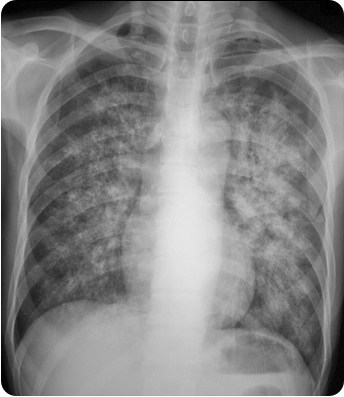
A 53-year-old man complains of fever and non-productive cough. He is also short of breath with exertion. His X-ray is shown above. Which test will be an important part of his overall evaluation?
Acute mountainsickness is characterized by headache, nausea, dizziness, and sleep disturbances after rapid ascent of an unacclimatized person at 2000 meters or higher.
Mildacute mountain sickness should be treated first by halting ascent and then supportively with fluids, oxygen, analgesia, and anti-emetics. Acetazolamide and dexamethasone can be used as a second-line agent.
When medically managing an ectopic pregnancy, methotrexate is relatively contraindicated when fetal heart activity is present, and contraindicated with hemodynamic instability or evidence of rupture on ultrasound. To be eligible for the treatment you need to have a gestational sac less than 3.5 cm and be able and willing to comply with post-treatment monitoring.
Riskfactors for an ectopic pregnancy include prior ectopic pregnancies, history ofPID, tubal surgery, or an IUD.
The fallopian tube is the most common location of an ectopic pregnancy.
Interstitial ectopicpregnancies occur with implantation of the developing fetus in the interstitium of the myometrium. In such cases, the sac may have an eccentric appearance on sonography, but there would be a thin endomyometrial mantle.
Placental abruption typically manifests as painful vaginal bleeding with evidence of fetal distress in the third trimester. Often the fundus will be tender and the patient will likely have pain between contractions.
Common risk factors for placental abruption include abdominal trauma, maternalhypertension, smoking, cocaine use, multiple gestation, and previous abruption.
Uterine rupture classically presents with a sudden tearing uterine painwith contractions with pain free intervals between contractions.
Placenta previa usually manifests as painless vaginal bleeding in the late 2nd or 3rd trimesters due to placental tissue overlying the internal cervicalos.
Vasa previa occurs when the umbilical cordinserts into the membranes of the lower uterinesegment and amniotic blood vessels present in front of the fetal head. This usually presentswith hemorrhage after amniotomyor spontaneous rupture of membranes.
Esophageal rupture carries significant morbidity and mortality. It should be treated with immediate antibiotics and a surgical consultation.
More than 90% of spontaneous esophageal ruptures occur in the distal esophagus.
With blunt trauma to the neck or thorax, esophageal rupture is usually in the proximalormiddle third of the esophagus. Iatrogenic injuries frequently occur at the pharyngoesophagealjunction.
Endogenous thyroid storm is treated with beta-blockers, PTU, potassium iodide, and dexamethasone. Exogenous thyroid storm is treated with beta-blockers and dexamethasone.
In thyroid storm, propranololreduces peripheral conversion of T4 toT3. PTUblockssynthesis of thyroid hormone.
Potassium iodideblockstherelease of thyroid hormone. Dexamethasoneblocks the peripheral conversion of T4 to T3 in addition to treating the relative adrenal insufficiency.
PJP, formerly PCP pneumonia, is typically seen in those who are immunocompromised. The x-ray will have bilateral interstitial infiltrates in a bat wing configuration. If the PaO2 is lessthan 70or the A-a gradient is greater than 35, treat with steroids in addition to trimethoprim-sulfamethoxazole.
So, that wraps up Episode 25. Do not forget to listen for the trauma phone ring tone in the coming weeks for a chance to win a Rosh Review Subscription. Remember to tweet (@Roshcast) or email (Roshcast@roshreview.com) the exact time you hear the ring to win the prize.
Ep 24 Roshcast Emergency Board Review
May 17, 2017
Show notes
Shoot for the moon and if you miss you will be among the stars.
-Les Brown
Welcome back to Episode 24! We are coming to you live from Orlando at SAEM this week. Ok, it is not exactly live, but we are launching this episode from Orlando. Although the venue has changed, we have the same high-quality review for you this week. This week we begin with a renal rapid review and then get into the new material, starting with some OB and virology, and ending with the more obscure, but still important, altitude-related emergencies. Hope you enjoy!
When considering children with glomerulonephritis, in a child with mild to moderate edema, a normal blood pressure, and no respiratorysymptoms, discharge home with corticosteroids may be appropriate.
Winter’s formula, pCO2 = 1.5HCO3– + 8 ± 2, is used to determine if there is appropriate respiratory compensation in a metabolic acidosis.
The causes of a non-anion gap metabolic acidosis can be remembered with the mnemonic HARDASS: Hyperalimentation, Addison’s disease, RTA, Diarrhea, Acetazolamide, Spironolactone, and Saline infusion.
Now onto this week’s podcast
Question 1
A 17-year-old G1P0 woman at 25 weeks gestation presents with intermittent blurred vision. On presentation, she is asymptomatic. Vital signs are HR 84, BP 175/113, and oxygen saturation 97%. Physical examination reveals 2+ pitting edema on both lower extremities and urinalysis has 3+ protein on dip. Which of the following is most likely indicated?
A. Admit for further obstetrics evaluation
B. Antiepileptic medications
C. Arrange follow-up with the patient’s obstetrician
A 14-year-old girl is brought to your mountaineering base camp at 11,000 feet for evaluation of strange behavior while attempting to summit a nearby peak with her school group. What is the most sensitive clinical sign in diagnosing high-altitude cerebral edema?
A 33-year-old man presents to the ED with right eye pain, tearing, and “difficulty seeing” out of the right eye. His visual acuity is 20/30 on the left and 20/200 on the right. On physical exam, you notice a subconjunctival hemorrhage and teardrop-shaped pupil. Which of the following physical exam findings is consistent with the suspected diagnosis?
A. Cells and flare in the anterior chamber on slit lamp exam
B. Gross retinal hemorrhage on dilated funduscopic exam
Preeclampsia is defined as gestational hypertension after 20 weeks, with a blood pressure of 140/90 or higher and either proteinuria or signs of end-organ damage.
The definitive and curative therapy for preeclampsia is delivery of the baby. Magnesium may be given for seizure prophylaxis.
Both hydralazine and labetalol can be safely used in pregnancy to control blood pressure.
HELLP syndrome is a severe variant or complication of preeclampsia. It is characterized by hemolysis, elevated liver enzymes, and low platelets.
Scombroidpoisoning may cause a metallic, bitter, or even peppery taste.
Scombroid poisoning results from the breakdown of histidine into histamine resulting in facial flushing, diarrhea, severe throbbing headache, palpitations, and abdominal cramps.
Ciguatera poisoning leads to nausea, vomiting, diarrhea, myalgias, tingling and numbness, abdominal pain, and vertigo along with the classic association of hot and cold sensation reversal. In severe cases, hypotension, bradycardia, and coma may result.
The most common viralcause of pneumonia in adults is influenza.
Influenza is also the most common viralcause of rhabdomyolysis.
Splenic artery aneurysms are the most common visceral artery aneurysm.
Splenic artery aneurysms are managed with embolization in asymptomatic patients and operatively in those who are symptomatic.
The most sensitive clinical sign for diagnosis of high altitude cerebral edema (HACE) is cerebellar ataxia. Other signs include encephalopathy, severe lassitude, and a progressive decline of mental function and consciousness.
HACE is managed definitively with descent. Steroids, supplemental oxygen, and hyperbarics may also be used.
Globe rupture can be identified by a positive Seidel test on fluorescein stain exam. CT can also help in making the diagnosis.
Globe rupture should be managed by covering the eye with a shield, elevating the head of the bed, updating the tetanus vaccine, and starting antibiotics. Operative emergent repair is a must.
So that wraps up Episode 24. We will be in Orlando for a few more days, so please stop us and let us know what you think. We are always looking for ways to make Roshcast even better and are open to any ideas and suggestions. As always, don’t forget to follow us on Twitter @Roshcast for updates, high-yield images, and pearls in 140 characters or less.

 Our TOPPODCAST Picks
  Stay Connected