Ep 43 Roshcast Emergency Board Review
Jul 10, 2018
Show notes
Always do your best. What you plant now, you will harvest later.
–Og Mandino
Welcome back to RoshCast for Episode 43! After a long pause, we are back with new episodes and a lot of announcements. A lot has happened in the past few months. Jeff had a baby and moved to Pittsburg to start his EMS fellowship. In doing so, he is taking a break from Roshcast to focus on fellowship and his new baby. Megha Rajpal, a fourth-year resident at Mount Sinai, will be taking over as co-host.
For epiglottitis, the patient will usually have a rapid-onset fever and dysphagia. On exam, they could be leaning forward, drooling, and even have inspiratorystridor.
The typical radiographic finding for epiglottitis is thumbprint sign, which is seen on a lateral neck film.
The most common bacteria associated with epiglottitis are H. influenzae and Streptococcus.
For management in epiglottitis, airway is the crucial piece. Patients may need to be intubated immediately. Don’t forget to start the patient on antibiotics to treat for the common pathogens.
Now onto this week’s podcast
Question 1
Which of the following is the most common presenting vital sign abnormality seen in patients presenting with a pulmonary embolism?
A 72-year-old man presents with pain in the right knee. It has increased over the last 24 hours with redness and swelling. Joint aspiration reveals negative birefringent crystals. He reports an allergy to NSAIDs and is a brittle diabetic. Colchicine is prescribed. Which side effect limits its usefulness due to a narrow therapeutic window?
A patient presents to the ED after waking up and finding that he was drooling while drinking his coffee. When he looked in the mirror he noticed that the left side of his face was drooping. Which of the following findings is suggestive of a central process?
A 28-year-old man presents to the emergency department via ambulance after a terrorist set off a large bomb in an airport. On physical exam, he has bilateral tympanic membrane ruptures. Chest X-ray shows bilateral pulmonary contusion. These injuries are most consistent with which category of blast injury?
A 19-year-old man presents with eye pain and photophobia in his left eye after being punched there two days ago. He describes blurry vision. On exam, you note consensual photophobia. Which of the following is the most appropriate treatment?
Tachypnea is the most common presenting vital sign abnormality for a pulmonary embolism, while dyspnea at rest or exertion is the most common presenting symptom.
Joint aspiration in gout demonstrates negative birefringent monosodium urate crystals. NSAIDs are the first-linetreatment.
Colchicine can cause severe GI symptoms in more than 10% of patients.
When deciding on a central versus peripheral etiology for facial paralysis, preserved ability to raise the ipsilateral eyebrow or close the ipsilateral eye is more concerning for a central lesion than a peripheral lesion.
Clay shoveler’s fracture is a stable avulsion fracture of the spinous process of C6–C7.
Jefferson burst fracture, bilateral facet dislocation, odontoid type II and type IIIfractures, any fracture with a dislocation, hangman’s fracture, and teardropfracture are all unstable cervical spine fractures.
Primary blast injury occurs from direct effect from blast shockwaves.
Secondary blast injury occurs from the impact of fragments due to exploding devices.
Tertiary blast injury occurs when the blast wave propels the body into objects.
Quaternary blast injury is due to environmental contamination from the device.
In quinary blast injuries, there is bodily absorption of device additives.
Traumatic iritis is treated using cycloplegics like homatropine and topical steroids.
That wraps up RoshCast Episode 43! Rosh Review is excited to announce the launch of a new podcast called The PA Way hosted by Alison Callahan, PA-C. Definitely worth a listen. Be sure to also check out the RoshCast blog for questions from this episode and prior episodes, related images and tables, as well as bonus teaching points. There are also tons of other great free resources there to help prepare you for the boards and the wards.
Don’t forget to follow us on twitter @RoshCast and @RoshReview. And you can always email us at RoshCast@RoshReview.com with any feedback, corrections, or suggestions. You can also help us pick questions by identifying ones you would like us to review. Write “RoshCast” in the submit feedback box as you go through the question bank. Lastly, if you have a minute, make sure to rate us and leave comments on iTunes to help spread the word about RoshCast.
Ep 42 Roshcast Emergency Board Review
Feb 22, 2018
Show notes
The secret of change is to focus all of your energy, not on fighting the old, but on building the new.
–Socrates
Welcome back to RoshCast for Episode 42! With the in-training exam around the corner, go back and power through old episodes during commutes to pick up as many points as possible. Good luck!
Patent ductus arteriosus (or PDA) closes, the neonate will present in heart failure and shock.
Turner’s syndrome is associated with coarctation. Turner’s is also associated with webbed neck, short stature, and low-set ears.
Individuals with Turner’s syndrome are missing an X chromosome as well, making it a 45,XO chromosomal condition.
A blood pressure differential between the arms and legs—specifically, the pressure in the arms is higher than the legs. Depending on the specific anatomy, you might even note a difference in the pressures between both arms.
Classic EKG and chest X-ray findings associated with coarctation of the aorta include left ventricular hypertrophy and rib notching, respectively.
Now onto this week’s podcast
Question 1
Which of the following is typically seen in Korsakoff syndrome?
A 24-year-old woman at full term presents with rupture of membranes and contractions. Sterile exam reveals a crowning infant with a visible cord. After elevating the fetal head, what management is indicated?
You suspect a 35-year-old man has epiglottitis with impending airway compromise. Which of the following is the best method for confirming the diagnosis?
A 21-year-old man presents with a stab wound to the right chest. His vitals are HR 157/min, BP 81/43 mm Hg, RR 28/min, and oxygen saturation 91%. The patient is intubated, and packed red blood cells are started. Physical examination reveals a bleeding wound to the right chest, a midline trachea, and decreased breath sounds on auscultation of the right hemithorax. Which of the following should be performed next?
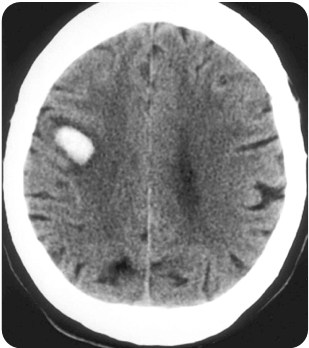
A 65-year-old man with a history of hypertension presents with left-sided weakness beginning two hours prior to arrival. Vitals are BP 155/85 mm Hg, HR 102/min, RR 12/min, oxygen saturation 100% on RA. His CT scan is shown above. Which of the following therapies is appropriate?
A. Antihypertensives to lower mean arterial pressure by 25%
Korsakoff syndrome is a chronic neurologic disease caused by thiamine deficiency that typically presents with impairment of recent memory formation. Patients may also exhibit apathy and confabulation.
Wernicke’s encephalopathy often presents with ophthalmoplegia, nystagmus, ataxia, and mental status changes. Wernicke’s encephalopathy and Korsakoff syndrome or often seen simultaneously.
Treat both Wenicke and Korsakoff syndromes with thiamine and magnesium.
The most common physical exam finding in AAA is a pulsatile mass. At a diameter of 5 cm, the risk of rupture increases markedly. Diagnosis is made by ultrasound or CT scan.
For umbilical cord prolapse during delivery, plan for an emergent C-section. If C-section is not possible, attempt manual replacement of the cord into the uterus, followed by rapid vaginal delivery.
Epiglottitis classically presents with rapid onset of fever and dysphagia, often with drooling, anxiety, stridor, and a muffled voice.
The best method for confirming the diagnosis of epiglottitis is via indirect laryngoscopy, which can be done with a nasopharyngoscope. However, be careful as manipulation can lead to laryngospasm and airway obstruction. Make sure a surgical airway kit is available at the bedside.
The classic finding on lateral neck X-ray in those with epiglottitis is a thumbprint sign.
An ED thoracotomy would be indicated in a patient who loses vitals in route to the hospital or in the ED.
For intracranial hemorrages, treatment is first supportive with airway protection and maintenance of adequate perfusion. Elevate the head of the bed to 30 degrees and maintain normothermia, normocarbia, and euglycemia. Current data do not support the use of antiepileptics.
That wraps up RoshCast Episode 42! Be sure to also check out RoshCast blog for questions from this episode and prior episodes, related images and tables, as well as bonus teaching points. There are also tons of other great free resources there to help prepare you for the boards and the wards. Don’t forget to follow us on twitter @RoshCast and @RoshReview. And you can always email us at RoshCast@RoshReview.com with any feedback, corrections, or suggestions. You can also help us pick questions by identifying ones you would like us to review. Write “RoshCast” in the submit feedback box as you go through the question bank. Lastly, if you have a minute, make sure to rate us and leave comments on iTunes to help spread the word about RoshCast.
Good luck on the in-training exam next week! Jeff and Nachi
Ep 41 Roshcast Emergency Board Review
Feb 05, 2018
Show notes
We are what we repeatedly do. Excellence, then, is not an act, but a habit.
–Aristotle
Welcome back to RoshCast for Episode 41! As we get closer and closer to the in-training, now would be a great time to go back and listen to old episodes to brush up on some of the core EM knowledge that you may not come across regularly on shift. Let’s get started with a rapid review and our regular mixed content of questions, answers, and high-yield review.
Staph aureus is the most common bacterial cause of septic arthritis in adults.
In a patient with splenic dysfunction, the strep species are more likely to cause septic arthritis.
Septic arthritis classically presents with fever, monoarticular joint pain, and a decreased range of motion.
Joint aspirates with a white count > 50,000 with more than 75% PMNs are indicative of septic arthritis.
Now onto this week’s podcast
Question 1
Which of the following hematological disorders is characterized by intermittent venous and arterial thrombosis, splenomegaly, and abnormal proliferation of all three myeloid cell lines?
A 29-year-old man is brought to the ED for a gunshot wound to the right chest. He is diagnosed with a right-sided hemopneumothorax. A tube thoracostomy is subsequently performed with immediate drainage of 250 cc of blood. The nurse connects the chest tube to a commercial suction device, and a chest radiograph is performed that confirms proper placement. You note an absence of respiratory fluctuation of the fluid level in the drainage tube. A repeat chest X-ray shows the right-sided hemothorax remains. Which of the following is true regarding this finding?
A. An air leak is present
B. The lung is still collapsed
C. There is a blockage of the drainage tube
D. This is an expected finding
Question 5
Which of the following is true regarding Ranson’s criteria?
A. A score of 0–3 on admission constitutes a high-risk population
B. Glucose > 200 mg/dL on admission is associated with a higher mortality rate
C. Hematocrit < 35% at 48 hours is predictive of mortality
D. WBC < 10,000 is associated with a higher mortality rate
The Emergency Medical Treatment and Active Labor Law of 1986, or EMTALA, requires hospitals to provide which of the following?
A. Care to all patients
B. Interpreters for all patients in a timely manner
C. Screening exam, competent ED physicians and appropriate stabilization
D. Screening exam, stabilization process, appropriate transfer process
Question 7
A 58-year-old man with a history of cirrhosis presents with abdominal pain and fever. His abdomen is tender to palpation with guarding. You are concerned about spontaneous bacterial peritonitis. You perform a paracentesis and send the ascitic fluid for analysis. Which of the following is most consistent with a diagnosis of spontaneous bacterial peritonitis?
A. Low ascitic fluid glucose concentration
B. Polymorphonuclear neutrophil count < 250 cells/mm3
Polycythemia vera is a chronic myeloproliferative disorder marked by increased red blood cell production but can involve all three cell lines.
Polycythemia vera presents with pruritus, especially after bathing, headaches, bleeding, engorged retinal veins, splenomegaly, and gout. Treatment is with serial phlebotomy or with myelosuppressive agents.
Gilbert’s syndrome is associated with an elevated indirect bilirubin.
Alcoholic hepatitis is associated with an AST to ALT ratio of roughly 2:1.
In ischemic hepatitis, you would expect elevated transaminases over 10,000.
Hypomagnesemia can result in refractory hypokalemia not correctable by the administration of potassium.
Hypomagnesemia can lead to a prolonged QT, a widened QRS as well as atrial and ventricular dysrhythmias.
With respect to chest tubes, an air leak occurs when there is persistent air inside the pleural space.
An absence of respiratory fluctuation or a decrease in drainage of a chest tube implies that the system is blocked or the lung is fully expanded.
Ranson’s criteria is a scoring system designed to predict mortality from acute pancreatitis.
EMTALA, enacted in 1986, is a section of the Consolidated Omnibus Labor Act. It governs how physicians triage, register, examine, workup, treat and/or stabilize, discharge or transfer, utilize resources, and involve medical staff expertise when caring for patients who present to the ED.
Spontaneous bacterial peritonitis is diagnosed with an elevated ascitic fluid PMN cell count over 250 and a positive ascitic fluid bacterial culture, all in the absence of a secondary cause of peritonitis like a bowel perforation. SBP is also associated low ascitic glucose concentrations. It’s treated with a third-generation cephalosporin.
That wraps up RoshCast Episode 41! Don’t forget to follow us on twitter @RoshCast and @RoshReview. We can also be reached by email at RoshCast@RoshReview.com and are open to any feedback, corrections or suggestions. You can also help us pick questions by identifying ones you would like us to review. To do so, write “Roshcast” in the submit feedback box as you go through the question bank. And finally, if you have a minute, make sure to rate us and leave comments on iTunes to help spread the word about Roshcast.
Ep 40 Roshcast Emergency Board Review
Jan 19, 2018
Show notes
Dreams and dedication are a powerful combination.
-William Longgood
Welcome back to Roshcast for Episode 40! After a quick detour last week to talk with Dr. Rosh, we are back at it with our regular routine. But before we get going, if you have any thoughts or feedback on last week’s episode, or even if you have any unanswered questions, make sure you send them our way to RoshCast@RoshReview.com, so that we can get them answered either individually by email or on another special episode.
This week, we are going to cover a few pediatric respiratory questions to parallel the EM Clerkship podcast’s most recent episode in addition to some bread and butter emergency medicine. Before we begin, let’s get warmed up with a rapid review covering environmental emergencies, since these are things we see less frequently in our day to do practice but ALWAYS appear on the in-training exam.
Pit viper bites cause local swelling and oozing from the wound. Severe envenomations can lead to a DIC like coagulopathy and hemorrhagic bullae.
Brown recluse spider bites cause a papule that later blisters and may necrose. Systemic symptoms include renal failure, pulmonary edema, and shock.
Black widow spider bites cause a local papule with a halo. Severe systemic symptoms include a peritonitic abdomen, muscle fasciculations, and diaphoresis. Remember that you can identify a black widow spider by the red hourglass on their abdomen.
Frostbite should be treated with immersion in a warm water bath set at 37-39 degrees Celsius.
Now onto this week’s podcast
Question 1
Let’s get right into with a pediatric respiratory question: A 3-year-old girl presents to the ED with 1 hour of a barking cough and inspiratory stridor at rest. On exam, she has mild retractions but is not hypoxic. Which of the following interventions has been shown to reduce hospital length of stay in moderate to severe croup?
A 33-year-old woman presents with intermittent, intense shooting pain to the left side of the face. She states that the pain begins near her ear and radiates to her chin. The pain is often brought on by chewing and brushing her teeth. Which of the following managements is most likely indicated?
You are working in a busy pediatric ED in December. During your shift, you evaluate and treat four children with moderate croup by administering oral dexamethasone and aerosolized epinephrine. You re-evaluate each child two hours after the initial racemic epinephrine treatment. Which of the following children can most safely be discharged home?
A. A 1-year-old boy with persistent stridor at rest
B. A 2-year-old uninsured boy with clinical improvement, but no primary care physician
C. A 3-month-old girl with a history of tracheomalacia who has clinical improvement
D. A 4-year-old girl with retractions that have since resolved
A 10-year-old boy presents with increased lethargy and vomiting. Mom states the patient has had three days of cough, rhinorrhea, sore throat, and fever. The nanny has been giving the patient an appropriate dose of over-the-counter cold medicine. The physical exam is remarkable for lethargy, mild icterus, and hepatomegaly. Laboratory results are remarkable for markedly elevated AST and ALT. Which medication is most likely responsible for this patient’s presentation?
A 52-year-old man with a history of renal failure status post-transplant presents with shortness of breath. He has had a non-productive cough with fevers for the last 3 days. His only medication is mycophenolate mofetil. With ambulation, he desaturates to 85% on room air and his resting saturation is 90%. Physical examination is notable for diffuse bilateral crackles. His chest X-ray is shown above. Which of the following is the most appropriate drug to administer next?
A 6-month-old girl born at 35 weeks gestation and previously well presents to the ED with wheezing and increased work of breathing. Mom reports that her daughter has had a low-grade fever, rhinorrhea, and cough for the past 3 days. In the ED, the patient’s vital signs are T 38.3ºC, HR 150/min, RR 72/min, and a pulse oximetry of 90% on room air. On exam, she is wheezing, using accessory muscles, and having subcostal retractions. An albuterol nebulizer treatment was given but no improvement was seen. Which of the following is the most appropriate next step in management?
A. Administer 1 mg/kg of oral dexamethasone
B. Administer another albuterol nebulizer treatment because the patient continues to be wheezing
C. Administer high-dose inhaled corticosteroids
D. Admit to the hospital and provide supportive care
Dexamethasone is the first-line treatment for croup. It reduces hospital length of stay in moderate to severe case of croup.
The Westley Croup Severity Score incorporates level of consciousness, cyanosis, stridor, air entry, and retractions to help guide management, which ranges from supportive care, to nebulized epinephrine, to ICU admission and intubation.
In children with croup, chest X-ray may show the classic steeple sign.
Trigeminal neuralgia presents with paroxysms of lancinating pain, typically in the V2 and V3 dermatomes. Treatment is with carbamazepine.
Bilateral facet dislocations, flexion teardrop fractures, Jefferson fractures, and type 2 and type 3 odontoid fractures are all unstable cervical spine fractures.
A flexion teardrop fracture is a fracture of the anterior inferior portion of the vertebral body, which disrupts the anterior and posterior ligamentous structures.
A Jefferson fracture is a burst fracture.
A type 1 odontoid fracture is an avulsion of the tip of the odontoid. A type 2 odontoid fracture, which is the most common, is a fracture at the base of the dens. A type 3 odontoid fracture is a fracture at the junction of the odontoid and the body of C2.
Reye syndrome presents with a rapidly progressive, non-inflammatory encephalopathy associated with altered mental status, cerebral edema, and hepatic dysfunction. Patients typically present with respiratory or a GI prodrome followed by an encephalopathic picture.
Reye syndrome is caused by salicylate usage in the setting of a viral illness. Influenza and chickenpox are commonly implicated viruses.
PJP pneumonia presents with bilateral perihilar infiltrates in a classic batwing appearance. Immunocompromised patients are at risk.
PJP pneumonia is ideally treated with trimethoprim-sulfamethoxazole. In sulfa allergic patients, consider primaquine-clindamycin or atovaquone for mild to moderate disease or pentamidine for severe disease.
Bronchiolitis should be treated with supportive care. In first-time wheezers, evidence suggests that there is no role for oral steroids or beta-agonists.
That wraps up RoshCast Episode 40! Be sure to also check out the blog for questions from this episode and prior episodes, related images and tables, as well as bonus teaching points. There are also tons of other great free resources there to help prepare you for the boards and the wards. Don’t forget to follow us on Twitter @RoshCast and @RoshReview. You can always email us at RoshCast@RoshReview.com with any feedback, corrections or suggestions. You can also help us pick questions by identifying ones you would like us to review. Write “RoshCast” in the submit feedback box as you go through the question bank. Lastly, if you have a minute, make sure to rate us and leave comments on iTunes to help spread the word about RoshCast. We’ll be back soon with more high quality review.
Ep 39 Roshcast Emergency Board Review
Jan 04, 2018
Show notes
“The person who creates structure the soonest, is the person who is most comfortable in residency the soonest.”
-Adam Rosh, MD
Welcome back to RoshCast episode number 39!
As we mentioned at the end of episode 38, this won’t be a regular old RoshCast. Instead of our regularly scheduled content, we put together an interview with Dr. Adam Rosh – the namesake of the Rosh Review, former program director, and most importantly an emergency physician who has dedicated the last 20 years of his life to education.
While this episode will not contain our usual board review content, it will include tactical advice on preparing for and taking your board exam.
This episode provides a gold mine of actionable information, tools, strategies, and tactics that you can use not only for your upcoming Shelf exam, In-Training exam, or ABEM Certification exam, but any high stakes endeavor.
Some of the topics Dr. Rosh talked about include:
The biggest studying challenges going from medical school to residency
The best advice Dr. Rosh received when he was an intern
A system to 10X your medical knowledge during residency
How to implement a study strategy called “layering” to build deep medical knowledge
How a “notebook system” made all the difference in the world to building confidence as a resident
An opportunity to aggregate Post-it Pearls
A system to capture mistakes to improve clinical practice
How studying material like the leads of an ECG looking at the heart can lead to improved understanding
Using interleaving to improve preparation for the actual exam
What do you do if you answered all of the questions in the Qbank?
How forgetting leads to improved recall
Avoiding the illusion of knowing
Choosing the right study material
Making sure you prevent people from stealing your time
The importance of exercise or simply taking a break to go for a walk to improve recall
That’s wraps up RoshCast Episode 39. Don’t forget to follow us on Twitter @RoshCast and @RoshReview. We can also be reached by email at RoshCast@RoshReview.com and are open to any feedback, corrections or suggestions. You can also help us pick questions by identifying ones you would like us to review. To do so, write “RoshCast” in the submit feedback box as you go through the question bank. And finally, if you have a minute, make sure to rate us and leave comments on iTunes to help spread the word about RoshCast.
And let us know if you’d like us to do a Part 2 with Dr. Rosh.
Ep 38 Roshcast Emergency Board Review
Dec 20, 2017
Show notes
Believe you can and you’re halfway there.
-Theodore Roosevelt
Welcome back to Roshcast episode 38, the last episode of 2018! Before we jump into this week’s episode, we have a few people to recognize. First, congrats to Zain who won the trauma ring tone challenge last episode and will be receiving a Rosh Review subscription. Special mention goes out as well to Clark, David, and Ryker who all responded soon after Zain. We should also recognize Sarah, who won the EM Clerkship-RoshCast crossover challenge and won a free copy of Case Files Emergency Medicine. Stay tuned for more contests to come! Let’s head back to the Rosh Blog and start out with a recent Rapid Review.
Central cord usually presents with sensory and motor deficits, with the upper extremities being affected more than the lower extremities. It’s most commonly caused by an extension injury.
Anterior cord syndrome presents with complete loss of motor, pain, and temperature below the level of the injury, but you would retain proprioception and vibration sensation. Anterior cord is most often caused by a flexion or vascular injury.
Brown Sequard classically occurs after penetrating trauma. It results in ipsilateral loss of motor, vibration, and proprioception with contralateral loss of pain and temperature.
Now onto this week’s podcast
Question 1
A 3-day-old girl presents with decreased feeding and is found to be limp and minimally responsive. After intubation, at what rate should breaths be delivered?
A previously healthy 5-year-old girl presents to the ED with left lower extremity pain and an inability to bear weight for 1 day. Mom denies any recent trauma. On exam, the patient has a T 37.9°C, HR 130/min, and RR 28/min. Her left lower extremity is slightly flexed and externally rotated. Lab evaluation reveals a WBC of 8,000, a C-reactive protein of 1 mg/dL, and an erythrocyte sedimentation rate (ESR) of 7 mm/hr. Radiographs are negative for fracture. The patient’s range of motion has improved following administration of ibuprofen. What is the most appropriate course of action in this patient?
A. Intravenous antibiotics and admission to the hospital
B. MRI to rule out osteomyelitis or septic arthritis
C. Orthopedic consultation for arthrocentesis
D. Treatment with NSAIDs and discharge with follow-up arranged for the following day
For infants, from birth to 1 year old, who require mechanical ventilation, set the rate at 30–60 breaths per minute. For toddlers, ages 1–3 years old, set the rate at 24–40 breaths per minute. For preschoolers, ages 3–6 years old, set the rate at 22–34 breaths per minute. For children 6–12 years old, set the rate at 18–30 breaths per minute.And lastly, for those 12 and older set the rate at 12–16 breaths per minute.
To estimate pediatric systolic blood pressure, use the formula 70 plus 2 times the age in years.
In the setting of malnutrition, folic acid deficiency and vitamin B12 deficiency can both lead to a megaloblastic anemia.
NSAIDs are first-line treatment for musculoskeletal lower back pain.
A supraorbital nerve block anesthetizes the ipsilateral forehead and scalp.
An infraorbital nerve block anesthetizes the area between the lower eyelid and the upper lip.
A posterior superior alveolar nerve block anesthetizes the second and third maxillary molars, as well as part of the first maxillary molar.
An inferior alveolar nerve block anesthetizes the ipsilateral mandibular teeth, lower lip, and chin.
An apical nerve block anesthetizes a single tooth.
The mental nerve block anesthetizes the chin as well as the skin and mucous membranes of the lower lip. Remember that the mental nerve is a branch of the inferior alveolar nerve.
Transient synovitis is the most common cause of acute hip pain in children ages three to ten years old. Treatment for transient synovitis is NSAIDs and rest.
Ductal dependent cardiac lesions include coarctation of the aorta, transposition of the great vessels, tetralogy of Fallot, tricuspid atresia, interrupted aortic arch, and hypoplastic left heart syndrome.
To temporarily preserve patency of the ductus arteriosus, treat with prostaglandin E1, or alprostadil, at a dose of 0.05–0.1 mcg/kg/min.
That wraps up RoshCast Episode 38. Don’t forget to follow us on Twitter @RoshCast and @RoshReview. We can also be reached by email at RoshCast@RoshReview.com and are open to any feedback, corrections or suggestions. You can also help us pick questions by identifying ones you would like us to review. To do so, write “RoshCast” in the submit feedback box as you go through the question bank. And finally, if you have a minute, make sure to rate us and leave comments on iTunes to help spread the word about RoshCast.
Ep 37 Roshcast Emergency Board Review
Dec 08, 2017
Show notes
The most difficult thing is the decision to act, the rest is merely tenacity. The fears are paper tigers. You can do anything you decide to do. You can act to change and control your life; and the procedure, the process is its own reward.
-Amelia Earhart
Welcome back to Roshcast Episode 37! This week, we’re continuing our collaboration with the EM Clerkship podcast. We’ll cover 3 EKG related questions in addition to 3 randomly generated questions. Maybe we’ll even get to a trauma question…
As a reminder, listen closely for the trauma ring tone during this episode and the next episode. And e-mail us at roshcast@roshreview.com or tweet us at Roshcast the exact time of the ring tone to win a subscription. With the in-training exam right around the corner, this will certainly help get you ready for February 28th. Let’s get going with a rapid review from a recent post on the Rosh Review Blog.
Supracondylarfracture is the most common type of pediatric elbow fracture. Typically caused by falling on an outstretched hand — or a FOOSH.
In a posterolaterally displaced supracondylar humeral fracture,you should be concerned for the median nerve. This can be tested by asking the patient to make an “OK” sign and checking sensation at the volar tip of the index finger
For a posteromedially displaced supracondylar fracture you should be concerned about the radial nerve. Have the patient try to make a “thumbs up” sign. And check sensation along the dorsal web space of the hand.
Now onto this week’s podcast
Question 1
A previously healthy patient who presents with leg pain is found to have a clot within the tibial vein. Which of the following treatments is most likely indicated?
A. Aspirin for 6 months
B. Heparin and warfarin
C. Repeat ultrasound in 2–5 days
D. Warfarin alone
Question 2
Which of the following is associated with a shortened PR interval?
A 29-year-old man presents after a syncopal episode. His ECG reveals an epsilon wave, a small positive deflection buried in the end of the QRS complex. Which of the following tests will likely identify the cause of the patient’s syncope?
A 12-year-old boy is brought to the ED after being struck in the chest by a baseball during a baseball game. He collapsed immediately upon impact and has been unresponsive since. Which of the following dysrhythmias is most commonly associated with this condition?
A 57-year-old man with hypertension presents complaining of a 6-hour history of a “floater” in the right eye. He states that he has had increasing difficulty reading as the cloudy area blocks his visual field. Additionally, he complains of decreased vision in his right eye. Which of the following represents the appropriate management?
A. Administer timolol drops and emergently consult ophthalmology
B. Emergent ophthalmology consultation
C. Prescribe topical antibiotics and refer to ophthalmology
D. Refer patient to ophthalmology for further assessment Teaching Image
Question 6
A 27-year-old woman and her 25-year-old sister present with symptoms of facial flushing, headache, abdominal cramping, and diarrhea after eating in a seafood restaurant. They report that the fish they ate had a peppery taste. Which of the following is the most likely cause of their symptoms?
Isolated thromboses of the calf veins can be managed by repeating an ultrasound in 2–5 days to determine the need for anticoagulation.
Phlegmasia cerulean dolens is caused by extensive iliofemoral occlusion, which leads to vascular congestion and venous ischemia and a painful blue leg.
Phlegmasia alba dolens is caused by a massive iliofemoral thrombosis and spasm and leads to a white leg.
WPW is a congenital abnormality characterized by an abnormal accessory conduction pathway between the atria and the ventricle known as the bundle of kent. Look out for a delta wave, short PR, and widened QRS interval on EKG. The definitive treatment is ablation.
Brugada syndrome is a hereditary condition characterized by a right bundle branch block-like pattern with ST elevation in leads V1 through V3.
Wellens syndrome is caused by critical stenosis of the proximal LAD. On EKG you will likely see large inverted T waves or biphasic T waves in leads V2 and V3.
Epsilon waves, which are small positive deflections buried in the terminal QRS complex, are characteristic of arrhythmogenic right ventricular cardiomyopathy. It is diagnosed by cardiac MRI.
Arrhythmogenic right ventricular cardiomyopathy is treated with antiarrhythmics and an implantable cardiac defibrillator.
Commotio cordis occurs when an object strikes the chest over the heart. It can cause sudden death. Commotio cordis is most common in children 5–15 years old, and ventricular fibrillation is the most common underlying rhythm.
The commotio cordis risk window is the upstroke of the T wave in the cardiac conduction cycle.
Posterior vitreous detachment can cause floaters, decreased vision, and cloudiness. Acute changes warrant emergent ophthalmology consultation.
Scombroid poisoning presents with facial flushing, headache, abdominal cramping and diarrhea, palpitations, and rashes.Onset of symptoms can be anywhere from 10 minutes to 24 hours. Treatment is supportive with H1 and H2 blockers.
Ciguatera toxicity is associated with muscle weakness, paresthesias, vomiting, diarrhea, and reversal of hot-cold sensation.
That wraps up Roshcast Episode 37. Before we officially sign off for this week, we wanted to solicit your help for an upcoming episode. Very soon, we are bringing Adam Rosh, who is the founder of Rosh Review, onto the podcast to discuss everything from study tactics to his favorite pre-test meal. We have a couple of our own questions lined up, but we want to know what questions you have. Send us any questions for Adam to jeff@roshreview.com and we’ll try to squeeze them all in. That’s it for this week. Don’t forget to follow us on Twitter @Roshcast and @RoshReview. And you can always email us at roshcast@roshreview.com with any feedback, corrections or suggestions. You can also help us pick questions by identifying ones you would like us to review. Write “RoshCast” in the submit feedback box as you go through the question bank. Lastly, if you have a minute, make sure to rate us and leave comments on iTunes to help spread the word about RoshCast. We’ll be back soon with more high-quality review.
Ep 36 Roshcast Emergency Board Review
Nov 22, 2017
Show notes
Do not go where the pay may lead, go instead where there is no path and leave a trail.
-Ralph Waldo Emerson
Welcome back to Roshcast Episode 36! This week we continue our collaboration with the EM Clerkship podcast, focusing on pediatrics. Don’t forget that we launched another trauma ring tone contest week, so listen up through Episode 38 to win a subscription to Rosh Review. For this week’s rapid review, we will be covering a few pearls from Yehuda’s most recentposts on the Rosh Review Blog. Let’s get started!
Cysticercosis is caused by Taenia solium, a common tapeworm. It’s transmitted via pork. Patients may present with seizures and CNS cysts.
Patients with acute angle-closure glaucoma classically present with severe eye pain, blurry vision, photophobia, and a dilated pupil. The intraocular pressure in this case would be elevated.
Iritis presents with peri-limbic injection, a constricted pupil, pain, photophobia, and blurry vision. You would expect the intraocular pressure to be normal or even low.
Now onto this week’s podcast
Question 1
A 4-week-old boy presents with a 2-week history of increasing dyspnea, cough, and poor feeding. On examination you note conjunctivitis, and a chest examination reveals tachypnea and rales. A chest X-ray shows hyperinflation and diffuse interstitial infiltrates. Which of the following is the most likely etiologic agent?
A 6-year-old immigrant boy from Bangladesh presents with fever and rash. The fever started three days ago followed by a rash which started on the head and spread to the rest of the body. Examination reveals a well-appearing child with a maculopapular rash and posterior cervical lymphadenopathy. Which of the following is the most likely causative organism for this disease?
A healthy 6-year-old boy presents to the ED with bloody diarrhea. He was in his usual state of health until one week ago when loose, watery stools (up to 10 per day) were noted. He was seen by his pediatrician four days ago but has since developed increasing amounts of blood and pus in his stools along with a low-grade fever. Mom states there is no recent travel, antibiotic use, or known sick contacts. His vitals are heart rate 118 beats per minute, oxygen saturation 100% on room air, and rectal temperature of 38.3°C. Your physical exam reveals a mildly tender abdomen without localization, rebound, guarding, or peritoneal signs. You note grossly bloody stool on rectal exam. A brief discussion with his pediatrician confirms your suspicion of an invasive bacterial diarrhea; a stool culture was positive for Shigella. Which of the following statements is true regarding this condition?
A.Antibiotics should be avoided because this is a severe case and the patient is at highest risk of developing hemolytic uremic syndrome
B. Antidiarrheal agents (such as diphenoxylate and atropine) are indicated, given the frequency of loose stools
C. Extraintestinal manifestations such as hallucinations, confusion, and seizures may occur
D. Oral rehydration should be avoided; IV fluids should be initiated
Chlaymdial pneumonia is often found in infants 3–16 weeks old. They usually present, non-toxic appearing and afebrile, but with tachypnea and a staccato cough, with or without rales. 50% also have conjunctivitis. Treat with azithromycin.
Infants with parainfluenza virus typically present with coryza, a low-grade fever followed by a classic barking cough of croup.
Infants with RSV present with lower respiratory tract infections like bronchiolitis.
Measles presents with a fever followed by a rash and Koplik spots.
Mumps is associated with an infectious parotitis.
Infants with parvovirus B19 often present with erythema infectiosum with the classic slapped cheek appearance.
Rubella, also called German measles, often presents with a mild febrile illness with a diffuse maculopapular rash, generalized malaise, along with lymphadenopathy.
When choosing an endotracheal tube for children use the following formulas. For uncuffed tubes, take the age, divide it by 4, and add 4. For cuffed tubes, take the age, divide it by 4, and add 3.5.
Retinal hemorrhages are the most common manifestation of abusive head trauma in infants.
Posterior rib fractureswithout overlying bruises, metaphyseal fractures, sternal fractures, scapular fractures, and skull fractures should raise your suspicion for non-accidental trauma.
For hypoglycemic childrenless than one year of age, use D10 5–10 ml/kg. For hypoglycemic children who are 1 to 8 years old, use D25 2–4 ml/kg. For hypoglycemic children over the age of 8, use D50 1–2 ml/kg.
Extraintestinal manifestations of Shigella include confusion, hallucinations, and seizures.
For children concerning for shigellosis, treat supportively with PO fluids if tolerated. Antidiarrheal agents should be avoided. Depending on the situation, antibiotics may be needed.
That wraps up Episode 36. Don’t forget to follow us on Twitter @Roshcast and @RoshReview. We can also be reached by email at roshcast@roshreview.com and are open to any feedback, corrections, or suggestions. You can help us pick questions by identifying ones you would like us to review. To do so, write “Roshcast” in the submit feedback box as you go through the question bank. And finally, if you have a minute, make sure to rate us and leave comments on iTunes to help spread the word about Roshcast.
Ep 35 Roshcast Emergency Board Review
Nov 09, 2017
Show notes
Reach for it. Push yourself as far as you can.
-Christa McAuliffe
Welcome back to Roshcast Episode 35! It was great chatting with a bunch of listeners at ACEP last week. We received a lot of excellent feedback.
This week, we’ll be doing a couple of diarrhea questions to link up with the last EM Clerkship episode, in addition to a few randomly generated questions. Don’t forget that we are still running a trauma ring tone contest. Listen closely for a ring tone in an upcoming episode and e-mail us at roshcast@roshreview.com or tweet to us at @Roshcast the exact time of the ring tone to win a prize, which will certainly come in handy as we get closer to the in-training exam. Let’s get started with a review from recentposts on the Rosh Review Blog.
Pterygium is a fleshytriangular growth from the medial canthustowards thecornea. They are usually slow growing and seen in those with excessive sunlightexposure. They are managed with artificial tears.
Pterygium typically doesn’t require surgery but may need excision if it is causing a visual disturbance. Make sure the patient is already following with an ophthalmologist or give them a referral if needed.
Retinal detachments present with painless loss of vision, floaters, flashing lights, or as a curtain lowering sensation. On physical, you may see a hazy grayretina with whitish folds.
The most common location for an ectopic pregnancy is the fallopian tube.
Now onto this week’s podcast
Question 1
A 2-year-old girl presents after a witnessed seizure. The parents state that she has not been to daycare in two days, as she has bloody diarrhea and a fever. Her vitals on presentation are T 103.1°F, HR 167/min, BP 73/43 mm Hg, RR 48/min, and oxygen saturation 96%. Currently, the patient has a normal neurologic exam and minimal abdominal tenderness. There are no rashes. Labs show a WBC of 19,000, and urinalysis reveals an elevated specific gravity. Which of the following is the most appropriate next step in management?
A. Acetaminophen for fever and follow-up with primary care provider
B. Blood and stool cultures, IV antibiotics, and admission
C. Neurology consultation and admission
D. Oral antibiotics and follow-up with primary care provider
An 82-year-old nursing-home resident is sent to the emergency department with lower abdominal pain and bloody diarrhea. He has a history of vascular dementia, hypertension, and hyperlipidemia. On examination he is afebrile, and a nasogastric aspirate is negative for evidence of bleeding. Which of the following is the most likely cause of this patient’s bleeding?
A 35-year-old-man with a history of occasional bloody diarrhea and abdominal pain presents with acute onset severe abdominal pain. Vital signs are significant for a temperature of 39°C, heart rate 140/min, and blood pressure 82/55 mm Hg. On physical exam, his abdomen is distended and tympanic. Which of the following diagnostic studies is indicated first at this time?
A 45-year-old woman complains of two days of fluctuating diplopia and dysphagia. Her exam reveals a left cranial nerve VI palsy, ptosis, and proximal muscle weakness in her extremities. What is the pathophysiology of her disease?
A. Antibodies to the acetylcholine receptor at the neuromuscular junction
B. Inhibition of acetylcholine release at the synapse
C. Mutation of superoxide dismutase causing cell death
D. Reduced number of dopamine receptors in the midbrain
Patients with Shigella often present with fever, abdominal cramps, and diarrhea with mucus or blood. Infants with Shigella are also at risk for seizures.
Shigellosis should be treated supportively. Patients who are immunocompromised, have bacteremia, attend daycare, or live in a nursing home require treatment with antibiotics. Children should be treated with ceftriaxone, 50 mg/kg in a once-daily dose up to a max of 1.5g for 5 days.
Ischemic colitis is caused by inadequate blood flow through the mesenteric vessels. It often affects the watershed regions.
Ischemic colitis can be treated supportively with bowel rest and IV fluids unless there are signs of peritonitis or infarction.
Risk factors for suicide include male sex, age, history of mental illness, personal or family history of a suicide attempt, poor financial situation, unemployment, poor physical health, being Caucasian, and isolation.
With respect to suicide, marriage, and first-trimester pregnancy are both protective.
Swallowed foreign bodies that do not pass through the esophagus, which occurs 2% of the time, have a risk for esophageal perforation or erosion.
Emergent endoscopy is indicated if the swallowed foreign body is a battery, is sharp, or if there are signs of obstruction.
Coins in the sagittal plane on X-ray are more likely to be in the trachea than in the esophagus.
Toxic megacolon presents with colonic dilatation and systemic toxicity. Patients usually present after having symptoms of colitis for several days.
If there is concern for toxic megacolon, an abdominal X-ray should be the first imaging study to look for colonic dilatation, to a diameter greater than 6 cm.
Toxic megacolon can be precipitated by IBD, pseudomembranous colitis, CMV colitis, and bacterial colitis.
Myasthenia gravis is caused by antibodies to the acetylcholine receptor at the neuromuscular junction.
Ptosis and diplopia are the most common first symptoms of a myasthenic crisis. This is followed by proximal muscle weakness, dysphagia, and dyspnea. Respiratory failure can be seen in the later stages.
Myasthenia gravis can be diagnosed by the edrophonium or Tensilon test.
Myasthenia gravis can be treated with plasma exchange and IVIG. Icedecreases symptoms but is not a permanent solution.
That wraps up Episode 35. Don’t forget to follow us on Twitter @Roshcast and @RoshReview. We can also be reached by email at roshcast@roshreview.com and are open to any feedback, corrections, or suggestions. You can help us pick questions by identifying ones you would like us to review. To do so, write “Roshcast” in the submit feedback box as you go through the question bank. And finally, if you have a minute, make sure to rate us and leave comments on iTunes to help spread the word about Roshcast.
Ep 34 Roshcast Emergency Board Review
Oct 25, 2017
Show notes
Keep your eyes on the stars and your feet on the ground.
-Theodore Roosevelt
Welcome back to Roshcast Episode 34! This week we continue our collaboration with the EM Clerkship podcast, focusing on appendicitis. Don’t forget that we launched another trauma ring tone contest last week, so listen up through episode 38 to win the prize. For this week’s rapid review, we reviewed dysbarism in honor of the Rosh Review Core Content Winner’s presentation. If you haven’t seen Dr. Sanders and Dr. Levin’s fantastic presentation, it’s definitely worth checking out. Let’s get started!
A diver with an arterial gas embolism would classically presents within 10 minutes with neurologic symptoms that resolve and then recur.
Typical symptoms of an arterial gas embolism include unconsciousness, respiratory or cardiac arrest, coma, stupor, confusion, unilateral neurologic changes, visual disturbances, dizziness, or convulsions.
Decompression sickness presents in a variety of ways. 68% of patients will present with joint pains, 63% will present with numb patches and paresthesias, and 41% will have constitutional symptoms and fatigue. Other less common symptoms include dizziness, weakness, itching, hearing loss, and tinnitus.
On scene, a diver with either an arterial gas embolismordecompression sickness should be treated with the standard IV fluids, supplemental oxygen, and then be placed on a monitor. Definitive treatment is with hyperbaric oxygen.
Now onto this week’s podcast
Question 1
Which of the following is the average duration of a typical generalized tonic-clonic seizure?
A. 1–2 minutes
B. 10–15 seconds
C. 30–40 seconds
D. 4–5 minutes
Question 2
A 23-year-old man presents with abdominal pain, vomiting and two loose, nonbloody stools. Physical examination reveals right lower quadrant tenderness to palpation. A CT is performed showing a normal appendix and some inflammation at the ileocecal junction. What pathogen is commonly implicated in this disorder?
A 9-month-old girl presents to the ED with signs of progressive dyspnea. The patient’s mother reports URI symptoms that have been present for two weeks. Over the previous 24 hours, the patient has been increasingly fussy, noted to be sweaty with feeds, and has become increasingly dyspneic. Her vital signs are T 38.3°C, HR 180, RR 38, POx 93%, and BP 60/40. On examination, you note rales at the lung bases. Her heart rhythm is irregular with an S3 gallop, and the liver is palpable 3 cm below the costal margin. Which of the following is the most appropriate therapeutic intervention?
The average duration of a generalized tonic-clonic seizure is 1–2 minutes.
Status epilepticus is defined as any seizure lasting greater than 5 minutes or 2 discrete seizures without a recovery to consciousness.
For the treatment of status epilepticus, benzodiazepines are the first-line agents. Second-line agents include phenytoin, fosphenytoin, valproic acid, phenobarbital, and levetiracetam. Pentobarbital and propofol are third-line agents.
Yersinia enterocolitica can cause ileocecitis which can mimic appendicitis. Other symptoms include colicky abdominal pain, fever, nausea, vomiting, and diarrhea. Treatment is supportive.
Pediatric heart failure is treated with dobutamine if hypotensive or with milrinone if normotensive or hypertensive.
Common causes for myocarditis include viruses, bacteria, parasites, cardiotoxins, systemic disorders, radiation, and hypersensitivity.
A leukocytosis is seen in up to 70% of patients with appendicitis.
Appendicoliths are rarely identified, they are only seen 10% of the time radiographically.
33% of patients diagnosed with appendicitisdo NOT report anorexia.
Phimosis is the inability to retract the foreskin over the glans.
Paraphimosis is the inability to return the retracted foreskin over the glans.
Varicocele is a collection of dilated and tortuous veins surrounding the spermatic cord. They usually cause no symptoms.
There is a high positive likelihood ratio for acute appendicitis with migration of pain from the periumbilical area to the right lower quadrant.
Obturator sign is the elicitation of pain with flexion and internal rotation of the right hip which signifies a pelvic location of the appendix.
Rosving sign is palpation of the left lower quadrant causing referred pain to the right lower quadrant.
That wraps up Episode 34. We will be at ACEP next week and hope to meet many of you there. Definitely swing by the Rosh Review booth (1442) to say hi and give us some feedback and suggestions!
Don’t forget to follow us on Twitter @Roshcast and @Roshreview. We can also be reached by email at roshcast@roshreview.com and are open to any feedback, corrections, or suggestions. You can help us pick questions by identifying ones you would like us to review. To do so, write “Roshcast” in the submit feedback box as you go through the question bank. And finally, if you have a minute, make sure to rate us and leave comments on iTunes to help spread the word about Roshcast.

 Our TOPPODCAST Picks
  Stay Connected