TopPodcast.com
Menu
  • Home
  • Top Charts
  • Top Networks
  • Top Apps
  • Top Independents
  • Top Podfluencers
  • Top Picks
    • Top Business Podcasts
    • Top True Crime Podcasts
    • Top Finance Podcasts
    • Top Comedy Podcasts
    • Top Music Podcasts
    • Top Womens Podcasts
    • Top Kids Podcasts
    • Top Sports Podcasts
    • Top News Podcasts
    • Top Tech Podcasts
    • Top Crypto Podcasts
    • Top Entrepreneurial Podcasts
    • Top Fantasy Sports Podcasts
    • Top Political Podcasts
    • Top Science Podcasts
    • Top Self Help Podcasts
    • Top Sports Betting Podcasts
    • Top Stocks Podcasts
  • Podcast News
  • About Us
  • Podcast Advertising
  • Contact
Not in our directory?
Add Show Here
Podcast Equipment
Center

toppodcastlogoOur TOPPODCAST Picks

  • Comedy
  • Crypto
  • Sports
  • News
  • Politics
  • True Crime
  • Business
  • Finance

Follow Us

toppodcastlogoStay Connected

    View Top 200 Chart
    Back to Rankings Page
    Education

    Derek Sivers podcast

    Derek Sivers very short articles and audiobook chapters, read by Derek Sivers. Transcripts at https://sive.rs/blog

    Advertise

    Copyright: © 2022 Derek Sivers

    • Apple Podcasts
    • Google Play
    • Spotify

    Latest Episodes:
    Daydreaming is my favorite pastime Oct 12, 2019
    Show notes

    Somewhere in our past, we were told it’s bad to daydream, because it meant doing nothing — staring out the window — instead of doing what we’re supposed to be doing. To admit we’re daydreaming felt like it needed an apology.

    But now I’ve finally embraced it. Deliberate daydreaming is my favorite pastime.

    About half the time that I used to read a book, I now just skip the book, and sit there daydreaming instead. And I almost never watch videos anymore. I just close my eyes and daydream.

    I find it most fun to ask myself a big question:

    • Which were the top three best times in my life so far?
    • What are my biggest regrets?
    • What would I write a screenplay about?
    • If I had the magic lamp, what would be my three wishes?
    • What does the most ambitious version of myself look like?
    • What about the least ambitious version of myself?
    • How can I be a better dad?
    • At what would I most love to become an expert?
    • Is there anything I can’t do without?
    • How would my life be different if I was blind? Deaf? Paralyzed?

    We’ve all had plenty of input. It’s fun to let your mind direct its own entertainment.

    daydreaming tree

    Anti-chameleon Oct 11, 2019
    Show notes

    I don’t know why I have this rebellious nature. I tend to want to be the opposite of my surroundings.

    At serious formal events, I can’t stop laughing inside. At crazy festivals, I want to hide and read a book.

    My ambitious friends bring out the slacker in me. My lethargic friends make me feel like superman.

    When I moved to Boston, as a teen, and everyone was wearing black, I dressed in only white. I remind new-agey people of the scientific method.

    Is it a desire for balance? To represent what seems under-represented in this situation? Is it my love of seeing the other side?

    I hear I’m not supposed to react like this. I’m supposed to be the same, no matter what’s around.

    But I’m not the same from day to day, even when alone. I rebel against myself, too. If I’ve been thinking or acting one way for too long, I try another way.

    It’s worked pretty well for me so far. I’m super-motivated by the horror of seeing the opposite of what I want.

    • Seeing someone waste their talent motivates me to get back to practicing and creating.
    • Seeing a person in horrible health motivates me to be healthy.
    • Seeing someone freaking out motivates me to be calm.
    • Seeing someone being selfish motivates me to be generous.

    The list goes on. It’s been net positive. So, I’m not fighting it for now.

    (P.S. I’ll never argue against preserving nature.)

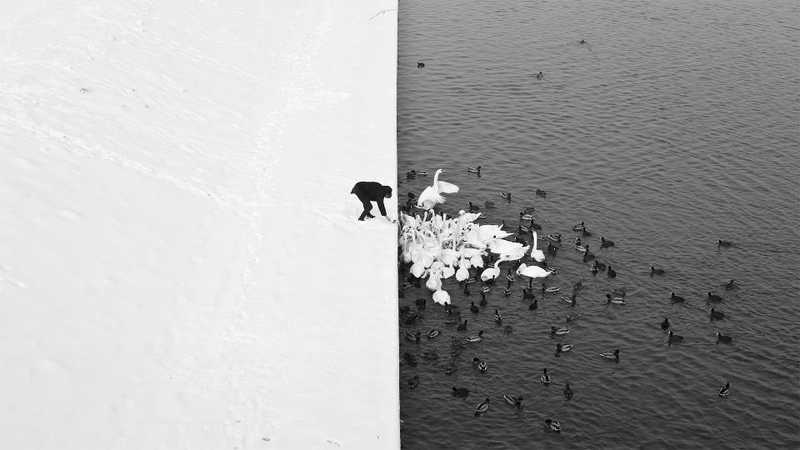
    “A Man Feeding Swans in the Snow” photo © Marcin Ryczek.

    Where we do and don’t want automation Oct 10, 2019
    Show notes

    I used to use Gmail. But one day, as I typed my mother’s email address into the “To:” field, Google popped up a prompt asking if I also wanted to CC my uncle. That was so invasive and creepy that I deleted the account immediately and never used it again. I don’t want automated intelligence in my private email.

    My friend lives in a home full of the smartest technology, and loves getting all the new smart things, but he drives a deliberately retro old car with no computer chips. He loves to tinker with his car, and wants to do any maintenance himself.

    Another friend lives in a tech-free rustic cabin with no screens, but drives a Tesla.

    I do everything on a broken old Linux laptop, using only the command line, usually offline, nothing in the cloud. I think it’s because I don’t want any outside automation or intelligence in the work that matters to me.

    When software is described as “auto-”, “smart”, or “intelligent” it means that somebody else put their rules into it. But I don’t want my computer to do anything I didn’t explicitly tell it to do. It shouldn’t change what I typed unless I tell it to. It should never guess or predict what I want. I want full manual control.

    On the other hand, I don’t mind if my phone does these things, because I don’t care about my phone much. And I would love a high-tech car, full of smart AI automation, because I’m not a car aficionado.

    At first I thought that an expert at something won’t want assistance. But no, of course, auto-pilot for airline pilots, and IDEs for programmers.

    So I think it comes down to:

    1. how much of an expert you are at controlling this thing yourself
    2. how much you still enjoy doing it
    3. if you want the kind of assistance it provides

    Any thoughts on this subject? I’d love to hear another point of view.

    robots

    Human nature to focus on the one bad thing Oct 09, 2019
    Show notes

    Today my bus was delayed, and I was really annoyed.

    Also, I got a really nasty email, which put me in a worse mood.

    No, wait, I should give the full story.

    It takes two busses to get from the airport back to my house. The first bus leaves once per hour. That connects to a second bus that leaves every five minutes.

    Today I was super-lucky and got to the first bus just before it left. If I would have emerged from the airport a minute later, I would have waited an hour for the next one.

    But then the second bus was delayed, and I had to wait about ten minutes. That’s what got me really annoyed, and feeling like today was a bad day.

    Then I got home and downloaded my emails. There were about fifty really nice ones, and one nasty one. That’s what put me in a worse mood.

    I didn’t remember until later how lucky I was to just make that first hourly bus. Then had to laugh at myself for being upset about waiting ten minutes for the next one, and upset about one stupid email among a bunch of nice ones.

    It’s human nature. We all do it. Life is wonderful, and we focus on the one thing that’s not.

    funny face

    Back and forth between super-hot and super-cold Oct 08, 2019
    Show notes

    The most relaxed feeling I know is after going back and forth between a super-hot pool and super-cold pool.

    Stay in the super-hot pool until you can’t stand it. Then go in a super-cold pool until you can’t stand it. Repeat that a few times, and you’ve never felt so relaxed.

    Today I went to the Löyly sauna in Helsinki, Finland. I stayed in the super-hot sauna room until I couldn’t stand it. Then I’d jump in the icy ocean until I couldn’t stand it. I went back and forth like this for almost two hours. It’s so wonderful.

    There was also a medium-hot sauna room. I tried that for a while, but it just felt “eh” — neither here nor there — not as fulfilling or relaxing as the extremes.

    …

    I like trying different ways to approach life.

    I’ll maximize my input for a while — say yes to everything, meet everyone, go everywhere. Then I’ll maximize my output for a while — say no to everything, and just focus on my work.

    I’ll do the domestic life for a while — with a house, car, dog, furniture, stocked kitchen, and stuff. Then I’ll give it all away, until I’m back to the one suitcase of the things I really need.

    And yes, I tend to do each one until it feels like I can’t stand it anymore.

    It’s fun to push the boundaries — to explore the edges — to see what I can do. I’ve never been interested in pursuing a normal life. There are enough people doing that. More growth and discovery seems to happen when I’m uncomfortable.

    Some people think it’s strange, and ask why I feel the need to be so all-or-nothing. They ask why I don’t just find the middle ground. (Neither here nor there.)

    But there’s something more fun and fulfilling about experiencing the more interesting extremes. Knowing I can live in these different scenarios is ultimately more relaxing.

    sauna

    Err on the side of action, to test theories Oct 07, 2019
    Show notes

    I spend a lot time thinking of alternate ways to approach life.

    I re-consider my hierarchy of values.

    When values change, the plan of action needs to change, too.

    For example, if I decide that personal growth is top priority, then I plan a life pushing outside my comfort zone. But if I decide that creative output is top priority, then I plan a tranquil life without obstacles, so I can just create.

    But the only way to decide — to not be Buridan’s donkey — is to go give it a try.

    There’s a huge difference between in-theory versus in-practice. If you’ve been deliberating on something for a while, get it out of your head, and into the world.

    If it turns out to be a mistake, that’s fine. At least you’ll know it’s a mistake in fact, instead of just in theory.

    diving

    Blowing off work to play Oct 06, 2019
    Show notes

    What do you call it when you skip school or work for a day, to do whatever you want instead? In America, we call it playing hooky. In England, we call it skiving. (Got another word for it?)

    Some of my best, most productive, and enjoyable days have been while playing hooky.

    I think it’s a healthy practice, to occasionally blow off a previous commitment, and do whatever you want instead. It’s a great reminder that you’re the boss of your life.

    But it’s interesting how productive I am on those days.

    When I think back about the times in my life where I got the most done, created the most, or had a major breakthrough in some aspect of my life, it was often while I was supposed to be doing something else.

    For example: I’d sign up for a three-day conference, show up to registration, decide I don’t want to go, then sit in my hotel room, uninterrupted, and get some great work done for three days.

    This has happened multiple times. I really should stop signing up for conferences!

    Or… Could we use this as an effective productivity technique?

    1. Sign up for something — a time commitment.
    2. Put aside the time to do it.
    3. When the day comes, feel the tension between what you said you would do, and what you really want to do.
    4. Blow it off, and do what you really want instead.

    Maybe the productivity comes from the fact that the time has already been put aside, so I suddenly have free time to do what I really wanted.

    But I suspect that when I feel that tension between the obligation and desire, it amplifies the difference, and makes it clear to me how badly I want to do this other thing. Then that amplified desire leads me to be more intense and focused in my actions.

    boy running

    What happens when we ignore plans? Oct 05, 2019
    Show notes

    I took my 7-year-old to London today. I made two plans: if it rains, we go to a museum, if not, we go to the zoo.

    But when the train arrived in London, he said he didn’t really want to do either one. So we just walked with no plans.

    We immediately ran across some random building with a big art installation on its side. There was nobody around. We played there for a long time.

    At each intersection, we just went whichever way looked most interesting. He lept around park benches, tickling some kids from Croatia. He found a huge cardboard box in the trash, and kept it around him like a turtle shell, as we walked through the city. He found a discarded paint brush and twirled it around his fingers for the rest of the day.

    We were in front of the theater with the musical “Wicked”, just as they were about to begin. We bought last-minute tickets, 8th row center, and watched the show. He held hands with a girl sitting next to him.

    I’m so glad we didn’t follow any plans today.

    We make plans to make the most of our time — but thinking again about that idea, that doesn’t make sense, does it?

    Unless we’re actually shut out of great things for lack of planning, following no plans is the ideal way to make the best of each moment. Every moment provides new information, which changes the situation. Then we can act on what we know now, instead of what we previously predicted.

    I don’t regret having plans, because sometimes following the plan is the best choice.

    So I guess the lesson is to make plans, but feel free to ignore them — to see them as an option, not a requirement.

    After eight hours of walking, we took a night train home. Tucking him into bed, I asked what was his favorite part.

    “The cardboard box.”


    Tour -isms Oct 04, 2019
    Show notes

    Since I’m living in Europe now, I thought it would be good to tour everywhere in Europe, and get to know it better.

    I’m not into seeing the sights. I don’t take photos. What I want is to get to know the mindset, the world-view of each place. The philosophy.

    So I wondered if there’s a way to tour philosophies directly. What if, instead of touring places, we toured ideas? Can I tour the “-ism”s?

    My collection of Very Short Introduction books includes:

    • Abolitionism
    • Agnosticism
    • Anarchism
    • Anglicanism
    • Antisemitism
    • Atheism
    • Buddhism
    • Calvinism
    • Capitalism
    • Catholicism
    • Communism
    • Confucianism
    • Epicureanism
    • Existentialism
    • Fascism
    • Feminism
    • Fundamentalism
    • Hinduism
    • Humanism
    • Judaism
    • Liberalism
    • Methodism
    • Modernism
    • Monasticism
    • Mormonism
    • Multiculturalism
    • Nationalism
    • Neoliberalism
    • Paganism
    • Pentecostalism
    • Populism
    • Post-colonialism
    • Post-modernism
    • Post-structuralism
    • Progressivism
    • Protestantism
    • Puritanism
    • Racism
    • Romanticism
    • Scepticism
    • Secularism
    • Sikhism
    • Socialism
    • Stoicism
    • Surrealism
    • Terrorism
    • Utopianism
    • Zionism

    Now that’s my kind of tourism!

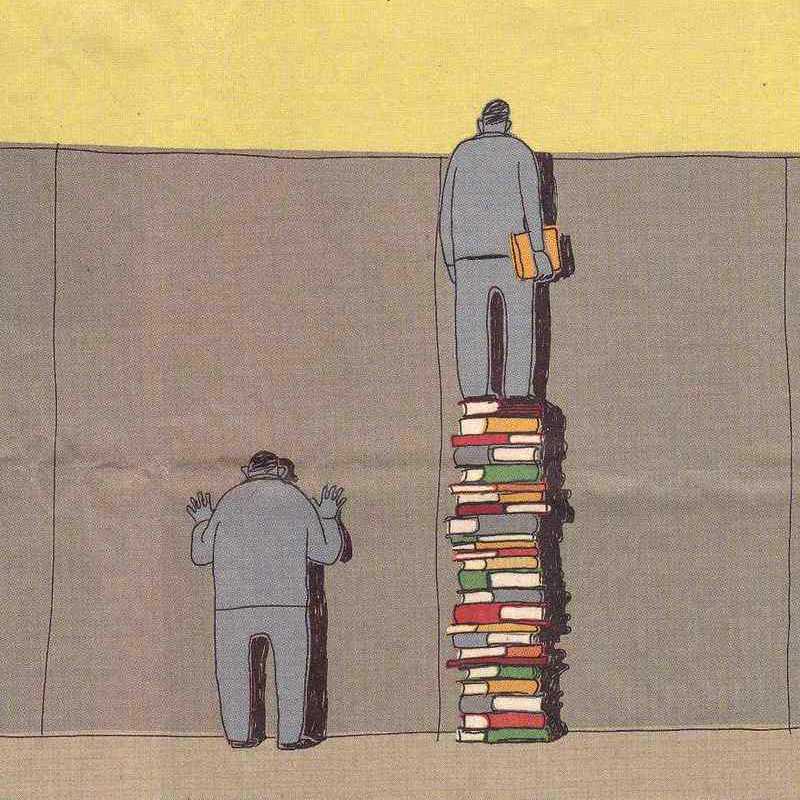
    book stand

    Meta-considerate Oct 03, 2019
    Show notes

    My friend has a huge crush on someone.

    He showers her with attention and appreciation. He remembers her preferences, and constantly gives her thoughtful gifts.

    He thinks he’s being considerate, but he’s actually being inconsiderate. Meta-inconsiderate.

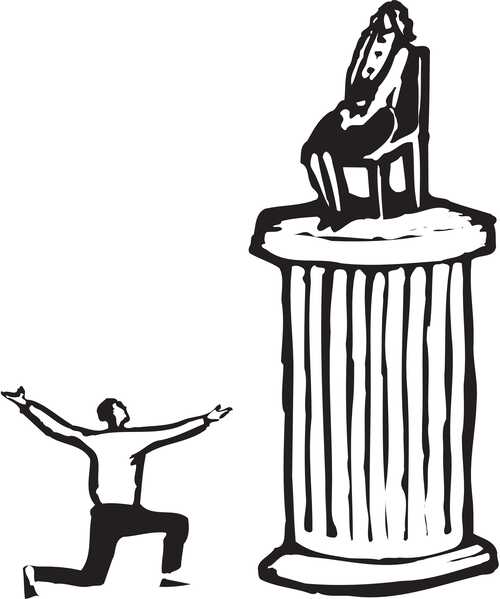
    By holding her up on a pedestal — by making it clear that he looks up to her — he’s making her look down on him.

    People want a romantic partner that’s a “catch” — someone almost out of their league. We want a good deal. We want to win someone.

    By chasing her relentlessly, he’s denying her the pleasure of desire.

    He’s not letting her dance. Since he keeps pushing forward, there’s nowhere for her to go but backward. He’s not letting her come to him.

    Being superficially considerate can be deeply inconsiderate. Doing the opposite is often ultimately more considerate. I call it meta-considerate.

    Meta-considerate by contrast:

    It’s considerate to not bore my friends with my problems. But it’s meta-considerate to tell them my problems, to let them feel needed and helpful, to let them know they’re safe to do the same.

    It’s considerate to greet someone with a smile. But it’s meta-considerate to not smile until they’ve said something, so they can feel that smile was sincerely for them, not presented to just anyone.

    It’s considerate to tell a white lie. But it’s meta-considerate to tell the uncomfortable truth.

    More meta-considerate examples:

    • The jazz club hidden behind an unmarked door.
    • The meticulous craftsman that has a 9-month waiting list because he custom-makes every order himself.
    • Musicians like Miles Davis, Joni Mitchell, and Bob Dylan, that gave nothing but the music, and didn’t ask for your love.
    • Being silent in conversation, to let your friend fill the space and share more.

    Our shallow wants and deeper needs are often opposite.

    pedestal

    Previous 1 14 15 16 17 18 39 Next

    Related Podcasts

    Making Sense with Sam Harris

    1

    Making Sense with Sam Harris Education
    Grammar Girl

    2

    Grammar Girl Education
    Good Life Project

    3

    Good Life Project Education
    Explain It to Me

    4

    Explain It to Me Education
    Team Never Quit

    5

    Team Never Quit Comedy
    Optimal Living Daily – Personal Development and Self-Improvement

    6

    Optimal Living Daily – Personal Development and Self-Improvement Alternative Health
    footer-logo

    Contact Us

    Toll Free: 844-670-7747

    Links

    • Home
    • Top Charts
    • Networks
    • Apps
    • Independents Podcasts
    • Podcast Advertising
    • Podcast News
    • Contact Us
    • About Us
    • Analytics & Insights

    Stay Connected

      Privacy, Terms of Use & Our Code of Ethics Protecting Content Creators Copyrights