TopPodcast.com
Menu
  • Home
  • Top Charts
  • Top Networks
  • Top Apps
  • Top Independents
  • Top Podfluencers
  • Top Picks
    • Top Business Podcasts
    • Top True Crime Podcasts
    • Top Finance Podcasts
    • Top Comedy Podcasts
    • Top Music Podcasts
    • Top Womens Podcasts
    • Top Kids Podcasts
    • Top Sports Podcasts
    • Top News Podcasts
    • Top Tech Podcasts
    • Top Crypto Podcasts
    • Top Entrepreneurial Podcasts
    • Top Fantasy Sports Podcasts
    • Top Political Podcasts
    • Top Science Podcasts
    • Top Self Help Podcasts
    • Top Sports Betting Podcasts
    • Top Stocks Podcasts
  • Podcast News
  • About Us
  • Podcast Advertising
  • Contact
Not in our directory?
Add Show Here
Podcast Equipment
Center

toppodcastlogoOur TOPPODCAST Picks

  • Comedy
  • Crypto
  • Sports
  • News
  • Politics
  • True Crime
  • Business
  • Finance

Follow Us

toppodcastlogoStay Connected

    View Top 200 Chart
    Back to Rankings Page
    Education

    Derek Sivers podcast

    Derek Sivers very short articles and audiobook chapters, read by Derek Sivers. Transcripts at https://sive.rs/blog

    Advertise

    Copyright: © 2022 Derek Sivers

    • Apple Podcasts
    • Google Play
    • Spotify

    Latest Episodes:
    Travel without a phone Sep 23, 2019
    Show notes

    The first time, it was an accident.

    I’d always wanted to go to Korea. I was so excited. I set out to explore and forgot my phone in the hotel.

    I walked around Seoul for twelve hours that day and experienced so many wonderful things. I remember them all vividly now, years later, but I have no photos of it.

    It was a relief to not document everything. I appreciated everything as a one-step process instead of a two-step process. I could just feel amazed, instead of feel amazed and hold up my camera to record it. Besides, how often do I look at those photos later, anyway? I find it more useful to refer to my journal of how I felt, instead of what I saw.

    A few times, GPS could have helped, but because I didn’t have it, I had to go ask strangers for directions. Getting lost led me down some great little back roads I never would have found if I was following the map.

    So now I intentionally travel without a phone.

    I feel free and untethered. A break from connection.

    Where you are is partially defined by where you are not. When you’re somewhere, you’re not somewhere else. But when you use your phone, you’re everywhere. You keep in touch with friends. You hear what’s going on at home. You see the screen exactly as you do anywhere else.

    It’s wonderful to be cut off from everywhere else — to be more fully only there.

    And it’s so nice to not know the time or where I am. Clocks and maps are useful inventions, but I see a moment better without them.

    I appreciate a moment more when I know I’ll never see it again. I remember that day in Seoul better than I remember most photo-filled travels.


    initialize Sep 22, 2019
    Show notes

    I’m starting a podcast today.

    Subscribe to https://sive.rs/podcast.rss.


    My old clothes don’t fit Jul 31, 2019
    Show notes

    I was uncomfortable, unhappy, and restless. I didn’t want to meet new people, because I felt I was giving the wrong impression. Something wasn’t right. It took me months to figure out the real problem: My clothes don’t fit anymore!

    Once I realized this, I had to decide what new clothes would fit the new me. Like many of us, I looked to the style of glamorous and successful people. I should wear what they wear since it works so well for them. I tried on many of their outfits, but nothing fit. That was really disappointing, because I thought that’s why they share their choices with the world — so we can do what they do. I thought it would be that easy.

    Eventually, after a lot of searching, I found clothes that are just my size. But I couldn’t get them on! There was no room at all. I’m embarrassed to say I overlooked something obvious. I was trying to wear new clothes on top of the old ones. I didn’t realize I had to completely remove my old clothes before putting on something new.

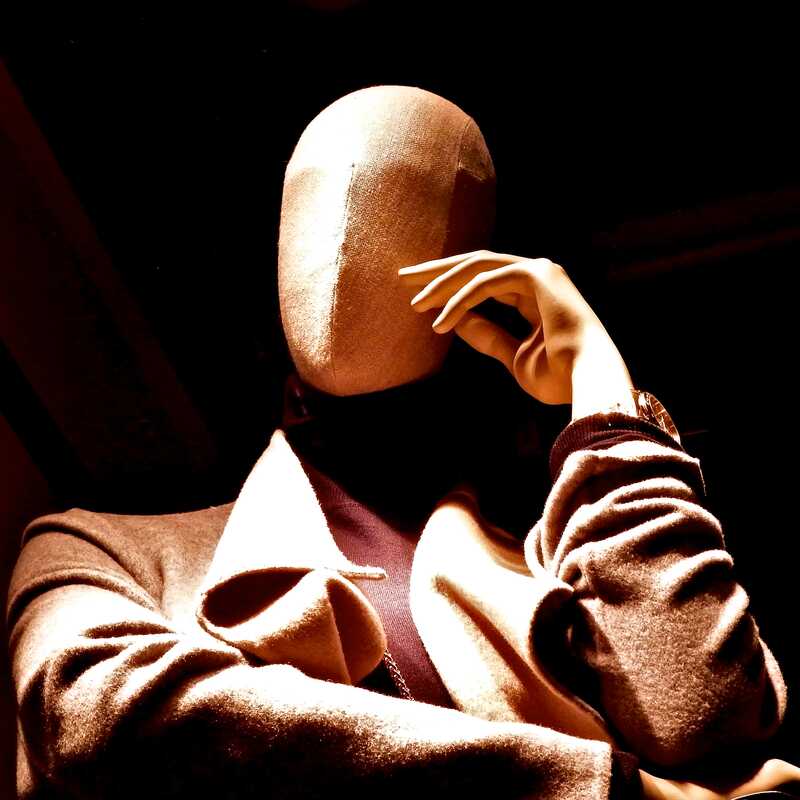
    It was easy to take off my old clothes for a few days, but just having them around made it too easy to put them on again. They were so comfortable! I’d been wearing these things for so many years that they really became my identity. If you put my old clothes on a mannequin, it would look like me. What does that say about me, then? We are what we wear? Clothes make the man?

    So, I had to completely discard them. It was sad — I thought those clothes would last forever. I documented them for archive’s sake, then gave them away. I’m glad someone else can use them.

    In this transition, before I put on my new clothes, I’m naked.

    It feels weird. I’m surprised I’m allowed to go out like this.

    Old friends hardly notice, but new people I meet are confused and can’t tell why I’m not wearing something. An outfit would show them how I can help. (And that’s all most people want to know.)

    • A power suit would show I can help their business.
    • A monk’s robe would imply I could help their soul.
    • Explorer’s gear would prove I could lead an adventure.
    • A clown costume might at least make them laugh.

    But nothing at all? They probably can’t use me for anything.

    I get invited to speak at events, but it’s clear that they really just want the outfit I used to wear. I explain that it doesn’t fit, but they’re upset that I won’t put it on just one more time.

    Don’t worry — I’m not going to be a nudist now. That’s inconsiderate to almost everyone. I’ll put on my new clothes soon.

    But I’m just sharing this story in case your discomfort might just be that your old clothes don’t fit anymore.

    mannequin Mannequin photo by Oiluj Samall Zeid

    Doors and windows and what’s real Jul 01, 2019
    Show notes

    Like everyone, I live in a little house with many doors and windows.

    One door goes out to my neighborhood. The local kids come to play with my dog. The elderly neighbors take so long to tell me their stories. I slow down my inner clock to listen.

    One window looks out at the nature around me. I’m getting to know this one tree really well. I toss a little dog food out there each day, and watch the local birds and rodents come by to eat it.

    One door is just for my son. This door goes somewhere new every time he opens it. I pause what I’m doing and follow him on an adventure. My inner clock stops working through that door.

    One door goes to my connections — the people around the world with mutual interests. A dozen people a day knock on this door and say hello. Sometimes more.

    One hidden door is for my dearest friends. That one comes all the way inside, anytime.

    One skylight looks far into the future. I daydream there a lot.

    One little locket looks at the past. I daydream there, too.

    But one door is really no fun to open. Whenever I do, I’m horrified at all the shouting. It’s an infinite dark room filled with psychologically tortured people, trying to get attention. Strangers screaming at strangers, starting fights. Businesses put windows there, showing bad things said and done today, because they make money when people get mad.

    They say I’m supposed to open that door, because that’s the real world.

    But it seems a lot less real than what’s in the other doors and windows in my life.

    doors and windows “Watching the World Go By” photo by Jocelyn Erskine-Kellie

    Benefits of a daily diary and topic journals Jan 28, 2019
    Show notes

    You know those people whose lives are transformed by meditation or yoga or something like that?

    For me, it’s writing in my diary and journals. It’s made all the difference in the world for my learning, reflecting, and peace of mind.

    After 20+ years of doing this, here’s what I do and recommend:

    A daily diary

    If digital, use only plain text. It’s a standard format not owned by any company. It will be readable in 50 years on devices we haven’t even imagined yet. Don’t use formats that can only be read by one program, because that program won’t be around in 50 years. Don’t use the cloud, unless you’re also going to download it weekly and back it up in plain text outside that cloud. (Companies shut down. Clouds disappear. Think long-term.)

    Every day at some point, just open up this diary, write today’s date, then start writing. Write what you did today, and how you are feeling, even if it seems boring.

    It works best as a nightly routine. Just take a few minutes and write at least a few sentences. If you have time, write down everything on your mind. Clear it all out. But if you miss a night, make time the next morning to write about the previous day.

    This is important because years from now you might be looking back, wondering if you were as happy or as sad as you remember during this time. So don’t only write the drama or dilemmas. Include the daily facts of life.

    We so often make big decisions in life based on predictions of how we think we’ll feel in the future, or what we’ll want. Your past self is your best indicator of how you actually felt in similar situations. So it helps to have an accurate picture of your past.

    You can’t trust distant memories, but you can trust your daily diary. It’s the best indicator to your future self (and maybe descendants) of what was really going on in your life at this time.

    If you’re feeling you don’t have the time or it’s not interesting enough, remember: You’re doing this for your future self. Future you will want to look back at this time in your life, and find out what you were actually doing, day-to-day, and how you really felt back then. It will help you make better decisions.

    Just put aside a few minutes to write what you did and how you felt today.

    “Thoughts On” journals

    There are certain subjects in your life you think about a lot. People, places, hobbies, health, plans, finances.

    For each subject that you might have ongoing thoughts about, start a separate “Thoughts On” journal. Whenever you have some thoughts on this subject, open up that file, write today’s date, then start writing.

    To give you an example, here are my “Thoughts On” journals as of today:

    • Accounting
    • Addiction
    • Airports
    • Alcohol
    • Ambition
    • Animation
    • AppDevelopment
    • Artist
    • Assistant
    • BeingSocial
    • Blog
    • BookNotes
    • BookPublishing
    • Calendar
    • Carla
    • Changes
    • Chess
    • Chinese
    • Cities
    • Comedy
    • Comparing
    • Computers
    • Conferences
    • Countries
    • Dance
    • Dog
    • Entrepreneur
    • Erika
    • Europe
    • EventStrategy
    • Expat
    • ExploreExpand
    • Fame
    • Fan
    • Friends
    • Goals
    • Gratification
    • Habits
    • Home
    • IdealMe
    • Image
    • Infrastructure
    • Intense
    • Interviews
    • Investing
    • Ireland
    • Kissing
    • LanguageLearning
    • LateralThinking
    • LifeAlgorithms
    • MakeIdeas
    • Manners
    • MobileAppDev
    • Money
    • Music
    • MyPeople
    • Need
    • NewZealand
    • Noise
    • OS
    • Oxford
    • Parenting
    • Phone
    • PhoneNumbers
    • Places
    • Plan
    • Poor
    • Portugal
    • Potential
    • Programming
    • PublicMe
    • RV
    • Regrets
    • Relationship
    • Renting
    • Romance
    • Routine
    • Secrets
    • Sex
    • Singapore
    • Skills2Learn
    • Social
    • Solitude
    • Songwriting
    • Speaking
    • Strength
    • Surprise
    • Teachers
    • Tech
    • ThinkingSelf
    • Thrifty
    • Travel
    • VirtualReality
    • Vision
    • Website
    • WorthDoing
    • Writer

    I find it so useful to keep my thoughts on each subject together, because I can see my past thoughts and current thoughts in one place. I can see how my thoughts on this subject have evolved or keep repeating. Sometimes I think I have a new thought on a subject, so I open up the file and write it down, then afterwards I see I had that same thought a year ago and had forgotten about it. If you care about your thoughts, keep them.

    They can be tiny. Like you see I have one on airports. I don’t have many thoughts on airports. I don’t fly that much. But I found that once or twice a year, when waiting at the gate, I had thoughts on the subject, so I’d open that file and start writing.

    I’ve considered making one for every musician, album, book, or film that’s had an impact on me, that I’d like to think more about. Why not? I admire the way that a good critic puts in hours of reflection on each piece, thinking deeper about something they’ve just taken in.

    I especially like my “Regrets” journal. Whenever I do something I regret, I write it down there, noting why I regret it, what I wish I would have done instead, and how I hope to prevent this in the future.

    Ask yourself questions, then question your answers.

    Whether in your daily diary, or the “Thoughts On” journals, I find the single most useful thing has been using it as a place to ask myself questions, and answer them.

    If I’m planning on doing something, I ask myself what I hope to get out of it, why, and whether there are other ways to get what I want.

    When I’m feeling conflicted, especially, I’ll ask myself a bunch of questions to work through my feelings, looking for the source of the conflict, then ask myself more questions around the clash in values, and work through other alternate ways I’d like things to be.

    I answer with my initial thought first, but then question it afterwards with skepticism, and consider different perspectives. I hear this is similar to cognitive behavioral therapy — and I’ve been meaning to learn more about that. But whatever you call it, I think it’s been the single most important thing to my intellectual and emotional development.

    Almost all the thoughts I have on any subject are the result of writing in my diary and journals, then questioning myself and working through alternate ways of thinking about it, and finally returning to the subject days or months later with a clear head and updated thoughts, seeing how they’ve changed or not over time.

    I hope it helps you too.


    Subtract Dec 05, 2018
    Show notes

    Life can be improved by adding, or by subtracting. The world pushes us to add, because that benefits them. But the secret is to focus on subtracting.

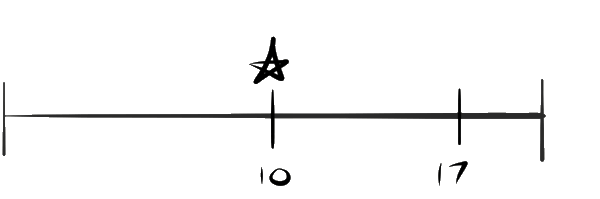
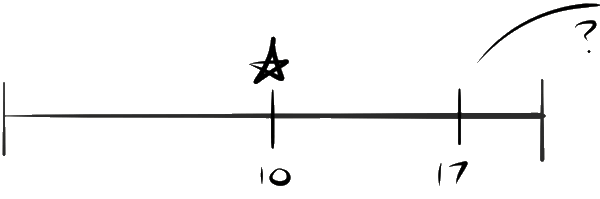
    Imagine a number line, with 0 on the left and 20 on the right. Say I want to be in the middle, at 10. But I’m at 17.

    “What can I add to get to 10? I tried adding 8 but that didn’t work. Maybe 3 would help. I should go all out and add 50.”

    No amount of adding will get me to where I want to be.

    The adding mindset is deeply ingrained. It’s easy to think I need something else. It’s hard to look instead at what to remove.

    The least successful people I know run in conflicting directions, are drawn to distractions, say yes to almost everything, and are chained to emotional obstacles.

    The most successful people I know have a narrow focus, protect themselves against time-wasters, say no to almost everything, and have let go of old limiting beliefs.

    More people die from eating too much than from eating too little. Most of us have too much baggage, too many commitments, and too many priorities.

    Subtracting reminds me that what I need to change is something already here, not out there.


    The art of selfishness Nov 18, 2018
    Show notes

    David grew up in St. Louis, Missouri, USA, with five brothers and sisters.

    When he was 18, he got accepted to a very prestigious art school in Vienna. Vienna! This was his dream come true! He had wanted this so badly, but never thought he’d actually get accepted. This was an amazing once-in-a-lifetime opportunity.

    But his mother was on her death bed. An undiagnosable illness seemed like it was going to take her at any time. All of her children were visiting her every day.

    When he mentioned that he got accepted to the art school in Vienna, everyone said, “Well of course you can’t go! You need to stay here with your mother during her final days!”

    He was very conflicted and felt horrible about this, but still felt that he had to accept the offer. So he moved to Vienna.

    His mother disowned him. His brothers and sisters screamed about his selfishness, and didn’t speak to him for years. Everybody told him what a horrible person he was.

    David told his story at the age of 38 and said, “And now, 20 years later, my mother is still alive. I’ve followed my dreams, had a great career and an amazing life, while my brothers and sisters have given up their whole lives to stay by my mother’s bed, still to this day.”

    The David in this story is David Seabury, who changed thousands of people’s lives. It’s from his book “The Art of Selfishness”, which I found on my grandmother’s bookshelf when I was 18. I’ve thought about it constantly since then.


    You don’t need confidence, just contribution. Aug 06, 2018
    Show notes

    Years ago, I was so confident and so naive. I was sure I was right and everyone else was wrong.

    After I sold my company, I felt ready to do something new, so I started to learn. But the more I learned, the more I realized how little I knew and how dumb-lucky I had been.

    I continued learning until I felt like an absolute idiot. By then I was paralyzed, unable to create anything new.

    I’d start to make new things, but then see how stupid they revealed me to be, so I’d stop. I lost all confidence. I spent a few years completely stuck.

    Eventually, some new thoughts helped:

    • Learning without doing is wasted. If I don’t use what I learn, then it was pointless! How horrible to waste those hundreds of hours I spent learning, and not turn it into action. Like throwing good food in the trash, it’s morally wrong.
    • This isn’t about me. How I feel in this moment doesn’t matter — it will pass. Nobody’s judging me because nobody’s thinking of me. They’re just looking for ways to improve their own lives. The public me is not the real me anyway, so if they judge my public persona, that’s fine.
    • The work is the point, and my work is unique. If I can do something that people find useful, then I should. It doesn’t matter if it’s a masterpiece or not, as long as I enjoy it. I’ve got my own weird angle on things that’s a useful counter-melody in the big orchestra of life.

    I’m glad my old confidence is gone because it thought I was right, and maybe even great, but not anymore.

    Now I aim to make my work — my little contribution to the world — just unique and useful.


    Unlearning Jun 07, 2018
    Show notes

    Things I learned in the past are now wrong. Times have changed.

    Beliefs that were true are now false. They were based on old limitations that are now gone.

    Ways that used to work don’t work anymore. The old road collapsed. There’s a tunnel through the mountain now. When the old map is wrong, we can’t just draw a new line on it — we need to get a new map or we’ll be following closed roads.

    Sometimes the world is the same, but my situation has changed. What got me here won’t get me there.

    The solution is deliberate unlearning.

    1. Doubt what I know.
    2. Stop the habit of thinking I know it.
    3. Require current proof that it’s still true today. Otherwise, let it go.

    Where I had expertise before, I don’t now. People ask my advice on things I knew well years ago. It’s tempting to think I still know the answer, but instead I have to admit, “Sorry. I don’t know.”

    It hurts to go from feeling like an expert to feeling like an idiot. But it’s crucial to go through that pain or I’ll never grow.

    John Cage said, “I can’t understand why people are frightened of new ideas. I’m frightened of the old ones.”

    Alvin Toffler said, “The illiterates of the 21st century will not be those who cannot read and write but those who cannot learn, unlearn, and relearn.”

    Many people learn only in their first third of life, so schools don’t teach unlearning.

    We want to see the world clearly and know what’s what. But once we’re past the first stage of wisdom, the next stage involves adapting to new changes.

    We don’t get wise just by adding and adding. We also need to subtract.


    If you’re not feeling “hell yeah!” then say no Jun 03, 2018
    Show notes

    Most of us have lives filled with mediocrity. We said yes to things that we felt half-hearted about.

    So we’re too busy to react when opportunities come our way. We miss out on the great because we’re busy with the mediocre.

    The solution is to say yes to less.

    If you’re not feeling “Hell yeah, that would be awesome!” about something, say no.

    It’s an easier decision. Say no to almost everything. This starts to free your time and mind.

    Then, when you find something you’re actually excited about, you’ll have the space in your life to give it your full attention. You’ll be able to take massive action, in a way that most people can’t, because you cleared away your clutter in advance. Saying no makes your yes more powerful.

    Though it’s good to say yes when you’re starting out, wanting any opportunity, or needing variety, it’s bad to say yes when you’re overwhelmed, over-committed, or need to focus.

    Refuse almost everything. Do almost nothing. But the things you do, do them all the way.


    Previous 1 16 17 18 19 20 39 Next

    Related Podcasts

    Making Sense with Sam Harris

    1

    Making Sense with Sam Harris Education
    Grammar Girl

    2

    Grammar Girl Education
    Good Life Project

    3

    Good Life Project Education
    Explain It to Me

    4

    Explain It to Me Education
    Team Never Quit

    5

    Team Never Quit Comedy
    Optimal Living Daily – Personal Development and Self-Improvement

    6

    Optimal Living Daily – Personal Development and Self-Improvement Alternative Health
    footer-logo

    Contact Us

    Toll Free: 844-670-7747

    Links

    • Home
    • Top Charts
    • Networks
    • Apps
    • Independents Podcasts
    • Podcast Advertising
    • Podcast News
    • Contact Us
    • About Us
    • Analytics & Insights

    Stay Connected

      Privacy, Terms of Use & Our Code of Ethics Protecting Content Creators Copyrights