TopPodcast.com
Menu
  • Home
  • Top Charts
  • Top Networks
  • Top Apps
  • Top Independents
  • Top Podfluencers
  • Top Picks
    • Top Business Podcasts
    • Top True Crime Podcasts
    • Top Finance Podcasts
    • Top Comedy Podcasts
    • Top Music Podcasts
    • Top Womens Podcasts
    • Top Kids Podcasts
    • Top Sports Podcasts
    • Top News Podcasts
    • Top Tech Podcasts
    • Top Crypto Podcasts
    • Top Entrepreneurial Podcasts
    • Top Fantasy Sports Podcasts
    • Top Political Podcasts
    • Top Science Podcasts
    • Top Self Help Podcasts
    • Top Sports Betting Podcasts
    • Top Stocks Podcasts
  • Podcast News
  • About Us
  • Podcast Advertising
  • Contact
Not in our directory?
Add Show Here
Podcast Equipment
Center

toppodcastlogoOur TOPPODCAST Picks

  • Comedy
  • Crypto
  • Sports
  • News
  • Politics
  • True Crime
  • Business
  • Finance

Follow Us

toppodcastlogoStay Connected

    View Top 200 Chart
    Back to Rankings Page
    Education

    Derek Sivers podcast

    Derek Sivers very short articles and audiobook chapters, read by Derek Sivers. Transcripts at https://sive.rs/blog

    Advertise

    Copyright: © 2022 Derek Sivers

    • Apple Podcasts
    • Google Play
    • Spotify

    Latest Episodes:
    Scuba, panic, empathy Jul 26, 2022
    Show notes

    I used to scoff at those people who had panic attacks. “The cake is late! Oh no! I’m freaking out! I can’t breathe!” Ridiculous. Hysterical. Over-reacting.

    I was learning scuba diving, and went on my first practice dive. While I was 15 meters underwater, I felt a sudden need to get out of there. My heart raced. Alarms in my brain. My body filled with terror. I raced up to the surface and pulled off my mask.

    The instructor came up, so I told him, “I need to go. I hate this. I’ll just wait on the shore.” He calmly looked at me for a few seconds and said, “Here. Wait. Look around. See that mountain? What a nice day. Everything is OK. You’re safe. Let’s just relax here together.” It worked. After a while, I felt better, and finished our dive.

    Later I realized I had a panic attack. This messed with my self-identity. I thought only weak, dramatic, hysterical people did that. But now I had, and it was involuntary. Hmm.

    The next day, I went on my first real dive with a group of ten tourists, including a German couple that bragged about how many dives they had done. Underwater, I felt no fear — just joy.

    Down deep at 20 meters, I saw the German girl, and gave her the hand signal for “OK?” — a common diver courtesy. She replied back with the hand signal for “NOT OK! SOMETHING WRONG!”, and gave me a panicked look. Her boyfriend was not around. I followed the training I had just learned, and brought her slowly to the surface.

    She pulled off her mask and said, in a panic, “I hate this. Too cold. Too much. No no. I need to go now.” I recognized this! This was exactly how I had felt the day before. I remembered how my instructor had calmed me down, so I imitated my instructor exactly. I said, “Here. Wait. Look around. See that mountain? What a nice day. Everything is OK. You’re safe. Let’s just relax here together.” After a while, her boyfriend arrived, so I went back to my dive.

    Those two days taught me two kinds of empathy.

    You might categorize a type of person that’s so unlike you — a type of person that you will never ever be. Depressed. Disabled. Fat. Divorced. Bankrupt. Homeless. Addict. But these categories are usually involuntary. Don’t judge. Some day, they might be you.

    You might also categorize another type of person that you think you will never be. Rescuer. Leader. Athlete. Boss. Millionaire. Even these categories can be involuntary — someone just responding to a situation. But you can deliberately step into a role through imitation.

    We’re not so different.

    Iceland Silfra underwater (Note: originally posted 2021-11-17, then rewritten, simplified, on 2022-07-26.)

    Writing one sentence per line Jun 20, 2022
    Show notes

    My advice to anyone who writes: Try writing one sentence per line. I’ve been doing it for twenty years, and it improved my writing more than anything else.

    New sentence? Hit [Enter]. New line.

    Not publishing one sentence per line, no. Write like this for your eyes only. HTML or Markdown combine separate lines into one paragraph.

    Why is it so useful?

    It helps you judge each sentence on its own.

    We sometimes write sentences that don’t need to exist. Hidden in a paragraph, we might not notice. Standing on their own, we notice. Delete any sentence not worthy of its own line.

    It helps you vary sentence length.

    We need to vary the lengths of our sentences. Sometimes short. Sometimes long. Yes it really helps to read it out loud, but it’s even clearer to see it on the page like this.

    ***********
    ***
    ***
    ***************

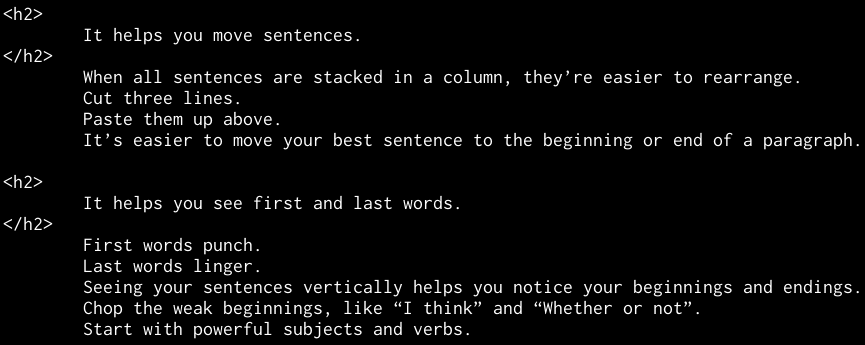
    It helps you move sentences.

    When all sentences are stacked in a column, they’re easier to rearrange. Cut three lines. Paste them up above. It’s easier to move your best sentence to the beginning or end of a paragraph.

    It helps you see first and last words.

    First words punch. Last words linger. Seeing your sentences vertically helps you notice your beginnings and endings. Chop the weak beginnings, like “I think” and “Whether or not”. Start with powerful subjects and verbs.

    screenshot of text with one sentence per line


    The joke that changed my life Jun 19, 2022
    Show notes

    Growing up in America, I didn’t know much about other cultures.

    When I was 25, my band got some gigs in Europe — my first time there. It was 1995. The European Union was new. I heard a street performer in Copenhagen tell this joke:

    “The EU will be a success if …

    • the British are the police
    • the French are the chefs
    • the Italians are the lovers
    • and the whole thing is organized by the Germans.”

    “The EU will be a disaster if …

    • the British are the chefs
    • the French are the police
    • the Germans are the lovers
    • and the whole thing is organized … by the Italians.”

    The European crowd all laughed. They seemed to know the stereotypes in the joke. But I was confused. I could figure out the French chef and Italian lover, but the rest were a mystery.

    That night I bothered my Danish host for hours, asking him many questions like, “Do the French have bad police? Why are the Germans supposed to be so organized?” He was patient and tried to explain. The stereotypes had no malice. It was an affectionate tolerance, like we are with family members. Mom always loses her keys. Uncle burns whatever he cooks. Maybe it only happens sometimes, but enough to earn a reputation for it, which is enough to be teased for it.

    But how can a whole culture earn a reputation? Why are some cultures one way, and other cultures another way? What makes millions of people in an area have similar behaviors?

    Religion? A historical event that changed everyone’s actions and beliefs for a generation? Or is it actually just false, and based on one popular movie, like thinking all Australians are Crocodile Dundee?

    They say that America is more individualist and China is more collectivist. But why? Does the influence of cowboys or Confucius still shape everything? Or is that the easy-but-wrong answer?

    I have hundreds of questions like this, and I’ve been pursuing the answers ever since — for 27 years now! All because of that joke.

    The best explanations I’ve found so far are the books “Au Contraire! Figuring out the French” and “Watching the English”. Please let me know of any other great answers.

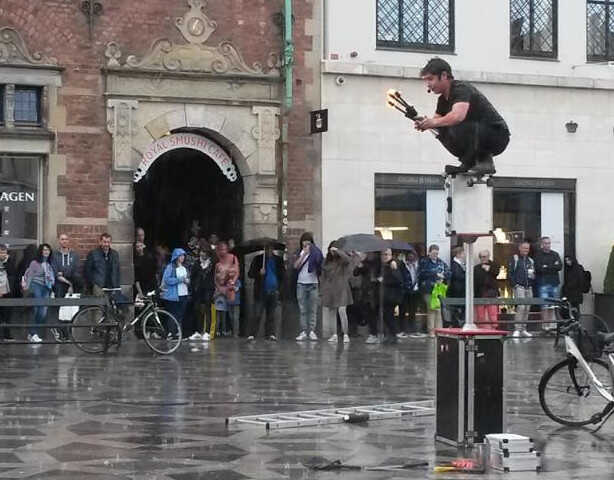
    busker in Copenhagen
    Photo of Piper Mckenzie by Dawn.


    Ancestors, Luck, and Descendants Mar 24, 2022
    Show notes

    My Sivers ancestors came from Grantham, Lincolnshire, England on a boat to America in 1849. The boat crashed on rocks in the Irish sea, caught fire in the Atlantic Ocean, got pushed off course repeatedly by storms, and finally landed in New Orleans after two months. New Orleans was overcome with cholera, so they hopped a steam boat up the Mississippi River to St. Louis. Cholera killed nine passengers and the pilot of the boat. Days after they arrived in St. Louis, the city caught fire so they escaped in a covered wagon to Glenwood Iowa, finally arriving after three more months. In 1890, one of their sons ventured to the wild west of Colorado to pursue an opportunity.

    Four of my great-grandparents came separately from Sweden to America around 1910. Two were poor farmers, two were middle-class urbanites, but all four were ambitious for prosperity abroad. They met in Colorado and Oregon, where my grandparents were born. After serving in World War Two, my grandparents moved to Portland to pursue an opportunity, with $25 to their name.

    My parents met in high school in Portland in the 1960s. My dad is a particle physicist, but wanted to be more outgoing. My mom was homecoming queen, but wanted to be more intellectual. I was born in California in 1969, with a temperament somewhere in between.

    Forty years later, a friend asked why I’ve been successful in life. I said I’ve just been ridiculously lucky.

    He said, “No. Your success has come from choices, not luck.”

    I said, “I disagree! What about being born in America? That wasn’t a choice! That’s luck.”

    He said, “No! Your ancestors left a comfortable place to move to a scary unknown place because they felt it would lead to a better life for their descendants. To call your birth place luck is to disregard their foresight and sacrifice. Same with their choice of a spouse, how they raised their kids, and whether they saved for their kids’ future, or squandered it on themselves. None of that was luck.”

    OK. Good point. It’s wrong to say our outcomes are all luck or no luck.

    I still think most of my success was just luck. But it’s nice to acknowledge that the choices of your ancestors led to the circumstances of your life.

    And the choices you make will affect the lives of your descendants for many generations to come.


    Why I left America Mar 09, 2022
    Show notes

    I was living on the beach in Santa Monica, California, and life was perfect. I was in paradise, and deeply happy.

    Friends wanted to travel, but I had no interest. I had already lived a few years each in New York City, Boston, Chicago, Portland, and San Francisco. Santa Monica was perfect. I loved the weather, the people, the lifestyle, the business opportunities, and everything. It was the best place on earth.

    But I always want to learn and grow. To grow intellectually, you need to be surprised. If we’re not surprised, we’re not really learning. We may add new information, but not really update our understanding of the world. No “Wow!” No “Aha!”

    To keep learning and growing, we should always seek out new perspectives. Appreciate music, food, and experiences we initially dislike. Read about subjects we know nothing about. Understand people we disagree with. Take on new challenges. Avoid routine.

    I started feeling like my happiness and comfort — my feeling that things here are the way they should be — might make me stagnate, plateau, or atrophy.

    Yes I could have forced myself to learn and grow from home. But I’d be fighting the gravity that pulls me into my comfortable chair and routines. I wanted an environment that forces me to grow. Somewhere full of daily surprises, whether I seek them or not.

    So I forced myself to leave America. Leave my comfort zone. I considered finding new perspectives inside America, living in Texas, Louisiana, South Carolina, New Mexico, and Alaska. But why the artificial boundary? Why not Turkey, Nigeria, Finland, Indonesia, Israel, China, and Brazil?

    Places have a living philosophy. I wanted to understand these different approaches to life. I wanted them to also feel like home.

    So I set off into the world, with that goal. Move to a place that feels strange, until it feels like home. Constantly learning and growing. Then do it again, pursuing discomfort, until the whole world is my home.

    For another side to this story, read “Why I let go of my U.S. citizenship”.

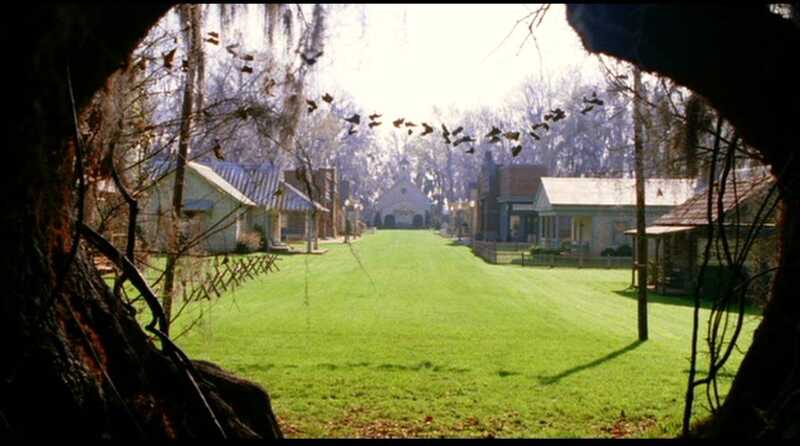
    scene from the movie Big Fish

    (This picture is from the movie “Big Fish”, where at the beginning of the hero’s journey, he finds a paradise, and everyone there begs him to stay, but he says, “I’m sorry, I may never find a place this nice again, but I need to go out into the world and have my adventure.”)


    Balance everything. Dec 27, 2021
    Show notes

    Here’s how to live: Balance everything.

    All bad things in life come from extremes.
    Too much of this.
    Too little of that.

    When we lack balance, we’re upset.
    Over-worked, under-loved, over-eating, under-sleeping.
    Focused on wealth, but ignoring health.
    Focused on the present, but ignoring the future.

    Even positive traits, when taken too far, become negative.
    Like when someone is generous to a fault, or amusing to a fault.
    Too much of a specific strength is a weakness.
    If you rise to great heights in only one area, you’re a one-legged giant: easily toppled.

    Notice the similarities in the physical and emotional definitions.
    Physical upset: to knock something over.
    Emotional upset: to be disturbed.
    Physically unstable: likely to fall.
    Emotionally unstable: prone to dangerous, impulsive behavior.
    All related to a lack of balance.

    When you’re balanced, you’re unlikely to get stressed.
    You’ve got a stronger foundation and a resilient structure.
    You can handle surprises, and make time for what’s needed.

    Virtue is in the balance between extremes.
    Between the insecure and the egomaniac: confidence.
    Between the uptight and the clown: grace.
    Between the coward and the daredevil: courage.
    Between selfishness and sacrifice: generosity.

    So, the way to live is to balance everything.

    Imagine the different aspects of your life as the spokes in a wheel: health, wealth, intellectual, emotional, spiritual, or however you divide it.
    If any of these are lacking, it makes a lopsided, wobbly wheel, causing you to crash.
    But if you keep the parts of your life balanced, your wheel is round, and you can roll easily.

    You have different sides to your personality, with conflicting needs.
    Instead of ignoring one, make sure you balance them.
    Balance time with others and time alone.
    Balance your need for stability with your need for surprise.
    Balance input and output, consumption and creation, stability and adventure, body and spirit.
    Your opposing needs become each other’s remedy.

    Work more on your weaknesses.
    Someone who’s rich but fat has different needs than someone who’s fit but broke.
    Remember the spokes of the wheel.

    The best tool for a balanced life is the clock.
    Like a hunter’s dog, the clock will be your best ally.
    It will guard you, keep your impulses in check, and protect what’s important to you.

    Schedule everything to ensure balance of your time and effort.
    Scheduling prevents procrastination, distraction, and obsession.
    A schedule makes you act according to the goals of your highest self, not your passing mood.

    Schedule quality time with dear friends.
    Schedule preventative health checkups.
    Schedule focused time to learn.
    Schedule each aspect of your life, ignoring none.
    List what makes you happy and fulfilled, then schedule those things into your year.

    The balanced schedule protects you from hurting yourself, from getting overwhelmed and ignoring important needs.
    You won’t over-work, over-play, or over-indulge.

    Even creative work needs scheduling.
    The greatest writers and artists didn’t wait for inspiration.
    They kept a strict daily schedule for creating their art.
    A routine triggers inspiration because your mind and body learn that ideas emerge at that time.
    The world’s greatest achievements were squeezed into existence by deadlines.

    Set an alarm to start and stop on time.
    Obey your schedule, no matter how you feel.
    Schedule every hour of your day.
    Distraction steals what’s not locked down.

    Once you’re living a balanced life, find new layers.
    The wheel has infinite spokes.

    Balance your needs versus the needs of others.

    Balance your knowledge.
    Read books on core subjects you know nothing about.

    Balance your political opinion.
    Talk with smart people in the opposite camp until you’re not opposite anymore.

    Balance the abilities of your body.
    Improve your flexibility, strength, coordination, and ability to perform different types of movements.

    Balance two languages.
    A second language is one of the best things for your brain, and can add a new type of balance, like living half the year in another culture, speaking only your other language.

    Balance your response to situations.
    Do you tend to change yourself, change the environment, or change nothing and leave?
    Find which you do too much and which you don’t do enough, then rebalance.

    Finally, balance the world.
    Help lift up those who have been pushed down.
    Counterbalance sexism, racism, and religious discrimination.
    Feed the hungry.
    Balance justice.
    Balance human nature.

    By balancing everything in your life, you postpone nothing.
    You won’t postpone happiness, dreams, love, or expression.
    You could die happy at any time.

    Balancing everything is how to live.


    Make change. Dec 26, 2021
    Show notes

    Here’s how to live: Make change.

    Change the world as much as you can.
    All your learning and thinking is wasted if you don’t take action.
    People try to explain the world, but the real point is to change the world.

    If you go through life without changing anything, what have you done?
    Just observed?!
    The world doesn’t need more audience.
    The world needs changing.
    What’s broken needs fixing.
    What’s OK needs improving.
    What’s harmful needs destroying.

    People dream or complain about how the world should be, but nothing improves without action.
    You have to go change things yourself.

    People say the world is the way it is, and that’s just how it’s going to be.
    They’re hopeless, complacent, or entrenched.
    They expect life to stay within its current boundaries and rules.
    But all progress comes from those who ignore the boundaries, break the rules, or make a whole new game.

    Don’t accept anything as-is.
    Everything you encounter must change.
    Preservation is your enemy.
    Only dead fish go with the flow.

    Think of the scientific method.
    Someone proposes an idea, then others skeptically and rigorously try to disprove it.
    Use this approach on the world.
    Assume everything is wrong the way it is.
    Doubt it and attempt to change it, to prove it’s not correct.

    This is how we make progress.
    What fails is forgotten.
    What works is called innovation.

    Begin by righting what’s wrong.
    Look for what’s ugly: ugly systems, ugly rules, ugly traditions.
    Look for what bothers you.
    If you can fix it, do it now.
    Otherwise, aim lower until you find something you can do now.
    Make it how it should be.
    Don’t complain.
    Just make the change.

    This gives you a new perspective on work.
    Work is whatever you want to change.

    Remove what needs to die.
    Instead of fixing, destroy what was there and replace it with something better.
    Sometimes you don’t know what to add, but you know what to remove.

    Worried you’ll make things worse?
    Who’s to say whether the change you’ll make is good or bad?
    Only time will tell.
    Genghis Khan killed 11% of the world’s population, but he’s seen as having a net-positive influence on the world in the long run.
    Yet people with the best intentions can end up doing harm.
    So stop judging and start changing the world any way you can.

    Rearrange and remix.
    That’s how nature grows.
    A cow is rearranged grass.
    All the atoms get reused.
    Every time you hear a song, watch a show, or read an idea, think of how you’d change it or combine it with something else.
    Keep your tools handy to rearrange, remix, and edit what you encounter.
    Then share your alterations.

    Don’t worship your heroes.
    Surpass them.

    Changing the world includes changing yourself.
    Change your beliefs, preferences, acquaintances, hobbies, location, and lifestyle.
    Your only constant habit will be looking for what else to change.

    Change others.
    Changing minds and hearts can have more impact than physical change.
    A great speech can do the work of a thousand soldiers.

    Go where there’s a revolution.
    That’s where people are questioning old norms, and looking for new solutions.
    Creativity comes from shaking things up.
    People that were left out of the old game can get in early on the new game.

    After years of doing this, you’ll be ready to make institutional change.
    How?
    By using the techniques of lobbyists.
    Set up a company or foundation to act through.
    Make institutional change anonymously from behind the company, so your personality is not distracting the point.
    Call it something generic and impossible to oppose, like “Better World LLC”.
    Keep your public profile small.
    Be humble and likable.
    Prevent the straw man attack.
    For each change you seek to make, find someone effective to be the face for the campaign.
    Let the company and its contributors make the change.
    Stay behind the scenes and quietly pull the strings.

    Changing culture makes revolution.
    But it’s not a revolution if nobody loses.
    Someone will have to lose.
    People will be furious.
    When the bad people are mad, you’re doing it right.

    In the end, the highest praise of a life is to say that person “made a difference”.
    Difference!
    Do you hear that word?
    Difference refers to what’s changed.
    To live a praise-worthy life, to make a difference, you have to make change.


    Make a million mistakes. Dec 25, 2021
    Show notes

    Here’s how to live: Make a million mistakes.

    You learn best from your mistakes.
    This is true.
    So you should deliberately make as many mistakes as possible.

    Try absolutely everything, all the time, expecting everything to fail.
    Just make sure that you capture the lessons from each experience.
    And never make the same mistake twice.

    You’ll be extremely experienced.
    You’ll get incredibly smart.
    You’ll learn more lessons in a day than others learn in a year.

    Deliberate mistakes are inspiring.
    Trying to write a great song is hard.
    Trying to write a bad song is easy and fun.
    You could do it in one minute, right now.

    Writers say you should quickly finish a bad first draft, because it gets the idea out of your head and into reality, where it can then be improved.
    Live your whole life this way.
    Jump into action without hesitation or worry.
    You’ll be faster and do more than everyone else.
    What takes them a month will take you an hour, so you can do it ten times a day.

    Do what everyone says not to.
    Ignore every warning so you can find out for yourself.
    Learn by hands-on experience.
    The more mistakes you make, the faster you learn.
    Once you’ve made all the mistakes in a field, you’re considered an expert.

    See, you only really learn when you’re surprised — when your previous idea of something was wrong.
    If you’re not surprised, it means the new information fits in with what you already know.
    So try to be wrong.
    Try to disprove your beliefs.
    Never believe something on faith.
    Prove it or disprove it.
    While other people have one idea that they think might work, you will have thousands you can prove didn’t work, and one you couldn’t make fail.

    Just keep a log.
    A mistake only counts as experience if you learn from it.
    Record what you learned, and review it.
    Otherwise, it was a waste.

    Take on big challenges.
    Start a company in Silicon Valley.
    Ask investors for millions.
    Audition for Hollywood movies.
    Invite your dream date to dinner.
    While everyone else is nervously preparing, you jump right in, unafraid to fail.

    Create predicaments.
    Get into trouble.
    Being desperate leads to creative solutions.

    This gives you emotional stability.
    No mistake will upset you.
    You’ll never think that a failed attempt means you’re a failure.

    The people devastated by failure are the ones who didn’t expect it.
    They mistakenly think failure is who they are instead of the result of one attempt.
    If you’re prepared for endless failures, you’ll never think of yourself as a failure.

    There’s only one difference between a successful person and a failure.
    A failure quits, which concludes the story, and earns the title.

    Your growth zone is your failure zone.
    Both are at the edge of your limits.
    That’s where you find a suitable challenge.
    Aim for what will probably fail.
    If you aim for what you know you can do, you’re aiming too low.

    It’s easy to make a robot that walks.
    It’s hard to make a robot that can’t be knocked down.
    Same with people.
    People who avoid mistakes are fragile, like the robot that only walks.
    Your million mistakes will make you someone that can’t be knocked down.

    Mistakes are the fountain of youth.
    The old and successful get fragile.
    They think they know everything.
    They over-invest in one solution.
    They have only answers, not questions.
    If you’re never wrong, you never change.
    Keep making mistakes, so you can keep changing, learning, and growing.

    Share your stories from all your mistakes for the benefit of the world.
    Every plane crash makes the next one less likely.


    Don’t die. Dec 24, 2021
    Show notes

    Here’s how to live: Don’t die.

    There’s only one law of nature: if you survive, you win.

    Be paranoid.
    Avoid failure to survive.

    For something to succeed, everything needs to go right.
    For something to fail, only one thing needs to go wrong.

    Don’t try to be more right.
    Just be less wrong.

    Avoiding failure leads to success.
    The winner is usually the one who makes the least mistakes.
    This is true in investing, extreme skiing, business, flying, and many other fields.
    Win by not losing.

    Most people die of cancer and heart disease.
    So yes, avoid that.
    But those who die from accidents die younger, losing more years of potential life.
    So try even harder to avoid accidents.
    Reduce risks.

    What do you want out of life?
    That’s hard to answer.
    What don’t you want?
    That’s easy.

    More than anything, we want a lack of negatives.
    A life with no pain, no injury, no regrets, and no disaster is a good life.
    It’s easy to find joy in everyday things, if you can just avoid the bad.

    Bad has more power.
    Insults affect you more than compliments.
    Injuries affect you more than back rubs.
    Poison affects you more than medicine.
    A great relationship or reputation built over years can be destroyed by one bad deed.
    An otherwise perfect meal can be wrecked by one cockroach on the plate.

    But a lack of negatives is harder to talk about.
    So people focus on having the upsides in life.
    Instead, focus on avoiding the downsides.

    Most of eating healthy is just avoiding bad food.
    Most of being right is just not being wrong.
    To have good people in your life, just cut out the bad ones.

    Don’t waste a single minute.
    Life can be long if you use time wisely.
    But wasting time brings death quicker.
    Time is the only thing that can’t be replaced.

    Death reminds us that time is limited and precious.
    Without death, there would be no motivation.
    Death gives value to life — gives us something to lose.

    Keep your eye on death.
    Avoid the mistakes that end life.
    Avoid the negatives that wreck life.
    Avoid the time-wasting that brings death sooner.


    Create. Dec 23, 2021
    Show notes

    Here’s how to live: Create.

    The most valuable real estate in the world is the graveyard.
    There lie millions of half-written books, ideas never launched, and talents never developed.
    Most people die with everything still inside of them.

    The way to live is to create.
    Die empty.
    Get every idea out of your head and into reality.

    Calling yourself creative doesn’t make it true.
    All that matters is what you’ve launched.
    Make finishing your top priority.

    When most people see modern art, they think, “I could do that!”
    But they didn’t.
    That is the difference between consumer and creator.

    Which would you rather be?
    Someone who hasn’t created anything in years because you’re so busy consuming?
    Or someone who hasn’t consumed anything in years because you’re so busy creating?

    Don’t wait for inspiration.
    Inspiration will never make the first move.
    She comes only when you’ve shown you don’t need her.
    Do your work every day, no matter what.

    Suspend all judgment when creating the first draft.
    Just get to the end.
    It’s better to create something bad than nothing at all.
    You can improve something bad.
    You can’t improve nothing.

    Most of what you make will be fertilizer for the few that turn out great.
    But you won’t know which is which until afterward.
    Keep creating as much as you can.

    Creativity is a magic coin.
    The more you spend, the more you have.

    Don’t alter your state with alcohol or drugs.
    They make the mundane more interesting to you, which then makes you less interesting to others.
    They make you think you’re creative when you’re actually boring.
    Only creating makes you creative.

    Embrace what’s weird about you, and use it to create.
    Never think you need to be normal or perfect.
    Flawless people don’t need to make art.

    Picasso was asked if he knew what a painting was going to look like when he started it.
    He said, “No, of course not. If I knew, I wouldn’t bother doing it.”
    Don’t just express yourself.
    Discover yourself.
    Create questions, not answers.
    Explore whatever excites you most.
    If you’re not excited by it, your audience won’t be either.

    Imitate your heroes.
    It’s not copying because it won’t be the same.
    Your imitation of anything will be unrecognizably warped by your own twisted perspective.
    Most creations are new combinations of existing ideas.
    Originality just means hiding your sources.

    Creating is a higher form of communicating.
    You join the elite conversation by contributing.
    You reference creations from the past to make your own unique addition or combination.
    The dialog can span centuries.

    Creating is telepathy.
    You speak directly to people across the world, whether days or decades from now, connecting your mind to theirs.
    You send important messages to those who can hear it.

    When your creation is good enough, let it go.
    Release it, so it can go out into the world, without you.
    It can join the conversation, and others can improve it.

    Separate creation and release.
    When you’ve finished a work, wait a while before you release it to the world.
    By then, you’re on to something new.
    The public comments won’t affect you, since they will be about your past work.

    Consider creating under a pseudonym.
    This will help you know that criticism is not about you, just something you made.

    If you are proud of what you made, it was a success.
    The less you please everyone else, the more you please your fans.
    Real success comes not from the crowd, but from feeling proud.

    Live in a city.
    Cities are more conducive to creativity.
    Geniuses come from cities.
    It reminds you of your audience.
    Ultimately, you need to connect with people, not trees.
    Stay in situations where you’re forced to show your work to others.

    Collect ideas in a crowd.
    Create in silence and solitude.
    Like your bedroom, your work space needs to be private.
    This is where you dream and get naked.

    Forget the view outside your window.
    Focus on the view inside your head.
    Instead of bringing the world in to your mind, bring your mind out to the world.

    Distribute your work as widely as you can.
    Do whatever it takes to call attention to it.
    Art needs an audience.
    There are no unknown geniuses.

    Charge money to make sure your creations are going to people who really want them.
    People don’t value what’s free.
    Charge for their sake as much as yours.
    Charge even if you don’t need the money.

    Incorporate a company.
    Name it something you can take seriously.
    You own the company, and it owns your creations.
    That creates a healthy distance so the company can demand payment for its copyrights.
    It can be your guard dog and bill collector, so you can remain a pure artist.

    Keep a counterweight job.
    Something effortless that covers your bills.
    Something you can do a few hours per day, but otherwise not think about.
    It gives discipline and regularity to your life.
    It gives deadlines and freedom to your art.

    Let the deadline of death drive you.
    Create until your last breath.
    Let your last spark of life go into your work.
    Die empty, so death takes only a corpse.

    When you’re gone, your work shows who you were.
    Not your intentions.
    Not what you took in.
    Only what you put out.


    Previous 1 9 10 11 12 13 39 Next

    Related Podcasts

    Making Sense with Sam Harris

    1

    Making Sense with Sam Harris Education
    Grammar Girl

    2

    Grammar Girl Education
    Good Life Project

    3

    Good Life Project Education
    Explain It to Me

    4

    Explain It to Me Education
    Team Never Quit

    5

    Team Never Quit Comedy
    Optimal Living Daily – Personal Development and Self-Improvement

    6

    Optimal Living Daily – Personal Development and Self-Improvement Alternative Health
    footer-logo

    Contact Us

    Toll Free: 844-670-7747

    Links

    • Home
    • Top Charts
    • Networks
    • Apps
    • Independents Podcasts
    • Podcast Advertising
    • Podcast News
    • Contact Us
    • About Us
    • Analytics & Insights

    Stay Connected

      Privacy, Terms of Use & Our Code of Ethics Protecting Content Creators Copyrights