TopPodcast.com
Menu
  • Home
  • Top Charts
  • Top Networks
  • Top Apps
  • Top Independents
  • Top Podfluencers
  • Top Picks
    • Top Business Podcasts
    • Top True Crime Podcasts
    • Top Finance Podcasts
    • Top Comedy Podcasts
    • Top Music Podcasts
    • Top Womens Podcasts
    • Top Kids Podcasts
    • Top Sports Podcasts
    • Top News Podcasts
    • Top Tech Podcasts
    • Top Crypto Podcasts
    • Top Entrepreneurial Podcasts
    • Top Fantasy Sports Podcasts
    • Top Political Podcasts
    • Top Science Podcasts
    • Top Self Help Podcasts
    • Top Sports Betting Podcasts
    • Top Stocks Podcasts
  • Podcast News
  • About Us
  • Podcast Advertising
  • Contact
Not in our directory?
Add Show Here
Podcast Equipment
Center

toppodcastlogoOur TOPPODCAST Picks

  • Comedy
  • Crypto
  • Sports
  • News
  • Politics
  • True Crime
  • Business
  • Finance

Follow Us

toppodcastlogoStay Connected

    View Top 200 Chart
    Back to Rankings Page
    Education

    Derek Sivers podcast

    Derek Sivers very short articles and audiobook chapters, read by Derek Sivers. Transcripts at https://sive.rs/blog

    Advertise

    Copyright: © 2022 Derek Sivers

    • Apple Podcasts
    • Google Play
    • Spotify

    Latest Episodes:
    Esperanto, Toki Pona, Swahili, Indonesian Feb 26, 2024
    Show notes

    This is a lukewarm little story with a few connected bits, but it might be interesting or even helpful. Follow the links in it, for full effect.

    Esperanto start

    For decades, I’ve wanted the experience of carrying on a conversation in another language.

    My language-teaching polyglot friend Benny Lewis said that if you’ve never really spoken another language, then the best strategy is to start with the easiest possible language to learn, which is Esperanto. His advice is to spend just a few weeks learning and having conversations in Esperanto, so that you can feel the experience of detaching from your mother tongue. Then you’ll be better-prepared to go learn the language you really want to learn.

    A few years ago, during Christmas holidays, when the world expects less of us, and I actually had spare time, I procrastinated something by thinking, “I should look into Esperanto.” I sat down mid-afternoon and checked out lernu.net, which seemed to be the most popular Esperanto-learning site. And oh my god! It’s fascinating! The language is so well designed! Everything made sense and with each new thing I learned, I thought “That’s brilliant!”, and wanted to learn more. I was so riveted that I didn’t realize it had gotten dark, and by the time I got out of that chair it was 10pm.

    So I decided to learn Esperanto to a conversational level. It was December, and there was an annual Esperanto conference in Seoul Korea in July, so I signed up to attend the conference and made that my deadline for fluency. I found an Esperanto teacher, signed up for live conversation practice, and started learning for one to three hours a day. I was a keen and diligent student, and had Esperanto books shipped from overseas, which I read slowly, learning new vocabulary. I watched videos in Esperanto made by a funny Australian dude. I used Anki flashcards, and wrote my own command-line dictionary for quick reference of every word I’d learned. I was so into it that my friend Elina got annoyed and asked if I could please stop talking about it so much.

    After six months of study, I was able to have conversations in Esperanto. I was able to say almost anything I wanted to say, and understand almost anything someone said.

    Toki Pona

    I was on my way to Seoul Korea for that Esperanto conference, but stopped for a few days in Singapore. There’s an app (made by the funny Australian dude) that helps you find other Esperanto speakers in your area that are willing to meet up and talk in Esperanto. So I turned it on in Singapore. It said that just a mile away from me was an Esperanto speaker named Sonja Lang. Wait a minute… I know that name… Oh my god it’s her!

    You’ve heard of the Sapir-Whorf hypothesis? It suggests that the structure of the language you speak affects the way you think.

    Sonja Lang, a brilliant linguist and translator, was inspired by Taoist philosophy, and found she felt best when she simplfied her thoughts and concentrated on basic things. So she decided to apply the Sapir-Whorf hypothesis and created a new language that has only 137 words. With so few words to communicate everything, you have to simplify your thoughts and concentrate on the basic essence. She called it Toki Pona. I had heard of it for years, found the idea fascinating, and even read a little book about it.

    So I texted Sonja Lang through the Esperanto app, and asked if she would meet up with me. She said yes, but only if we speak only Esperanto. We met up the next day at a restaurant in Singapore. She’s like a rock star to me, so I was nervous and excited, and I’d sometimes break into English to tell her something. But she patiently responded in Esperanto, and spoke only Esperanto for two hours with me that evening.

    I wanted to stay friends with her, but we only connected through that app, and only that one time. Still, I was starstruck, and count it in my top ten celebrity encounters.

    Esperanto conference

    I’d always wanted to go to Korea, and this was my first time. So excited to be there, and excited for this Esperanto conference.

    OK so this is why I said this story is “lukewarm”: because I have mixed feelings about what I’m going to say next, and I’m going to trash something (maybe myself) in a way I usually don’t.

    I went into the conference, and was immediately disappointed. The average age of the attendees around me was probably 55. They were disheveled and unkempt. They had signs saying we could have world peace if everyone spoke Esperanto. They were singing sappy songs with acoustic guitars and hand-drums about Zamenhof, the linguist who invented Esperanto in 1888. I cringed. It’s hippie Klingon.

    I talked with the funny Australian (in Esperanto, of course), after watching so many hours of his videos, that was cool to meet him. But everyone else? Eh. I realized I had no desire to talk with these people. And then I felt bad for my lack of interest. I’ve attended many conferences about the Ruby programming language, and really loved nerding out on those conversations with fellow enthusiasts. But I just didn’t like these Esperanto people. I felt like a bad person for not being more interested in them. So I forced myself to have a few more Esperanto conversations with strangers, but I still didn’t like it. And so I left and never spoke Esperanto again.

    I feel bad saying that I liked the language but not its speakers. I feel like it’s my fault. They’re all probably really interesting people, and the problem is me, which makes me feel worse.

    Esperanto conclusion?

    I realize that I lost the plot and didn’t do what Benny had suggested. I was supposed to spend just a few weeks on Esperanto, have a few conversations in it, then move on. But I was just so intrigued with the language itself that I dove all the way in. So I’m left with a feeling of regret.

    Esperanto is interesting but almost useless. Almost nobody speaks it, and they all speak English and other languages too. So I can’t ever feel the joy of using it to communicate with someone who I couldn’t otherwise.

    I spent over 400 hours practicing Esperanto, and I wish I had spent that time learning a more useful language. For an English speaker like me, Spanish, French or Portuguese would have been almost as easy. A year later, I moved to Portugal, and deeply felt that regret.

    So now it’s just something I nerded-out on for six months, and have a lingering admiration for how well it’s designed.

    Indonesian and Swahili

    Linguist John McWhorter has a lot to say about language. I’ve spent probably 50 hours listening to his great courses and podcast about languages.

    He said that if he could have chosen a language, instead of English, to be the world’s shared second language, then it would be Swahili or colloquial Indonesian. He said both of these languages have been learned by millions of people as their second language, so all the weird edge-cases have worn away, and they are as smooth and beautiful as a river stone. No weird grammar. No weird tones. No exceptions. In all of his studies of hundreds of languages, he said Indonesian is the closest thing to an ideal language he has ever encountered.

    I still want to learn to speak another language to a conversational level. I’m very tempted to learn Indonesian or Swahili, to experience what he loves about them. Like learning to play a song that an expert says is the most beautiful song ever written. And each one could connect me to millions of native speakers that don’t speak English.

    I daydream about what it would have been like if, instead of Esperanto, I learned Swahili and went to Zanzibar (birth place of the language) to speak nothing but Swahili for a week. Or learned this ideal language of colloquial Indonesian, and instead of going to a hippie nerd conference I would have talked with people around the Indonesian islands. These scenarios are much more inspiring to bridge the communication gap.

    But for me, still, the language with the greatest unlocking power is clearly Mandarin Chinese. Over one billion speakers that don’t speak English, from a rich and admirable culture with its own thing going on.

    Some day.


    walk and talk Dec 12, 2023
    Show notes

    Kevin Kelly invited me to walk 100 kilometers (62 miles) through northern Thailand for seven days, ending in Chiang Mai. Walking with us were ten other smart interesting people, including five other authors whose work I’ve loved for years. It’s a “Walk and Talk”.

    One of the walkers lives in Thailand, speaks Thai, and made all the local arrangements, scoping the track in advance. Two of the walkers had done this many times before, in Uzbekistan, Spain, Japan, and China. The rest of us were in good hands, going with the flow of the unknown.

    A sweet wild dog joined our pack halfway through, walking and sleeping with us for four days and 70km, until we brought him to a vet at the end, and found him a good permanent home.

    Read the write-ups by Dan Wang, Craig Mod, Jason Kottke, and Liz Danzico, who were also on this walk, and go into more depth than I do here.

    I highly recommend this activity and format. You can start one yourself. It goes like this:

    UPDATE: Kevin Kelly and Craig Mod released their “Walk and Talk: Everything We Know” PDF which is much more thorough and helpful than my brief overview, below. Download it here.

    1. Choose where to walk — somewhere with lodging for 8 people every 15 km — where someone else can drive everyone’s bags from place to place.
    2. Someone (local person or business) walks it all in advance to make sure it’s actually good. This person is the navigator.
    3. Make a shared document of details of where to meet and what to bring, a group chat for questions, and a shared place to upload photos afterwards.
    4. Invite a diverse group of conversationalists — ideally eight. Walkers send money to the local navigator to pre-pay for the lodging and meals.
    5. Meet at the initial hotel for dinner and introductions.
    6. Walk together for the next 6-7 days — ideally without phones — about 3-5 hours of walking per day, led by the navigator, with long breaks every two hours. Everyone naturally goes in and out of little 2-3 person conversations while walking.
    7. Every night over a private dinner, the entire group has a single conversation around one subject, which the group chose the night before. Everyone stays involved in this one conversation, exploring one topic to exhaustion.

    During this Thailand walk, our nightly conversation topics were:

    • How do you stay motivated?
    • What do you escape or resist?
    • What does home mean to you?
    • Shocking solutions to public problems.
    • Tell us about a failure.
    • Frameworks to make big decisions.
    • What is your health regime?
    • How do you use lists?
    • What do you believe that your heroes do not?

    Some people spout their thoughts as soon as they come to mind. Other people need to be persuaded to share. It helps to moderate the conversation to keep the contributions balanced.

    More than half of the conversations were during the day, one-on-one, while walking or resting. It’s wonderful that you can come back to something someone said a day or two before, and share more thoughts or questions that came to you overnight.

    It’s one of the best things I’ve ever done. Very healthy for your brain, body, and friendships. I highly recommend it for anyone.

    I plan to host some in the future. If you know a good place to do a “walk and talk”, (see criteria #1 above), please leave a suggestion in the comments here.

    Thai dog photo by Craig Mod Thai dog photo by Craig Mod Thai dog photo by Craig Mod
    This is the wild dog that adopted us. I love him and miss him. Photos by Craig Mod.

    dashing dog, searching for purpose Jun 30, 2023
    Show notes

    People search for their passion or purpose. But “purpose” and “passion” are words we use when we’re not working.

    When we’re actually engaged in the flow of fascinating work, we don’t think in these terms. The task at hand fills our mind. The task itself is what keeps us up all night, not some extracted story of purpose.

    Imagine you put a GPS tracker on a dog, then you set him free to run in the countryside. He dashes. He digs. He stops to sniff. He romps with another dog.

    Later, when you map his recorded GPS data, you see that he generally went north-east. But would you say that going north-east is his passion and purpose?

    Just do whatever interests you now. Don’t seek a story of purpose to guide or label your interests.

    When we announce something, we have a social need to be congruent. If you say that your purpose or passion is to go north-east, but then you get interested in something to the south-west, you might ignore that interest and limit your play to what fits the narrative. Don’t do this to yourself.

    Focus on what fascinates you, even if it’s uncharacteristic. There is no purpose because there is no line connecting moments in time. There is no plot. You are not a story.

    Crazy Face Pup
    photo by fine_plan

    The joy and freedom of harmlessly upsetting social norms Apr 21, 2023
    Show notes

    My band was playing a gig in Oslo, Norway, when I struck up a conversation with a woman who was staring at me. Turns out we had read many of the same books, and we were super-attracted to each other. We talked all night, but just as things got physical in my hotel room, house-keeping came knocking on the door saying we needed to check out now. Right now. Damn.

    I checked out of my hotel at 10am, but my ferry to Denmark didn’t leave until 4pm. She and I sat in the park, swooning over each other, both wishing out loud that we could have some more physical time together. But then I noticed that this park was surrounded by hotels. So I suggested something that felt kind of naughty. “Why don’t we get a hotel room for a few hours?”

    She was pleasantly shocked, and said OK. But Oslo is a small city, and she had just broken up with her ex a week before. She didn’t want people to see us going in or out of a hotel together. So she suggested this plan: I would check in first, then text her the room number once I was inside, and she’d come up afterwards.

    I walked into a nice hotel and said I needed a room for the night. The very polite and proper man at the front desk gave me a room, and told me where breakfast would be served. I thanked him and went into my room. She came up a few minutes later.

    A few hours later, we left separately. I left first, and went to the same man at the front desk to say I’m checking out early. He asked if something was wrong, but I said, “No no, I’m happy to pay full price. Just a change in plans. I’m catching the 4pm ferry.”

    After charging my card, he noticed her walking out of the elevator and out the door. Apparently he had also noticed her walk in a few minutes after me. Suddenly he got really angry, thinking she was a prostitute and I was her client. He yelled at me, scolding me, saying, “I do NOT like this! No! This is a respectable hotel! This is not some kind of pay-by-the-hour place! How dare you?!”

    I couldn’t stop smiling. He had already charged my card. I had done nothing wrong. Nobody was hurt. They were paid for their room. I hadn’t broken the law or even the rules. I didn’t need to appease him! I smiled and left.

    There was something so emancipating about this! We grow up fearing getting in trouble. First from our parents, then teachers. Authorities. So when you come into a certain age and power yourself, it’s liberating to realize you don’t have to please these people anymore. Especially in business situations, where you’ve done a fair transaction and you’re not breaking any laws.

    We’re not actually bound to social norms. We don’t need permission. We don’t need to please everyone.

    There are a few people around the world that don’t like me because I’ve done something that goes against their wishes. But if I haven’t harmed anyone, haven’t broken the laws, and haven’t violated my own principles, then I’m totally OK with that.

    Even if people say I’m a bad person, it’s not true. They’re just saying I did something they don’t like. It’s OK to let a misunderstanding stay misunderstood, and move on.

    So that moment, walking out of a hotel in Oslo Norway, was a major milestone in my life. I had never felt so liberated. And that feeling has stayed with me since.

    (See also: “Happiness is letting someone make you the villain”.)

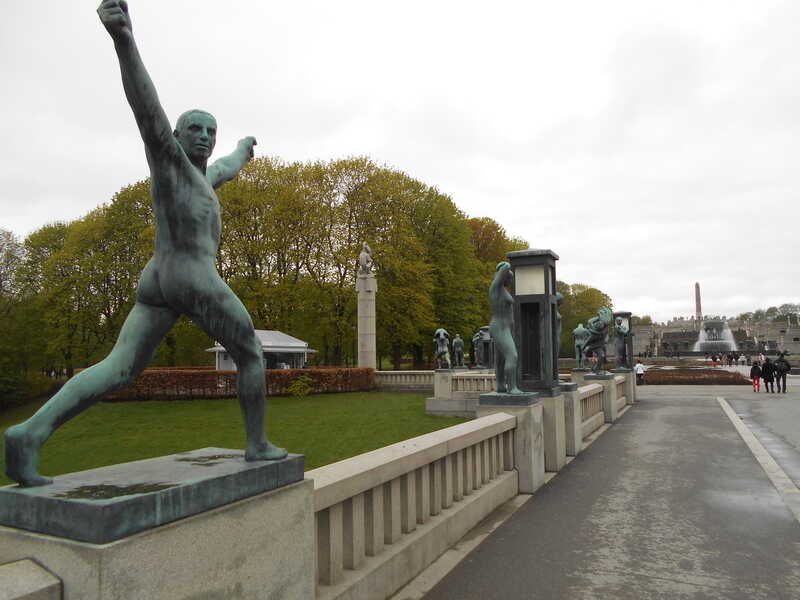
    Vigeland by Mario RM
    photo from Frogner Park in Oslo Norway by Mario RM

    Why I let go of my U.S. citizenship Apr 20, 2023
    Show notes

    I forbid myself from anything too tempting or addicting. I keep no cookies in my home. To prevent myself from falling off the wagon, I strap myself to the mast.

    I was born in California, and lived the first forty years of my life in America. But I wanted to challenge myself to live in the rest of the world - to get to know it deeply - so that many countries would feel like home.

    It was a nice idea, but as soon as times abroad got a little tough, I’d move back to my comfort zone. America felt like an addiction.

    So I decided to ban myself from returning - to burn the ships.

    There’s a legend of a military leader with a hundred men in a few ships that landed on enemy shores. But waiting on land were a thousand enemy soldiers. So as soon as his men disembarked, the leader ordered them to burn the ships, to prevent retreat.

    For years I thought about this story and the idea of letting go of my U.S. citizenship as a way of burning my ships and preventing my retreat. Eventually I followed my life’s motto of “whatever scares you, go do it”, then showed up to the U.S. embassy in Singapore, filled out the forms, and became an ex-citizen.

    If you suspect I was doing it for tax reasons, no. My taxes went up, not down, since all of my income is from the U.S. The IRS gets at least 30% of everything I earn, and will for the rest of my life.

    I really was just forcing myself forward into the world. And it’s worked. New Zealand, Singapore, England, and India are my legal and emotional homes now. Hopefully more to come.

    Since I left in 2010, I’ve only visited America for a few days. I don’t have the right to enter. There’s always a chance I might never see my family again. Because of that, I often regret it. It’s usually best to keep options open.

    I’ve kept this a secret for twelve years because I didn’t want to be attacked by those who might mistake my adventuring as insult. But now it seemed better to just explain.

    For another side to this story, see “Why I left America”.

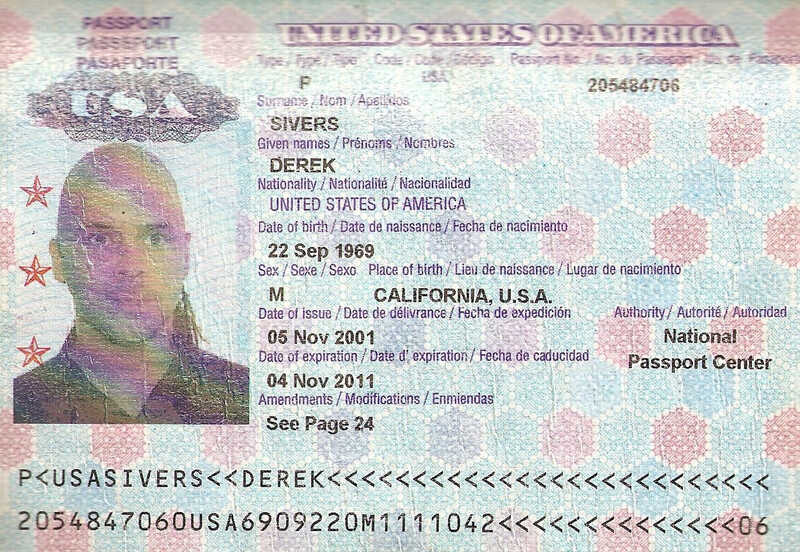
    Derek Sivers passport

    the Michael Browne suits Apr 15, 2023
    Show notes

    In 2020, I was about to move to New York City. I wanted to get to know all of its ethnic enclaves, like visiting the whole world in one city. But I know I have a tendency to stay at home, immersed in my work.

    So I made a rule for myself. If I move to New York, I must not be home between the hours of 9am to 5pm. I would do all of my writing and reading in public places as a way of keeping myself out in the world. But that meant thousands of hours of sitting in cafés, museums, libraries, and such. I might not be very welcome, unless I looked high-class.

    I had been meaning to get nicer clothes anyway. I saw myself on stage and realized my appearance no longer matched my self-image. My friend Meng Weng Wong had made a great argument in favor of wearing a great suit. Now I had two reasons.

    Actually I had three reasons, because I was living near London at the time, and realized this was my one-and-only chance to have a custom suit made on the famous Savile Row, just to have that once-in-a-lifetime experience.

    So I nerded out for a week, spending a few hours a day reading books on the subject and watching a great YouTube channel called Sartorial Talks. Its creator, Hugo Jacomet, is passionate and fascinating on the subject of well-made clothing. He (and others) said that the best tailor in all of London is a man that used to work on Savile Row, but has surpassed it. That’s the great Michael Browne.

    I contacted Michael but he didn’t reply. So I contacted Hugo Jacomet, and he very kindly introduced me to Michael, who agreed to see me the following week. Michael asked me about who I am, what I do, my self-image, my audience, my plans, and more. Then he picked a style and fabric and got to work. It took six visits over six months before the suit was done.

    He asked what shirt I’d be wearing with it, and I said, “Whatever shirt you think I should wear.” He told me to get John Smedley roll necks in sea island cotton, so I did.

    He asked what shoes I’d be wearing, and I said, “Whatever shoes you think I should wear.” He told me to go to Daniel Wegan of Catella Shoemaker, so I did.

    We did all of these fittings during the first round of Covid lockdowns, early 2020. It was amazing to be in central London while it was completely empty, meeting at his atelier office, spending hours talking while he worked. When the suit was all done, he made a duplicate in a different fabric, so now I have two.

    Anyway, due to Covid and family things, we didn’t move to New York City at all. Moved back to New Zealand instead. So now I just wear my suits whenever I’m in public.

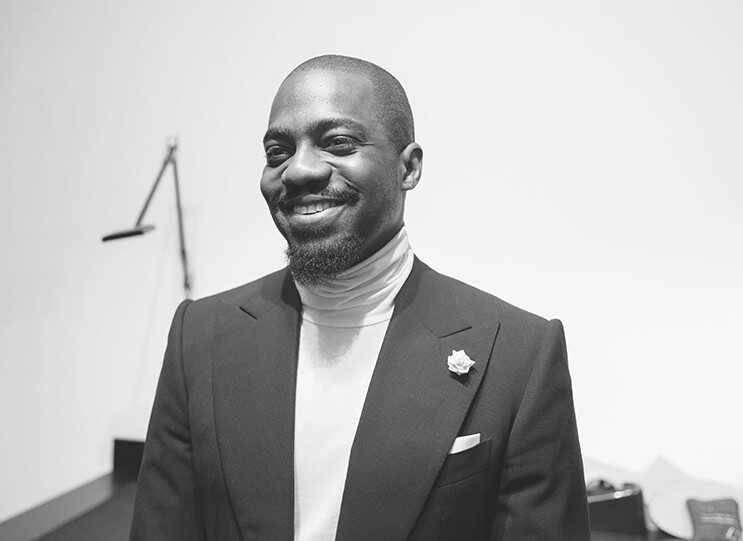
    Michael Browne
    photo of Michael Browne from Robb Report

    Thinking something nice about someone? Tell them. Mar 07, 2023
    Show notes

    When you think something nice about someone, you should tell them.

    People don’t hear enough compliments.

    Even well-known people. We assume they must hear it too much. But famous people often say the thanks from the public is the best part of the job. They work really hard to spread their creations widely. They could just sit home and keep their thoughts to themselves, but instead they do the hard labor of turning their ideas into something digestable, then brave public critique in the media, all for the generous act of sharing their work with the world. It’s not for the money, since they could make more as a banker. It’s for the deeper happiness of making a difference in people’s lives.

    So I think of it as my duty, when someone has made a difference in my life, to let them know.

    Recent examples:

    • Emailed Shruti Rajagopalan to say I’m a fan of her work, and I met two of her mutual friends in India.
    • Contacted Nancy Duarte after six years to say I’m still using her Resonate framework of presentation, and I’m glad we met ten years ago.
    • Emailed Austin Kleon to let him know that three different people referenced him last month in India.
    • Found the email address for professor Sharon Kaye after reading her book, Philosophy: a Complete Introduction, to tell her that she is the clearest writer I’ve ever read.
    • Emailed Russ Roberts to say how much I love his podcast and new book.
    • Texted my friend Laura Clesceri to tell her I appreciate our conversations.
    • Texted Mark Manson a photo of my cinema ticket after seeing his movie.
    • Told the guy at the cafe that I loved his shirt with the Atari Adventure dragon.
    • ... and complimented three adorable dogs (to their owners) while out on my walk in the forest today.

    These examples took a combined total of about fifteen minutes of my life. By text or email, I send just two or three sentences.

    As soon as I feel the feeling of appreciation, I flip over to my email app, tap tap tap send, and get back to what I was doing.

    There really is no better use of my time, or yours.

    Side note: Only about half of them reply. But that’s OK, since I’m not doing it for the reply.


    50 conversations in Bangalore and Chennai Mar 02, 2023
    Show notes

    UPDATE: I moved the conversations to sive.rs/met.

    February 13 through 21, 2023, I went to Chennai and Bengaluru, India. My sole purpose was to meet new friends. I’m an “Overseas Citizen of India” and my son is half-Indian (Tamil). I will always have ties to India. I wanted to deepen those ties and make new connections.

    So I scheduled fifty one-hour conversations with fifty interesting people over seven days. Back-to-back meetings from 9am to 10pm every day. It was one of the most intense and fascinating (and heart-warming and educational) things I’ve ever done in my life. I recorded almost every conversation into a little voice recorder, then had it transcribed. When I got home to New Zealand I spent 30 hours reading through the transcriptions to help me remember what we talked about, then made a tiny summary, below.

    My conversations there were some of the best I’ve ever had, immediately open-hearted, honest, and intellectual. I also hosted two parties but owe an apology to my guests, because I thought I could have quality conversations in that environment but I just couldn’t. I’m really a one-to-one conversationalist.

    Maybe-embarrassing thing I’ll admit: Before my arrival, I hired a man in Chennai to make an audio recording of him slowly and clearly reading the names of the fifty people I was to meet with. Then I put those recordings into Anki flash cards, with the written name on the front, and the audio recording on back, so I could practice pronouncing everyone’s name correctly when we met. Names like Arunsathyaseelan Palanichami and Thiyagarajan Maruthavanan became little melodies that stuck in my head.

    India has changed so much in the last 10 years since my last visit.

    • The new Vande Bharat train from Chennai to Bangalore is as nice as any train in Europe, and the four-hour journey costs 1100 Rupees - about $13 - including a nice meal service.
    • The new UPI cashless payment system is amazing. Instant free bank transfers for every bank account in India, no fee, just by scanning a QR code. Everybody and every roadside vendor now has it, so it’s thoroughly practical even for little payments of 40 rupees (50¢).
    • The new Aadhaar government ID is impressive, and has enabled anyone to open a bank account, which created the ubiquity of UPI.
    • One downside is the current political climate which had my friends literally looking over their shoulders and speaking in hushed tones when the subject came up.
    • And WhatsApp is practically the sole mode of communication.

    Bangalore in particular has become a wonderful creative hub. It feels like the new San Francisco, with creative ambitious people moving there from all over India. A super-casual California-style culture, free from the formality and materialism of Delhi and Mumbai.

    Bangalore is such a great place to live - (good weather, culture, people) - that the money made in Bangalore is staying in Bangalore instead of fleeing overseas like it used to, so this feeds the local arts and culture scene, making it an even better place to live. I loved it so much that I wanted to cancel my return flight and just live there now. Instead, it’s now my second home, in my heart, and I’ll be returning often.

    I agree with Shruti that everyone should pay more attention to India.

    UPDATE: I moved the conversations to sive.rs/met.


    Explorers are bad leaders Feb 09, 2023
    Show notes

    Explorers poke through the unknown, experimenting, trying many little dead-ends.

    Explorers meander, constantly changing directions based on hunch, mood, and curiosity.

    Explorers are hard to follow. It’s better to let them wander alone, then hear their tales.

    Explorers occasionally find a great place that would make a better home for many people. So that makes a job for a leader.

    Leaders are easy to follow. Leaders say, “Here’s where we’re going. Here’s why this will improve your life. Here’s how we’re going to get there. Let’s go.”

    Leaders sell the dream. Leaders describe the destination clearly and simply so it’s easy to understand and repeat. Even someone in the back of the pack, that can’t hear the leader, can follow along.

    Leaders go in a straight line. Leaders simplify.

    Explorers are bad leaders.

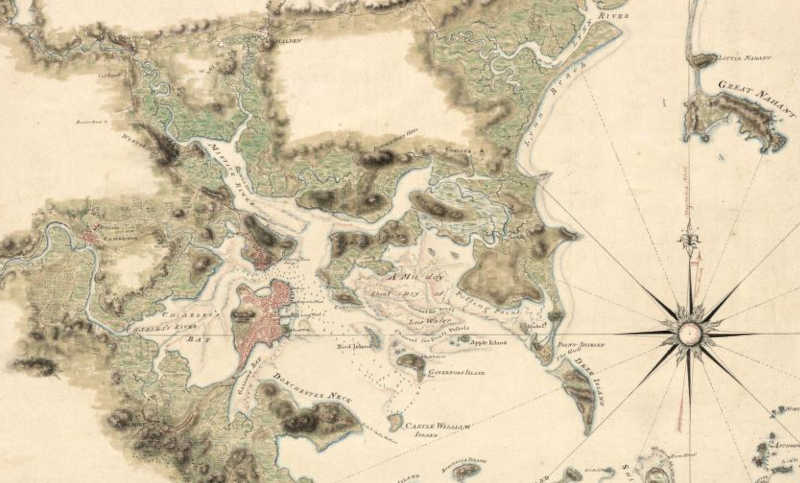
    old map of a harbor

    Travelling just for the people Feb 06, 2023
    Show notes

    When I was 21, I moved to New York City.

    An old friend travelled many hours and came to stay with me for a couple days. It was his first time in New York.

    I said, “Do you want to see the Statue of Liberty? Empire State Building? Central Park? A Broadway show?”

    He said, “I don’t care what we do. I just came to see you!”

    I said, “Ha ha. Very sweet, but no, seriously. What would you like to do for the next couple days?”

    He said, “Dude. I’m serious. I really don’t care about any of that stuff. I came here to see you, hang out with you, talk with you. That’s honestly the only reason I’m here. You don’t have to take me anywhere or show me anything.”

    It was one of the most touching moments in my life. Someone spent hundreds of dollars and days of their life to travel to an exciting place, not to see the place, but just to see me.

    …

    Many years later, when I ran a music distribution company, I became wary of meeting people, because I (wrongly) thought that everyone wanted something from me. So I started travelling secretly. I went to many countries without telling anyone and without meeting anyone. I would walk around and experience the landmarks, food, museums, and events, but barely speak unless necessary.

    One day, after a month in India, I decided to cautiously break my rule, since it was my last day before flying back to America, I thought even if someone wanted too much from me, I would escape the next day. So I emailed a musician in my database that lived in Kolkata, and asked if he was free to meet up. He came to my hotel and graciously walked me around Kolkata for most of the day, teaching me so much about his home town, so many insights into culture and life. Also, people kept asking him for his autograph. That was Amit Chaudhuri. I didn’t know he was a famous author.

    When I think back to that month in India, I remember almost nothing but that conversation. Landmarks, food, museums, and events are a blur, but one interesting conversation can linger in the mind forever.

    Sometimes we connect with a place, but usually we connect with people. Yet people connect us to a place.

    So, learning from my past mistakes, now my main purpose of travel is meeting people. When they offer to take me to the landmarks, I say, “I don’t care what we do. I just came to see you!”


    Previous 1 7 8 9 10 11 39 Next

    Related Podcasts

    Making Sense with Sam Harris

    1

    Making Sense with Sam Harris Education
    Grammar Girl

    2

    Grammar Girl Education
    Good Life Project

    3

    Good Life Project Education
    Explain It to Me

    4

    Explain It to Me Education
    Team Never Quit

    5

    Team Never Quit Comedy
    Optimal Living Daily – Personal Development and Self-Improvement

    6

    Optimal Living Daily – Personal Development and Self-Improvement Alternative Health
    footer-logo

    Contact Us

    Toll Free: 844-670-7747

    Links

    • Home
    • Top Charts
    • Networks
    • Apps
    • Independents Podcasts
    • Podcast Advertising
    • Podcast News
    • Contact Us
    • About Us
    • Analytics & Insights

    Stay Connected

      Privacy, Terms of Use & Our Code of Ethics Protecting Content Creators Copyrights