TopPodcast.com
Menu
  • Home
  • Top Charts
  • Top Networks
  • Top Apps
  • Top Independents
  • Top Podfluencers
  • Top Picks
    • Top Business Podcasts
    • Top True Crime Podcasts
    • Top Finance Podcasts
    • Top Comedy Podcasts
    • Top Music Podcasts
    • Top Womens Podcasts
    • Top Kids Podcasts
    • Top Sports Podcasts
    • Top News Podcasts
    • Top Tech Podcasts
    • Top Crypto Podcasts
    • Top Entrepreneurial Podcasts
    • Top Fantasy Sports Podcasts
    • Top Political Podcasts
    • Top Science Podcasts
    • Top Self Help Podcasts
    • Top Sports Betting Podcasts
    • Top Stocks Podcasts
  • Podcast News
  • About Us
  • Podcast Advertising
  • Contact
Not in our directory?
Add Show Here
Podcast Equipment
Center

toppodcastlogoOur TOPPODCAST Picks

  • Comedy
  • Crypto
  • Sports
  • News
  • Politics
  • True Crime
  • Business
  • Finance

Follow Us

toppodcastlogoStay Connected

    View Top 200 Chart
    Back to Rankings Page
    Amateur

    Coaching Soccer Weekly: Methods, Trends, Techniques and Tactics from WORLD CLASS COACHING

    Get an in-depth look at the methods, strategies and techniques used by a youth coach working full time with players of every age and skill level. This includes training plans, team management and planning ideas, latest trends in coaching and education, as well as interviews with other coaches and trainers that are on the cutting edge of soccer development.

    Advertise
    • Apple Podcasts
    • Google Play
    • Spotify

    Latest Episodes:
    #133 How to Improve Technically and Tactically at Home Jan 19, 2018
    Show notes

    The Central Regional Championships for the US Youth Futsal Nationals was in Kansas City last weekend. I had one team win and qualify for Nationals while the other had a tough weekend. They played some very good teams but didn’t play as well has they have recently. I’ve said before that the only thing consistent about young teams is there inconsistency.

    I can point to the long holiday break and missing players for other sports commitments as reasons but these are just part of the challenges of training and competing with young players.

    This week’s question comes from Ryan

    He’s asking about player positioning. Ryan says,

    “A week ago on one of your podcasts you mentioned the concept of trying to get all players equal playing time as well as equal time at each position for growth.I agree, however I sometimes struggle with the implementation.

    How do you ensure you are giving out time and positions equally if you are the only coach on the field.
    My co-coach spends a lot of time scripting out the starting lineup and each rotation before every game, but that takes a lot of time and can be problematic with injuries and late arrivals or absences.

    I like to be a bit more fluid, and also use subs to “correct” things I see on the field which doesn’t lend itself well to a whole game of scripted subs.

    I also feel like with a scripted lineup of subs you spend more time running subs and less time talking to players who are off the field to discuss what is working well and needs adjustment.

    If you are a single coach on the sideline, how do you ensure each player is getting equal time and equal positional rotation?

    Do you have the full games rotation planned out the night before?”

    Thanks for your question Ryan!

    On the podcast I describe how I organize my line up, why I think patterns make substitutions more predictable for the players and when I change my players positions.

    In This Episode

    A common question I get from my players and their parents is, ‘What can we work on at home?’ The specific answer to this question will vary from one player to the next. There are things that every player can do to improve in their own time.

    Today I give you suggestions for what players can do away from the soccer field to improve their technical and tactical soccer skills.

    Remember!

    Make sure you subscribe to Coaching Soccer Weekly through iTunes, or your podcast provider of choice, to be sure you never miss an episode.

    We would appreciate it if you would leave us a 5 star rating and/or a written review on iTunes to help spread the word about the show and ensure that we can continue to bring you top notch guests in the future.

    Future Episodes

    I’m working on a number of topics for next week but haven’t settled on one yet. Let me know if there’s a topic you’d like me to cover and I’ll add it to the list.


    #132 New Grassroots Coaching Pathway Jan 12, 2018
    Show notes

    Last weekend I had my first games back with my teams after the long holiday break. Because of the way the schedule worked out we didn’t have a practice before our games. I knew we wouldn’t be really sharp but I was surprised by just how rusty the players really were.

    You could tell that the players knew it and were frustrated by how they were playing. I tried to high my frustration because it wasn’t that they weren’t trying, they were just out of practice.

    Hopefully this experience will motivate the players to work hard in training this next week because we have a Regional tournament to qualify for Nationals that’s coming up this weekend.

    This week’s question comes from Ben. He left them in the comments of Episode 128 on Futsal Techniques and Tactics

    Ben asks,

    “Has it been a hard adjustment for your players who are trained to receive with their back foot in outdoor to switch over to receive on the front foot for futsal?

    What are your thoughts on coaches who have their teams play futsal for the speed of play and ball control required but don’t necessarily coach the futsal specific techniques?”

    Thanks for your question Ben!

    It’s always an adjustment that takes a couple of weeks. Then in the spring it will take them some time to think about using their back foot more often but then they have an understanding of when to use each technique.

    I used to be one of those coaches! It took me a few years before I saw the benefit of teaching futsal specific techniques. I was missing an opportunity to add skills to my player’s ‘tool box’ because I wasn’t seeing how teaching the different techniques would benefit the overall development of the players.

    In This Episode

    On December 20 US Soccer announced a change to the Coaching License system. They’re calling it the ‘Grassroots Pathway Initiative’.

    Today I talk about my experiences with coaching licenses and how the system has changed over the year. I’ll also share what I’ve learned about the new system from our State Director of Coaching that I haven’t seen detailed anywhere else.

    If you fail to prepare, you prepare to fail. If you’re serious about passing a coaching course, you need to start preparing months in advance. After all, it’s not a fun break when you can relax. Coaching courses are high pressured, stressful and expensive. You either pass and get certified or face the disaster of all your time and money being wasted, and failing to earn a promotion or a new role.

    If you want to advance your career, Conquering Your Next Coaching Course – The ultimate guide to preparing for any coaching license, is essential reading. It’s a unique guide on exactly what to expect at every stage and what to do to impress the assessors. With these valuable insights, you know exactly what’s expected of you before you arrive. Instead of massive pressure and stress, you’ll feel confident and ready to pass.

    Remember!

    Make sure you subscribe to Coaching Soccer Weekly through iTunes, or your podcast provider of choice, to be sure you never miss an episode.

    We would appreciate it if you would leave us a 5 star rating and/or a written review on iTunes to help spread the word about the show and ensure that we can continue to bring you top notch guests in the future.

    Future Episodes

    Next week I’ll discuss what players can be doing at home to improve technically and tactically in their own time?


    #131 A Coach’s New Years Resolution Jan 05, 2018
    Show notes

    It was a great time for a break! I really enjoyed the time away from the field and the chance to spend time with family and friends. It was also a productive time as I was able to complete my spring league and tournament plan as well as the Technical Training curriculum for next season.

    As much as I’ve enjoyed the time off, I’m looking forward to getting back to working with my teams in training and games.

    This week’s question comes from Chris (a different Chris from the last episode). He gives me some back story on his team and then Chris asks,

    “Last week, we decided to work on those basic moves: inside of the foot chop, outside of the foot cut, and the drag back. As expected, the stronger players got the idea of these moves, and the less skilled/experienced players struggled.

    We only train once a week with our next session coming up, so how much time should we spend working on this one particular set of skills before we just have to move on to other things?

    I want to give the weaker players the best chance I can to learn, but there’s also just so much more to cover, and I also don’t want to alienate them with week after week after week of dribbling and 1v1s.

    I’m planning on spending 3 weeks on 1v1s, to also cover shielding and basic take-on moves, before moving on to passing and receiving. ”

    Thanks for your question Chris!

    I think a three-week microcycle for a give set of skills is a good way to go. I would also suggest that you find a way to work some of those skills into other activities as you progress. That will allow the players to keep working on them while also working on new skills. As you go on you should be able to add more and more layers to the activities you use.

    Homework is the best way for less experienced players that are struggling with a certain skill.

    In This Episode

    I’ve never been a big fan of ‘New Year’s Resolutions’. They have a negative connotation because they are too easily made and too easily broken.

    Today I talk about my approach to the new year and I how I look back to help determine how I should move forward.

    Remember!

    Make sure you subscribe to Coaching Soccer Weekly through iTunes, or your podcast provider of choice, to be sure you never miss an episode.

    We would appreciate it if you would leave us a 5 star rating and/or a written review on iTunes to help spread the word about the show and ensure that we can continue to bring you top notch guests in the future.

    Future Episodes

    Next week I’ll take a look at US Soccer’s new Grassroots Pathway Initiative. I’ll discuss the different options that coaches have and how they can decide which courses will best help them and their players.


    #130 Movement to Create Options Dec 15, 2017
    Show notes

    I had a ton of Futsal games last week. As I’ve mentioned before, I’ve divided my teams up for the Futsal season to make sure they all get plenty of playing time. This is great for the players but it doubles the number of games I have on any given weekend. I love working with my players but 14 games on the weekend will really take a toll on you.

    This is the last week of training before the club takes a two-week holiday break. This allows the families and coaches to make plans without having to worry about missing training. The break comes just about halfway through the soccer year so it’s a great time to reset and get ready for the second half.

    This week’s question comes from Chris. He asks about teaching positions to young players.

    Chris says,

    “We’re heading into indoor this week. I’m transitioning from coaching U10 Boys to U8 Girls.

    I have a mixed team age wise, with 5 7 year old, 2 6 year old and 4 5 year old players we took to help us get numbers to roster as a U8 girls team. Only one or two players have played competitive before. I’ve coached the 5 year olds recently so have had no experience with the true U8 players until now.

    Unfortunately, the indoor facility has not adopted the 4v4 structure that is now played outdoors. They have us play 7v7 with keepers. I’m looking for thoughts and suggestions on how to introduce and teach positions in an age appropriate way that does not involve a lot of coach talking that could easily bore these girls.”

    Thanks for your question Chris!

    Coaching U8’s is challenging under the best circumstances. The 7v7 format will be difficult for the players to manage so my first piece of advice to to keep your expectations low. They will struggle with the concepts but if you’re patient then you will see slow steady progress during the season.

    I would suggest that you continue to focus on technical skill work for most of your sessions (the 5-8 year old book is a great resource) but finish each session by working on playing from the back. Having the goalkeeper play out to defenders who pass to midfielders and then find the forward before scoring. At first this will be slow and unopposed. After a couple of practices you’ll be able to add a defender and then two or three.

    This will help to teach the players the positions while showing them how the lines are connected and work together.

    In This Episode

    Moving without the ball is a very important element of soccer. But it doesn’t come naturally. Giving your players some basic ideas of ways that they can move will help them see how it affects the game.

    Today I share the patterns I’m using with my teams during the Futsal season that are helping them see how moving without the ball opens and fills spaces to create more options for the player on the ball.

    Printable Show Notes

    The show notes for each episode are accessed through the WCC Training Center.

    They are FREE but you will need at least a Free Membership to the Training Center in order to view and print them. They’ll be available there for eight weeks before they’re placed in our archive which can be accessed at any time by Elite Members.

    Click on the image of the notes and if you’re already logged in to the Training Center you’ll be taken to the Podcast page. If you’re not logged in your be taken to a login page where you’ll also be able to login or register if you are not already a Member.

    Remember!

    Make sure you subscribe to Coaching Soccer Weekly through iTunes, or your podcast provider of choice, to be sure you never miss an episode.

    We would appreciate it if you would leave us a 5 star rating and/or a written review on iTunes to help spread the word about the show and ensure that we can continue to bring you top notch guests in the future.

    Future Episodes

    I’ll be taking the next two weeks off from the podcast during the holiday period but I’ll be back in January with more training sessions and commentary.

    I hope everyone enjoys a happy and healthy holiday season. All the best for 2018!


    #129 Four Key Elements of an Effective Warm-Up Dec 08, 2017
    Show notes

    The first full weekend of Futsal for my teams is always interesting because it’s first time some of my players have been in a Futsal game. Some are surprised how much they enjoy the new experience while others aren’t as sure. It’s just too different than what they were used to with arena soccer.

    I think most coaches would agree that they’d like to start the season with an easier game so that they can really work on the new skills and tactics that they’ve been teaching in training. A couple of my team had this opportunity while others were thrown into the deep end against tough teams right from the start. We don’t get to pick our opponents so we have to focus on getting the best out of every situation.

    This week’s question comes from Ryan. He asks about the appropriate amount of training time and finding the right competitive level. Ryan gives me some background on his team and then asks,

    “What is an appropriate practice schedule at the U10 Competitive age bracket, and what is the best way to assess if you are in the right level of competition with your team where they are being challenged but not frustrated. Obviously we have parents pushing in many directions, and some that want to be playing top talent but also are frustrated when we lose.”

    Thanks for your question Ryan!

    If you’re going .500 in league then I think you’re in the right place. The players are getting some success but are also being challenged.

    There are always going to be coaches that focus on the ‘W’ more than the development that will make you question your approach. There’s nothing wrong with those coaches striving to be successful but far too many put winning ahead of proper development in their list of priorities. You’re never going to change that so just recognize when you’re playing those types of teams and focus on teaching your players how to deal with it.

    As far as training time and frequency goes, I think that anything more than two ninety-minute practices in a week is overkill. They need to have time to do other things (or nothing at all). Training four days a week starts to sound a lot like work to me. There’s a reason we say that kids, ‘play soccer’; it should be fun more than anything else.

    In This Episode

    How we prepare our teams obviously has a huge impact on their performance. The last chance we get to prepare them for a game is the pregame warm-up. Today I’ll discuss the four key elements of an effective warm-up.

    Remember!

    Make sure you subscribe to Coaching Soccer Weekly through iTunes, or your podcast provider of choice, to be sure you never miss an episode.

    We would appreciate it if you would leave us a 5 star rating and/or a written review on iTunes to help spread the word about the show and ensure that we can continue to bring you top notch guests in the future.

    Future Episodes

    Next week I’ll share how I’m using movement patterns in training to show my players the importance of creating and filling spaces on the field.


    #128 Futsal Techniques and Tactics Dec 01, 2017
    Show notes

    My Thanksgiving holiday week was full of family, american football and too much food. It was a great break and chance to reset.

    I usually have my teams take the first week of Futsal off because that gives them a two-week break between the end of the outdoor season and our first Futsal game.

    This also gives me a chance to have more practice time with them before our first game. It also compresses our season so that we have fewer midseason breaks which keeps us in the flow of the game.

    This week’s question comes from Issac. He asks getting more engagement from his team.

    Issac asks,

    “I coach a U11 boys team. I’ve coached pretty much this exact same group since U9. Typically, our fall seasons start off rough but improve steadily into spring. This fall has been extremely challenging. Our technical abilities continue to progress while our on field play has been extremely inconsistent.

    When our players are locked in, everything goes well. We don’t always win, but they have energy, the intent is there and the kids are having fun. But far too often this season, they has been a lack of engagement in games. We seem to be doing a lot of watching. Our reaction to passes is getting worse.

    At first, I chalked this up to the move from 7v7 to 9v9 or moving from a 1-2-3-1 to a 1-3-4-1. Now that the fall is coming to a close this problem doesn’t appear to be getting any better.

    Our training this fall (3 days a week) has been focused on passing patterns, combinations in the back and middle thirds, and pressing high now that the build out lines are gone. I’m not sure what to do at this point. What would you suggest for getting the players active, anticipating passes and stepping into spaces to win balls? How do we limit the amount of ball-watching going on?”

    Thanks for your question Issac!

    First U11’s are going to be inconsistent – Get used to that.

    Second, Whenever I’ve done a lot of work on passing and possession, the way you’ve described, I almost always see my teams lose a step because they’re thinking too much. I find that putting them in competitive situations like 1v1 and 2v2 in training will help to speed up their thinking and playing.

    In This Episode

    As I move into the Futsal season I always spend some time planning my approach to season. This year I’ve been really focused on the different skills and ideas that are specific to Futsal. Today I want to talk about how the different Futsal skills and tactics can add weapons to my player’s arsenal.

    Printable Show Notes

    The show notes for each episode are accessed through the WCC Training Center.

    They are FREE but you will need at least a Free Membership to the Training Center in order to view and print them. They’ll be available there for eight weeks before they’re placed in our archive which can be accessed at any time by Elite Members.

    Click on the image of the notes and if you’re already logged in to the Training Center you’ll be taken to the Podcast page. If you’re not logged in your be taken to a login page where you’ll also be able to login or register if you are not already a Member.

    Remember!

    Make sure you subscribe to Coaching Soccer Weekly through iTunes, or your podcast provider of choice, to be sure you never miss an episode.

    We would appreciate it if you would leave us a 5 star rating and/or a written review on iTunes to help spread the word about the show and ensure that we can continue to bring you top notch guests in the future.

    Future Episodes

    Next week I’ll look at the pregame routine. I’ll discuss everything from when to have the kids arrive to what activities should be included in the warm-up and how to adjust your routine to different environments.


    #127 Building Technical Training Progressions Nov 17, 2017
    Show notes

    Well, last weekend was the end of the outdoor season for the last of my teams. Just in time too because the weather has really made a turn to the colder side in the midwest.

    All of our training sessions from now on will be focused on the techniques and tactics of Futsal. It’s almost like starting over with my teams since the skills of Futsal are so very different from many of the skills the players use outdoor. Some see this as a negative but I think they’re complimentary and will have my players better prepared when we go back outside in the spring.

    This week’s question comes from Tim. He asks about the use of negative reinforcement. He shared some background information and then asks:

    “Is negative reinforcement during training the prevalent model and if I move my sons to another club they will only deal with the same?”

    Thanks for your question Tim!

    It’s dangerous to generalize but I think that more and more coaches are taking an educational approach to training their teams and moving away from ‘old school’ techniques. You’ll still find plenty of coaches using negative reinforcement in an attempt to be successful but hopefully we’ll see fewer and fewer of them over time.

    I would suggest that you look for coaches that will be the best for your kids rather than clubs. As you’ve found, there’s a range of different styles even within the same club.

    If enough parents start gravitating toward growth oriented coaches, regardless of their statistical success, I think we’ll see more of a shift to that style.

    In This Episode

    Today I talk to a very well qualified and respected coach about his approach to technical training. We discuss the components of effective training environments. The importance of having the players experience success. As well as the methods you can use to progress your activities to ensure the greatest development and transfer of training.

    The folks at Supercoach have generously offered to give Coaching Soccer Weekly listeners a free 3 month trial of the premium membership to the Supercoach app. All you have to do is download the app through iTunes or Google Play and then send an email to hello@supercoachapp.com from email associated with your account and they will take care of you.

    Future Episodes

    I’m taking next week off from the podcast for the Thanksgiving holiday here in the U.S. I’ll be back December 1st with a new episode.


    #126 How to Remove Diving from Soccer Nov 10, 2017
    Show notes

    My teams are making the transition to indoor Futsal training this week. Some of them still have an outdoor tournament this weekend but our club always moving inside on the first of November.

    I enjoy the change of pace and the focus on different skills and tactics. Some coaches focus on training Futsal in isolation but I look at how the game as an opportunity to better prepare my teams and players for a return to the outdoor game in the spring.

    This winter I’m focusing on a couple of key areas that I think will really benefit my players in the future as well as help them understand the unique elements of Futsal.

    This week’s question comes from Luis. He asks about lack of focus during training

    Luis says,

    “I had a question. I coach a Girls 2005 team so all the players are 12 or turning 12 soon. Seven of the girls played with me last year and most if not all have played with one another at some point or another over the last four-plus years, so everyone is familiar with one another. This is good as the team has bonded well together, but the problem is that it has bonded too well.

    The girls often talk and giggle and mess around and lose focus. I try to combat this by keeping my practices fast paced with things they like to do, but that doesn’t seem to be working. Any break in our sessions, no matter how small, and they lose focus. This is a problem with about 9-10 of our 14 players.”

    Luis’ question was actually about how to handle this with the players but I think there’s something else involved here that I’d like to focus on. How long should someone coach one team?

    There are a lot of different opinions and circumstances to consider. I outline my perspective in the episode.

    In This Episode

    What’s one of the things that non-soccer fans always point to as the reason they don’t like soccer – Diving. What’s one of the things that non-soccer fans always point to as the reason they don’t like soccer – Diving. What causes more unfair results than anything else in our game – Diving.

    Today I focus on what we CAN and SHOULD do to remove diving from our game.

    Here’s an opinion video from WORLD CLASS COACHING President, Mike Saif, about:

    How to Stop Diving and Cheating in Soccer INSTANTLY.

    Ranking and Reviews

    I’d like to ask you a favor, we have 96 rankings and reviews on our Apple Podcast profile. I’d love to get that above 100 this week. If you’ve ever found any of the information I’ve shared over the last, nearly three years, helpful or interesting please take two minutes and give us a quick ranking and review through your iTunes account. It will help push us over 100 and keep us near the top of the rankings for soccer podcast.

    Future Episodes

    Next week I’m going to speak with Ola Larsson about his SuperCoach app and unique ideas for constructing technical exercises.


    #125 Prepare their Mind to Train their Skills Nov 03, 2017
    Show notes

    As I mentioned last week, my weekend was focused on refereeing as I renewed my outdoor and Futsal certifications. I was asked to do a presentation to the group from a coach’s perspective.

    I tried to show how coaches, referees and players need to work together to create a positive experience for everyone. I let the referees know what coaches expect from referees. We want Professionalism, Effort, Knowledge and Consistency. I asked the referees what they want from coaches. The two main themes were Respect and Trust.

    The two things that I think can get in the way of a good working relationship are Competitiveness and Emotion. A third would be arrogance but I left this out of our discussion because I didn’t think it would help to move the conversation forward.

    I gave the referees suggestions on how to communicate with coaches rather than simply ignoring them. Tell a coach, “I hear you coach.” can sometimes be enough to acknowledge the coach and allow him/her to move on with the game. I often say, “Sorry if I missed it coach.” It’s hard to continuing yelling at someone that has apologized and admitted that they may not have seen everything surrounding the situation.

    I think it was helpful for the referees to have a coach to ask questions of foster a better understanding between coaches and referees.

    This week’s question comes from Nick B. He asks about having trouble finishing in games. Nick says,

    “I coach a high school girls varsity team and we’ve run into a major issue in our season: We can’t score goals. Our defense and midfield play well, and we create chances, we are just unable to finish and as a result have lost a bunch of games 1-0.

    I’ve worked on finishing and shooting in a variety of ways in practice, including drills without keepers just to let the girls get the look and feel of the ball going into the net.

    They can score in practice, but there is something about the game that just isn’t clicking. We’ve now gone three straight games without scoring and I can tell the girls are feeling the pressure to put one in.

    How can I get them to relax in games and take their chances when they arrive?”

    Thanks for the question Nick!

    Trouble scoring is such a common issue. My suggestion is to do as much work in and around the penalty area as you can and try to incorporate shooting into everything you do.

    You should also look closely as WHY you’re not scoring. Where is it breaking down? Are they creating chances? Are they shooting too early and thus not getting good chances? Is it a technical problem? How are they trying to score (ie crosses, getting in the box, long shots)? Do those methods suite the type of players you have? Have you discussed with the team where you want to try to get your goals from?

    In This Episode

    You can’t think of training players as something that happens in a vacuum. The thoughts and emotions of a player will impact how effective the session is at improving a player’s technical or tactical ability. We need to consider the importance of a player’s mindset and how it affects the way they approach practices and games.

    Today, I’ll look at how what we say to our players can prime them to learn and achieve on a higher level or how it can discourage them from even trying in the first place.

    Future Episodes

    Next week I’m going to look at ways that we can remove diving from the modern game.


    #124 Adding Passive Pressure to Technical Training Oct 27, 2017
    Show notes

    Last week was our final weekend of league play which came just in time because the weather is due to get much colder this weekend.

    Since I don’t have any games this weekend I scheduled my recertification courses for outdoor and Futsal refereeing. It’s always interesting going into a room of referees as a local coach. There’s an adversarial relationship between these two groups that can’t be avoided. I think I’m pretty quiet when it comes to dealing with the referees that officiate my games but there just seems to be an unavoidable tension between coaches and referees.

    On Sunday I’m working with some young referees through our league’s Referee Mentoring Program. I enjoy this role because it’s so closely related to what I do as a coach except that I get to help young people learn to be better, more confident referees instead of players.

    This week’s question comes from Chris. He asks about how to deal with disruptive players.

    Chris says,

    “This current fall season, I’ve been coaching with a different league and have had a lot of issues with players being disruptive, not listening, not following directions and not focusing. Part of it may be the age group, 10 – 13 year old kids, but I’ve coached that age group several times in the past. Part of it may be that every team has a portion of the same pitch to practice on. I’ve never shared a field with more than one other team before. This season, we have 6 teams practicing on one pitch. I’ve already given the players, and parents, my expectations and goals for the season. I have had disruptive players run laps, but they seem to keep on talking and not focusing regardless.

    I want to strike a balance between player participation, enjoyment and creativity while directing the practice and getting specific things accomplished.

    How do you deal with disruptive players and help them to go from being a distraction, to an asset? How do you get them to focus instead of acting like it is recess at school? Additionally, how do you develop a player’s internal motivation so that the players want to win and are willing to work for it?”

    Thanks for the question Chris!

    I looked at these challenges when answering a listener question back in Episode 107.

    I think it’s more of an art than a science. Each group is different and what may work for one disruptive player will not work for another. In general, I remove disruptive players from activities rather than making them run. I find that this is more effective than laps. If someone is being a particular distraction then I let them know that they will miss the game at the end of training if they continue. That’s the part of the practice that most players look forward to most. If a player has to sit out of scrimmage at the end of training they’re usually much quicker to quiet down and listen in the future. Just be sure you follow through if you give this ultimatum.

    Making activities fun, engaging and challenging without them being too difficult for the players skill level is the best way I’ve found to motivate players to give their maximum effort. If something is too easy then it’s not engaging. If it’s too hard to gain success then players will protect themselves by not giving it their best rather than really try and fail repeatedly.

    In This Episode

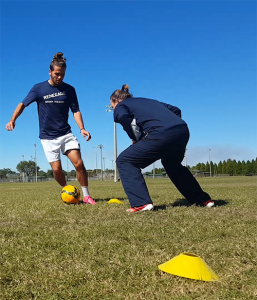
    Today I share some ideas on how you can incorporate the use of passive pressure into your technical training activities to help your players learn the timing and awareness they need to apply their skills in the game.

    Here are links to the SuperCoach app, Facebook and Instagram accounts that I mention in this episode.

    Printable Show Notes
    The show notes for each episode are accessed through the WCC Training Center.

    They are FREE but you will need at least a Free Membership to the Training Center in order to view and print them. They’ll be available there for eight weeks before they’re placed in our archive which can be accessed at any time by Elite Members.

    Click on the image of the notes and if you’re already logged in to the Training Center you’ll be taken to the Podcast page. If you’re not logged in your be taken to a login page where you’ll also be able to login or register if you are not already a Member.

    Remember!

    Make sure you subscribe to Coaching Soccer Weekly through iTunes, or your podcast provider of choice, to be sure you never miss an episode.

    We would appreciate it if you would leave us a 5 star rating and/or a written review on iTunes to help spread the word about the show and ensure that we can continue to bring you top notch guests in the future.

    Future Episodes

    Next week I’m going to look at how training the mindset of a player can be the most important thing you do as a soccer coach.


    Previous 1 25 26 27 28 29 30 Next

    Related Podcasts

    Cycling 360 media

    1

    Cycling 360 media Amateur
    The T-Row & Funky Show

    2

    The T-Row & Funky Show Amateur
    Carolina Insider

    3

    Carolina Insider Amateur
    The Gabe Kuhn Show

    4

    The Gabe Kuhn Show Amateur
    Thru the Ringer

    5

    Thru the Ringer Amateur
    Cookies: A Basketball Podcast

    6

    Cookies: A Basketball Podcast Amateur
    footer-logo

    Contact Us

    Toll Free: 844-670-7747

    Links

    • Home
    • Top Charts
    • Networks
    • Apps
    • Independents Podcasts
    • Podcast Advertising
    • Podcast News
    • Contact Us
    • About Us
    • Analytics & Insights

    Stay Connected

      Privacy, Terms of Use & Our Code of Ethics Protecting Content Creators Copyrights