TopPodcast.com
Menu
  • Home
  • Top Charts
  • Top Networks
  • Top Apps
  • Top Independents
  • Top Podfluencers
  • Top Picks
    • Top Business Podcasts
    • Top True Crime Podcasts
    • Top Finance Podcasts
    • Top Comedy Podcasts
    • Top Music Podcasts
    • Top Womens Podcasts
    • Top Kids Podcasts
    • Top Sports Podcasts
    • Top News Podcasts
    • Top Tech Podcasts
    • Top Crypto Podcasts
    • Top Entrepreneurial Podcasts
    • Top Fantasy Sports Podcasts
    • Top Political Podcasts
    • Top Science Podcasts
    • Top Self Help Podcasts
    • Top Sports Betting Podcasts
    • Top Stocks Podcasts
  • Podcast News
  • About Us
  • Podcast Advertising
  • Contact
Not in our directory?
Add Show Here
Podcast Equipment
Center

toppodcastlogoOur TOPPODCAST Picks

  • Comedy
  • Crypto
  • Sports
  • News
  • Politics
  • True Crime
  • Business
  • Finance

Follow Us

toppodcastlogoStay Connected

    View Top 200 Chart
    Back to Rankings Page
    Technology

    Blockchain Archives – Software Engineering Daily

    Advertise
    • Apple Podcasts
    • Google Play
    • Spotify

    Latest Episodes:
    Infura Ethereum Infrastructure with E.G. Galano Jun 02, 2022
    Show notes

    Developers looking for read or write access to Ethereum, Polygon, IPFS or other Web3 networks in order to get their idea in the hands of users need reliable RPC endpoints they can count on, whether they are working on a hackathon project or running hybrid architecture for a production application. Infura provides a platform for developers to get access to those end points as well as tooling to help them build on Web3. With its origin being Ethereum, Infura has expanded to both EVM-compatible and non-EVM compatible blockchains, as well as decentralized storage. From wallets, DeFi, gaming, Metaverse, or NFT projects, Infura is relied upon by some of the most used and popular projects in Web3. With billions of daily requests handled, the team has built knowledge on how to scale with reliability.

    Co-Founder and General Manager of Infura, EG Galano joins the show to talk about Blockchain infrastructure and protocols.

    Sponsorship inquiries: sponsor@softwareengineeringdaily.com

    Transcript

    Transcript provided by We Edit Podcasts. Software Engineering Daily listeners can go to weeditpodcasts.com to get 15% off the first three months of audio editing and transcription services with code: SED. Thanks to We Edit Podcasts for partnering with SE Daily. Please click here to view this show’s transcript.


    The post Infura Ethereum Infrastructure with E.G. Galano appeared first on Software Engineering Daily.


    Arweave with Sam Williams May 13, 2022
    Show notes

    Blockchains were the first systems to allow guaranteed permanent storage of public data. As cryptocurrency technology has advanced, a rich ecosystem of permanent storage and compute has developed as well. One of these is Arweave, a system for permanent information storage. Sam Williams is a founder of Arweave and joins the show to talk through how Arweave works and his motivation for starting it.

    Sponsorship inquiries: sponsor@softwareengineeringdaily.com

    Transcript

    Transcript provided by We Edit Podcasts. Software Engineering Daily listeners can go to weeditpodcasts.com to get 15% off the first three months of audio editing and transcription services with code: SED. Thanks to We Edit Podcasts for partnering with SE Daily. Please click here to view this show’s transcript.


    The post Arweave with Sam Williams appeared first on Software Engineering Daily.


    Web3 Infrastructure with Josh Neuroth May 07, 2022
    Show notes

    Web3 is powerful but difficult to work with. Deploying blockchain nodes, accessing data, and performing staking operations are non-trivial engineering actions. To simplify web3, Ankr hosts APIs for node deployment, RPC, and staking. Josh Neuroth from Ankr joins the show to talk about modern web3 infrastructure.

    Sponsorship inquiries: sponsor@softwareengineeringdaily.com

    Transcript

    Transcript provided by We Edit Podcasts. Software Engineering Daily listeners can go to weeditpodcasts.com to get 15% off the first three months of audio editing and transcription services with code: SED. Thanks to We Edit Podcasts for partnering with SE Daily. Please click here to view this show’s transcript.


    The post Web3 Infrastructure with Josh Neuroth appeared first on Software Engineering Daily.


    Bitski: Web3 Infrastructure with Patrick Tescher Apr 01, 2022
    Show notes

    Crypto companies have cemented themselves as a company category that is not going away. Bitski is a company that makes web3 tooling and infrastructure, including a wallet and a collection of tools for creating and selling NFTs.

    Patrick Tescher joins the show to talk through the engineering behind crypto infrastructure and APIs.

    Sponsorship inquiries: sponsor@softwareengineeringdaily.com

    Transcript

    Transcript provided by We Edit Podcasts. Software Engineering Daily listeners can go to weeditpodcasts.com to get 15% off the first three months of audio editing and transcription services with code: SED. Thanks to We Edit Podcasts for partnering with SE Daily. Please click here to view this show’s transcript.


    The post Bitski: Web3 Infrastructure with Patrick Tescher appeared first on Software Engineering Daily.


    Urbit with Galen Wolfe-Pauly Dec 18, 2021
    Show notes

    As the internet has grown, increasingly, we are consumers of services provided by corporations rather than owners and operators of our own systems. To many, this trend towards centralization is antithetical to the spirit of a free and open internet.

    Urbit is a new operating system and peer-to-peer network. There are several layers of novel ideas in this ambitious project. In this episode, I interview Galen Wolfe-Pauly about the Urbit project.

    Sponsorship inquiries: sponsor@softwareengineeringdaily.com

    Transcript

    Transcript provided by We Edit Podcasts. Software Engineering Daily listeners can go to weeditpodcasts.com to get 15% off the first three months of audio editing and transcription services with code: SED. Thanks to We Edit Podcasts for partnering with SE Daily. Please click here to view this show’s transcript.


    The post Urbit with Galen Wolfe-Pauly appeared first on Software Engineering Daily.


    Episode Summary: Spacemesh: The Proof of Space and Time Oct 05, 2021
    Show notes

    Spacemesh is an innovative blockchain startup aiming to solve the problem of running smart contracts at scale. A second generation blockchain startup that aims to learn the lessons of past blockchains, Spacemesh aims to make the blockchain better, more usable, more robust, and of course more popular among users. Current blockchains are not scalable both in terms of transaction volume and also the hardware considerations of the blockchains themselves. Bitcoin and other proof of work cryptocurrencies currently consume around two percent of the world’s energy consumption and that figure is only growing. ASICS and CMP graphics cards are effectively e-waste that only serve one purpose and quickly become obsolete once new versions come out. Spacemesh serves to solve this main problem of scalability both from a consensus level and a blockchain architecture level to make Spacemesh the preeminent blockchain for running smart contracts at scale.

    At the core of Spacemesh is a new consensus protocol that aims to solve the problems presented by the two incumbent protocols proof-of-work and proof-of-stake.

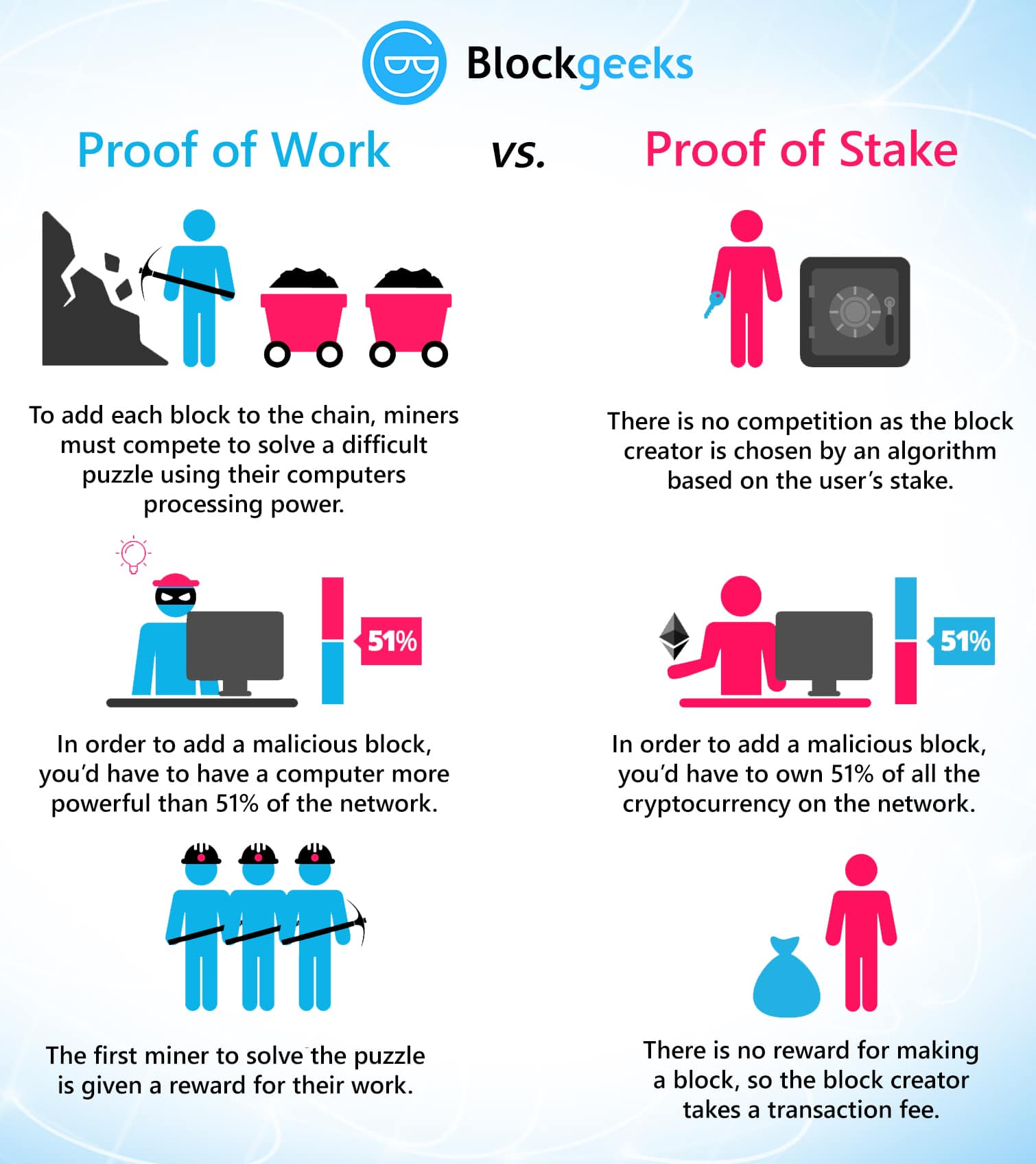
    Proof-of-work in a nutshell requires individuals to secure the blockchain by guessing random numbers and then performing complex calculations that check whether the number is valid or not. Individuals, or miners, race to find a valid number first and once someone does, the consensus resets making all previous calculations invalid and miners race to find a valid number again. This presents two primary problems. The first is that performing these complex calculations takes a considerable amount of energy and as the blockchain grows this energy cost only grows.

    The second is like any computer process, specialized hardware like ASICS or GPUs, can be used to perform these calculations faster. Not only does this create ewaste that’s only use is to perform these basically useless calculations, but also centralizes mining power in the hands of those who can afford to invest money in huge server farms which is the antithesis of blockchain’s mission to create decentralized trust. Proof-of-stake tries to solve the energy consumption aspect of proof-of-stake by removing the requirement to perform calculations and instead using large amounts of cryptocurrencies. Individuals, or stakers, lock up large amounts of cryptocurrencies for a certain amount of time in order to provide security to the network. However this fails to solve the centralization problem of proof-of-work and in some aspects only makes it worse as only individuals with a large amount of crypto can contribute to the security of the network.

    Spacemesh introduces a new consensus protocol called proof-of-space-and-time that requires individuals to reserve a certain amount of space on hard drives to secure the blockchain. This requires less energy than proof-of-stake and solves the centralization problem of both proof-of-stake and proof-of-works as storage is cheap and there are various mediums such as hard drives and SSD that can provide storage at differing price points. This protocol even has some advantages of other proof-of-stake protocols like Chia as it only requires data to be written and read occasionally, reducing wear on the storage medium unlike Chia which requires frequent reads and writes.

    Spacemesh is also experimenting with a blockweave or blockmesh to solve the scalability issue of blockchains. Traditional blockchains can only add one block of transactions at a time limiting scalability. Scalability solutions, most commonly referred to as Layer 2 solutions, are being developed for traditional blockchains like Etherum and Bitcoin but they are oftentimes complex and are still a while away from mass adoption. Spacemesh builds scalability into the blockchain architecture itself by allowing multiple blocks to be worked on and validated at once.

    Even the company itself is built with scalability in mind. Traditional blockchains need to raise funds and bootstrap the network. The most common way for them to do so was an initial coin offering or ICOs. In 2017 and 2018, there was an ICO boom that had the unfortunate side effect of attracting scammers that would take the funds and run. Spacemesh has a contract that distributes the funds over time ensuring that the company has an incentive to continue development and support the network. Also they bootstrap the network with their own servers and plan to slowly wean over their servers as the blockchain gains more and more participants.

    Spacemesh does not see their cryptocurrency called Smesh as becoming the dominant blockchain in the future. Rather they see a variety of blockchains that serve different purposes. Of course some current project will die but there is space for multiple blockchains to exist. Some will focus on privacy, some will focus on speed, some will focus on ledger size. However many there are though, Spacemesh will be there powering the smart contracts of the future.

    This summary is based on an interview with Anton Learner, Core Team Lead at Spacemesh. To listen to the full interview, click here.

    The post Episode Summary: Spacemesh: The Proof of Space and Time appeared first on Software Engineering Daily.


    Episode Summary: Showtime: Crypto Art and NFTs Oct 04, 2021
    Show notes

    NFTs are the current blockchain craze. Graphics designer “Beeple”, or Mike Winkelmen, sold his artwork as a NFT for $69 million in March. At the same time. Jack Dorsey, CEO of Twitter, sold a NFT of his first tweet for $2.9 million dollars . Though the hype has died down since then, it has driven development and adoption of NFTs and the ecosystem surrounding NFTs continues to thrive and grow. At the center of this ecosystem is Showtime, the Instagram for NFTs.

    To give some background NFTs, or non-fungible tokens, is a unique token that can be used to represent an asset on a blockchain. This token is non-reproducible and non-fungible, i.e individual tokens and not interchangeable. NFTs have a wide use case from art and paintings to in-game items. Even physical assets like property can be represented with a NFT. NFTs have the benefits of being on a blockchain, meaning it is easy to trade and sell it, as well as having an immutable record of who owned it and it’s transaction history. Similar to a painting’s provenance, this record can be used to determine ownership of a NFT and whether or not it is authentic. NFts can even encode contracts such that every time a NFT is sold the original author gets a small fee or cut.

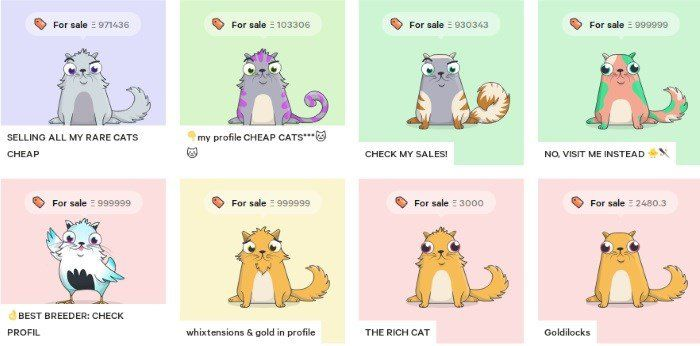
    NFTs first took of in 2017 with Cryptokitties, a blockchain based collectable, where individuals could purchase, collect and sell virtual cats as NFTs. There were previous attempts at using NFTs like Cryptopunks in 2016 but Cryptokitties was the first to take off and gain mainstream adoption.

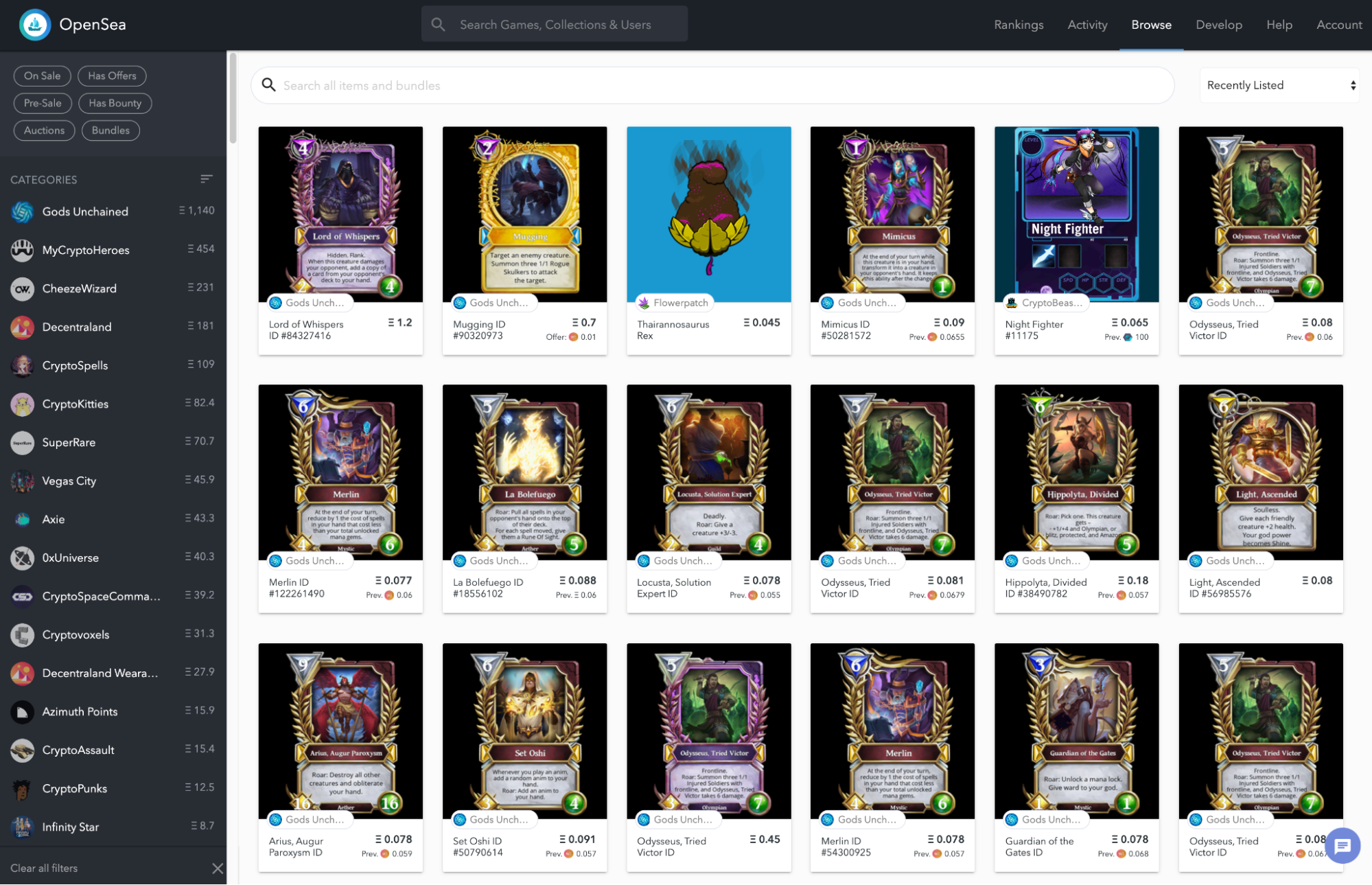
    After Crypto Kitties, the hype died down for a bit and important infrastructure was built surrounding NFTs that was not as consumer facing. ERC-721 was released in 2018 which formalized the technical definition of a NFT so that all NFTs followed the same standard. OpenSea was created in 2017 which was a search engine that allowed individuals to trade and search differing NFTs. In July of 2020, trading volume of NFTs exploded and though it has fallen from its peak, it is still growing.

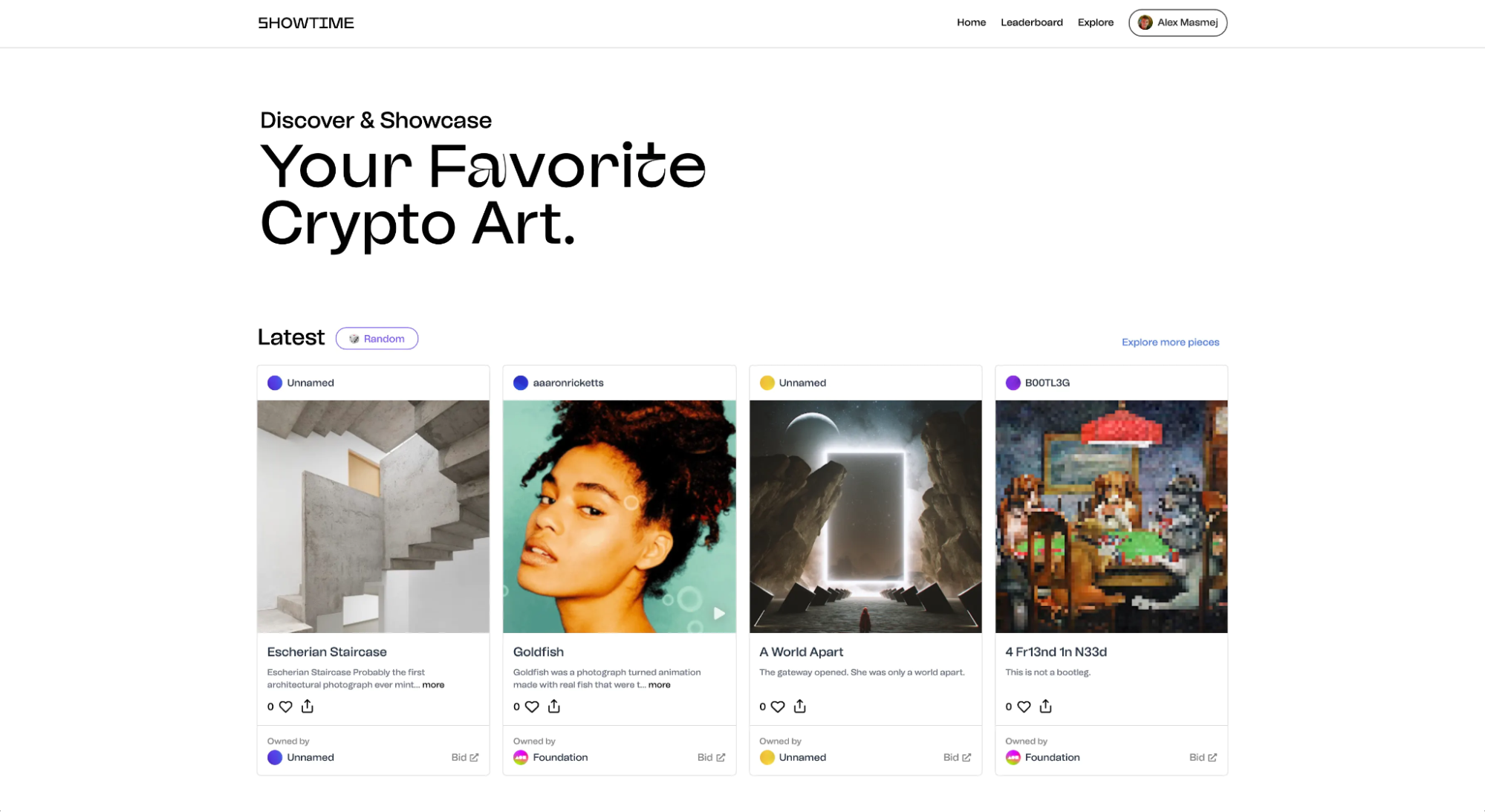
    Showtime is a social network built on top of NFTs. While you can’t trade or create NFTs right now, you can display all your NFTs in one place and have followers view your NFTs. Built with a React front end, Django backend, and leveraging OpenSea API for blockchain data, Show time serves as an Instagram for NFTs. A centralized location where collectors can display all their art and gain followers. After all, what use is buying art if people can’t see it. Currently only on web but looking to expand to mobile, Showtime isn’t necessarily a crypto application, rather it’s a web app focused on crypto. However it’s an important part of the NFT ecosystem as it raises awareness and increases mainstream adoption.

    Looking to the future, NFTs still have a ways to go and innovation is still ongoing. Companies like NIFTEX, NFTfi, NFX are providing loans against your NFT. Airbns created money out of idle homes, why not create money out of idle NFTs. Eventually any kind of video, photo or meme on social media will be a NFT. This is especially important with virtual reality and as the world transitions online. A virtual gallery for instance could be created with NFTs and you could charge people admission to view the gallery. Creator coins like those on BitClout or Rally enable individuals to quite literally sell themselves and their unique brand giving rise to a new influence economy and enable individuals to raise funds. All of these things are possible because of NFTs and the blockchain. The current NFT explosion is probably a fad due to the increased price of digital art, but the use cases for NFTs are so numerous that as long as blockchain is there, NFTs will be right alongside it.

    This summary is based on an interview with Alex Masmej, co-founder and CEO at Showtime. To listen to the full interview, click here

    The post Episode Summary: Showtime: Crypto Art and NFTs appeared first on Software Engineering Daily.


    Episode Summary: 1inch: The Super Liquider DEX Aggregator Sep 23, 2021
    Show notes

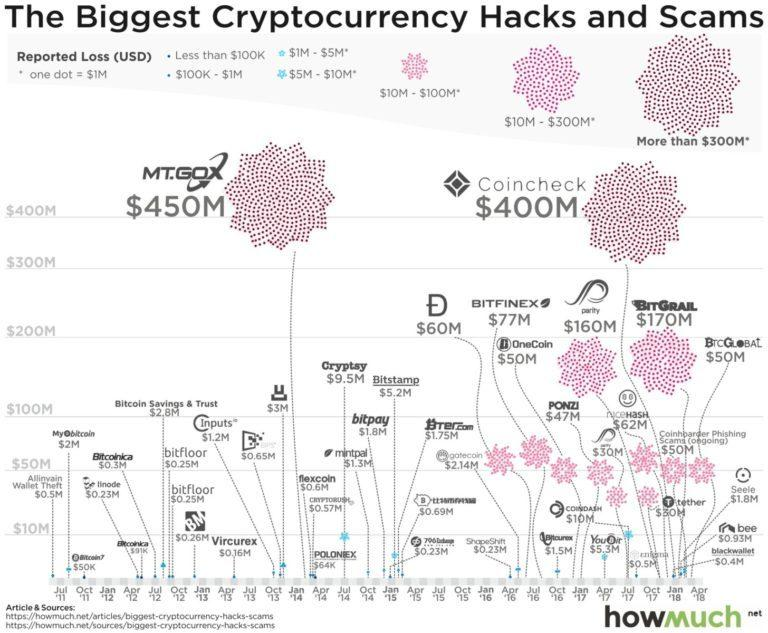
    As Bitcoin and other cryptocurrencies gained value in 2010, exchanges popped up so that people could extract value from these blockchain based currencies. However, the failure of Mt. Gox in 2014 and several other prominent exchanges illustrated the fallacies and weakness of centralized exchanges.

    The fact that large corporations had custody of individuals’ wallets and therefore their bitcoin presented not only large security concerns but also was antithetical to the decentralized, trustless philosophy that blockchains were trying to promote. The failure of centralized exchanges combined with the proliferation of ERC-20 standard and the subsequent tokens cemented the need for a blockchain-based exchange that gave users the ability to exchange various tokens.

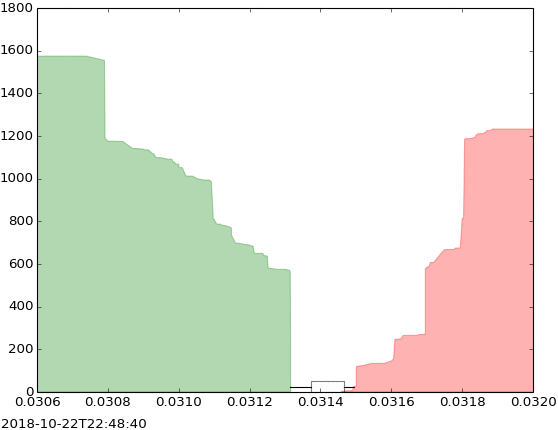
    Decentralized exchanges, or DEXs, solved this need. Early DEX’s were crude smart contracts that operated on a simple order book principle, where buyers and sellers manually submitted their orders and a smart contract kept track of them.

    This had two main problems. The first was that it was extremely costly in terms of gas. You had to pay gas in order to submit a trade that may never get filled and pay again when the trade was executed. This was eventually solved by moving order creation off-chain. The second problem was the reliance on market-makers to add liquidity to a market. This problem was eventually solved through the use of automated market makers, or AMM. However both of these improvements did not solve the fundamental issue that the more volume you wanted to trade, the worse price you would get. This price disparity, or slippage, was becoming more and more of a problem as the ecosystem grew and began to attract a larger amount of capital. 1inch and other DEX aggregators solve this problem.

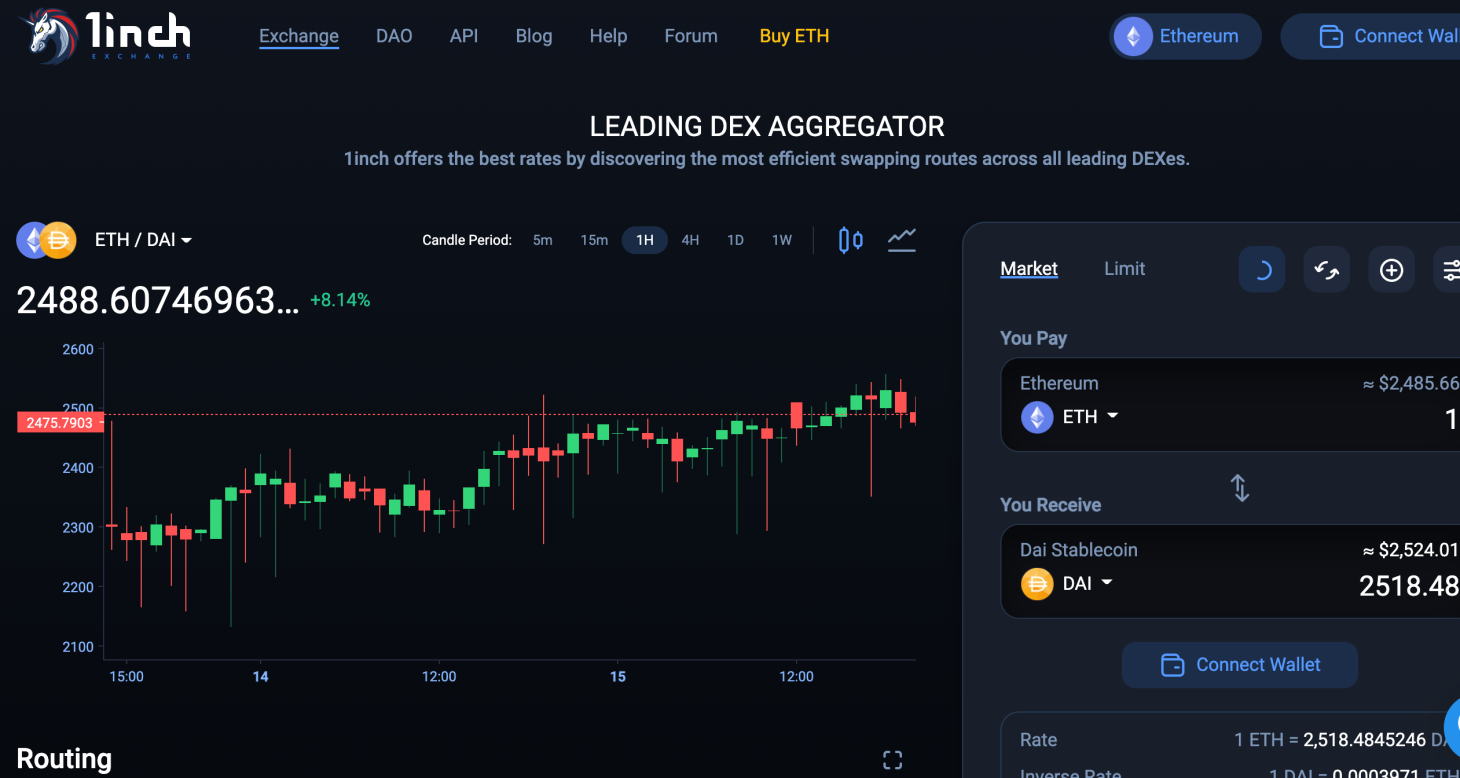
    1inch was created at Hackathon in 2019 as a simple information aggregator. It wanted to aggregate DEX prices by indexing available DEX to provide a price comparison to users looking to trade a specific set of tokens. This was enabled by the permissionless nature of blockchain. Unlike the traditional web where sites like Facebook and Twitter can restrict indexers from Google and other aggregators, data on the blockchain is viewable by everyone. The UI or front end of the DEXs could be abstracted away but the brains of the operation, the smart contract, can be viewed by everyone including the initial 1inch developers. In that same hackathon, 1inch added the capability to split order volume between multiple DEX’s. By splitting one large trade on a single exchange to multiple smaller transactions across multiple exchanges, 1inch allowed traders to make the trade off between lower slippage and increased total gas price for multiple transactions. For really large trades, this tradeoff was worth it.

    Today 1inch is the leading DEX aggregator supporting over 49 different DEXs on Ethereum and 12 different DEX on Binance. At its core it is still an informational service. It is not a broker, or middleware. However it has grown beyond just comparing pricing on different exchanges, rather it provides information on how to compose your swap to achieve the best possible rate. This could be as simple as choosing the DEX with the lowest rate or as complex as transacting with multiple exchanges across multiple currencies. With a front end hosted on IPFS and a governance token, 1inch is fully decentralized erasing the worries associated with centralized exchanges. It adds new DEXs in a few hours or at worst a few days. It provides better gas efficiency than even the Uniswap router. Tokens and DEXs will rise and fall but 1inch will be here to stay giving users the best price for their trade.

    This article is based on an interview with Anton Bukov about 1inch. Check out that interview and others at softwareengineeringdaily.com/

    The post Episode Summary: 1inch: The Super Liquider DEX Aggregator appeared first on Software Engineering Daily.


    Episode Summary: Synthetix: The Derivative Liquidity Protocol Sep 20, 2021
    Show notes

    Infamous for their role in the 2008 financial crisis, synthetic assets are a wrongfully maligned financial instrument that actually provide real world value. Simply put a synthetic asset is simply a combination of assets, usually some mix of options, futures and swaps, that attempt to track the value of another asset, typically not available to trade through traditional means. A fairly common synthetic asset is an inverse ETF, an asset that attempts to have an inverse relationship with another ETF. You can’t really buy negative shares, so instead you buy an asset that has attempts to mimic the inverse performance of an ETF.

    This type of synthetic asset allows people to create more value from a specific asset’s performance than is traditionally available. This is especially valuable in the DeFi space as the availability of synthetic assets on Ethereum enables individuals to create complex financial instruments and contracts that depend on assets that may not be traditionally available on the blockchain. A fairly simple example is you can have a synthetic Litecoin on the Ethereum blockchain that you can trade for and interact with on Ethereum instead of having to go to an exchange, deposit Etherum, create a Litecoin wallet, and make the trade. The development of synthetic assets on Ethereum cements Ethereum as the DeFi blockchain of choice and enables the development of a more mature financial market that more closely resembles traditional markets.

    Built from the backbone of Havven, a decentralized stablecoin, Synthetix gives people the ability to trade assets traditionally on the Ethereum blockchain. This can be everything from other cryptocurrencies such as Bitcoin and Dash or something not even available on any blockchain like USD or gold. There are two main users to Synthetix, stakers and traders. Traders are any type of physical user or smart contract that wants to use the exchange functionality of Synthetix. They need to trade Ethereum for some sort of synthetic assets like BTC and gold. They approach a trading contract, or more likely some sort of exchange aggregator like 1inch and exchange Ethereum for their synthetic assets like sUSD or sBTC. In exchange for providing this functionality Synthetix takes a fee. If it’s an actual individual, then the transaction is done. If it’s a smart contract, they can then leverage the exchange as underlying functionality in an app or a more complex instrument.

    On the other hand we have the stakers. Stakers approach the Staking contract and stake SNX, Synthetix native token, in exchange sUSD or some other synthetic asset. In exchange for staking they get a proportion of the exchange fees and other liquidity rewards. Through decentralized oracles, Synthetix keeps track of the price of the actual assets and if the price rises or falls, it releases or demands more SNX from individuals who staked, i.e the debt pool, proportion to how much of that synthetic asset there is to begin with. In other words, all the stakers collectively are responsible for providing more or less SNX if the price of one of the assets that backs a Synthetic asset rises or falls. This is better than individually backing assets as it distributes risk. However since the debt pool is shared, creating new synths is not a trivial process. There are a number of methodologies for new synthetic assets but all of them are community driven and must go through rigorous evaluation processes.

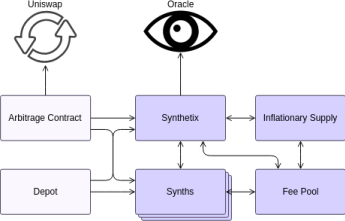
    Synthetix is constructed on the Ethereum blockchain and has various differing ERC20 tokens and smart contracts. At a high level the base components of Synthetix is the base contract, ERC20 Synths and the various contracts surrounding them, arbitrage contracts and Uniswap, the inflationary pool, and the fee pool.
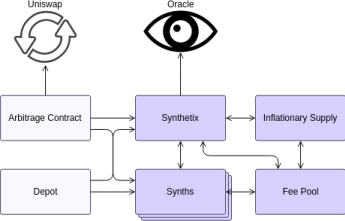
    High Level Architecture Diagram: Synthetic Docs

    Part of the reason why the logic and state management is divided into so many contracts is to manage smart contract size. Ethereum limits smart contract size to 24 KB, yet each external contract call costs gas. So implementing complex behavior like managing state and logic on the blockchain is a balancing act, weighing gas costs and complexity against the smart contract size. Another consideration when building Synthetix was how to integrate into the extensive developer tooling that has fairly recently become mainstream in the Ethereum ecosystem. Though lacking when compared to traditional web development or software engineering, Ethereum development has the best developer ecosystem and community of the various blockchains. Companies like Hardhart are always working to increase developer productivity and provide a development experience like traditional software development.

    Synthetix is rapidly becoming a staple in the DeFi community. Exchanges and liquidity pools like Curve are using it to reduce slippage when then exchange between multiple assets. Crypto hedge funds like dHedge are using it to reduce risk through exposure to inverse Eth and various other Syths and of course individuals are using it to gain exposure to assets not natively available on the blockchain. The company surrounding Synthetix, or more accurately the DAO surrounding Synthetix, is committed to building the protocol even further and integrating with future features of the Ethereum blockchain, like layer two scaling solution.

    To listen to the full interview on Synthetix with Justin Moses, click here.

    The post Episode Summary: Synthetix: The Derivative Liquidity Protocol appeared first on Software Engineering Daily.


    Cloud Blockchains: The Google of Blockchain with Nader Dabit Aug 24, 2021
    Show notes

    Google uses automated programs called spiders, or crawlers, to index and rank web pages. Then, when a user searches for something, it uses a special algorithm to determine the order of results to display (howstuffworks). This process, of course, applies to web pages on the internet.

    There are 2 major projects, worked on by the company Edge & Node, that do what Google does for the web, but for the blockchain. The first is called The Graph, which is an indexing protocol for organizing blockchain data and making it easily accessible. The second is Everest, a universally shared projects registry of onchain data.

    In this episode we talk to Nader Dabit, Developer Relations Engineer at Edge & Node.

    Sponsorship inquiries: sponsor@softwareengineeringdaily.com

    Transcript

    Transcript provided by We Edit Podcasts. Software Engineering Daily listeners can go to weeditpodcasts.com to get 15% off the first three months of audio editing and transcription services with code: SED. Thanks to We Edit Podcasts for partnering with SE Daily. Please click here to view this show’s transcript.


    The post Cloud Blockchains: The Google of Blockchain with Nader Dabit appeared first on Software Engineering Daily.


    Previous 1 2 3 4 10 Next

    Related Podcasts

    Reply All

    1

    Reply All Games & Hobbies
    Inside VR & AR

    2

    Inside VR & AR Gadgets
    Note to Self

    3

    Note to Self News
    BrainStuff

    4

    BrainStuff Natural Sciences
    This Week in Tech (Audio)

    5

    This Week in Tech (Audio) News
    Hands-On Tech (Audio)

    6

    Hands-On Tech (Audio) Technology
    footer-logo

    Contact Us

    Toll Free: 844-670-7747

    Links

    • Home
    • Top Charts
    • Networks
    • Apps
    • Independents Podcasts
    • Podcast Advertising
    • Podcast News
    • Contact Us
    • About Us
    • Analytics & Insights

    Stay Connected

      Privacy, Terms of Use & Our Code of Ethics Protecting Content Creators Copyrights