Security at Coinbase with Philip Martin
May 15, 2025
Cryptocurrency exchanges face unique security challenges that require specialized threat assessments and planning.
Coinbase is a cryptocurrency exchange based in the United States. It was founded in 2012 and has evolved alongside cryptocurrency as a technology.
Philip Martin is the Chief Security Officer at Coinbase. Prior to Coinbase, Philip built and led the Incident Response and Security Engineering teams at Palantir and was a US Army counterintelligence agent and Arabic linguist.
In this episode, Philip joins the podcast with Gregor Vand to talk about his career and security at Coinbase.
Gregor Vand is a security-focused technologist, and is the founder and CTO of Mailpass. Previously, Gregor was a CTO across cybersecurity, cyber insurance and general software engineering companies. He has been based in Asia Pacific for almost a decade and can be found via his profile at vand.hk.
The State of the Ethereum Blockchain with Andrew Koller
Mar 11, 2025
Ethereum is a decentralized blockchain platform that was created by Vitalik Buterin and Gavin Wood in 2015. It uses a cryptocurrency called Ether as its native token to power transactions and operations on the Ethereum network. Ethereum’s proponents envision a future where the network forms the foundation for a second platform layer, called L2, where decentralized applications are run.
As we approach the 10th anniversary of Ethereum’s creation we wanted to understand the state of the technology so we spoke with Andrew Koller who is an engineer at Kraken, which is a software company and popular cryptocurrency exchange. In this conversation Andrew talks about Kraken, security considerations at an exchange, the history of Ethereum, L2, and the future of Ethereum.
Sean’s been an academic, startup founder, and Googler. He has published works covering a wide range of topics from AI to quantum computing. Currently, Sean is an AI Entrepreneur in Residence at Confluent where he works on AI strategy and thought leadership. You can connect with Sean on LinkedIn.
A Decentralized Compute Marketplace with Greg Osuri
Jun 13, 2024
Akash Network is a decentralized cloud computing platform that leverages unused compute capacity around the world. It makes this capacity available to others, and provides a decentralized peer-to-peer model for managing and paying for these resources in an online marketplace.
Greg Osuri is the CEO for OverClock Labs which created Akash Network. He joins the show to talk about Akash.
This episode is hosted by Lee Atchison. Lee Atchison is a software architect, author, and thought leader on cloud computing and application modernization. His best-selling book, Architecting for Scale (O’Reilly Media), is an essential resource for technical teams looking to maintain high availability and manage risk in their cloud environments.
Lee is the host of his podcast, Modern Digital Business, an engaging and informative podcast produced for people looking to build and grow their digital business with the help of modern applications and processes developed for today’s fast-moving business environment. Listen at mdb.fm. Follow Lee at softwarearchitectureinsights.com, and see all his content at leeatchison.com.
Pinata and the Interplanetary File System with Matt Ober
May 16, 2024
The interplanetary filesystem, or IPFS, is a peer-to-peer network that uses a distributed and decentralized model. Functionally, IPFS allows users to store and share files without having to rely on a single source of truth for those files.
Matt Ober is the Co-Founder & CTO of Pinata. He joins the show to talk about IPFS and Pinata.
This episode is hosted by Lee Atchison. Lee Atchison is a software architect, author, and thought leader on cloud computing and application modernization. His best-selling book, Architecting for Scale (O’Reilly Media), is an essential resource for technical teams looking to maintain high availability and manage risk in their cloud environments.
Lee is the host of his podcast, Modern Digital Business, an engaging and informative podcast produced for people looking to build and grow their digital business with the help of modern applications and processes developed for today’s fast-moving business environment. Listen at mdb.fm. Follow Lee at softwarearchitectureinsights.com, and see all his content at leeatchison.com.
Modular Blockchain Architecture with Nader Dabit
Aug 30, 2022
Web infrastructure has evolved from individual servers to shared hosting services to virtual machines and virtual functions. The future of the internet however is looking toward a much more distributed computation model . Blockchain technology is central to the future of this modern internet . Blockchains are still in their infancy. And the most people blockchains are intimately tied to crypto currencies . But the use of blockchain is substantially larger than that of crypto. Auctions provide a model for distributed computation that allows no centralized ownership and no centralized control of large scale applications. Celestia is developing blockchain technology that enables these modern distributed applications. Nader Dabit is in Developer Relations at Celestia and is an expert in blockchain technology, and he joins us today.
This episode is hosted by Lee Atchison. Lee Atchison is a software architect, author, and thought leader on cloud computing and application modernization. His most recent book, Architecting for Scale (O’Reilly Media) is an essential resource for technical teams looking to maintain high availability and manage risk in their cloud environments. Lee is the host of his podcast, Modern Digital Business, an engaging and informative podcast produced for people looking to build and grow their digital business with the help of modern applications and processes developed for today’s fast-moving business environment. Subscribe at mdb.fm. Follow Lee, at leeatchison.com.
Gitcoin Ecosystem with Gloria Kimbwala
Jun 30, 2022
Most technology companies rely on open source software projects. But open source software projects are often maintained by a group of people that is not affiliated with any particular company. When an open source project develops too much technical debt, it can become a tragedy of the commons. Who is responsible for maintaining these open source projects?
This is the motivation for open source bounties. Companies and individuals who rely on open source create bounties, which are financial incentives for developers to solve problems within the open source project.
Gitcoin is a platform for open source bounties that is mediated by an Ethereum smart contract. Gloria Kimbwala works at Gitcoin and joins the show to discuss the recent developments in the Gitcoin Ecosystem.
Transcript provided by We Edit Podcasts. Software Engineering Daily listeners can go to weeditpodcasts.com to get 15% off the first three months of audio editing and transcription services with code: SED. Thanks to We Edit Podcasts for partnering with SE Daily. Please click here to view this show’s transcript.
Coinrule Automated Crypto Trading with Zdenek Hofler
Jun 25, 2022
Between hyper financialisation and the growth of automation in the world, trade and investments have become an ever more prevalent and important tool for the mass market. But the relative knowledge of professional and hobbyist investors is different, and so is the access to opportunities. Coinrule empowers regular people to compete with professional traders by automating investments without having to learn a single line of code. Zdeněk Höfler is the co-founder of Coinrule and joins the show to discuss what he and his team have built.
Transcript provided by We Edit Podcasts. Software Engineering Daily listeners can go to weeditpodcasts.com to get 15% off the first three months of audio editing and transcription services with code: SED. Thanks to We Edit Podcasts for partnering with SE Daily. Please click here to view this show’s transcript.
Protocol Labs Research with Jeromy Johnson
Jun 24, 2022
Breakthroughs from labs that are exclusively or mostly focused on research tend to stay buried as papers. Sometimes the lag is natural, the research is far ahead of its broad applicability. But we find that there are hundreds of breakthroughs useful long before they reach users. It can take many years, even decades, before breakthroughs are realized in products that improve people’s lives. This is massively inefficient! Research has to be coupled closely with development and deployment, so that we can iterate through the cycle quickly, and build good products that actually solve problems for people. Protocol Labs is a research, development, and deployment lab for network protocols. Their projects include IPFS, Filecoin, libp2p, and many more.
Jeromy Johnson is a distributed systems researcher focused on incentive mechanism design and trustless distributed system scalability. He joins us today to share how Protocol Labs is spearheading the innovation in web3.
Transcript provided by We Edit Podcasts. Software Engineering Daily listeners can go to weeditpodcasts.com to get 15% off the first three months of audio editing and transcription services with code: SED. Thanks to We Edit Podcasts for partnering with SE Daily. Please click here to view this show’s transcript.
As crypto gains worldwide attention, the most scalable, resilient and performant systems are required for the industry to thrive. Products must be designed for a mix of technical and non-technical users. Blockchain.com’s VP of Engineering Lewis Tuff takes us behind the scenes for a look at the architecture, programming languages and database choices required to build an open, accessible and fair financial future, one piece of software at a time.
Transcript provided by We Edit Podcasts. Software Engineering Daily listeners can go to weeditpodcasts.com to get 15% off the first three months of audio editing and transcription services with code: SED. Thanks to We Edit Podcasts for partnering with SE Daily. Please click here to view this show’s transcript.
Valora Decentralized Venmo with Charlie Andrews-Jubelt
Jun 16, 2022
Web3 promises to change the way we interact and transact online, but today’s dapps and wallets are hard to use. They are typically optimized for desktop machines and domain experts. In particular, it can be hard to bring value on-chain, and hard to know what to do once you’ve onboarded. Charlie Andrews-Jubelt is a software engineer who works on Valora, a mobile wallet, and Revo, a dapp that makes it easier to invest in DeFi and get compound interest. Charlie joins the show to talk about the engineering challenges of making web3 more accessible.
Transcript provided by We Edit Podcasts. Software Engineering Daily listeners can go to weeditpodcasts.com to get 15% off the first three months of audio editing and transcription services with code: SED. Thanks to We Edit Podcasts for partnering with SE Daily. Please click here to view this show’s transcript.
Infura Ethereum Infrastructure with E.G. Galano
Jun 02, 2022
Developers looking for read or write access to Ethereum, Polygon, IPFS or other Web3 networks in order to get their idea in the hands of users need reliable RPC endpoints they can count on, whether they are working on a hackathon project or running hybrid architecture for a production application. Infura provides a platform for developers to get access to those end points as well as tooling to help them build on Web3. With its origin being Ethereum, Infura has expanded to both EVM-compatible and non-EVM compatible blockchains, as well as decentralized storage. From wallets, DeFi, gaming, Metaverse, or NFT projects, Infura is relied upon by some of the most used and popular projects in Web3. With billions of daily requests handled, the team has built knowledge on how to scale with reliability.
Co-Founder and General Manager of Infura, EG Galano joins the show to talk about Blockchain infrastructure and protocols.
Transcript provided by We Edit Podcasts. Software Engineering Daily listeners can go to weeditpodcasts.com to get 15% off the first three months of audio editing and transcription services with code: SED. Thanks to We Edit Podcasts for partnering with SE Daily. Please click here to view this show’s transcript.
Blockchains were the first systems to allow guaranteed permanent storage of public data. As cryptocurrency technology has advanced, a rich ecosystem of permanent storage and compute has developed as well. One of these is Arweave, a system for permanent information storage. Sam Williams is a founder of Arweave and joins the show to talk through how Arweave works and his motivation for starting it.
Transcript provided by We Edit Podcasts. Software Engineering Daily listeners can go to weeditpodcasts.com to get 15% off the first three months of audio editing and transcription services with code: SED. Thanks to We Edit Podcasts for partnering with SE Daily. Please click here to view this show’s transcript.
Web3 Infrastructure with Josh Neuroth
May 07, 2022
Web3 is powerful but difficult to work with. Deploying blockchain nodes, accessing data, and performing staking operations are non-trivial engineering actions. To simplify web3, Ankr hosts APIs for node deployment, RPC, and staking. Josh Neuroth from Ankr joins the show to talk about modern web3 infrastructure.
Transcript provided by We Edit Podcasts. Software Engineering Daily listeners can go to weeditpodcasts.com to get 15% off the first three months of audio editing and transcription services with code: SED. Thanks to We Edit Podcasts for partnering with SE Daily. Please click here to view this show’s transcript.
Bitski: Web3 Infrastructure with Patrick Tescher
Apr 01, 2022
Crypto companies have cemented themselves as a company category that is not going away. Bitski is a company that makes web3 tooling and infrastructure, including a wallet and a collection of tools for creating and selling NFTs.
Patrick Tescher joins the show to talk through the engineering behind crypto infrastructure and APIs.
Transcript provided by We Edit Podcasts. Software Engineering Daily listeners can go to weeditpodcasts.com to get 15% off the first three months of audio editing and transcription services with code: SED. Thanks to We Edit Podcasts for partnering with SE Daily. Please click here to view this show’s transcript.
As the internet has grown, increasingly, we are consumers of services provided by corporations rather than owners and operators of our own systems. To many, this trend towards centralization is antithetical to the spirit of a free and open internet.
Urbit is a new operating system and peer-to-peer network. There are several layers of novel ideas in this ambitious project. In this episode, I interview Galen Wolfe-Pauly about the Urbit project.
Transcript provided by We Edit Podcasts. Software Engineering Daily listeners can go to weeditpodcasts.com to get 15% off the first three months of audio editing and transcription services with code: SED. Thanks to We Edit Podcasts for partnering with SE Daily. Please click here to view this show’s transcript.
Episode Summary: Spacemesh: The Proof of Space and Time
Oct 05, 2021
Spacemesh is an innovative blockchain startup aiming to solve the problem of running smart contracts at scale. A second generation blockchain startup that aims to learn the lessons of past blockchains, Spacemesh aims to make the blockchain better, more usable, more robust, and of course more popular among users. Current blockchains are not scalable both in terms of transaction volume and also the hardware considerations of the blockchains themselves. Bitcoin and other proof of work cryptocurrencies currently consume around two percent of the world’s energy consumption and that figure is only growing. ASICS and CMP graphics cards are effectively e-waste that only serve one purpose and quickly become obsolete once new versions come out. Spacemesh serves to solve this main problem of scalability both from a consensus level and a blockchain architecture level to make Spacemesh the preeminent blockchain for running smart contracts at scale.
At the core of Spacemesh is a new consensus protocol that aims to solve the problems presented by the two incumbent protocols proof-of-work and proof-of-stake.
Proof-of-work in a nutshell requires individuals to secure the blockchain by guessing random numbers and then performing complex calculations that check whether the number is valid or not. Individuals, or miners, race to find a valid number first and once someone does, the consensus resets making all previous calculations invalid and miners race to find a valid number again. This presents two primary problems. The first is that performing these complex calculations takes a considerable amount of energy and as the blockchain grows this energy cost only grows.
The second is like any computer process, specialized hardware like ASICS or GPUs, can be used to perform these calculations faster. Not only does this create ewaste that’s only use is to perform these basically useless calculations, but also centralizes mining power in the hands of those who can afford to invest money in huge server farms which is the antithesis of blockchain’s mission to create decentralized trust. Proof-of-stake tries to solve the energy consumption aspect of proof-of-stake by removing the requirement to perform calculations and instead using large amounts of cryptocurrencies. Individuals, or stakers, lock up large amounts of cryptocurrencies for a certain amount of time in order to provide security to the network. However this fails to solve the centralization problem of proof-of-work and in some aspects only makes it worse as only individuals with a large amount of crypto can contribute to the security of the network.
Spacemesh introduces a new consensus protocol called proof-of-space-and-time that requires individuals to reserve a certain amount of space on hard drives to secure the blockchain. This requires less energy than proof-of-stake and solves the centralization problem of both proof-of-stake and proof-of-works as storage is cheap and there are various mediums such as hard drives and SSD that can provide storage at differing price points. This protocol even has some advantages of other proof-of-stake protocols like Chia as it only requires data to be written and read occasionally, reducing wear on the storage medium unlike Chia which requires frequent reads and writes.
Spacemesh is also experimenting with a blockweave or blockmesh to solve the scalability issue of blockchains. Traditional blockchains can only add one block of transactions at a time limiting scalability. Scalability solutions, most commonly referred to as Layer 2 solutions, are being developed for traditional blockchains like Etherum and Bitcoin but they are oftentimes complex and are still a while away from mass adoption. Spacemesh builds scalability into the blockchain architecture itself by allowing multiple blocks to be worked on and validated at once.
Even the company itself is built with scalability in mind. Traditional blockchains need to raise funds and bootstrap the network. The most common way for them to do so was an initial coin offering or ICOs. In 2017 and 2018, there was an ICO boom that had the unfortunate side effect of attracting scammers that would take the funds and run. Spacemesh has a contract that distributes the funds over time ensuring that the company has an incentive to continue development and support the network. Also they bootstrap the network with their own servers and plan to slowly wean over their servers as the blockchain gains more and more participants.
Spacemesh does not see their cryptocurrency called Smesh as becoming the dominant blockchain in the future. Rather they see a variety of blockchains that serve different purposes. Of course some current project will die but there is space for multiple blockchains to exist. Some will focus on privacy, some will focus on speed, some will focus on ledger size. However many there are though, Spacemesh will be there powering the smart contracts of the future.
This summary is based on an interview with Anton Learner, Core Team Lead at Spacemesh. To listen to the full interview, click here.
Episode Summary: Showtime: Crypto Art and NFTs
Oct 04, 2021
NFTs are the current blockchain craze. Graphics designer “Beeple”, or Mike Winkelmen, sold his artwork as a NFT for $69 million in March. At the same time. Jack Dorsey, CEO of Twitter, sold a NFT of his first tweet for $2.9 million dollars . Though the hype has died down since then, it has driven development and adoption of NFTs and the ecosystem surrounding NFTs continues to thrive and grow. At the center of this ecosystem is Showtime, the Instagram for NFTs.
To give some background NFTs, or non-fungible tokens, is a unique token that can be used to represent an asset on a blockchain. This token is non-reproducible and non-fungible, i.e individual tokens and not interchangeable. NFTs have a wide use case from art and paintings to in-game items. Even physical assets like property can be represented with a NFT. NFTs have the benefits of being on a blockchain, meaning it is easy to trade and sell it, as well as having an immutable record of who owned it and it’s transaction history. Similar to a painting’s provenance, this record can be used to determine ownership of a NFT and whether or not it is authentic. NFts can even encode contracts such that every time a NFT is sold the original author gets a small fee or cut.
NFTs first took of in 2017 with Cryptokitties, a blockchain based collectable, where individuals could purchase, collect and sell virtual cats as NFTs. There were previous attempts at using NFTs like Cryptopunks in 2016 but Cryptokitties was the first to take off and gain mainstream adoption.
After Crypto Kitties, the hype died down for a bit and important infrastructure was built surrounding NFTs that was not as consumer facing. ERC-721 was released in 2018 which formalized the technical definition of a NFT so that all NFTs followed the same standard. OpenSea was created in 2017 which was a search engine that allowed individuals to trade and search differing NFTs. In July of 2020, trading volume of NFTs exploded and though it has fallen from its peak, it is still growing.
Showtime is a social network built on top of NFTs. While you can’t trade or create NFTs right now, you can display all your NFTs in one place and have followers view your NFTs. Built with a React front end, Django backend, and leveraging OpenSea API for blockchain data, Show time serves as an Instagram for NFTs. A centralized location where collectors can display all their art and gain followers. After all, what use is buying art if people can’t see it. Currently only on web but looking to expand to mobile, Showtime isn’t necessarily a crypto application, rather it’s a web app focused on crypto. However it’s an important part of the NFT ecosystem as it raises awareness and increases mainstream adoption.
Looking to the future, NFTs still have a ways to go and innovation is still ongoing. Companies like NIFTEX, NFTfi, NFX are providing loans against your NFT. Airbns created money out of idle homes, why not create money out of idle NFTs. Eventually any kind of video, photo or meme on social media will be a NFT. This is especially important with virtual reality and as the world transitions online. A virtual gallery for instance could be created with NFTs and you could charge people admission to view the gallery. Creator coins like those on BitClout or Rally enable individuals to quite literally sell themselves and their unique brand giving rise to a new influence economy and enable individuals to raise funds. All of these things are possible because of NFTs and the blockchain. The current NFT explosion is probably a fad due to the increased price of digital art, but the use cases for NFTs are so numerous that as long as blockchain is there, NFTs will be right alongside it.
This summary is based on an interview with Alex Masmej, co-founder and CEO at Showtime. To listen to the full interview, click here
Episode Summary: 1inch: The Super Liquider DEX Aggregator
Sep 23, 2021
As Bitcoin and other cryptocurrencies gained value in 2010, exchanges popped up so that people could extract value from these blockchain based currencies. However, the failure of Mt. Gox in 2014 and several other prominent exchanges illustrated the fallacies and weakness of centralized exchanges.
The fact that large corporations had custody of individuals’ wallets and therefore their bitcoin presented not only large security concerns but also was antithetical to the decentralized, trustless philosophy that blockchains were trying to promote. The failure of centralized exchanges combined with the proliferation of ERC-20 standard and the subsequent tokens cemented the need for a blockchain-based exchange that gave users the ability to exchange various tokens.
Decentralized exchanges, or DEXs, solved this need. Early DEX’s were crude smart contracts that operated on a simple order book principle, where buyers and sellers manually submitted their orders and a smart contract kept track of them.
This had two main problems. The first was that it was extremely costly in terms of gas. You had to pay gas in order to submit a trade that may never get filled and pay again when the trade was executed. This was eventually solved by moving order creation off-chain. The second problem was the reliance on market-makers to add liquidity to a market. This problem was eventually solved through the use of automated market makers, or AMM. However both of these improvements did not solve the fundamental issue that the more volume you wanted to trade, the worse price you would get. This price disparity, or slippage, was becoming more and more of a problem as the ecosystem grew and began to attract a larger amount of capital. 1inch and other DEX aggregators solve this problem.
1inch was created at Hackathon in 2019 as a simple information aggregator. It wanted to aggregate DEX prices by indexing available DEX to provide a price comparison to users looking to trade a specific set of tokens. This was enabled by the permissionless nature of blockchain. Unlike the traditional web where sites like Facebook and Twitter can restrict indexers from Google and other aggregators, data on the blockchain is viewable by everyone. The UI or front end of the DEXs could be abstracted away but the brains of the operation, the smart contract, can be viewed by everyone including the initial 1inch developers. In that same hackathon, 1inch added the capability to split order volume between multiple DEX’s. By splitting one large trade on a single exchange to multiple smaller transactions across multiple exchanges, 1inch allowed traders to make the trade off between lower slippage and increased total gas price for multiple transactions. For really large trades, this tradeoff was worth it.
Today 1inch is the leading DEX aggregator supporting over 49 different DEXs on Ethereum and 12 different DEX on Binance. At its core it is still an informational service. It is not a broker, or middleware. However it has grown beyond just comparing pricing on different exchanges, rather it provides information on how to compose your swap to achieve the best possible rate. This could be as simple as choosing the DEX with the lowest rate or as complex as transacting with multiple exchanges across multiple currencies. With a front end hosted on IPFS and a governance token, 1inch is fully decentralized erasing the worries associated with centralized exchanges. It adds new DEXs in a few hours or at worst a few days. It provides better gas efficiency than even the Uniswap router. Tokens and DEXs will rise and fall but 1inch will be here to stay giving users the best price for their trade.
This article is based on an interview with Anton Bukov about 1inch. Check out that interview and others at softwareengineeringdaily.com/
Episode Summary: Synthetix: The Derivative Liquidity Protocol
Sep 20, 2021
Infamous for their role in the 2008 financial crisis, synthetic assets are a wrongfully maligned financial instrument that actually provide real world value. Simply put a synthetic asset is simply a combination of assets, usually some mix of options, futures and swaps, that attempt to track the value of another asset, typically not available to trade through traditional means. A fairly common synthetic asset is an inverse ETF, an asset that attempts to have an inverse relationship with another ETF. You can’t really buy negative shares, so instead you buy an asset that has attempts to mimic the inverse performance of an ETF.
This type of synthetic asset allows people to create more value from a specific asset’s performance than is traditionally available. This is especially valuable in the DeFi space as the availability of synthetic assets on Ethereum enables individuals to create complex financial instruments and contracts that depend on assets that may not be traditionally available on the blockchain. A fairly simple example is you can have a synthetic Litecoin on the Ethereum blockchain that you can trade for and interact with on Ethereum instead of having to go to an exchange, deposit Etherum, create a Litecoin wallet, and make the trade. The development of synthetic assets on Ethereum cements Ethereum as the DeFi blockchain of choice and enables the development of a more mature financial market that more closely resembles traditional markets.
Built from the backbone of Havven, a decentralized stablecoin, Synthetix gives people the ability to trade assets traditionally on the Ethereum blockchain. This can be everything from other cryptocurrencies such as Bitcoin and Dash or something not even available on any blockchain like USD or gold. There are two main users to Synthetix, stakers and traders. Traders are any type of physical user or smart contract that wants to use the exchange functionality of Synthetix. They need to trade Ethereum for some sort of synthetic assets like BTC and gold. They approach a trading contract, or more likely some sort of exchange aggregator like 1inch and exchange Ethereum for their synthetic assets like sUSD or sBTC. In exchange for providing this functionality Synthetix takes a fee. If it’s an actual individual, then the transaction is done. If it’s a smart contract, they can then leverage the exchange as underlying functionality in an app or a more complex instrument.
On the other hand we have the stakers. Stakers approach the Staking contract and stake SNX, Synthetix native token, in exchange sUSD or some other synthetic asset. In exchange for staking they get a proportion of the exchange fees and other liquidity rewards. Through decentralized oracles, Synthetix keeps track of the price of the actual assets and if the price rises or falls, it releases or demands more SNX from individuals who staked, i.e the debt pool, proportion to how much of that synthetic asset there is to begin with. In other words, all the stakers collectively are responsible for providing more or less SNX if the price of one of the assets that backs a Synthetic asset rises or falls. This is better than individually backing assets as it distributes risk. However since the debt pool is shared, creating new synths is not a trivial process. There are a number of methodologies for new synthetic assets but all of them are community driven and must go through rigorous evaluation processes.
Synthetix is constructed on the Ethereum blockchain and has various differing ERC20 tokens and smart contracts. At a high level the base components of Synthetix is the base contract, ERC20 Synths and the various contracts surrounding them, arbitrage contracts and Uniswap, the inflationary pool, and the fee pool.
High Level Architecture Diagram: Synthetic Docs
Part of the reason why the logic and state management is divided into so many contracts is to manage smart contract size. Ethereum limits smart contract size to 24 KB, yet each external contract call costs gas. So implementing complex behavior like managing state and logic on the blockchain is a balancing act, weighing gas costs and complexity against the smart contract size. Another consideration when building Synthetix was how to integrate into the extensive developer tooling that has fairly recently become mainstream in the Ethereum ecosystem. Though lacking when compared to traditional web development or software engineering, Ethereum development has the best developer ecosystem and community of the various blockchains. Companies like Hardhart are always working to increase developer productivity and provide a development experience like traditional software development.
Synthetix is rapidly becoming a staple in the DeFi community. Exchanges and liquidity pools like Curve are using it to reduce slippage when then exchange between multiple assets. Crypto hedge funds like dHedge are using it to reduce risk through exposure to inverse Eth and various other Syths and of course individuals are using it to gain exposure to assets not natively available on the blockchain. The company surrounding Synthetix, or more accurately the DAO surrounding Synthetix, is committed to building the protocol even further and integrating with future features of the Ethereum blockchain, like layer two scaling solution.
Cloud Blockchains: The Google of Blockchain with Nader Dabit
Aug 24, 2021
Google uses automated programs called spiders, or crawlers, to index and rank web pages. Then, when a user searches for something, it uses a special algorithm to determine the order of results to display (howstuffworks). This process, of course, applies to web pages on the internet.
There are 2 major projects, worked on by the company Edge & Node, that do what Google does for the web, but for the blockchain. The first is called The Graph, which is an indexing protocol for organizing blockchain data and making it easily accessible. The second is Everest, a universally shared projects registry of onchain data.
In this episode we talk to Nader Dabit, Developer Relations Engineer at Edge & Node.
Transcript provided by We Edit Podcasts. Software Engineering Daily listeners can go to weeditpodcasts.com to get 15% off the first three months of audio editing and transcription services with code: SED. Thanks to We Edit Podcasts for partnering with SE Daily. Please click here to view this show’s transcript.
Unstoppable Domains: Blockchain Domains with Matthew Gould
Aug 18, 2021
Domain names are the address of your website that people type into the browser URL bar. Once purchased, a domain name is stored on your behalf by custodians like Google domains. Blockchain domains, on the other hand, are similar to regular domain names except they are stored and controlled in your cryptocurrency wallet.
The company Unstoppable Domains provides blockchain domains that enable users to do things like keep a universal username across apps and websites, act as a website URL, act as a payment address for wallets, and much more. Replace cryptocurrency addresses with human readable names!
In this episode we talk to Matthew Gould, Founder and CEO of Unstoppable Domains.
Transcript provided by We Edit Podcasts. Software Engineering Daily listeners can go to weeditpodcasts.com to get 15% off the first three months of audio editing and transcription services with code: SED. Thanks to We Edit Podcasts for partnering with SE Daily. Please click here to view this show’s transcript.
Hedera Hashgraph: Proof-of-Stake Public Networks with Leemon Baird
Aug 03, 2021
Blockchain protocols like Bitcoin and Ethereum have changed the cyber world dramatically in the last decade. They’ve created communities of like-minded developers, generated new financial markets, and popularized “decentralization” in computer networks. However, they require large resources to operate which makes scaling difficult and transactions expensive.
Hedera is a decentralized public network that takes the previous innovations a step further. The Hedera Consensus and Token service enables developers to make tokens and create publicly verifiable and scalable timestamps for any application at an incredibly fast speed, highest grade security, and extremely low bandwidth consumption.
In this episode, we talk to Leemon Baird, Founder and Chief Scientist at Hedera Hashgraph. We discuss proof-of-stake public networks, the hashgraph consensus, and the future of blockchains.
Transcript provided by We Edit Podcasts. Software Engineering Daily listeners can go to weeditpodcasts.com to get 15% off the first three months of audio editing and transcription services with code: SED. Thanks to We Edit Podcasts for partnering with SE Daily. Please click here to view this show’s transcript.
Dark Forest: Transparency on Blockchains with Zero-Knowledge Proofs with Brian Gu
Jun 21, 2021
Complete information games are games where every player has information about the game sequence, strategies, and payoffs throughout gameplay. Playing chess, for example, relies on knowing the location of every piece everywhere on the board. In an incomplete information game like Minecraft, you continually gain new information during gameplay.
Until very recently, incomplete information was nearly impossible on blockchains because every transaction and party is public. However, applied zero-knowledge cryptography on Ethereum has advanced greatly the past 18 months and is changing the transparency of blockchains.
In this episode we talk to Brian Gu, a creator of the new game Dark Forest. Dark Forest is a space-conquest game built on Ethereum where players discover and conquer planets in an infinite, procedurally-generated, cryptographically-specified universe. It uses zero-knowledge proofs to validate game moves on Ethereum without sharing information to other players about the moves. We discuss the technology behind Dark Forest and the possibilities of a potentially less transparent blockchain future.
Transcript provided by We Edit Podcasts. Software Engineering Daily listeners can go to weeditpodcasts.com to get 15% off the first three months of audio editing and transcription services with code: SED. Thanks to We Edit Podcasts for partnering with SE Daily. Please click here to view this show’s transcript.
Spacemesh: A New Consensus Protocol Anton Learner
Jun 18, 2021
Proof of Work cryptocurrency mining, as used on the Ethereum and Bitcoin blockchains, requires huge amounts of energy to validate transactions and generate new tokens. The alternative, Proof of Stake, needs large deposits of assets to be staked up front in order to work. While both consensus protocols have their own drawbacks, they are the current industry standards.
The company Spacemesh developed a new consensus protocol with the goal of powering an energy-efficient, decentralized, secure, and scalable smart contracts global computer and a cryptocurrency in the permissionless settings. They call their protocol Proof of Space Time which works on a blockmesh structure rather than a blockchain. The Spacemesh protocol allows newcomers to contribute to the security of the cryptocurrency network via unused storage space on their hard drives, driving down energy consumption and enabling anyone with a computer to contribute.
In this episode we talk to Anton Learner, Core Team Lead at Spacemesh.
Transcript provided by We Edit Podcasts. Software Engineering Daily listeners can go to weeditpodcasts.com to get 15% off the first three months of audio editing and transcription services with code: SED. Thanks to We Edit Podcasts for partnering with SE Daily. Please click here to view this show’s transcript.
Coinbase React Native: Building the Cryptocurrency Ecosystem with Brent Walter and Jacob Thornton
Jun 14, 2021
Coinbase is a very popular and well trusted cryptocurrency platform for buying and selling digital assets like Bitcoin, Ethereum, and many more. With Coinbase you can manage your portfolio of cryptocurrencies in 1 place like you would for other investments. There are added features like scheduling recurring purchases of assets, time-delayed withdrawals from digital vaults, and mobile apps with sleek UIs for mobile access to the markets. Coinbase has gained trust as a platform for storing digital assets in secure offline storage, using servers covered by insurance policies, by following industry best practices and supporting a variety of the most popular digital currencies.
In this episode we talk to Brent Walter, a Senior Engineering Manager at Coinbase. Brent was previously an Advisor at With Labs and various other companies, and was a Director of Software Engineering at Western Digital before that.
Transcript provided by We Edit Podcasts. Software Engineering Daily listeners can go to weeditpodcasts.com to get 15% off the first three months of audio editing and transcription services with code: SED. Thanks to We Edit Podcasts for partnering with SE Daily. Please click here to view this show’s transcript.
Episode Summary for Uniswap: Creating Liquidity in DeFi with Noah Zinsmeister
Jun 03, 2021
Traditional financial institutions are siloed and often put up barriers, both regulatory and artificial, that prevent interoperability and introduce market efficiency. DeFi on Ethereum promises to provide a shared and uncensorable network that provides financial products that are universally accessible and interoperable with applications and products across the globe. However, much of the underlying infrastructure that underpins traditional finance must be remade so that Ethereum can provide the same functionality at the same efficiency. Their “Money Legos” are primitive building blocks that more complex applications and products can build upon.
Uniswap is one of those “legos”, a liquidity pool that complex applications can use to exchange assets at a fair market value trustlessly and on demand. For example if complex contracts need a liquidation layer to execute once certain conditions are met, they can use Uniswap to execute that liquidation.
Uniswap as a liquidity pool serves fairly unique purposes in the DeFi space and has no analogous even in traditional finance. Its primary purpose is that it provides a way to exchange assets without a centralized exchange. These decentralized exchanges or “DEXs” are important and they are completely trustless, which as shown by Robinhood’s recent troubles is a fairly important safeguard. It also provides massive liquidity through unsecured loans, or “flash loans” by virtue of atomic transactions on Ethereum. This enables arbitrage opportunities that make the overall market more efficient. Finally, they can serve as a decentralized information source, or “oracle”, enabling other contracts to access price information without having to access the internet or other centralized sources. All of these abilities enable more complex contracts and serv as a building block for the DeFi space on Ethereum.
Uniswap works as a “factory contract”, which holds the template and creates separate “pools” that handle the exchange of two specific assets. This simplifies both the accounting and the development logic of the contract. In addition if there was ever a bug there is limited bleed into the entire system. Uniswap exchange pools work as a two sided market: there are the liquidity providers and the traders.
Liquidity providers provide both assets in exchange for LP shares. Traders exchange one asset for another at a floating price plus a fee. In exchange for providing assets, liquidity providers receive a portion of the fees, prorated based on the percentage of LP shares each provider has. If a liquidity provider ever wishes to reclaim their assets, they simply return their LP shares to the pool, receiving their assets in return. By trading with the contract, you actually change the price, which subsequent trades will continue to change it by a small amount.
This floating price ensures that if there is ever a difference between the “real world price” and Uniswap’s price, arbitrage will ensure a quick correction. Since this price follows the real world price of the trading pair, it can then be used as an “oracle” for other decentralized contracts.
Uniswap is currently developing and testing v3 of their protocol. V1 was a proof of concept that enabled swapping between Ethereum and ERC20 tokens. V2 served to extend that functionality to any token pair and introduced quality of life improvements such as flash swaps and price oracles. Uniswap v3 is focusing on bringing professional features to the protocol and making it on par with the capital efficiency of central exchanges. The crypto space is evolving quickly, however Uniswap looks like it is going to stay.
This summary is based on an interview with Noah Zinsmeister, engineering lead @ Uniswap. To listen to the full interview, click here.
Polygon: Connecting Ethereum Compatible Blockchain Networks with Denis Ermolin
Jun 02, 2021
Platforms like Ethereum have billions of dollars of market cap and large developer communities. However, it is still a challenge to build widely adopted DApps on it because of current limitations. Blockchain Proof of Work transactions are typically slow, and Proof of Stake transactions trade off decentralization to achieve high throughput. Transaction fees get expensive, especially for high network load times, scalability is low and this creates a bad user experience.
The company Polygon (previously Matic Network) solves some of these problems with their platform for Ethereum scaling and infrastructure development. Polygon combines the features of stand-alone blockchains (like sovereignty, scalability, and flexibility) and Ethereum (security, interoperability and developer experience). These features enable scalable solutions on Ethereum and support a multi-chain Ethereum ecosystem (polygon.technology).
In this episode we talk to Denis Ermolin, a Senior Software Engineer at Polygon. Denis was previously a Senior Software Engineer at Animoca Brands, and CEO of Moonrealm Entertainment before that.
Transcript provided by We Edit Podcasts. Software Engineering Daily listeners can go to weeditpodcasts.com to get 15% off the first three months of audio editing and transcription services with code: SED. Thanks to We Edit Podcasts for partnering with SE Daily. Please click here to view this show’s transcript.
Skynet Labs: Decentralized Internet with Matthew Sevey
May 18, 2021
The company Skynet Labs provides an open protocol for hosting data and web applications on the decentralized web. Skynet allows for decentralized, censorship-resistant, highly redundant storage and applications that are available around the globe. Developers don’t pay for their application’s storage, can launch apps with access to a user’s data right away, are free from corporations pulling access to their resources, and can maintain failover sites for when their primary site goes down.
For users, you take your data with you without any corporate oversight, support developers and content creators by simply accessing their work, experience a web free of targeted ads, and never have to put your privacy or security at risk. Skynet is built on top of the Sia blockchain network, which is open-source and guided by the Sia Foundation.
In this episode we talk with Matthew Sevey, Engineering Engineer at Skynet Labs. Before joining Skynet, Matthew was a Project Manager at Procter and Gamble and a web development fellow at Startup Institute before that. We discuss decentralized internet, the Sia blockchain network, and Skynet’s mission to build a better and more equitable ecosystem.
Transcript provided by We Edit Podcasts. Software Engineering Daily listeners can go to weeditpodcasts.com to get 15% off the first three months of audio editing and transcription services with code: SED. Thanks to We Edit Podcasts for partnering with SE Daily. Please click here to view this show’s transcript.
In order to provide context, it is important to recognize some basic characteristics of a blockchain. Before we talk about Ethereum, we need to step back and discuss what a blockchain actually is and what are all of these terms that are being thrown around when we talk about blockchain. Let’s start with some basic definitions.
Blockchain: a cryptographically secure distributed ledger system with a shared state in which each state is dependent upon the previous one, making it difficult to modify the previous state.
Cryptographically secure: something that is secured using mathematical proofs and algorithms that are virtually impossible to crack.
Shared State: The shared state of a blockchain is the state in which the majority of the nodes within the network agree is the correct state. This is usually referred to as a consensus, and there are various methods of implementing consensus algorithms and protocols, each with their pros and cons. Follow this link for a basic overview of the core group of mechanisms that are used today.
State Machine: It is an abstract machine that can be in exactly one of a finite number of states at any given time.[4]
What is Ethereum?
Ethereum is a “transaction-based state machine”[2], like other projects. However, Ethereum is different because it is a general purpose blockchain[1]. In order to achieve this general purpose property, Ethereum enables smart contracts to be written on the Ethereum network. These scripts of code live on the blockchain and are executed autonomously or are triggered from external calls. It is important to note that once these pieces of code are on the blockchain, they are there forever. With these additional features in mind, a better analogy for encapsulating the essence of Ethereum is a “distributed state machine”[3]. The state of Ethereum is a large data structure that holds a machine state(accounts, balances, code, etc.). This state can change from block to block according to a predefined set of rules, and can execute arbitrary machine code.
EVM Architecture
Ethereum’s virtual machine has a state transition function[3] which abides by a deterministic mathematical function: given an input, it will produce a deterministic output for the state. This state transition function is triggered by transactions being executed.
A simple model of a transaction in the state machine
A transaction is a single cryptographically-signed instruction constructed by an external entity(outside the scope of Ethereum). The two types of transactions are those resulting in message calls and those resulting in the creation of new accounts associated with code ( i.e., smart contracts)[1]. These transactions are batched into larger packets of data called “blocks”. Each of these blocks have a header, which holds relevant information corresponding to the transactions within the block. Each block must be validated through a consensus mechanism before it is added to the chain.(To learn more about the types of consensus mechanisms on the Ethereum Blockchain, click this link here). Currently, Ethereum can process approximately 500,000 transactiosn per day, and if at full capacity, at a rate of 13 transactions per second[7].
In order to execute these transactions in the EVM, we must use Gas.
What is gas?
In Ethereum, gas is a unit that measures the amount of computational effort required to execute specific operations on the Ethereum network[5]. This means that each transaction requires a transaction fee in order to successfully complete a transaction.
Why does gas exist?
Gas fees are a security measure for the Ethereum network. The fee requirement for every computation executed deters bad actors from overwhelming the network with an arbitrarily large amount of calls (spam!). Additionally, each transaction requires a limit for how many computational steps of code can be executed, preventing infinite while loops or other computational waste from being put in the code. Any gas left over from a successful transaction is returned to the caller of the transaction. Gas is denominated in Ethereum’s native currency, Ether (ETH) and can be broken down into smaller denominations as well (e.g., gwei). Here is a chart of common ether based units.
The Ethereum 1.0 network is a proof-of-work based network. This means that most of the computation during transactions comes from “miners”. Miners can be rewarded for their service in the form of ether block rewards and transaction fees from gas payments[6]. The gas prices are dependent on two things: the requested gas price of the user and the miner’s willingness to accept the gas price presented to them. When there are more transactions being requested by users, the gas prices rise as block-space becomes more scarce. As Ethereum has grown in popularity, the transaction rates have only gone up. This has led to congestion of the network, leading to issues with scalability. An infamous example of this is the CryptoKitties Congestion Crisis back in December of 2017.
Why is this relevant to Ethereum 2.0?
Ethereum 2.0 is bringing a series of improvements to the network that address network efficiency, scalability, sustainability, and versatility. One of the main problems of Ethereum 2.0 seeks to solve the “Scalability Trilemma”. This trilemma can be broken into three main components: security, decentralization, and scalability. The ability to achieve these three properties without compromising the others is a problem within the blockchain space. Some of the key new features of Ethereum 2.0 will be:
A move from Proof of Work to a Proof of Stake consensus mechanism
The introduction of shard chains into the network
The rolling out of EIP 1559 (Ethereum Improvement Proposal 1559)
Proof of Work vs. Proof of Stake
Proof of Work (PoW) requires miners to go through an intense race of trial and error to find the nonce for a block; blocks with a valid nonce can be added to the chain. This process can be very energy intensive. The security of this model is that miners are not incentivized to start their own chain because it undermines the system (no pun intended). Here’s a visual representation of the security model for Bitcoin as the example blockchain:
Blockchain’s in general rely on having a single state of truth, and users of the blockchain will always choose the longest chain or heaviest subchain (Ethereum uses something called GHOST). The new hash of each block is also dependent on the hash of the previous block, making it easy to detect fraudulent transactions. In order for a miner to keep adding malicious, but still valid, blocks they would need over 51% of the network mining power to beat everyone else. As described earlier, mining is very energy intensive, meaning that one would need an obscenely large amount of computing power; the amount of energy spent could potentially outweigh any benefit from achieving a 51% attack. This makes the likelihood of an attack on the network very low. The issue with this model, however, is that proof of work runs on a large amount of energy output incentivized by the massive rewards for miners. The size of the mining network must be so large that attacks are virtually impossible. A network must expend Y amount of energy in order to defend against an attacker of size Y; this 1:1 cost ratio for attack and defense is not in line with the ideals of the crypto space — there is no advantage for the defender.
This is where Ethereum 2.0’s Proof of Stake model shines. Ethereum 2.0 is moving to a Proof of Stake(PoS) model as the consensus mechanism for the network. This model enables a secure, decentralized consensus mechanism for the network with less energy needed to do so and it breaks the 1:1 defense-attack cost ratio. Anyone who stakes at least 32 ETH can become a validator node. These nodes don’t need to mine blocks; they only need to create blocks when chosen and validate proposed blocks when they’re not. Validators are rewarded for creating new blocks and for attesting to proposed blocks; if they attest to a malicious block, they lose their stake. The security of this model comes from the financial commitment by those who are willing to provide security to the network and the economic penalties to those who attempt to attack the network. Game theory economics supports that those who have a large amount of skin in the game, have no incentive to attack the system because they will lose their stake as well as a source of passive income from validating blocks. Furthermore, if there is a successful 51% take over of the PoS chain through majority collusion, which is highly unlikely, all the community needs to do is hard fork the chain and delete the malicious validators.
Shard Chains
With growing activity on the network, Ethereum needs to be able to handle more transactions per second without increasing the node size. Nodes are critical participating components which store and run the blockchain. Increasing the node size is not a practical solution because only those with expensive and powerful computers could do it. For scalability to be achieved, there must be more transactions per second combined with more nodes on the network; when there are more nodes on the network, there is more security as well. Sharding is the process of splitting a database horizontally to distribute the load. Within the context of Ethereum, sharding will help scale the network through the use of shard chains. Shard chains will reduce the network congestion and increase the transaction rate. This offloading of data to multiple chains allows for better scalability, meaning more network participation; you will eventually be able to run Ethereum on personal devices such as a laptop or phone. This increases security because the network will be more decentralized which makes the attack surface area smaller. Sharding will create a low barrier to entry for running clients on your own without relying on third party services, which reduces points of failure in the network.
EIP 1559
EIP 1559 (Ethereum Improvement Proposal 1559) will change how users buy transactions on Ethereum. In the current Ethereum model, users place bids for block space by submitting a gas price they are willing to pay, and miners pick up transactions they wish to include in the next block; miners usually choose transactions with a higher gas price to make the maximum profit from each block. These transaction bids can lead to users paying more than is needed for their transactions. When network congestion is high, fees are high, meaning miner incentive is increased. However, when congestion increases, this does not mean security demand goes up at the same rate, which means Ethereum has to spend more for security than necessary. This is inefficient and has a negative impact on ETH holders because they are supporting these transactions.
EIP 1559 introduces two new concepts: the BaseFee and the Miner tip. The BaseFee is the minimum fee required for a transaction to be included in a block; this fee can be adjusted per block(+/- 12.5% the previous block’s fee) based on network congestion of Ethereum; the reasoning for the adjustment is to allow the network to reach equilibrium by accommodating for network utilization. The miner tip is a separate fee that can be paid to incentivize miners to prioritize a transaction. There is also the introduction of larger block sizes, setting the max capacity to 25M GWEI from 12.5M GWEI previously.
The transaction fees will no longer be paid to the miners, and instead will be burned, making transaction fees more predictable and reducing transaction time. The miners will make their profit from the miner tip and block rewards.
This is a major shift in the current transaction paradigm on Ethereum because it will smoothen out the network fees, making Ethereum more scalable while still remaining secure. Let’s look at an example of the network at high congestion on Ethereum 2.0.
When there is a surge in network activity (i.e., high transaction demand from users), the BaseFee will be increased. Eventually the BaseFee will be high enough that it disincentivizes users from transacting, bringing the network utilization back to equilibrium. You may ask why minors cannot artificially increase the BaseFee. The answer to this is the burning of the BaseFee. In EIP 1559, miners will only be able profit from block rewards and miner tips. When the BaseFee becomes too high, users are less incentivized to pay the BaseFee as well as the miner tip. Hence, miners have no incentive to raise the BaseFee artificially. In addition, users are able to specify a Fee Cap; this is the maximum they want to pay for a transaction. When EIP-1559 is launched, ETH holders will still pay block subsidies, but when network congestion is high, they will not need to pay for security because the demand of transactors pays for it. They are implicitly refunded through the burning of the BaseFee because this will increase the value of the ETH they still hold.
What does this mean for Ethereum users?
Security that is both economically and energy efficient
The PoS model to which Ethereum is migrating offers an economically efficient, flexible way to validate blocks by aligning economic incentives of validator nodes; in the words of Vitalik Buterin, “security comes from putting up economic value-at-loss”. Since PoS is also highly energy efficient, it promotes more geographic decentralization than the PoW; GPU mining and ASIC mining are both very easy to detect because they require large amounts of electricity consumption, expensive hardware purchases and large warehouses. In contrast, PoS staking can be done on a regular laptop; this also makes PoS more censorship resistant as it is harder to track the nodes of validators than to track large mining operations of PoW. Although some argue that PoS is a “rich get richer” scheme, the reality is that the cost for staking is comparatively low (32ETH) next to the costs of ASIC mining where external resources are required, and is even more in favor of the rich who have the resources to support them. Furthermore, the rewards in PoS are quite low, about 0.5–2% of total ETH supply.
A Better Experience
Due to improvements in the transaction fee mechanism, causing a decrease in cost and faster transaction time, users will have a better overall experience using the network. The importance of the User Experience can not be understated. In order for there to be mass adoption, the users must enjoy using the technology.
Economically Beneficial
In addition to a better UX, the burning of the BaseFee also internalizes revenue that currently goes to miners, meaning ETH will become a productive asset since it is a required consumable for transactions. Moreover, the burning of ETH lowers inflation, potentially making ETH a deflationary asset, legitimizing it as a store of value. The state of Ether the asset will be more scarce as a liquid asset; most of the ETH will be either locked up in smart contracts and DeFi or it will be burned through transactions. For more information on the economic implications of ETH listen to this podcast here.
Developing at Scale
Lower transaction fees and chain sharding bode well for the Ethereum Developer community. These new features will enable developers to build decentralized protocols at scale without sacrificing security, and bring more innovation to the space. Alos, low transaction fees further democratizes who can build on Ethereum because the cost of deploying contracts to the network and running them will be much lower.
Closing Thoughts
There are tradeoffs to this new change and I recommend that you research these in order to have a well-rounded perspective. There are arguments and differing opinions around some of the concepts described in this article. Regardless, it is an exciting time for the Ethereum community and the Crypto-Blockchain community writ large. This article only scratches the surface of the space and I encourage readers to “go down the rabbit hole” themselves and see what they find. There is constant innovation in space and the more you learn, the more you will love it.
Uniswap: Creating Liquidity in DeFi with Noah Zinsmeister
Apr 21, 2021
A liquid market enables individuals or groups to quickly buy and sell assets. Decentralized platforms can struggle to execute trades when their platform does not have much liquidity for a specific token. Newer tokens or tokens with limited supply are most often the least liquid because there might be an imbalance of buyers and sellers. You can’t sell token A for price X without a consenting buyer on the other end.
The company Uniswap is a decentralized protocol for creating liquidity and trading ERC-20 tokens on Ethereum. Uniswap encourages users to be “liquidity providers” whereby they pool their assets into funds that enable people to complete trades without an opposite party. Instead, they swap against the liquidity pool created by the liquidity providers. Every swap incurs a small fee, which is distributed proportionately to liquidity providers when they decide to pull their funds. Uniswap prices coins based on the simple formula x*y=k.
In this episode we talk with Noah Zinsmeister, engineering lead at Uniswap. Noah also maintains web3-react, a framework for building blockchain applications. We discuss cryptocurrency liquidity, the Ethereum blockchain, and how Uniswap is building a community of liquidity providers and traders.
Transcript provided by We Edit Podcasts. Software Engineering Daily listeners can go to weeditpodcasts.com to get 15% off the first three months of audio editing and transcription services with code: SED. Thanks to We Edit Podcasts for partnering with SE Daily. Please click here to view this show’s transcript.
Showtime: Crypto Art and NFTs with Alex Masmejean
Apr 20, 2021
Non-fungible tokens are proofs of authenticity that are stored on a blockchain. Unlike fungible tokens, such as cryptocurrencies which are interchangeable, non-fungible tokens aren’t inherently equivalent to any other token. Because they are unique, they can be used to represent any unique asset. Their presence on a blockchain enables an NFT owner to trade the asset and prove they are its owner.
One such use case for NFTs is artwork, and the company Showtime is bringing artists and creators together to showcase their work. Crypto art is verified with NFTs and therefore can’t be authentically reproduced. This lets artists sell their original work to prospective buyers. With Showtime, you can discover and follow new crypto artists, browse the trending page and like, comment, and share artwork. The platform shows a variety of art styles and experience levels.
In this episode we talk with Alex Masmejean, co-founder and CEO at Showtime. Before Showtime Alex worked as an advisor at TapIn and operations at MetaCartel DAO. We discuss non-fungible tokens, the world of crypto art and the growth and future of Showtime.
Transcript provided by We Edit Podcasts. Software Engineering Daily listeners can go to weeditpodcasts.com to get 15% off the first three months of audio editing and transcription services with code: SED. Thanks to We Edit Podcasts for partnering with SE Daily. Please click here to view this show’s transcript.
Synthetix: Derivatives Trading in DeFi with Justin Moses
Apr 19, 2021
Volatility is the degree of fluctuation of something’s price. Highly volatile assets may see rapid and large price changes, while less volatile assets will maintain a steady price. This concept is important in decentralized finance because cryptocurrencies tend to be volatile assets.
The company Synthetix provides assets called Synths that provide exposure to an asset without holding the underlying resource. For example, you can hold and trade Synths that track the price of USDs, synthetic gold and silver (measured by the ounce), and other currencies and commodities. Users use Synthetix to trade the price equivalents of real-world assets on Ethereum. This lets them diversify their investment portfolios with less volatile assets while staying on the blockchain and executing trades against smart contracts.
In today’s episode we talk with Justin Moses, CTO at Synthetix. Previously Justin worked as CTO at Haven and as a Tech Advisor at blueshyft. We discuss derivatives trading in DeFi, the liquidity and volatility of synthetic assets, and the rewards and features available from using Synthetix.
Transcript provided by We Edit Podcasts. Software Engineering Daily listeners can go to weeditpodcasts.com to get 15% off the first three months of audio editing and transcription services with code: SED. Thanks to We Edit Podcasts for partnering with SE Daily. Please click here to view this show’s transcript.
1inch Exchange: Decentralized Exchange Aggregation with Anton Bukov
Apr 17, 2021
A decentralized exchange, usually referred to as a DEX, is a platform for exchanging cryptocurrencies. Depending on trading volume for different coins, some DEXs are more liquid than others. On the one hand you can freely swap unlisted tokens and maintain full control over your private keys and wallet information. On the other hand, without the right supply and demand it’ll be difficult to swap a particular coin at the right price.
1inch Exchange is a decentralized exchange aggregator that can split a single trade transaction across multiple DEXs. Their Pathfinder API ensures users get the best price by using a discovery and routing algorithm to find the best possible paths for token swaps and then splits the swap across multiple exchanges and market depths of the same exchange. 1inch uses multiple liquidity sources, including private liquidity providers, to ensure there is sufficient liquidity for all swaps on their platform. If the rate of a trade becomes more expensive than the user has confirmed from the UI, the algorithm can cancel part of the route and simply return the unswapped tokens to the user’s wallet.
In today’s episode we talk with Anton Bukov, co-founder of 1inch. Anton was previously a senior smart contract engineer at NEAR Protocol and chief blockchain engineer, consensus researcher at MultiToken. We discuss the pros and cons of decentralized exchanges, splitting cryptocurrency swaps across multiple exchanges with 1inch Exchange, and the growth of decentralized finance.
Transcript provided by We Edit Podcasts. Software Engineering Daily listeners can go to weeditpodcasts.com to get 15% off the first three months of audio editing and transcription services with code: SED. Thanks to We Edit Podcasts for partnering with SE Daily. Please click here to view this show’s transcript.
Compound: Cryptocurrency Interest Rates with Jared Flatow
Apr 14, 2021
Decentralized applications, termed “dApps,” are applications that feel like normal apps but are actually deployed (mostly) on the Ethereum blockchain. This means dApps can’t be taken down, can’t be censored or blocked, typically use Ethereum accounts as identity, and would only experience downtime if Ethereum itself went down. There are a lot of things you can do with blockchain applications, particularly with decentralized finance.
The company Compound develops protocols, built on the Ethereum blockchain, that establishes money markets. Money markets are pools of assets with algorithmically derived interest rates based on supply and demand. The Compound protocol represents assets as fungible ERC-20 token balances called cTokens. cTokens automatically increase in value from the amount of the initial underlying asset. The interest generated and managed through the Compound protocol can be used primarily for long-term investing in Ether and tokens as well as dApps and other entities. Compound provides lots of documents and discords for infusing interest and liquidity into dApps and related projects. This enables dApps to manage assets that generate interest and could lead to entirely new blockchain-based business models.
In this episode we talk with Jared Flatow, Director of Protocol at Compound. Previously, Jared worked as a software engineer at Caffeine and founded the company Quasi Convex Union. We discuss the importance of liquidity and interest-earning assets in DeFi, how Compound is helping enhance dApps and the role and growth of dApps overall, and his goals for Compound going forward.
Transcript provided by We Edit Podcasts. Software Engineering Daily listeners can go to weeditpodcasts.com to get 15% off the first three months of audio editing and transcription services with code: SED. Thanks to We Edit Podcasts for partnering with SE Daily. Please click here to view this show’s transcript.
OPYN: DeFi Options Trading with Aparna Krishnan
Apr 09, 2021
A ‘token’ can represent almost anything in Ethereum, according to Ethereum.org: Lottery tickets, points in an online platform, fiat currency, and much more. These tokens must follow a standard called ECR-20 to have the same type and value of any other token, and behave just like the ETH.
The platform Opyn lets users buy and trade decentralized finance (DeFi) options on ETH and ECR20s. “Options” represent underlying assets with predefined (strike) prices and expiry dates that can be bought and sold. Opyn provides options protocols through smart contracts that are powerful and capital efficient. Using options helps secure against volatility and flash crashes, typically have lower margin requirements, can yield interest bearing collateral, and are noncustodial with Opyn.
In this episode we speak with Aparna Krishnan, a co-founder of Opyn. We discuss options trading and how it differs from trading pure cryptocurrencies, developing and using smart contracts to define DeFi protocols, and the unique benefits of using Opyn for options trading.
Transcript provided by We Edit Podcasts. Software Engineering Daily listeners can go to weeditpodcasts.com to get 15% off the first three months of audio editing and transcription services with code: SED. Thanks to We Edit Podcasts for partnering with SE Daily. Please click here to view this show’s transcript.
AAVE: Liquidity Protocol with Ernesto Boado
Apr 08, 2021
In decentralized finance (DeFi) a liquidity pool is a collection of cryptocurrency funds created from the deposits of many users and usually multiple different currencies. There are 2 main types of pools: custodial and non-custodial. Custodial pools are controlled by a third party manager which contains information like the private keys and the funds. They are most commonly web-based. Non-custodial pools mean that each contributor has complete control of their private keys (their funds) and are often browser based or keys can be stored and funds traded using hardware devices.
AAVE is a trusted, open-source, and non-custodial liquidity protocol on Ethereum. Participants use AAVE to either deposit or borrow funds. Depositors earn interest on their funds in the same currency they deposited: USD-USD, DAI-DAI, etc. When demand is high for the deposited currency, the earned interest increases automatically. Borrowers deposit collateral and then borrow from any currency in the protocol. Their entire platform, from their APIs to smart contracts, are open-source and reviewable by anyone. This has been the basis for many platform audits, providing high reliability to users and enabling integration into other services and products.
In this episode we talk with Ernesto Boado, a full stack and blockchain developer currently co-leading the development of the AAVE protocol. We discuss decentralized finance, token economics, and how AAVE aTokens make their service unique.
Transcript provided by We Edit Podcasts. Software Engineering Daily listeners can go to weeditpodcasts.com to get 15% off the first three months of audio editing and transcription services with code: SED. Thanks to We Edit Podcasts for partnering with SE Daily. Please click here to view this show’s transcript.
Chainlink: Connecting Smart Contracts to External Data with Sergey Nazarov
Apr 07, 2021
A smart contract contains the “terms” of a blockchain transaction between a buyer and a seller as well as the capabilities to execute those terms. In order for smart contracts to include outside data from the world, such as stock market data, weather, sports data, etc…, the contract needs a third party service called an oracle. The industry standard blockchain oracle is Chainlink.
Chainlink is a decentralized and open-source oracle network that connects to any blockchain with seamless API connections. Their nodes connect to trusted data with cryptographic proofs that make their network tamper-proof. Chainlink is used with smart contracts that secure billions of dollars of value for blockchain projects. Their oracle network greatly expands the value of smart contracts and is used to create cutting-edge, modern blockchain applications.
Sergey Nazarov is the co-founder of Chainlink and joins us to talk about their platform. He is an expert in smart contracts and discusses Chainlink, the role of oracles in the blockchain ecosystem, and the future of smart contracts and blockchains.
Transcript provided by We Edit Podcasts. Software Engineering Daily listeners can go to weeditpodcasts.com to get 15% off the first three months of audio editing and transcription services with code: SED. Thanks to We Edit Podcasts for partnering with SE Daily. Please click here to view this show’s transcript.
dYdX: Crypto Trading with Antonio Juliano
Apr 01, 2021
Cryptocurrencies like Bitcoin and Dogecoin are electronic currencies with a complete transaction history stored on a blockchain. A cryptocurrency blockchain is a linear record of all the transactions between users for a given currency. This record is public and distributed across thousands of computers, which makes falsifying a transaction nearly impossible because the hacker would need to alter over half of all copies. People use digital “contracts,” which is code that dictates the terms of the transaction and executes those terms, to perform trades. Understanding these technologies and how to use them used to be essential to trading and holding crypto.
The platform dYdX is lowering these barriers to entry for people who want to invest in cryptocurrencies. Rather than learning to buy and hold cryptocurrencies manually, dYdX provides a detailed but easy to understand user interface for investing in popular cryptocurrencies. They recently released what they call Layer 2 protocol, which significantly reduces the gas cost of trading and therefore the fees and minimum trade sizes. There is no wait required to withdraw your funds with Layer 2 and the entire process has the highest grade security.
Antonio Juliano is the founder of dYdX. Antonio has also founded Weipoint and worked as a software engineer at Uber and Coinbase for three years before launching dYdX in 2017. He joins us today to talk about the crypto community, their recent release of Layer 2 with dYdX, and the future of cryptocurrencies and blockchain.
Transcript provided by We Edit Podcasts. Software Engineering Daily listeners can go to weeditpodcasts.com to get 15% off the first three months of audio editing and transcription services with code: SED. Thanks to We Edit Podcasts for partnering with SE Daily. Please click here to view this show’s transcript.
Augur: Ethereum Prediction Markets with Joey Krug
Feb 18, 2021
Prediction Markets provide an exchange for trading based on the outcome of events. Most prediction markets are centralized- they operate like a casino, where betting takes place under the supervision of one central governing organization. This makes the market less efficient than it otherwise might be: the central organization is a business, and it makes money by extracting value from the trades the customers make.
Augur is a prediction market built on the Ethereum blockchain. A trading network built on a blockchain can have a decentralized, permissionless transaction record without a centralized, governing body. Augur’s network is built to be transparent, low-cost, and free from interference.
Joey Krug joins us today from Pantera Capital, a venture capital fund focused on Blockchain technology. Joey is also a co-founder of the Forecast Foundation, which contributes to the development of the Augur open-source project. We discuss what it takes to build a trustworthy decentralized market, how Augur is solving challenges such as the oracle problem, and why blockchain may be the key to democratizing finance.
Transcript provided by We Edit Podcasts. Software Engineering Daily listeners can go to weeditpodcasts.com/sed to get 20% off the first two months of audio editing and transcription services. Thanks to We Edit Podcasts for partnering with SE Daily. Please click here to view this show’s transcript.
Reach: DApp Programming Gateway with Chris Swenor and Jay McCarthy
Feb 10, 2021
Blockchain technology has a wide variety of potential applications. Fields such as finance, supply chain management, and even voting have seen innovations driven by the development of distributed applications built on blockchains, called DApps. However, developing a DApp on a blockchain often requires low-level knowledge about cryptographic protocols or particular networks. Since no one blockchain platform has emerged as dominant- and the field itself is rapidly evolving- there is a high opportunity cost for developers if they choose to invest significant time learning one blockchain paradigm or another.
Reach provides a platform for developing DApps, complete with a high-level language based on Javascript. Reach allows developers to write one set of code to specify the DApp and all its components, and which can be deployed onto any blockchain implementation under the hood. Reach’s goal is to allow developers to focus on writing business logic for their DApps rather than worrying about low-level implementation details and aims to smooth the steep learning curve for developers new to the world of blockchain.
Chris Swenor and Jay McCarthy are the founders of Reach. Chris was formerly the co-founder and CEO of Alacris Protocol, an operating system for blockchain applications, and he is currently a technologist in residence and mentor at Harvard. Jay has been a computer science professor for over a decade, and worked on the development of the Racket programming language. Chris and Jay join the show today to talk about the challenges of developing on blockchain, how Reach helps make blockchain developers more productive, and how the blockchain ecosystem might evolve in the future.
Transcript provided by We Edit Podcasts. Software Engineering Daily listeners can go to weeditpodcasts.com/sed to get 20% off the first two months of audio editing and transcription services. Thanks to We Edit Podcasts for partnering with SE Daily. Please click here to view this show’s transcript.
Vendia: Serverless and Blockchains with Tim Wagner and David Wells
Jan 07, 2021
When Tim Wagner worked at Amazon, he invented AWS Lambda. After working on the early serverless infrastructure, he joined Coinbase and worked as VP of Engineering. Since leaving Coinbase, he has started a new company called Vendia. Vendia combines his learnings from the serverless space with the innovations around blockchains to work on the problem of data sharing. Tim and David Wells join the show to discuss what they are working on with Vendia.
Transcript provided by We Edit Podcasts. Software Engineering Daily listeners can go to weeditpodcasts.com/sed to get 20% off the first two months of audio editing and transcription services. Thanks to We Edit Podcasts for partnering with SE Daily. Please click here to view this show’s transcript.
Decentralized Finance with Tom Schmidt
Feb 25, 2020
Cryptocurrencies today serve two purposes: store of value and speculation.
The application infrastructure that has been built around cryptocurrency is mostly to support these use cases. At some point in the future, perhaps cryptocurrencies can be used as a global medium of exchange that is accepted at the grocery store. Perhaps we will use the blockchain for supply chain management, and as a universal ledger for real estate ownership.
But today, cryptocurrencies are mostly used for speculative trading. Users buy and sell different cryptocurrencies and stablecoins, looking to make short-term profits. And the markets for trading cryptocurrencies have evolved to have a sophistication that looks like the centralized markets of derivatives and leverage-based day trading.
The term “decentralized finance” refers to this phenomenon of cryptocurrency lending markets. Decentralized finance increases the volume of speculated capital by providing liquidity through smart contracts. This short-term liquidity is often collateralized by a volatile cryptocurrency such as Ethereum, creating an opportunity for a type of market participant called a “liquidator.”
Tom Schmidt is an investor with Dragonfly Capital, a cryptoasset investment firm. Tom joins the show to describe the dynamics of decentralized finance.
Transcript provided by We Edit Podcasts. Software Engineering Daily listeners can go to weeditpodcasts.com/sed to get 20% off the first two months of audio editing and transcription services. Thanks to We Edit Podcasts for partnering with SE Daily. Please click here to view this show’s transcript.
DFINITY: The Internet Computer with Dominic Williams
Jan 22, 2020
If the Internet was reimagined with the software and hardware infrastructure we have today, what would it look like?
That is the question that DFINITY is working on answering. DFINITY’s goal is to build a decentralized, secure Internet computer. DFINITY takes concepts from the cryptocurrency world, but it is focused on computation, not financial products. DFINITY can be thought of as a decentralized cloud provider, with redundancy and scalability properties that are achieved by operating on data centers across the world.
DFINITY wants to host web applications such as the ones that we use today on centralized servers. A developer who wants to run their application on DFINITY compiles their code to WebAssembly and deploys it to the DFINITY decentralized runtime. Transactions across DFINITY applications are processed through a collateralized proof-of-stake system to ensure reliable, decentralized computation.
DFINITY is an ambitious project, and it would seem nearly impossible to bring to market if not for the quality of the team. DFINITY has hired Andreas Rossburg, a co-designer of WebAssembly, as well as talented engineers across security, web development, and backend infrastructure.
Dominic Williams is the president and chief scientist of DFINITY, and he joins the show to talk about the vision for DFINITY and the roadmap to making it a reality.
We have partnered with SafeGraph for the SafeGraph Data Hackathon Challenge. We are giving away $4000 in cash prizes, as well as SE Daily and SafeGraph swag. SafeGraph is a geospatial data company which curates a dataset of more than 6 million points of interest. SafeGraph provides a high volume of location data–and you build apps and data science projects with that data. If you have been looking for a creative opportunity to explore large data sets with the potential to win $4000 in cash prizes, this is a great opportunity. The hackathon is hosted on FindCollabs. To enter, go to FindCollabs.com and sign up.
If you are planning a hackathon, check out FindCollabs Hackathons. Whether you are running an internal hackathon for your company, or you are running an open hackathon so that users can try out your product, FindCollabs Hackathons are a tool for people to build projects and collaborate with each other. You can create your own hackathon at FindCollabs.com.
Transcript
Transcript provided by We Edit Podcasts. Software Engineering Daily listeners can go to weeditpodcasts.com/sed to get 20% off the first two months of audio editing and transcription services. Thanks to We Edit Podcasts for partnering with SE Daily. Please click here to view this show’s transcript.
Crypto Businesses with Haseeb Qureshi
Oct 22, 2019
Cryptocurrencies are a fundamental computer science invention.
Cryptocurrencies crashed in 2018 but the technology remains as promising as ever. Bitcoin is a decentralized currency, and a plausible end state that is implied by Bitcoin’s current trajectory is a permissionless, decentralized financial system.
This idea of decentralized finance or “DeFi” begs numerous questions: who will build the companies that provide the infrastructure for decentralized finance? Who will be the lenders? Who will be the credit agencies? Who will be the escrow services? How big will the teams need to be? Will these systems be built on smart contracts, or can it be done with centralized cloud providers?
We are hiring a head of growth. If you like Software Engineering Daily and consider yourself competent in sales, marketing, and strategy, send me an email: jeff@softwareengineeringdaily.com
FindCollabs is a place to build open source software.
The SEDaily app for iOS and Android includes all 1000 of our old episodes, as well as related links, greatest hits, and topics. Subscribe for ad-free episodes.
Transcript
Transcript provided by We Edit Podcasts. Software Engineering Daily listeners can go to weeditpodcasts.com/sed to get 20% off the first two months of audio editing and transcription services. Thanks to We Edit Podcasts for partnering with SE Daily. Please click here to view this show’s transcript.
Crypto and OSS with Haseeb Qureshi, Joseph Jacks, and Alok Vasudev
Aug 23, 2019
Cryptocurrencies are decentralized monetary systems built on open source software.
The open source software movement has evolved from the world of Linux, MySQL, and Apache to a thriving ecosystem of commercial enterprises built around open source software. This ecosystem includes projects such as Kubernetes, MongoDB, and ReactJS. It includes large organizations such as Amazon Web Services, Elastic, and Facebook.
In a parallel software universe, the crypto ecosystem has built revolutionary new financial tools, creating billions of dollars of value, but not very many massive commercial companies. In the world of cryptocurrencies, many of the same rules apply to the classic open source world. But other rules do not.
How do these two worlds differ from each other? How are they the same? And how might they end up colliding?
Haseeb Qureshi, Joseph Jacks, and Alok Vasudev join the show for a spirited discussion of cryptocurrencies and open source. Haseeb is a cryptocurrency investor, JJ is the founder of OSS Capital, and Alok is an engineer and the founder of crypto venture capital firm Standard Crypto.
FindCollabs is a place to find collaborators and build projects. We recently launched GitHub integrations. It’s easier than ever to find collaborators for your open source projects. And if you are looking for some people to start a project with, FindCollabs we have topic rooms that allow you to find other people who are interested in a particular technology, so that you can find people who are curious about React, or cryptocurrencies, or Kubernetes, or whatever you want to build with.
Podsheets is an open source podcast hosting platform that we recently launched. We are building Podsheets with the learnings from Software Engineering Daily, and our goal is to be the best place to host and monetize your podcast. If you have been thinking about starting a podcast, check out podsheets.com.
New SEDaily app for iOS and for Android. It includes all 1000 of our old episodes, as well as related links, greatest hits, and topics. You can comment on episodes and have discussions with other members of the community. I’ll be commenting on each episode, so if you hear an episode that you have some commentary on, jump onto the app, or on SoftwareDaily.com to share your thoughts. And you can become a paid subscriber for ad free episodes at softwareengineeringdaily.com/subscribe. Altalogy is the company who has been developing much of the software for the newest app, and if you are looking for a company to help you with your mobile and web development, I recommend checking them out.
Transcript
Transcript provided by We Edit Podcasts. Software Engineering Daily listeners can go to weeditpodcasts.com/sed to get 20% off the first two months of audio editing and transcription services. Thanks to We Edit Podcasts for partnering with SE Daily. Please click here to view this show’s transcript.
Bitcoin Ecosystem with Andreas M. Antonopoulos
Aug 16, 2019
Andreas M. Antonopoulos is the author of several books about cryptocurrency engineering, including Mastering Bitcoin and Mastering Ethereum. In these books, Andreas lays out the systems of economics and computer science that underpin the two most mature decentralized monetary systems.
When Andreas originally discovered the Bitcoin whitepaper, he had witnessed the repeated mismanagement of government-backed fiat currencies. Andreas has a Greek background, and the financial collapse of 2008 had led to an economic crisis in Greece. His firsthand observation of the weaknesses of centrally planned government currencies, together with a degree in computer science and distributed systems have made him a dedicated evangelist for Bitcoin.
Andreas joins the show to discuss the Bitcoin ecosystem, and the relationship between decentralized cryptoeconomic systems and centralized corporations. Facebook has recently announced a cryptocurrency project called Libra, and Andreas suggests that Libra changes everything–not necessarily because Libra will make it to production, or because Libra itself will upend the world of finance–but because it allows us to further call into question the very nature of what makes a modern currency valuable and valid.
After all, if a large government has the right to back a currency, why shouldn’t a large corporation have that same privilege?
Andreas is also a co-host of one of my favorite Bitcoin podcasts, Let’s Talk Bitcoin.
FindCollabs is a place to find collaborators and build projects. We recently launched GitHub integrations. It’s easier than ever to find collaborators for your open source projects. And if you are looking for some people to start a project with, FindCollabs we have topic rooms that allow you to find other people who are interested in a particular technology, so that you can find people who are curious about React, or cryptocurrencies, or Kubernetes, or whatever you want to build with.
Podsheets is an open source podcast hosting platform that we recently launched. We are building Podsheets with the learnings from Software Engineering Daily, and our goal is to be the best place to host and monetize your podcast. If you have been thinking about starting a podcast, check out podsheets.com.
New SEDaily app for iOS and for Android. It includes all 1000 of our old episodes, as well as related links, greatest hits, and topics. You can comment on episodes and have discussions with other members of the community. I’ll be commenting on each episode, so if you hear an episode that you have some commentary on, jump onto the app, or on SoftwareDaily.com to share your thoughts. And you can become a paid subscriber for ad free episodes at softwareengineeringdaily.com/subscribe. Altalogy is the company who has been developing much of the software for the newest app, and if you are looking for a company to help you with your mobile and web development, I recommend checking them out.
Transcript
Transcript provided by We Edit Podcasts. Software Engineering Daily listeners can go to weeditpodcasts.com/sed to get 20% off the first two months of audio editing and transcription services. Thanks to We Edit Podcasts for partnering with SE Daily. Please click here to view this show’s transcript.
A currency can fulfill numerous financial use cases.
One use case is store of value: currency holders can reliably expect their currency to maintain some value, though that value may fluctuate over time. Another use case is speculation: currency holders are owning currency in the hope that the market price of the currency will increase over time.
Bitcoin is a useful store of value and an instrument for speculation. However, Bitcoin still does not fulfill the financial use case that most people need from a currency: price stability. The price of Bitcoin fluctuates rapidly, making it difficult to use Bitcoin for small purchases such as coffee.
Imagine you want to buy a cup of coffee with Bitcoin. The coffee shop owner needs to offer the option to sell you that cup of coffee using Bitcoin as the medium of exchange. This owner must denominate the price of that coffee as some number of Bitcoin. Since the price of Bitcoin fluctuates so rapidly, the coffee shop owner needs to adjust the price of that cup of coffee constantly in order to make sure that the coffee is cheap enough for the consumer to want to buy it, but expensive enough to make a profit.
It is hard to assign prices to market goods in terms of Bitcoin because the currency is in constant flux. Even though many of us would like to use Bitcoin in our everyday lives, most marketplaces are denominated in US dollars or other currencies because a marketplace needs a stable currency in order to operate.
Rune Christensen is the CEO of MakerDAO, a system that provides a price-stable cryptocurrency. MakerDAO is an elegant set of currencies, collateralized debt, smart contracts, and other incentive tools that result in the creation of several transparent, decentralized financial instruments.
Rune joins the show to talk about the importance of stablecoins and how MakerDAO has engineered a decentralized currency that has maintained stability even through tumultuous market conditions.
Transcript
Transcript provided by We Edit Podcasts. Software Engineering Daily listeners can go to weeditpodcasts.com/sed to get 20% off the first two months of audio editing and transcription services. Thanks to We Edit Podcasts for partnering with SE Daily. Please click here to view this show’s transcript.
When the bubble finally popped last year, the “market cap” of all crypto fell over $700B, an 85% drop from its peak in January — steeper than the dotcom bubble’s 78% crash. The media gawked at this collapse, and as usual, proclaimed this was the nail in the coffin for cryptocurrencies.
There’s already been enough hysterics and I-told-you-sos. In this essay, I just want to answer the simple question:
Why did the ICO bubble happen?
It’s easy to believe that the ICO bubble, having taken place on uncensorable public blockchains, was a fundamentally new phenomenon.
The technologies that enable bubbles are always new, but the underlying social dynamics are not. The open and permissionless nature of blockchains allows anyone to co-opt them. Thus, blockchains enabled multiple social forces, all interacting in the same network, all reified under the name “the ICO bubble.”
In this blog post, I’ll examine three major moments in history that illuminate three separate social dynamics that were at play in the ICO bubble.
The first is the peer-to-peer file sharing revolution in the late 2000s, which explains the ideology of decentralization, the proclamations of revolution, and companies trying to circumvent securities laws.
The second is the penny stock boom of the 90s, which explains the casino of shitcoin gambling, market manipulation, and fraudsters that comprised the long tail of ICOs.
And the third is the dotcom bubble, which explains the mass of speculators, the new paradigm of decentralized companies, the VC coins, and the redistribution of wealth.
By exploring these episodes, I hope to show you how the ICO bubble recapitulated well-known patterns of human behavior.
History does not repeat, but there are a few refrains it loves to come back to.
I. The file sharing revolution
Bitcoin shares deep roots with the P2P networks. File sharing protocols became the world’s first global decentralized networks. Bitcoin’s gossip-based networking model was inspired by Gnutella, the protocol behind LimeWire. Many P2P barons were foundational to the crypto movement: Jed McCaleb of eDonkey2000, Zooko Wilcox of Mojo Nation, and Bram Cohen of BitTorrent to name a few. They also share a philosophical lineage — Lawrence Lessig, the intellectual godfather of piracy culture, is the originator of the phrase “code is law.”
The P2P file sharing revolution began in 1999, with a little application called Napster. On its face, Napster was straightforward: log in, search for a song you want, double click, and it’s yours.
It sounds simple, but it’s hard to describe how large of a paradigm shift Napster was.
Remember what it was like to purchase music in 1999: standing in a CD aisle, surrounded by rows of disc jackets, debating in your head which album to spend your $20 on. Jay-Z? Smashmouth? Or maybe J-Lo? Every purchase was a careful tradeoff. Music was scarce and precious.
Napster changed all that. It was like a bank vault of music was propped open, free for anyone to plunder. Entirely via word of mouth, Napster spread across America like a riot, clogging up bandwidth on college campuses and dialup lines.
Soon, legal challenges from Metallica and Dr. Dre would thrust Napster into news headlines. Napster seized the national conscience. At its peak in 2001, the service had more than 80M registered users. The RIAA took notice.
After a lengthy court battle with the RIAA, a judge ruled Napster liable for all of its users’ copyright infringement, despite the fact that Napster’s servers didn’t host any copyrighted content. This legal doctrine, known as vicarious infringement, was the death knell of Napster and of any file sharing-based business model. Napster was driven to bankruptcy and forced to clamp down on all illegal file sharing. But Napster’s surrender was only the beginning of this war.
To the digital revolutionaries, the lesson of Napster was obvious. Despite all downloads being peer-to-peer, Napster operated a central server, primarily used for search indexing and peer discovery. This was its downfall. If the file sharing revolution were to continue, it would have to decentralize and become resilient to legal injunctions.
A traditional war had to evolve into guerrilla warfare.
Decentralized alternatives to Napster gradually arose, intentionally designed around this legal constraint. Successors like Gnutella (LimeWire) and eDonkey2000 (eMule) would have decentralized architectures that would be much more difficult to take down.
As the children of Napster proliferated, a philosophy began to solidify around internet piracy. Slogans materialized: “information wants to be free,” “open culture,” “sharing is caring.” A new political party called The Pirate Party was formed, championing online freedom and copyright reform, winning multiple political appointments across Europe. Radical innovations in intellectual property were explored such as the Creative Commons and copyleft licensing. The revolution had gained an energy and identity of its own.
BitTorrent, founded by Bram Cohen in 2001, would arguably be the last stage in the evolution of P2P file sharing. The BitTorrent protocol overtook KaZaA, Limewire, DC++, SoulSeek, and all the other P2P networks. By 2012 it’s estimated to have peaked at a staggering 400M-500M monthly active users, almost half of the entire Facebook userbase at that time. During its peak, BitTorrent was by far the single largest source of Internet traffic in the world.
It’s worth asking: why did BitTorrent dominate file sharing while other networks fell into irrelevance?
BitTorrent’s power
Simon Morris, a former executive at the BitTorrent company, wrote an excellent four-part tour de force analyzing the parallels between BitTorrent and crypto (if you can’t be bothered to read the whole thing, I encourage you to read its final chapter). I’ll be building upon many of his insights here.
BitTorrent was intentionally structured differently from other P2P file sharing projects. The project’s original home page begins its explanation of BitTorrentlike this:
BitTorrent is a free speech tool. BitTorrent gives you the same freedom to publish previously enjoyed by only a select few with special equipment and lots of money. (“Freedom of the press is limited to those who own one” — journalist A.J. Liebling.)
It is a surprisingly dry, intellectual manifesto.
Compare this to KaZaA’s credo:
Bram Cohen explicitly disavowed all illegal file sharing usage of BitTorrent. He never once acknowledged this as a legitimate use of the service. The core team and their messaging was unimpeachable. And this is precisely what allowed BitTorrent to flourish on the back of all of its legitimate uses: Linux distros, World of Warcraft updates, dataset sharing, and so on.
BitTorrent was never supposed to be a revolution in internet piracy; it was supposed to be a revolution in low-cost file distribution. This unobjectionable mission statement made BitTorrent safely beyond the reach of the RIAA or any other aggrieved copyright holder.
There’s a striking parallel with crypto: Vitalik and the Ethereum core team never endorsed the flood of ICOs — they often denounced them. This is precisely what allowed Ethereum to flourish, despite being subverted by ICOs for speculative and extralegal purposes. If Ethereum did not brand itself as a revolution in decentralized computing, as “the world computer,” it would have been labeled by regulators as an illegal ICO platform.
If you fast forward to today, the story of P2P file sharing is the story of BitTorrent. All other protocols have faded into obscurity. But BitTorrent is no longer used for downloading music in the western world.
Why not?
I’ll give you three reasons: Spotify, Apple Music, Pandora. Newcomers in the music industry have adapted, and these services transformed the experience of discovering and listening to music.
P2P file sharing once competed against the experience of driving to Walmart and buying a $20 DRM-protected CD to listen to a single hit song. Between the two options, the decision was comically easy: just pirate it.
Daniel Ek, the former CEO of uTorrent, understood this firsthand. After witnessing the new decentralized file sharing networks replace Napster, Ek came up with the idea for a company he’d eventually name Spotify:
I realised that you can never legislate away from piracy. Laws can definitely help, but it doesn’t take away the problem. The only way to solve the problem was to create a service that was better than piracy and at the same time compensates the music industry — that gave us Spotify.
Today P2P file sharing has significantly declined. But make no mistake: the digital piracy revolution moved industries. It forced music and film to cater to a digital-first world and eventually incentivized the invention of web streaming. The companies that didn’t adapt are now footnotes in history. Those that did will get to build the media dynasties of the next decade.
The lesson of P2P file sharing
If you listen to Lawrence Lessig or Peter Sunde, it’s easy to assume the file sharing revolution was rooted in ideology. But few file sharing veterans are still committed to piracy today. Trying to explain file sharing by appealing to intellectual property reform is like trying to explain the Boston Tea Party by appealing to John Locke. Ideology, while important, is usually post hoc.
The real story is much simpler than that.
The file sharing revolution took off because people opposed a rule: you can only consume music how the record industry says you can.
People hated this rule. So they broke it. And P2P protocols enabled this great, overwhelming mob of rule breakers to demonstrate the way they thought music ought to work.
Today, music works that way. No matter where you are, by doing a search and double clicking, you can listen to almost any song ever created.
Simon Morris claims this was the raison d’être of BitTorrent, and of decentralized networks more generally. Decentralization allows rules to be broken. And when a rule is opposed widely and strongly enough, people will build the technology to break that rule, and that technology will spread.
Without this sort of rule-breaking (whether by accident or design) it’s quite hard to imagine why decentralized blockchain technology even matters. It’s a distributed data store with a complicated and slow update mechanism… The one value proposition that everyone seems to agree on for blockchain technologies is that they are ‘censor-proof’. And this matters only if you have something that someone wants to censor.
Every rebel wants a cause
So why did ICOs need to be decentralized? Why couldn’t the bubble have kicked off through equity-backed blockchain startups like in the dotcom bubble?
To Simon Morris, the answer is obvious: because ICOs were not just about the chance to invest in speculative blockchain projects. They were also about breaking rules: the rules around capital formation.
This begs the question, why do people want to break the rules around capital formation so badly?
The answer is complicated.
Consider the initial conditions of the ICO bubble. The bubble was primarily driven by countries in Asia with high savings rates and income inequality — China, Japan, and Korea. Over the last decade, we’ve seen income inequality rising, declines in wage growth for the global middle class, waning trust in governments, and a mass of overeducated young people with shrinking opportunities.
The ICO bubble was a loud rattling of this cage.
The most massive wealth creation events in the world took place over the last decade — but it all went to other people. You didn’t get any. This new wave of technology has subjugated your digital life and attention span, but its fruits belong to the capitalists in Silicon Valley, not you.
The ICO bubble let young people convince themselves: hey, maybe I can get my share. I see this Bitcoin thing, I see this Ethereum thing, they’re so novel and revolutionary, why couldn’t they change the world?
And wouldn’t they get just a little convinced that for once, they were a step ahead of their parents, ahead of the gatekeepers, ahead of Wall Street and Silicon Valley?
So they got in early. They started using VPNs. They got friends and family to create overseas accounts. They broke the rules. And what were those rules good for anyway, besides rigging the system for the rich? Why couldn’t anyone in the world invest in whatever they wanted? Who needs disclosures anyway, if the future is going to be open source?
The market kept proving them right. So they speculated, they joined Subreddits and debated ideas and convinced themselves that their investments would revolutionize the world’s infrastructure. A decentralized future was fast approaching, and they were going to be, for once, at the vanguard ushering it in.
And of course, when reality finally caught up, it showed them the consequences of breaking those rules. 2018 brought everything crashing down, laying bare all the scams, frauds, and widespread market manipulation. A once ecstatic market flattened out like a pancake.
And here we must also acknowledge the other side of the market: entrepreneurs. To them, ICOs represented a great equalizer. After all, ICOs were dispersed internationally, and venture capital is still hard to come by outside of Silicon Valley. In the age of the Internet, in the age of blockchain, why hadn’t technology already leveled the playing field? Why should it matter where an entrepreneur lived or what language they spoke, so long as they knew the language of programming?
With ICOs, you didn’t need an intro to Sequoia to get your company started. Now you simply needed a good idea and a white paper, and the world’s capital would beat a path to your door.
And then there were the reverse ICOs, where established companies ICOed their own token, as in the case of Kik or Kakao. This is perfect if you want to fund an internal blockchain-related initiative, but skip all the burdensome overhead of shareholder protections or revenue generation.
Even among startups funded by Y Combinator, the hottest accelerator in the world, I heard reports that a startling number of them were pondering ICOs. Even Silicon Valley elite wanted to break the rules! In this case, they wanted a way out of their illiquid startup ownership, and speculators were all too happy to provide it to them.
It was only in retrospect that they would each realize why these rules were there in the first place. Once again, crypto relearned the lessons that traditional finance had long ago internalized.
The revolution that cried wolf
Let’s grant that the ICO bubble was instigated by a desire to break the rules around capital formation. Today, with the dust having settled and the ICO bubble now an awkward memory, we can reexamine its battle cries with more clarity.
Did people really care about changing the rules around capital formation? Did they really care about democratizing investing access? Did they really care about reforming accredited investor laws, financial disclosures and AML/KYC requirements?
Many intellectual commentators ralliedagainstthese during the run-up, but this too was probably just part of the frenzy of revolution. I don’t see much clamoring for this in 2019.
As for the file sharing revolution — copyright law is, for all intents and purposes, mostly intact 20 years later.
So what does the file sharing revolution tell you about the ICO bubble?
First, it tells you that you should not take ideology at its word. The underlying causes of revolutions are usually more pragmatic than they appear.
It also explains the supply side for ICOs, companies that wanted to circumvent traditional channels for capital formation, and the demand side, individuals who were desperate to get access to high-growth speculative investments. Once the incentive to break the rules has waned, the revolution is likely to stop. That is precisely what we’ve seen in both file sharing and in ICOs.
But there’s another, darker side to explaining the ICO bubble — as an enabler of fraud, manipulation, and gambling. For this, we turn to our second historical model: the penny stock boom of the 90s.
II. Penny stocks
Balaji Srinivasan once claimed that tokens would turn blockchains into the world’s biggest stock market. This may someday be true — but for now, it seems that blockchains have become the world’s biggest penny stock market instead.
The term “penny stock” evokes images of shady stockbrokers in boiler rooms, and for good reason. You’ll remember Jordan Belfort, the protagonist of the 2013 film Wolf of Wall Street, made his fortune hustling as a penny stock broker.
Penny stocks are defined differently in different countries, but in the US, a penny stock is a stock issued by a small company that trades below $5 a share (originally it was stocks that traded below $1, but inflation and all). They are generally quoted OTC and seldom trade on national exchanges. They have low liquidity, little public information, and are not required to make significant financial disclosures.
As such, they are plagued with fraud.
The history of penny stocks
The legal designation of penny stocks began after the 1929 stock market crash, which subsequently triggered the Great Depression. It was believed that the crash was partially caused by unbridled speculation on penny stocks, and this led to the Securities Exchange Act of 1934 designating legal restrictions on penny stock trading.
Throughout most of the 20th century, penny stock offerings could not legally be placed in newspapers. Orders could only be placed via telephone. The highest quality penny stocks would only provide financial reporting once a year, and the very worst penny stocks had no financial disclosures at all. Given these barriers, penny stocks tended not to receive much attention.
But starting in the mid-90s with the growth of the Internet, penny stock trading exploded. Discount brokers emerged, offering automated interfaces and much lower trading fees. As retail investors flooded in, the space grew faster than regulators could track it, and market manipulation became rampant.
Eventually, the SEC stepped in and brought a string of high profile casesagainst Mafia crime families for penny stock manipulation schemes. All of these schemes were ultimately enabled by the Internet: it accelerated the velocity of fraud and allowed bad actors to connect directly with speculators.
Penny stock trading has been brought back under stricter regulatory oversight, but it’s still extremely speculative, and manipulation is common. In 1989, the heyday of penny stocks, a survey found that Americans had been cheated out of at least $2B a year by fraudulent penny stock schemes.
There’s an obvious parallel here with the ICO bubble.
The SATIS group estimated that 81% (!) of ICOs were scams and it’s been widely reported that over $9M was stolen per day in 2018 (annualized, that would be upwards of $3B a year). By sheer number, the overwhelming majority of ICOs can be explained this way. But the parallel between ICOs and penny stocks runs deeper.
Let’s take a step back here and ask: why are people so drawn to penny stocks in the first place, given how fraught they are?
As a former professional poker player, I can tell you the answer is simple: people love to gamble. Humans will forever be drawn to the idea of turning around their fortunes, of outsmarting the establishment, of skipping steps on the social ladder. No matter how much gambling is stigmatized, regulated, or outlawed, it always survives one way or another.
For penny stocks, they tap into the same greedy credulity behind all get rich quick schemes. It hardly matters what the underlying company does.
But we must also acknowledge the other side of this market: the hustlers and fraudsters. To them, penny stocks are a gift. And they also don’t care what the stocks represent — they simply need a company with a ticker and story to manipulate. Greed takes care of the rest.
Reminding you of anything?
An embarrassment of riches
Here’s a telling article published in 2000 on common Internet penny stock pump and dump schemes. Let’s contrast it to ICOs.
Before the Net, these promoters hired squads of telemarketers to push their stocks on unsuspecting investors. Now, it’s as easy as blasting out e-mail, or if they’re industrious, maintaining a Web site.
The modern version: hiring an ICO marketing agency, which will manage your Telegram chat, Subreddit, Medium account, and BitcoinTalk thread.
Don’t have a real community? No problem, buy a fake one.
The current fashion is to announce the discovery of a new, inexpensive method of sending broadband signals over telephone lines at speeds far exceeding existing technologies… The promoters issue a constant stream of press releases chronicling development breakthroughs, marketing agreements and endorsements of the technology from qualified scientists.
How about a “hyper-scalable” “quantum-resistant protocol” for “supply chain management”? Getting some credentialed advisors to praise your protocol? Maybe rumored partnerships with a couple Fortune 100 companies?
Optimistic posts then begin appearing on Internet stock message boards, such as those maintained by Yahoo and Raging Bull. Because few have heard of the new company, the promoters plant messages on other heavily frequented boards.
If the promoters do a good job, and the market is strong, the stock price can soar from a few cents a share to $10, or in some cases, much more. Eventually, the share price collapses after the promoters sell out and quit pumping.
You know the jig. Bounties, referral bonuses, airdrops, presales, advisor shares, purchased reviews, paid followers, social media bots, wash trading, painting TA signals, and so on. By the time the ICO boom had gone mainstream, this procedure was a well-oiled machine.
Most of the long tail of ICOs — and that tail was very long — were complete nonsense. According to most trackers, the total number of ICOs was well into the thousands, and that’s only counting those that were able to rise above the noise.
And like each penny stock boom before it, the ICO boom ended in multiple regulatory actions against the worst offenders. But regulators can’t reach everyone, and most of the pump and dumpers either moved on or continue to manipulate coins at smaller scales.
So who was the ICO boom for?
ICOs, just as penny stocks, are a two-sided market. Speculators don’t care about the technology, they just want tickers to bet on and get rich. Fraudsters don’t care either, they just want tickers to manipulate and get rich. Everyone gets what they need, the market bustles with activity, and everyone makes money — until they don’t.
If you think about it, global, uncensorable blockchains are basically the optimal platform for another penny stock boom. It’s no wonder that bad actors and speculators were quick to converge on it. But despite the technological accoutrements, it’s an old story.
So what do penny stocks explain about the ICO bubble? Penny stocks explain the shitcoins, the scams, the unregistered securities, the market manipulation, and most of the long tail of the ICO bubble. Again, by volume, this is most of what was happening in the bubble.
But I want to be careful here. Penny stock fraudsters were quick to co-opt ICOs, but the concept of an ICO didn’t begin that way. ICOs arose out of blockchain community crowdfunding, first pioneered by Mastercoin in 2013, with Augur being the first ICO on Ethereum in 2015. Most of their investors were nerdy cypherpunks, excited to support some new technology they could play with.
We should not conflate cryptocurrencies, the underlying technology, with the ICO bubble, which was a speculative phenomenon that converged atop it. The ICO bubble was something that happened to crypto, not something intrinsic to it.
Most of the technologists and cypherpunks who built this stuff were simply motivated by building a new financial system. And they’re still whittling away, even after the thundering herd of speculators and fraudsters have come and gone.
So we’ve looked at P2P file sharing and penny stocks in comparison to the ICO bubble. But there’s still one aspect of the bubble that I’ve failed to address so far — technological innovation.
After all, I don’t believe for a second that the crypto boom was principally about defrauding people, or that its underlying technology was irrelevant. The very opposite — the ICO bubble occurred atop the kindling of real technological innovation. To fully understand this, we have to turn to the last historical precedent: the dotcom bubble and its soothsayer, Carlota Perez.
III. Bubbles and technological revolutions
All bubbles are about greed… but some bubbles are also about the installation of technological revolutions. — Carlota Perez
The World Wide Web — the Internet as most people know it — was created by Tim Berners-Lee in 1989. Its invention was the spark that set off the Information Age, and alongside it, the greatest stock market bubble of this generation.
Compared to the technologies that came before it, the Web evolved rapidly. The Internet only had 2% penetration in the US when the Mosaic browser launched in 1993. Six years later, at the height of the bubble, a full 36% of the US was online. (Telephones took more than 30 years to reach the same level of penetration.)
The rapid rise of the Web, combined with low interest rates and the Clinton tax cuts of 1997, led to an incredible bullishness around the growth potential of the Internet. Venture capital became cheap and opportunistic. Entrepreneurs flocked to Silicon Valley.
Netscape, the company that built the Web’s most dominant web browser, kicked off the age. Netscape IPOed for $2.9B in 1995. It was somewhat unusual for an unprofitable company to IPO so successfully, but Netscape’s revenues were growing so rapidly that this would soon be forgotten.
The Netscape IPO would be quickly followed in 1996 by Yahoo!, Excite, and Lycos, all fantastically successful IPOs by companies that were also growing rapidly. And though, like Netscape, they were burning through cash, it didn’t seem to matter. Internet companies had become anointed.
Any company, so long as it had a “.com” in the name, attracted huge valuations. Investors pulled money out of slower-growth companies to plow more capital into dotcoms. Retail investors, having recently received tax rebates, piled in. The Internet itself became the interface for many investors, through platforms like E-Trade (which also IPOed in 1996). Many publications reported stories of white collar professionals quitting their jobs to daytrade tech stocks full-time.
In just five years, the NASDAQ had risen more than 400%. This fomented an all-out frenzy. In 1999 alone, Qualcomm 26X’d its stock price. Analysts stopped emphasizing P/E ratios and began citing Metcalfe’s Law. A WSJ article from 1999 posed the question: are profits just a “quaint concept” that doesn’t matter anymore? The Super Bowl in January of 2000 featured no fewer than 16 dotcom commercials.
Companies like Pets.com were going from incorporation to IPO in a single year. Almost every single IPO popped, with an average of 68% first-day gains. Investing in tech IPOs was widely agreed to be a foolproof way to multiply your money. A phenomenon of dotcom parties spread across the valley, and those close to founders often received “friends and family” shares as tokens of generosity.
It was a time of excess. The trend was baffling to Wall Street, to the East Coast elites, to the old money. Storied hedge funds like Tiger Management went under, unable to keep up with the shifting market structure. But the techies — they knew it all along, they told themselves.
The Internet would change everything.
The Fall
On March 10 of 2000, the NASDAQ would hit its peak. The first tremor of weakness was on April 14, likely triggered by a tax selloff. By the end of that week, the NASDAQ tumbled a staggering 25%.
Soon, dotcoms realized that their burn rates were unsustainable. The Fed announced plans to aggressively raise interest rates, and the economy would see six such tightenings over the next several months. Capital wavered.
By May 18th, Boo.com went bust. In November, Pets.com followed. A few months later, Webvan shuttered operations. The show came crashing down faster than it had started, and funding had all but vanished. By the end of 2001, after the September 11 attacks, most publicly traded dotcoms went bankrupt. Trillions of dollars of investment capital had evaporated.
The ensuing recession would last several years. It wouldn’t be until 2004 when the first major post-crash dotcom company, Google, would IPO again.
Its first day pop was 18%.
With hindsight we can say that investing in the Internet was clearly right. It’s obvious how dramatically the Internet has changed the world. And yet the dotcom bubble seemed to have veered off somewhere terribly wrong.
What happened? Why couldn’t people at the time see it? And what can it teach us about the ICO bubble?
Technological Revolutions and Financial Capital
To understand the dotcom bubble, we have to start with Carlota Perez.
I won’t do her book justice here, but I’ll attempt to summarize the key ideas that are relevant to both the dotcom crash and the ICO bubble. I’ll be quoting heavily from Carlota herself.
Innovation moves in cycles
Carlota Perez subscribes to the long wave economic cycle theory, known as Kondratiev Waves, in which technological innovation occurs in 45–60 year waves.
According to Perez, these innovation waves consist of three phases:
Installation
Collapse
Deployment
Installation is the period when a new technology is first explored, installed, and then speculated on. This speculation leads to an unsustainable asset bubble and a spectacular collapse. Then a more sober period of deploymenttakes place, during which the technology matures and sustainably alters many aspects of society. After a full deployment cycle has exhausted its economic growth, a new technology initiates a new innovation wave, and the cycle begins anew.
There have been five technological revolutions in 240 years… Each of these revolutions drives a great surge of development and shapes growth for half a century or more.
The same general shape can be observed in each cycle.
Each of these revolutions was kicked off by a seminal project that would catalyze the technology — the industrial revolution with Arkwright’s Cromford mill, the steam and railway age with the Liverpool-Manchester Railway, the steel and heavy engineering age with Carnegie’s Bessemer steel plant, the age of automobiles with Ford’s assembly line, and the computer age with Intel’s 4004 microprocessor.
By this model, the moment that kicked off ICO bubble must be the launch of Ethereum. Ethereum was not the first cryptocurrency, but it was the first ICO to produce astronomical returns, and it would set the foundation for the frenzy that was to come. Ethereum launched in 2015, exactly 44 years after the Intel 4004 in 1971.
Why call them revolutions, though? Because they go far beyond the powerful set of new industries; they also transform the whole economy by providing a new techno-economic paradigm.
What does she mean by “techno-economic paradigm”?
Simply put, a techno-economic paradigm is a new accepted way of doing things. When a new technology takes form and begins driving innovation, it brings with it a new logic of how businesses should be structured. For example, with the advent of the automobile, the paradigm encouraged businesses to adopt mass production, economies of scale, and standardized products for mass marketing appeal — the logic of the factory. In this paradigm, every American should own not just a mass-produced automobile, but also a TV, a refrigerator, a washing machine, etc.
The emerging heuristic routines and approaches are gradually internalized by engineers and managers, investors and bankers, sales and advertising people, entrepreneurs and consumers. In time, a shared logic is established; a new “common sense” is accepted for investment decisions as well as for consumer choice. The old ideas are unlearned and the new ones become “normal.”
As a techno-economic paradigm becomes ascendant, any entrepreneur who does not subscribe to the new paradigm will be seen as low-status and behind the times.
We know the techno-economic paradigm of the late internet revolution: move fast and break things, launch MVPs, iterate in short cycles, pursue business models with zero marginal cost. Basically all the mantras consumed today by aspiring tech founders.
Cast in these terms, the techno-economic paradigm of crypto is almost embarrassing to say out loud. Here’s what we taught founders about how to build a business in the crypto age:
Invent a token and hypothesize an economy that will use it
Spin a story how it will eventually become decentralized
Write an academic-looking white paper with some math in it
Create a Swiss foundation
Open source your code
Recruit advisors and put them on your website
Do a public ICO
Basically, cargo culting the Ethereum ICO—the same way dotcoms cargo culted Netscape.
In the ICO bubble, founders who deviated from this paradigm were seen as low-status, opportunistic, “not getting crypto,” and were thus less rewarded in their fundraises. Yet in hindsight, almost none of this was predictive of an entrepreneur’s long-term success.
Keep the dotcom crash in the back of your mind. For now, I’m going to focus entirely on how Perez’s account of financial bubbles comports with the ICO bubble.
The Frenzy
Frenzy is the tumultuous period when financial capital takes off on its own… All those benefitting from this flourishing of opportunities believe the world is going through a marvelous time.
In the frenzy, new millionaires are minted. They try to multiply their wealth in the same way they made it, redeploying their capital to generate more profits. The gap between paper values and real values widens, and the newly rich come to believe that their newfound wealth is due to superior insight and intuition.
Financial capital… breaks loose, backs the new entrepreneurs, dismantles as much as it can of the institutional framework, overinvests in the new infrastructure, and also uses the new technologies to innovate in instruments for financial speculation.
Dismantles institutional frameworks, check. Overinvests in new infrastructure, check. Invents new instruments for financial speculation (ICOs, SAFTs, SAFTEs), check.
As the various assets go up in price, confidence grows that they will continue to do so… Since the profits to be had are amazing, everybody — including widows and orphans — eventually become aware of the incredible possibilities. They gradually dare to enter what used to be alien territory, trying to get a piece of the action.
Perez recalls a quote by Bruce Nussbaum about the dotcom bubble:
“So investors accepted sky-high P/Es, puffed-up bottom lines, and some strange business plans — because who really knew what was possible? It was a time of opportunity, a time to place bets. And they paid off…”
Do you remember the nonsensical projects? The teams that no one had heard of? The copy and pasted white papers? All the shameless rhetoric about 10 trillion dollar TAMs and 100K transactions per second?
The financiers (and the investors who trust their money to them) seem to be convinced that they have discovered the most profitable vein. They then indulge in the intense repetition of the same successful recipe, be it from canals from any river to any river, as in the first revolution, or more dot coms and telecommunications.
Do you remember all the ICO investing syndicates? The Telegram groups? The newsletters?
During Canal Mania in the 1790s, canals were created from river to river with no regard for routing, believing that canals magically produced demand. In the 1840s, railway projects were built from town to town without regard for engineering practicality. In the 1920s, real estate values became untethered from the constraints of urban planning, believing that the automobile meant any territory could be valuable if connected by roads. And of course, in the late 90s, dotcoms were funded with no evidence of product-market fit.
None of this is new.
And of course, do you remember all the voices (rejoicing and lamenting) the new redistribution of wealth?
The whole frenzy phenomenon is, at bottom, a huge process of income redistribution in favor of those directly or indirectly involved in the casino, which funds the massive process of creative destruction in the economy. That regressive distribution generates a double vicious cycle: one is economic, expressed in the market; the other is social, expressed in political terms. Both get worse as the bubble increases.
The ICO bubble was simply a variation on the theme. The players and the tactics were different, but the human stories were the same. Like in the dot com bubble there were, as always, stories of overnight millionaires, flagrant scams, manifestos declaring a new technological order, levered debts and second mortgages that ended in catastrophe — all the usual roil and ruin of speculative manias.
All this is to say, we’ve seen this before.
The aftermath
Crypto’s gilded age is probably now over. Most of those newly minted millionaires have unwittingly surrendered their riches. The hype has died away, ICO funding has dried up, SEC enforcement actions are trickling in, and the media’s crush on crypto has passed.
But, Perez reminds us, the frenzy phase and subsequent crash is not merely painful — it is necessary to any technological revolution. The financial casino attracts the funds necessary to install basic infrastructure and facilitate social learning.
Without the dotcom bubble, there would not have been all of the investments into optical fiber buildouts, ISPs and internet infrastructure, packet-switched networks for telecoms, and all the competition overs consumers that would ultimately galvanize internet adoption. We needed that social and technological foundation in place for the Internet to flourish.
Perez’s book was written in 2003 during the nadir of the dotcom crash, and she presciently situates the Internet within her K-wave framework. History has proven her right.
But we should be careful not to invert her thesis: she claims that all technological revolutions induce a bubble, but that does not mean all bubbles are induced by technological revolutions. Indeed, most aren’t. It remains to be seen which camp crypto falls into.
So what does Perez explain about the ICO bubble?
She explains the logic of frenzy, the stoking of financial capital, and the rhetoric of paradigm shifts (“all companies will become decentralized”). She explains the influx of retail investors (“widows and orphans”), traditional financial capital piling in at dizzying prices (Telegram, Filecoin, Hashgraph), and the flood of traditional entrepreneurs contorting themselves to follow the new paradigm.
A bubble from up close
In the end, we should count ourselves lucky that the ICO bubble was not as destructive as the dotcom bubble. About $15B were raised by ICOs in 2017–2018, but that’s a drop in the bucket compared to all of venture capital, which deployed around $500B during the same period. And the ICO crash was not nearly as destabilizing as the dotcom bubble. When all is said and done, the dotcom bubble wiped out about $5 trillion of value and was much more concentrated in the United States. Losses in the ICO bubble were ~15% of that, absorbed across many more economies, and during a time of relative economic prosperity. (Also, we should be cautious when conflating the “market cap” of crypto with the NASDAQ.)
The ICO bubble had no single cause. Mono-causal explanations always fall short in explaining complex phenomena. But its effects are easier to pinpoint.
There are now many world class teams well-capitalized to build, scale, and evolve blockchain technology, and tens of millions of people in the world who now understand decentralization, proof of work, and private keys. Looking back, it’s really quite amazing! It comes at a high cost, but Perez hints: it’s likely that bubbles like these are the only way to overcome technological inertia.
At the same time, most people had their first interaction with crypto during its orgiastic adolescence. It’s not a great look. But this has been true for every technological revolution of the last 250 years. In that regard, crypto is in good company.
I was too young to appreciate the dot com bubble when it happened. It’s strange to say, but I’m glad to have witnessed a speculative bubble from up close. I’ve now got war stories to share with future generations. It was a wild time, when anyone in the world could launch a coin and raise tens of millions of dollars to build a network that no one could control. I don’t think we’ll see anything like that again for a long time.
So what happens now?
If you believe that crypto has the stuff of a technological revolution, then as Perez puts it, the collapse will pave the way for a more fruitful deployment phase. At the end of the day, I’m an optimist about technology. So it won’t surprise you that I think this deployment phase is coming. But it will be slow, unglamorous, and probably won’t make for nearly as entertaining of headlines.
Cryptocurrencies enable a large number of applications. Trustless reputation systems, decentralized identity tools, micropayments, non-fungible Internet items, borderless currencies, just to name a few. But cryptocurrencies have not yet impacted daily life, for most of us. Why is that?
One reason is that it is still very hard for developers to build within the cryptocurrency ecosystem. The programming languages, such as Solidity, are not widely used by software engineers. Building and deploying smart contracts is not as easy as deploying a simple Ruby on Rails webapp. The open source tooling is immature, as are the paid developer tools.
Sean Li is the CEO of Fortmatic, a company that is building tools to improve the Ethereum developer experience. Fortmatic simplifies wallet creation, user identity management, security, and money transfer for Ethereum developers.
Before starting Fortmatic, Sean was the founder of Kitematic, a company that made the developer experience of Docker easier. Kitematic was acquired by Docker. Sean is one of the few people with significant experience in both the enterprise container ecosystem and the cryptocurrency ecosystem.
Sean joins the show to discuss his time in the Docker ecosystem, his new company Fortmatic, and his perspective on how to build tools for developers. Someday there will be hundreds of thousands of developers building applications around cryptocurrencies, just like people use cloud computing today. The road to getting there is unclear, and Sean provides useful insights and predictions for the future.
Transcript
Transcript provided by We Edit Podcasts. Software Engineering Daily listeners can go to weeditpodcasts.com/sed to get 20% off the first two months of audio editing and transcription services. Thanks to We Edit Podcasts for partnering with SE Daily. Please click here to view this show’s transcript.
StarkWare: Transparent Computational Integrity with Eli Ben Sasson
Mar 04, 2019
Computational integrity is a property that is required for financial transactions on the Internet. Computational integrity means that the output of a certain computation is correct.
If I deposit money into my bank, my bank sends me a number that represents the new balance in my account. I assume that the number they have sent me is correct. The bank could be lying to me–maybe this bank is not actually trustworthy. But I use a bank with a good reputation. If the bank stole money from its users, it would quickly go out of business. Therefore, I feel safe by trusting a bank with my money, because the bank needs to maintain its reputation.
The problem with reputation-based systems is that they are opaque. It’s not easy for us to audit the bank and prove the bank actually has the money that it claims to have. Most of the time, the reputation-based systems work fine. But occasionally, we have catastrophic events–think of the 2008 financial crisis, or the Bernie Madoff financial scandal.
These circumstances would have been avoided if the financial institutions could have been continuously audited for their solvency.
With blockchains and cryptocurrencies, we now have tools that allow us to maintain computational integrity without the opaque systems of reputation. We no longer have to trust a central authority–we can verify computational integrity with math.
Eli Ben-Sasson is a co-founder and chief scientist at StarkWare Industries, a company that is bringing zero-trust technology to market. Implementations of zero-trust technology include zk-STARKs, zk-SNARKs, and bulletproofs. StarkWare is focused on the application of zk-STARKs, which can be used to improve scalability and privacy.
Eli joins the show to discuss the topic of computational integrity, and how STARKs can be used to provide scalable, secure infrastructure to blockchain applications.
Transcript
Transcript provided by We Edit Podcasts. Software Engineering Daily listeners can go to weeditpodcasts.com/sed to get 20% off the first two months of audio editing and transcription services. Thanks to We Edit Podcasts for partnering with SE Daily. Please click here to view this show’s transcript.
Ethsimple: Ethereum Tools with Brian Soule
Feb 15, 2019
Ethereum allows developers to run decentralized applications. But the tooling for building and managing those decentralized applications is immature. Experienced software engineers have difficulty getting started with writing Ethereum applications because the stack of tools is so unfamiliar and different than traditional software tools.
Whether or not Ethereum itself succeeds, developers in the future will probably be building some decentralized apps. We will be treating money as a first-class citizen and architecting software that transfers financial value as easily as we transmit JavaScript today. “Web3” will be a world in which many more software applications will be possible.
As we move towards Web3, many new tools will be built. Web2 was the result of Ruby on Rails, Amazon Web Services, the iPhone, and other software tools that made it easier to deploy web servers and consume Internet services. In the world of Web2, we saw the birth of Airbnb, Uber, and Netflix. In the world of Web3, we will see new types of gig economy apps, sharing economy platforms, and social networks. These new applications will arrive gradually as the tooling improves, and makes it easier for developers to hack together businesses and side projects built on cryptocurrencies.
Brian Soule is the founder or Ethsimple, a company that makes tools for Ethereum developers. Brian joins the show to talk about the state of cryptocurrencies, the tooling that developers have access to, and his company Ethsimple.
We cover high-level ideas, such as Bitcoin maximalism and also talk about some more technical areas of the Ethereum ecosystem, such as the Ethereum Name Service.
Bitcoin Payment Channels with Alex Bosworth
Dec 05, 2018
The Bitcoin main chain is a large distributed ledger of transactions. Bitcoin is useful for maintaining a trusted record of payments, but is not practical for small day-to-day payments.
Bitcoin payment channels allow users to issue small payments to each other without paying the high transaction cost and latency of going through the main chain. When payment channels are connected to each other, a “lightning network” is formed. Lightning network is often referred to as a “second layer” scalability solution.
Alex Bosworth is a lightning infrastructure lead at Lightning Labs, a company that builds infrastructure for scaling blockchains. In today’s show, Alex explains how Bitcoin payment channels work, and provides some context on how developed the modern infrastructure is in terms of practical use cases for Bitcoin.
Parity: Blockchain Infrastructure with Gavin Wood
Nov 26, 2018
Parity is a company that builds blockchain infrastructure. Parity has built several open source projects and works with enterprises to put blockchain technology in production. Gavin Wood is the founder of Parity, and he joins the show to talk about the state of blockchain technology and what his company is currently focused on. Four years ago, Gavin helped start the Ethereum project, so he has lots of context on decentralized technology.
Gavin envisions a world with many different blockchains for many different use cases. These blockchains will interact with each other to enable trusted relationships between parties. One project that Parity has created is Substrate, a technology that allows developers to quickly stand up a blockchain with the right privacy level. Another project is Polkadot, which allows blockchains to connect and interoperate with each other.
Gavin and I discussed why the world needs a variety of blockchains–and whether all of these different blockchains should need their own cryptocurrency. Gavin described the use case of blockchains for mediating supply chain trust. We also talked about the technologies used to build these projects, including WebAssembly and Rust.
Blockchain Distribution Network with Aleksandar Kuzmanovic
Oct 26, 2018
Cryptocurrencies are not very usable today. The main use cases for cryptocurrencies today are store of value (somewhat like gold) and speculation. One reason that the use cases are so narrow is the problem of scalability. Cryptocurrencies have several scalability bottlenecks.
Think about the Internet in 1994. The consumer sitting at home with a dial-up modem was bottlenecked on bandwidth between their home and the broader network. The physical network connections between our homes and Internet company servers were much lower bandwidth than we have today. The servers at companies such as AOL were slow and expensive.
The Internet scalability problems were incrementally solved, one by one. Different solutions to different scalability problems emerged in an iterative, frothy process. Then, all of a sudden, you are sitting on an airplane watching YouTube videos on a smartphone.
Watching YouTube videos on a smartphone would have sounded unbelievable to someone in 1994, much like sending someone a penny across the Internet is unbelievable today. If you want to send a penny across the world today, you will probably have to pay several dollars worth of transaction costs.
Someday, you will be able to use cryptocurrency to send 1 penny to someone in another continent halfway around the world. The transaction fee you pay will be a fraction of a penny. This removal of financial friction due to transaction costs will change global economics.
What stands between modern cryptocurrencies and that beautiful future world of micropayments? A large set of scalability problems, similar to the scalability problems of the consumer Internet in 1994. In today’s show, we focus on one particular issue of scalability: block propagation time.
Cryptocurrency transactions are verified by miners. On the Bitcoin blockchain, a set of transactions gets verified roughly every 10 minutes. These transactions represent a “block” on the blockchain. The miner who solves the cryptographic puzzle associated with the transactions in that block receives payment in the form of a block reward and the transaction fees that are associated with those transactions.
When you issue a transaction to the Bitcoin network, your transaction sits in the mempool, a list of pending transactions that have not been confirmed by the mining process yet. Miners around the world are simultaneously competing with each other to find a solution to a pending set of transactions sitting in this mempool. When a miner includes your transaction in a block, and the miner discovers a solution to that block, your transaction will probably be accepted into the blockchain.
The reason that your transaction is not guaranteed to be accepted is due to a time period known as “block propagation time”. Block propagation time is the time it takes for a confirmed block of transactions to make its way through a blockchain network. If two blocks are solved at nearly the same time by different miners, the winner of the current block reward will be the miner whose block manages to propagate through the network the fastest.
BloxRoute Labs is a company that is developing a blockchain distribution network (BDN). Much like a CDN pushes media files out to the edges of the web to make them faster to access, a BDN pushes out information to miners in the network. Of course, this means that the BDN could potentially be centralized infrastructure. In order to make the BDN effectively decentralized and trustworthy, BloxRoute claims to have a provably trustable network protocol, to go with its token-based incentive system that keeps its goals aligned with that of the larger blockchain world.
Aleksander Kuzmanovic is the founder of BloxRoute Labs, as well as a professor of computer science at Northwestern University. His co-founders of BloxRoute include former guests of the show Emin Gun Sirer and Soumya Basu. The BloxRoute founders have a strong theoretical background and a great reputation in the cryptocurrency community, unlike the vast majority of founders who have issued a token.
As we have heard in previous episodes, most of the founders of companies that issue tokens cannot give a good explanation for why their protocol needs a token. Tokens are a great idea that have mostly been applied as a mechanism to get rich quickly. However, BloxRoute has a credible explanation for their token, and I asked some very pointed questions to Aleksander in today’s episode to try to vet the project for legitimacy, and his reasoning made sense.
Casa: Crypto Wallet Security with Jameson Lopp
Aug 15, 2018
Cryptocurrency security is a concern to anyone who has a significant amount of money in the form of Bitcoin, Ethereum, or other crypto assets. Most Bitcoin is held in either a Bitcoin wallet or a Bitcoin bank.
Your Bitcoin holdings are recorded on a public ledger. You access these holdings by authenticating with your private key. A Bitcoin wallet could be described more accurately as a Bitcoin keyring. Securing your Bitcoin wallet is about securing that private key. Just as there are many different ways to secure any individual piece of text, there are many ways to secure a Bitcoin private key.
A Bitcoin “bank” is a term that can be used to describe institutions such as Coinbase. Coinbase takes the technology of the Bitcoin wallet and wraps it in additional layers of security, identity, and failover that we associate with banks and large technology companies.
By using a Bitcoin bank, you sacrifice the autonomy of managing your own private key. On the bright side, you don’t have to manage your own private key. If you lose your Coinbase password, there are plenty of ways to recover it. A Bitcoin bank gives you the downsides and the upsides of working with a centralized service provider.
Jameson Lopp is a cypherpunk and cryptocurrency engineer at Casa. Casa is a company that is building long-term cryptocurrency storage and secure key infrastructure. In this episode, we explore how Bitcoin wallets work, how to secure them, the common threats, scams and hacking attempts of Bitcoin, and what he is working on at Casa.
Transcript
Transcript provided by We Edit Podcasts. Software Engineering Daily listeners can go to weeditpodcasts.com/sed to get 20% off the first two months of audio editing and transcription services. Thanks to We Edit Podcasts for partnering with SE Daily. Please click here to view this show’s transcript.
A token is a unit of virtual currency. Most tokens are built on a blockchain-based cryptocurrency platform, such as Ethereum. Building on top of a platform like Ethereum allows these tokens to form their own financial ecosystem while leveraging the scale of an existing currency.
Tokens became highly popular in early 2018, with the boom in ICOs–initial coin offerings. Many of these coins offer a value proposition of a “utility token.” The idea of a utility token is that the token is necessary to transact in a particular ecosystem. If Amazon were to require you to convert US dollars to Amazon coins in order to buy items on Amazon, the Amazon coin would be a “utility token.” There are many different kinds of utility token schemes, and time will tell if this model makes sense for the cryptocurrency investment landscape.
Another type of token is the “security token,” in which a token represents a share in an organization. This token type is more like a stock, or bond, or certificate of ownership of a financial instrument. These types of tokens also have their share of criticism. If I start a company, most of my assets are not represented on a blockchain–the assets are things like hiring contracts, intellectual property, real estate, etc. The legal ownership of these assets is settled by a complicated legal system which has no notion of a blockchain. It’s unclear how the claims of a security token today would be enforced–or why a security token is presently a better option for raising capital than traditional equity or debt instruments.
Felipe Pereira is the author of “On the immaturity of tokenized value capture mechanisms,” a Medium article in which he documents different types of token systems, including several flavors of utility tokens and security tokens. He’s also the co-founder at a company called Paratii. He joins the show to discuss the present viability of token-based systems–and what blockchains have actually proven to be useful for today.
Transcript
Transcript provided by We Edit Podcasts. Software Engineering Daily listeners can go to weeditpodcasts.com/sed to get 20% off the first two months of audio editing and transcription services. Thanks to We Edit Podcasts for partnering with SE Daily. Please click here to view this show’s transcript.
“Bots” are becoming increasingly relevant to our everyday interactions with technology. A bot sometimes mediates the interactions of two people. Examples of bots include automated reply systems, intelligent chat bots, classification systems, and prediction machines. These systems are often powered by machine learning systems that are black boxes to the user.
Today’s guest Rob May argues that these systems should be auditable and accountable, and that using a blockchain-based identity system for bots is a viable solution to the machine learning auditability problem.
Rob is the CEO of Talla, a knowledge base provider for business teams. The Botchain project was spun out of Talla as a solution to the problem of bot identity.
In this episode, we talk about Botchain and the application of blockchain to bot identity, the current state of ICOs, and the viability of utility token ecosystems. Botchain has its own cryptotoken called “Botcoin.”
Transcript
Transcript provided by We Edit Podcasts. Software Engineering Daily listeners can go to weeditpodcasts.com/sed to get 20% off the first two months of audio editing and transcription services. Thanks to We Edit Podcasts for partnering with SE Daily. Please click here to view this show’s transcript.
Bitcoin Lightning Network with Jameson Lopp
Jun 11, 2018
Big blocks or small blocks: this is the fundamental question of Bitcoin scalability.
The argument for big blocks is also known as “on-chain scalability.” Under this strategy, each block in the append-only chain of Bitcoin transaction blocks would grow in size to be able to support lower transaction fees and higher on-chain throughput. A set of Bitcoin users who supported this idea forked Bitcoin to create Bitcoin Cash, a version of Bitcoin that has a larger block size.
The argument for small blocks asserts that scaling Bitcoin does not require a larger block size. Under this model, the scaling demands of the Bitcoin blockchain would be handled by a lightning network. A lightning network is a network of person-to-person payment channels that only reconcile with the Bitcoin blockchain to checkpoint batches of transactions. These payment channels can be connected together to form the “lightning network.”
Lightning network is hard to implement. Implementing a lightning network requires solving real-world distributed systems problems that are unprecedented. It’s much more complicated than deploying a blockchain with larger block size.
In addition, opponents of lightning networks suggest that this will lead to a centralized banking system being constructed on top of Bitcoin.
Opponents of lightning networks fear that instead of a decentralized payments network, the world with lightning network will be a lower cost version of the present financial system, in which JP Morgan and Blockstream partner up to battle Coinbase in a centralized war for control of the unbanked.
These big blockers argue that the new banks on the lightning network will be just like the old banks–censorious of transactions and held in the domineering palms of the global financial kleptocracy.
So why bother with the lightning network approach? Why are we building this inelegant, kludgey system of off-chain, potentially centralized banking 2.0 complexity? Why not just increase the block size indefinitely and keep things simple? And even if we increased the block size today, couldn’t we still deploy lightning network in the future while appeasing the transaction volume of today?
One major reason is that growing the block size does have a cost. The bigger the block size, the more demands it places on any node that wants to maintain a record of those blocks. And if you grow the block size today, you forego the experiment of seeing whether a small block size plus lightning network could in itself handle the transaction volume of a global financial system.
The framing of “big blockers versus small blockers” is a conveniently polarized reduction of a much more granular reality. To believe that there is no subtlety between the two sides of this debate is to underestimate the number of dimensions to this argument. It’s an unfortunate side effect of rigidly programmed Twitter bots, and a political atmosphere in which your lines in the sand are demarcated by which subreddit you choose to affiliate with.
That said–my impression is that the more experienced engineers are overwhelmingly on the side of small blocks plus lightning network as the most promising approach to scaling Bitcoin. Take whatever side of the debate you want. A single line of Bitcoin core code speaks much louder than an avalanche of tweets.
In today’s episode, Jameson Lopp joins the show to explain why lightning network is an appealing engineering construct. We play the devil’s advocate and contrast lightning network with a big block approach, as well as a big block plus lightning network approach. Jameson also describes his experience working within the Ethereum ecosystem and gives a sober explanation of some of the issues that Ethereum scalers may themselves encounter.
Errata: a previous version of this post used an incorrect definition of “sidechain.” Sidechains are not directly related to lightning network.
Transcript
Transcript provided by We Edit Podcasts. Software Engineering Daily listeners can go to weeditpodcasts.com/sed to get 20% off the first two months of audio editing and transcription services. Thanks to We Edit Podcasts for partnering with SE Daily. Please click here to view this show’s transcript.
Scaling Ethereum with Raul Jordan and Preston Van Loon
Jun 01, 2018
Cryptocurrency infrastructure is a new form of software. Thousands of developers are submitting transactions to Bitcoin and Ethereum, and this transaction volume tests the scalability of current blockchain implementations. The bottlenecks in scalability lead to slow transaction times and high fees.
Over the last twenty years, engineers have learned how to scale databases. We’ve learned how to scale Internet applications like e-commerce stores and online games. It’s easy to forget, but there was a time when those systems didn’t perform well either.
Scaling a blockchain is different than scaling a relational database or a microservices infrastructure. Blockchains are peer-to-peer databases with an append only ledger shared by thousands of nodes. With different scalability solutions, there are tradeoffs between decentralization, scalability, and security. As an example, in Bitcoin, the core developers are working towards the deployment and adoption of the lightning networks. Some would argue that this approach favors scalability over decentralization.
Today’s show is about scaling Ethereum. Raul Jordan and Preston Van Loon are developers who are part of Prysmatic Labs, a team building a sharding implementation for the Go Ethereum client. In this episode, we discuss Ethereum’s approaches to scaling, including sharding and Plasma.
Transcript
Transcript provided by We Edit Podcasts. Software Engineering Daily listeners can go to weeditpodcasts.com/sed to get 20% off the first two months of audio editing and transcription services. Thanks to We Edit Podcasts for partnering with SE Daily. Please click here to view this show’s transcript.
Epicenter Cryptocurrencies with Brian Fabian Crain
Apr 30, 2018
Podcasting about cryptocurrencies is a strange occupation. You get emails all the time from companies doing a token sale that you would never want to be affiliated with. You get angry tweets from anonymous Twitter accounts that are on one side of the Bitcoin scaling debate. You get to interview extreme personalities, and the technical discussions can be highly educational.
Brian Fabian Crain started the Epicenter podcast four years ago. Podcasting about cryptocurrencies allows a podcaster to report on a wide range of areas: economics, software, philosophy–and the stories within the blockchain world itself. Epicenter is one of my favorite podcasts about cryptocurrencies because Brian is always prepared enough to ask sophisticated questions.
In this episode, we talked about ICOs–when does an ICO make sense? It seems that many token economies could function just as well without a token involved. We discussed the scaling approaches of Bitcoin and Ethereum–why are these two blockchains taking very different approaches to their scaling plans? And we talked about Chorus, the company that Brian founded to build infrastructure for proof-of-stake cryptocurrencies.
I enjoyed talking to Brian about all these different subjects, and look forward to having him on again in the future.
Transcript
Transcript provided by We Edit Podcasts. Software Engineering Daily listeners can go to weeditpodcasts.com/sed to get 20% off the first two months of audio editing and transcription services. Thanks to We Edit Podcasts for partnering with SE Daily. Please click here to view this show’s transcript.
Bitcoin and Bitcoin Cash are two cryptocurrencies with similar properties. But the supporters of each of these Bitcoin versions have strongly divergent opinions on the direction of the Bitcoin project. At the center of this debate is the subject of block size.
Bitcoin’s block size determines how many transactions fit into each block that is mined. A larger block size leads to faster transactions and lower fees, but creates higher demands on mining hardware. A smaller block size leads to a slower on-chain network and higher fees but allows the full nodes on the network to be run on low performance hardware like Raspberry Pi.
Bitcoin Cash has a large block size. Bitcoin Core has a smaller block size. Proponents of the smaller block size argue that Bitcoin’s scaling can be achieved by the off-chain “lightning network” solution.
Roger Ver is a Bitcoin entrepreneur and investor. Since he discovered the currency, he has been buying it and evangelizing it. More recently, Roger has become an ardent supporter of Bitcoin Cash–emphasizing that Bitcoin Cash is Bitcoin.
In this episode, Roger describes his economic ideology and explains why Bitcoin is so important to him. We explore how vested interests can shape the narrative and the direction of Bitcoin, and talk about the future of how corporations, governments, and individuals might be using cryptocurrencies.
Transcript
Transcript provided by We Edit Podcasts. Software Engineering Daily listeners can go to weeditpodcasts.com/sed to get 20% off the first two months of audio editing and transcription services. Thanks to We Edit Podcasts for partnering with SE Daily. Please click here to view this show’s transcript.
Let’s Talk Bitcoin is one of the most popular podcasts about cryptocurrencies. Adam B. Levine started it after three other podcasts he started did not get the traction he had hoped for. Adam parlayed the success of Let’s Talk Bitcoin into a network of podcasts–the Let’s Talk Bitcoin Network–which also includes one of my favorite shows, Epicenter.
Adam joins me on today’s episode for a discussion of so many topics: the culture around cryptocurrencies, the art of podcasting, blockchain scalability, and ICOs. The conversation around ICOs was particularly exciting–if you have been listening to recent episodes, you have heard interviews with companies who have done ICOs.
Some ICO companies are now facing legal ramifications for their token sales–and Adam and I have some disagreement over whether these ICO companies deserve much sympathy. It was a debate that I enjoyed and I hope to have Adam back on the show in the future for more debates.
Transcript
Transcript provided by We Edit Podcasts. Software Engineering Daily listeners can go to weeditpodcasts.com/sed to get 20% off the first two months of audio editing and transcription services. Thanks to We Edit Podcasts for partnering with SE Daily. Please click here to view this show’s transcript.
Laura Shin is the host of Unchained, a podcast about cryptocurrencies and decentralized technology. For every episode, Laura does significant research and preparation, so the content turns out polished and high quality. Her enthusiasm for the subject of cryptocurrencies comes through in her reporting.
Podcasting about cryptocurrencies requires walking a fine line. Cryptocurrencies have a mixture of drama and exciting technology–which are both great for a journalist. But you can’t get too deep in the drama, because the podcast will feel like a tabloid. And you can’t get too deep in the technical weeds, because the listener will fall asleep.
Laura joins the show to discuss how she got into reporting on cryptocurrencies, why she got so obsessed with the subject, and her experience as a solo entrepreneurial journalist.
Transcript
Transcript provided by We Edit Podcasts. Software Engineering Daily listeners can go to weeditpodcasts.com/sed to get 20% off the first two months of audio editing and transcription services. Thanks to We Edit Podcasts for partnering with SE Daily. Please click here to view this show’s transcript.
The Interplanetary File System (IPFS) is a decentralized global, peer-to-peer file system. IPFS combines ideas from BitTorrent, Git, and Bitcoin, creating a new way to store and access objects across the Internet.
When you access an object on almost any website, you are accessing the object via a location address—a URL. The URL tells you where to find the object. If the object is a photo on Facebook that you are linking to, the URL will have an address somewhere on Facebook. Other objects that we access through URLs include web pages, videos, and JavaScript import packages.
URLs seem natural to us. You look up an object based on where that object is being stored. Why would you do anything differently?
A downside of location addressing is that if the location disappears, you can no longer access that object. If a government decides to censor a website that I wanted to visit, the government can shut down access to the server where that website sits, and my link will break. This happened in Turkey—where Wikipedia was shut down last year.
Objects in IPFS are content addressed—you access an object by giving IPFS a cryptographic hash of the object, and IPFS will find someone on the network who has a copy of that object and give you access to it.
To look up a webpage in an IPFS browser, you put the content address in the address bar. When the HTML for that page is received, that page might have lots of other content-addressed files referred to on the page. Your browser can also grab all of those content-addressed files from the IPFS P2P network.
In this episode, David Dias explains how IPFS is designed. David is an engineer at Protocol Labs, the company building out IPFS. This episode is a great companion to our previous show with Juan Benet, the creator of IPFS.
Transcript
Transcript provided by We Edit Podcasts. Software Engineering Daily listeners can go to weeditpodcasts.com/sed to get 20% off the first two months of audio editing and transcription services. Thanks to We Edit Podcasts for partnering with SE Daily. Please click here to view this show’s transcript.
Ethereum Governance with Hudson Jameson
Apr 05, 2018
The Ethereum community started as a small group of dedicated engineers. It has ballooned to thousands of engineers, entrepreneurs, and investors, all of whom have a stake in the direction of Ethereum. Ethereum is an open source project, and the direction of a popular open source project can get complex.
Ethereum is figuring out how to govern itself. It’s not clear what the perfect model is, but there are a few historical examples to think about: namely Linux and Bitcoin.
Linux is similar to Ethereum in that there is a clear leader—Linux has Linus Torvalds and Ethereum has Vitalik Buterin. Linux is massively successful, and the Linux development team does have a top-down, hierarchical approach. But does a hierarchy with clear leadership make sense for a project like Ethereum, which has decentralization at its core?
Bitcoin is headless—Satoshi disappeared in 2010, and there is not an official leader. Bitcoin has succeeded without a well-defined hierarchy–depending on what your definition of success is. Bitcoin development does not move as fast as Ethereum (this is by design)—but there is more widespread trust that the integrity of the system cannot be compromised by its creator.
Hudson Jameson is an Ethereum developer and entrepreneur who has been part of the community since the early days. He works on Ethereum governance, which defines how changes to the Ethereum project are proposed, accepted, and implemented. Hudson joins the show today to talk about Ethereum governance, smart contracts, and the DAO hack. We did not discuss on-chain vs. off-chain governance, but I am hoping to cover that in a future episode.
Transcript
Transcript provided by We Edit Podcasts. Software Engineering Daily listeners can go to weeditpodcasts.com/sed to get 20% off the first two months of audio editing and transcription services. Thanks to We Edit Podcasts for partnering with SE Daily. Please click here to view this show’s transcript.
Gitcoin: Open Source Bounties with Kevin Owocki
Apr 03, 2018
Most technology companies rely on open source software projects. But open source software projects are often maintained by a group of people that is not affiliated with any particular company. When an open source project develops too much technical debt, it can become a tragedy of the commons. Who is responsible for maintaining these open source projects?
This is the motivation for open source bounties. Companies and individuals who rely on open source create bounties, which are financial incentives for developers to solve problems within the open source project.
Kevin Owocki is the creator of Gitcoin, a platform for open source bounties that is mediated by an Ethereum smart contract. Kevin joins the show to discuss his experience building Gitcoin–as well as some of the problems with the blockchain space, such as rampant ICOs. Gitcoin is NOT a cryptocurrency or token itself–it is a platform for open source software to be built more efficiently. Kevin was an awesome guest and you will enjoy the conversation.
Gitcoin is a nice example of a real-world Ethereum use case–it uses Ethereum for escrow: if I post a $25 bounty for someone to fix a bug in my open source project, I will lock up ether in a smart contract. When the bug is fixed, the programmer who fixed it will submit a pull request on Github, and I will release the ether from the smart contract to pay them.
We would love for you to fill out our listener survey at softwareengineeringdaily.com/survey. This will help us decide what other content to focus on.
Of course–you can also send me an email at any time, jeff@softwaredaily.com. And in the meantime, if you are completely sick of cryptocurrencies, check out our back catalog of episodes at softwaredaily.com, or by downloading our Software Engineering Daily apps, which have all of our episodes including our Greatest Hits, which is a curated set of the most popular shows. The apps will soon have offline downloads and bookmarking.
Transcript
Transcript provided by We Edit Podcasts. Software Engineering Daily listeners can go to weeditpodcasts.com/sed to get 20% off the first two months of audio editing and transcription services. Thanks to We Edit Podcasts for partnering with SE Daily. Please click here to view this show’s transcript.
Zcash is a payment and consensus system that allows users to transfer money to each other with strong guarantees of privacy. Zcash implements the same core features of Bitcoin, with the added functionality of shielded payments.
Shielded payments are private, and they are enabled by a novel cryptographic technique called zk-SNARKS: zero knowledge succinct non-interactive argument of knowledge. A zk-SNARK allows for the proof that a certain piece of information is valid without revealing any information other than the validity of that information itself.
Before you listen to this episode, it might be useful to go back to our previous episode about Zcash with Nathan Wilcox, in which he gives an overview of the technology. This episode is a deeper dive into how Zcash transactions work, and why zk-SNARKS are important.
We would love for you to fill out our listener survey at softwareengineeringdaily.com/survey. This will help us decide what other content to focus on.
Of course–you can also send me an email at any time, jeff@softwaredaily.com. And in the meantime, if you are completely sick of cryptocurrencies, check out our back catalog of episodes at softwaredaily.com, or by downloading our apps, which have all of our episodes including our Greatest Hits, which is a curated set of the most popular shows. The apps will soon have offline downloads and bookmarking.
Transcript
Transcript provided by We Edit Podcasts. Software Engineering Daily listeners can go to weeditpodcasts.com/sed to get 20% off the first two months of audio editing and transcription services. Thanks to We Edit Podcasts for partnering with SE Daily. Please click here to view this show’s transcript.
“The Federal Reserve System is fraudulent. Whatever its stated purpose, its effective purpose is to create a mechanism of deficit spending by politicians, through the insidious invisible taxation of monetary debasement (aka inflation).”
These are the words of Erik Voorhees, the CEO of crypto financial exchange ShapeShift. Long before he started ShapeShift, Erik was opposed to some of the core principles of the global financial system, in which he sees the US dollar as a means of control. As an early adopter of Bitcoin, he saw a way to make financial transactions without using fiat currency.
Erik’s company ShapeShift allows users to convert different digital currencies between each other. Because it only makes exchanges of currencies and does not hold much currency at any time, ShapeShift is resilient to hacking.
In this episode, Erik and I discussed his economic philosophy, and how that informs his affinity for cryptocurrencies. Erik also describes the architecture of ShapeShift and gives some advice on how to think about building businesses around cryptocurrencies. ShapeShift has had a few near-death experiences, like any startup, and there is a useful story in this episode about how to survive and recover from a serious business setback.
Transcript
Transcript provided by We Edit Podcasts. Software Engineering Daily listeners can go to weeditpodcasts.com/sed to get 20% off the first two months of audio editing and transcription services. Thanks to We Edit Podcasts for partnering with SE Daily. Please click here to view this show’s transcript.
Enterprise Smart Contracts with Marley Gray
Mar 29, 2018
We sign many different types of contracts throughout our lives. We sign a mortgage to get a loan for a house. When we go to the hospital, we sign a piece of paper that defines how our medical data can be shared between organizations. These pieces of paper represent our opting into an agreement that will be mediated and enforced by computer interactions. We can’t see the code behind those computer interactions, and we can’t verify that it is abiding by the contract we agreed to.
Smart contracts allow for the programmatic execution of contractual agreements. Code is law, and there is less ambiguity. The most widely used smart contract platform is the Ethereum blockchain–but several large enterprises are creating their own smart contracts. Should all smart contracts be decentralized, or do enterprise consortium blockchains make sense?
In this episode, Marley Gray from Microsoft joins the show to discuss enterprise smart contracts–why you would want to use them and how they can be architected. Marley has worked on banking and financial technology for over a decade and makes some strong arguments for why banks will adopt smart contracts and the timeline for how that might take place.
We would love for you to fill out our listener survey at softwareengineeringdaily.com/survey. This will help us decide what other content to focus on.
Of course–you can also send me an email at any time, jeff@softwaredaily.com. And in the meantime, if you are completely sick of cryptocurrencies, check out our back catalog of episodes at softwaredaily.com, or by downloading our apps, which have all of our episodes including our Greatest Hits, which is a curated set of the most popular shows. The apps will soon have offline downloads and bookmarking.
Transcript
Transcript provided by We Edit Podcasts. Software Engineering Daily listeners can go to weeditpodcasts.com/sed to get 20% off the first two months of audio editing and transcription services. Thanks to We Edit Podcasts for partnering with SE Daily. Please click here to view this show’s transcript.
Plasma: Smart Contract Scalability with Christian Reitwiessner
Mar 28, 2018
Ethereum is a system for running decentralized smart contracts. In the current implementation of Ethereum, every smart contract gets deployed to every full node. Whenever a user wants to call a smart contract, that smart contract gets executed on each full node–across the entire network.
The current model for smart contract execution needs to be made more scalable. In today’s episode, Christian Reitwiessner joins the show to describe Plasma–a system for scaling smart contracts. Christian is a developer who has worked extensively on Solidity, the most popular smart contract programming language in Ethereum.
For the last month, we have focused on blockchain related topics, and we will soon be shifting to other subjects. Some of the listeners have not enjoyed the blockchain focus, other people have loved it–for everyone listening, we would love for you to fill out our listener survey at softwareengineeringdaily.com/survey. This will help us decide what other content to focus on.
Of course–you can also send me an email at any time, jeff@softwaredaily.com. And join our Slack at softwareengineeringdaily.com/slack. And if you are completely sick of cryptocurrencies, check out our back catalog of episodes at softwaredaily.com, or by downloading our apps, which have all of our episodes including our Greatest Hits, which is a curated set of the most popular shows. The apps will soon have offline downloads and bookmarking.
Transcript
Transcript provided by We Edit Podcasts. Software Engineering Daily listeners can go to weeditpodcasts.com/sed to get 20% off the first two months of audio editing and transcription services. Thanks to We Edit Podcasts for partnering with SE Daily. Please click here to view this show’s transcript.
Cryptocurrency Networking with Soumya Basu
Mar 27, 2018
Soumya Basu is a PhD student at Cornell, where he studies distributed systems problems associated with cryptocurrencies. Soumya is advised by Emin Gun Sirer, a Cornell professor who previously appeared on the show to discuss smart contract security.
Soumya joins the show today to talk about a variety of issues in the cryptocurrency space. We first explored the degree to which Bitcoin and Ethereum are actually decentralized–which might be less than you think. Because of the centralization of mining pools, much of the transaction processing is also centralized. After talking about decentralization, we got into Soumya’s research focus–cryptocurrency networking and block propagation.
Bitcoin transactions are collected into blocks. When a Bitcoin full node solves the cryptographic puzzle associated with a block of transactions, that full node broadcasts the new block to all the other nodes in the network. It is important for that block broadcast to be fast and efficient so that the other full nodes in the network can be made aware of the new block as soon as possible, and they can start working from the updated chain.
The problem of making all nodes in the network aware of a new block is known as “block propagation.” Block propagation can be accelerated through the use of relay nodes. A relay node is a node that is dedicated to communicating these new blocks throughout the blockchain. Soumya is working on a relay node architecture called Falcon–and in this episode, we talk all about what Falcon is.
If you are looking for all 700 episodes of Software Engineering Daily, check out our apps on the iOS or Android app store. We’ve got tons of episodes on blockchains, business, distributed systems, and tons of other topics. If you want to become a paid subscriber to Software Engineering Daily, you can hear all of our episodes without ads–you can subscribe at softwaredaily.com. And all of the code for our apps is open source. If you are looking for an open source community to be a part of, come check out github.com/softwareengineeringdaily.
Meetups for Software Engineering Daily are being planned! Go to softwareengineeringdaily.com/meetup if you want to register for an upcoming Meetup. In March, I’ll be visiting Datadog in New York and Hubspot in Boston, and in April I’ll be at Telesign in LA.
Transcript
Transcript provided by We Edit Podcasts. Software Engineering Daily listeners can go to weeditpodcasts.com/sed to get 20% off the first two months of audio editing and transcription services. Thanks to We Edit Podcasts for partnering with SE Daily. Please click here to view this show’s transcript.
Consensus protocols are used to allow computers to work together. A consensus protocol lets different servers agree on the state of a system. For decades, these protocols have been used to establish consensus among database nodes, application servers, and other infrastructure that runs within an enterprise. More recently, new consensus protocols have been invented to allow cryptoeconomic systems to agree on the state of a financial system.
The first cryptoeconomic consensus protocol to reach wide adoption was Nakamoto consensus–the proof-of-work system used for consensus of Bitcoin. Since then, other systems have been developed, with different tradeoffs in security, speed, and formal verifiability.
Ethan Buchman is the CTO at Tendermint, a consensus system for blockchains. In addition to working on Tendermint, Ethan works on Cosmos, a network of blockchains. In this episode, we talk about different consensus systems–for centralized, trustworthy systems as well as for trustless systems like currencies.
Transcript
Transcript provided by We Edit Podcasts. Software Engineering Daily listeners can go to weeditpodcasts.com/sed to get 20% off the first two months of audio editing and transcription services. Thanks to We Edit Podcasts for partnering with SE Daily. Please click here to view this show’s transcript.
DAO Reflections and Slock.it with Christoph Jentzsch
Mar 23, 2018
The DAO was a system of smart contracts on the Ethereum blockchain that investors put millions of dollars into. Back in May 2016, it was the largest crowdfunding event in history, and we discussed it in detail in a previous episode with Matt Leising. The DAO was hacked due to a security vulnerability, and this event led to a hard fork of Ethereum.
The DAO was organized by a company called Slock.it. Slock.it’s original goal was to allow people to connect devices to the Ethereum blockchain. If you could connect smart locks, cars, and electricity systems to the blockchain, it could create decentralized systems for sharing these devices. To raise money, Slock.it created the DAO. Although the initial scope of the DAO was to raise money for Slock.it, over time it expanded in scope to become a decentralized system for venture capital.
When the DAO was hacked, the events that followed shook the Ethereum community. The hard fork lowered the financial damage inflicted on the investors–but there was still outrage within the community. How was it possible for an open source crowdfunding project to launch with a security vulnerability? As the Ethereum world looked for someone to blame, they turned to Slock.it.
Thus began a very difficult period in the life of Christoph Jentzsch. Christoph is the CEO of Slock.it, and he has been involved in the Ethereum community since the early days. When people think of Slock.it, they might imagine a group of people that move fast and break things. But in fact, Christoph’s early work on Ethereum was around rigorous unit testing of different Ethereum clients. He was obsessed with testing, and consistency between the different Ethereum interfaces.
In today’s episode, Christoph and I talk about his early experiences with Ethereum, his reflections on the events of the DAO, and the direction that Slock.it is going in today. Since the events of the DAO, the company has refocused its efforts on the original mission–to connect devices to the Ethereum blockchain.
Meetups for Software Engineering Daily are being planned! Go to softwareengineeringdaily.com/meetup if you want to register for an upcoming Meetup. In March, I’ll be visiting Datadog in New York and Hubspot in Boston, and in April I’ll be at Telesign in LA.
If you are looking for all 700 episodes of Software Engineering Daily, check out our apps on the iOS or Android app store. We’ve got tons of episodes on blockchains, business, distributed systems, and tons of other topics. If you want to become a paid subscriber to Software Engineering Daily, you can hear all of our episodes without ads–you can subscribe at softwaredaily.com. And all of the code for our apps is open source. If you are looking for an open source community to be a part of, come check out github.com/softwareengineeringdaily.
Transcript
Transcript provided by We Edit Podcasts. Software Engineering Daily listeners can go to weeditpodcasts.com/sed to get 20% off the first two months of audio editing and transcription services. Thanks to We Edit Podcasts for partnering with SE Daily. Please click here to view this show’s transcript.
Streamr: Data Streaming Marketplace with Henri Pihkala
Mar 22, 2018
Data streams about the weather can be used to predict how soybean futures are going to change in price. Satellite data streams can take pictures of the number of cars on the road, and judge how traffic patterns are changing. Search engines can aggregate data from different queries and determine what people are most interested in.
Data streams define how the world is changing over time. Technology companies process these data streams and make decisions based on that stream. The most direct example of this might be financial trading companies, which use all kinds of data streams to predict economic price changes.
When Henri Pihkala worked on algorithmic trading systems, he saw how useful these data streams are, and decided to build products around data streaming. Eventually, Henri started working on Streamr, a platform for data streams to be bought and sold on top of the Ethereum network.
Streamr is an adaptation of technology that Henri worked on before he started working on the decentralized version. The original technology is a user interface for connecting data streams and building applications on top of them, and he acquired several customers for that platform. Today, the Streamr platform is still mostly centralized, but Henri and his team are working on building out the decentralized infrastructure.
Streamr raised an ICO worth ~25 million Euros. Most startups would not raise this amount of money before series B, much less before they have a product with a large user base. In this episode, Henri discusses why they raised so much money and explains why ICOs are different than equity raises. The investors who participated in the Streamr ICO received the DATAcoin token. Henri also explained why it makes sense for this ecosystem to have its own token.
Transcript
Transcript provided by We Edit Podcasts. Software Engineering Daily listeners can go to weeditpodcasts.com/sed to get 20% off the first two months of audio editing and transcription services. Thanks to We Edit Podcasts for partnering with SE Daily. Please click here to view this show’s transcript.
Status.im: Ethereum Mobile Browser with Jarrad Hope and Oskar Thoren
Mar 21, 2018
To use a web application, you probably open a web browser or a mobile app. To access an Ethereum application, many people use an Ethereum browser. In previous episodes, we explored Metamask and Mist, which are Ethereum browsers for the desktop. In today’s episode, we explore Status, a mobile Ethereum browser.
Status founders Jarrad Hope and Oskar Thoren join the show to talk about the engineering of Status. How Status connects to the Ethereum blockchain, what people want from Ethereum applications, and the engineering of the Status app itself. Status is built using React Native–which is working out quite well for them.
We also talked some about the mechanics of an ICO. Status has raised $100m in their ICO for the Status Network Token. An ICO differs from raising equity in several ways. Rather than representing a direct stake in the business, a token represents a stake in the ecosystem that is being built.
Through their ICO, Status raised much more than a startup at a similar stage in company development would have–and the vesting schedule for the founders is 2 years. After two years, their stake will be liquid. This illustrates another way that the ICO can contrast with a traditional startup equity offering.
In a traditional startup, there is not a liquid open market for equity prior to the company going public. This can be good, as it forces the founders to maintain their skin in the game until they have proven the business. But it can also be bad–founders should arguably be able to take some money off of the table even if their business model is not completely worked out.
In the interview, Jarrad explained that he anticipates the open source community around Status to be contributing more to the Status app over time, because the community has a stake in the app by purchasing the Status token. I hope this is the case–it would be very cool to see more consumer-facing open source applications.
Status is a consumer facing app–and it did make me think that it is strange that there is so much open source software for building applications (think about React Native, Kubernetes, Kafka), but there are fewer consumer-facing open source apps. There’s not an open source Uber, an open source Facebook, or an open source Google. Why is that?
Maybe that’s because we are still in the days where someone has to pay for the backend compute layer. In other words–open source code is free to host, but running the actual application infrastructure still requires the owner to pay–so it makes sense that consumer applications are still developed and maintained by central actors.
With Ethereum, maybe that will change and we will see more consumer facing, open source, decentralized applications. That is certainly the world that Status.im is hoping for.
Speaking of consumer facing open source applications: check out our Software Engineering Daily apps on the iOS or Android app store. All 700 episodes of Software Engineering Daily are in the app–we’ve got tons of episodes on blockchains, business, distributed systems, and tons of other topics. If you want to become a paid subscriber to Software Engineering Daily, you can hear all of our episodes without ads–you can subscribe at softwaredaily.com. And all of the code for our apps is open source. If you are looking for an open source community to be a part of, come check out github.com/softwareengineeringdaily.
Transcript
Transcript provided by We Edit Podcasts. Software Engineering Daily listeners can go to weeditpodcasts.com/sed to get 20% off the first two months of audio editing and transcription services. Thanks to We Edit Podcasts for partnering with SE Daily. Please click here to view this show’s transcript.
The Business of Decentralization with Anthony Diiorio
Mar 20, 2018
Anthony Diiorio was involved with Ethereum from the earliest days. He was one of the first people to see the Ethereum ideas presented by Vitalik Buterin, and he invested deeply in Ethereum–both financially and by helping to establish the early Ethereum community. Anthony started Decentral in 2014, which is a hub for his projects in the cryptocurrency space, the most impactful project being Jaxx.
Jaxx is a blockchain wallet that can hold multiple different cryptocurrencies. It works by connecting a small client-side application to remote full nodes. The user interface is simple, and Jaxx maintains the full node instances that the small client-side application connects to. We discuss the architecture of Jaxx in more detail during this episode.
We also talk about Anthony’s background–which includes a wide range of businesses: marketing, patio door manufacturing, real estate, and eventually blockchains. Anthony had a wealth of information to provide around entrepreneurship–both inside and outside of the blockchain space.
If you are looking for all 700 episodes of Software Engineering Daily, check out our apps on the iOS or Android app store. We’ve got tons of episodes on blockchains, business, distributed systems, and tons of other topics. If you want to become a paid subscriber to Software Engineering Daily, you can hear all of our episodes without ads–you can subscribe at softwaredaily.com. And all of the code for our apps is open source. If you are looking for an open source community to be a part of, come check out github.com/softwareengineeringdaily.
Transcript
Transcript provided by We Edit Podcasts. Software Engineering Daily listeners can go to weeditpodcasts.com/sed to get 20% off the first two months of audio editing and transcription services. Thanks to We Edit Podcasts for partnering with SE Daily. Please click here to view this show’s transcript.
ShapeShift Operations with Jon ShapeShift
Mar 19, 2018
A financial exchange is an operationally intensive business. You have customers making a high volume of transactions, your service has to be low latency and highly available, and you are dealing with a lot of money. A cryptocurrency exchange has all of the complexity of a typical financial exchange–and then some additional complexity.
ShapeShift is a cryptocurrency exchange that allows users to buy and sell digital assets–Bitcoin, Ethereum, Litecoin, and lots of other currencies. ShapeShift also has a set of tools and APIs that allow developers to build higher-level applications that transact in cryptocurrencies. ShapeShift’s CEO is an early cryptocurrency entrepreneur named Erik Voorhees, who will appear on the show in the near future.
Today’s guest Jon is the COO of ShapeShift–he handles the operations of the company. He prefers not to use his last name because ShapeShift is particularly sensitive to social engineering attacks. We’ll get into why that is in the episode–and explore lots of other topics too. How to scale cryptocurrency exchange, the products ShapeShift offers, and some of the near-death experiences that ShapeShift has had. After all–it is a startup, and every startup has moments where it seems like the company will die.
Meetups for Software Engineering Daily are being planned! Go to softwareengineeringdaily.com/meetup if you want to register for an upcoming Meetup. In March, I’ll be visiting Datadog in New York and Hubspot in Boston, and in April I’ll be at Telesign in LA.
If you are looking for all 700 episodes of Software Engineering Daily, check out our apps on the iOS or Android app store. We’ve got tons of episodes on blockchains, business, distributed systems, and tons of other topics. If you want to become a paid subscriber to Software Engineering Daily, you can hear all of our episodes without ads–you can subscribe at softwaredaily.com. And all of the code for our apps is open source. If you are looking for an open-source community to be a part of, come check out github.com/softwareengineeringdaily.
Transcript
Transcript provided by We Edit Podcasts. Software Engineering Daily listeners can go to weeditpodcasts.com/sed to get 20% off the first two months of audio editing and transcription services. Thanks to We Edit Podcasts for partnering with SE Daily. Please click here to view this show’s transcript.
Crypto Pump and Dumps with Bruno Skvorc
Mar 16, 2018
Cryptocurrency speculation has pulled in a large population of people who do not know what they are investing in. If you hear about an investment of $1000 turning into $1M, it’s tempting to get sucked in yourself.
For most of these everyday people, the game is completely rigged. A large percentage of market activity is driven by “pump and dumps.” A pump and dump is a conspiracy to trick investors into buying a currency.
An insider group commits the pump and dump. This is accomplished by purchasing the currency ahead of time, then promoting it via Twitter, Telegram, and Reddit. The outsiders fall victim to the promotion of the currency and buy it after the fast run-up in value. The currency then crashes, and the outsiders are left “holding the bag.”
Pump and dumps are not a new phenomenon—they have happened with worthless penny stocks. One thing that is new is the ease with which new cryptocurrencies are being created. Launching an ICO is easy. Marketing it is cheap. Pumping and dumping has never been more accessible. And buying them is quite easy as well. This has led to a perfect storm of naive investment capital.
Bruno Skvorc is the CEO and owner of Bitfalls, a site with blog posts, news, and information about cryptocurrencies. He wrote a post called “The Anatomy of a Pump and Dump Group,” which details how cryptocurrency pump and dumps have been used to swindle investors out of millions of dollars.
Meetups for Software Engineering Daily are being planned! Go to softwareengineeringdaily.com/meetup if you want to register for an upcoming Meetup. In March, I’ll be visiting Datadog in New York and Hubspot in Boston, and in April I’ll be at Telesign in LA.
If you are looking for an internship, apply to the Software Engineering Daily internship, at softwaredaily.com/jobs. And if you are looking to recruit engineers, you can post jobs for your company there as well–it’s completely free to post jobs and to apply. We are hoping to find interns to contribute to the Software Daily open source project–and if you want to see what we are building, go to SoftwareDaily.com or check out our apps in the iOS or Android app store. They have all 650 of our episodes, with recommendations, related links, discussions, and more.
Transcript
Transcript provided by We Edit Podcasts. Software Engineering Daily listeners can go to weeditpodcasts.com/sed to get 20% off the first two months of audio editing and transcription services. Thanks to We Edit Podcasts for partnering with SE Daily. Please click here to view this show’s transcript.
In the finance industry, many people have a computer on their desk called a Bloomberg terminal. A Bloomberg terminal contains news, stock prices, communication tools, and other features that make it worth a high subscription price. And people in finance can afford to pay that high subscription because their decisions can cause a gain or loss of thousands of dollars.
Cryptocurrency investors have a similar set of informational problems as traditional financiers. There is a flood of information. Financial quotes are inconsistent across different exchanges. Opinions from Twitter and Reddit can be tremendously useful—if they are captured and leveraged correctly.
Santiment is a platform that is working to build a Bloomberg terminal for cryptocurrency investors. Santiment has raised 45k Ether in their ICO last July, which was originally an amount equal to ~$11m.
Valentin Mihov is the CTO of Santiment, and he joins the show to explain what Santiment’s product does, and how the token holders will ultimately derive value from Santiment’s ecosystem.
If you are looking for an internship, apply to the Software Engineering Daily internship, at softwaredaily.com/jobs. And if you are looking to recruit engineers, you can post jobs for your company there as well–it’s completely free to post jobs and to apply. We are hoping to find interns to contribute to the Software Daily open source project–and if you want to see what we are building, go to SoftwareDaily.com or check out our apps in the iOS or Android app store. They have all 650 of our episodes, with recommendations, related links, discussions, and more.
Transcript
Transcript provided by We Edit Podcasts. Software Engineering Daily listeners can go to weeditpodcasts.com/sed to get 20% off the first two months of audio editing and transcription services. Thanks to We Edit Podcasts for partnering with SE Daily. Please click here to view this show’s transcript.
Most applications today run on a cloud provider like AWS. They are built with a framework like Ruby on Rails. They use a set of APIs like Stripe and Twilio for middleware services. This is the era of “web 2.0.”
With decentralized systems, we are starting to get a feel for what “web 3.0” might feel like. The futuristic idea of “web 3.0” works off of the following idea: instead of using a centralized service owned by a single company, you might purchase your computation and storage from a network of nodes. The nodes will be running peer-to-peer software that competes on price.
Fabian Vogelsteller works on Web3.js, a JavaScript library for interfacing with the Ethereum blockchain. He also works on Mist, a browser for Ethereum. Fabian joins the show to discuss the difference between decentralized apps and centralized apps—and to explain why we need to build a bridge between those two worlds.
Transcript
Transcript provided by We Edit Podcasts. Software Engineering Daily listeners can go to weeditpodcasts.com/sed to get 20% off the first two months of audio editing and transcription services. Thanks to We Edit Podcasts for partnering with SE Daily. Please click here to view this show’s transcript.
Decentralized applications can be built on the Ethereum blockchain. Just as the Bitcoin blockchain is a distributed, append-only ledger of financial transaction history, Ethereum is a distributed, append-only ledger of computational transaction history.
New kinds of applications can be built on the Ethereum blockchain—and just like every new technology, we need an interface to bridge that new technology and our existing technology. We can use a pure Ethereum browser like Mist—or we can use a Chrome extension like Metamask to turn our normal browser into an Ethereum interface.
Dan Finlay is the lead developer of Metamask. In today’s episode, we explore why you would want to interface with decentralized applications and the different ways of doing so. A few examples we explore—simple transactions like transferring Ether from one person to another; or transacting with a smart contract.
My personal anecdote: I recently used Metamask for the first time to fund a GitCoin issue. GitCoin is a way to put up financial rewards for people solving open source issues. I locked up $42 in an Ethereum smart contract, and it became the bounty of that issue. The issue was solved, and I released the $42 from the smart contract to be sent to the developer who solved it. In this example, Ethereum served as a simple escrow service. To send my Ether, I used the Metamask plugin on my Chrome browser. If you are a little confused—don’t worry. We explain it all in this episode.
Transcript
Transcript provided by We Edit Podcasts. Software Engineering Daily listeners can go to weeditpodcasts.com/sed to get 20% off the first two months of audio editing and transcription services. Thanks to We Edit Podcasts for partnering with SE Daily. Please click here to view this show’s transcript.
Monopolies and Proof of Stake with Karl Floersh
Mar 12, 2018
Decentralized applications might someday offer alternatives to modern monopolies. Uber, Airbnb, Facebook, Amazon—all of these services could be recreated on a decentralized stack of technologies like Ethereum, IPFS, and Golem. Fully decentralized services could be more transparent, cheaper, and more efficient.
But let’s be realistic. Today, even the simplest applications of fully decentralized blockchains don’t work as well as we need them to. Cryptokitties offered a glimpse into how a simple viral application can limit the throughput of Ethereum. And don’t forget that these technologies are in some ways still subject to centralization in their current form. Miners form the decentralized consensus layer—and that mining activity is physically centralized in large server farms.
The decentralized future is possible. In order to get there, we need to make progress on the low-level tools that such a world will be built upon. This is the realization that today’s guest Karl Floersh had. Karl is a researcher for the Ethereum Foundation. He was initially excited about the prospect of decentralized apps—such as a decentralized Uber. But as he looked more closely at the space, he realized how early we are, and how much work there is to be done on foundational technologies.
Proof of Stake is the central topic of discussion in today’s conversation with Karl. Proof of Stake is a consensus mechanism that is an alternative to Proof of Work. In Proof of Work, miners race to validate blocks of transactions. This results in duplicated effort and perhaps wasted energy. In Proof of Stake, validators are chosen to approve transactions. These validators lock up an amount of currency that they are willing to “stake.” If a validator acts badly, the validator will lose their entire stake.
This mechanism could be more efficient—and we will explain why that is in this episode. If Proof of Stake works, it could lead to a faster, truly decentralized Ethereum blockchain. That’s a remarkable potential outcome.
Transcript
Transcript provided by We Edit Podcasts. Software Engineering Daily listeners can go to weeditpodcasts.com/sed to get 20% off the first two months of audio editing and transcription services. Thanks to We Edit Podcasts for partnering with SE Daily. Please click here to view this show’s transcript.
For a decade, Bitcoin’s proof-of-work system has run without disruption. In a proof-of-work scheme, Bitcoin miners compete to solve a cryptographic puzzle associated with a block of transactions.
Every ten minutes, all the Bitcoin miner nodes race to be the first to solve a block of transactions. Only one miner wins each block, meaning the other nodes’ time was ultimately wasted. There is also a massive expense of electricity.
Bitcoin is a system with low transaction throughput—about 7 transactions per second. Computer scientists have wondered—is there an alternative way of doing consensus? What if we took all the wasted compute power from proof of work, and allocated it in a way that makes transactions get processed faster?
But Bitcoin’s governance tends to be extremely conservative. A change to the consensus mechanism probably won’t happen any time soon in Bitcoin.
Ethereum’s consensus mechanism is modeled after that of Bitcoin—proof-of-work mining. But Ethereum’s governance ethos is quite different. Ethereum is in the process of planning and implementing proof of stake, an alternative consensus mechanism in which trusted validators are chosen to validate blocks of transactions.
Subhan Nadeem is a student at the University of Waterloo where he studies computer science and business. He is the author of several popular articles on Medium that explain blockchain concepts. He joins the show to talk about crypto from the point of a student—and gives us a great walk through of different consensus mechanisms.
To find all of our old episodes about cryptocurrencies, check out our apps in the iOS or Android app store. They have all 700 of our episodes, with recommendations, related links, discussions, and more. And it’s all open source–if you are looking for an open source project to contribute to, come check us out at github.com/softwareengineeringdaily. We welcome all kinds of contributors–new developers and experts. Engineers and non-technical people.
Transcript
Transcript provided by We Edit Podcasts. Software Engineering Daily listeners can go to weeditpodcasts.com/sed to get 20% off the first two months of audio editing and transcription services. Thanks to We Edit Podcasts for partnering with SE Daily. Please click here to view this show’s transcript.
How Aragon Manages DAOs with Luis Cuende
Mar 08, 2018
Humans organize into groups. There are lots of group types: religions, corporations, national governments, state governments, citizenries, clubs, musical bands.
Every group has governance. Governance defines the rules and the ways that rules change. The United States requires citizens to pay taxes. A corporation requires you to show up to work, but they have to pay you a salary.
Most groups today are managed by people. If you break a law, you have to go to court and sit in front of a judge and jury, who decide how you will be punished. If you work at a corporation, and you have a problem with your manager, you go to HR to arbitrate it.
These organizations are centralized. There is a governing body that sets the rules. If there is any ambiguity, the person who happens to be in power gets to decide how the ambiguity is resolved. Power is centralized in that governing body.
These organizations are run by people. The governance of these organizations is enforced only to the extent that the human government carries out its duties.
A decentralized autonomous organization is a group that can run with neither centralized nor human intervention. It is decentralized and autonomous. It is a DAO.
Aragon is a platform for running and managing decentralized autonomous organizations. Luis Cuende is the founder of Aragon and joins the show to explain what a DAO is and why people want to create them. We also talk about the engineering of Aragon and the structure of its ICO—which raised $25m via a token sale.
Meetups for Software Engineering Daily are being planned! Go to softwareengineeringdaily.com/meetup if you want to register for an upcoming Meetup. In March, I’ll be visiting Datadog in New York and Hubspot in Boston, and in April I’ll be at Telesign in LA.
Transcript
Transcript provided by We Edit Podcasts. Software Engineering Daily listeners can go to weeditpodcasts.com/sed to get 20% off the first two months of audio editing and transcription services. Thanks to We Edit Podcasts for partnering with SE Daily. Please click here to view this show’s transcript.
Smart contracts are programs that run on the Ethereum blockchain. A smart contract developer pays Ether to deploy the contract. When a contract is deployed, every full node on the Ethereum blockchain has a copy of the contract code in that node’s address space.
Every full node needs to hold a copy of every smart contract. This allows every full node to process every call to any smart contract. If you want to call a smart contract, that contract will execute on every full node.
When you call a smart contract, you are initiating a transaction. Like Bitcoin transactions, these Ethereum transactions get batched into blocks. Ethereum full nodes compete to solve the cryptographic puzzle associated with a block. But instead of mere financial transactions, these are computational transactions.
Raine Revere is a smart contract engineer and cofounder at Maiden and she joins the show to describe smart contract creation and deployment. It’s a great introduction to some Ethereum fundamentals.
To find all of our old episodes about cryptocurrencies, check out our apps in the iOS or Android app store. They have all 700 of our episodes, with recommendations, related links, discussions, and more. And it’s all open source–if you are looking for an open source project to contribute to, come check us out at github.com/softwareengineeringdaily. We welcome all kinds of contributors–new developers and experts. Engineers and non-technical people.
Transcript
Transcript provided by We Edit Podcasts. Software Engineering Daily listeners can go to weeditpodcasts.com/sed to get 20% off the first two months of audio editing and transcription services. Thanks to We Edit Podcasts for partnering with SE Daily. Please click here to view this show’s transcript.
Joseph Bonneau is co-author of Bitcoin and Cryptocurrency Technologies, a popular textbook. At NYU, he works as an assistant professor exploring cryptography and security. His YouTube lessons teaching Bitcoin have hundreds of thousands of views. His material offers clear explanations of how Bitcoin works.
Since Joseph has a clear understanding of the objective facts around Bitcoin, he is the perfect person to ask about the more subjective topics: the common misunderstandings of Bitcoin; the governance tradeoffs between Ethereum and Bitcoin; proof of work vs. proof of stake.
Joseph believes that the early mainstream cryptocurrency solutions will be largely centralized—and that we are likely to move beyond Bitcoin to more efficient currencies. I enjoyed hearing his reasons behind this perspective.
Meetups for Software Engineering Daily are being planned! Go to softwareengineeringdaily.com/meetup if you want to register for an upcoming Meetup. In March, I’ll be visiting Datadog in New York and Hubspot in Boston, and in April I’ll be at Telesign in LA.
Transcript
Transcript provided by We Edit Podcasts. Software Engineering Daily listeners can go to weeditpodcasts.com/sed to get 20% off the first two months of audio editing and transcription services. Thanks to We Edit Podcasts for partnering with SE Daily. Please click here to view this show’s transcript.
Dogecoin was started in 2013 as a joke. Jackson Palmer forked Bitcoin and created his cryptocurrency as a play-off of the “doge” meme. The currency became popular as a means of Reddit users “tipping” each other. If I made a comment on Reddit that you liked, you might send me some Dogecoin. This use case allowed people to share the idea of Dogecoin virally, and Dogecoin became valuable, even though the currency did not have any technical properties that made it significantly different than Bitcoin.
As Dogecoin was becoming popular, an experienced Internet scam artist took notice and started a Dogecoin exchange called Moolah. Moolah was used to steal money from its customers and investors, and the CEO was arrested.
Jackson Palmer was not involved in this scheme, but it soured his feelings about Dogecoin and the entire Bitcoin space. His coin, which had been created as a joke, had been repurposed as a weapon to steal money.
Jackson left the Dogecoin community in 2015 to focus on other things. But as Bitcoin entered the mainstream conversation, Jackson has been pulled back into the world of cryptocurrency. Jackson’s YouTube channel has over 20,000 subscribers, who tune in to learn about consensus protocols, new tokens, and cryptocurrency news.
In today’s episode, Jackson and I discuss his experiences with Dogecoin, and how that compares with the scams around low-quality ICOs that are pulling in retail investors today. We also discuss more positive things–such as proof-of-stake and newer consensus protocols.
If you are looking for an internship, apply to the Software Engineering Daily internship, at softwaredaily.com/jobs. And if you are looking to recruit engineers, you can post jobs for your company there as well–it’s completely free to post jobs and to apply. We are hoping to find interns to contribute to the Software Daily open source project–and if you want to see what we are building, go to SoftwareDaily.com or check out our apps in the iOS or Android app store. They have all 650 of our episodes, with recommendations, related links, discussions, and more.
Also–Meetups for Software Engineering Daily are being planned! Go to softwareengineeringdaily.com/meetup if you want to register for an upcoming Meetup. In March, I’ll be visiting Datadog in New York and Hubspot in Boston, and in April I’ll be at Telesign in LA.
Transcript
Transcript provided by We Edit Podcasts. Software Engineering Daily listeners can go to weeditpodcasts.com/sed to get 20% off the first two months of audio editing and transcription services. Thanks to We Edit Podcasts for partnering with SE Daily. Please click here to view this show’s transcript.
Blockchain Scalability with Peter Ullrich
Mar 01, 2018
There are two factors that limit the rate at which transactions are accepted into the Bitcoin blockchain: block time and block size. Block time defines how often a new block is appended onto the blockchain. Block size defines how many transactions fit into a new block.
As of March 2018, the current block time and block size allow for about 7 transactions per second to be accepted into the Bitcoin blockchain. In today’s episode, we discuss the technical limitations of the Bitcoin blockchain and some potential solutions to scalability: SegWit and lightning network.
Today’s guest is Peter Ullrich, the host of Explain Blockchain. Explain Blockchain is a podcast I have found tremendously useful as I have started to learn about blockchains. He provides thorough, technical explanations of complicated topics, and I recommend subscribing to his show, and listening to the episodes multiple times because there is a lot of content condensed into a short amount of time.
Over the next month, we will be exploring a variety of blockchain-based technologies. Some interviews will be high-level conversations that assume only a familiarity with cryptocurrencies. Some of them will be deeply technical and assume a strong understanding of Bitcoin and Ethereum. And some episodes, like today’s episode, will be aimed at the developer who is in the process of “going down the rabbit hole.”
If you are looking for an internship, apply to the Software Engineering Daily internship, at softwaredaily.com/jobs. And if you are looking to recruit engineers, you can post jobs for your company there as well–it’s completely free to post jobs and to apply. We are hoping to find interns to contribute to the Software Daily open source project–and if you want to see what we are building, go to SoftwareDaily.com or check out our apps in the iOS or Android app store. They have all 650 of our episodes, with recommendations, related links, discussions, and more.
Transcript
Transcript provided by We Edit Podcasts. Software Engineering Daily listeners can go to weeditpodcasts.com/sed to get 20% off the first two months of audio editing and transcription services. Thanks to We Edit Podcasts for partnering with SE Daily. Please click here to view this show’s transcript.
Bitcoin Transactions with Daniel Van Flymen
Feb 28, 2018
Bitcoin is an immutable, append-only blockchain ledger that reaches consensus through proof-of-work. The contents of the ledger are financial transactions–people sending and receiving Bitcoin currency to each other.
Since Bitcoin, there have been other cryptocurrencies that have similar properties–like Ethereum and the IPFS/Filecoin system. Similar to Bitcoin, they use a decentralized, proof of work-based system with a currency reward system–but the ledger being maintained is not purely financial. A currency is a necessary component to maintaining the blockchain’s validity.
Over the next month, we will be exploring a variety of blockchain-based technologies. Some interviews will be high-level conversations that assume only a familiarity with cryptocurrencies. Some of them will be deeply technical and assume a strong understanding of Bitcoin and Ethereum. And some episodes, like today’s episode, will be aimed at the developer who is in the process of “going down the rabbit hole.”
If you are finding yourself reading about Bitcoin and Ethereum a few hours every day, but you are still struggling to grasp the basics, this episode is for you. It is meant to be a complement to other introductory resources, such as “Mastering Bitcoin,” by Andreas Antonopoulos.
Cryptocurrency systems are revolutionary–they will unlock completely new applications in the very near future. It’s If you are trying to understand these decentralized currencies and applications, the best place to start is with Bitcoin. That’s why I was happy to have Daniel Van Flymen back on the show.
Daniel was previously on for one of our most popular episodes–” Blockchain Building,” in which he talked about how useful it can be to build a blockchain based system for practice. Today, Daniel discusses the basics of Bitcoin transactions. What happens when you send money? How are transactions represented on the blockchain? How do full nodes and light clients interact with each other?
These are difficult topics to discuss purely over audio, so this episode is best listened to as a companion resource for someone who is studying cryptocurrencies.
If you are looking for an internship, apply to the Software Engineering Daily internship, at softwaredaily.com/jobs. And if you are looking to recruit engineers, you can post jobs for your company there as well–it’s completely free to post jobs and to apply. We are hoping to find interns to contribute to the Software Daily open source project–and if you want to see what we are building, go to SoftwareDaily.com or check out our apps in the iOS or Android app store. They have all 650 of our episodes, with recommendations, related links, discussions, and more.
Transcript
Transcript provided by We Edit Podcasts. Software Engineering Daily listeners can go to weeditpodcasts.com/sed to get 20% off the first two months of audio editing and transcription services. Thanks to We Edit Podcasts for partnering with SE Daily. Please click here to view this show’s transcript.
Tether, Ripple, and Blockchain Reporting with Matt Leising
Feb 07, 2018
Your friends from college are asking you how to buy Bitcoin. Your mom is emailing you articles about the benefits of decentralized peer-to-peer networks. Your shoe shiner is telling you to buy XRP.
It is 2018, and cryptocurrencies have become a daily part of news headlines. The general public may not understand how this technology works, but everyone knows that changes are on the horizon. At some point in the future, our financial and computing systems will be deeply integrated with the cryptoeconomy.
We all remember the dot com boom. We know that some people got fantastically rich during that period through speculation. We think–maybe this is our chance to make money.
If you read Reddit, or almost any news site, you will see stories of obscene wealth intertwine with pseudoscientific discussions of how a new cryptocurrency is going to change the world. What is fact and what is fiction? How far are we from a beautiful future, with frictionless micropayments?
Matt Leising is a journalist at Bloomberg who has covered financial markets for 15 years. Today, his reporting has been completely engulfed by cryptocurrencies. There are so many dramatic stories, it’s hard to pick what to focus on.
Today, we discuss two topics he has covered recently: Ripple and Tether.
Ripple is a company that makes enterprise blockchain solutions for global payments. That sounds like the future, and it is no surprise that people would want to buy into Ripple if possible. Ripple has been around for 7 years, and they have a strong team and relationships with major financial institutions.
One of Ripple’s early projects was a currency called XRP. The goal of XRP was to make a fast, scalable digital asset that would facilitate currency exchange among banks. We covered Ripple and XRP in previous episodes with David Schwartz and Greg Kidd.
XRP remains in circulation, but Ripple the company has shifted development resources away from XRP, and towards RippleNet, which seeks to replace the aging SWIFT code system for banks. Today, XRP is being experimented with by several money transfer companies, but the digital currency is not widely used for anything–well, other than speculation.
In the tremendous cryptocoin bull run of early 2018, XRP shot up as sharply as almost any other coin. In an article about Ripple, Matt Leising tried to get to the root explanation for why this occurred. Was it a sudden market recognition of some long term value of XRP? Was it a stampeding herd of people who did not know the state of XRP? Was it a pump and dump?
A few days after publishing his article about Ripple, Matt wrote about Tether. Tether purports to be a “stablecoin”–a digital currency which is pegged to the value of something less volatile. Stablecoins are useful in that they can reduce the friction of exchange between tokens. Without a stablecoin, you might have to transfer from one cryptocurrency to USD, which probably involves the US banking system.
If you can use Tether instead of USD, you have less transactional friction. Perhaps you can escape the onerous tax consequences of day trading cryptocurrencies. Tether claims to have $1 USD in reserve for every 1 Tether in circulation.
So if you wanted to cash out Tether for USD, you should theoretically be able to do that–except that Tether seems to have no connection to any banks. And Tether has severed its ties with auditing agencies that it was working with.
There is $2.3B of Tether in circulation. That is a small fraction of the overall trading volume of cryptocurrencies. But it is unknown how much the current crypto bubble is propped up by the functionality of Tether–the ability to seamlessly move between cryptocurrencies without going into USD. As long as the market believes in Tether (and today it is indeed at $.999014) in valuation, this stablecoin mystique will persist, and market friction will continue to be smoothed out by that belief.
This was Matt’s second appearance on the show, and it was a blast to have him back on. In his last episode, he discussed the infamous DAO hack, which led to an Ethereum fork. To find that episode as well as links to learn more about the topics described in the show, download the Software Engineering Daily app for iOS or Android. These apps have all 650 of our episodes in a searchable format–we have recommendations, categories, related links, and discussions around the episodes. It’s all free and also open source–if you are interested in getting involved in our open source community, we have lots of people working on the project and we do our best to be friendly and inviting to new people coming in looking for their first open source project. You can find that project at Github.com/softwareengineeringdaily.
Transcript
Transcript provided by We Edit Podcasts. Software Engineering Daily listeners can go to weeditpodcasts.com/sed to get 20% off the first two months of audio editing and transcription services. Thanks to We Edit Podcasts for partnering with SE Daily. Please click here to view this show’s transcript.
Cryptocurrencies give us a decentralized financial system. OpenBazaar is a decentralized commerce system.
A merchant can log onto OpenBazaar and post a listing for an item–for example, a t-shirt that I want to sell for $15. My item listing will spread throughout the OpenBazaar P2P network. A shopper can download the OpenBazaar desktop application and see my listing for a t-shirt. The shopper can pay me $15 in bitcoin, and I will send the t-shirt to their address.
If I were selling that shirt on Amazon, the corporation would take a cut of that transaction. OpenBazaar has no transaction costs–so users get to save some money. However, users also miss out on the benefits of a corporate marketplace.
Amazon makes sure that the seller will send the item to the buyer, and makes sure that the buyer pays the seller. On OpenBazaar, an escrow system is needed to place money in the hands of a neutral third party until the goods are delivered. Amazon ensures that the distributor sends the item to the customer. On OpenBazaar, users need to figure out how to send the goods to each other.
Brian Hoffman was the first developer to start working on OpenBazaar. The project has grown significantly since his initial commit, and OpenBazaar now has buyers, sellers, and open source committers. There is a clear desire for an open system of commerce. Brian is also the CEO of OB1, a company that provides services on top of OpenBazaar. OpenBazaar is a protocol–and other companies will undoubtedly emerge to build on top of it as well.
In our conversation, Brian discussed how OpenBazaar works–the peer-to-peer protocol, the escrow system, the dispute resolution, and the open source community management. It is a fascinating, unique project, and I hope you learn something about it from this episode.
To find all of our old episodes about decentralized technology and blockchains, you can download the Software Engineering Daily app for iOS and for Android. In other podcast players, you can only access the most recent 100 episodes. With these apps, we are building a new way to consume content about software engineering. They are open-sourced at github.com/softwareengineeringdaily. If you are looking for an open source project to get involved with, we would love to get your help.
Shout out to today’s featured open source contributor Justin Lam. He has been working on improving the iOS codebase, and I know all the SE Daily mobile users appreciate his effort. Thanks Justin!
Transcript
Transcript provided by We Edit Podcasts. Software Engineering Daily listeners can go to weeditpodcasts.com/sed to get 20% off the first two months of audio editing and transcription services. Thanks to We Edit Podcasts for partnering with SE Daily. Please click here to view this show’s transcript.
A cryptocurrency has a distributed ledger called a blockchain. The blockchain keeps track of every transaction that occurs across the cryptocurrency. This blockchain must stay up-to-date and verified–which requires someone in the network to do that validation.
Bitcoin and Ethereum use the proof-of-work algorithm. Miners do computational work to validate the legitimacy of transactions across the network, and in return they are given cryptocurrency as a reward for that computational work.
In the future, cryptocurrencies could move towards a proof-of-stake model. If you own a significant amount of cryptocurrency, you have incentive to keep the validity of the blockchain up to date. Proof-of-stake algorithms can be significantly less energy intensive.
Vlad Zamfir is a researcher for the Ethereum Foundation, and he joins Haseeb Qureshi for a conversation about cryptoeconomics. This is an in-depth conversation between two active blockchain developers. We hope you enjoy it.
You can send us feedback on the show by emailing me jeff@softwareengineeringdaily.com or joining us on the Slack channel at softwareengineeringdaily.com/slack.
Transcript
Transcript provided by We Edit Podcasts. Software Engineering Daily listeners can go to weeditpodcasts.com/sed to get 20% off the first two months of audio editing and transcription services. Thanks to We Edit Podcasts for partnering with SE Daily. Please click here to view this show’s transcript.
Smart Contract Security with Emin Gün Sirer
Oct 20, 2017
A smart contract is a program that allows for financial transactions. Smart contracts are usually associated with the Ethereum platform, which has a language called Solidity that makes it easy to program smart contracts. Someday, we will have smart contracts issuing insurance, processing legal claims, and executing accounting transactions.
Smart contracts involve money, and they are likely to transact with cryptocurrencies. That makes them ripe targets for attackers. What are the vulnerabilities of smart contracts? What can we do to ensure the safety of a high throughput, automated financial system?
In today’s episode, Haseeb Qureshi talks to Emin Gün Sirer, a professor at Cornell University where he is co-director of the Initiative for Cryptocurrencies and Contracts. They discuss how smart contracts work and how to secure them. Haseeb and Emin are both working full-time on cryptocurrencies, which makes for a detailed technical discussion.
In our previous episode about the DAO hack, Emin Gün Sirer was one of the protagonists of the story. You can find that episode as well as all of our old episodes by downloading the Software Engineering Daily app for iOS and for Android. We also have several other episodes with Haseeb.
Transcript
Transcript provided by We Edit Podcasts. Software Engineering Daily listeners can go to weeditpodcasts.com/sed to get 20% off the first two months of audio editing and transcription services. Thanks to We Edit Podcasts for partnering with SE Daily. Please click here to view this show’s transcript.
Blockchain Building with Daniel van Flymen
Oct 12, 2017
A blockchain is a data structure that provides decentralized, peer-to-peer data distribution. Bitcoin is the most well-known blockchain, but in the next decade we will see many more blockchains. Most listeners probably know that you could just fork the code of Bitcoin to start your own blockchain–but wouldn’t it be nice to know how to build a blockchain from scratch?
Daniel van Flymen is the author of the Medium article Learn Blockchains by Building One. In his post, he walks you through how to write the code for a blockchain–just like any other web app. He starts with raw Python code, defines the data structures, and stands up his simple blockchain app on a web server to give a toy example for how nodes in a blockchain communicate.
For me, this was a great article to read. I have reported on blockchains for over a year, but had not seen such a clear example with executable, simplified code.
Stay tuned at the end of the episode for Jeff Meyerson’s tip about making the most of a new job: brought to you by Indeed Prime.
To find all of our coverage of cryptocurrencies, download the Software Engineering Daily app for iOS or Android to hear all of our old episodes. They are easily organized by category, and as you listen, the SE Daily app gets smarter, and recommends you content based on the episodes you are hearing. If you don’t like this episode, you can easily find something more interesting by using the recommendation system.
The mobile apps are open sourced at github.com/softwareengineeringdaily. If you are looking for an open source project to hack on, we would love to get your help! We are building a new way to consume software engineering content. We have the Android app, the iOS app, a recommendation system, and a web frontend–and more projects are coming soon. If you have ideas for how software engineering media content should be consumed, or if you are interested in contributing code, check out github.com/softwareengineeringdaily, or join our Slack channel (there’s a link on our website)–or send me an email: jeff@softwareengineeringdaily.com
Transcript
Transcript provided by We Edit Podcasts. Software Engineering Daily listeners can go to weeditpodcasts.com/sed to get 20% off the first two months of audio editing and transcription services. Thanks to We Edit Podcasts for partnering with SE Daily. Please click here to view this show’s transcript.
Ethereum Platform with Preethi Kasireddy
Oct 11, 2017
Ethereum is a decentralized transaction-based state machine. Ethereum was designed to make smart contracts more usable for developers. Smart contracts are decentralized programs that usually allow for some a transaction between the owner of the contract and anyone who would want to purchase something from the contract owner.
For example, I could set up a smart contract where a listener sends my smart contract some ether and I send the listener a podcast episode automatically. Smart contracts can also interact with each other, to network together complex transactions. In the same way that web development has been made easier by PaaS and SaaS, smart contracts will make building financial systems simple.
Preethi Kasireddy is a blockchain developer who writes extensively about cryptocurrencies. She joins the show to describe how the Ethereum platform works, including the steps involved in a smart contract transaction. This episode covers some advanced topics of Ethereum, and if you are out of your comfort zone, don’t worry–you aren’t alone.
We have covered the basics of cryptocurrencies in detail, and we have also tackled more complex aspects of them in past episodes. Download the Software Engineering Daily app for iOS and Android to hear all of our old episodes. They are easily organized by category, and as you listen, the SE Daily app gets smarter, and recommends you content based on the episodes you are hearing. If you don’t like this episode, you can easily find something more interesting by using the recommendation system.
The mobile apps are open sourced at github.com/softwareengineeringdaily. If you are looking for an open source project to hack on, we would love to get your help! We are building a new way to consume software engineering content. We have the Android app, the iOS app, a recommendation system, and a web frontend–and more projects are coming soon. If you have ideas for how software engineering media content should be consumed, or if you are interested in contributing code, check out github.com/softwareengineeringdaily, or join our Slack channel (there’s a link on our website)–or send me an email: jeff@softwareengineeringdaily.com
Transcript
Transcript provided by We Edit Podcasts. Software Engineering Daily listeners can go to weeditpodcasts.com/sed to get 20% off the first two months of audio editing and transcription services. Thanks to We Edit Podcasts for partnering with SE Daily. Please click here to view this show’s transcript.
Visa processes 1,600 transactions per second. PayPal processes 193 transactions per second. Bitcoin processes only 3-4 transactions per second. In order to fulfill the dreams of financial programming–in order to get decentralized, peer-to-peer micropayments–Bitcoin needs a much higher transaction throughput. Bitcoin’s scalability issues have led to debates within the community and changes in the software.
In this episode, Jordan Clifford gives an overview of some of the scaling limitations of Bitcoin, and discusses SegWit, a change to the Bitcoin protocol that improves scalability. Jordan was previously on the show to discuss the basics of Ethereum and Bitcoin. This episode covers some advanced topics of Bitcoin, and if you are out of your comfort zone, don’t worry–you aren’t alone.
Stay tuned at the end of the episode for Jeff Meyerson’s tip about assessing cultural fit at a company: brought to you by Indeed Prime.
We have covered the basics of cryptocurrencies in detail, and we have also tackled more complex aspects of them in past episodes. Download the Software Engineering Daily app for iOS and Android to hear all of our old episodes. They are easily organized by category, and as you listen, the SE Daily app gets smarter, and recommends you content based on the episodes you are hearing. If you don’t like this episode, you can easily find something more interesting by using the recommendation system.
The mobile apps are open sourced at github.com/softwareengineeringdaily. If you are looking for an open source project to hack on, we would love to get your help! We are building a new way to consume software engineering content. We have the Android app, the iOS app, a recommendation system, and a web frontend–and more projects are coming soon. If you have ideas for how software engineering media content should be consumed, or if you are interested in contributing code, check out github.com/softwareengineeringdaily, or join our Slack channel (there’s a link on our website)–or send me an email: jeff@softwareengineeringdaily.com
Transcript
Transcript provided by We Edit Podcasts. Software Engineering Daily listeners can go to weeditpodcasts.com/sed to get 20% off the first two months of audio editing and transcription services. Thanks to We Edit Podcasts for partnering with SE Daily. Please click here to view this show’s transcript.
Online advertising enables free content and services of the Internet. One of the free services that is powered by advertising is the browser. 60% of web browsing is done through Chrome, which is owned by Google, which is powered by advertising.
The application that most of us use to explore the web is made by a company that relies on ads, so it is unsurprising that the default of that browser is to allow close tracking of user behavior. When you hit a website, a variety of trackers are logging your data for the purpose of serving you better ads.
Some people don’t like ads, and they don’t like being tracked–but what is the alternative? How else can we get all the content we want? Since the 90’s, engineers have envisioned an Internet powered by micropayments. A micropayments system in your browser would allow users to pay for content with money instead of adtech.
Brave is a web browser built with a modern view of advertising, privacy, and economics. Brave users can pay for content with their money OR by paying attention to ads. This system is formalized through the Basic Attention Token (BAT), a cryptocurrency that can be used to purchase user attention.
Jonathan Sampson is a senior developer relations specialist with Brave Software. He joins the show to talk about the problems with the browsing experience and what Brave is doing to stop it.
If you like this episode, we have done many other shows about privacy, with guests like Bruce Schneier and Samy Kamkar. Download the Software Engineering Daily app for iOS to hear all of our old episodes, and easily discover new topics that might interest you. You can upvote the episodes you like and get recommendations based on your listening history. With 600 episodes, it is hard to find the episodes that appeal to you, and we hope the app helps with that.
The Decentralized Autonomous Organization (DAO) was a digital form of venture capital. It was an ambitious idea–to provide a new decentralized business model for organizing corporations on top of the Ethereum blockchain. Few people in the crypto community were opposed to this premise–but the timeline was short, the code requirements were tremendous, and in retrospect, a vulnerability was inevitable.
The DAO launched in May 2016, setting the record for the largest crowdfunding event in history. The following month, the DAO was hacked, millions of dollars of Ether were stolen, and the reverberations of the event were a referendum on how the Ethereum community governs itself.
Matt Leising is a reporter for Bloomberg who has chronicled the DAO in his article The Ether Thief. He continues to follow cryptocurrencies closely, as the Internet of money fractals increasingly into the public consciousness.
If you like this episode, we have done many other shows about cryptocurrencies and their implications. You can check out our back catalog by downloading the Software Engineering Daily app for iOS, where you can listen to all of our old episodes, and easily discover new topics that might interest you. You can upvote the episodes you like and get recommendations based on your listening history. With 600 episodes, it is hard to find the episodes that appeal to you, and we hope the app helps with that.
At Coinbase, security is more important than anything else. Coinbase is a company that allows for storage and exchange of cryptocurrencies. Protecting banking infrastructure is difficult, but in some ways the stakes are higher with Coinbase, because bitcoin is fundamentally unregulated.
If a hacker were able to syphon all of the money out of Coinbase accounts, Coinbase would have no recourse–which means this is a more sensitive problem than the regulated banking system, where transactions can often be reversed.
Philip Martin is the director of security at Coinbase. He joins the show today to explain why his love of complex and high-stakes security challenges brought him to Coinbase. Philip has some specific points about Coinbase and some more abstract points about security that were very useful to me.
This is the third and final episode in our series about Coinbase. Our first two episodes covered the currencies of Coinbase and the fraud prevention techniques the company uses. We’d love to hear your thoughts on this series, and any other suggestions or feedback you have. Send me an email–jeff@softwareengineeringdaily.com
Transcript
Transcript provided by We Edit Podcasts. Software Engineering Daily listeners can go to weeditpodcasts.com/sed to get 20% off the first two months of audio editing and transcription services. Thanks to We Edit Podcasts for partnering with SE Daily. Please click here to view this show’s transcript.
Coinbase is a platform for buying and selling digital currency: bitcoin, ethereum, and litecoin. Every payments company deals with fraud, but a cryptocurrency company has a harder job than most payments companies, because bitcoin transactions are anonymous and non-reversible. This is in contrast to a bank, which deals with a regulated, reversible transaction system.
Soups Ranjan is the director of data science at Coinbase. In this episode, he walks through the challenges of preventing fraud and describes how machine learning and humans in the loop are used to deal with bad actors. From the data ingestion to the data engineering to the data science, this episode is a great overview of antifraud at Coinbase, and is a nice complement to the presentation that we previously aired from Soups.
This is the second episode in our series about Coinbase. Yesterday we discussed how Coinbase makes cryptocurrencies easier to work with. Tomorrow we dive into the security infrastructure of Coinbase. We’d love to hear your thoughts on this series, and any other suggestions or feedback you have. Send me an email–jeff@softwareengineeringdaily.com
Transcript
Transcript provided by We Edit Podcasts. Software Engineering Daily listeners can go to weeditpodcasts.com/sed to get 20% off the first two months of audio editing and transcription services. Thanks to We Edit Podcasts for partnering with SE Daily. Please click here to view this show’s transcript.

 Our TOPPODCAST Picks
  Stay Connected





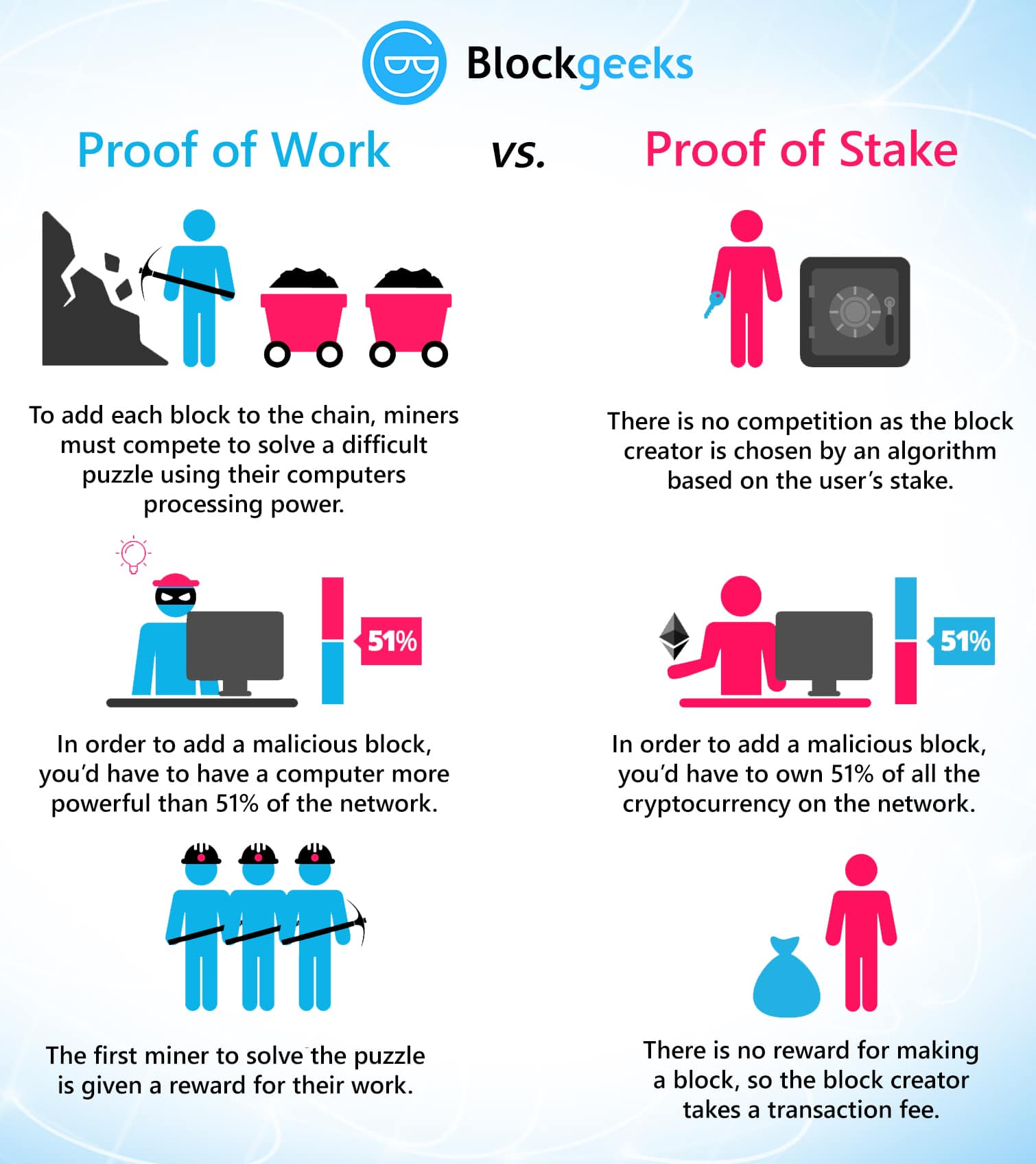


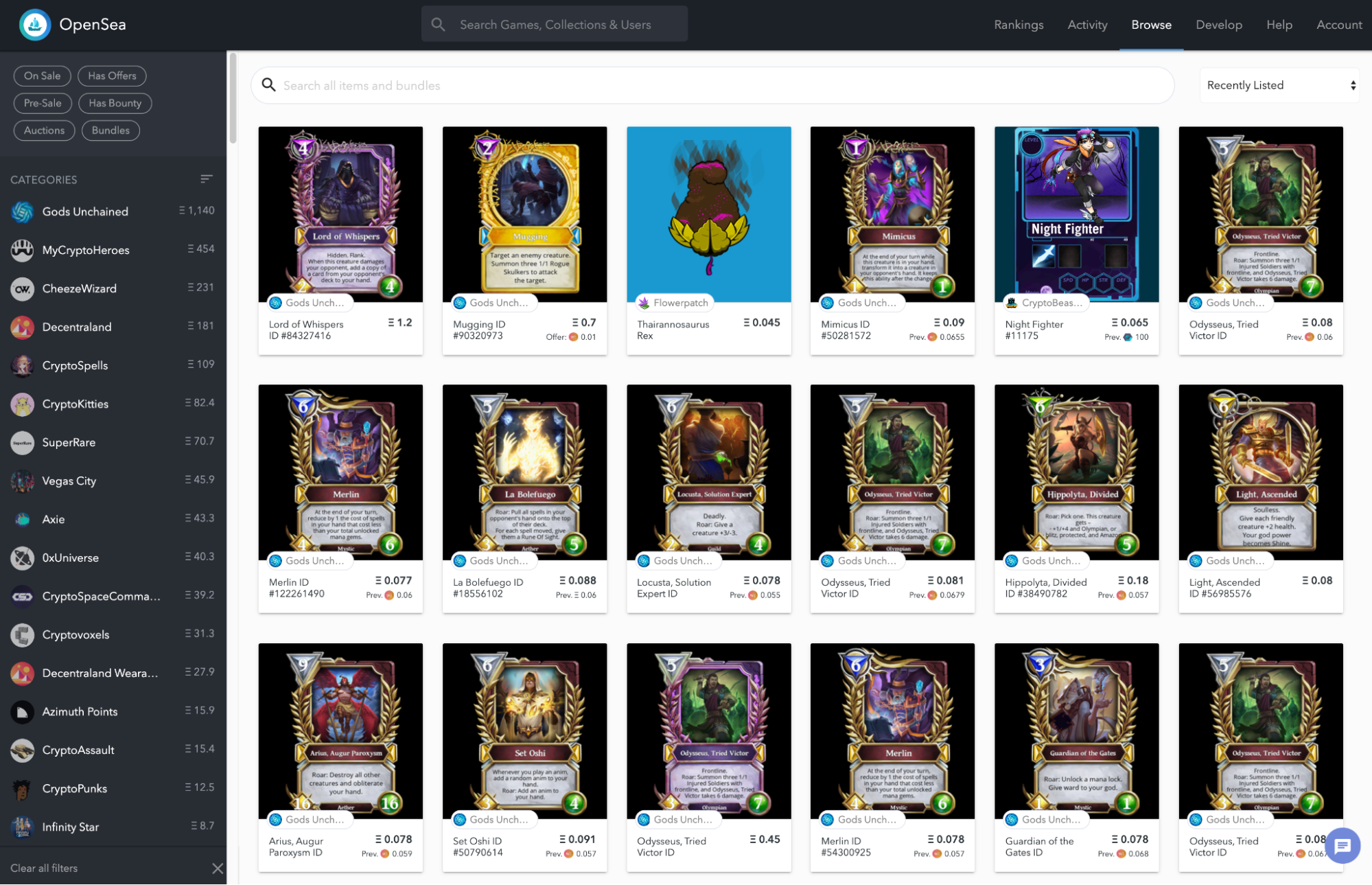
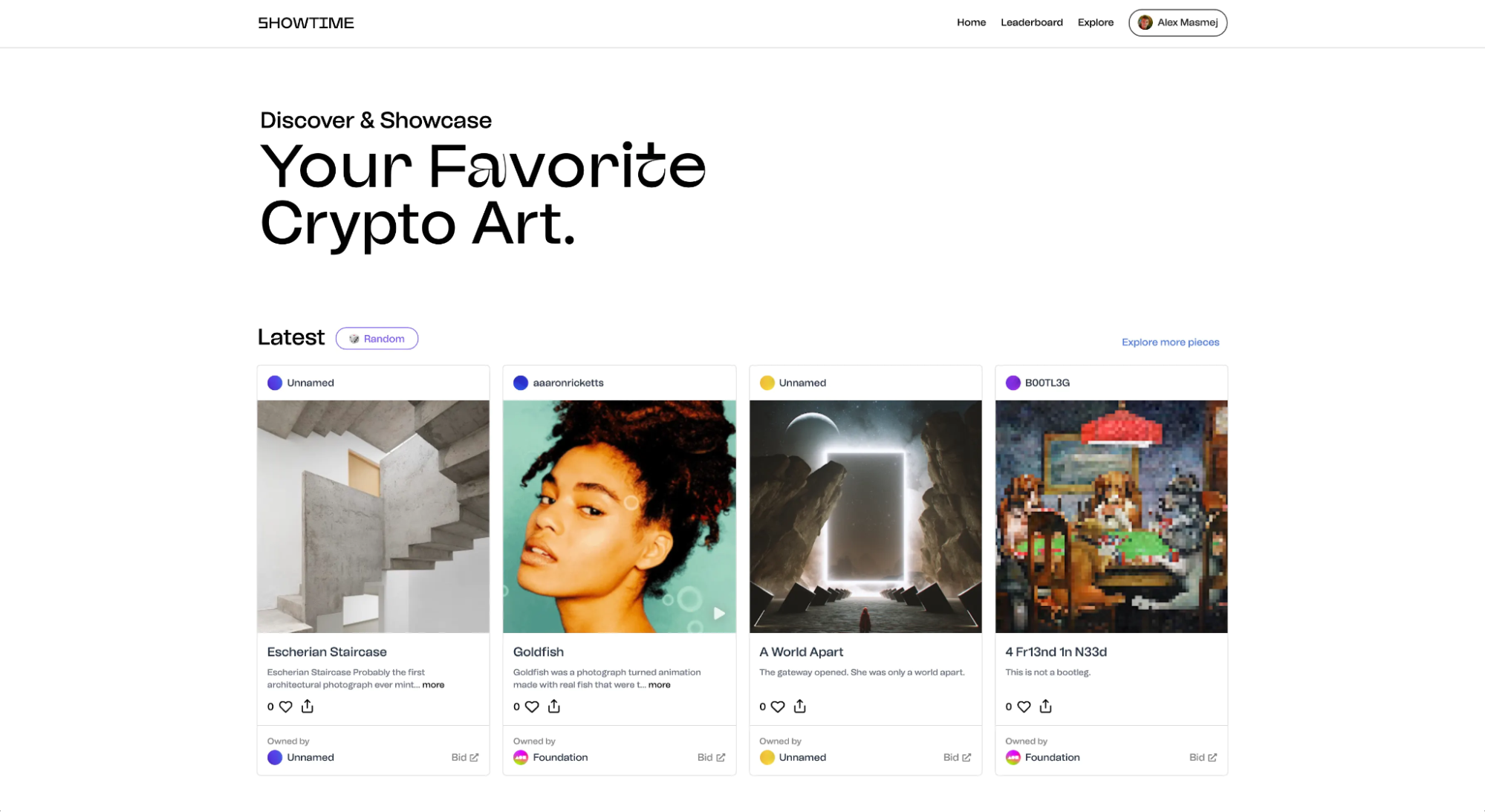
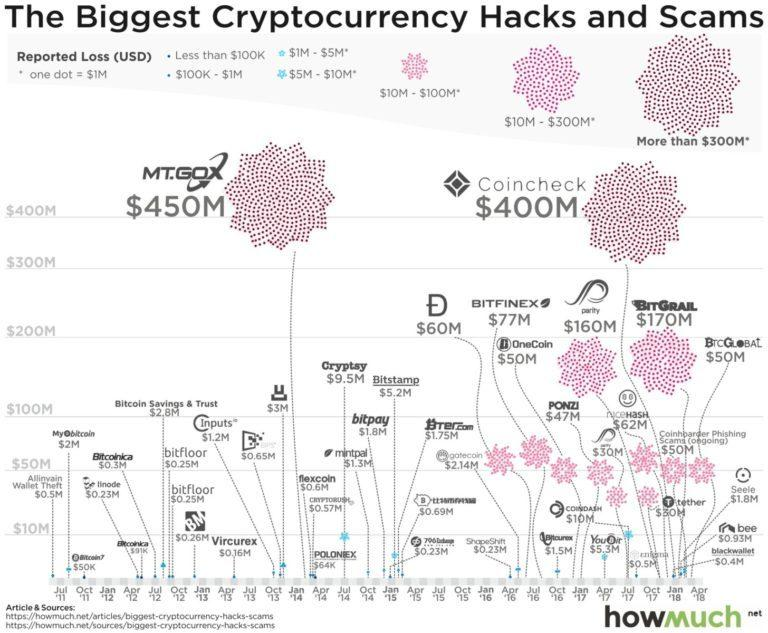
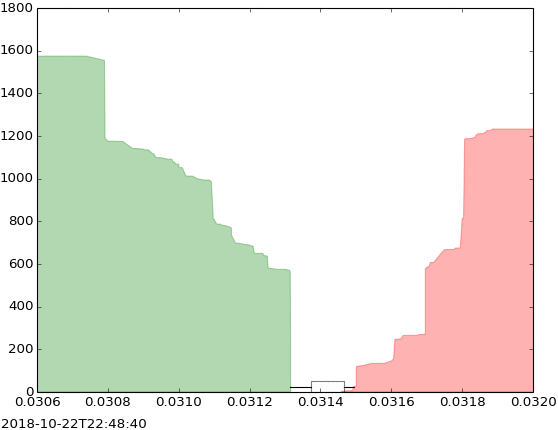
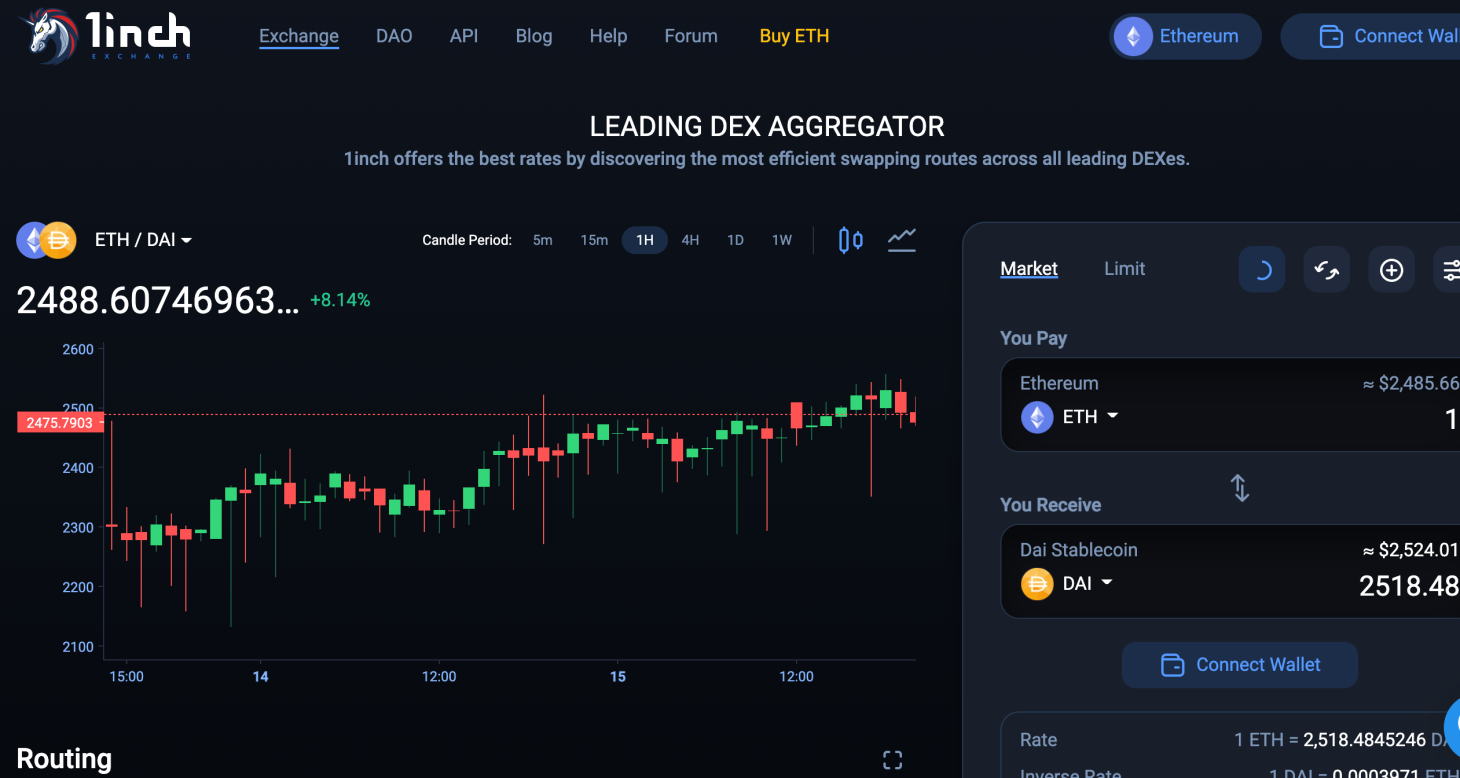
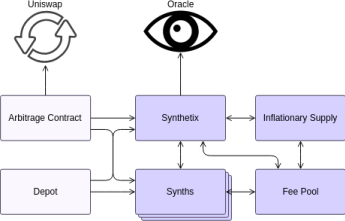



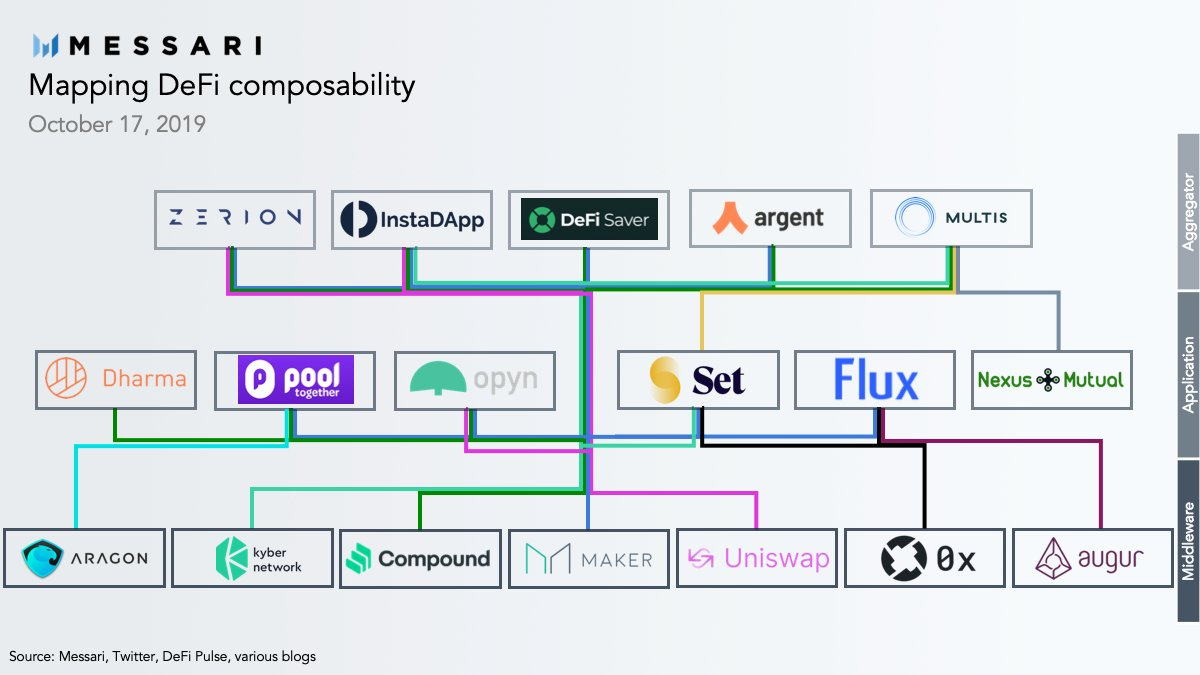
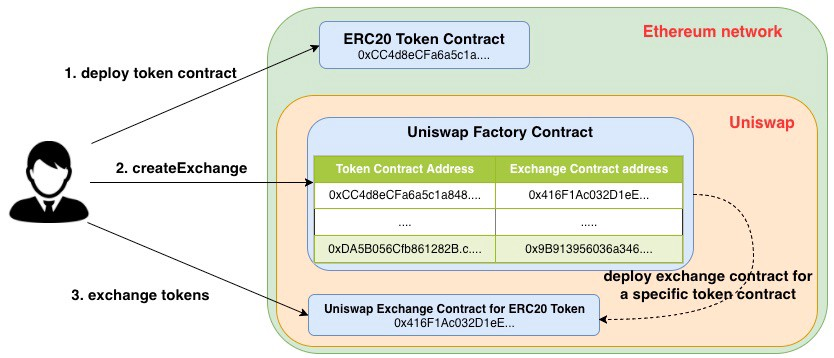
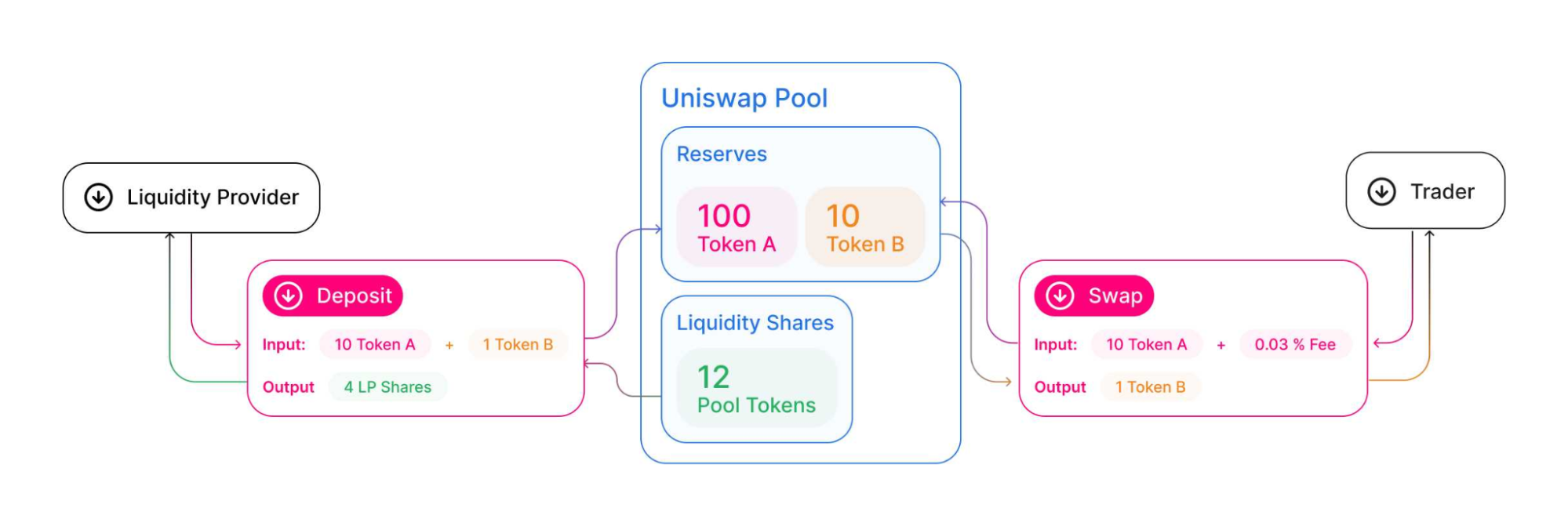
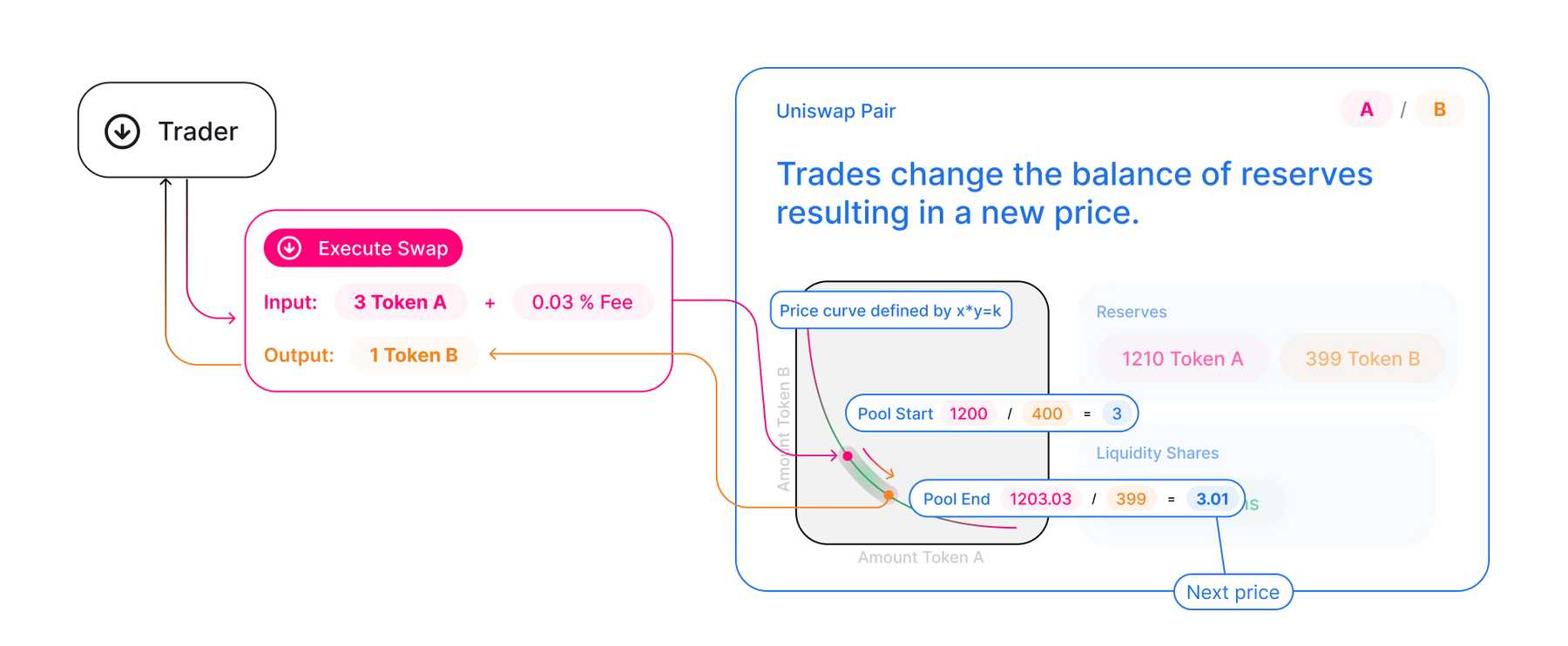


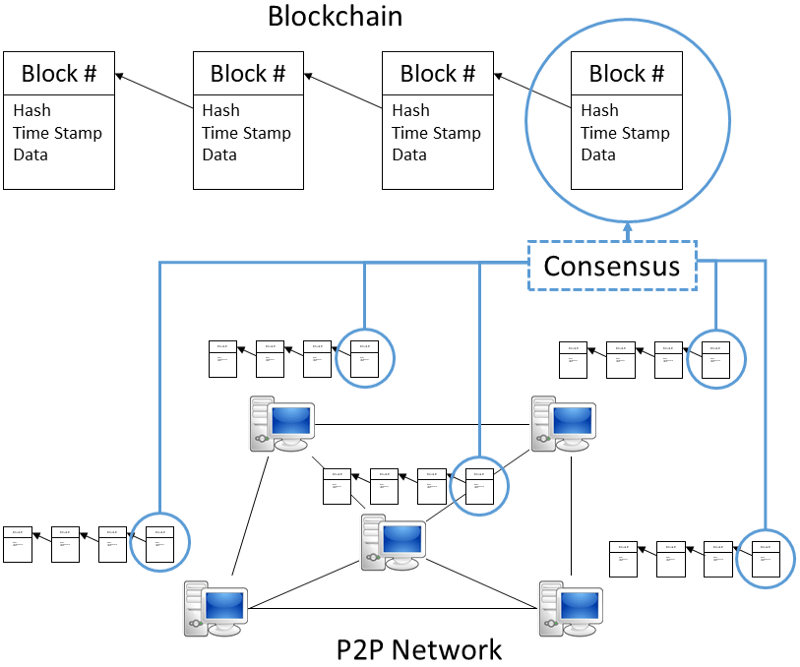
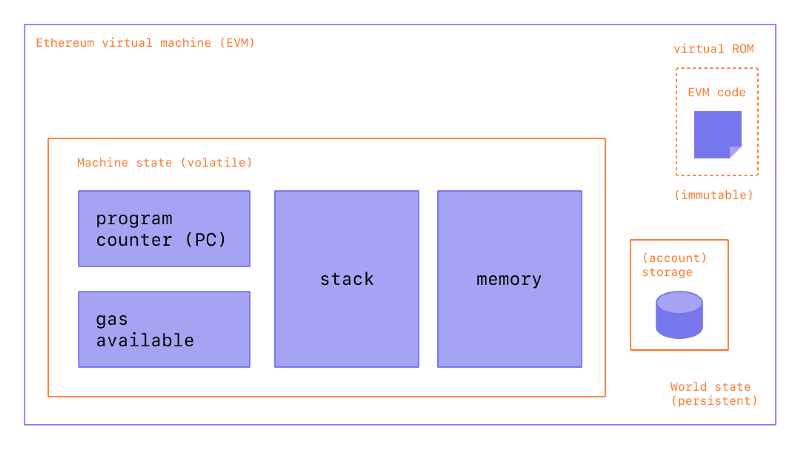
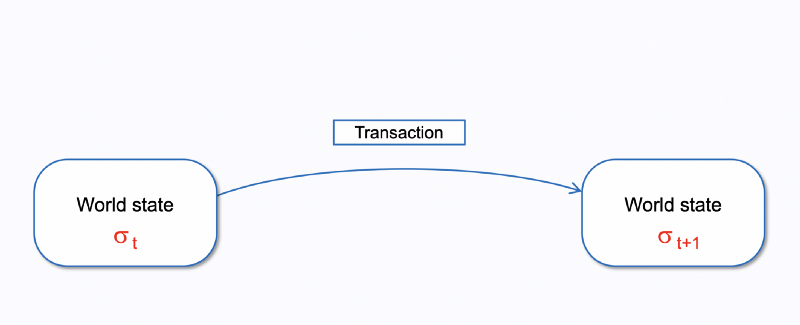
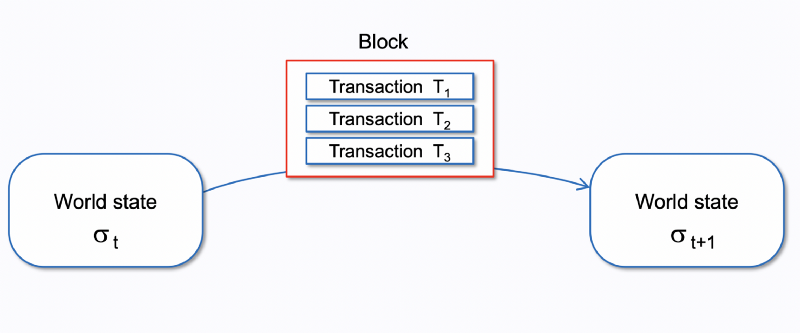
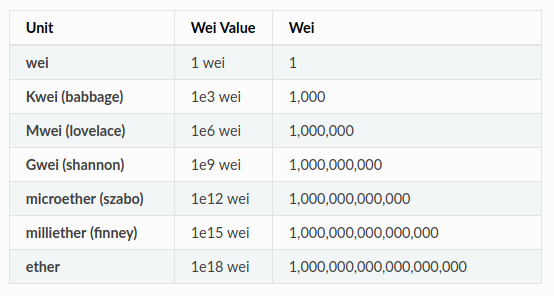
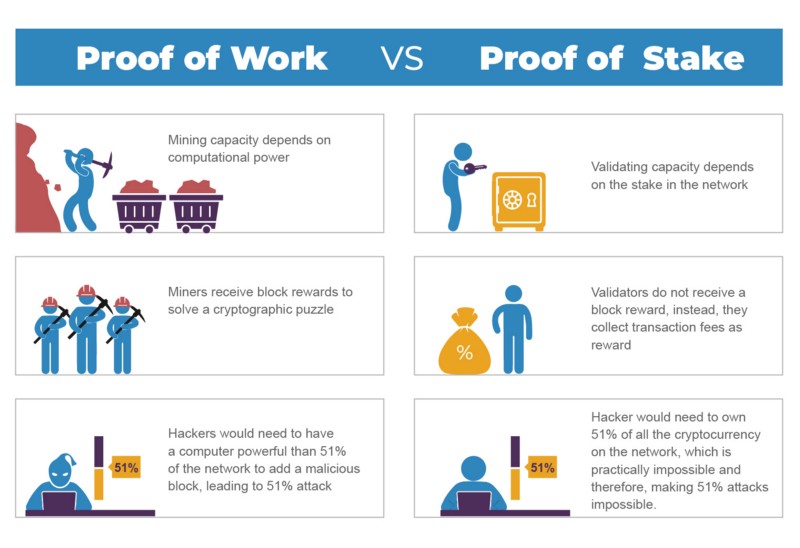


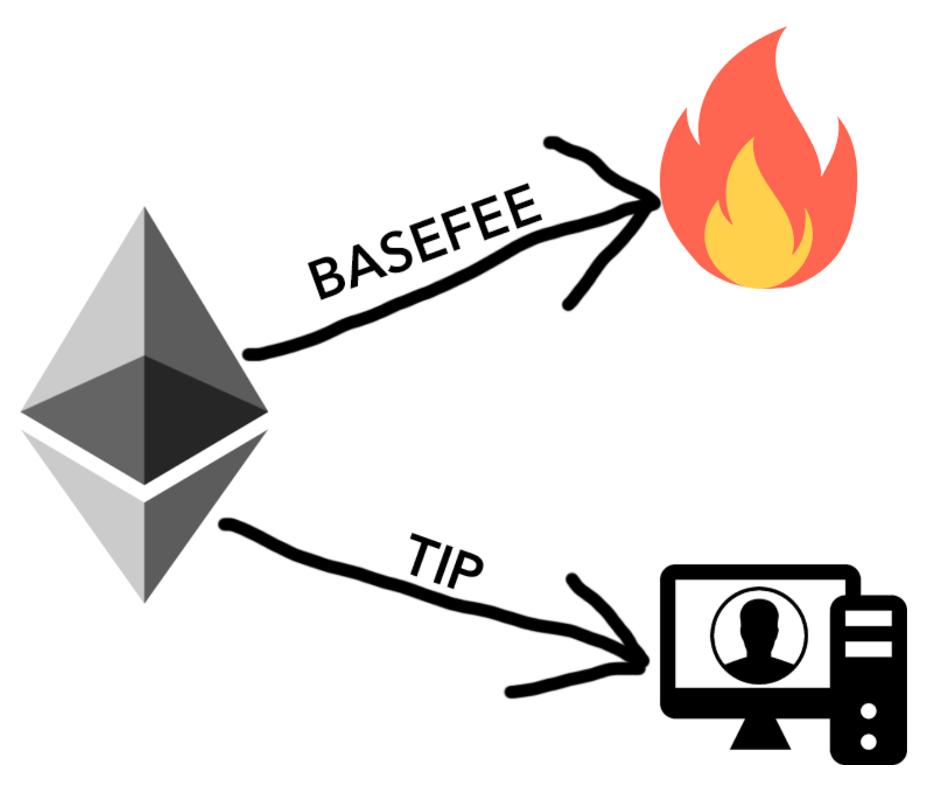
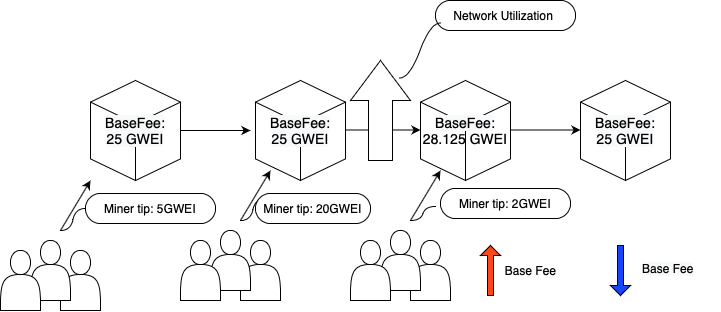






 Cryptocurrencies today serve two purposes: store of value and speculation.

























 Cryptocurrency infrastructure is a new form of software. Thousands of developers are submitting transactions to Bitcoin and Ethereum, and this transaction volume tests the scalability of current blockchain implementations. The bottlenecks in scalability lead to slow transaction times and high fees.


 The Interplanetary File System (IPFS) is a decentralized global, peer-to-peer file system. IPFS combines ideas from BitTorrent, Git, and Bitcoin, creating a new way to store and access objects across the Internet.
 The Ethereum community started as a small group of dedicated engineers. It has ballooned to thousands of engineers, entrepreneurs, and investors, all of whom have a stake in the direction of Ethereum. Ethereum is an open source project, and the direction of a popular open source project can get complex.