No woman wants to face the horror of her husband’s betrayal. Or have to recover from the emotional, physical & financial trauma and never-ending consequences. But these courageous women DID. And we’ll walk with you, so YOU can too. If you’re experiencing pain, chaos, and isolation due to your husband’s lying, anger, gaslighting, manipulation, infidelity, and/or emotional abuse… If he’s undermined you and condemned you as an angry, codependent, controlling gold-digger… If you think your husband might be an addict or narcissist. Or even if he’s “just” a jerk… If your husband (or ex) is miserable to be around, this podcast is for YOU.
The Truth About Forgiving Abuse With Valerie Hudson
Apr 11, 2023
Show notes
Have clergy or therapists pushed you toward forgiving abuse? Here’s why that’s so damaging. Before you discover the truth about forgiving abuse, confirm it’s abuse by taking ourfree emotional abuse quiz to find out. Forgiveness vs. Reconciliation (They’re Not The Same Thing) Betrayal Trauma Recovery is inter-paradigm. Religious and non-religious victims can accept that reconciliation is not only unnecessary, but inadvisable in working toward the process of forgiving abuse. Forgiveness does not mean: Staying in a relationship with your abuser Spending time with your abuser Accepting responsibility for your abuser’s choices Continuing to associate with your abuser’s family and friends Continuing to associate or attend community or religious services in the same location as your abuser Staying legally married to your abuser even if you are living separately Forgiveness & “Turning The Other Cheek” When clergy and religious therapists counsel women to “turn the other cheek” by forgiving abuse or relinquish judgment against their abusers, they are putting victims in danger. “Turning the other cheek” simply doesn’t make sense in the context of abuse and betrayal: Instead, victims can hold abusers accountable by: Reporting crime Distancing themselves from abuse Forgiveness Is About Justice – Not Mercy Ultimately, forgiving abuse is about justice, not mercy. Trauma victims can find solace in accepting that it isn’t their responsibility to grant mercy to their abusers – it’s their duty to hold abusers accountable for the abuse. While this may feel daunting, victims can take small steps to seek safety. Choosing to believe in natural consequences while taking empowering steps toward safety is the process of forgiveness. Harmful societal scripts that place the burden of forgiving abuse and reconciliation on traumatized victims can be difficult to work through. Victims need a safe place to process trauma and create healthier ways to begin healing. Attend a Betrayal Trauma Recovery Group Session TODAY and find the community you need to help you on your healing journey today. Transcript: The Truth About Forgiving Abuse Anne: I am honored to have Valerie M. Hudson on today’s episode. She is a distinguished University professor. And holds the George H. W. Bush Chair in the Department of International Affairs in the George Bush School of Government and Public Service at Texas A & M University. Where she directs the program on women, peace and security. She is the co founder of the women’s stats project. You can find that at womenstats.org. And the author of Sex and World Peace, The Hillary Doctrine, The First Political Order and Bear Branches. In 2009, Foreign Policy Magazine listed Valerie as one of the world’s top 100 Global Thinkers. Welcome Valerie. Valerie: Oh, it’s delightful to be here. Anne: She has many wonderful accomplishments and books she’s written. So I encourage everyone to look at her body of work. It’s amazing, and I’m so grateful for that. Valerie will talk about her article, Forgiveness of Abuse and Atrocity: What It Is and What It Is Not, (A Guide for the Perplexed Christian Woman). She sent this over to me. It hits on every concern that abuse victims face when confronted with this question of forgiving abuse. Maybe a therapist or family member, or maybe clergy, told her, you need to forgive kind of advice or counsel. It is actually hurtful or harmful to the victim, rather than being helpful. So to start Valerie, thank you for writing this. It’s incredible. Valerie’s Inspiration For Writing The Article Valerie: Believe it or not, I wrote this article in a 72 hour period following the birth of one of my children. It overcame me in a rush, and I could not help but put pen to paper. So I would hold my little baby in one arm and nurse him while typing away with my other hand. I look back on that period, which is amazing. And realized that my spirit had put together many of the lessons I had learned prior to that time paid for in blood and tears. If I put them together in one monstrous essay, you would interview me one day. And perhaps to help others by some of the knowledge I gained. Anne: Well, I appreciate it. I already posted it on our Facebook page, and I’m trying to get the word out to everyone. Like read this, read this! It is so incredible, so you talk about forgiving abuse and atrocity. How are abuse and atrocity different from other offenses? In forgiving abuse? Valerie: Yes, I really think that if we’re going to talk about forgiveness. We have to understand that to forgive slights, to forgive microaggressions, those kinds of things are a very different kettle of fish. Than forgiving the person who has raped you, the person who has murdered your child. I think it’s important that while we are enjoined to freely forgive those who have slighted us. We may one day slight others ourselves. That it’s different with atrocity, because we’re never going to murder somebody. We’re never going to rape somebody. And these are the deep, deep harms that attack the soul of a human being. And in that case, I think we need to tease out what forgiving abuse means. Abuse Is A Profound Betrayal Of Trust Anne: One of the definitions you have for abuse in this article is a profound betrayal of trust, which I talk about on the podcast all the time. That years and years of psychological abuse surrounding someone’s exploitative materials use. Where they’re living a double life, gaslighting their spouse and dismissing her concerns. Lying is emotionally abusive. That is profound psychological and emotional abuse surrounding perhaps their pornography use or maybe the affairs they have. And you talk about this several times in this article. Down at the bottom, you actually give an example of someone abandoning their family due to a So? Before we talk about the forgiving abuse element of this, which I want to spend a lot of time on. Can you talk about why the world doesn’t see psychological abuse or emotional abuse, gaslighting, or betrayal in forms of living a double life with affairs and pornography as abuse? Why do you think the general population, even people in the church, don’t see that as a serious form of abuse? And recommend forgiving abuse. Valerie: I think males tend to be those disinclined to see that serious abuse. I think females tend to be those inclined to see it as serious abuse. I’m not a psychologist, so all I can say is that sometimes men have a greater ability to compartmentalize. And say yeah, I watched pornography. But hey, I still love you. That all makes sense for them. I think for most women, the viewing of exploitative material is clearly an infidelity. It’s a betrayal of trust, and it is deeply wounding. And there is complexity involved in forgiving abuse. The Truth About Forgiving Abuse: The Legacy of Male Perspectives In Institutions Valerie: Many of our religious and secular institutional leaders are men with male perspectives. And I think we see this legacy in our rape laws and other kinds of things. Where questions like, well, what were you wearing or what time of night was it? Or had you been drinking? Somehow excuse the rape, explain it, make it seem more natural that she was raped. And that is a real male perspective on things. So I see this as a legacy of the dominance of our religious and secular spaces by men. Anne: This is when it’s important for women to understand how to recognize victim blaming. I want to quote you, this is from her article. “The betrayed spouse is told to ‘make peace’ for the sake of the children, but it is often a peace based on lies and concealment of abuse.” And, this happens with use as well. When people are told, well, make sure you don’t tell anyone about it, support his recovery, keep it quiet. You’re going to be the worst sinner if you don’t end up forgiving. https://youtube.com/shorts/ixVDYZDSVfc So let’s transition into talking about forgiving abuse and your definition of forgiveness. I had never even considered before reading this article, but once I read it, I was like, yes, this makes sense. I totally get it, because I was told so many times. Why aren’t you just forgiving abuse? And so many members of our community have when we continue to hold boundaries for our own safety. Rather than recognizing that this abuse is still ongoing, I need to hold these boundaries for my own safety. People are like, what’s wrong with you? Why are you holding a boundary? You should be forgiving. because that’s what Christ says. So can you tell your definition of forgiveness? Valerie’s Definition Of Forgiveness Valerie: I distinguish between forgiveness and reconciliation. Forgiveness is between you and God. Reconciliation is between you, God, and the abuser. And I think this is where the confusion comes in. I think people use the term forgiveness when they mean reconciliation. They’re confusing these two concepts. So what I ask people to do in this essay is understand that forgiving abuse means something that happens between you and God, not the abuser. And what happens between you and God is that you choose sincerely to have faith in God’s justice, not God’s mercy. But God’s justice, and you can do that without involving the abuser at all. In fact, it has nothing to do with the abuser, and because it has nothing to do with the abuser. Forgiving abuse does not mean that you have to return to a relationship with your abuser. It does not mean you have to lower your barriers to an abuser and invite them back into your life. It doesn’t mean you have to keep silent about the abuser or hide their abuse from the authorities. No, no, no, forgiveness means you believe in God’s justice, and you are not prepared to exact justice yourself on the abuser. But you will leave it to God, and you will leave it to civil authorities. And you will not stoke hatred in your heart, because you so sincerely believe justice will be done. Anne: I’ve been listening to the Psalms lately when I can’t sleep, and they put me back to sleep. And I appreciate you bringing this up in this article about David and writing the Psalms about the justice of God. Forgiveness Is About Believing In God’s Justice Anne: Thinking of forgiveness, you said this. I’m going to quote you again. Your article says, “Forgiveness is not about believing in God’s mercy. Forgiveness is about believing in God’s justice.” And that speaks to my heart and the heart of all these victims, because that is one of the most difficult things to wrap your head around. You’ve seen these atrocities. You’ve been a victim of abuse, and it seems like you can’t get help. Women might go to a therapist, or to clergy, or even in the court system right now. They’re trying to get help, and they’re not finding it. And so believing that God will hold them accountable and that they will have to pay in some way. Or that justice is served in God’s own way and in his own time. There is such a different view of forgiving abuse, because you can let that go to God and hopefully live in peace in the moment, and I just appreciated that. Thank you so much. I think that definition is perfect, especially in this context. Have you had any pushback from this definition from people? Valerie: No, actually not. I think it’s found its way mostly to women who have been abused. And I think their reaction is pretty much the same as yours. If I understood this before. I wouldn’t beat myself up for the fact that I didn’t feel good about going back to an abusive relationship. We hear folks quoting to us from the Bible. It’s up to you to forgive 70 times seven, or you remain the greater sin. What does the Bible really say about cheating? Forgiving Abuse: It Does Not Involve Reconciliation Valerie: That changes completely when we understand that what God is talking about is a sincere belief in God’s justice and injustice. Civil authorities will administer it. We root it out of our own heart. We would otherwise be tempted to use the sword against our abuser. People are, I think, liberated by the notion that forgiving abuse does not involve reconciliation. And that in fact, it may be part of one’s duty to God to not reconcile when there is a chance that reconciliation will harm innocence. I think it really changes things. Anne: One of the things you talk about in the article is reporting to civil authorities. Husbands have raped many of our podcast listeners, so wife rape. Their husbands have lied and cheated them with money. Husbands commit actual crimes. Women don’t feel comfortable enough to report it. Because civil authorities chances of serving justice are very low. Women have a hard time getting justice because they are married to the person. So victims consider these things when they’re thinking about reporting. Wives can’t report to authorities in cases of psychological abuse or emotional abuse. And clergy may not believe them. Do you have anything to say about that scenario? When it comes to believing in the justice of God and forgiving abuse. When we exhaust all earthly means, and there seems to be no earthly justice? Valerie: Oh, I’m glad you asked that question. And I think it’s a compelling question. As we were talking about just a few minutes ago, I think our legal system is a legacy of male perspectives on these kinds of things. I mean, it took until the 1970s for the criminalization of marital rape. People simply assumed there was no rape before that. They were married. Creating Distance From The Abuser Valerie: Rape could not occur. He had his conjugal rights to use her body as he saw fit. Sometimes women will not count on civil authorities to administer earthly justice, though they can always count on God to administer heavenly justice. And I think that’s where the healing comes. But in cases like that, to be perfectly honest with you, I think it’s incumbent upon the woman to begin to create a distance from the abuser. God does not want you to be abused. And I think it is incumbent upon a Christian disciple to escape an abusive relationship. Anne: I want to talk about some of these, let’s say, misapplied Christian principles in the context of forgiving abuse. But before that, you quoted a scripture that I often quote to victims, and it’s Alma 5:60. I love the scripture. I quote it all the time to victims, and it says, “and now I say unto you that the good shepherd doth call after you. And if you will hearken unto his voice, he will bring you into his fold, and ye are his sheep, and he commandeth you that you suffer no ravenous wolf to enter among you. That ye may not be destroyed.” I love that scripture. He’s commanding us to be safe, not abused. He’s commanding us to step away from that. So let’s talk about some of these often used misapplied Christian principles in forgiving abuse. Turn the Other Cheek Misapplied Anne: The first one being “turn the other cheek.” So can you talk about how that principle does not work in this context? Valerie: One of the problems I think is that we are not living in the same time as Jesus Christ. And as a result, I think there are many things about the context of the turn the other cheek that are so different. So for example, one Christian theologian, James Talmadge had this to say. “Of old the principle of retaliation had been tolerated. By which one who suffered injury could exact or inflict a penalty of the same nature as the offense.” “Thus an eye was demanded for the loss of an eye, a tooth for a tooth, a life for life. In contrast, Christ taught that men should rather suffer than do evil. To the extent of submission without resistance under certain implied conditions. His forceful illustrations that if one were smitten on the cheek, he should turn the other.” “That if a man took another’s coat by process of law, the loser should also give his cloak. That if one was pressed into service to carry another’s burden a mile, he should willingly go two miles. One should readily give or lend his ass. These are not…
If Your Husband Filmed You With A Hidden Camera, You’re Not Alone
Apr 04, 2023
Show notes
If your husband filmed you with a hidden camera, you could be a victim of trafficking. Dani Pinter is Senior Legal Counsel for the National Center on Exploitation. The National Center on Exploitation was founded in 1962, and is the leading national nonpartisan organization. They expose the links between all forms of exploitation. Such as CSCAM, prostitution, trafficking, and the public harms of online explicit material. If you are a victim of exploitation and would like to reach a representative from NCOSE. Please email public@ncose.com or call (202) 393-7245. To discover if your husband is emotionally abusing you, take thisfree emotional abuse quiz. If Your Husband Filmed You With A Hidden Camera, You’re A Victim Of Domestic Abuse Too often, men betray and exploit their wives. Husbands have victimized members of The Betrayal Trauma Recovery Community. By uploading explicit videos to websites. Women request them to take these videos down. Users download videos and the video will continue to resurface. This re-traumatizes victims over and over again. It’s hard to experience growth when this happens. The Necessity To Hold P__nhub Accountable The trauma that P__nhub victims experience is horrific and never-ending. Organizations like NCOSE recognize that exploitation is financially profitable. The organization itself isn’t reliable to self-police. That’s why NCOSE is calling on all credit card companies to stop processing payments for P__nhub. How Can We Seek Justice for P__nhub Victims? It’s not only large organizations and legislative decisions that can effect P__nhub’s accountability. You can help, too. Support the EARN IT act, which would hold “all platforms responsible” for child abuse material (CSAM). Go to sexualexploitationlawsuits.com if you have been a victim of exploitation. And begin the process of seeking justice for yourself. Refuse to use online explicit material and share your knowledge of its exploitative nature with others. Exploitation is traumatizing. If you are a victim of exploitation, you deserve justice and a safe place to process your trauma. Attend a Betrayal Trauma Recovery Group Session today, find the community you need to begin your healing journey. Transcript: If Your Husband Filmed You With A Hidden Camera Anne: I have Dani Pinter on today’s episode. She is Senior Legal Counsel for the National Center on Exploitation. The National Center on Exploitation was founded in 1962. It is the leading national non-partisan organization exposing the links between all forms of exploitation. Such as child abuse, prostitution, trafficking, and the public harms of online explicit material. And they have some amazing campaigns to stop the harm. Today, we’ll talk about a New York Times article that revealed that P__nhub profits from child abuse material. And we call the national center on exploitation, NCOSE for short. NCOSE is calling on the Department of Justice to investigate P__nhub. NCOSE has been supportive of revoking the immunity that digital platforms use to avoid accountability. And is urging Congress to pass the Earn It Act. They have a blog post about this. Today, NCOSE is calling on all credit card companies to cease processing payments for P__nhub. And Dani Pinter is the lawyer for one of the survivors mentioned in the Times piece, talking about all types of exploitation. So I invited her today to talk about this specific issue, what NCOSE is doing, and what you can do to help. Okay, so to start, Dani, can you summarize the New York Times story for our audience? Dani: Sure, so Nick Kristof is an excellent journalist and reporter. What he did was highlight the reality that P__nhub’s not just a explicit materials site. This platform hosts real rape videos. And real videos of exploitation and abuse of children. They also host. He did this through some examples he discovered, and also through the stories of some of those survivors. Anne: The article related to this podcast episode is on our website. Survivors’ Ongoing Struggles Anne: So as the lawyer for one of the survivors , what challenges are these survivors facing? Including those who’s intimae partner filmed them with a hidden camera? Dani: One survivor said their abuse never ended because of P__nhub. Which is one of the biggest and most poignant things. Each survivor’s story is different. But they face some sort of exploitation, whether that was violent r_pe, child abuse or trafficking. And even when that horrific trauma ended. It lived on in eternity, because it was recorded and uploaded to P__nhub. And for my client, that has meant these videos and images have spread all over the internet. She feels helpless to get rid of them, and faces them every day. She reached out to P__nhub and others and asked them to bring these videos down. They distributed it without her consent. Because she was trafficked. But she was a minor. So this is CSCAM actively online on P__nhub available for free. You can Google the site, go on it, and reach it in seconds. P__nhub also allows this for download. So even though it was completely non-responsive to some victims. They took down videos Nicole asked them to take down. Only for them to resurface again and again. Anne: Because someone had downloaded and re-uploaded it? https://youtube.com/shorts/mHgIHT2Dtrw Dani: Yes, so P__nhub claims they use this cutting edge photo DNA technology. So banned videos can never re-enter the site. But Nicole is living proof that’s not true. Her videos and images are re-uploaded time and time again. Anne: What are potential solutions for helping survivors receive justice when it seems so difficult from what you’ve described? Dani: Well, there’s a couple, and you touched on some of them. Potential Legal Solutions The Department of Justice can now prosecute P__nhub. I want to talk a little about the immunity that internet platforms face. But even with that immunity, they’re not immune from federal criminal law violations. So if the Department of Justice had the will. They could absolutely investigate and prosecute P__nhub for the mass trafficking and CSCAM on their site. So we want them to do that. Then additionally for victims, because there’s a very high threshold, to be successful in a criminal case. Because of limited resources, it’s difficult. So at NCOSE, we see the value in bringing civil litigation. Dani: That’s where a survivor brings a civil case for monetary damages against a company. That holds them accountable. It makes them self-police. And it gets some measure of justice and recovery for the victims. Immunity prevents many of these victims from doing that. Because of that federal immunity. There’s a law called the Communications Decency Act. It was passed about 20 years ago. And was actually an attempt to prevent the spread of obscenity and CSCAM on the internet. But the court struck it down, finding it unconstitutional, and kept only one part of that statute. And the part of that statute that it kept was Section 230, and that was a good faith law. It shields protection for platforms. The statute meant to try to limit the spread of some harmful things on the internet. And if you do that in good faith, you’re immune from civil liability and state criminal liability. So even if your husband filmed you with a hidden camera and uploaded it, there may be no consequences for it. Dani: Then the whole thing was struck down. We were left with justice immunity. If Your Husband Filmed You With A Hidden Camera: Section 230 and Platform Immunity It was interpreted extremely broadly, because this was at the beginning of the internet. The courts expressed they wanted to allow the internet to flourish and not be prohibitive. So what that plays out in reality is that internet platforms have essentially blanket immunity. That’s why they’ve grown so large, but that’s also why they’re almost accountable for nothing on their site. Specifically, what it says is that websites or web platforms are not responsible for third party content on their site. So P__nhub’s entire business model depends on this immunity, if not structured, because of this immunity. So what P__nhub does is it allows anyone to upload any video. All you need is an email address. You can be a child. We’ve had countless cases of minors uploading videos of themselves on P__nhub. And they say that’s third party content. We’re not responsible for that. So that’s where CDA 230 immunity has many problems. Not just with P__nhub, but also on some of our mainstream social media sites. Where there may be trafficking or abuse material. And the site’s just not motivated to self-police, because they know they could never be held accountable. Anne: Many of our listeners are victims of betrayal. Wives of users of online explicit materials users who are abuse victims. If your husband filmed you with a hidden camera, you are an abuse victim. Also because of marital coercion, they’ve been coerced into relationships with a man. Who says, hey, I totally abide by your boundaries. I don’t look at online explicit material. I don’t visit prostitutes. But they actually do. So they’re coercing their wives. They’re using emotional and psychological abuse because they’re lying is emotionally abusive, and gaslighting to hide their online explicit materials use. Betrayal Trauma & Online Explicit Materials But they actually do. So they’re coercing their wives. They’re using emotional and psychological abuse because they’re lying and gaslighting to hide their online explicit materials use. Anne: One of the things we talk about at Betrayal Trauma Recovery. Is that a woman in a relationship with a man actively using online explicit materials, hiding it, using gaslighting and manipulation. They are going in depth wondering if it’s wrong to check their husbands phone for this kind of stuff. https://www.btr.org/is-it-wrong-to-check-your-husbands-phone/She’s in an abusive relationship. So I’m always talking about how it is always an abuse issue. That is the issue at hand. Is it addictive? Sure, but we need to look at it from an abuse issue to treat it seriously. So knowing that, what are the solutions that would help solve the explosion of CSCAM? And other illegal and harmful content on P__nhub? Dani: Well, there are some bare minimum things that we’d like to see, which would be age and consent verification. Because many women, I’m sure some of your listeners, have experienced being recorded by a hidden camera, and not agreeing to its subsequent dissemination, which is a huge problem. You of all people understand. People get motivated to protect children. But it’s even more difficult to get the political will behind shutting down this type of image-based abuse. These platforms exploit adult women without their consent. There’s also the fact that obscenity law is valid federal law on the books right now. And what most people don’t understand is that although technically, the First Amendment protects it. That’s just because, what is it, right? It could be anything from a magazine, to art, to what we see on P__nhub. So technically, the First Amendment protects the term pornography, but obscenity is not. In fact, obscenity isn’t even protected in the least. Obscenity Law & Federal Prosecution Dani: The court says obscenity is not speech, and has no protection. It is a crime to disseminate obscenity, it has a long legal definition, but the court has given guidelines. And said that explicit hardcord acts without any literary, political, scientific value is obscenity. That’s all the content on P__nhub. The Department of Justice can prosecute that right now. If your husband filmed you with a hidden camera and posted it, they could be prosecuted. The truth is, when they actively prosecuted this. Which it was several presidents ago. What you see is that the content itself becomes milder and milder. The producers self-police. They know they could actually be prosecuted. So what you get is significantly less exploited material and significantly less people being exploited. And even though this hasn’t been a priority of the U.S. federal government for a long time. There were still holdover cases that, as I think it was at 2012, the federal government got a prosecution in California. Against a producer for obscenity. And so that shows that it’s still possible. And there’s no reason why we shouldn’t be doing that. Anne: Absolutely, can you talk about why they need more accountability? Dani: Yes, it’s because exploitation is profitable. Many people don’t realize how exploitive these sites are. And how many people experience exploitation on even our mainstream social media sites. The reality is that it is in the company’s financial interest to have the most content possible. To have the most users possible, to have the most economic transactions possible. Even if that means CSCAM. And at the National Center on Exploitation, we have been shining a light on these issues. Has Your Husband Filmed You With A Hidden Camera: The Need for Corporate Accountability Dani: These platforms know what’s going on, and P__nhub sees it. They certainly know what’s going on, and they’ve proven they won’t do the right thing on their own. They will not, and won’t even protect kids. They’re certainly not going to spend money to protect kids, and they won’t even lose profits to protect kids. So unfortunately, a sad reality is that when exploitation is profitable, you can’t leave it up to the corporations. Anne: I could not agree more. So on that note, how can our audience help stop this? Dani: So please support the EARN IT Act. As you mentioned, we would like to see the CDA 230 immunity go away altogether. But at least, EARN IT is a step in the right direction. So the EARN IT Act would hold all platforms responsible for the very narrow issue of CSCAM So if you have it on your site, you’re going to be accountable for that. We need this urgently, because it is an absolute epidemic. The National Center on Missing and Exploited Children has one million reports of CSCAM a month. It is beyond the capacity for law enforcement to even investigate every case. So we need these sites to do it themselves. And the only way that’s going to happen is with legislation like Earn It. Which is fair and balanced, despite the fact that tech companies are spending millions to convince you otherwise. So please go to our website. There are action items on how you can support that bill. We’re coming to a close session now, but we’ve made so much headway. We unanimously got through the Senate judiciary committee. Supporting The EARN IT Act Dani: We have a house sponsor now, and we hope it’s one of the first bills passed in the next session. So. Please support that. I think it’s one of the most urgent things we could do in the near future. Anne: So to get information about that, their website is endsexualexploitation. org. One of the best ways to get involved with this campaign, but also the others they have, is to get on their mailing list. They send frequent emails to say, hey, take action on this now. And it’s a good and easy way to become involved, and they make it clear how to do that. Dani: One of the things I would like to say, especially to your pool of listeners. I am so sorry that you’ve experienced what you have at the hands of online explicit material and users. If you’ve experienced being filmed by a hidden camera by your husband or if you’ve been exploited online. Please contact us, because we want to represent survivors like you. And we want to use your experience for the good and hold these corporations accountable. So I would encourage you to contact me. If you could please put my contact info in here. We have a website for more information on potential causes of action. Potential lawsuits you may have. If you check it out, there’s a lot of information on internet platforms and how they’re exploitative. And a questionnaire that you can fill out about your experience. We’ll f…
How Do I Know If It’s Abuse? – Lorelai’s Story
Mar 28, 2023
Show notes
The nature of psychological and emotional abuse leaves many victims unsure, asking how do I know if it’s abuse? To discover if you’re emotionally abused, take thisfree emotional abuse quiz. Lorelai, a member of the Betrayal Trauma Recovery community, joins Anne on the free BTR podcast to share her powerful story of escaping her husband’s sexual abuse, constant manipulation and gaslighting. Through the fog of abuse, she was able to use empowering tools to identify the abuse and set safety boundaries to begin her journey to healing. How Do I Know If It’s Abuse: It Doesn’t Have To Be Physical Battering To Qualify As Abuse Often, victims question the reality of their abusive relationship because they haven’t been punched in the face or put in the hospital. Physical battering is absolutely abuse – but it isn’t the only kind of abuse. Other forms of abuse include: Gaslighting Manipulation Betrayal (including secret pornography use) Sexual coercion Marital rape Covert physical harm Threats Financial domineering Spiritual domineering How Can I Learn More About Abuse? Victims become empowered to identify the abuse and create healthy boundaries in marriage as they become educated about abuse. Some of the most helpful resources we recommend include: Anne Blythe’s books about betrayal trauma Listen to The FREE betrayal trauma podcast Visit our books page for a list of curated books that we recommend to victims. How Do I Know If It’s Abuse: If You’re Here, Trust Yourself Victims of psychological abuse often experience so much gaslighting, that discerning reality can feel nearly impossible. If you are here, we encourage you to trust yourself. Seek support, empowerment, and education, but trust your instincts. If you feel abused, you probably are. Take appropriate steps to protect yourself, and set safety boundaries to separate yourself from abusive behavior. Join our online betrayal trauma support group is here for you as you begin your healing journey. Join today. Transcript: How Do I Know If It’s Abuse? Anne: Lorelai, a member of the Betrayal Trauma Recovery community, is on today’s episode. Welcome Lorelai. Lorelai: Thank you for having me. Anne: We’re so glad you’re here and grateful that you’re willing to share. Let’s start at the beginning. Did you recognize your husband’s behavior as abusive at first? Lorelai: No, absolutely not. I had been in a previously abusive relationship, and that one was obvious. And then I met my husband, and he seemed like a gift from God. We’ve been for 17 years now. I did not realize it was abusive until a couple of years ago. And honestly, I didn’t realize the extent or scope of it. There was a lot of confusion. My husband is very subtle about it. It was really hard for me to catch. I started following Betrayal Trauma Recovery regularly and like, overnight I was like, Oh, that explains everything. Anne: When I was first married, I had a friend in a really abusive relationship. When I say really abusive, I would say mine was really abusive. I just didn’t know it, I didn’t understand psychological abuse and emotional abuse. Hers was physical. It was obvious. He was throwing things around. When I would tell her what was going on. She’d be like, Oh no, mine was way worse than that. Yours is a good guy. What I went through was confusing because of all the psychological abuse. What did you attribute it to in the beginning, anger issues? What did you think was going on when you didn’t understand it was abuse? Attributing Behavior To Circumstances Lorelai: A good family raised my husband. He’s the youngest of five. He has strong family connections, but his family was a little weird. He got a lot of passes on many things, being the youngest of five. I attributed it to his family’s ongoing issues. And I attributed it to the blending of two families, because I have kids from my first relationship. People say marriage is hard work. I attributed it to the stress of working two jobs and being a police officer, and thought it was all circumstantial, like oh, he’s in a bad mood or he’s tired. I didn’t think it was calculated and deliberate until Betrayal Trauma Recovery. Then I pinpointed exactly where it was calculated and deliberate. It shocked me. I was shocked at how calculated and deliberate it was. Anne: It is shocking. Your whole paradigm of how you see your husband crumbles when you realize, wait a minute. I’ve been seeing him as a good guy who gets frustrated every once in a while. I realized he’s an abusive man. The mask comes off. https://youtube.com/shorts/g4KuN5j4dpk Lorelai: Yeah, for my husband, he puts out this persona of this great family guy. But when I looked closely, what I could see was him controlling every aspect of me. So how do I know if it’s abuse? It had nothing to do with the kids, his family, or my family. He was putting one image on everything, but I could pinpoint all our fights down to his inability to control me. I’m a little bit of a fighter. I’m not just going to take it. So I was good at calling him on his crap. I was good at protecting my kids and trying to keep the peace. Assertive Communication Myth Lorelai: The harder I fought for what I knew was right, because I knew it was right. The more kickback I got, but only after Betrayal Trauma Recovery did I see that he was trying to control me the whole time. So that was eye-opening. Anne: I am a fighter too. And I want to educate women about the myth of assertive communication. Because many women say to me, had I fought and had I called him out, maybe he wouldn’t have been that way. This is a big step in recovering from betrayal trauma. Your experience and my experience are no, we fought him every step of the way. And we still got abused and manipulated. Lorelai: Absolutely, absolutely. Anne: Were you aware of any exploitative materials use or any infidelity in your relationship? Lorelai: My husband is a very private person. Being a police officer, he has his own computer and his phone is on lockdown. He actually works in a different state from where I live, because our youngest child has a significant disability. So he goes to school in a different area than where my husband works. And he’s been kind of bouncing back and forth between the two states. So we only saw him once or twice a week, really for the last five or six years. So there wouldn’t have been any way for me to know, but he confessed to me at some point. And now looking back, I realized it was a manipulation. So it may or may not be true. Identifying Abuse: Infidelity & Wifely Duties Lorelai: But he told me that he had been emotionally involved with several, multiple, like more than five women at work. He said he just got caught up emotionally with them. He said nothing physical happened, but that he had spent a lot of time talking to them and sharing with them. He’d be like, I may have inadvertently not filled you in on things, because by the time I realized you didn’t know about it, it was way too late to fill you in. Anne: The abusive behaviors you knew about were lying, manipulation, and gaslighting. Lorelai: Everything physical and psychological, when you’re young and get married, you always want to have sex. Sometimes you give in when your husband wants to do it a second time. When I was younger, I didn’t think about it. I didn’t think about abuse, or how do I know how to identify abuse? But looking back, I had it multiple times a day, it was too much. I was sore all the time. After we had our fourth child, I only got two weeks recovery before he expected me to return to fulfilling my duties. Anne: “Fulfilling your duties,” Was that kind of a theme in your marriage? That it was owed to him, that it was one of your wifely duties? Lorelai: Yes, it was owed to him. Although, he sugar coated it by making sure it was always good for me. And being really frank here, I love it. So it was easy for me to go along with it. Marital Abuse & Disabled Child Lorelai: When he put the effort in, I could have as many orgasms as I wanted, as long as I put out for him. So I didn’t realize at first that I couldn’t say no. I didn’t realize I couldn’t say no until, again, having our fifth child. He’s seriously disabled, and trying to say no, and then finding out that that wasn’t an option. He is my last child. His official diagnosis is autistic. He’s almost 13 now, and he is a big toddler. He’s potty trained, but his interests are on the level of a 2-3 year old. He can kind of write his name, he’s a happy kid, but he’s a lot of work. He’s a sweetie, but he’s a big baby, and he has a strict bedtime. As my child’s disability became more apparent, I needed more. My husband was not willing to give it, I started being tired, depressed, or frustrated. As things progressed, I needed to talk more. So I would need to talk or relax before it, and that wasn’t an option. And if I couldn’t talk or relax, and I wasn’t in the mood, there was a point where he could do stuff to me in the middle of the night. My body would respond, and it wasn’t a problem. Does that make sense? When the relationship was less damaging, my body would respond. I still wasn’t thinking about abuse, or wondering if I was being abused. Anne: So what you’re saying is Even though it wasn’t necessarily consensual, you were like, okay, in the middle of the night, even though you didn’t say, yes, I want to have it. It was enjoyable for you. It was fine. Boundaries & Night Incidents Anne: Later, when you became tired and life got difficult. When he would start in the middle of the night without your consent, you were like, wait a minute. Lorelai: Yeah, I feel like I was doing it out of obligation. Fine, get it over with, guys have needs, whatever. Which is obviously not a healthy mindset, but that’s where it was. To the point, where I suddenly started having issues with orgasms. At some point in there, he developed erectile dysfunction. Looking back on it, may have been a gift from God. Anne: Mm hmm, pornography related, by the way. Lorelai: Yes, when he couldn’t perform, it became like a mission for him to force me to perform. The answer would be no. He’d push it until I gave in, or until I said no, then he’d do it in the middle of the night anyway. Eventually, it reached a point where, not only could I not have an orgasm, but also, if I did, it was painful. It was like being stabbed in the crotch with hot forks. And he would do it anyway. He would wake me up and I would be crying in the middle of the night, sobbing, because it was painful and horrible. And he would be like, this is so horrible for me. And I would be like, then stop doing it because it’s horrible for me. You’re doing it to me. I didn’t ask for this. I didn’t want this. I didn’t know that this what marital coercion was. That was when I answered, how do I know if it’s abuse? I realized there was abuse going on. How Do I Know If It’s Abuse: Carrying The Whole Weight Of The Household Lorelai: But like I said, I didn’t catch on to the emotional stuff until last summer. Anne: So before you recognize the abuse, the anger, manipulation, lies, gaslighting, did you do anything to try and solve the problem. In other words, the typical marriage advice. Like, communicate better, be sexy, or go on a date night. Did you try any of that to “make sure” he didn’t get angry, or was in a good mood? Lorelai: Oh yeah, absolutely, I carried the whole weight of the household. I did all the bills, cooking, cleaning, and took care of the kids. He did nothing. He literally came home from work, sat on the couch and played on his phone. Or just watched TV, or walked his property, you know, king of the castle. He was king of the castle. He did nothing. I planned all the dates. I planned all the trips. And then there became a point where he would sabotage all those things, and I could see him doing it. I just didn’t know why he was doing it. So I would plan things, and he would be so on board. And then we’d go and do it, and he’d be mean to the kids, super grumpy, it was ridiculous. I got to a point where I was like, fine, you plan date nights, and he didn’t. The relationship really tanked when I stopped doing all the work. Anne: Is that also when the sexual abuse started to get worse? Lorelai: Probably, my memory is not good. I’m good at blocking stuff out. And just forgetting all the things that I don’t want to think about. But I’m sure it probably did line up like that. Setting A Boundary & Him Crossing It Anne: Yeah. We all struggle with memory issues, so no worries there. We get it. You don’t recognize you’re being emotionally and psychologically abused here, but when you knew it was abuse. What did you start to do? Lorelai: I stopped discussing it with him, because there were always discussions about it before that. And what was going to make it good for everybody. At that point, I was like no, this isn’t a discussion because it’s not good for me. You’re forcing it on me, and you need to stop doing what you’re doing. Don’t touch me, don’t force me, and don’t do stuff to me in the middle of the night. Don’t even kiss me unless you’ve checked with me first. I set a hard, no physical contact boundary until I say so. And he just stopped, except for in the middle of the night. Again, stuff was happening in the middle of the night. I’m exhausted and was sleeping deep. There was no waking me up. I would wake up in the morning, or I’d have nightmares. I knew something happened, but I wouldn’t have been able to wake up for it. So, during the day, he was farther away physically, and at night, the incidents were still happening. That was a really clear message to me that he didn’t care about my boundaries. Anne: Did you ever feel like he didn’t care about you? Lorelai: Oh yeah, I felt that way all the time, but I kept trying to tell myself that wasn’t true. Seeking Help From Clergy Lorelai: You don’t marry somebody in the temple and have kids with them, and buy them a house and a car. And see, I’m a woman, so common sense dictates that you don’t treat people like that unless you love them. So, it never occurred to me to doubt his love for me. But his kind of love is not the kind of love I want anyway. About two years ago, it had gotten to the point where I was suicidal. I have a handicapped child and four other wonderful children, and a great supportive family. And I was suicidal, and I could not figure out what it was. I talked to my Bishop and said, look, like I’m unhappy in my marriage. My husband treats me like garbage. I’m not happy about what’s going on. Now, let me be clear. I’ve talked to several bishops about this, and nobody did anything. One of my bishops was going to tank Jason’s career over it. He was convinced not to, because that was not in the best interest of anybody at that point. And so he backed off and left it alone. And after that point, I didn’t feel comfortable seeing him, because I knew he felt strongly about it. He was a great guy, and had eight girls, okay? He had a lot of kids, and they were all girls. So he was one of those guys looking out for his women, and he was protective. I didn’t want to talk to him about it anymore. because I was concerned he would talk to Jason and that Jason would make my life worse. Identifying abuse: Bishops’ Reactions Anne: All right, many women come on this podcast, and I talk to a lot of women. They are concerned their clergy isn’t doing enough. They’re concerned they’re not taking it seriously, and that they’re not holding them accountable. Now we know every woman’s situation is different. So in this case, in your particular instance, your concern with this bishop wasn’t that he was not doing enough. It was that he was doing so much that you were worried about his job? Lorelai: Yes, Jason is a police officer, but it’s like the military. There’s a rank, there’s a chain of command to go up. My bishop at that time was in the military, so he understood that chain of command and was willing to tak…
Distribution Of Intimate Images Without Consent With Laila Mickelwait
Mar 21, 2023
Show notes
It’s important for women to understand that under Federal Law, the distribution of intimate images without consent is illegal. If it’s happened to you, here’s what you need to know. When Laila Mickelwait, founder and CEO of the Justice Defense Fund, began questioning the legality of P____b’s content. She quickly learned that P____b is full of videos that document the abuse of women. At Betrayal Trauma Recovery, we take the firm stance that pornography is abusive to everyone involved. P____b is a gateway, catalyst, and enabler to some of the most graphic, insidious, and violent abuse on the internet. If your husband uses exploitative material you’re likely experiencing his emotional abuse. To discover if he’s using any of the 19 types of emotional abuse, take our free emotional abuse quiz. Here’s How P____b Distributes Intimate Images Without Consent P____b and other pornography sites, hosts videos of: Rape Violence Coercion Underage vicims Unconscious victims P____b harms victims every day by allowing abusers to post filmed abuse. Protecting women from abuse is our goal. You can help today. Sign the petition here and let your voice be heard. P____b has ruined too many lives – it’s time to hold this industry accountable. To learn more listen to the FREE Betrayal Trauma Recovery Podcast. Transcript: Distribution of Intimate Images Without Consent Anne: Laila Mickelwait is the founder and CEO of the Justice Defense Fund and the founder of the global trafficking hub movement supported by millions around the world. She has been combating the injustice of sex trafficking for over a decade and is a leading expert in the field. We are talking about distribution of intimate images without consent. Welcome Laila. Laila: Thanks for having me. Anne: Our audience is well aware of the harms of exploitative material on families. And also how it intersects with trafficking. Let’s talk about the work you are doing to bring justice to survivors of trafficking and child sex abuse. Laila: You know, I’ve been doing this work for over 15 years. I don’t have a dramatic story of how I focused on this area. I grew up in a home where my father focused on human rights issues. He grew up in the Middle East in the midst of war. And he always instilled in us this sense of awareness about human rights issues and justice issues throughout our lives. And I came back around to that when I tried to decide what direction I wanted to pursue in my studies and my career path. I realized I wanted to invest myself in something that would benefit me, and focus on alleviating human rights abuses. And came across the issue of trafficking around that time. Especially women and children stricken by the severity of the harm. And so that’s how I ended up focusing down that path. Discovering Online Exploitation Laila: As time went on. One thing I realized was that trafficking and these abuses were not only going on in brothels in Cambodia, the United States, streets and back alleys, and prostitution, but also online. And through the industry, I realized there is a big industry, a big tech industry and a big tobacco industry. And that, I began to investigate and research over the last nine years. The intersection between trafficking, child sexual abuse material, all forms of image-based sexual abuse, and the big industry. I spent significant time looking into the harm it does to children. They’re exposed to these kinds of sites. You know, at very young ages these days. As of December, P____b was the largest and most popular exploitative material site in the world. In 2020, they reported 47 billion visits to the site that year. 130 million visits per day in 2019. They had 6. 8 million videos uploaded to that one site. It would take you 169 years to watch the content uploaded to P____b in just one year. I was investigating that site because I was questioning. There were so many videos. Women in these homemade videos appeared victims of assault. They appeared to be in pain and protesting and not consenting to what was going on. So that is distribution of intimate images without consent. And also homemade videos of girls that appeared to be underage teens and tweens. And I’m the antidote. How are they vetting these videos? And why is everybody in the world just assuming that because it’s on P____b, it’s legal. One night, my baby awakened me. And as I put him back to bed, I pondered these questions. They haunted me. Personal Investigation & Findings Laila: And I had an idea. I said, I’m going to try this test upload for myself. And so I took out my laptop and tried the upload process. I found out what millions of people would have already known. But nobody sounded the alarm about before. And that all that it takes to upload content onto the world’s most popular site was an email address. No ID to prove that you’re of age. No consent form to show you weren’t assaulted or trafficked. So that is distribution of intimate images without consent. And that was the moment where everything came to a head. And where the Trafficking Hub was born and the movement began. Anne: At Betrayal Trauma Recovery, we consider all pornography as abuse. So for example, if someone says, well, Anne, a 12 year old boy who views it, is not an abuser. I would say, yeah, you’re right, but you know what has happened to him? It has abused him. SIt’s always an abuse issue in one form or another. And the fact that people upload child sexual abuse material on P____b and profit from it is absolutely atrocious. So you use the term child sexual abuse material, which more and more people fighting use. Why has that been an important evolution to that term, child sexual abuse material, and away from child pornography? Laila: Yeah, I think the way we talk about things matters. And one of the things brought to the surface regarding this issue. Is exactly what you’re saying, is this issue of abuse. And understanding abuse and talking about it in terms of abuse of children instead of pornography. The Importance Of Terminology: Distribution Of Intimate Images Without Consent Laila: So when I think of exploitative material, we think of an industry, we think of LA or a studio. We think of entertainment, we think of issues often brought up with free speech. And all these kinds of things that people talk about when they talk about it. Something used for pleasure. And so connecting children to that does not do justice to the harm that the Act has had on that child. And being able to call it child sexual abuse material. I think, really describes what’s going on in a way that is so much fairer to the experience of victims. And doesn’t minimize or legitimize it in any way. What they went through, because children can’t consent to any of this no matter what. So anything involving children, which is distribution of intimate images without consent. Like you said, advocates are starting to reframe that more and more. For people to better understand what’s going on by calling it child sexual abuse material. I agree with you regarding the consumption of this content when children are viewing it. I often call it a form of secondhand sexual abuse. Children exposed or even willingly seek out that content. A curious 10, 11 year old who heard the word it at school. He goes home and searches Google for the word and ends up on P____b. Where there are so many thumbnails just on the home page where they auto play. You don’t even have to click play in any of the cases on the home pages of these sites. Impact On Children & Families Laila: A recent peer reviewed research study in England. They found significant videos on the homepages of these exploitative image tube sites, like P____b. They represented non-consensual sexual activity or criminal sexual activity, or actual criminal and non-consensual sexual activity. So, this is a real form of abuse of children. Children are exposed at alarming rates when they access this. And it’s doing damage to them. So I’m a big advocate for protecting children from this kind of content. Anne: I’m willing to say it’s not even secondhand that it’s just simply sexual abuse. Children are sexually abused when they view it. And I was talking to a friend, and she said she overheard someone give this speech. And they were like, when a child comes to you and says they looked at it. You just need to say two words, and everything will be good. And you look at them and tenderly say, It’s okay, and then that solves everything. And she and I were like, no! No, that’s not what you say. You don’t say, it’s okay. You say, I’m so sorry. That should never have happened to you. That is a form of sexual abuse. I know you probably had some feelings going on because you’ve got a body, so you’re half curious, half traumatized. You talk about that stuff, but you should never say to a kid when they see it, it’s okay. Don’t say many people have viewed it, or that’s happened to everyone. You should not say that. You should say, I am so sorry. That should never have happened to you. Or the person in it who is a victim of distribution of intimate images without consent. Laila: Yeah, yes, I agree with that. Children Traumatized By Viewing Laila: And I’ve also been in touch with so many distraught parents, especially the last year and a half. They told me stories of their children. Viewing this content traumatizes them. What happens is serious. And in some cases, they’ve said, my son, after viewing the homepage of P____b, believed he witnessed an attack. And based on what we know about P____b, it’s likely that he witnessed an actual assault. That is distribution of intimate images without consent. He believed it was real. Even if it was staged. They said he wasn’t the same after that. He changed. Viewing it traumatized him in a very concrete, real sense. And had to go into therapy, and they’re still working through that. It’s months and months later after exposure. In other cases, parents have told me about situations where their children had viewed it and then acted out what they saw on their siblings. So basically a situation of assault and sexual assault against a younger sister, and that’s not uncommon to hear those stories. So I think it’s so important for us to see the seriousness of this. And handle it in a way that recognizes the real lasting trauma that could happen to children when they get exposed. And then we need to start advocating for protection. We need mandatory age verification laws. I was so encouraged to see what Germany is doing. Distribution Of Intimate Images Without Consent: International Legislative Efforts Laila: Germany is taking it so seriously that they’re on the brink of shutting down these sites, and the major tube sites in the country. Turning the switch off because they refuse to verify the age of users and protect children from this content. Because they recognize that it’s harmful to children. Anne: Go Germany! Laila: Yeah, exactly! And there are other countries, Canada has a bill introduced to do the same. Where they would require age verification for any site that hosts it. I think Australia is also looking into this, and the UK has taken this seriously. So I’m hopeful that we’ll get to a point where we are collectively having a new attitude about this and taking the harm to children very seriously. Anne: Let’s talk specifically about the trafficking hub movement. And what you do to stop the harm done by P____b and also hold companies accountable that are profiting from assault videos. Video distribution of intimate images without consent. Laila: Yeah, so going back to where I left off with the story. So I had made that personal discovery, something that so many people had already known. Tthat all it took was to upload content onto the world’s largest sites was an email address. Anyone With An I-Phone Can Produce It Laila: So anonymously, anybody in the world with an iPhone could be a producer, record a crime scene and upload it to the site. Nobody was verifying age and consent. And because of that, they set the site up for exploitation. And infested with videos of real assaults, trafficking, assault, child sexual abuse, and also spy cam videos. People record women without their knowledge in public restrooms, changing rooms, and even teen prom toilets. Then they become victims of distribution of intimate images without consent. They’d installed cameras there and recorded and The site was full of those kinds of things. Anne: I have met several women in our community whose husbands filmed them with a hidden camera in the shower or while they had sex, and then they uploaded. So we also know that in marriage relationships, this is happening. Husbands secretly film their wives in various compromising circumstances, and upload that. Laila: Yes, that’s happening quite a lot. Yes, distribution of intimate images without consent. Non consensually recorded and distributed in apps. And that is, yes, again, infested. This type of content infests these sites. When distribution of intimate images without consent happens, people record women. And they don’t even know. And then they upload it sites. P____b had a download button on every video, where anyone in the world, 130 million visitors per day, could download and own it for free. That trauma of that individual or that non-consensual video recorded and distributed. And then uploaded forever again, and again, and again. It gets completely out of control once it’s uploaded in the first place. So the trauma to victims of this, they call it the immortalization of their trauma. MindGeek’s Monopoly & Accountability Laila: Where it’s one thing to experience an assault. It’s another thing to know that that assault will be used for profit long after they’re even gone. Because of distribution of intimate images without consent. And so, all that to say, back when I made this discovery about this issue. This site full of these illegal crime scene videos, I wrote an op-ed about it in February of last year. People were shocked and horrified when that was published. It got an explosive reaction. Because it has presented itself to the world for so many years. People spend so much money on things like save the pandas, bees, and the oceans. And raise awareness about breast cancer, donate masks for coronavirus to hospitals. And do all these different PR stunts. To make people believe they were this mainstream, ethical, “cute” company. And when they found out the site was full of child assault and abuse. They were horrified about what was going on. And they said, I want to do something, please start a petition or I will. So I copied and pasted my op ed into a petition for change. Our petition went viral. And now we have 2. 2 million signatures from 192 countries. And over 600 organizations from 65 countries participated in calling for P____b to be held criminally responsible for what they’ve done. There have been protests outside the MindGeek headquarters. And MindGeek, FYI, MindGeek is the company that owns P____b. MindGeek owns 80 percent, which is the number cited. 80 percent of the online mainstream industry. They have a monopoly on the global mainstream pornography industry. Distribution Of Intimate Images Without. Consent: Media Exposure & Financial Impact Laila: Owning hundreds of brands and sites, and they’ve basically swallowed up all the little companies. And rolled it all up into one huge mega corporation, MindGeek. And P____b is just one site of the many, many sites they own, the flagship site. So calling for criminal accountability for MindGeek. Also, hundreds of media articles were written in 2020. And then the New York Times did a groundbreaking investigation and released an expose in December called the Children of P____b. And this was the harrowing stories of children who’d been abused for profit on the site. They are victims of distribution of intimate images without consent. That resulted in 4, 000 follow-up articles. An…
Boundaries With Your Emotionally Abusive Husband: A How To
Mar 14, 2023
Show notes
Here’s how to set boundaries with your emotionally abusive husband.
One of the first steps is to discover which of the 19 different emotional abuse tactics he may be using. To do that, take our free emotional abuse quiz.
Transcript: How To Set Boundaries With Your Emotionally Abusive Husband
Anne: Many of you are still being gaslit or emotionally abused in your home, the situation is very hard. My prayers are going out to you. During this time, and always Betrayal Trauma Recovery Group Sessions are up and running. We have multiple sessions a day. Unlimited live sessions per month. Our coaches are amazing. Attending Betrayal Trauma Recovery Group Sessions, you can get to know each of our coaches and see who you relate with.
If group works for you, stay as long as you want. If you feel like you could benefit from individual sessions, see which coach you relate with the best. Check out the session schedule, and you can attend the next session. Which is usually within a few hours. We welcome you, we’re here. And we’re live, we’re honored to have you. We love it when women can feel our support and love face to face online.
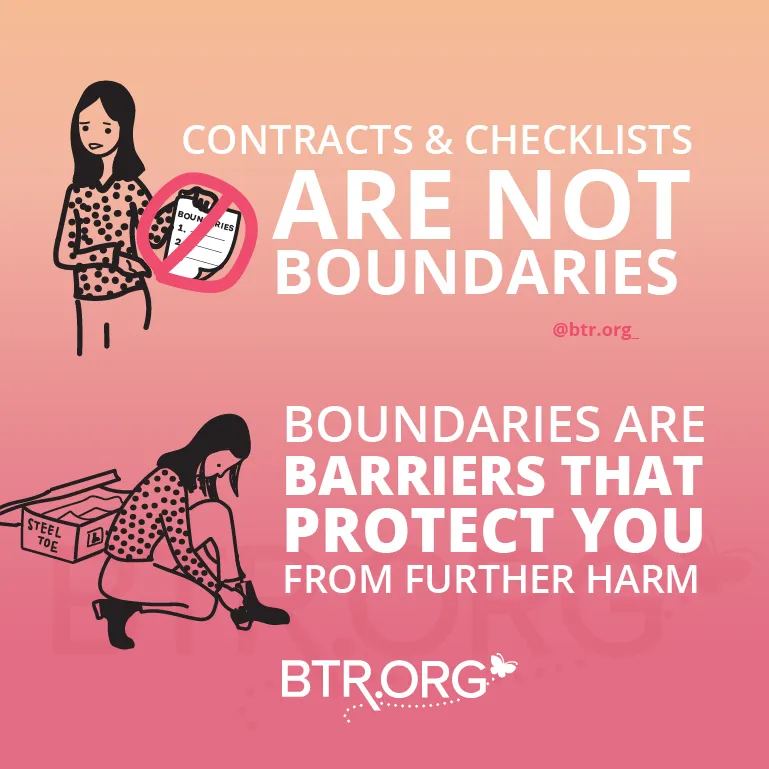
Today I’m going to talk about boundaries with your emotionally abusive husband. Because so many women wonder, how do I set boundaries? The purpose of a boundary is to protect you from harm. If the boundary does not protect you from harm. It’s not a good boundary. Or not a boundary at all.
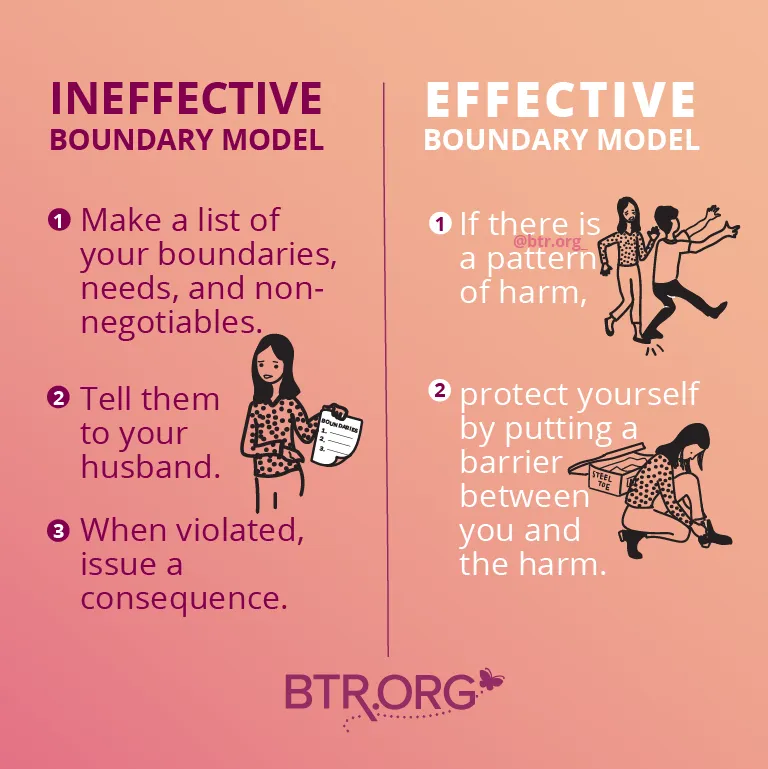
The reason why so many women are confused about boundaries is because traditionally, therapists and other experts set up boundaries this way. You state what you will or will not accept. So you’ll say something like, I will not accept pornography in my home or I will not be lied to. And that is your “boundary.”
Problems with Traditional Boundary Setting
Anne: And then if the boundaries with your husband are crossed, you have to enforce your boundary. That pattern of boundary and then a violation, and then you have to enforce your boundary or then you have to hold your boundary, is problematic. That is what so many therapists or coaches teach, and it is not working for a lot of women. If that model works for you, shine on, right? Keep using it.
But if you’ve been taught that model and you’re like, this is hard. I “set the boundary.” I said, I won’t be lied to, or I won’t be treated this way, or I will not allow this in my house. And then it gets violated. Then you’re like, what do I do now?
If you’re in that boat, I want to teach you a new model for boundaries that is way more practical and makes a lot more sense. So instead of thinking of a boundary as something that you will not tolerate, I want you to think of a boundary as the actual physical or mental thing that protects you from the harm. So if you’re not protected from emotional abuse from your husband, think in your mind, I don’t have a boundary yet.
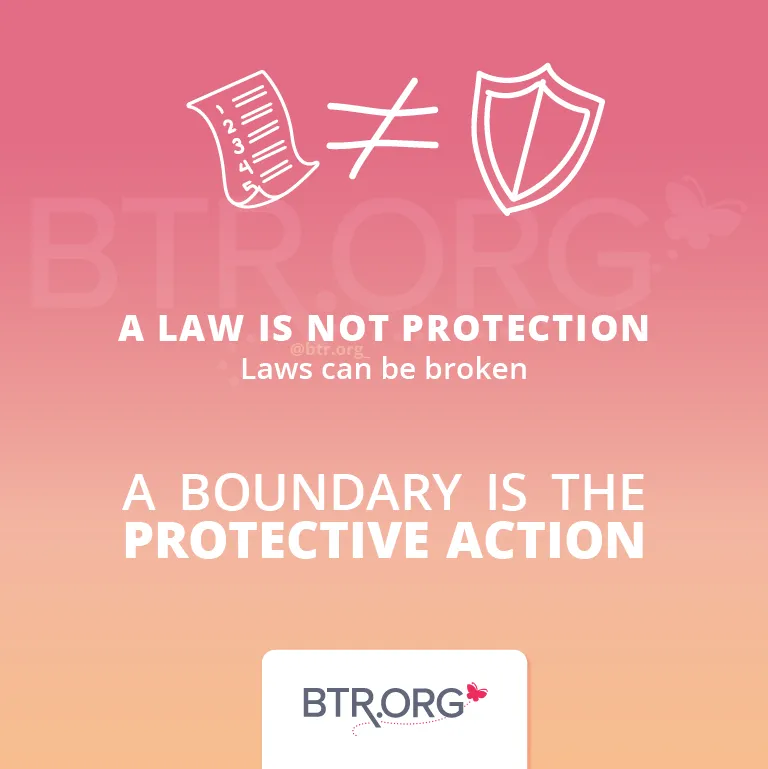
Because the whole point is to protect you from harm. If you’re not protected, then what? Statements like, you cannot treat me this way, or I will not allow this in my home are just statements. They cannot keep you safe. With a coach or therapist, if you’re doing “boundary work” and making a list of things you will or won’t tolerate, you’re not making a list of boundaries.
A Better Model For Boundaries
Anne: What you are making a list of is safety issues. As you make that safety list, you can write down, I don’t feel safe with someone who lies to me. I don’t feel safe with someone who grooms me through being kind to me when they want to have sex. That is not a list of boundaries. That is a list of safety issues. What matters is that you understand what the safety issues are. You can state a safety issue, but you cannot state a boundary.
Boundaries with your abusive husband are actions. It could just be a mental action, you close your eyes. For example, blocking someone on your phone actually stops them from calling you, texting you or harassing you. Can they call from another number or a blocked number? Yes, they can. But if you make a boundary that you will never answer a number that you don’t recognize, they’ll have to leave a message.
And are they going to leave a verbally abusive message? They might. And then you can block that number. And you can just continue to block numbers. If he continues to lie and manipulate, saying, I won’t talk to him, doesn’t keep you safe. Because every conversation he can lie and manipulate you. Blocking him on your phone, blocking his email, or deleting your social media accounts, that’s an actual boundary. Because it literally protects you from the harm.
Creating More Safety Through Evolving Boundaries
Anne: That seems extreme. You could go for a smaller boundary, like every time he says something abusive, you walk out of the room, let’s say. Or every time he stonewalls, or just looks at his phone and refuses to talk to you, you get up and walk out. Does that protect you from harm? Then you can assess, okay, I set these boundaries with my emotionally abusive husband, which means you actually took action.
So let’s say he’s verbally harassing you in the car, and you turn and look out the window and he stops talking. Did that protect you from harm? The answer to that might be, yeah, it did. He stopped in that moment, great. You can say, okay, that’s a good boundary. I’m going to continue to do that. And as they escalate their abuse, you can escalate your boundaries.
People who don’t know anything about abuse will tell you to tell the perpetrator about the boundary. You actually don’t have to tell your perpetrator at all. This thing where you have to tell the perpetrator, my boundary is no exploitative material in the house. And if you do it in the house, I will ask you to move out. I think that’s completely backwards. If they use it in your house, you don’t have to tell them upfront or decide beforehand. If it happens, you don’t have to give them notice.
Functioning, responsible, mature adults don’t need to be told. If you lie to me, I feel unsafe, so I’ll set a boundary. A functioning adult and mature person would know. The things we want them to do, be honest, not manipulate, not look at exploitative material, not cheat. So then a woman wouldn’t have to figure out if they should stay married after infidelity.
Boundaries Don’t Need An Explanation
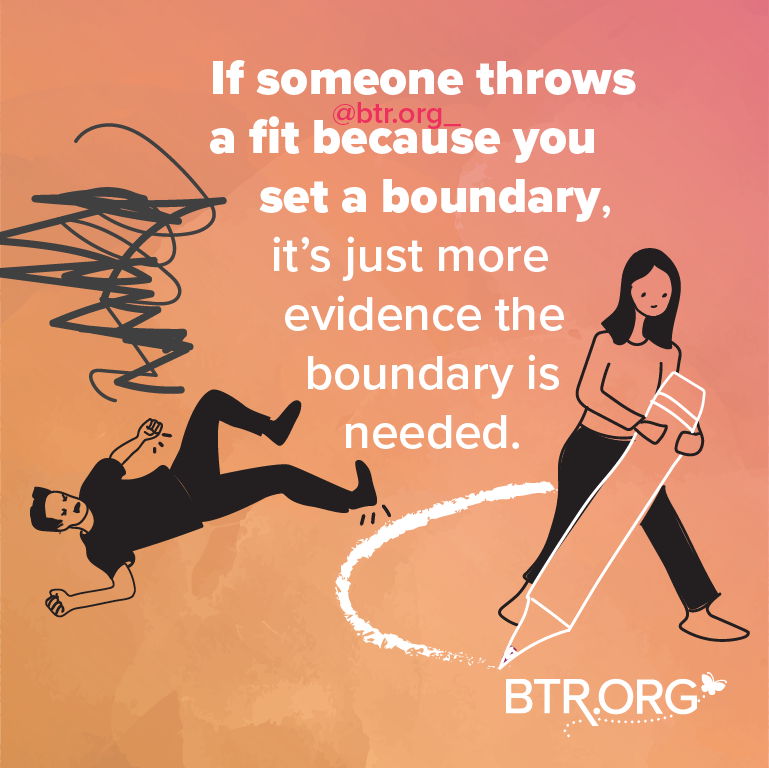
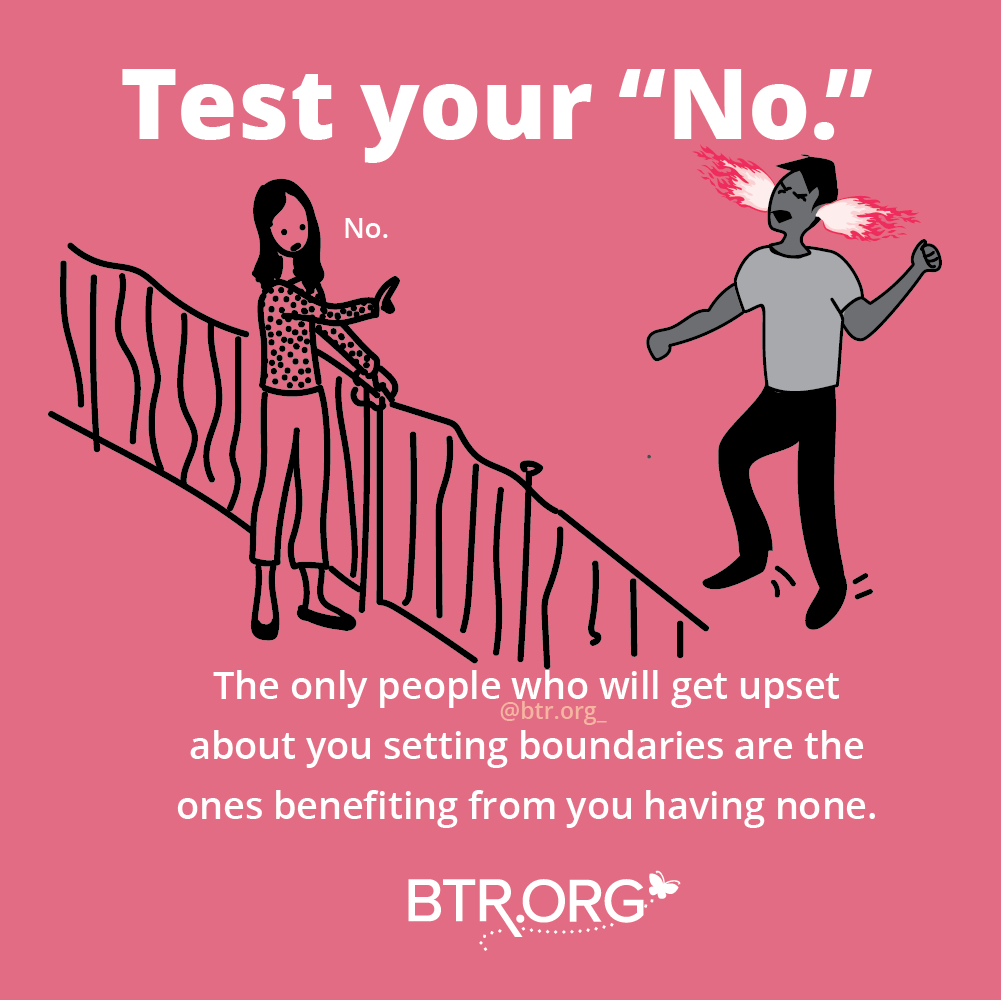
Anne: These are basic skills that adults should know. It’s not your responsibility to explain it. If someone tries to make you feel like it is, that’s simply manipulation. To try and get you to communicate with someone who’s not safe enough to communicate with. You can take action and create a barrier to keep you safe, whether he understands it or not.
You don’t have to tell him what it’s for, you don’t have to explain it. So you can be safe. And if he gets it, he gets it. If he doesn’t, he doesn’t. It’s not your responsibility to try and explain it to him.
I read the scriptures this morning, where it talks about the end times. It said, “For the time speedily cometh, that the Lord God shall cause a great division among the people, and the wicked he will destroy and he will spare his people. Even if it so be that he must destroy the wicked by fire and righteousness shall be the girdle of his loins and faithfulness, the girdle of his reins.”
So this division, where the unhealthy are separated from the healthy, is prophesied throughout the scriptures. I did a podcast about boundaries and New Testament scriptures that bring up boundaries. So if you’re a woman of faith and think, well, wait a minute. This lack of communication or separation feels bad. My church doesn’t teach this, isn’t true. There’s evidence throughout the scriptures of the last days that there will be a great division between the wicked and the righteous.
Separating Yourself From Harm
Anne: If you’re seeing wickedness or unhealthiness in your own home. And you’re realizing, I need to separate myself from this. It’s like quarantine. If you have a virus, it’s a public health issue, and you need to stay separated from people who don’t. So you don’t get them sick. Separating yourself from the harm is important, otherwise, you’re going to be harmed. There’s no other way to protect yourself other than separating yourself from it.
So, setting boundaries with your husband is a protective barrier. If you’re in a discussion and they’re not speaking to you with respect, the boundary would actually be walking out of the room. Because if you keep engaging with someone who is harming you, even if you keep telling them, please don’t do this, please stop. But they keep doing it, and you don’t leave, you’ll continue to be harmed. What are you going to do to feel safe in that event?
Women Share Their Experience Setting Boundaries With Their Emotionally Abusive Husband
Anne: And she said, “Well, every time I see him, I’m so triggered that I feel unsafe, so my boundary is that I’m gonna stay with my mom.”
Here’s another one from our community members. She just found out last month that her husband watched exploitative material almost daily or every other day. Of course, all he could say was he was sorry. And she said, “I know he’s sorry, but how does that change anything?” And so my response was, what boundaries would help you feel safe in your own home? Would you feel safer if you slept in another room? Like what actions can you take to protect yourself?
Another example, he lied to you, and then you don’t talk to him. Because if he talks to you, he lies to you. The only way to protect yourself from the injuries his lies cause is not to talk to him anymore. There’s no other way to do it. There’s no way to get him to stop lying. The only thing you can do is separate yourself from someone who is lying.
So to recap, a boundary is a protective barrier. I want to hear your comments and questions. I want to hear your thoughts. You can also comment on this podcast episode below. I always respond to those comments there.
The Truth About What Bible Says About Narcissistic Abuse
Mar 07, 2023
Show notes
If you’re wondering, “What does the bible say about narcissistic abuse?” Here’s a list of scriptures that will help you know what to do next. To know if you’re one of the 19 different types of narcissistic abuse, take our free emotional abuse test. Transcript: What Does The Bible Say About Narcissistic Abuse? Anne: I am honored to have Leslie Vernick on today’s episode. Welcome, Leslie. We will talk about what does the Bible say about narcissistic abuse. Leslie: Thanks Anne for having me. I’m so excited to be part of your podcast today. It’s been a personal journey to figure out what God’s word really says. Can you break up with somebody as a Christian, or are you obligated to be in a relationship with a narcissistic abuser for the rest of your life? And so I’ve had to personally struggle with those questions. And work to get rid of the guilt and learn to do what God says. As Christian women, we’re taught James 3:2. We all struggle in many ways, we’re all broken, we all fail, and so who am I to say your sin is worse than mine? Who am I to judge your actions as abusive? And traditionally in the church, we have not even allowed the categories of sexual abuse or narcissistic abuse in marriage. It’s only if he hits you. Maybe it can be considered abuse, but probably you deserved it. You aggravated him, pushed his buttons or triggered him. And so maybe you should stop doing that. He wouldn’t hit you. Anne: Many people think when we say the word safety, that we’re talking about, he doesn’t punch you in the face. But we’re talking about emotional safety. What does the Bible say about narcissistic abuse? Leslie: I love that the Bible actually talks about the importance of safety, especially in marriage. The verse in Proverbs 31 where it says her husband trusts her to do him good, not harm all the days of his life. That is safety. That’s the rock bottom foundation. And so safety is an important quality to God in relationships. Common Lies & Misconceptions Leslie: He created our bodies to react negatively if we’re unsafe. So that we go to safety. But his lies, I’ll just give you some of the most common ones. It’s my fault he acts this way. So if only I were more sexual, adventurous, quieter, more submissive, more beautiful, had bigger boobs or whatever it is. It’s somehow her fault. I just need to try harder. I’m not loving him enough. I’m not doing enough to make this relationship work. God hates divorce. I married him for better, for worse, and suffering and sacrifice are Christian virtues that I must embrace to keep my family together. What does the Bible say about narcissistic abuse? And that’s a lot of theology, but I think that’s common in women of faith. Whether it’s the Catholic faith or the evangelical Christian faith. Church tell us it’s somehow our duty. And virtuous to sacrifice ourselves to keep our family together. Anne: So many abusers accuse their victim of being unsafe for them. Like if you were safe enough, I would tell you the truth. But you shame me, and all it is is manipulation. And so that confuses the victim, because she’s like, am I not safe enough? How can I become more “safe” for this man who says it’s my fault he’s not treating me well? Leslie: Well, he’s going to use this language that he’s going to hear in the therapeutic environment of safety. But he will twist it. So what he’s saying is, if I don’t have a carte blanche to do what I want, it’s somehow her fault. Life doesn’t work that way. But that’s the mindset of the abusers. Manipulation & Gaslighting Leslie: Of course, it’s not safe for me to tell you the truth, because I’m going to get in trouble and have consequences. It’s not harmful to hold someone accountable, or to expect them to tell you the truth. When the doctor says, I have bad news for you. You have lung cancer. You have liver cancer. He’s not telling us that to harm us. He’s telling us to help us. If you tell your husband, your pornography use is ruining my attraction to you, or your pornography use is not okay with me. I don’t want my husband preferring women on the internet to his own wife. When he cheats on you and he lies to you, that’s harming you and your marriage is a big difference. Anne: Another word for harm is abuse in that context. Leslie: Yes. Anne: The pornography addiction recovery movement, they have this whole thing around, don’t shame him. Be safe for him to tell you. They’re putting all the pressure for him to feel good about himself on her. When he doesn’t feel good about himself. Because of what he does and the choices he makes. Leslie: You’re absolutely right, Anne. If she’s muzzled and not allowed to share the impact of how that’s harmed her, because it hurts his feelings or upsets him. Anne: All it is is manipulation. What does the Bible say about narcissistic abuse? It talks about safety and departing from wickedness. Leslie: Exactly, and then what happens is the woman starts to feel like, what’s wrong with me that I can’t get over this? What’s wrong with me that I don’t want to kiss him anymore? Living Free Workshop: What Does The Bible Say About Narcissistic Abuse? Leslie: What’s wrong with me that he gives me the creeps? I’m a bad person, so she starts to assume that shame. Anne: And that’s exactly what he wants, because then he can continue to exploit her. And so I wrote the Living Free Workshop as an alternative to communicating with someone who will use your communication to manipulate you further. To learn more, click on that link. Leslie: Absolutely, his work is to decide what kind of man he wants to be. Anne: Yes, I went through that myself, and observed from a safe distance. That was painful for me to sit back and watch those decisions be made. And think, wow, that is who he is and who he’s choosing to be. Leslie: Yes, the most important thing is to focus on getting as healthy and strong as possible. So you’re not clinging to him like a beggar saying, please love me and please don’t leave me. And I’m too scared to be on my own. That you’re becoming the person your kids need, and that you’re going to like at the end of the day. No woman gets married with the idea that I’m going to get divorced, especially people of faith. What does the Bible say about divorce? That for better or worse, the covenant and sanctity of marriage are all important values that we hold dear. However, when there’s no safety, the marriage relationship is dead, even if you stay legally married after infidelity. And it’s sad, and it’s awful, but we need a death certificate so that we can move on. God acknowledges that in the scriptures. The Reality Of Unsafe Marriages Leslie: What does the Bible say about narcissistic abuse? In Malachi, it says I hate when a man trades his wife in for a younger model. I hate when you treat your wife treacherously. God hates that patriarchal culture of those days. But I think God is aware that you can’t make a relationship work with everybody. Even Jesus, who was perfect, couldn’t make his relationship with Judas work. Judas went and did what he wanted to do. Anne: I had an epiphany about the three temptations of Christ when Satan’s like, throw yourself off a building. And I think he was tempting him with contention. I don’t think he was actually tempting him with throwing himself off a building. And if I had been in that scenario, I’d be like, Satan, you’re so stupid. Why would I throw myself off a building? And I would completely fall into the temptation of an argument. Leslie: The interesting thing about that whole temptation is that Satan used scripture. And I think this is important for your audience Anne, because people, pastors, your mother, your father, your husband will use scripture to try to get you confused. Jesus used scripture back to Satan. And that’s why it’s so important for us to know what God says about these things, because we can get spiritually abused. Narcissistic abusers use scripture to manipulate you. But the message Jesus is giving people is to empower them not to lose their dignity in a humiliating situation where someone’s trying to destroy your dignity. Verbal & Emotional Abuse Leslie: What does the Bible say about narcissistic abuse? The Bible is clear about certain kinds of abuse. In Colossians and Ephesians, Paul talks about abusive speech. Let no abusive speech come out of your mouth. James talks about abusive speech. It talks about reckless words pierced like a sword. And Proverbs talks about the damage of a relational betrayal. Psalms says your insults have broken my heart, and I am distraught. So there’s a huge impact of verbal abuse on someone’s soul, spirit, and body. Any kind of abuse, chronic adultery and anger addictions are not marriage problems. Especially if you’re trying to figure out how to deal with an angry husband. They cause marriage problems, but they’re individual issues, and marriage counseling can’t solve them. When you have a husband who blames you for when he does those things, and then you go to counseling, and somehow you’re supposed to fix him and keep him from acting out in those abusive ways. Women should understand narcissistic abuse. Whenever another person controls you, where you are no longer free to say, no, I don’t like this. Or this is what I want, or this is what I don’t want, or this is who I am, and this isn’t who I am. When someone’s trying to objectify you into someone in their image, instead of helping you become who you’re supposed to be. That is very destructive to your growth and character as a person. But also when someone is totally indifferent to your needs, your wants, your cares, your hurts. And they’re just living for themselves, it’s saying to you, you don’t matter. You don’t matter at all. You’re married to someone who says you don’t matter. Objectification In Relationships: What Does The Bible Say About Narcissistic Abuse? Leslie: So it’s a relationship of object to person, like my cell phone. I love my cell phone as long as it does whatever I want, right? But, if my cell phone should say, I’m not going to work today because I’m tired. I’m like, get rid of this cell phone. I’ll find another cell phone, right? Because when you have an objective relationship with someone, you might say you love it, as long as it completely meets your needs. But once it stops meeting your needs, it is disposable. And so many women are in these relationships with narcissistic men who objectify them. As long as you revolve your whole life around making me happy and making my life easy. And never cross me, and never disagree with me, and never bother me or ask me for anything. Just give, give, give to me. I’ll be somewhat nice to you. But if you ever want something that I have to sacrifice for you, forget it. It’s not going to happen. And somehow they’re supposed to keep this relationship going when a healthy relationship requires mutuality and reciprocity. Women long for their husband to value them, but what I say is that the person who has to value you right now is you. What does the Bible say about narcissistic abuse? It says every living thing is important to God. Documenting & Recognizing Gaslighting Leslie: You encourage people to document to help them see that they’re being gaslighted. Because they can go back and say, wait a minute yesterday or two days ago, two weeks ago, he did say this. And he did say he would do this, and now he’s saying he never said it. But he did say it, because I remember writing it down. And I can prove to myself, even though I’m not going to convince him. He’s going to lie and cover up and tell me I’m nuts, but I’m documenting my own sanity so that I can see that this is gaslighting or crazy making. Facts are really, really helpful. What does the Bible say about narcissistic abuse? God calls us to live in truth and reality. That’s why the patterns are so important for you to pay attention to. Let me just give you a quick illustration. I was teaching my pastors at my church, I said, okay, so let’s say someone was texting and they crashed into your car. And pulled out of the parking lot. They weren’t paying attention. And they jumped out of the car. They said, pastor, I am so sorry I crashed into your car and it was an accident. I didn’t mean it, but you know, the Bible says love covers a multitude of sins. And love keeps no record of wrongs. And I’m so glad you’re the pastor, because I know you’ll forgive me, bye. All the pastors laughed and they said, We would never let that happen. I said, and so let’s say he did it next Sunday and the Sunday after that. Even if you were gracious the first Sunday, and he kept doing it over and over again, you’d say, do not come back to this church. Christian Teachings & Misinterpretations Leslie: But our Christian teaching said, your husband can act like the devil, but you’re supposed to pretend like he’s Superman. Like you’re supposed to praise him, encourage him, and build him up. And never say, wait a minute, you’re acting like a fool. I’m not doing this. So a husband can drive a family straight off the cliff. And a wife is supposed to submit, smile, and trust God. That’s just not reality, nor does God ask her to do that. And so they feel entitled. Especially in marriage, I’m entitled to sex whenever I want. It doesn’t matter how I treated you. Your body is not your own, and they’ll use scripture to confuse a woman. I’m entitled to get out of consequences because you have to forgive me. I’m entitled to have my cake and eat it too. And I’m entitled to hurt you. That’s why it’s so crazy that betrayal trauma counselors would involve a wife. It’s not possible, it’s impossible. Even if you wanted to. Let’s say your husband is a diabetic. And you feel sorry for him, and you want to help him manage his diabetes. So you’re gonna cook right, and you’re gonna buy all the right food, and you’re gonna do everything. And, you know, count his carbs and do all that, and you see him on the couch eating Doritos and donuts. You can’t make someone do what they don’t want to do. Anne: He lies to manipulate you so you think, of course he doesn’t want to act like this. He’s an addict, broken and experienced childhood abuse. He’s a really good guy. He doesn’t want to do this. What does the Bible say about narcissistic abuse? It says tell the truth. Entitlement & Manipulation: What Does The Bible Say About Narcissistic Abuse? Anne: He just keeps doing it accidentally or something. Like, I don’t know. You’re trying to figure it out. He wants you to believe he doesn’t want to do it. And that he’s fighting demons or struggling. That’s the mark of a truly manipulative man is that he continues to do the behavior while making you think he doesn’t want to do it. If he didn’t want to do it, he wouldn’t have done it in the first place. Like, have you ever solicited a prostitute? No, because you didn’t want to. Leslie: When he’s sorrowing like that, when he’s, Oh, I’m so horrible and blah, blah, listen to what he’s sorrowing about. Because usually it’s not about who he is. It’s not like he’s saying, I’ve been a liar. I’ve been a cheater. I don’t want to be that kind of man. I want to be a good husband. He’s not saying that. What he’s saying is, I can’t believe you’ll leave me. I’ll be all by myself. How am I going to make it without you? I’m not going to have my … He’s sorrowing over the consequences. He’s not sorrowing over his character. So that would be one big red flag that would help you discern where he’s at. What does the Bible say about narcissistic abuse? There’s this interesting story in the Old Testament, where Naaman had leprosy, and was told Elisha could cure him of his leprosy, he was not a Jew. he goes to Elisha’s house And he bangs on the door, and Elisha doesn’t even answer the door. He says, man of Israel, come out and help me. I have leprosy. The King of Israel told me that you would heal me. Victim Blaming Leslie: He said, go wash yourself in the Jordan River. Dip yourself s…
My Husband Hates Me: Hidden Abuse I Couldn’t See
Feb 28, 2023
Show notes
Have you ever felt like, “my husband hates me” and you had no idea why? Maybe nothing obvious is happening that you can point to and say, “This proves it.” The truth is: emotionally abusive men don’t have to yell or call you names for you to feel unloved, emotionally unsafe, and completely confused about why your marriage feels so painful. Take this free emotional abuse test to find out if your husband is emotionally abusive. Key takeaways from this article: How “small” patterns over time erode feeling safe and loved. Feeling like you’re “too much” or doubting your own needs often signals deeper issues. How covert abuse makes it hard to spot the overall dynamic. How setting boundaries may highlighting a troubling power imbalance. Finding the right support can help you recognize the pattern and plan steps forward. 5 SIGNS IT’S EMOTIONAL ABUSE AND NOT YOUR FAULT 1. EVERY CONCERN I HAD, MEANT I WAS “TOO MUCH” Every time I ask for help, express emotion, or bring up a concern, he flips it back on me. He said I was, “too much, unable to let anything go, making mountains out of molehills, or just wanting to fight.” He had no empathy for me. The repeated message was: any natural reactions, needs, or concerns I had, were character flaws. My husband purposefully kept me in a place of doubting my relationship skills, and his manipulation worked. It kept me spinning my wheels always trying to prove to him that I am lovable. 2. MY HUSBAND HATES ME:WHILE I TRIED HARDER, HE SEEMED TO GET MORE ANNOYED Have you ever done something nice for him, and he seems super annoyed? Let’s say you’re like, “Hey, I picked up your dry cleaning on the way home.” And he’s like, “Do you want a parade?” You know, he’s got this like sulky teenager sort of reaction instead of saying, “Oh, thank you so much.” If he’s doing that, you would definitely get the sense that he hated you. 3. HE WAS NOT KIND, BUT I DIDN’T NOTICE UNTIL SOMEONE ELSE POINTED IT OUT TO ME My husband wasn’t overtly unkind, but I didn’t notice until somebody else pointed it out. I didn’t think my husband hates me. It was when he ignored me at a party. Instead of being like, “Hey, this is my wife,” he just stood in front of me and didn’t introduce me. I had never thought about how rude that was. I just thought, “Oh, maybe he didn’t think about me.” But not thinking about someone is actually unkind. 4. When I Set A Boundary, He FELT ATTACKED When I quietly stopped doing something I didn’t want to do, he reacted like I had attacked him. And that confused me for years, because I wasn’t yelling. I wasn’t insulting him. I was simply saying no without always saying the word. And I wasn’t doing anything, besides not doing something I didn’t want to do. He did that all the time. But if he’s only in the relationship to have control over you, “no” feels like rebellion. Because he does not see your boundary as an autonomous person. He sees it as you failing to serve him. So when he says he loves you but acts like he hates you, sometimes what he hates is not you. He hates that you have your own needs. Your own limits. Your own body. It’s shocking to realize the level of abuse you’ve experienced. To learn more about this type of abuse, listen to The Free Betrayal Trauma Recovery Podcast. Transcript: My Husband Hates Me: Hidden Abuse I Couldn’t See Anne: I have a member of our community on today’s episode. We’ll be talking about feeling like my husband hates me. We’re gonna call her Allison. Welcome, Allison. Allison: Thank you so much. I’m so happy to be here. I’m totally fangirling right now, ’cause I have listened to you for so many years. I still can’t believe this is happening. So I did not miss a podcast. I go way, way, way, way, way back. This is so cool for me. Anne: Oh wow. Well, you’ve been on this journey with me then. Allison: I know at one time you said you could tell the change in your voice. And I totally could. I found you and it was amazing. Lemme just say it that way. It was the validation. It’s funny when I try to tell my story now, it’s hard because I am so clearheaded now. And I think it’s so hard to tell how you were then. Because, if I knew now what I knew then. It would be a completely different story. So when I tell people about you, I tell them to go back to the beginning, Because then you can go along with her. I was married 20 years, I was the textbook, didn’t know anything was really wrong. And I say that now and I think I know a lot of stuff that was wrong. Anne: Let’s start back at that beginning when you were in the dark, so to speak. Talk about how you felt when you first met him. Did you suspect something was wrong? And then what did you think it was? I NEVER FELT SAFE OR LOVED Allison: All this tangible stuff that you can point to, if it was happening. I didn’t know about it. As far as I know, he never cheated on me. I don’t know if he ever used pornography. Didn’t call me names, didn’t yell at me. When we first met, we were in college, we were in our twenties. We were friends, we dated, got engaged and married. Now, I can tell you inside my inner gut, I never really felt safe or loved or anything by him. But I didn’t know that that was wrong. I’m the kind of person who is optimistic. I’m very hopeful. I can do a lot of things at once. I can solve a lot of problems. Now, it would be totally different, but I didn’t think anything was wrong. I thought I was super happy, comfortable, and safe in that relationship. In hindsight, I felt like I was always the nag, I was, OCD, I was over the top, I was a pain. I had these extremely high, crazy expectations that nobody could meet. That was just our life, and we had my first son after we’d been married about seven years, and everything just got bad. It was then that I started to think my husband hates me. And then three years later, we had our daughter, and things got worse. And I thought it was me. I thought I’m just a hard person to be around. Anne: I don’t know if I’ve said this on the podcast, but of a time we were at a park and he was just being mean to me and I was like, I’m really great. I’m really cool. So it’s the opposite of what you were thinking, it’s me. But maybe sometimes you did think I’m great, why doesn’t he like me? I TURNED TO MY CHURCH AND THERAPY FOR HELP Allison: Little voices in my head would be like, why don’t I have these problems with anybody else? Why does nobody else in my life tell me I am difficult to communicate with? I get paid to communicate with people. And I feel like I’m really good at it. But I thought it was me. I was not super religious, grew up Christian, but not overly so. When I was having a hard time being a mom and didn’t feel like I had any support, I went to church and I just threw myself into the Methodist church, and I would tell you now, I love the Methodist Church dearly in my heart. They helped me find Jesus, and I love all that. But it made all this so much worse. I needed help because I feel like my husband hates me. I just threw into the submission and be a better Biblical wife, and it took everything already happening and exponentially made it worse. Anne: Back then when you thought it was you, did you go to therapy? Did you try to go to a couple therapy with him? Can you talk about the therapeutic experience? Allison: Yes, so the first time we went to therapy, we’d probably been married six years. It was very much, something is wrong, and I don’t know what kind of thing. I found myself more attracted to other people. I was like, why do I like these other men? Or I’d rather be with friends more than him. Again, I just thought, what’s wrong with me? He’s funny, he is nice, he has a good job, and he treats me well. I TRIED EVERYTHING AND STILL, MY HUSBAND HATES ME Allison: So the first time we went to therapy, that was the premise and the therapist, it was the date night, go on more date nights, all this typical stuff. I just tried harder. Thought maybe we should have a baby. Maybe that’ll help. Maybe I should quit work, maybe that’ll help. I tried to be a better wife. And I threw myself into all The Power of a Praying Wife books. And how can I be a better wife? ‘Cause if I am better. Then he will give me some sort of safety or love that I’m craving. Anne: You mentioned he was nice to you. He is a good guy. Why don’t I wanna spend time with him? Was he actually nice to you? Allison: Actually not nice, not nice or kind. He was none of that, but I couldn’t see it. I didn’t think my husband hates me. So again, in hindsight now, he was always very grumpy. He was mean to my friends. Definitely mean to my family. Of course, none of them said anything either. 20 years later, I was like, why didn’t you say anything to me? And they said, “You seemed okay, so we didn’t feel like it was our place.” Anne: What did they think of him from their point of view? Allison: Close friends and family, people who really knew me, thought he was a jerk. Why does she like this person? But they just trusted me. They said, “Well, she’s a smart person, he must treat her great at home.” He was mean to waiters, had road rage. He was that kind of person, who was angry all the time. WORKING FULL TIME AND CARRYING EVERYTHING AT HOME Allison: That all elevated when we had kids. I think most people questioned me. What is she seeing in him? That made me question myself even more. Everything I tried to do, therapy, church, and advice from people who loved me, put it more onto me. So the first time I went to therapy, just nothing. I felt this heavy weight. Now I have to work full-time and take care of everything in the house, take care of the yard and the cars, and plan all our date nights and stuff so that he will be nice to me. It just put even more onto me. Our pattern was complaining or criticizing, or asking for help, or having any emotion. And then him saying, “Well that’s you. You’re too much, you’re overboard. You can never let anything go. You just wanna fight.” It was, gaslighting at its extreme. And I took it, I don’t think it’s ’cause I’m stupid or a doormat. I think I took it cause I just thought I could fix it. Anne: Also, strangely, it shows what a good person you are. You weren’t super offended. You were like, “Oh, maybe that is true. Maybe I can improve.” You didn’t feel like my husband hates me. Allison: I’ve always liked self-improvement. I think my dad gave me The Seven Habits when I was in high school school. I’ve always been the kind of person who thrives on how I can become a better person. That’s always been me. And so, I just fit the mold. I always say now, “What a great person to be married to.” He was married to somebody who was going to keep trying. ABUSERS SEEM TO FIT THE SAME MOLD Anne: I wouldn’t say you fit the mold. And this is why, it’s really weird. The abusers seem to fit the mold. ‘Cause they all tend to have the same patterns, even if they look a little bit different. But victims act totally different. Some of them, I didn’t do this, but some shut down and become more quiet. Some become louder. And some try self-improvement, some don’t. It’s really interesting that we react in all different kinds of ways, but the fact that they lie, and then they keep lying, and they don’t stop lying, is what makes them pretty much all similar. It depends on how they lie. Allison: Fast forward 20 years later. ‘Cause it was really just 20 years of the same. We found ourselves in therapy a couple more times between this and that point. At first, I thought something was maybe wrong with my son. He needs to go to therapy. Is he on the spectrum? What is wrong? Why is family fighting all the time? Why can’t we sit down to a meal without fighting? And why are we always fighting in the car? Why do we not fight when I go out with my friends and their kids? And it was just, what is wrong here? And the therapist that time. I think he saw it. I really do, this person saw it. He told my ex, if you wanna see changes in the behavior of your son, you’ll need to treat your wife the way you want your son to treat her. You can’t yell at your son for leaving stuff around the house, and not help out at home. If you are not doing those things. MY HUSBAND HATES ME: HE WAS LAZY TO AN EXTREME Allison: It was very elementary, and very gentle. And my ex is like, we’re never gonna see him again. That therapist is terrible. He’s trying to blame it all on me. It just wasn’t worth the fight, that was time number two. Anne: During this time, did you ever find pornography or affairs or sexting or anything like that? Allison: I didn’t, to this day, I still don’t know. They’re all the same, it would not surprise me. Anne: Yeah, there are so many women who are like, I don’t know. And then later they find out or never find out. Even though they feel like my husband hates me. But it wouldn’t surprise me either, with what you’re saying. Allison: And honestly, I’m at the point where it doesn’t matter either way. I think I lived a very long time in the, I need something to prove that he’s a bad person for me to justify how I feel. All I could say tangibly is that he was lazy to an extreme. He would never help with anything. He’s set his alarm to go off at four o’clock in the morning, and it would go off and wake everybody up. But then wouldn’t get outta bed till eight o’clock in the morning, constantly for years. We had two kids, and I’m putting ’em to bed at night. I’d say, can you do the dishes so that I can just come downstairs and watch TV after I put the kids to bed? I come downstairs, he’s asleep. The dishes aren’t done. And next morning, I would say, “I thought you were gonna do the dishes, that upset me.” IT WAS EASIER TO DISASSOCIATE FROM THE PATTERNS Allison: It was just, “Why can you not let anything go? You make a mountain out of a mole hill. You just wanna fight all the time.” I didn’t see those as patterns. It was so covert. Everything turned back onto me and I just accepted it. ‘Cause I think it felt like I had a little bit of control. If I could accept that it was me, maybe I could fix it. Anne: Yeah, I mean that’s the hope, we want to fix it. Allison: We want to fix it. Anne: Yeah. Allison: When he would say things like, “You just wanna fight. You want to blow this up?” Now I look back at those conversations, and I wish I could go back in time, because it’s the last thing I wanted. But instead of me being that clear and saying, “No, I don’t wanna fight.” I would say, “I’m so sorry I did this. I’m so sorry I brought this up.” Anne: Mm. Mm-hmm. Allison: It just got easier to disassociate from it and try to do my own thing, than to try to fix it, because every fight ended with me. Not just fight, every conversation ended with it was my fault. And so it just got easier to never have a conversation or never bring up a concern, ’cause it was just gonna be my fault anyway. I LOST MYSELF COMPLETELY Allison: Then I lived for several years like that, and that’s where I just lost myself completely. One day my sister said, “Something’s not right”. Again, it was all very gentle, nothing blew up. Something just doesn’t seem right. You’ve been married for 20 years, having the same fight for 20 years.” She had been married a little over 10. And she’s like, “We resolve problems. You’ve never resolved a problem, and that’s not normal.” I let this little pin prick into my head that maybe this isn’t normal and maybe it’s not me. That was it. It was very gentle. That’s when I went back to that same therapist for about eight years before and sat on his couch, and I was like, “Something’s not right. I don’t know what’s wrong, but I just don’t wanna do anything.” And I’m a happy person. I’m an extrovert. I just wasn’t myself. He had already seen it eight years before. Very gently he said, “Here’s a book called Boundaries using them in marriage. Maybe you should read this.” And so I read it and I was like, oh, yay, this is what’s wrong. We’re gonna fix it. He’s gonna read the book and realize that, oh, and we’r…
Strategies For Divorcing An Abusive Husband With Wendy Hernandez
Feb 21, 2023
Show notes
Are you considering divorcing an abusive husband? If you feel overwhelmed at the thought of hiring a lawyer or fighting for custody? To discover if you’re emotionally abused, take thisfree emotional abuse test. Wendy, an attorney, joins Anne Blythe, M.Ed. to talk about divorcing an abusive husband. To learn strategy for dealing with and abusive husband before and after divorce, enroll in The Betrayal Trauma Recovery Living Free Workshop. Hiring An Attorney When Divorcing An Abusive Husband Abuse and betrayal victims may feel daunted and overwhelmed at the idea of interviewing and hiring an attorney. Here are some helpful tips for choosing an attorney when divorcing an abusive husband: Interview more than one attorney Make sure your attorney understands narcissism and post-separation abuse Choose an attorney that will fight for you, but not stir the pot Make sure that you understand your attorneys fees from the get-go Select an attorney that you feel comfortable and safe with Victims can enlist trusted friends to help them in the attorney selection process. This is not a decision that needs to be rushed and women can trust their intuition through the process. Find Healthy Ways To Work Through The Trauma While Divorcing An Abusive Husband Get the emotional help you need, so your attorney can help you. When women try to navigate the legal system while carrying heavy burdens of trauma and living in constant fight-or-flight mode, they may have trouble making decisions. Emotionally-based decisions tend to muddy the waters and make it difficult for victims to think strategically. Victims can choose to process their trauma and express their emotions in safe and consistent ways by joining support groups, like the Betrayal Trauma Recovery Group, so that when it’s time to focus on the legal aspect of their situation, they can give it their full attention. Divorcing An Abuser 101: Understand “Best Interest Factors” When working through a custody battle, it’s important that victims understand the concept of “best interest factors” – or, what the courts will be considering as the important issues that determine who the children should be spending their time with. Wherever you are in your journey to healing, Betrayal Trauma Recovery is here for you. Custody battles, divorce, and discovering a partner’s infidelity are all life-altering, traumatic experiences. Betrayal Trauma Recovery Group Sessions offers the support that you need as you navigate this trying time. Join today and find the community that you deserve. Transcript: Divorcing An Abusive Husband Anne: I have Wendy Hernandez on today’s episode. Wendy is a courtroom lawyer who has tackled every type of family law matter from divorce to child custody, to everything in between. Welcome Wendy. Wendy: Thank you, Anne. It’s wonderful to be here. Anne: So many of our listeners are just finding out about their husband’s abuse, their husband’s pornography use, or his double life. And they’re starting to wrap their head around the fact that they might be in an abusive relationship. So we have that segment of listeners. Then we have a segment of listeners who are now looking back on their marriage post divorce. They’re like, whoa, I didn’t realize that all the stuff that happened to me is an example of emotional abuse. Those women, when it comes to the law, are most concerned about upcoming custody issues that have happened since the divorce. Let’s first talk to that first demographic of women who are just coming out of the fog of abuse. Maybe some of them are thinking, can I stay in this marriage? They’re maybe starting to think about divorce. To those women, what types of things are important for them? As they’re considering, should I considering steps toward divorcing an abusive husband? Wendy: Yes, so first and foremost, you have to think about your safety and the safety of your children. And I know that many women feel guilty about leaving marriages for spiritual reasons. What is at risk is your life and the lives of your children. If you have children. When they’re in these relationships that are not only life threatening, but soul crushing. Emotional & Psychological Safety Strategies Wendy: If you are in danger, start preparing to get out. I wouldn’t say get out until you’ve put some thought into it, until you have a plan in place, and you have some safe people that you can rely upon to help you get through this, because you will need the support from an emotional standpoint. So first and foremost, use Anne and the resources she has available to determine whether you’re safe or not. Anne: Yeah, she’s talking about The Betrayal Trauma Recovery Living Free Workshop, which helps women determine their husband’s character, to see how safe he is. And then we’ll give you emotional and psychological safety strategies, both in terms of setting boundaries, but also how to communicate so that you can protect your emotions no matter what stage you’re in. Challenges Divorcing An Abuser Even if you’re never going to consider divorcing an abusive husband, they will still help you emotionally. They’ll still help you get to emotional and psychological safety. Wendy: If you decide you’re not safe or your children are not safe, then it’s time to leave. I want to share a story about a potential client I met with last week. She had just wanted to get through the divorce, and her attorney at the time really pressured her. Let’s just get through this. And as a result, she agreed to joint custody of her children. So fast forward about a year later, and the abuse is getting worse. It’s affecting the children. He’s starting to direct it towards them. Her attorney was a man, but essentially he encouraged her to sweep the abuse under the rug. This is an example of how divorcing an abusive husband can be complicated. You have to be in alignment with what you know to be the truth. That may mean you have to stand up to people you think are actually on your side. Legal & Financial Abuse In Divorce Wendy: Sometimes emotional abuse is legal and financial abuse that occurs while divorcing an abusive husband. The abuser says, you know, if you persist. Then I’m going to bleed you financially. So it can also turn into a type of scorched earth litigation, where it goes on for not just months, but years. And everything is destroyed in the process. So, whoever’s going through this, they have to evaluate what makes sense for them. Because if everything’s destroyed, if all bank accounts are destroyed. Or you lose your friends and family, which sometimes can happen with emotional abusers. They tend to get into the heads of people we love and convince the friends and family that the victim is actually the crazy one. It’s hard for me to tell people how to navigate that without knowing the circumstances of each individual case, but you just got to know what can happen. Anne: Let’s talk about the injustices of that situation. So many victims are just horrified when they find out they need to compromise with their abuser. And I just want to say out loud and acknowledge that it isn’t fair, it’s not okay, and it shouldn’t be the case. But because it is the case, can we talk about how victims can maybe reframe it. Because it’s really, really devastating. Like I’m never going to get help, no one’s ever going to help me. This is how abusers gaslight the victim and the system. I meant I didn’t know what to do when my husband said he doesn’t love me. Wendy: Yeah, the judiciary needs a lot of education, especially when it comes to emotional abuse. I believe, and you probably agree, that it is the least recognized form of abuse. Judges usually only sit up and notice when there’s physical abuse and doctor’s reports. Divorcing An Abusive Husband: Healing & Moving On Wendy: There’s this saying I like to tell my clients, and that is, do you want to be right or do you want to be done? And again, you have to find that balance between the truth and moving on with your life. Because I feel like true healing begins when you can do this initial separation. If it’s a physical or legal separation from the abuser, and then less burdened and more able to get on with the healing. The longer you’re enmeshed in this litigation, you’re just embroiled in it, and it’s hard to move on. It’s hard to heal when constantly getting messages from an attorney or ex about whatever legal matters are pending. Or when you’re having to go to court. So, there’s a lot to be said for healing. https://youtube.com/shorts/P9gSfGR_3R4 And I feel like when somebody can throw off the shackles by finally divorcing an abusive husband, they can fly. They can become more than they’ve ever imagined. I believe their potential is unlimited, but while that oppressor is still involved in every aspect of their life and still controlling them, it’s hard to get to that place. Anne: Yeah, women wonder how long it will take to heal from emotional abuse and healing cannot happen until we can protect ourselves. Let’s talk about post separation abuse and how that affects women. When people think, I’ll help this victim escape this abusive marriage. And then everything will be fine. And they don’t realize that divorce does not solve abuse. Sometimes, it can escalate the abuse through either legal abuse, or abusing the kids. Many women are horrified. They think, Oh, he’s a good guy. I think the divorce will go okay. Then it gets worse during the divorce. And then it’s even worse after the divorce. So can you talk about post separation abuse? Keeping Communications In Writing Wendy: It’s fairly common sense, but many people forget about it, so it bears repeating here. And that is, if you can, keep all your communications in writing with the abusive ex. You may not have had those communications prior to separation, there’s no reason why you shouldn’t be. You should be for your own protection, for the protection of your kids. And when you’re divorcing an abusive husband, he will try to bend the rules, get the survivor to do what he wants. And use the children as pawns in this game. So keeping communications professional and to the point and centered on the children is important. When you end up in court again, and I say when, because it’s probably going to happen if you’re dealing with an abuser. So the documentation is key. There are certain programs available. One’s called Our Family Wizard. And these programs help keep track of the communications. A judge can even access the communications if the judge wants to, to look at what’s been going on between the parties. So where somebody may not have had documentation prior to separation or divorce. They can have plenty of documentation after. And I’ve had many victims of abuse who have used those post separation communications to gain an advantage in a post divorce lawsuit regarding custody of the children. So documentation is key. Avoid verbal communication, verbal contact with the abuser because they will make promises they will not keep, they will say things were said that were not said. And as you know, because they are so charming and they’re so convincing, there are many cases where the judge believes them. So just keep it in writing. That’s my best advice. Strategic Messaging Workshop Anne: So when women enroll in the Living Free Workshop they’ll learn how to use strategy to protect themselves. I’ve seen it happen with so many victims. Their abusers’ messages sound so nice. He says, hey, if we could just get together and talk about this, we can work it out. If you’re divorcing an abusive husband, don’t fall for this. It is grooming or hoovering because they want to hook us back in. Then they’ll say all kinds of stuff that’s not documented. And I talk all about that in the Betrayal Trauma Recovery Living Free Workshop. Can you talk about the scenario where women are groomed through written communication? And that grooming manipulates them to drop their guard and talk to their abuser in person, and how you’ve seen that backfire. Wendy: Yes, we are raising awareness of this right now, it happens all the time. To the victim, survivor out there, do not drop your guard. You know this person, and you know how they can flip. You know how they can turn, and they’re not going to change after the divorce is over. So don’t let down your guard. You have to maintain your resolve. And keep those communications in writing. I don’t see any reason why all communication should not be in writing, and I would never let down the guard. The abuser could go a few years and not do anything offensive. You let down your guard. And then boom, they smack you. So it’s important to you and your children not to let down the guard and keep it all in writing, because it does backfire. Divorcing An Abusive Husband: Court Perception Of Communication Anne: How do the courts see that scenario? So for example, if an abuser said, hey, I’ve been trying to talk to her. I keep sending her these emails, and then he shows the judge the emails. And in the emails he’s like, why can’t we talk? Why can’t we work it out? How do judges see those types of communications? Wendy: So I think judges have a problem when a person is not responding at all, and I would say never do that. Especially if the abuser is emailing, hey, there’s this issue with the kids, and let’s try to work it out. Always respond to those. I’ve seen people get into trouble where they completely shut down. That’s normal. It happens. You know, you have PTSD, and there are ways to respond without having to respond. We’ve talked about that, Anne. Anne: Yeah, exactly. Those are the strategies I teach in The Betrayal Trauma Recovery Living Free Workshop. It’s a way of responding that protects you. It protects your emotions, but also protects you and your kids during the process of divorcing an abuser. Wendy: Yes, and I’ve had somebody lose custody of their children before. Because the judge said, listen, people share joint custody when they can co-parent, but you’re not responding. So that tells me that you cannot co-parent. Therefore, I’m giving custody to the abuser. So respond always, keep the response short. We know the abuser will go on and on for pages about whatever the issues are. And if you can, distill it down to what the real issues are, and respond very short and succinctly, and keep it on point. Working Through Writing Messages Wendy: But don’t ignore communications. Anne, I don’t know if you want to talk about what we discussed. Anne: Yeah, The Betrayal Trauma Recovery Living Free Workshop strategies, yeah, women have seen amazing results with these strategies. It’s not legal advice, so it’s not the same as talking with an attorney or coming up with a legal strategy. But it is a communication strategy, and it works whether you’re married or divorced. Before I wrote the workshop. I didn’t know if it was a fluke, it worked for me, and would it work for other women. So I mentored women, and we worked through writing their messages with the criteria I came up with. And all the women I worked with had great results in court. Their messages looked spotless in court. They looked like they could co-parent well. One of the women I mentored, her ex, had taken her to court five times after divorcing an abusive husband, for custody things, five times. She told me, Anne, nothing has helped me, like The Living Free. This is a game changer. I’m going to win this case. And I don’t think he’s ever going to come after me again. I was so glad to hear that. The messages in the The Living Free workshop are actual real messages of women that I mentored. So some of them are consolidated or clarified, but these are the actual abusers messages and then the strategic messages back. I do have a section of examples of what’s not strategic, so that women can see the difference. Keep The Lines Of Communication Flowing Anne: The cool thing about Betrayal Trauma Recovery is it’s not just that. If you need to ta…
Can You Emancipate Yourself From One Parent? – Tiffany’s Story
Feb 14, 2023
Show notes
Children of divorce often wonder, “Can you emancipate yourself from one parent?” Tiffany will share the story of how she emancipated from both parents. Hopefully, her story can help any minor hoping to emancipate themselves from an abusive parent. If you have children in danger from their father after a divorce, or you’re concerned about it, we’d love to support you. Attend a Betrayal Trauma Recovery Group Session TODAY. 1. What Does It Mean to Emancipate Yourself? At BTR, we advocate for safety above all else. To discover if you’re emotionally unsafe, take ourfree emotional abuse quiz. Women can learn emotional and psychological safety strategies by enrolling in The Betrayal Trauma Recovery Living Free Workshop. 2. When It Feels Too Difficult To Emancipate Yourself From Abuse You’re not alone. Many women experience debilitating trauma when considering emancipating themselves from abuse. Why? Because abusers condition victims to feel powerless, worthless, and trapped. 3. Finding The Strength To Emancipate Yourself It may feel overwhelming, frightening, and devastating. But you can find the strength to emancipate yourself from abuse. Many women weigh their options, putting others’ needs before their own safety. Some of these include: Wanting to spare their children the trauma of divorce and its aftermath How do you help the child of a narcissist? Wanting to avoid financial hardship Wanting to “keep the peace” by “letting it go” Fear of the abuser’s retribution against self or children Abuse teaches women that they are not worthy of safety, kindness, or respect. Women will hold tight to everyone else’s “needs” because abuse has conditioned them to do so. 4. Will It Hurt My Children IF I Emancipate Myself From Abuse? Mothers worry that separating themselves from abusive behaviors may harm their children. This is understandable, divorce, separation, and other safety boundaries may feel disruptive and traumatic for children. However, no matter what the circumstances, if their mother is being abused, the children are also being abused – even if the abuser never lays a hand on them. Simply existing in a space where abuse is present is detrimental and harmful to children. At BTR.ORG, we know that safety looks different for everyone. Some women opt for a no-contact divorce, while others choose to stay married. No matter how you emancipate yourself from abuse, Betrayal Trauma Recovery is here to support you, validate you, and empower you. The Betrayal Trauma Recovery Group Sessions meet multiple times a day in every time zone. Join today and find a loving community of women who understand what you are going through as you begin your journey to safety and healing. Transcript: Can You Emancipate Yourself From One Parent? Anne: I received a five star review the other day. She said, lifesaver for me and my child. I don’t know what I would do without this podcast. I look to it for guidance, support, and understanding. BTR seems to really know what is going on and doesn’t take BS from anyone. After living with my ex’s pornography, abuse, and sex addiction for eight years, I finally found a safe place that can empathize and explain all of the madness I’ve been living. There is no podcast quite like it. Keep doing what you are doing, BTR, and thank you. I have Tiffany on today’s episode. She is familiar with overcoming hardships after enduring physical, mental, and sexual abuse. Tiffany emancipated from her parents at the age of 15. At the time, she was only the second case in Utah for a child of that age to become legally emancipated from her parents. She worked three jobs to support herself through high school, became a Sterling scholar, and graduated top of her class. As a torchbearer for the 2002 Olympics, Tiffany has always determined to shine a light in dark places. Welcome Tiffany. Tiffany: Thank you so much for having me. It’s a pleasure. Anne: So Tiffany’s going to share a little bit about her childhood abuse and how to emancipate yourself, which is an amazing story. And then we’re going to focus the rest of the episode on the abuses she experienced from her boyfriend, and how she didn’t realize what was going on. Then finally, she also emancipated herself from that situation. So Tiffany, let’s start with your childhood abuse. Did you understand as a child that you were a victim of abuse? Tiffany’s Childhood Abuse Tiffany: I think the moment I realized, was when my dad broke my arm. So an answer to that question, from my earliest memory until he broke my arm when I was six, I didn’t realize it. But then once that happened, I was like, okay, yeah, this isn’t normal. He threw me across the room, and I hit a solid wood door. I didn’t know the word abused, obviously, at six, but I knew that what was happening couldn’t be right. My dad would never take his anger out on my mom when he was mad at my mom. He put her up on a big pedestal, so instead when he would get mad. He would pick me up off the floor from my coloring books and throw me across the room in anger in some sort of fight with my mom. Also, he took my mom and I to my grandmother’s house for the day, because he worked a weird shift of 3 p.m. to midnight. So, when he would go to work, my mom and I would go to my grandmother’s house, my mom’s mom’s house. And we were driving a 1964 Ford, which my dad still drives. And the seatbelts in that car, the reason I tell you that is the seatbelts in the car are very difficult to push the button down to undo the seatbelt. Physical Abuse from Father Tiffany: And my dad started yelling at me. I couldn’t get the seatbelt button to go down. My dad broke my arm. And I’m saying, I can’t do it, and I’m crying, and he’s getting pissed off at me. Finally, he releases the seat belt. Basically yanks me out of the car, throws me to my mom, and my mom and I go inside my grandmother’s house. And my grandmother’s like, you know, I’m bawling, my arm looks crazy, my mom’s trying to say, oh, it’s nothing, it must be a sprain. And my grandmother’s like, no, this isn’t a sprain, we need to take her to the hospital right now. So they ended up taking me, and I remember the whole time it was my grandmother by my side, not my mother. I don’t remember where my mother was. When they gave me the anesthetic shot to do what they needed to do to. They set my arm and put the cast on or whatever it is they did. My grandmother’s there trying to calm me down, wiping my tears, wiping my head, and telling me I’m gonna be okay. And my dad picks us up that day at midnight. Hey dad’s here, we got to go home, and I come out with this cast on my arm. My grandfather played the organ, and I distinctively remember my dad sitting on this organ bench and saw this cast on my arm. He looked down at the ground and didn’t say anything about it. Emancipate yourself from Manipulation & Lies Tiffany: But the next morning my parents told me to tell everybody that I fell out of a tree. And that’s what happened to the arm. So I would walk around with this cast on and my arm behind my back. Because I didn’t want to lie to people. And I’m thinking, why are my parents asking me to say something different than what happened? And so that was kind of my first aha moment of, okay, well. They’re asking me to lie about something that’s not true. And threatened me if I didn’t say I fell out of the apricot tree in the backyard. So it led me to believe there was something more going on that wasn’t good. So the actual word abuse? No, I don’t think I knew it was abuse as far as the word. I knew that it wasn’t right, but I was too scared to say anything. Actually, my dad did not abuse my mom, that I know of. And I think she would probably say the same thing. The reason I say that is my mom was his princess. He put her on this pedestal, as I’ve mentioned. He gave her money to buy clothes, do her hair, and never made her work. When they got into a fight, most of what I saw was he would yell. Which was rare. Then he would come back with flowers and apologize, and he just really doted on her. It felt like I was the punching bag for when he was upset with her. Mother’s Emotional Abuse Tiffany: But I know my mother was emotionally abusive to me. My mom was a promiscuous woman. That’s actually how my parents got pregnant with me. She cheated on my dad a lot with people in the congregation of the church we were in. I’d see them in bed with my mom during the week. She would say, if you say anything, I will break your face. That was her one common threat, I’ll break your face. And I didn’t know what break your face meant. But I knew I didn’t want to get hit in the face. That was already happening from Dad. Mom would give me candies, for example. My dad loved caramels. He had this tin can of caramels he’d keep in the kitchen. And my mom would open one up, or open the tin up and say, Here, do you want one? And, you know, I’m a kid. Yeah, I want a freaking piece of candy. If you offer it to me, I’m gonna take it. So, I’d take it and eat it. It was delicious. You know, again, my dad worked that 3 to midnight shift, and I’d be sleeping in my bed, which is in the kitchen, by the way. My bedroom was in the kitchen, growing up. The front door was at the foot of my bed. So, my dad would walk in, wake me up a little, and I’d pretend to be asleep. And my mom would say, Tiffany stole candy today. Or, Tiffany did this, and then my dad would yank me out of bed and beat me for taking candy I wasn’t supposed to take. Yet my mom gave it to me and asked if I wanted it. So she was very manipulative in that way. Molestation & Emancipation Anne: You’re the second woman in Utah to legally emancipate yourself from your parents. Talk about how that went down. Tiffany: When it started, it wasn’t meant to be an emancipate yourself thing. One of the men my mother was cheating with, my mom ended up going with him. He ended up molesting me when I was young. And molested my sister later on in life as she came along. Beause my mother did nothing to stop it with me. He was a military police officer and said, if you say anything to anybody, I’ll kill you. Well, he’s six feet two or three, I don’t remember exactly, but he was tall and intimidating and had a temper. He was physically abusive to my mother. And so when he said, you say anything, I’ll kill you, I believed him, I kept my mouth shut. My mother, who turned to drugs once she left my father. It started with speed, and then it turned to marijuana, and then it turned to cocaine. It escalated, and now she’s still a drug addict on much heavier drugs. I thought my mom wouldn’t protect me if I said anything anyway. And she came to me one day when I was getting ready for school and said, what’s going on? And so I told her, because I thought she would protect me if she asked about it. She basically confronted him, and we had this family discussion. He turned to her and said she’s lying. I didn’t touch her. I didn’t molest her. Everything she’s saying is a lie. He told her she had to choose between me or him. She didn’t even hesitate two seconds. Emancipate yourself from Living with ABUSIVE Biological Father Tiffany: She turned to me and said, you have until tomorrow to get the bleep out of my house. At that point, I was 13, in the 8th grade. And she had a yard sale, sold my belongings in front of me, and I had basically a garbage bag full of clothes, and I had a Tootsie Roll piggy bank with some change, so I walked past her and her yard sale of my belongings. It is still so crazy to me that she did that, but took my coins from my piggy bank and got on the UTA bus, which is our local bus system here in Utah. And lived with my biological father in Layton, the guy physically abusive to me. I just thought, I’m either homeless or living with Dad. I don’t have a lot of options. And so I took the risk and lived with Dad. Once Mom was gone and they divorced, he never touched me again. I became a latchkey kid. Meaning I woke up and dad was gone for work, and I came home from school. Dad was still gone for work because he worked two jobs. Being 13, going through sexual abuse from my stepfather, and then not being believed and getting kicked out, basically felt like I was worth nothing. If the woman who brought me life and brought me to the planet doesn’t want me, what’s the point? And I became anorexic and suicidal, and had a lot of things I was having a hard time dealing with. Struggles with Mental Health Tiffany: And there was a morning I woke up and I said, today’s gonna be the day I end my life. I just don’t wanna be here anymore. I just don’t see the point. The angel on my shoulder said, yeah, but if you kill yourself, you’re letting all this defeat you, and you’re letting them all win. You need to emancipate yourself. It wasn’t those exact words, but something along those lines. And I realized it was time to either get help or just be done with it. And I knew that this didn’t need to define me. It was a weird, strange moment. It was very, very surreal. I reached out to a social worker and had to go through two years of therapy, to the point that I could just even look in the mirror and not be disgusted at myself and feel like an unworthy person. At the time, I was 15. And I said, what’s next? And I knew it wasn’t good to go back with Dad. Obviously, I couldn’t go with Mom. So he mentioned foster care. And foster care was not anything I wanted to do. When Mom left Dad, we bounced around a lot, because she’d go from man to man and then return to the other man. She just couldn’t keep steady romantic relationships. And so I went to 23 different elementary schools in a very short period. And I knew when you’re in foster care, you get bounced around a lot. Not always, but generally that’s what happens. And plus, I didn’t want to live with a strange family. I had separation issues. I had attachment issues, you know, many things, as you can see from what I went through. Emancipation & relief Tiffany: I said, there’s got to be something else. I don’t want to be a foster kid. And he said, well, you can emancipate yourself. I didn’t even know what that meant. He explained it to me, and he said, but I need to let you know, the odds are stacked against you. There’s only one other case in Utah at your age that was able to at the time. And I thought, well, what’s the worst that can happen? They’re going to tell me no. And then I have to go into foster care. So, I went for it, and I was awarded, essentially, custody of myself, and became the second case in the state of Utah. Anne: That felt scary and sad and great all at the same time kind of a thing? Tiffany: Yeah, for sure relief, for one. My mom, she’s very vindictive, and I didn’t want her to say I was a runaway. I’d have to go into juvenile detention. So I felt relief, because I felt Mom didn’t have those chains or that hold or that control. I felt so much relief. I didn’t have to be around her, see her, which is sad. She’s my mother. She’s the reason I’m on the planet. But she’s not my mom, and I see a big difference in those two words. So, I got emancipated right around the same time I got to run the torch in the Olympics. And that’s when I was dating Danny. I ran the torch in 2002. I met him in 2001. Emancipate yourself: Meeting Danny Tiffany: I’m a huge Dave Matthews fan, and so is he. A friend of mine from the singles congregation had said, Hey, Dave Matthews is coming into town. Did you see that? I’m like, Oh yeah, I saw and I want some tickets, but you know, looks like it’s going to be sold out. And he’s like, well, I can get you a ticket. And I’ve got a couple of buddies of mine coming in from out of town. He was from Louisville, and I wanted to go. And I said, heck yeah. So I paid for the ticket, and he and his two friends came and picked me up. And one of the guys was Danny in the back seat. And I remember at that concert, he sang one of my favorite songs. Like, he was standing next to me, and it almost seemed li…
How Can We Protect Children Online? Important Steps To Take
Feb 07, 2023
Show notes
Melea Stevens, from the National Center of Exploitation, and Anne Blythe, M.Ed. talk about how we can protect children online. With kids spending increasing amounts of time on smartphones, tablets, and computers, ensuring their safety requires tools, education, and awareness. Because the foundation of all abuse is emotional manipulation, teach children the 19 different types of emotional abuse. Take our free emotional abuse quiz to learn more. Educating children about online safety is crucial. Teach them to recognize potential dangers, like sharing personal information, talking to strangers, or clicking on suspicious links. Encouraging open communication means they’ll feel comfortable coming to you if something seems wrong. Transcript: How Can We Protect Children Online? Anne: I have Melea Stevens on today’s episode. She is a board member of the National Center on Exploitation. Melea, welcome. Melea: Thank you. It’s a pleasure to be with you. Anne: Most people don’t realize that hardcore explicit content is illegal because they are so normalized. Melea: Yes, Anne, you’re absolutely right. Society normalizes harmful content. Most people don’t realize that these easily accessible acts are actually illegal. At least the extreme forms, which are often what it entails today. The only legal aspects are very limited and defined differently. Up until the early nineties, our Department of Justice was enforcing federal obscenity laws that applied to these situations. But we’ve grown very lax, if not completely stopped, enforcing our existing laws. So at this point, it’s rampant. Those engaging in these acts know they can do whatever they want because we’re not enforcing existing laws. Because of this, it’s becoming increasingly difficult to protect children online. Anne: All forms of online exploitation are abusive. They hurt people. Whether you’re participating in it, actively engaging in it, or in a relationship with someone actively engaging in it, it’s going to hurt everyone involved. Alabama’s Resolution To Protect Children Online Anne: You wrote an article entitled, Alabama’s Resolution to Declare P__ography a Public Health Crisis is Urgently Needed. Did that pass? Melea: Yes, it did. Anne: Awesome. In that article, you mentioned the heartbreaking experiences you’ve had working with children impacted by online explicit content as young as six to 11 years old. Would you mind telling our listeners a bit about your experiences? Melea: Yeah, so over the course of 20 years, I’ve seen the devastating effects of this content on adults, individual lives, marriages, and as we may touch on later, these types of exploitation. It’s an epidemic. As I’ve interacted with countless individuals and couples struggling due to this content, I’ve witnessed the deep pain and destruction it causes. I don’t specialize in kids. But protecting children online should be a top priority for everyone. The Case Of A Young Girl’s Exposure Melea: A little girl who was six years old was first impacted by harmful online content at the neighbor’s house. It’s so frustrating that we can’t protect children online all the time. After one exposure, she and the little girl down the street started acting out. The families decided, if we just don’t talk about it, maybe they’ll forget about it and it’ll go away. But it didn’t go away. She became more and more aggressive. It escalated to the point where she performed different behaviors she had witnessed. Very violent behaviors on her baby sibling barely two years old. This alarmed her parents. They continued to think, okay, maybe if we just remove her from these situations and try to monitor her, it’ll stop. But she got in trouble at school because she stole phones from teachers’ purses so she could access harmful material. This little girl’s feet don’t hit the floor. Her affect is very flat—almost eerily flat. And her parents told me, “She doesn’t bond the same, she’s not the same child. She seems cold, withdrawn, and isolated. And we don’t know what to do.” When I talked to the little girl, I carefully asked her questions because I wasn’t sure how she would react. Then, without hesitation, she said, “I don’t see why my parents are bringing me here.” “I don’t see what’s wrong with it. You should be able to do whatever you want, whenever you want.” It’s so alarming what happens when we fail to protect children online. How Can We Protect Children Online? A Young Boy’s Struggle Melea: There was an 11-year-old boy who got into trouble because of what he was doing at night. His parents didn’t know when he first saw explicit online content, but he figured out that the neighbor had magazines about it. So, at night, he would sneak out of his house and look in the neighbor’s mailbox. Eventually, it got worse. He started breaking into the neighbor’s house because he couldn’t find what he wanted at home. The neighbor didn’t have kids, just adults, but the boy would go inside and use their computer to look for the content he wanted. This happened more than once. The neighbors got frustrated, so they started calling the boy’s parents. They would say, “Your son is on our computer again. Come get him, please!” So these things really opened my eyes to the fact that this material truly hijacks the brain of any user, but especially a child. We need to do everything we can to protect children from online abuse. And it provides miseducation and sets them on a trajectory of life that is extremely problematic. And it was heartbreaking. Anne: Explicit content is abusive. It’s always going to be an abuse issue. And when it comes to children, they’re not abusers, but are being abused by the online material. Melea: Showing a child anything about pornography hurts them emotionally. Their brains aren’t ready to understand those images or figure out what they mean. This confuses them and takes over their thoughts and feelings. As a result, their brain and body react in ways they can’t control. To deal with the trauma, they may feel forced to act out. This is why it’s so important to protect children online. Recognizing Red Flags In Children So when you have “child on child” harmful behavior, it’s a trauma response to what they’ve been exposed to. Anne: So speaking of these children, you pointed out that parents noticed changes in their children. What red flags should parents know to look for? Melea: Things that they might notice with children exposed to explicit content may become more isolated, withdrawn, or depressed. They may become sullen, and they may have a bad attitude towards other friends, playmates, especially people of opposite gender. They may become more aggressive. You may see acting out that, you know, is age-inappropriate, or peeping. If you look at their browser history, if they’re on the internet and have been erasing the browser history. Or if you see them withdrawing to the bathroom for a long time, locking doors for extended periods, and taking devices with them. Those are just things that might raise a flag. Anne: I think that affect you talked about with that poor young victim where she wasn’t very emotional, right? That’s what you’re talking about when you say a flat affect is also a red flag. Melea: From my understanding, the exposure to explicit content happened at the neighbor’s house. The little girl down the street, her father was a consumer. There were no filters on any devices, and it was readily available at the home. The father confessed that, and the friend was already acting out due to explicit content. Anne: Because that statement, “I should do what I want to whoever I want”, is a pattern that we see. People who act irresponsibly in dangerous ways say things like that. Protect Children Online From Exploitation Melea: Absolutely. Explicit content sends the message that doing what you want to people is a right. It’s such a degrading, violent, racist that it wears down any sense of right and wrong, any sense of boundaries. Anne: Yeah, you can add misogynist to that list, of course. Melea: Yeah, a hundred percent. Anne: Explicit content is documentation of exploitation. It’s filmed documentation of abuse and exploitation. Tell me about your experience with victims of exploitation. What has that taught you about the dangers of explicit content? Melea: Around the same time I saw these children, I started meeting survivors of exploitation for the first time. Two of the survivors told me how someone forced them to make harmful content. One of them was a young boy. The people who made them create this content tried to make it look like they were happy doing it. This experience shocked me and helped me understand how people create and demand this kind of harmful content. It is so important to protect children online from exploitation and viewing others exploitation. Right now, there’s a lot of news about websites like this. These websites are known for sharing content about cheating, and they make money in harmful ways. They allow terrible and violent content that clearly hurts people. And they profit from it. It’s upsetting to think about. Every year, we have a big meeting at the National Center on Exploitation. Protecting Children Online: The Hidden Impact of Harmful Content Melea: A few years ago, one man admitted cheating on his partner and hurting many people. Then, he explained how he tricked and pressured others into situations they didn’t want. For years, he told himself it wasn’t a big deal. But finally, he realized his actions caused pain and ruined the lives of those around him. He admitted that he hurt his partners on purpose by wearing them down emotionally. He made them feel like they caused the problems. None of the people he hurt came back to thank him or say he taught them lessons. Instead, many of them dealt with deep emotional pain for a long time. Relationships fell apart and never got fixed. Again and again, we hear stories like this. People who use explicit content cause emotional betrayal, and their behavior harms people. https://youtube.com/shorts/1pg8oHx0v3A His Emotionally Abusive Behaviors Anne: If you want to stop the pain caused by cheating, the first step is to see how much harm it does. Cheating hurts more than one person—it affects everyone involved in big ways. It also leaves lasting scars. Some people might say cheating isn’t a big deal or try to make excuses for it, but they ignore how much it hurts others. That’s why it’s so important to take action right away. You can get help, from the best betrayal trauma resources, to break this harmful cycle. With help, you can also find and fix the deeper problems that cause this behavior. Melea: Exactly! Some people say, “Cheating is a choice, and they have the right to make their own decisions.” But even in relationships that claim to be open, like polyamory or open marriages, it causes problems. Often, someone realizes later that they were hurt by lies or trickery paraded as honesty or freedom. Words like “ethical non-monogamy” sometimes hide cheating and help people dodge responsibility for the pain they caused. Online Explicit Content Results In Deception Anne: I often say explicit is the documentation of deception. It’s real betrayal, not just in private, but it effects families and communities. And not only is this emotional harm documented, but people actively justify it. Melea: It’s like watching emotional harm happen right in front of you. I remember one story where a person shared how their friends cheered them on for their actions. Anne: And people often assume that explicit content is harmless or only affects the immediate parties involved. They think it’s just a personal choice or that the other person consented to it fully. But that’s not true at all—it’s a dangerous misconception. Melea: Yes, over the past 25 years, studies have shown that people who hurt others in their relationships often cheat. The types of habits that lead to a lot of harm, that’s why we should protect children online. The Brain’s Response To Explicit Content There was no remorse, even after being in prison for an extended period. And that’s disturbing. Studies demonstrate that continual engagement in explicit content damages the pleasure or reward pathways of the brain, similar to the effects of illicit drugs like heroin or cocaine. It actually causes the gray matter to atrophy and shrink. Which is why it’s so important to protect children from ever being exposed online. Experts explain that the frontal lobe of your brain controls things like kindness, caring for others, and empathy. But when someone keeps making harmful choices, like being unfaithful, this part of the brain can shrink. As it shrinks, empathy fades. This means people start seeing others as things to use, not as people to care about. Over time, these bad choices actually change how the brain works. This creates unhealthy habits, breaks trust, and makes it harder to have real, loving relationships. Anne: I often say, if you’re an alcoholic, you abuse alcohol. If you’re a drug addict, you abuse drugs. If you’re engaging in watching explicit content, you harm relationships and people. It’s a destructive cycle. Melea: Absolutely. Anne: And it’s an issue that can’t be ignored. Melea: Explicit content affects not just the individuals directly involved, but often their families, too. It’s something that many don’t fully understand, especially when it escalates quickly into patterns of deceit and betrayal. For some, this behavior can spiral into obsessive thoughts and damaging actions, consuming their time, energy, and emotional well-being. Protecting Children From A Cycle of Harm Anne: And on the other side of this, for their family members, the effects are profound. Children experience neglect and a lack of empathy from the parent consumed by pornography. For loved ones, this often feels like emotional abandonment or abuse. The addict is caught in their cycle, and their family members are trapped in the ripple effects of that cycle. Melea: Exactly. Often, when couples come in, the husband has been cheating for a long time. The wife feels frazzled, cries a lot, and doesn’t know what to do next. When she finally says, “I can’t do this anymore,” it usually means she has been carrying all the emotional weight in the relationship. Her husband focuses more on his cheating than on her, so she feels neglected and abandoned. As a result, she keeps thinking she’s not good enough, not pretty enough, or not wanted. She faces constant psychological, emotional, and verbal abuse because of the betrayal and distance in her marriage. Meanwhile, her husband ignores how much his behavior hurts her because he believes it is normal. At the same time, the children feel the impact for years. Many kids who grow up in families affected by explicit content struggle as they get older. They often deal with low self-esteem and carry harmful lessons they learned from their parents’ actions. A Public Health Crisis, How Can We Protect Children Online? Anne: And that’s what makes this a public health crisis. Speaking of that, what do you hope can be achieved through your state’s formal recognition of explicit content as a public health concern? Melea: I want everyone to understand how much harm explicit content causes. It hurts people, breaks relationships, damages families, and affects our whole society. In Alabama, we have already made progress. We are raising awareness and building momentum for change. Next, I want to bring these efforts into schools. Kids should learn about explicit content alongside lessons on preventing child abuse and trafficking. Teaching this early can make a big difference. Protecting children online starts with education! We need to enforce laws better to protect vulnerable people. When we protect children online we can help individuals and families heal. This can stop harm before it gets worse. Plus, we need to raise awareness and work together to fight against all kinds of…

 Our TOPPODCAST Picks
  Stay Connected