Animals Today December 14, 2019: The American Bald Eagle in our culture and why animals are like humans
Dec 20, 2019
Show notes
Donald Trump Jr killed rare endangered sheep in Mongolia
We begin with animal news stores from around the world including ten grizzlies welcomed at Colorado’s Wild Animal Sanctuary, Donald Trump, Jr. kills protected argali sheep in Mongolia, NY violinist soothes shelter dogs, fallen elderly woman rescued due to actions of pit bull, Simba, and more.
Hunter with killed argali sheep.
The American Bald eagle in our Culture
Peter then welcomes Preston Cook, author of American Eagle – A Visual History of our National Emblem. This atlas features full color images of The American Bald eagle in our culture as depicted in many aspects of American history and culture
Why Animals are like Humans
And to conclude, Peter chats with another author, Christopher Lloyd, about his new book, Humanimal – Incredible Ways Animals are Just like us. He discusses Why Animals are like Humans and he has some very interesting insights. Both books are highly recommended!
And here is how we kick off this show…
Dr. Lori Kirshner: Welcome to Animals Today, your home for serious talk about animals. I’m Dr. Lori Kirshner. Lots of animal news this week to report to you, and we start with Peter.
Dr. Peter Spiegel: Hello, I say we start with beer. Beer. Okay, I’m ready. When you go to Portland you should visit Fido’s. It’s the first craft beer taproom that also has adoptable rescue dogs! You like that? Yeah. Yeah. So in addition to the taps of craft beer and wine, there’s a lot of human food and you can also visit the rescue dogs that live in a special Fido room – isn’t that cool?
LK: That’s so cool. Are the rescue dogs able to intermingle with the customers?
PS: Well, the customers can go see and play with the dogs in a different area. They have to sign a liability release and then they are charged $4 for 30 minutes to enter and that covers the cost and supports the charities that are involved.
PS: And the background is a pretty interesting, the owner has a nice video where he explains that he was severely depressed and the love of his companion dog really helped him get through it and it inspired him; also, he liked the idea of a cat cafe that he saw… So what’s more Portland than craft beer, food, dogs and charities. So there you go.
LK: Just love it. There needs to be a law, like a federal law. You can open up a pub or you’re going to open up a beer tap room. You have to have at least five homeless animals residing in your place of business up for adoption – do you need a special permit to do this? I mean there must be some health inspectors, regulation, having animals where they serve food except for service dogs. Of course.
PS: You know, in my reading I didn’t see anything about that. But evidently they’ve got that problem figured out. In fact, you can bring your own dog to Fido’s not to play with the rescue dogs, but they’ve got a patio and you can hang out there. The health code does not permit pets other than registered service animals to enter the actual eating drinking establishment. So there you go. So I liked this place. It looks really interesting and if we ever make it to Portland, I think we’ll go there to be like, so go visit Fido’s my next career proprietor a Fido’s or two.
PS: Okay, Lori, here’s another item having to do with an orangutan named Sandra. Okay. Have you heard about Sandra? She is from Argentina and in a landmark 2015 court decision there in Argentina, she was granted the status of personhood. So even though she was not human, she has got an extra higher level of rights that make her a person. (Listen to the podcast to enjoy the rest of this episode).
Animals Today December 7, 2019: Passing the PACT Act and choosing the best pet sitter services
Dec 14, 2019
Show notes
Passing the PACT Act
Lori begins with news of President Trump signing and Passing the PACT Act – the Preventing Animal Cruelty and Torture Act into law, providing long overdue penalties for animal cruelty and torture on the federal level.
The Passage of the Preventing Animal Cruelty and Torture Act was welcomed by Kitty Block, president and CEO of the Humane Society of the United States, who stated, “PACT makes a statement about American values. Animals are deserving of protection at the highest level,” Block said in a statement. “The approval of this measure by the Congress and the president marks a new era in the codification of kindness to animals within federal law.
For decades, a national anti-cruelty law was a dream for animal protectionists. Today, it is a reality.” Co-sponsor Senator Richard Blumenthal said, “I’m grateful to see the PACT Act finally signed into law. The barbaric torture of animals has no place in a civilized society and should be a crime – and thanks to this new law, now it is.”
Choosing the best pet sitter services
Are you thinking about starting a pet sitting, dog walking, dog training, pet grooming or dog daycare business? Or, have you ever had trouble finding and hiring a really great pet sitter?
Peter welcomes Kristen Morrison, owner Six Figure Pet Business Academy, who provides solid advice on choosing the best pet sitter services and how to identify and hire people who will treat your pets as you would.
Fun animal idioms
To conclude, do you know what is meant by the phrase, “the hair of the dog?’ How about “You’re the wee hen that never layed away”? Lori serves up some Fun animal idioms from the British Isles and beyond!
In a past show Lori encouraged listeners to use new, humane versions of certain idioms that were not kind to animals:
“There are many ways to skin a cat.” “Kill two birds with one stone.” Expressions like these can potentially cause humans to be more violent towards animals because speaking about our fellow creatures in this way desensitizes people to the idea of hurting animals. Why not use animal-friendly alternatives, instead? Slowly, we can work to change the English language to make it reflect society’s changing values towards compassion and justice.
Here are some common phrases, along with my suggestions for alternatives:
“Kill two birds with one stone” has been updated to ‘feeding two birds with one scone.” However, there is the fact that scones are junk food for birds. In The Vegan’s Daily Companion, Colleen Patrick-Goudreau suggests using the phrase, “Cut two carrots with one knife.” I think it would make the most sense to use the expression, “Feed two birds from one hand.” There are plenty of variations to come up with, though. “It’s a twofer” often works.
“There are many ways to skin a cat.” Instead of using such a horrid expression, why not settle for something sweeter, such as “There are many ways to eat a kiwi” or “There are many ways to climb a tree?” I found on one website someone even replaced “cat” in this expression with “eggplant!” How about, “there’s more than one way to peel a turnip.”
The phrase, human guinea pig, refers to a human experimental test subject. However, there is really no need to use the word “guinea pig” in this expression at all! After all, we’re trying to move away from using guinea pigs as test subjects. It would make sense to simply use the term “human experimental test subject” instead, or, if you want to sound humorous, you could say, “human science experiment.”
“Sweating like a pig!” This expression doesn’t even make sense, because pigs apparently only have a few sweat glands that they hardly use anyway. This expression comes from iron smelting. Still, since it’s likely to confuse people into thinking that pigs are big on sweating, we should probably stop using this expression and instead opt for “sweating buckets” or “sweating a lot.”
And finally, “go the whole hog.” This could be replaced with “Do the whole task” or even “Go the whole watermelon” (if you’re really hungry!)
Animals Today November 30, 2019. Why breed-specific legislation is not the answer & being a foster parent for animals
Dec 08, 2019
Show notes
Why breed-specific legislation is not the answer
Lori begins the show by discussing why breed-specific legislation is not the answer and the various laws and regulations which restrict ownership of certain dog breeds, collectively known as breed-specific legislation (BSL). Many cities and municipalities have enacted such restrictions, believing they will decrease dog bites and promote public safety, or out of misplaced fear. Lori explains Why breed-specific legislation is not the answer and the various ways such regulations are flawed, even though they may be well intentioned. More and more people and their elected officials are learning why BSL is not effective. Consequently, many such regulations are being reversed, being replaced by ones that put the burden on the dog owners to keep their pets under control.
According to the American Veterinary Medical Association:
” The issue of dangerous dogs, dog bites and public safety is a complex one. Any dog can bite, regardless of its breed. It is the dog’s individual history, behavior, general size, number of dogs involved, and the vulnerability of the person bitten that determines the likelihood of biting and whether a dog will cause a serious bite injury. Breed-specific bans are a simplistic answer to a far more complex social problem, and they have the potential to divert attention and resources from more effective approaches. “
“I am banned in Denver.”
Being a foster parent for animals
To conclude the show, Peter’s guest is Brian Fitzburgh, a Los Angeles based real estate agent who heads up Real Estate Agents to the Rescue (ReRescue.org). This non-profit organization spreads the positive message about being a foster parent for animals and the value of being a foster parent to animals in need. Since real estate agents are accomplished networkers, there are many opportunities to spread the message on the value of fostering.
Animals Today November 23, 2019. Victory for whales held in Russia! The Challenges African Elephants face
Nov 28, 2019
Show notes
Whales released from Russian whale jail
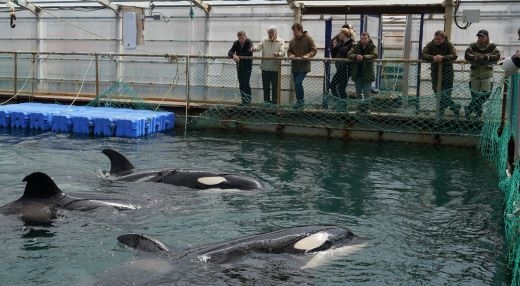
Lori’s first guest is Charles Vinick, Executive Director of the Whale Sanctuary Project. Vinick and his colleagues, which included Jean-Michel Cousteau, were instrumental in persuading Russian officials to get 87 whales released from Russian whale facility. Amongst the whales were beluga whales and 10 captive orca whales, all housed in small holding pens in Eastern Russia. Vinick gives first hand details of this amazing triumph and how the killer whales in captivity were freed.
The challenges African elephants face
Then, Peter welcomes Larry Laverty to speak about his new book, Power and Majesty – The Plight and Preservation of the African Elephant.
Larry’s exquisite images of elephants in the wild plus detailed descriptions about the challenges African elephants face make for a wonderful book worthy of your attention.
How can we help save African elephants?
Larry has had countless photographs utilized by conservation groups around the world. As a photographer, his years of experience as an actor and filmmaker as well as his years as an athlete enable him to bring a heartfelt and intimate perspective to his images of wildlife. Larry’s first book Power and Majesty: The Plight and Preservation of the African Elephant is now available.
Power and Majesty is an extraordinary collection of photographs and observations of Africa’s iconic elephants. It has been called an essential snapshot in time as the future of elephants in Africa hangs in the balance.
Did you know these names for groups of animals?
Did you know a group of crows is called a murder, a group of hippos is a thunder and a group of frogs is an army? Enjoy the final segment of the show where Lori challenges us on the names of various animal groups.
Orcas at whale jail Credit Harry RabinOrca during transport to release point – VNIROOrcas swim away after release Credit VNIRO Larry Laverty with friends.African elephants. Photo: Larry Laverty.
Animals Today November 16, 2019. Dog nutrition controversy, mutton busting and sea turtle poachers arrested!
Nov 17, 2019
Show notes
Sea turtle poachers busted!
We begin the show with animal news from around the world including NYC establishes its Office of Animal Welfare, the first sighting in decades of the diminutive mammal called the silver chevrotain in Vietnam, turtle poachers arrested in Florida, an endangered lemur stolen from a Santa Ana zoo is recovered, and more.
Dog nutrition controversy
Can dogs safely consume vegetarian or vegan diets? To answer this question and more about canine nutrition, Lori welcomes Dr. Valerie Parker, Assistant Professor at the Ohio State University College of Veterinary Medicine. Other dog nutrition controversy topics covered include grain free diets, raw diets, home cooked diets, and treats and snacks.
What is mutton busting and why is it bad news?
To conclude, Peter welcomes back Eric Mills, to speak about the rodeo-related youth activity, mutton busting. Eric is the long time coordinator of Action for Animals (Oakland), which works diligently to expose the cruelty of mutton busting (and other rodeo events involving animals) and to have it removed from the rodeo.
This article contains the incredible video of the silver chevrotain.
Silver chevrotain. Silver chevrotain.You tube screengrab. Mutton busting.YouTube screengrab. Mutton busting.YouTube screengrab Mutton busting.YouTube screengrab. Mutton busting.Artist and animal advocate Pavel Abramov with his portrait, his subject and his mom.
Animals Today November 2, 2019. Should animals be used in dangerous jobs? Animals with the strongest bites.
Nov 11, 2019
Show notes
Should animals be used in dangerous jobs?
Conan.
The highly publicized raid which resulted in the death of Abu Bakr al-Baghdadi again raises the question of whether it is ethical or justifiable to use non-human animals in military and police operations, where the animals face great risks of injury and death. In this instance, Conan, the Belgian Malanois who is a genuine hero, was slightly injured, but by report is now fully recovered. We asked featured Animals Today guests to share their thoughts on whether animals should be used in this fashion. Lori shares the statements of Mark Momjian, JD, Lori Marino, PhD, Clive Wynne, PhD, and Marc Bekoff, PhD. We bet you will find their comments interesting!
Animal News
Then, we have hot animal news: why studies using animals for
drug development often do not translate to humans, the exploding growth of cultured
meat, and the needless killing of a bobcat kitten by the Oregon Department of
Fish and Wildlife.
Animals with the strongest bites
How much bite force does a human have? Believe it or not, there are some animals in the animal kingdom who have 10 or 20 times the amount of bite power than humans. Dr Lori Kirshner continues with a countdown of the animals with the strongest bites which covers the bite power of the ten strongest nonhuman biters, with many frightening facts about lions, grizzly bears, gorillas, and crocodiles.
Treating dogs as individuals
We conclude with Regina Lizik, Communications and Fundraising Manager at Animal Farm Foundation, an organization that brings dogs and people together to end discrimination by treating each dog as an individual. Lori and Regina speak about the group’s innovative programs supporting their mission, one of which is providing financial support to Sector K9, which in turn trains dogs to work in communities to detect drugs and guns.
Animals Today October 26, 2019. Medical testing on animals. Dogs detecting cancer.
Oct 29, 2019
Show notes
Medical testing on animals
Lori kicks off the show welcoming Dr. John Pippin, Director of Academic Affairs at Physicians Committee for Responsible Medicine (PCRM). As part of PCRM’s work to end the use of live animals in medical and veterinary training programs, it recently was informed that so-called terminal surgeries were being used at Tuskegee College of Veterinary Medicine.
Terminal surgery means that an animal, usually a dog or cat obtained from a shelter, is used for practice and training surgeries, and upon conclusion, killed.
Dr. Pippin explains how PCRM views this practice as antithetical to the values of Veterinarians, who have chosen their field because of their desire to help and not harm animals.
Furthermore, there now are many alternative scientifically validated training methods, which do not use live animals, taking advantage of realistic models, virtual reality and other simulations.
Dog to undergo surgery. Stock photo.
Dogs detecting cancer
Peter then welcomes author and journalist Maria Goodavage in support of her new book, Doctor Dogs – How Our Best Friends Are Becoming Our Best Medicine. Goodavage brings us fresh stories and profiles from around the globe, illustrating how dogs detect cancer, provide aid to people with seizures, assist those with post traumatic stress disorder, and help in dozens of other physical or mental conditions.
In this groundbreaking book, Goodavage brings us behind the scenes of cutting-edge science at top research centers, and into the lives of people whose well-being depends on their devoted, highly skilled personal MDs (medical dogs).
We conclude with news stories including a marathoner who literally picked up and finished her race while carrying a homeless dog she spotted during her run and celebrities receive praise for giving up fur. California Governor has signed into law a host of bills supporting animals including ones to strengthen anti horse slaughter laws, to protect human and animal victims of domestic violence, to eliminate use of small plastic bottles used for shampoos in hotels, to ban of trade of skins of many threatened species including sharks, hippos, caimans and others, to ban the use of wild animals in circuses, and to require animal companions on public transportation during emergency evacuations. As usual, California leads the way.
Animals Today October 5, 2019: The history of the animal rights and welfare movements. Risks of rabies.
Oct 11, 2019
Show notes
The history of the animal rights and welfare movements
Lori begins with something any animal advocate ought to know about: the history of the animal rights and welfare movements. From the practices of ancient spiritual teachers of India, to the ideas of modern philosophers, Lori hopes this condensed history will inspire you to continue learning on your own.
What does Rabies do?
Then, in recognition of World Rabies Day, Dr. Robert Reed joins Lori to explain rabies, the nature of the virus and the disease it causes, and the current risks to people, dogs and cats in the US. Fortunately, thanks to the widespread use of vaccines, rabies cases are rare.
Note: Rabies is a viral infection that affects the nervous system of mammals. It invariably causes swelling of the brain and death after a relatively short illness.
The book, Dog is Love, by Clive Wynne
Peter then welcomes Clive Wynne to speak about his new book, Dog is Love – Why and How Your Dog Loves You. Wynne’s offering is part memoir and part scientific detective story, proving the roots of our enduring bond with this cherished species. Highly recommended!
Does your dog love you? Every dog lover knows the feeling. The nuzzle of a dog’s nose, the warmth of them lying at our feet, even their whining when they want to get up on the bed. It really seems like our dogs love us, too. But for years, scientists have resisted that conclusion, warning against anthropomorphizing our pets. Enter Clive Wynne, a pioneering canine behaviorist whose research is helping to usher in a new era: one in which love, not intelligence or submissiveness, is at the heart of the human-canine relationship. Drawing on cutting‑edge studies from his lab and others around the world, Wynne shows that affection is the very essence of dogs, from their faces and tails to their brains, hormones, even DNA. This scientific revolution is revealing more about dogs’ unique origins, behavior, needs, and hidden depths than we ever imagined possible.
Lori concludes the show examining the idea of the “crazy cat lady.” A recent study examined the stereotype, but listen in to hear what Peter and Lori think about this personality profile.
Image by Karynne Grabovski from Pixabay
Animals Today September 28, 2019: The ban on trophy hunting of endangered wild animals- has it ended? Best Pet Friendly Cities.
Oct 06, 2019
Show notes
The ban on trophy hunting of endangered wild animals – has it ended?
The Trump administration is allowing the ban on trophy hunting of endangered wild animals to be lifted as an American hunter is allowed to bring body parts of a lion that he shot in Tanzania into the United States. Importing African lions – whether dead or alive, parts or whole – has been tightly regulated ever since lions were given protection under the Endangered Species Act in January 2016. This is the first time that a lion trophy from Tanzania is being imported into the United States under the ESA – and it might not be the last.
Humane Society International has been critical of the Trump administration’s trophy hunting policies. Lori welcomes Iris Ho, HSI’s senior specialist for wildlife programs and policy, discusses why her organization opposes this lion import and other related actions taken by the administration, why trophy hunting is not a legitimate method of conservation, and what is being done to save animals from being killed for bragging rights and selfies.
Iris recommends supporting HR2245, the Cecil Act, which would
ensure the US does not promote trophy hunting of endangered wild animals.
Contact your representative and ask them to co-sponsor the bill, or to support
it when it comes up for a vote. Iris explains that the bill is named after
Cecil, the legendary lion who was hunted and brutally killed, and after Iris
signs off, Lori provides more detail about Cecil’s killer, the prolific hunter,
Dr. Walter Palmer.
A hunter posing with a wildebeest he shot on a captive hunting ranch in South Africa. Photo: Humane Society International.
Best Pet Friendly Cities
Then, a new survey from Wallet Hub cites the most pet friendly cities as Scottsdale, Orlando, and Tampa; some of the worst cities include Detroit, Aurora (CO) and Nashville. We conclude with news stories: Ohio names the shelter animal as its state animal, testing for blue-green algae, the Swiss have special laws to combat pet loneliness, and more.
Animals Today September 14, 2019. Elephants in Captivity and CITES: Banning the export of wild elephants from Africa.
Sep 17, 2019
Show notes
This show features elephant expert Will Anderson, with In Defense of Animals, who provides the background and events leading up to an important new international agreement to limit the exportation of wild elephants from Africa to the US, China and other countries.
Elephants in Captivity
Lori begins covering a few key events related to elephants in captivity, including the decline of Ringling Bros and Barnum and Bailey Circus, which, after substantial public pressure, retired all its elephants in 2016 and then shut its doors in 2018.
She then goes on to tell the 2016 episode in which 17 elephants captured in Swaziland, Africa, were delivered to three US zoos, to live unnatural lives in captivity. (Eighteen were captured, one died in transit). Even though there is growing awareness that elephants in zoos endure isolation, stress, and relative confinement, elephant exhibits are still common and are actively promoted by many zoos in the US.
CITES: Banning the export of wild elephants from Africa.
Will Anderson then joins in to explain and celebrate the new CITES (Convention on International Trade in Endangered Species of Wild Fauna and Flora) agreement to banning the export of wild elephants from Africa. Will explains how, at the last hour, the countries of the European Union were persuaded to sign on for the ban, assuring its passage. Will goes on to describe how the US, represented by the US Fish and Wildlife Service, voted “no”, because, he believes the Service represents the interests of the Association for Zoos and Aquariums, and not the wild elephants.
According to Will, the manner in which baby elephants are ripped from their mothers and herds is “brutal and violent.” Will also covers many related aspects of elephant conservation. To help elephants in the wild, Will suggests supporting organizations worldwide that protect elephants and their environments, and of course, not patronizing the zoos which hold them.

 Our TOPPODCAST Picks
  Stay Connected


 Peter then welcomes Preston Cook, author of American Eagle – A Visual History of our National Emblem. This atlas features full color images of The American Bald eagle in our culture as depicted in many aspects of American history and culture




 Peter then welcomes Clive Wynne to speak about his new book, Dog is Love – Why and How Your Dog Loves You. Wynne’s offering is part memoir and part scientific detective story, proving the roots of our enduring bond with this cherished species. Highly recommended!






