
The study of age-related cognitive, social and emotional behavior focusing on theories of development during infancy and childhood. Students learn how social factors—such as one’s family, socioeconomic status, and culture—impact upon human development, and the current state of affairs in America for factors (e.g., divorce, child care, single-parenting) that impact child development. The focus of the course is on human development within the American culture, but both book and lecture materials will also present cross-cultural comparisons. This course provides a foundation for other courses within the psychology department, such as child psychopathology, cross-cultural psychology, and the exceptional child.
Podcast Categories: Science & Medicine
Mini Med School: Dynamics of Human Health – Stanford Continuing Studies Program
Stanford Continuing Studies is proud to present the Stanford Mini Med School, a series arranged and directed by Stanford’s School of Medicine. Featuring more than thirty distinguished faculty, scientists, and physicians from Stanford’s prestigious medical school, this series of courses will offer students a dynamic introduction to the world of human biology, health and disease, and the groundbreaking changes taking place in medical research and health care.
The fall quarter course will get started with a journey inside human biology. We will start by familiarizing ourselves with the world of very small things. We will take a close look at DNA, stem cells, and microbes, and see how these and other small players form the building blocks of the human body. This will allow us to understand how human organs develop (and can also regenerate), how our nervous and immune systems work, and how diseases can afflict us. From there, the course will move beyond the individual and take a more global view of health. How do pandemics take shape? How does the environment affect our collective health? And how can we finally implement a healthcare system that makes sense for our nation? Various experts from the Stanford School of Medicine will address these and other big picture questions during the first course in the Stanford Mini Med School.
Released with a Creative Commons BY-NC-ND license.
Genomics & Computational Biology – Dr. George Church
This course will assess the relationships among sequence, structure, and function in complex biological networks as well as progress in realistic modeling of quantitative, comprehensive, functional genomics analyses. Exercises will include algorithmic, statistical, database, and simulation approaches and practical applications to medicine, biotechnology, drug discovery, and genetic engineering. Future opportunities and current limitations will be critically addressed. In addition to the regular lecture sessions, supplementary sections are scheduled to address issues related to Perl, Mathematica and biology.
Introduction to Sociology – Harvey Molotch

Brain Rules – John Medina
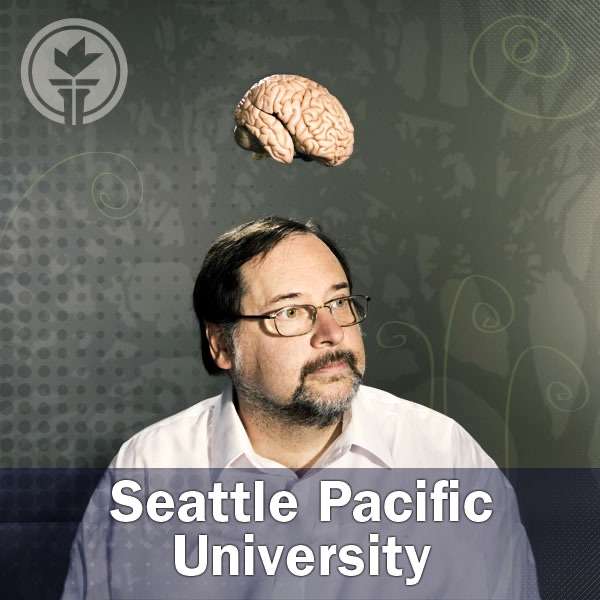
Dr. John Medina, author of “Brain Rules” and “Brain Rules for Baby,” is a developmental molecular biologist and research consultant. He is the director of the Brain Center for Applied Learning Research at Seattle Pacific University. He also teaches at the University of Washington School of Medicine, in its Department of Bioengineering. You can visit him online at www.brainrules.net
Laura Erickson’s For the Birds

“For the Birds” began airing on KUMD in Duluth, MN, in May, 1986, and is the longest continually-running radio program about birds in the U.S. Hundreds more episodes are available for free at http://www.lauraerickson.com/radio/.
Introduction to Solid State Chemistry – Prof. Donald Sadoway
This course explores the basic principles of chemistry and their application to engineering systems. It deals with the relationship between electronic structure, chemical bonding, and atomic order. It also investigates the characterization of atomic arrangements in crystalline and amorphous solids: metals, ceramics, semiconductors, and polymers (including proteins). Topics covered include organic chemistry, solution chemistry, acid-base equilibria, electrochemistry, biochemistry, chemical kinetics, diffusion, and phase diagrams. Examples are drawn from industrial practice (including the environmental impact of chemical processes), from energy generation and storage, e.g., batteries and fuel cells, and from emerging technologies, e.g., photonic and biomedical devices.
PSYC 101: General Psychology (DSM-IV-TR Edition) – David R Bailey
UPDATE: This General Psychology course has been updated and the new series will be available Spring 2015. The new series contains much of the same information, but any discussion of mental health issues will be based on the Diagnostic and Statistical Manual of Mental Disorders, Fifth Edition (DSM-5) published by the American Psychiatric Association in May 2013.
This course is intended to provide an examination and application of major principles of psychology including: an introduction to scientific and research methods, biological foundations, sensation and perception, learning and conditioning, human development, motivation and emotion, thinking, memory and intelligence, personality theories, stress and coping, social psychology, psychological disorders and their treatment.
The material in this series related to mental health diagnoses is based on the American Psychiatric Association’s Diagnostic and Statistical Manual of Mental Disorders, Fourth Edition, Text Revision which was published in 2000.
The podcasts presented in this series will include live class recordings of lecture presentations and additional pre-recorded segments that focus on frequently asked questions and concepts that often provide a challenge for many students. These recordings may also be supplemented by PDF files or handouts designed to further enhance the student’s understanding of the field of general psychology. These materials are intended to supplement the traditional classroom approach of my courses and to enhance the student’s learning experience.
Target audience should include current students and others who wish to know more about the topic areas. The materials will not be textbook specific so that they will be useful to others. For HACC students, the purpose is to allow them an opportunity to review or catch up on lectures/class periods that they may have missed or misunderstood. For other learners outside of HACC, the purpose is to supply another resource for their learning that is both entertaining and educational.
The course was originally recorded during the Spring Semester 2011 with some updates as necessary.
PLEASE NOTE: The section on Psychological Disorders refers to diagnostic classifications based on The Diagnostic and Statistical Manual of Mental Disorders, Fourth Edition, Text Revision (DSM-IV-TR) published by the American Psychiatric Association (APA) in 2000.
Please send any suggestions/feedback to drbailey@hacc.edu.
I hope you enjoy listening and thanks for exploring the world of psychology with me.
Star Diary
The astronomy podcast from the makers of BBC Sky at Night Magazine.
Physics – Aristotle
This work is a part of the Lit2Go collection, a collaboration between the Florida Department of Education and the University of South Florida College of Education. Lit2Go is dedicated to supporting literacy teaching and learning by providing access to historically and culturally significant literature in K-12 schools.
 Our TOPPODCAST Picks
  Stay Connected