Home
Lecturers generously donate their time to prepare these lectures. The project is funded by NSF and NIGMS, and is supported by the UCSF and HHMI.
Free, on-demand lectures: Many universities/colleges have limited access to high profile leaders in biological research. Our goal is to add 45 seminars per year, of similar quality to outstanding lectures that are currently in this library. Access, through web streaming or download, is completely free-of-charge. Please help us keep this resource free by subscribing to the podcasts, giving us a rating, and leaving your comments at the bottom of the collection pages. Thanks!
Targeting a broad audience, our talks start with an extended introduction, making them accessible to non-specialists and students, and then progress to cover current research. Senior scientists and students can view and enjoy these lectures.
Education: our talks are being used by undergraduate and graduate teachers to augment their classroom material. We have now added an education component to this web site (including lecture notes, questions/answers and short video clips for teaching).
International communication: our talks have viewers in 115 countries and they are being internally promoted in several countries as an educational tool and scientific resource.
Immunology- Spring, 2015. Text- Kuby Immunology, 7th Ed. Introductory course in Immunology. Geared toward junior/senior undergraduate students who have completed coursework in A & P and Microbiology. Will emphasize Human Immunology. Combination of “live capture” and “background” podcasts.
Microbiology– Course Description: A comprehensive study of the structure and function of microorganisms. Topics include the growth, control, and characteristics of microorganisms. Introduction to microbial genetics, metabolism, chemotherapy, and immunology.
The text book used for Microbiology is Foundations in Microbiology, Kathleen Park Talaro, 7th Edition, ISBN 978 007 337522 9.
Caveat: These podcasts are to be used as an adjunct to the text and lectures. They are not meant as a replacement for those activities.
If you have any suggestions or feedback, please send to erbeyer@hacc.edu or erb14@psu.edu.
This special “mini-course” features 7 inspiring stories about the frontiers of human health from seven of Stanford’s most innovative faculty members. Borrowing from a format used at the TED Conference, each speaker delivers a highly engaging talk in just 10-20 minutes about his or her research. Learn about Stanford’s newest and most exciting discoveries in neuroscience, bioengineering, brain imaging, psychology, and more.
A systematic study of the human body emphasizing functional gross anatomy to facilitate understanding of structure and function. Anatomical specimens, models, and charts are used in lab. Three hours lecture and lab per week.
“Light will be thrown…” With these modest words, Charles Darwin launched a sweeping new theory of life in his epic book, On the Origin of Species (1859). The theory opened eyes and minds around the world to a radical new understanding of the flora and fauna of the planet. Here, Darwin showed for the first time that no supernatural processes are necessary to explain the profusion of living beings on earth, that all organisms past and present are related in a historical branching pattern of descent, and that human beings fall into place quite naturally in the web of all life.
Now, 150 years later and 200 years after Darwin’s birth, we celebrate the amazingly productive vision and reach of his theory. In this Fall Quarter course, we will meet weekly with leading Darwin scholars from around the country to learn about Darwin’s far-reaching legacy in fields as diverse as anthropology, religion, medicine, psychology, philosophy, literature, and biology. With such a broad reach across the natural sciences, social sciences, and humanities, no wonder the theory of evolution by natural selection has been called “the single best idea, ever.”
Presented by the Stanford Continuing Studies Program.
Released with a Creative Commons BY-NC-ND license.
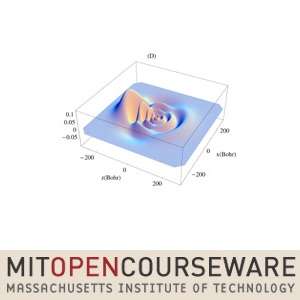
This course covers time-dependent quantum mechanics and spectroscopy. Topics include perturbation theory, two-level systems, light-matter interactions, relaxation in quantum systems, correlation functions and linear response theory, and nonlinear spectroscopy.
Yale Professors, Lecturers and distinguished guests speak on astronomy and astrophysics: black holes, dark matter and citizen scientists who help researchers look at the stars. Album art image courtesy NASA/JPL-Caltech.
This quarter, the Stanford Mini Med School focuses on our bodies and the organ systems that comprise them, seeing how they work, what goes awry, and what scientists and physicians are learning every day about healing them. We will start with a look at imaging technology that offers a window into human anatomy and disease. We will then delve into our nervous and cardiovascular systems, seeing how our hearts develop, what heart disease is and what can be done to prevent it, what causes a stroke, and what physicians can do when one occurs. We will also explore the inner workings of other vital systems — for example, our lungs, gastrointestinal system, and kidneys. And we will look at how our eyes and ears function, and how they become impaired. Finally, we will conclude this quarter with an inquiry into the fascinating topic of mind-body interactions and discover what scientists are learning about how our thought affects how we feel.
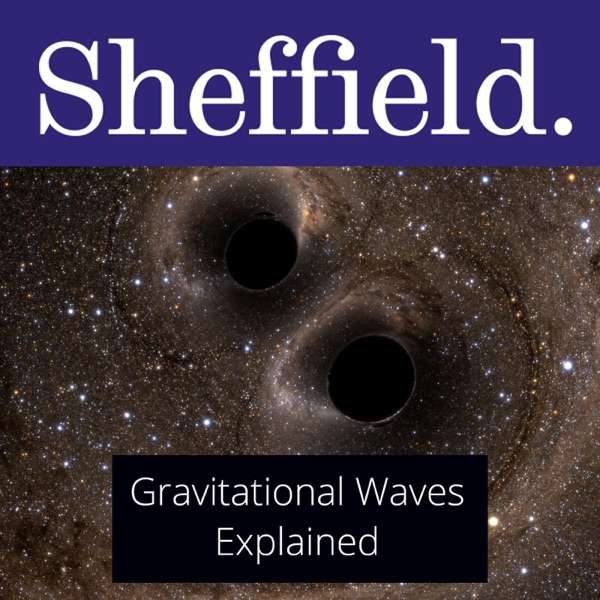
Understand Gravitational Waves and how we’re detecting them with LIGO Scientist Dr Ed Daw, from The University of Sheffield.
Find out more about how we’re working with over 80 universities to uncover the secrets of the universe at – https://www.sheffield.ac.uk/physics
UC Davis psychology lecturer Victoria Cross delivers this course on the developmental account of human behavior from conception through adolescence with emphasis on motor skills, mental abilities, motivation, and social interaction.

 Our TOPPODCAST Picks
  Stay Connected