
In 1905, while only twenty-six years old, Albert Einstein published “On the Electrodynamics of Moving Bodies” and effectively extended classical laws of relativity to all laws of physics, even electrodynamics. In this course, Professor Susskind takes a close look at the special theory of relativity and also at classical field theory. Concepts addressed here includes space-time and four-dimensional space-time, electromagnetic fields and their application to Maxwell’s equations. He also covers the work of the German mathematician Hermann Minkowski.
Podcast Categories: Science & Medicine
Yoga – CCP Instructors
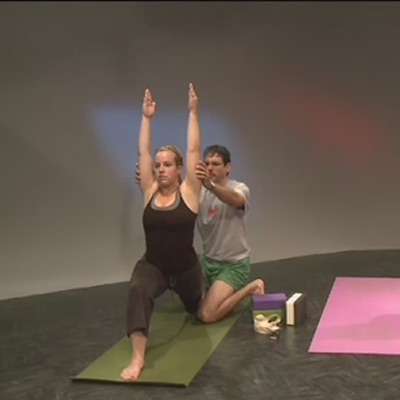
Several Community College of Philadelphia instructors lead a Yoga classes.
Astrophysics: Frontiers and Controversies – Audio – Charles Bailyn
(ASTR 160) This course focuses on three particularly interesting areas of astronomy that are advancing very rapidly: Extra-Solar Planets, Black Holes, and Dark Energy. Particular attention is paid to current projects that promise to improve our understanding significantly over the next few years. The course explores not just what is known, but what is currently not known, and how astronomers are going about trying to find out.
This course was recorded in Spring 2007.
Basic Nursing Theory (NUR 3952) – Chris Henshaw
Autumn 2010. An introduction to nursing, covering basic nursing science concepts and an introduction to nursing assessment. The nursing assessment focus is on data collection and nursing diagnosis. Emphasis is with adults in long-term and community setting.
Principles of Chemical Science II (Video) – Prof. Sylvia Ceyer Prof. Christopher Cummins
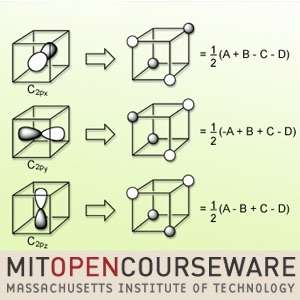
5.112 is an introductory chemistry course for students with an unusually strong background in chemistry. Knowledge of calculus equivalent to 18.01 is recommended. Emphasis is on basic principles of atomic and molecular electronic structure, thermodynamics, acid-base and redox equilibria, chemical kinetics, and catalysis. The course also covers applications of basic principles to problems in metal coordination chemistry, organic chemistry, and biological chemistry.
Quantum Physics II – Barton Zwiebach
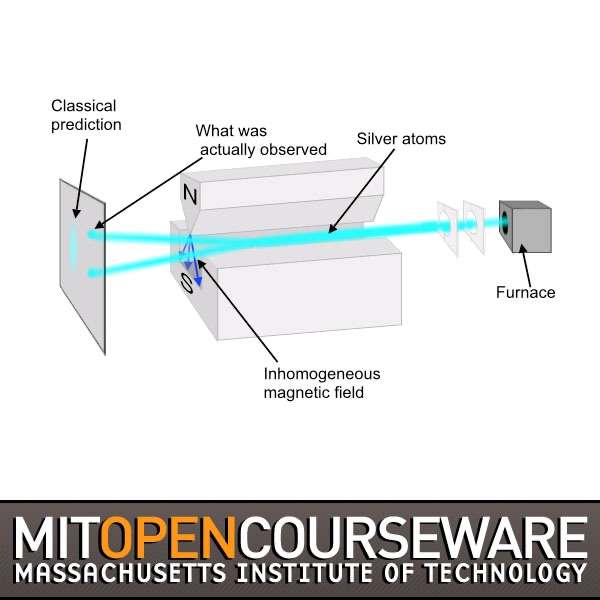
The collection includes twenty six video lectures. Together, this course and 8.06 Quantum Physics III cover quantum physics with applications drawn from modern physics. Topics covered in this course include the general formalism of quantum mechanics, harmonic oscillator, quantum mechanics in three-dimensions, angular momentum, spin, and addition of angular momentum.
Intimate Relationships – UCLA

Families and Couples: Psychology M176: Professor Benjamin Karney lectures on families and couples. This course examines relationships and their connection to individual psychopathology, marital discord, and family disruption.
Astrobiology and Space Exploration (Winter 2010) – Lynn Rothschild
Astrobiology asks: Where do we come from? Are we alone? Where are we going?
This course gives an overview of the excitement of astrobiology and space exploration, from the origin of our own biofriendly universe to questions of the future of mankind both on Earth and beyond.
Modern Physics: Cosmology (Winter 2013) – Stanford Continuing Studies
The Winter 2013 quarter course of the Modern Physics series concentrates on cosmology, the science of the origin and development of the universe. Along the way, Professor Susskind takes a close look at the Big Bang, the geometry of space-time, inflationary cosmology, cosmic microwave background, dark matter, dark energy, the anthropic principle, and the string theory landscape. To appreciate the material covered in this course, students should understand basic calculus and algebra.
Dental Anatomy – University of Michigan School of Dentistry
Originally recorded in the late ’70s and early ’80s, these anatomy videos present timeless information about teeth, gums, and other oral anatomy.
 Our TOPPODCAST Picks
  Stay Connected