TopPodcast.com
Menu
  • Home
  • Top Charts
  • Top Networks
  • Top Apps
  • Top Independents
  • Top Podfluencers
  • Top Picks
    • Top Business Podcasts
    • Top True Crime Podcasts
    • Top Finance Podcasts
    • Top Comedy Podcasts
    • Top Music Podcasts
    • Top Womens Podcasts
    • Top Kids Podcasts
    • Top Sports Podcasts
    • Top News Podcasts
    • Top Tech Podcasts
    • Top Crypto Podcasts
    • Top Entrepreneurial Podcasts
    • Top Fantasy Sports Podcasts
    • Top Political Podcasts
    • Top Science Podcasts
    • Top Self Help Podcasts
    • Top Sports Betting Podcasts
    • Top Stocks Podcasts
  • Podcast News
  • About Us
  • Podcast Advertising
  • Contact
Not in our directory?
Add Show Here
Podcast Equipment
Center

toppodcastlogoOur TOPPODCAST Picks

  • Comedy
  • Crypto
  • Sports
  • News
  • Politics
  • True Crime
  • Business
  • Finance

Follow Us

toppodcastlogoStay Connected

    View Top 200 Chart
    Back to Rankings Page
    History

    Walter Edgar’s Journal

    From books to barbecue, and current events to Colonial history, historian and author Walter Edgar delves into the arts, culture, and history of South Carolina and the American South. Produced by South Carolina Public Radio.

    Advertise

    Copyright: © 2023 South Carolina Public Radio

    • Apple Podcasts
    • Google Play
    • Spotify

    Latest Episodes:
    Walter Edgar's Journal: Revolutionary roads Jun 30, 2023
    Show notes
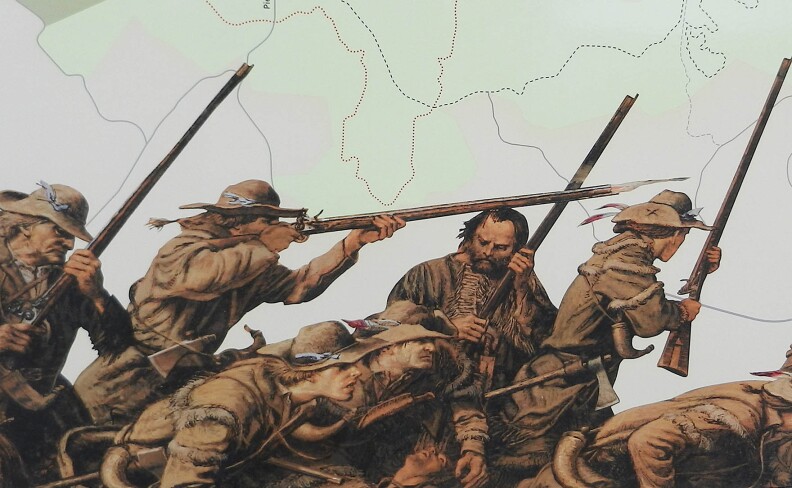
    The hardened frontiersmen Patrick Ferguson challenged - portrayed here on a marker at Kings Mountain National Military Park - proved more than he could handle.
    The hardened frontiersmen Patrick Ferguson challenged - portrayed here on a marker at Kings Mountain National Military Park - proved more than he could handle.(Bob Thompson / Courtesy of the author)

    Bob Thompson wanted to walk the battlefields of the American Revolution – maybe not all, but a lot of them. Why? Bob’s a retired journalist and had decided awhile back that seeing the places where historical figures walked helped him tell the best story.

    In his book, Revolutionary Roads: Searching for the War That Made America Independent...and All the Places It Could Have Gone Terribly Wrong (2022, Hachette), he takes readers along, walking history-shaping battlefields from Georgia to Quebec; and hanging out with passionate lovers of revolutionary.

    In this episode of Walter Edgar’s Journal, Bob talks about one of his favorite battles in New England (Saratoga) and then explores some of the decisive battles that decided the outcome of the Revolution – battles that took place in the Carolinas. And he spotlights how the outcome a major South Carolina battle may have hinged on a tiny, fraught tipping point – a misunderstood order that could have altered the course of the war.


    An innovative strategy revives the economy of a small town and helps create a major industry Jun 16, 2023
    Show notes
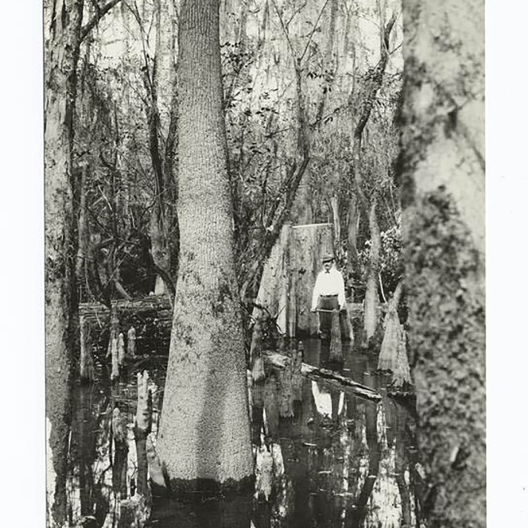
    Cypress logging area, Santee River Cypress Lumber Co., Clarendon Co., South Carolina.
    Cypress logging area, Santee River Cypress Lumber Co., Clarendon Co., South Carolina.(The Miriam and Ira D. Wallach Division of Art, Prints and Photographs: Photography Collection, The New York Public Library.)

    This week we are going to be talking about an innovative strategy undertaken by the town of Sumter, SC, in the early 1920s to try to survive the economic devastation that came about when the boll weevil came to the state devastating the town’s biggest cash crop: cotton. And that innovation involved the entire community of Sumter.

    As Dr. Jessica Elfenbein will tell us, that little weevil wiped out the main source of revenue in Sumter – and in much of the state as well as the rest of the South. So, when the leaders of the greater Sumter community and area businesses got together, they decided that the best strategy for recovery was to bring in new industries. Industries that would use the abundant supply of timber in the area. And they set up a community-run board to recruit companies to come to Sumter.

    Their recruitment strategies will sound familiar to a 21st-century American, but they were truly innovative in 1920.

    Dr. Elfenbein is the chair of the Department of History at the University of South Carolina, Columbia.


    Where have all the shrimp boats gone? Jun 02, 2023
    Show notes
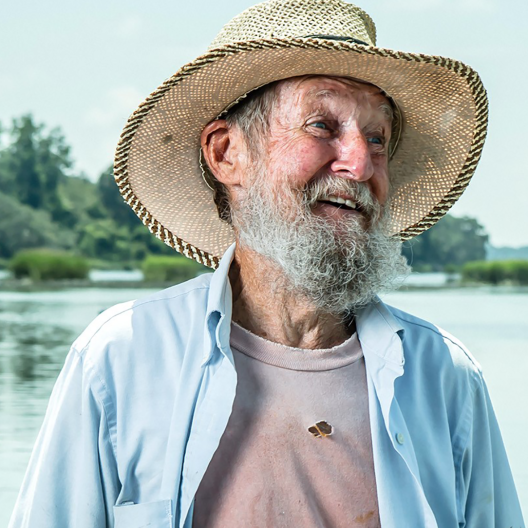
    Woody Collins
    Woody Collins(Courtesy of the author)

    People have been catching and eating shrimp off the coast of the Carolinas for centuries. The shrimping industry in South Carolina, however, only started about 100 years ago. And trawling, or “fishing,” for shrimp became a way of life in the Lowcountry, as well as a way of making a living.

    “Captain Woody” Collins was shrimping for 40 of those years and he has stories to tell.

    And he’s a pretty good historian, the proof being his book, Where Have All the Shrimp Boats Gone? (2022 SP Books) The book, self-published, is about sold out – but, have no fear, we got Woody in the studio for a lively conversation, sharing his stories, the history of shrimping in South Carolina, and answering the question posed in his book’s title.


    Walter Edgar's Journal, past and future May 26, 2023
    Show notes
    Walter Edgar in the studio in 2019 with producer Alfred Turner
    Walter Edgar in the studio in 2019 with producer Alfred Turner(Tabitha Safdi / SCETV)

    Someone once said, “All roads lead to Rome.” Maybe...

    But longtime historian, author, and radio host Walter Edgar believes it’s a safer bet that all roads pass through South Carolina. And lot of them start here! For almost 23 years Walter Edgar’s Journal has been exploring the arts, culture, and history of South Carolina and the American South, to find out, among other things... the mysteries of okra, how many "Reconstructions" there have been since the Civil War, and why the road through the Supreme Court to civil rights has been so rocky.

    Beginning June 2023, Walter Edgar, Alfred Turner, and their guests will continue to delve into the arts, culture, and history of the Palmetto State in a new podcast-only version of Walter Edgar’s Journal. Available, on-demand, on our website the podcast will also be available by subscription through the major podcast providers.

    For this last radio episode, Walter is joined by producer Alfred Turner and by director of SC Public Radio, Sean Birch. They will listen to clips of past Journal episodes, talk about the growth of the Journal over the past 23 years, explain it's evolution into a podcast, and listen to clips of upcoming podcasts.


    Carolina's lost colony: Stuarts Town and the struggle for survival in early South Carolina May 15, 2023
    Show notes
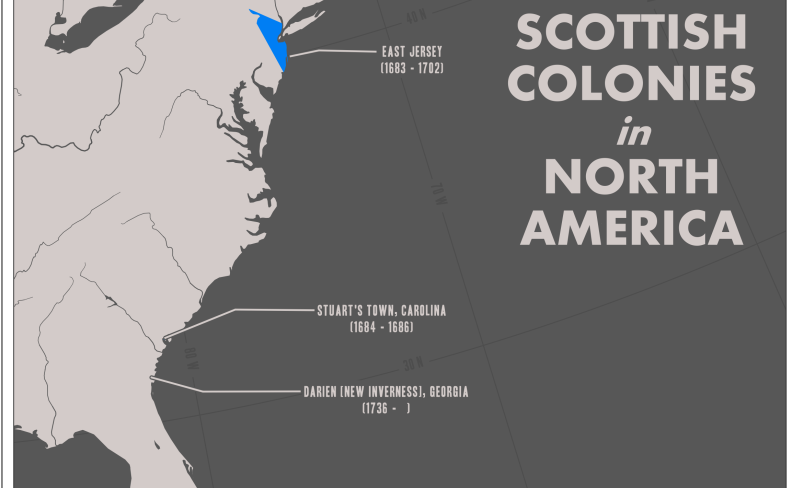
    Scottish colonies in North America
    Scottish colonies in North America(Cene Ketcham / Wikimedia Commons)

    In his new book, Carolina's Lost Colony: Stuarts Town and the Struggle for Survival in Early South Carolina (2022, USC Press), historian Peter N. Moore examines the dual colonization of Port Royal at the end of the seventeenth century. From the east came Scottish Covenanters, who established the small outpost of Stuarts Town. Meanwhile, the Yamasee arrived from the south and west. These European and Indigenous colonizers made common cause as they sought to rival the English settlement of Charles Town to the north and the Spanish settlement of St. Augustine to the south. Also present were smaller Indigenous communities that had long populated the Atlantic sea islands. It is a global story whose particulars played out along a small piece of the Carolina coast.

    However, as Moore tells Walter Edgar, religious idealism and commercial realities came to a head as the Scottish settlers made informal alliances with the Yamasee and helped to reinvigorate the Indian slave trade—setting in motion a series of events that transformed the region into a powder keg of colonial ambitions, unleashing a chain of hostilities, realignments, displacement, and destruction that forever altered the region.

    - Originally broadcast 01/06/23 -

    News and Music Stations: Fri, May 19, at 12 pm; Sat, May 20, at 7 am
    News & Talk Stations: Friday, May 19, at 12 pm; Sun, May 21, at 4 pm


    Clemson professor Drew Lanham: the "genius" in his MacArthur Foundation grant is freedom to "do me" May 08, 2023
    Show notes
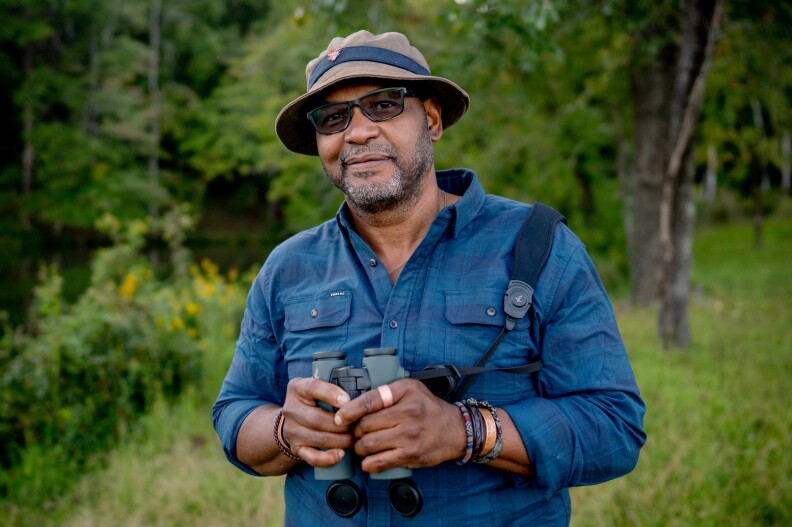
    Joseph Drew Lanham, onrnithologist, naturalist, and writer, and now a 2022 MacArthur Fellow, in Clemson, S.C.
    Joseph Drew Lanham, onrnithologist, naturalist, and writer, and now a 2022 MacArthur Fellow, in Clemson, S.C.(John D. and Catherine T. MacArthur Foundation)

    Edgefield native Drew Lanham wasn’t entirely sure what the phone call from Chicago was about. And, after he heard what the person on the phone had to say, he wasn’t altogether sure he believed the news: Drew had just won a MacArthur Fellowship, commonly known as the “genius grant.”

    The MacArthur Foundation says that “The 2022 MacArthur Fellows are architects of new modes of activism, artistic practice, and citizen science. They are excavators uncovering what has been overlooked, undervalued, or poorly understood. They are archivists reminding us of what should survive.”

    Drew Lanham, Alumni Distinguished Professor of Wildlife Ecology at Clemson University, talks with Walter Edgar about his life, his work, his writing, and about what may lie hopes to achieve through his work.

    - Originally released12/05/22 -


    C. Vann Woodward: America's historian May 01, 2023
    Show notes
    C. Vann Woodward
    C. Vann Woodward( UNC Press)

    With an epic career that spanned two-thirds of the twentieth century, C. Vann Woodward (1908–1999) was a historian of singular importance. A brilliant writer, his work captivated both academic and public audiences. He also figured prominently in the major intellectual conflicts between left and right during the last half of the twentieth century. Woodward's vision still permeates our understandings of the American South and of the history of race relations in the United States.

    In his fresh and revealing biography, C. Vann Woodward: America's Historian (2022, UNC Press), James Cobb shows, explores how Woodward displayed a rare genius and enthusiasm for crafting lessons from the past that seemed directly applicable to the concerns of the present—a practice that more than once cast doubt on his scholarship. Dr. Cobb talks with Walter Edgar about Woodward and the changing interpretations of Southern history.

    - Originally released 01/09/23 -

    News and Music Stations: Fri, May 05, at 12 pm; Sat, May 06, at 7 am
    News & Talk Stations: Friday, May 05, at 12 pm; Sun, May 07, at 4 pm


    Citadel professor redefines key battle that changed the course of the Hundred Years War Apr 24, 2023
    Show notes
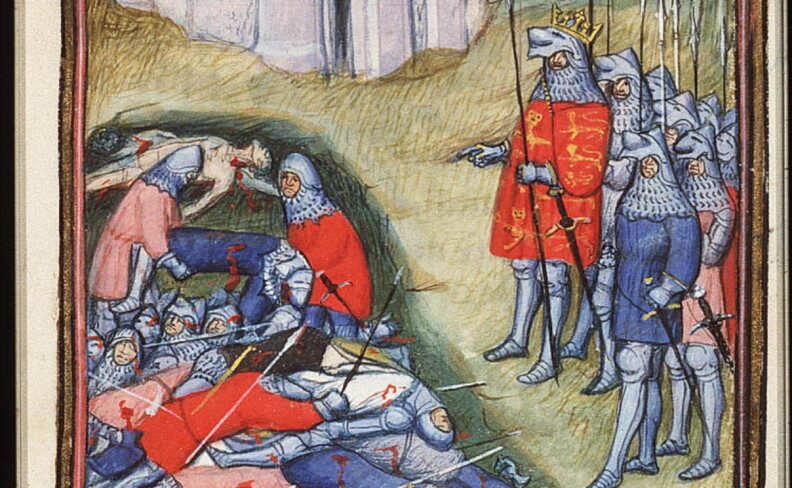
    ( Courtesy of the author)

    With his book, Crécy: Battle of Five Kings (2022, Osprey), Michael Livingston, professor of medieval history at The Citadel, has authored a remarkable new study on the Battle of Crécy, in which the outnumbered English under King Edward III won a decisive victory over the French and changed the course of the Hundred Years War.

    The Battle of Crécy in 1346 is one of the most famous and widely studied military engagements in history. The repercussions of this battle, in which forces led by England’s King Edward III decisively defeated a far larger French army, were felt for hundreds of years, and the exploits of those fighting reached legendary status. Yet new, groundbreaking research by Michael Livingston has shown that nearly everything that has been written about this dramatic event may be wrong.

    Michael Livingston talks with Walter Edgar about how he has used archived manuscripts, satellite technologies and traditional fieldwork to reconstruct this important conflict, including the unlocking of what was arguably the battle’s greatest secret: the location of the now-quiet fields where so many thousands died.

    - Originally released 10/28/22 -


    The South Never Plays Itself - a history of the Deep South on screen Apr 17, 2023
    Show notes
    Cameras on display at Movie World in Oberhausen, Germany
    (Mahdi Abdulrazak / Flickr)

    Since The Birth of a Nation became the first Hollywood blockbuster in 1915, movies have struggled to reckon with the American South—as both a place and an idea, a reality and a romance, a lived experience, and a bitter legacy. Nearly every major American filmmaker, actor, and screenwriter has worked on a film about the South, from Gone with the Wind to 12 Years a Slave, from Deliverance to Forrest Gump. In The South Never Plays Itself: A Film Buff’s Journey Through the South on Screen (2023, UGA Press), author and film critic B. W. Beard explores the history of the Deep South on screen, beginning with silent cinema and ending in the streaming era.

    Beard talks with Walter Edgar about what the movies got right, and what stereotypes they created or perpetuate.


    Revolutionary revelations: remains of soldiers from the Battle of Camden to be re-interred with honors Apr 10, 2023
    Show notes
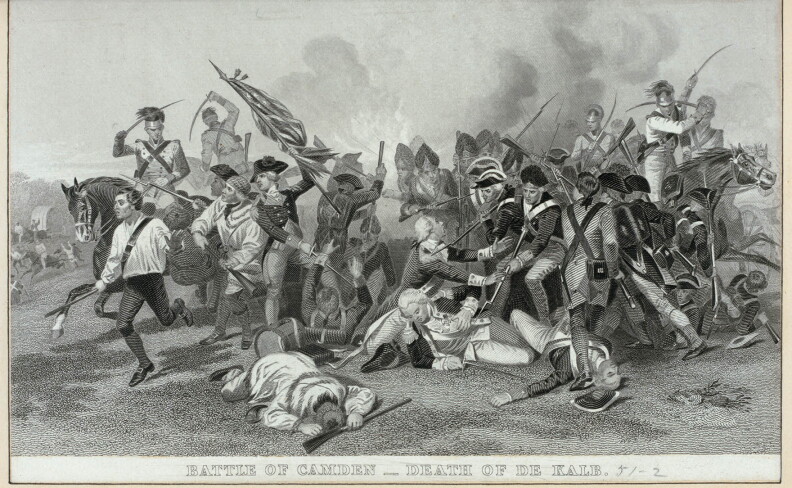
    "Battle of Camden - death of De Kalb"
    "Battle of Camden - death of De Kalb"( The New York Public Library Digital Collections / The Miriam and Ira D. Wallach Division of Art, Prints and Photographs: Print Collection, The New York Public Library)

    In 1780, Camden was the oldest and largest town in the Carolina backcountry. It was strategic to both the British Army and the Patriots in the Revolutionary War. Following a series of strategic errors before and during the Battle of Camden, the Patriot army under command of Major General Horatio Gates was soundly defeated, ushering in changes in military leadership that altered the war’s course. After the battle, Major General Nathanael Greene was promoted to command of the Southern Campaign, and his leadership ultimately led to the evacuation of the British army from Charleston, SC in December 1782.

    In November of 2022, the South Carolina Battleground Preservation Trust announced a significant, historic discovery at the Revolutionary War Camden Battlefield. The Trust, acting on behalf of Historic Camden Foundation, contracted with the South Carolina Institute of Archaeology and Anthropology, University of South Carolina, to excavate a number of bodies of Revolutionary War soldiers killed in the August 16, 1780 Battle of Camden.

    Walter Edgar talks with Dr. Steve Smith of the SC Institute for Archeology and Anthropology at USC; Bill Stevens, forensic anthropologist with the Richland County Coroner’s Office; and Doug Bostick, CEO of the South Carolina Battleground Preservation Trust about the excavations, the significance of the discoveries, and about plans for reinterment ceremonies April 20-22, 2023, in Camden.

    - Originally released 12/16/22 -


    Previous 1 7 8 9 10 11 37 Next

    Related Podcasts

    Dan Carlin’s Hardcore History

    1

    Dan Carlin’s Hardcore History History
    More Perfect

    2

    More Perfect Government
    Casefile True Crime

    3

    Casefile True Crime Games & Hobbies
    The Way I Heard It with Mike Rowe

    4

    The Way I Heard It with Mike Rowe History
    BackStory

    5

    BackStory History
    The Black Dahlia Serial Killers

    6

    The Black Dahlia Serial Killers History
    footer-logo

    Contact Us

    Toll Free: 844-670-7747

    Links

    • Home
    • Top Charts
    • Networks
    • Apps
    • Independents Podcasts
    • Podcast Advertising
    • Podcast News
    • Contact Us
    • About Us
    • Analytics & Insights

    Stay Connected

      Privacy, Terms of Use & Our Code of Ethics Protecting Content Creators Copyrights