TopPodcast.com
Menu
  • Home
  • Top Charts
  • Top Networks
  • Top Apps
  • Top Independents
  • Top Podfluencers
  • Top Picks
    • Top Business Podcasts
    • Top True Crime Podcasts
    • Top Finance Podcasts
    • Top Comedy Podcasts
    • Top Music Podcasts
    • Top Womens Podcasts
    • Top Kids Podcasts
    • Top Sports Podcasts
    • Top News Podcasts
    • Top Tech Podcasts
    • Top Crypto Podcasts
    • Top Entrepreneurial Podcasts
    • Top Fantasy Sports Podcasts
    • Top Political Podcasts
    • Top Science Podcasts
    • Top Self Help Podcasts
    • Top Sports Betting Podcasts
    • Top Stocks Podcasts
  • Podcast News
  • About Us
  • Podcast Advertising
  • Contact
Not in our directory?
Add Show Here
Podcast Equipment
Center

toppodcastlogoOur TOPPODCAST Picks

  • Comedy
  • Crypto
  • Sports
  • News
  • Politics
  • True Crime
  • Business
  • Finance

Follow Us

toppodcastlogoStay Connected

    View Top 200 Chart
    Back to Rankings Page
    History

    Walter Edgar’s Journal

    From books to barbecue, and current events to Colonial history, historian and author Walter Edgar delves into the arts, culture, and history of South Carolina and the American South. Produced by South Carolina Public Radio.

    Advertise

    Copyright: © 2023 South Carolina Public Radio

    • Apple Podcasts
    • Google Play
    • Spotify

    Latest Episodes:
    Charleston Patriots in Exile During the Revolution Jan 16, 2023
    Show notes
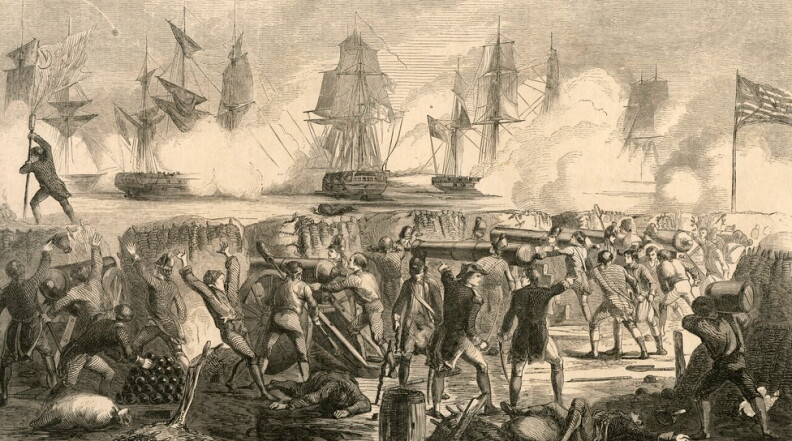
    "The attack on Fort Moultrie, Sullivan's Island, South Carolina, on June 28, 1776." Charleston eventually fell to the British, oin May of 1780.
    (N.Y. Public Library (public domain); Artist: Chapin, John Reuben (1823-1894))

    In the months following the May 1780 capture of Charleston, South Carolina, by combined British and loyalist forces, British soldiers arrested sixty-three paroled American prisoners and transported them to the borderland town of St. Augustine, East Florida—territory under British control since the French and Indian War.

    In their new book, Patriots in Exile: Charleston Rebels in St. Augustine during The American Revolution (2020, USC Press), James Waring McCrady and C. L. Bragg chronicle the banishment of these elite southerners, the hardships endured by their families, and the plight of the enslaved men and women who accompanied them, as well as the motives of their British captors. Bragg joins Walter Edgar to talk about this little known chapter of the Revolution.

    - Originally broadcast 11/20/20 -

    News and Music Stations: Fri, Jan 20, 12 pm; Sat, Jan 21, 7 am
    News & Talk Stations: Fri, Jan 20, 12 pm; Sun, Jan 22, 4 pm


    C. Vann Woodward: America's historian Jan 09, 2023
    Show notes
    C. Vann Woodward
    C. Vann Woodward( UNC Press)

    With an epic career that spanned two-thirds of the twentieth century, C. Vann Woodward (1908–1999) was a historian of singular importance. A brilliant writer, his work captivated both academic and public audiences. He also figured prominently in the major intellectual conflicts between left and right during the last half of the twentieth century. Woodward's vision still permeates our understandings of the American South and of the history of race relations in the United States.

    In his fresh and revealing biography, C. Vann Woodward: America's Historian (2022, UNC Press), James Cobb shows, explores how Woodward displayed a rare genius and enthusiasm for crafting lessons from the past that seemed directly applicable to the concerns of the present—a practice that more than once cast doubt on his scholarship. Dr. Cobb talks with Walter Edgar about Woodward and the changing interpretations of Southern history.

    01/09/23


    The South of the Mind Dec 26, 2022
    Show notes
    Porch, rocking chairs, coffee cups
    (Virginia State Parks [CC BY 2.0] via Flickr)

    How did conceptions of a tradition-bound, "timeless" South shape Americans' views of themselves and their society's political and cultural fragmentations, following the turbulent 1960s? In his book, The South of the Mind: American Imaginings of White Southerness, 1960–1980 (2018, UGA Press), Zachary J. Lechner bridges the fields of southern studies and southern history in an effort to answer that question.

    Wide-ranging chapters detail the iconography of the white South during the civil rights movement; hippies' fascination with white southern life; the Masculine South of George Wallace, Walking Tall, and Deliverance; the differing southern rock stylings of the Allman Brothers Band and Lynyrd Skynyrd; and the healing southerners of Jimmy Carter. The South of the Mind demonstrates that we cannot hope to understand recent U.S. history without exploring how people have conceived the South, as well as what those conceptualizations have omitted.

    -(Originally released 07/19/19) -


    A History of the Southern Conference Dec 19, 2022
    Show notes
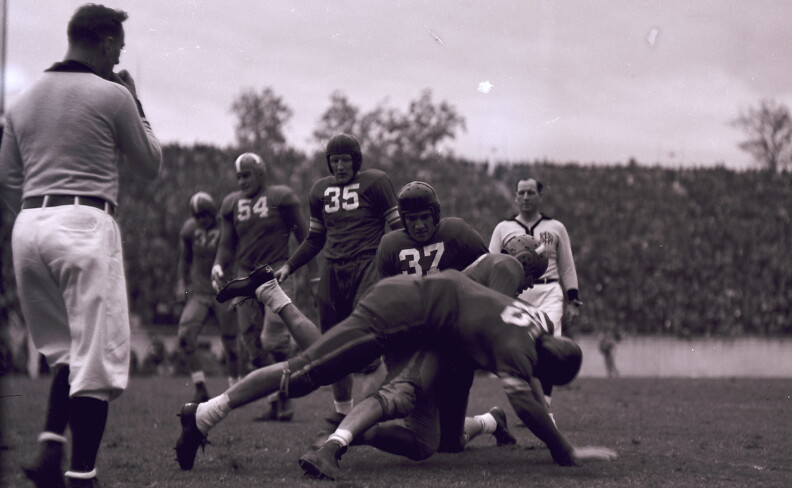
    Duke University football coach Wallace Wade at practice in the 1930s. Duke was a member of the Southern Conference from 1928 to 1953.
    Duke University football coach Wallace Wade at practice in the 1930s. Duke was a member of the Southern Conference from 1928 to 1953.(Duke University Archives / Flickr)

    In the winter of 1921, fifteen prominent colleges and universities met in Atlanta, Georgia, to form a new organization to promote intercollegiate athletics competition. That organization, soon to become known as the Southern Conference (SoCon), remains a strong and viable member of the National Collegiate Athletic Association (NCAA) 100 years later. Southern Conference roots may be found throughout college athletics from the Mid-Atlantic region to the deep South. All but three of the current Southeastern Conference (SEC) members once belonged to the Southern Conference. Likewise, a majority of present Atlantic Coast Conference (ACC) institutions formerly were SoCon members.

    This time on Walter Edgar’s Journal, former SoCon commissioner John Iamarino, author of A Proud Athletic History: 100 Years of The Southern Conference (2021, Mercer University Press), tells the story of the notable athletes, coaches, and athletic programs that have built such a rich tradition over so many decades. Legendary sports figures such as Jerry West, Arnold Palmer, Bear Bryant, Sam Huff, and Steph Curry are all part of the Southern Conference's past.

    - Originally released 04/23/21 -


    Revolutionary revelations: remains of soldiers from the Battle of Camden recovered, studied - to be re-interred with honors Dec 12, 2022
    Show notes
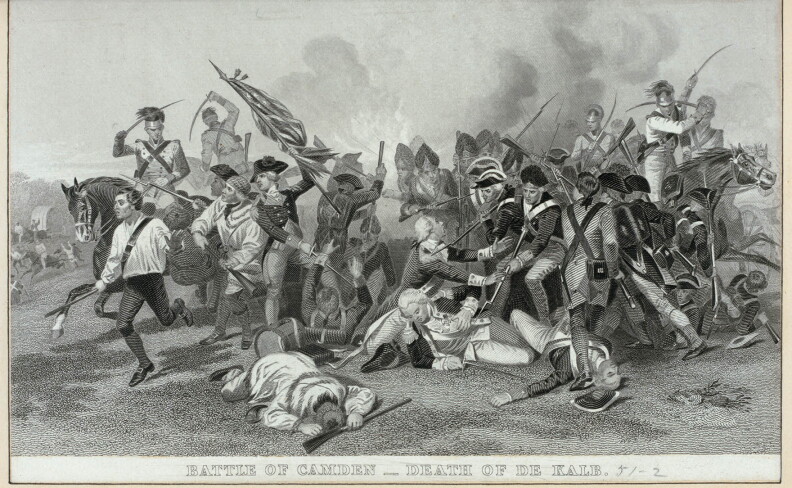
    "Battle of Camden - death of De Kalb"
    "Battle of Camden - death of De Kalb"( The New York Public Library Digital Collections / The Miriam and Ira D. Wallach Division of Art, Prints and Photographs: Print Collection, The New York Public Library)

    In 1780, Camden was the oldest and largest town in the Carolina backcountry. It was strategic to both the British Army and the Patriots in the Revolutionary War. Following a series of strategic errors before and during the Battle of Camden, the Patriot army under command of Major General Horatio Gates was soundly defeated, ushering in changes in military leadership that altered the war’s course. After the battle, Major General Nathanael Greene was promoted to command of the Southern Campaign, and his leadership ultimately led to the evacuation of the British army from Charleston, SC in December 1782.

    In November of 2022, the South Carolina Battleground Preservation Trust announced a significant, historic discovery at the Revolutionary War Camden Battlefield. The Trust, acting on behalf of Historic Camden Foundation, contracted with the South Carolina Institute of Archaeology and Anthropology, University of South Carolina, to excavate a number of bodies of Revolutionary War soldiers killed in the August 16, 1780 Battle of Camden.

    Walter Edgar talks with Dr. Steve Smith of the SC Institute for Archeology and Anthropology at USC; Bill Stevens, forensic anthropologist with the Richland County Coroner’s Office; and Doug Bostick, CEO of the South Carolina Battleground Preservation Trust about the excavations, the significance of the discoveries, and about plans for reinterment ceremonies April 20-22, 2023, in Camden.


    Clemson professor Drew Lanham: the "genius" in his MacArthur Foundation grant is freedom to "do me" Dec 05, 2022
    Show notes
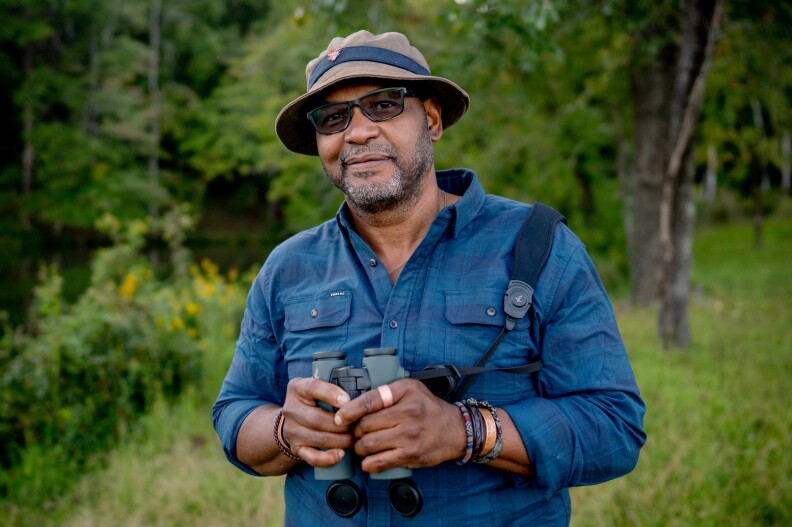
    Joseph Drew Lanham, onrnithologist, naturalist, and writer, and now a 2022 MacArthur Fellow, in Clemson, S.C.
    Joseph Drew Lanham, onrnithologist, naturalist, and writer, and now a 2022 MacArthur Fellow, in Clemson, S.C.(John D. and Catherine T. MacArthur Foundation)

    Edgefield native Drew Lanham wasn’t entirely sure what the phone call from Chicago was about. And, after he heard what the person on the phone had to say, he wasn’t altogether sure he believed the news: Drew had just won a MacArthur Fellowship, commonly known as the “genius grant.”

    The MacArthur Foundation says that “The 2022 MacArthur Fellows are architects of new modes of activism, artistic practice, and citizen science. They are excavators uncovering what has been overlooked, undervalued, or poorly understood. They are archivists reminding us of what should survive.”

    Drew Lanham, the Alumni Distinguished Professor of Wildlife Ecology at Clemson University, talks with Walter Edgar about his life, his work, his writing, and about what may lie hopes to achieve through his work.


    Open Space Institute works in concert with others to protect South Carolina's scenic, natural, and historic landscapes Nov 28, 2022
    Show notes
    The Black River at Kingstree, SC
    The Black River at Kingstree, SC(Robin M. Keith / Wikimedia Commons)

    (Originally broadcast 04/22/22) - The Open Space Institute’s mission is to protect scenic, natural, and historic landscapes to provide public enjoyment, conserve habitat and working lands, and sustain communities. Over the past 40 years, the institute has saved 2,285,092 acres of land through direct acquisition, grants, and loans. Having begun by focusing on land in New York State, they have in recent years saved significant, complex, and large-scale tracts in South Carolina, Florida, and New Jersey through direct acquisitions.

    In December 2021, the Open Space Institute (OSI) and The Nature Conservancy (TNC) announced the purchase of three properties along the Santee River in South Carolina, expanding the largest contiguous block of protected coastal lands in the state.

    OSI’s Vice-President and Director of the Southeast, Maria Whitehead, joins Walter Edgar to talk about the acquisition and about the Institute’s plans for land protection in the state.

    News and Music Stations: Fri, Dec 02, at 12 pm; Sat, Dec 03, at 7 am
    News & Talk Stations: Friday, Dec 02, at 12 pm; Sun, Dec 04, at 4 pm


    Lowcountry at high tide Nov 21, 2022
    Show notes
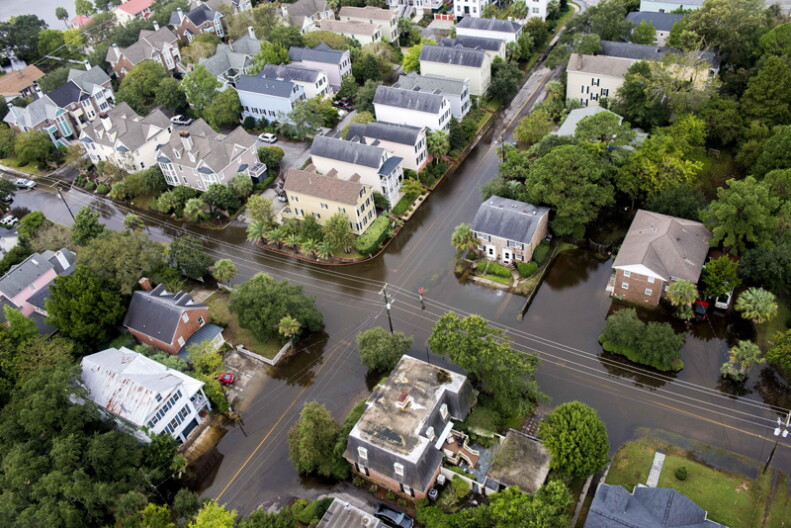
    FILE - An aerial view taken from a Coast Guard helicopter showing the continuing effects of flooding caused by Hurricane Joaquin in areas surrounding Charleston, S.C., Oct. 5, 2015.
    FILE - An aerial view taken from a Coast Guard helicopter showing the continuing effects of flooding caused by Hurricane Joaquin in areas surrounding Charleston, S.C., Oct. 5, 2015. (U.S. Coast Guard Petty Officer 1st Class Stephen Lehmann / U.S. Coast Guard )

    The signs are there: our coastal cities are increasingly susceptible to flooding as the climate changes. Charleston, South Carolina, is no exception, and is one of the American cities most vulnerable to rising sea levels. Lowcountry at High Tide: A History of Flooding, Drainage, and Reclamation in Charleston, South Carolina (USC Press, 2010) is the first book to deal with the topographic evolution of Charleston, its history of flooding from the seventeenth century to the present, and the efforts made to keep its populace high and dry, as well as safe and healthy.

    For centuries residents have made many attempts, both public and private, to manipulate the landscape of the low-lying peninsula on which Charleston sits, surrounded by wetlands, to maximize drainage, and thus buildable land and to facilitate sanitation. Author Christina Rae Butler uses three hundred years of archival records to show not only the alterations to the landscape past and present, but also the impact those efforts have had on the residents at various socio-economic levels throughout its history.

    Butler talks with Walter Edgar about talk about Charleston’s topographic history and the challenges it faces in the 21st century.

    - Originally released 10/23/20 -


    Stolen dreams: the 1955 Cannon Street YMCA All-Stars Nov 14, 2022
    Show notes
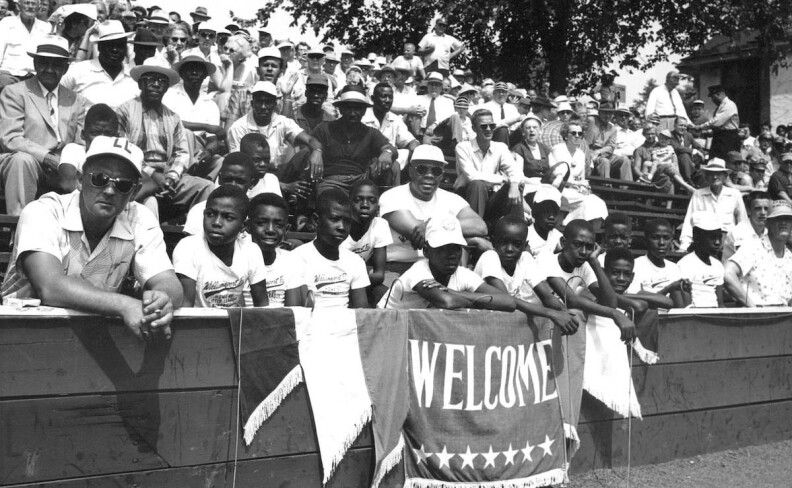
    The Cannon Street All-Stars watch from the stands at the 1955 Little League World Series in Williamsport, Pennsylvania. 
    The Cannon Street All-Stars watch from the stands at the 1955 Little League World Series in Williamsport, Pennsylvania. (Courtesy of Ramon Jackson and Little League Baseball.)

    When the 11- and 12-year-olds on the Cannon Street YMCA all-star team registered for a baseball tournament in Charleston, South Carolina, in July 1955, it put the team and the forces of integration on a collision. White teams refused to take the field with the Cannon Street all-stars, the first Black Little League team in South Carolina.

    The Cannon Street team won two tournaments by forfeit. If they won the regional tournament in Rome, Georgia, they would have advanced to the Little League World Series. But Little League officials ruled the team ineligible to play in the tournament because they had advanced by winning on forfeit and not on the field, denying the boys their dream. This became a national story for a few weeks but then faded and disappeared altogether as Americans read of other civil rights stories, including the horrific killing of 14-year-old Emmett Till.

    Chris Lamb, author of The 1955 Cannon Street YMCA All-Stars and Little League Baseball’s Civil War (2022, University of Nebraska Press), and John Rivers, who played shortstop on the All-Stars, join Walter Edgar to tell the story of the Cannon Street all-stars.

    News and Music Stations: Fri, Nov 18, 12 pm; Sat, Nov 19, 7 am
    News & Talk Stations: Fri, Nov 18, 04pm; Sun, Nov 20, 4 pm


    Roots and consequences of 'The Great War' Nov 07, 2022
    Show notes
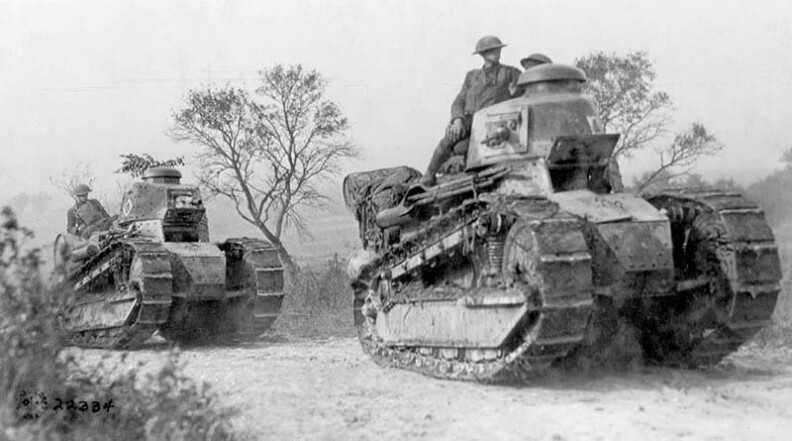
    Light tanks with a crew of only two, these were mass-produced during World War I.
    (National Archives and Records Administration)
    Paul MacKenzie

    November 11th is currently celebrated as Veteran’s Day in the United States. But it was first known here, as it still is around the world, as Armistice Day – the day in 1918 when Germany and its allies signed the armistice to end World War I. Armistice Day is still a very important day of commemoration throughout Europe.

    In 2014, the 100th anniversary of the start of The Great War, Paul MacKenzie, the Caroline McKissick Dial Professor of History at USC, an expert on the war, joined us to look back on the beginning of The War to End All Wars.

    - (Originally broadcast 11-11-14) -

    News and Music Stations: Fri, Nov 11, 12 pm; Sat, Nov 12, 7 am
    News & Talk Stations: Fri, Nov 11, 12 pm; Sun, Nov 13, 4 pm


    Previous 1 9 10 11 12 13 37 Next

    Related Podcasts

    Dan Carlin’s Hardcore History

    1

    Dan Carlin’s Hardcore History History
    More Perfect

    2

    More Perfect Government
    Casefile True Crime

    3

    Casefile True Crime Games & Hobbies
    The Way I Heard It with Mike Rowe

    4

    The Way I Heard It with Mike Rowe History
    BackStory

    5

    BackStory History
    The Black Dahlia Serial Killers

    6

    The Black Dahlia Serial Killers History
    footer-logo

    Contact Us

    Toll Free: 844-670-7747

    Links

    • Home
    • Top Charts
    • Networks
    • Apps
    • Independents Podcasts
    • Podcast Advertising
    • Podcast News
    • Contact Us
    • About Us
    • Analytics & Insights

    Stay Connected

      Privacy, Terms of Use & Our Code of Ethics Protecting Content Creators Copyrights