From books to barbecue, and current events to Colonial history, historian and author Walter Edgar delves into the arts, culture, and history of South Carolina and the American South. Produced by South Carolina Public Radio.
Saving a legacy, one fish fry at a time
Apr 04, 2023
Show notes
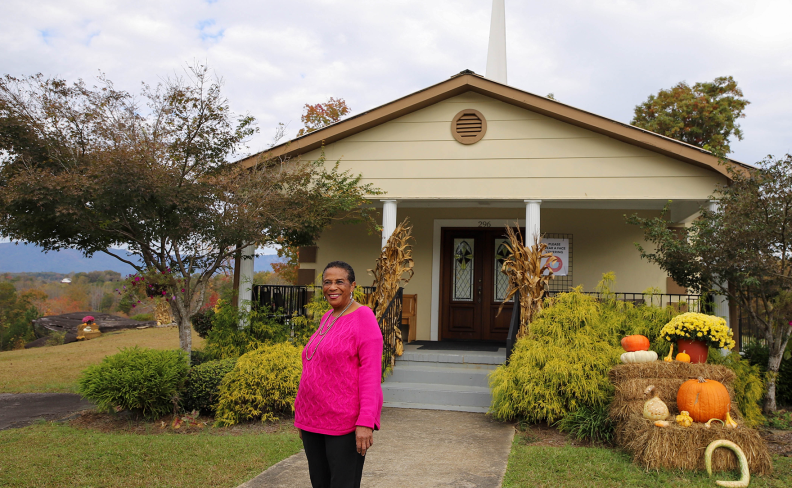
Mable Owens Clarke is the sixth-generation steward and matriarch of Soapstone Baptist Church in the rural Pickens County community of Liberia. In 1999, a few days before she died at the age of 104, Mable’s mother, Lula Mae, made her daughter promise never to let the historically Black church close.
Mabel Owens Clarke and Carlton Owen, President of the Soapstone Preservation Endowment, join Walter Edgar this week to tell the remarkable story of how Mable set out to keep that promise through her monthly, fundraising fish fries held at the church - and how word of her delicious, traditional foods spread the word about Soapstone Church around the world.
Soapstone Baptist Church was founded in the mid-1860s when freed slaves from surrounding South Carolina counties sought a path from being property to owning property. They felt God led them to a rocky outcrop of greenish-black soapstone and the surrounding rolling hills of northern Pickens County. They worked the land and through sales of vegetables and livestock bought acre-by-acre homesteads to support their families. The first “church” was nothing more than a brush arbor atop a rise looking toward iconic Table Rock Mountain to the north. There the families put down spiritual roots that have sustained what became Soapstone Baptist Church and its more than a century and a half legacy.
News and Music Stations: Fri, Apr 07, at 12 pm; Sat, Apr 08, at 7 am News & Talk Stations: Fri, Apr 07, at 12 pm; Sun, Apr 09, at 4 pm
The Liberty Trail: The trail to independence
Mar 27, 2023
Show notes Battle of the Waxhaws(Dale Watson / SC Battleground Preservation Trust)
America’s independence was secured in South Carolina, across its swamps, fields, woods and mountains. These events of 1779-1782 directly led to victory in the Revolutionary War.
The Liberty Trail – developed through a partnership between the American Battlefield Trust and the South Carolina Battleground Trust – connects battlefields across South Carolina and tells the stories of this transformative chapter of American history.
On this week’s episode of Walter Edgar’s Journal Dr. Edgar talks with Doug Bostick, Exec. Dir and CEO of the South Carolina Battleground Preservation Trust, and Catherine Noyes, Liberty Trail Program Director for the American Battlefield Trust, about their vision for The Liberty Trail: to permanently protect more than 2,500 acres of battlefield land and ultimately link nearly 80 sites.
- Originally broadcast 07/22/22 -
News and Music Stations: Fri, Mar 31, at 12 pm; Sat, Apr 01, at 7 am News & Talk Stations: Fri, Mar 31, at 12 pm; Sun, Apr 02, at 4 pm
Drayton Hall stories: A place and its people
Mar 20, 2023
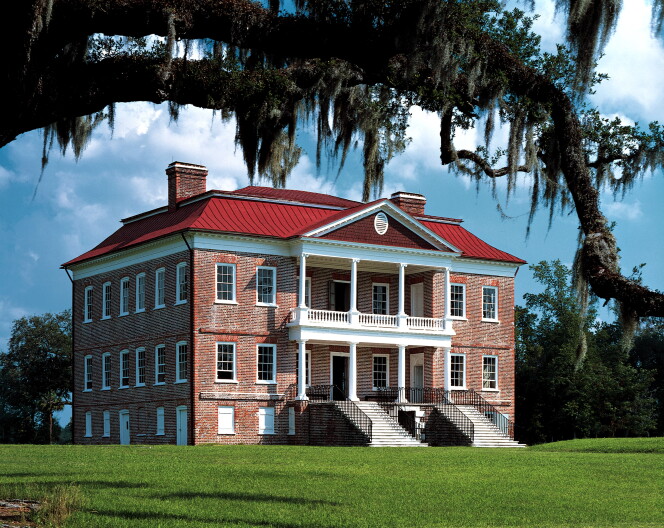
Show notes Drayton Hall( Drayton Hall Preservation Trust)
George McDaniel served as the Executive Director of Drayton Hall, a mid-18th-century plantation located on the Ashley River near Charleston for more than 25 years. His new book, Drayton Hall Stories: A Place and Its People (2022, Evening Post Books) focuses on this historic site’s recent history, using interviews with descendants (both White and Black), board members, staff, donors, architects, historians, preservationists, tourism leaders, and more to create an engaging picture of this one place.
McDaniel talks with Walter Edgar about the never-before-shared family moments, major decisions in preservation and site stewardship, and pioneering efforts to transform a Southern plantation into a site for racial conciliation.
- Originally released 07/29/22 -
History and horticulture at Historic Columbia's Hampton-Preston Mansion site
Mar 13, 2023
Show notes The glass house at Historic Columbia's Boyd Foundation Horticultural Center on the grounds of the Hampton-Preston Mansion in Columbia, SC.( Historic Columbia Foundation)
In 1961, the Historic Columbia Foundation was formed. It's goal: to save the the 135-year-old Robert Mills House from demolition and restore it. Over 60 years later, the Foundation manages six properties and continues to embrace new opportunities to preserve places and share complex stories from the past that connect vistors of varied backgrounds with history while inspiring a hopeful future.
Historic Columbia’s Boyd Foundation Horticultural Center, located on the grounds of the Hampton-Preston Mansion & Gardens on Blanding Street opened this year. Its greenhouse allows the historic site to serve as a hub for horticultural research and plant propagation, alongside ongoing interpretation, and programming. The greenhouse and gatehouse constructions are based on historic structures that once stood on the property. And, the greenhouse facility serves as a space to interpret the role that an extensive workforce of gardeners and horticulturists – Black, white, enslaved, and free – have played in shaping this site for over 200 years.
John Sherrer, Director of Cultural Resources for Historic Columbia, and Keith Mearns, Director of Grounds, talk with Walter Edgar about planning and building the Horticultural Center and about the ways it enriches the mansion’s grounds.
- Originally broadcast 05/05/22 -
News and Music Stations: Fri, Mar 17, at 12 pm; Sat, Mar 18, at 7 am News & Talk Stations: Fri, Mar 17, at 12 pm; Sun, Mar 19, at 4 pm
'Black Snow': SC author chronicles desperate measures taken to end WWII fighting in the Pacific
Mar 06, 2023
Show notes
Seven minutes past midnight on March 10, 1945, nearly 300 American B-29s thundered into the skies over Tokyo. Their payloads of incendiaries ignited a firestorm that reached up to 2,800 degrees, liquefying asphalt and vaporizing thousands; sixteen square miles of the city were flattened, and more than 100,000 men, women, and children were killed.
In his book, Black Snow - Curtis LeMay, the Firebombing of Tokyo, and the Road to the Atomic Bomb, Charleston author James M. Scott tells the story of this devastating operation, orchestrated by Major General Curtis LeMay, who famously remarked: “If we lose the war, we’ll be tried as war criminals.”
James Scott talks with Walter Edgar about the development of the B-29, the capture of the Marianas for use as airfields, and the change in strategy from high-altitude daylight “precision” bombing to low-altitude nighttime incendiary bombing. Most importantly, the raid represented a significant moral shift for America, marking the first-time commanders deliberately targeted civilians which helped pave the way for the atomic bombing of Hiroshima and Nagasaki five months later.
- Originally released 08/26/22 -
War stuff: the struggle between armies and civilians during the American Civil War
Feb 20, 2023
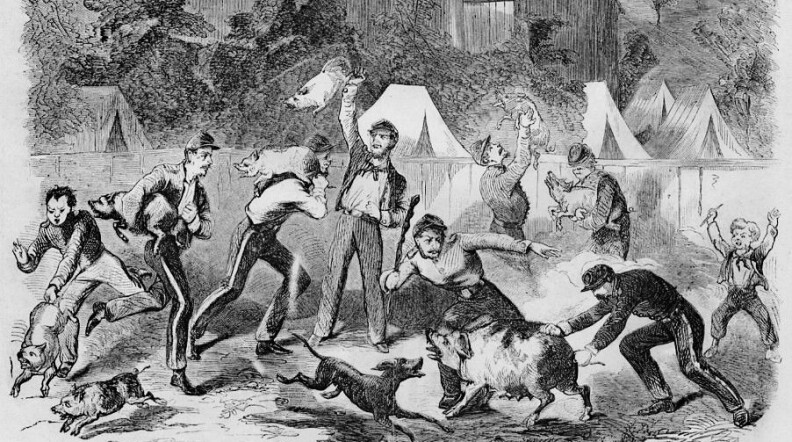
Show notes(Illustration from Harper's Weekly, August 17, 1861/NY State Library)
In War Stuff: The Struggle for Human and Environmental Resources in the American Civil War, her path-breaking work on the American Civil War, Joan E. Cashin explores the struggle between armies and civilians over the resources necessary to wage war.
This war 'stuff' included the skills of white Southern civilians, as well as such material resources as food, timber, and housing. At first, civilians were willing to help Confederate or Union forces, but the war took such a toll that all civilians, regardless of politics, began focusing on their own survival. Both armies took whatever they needed from human beings and the material world, which eventually destroyed the region's ability to wage war. In this fierce contest between civilians and armies, the civilian population lost. Cashin draws on a wide range of documents, as well as the perspectives of environmental history and material culture studies.
Dr. Cashin talks about this history with Walter Edgar, and about the efforts of historians to establish a precedent for the study of material objects as a way to shed new light on the social, economic, and cultural history of the conflict.
- Originally broadcast 06/14/19 -
News and Music Stations: Fri, Feb 24, 12 pm; Sat, Feb 25, 7 am News & Talk Stations: Fri, Feb 24, 12 pm; Sun, Feb 26, 4 pm
Origins of "The Wheel of Time"
Feb 13, 2023
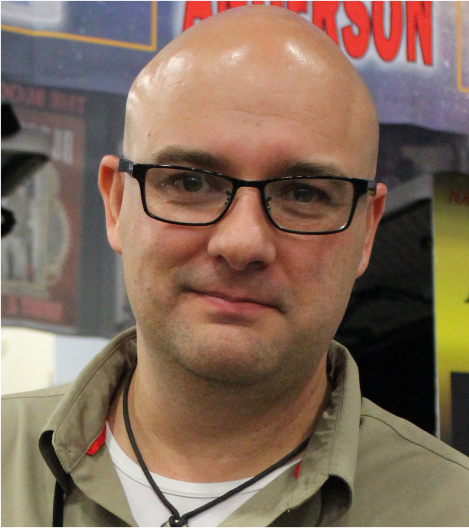
Show notes(Tor Books) Dr. Michael Livingston(Super Festivals / Wikimedia Commons)
In his latest book, Origins of The Wheel of Time: The Legends and Mythologies that Inspired Robert Jordan (2022, Tor), author Michael Livingston, a professor of medieval literature at The Citadel, takes a deep dive into the real-world history and mythology that inspired the world of the late Robert Jordan’s The Wheel of Time. This series of books has sold over 100 million copies worldwide and has been adapted as a streaming television series for Prime Video, with season one released in 2021.
James Oliver Rigney Jr., whose pen name was Robert Jordan, was a native of Charleston, graduated from The Citadel with a degree in physics. He served two tours in Vietnam with the U.S. Army and received multiple decorations for his service. Michael Livingston’s book is a companion to Jordan’s internationally bestselling series and it delves into the creation of his masterpiece, drawing from interviews and an unprecedented examination of his unpublished notes.
Livingston tells the behind-the-scenes story of who Jordan was, how he worked, and why he holds such an important place in modern literature. The second part of the book is a glossary to the “real world” in The Wheel of Time. (King Arthur is in The Wheel of Time. Merlin, too. But so are Alexander the Great and the Apollo Space Program, the Norse gods and Napoleon’s greatest victory—and so much more.
Michael Livingston joins Walter Edgar to talk about The Wheel of Time universe and Robert Jordan’s life.
News and Music Stations: Fri, Feb 17, 12 pm; Sat, Feb 18, 7 am News & Talk Stations: Fri, Feb 17, 12 pm; Sun, Feb 19, 4 pm
Stolen dreams: the 1955 Cannon Street YMCA All-Stars
Feb 06, 2023
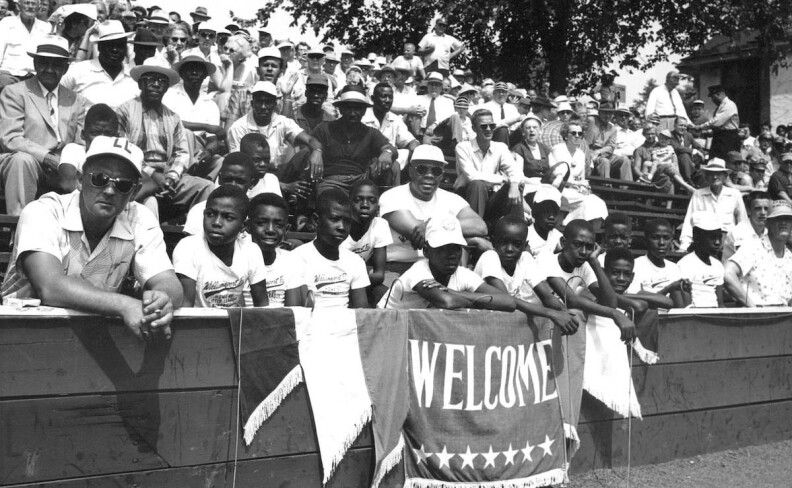
Show notes The Cannon Street All-Stars watch from the stands at the 1955 Little League World Series in Williamsport, Pennsylvania. (Courtesy of Ramon Jackson and Little League Baseball.)
When the 11- and 12-year-olds on the Cannon Street YMCA all-star team registered for a baseball tournament in Charleston, South Carolina, in July 1955, it put the team and the forces of integration on a collision. White teams refused to take the field with the Cannon Street all-stars, the first Black Little League team in South Carolina.
The Cannon Street team won two tournaments by forfeit. If they won the regional tournament in Rome, Georgia, they would have advanced to the Little League World Series. But Little League officials ruled the team ineligible to play in the tournament because they had advanced by winning on forfeit and not on the field, denying the boys their dream. This became a national story for a few weeks but then faded and disappeared altogether as Americans read of other civil rights stories, including the horrific killing of 14-year-old Emmett Till.
Chris Lamb, author of The 1955 Cannon Street YMCA All-Stars and Little League Baseball’s Civil War (2022, University of Nebraska Press), and John Rivers, who played shortstop on the All-Stars, join Walter Edgar to tell the story of the Cannon Street all-stars.
Lincoln’s unfinished work - the new birth of Freedom from generation to generation
Jan 30, 2023
Show notes Abraham Lincoln, February 9, 1864(Anthony Berger / Library of Congress)
In his Gettysburg Address, Abraham Lincoln promised that the nation’s sacrifices during the Civil War would lead to a “new birth of freedom.” Lincoln’s Unfinished Work: The New Birth of Freedom from Generation to Generation (2022, LSU Press) analyzes how the United States has attempted to realize—or subvert—that promise over the past century and a half. The volume is not solely about Lincoln, or the immediate unfinished work of Reconstruction, or the broader unfinished work of America coming to terms with its tangled history of race; it investigates all three topics.
Editors Vernon Burton and Peter Eisenstadt talk with Walter Edgar about the wide-ranging ideas explored in this volume.
News and Music Stations: Fri, Feb 03, 12 pm; Sat, Feb 04, 7 am News & Talk Stations: Fri, Feb 03, 12 pm; Sun, Feb 05, 4 pm
How the Blinding of Sergeant Isaac Woodard Changed the Course of America’s Civil Rights History
Jan 23, 2023
Show notes(Library of Congress, from Central Michigan University, Clark Historical Library)
(Originally broadcast on 03/08/19) - In this week's episode of Walter Edgar's Journal, Richard Gergel details the impact of the 1946 blinding of Sergeant Isaac Woodard on both President Harry S. Truman and Judge J. Waties Waring, and traces their influential roles in changing the course of America's civil rights history.
On February 12 of 1946, Sergeant Isaac Woodard, a returning, decorated African American veteran of World War II, was removed from a Greyhound bus in Batesburg, South Carolina, after he challenged the bus driver’s disrespectful treatment of him. Woodard, in uniform, was arrested by the local police chief, Lynwood Shull, and beaten and blinded while in custody.
President Harry Truman was outraged by the incident. He established the first presidential commission on civil rights and his Justice Department filed criminal charges against Shull. In July 1948, following his Commission’s recommendation, Truman ordered an end to segregation in the U.S. armed forces.
An all-white South Carolina jury acquitted Shull, but the presiding judge, J. Waties Waring, was conscience-stricken by the failure of the court system to do justice by the soldier. Waring described the trial as his “baptism of fire,” and he soon began issuing major civil rights decisions from his Charleston courtroom, including his 1951 dissent in Briggs v. Elliott, declaring public school segregation per se unconstitutional. Three years later, the Supreme Court adopted Waring’s language and reasoning in Brown v. Board of Education.
News and Music Stations: Fri, Jan 27, 12 pm; Sat, Jan 28, 7 am News & Talk Stations: Fri, Jan 27, 12 pm; Sun, Jan 28, 4 pm

 Our TOPPODCAST Picks
  Stay Connected