TopPodcast.com
Menu
  • Home
  • Top Charts
  • Top Networks
  • Top Apps
  • Top Independents
  • Top Podfluencers
  • Top Picks
    • Top Business Podcasts
    • Top True Crime Podcasts
    • Top Finance Podcasts
    • Top Comedy Podcasts
    • Top Music Podcasts
    • Top Womens Podcasts
    • Top Kids Podcasts
    • Top Sports Podcasts
    • Top News Podcasts
    • Top Tech Podcasts
    • Top Crypto Podcasts
    • Top Entrepreneurial Podcasts
    • Top Fantasy Sports Podcasts
    • Top Political Podcasts
    • Top Science Podcasts
    • Top Self Help Podcasts
    • Top Sports Betting Podcasts
    • Top Stocks Podcasts
  • Podcast News
  • About Us
  • Podcast Advertising
  • Contact
Not in our directory?
Add Show Here
Podcast Equipment
Center

toppodcastlogoOur TOPPODCAST Picks

  • Comedy
  • Crypto
  • Sports
  • News
  • Politics
  • True Crime
  • Business
  • Finance

Follow Us

toppodcastlogoStay Connected

    View Top 200 Chart
    Back to Rankings Page
    Technology

    TRXL Podcast

    Hosted by Evan Troxel, TRXL is a leading podcast and online resource for architecture, technology, and innovation in the AEC industry.

    Advertise

    Copyright: © Evan Troxel, all rights reserved.

    • Apple Podcasts
    • Google Play
    • Spotify

    Latest Episodes:
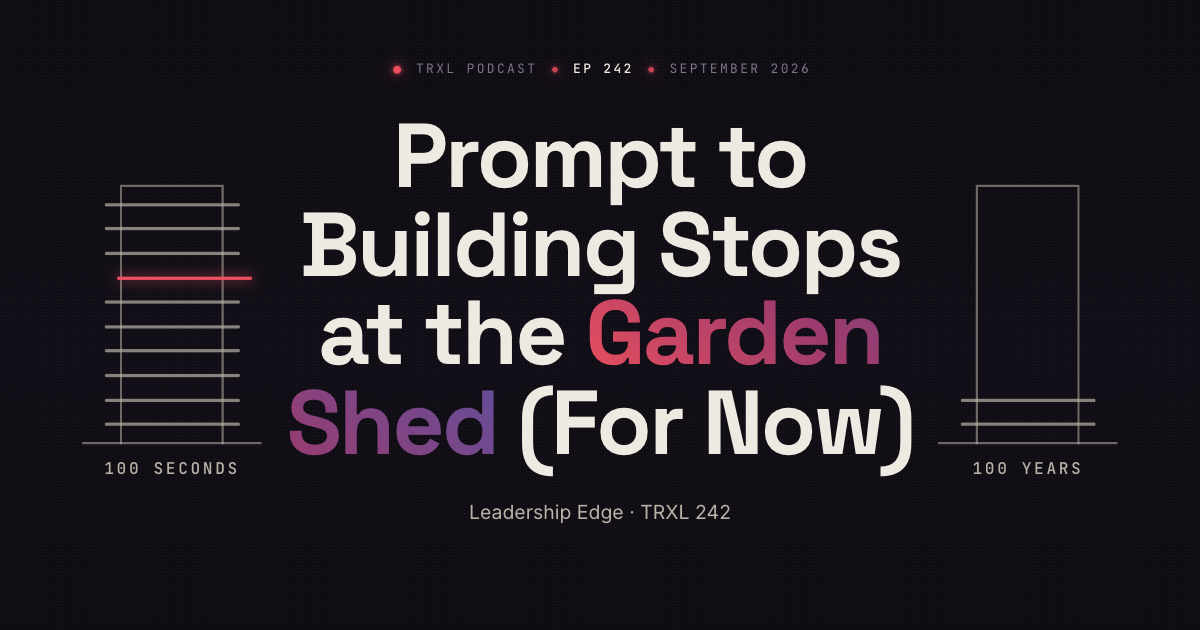
    Prompt to Building Stops at the Garden Shed (For Now) Sep 28, 2026
    Show notes Prompt to Building Stops at the Garden Shed (For Now)

    If an agent can draw your fifty façade balconies in Revit in half a second, who has to figure out how to fix it when it gets one wrong? Again, this leads to more questions than answers.

    💡Who this episode is for: Especially relevant if you're a firm leader or BIM manager deciding what an agent gets to touch inside your models, and how much of a design decision you're willing to hand over.

    Summary

    For this episode of The Next AEC Tech Stack (TRXL 242), I put two questions to the same partners you heard in the last episode. First, when a vendor says AI, do they mean autocomplete, a copilot, or something that acts on its own (agent), and does the difference matter to you? Second, further out, can you describe a building in plain English and get something useful back?

    I heard from Oliver Goldman at Autodesk, Greg Demchak at Bentley, Matt Wash and Ariel Cooke-Zamora at Bimbeats, Marty Rozmanith at Skema, Scott Reynolds at UpCodes, Prasanta Bose and Michael Jansen at TwinMaster, Mike Soldan at Egnyte, Roderick Bates at Chaos, Holger Kreienbrink at Graphisoft, and Jesper Wallgren at Finch, plus practitioners Gavin Nicholls, Campbell Yule, and Theodoros Galanos. The labels got less airtime than I expected. Oliver said he isn't sure copilots, agents, and assistants mean much beyond branding. The better answers were about what an agent is allowed to touch and who checks its work.

    The prompt-to-building answers split along a line I recognize from my years running digital practice inside a large firm: geometry is getting close, and design is a different problem. Jesper gave the episode its title with one sentence, and several other guests landed near it from different directions.

    This series brought to you by
    Prompt to Building Stops at the Garden Shed (For Now) Graitec provides AEC software, training, and expert support to help architects, engineers, and construction teams design, build, and manage projects more effectively.
    With support from
    Prompt to Building Stops at the Garden Shed (For Now) AVAIL's content management system (CMS) helps architecture and engineering teams find, manage, and reuse their Revit, AutoCAD, Civil 3D, and other technical content in one place.
    💡 Free and paid subscribers are getting the same full newsletter for this series. Normally the full edition of Leadership Edge is a paying-member benefit. For The Next AEC Tech Stack it isn't: every edition goes out complete to everyone on the list, free accounts included, along with the Field Report that goes with each one. Graitec and AVAIL funded the series so the industry could actually use it.
    If someone forwarded this to you, sign up free and the rest of the series lands in your inbox as it publishes. TRXL+ members also get the ad-free feed, the full back catalog, and all the content that goes back behind the paywall when we return to our regular schedule following this series. Catch the full episode

    What's Inside

    • The pen problem. Autodesk started Revit's MCP server read-only, so what changes once you and an agent can both edit the same model?
    • Scripts the AI writes and runs. One guest said the smartest thing an agent can do is choose something deterministic, which raises a question about who reads that script later.
    • Stacked versus coordinated agents. Two guests disagreed about how multi-agent systems should be built, and a third ran an experiment that got stuck in a loop.
    • Same engine, new interface. Bentley made a bet that doesn't involve rebuilding anything, and I wanted to know what that changes on a Monday morning.
    • A hundred years in a hundred seconds. Guests took on prompt-to-building from four angles, and I gave a read of my own that I'm less sure about now.

    242: Designing for 100 Years… in 100 Seconds? Sep 24, 2026
    Show notes

    I asked the same people you heard last episode two questions back to back. When a vendor says AI, do they mean autocomplete, a copilot, or something that acts on its own, and does the distinction matter to you? And further out, can you describe a building in plain English and get something real back?Oliver Goldman at Autodesk isn't sure the three terms mean much beyond branding, and explains why Revit's MCP server started read-only when both you and the agent hold the pen. Greg Demchak at Bentley describes an agent driving a headless MicroStation, and argues for a new interface on top of a proven geometry engine instead of a rewrite. Matt Wash at Bimbeats shows an agent flagging a model with 50 hours of work from one person and no second reviewer, while Ariel Cooke-Zamora explains why his crash-report agent ended up as a Python script. Marty Rozmanith at Skema says the AI writes deterministic scripts and then runs them, and calls Revit a data entry tool. Scott Reynolds at UpCodes says stacking agents in a line is a software architecture mistake. Jesper Wallgren at Finch gave this episode its title. Mike Soldan (Egnyte), Prasanta Bose and Michael Jansen (TwinMaster), Roderick Bates (Chaos), Holger Kreienbrink (Graphisoft), Gavin Nicholls, Campbell Yule, and Theodoros Galanos (Aurecon) weigh in on where the prompt-to-building idea holds up and where it breaks.This episode is especially relevant for firm leaders and design technologists who are being sold "agentic" this quarter and need a way to tell what ships today from what is still a demo, and for anyone wondering how far a prompt gets you toward a building.Original episode page: https://trxl.co/242Listen wherever you get your podcasts. This series brought to you by Graitec provides AEC software, training, and expert support to help architects, engineers, and construction teams design, build, and manage projects more effectively. With support from AVAIL's content management system (CMS) helps architecture and engineering teams find, manage, and reuse their Revit, AutoCAD, Civil 3D, and other technical content in one place. 😎Win a pair of Ray-Ban Meta Smart Glasses courtesy of Graitec. Enter Here. (entering shares your contact info with Graitec)Watch This on YouTube:Subscribe to the podcast on YouTubeEpisode Links:The SeriesThe Next AEC Tech Stack — Series hub · Arc 2: Agentic AI — Arc 2, episode 2 of 3.Previous episodes in the series:TRXL 238 — Half Your Day Isn't DesignTRXL 239 — You're Not Going Home EarlyTRXL 240 — I've Got to Get My Project Out on FridayTRXL 241 — From Autocomplete to Agent, Where AEC Actually IsVoices in This EpisodeOliver Goldman — VP, Software Architecture, AEC Solutions, Autodesk — LinkedIn · AutodeskGreg Demchak — VP, Emerging Technologies, Bentley Systems — LinkedIn · BentleyPrasanta Bose — CEO & CTO, TwinMaster — LinkedIn · TwinMasterMichael Jansen — Chief Business Officer, TwinMaster — LinkedIn · TwinMasterMike Soldan — SVP, Global Technology Solutions, Egnyte — LinkedIn · EgnyteMatt Wash — CEO, Bimbeats — LinkedIn · BimbeatsAriel Cooke-Zamora — Product Operations Lead, Bimbeats — LinkedIn · BimbeatsMarty Rozmanith — CTO & Co-Founder, Skema — LinkedIn · SkemaScott Reynolds — CEO & Co-Founder, UpCodes — LinkedIn · UpCodesJesper Wallgren — CPO & Co-Founder, Finch — LinkedIn · FinchRoderick Bates — Senior Director, Product Operations, Chaos — LinkedIn · ChaosHolger Kreienbrink — Director, Product Intelligence & Partnerships, Graphisoft — LinkedIn · GraphisoftGavin Nicholls — National Computation Lead, Architectus — LinkedIn · Aussie BIM Guru on YouTube · ArchitectusCampbell Yule — LinkedIn · WebsiteTheodoros Galanos — Generative AI Leader, Aurecon — LinkedIn · AureconCopilot, Agent, or MarketingAutodesk on the vocabulary — Autodesk — Oliver Goldman isn't sure copilots, agents, and assistants mean much beyond branding, and describes Autodesk Assistant moving from a help feature to a standalone experience that works across products.Bentley on where each one shows up — Bentley — Greg Demchak separates a copilot that annotates a drawing from an agent that calls a headless MicroStation or STAAD through MCP and feeds the results to whatever interface fits.TwinMaster on all three at once — TwinMaster — Prasanta Bose answers autocomplete, copilot, and agent as parts of one system, with Arch-e as the orchestrator over specialized agents.Egnyte on definitions getting blurry — Egnyte — Mike Soldan on skill files, planning frameworks, and why a year of arguing over what counts as an agent has mostly stopped. Includes his agent-chain examples for RFP intake and contract review.Skema on deterministic scripts — Skema — Marty Rozmanith on why the AI works best when it writes a deterministic script and runs it, and what delegating to an agent does and doesn't change about responsibility.Agents Working on Firm DataBimbeats on agents that read how a firm works — Bimbeats — Matt Wash on an agent that flagged a model with 50 hours from one person and no second reviewer, a burnout view for people and culture teams, and the Bluebeam Legacy to Studio report. Ariel Cooke-Zamora on a crash trigger that sends journal, model health, and hardware data to an LLM for a summary.Guardrails and TrustUpCodes on independent agents and citations — UpCodes — Scott Reynolds on why linear, stacked agents are the wrong software architecture, and why every answer needs a traceable citation.TwinMaster on coordination instead of stacking — TwinMaster — Prasanta Bose and Michael Jansen on agents that cooperate and can bid against each other, and on why assistants bolted onto existing tools aren't the same thing.Campbell Yule on live feedback and compounding error — Campbell Yule — Why constant agent feedback mid-design burned tokens and told him nothing, and how a 1 percent error per step compounds.Gavin Nicholls on documenting code for AI — Architectus — Why comments and a roadmap of skills matter more now that an AI reads the code base.Prompt to BuildingAutodesk on language and geometry models — Autodesk Forma — Oliver Goldman on training models that understand both language and geometry, the Building Layout Explorer in Site Design, and bringing the language interface into Autodesk Assistant.Bentley Labs — Bentley — Greg Demchak on the small group of creative technologists behind the embodied carbon color-coding demo and the superblock simulation built in a week with the city of Basel.Finch on where prompting stops — Finch — Jesper Wallgren on combining its own floor plan models, image tools, and an agent for refinement, and on the line that became this episode's title.Graphisoft on why not to prompt a building — Graphisoft — Holger Kreienbrink on GDL, an Archicad MCP server coming soon, and why creativity has to come from the person.Chaos on AI inside familiar tools — Chaos — Roderick Bates on adoption inside the tools firms already use, firms writing their own software, and using AI as a sparring partner.Tools and Companies MentionedAutodesk University — where Autodesk announced the standalone Autodesk Assistant and demonstrated the Building Layout Explorer, as Evan notes in the episode.Elastic — the search engine behind Bimbeats' data. Matt Wash's agents reach it through the Elastic MCP.Bluebeam — the Legacy versus Studio markup story in Matt Wash's segment.EC3 — the embodied carbon calculator in Greg Demchak's color-coded concrete demo.MicroStation and STAAD — the desktop engines Greg Demchak describes agents running headless.Enscape — Roderick Bates' example of what an interface with no buttons would mean for users.SketchUp — mentioned by Roderick Bates as adding an MCP server.TestFit and Spacio — the layout tools Evan names alongside Forma.Cursor — one of the tools Roderick Bates says firms use to build features on demand.Grasshopper and Dynamo — the visual scripting tools Marty Rozmanith and Ariel Cooke-Zamora compare agent workflows to.OpenAI GPT-6 Astra — the model Evan mentions generating 3D geometry and pushing it into Blender.Series PartnersThese companies took part in Arc 2 and agreed to be asked hard questions about their own AI.Autodesk · AVAIL · Bentley Systems · Bimbeats · Chaos · Egnyte · Finch · Graphisoft · Skema · TwinMaster · UpCodes🛠️The tools I use to make this show: trxl.co/toolsEvery voice in this episode is on trxl.co/guests with their own bio.Connect with EvanLinkedInYouTubeEpisode Transcript:

    Full show notes at the publisher

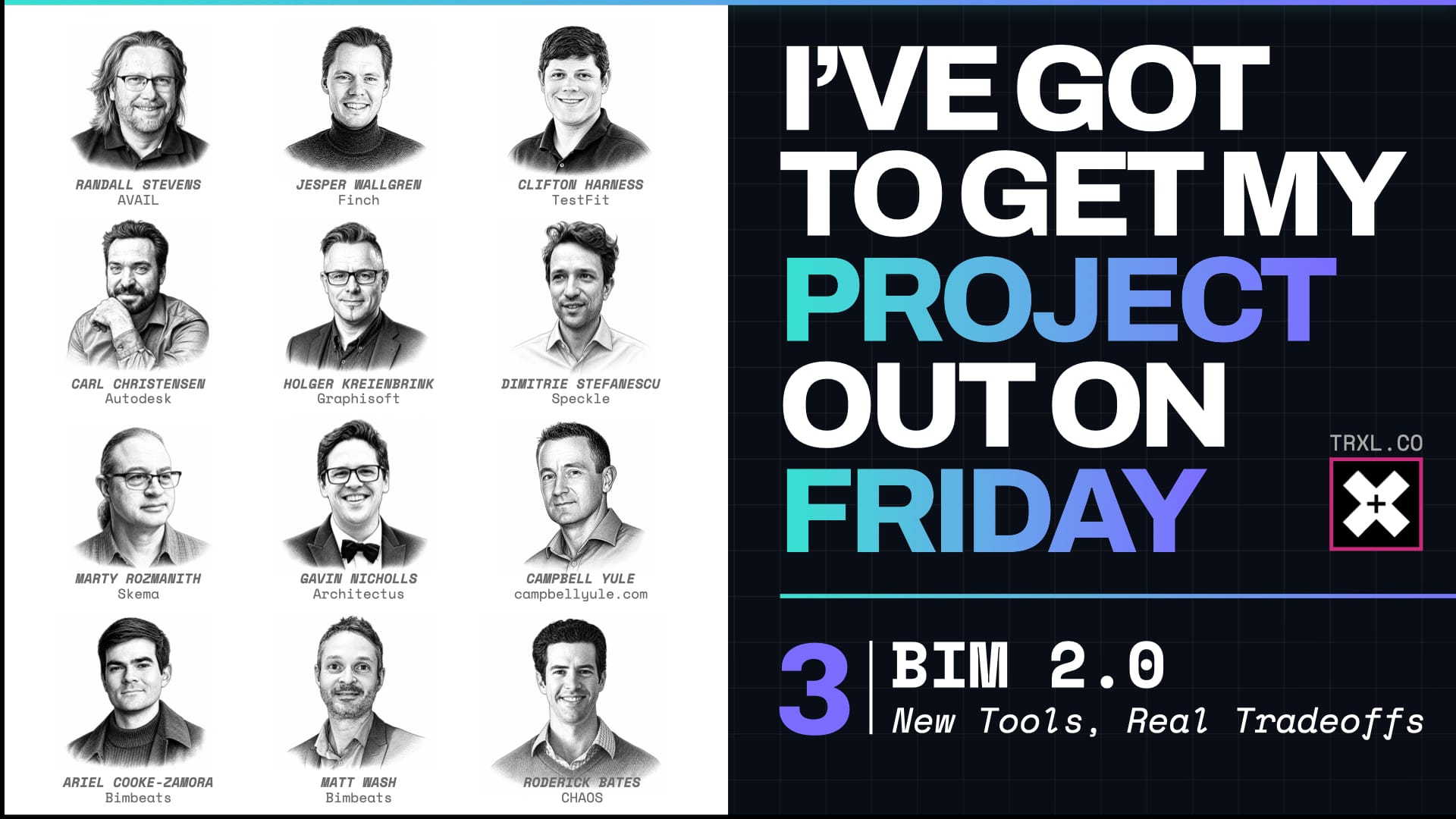
    My Favorite Moments from Episode 240 "I've Got to Get My Project Out on Friday" Sep 23, 2026
    Show notes My Favorite Moments from Episode 240 "I've Got to Get My Project Out on Friday"

    Episode two asked what switching costs. Episode three closes the BIM 2.0 arc of the Next AEC Tech Stack series with the two questions that have been running underneath the whole thing so far: where does a generative tool's output stop and your judgment start, and what actually survives once data has to move between platforms. These have been the questions that keep coming up in every practice at some point when evaluating not just new tools, but the new ways of working they're bringing into practice as well.

    Below are the lines worth keeping. Every timecode is a link. Click it and you land on that moment in the episode so you don't have to go searching to hear the voice that said it.

    This series brought to you by My Favorite Moments from Episode 240 "I've Got to Get My Project Out on Friday"

    Graitec provides AEC software, training, and expert support to help architects, engineers, and construction teams design, build, and manage projects more effectively.

    With support from My Favorite Moments from Episode 240 "I've Got to Get My Project Out on Friday"

    AVAIL's content management system (CMS) helps architecture and engineering teams find, manage, and reuse their Revit, AutoCAD, Civil 3D, and other technical content in one place.

    On where AI should stop


    I went to AU for the people Sep 22, 2026
    Show notes

    When past guests, listeners, sponsors, and prospective partners stop me in a hallway, the thank-yous are a nice byproduct. What those conversations carried underneath was deeper: meaningful work is happening, and it is delivering real value to individuals. Those moments mattered because of that, not because my name got said out loud.

    You know what they say: what happens in Vegas stays in Vegas. Well, I don't subscribe to that. Here's a quick rundown of my week.

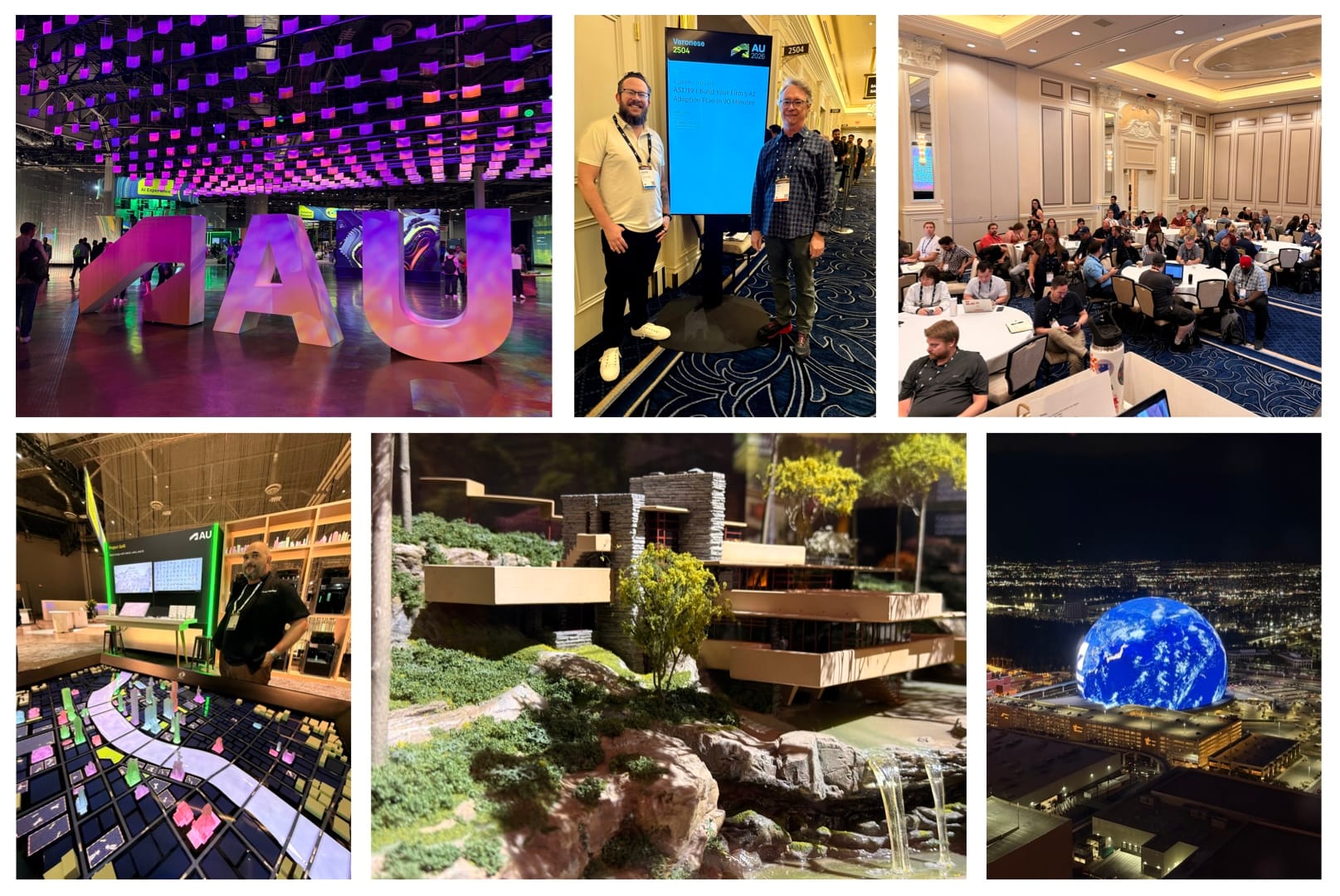
    Kenton Grant and I co-led a workshop in the last slot on Thursday, 4:30 to 6:00, right before the closing party. The room held about 140. It filled, then went to standing room. We were blown away by the fortitude of these individuals after spending several days with the kill-your-nervous-system, relentless nature of being in Las Vegas.

    The topic of our workshop was Build Your Firm's AI Adoption Plan. We kept it interactive: audience stories, share-outs, real friction from real teams. One person told us it was the only session that week with that kind of engagement. A lot of people thanked us afterward. I got three hugs. Did any other presenter get a hug after their session? I don't know, but I kinda doubt it. I wasn't expecting that kind of gesture, but it made it all feel worth it. Something about naming a practical first ninety days instead of another slide about the future must have struck a chord.

    Then there is the harder half of the week.

    The keynotes hammered on the AI-enabled future being about handling “more capacity.” I get why that line sells. As Theodoros Galanos said in episode 241, “I think we will never be busier. There is already too many things to do and not enough expertise.”

    But my take is that it is also self-serving. AI already does so much so fast that people truly can do more. My take: promising more capacity deepens that dependency on the tools (AI specifically in this case) and raises the cost of keeping up. We do not get free abundance. We get a wider surface area of work that now expects AI in the loop. So where could this path lead?

    Here is the part that worries me as someone living it: The token costs people and firms pay today are probably something like a tenth of the true cost. As dependency climbs, lock-in climbs with it. When the bill moves toward the real price, organizations are stuck: pay huge sums to keep the new way of working, or face disruption tearing it back out. That is not a scare story, but we should all be paying attention to where this is leading.

    I am watching this in my own work. As a solopreneur I can produce like a small team now. I have broadened beyond the podcast because the tools make that possible. I also know I am not special here. This is happening to almost everyone leaning hard into AI. My prediction is a reckoning: not because the tech fails, but because the economics catch up to the habits we are building while it feels reasonable.

    So I will leave you with the same place I started. Go to these conferences for the people. The hallway hellos, the workshops that fill late on the hour before the big party, the three hugs after a practical plan. That's the durable part. The capacity pitch will keep evolving. The people who stop you in the corridor to say thanks are why I still buy the ticket.

    If our paths crossed this year at AU, I'm glad they did. It was an amazing time to be with this community and at the same time it was a relentless week in Vegas. My nervous system needs a reboot and I hope you recover well. Thank you!


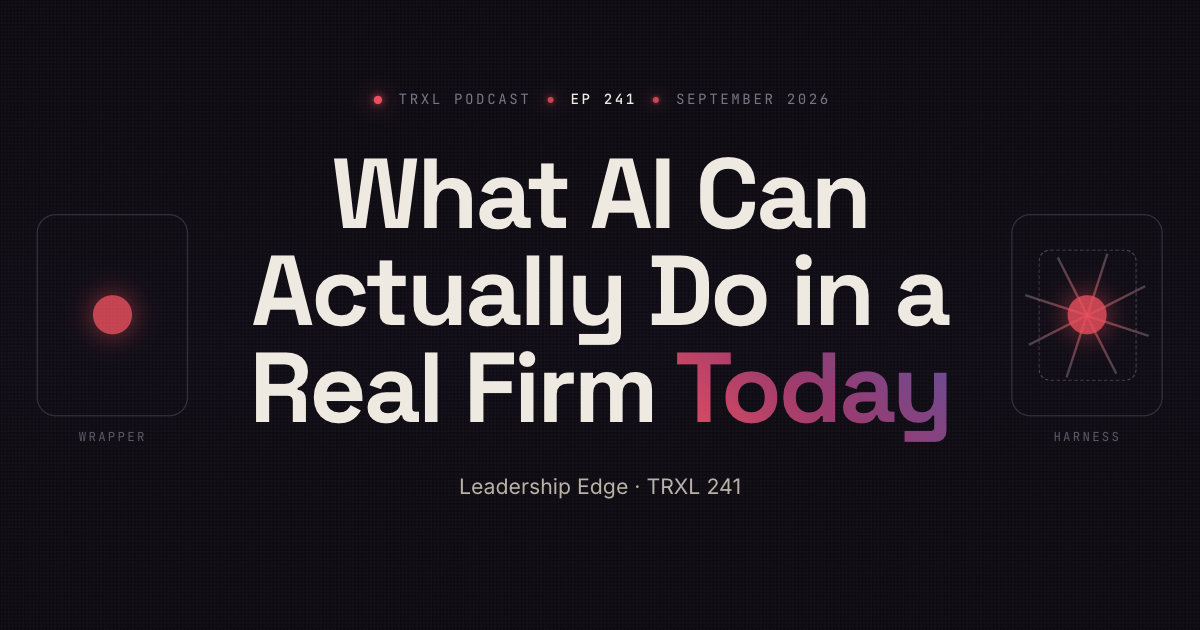
    What AI Can Actually Do in a Real Firm Today Sep 21, 2026
    Show notes What AI Can Actually Do in a Real Firm Today

    If every vendor in your stack is telling you their tool is agentic now, how do you tell which ones actually are? And what does that even mean?

    💡Who this episode is for: Especially relevant if you're the one fielding AI pitches from every vendor in your stack (and beyond) and need a way to separate what's real from what's marketing.

    Summary

    For this episode of The Next AEC Tech Stack, From Autocomplete to Agent: Where AEC Actually Is (TRXL 241), I asked every partner in Arc 2 the same question: in a real firm today, what can this actually do, and what can't it? Not the roadmap. Not the demo. What's actually shipping and actually working on a live project right now*.

    *Disclaimer: Keep in mind that everything they said could change tomorrow (in fact, it might have already changed since many of these interviews were recorded weeks ago!). Things are moving fast.

    I talked to representatives from Chaos, UpCodes, Twinmaster, Egnyte, Bentley, Graphisoft, Skema, BIMbeats, Finch, Autodesk, and AVAIL, plus three practitioners who have to live with what these companies ship. The answers ranged from "we don't really train it, it's discrete math" to "the harness is 90 percent of the work," and a few people were candid about where their tools are today that may not be meeting expectations.

    What came out of it wasn't a tidy verdict. Rather, it was a pattern: the firms and vendors getting real traction aren't the ones chasing the most impressive demo. They're the ones who've figured out exactly where the deterministic, rule-based work ends and the genuinely hard reasoning problem begins, and who are honest about which side of that line they're actually standing on.

    This series brought to you by What AI Can Actually Do in a Real Firm Today

    Graitec provides AEC software, training, and expert support to help architects, engineers, and construction teams design, build, and manage projects more effectively.

    With support from What AI Can Actually Do in a Real Firm Today

    AVAIL's content management system (CMS) helps architecture and engineering teams find, manage, and reuse their Revit, AutoCAD, Civil 3D, and other technical content in one place.

    💡 Free and paid subscribers are getting the same full newsletter for this series. Normally the full edition of Leadership Edge is a paying-member benefit. For The Next AEC Tech Stack it isn't: every edition goes out complete to everyone on the list, free accounts included, along with the Field Report that goes with each one. The partners above paid for the series so the industry could actually use it.
    If someone forwarded this to you, sign up free and the rest of the series lands in your inbox as it publishes. TRXL+ members also get the ad-free feed, the full back catalog, and all the content that goes back behind the paywall when we return to our regular schedule following this series. Catch the full episode

    What's Inside

    • The wrapper problem. Many tools calling themselves AI are just code wrapped around an existing LLM, so what is the real, unexplored opportunity?
    • The 90/10 harness split. One guest put a number on how much of a real AI solution is the model versus everything built around it, and Autodesk's VP of Software Architecture had a pointed reaction to that number.
    • The token bill nobody saw coming. What happens when a firm deploys an AI tool across the whole company and the monthly bill hits six figures, and what that does to how firms will have to think about pricing their own work.
    • The alarm bell for a bad AI pivot. A practitioner explains exactly what tips him off that a product rushed into "AI mode" without solving its first problem.
    • What 2030 actually looks like. Several guests describe a firm that isn't smaller so much as reorganized, and one goes as far as predicting agent-to-agent procurement.

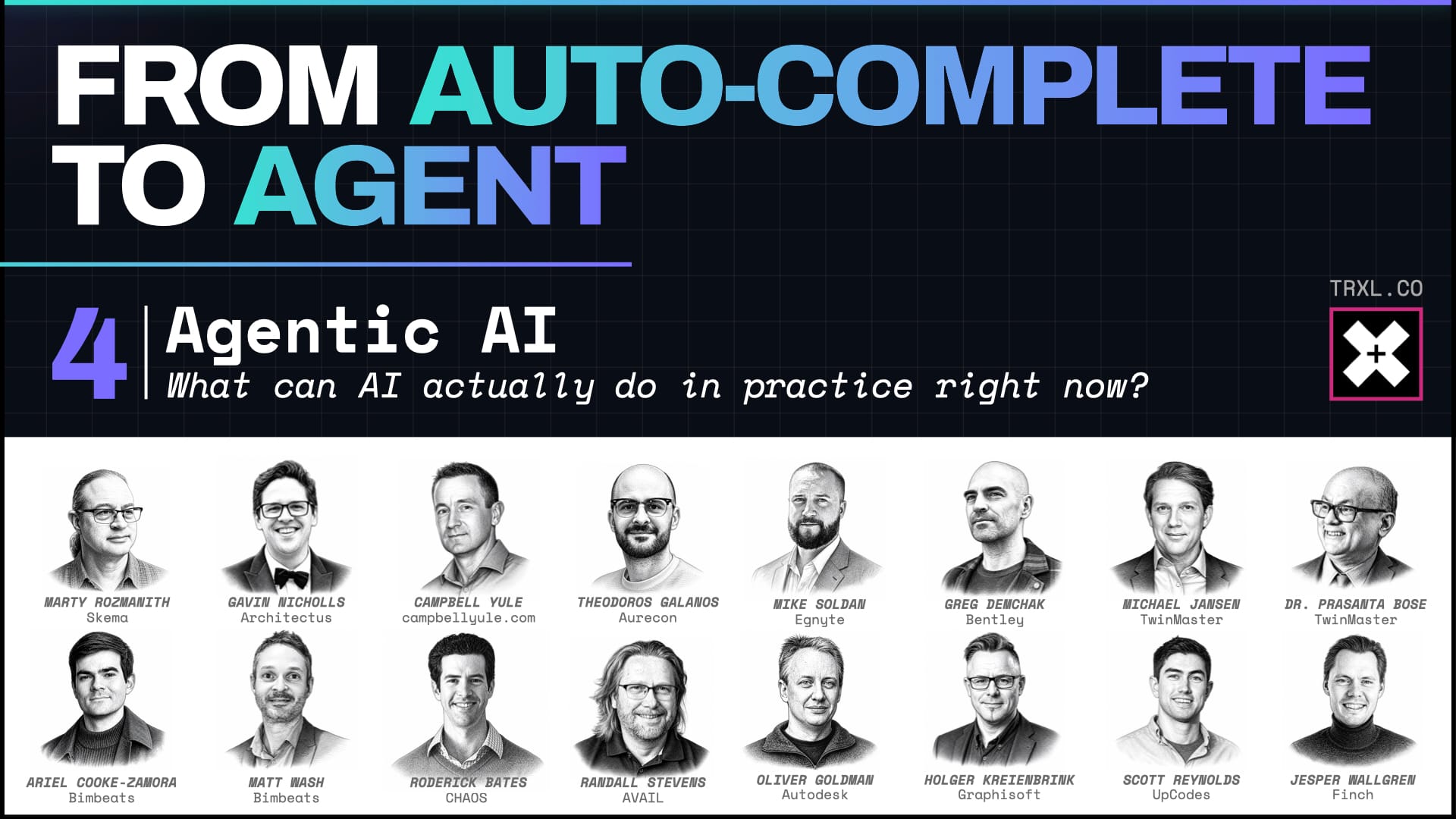
    241: From Autocomplete to Agent: Where AEC Actually Is Sep 17, 2026
    Show notes 241: From Autocomplete to Agent: Where AEC Actually Is

    Every company in this arc has AI in their marketing. So I asked all of them the same question: in a real firm today, what can it actually do, and what can't it?

    Michael Jansen and Prasanta Bose at TwinMaster open with why firms resist adopting new tools at all, and Roderick Bates at Chaos separates real capability from social-media hype using a story about his son and a magnet-fishing YouTube video. Holger Kreienbrink at Graphisoft wants AI on the tedious tasks, not the creative ones. Marty Rozmanith at Skema says 90 to 95 percent of what they do is deterministic math, not AI at all. Ariel Cooke-Zamora and Matt Wash at Bimbeats can actually measure adoption inside a firm instead of guessing at it. And Oliver Goldman at Autodesk admits he isn't sure autocomplete, copilot, and agent mean anything different beyond marketing, before Greg Demchak at Bentley and Theodoros Galanos at Aurecon lay out what a harness actually is and why it might be 90 percent of the real work.

    This episode is especially relevant for firm leaders and technology decision-makers who are tired of vendor claims that expire the moment they're spoken, and who want a straight answer to what these tools do in a real firm this week, not the demo.

    Original episode page: https://trxl.co/241

    241: From Autocomplete to Agent: Where AEC Actually Is
    Listen wherever you get your podcasts.
    This series brought to you by 241: From Autocomplete to Agent: Where AEC Actually Is

    Graitec provides AEC software, training, and expert support to help architects, engineers, and construction teams design, build, and manage projects more effectively.

    With support from 241: From Autocomplete to Agent: Where AEC Actually Is

    AVAIL's content management system (CMS) helps architecture and engineering teams find, manage, and reuse their Revit, AutoCAD, Civil 3D, and other technical content in one place.

    😎Win a pair of Ray-Ban Meta Smart Glasses courtesy of Graitec. Enter Here. (entering shares your contact info with Graitec)

    Watch This on YouTube:

    Subscribe to the podcast on YouTube

    Episode Links:

    The Series

    • The Next AEC Tech Stack — Series hub · Arc 2: Agentic AI — Fifteen conversations across three arcs. This is Arc 2, episode 1 of 3 — it opens the Agentic AI arc.
    • Previous episode: TRXL 240 — I've Got to Get My Project Out on Friday (Arc 1, episode 3, closed Arc 1)

    Voices in This Episode

    • Michael Jansen — Chief Business Officer, TwinMaster — LinkedIn · TwinMaster
    • Dr. Prasanta Bose — CEO & CTO, TwinMaster — LinkedIn · TwinMaster
    • Roderick Bates — Senior Director, Product Operations, Chaos — LinkedIn · Chaos · Veras
    • Holger Kreienbrink — Director, Product Intelligence & Partnerships, Graphisoft — LinkedIn · Graphisoft
    • Marty Rozmanith — CTO & Co-Founder, Skema — LinkedIn · Skema
    • Mike Soldan — SVP, Global Technology Solutions, Egnyte — LinkedIn · Egnyte
    • Scott Reynolds — CEO & Co-Founder, UpCodes — LinkedIn · UpCodes
    • Oliver Goldman — VP, Software Architecture, AEC Solutions, Autodesk — LinkedIn · Autodesk
    • Greg Demchak — VP, Emerging Technologies, Bentley Systems — LinkedIn · Bentley
    • Ariel Cooke-Zamora — Product Operations Lead, Bimbeats — LinkedIn · Bimbeats
    • Matt Wash — CEO, Bimbeats — LinkedIn · Bimbeats
    • Jesper Wallgren — CPO & Co-Founder, Finch — LinkedIn · Finch
    • Campbell Yule — LinkedIn · Website — the practitioner reality check across the series.
    • Gavin Nicholls — Digital / National Computation Lead, Architectus — LinkedIn · Aussie BIM Guru on YouTube · Architectus
    • Theodoros Galanos — Generative AI Leader, Aurecon — LinkedIn · Aurecon
    • Randall Stevens — CEO & Founder, AVAIL — LinkedIn · AVAIL

    Why Firms Resist Adopting This Stuff

    • TwinMaster on inertia and risk aversion — TwinMaster — Prasanta Bose on why enterprises have deep inertia against change, and Michael Jansen on why an industry that builds assets standing for decades is naturally risk-averse until the evidence is undeniable.
    • Chaos on the gap between demos and reality — Chaos — Roderick Bates on Comfy UI and the disconnect between viral YouTube demos and what firms can actually get to work reliably.
    • Graphisoft on where AI belongs today — Graphisoft — Holger Kreienbrink wants AI on tedious, repetitive tasks (dimensioning, cleanup, checking) and is skeptical it belongs in the creative part of design yet.

    What "Agentic" Actually Means Today

    • Skema on deterministic math, not magic — Skema — Marty Rozmanith says 90 to 95 percent of what Skema does is discrete deterministic solving; the AI's job is translating intent into which of hundreds of parameters to tune.
    • Autodesk on autocomplete vs. copilot vs. agent — Autodesk — Oliver Goldman admits he isn't sure the terms mean much beyond branding, and that the real question is which modes of AI apply where across the product portfolio.
    • The agent harness concept — Greg Demchak (Bentley) and Theodoros Galanos (Aurecon) on the idea that the model is the easy 10% and the harness — validation, integration, monitoring — is the other 90%.

    Adoption, Trust, and Cost

    • Egnyte on native AI vs. bolt-on chatbots — Egnyte — Mike Soldan on why Egnyte built AI directly into its content governance pipeline instead of wrapping a chatbot around existing infrastructure.
    • Bimbeats on measuring adoption instead of guessing — Bimbeats — Ariel Cooke-Zamora and Matt Wash can see which programs a firm's employees actually use and how much time they spend in them — hard data on AI adoption instead of a vendor's word for it.
    • AVAIL on the cost of shipping too early — AVAIL — Randall Stevens on watching AI features ship since 2017 and how a bad first impression can take years to undo, drawn from his own experience with ArchVision's RPC content.

    Tools and Companies Mentioned

    • Comfy UI — Roderick Bates' example of a powerful but brittle open-source visualization tool.
    • Giraffe, Arcol, Snaptrude, and TestFit — the modeling-side tools Campbell Yule names.
    • Lovable — the AI app-builder tool Holger Kreienbrink points to as an example of a shiny demo without real depth.

    Series Partners

    Arc 2 exists because these companies agreed to be asked hard questions about their own AI, with no script and no approval on the final cut.

    • Autodesk · AVAIL · Bentley Systems · Bimbeats · Chaos · Egnyte · Finch · Graphisoft · Skema · TwinMaster · UpCodes
    🛠️The tools I use to make this show: trxl.co/tools

    Every voice in this episode is on trxl.co/guests with their own bio.

    Connect with Evan

    • LinkedIn
    • YouTube

    Episode Transcript:


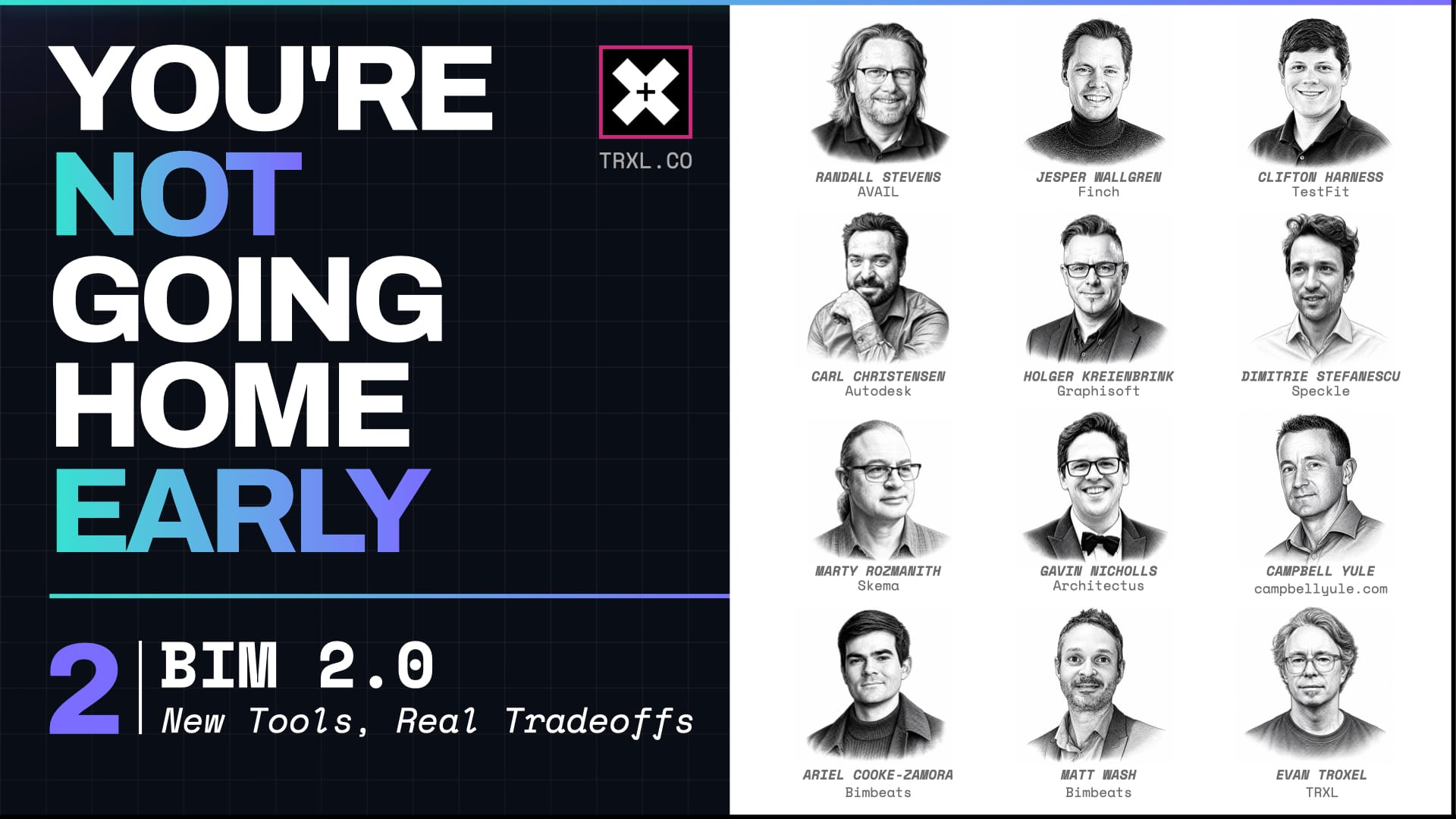
    My Favorite Moments from Episode 239 "You're Not Going Home Early" Sep 16, 2026
    Show notes My Favorite Moments from Episode 239 "You're Not Going Home Early"

    Episode one made a promise. New tools give architects their day back. Episode two asks the question that comes right after a firm says yes. What does switching cost, in time, culture, and money?

    Here are the lines worth keeping. Every timecode is a link. Click it and you land on that moment in the episode.

    This series brought to you by My Favorite Moments from Episode 239 "You're Not Going Home Early"

    Graitec provides AEC software, training, and expert support to help architects, engineers, and construction teams design, build, and manage projects more effectively.

    With support from My Favorite Moments from Episode 239 "You're Not Going Home Early"

    AVAIL's content management system (CMS) helps architecture and engineering teams find, manage, and reuse their Revit, AutoCAD, Civil 3D, and other technical content in one place.

    On what switching actually costs


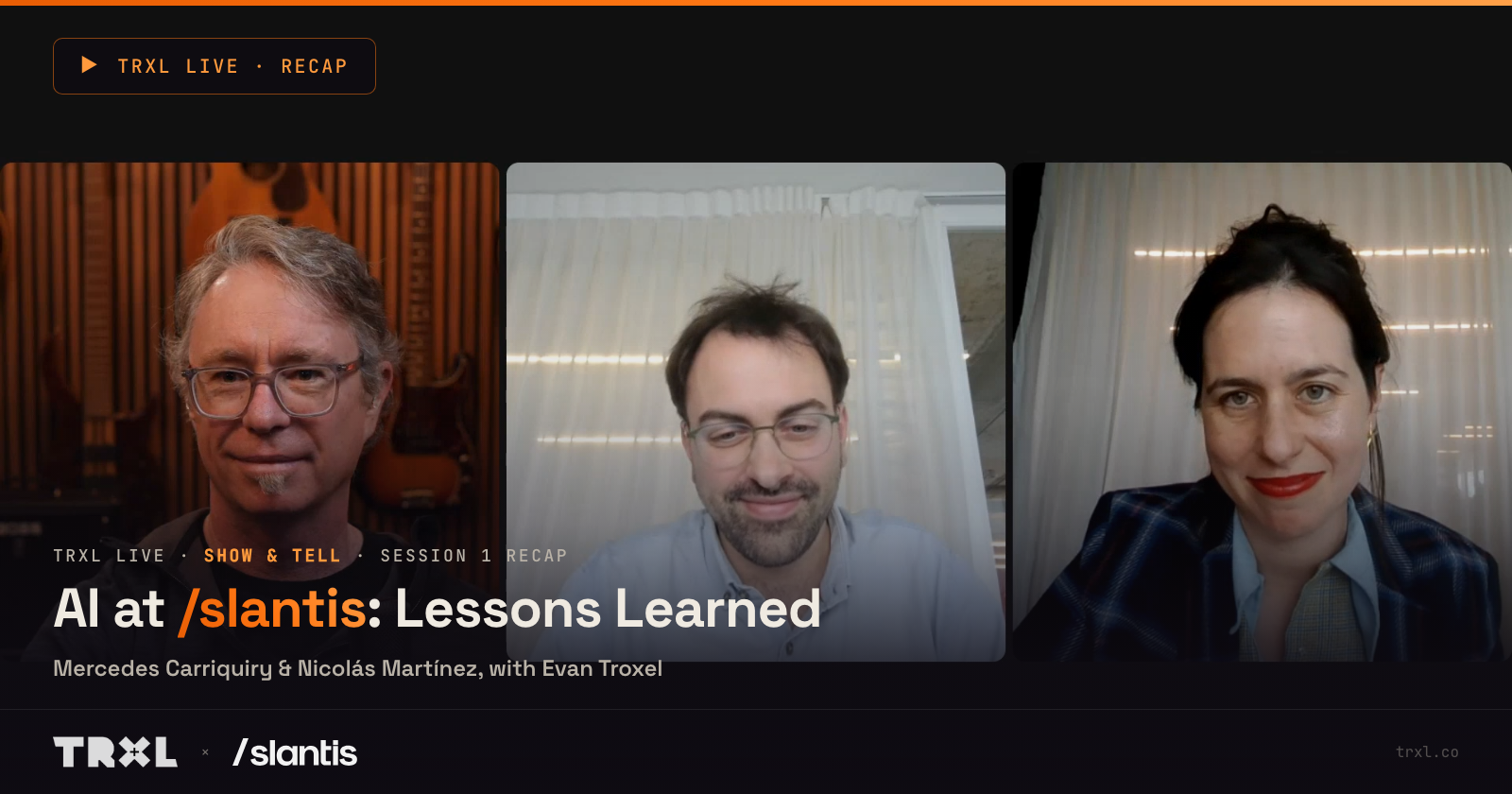
    Inside /slantis' Six-Month Sprint to Claude Code, 200+ Tools, and an AI Maturity Framework Sep 14, 2026
    Show notes Inside /slantis' Six-Month Sprint to Claude Code, 200+ Tools, and an AI Maturity Framework

    I sat down live with Mercedes Carriquiry and Nicolás Martínez from /slantis, a 250-person architecture delivery studio, for a show-and-tell walking through how AI adoption actually happened inside their company since they began in earnest in March of this year. Mercedes co-founded /slantis and now heads Applied Research. Nicolás leads the technology team.

    I wanted to have this conversation because most of what I hear about AI adoption in AEC is either the (un)finished product or the people watching from the sidelines. Nobody walks you through what they've done from March to September, but /slantis did.

    The starting point: March, and a "third arm"

    Nicolás put a date on it: March of this year, when the technology team got Claude Code licenses. He described it as an enlightenment moment. Not a new tool added to the pile, something categorically different. His line for it: "you have a new arm to do things you didn't have before." He said he felt the way he did in architecture school, seeing for the first time everything he could build.

    That energy is real and it's also a trap if you don't do anything with it. What /slantis did with it was small on purpose. The first exercise wasn't a client deliverable. It was reorganizing folders. Nicolás' point: AI adoption can be that simple to start, and starting simple is what let it compound. A month later the tech team gathered the whole studio for their weekly all-hands and showed everyone what a person with almost no development background could now build. That's the moment /slantis actually calls its first milestone, not the initial license purchase.

    Leadership's runway was longer than the sprint

    Mercedes was careful to separate the visible sprint from the invisible runway underneath it. /slantis' first AI project was in 2021: an internal, for-fun exploration of image-generating models tied to an outside design competition, done just to understand how the technology worked. A couple of years after that came an internal workshop process that produced /slantis' first AI-driven knowledge chat, which a better tool made obsolete about a month later. Mercedes was blunt about that pattern repeating even now: "we tend to create things and then suddenly something's replacing that, and you have to be fine with that."

    Her framing of what AI adoption actually costs a firm is the line I'd put on a slide if I were speaking to firm leadership: implementing AI within a company means fundamentally changing your business model, and that's the real measure of how mature an adoption effort is, not license count.

    Permission, scarcity, and who goes first

    I asked how important it was for leadership to explicitly hand staff permission to use AI at work, versus staff experimenting on nights and weekends without any policy in place. Nicolás's answer was culture first, structure second: most people at /slantis were already all in, and the ones who weren't needed to see a peer succeed before they'd try it themselves.

    Mercedes said they started with roughly 10 builder seats out of 250 people, deliberately scarce, and let demand build from visible wins. A month after the first licenses went out, requests for a license had doubled. "Generating scarcity is a good idea always to draw demand," she said, "and also showing the value." That's a leadership move as much as a technology one, and it's the piece firms skip when they roll out a tool to everyone on day one and wonder why nothing changes.

    The unglamorous middle: governance before it gets messy

    By May, /slantis had roughly 90 active seats and had moved past experimenting into what Nicolás called a real development phase. That's also when the risk showed up: everyone was becoming a software developer, and nobody was thinking about how to version, distribute, or govern what they were building. So the technology team stood up an applied research group and a tooling framework: what platforms to build on, what counts as worth scaling versus a personal tool someone's allowed to throw away, and who owns the accountability for both.

    Mercedes said at their current pace, /slantis is shipping roughly 1.14 new Revit buttons a day, as a company. Before March, three or four people at the firm could actually write software. A month after Claude Code rolled out, they had ten new internal tools that didn't exist before.

    That volume created its own problem. With that many people building, nobody could keep track of what already existed. Their fix was a harvest skill that captures anything built in Claude Code into a searchable tool portfolio, plus a tool-finder skill that answers "is there already something for this?" against both their internal catalog and outside tools on the market. Mercedes said the irony out loud: use AI to implement AI. It's a recursive loop, and it's the only way discovery scales past a dozen people.

    Usage isn't the win. Value is.

    I pushed on this directly: session counts and license numbers measure use, not success. Mercedes's answer reframed the whole conversation. /slantis tracks AI impact across five dimensions (firm strategy, firm operations, culture and adoption, knowledge management, and design and delivery) because the industry's incentives currently point at automating the business side of a firm, not the design and delivery work that actually generates revenue. Right now, she said, /slantis' biggest measured impact is in firm operations, culture and adoption, and design delivery, but not yet at the level of the business model itself. That's still ahead.

    The most interesting data point from the session: 55% of all Claude sessions at /slantis come from just 10 people. That's expected for a heavy-builder cohort using Claude Code all day. What genuinely surprised Nicolás was watching a much lighter user, someone not building tools at all, just running their daily job through Claude's interface, become one of the platform's heaviest users by session count. That's the signal that adoption is spreading past the builders, into the people who just need to get work done.

    The AI maturity framework

    Out of all of this, /slantis built a framework they plan to open source: five stages of maturity, from limited to leading, mapped against the same five practice dimensions. What matters isn't just your score in one dimension, Mercedes said, it's the spread across all five, because moving the whole business forward beats getting one department to leading status while the rest stays flat. And she was insistent about honesty in self-assessment: don't invent reasons you're scoring higher than you are, because the only reason to use the tool is to actually know where you stand.

    She was equally clear that /slantis isn't AI-first yet, even though three months ago they thought they'd be there by now. "We're not yet AI first. We want to be AI first," she said. That kind of honesty, in public, about a company that's clearly ahead of most of its peers, is rare and worth noting on its own.

    Where to see it

    The framework is still being built as /slantis works through it themselves, with plans to make it publicly available so other firms can start from something instead of a blank page. Check /slantis at slantis.com for updates. Watch the full conversation here.

    This was the first of two live sessions with /slantis. The second, a hands-on show and tell with the team walking through actual tools they've built, streams October 7. Thanks to Mercedes and Nicolás for doing this one in public.

    Register for Round 2 (Oct 7, 2026)

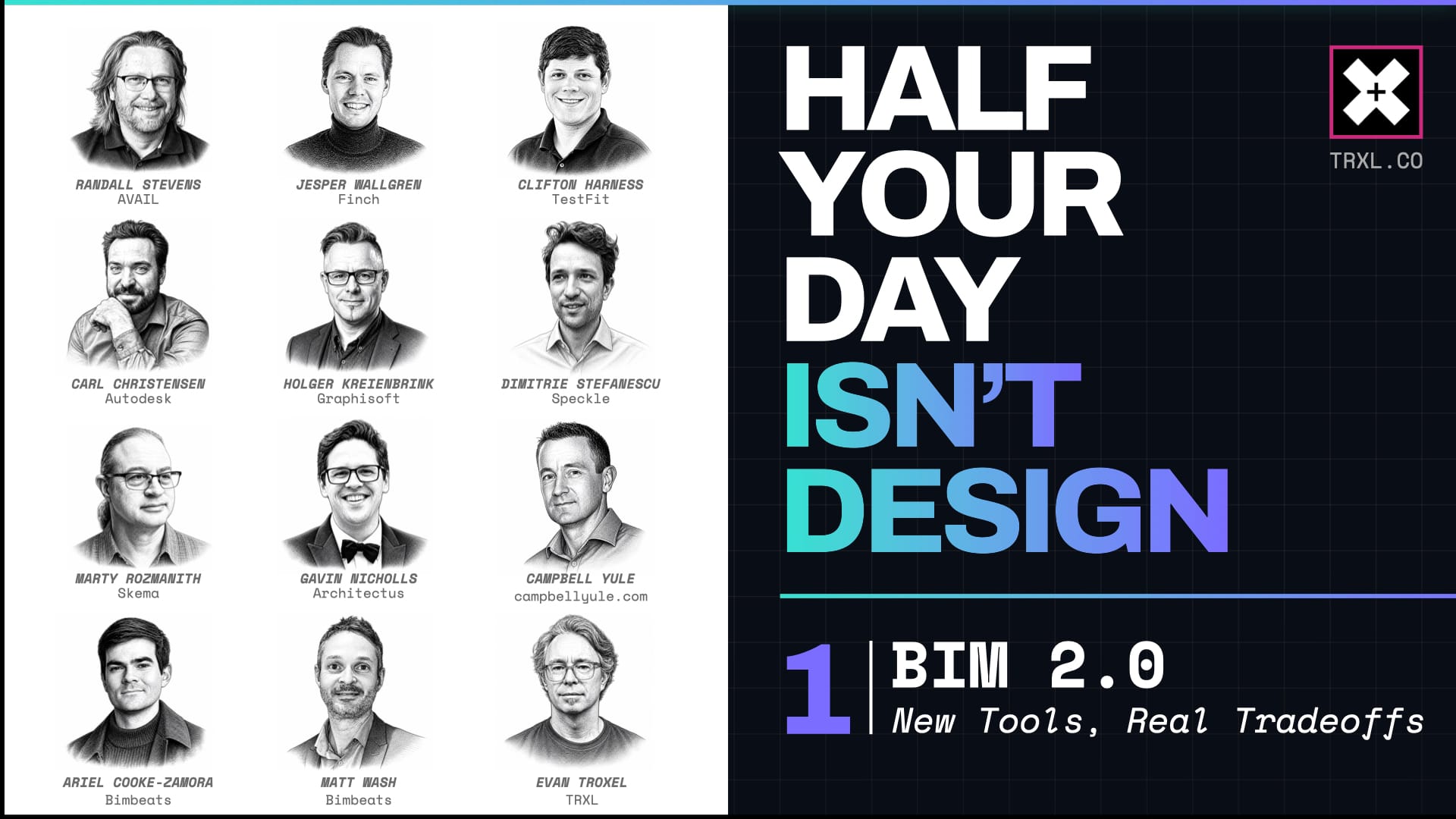
    My Favorite Moments from Episode 238 "Half Your Day Isn't Design" Sep 09, 2026
    Show notes My Favorite Moments from Episode 238 "Half Your Day Isn't Design"

    Episode one of The Next AEC Tech Stack runs an hour and thirty-seven minutes across eleven voices. I asked every one of them the same opening question: Does your software let architects design, or does it simply move the technology tax to a different line item?

    Here are the lines from the conversation that I think are worth paying attention to. Every timecode is a link. Click it and you land on that moment in the episode over on YouTube.

    This series brought to you by My Favorite Moments from Episode 238 "Half Your Day Isn't Design"

    Graitec provides AEC software, training, and expert support to help architects, engineers, and construction teams design, build, and manage projects more effectively.

    With support from My Favorite Moments from Episode 238 "Half Your Day Isn't Design"

    AVAIL's content management system (CMS) helps architecture and engineering teams find, manage, and reuse their Revit, AutoCAD, Civil 3D, and other technical content in one place.

    On where the day actually goes


    Replay – ‘A Growth Mindset’, with Ellen Bensky Jan 31, 2023
    Show notes

    In this special replay episode, Ellen Bensky of Turner Fleischer Architects joins the podcast to talk about how she and her team built a teaching organization and a learning culture, their experience in how that effectively works within the construct of a firm, the benefits that result when a firm doesn't require its staff to have utilization targets, the difference between knowledge and data, who should teach in an organization, the importance of feedback loops, and more.

    Please rate ⭐⭐⭐⭐⭐ and review TRXL podcast on Apple Podcasts (or wherever you listen) and don't forget to subscribe and share this episode if you enjoyed it!

    Links

    • Ellen Bensky on LinkedIn
    • Turner Fleischer Architects website
    • Turner Fleischer on LinkedIn
    • Turner Fleischer on Twitter
    • Ellen's KA Connect 2018 Presentation: The Hidden Benefits of Developing a Teaching Organization
    • Check out my other podcasts too: Archispeak and Peopleverse
    • My YouTube channel

    Connect with Evan

    • Twitter
    • LinkedIn
    • Instagram
    • YouTube
    • Email

    Sponsor

    Content is more than Revit families. If it's digital, AVAIL can handle it. Learn more today at https://getavail.com and future-proof your firm's technology investment.


    Previous 1 2 3 4 5 15 Next

    Related Podcasts

    Reply All

    1

    Reply All Games & Hobbies
    Inside VR & AR

    2

    Inside VR & AR Gadgets
    Note to Self

    3

    Note to Self News
    BrainStuff

    4

    BrainStuff Natural Sciences
    This Week in Tech (Audio)

    5

    This Week in Tech (Audio) News
    Hands-On Tech (Audio)

    6

    Hands-On Tech (Audio) Technology
    footer-logo

    Contact Us

    Toll Free: 844-670-7747

    Links

    • Home
    • Top Charts
    • Networks
    • Apps
    • Independents Podcasts
    • Podcast Advertising
    • Podcast News
    • Contact Us
    • About Us
    • Analytics & Insights

    Stay Connected

      Privacy, Terms of Use & Our Code of Ethics Protecting Content Creators Copyrights