TopPodcast.com
Menu
  • Home
  • Top Charts
  • Top Networks
  • Top Apps
  • Top Independents
  • Top Podfluencers
  • Top Picks
    • Top Business Podcasts
    • Top True Crime Podcasts
    • Top Finance Podcasts
    • Top Comedy Podcasts
    • Top Music Podcasts
    • Top Womens Podcasts
    • Top Kids Podcasts
    • Top Sports Podcasts
    • Top News Podcasts
    • Top Tech Podcasts
    • Top Crypto Podcasts
    • Top Entrepreneurial Podcasts
    • Top Fantasy Sports Podcasts
    • Top Political Podcasts
    • Top Science Podcasts
    • Top Self Help Podcasts
    • Top Sports Betting Podcasts
    • Top Stocks Podcasts
  • Podcast News
  • About Us
  • Podcast Advertising
  • Contact
Not in our directory?
Add Show Here
Podcast Equipment
Center

toppodcastlogoOur TOPPODCAST Picks

  • Comedy
  • Crypto
  • Sports
  • News
  • Politics
  • True Crime
  • Business
  • Finance

Follow Us

toppodcastlogoStay Connected

    View Top 200 Chart
    Back to Rankings Page
    News & Politics

    Trending

    In-depth reporting on the world of social media.

    Advertise
    • Apple Podcasts
    • Google Play
    • Spotify

    Latest Episodes:
    The grannies against the far-right Nov 23, 2019
    Show notes

    They were just children when Adolf Hitler's rule came to an end, but they will never forget the horrors the Nazis inflicted on their families. A group of Austrian grandmothers is determined not to let younger generations forget about the dangers of far-right ideologies. As right-wing populism spreads across Europe, they feel their warnings are now more pressing than ever. "Omas Gegen Rechts" (or "Grannies Against the Right") started as a small Facebook group and has rapidly grown into a protest movement with branches in Austria, Germany, and Italy. The grannies say they want to prevent history from repeating itself. But others have accused them of scaremongering and of using the past to undermine right-wing politicians. Is their alarm justified? And can they succeed in containing the populist tide? Presenter: Marco Silva

    (Photo: members of "Grannies Against the Right". Credit: Christopher Glanzl)


    How 'state-sponsored trolling' works Nov 16, 2019
    Show notes

    When Azerbaijani journalist Arzu Geybulla started to receive abusive messages online, she quickly became suspicious. She had received offensive messages before. But this time was different. She was being flooded with them. So she decided to dig further. Her investigation brought her into the murky world of state-sponsored trolling. Around the world, more governments are getting involved in harassment campaigns against journalists, activists and citizens. According to the Oxford Internet Institute, 47 countries conducted state-sponsored trolling campaigns in 2019. That’s up from 27 the year before. Governments are using trolls and campaigns of abuse to silence critics, to sow discord and hold onto power. We meet the targets of government trolling campaigns and the researchers trying to combat them. What can we do about state-sponsored trolling? Presenter: Mike Wendling Reporter: Ant Adeane (Photo: Person in the shadows on a computer. Credit: Getty Images)


    The ‘lifeguard’ who saves women on Instagram Nov 08, 2019
    Show notes

    Ingebjørg spends hours every day on Instagram, but she’s not posting selfies. She’s trying to save lives. This softly-spoken 22-year-old has made it her mission to keep an eye on hundreds of desperate young women and girls who post their self-harm pictures and suicidal thoughts on secret accounts that only trusted followers can see. Many of those involved have eating disorders, depression or other mental health problems. They don’t trust healthcare workers or doctors. But they do trust Ingebjørg. She can see what they post and she routinely calls the police when she thinks somebody is in danger. It’s earned her the nickname “The Lifeguard”. Ingebjørg doesn’t work for Instagram. Saving lives isn’t her job, she has no formal training and nobody pays her for what she does. So should the Facebook-owned social network take more responsibility for helping its users? And what would happen if Ingebjørg wasn’t there? If you are affected by the issues discussed you can find information about support organisations on the Befrienders Worldwide website https://www.befrienders.org/ Presenter: Catrin Nye Producer: Ed Main Editor: Mike Wendling

    (Photo Caption: Ingebjørg in her home city of Bergen, Norway / Photo credit: BBC)


    The Instagram suicide network Nov 01, 2019
    Show notes

    Andrine was 17 years old when she killed herself in March 2017.

    For two years her mother left Andrine’s phone untouched in a cardboard box by her front door.

    But when a journalist from the Norwegian broadcaster NRK approached her Andrine’s mother plucked up the courage to take a look.

    The information from Andrine’s phone uncovered a secretive international network of young women and girls who share pictures of self-harm, thoughts about killing themselves and even their suicidal attempts.

    Many of those in the network have eating disorders, depression or other mental health problems. They don’t trust healthcare workers or doctors, and they communicate using private Instagram accounts.

    The investigation by NRK has identified at least 15 young women and girls in the network who have taken their own lives in the last three years.

    So what responsibility does social media – and Instagram in particular - bear for the deaths?

    If you are affected by the issues in this programme you can find information about support organisations on the Befrienders Worldwide website. https://www.befrienders.org/

    Presenter: Catrin Nye Producer: Ed Main

    (Photo: A close-up of Andrine pinned on a noticeboard. Credit: BBC)


    The rise of the 'Brazilian butt lift' Oct 25, 2019
    Show notes

    The Brazilian Butt Lift or as it’s more commonly known, the BBL, is one of the most dangerous cosmetic procedures in the world but that hasn’t stopped it becoming one of the most requested.

    Posts on this type of cosmetic surgery are all over social media which show before and after photos to portray this popular body type.

    It’s influenced one woman to think about having a BBL. But before she makes a decision, she speaks to social media influencers, her close friends and medical professionals who help guide her through her choice.

    Are the deadly risks involved in this type of cosmetic surgery worth taking for a big bottom?

    Originally broadcast 10/5/19

    Presenter: Anisa Subedar

    Reporter: Lola Mosanya

    Picture: Credit: BBC


    Why Greek activists are telling tourists to leave Oct 18, 2019
    Show notes

    "Go home!"

    That's what some tourists are being told when they visit the Athens district of Exarchia.

    It’s been described as an "anarchist enclave", a place where riot police regularly clash with local activists. But it’s also a rapidly gentrifying area where Instagramable coffee shops are adorned with colourful, anti-establishment graffiti.

    Its central location and cheap property prices mean that Exarchia has in recent years attracted increasing numbers of tourists. This in turn has stoked resentment among some activists, who say the pressures of tourism have driven rents up and pushed long-established residents out of their homes.

    Radical left-wing groups have called for direct action to stop this trend. They hang banners telling tourists they are "targets", vandalise flats rented out via Airbnb, and post videos of their comrades shouting at visitors to leave.

    But others in the neighbourhood argue tourism is giving Greece the means to recover from a devastating economic crisis and years of financial austerity.

    BBC Trending travels to the beating heart of Exarchia to meet residents, activists and tourists. What happens when Instagram hipsters clash with local activists?

    Presenter: Mike Wendling Reporter: Jessica Bateman Producer: Marco Silva

    (Photo Caption: Activists stencil a slogan reading "Flats for immigrants not for Airbnb" on a wall in central Athens / Photo Credit: Getty Images)


    Cuba’s digital revolution Oct 11, 2019
    Show notes

    A revolution is underway in Cuba. The country’s communist leaders, who normally retain tight control of the media, have encouraged Cubans to become more connected online.

    Internet access used to be the preserve of a privileged (and relatively rich) few. But prices have come down, public wifi spots are popular, and less than a year ago 3G data access became available on Cuban phones.

    Along with a huge uptake in the internet has come a flood of Cubans signing up to social media accounts. Even President Miguel Diaz-Canel is on Twitter.

    And unlike staid and traditional state-run media, Cuban social media is relatively open, freewheeling, full of jokes, criticism of the government and, of course, memes.

    Prices are still high and the government keeps a close eye on dissidents or “counter-revolutionaries”. But online, Cubans are exploring new ways to communicate that would have been unheard of just a few years ago.

    The BBC’s Cuba correspondent Will Grant and BBC Trending reporter Reha Kansara have been meeting the Cubans at the forefront of their country’s digital revolution.

    They meet political podcasters, a lesbian activist, a pro-government blogger, a gamer-turned-protester, a dissident journalist and one of Cuba’s biggest YouTube stars.

    How are Cubans making their voices heard in a way they never have before – and how might social media transform the country?

    Presenters: Will Grant and Reha Kansara

    Photo: A young Cuban standing by the waterfront in Havana accesses the internet on his phone.


    Can an algorithm be racist? Oct 04, 2019
    Show notes

    Algorithms have shaped the internet as we know it. Complex automated instructions drive search engines and social media platforms, and offer us each a tailored, individualised online experience.

    Techno-optimists have long looked at artificial intelligence in awe, hoping that machines and algorithms would help humans find solutions for complex problems and remove human bias.

    But some are more sceptical and argue algorithms not only have human prejudices built into them – but that they are making those biases worse.

    Robert Elliott Smith is an expert in artificial intelligence and author of the new book Rage Inside the Machine: The Prejudice of Algorithms, and How to Stop the Internet Making Bigots of Us All.

    He argues that algorithms are prejudiced by their very nature and that, in their search for simple solutions to human questions, they have created divisions among us.

    He also argues algorithms have amplified our biases and turned many of us into bigots.

    But are the machines really to blame? Or are they just mirroring who we really are?

    Presenter: Anisa Subedar Producer: Marco Silva

    (Photo Caption: Illustration of a woman shouting obscenities / Photo Credit: Getty Images)


    How worried should we be about deepfakes? Sep 27, 2019
    Show notes

    Recently an app called Zao zoomed up the charts in China. It uses artificial intelligence to allow people to upload themselves into famous movies. One viral clip showed a young Chinese man being transformed into Leonardo DiCaprio in the film Titanic.

    Although for most people it was harmless fun, the rise of Zao prompted more worrying headlines about “deepfake” technology. The concerns are not that it could be used to make fake movie clips, but instead to make fake news – for instance, viral videos of politicians appearing to utter things they never actually said.

    While the technology behind deepfakes has been in development for a while, it’s only in the last few years that it has become good enough to trick people on a wide scale, using the power of social media.

    Some experts say that in that in a year it may be tough to tell which videos on our timelines are real and which ones are fake. We go deep into the world of deepfakes, meet some of the people who are trying to develop methods to detect them and find out just how easy it is to make a deepfake from scratch.

    Presenter: Mike Wendling Reporter: Sean Allsop

    (Photo caption: A digitised face / Photo credit: Getty Images)


    The problem with the viral celery juice ‘cure’ Sep 20, 2019
    Show notes

    The Medical Medium has millions of followers on social media. He claims he can help cure your chronic illness with home remedies like celery juice.

    But he doesn’t have any medical qualifications. Instead, he claims he gets his medical information from communicating with spirits.

    Thousands of people online say he’s helped them. But could his claims be stopping patients seeking the medical help they need. And is the rise of unqualified influencers creating distrust in real doctors?

    We explore the booming celery juice trend and meet the doctor who is trying to start a counter-movement to get qualified medical professionals to use social media more effectively.

    Presenter: Jonathan Griffin Reporter: Ione Wells

    (Photo Caption: Screenshot of the Medical Medium Instagram account / Photo Credit: Instagram)


    Previous 1 10 11 12 13 14 19 Next

    Related Podcasts

    Crimetown

    1

    Crimetown News
    Up and Vanished

    2

    Up and Vanished News & Politics
    The Joe Rogan Experience

    3

    The Joe Rogan Experience Comedy
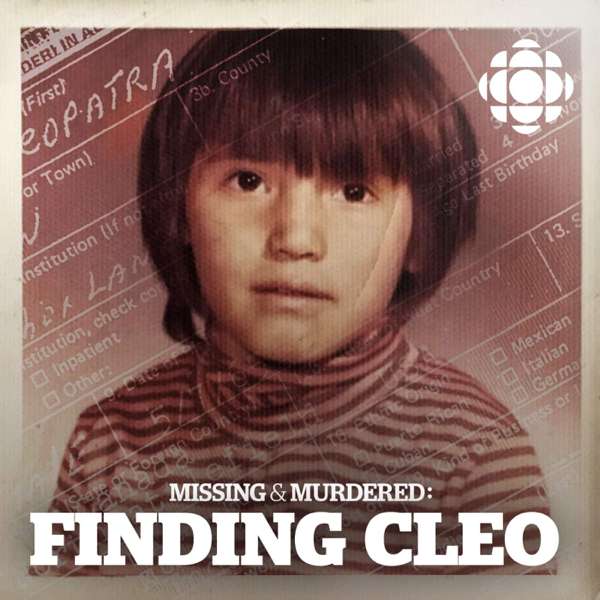
    Missing & Murdered: Finding Cleo

    4

    Missing & Murdered: Finding Cleo News & Politics
    Casefile True Crime

    5

    Casefile True Crime Games & Hobbies
    Code Switch

    6

    Code Switch News
    footer-logo

    Contact Us

    Toll Free: 844-670-7747

    Links

    • Home
    • Top Charts
    • Networks
    • Apps
    • Independents Podcasts
    • Podcast Advertising
    • Podcast News
    • Contact Us
    • About Us
    • Analytics & Insights

    Stay Connected

      Privacy, Terms of Use & Our Code of Ethics Protecting Content Creators Copyrights