Time and Attention is a podcast that will help you become more intentional and productive. Hosted by Chris Bailey, the author of two productivity books, and Ardyn Nordstrom, a nerdy economist, the show covers topics as diverse as productivity, focus, procrastination, time management, money, happiness, gratitude, and disconnecting. We occasionally also welcome a bestselling author onto the show to talk about a book they wrote.
25: How to Work From Home (During a Difficult Time)
Mar 24, 2020
Show notes
Takeaway:Working from home isn’t easy during the best of times—let alone during a global crisis. Below are some tips for working from home when you find it difficult to focus. These strategies should help you do two things at once: both focus, and become kinder to yourself.
Podcast Length27 minutes, 45s (link to play podcast at bottom of post).
These days, it can be tough to strike a balance between staying informed and staying focused.
Compared to fighting a global pandemic, work doesn’t feel that important. And compared to a pandemic, it probably isn’t. But this doesn’t change the fact that many of us are working from home right now—and that we still have to get things done while focusing on work and keeping up with a steady stream of news updates.
This isn’t “normal” working from home by any means. As you settle into a new routine, though, I’ve included a few of my favorite tips to work from home during difficult times below. These are strategies that have worked for me, as I try to find a balance right now. I think they’ll work for you, too.
—
Give yourself time to settle into important tasks, and be patient with yourself. A busy mind makes it difficult to focus. Give yourself a few more minutes than usual to settle into important tasks that require a higher degree of concentration. You’ll probably need that time, so your mind can settle down a bit. Don’t be too hard on yourself during this adjustment—pretty much everyone is experiencing this right now.
Take the time you would usually spend commuting and use it for something slow, or to savor something you enjoy. With the time you’d otherwise spend commuting, take a walk, cook a meal, or even do a yoga video on YouTube (here’s my favorite YouTube yoga channel). During stressful times, we tend to fill the white space on our calendar with distraction, so we can get our mind off of what’s stressing us. Try not to fill your extra time each day with anxiety scrolling through twitter, or repeatedly checking the news. This will give you the time you need to process each day’s events.
Totally power down your phone. Our phones are the most distracting device we own. As Seth Godin has written, “When you bought your first smartphone, did you know you would spend more than 1,000 hours a year looking at it? Months later, can you remember how you spent those hours?” Our phone provides us with validation and feedback—which our work often doesn’t. Especially during a difficult time, this makes our phone more distracting than usual. To not be tempted by it, try powering your phone down completely as you work.
If you’re getting less sunlight these days, consider buying a happy light, or taking a vitamin D supplement. In countries that have instituted lockdowns, people are unable to leave their homes, including for walks. If this is the situation you’re in, and you’re getting less sun exposure than usual, I’d recommend supplementing your diet with vitamin D, or picking up a ”happy light”—especially if you find that your mood and energy dip in the wintertime. Here’s my happy light of choice, which Wirecutter recommends.
Do focused work in the morning, before connecting to the news. One study that exposed participants to just three minutes of negative news in the morning found that participants were 27% less likely to rate themselves as happy at the end of the day. The information you consume each day matters. This is even true when it comes to when you consume information. To prevent the news of the day from dampening your mood for the rest of the day, consider reconnecting with the news of the day after you finish up your most important tasks in the morning.
Schedule news and distraction time. On top of staying away from the news first thing in the morning (if you can), consider scheduling time to catch up. This allows you to tend to distractions intentionally, rather than checking in with news websites when you feel stressed out. This small change also makes you feel more in control of your day.
If you feel anxious, work on tasks that don’t require deep concentration or thinking. Right now is an anxious time for pretty much everyone. Our feelings of anxiety usually aren’t consistent throughout the day, though; they ebb and flow. When you’re feeling especially anxious, consider working on tasks that don’t require deep concentration or thinking—and use these easy tasks to warm up to more challenging ones later on. As the day progresses, be sure to match what you’re working on with how you’re feeling.
If you have kids at home, look after them in split shifts if your partner is at home too. My friend Laura Vanderkam has a great write-up for how her and her husband are taking care of their five kids while they’re both working from home—including taking care of them in split shifts, while trading the occasional hour or two with one another throughout the day. If you’re home alone with kids, also use morning and nighttime hours—while your kids are asleep—to your advantage. Provide your kids with especially rewarding distractions (like screen time) for when you’re on conference calls or in important meetings.
Create an “invisibility mode” with everyone else in the house. If you’re self-isolating with a roommate, partner, or your family, it’s important to have some outward signal that you’re working, so they don’t interrupt you unnecessarily. I have a home office, so I just close the office door. My wife, who only sporadically worked from home before today, either wears headphones or sticks a post-it note on the back of computer that says that she’s focused.
Communicate more richly with your team. The presence of other people is motivating. If you’re going from being face-to-face with colleagues every day to working from home, you’re probably going to feel like you have a bit less energy throughout the day. For this reason, make a deliberate effort to communicate in a richer way with those on your team. If you’d usually send someone a message over Slack, pick up the phone instead. If you’d usually chat with someone over the phone, suggest meeting on Skype or Zoom.
Don’t keep chips in the house. If there are chips—or other unhealthy snacks—in the house while I’m working from home, I’ll devour them all in a day or two. If you’re spending most of your time at home, it’s important to not have unhealthy snacks or other unsavory distractions out of the house. (My wife and I have a running joke that “corona calories” don’t count, but I have the sneaking suspicion that they do.) Unhealthy snacks can also sap your energy later on, making you less energized and productive.
Give yourself a to-do list every day. Writing a to-do list each morning is a great, simple way to introduce more structure into your day. Don’t have too many items on your list, and deploy the Rule of 3 (my favorite productivity ritual, in which you set three intentions each day) as well.
Integrate exercise into every single day. If you’re forced to self-isolate, getting daily exercise is not a suggestion—it’s pretty much a requirement. Exercise supports your mental health by balancing your brain chemistry, gives you energy, and is one of the best stress-relievers in existence. If you’re working from home, you’ll be getting less physical activity each day as a result. You need to compensate for this by exercising more at home. If you can, order a kettlebell or resistance bands online. Blow the dust off your old fitness gear in the basement, and get your heart rate up. Find a local fitness studio that’s now posting classes online or take advantage of the many online workout channels. Take a half-hour walk outside every day, if you can. However possible, get around 30 minutes of daily physical activity.
Have rituals that you depend upon. The world shutting down has a way of upending pretty much all of our daily rituals. Because of this, you’ll need to introduce new daily rituals into your own life, to introduce predictability, consistency, and a feeling of control into your workday. A few suggestions for doing this: have a daily time at which you start and finish up work; set a dinnertime each night with your family; and set up a dedicated workspace for yourself.
Pick your music choices deliberately. The best music for productivity has two characteristics: it’s both simple (so it doesn’t distract us) and familiar (so we don’t think much about it as we’re listening to it). Lately, I’ve been listening to a lot of lo-fi hip hop, and loving it—it has no words, so it’s super simple, and it’s pretty familiar (the songs seem to blend into one another). I’m also a big fan of listening to songs on Repeat One as I work. To use music to become more productive, listen to anything that’s both simple and familiar, or try going without any if that’s your preference.
Relegate one device to be your distractions device. This is a distracting time. If you have more than one computer—including an iPad—use the extra device as your distractions device. This way, you can use one device to check up on everything: the news, your social media feeds, and messages from friends. This also allows you focus more easily in front of your main computer, when it’s time to work.
Track your time. To track your time, keep a notepad on your desk as you work, and write down what you’re working on throughout the day in 15-minute blocks of time. There are also lots of apps that you can use to do this on your computer for screen-related work. This simple ritual introduces an extra layer of accountability into your days. When you’re mindful of what you’re working on throughout the day, you spend your time far more intelligently.
—
If you’re finding it challenging to focus and be productive right now, you’re certainly not alone. I’ve personally found the above strategies enormously helpful for getting more accomplished. I’m confident that you will, too.
24: A Five-minute Activity to Discover Your Most Important Tasks
Mar 10, 2020
Show notes
Takeaway:Not all tasks in your work are created equal. To identify your most important tasks, make a list of all the activities you do over a given month, and then pick the most important one; the one through which you accomplish the most. Then, pick your second and third most important activities.
Estimated Reading Time:2 minutes, 35s.
Podcast Length2 minutes, 35s (link to play podcast at bottom of post).
Not all tasks in your work are created equal. Here’s how to weed out the tasks on your plate that are the most important:
Make a list of every single activity you do in your job over the course of a given month.
Ask yourself: If you could do just one thing on your list of activities, day in, day out, every single day, which one leads you to accomplish the most? Which is the one task that adds the most value to your team, and makes you the most productive? Which one is the most consequential?
If you could only do one additional activity on your list during the day, which is your second most important activity that adds the most value?
Which is your third most important activity?
These are your most important tasks; the ones through which, for every minute you spend on them, you accomplish significantly much more relative to everything else on your list.
–
As you do this activity, keep a few things in mind:
Find a way to cut everything else on your list. When you can, stop doing the activities that remain on your list. If you can’t, plan ways to spend less time on them. If something is a distraction, tame it. If you have a team, delegate as many of the tasks that remain on your list to them as possible. If you don’t have a team, hire an intern or a virtual assistant to help you. If something is a distraction you can’t tame, block off time to tend to it. Sit down at a coffee shop, without your phone, to decide how to deal with everything else on the list. You’ll make back the time you spend doing this one hundred times over.
Keep your three most important activities somewhere visible as you internalize them, such as on a sheet of paper on your desk, or at the very top of your to do list. This lets you consider what’s actually important as you work and plan your day, and you can make them the focus of your three daily intentions.
If something that remains on your list is fun, don’t cut it! The point of investing in your productivity isn’t to turn you into some mindless robot—it’s to let you do more of what you love. My three most important tasks are writing, researching productivity, and doing talks. Outside of this, I also love coaching, even though I make less money doing it, and I’m only able to help out one person at a time. But honestly, I don’t really care. Because it’s fun.
This activity is one that I run many of my coaching clients through, and regardless of how many times I guide people through it, they invariably settle on the fact that they have three most important tasks. A couple of people found two important tasks, but so far, no one has had more than three.
Set aside five minutes to try this activity out for yourself. The activity is simple, but the insights it provides are profound. If you’re like me, you won’t go back to working the same way afterward.
23: What to Put Into Your Mind
Feb 25, 2020
Show notes
Takeaway:All of the information you consume—what you read, watch, and learn—can be divided into three categories: useful information, balanced information, and entertaining information. To think smarter, more clearly, and more intelligently, consume more valuable information—while throwing in some entertaining information, lest you turn yourself into an information-munching robot.
Estimated Reading Time:3 minutes, 10s.
Podcast Length28 minutes, 44s (link to play podcast at bottom of post).
The quality and content of the information we consume matters. It influences pretty much every part of who we are, including:
what we think about,
how we think,
what we pay attention to in the world around us,
what we notice,
the quality of our decisions,
how intelligently we work,
the richness of our personal lives,
how many ideas we come up with,
how much we consider other people in our actions and decisions.
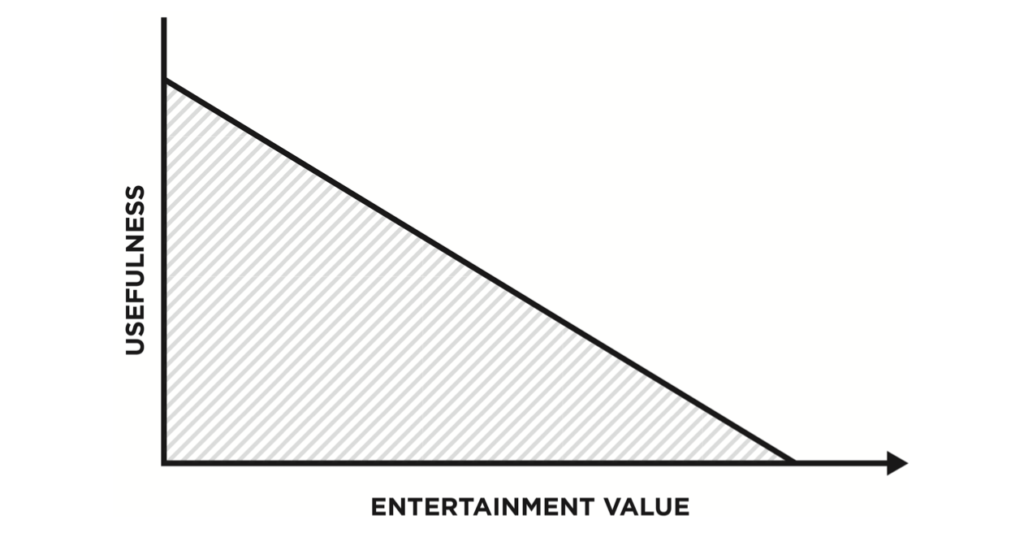
Generally speaking (as I write about in Hyperfocus), when it comes to what we consume, practicality does not always equal entertainment.
To illustrate this, we can chop the above chart up into a few slices, which have varying levels of usefulness and entertainment value:
Useful information is typically highly-useful, but not very entertaining. A few examples: books, journal articles, online courses, and academic conversations. Information in this category is actionable, accurate, and typically remains relevant for a long time.
Balanced information is slightly less helpful, but more entertaining, so it’s easier to consume. A few examples: documentaries, TED talks, and popular psychology books.
The final third—which contains both entertaining and trashy information—contains entertaining content that’s still a bit useful (and highly-entertaining), and also information that’s trashier, which we often consume in large doses. Some examples of information in these categories: many YouTube videos, some podcasts, romance novels, late night talk show clips, and our social media feeds.
Every single thing you consume falls into one of these categories. Useful information is usually worth taking in when you have the most energy; balanced information is great for when you have a bit less energy (but still want to feel like you’re accomplishing something); entertaining information is fun for when you want to veg out. Trashy information is probably worth consuming less of—and plus, there are far better ways to recharge.
So what can we do with this knowledge?
On this week’s episode of Becoming Better, Ardyn and I dig into the sorts of things we consume each day—as well as the meaning and enjoyment it all brings. Knowing where on this chart you spend most of your time is critical—as is making an effort to take in more valuable information over time.
There are countless ways you can do this. For example, you can:
Get things to bid for your attention. See the descriptions of audiobooks, podcasts, and TV shows as pitches for your time and attention. Are they worth the time you’ll put into them?
Think of a few valuable things to add to what you consume. What’s a skill you haven’t developed in a while? What’s a topic you’ve always been curious about? Could you learn about it instead of scrolling through your social media feeds?
Notice what you consume on autopilot mode, without thinking. This is usually when we consume the least valuable information.
Consume what you care about, that few other people do. For example, I love reading journal articles about productivity. While this is admittedly a weird fascination, I find that it gives me an edge—few other people find these journal articles entertaining. As a general rule, it’s worth building upon knowledge and skills that you uniquely care about.
Veg out intentionally. You’d become a robot if you only consumed useful information. To enjoy vegging out a bit more—like the next time you sit down to watch a bunch of episodes of your favorite Netflix show—do so intentionally. Plan out how many episodes of the show you’ll watch, what you’ll eat when you do, who you’ll invite over to watch, and so on. You won’t just have a better time, you’ll also feel less guilty about it.
As I write about in Hyperfocus, no two pieces of information are created equal. We perceive the world around us through the information we’ve consumed in the past—this is one of the myriad reasons why the state of our attention determines the state of our lives. The strategies above are all great ways to spend your time and attention better—all while increasing the quality of your attention.
22: What I Learned Taking a Bill Gates-Inspired “Think Week”
Feb 11, 2020
Show notes
Takeaway:A while back I spent seven days in Jamaica conducting a “think week.” This time in the sun was loosely modeled on Bill Gates’ annual think week ritual. I learned five key things: the more time we spend keeping up the less time we spend getting ahead; that we need to strike a balance between reflecting and doing; that stepping back from our daily grind helps us to be grateful of the lives we lead; that our lives need more solitude; and finally, that we all need to take more think breaks, regardless of their length. Estimated Reading Time:9 minutes, 27s. Podcast Length23 minutes, 34s (link to play podcast at bottom of post).
Several months ago, I realized the busyness of work had started to fill my schedule to the brim. With each passing day I was having less and less time to reflect on the state of my work and life.
The negative effects of this period manifested in curious ways. I found it difficult to manage my energy levels, my exercise ritual fell by the wayside, and I began to eat more junk than ever before. At the same time, I started checking my inbox and social media more often so I could keep up with messages—or at least this is what I told myself. Even my meditation and mindfulness rituals began to falter. I felt like I was hunkering down, and yet my productivity was shot and I was working with less intention than ever before.
With so much occupying my days, I had significantly less time to think and reflect. I was working in a reactive way, rather than being thoughtful about how I should spend my time. I knew something needed to change, and that I needed to strike a better balance between thinking and doing.
Lost in a daydream, I thought wistfully of Microsoft co-founder Bill Gates. Twice a year, Bill travels to a cabin in the woods where no one can reach him. Once there, he devours countless papers about the future and plots what to do next in his professional and personal life. He has said this “think week” is when he comes up with his best ideas, and is also how he reflects on the difference he’s making in the world.
This got me thinking: could I pull a Bill Gates? Would a week away from the distractions of everyday life boost my productivity? Would such a ritual allow me to accomplish more overall? Would it let me again work in a way that was less responsive and more intentional?
Last-minute travel deals are made for these precise thoughts, and I soon found myself on a plane to Jamaica to try my very first “think week” ritual.
Though modeled off Bill’s idea, my think week was not nearly as extravagant. Instead of a cabin in the woods with a private chef, I opted for an all-inclusive resort. Instead of reading research papers (which I do most days, anyways), I brought a bunch of books that could help with the problems I was incubating. (If you’re curious, those books were: Thinking in Systems; Joyful; The E-Myth Revisited; and, the odd one out, The Unlikely Pilgrimage of Harold Fry.)
My time in Jamaica wasn’t only about consuming and thinking about information. I also made sure to set intentions for the year ahead, and brainstorm and reflect on a few projects that have been brewing, including new book ideas.
At the end of my seven days I made a list of the five greatest lessons I learned from taking this Bill Gates-inspired think week. These have changed the way I see my own work.
1. The more time you spend keeping up, the less time you spend getting ahead
Keeping up with your daily to do list will only get you so far. The more time you spend focusing on the work that’s already on your plate, the less time you have to think about the projects that you could or should be mulling over. I had fallen into this trap of keeping up—letting my incoming work dictate what I should be focusing on each day.
There’s nothing wrong with keeping up with daily work. In fact, if you’re part of a team, keeping up probably means you’re pretty productive, and might even earn a promotion once in a while. But here’s the thing: you reach a point where keeping up no longer feels like enough.
The more autonomous your work, the more valuable reflection time becomes. Reflecting helps you step back from your work so you can think about new opportunities that are out there, process your challenges, and question what you could be doing differently.
Here are a couple examples. If you’re an executive, your current projects will only last so long—at some point you’ll need to step back and identify new opportunities for your company. If you’re a freelance designer, new clients may approach you, but at a point you’ll probably also need to pitch new projects and think about how you should be spending your time.
You can lose sight of your most valuable tasks and projects when you focus too much on keeping up. This was my problem—I was spending every day replying to emails and planning upcoming talks and consulting commitments. These things are important, but they aren’t everything. My think week allowed me to reconnect with my most important work—writing! It also made me realize I need to say “no” more often and give myself the mental space to plan for the future.
2. We need to strike a balance between reflecting and doing
The busier our lives, the less likely we’ll have the time to step back and reflect on them. We delay a lot of stuff when we’re busy at work. We postpone vacations, spend less time mentally recharging, and just generally spend more time doing rather than reflecting. Being busy makes us feel important and wanted. But it also prevents us from stepping back.
Reflection allows us to place the hypothetical rudder with intent, correcting our course so we can travel in a more productive and meaningful direction. The value of reflection applies to all critical areas of our lives. The more you reflect on your work, the more meaning you’ll find in it, and the less you’ll get caught up on unimportant tasks. The more you reflect on your personal life, the more you’ll start noticing and experiencing moments with your loved ones.
Pre-think week, my time to reflect was running on deficit. In Jamaica I had the chance to reflect on the habits and rituals I value, the meaning I find in my work, and the important relationships I’ve gathered throughout my life. I also had the chance to think about the slightly less pleasant elements—like how much time I had been spending on my email! All of this may have gone unnoticed without the time to reflect.
Heading home at the end of my think week, I doubled down on my good habits that had slipped. I began reading more fiction instead of only non-fiction. I implemented email free days where I turn on an auto-responder and take the day to hyperfocus on my most important work. I also started working out in the morning and took that time to think about the day ahead.
My think week made me realize how badly I needed this reflection time—how much we all do.
3. Stepping back can reveal everything you’re underappreciating
I recognized how lucky I was to have this week to myself, and how I had the privilege of time to think about ideas and plan for the future. I reflected on how grateful I was for my lovely wife, who not only puts up with my weird experiments, but is also my greatest source of happiness. I thought about my family and friends who were more than supportive of the fact that I was disconnecting and would be unavailable for the week. And I gained perspective on how fortunate I was to have this job—that somehow I get paid to run experiments and write about how to become a better human being.
Most importantly, my think week reminded me of a lesson I’m constantly re-learning: that when you step back from your life, you reflect on it. This helps you note what’s truly important and what affects your happiness the most. You also get to see how the different elements of your life are interconnected.
There is immense beauty in this gratitude if you take the time to see it.
4. Our lives need more solitude
Solitude can take many forms. For some, it can be a quiet moment away from the kids. For others, a jog in the park, or a the feeling of peace that comes when you listen to your favorite album.
My preferred definition of solitude comes from Raymond Kethledge and Michael Erwin’s book, Lead Yourself First. They define solitude as a state in which your mind is free from input from other minds.
However you define it, solitude is key to productive reflection. I’m lucky—few of us have the flexibility in our work and home lives to take a full seven-day think week. At the same time, there are ways to bring the values of a think week into your life in general. A trip to Jamaica is not required!
We can do this by finding more solitude in our lives. There are two levels of solitude. The first comes in the form of small blocks of reflection time (waiting in line without your phone, quietly sipping your morning coffee). The second is the extended periods of reflection time where we get to disconnect for the weekend or take a temporary digital detox during a long flight. We need more of both.
Fortunately, there’s often time that can be repurposed for solitude. To pinpoint these moments, ask yourself: when do you mindlessly check through your phone, scroll through social media, or listen to audiobooks and podcasts? When do you do mindless chores like laundry, the dishes, or house cleaning? These are the perfect opportunities to introduce more solitude. Instead of listening to a podcast during your commute, use this time to reflect. Instead of half-watching the TV while doing laundry, try slowing down and letting your thoughts roam free.
Though it was much needed, I sadly didn’t find much solitude at the resort where I did my think week. Turns out a resort is not the best place to free yourself from the inputs of other minds, and lots of folks strike up idle conversation when you’re at a resort by yourself. The few moments of solitude I did have made the entire week worthwhile, though, and they allowed me to deeply reflect.
5. We need think breaks more often
Yes, my think week made me realize I needed more think weeks.
Unless you have an insane amount of flexibility in your schedule, your think breaks probably won’t be a week long. That’s okay! It’s still possible to take one, even if you have a busy life at work and at home. In fact, this is when you’re likely to find the most value in it.
In the next article I’ll be sharing how you can plan a think break of your own. But in the meantime, it’s worth considering how to introduce more thinking and reflection time into your own busy schedule.
When evaluating different strategies for becoming more productive, there’s one yardstick that I always turn to: For every minute I invest into a productivity tactic, how many minutes do I earn back? When you earn your time back—and then some!—a productivity ritual is easily worth the time it takes.
Spending seven days in the sun isn’t the most obvious strategy for becoming more productive. But if you find yourself responding to the daily slog in a reactive way, and that fewer ideas are coming to you as you go about your days, a think break may be exactly what you need.
21: Resetting Your Caffeine Tolerance
Jan 28, 2020
Show notes
Takeaway:
When you consume caffeine habitually, you’ll need to consume more and more to experience the same energy boost. This makes occasionally resetting your caffeine tolerance worth the effort and the struggle. To do this, slowly lower the amount of caffeine you consume each day, or go “cold turkey” if you don’t consume a lot to begin with. Invest in your energy at the same time to counterbalance withdrawal symptoms.
Estimated Reading Time:
3 minutes, 59s. Podcast Length29 minutes, 49s (link to play podcast at bottom of post). It’s worth resetting your caffeine tolerance every once in a while. The reason for this is simple: as your body becomes accustomed to consuming caffeine, you need to consume more and more of it to experience the same energy boost. When you go from consuming zero coffee a day to drinking a single cup, you feel a big energy boost. But soon, your body adjusts, and you need two cups to experience the same effect. Then three. And then maybe even four. You get the picture.1 This idea of caffeine inflation can be dangerous. Setting aside the fact that it’s never fun to rely on drugs to feel a proper amount of energy, consuming too much caffeine can also lead to anxiety, exhaustion, and can disrupt your sleep, among many other factors. Plus, large energy crashes can obliterate your productivity. I fell into this trap a couple of months ago when, during the holidays, I found myself drinking far more coffee than usual—the equivalent of five cups of coffee each day, in the form of coffee, tea, and espresso. There’s nothing wrong with consuming caffeine for a productivity boost, especially when you drink it strategically—like before working on important tasks—so you can actually make use of the energy boost. But it’s worth performing a caffeine reset whenever you find yourself consuming caffeine habitually, or when you’re consuming more of it to experience the same energy sensation. A caffeine reset can be a struggle, but it’s worth it to get out of a downward spiral. You can reset your caffeine tolerance in one of two ways:
Slowly reducing how much caffeine you consume each day, if you rely on it heavily to experience a passable amount of energy. I’ve done this by drinking the same amount of tea or coffee, but substituting more and more of it with decaf, until I’ve cut out caffeine altogether.
Going cold turkey, and not consuming caffeine until your energy rebalances. I’ve found this method helpful in the past during times when I’ve been drinking a couple cups of tea per day, or a single cup of coffee. I actually prefer this method—I can feel the effects of going without caffeine, and watch the effects diminish over time.
The toughest part of writing about caffeine is that everyone is wired differently. Just as everyone responds to caffeine differently, a caffeine reset may have a different effect on each person. If you consume caffeine habitually, you’ll almost certainly experience symptoms as you reduce your tolerance—in the past, I’ve experienced headaches, mood swings, sadness, an inability to focus, brain fog, and even flu-like symptoms. While this may make resetting your caffeine tolerance seem like more trouble than it’s worth, consider that you’re experiencing these symptoms because you’ve grown reliant on a drug for energy. Thankfully, while you’ll probably experience some withdrawal symptoms, there are many ways to mitigate them:
Starting on the weekend. This will give you an excuse to veg out, and will minimize the impact the reset has on your productivity.
Treating your worst symptoms. If your headaches and other withdrawal symptoms are bad, aspirin or ibuprofen can help relieve them, until they go away in a week or so (depending on how much caffeine you regularly consume).
Investing in your energy levels. Eating clean-burning foods that provide lasting energy, getting exercise (which rebalances your brain chemicals), drinking plenty of water, and getting enough rest can minimize the amount of energy lost as you cut back on caffeine. You may even find that you have more energy than before.
Caffeine is a drug—a popular and usually delicious one, but a drug nonetheless. I’m personally a big fan of caffeine—and consume it most days, especially before working on my most important tasks. But because the costs of caffeine can be so great, it’s worth consuming it strategically, rather than habitually. Resetting your tolerance to caffeine can be a pain—but once you get over your withdrawal symptoms, you’ll be able to consume it a lot more deliberately and productively.
Here’s why: caffeine binds to a chemical in your brain called adenosine, a neurotransmitter that makes you feel tired. Your brain normally reabsorbs this chemical and loses energy by itself—not so after you consume caffeine. Your brain even grows more and more adenosine receptors as you drink greater amounts of caffeine, meaning you need to consume more and more of it to feel the same effect. This also leads to larger energy crashes—once the caffeine in your brain dissipates, your brain absorbs a whole whack of adenosine at once. ↩
What are you grateful for this New Year’s?
Dec 31, 2019
Show notes
Takeaway:You have a lot in your life to be grateful for. Make sure to recall these things as the year draws to a close.
Estimated Reading Time:1 minutes, 17s.
Podcast Length4 minutes, 58 s.
Each New Year, I look back on the year that went by to recall a few things I’m grateful for.
Today, I look back at 2019 with gratitude for all that happened in my personal life—getting married to an awesome lady, going on some cool trips, and hitting some other personal goals—but I also can’t help but feel grateful for my work life.
More thananysinglemilestone, though, I’m grateful to have you with me, along for the ride.
This is not hyperbole: every day I wake up, feeling like the luckiest guy in the world because I get to write and speak about how we can all become better people (and somehow make a living doing it). I have no idea how long this journey will last, but I’m so happy to have you along for the ride. And, more than that, I hope my work can continue to help you out for some time to come.
So, corny as this may sound, this is just a small note to say that I’m grateful for you.
I hope that, as this year draws to a close, you’re able to recount all that you’re grateful for as well.
We live in a world that doesn’t stop; a world full of constant news updates, stress, and never-ending lists of things to do. But this new year, I hope you can pause for a second or two, take a deep breath, take a look around, and recount how many things you have to be grateful for.
19: Losing Weight Through Science
Dec 17, 2019
Show notes
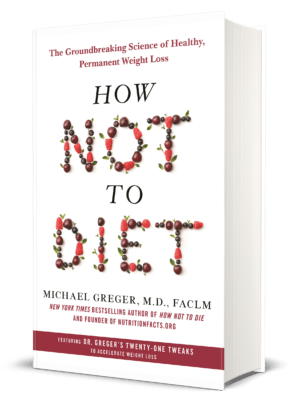
Takeaway:There are countless ways you can lose weight, all backed by science, as Dr. Michael Greger covers in his new book How Not to Diet. A few that I’ve expanded upon below: eat way more fiber, consume foods that contain a lot of water (like vegetables and fruit), and consume most of your calories in the morning. Estimated Reading Time:8 minutes, 27s. Podcast Length24 minutes, 15s (link to play podcast at bottom of post).
How Not to Diet
Let me get this out of the way: I am not a fan of weight loss books. I like to align my life with science as much as possible, and when it comes to books about what we should eat, there’s just so much bull$#!† out there. It can feel impossible to wade through it all.
Amidst the fray of bad advice, though, there is one author who writes about food that I trust: Dr. Michael Greger. Greger is the founder of Nutritionfacts.org, a nonprofit organization that pores through all of nutritional research published each year, in order to separate what works from what doesn’t. His previous book, How Not to Die (which I consider to be one of the greatest productivity books), covered what we should eat in order to minimize our odds of dying from the 10 leading causes of death. In his latest book, How Not to Diet, Dr. Greger turns his attention to the science of weight loss.
Here’s what separates Dr. Greger’s work from everything else:
He puts the science of food above all else.
He’s terrific at wading through troves of often-conflicting research to find the most reliable, dependable studies.
He has no agenda: he really, truly lets the science speak for itself, and donates every penny that he earns from his books, talks, and DVDs to charity.
In short, if you are interested in a book about weight loss, you should pick up How Not to Diet. It’s the only diet book you’ll ever need.
10 proven ways to cut body fat
So how can you get rid of the excess fat that’s marbling your organs, muscles, and body? Here are just 10 of my favorite strategies—of the hundreds in the book—that have been shown to accelerate fat loss, which you can start doing right away.
1. Consume more fiber. Greger writes: “telling people to increase their intakes of fiber-rich foods may actually be one of the single most effective pieces of advice for weight loss.” A high-fiber diet leads your body to absorb fewer calories: increasing your daily consumption to the recommended daily minimum actually leads you to absorb 100 fewer calories a day, even when you eat the same amount. Another reliable study found that the eight types of gut bacteria that fight against weight gain all feed on fiber. A high-fiber diet also leads you to eat less in future meals, suppressing your appetite up to 10 hours after you eat it. Our bodies are designed to get 100+ grams of fiber a day, and only 3% of Americans consume the recommended daily minimum. Fiber is only found in plants (fiber supplements derived from these plants don’t work nearly as well).
2. Consume foods that contain the greatest amount of water. Curiously, we eat a fairly consistent weight of food on a daily basis (around 3 pounds), and how much food weighs depends most on how much water food contains. Water, of course, contains zero calories, and so the more water a piece of food contains, the fewer calories it has. Unfortunately, as Greger writes, “we appear to have an inborn drive to maximize calories per mouthful.” You burn fat by minimizing how many calories you consume per mouthful, because your body will stick to eating around 3 pounds of food a day. A couple of my favorite examples from the book of foods that contain a lot of water: “eating 240 calories of carrots could take you more than two and a half hours of constant chewing”, and “you’d have to eat a wheelbarrow full of cabbage before you’d ever need to begin worrying about overindulging.” Most unprocessed, whole plant foods—vegetables and fruits included—contain an unusually high amount of water, and fill us up more as a result. Cucumbers have so few calories you’d need to eat more than 150 cups of them a day to gain weight; kale has so few calories you’d need to eat 250 cups of the stuff. (Our stomach capacity is around 4 cups.) It’s worth noting that drinking water alongside meals doesn’t have the same effect as consuming food with the water trapped inside of it.
3. You can eat an unlimited amount, as long as you eat the right stuff. One study allowed participants to eat an unlimited amount of fruits, vegetables, whole grains, and beans for just 21 days. In those 21 days, participants lost an average of 17 pounds (7.7 kilograms). The reason for this was simple: participants automatically ate foods higher in fiber and water, and we tend to eat the same weight of food each day. For these reasons, how much you eat doesn’t matter nearly as much as what you eat. You can eat as many whole-food, plant-based products as you want each day and still lose weight.
4. Steer clear of artificial, zero-calorie sweeteners, which actually trick your brain into eating more. Artificial sweeteners make certain foods taste sweet—and as a result, your body expects your blood sugar to spike after eating them. When your blood sugar doesn’t spike, your brain feels cheated, and consumes more calories later on in the day in order to compensate. Your body does this without your knowledge or permission. For this reason, artificially-sweetened products are in practice just as fattening as the same product with sugar added.
5. Give healthy foods time to taste good. The longer we eat healthfully—consuming food that’s grown, and not made—the better real food tastes. As Dr. Greger writes, “the food industry has so deadened our palates with hypersalty, hypersweet, hyperfatty foods. The ripest peach in the world may taste sour after a bowl of Froot Loops.” Give your palette a few weeks to adjust, and your waist line will thank you. Eating real food burns more fat, but doesn’t taste as good as ultraprocessed foods at first, while your palate adjusts.
6. Eating plant-based foods leads your body to burn more fat. Our body is built to burn unprocessed plant foods as fuel. According to one study, if you feed people the same number of calories, but “simply switch out meat and butterfat for olive oil, nuts, and avocados, you lose nearly six more pounds of fat in a single month.” Another study found that your “odds of obesity may increase by 18 percent for every 1 percent increase in calories from red meat, poultry, fish, or shellfish.” If you like meat in your diet, according to Greger you should consume wild game, which has less unhealthy animal fat.
7. There are foods that reliably suppress your appetite. Some examples from the book: vinegar (which also burns more fat—balsamic vinegar tastes great drizzled over a salad or with whole-wheat bread); ground flax seeds (throw some in your morning smoothie); cumin (especially black cumin powder); saffron (though it can be expensive); and water (especially when you consume a couple of cups before each meal).
8. There are foods that reliably lead you to burn more fat. Foods that lead us to burn calories are nutritious, yet contain very few (if any) calories. Some examples of fat-burning foods from the book: hot peppers (including red pepper powder and hot sauce); ginger (dried ginger works better than fresh, surprisingly—ginger tea is a great-tasting fat-burner); cinnamon (I love throwing some in the coffee maker, right on top of the ground beans); peppermint; and tea (each cup of tea burns around 25 calories, and contains none, assuming you don’t add milk or sugar! Green tea works best, though black coffee still leads you to burn around 17 extra calories per cup.)
9. Consume most of your calories in the morning. According to research, “morning calories don’t appear to count as much as evening calories.” In my interview with Dr. Greger (linked at the bottom of the post), he mentioned this was one of the most surprising findings he stumbled upon in writing the book. Our bodies metabolize medications differently depending on what time of day we take them—and food is the same way. As one study bluntly put it, “If you want to lose weight, eat more in the morning than in the evening.” We burn 50% more calories digesting a morning meal than we do an evening one—as Greger puts it, “our bodies just aren’t expecting us to be eating when it’s dark outside.” We even burn fewer calories when we sleep during the daytime. Because our body’s rhythms matter so much, Dr. Greger also recommends not eating past 7 p.m. if you wish to optimize fat loss: this has been shown to lead you to lose about one extra pound a week, and the best part is that you don’t have to make any other changes to when and how much you eat the rest of the day.
10. Focus on diet, not exercise—exercise is an ineffective way to burn body fat. One large study, which summarized the findings of 18 other studies that took place over a minimum of six months, found that those who dieted and exercised did not lose more weight than those who just invested in diet alone. Research suggests that we need to exercise at least 300 minutes a week in order to lose a noticeable amount of fat. The reason exercise is so ineffective is interesting: the more we exercise, the less we instinctively move the rest of the day, too. We burn most of our calories moving around throughout the day, and actually move less on days we work out. There is a saving grace to this, though: we burn far more calories when we work out before breakfast, when we haven’t eaten for a little while—around 90% more calories. As one study put it, “If exercise were a pill to burn body fat, it would be effective only when taken before breakfast.”
—
As How Not to Diet makes clear, the solution to fat loss is a simple one. The best, most reliable food research suggests that we should be eating real food that grows out of the ground. This means cutting out processed food, along with meat, eggs, and dairy, while maximizing how much fruit, vegetables, legumes, whole grains, nuts, and herbs and spices we eat each day. The more plants you eat, the more weight you’ll lose.
18: Forming Strong Habits
Dec 03, 2019
Show notes
Takeaway:There are countless ways to form a new habit, which James Clear covers in Atomic Habits (and in our interview). A few of my favorites: sort your habits by how much they’ll help you out in the long-run; become more thoughtful about your environment; question habits that provide immediate enjoyment; make new habits take less than two minutes of your time; develop “home court” and “away court” habits; and focus on developing your identify, not your goals.
Estimated Reading Time:3 minutes, 1s.
Podcast Length30 minutes, 45s (link to play podcast at bottom of post).
Atomic Habits, by James Clear, is one of the best books about habits I’ve read—I’d put it up there with The Power of Habit, by Charles Duhigg, as being one of the best books on habits available.
This week, James was generous enough to join me on the podcast to dig into how to establish new habits and break negative ones—especially around losing weight, given we’re in the middle of that weight-loss challenge for the show.
There are too many nuggets in the book—and the interview!—to list out in one blog post. But here are just a few of my favorites from the book and the interview, which should get you thinking about your own habits:
Make a list of your habits, and sort them by how much they will help you out in the long-run. This is a great way to identify the habits that bring you real, lasting value over time, and which ones are distractions from your larger goals.
If you want something to be a big part of your life, make it a big part of your environment. This is a simple idea, but is very powerful in practice. Want to eat better? Make sure there’s a plethora of healthy food in your kitchen, so you crowd out any unhealthy options that are available. Want to learn the guitar? Keep your guitar in the living room, so you can just pick it up and play. By introducing—and removing—objects from your environment which aid and detract from your habits, you build stronger habits. As James puts it in the book, “environment is the invisible hand that shapes behavior.”
Question all habits that provide you with immediate enjoyment. James writes: “As a general rule, the more immediate pleasure you get from an action, the more strongly you should question whether it aligns with your long-term goals.”
Practice the 2-minute rule. The 2-minute rule is this: when you start a new habit, make sure it takes less than two minutes to do. If your goal is running a marathon, try just tying up your shoes for a couple of minutes. If your habit is to work out at the gym, show up at the gym, and work out for just two minutes. This way, you have a framework that you can actually build upon in developing your habits later on, instead of trying to wish habits into existence.
Pay attention to your “home court” versus “away court” habits. Something else I asked James in our interview is how we can maintain our habits around life disruptions, such as travel. He recommends developing two types of habits: “home court” habits, which we do when our environment is predictable, and “away court” habits, which we invest in after developing solid habits at home.
Focus on your identity, not your goals. According to James, “the most effective way to change your habits is to focus not on what you want to achieve, but on who you wish to become.” He views habits as “votes” for your identity: by focusing on which behaviors help you become the person you aim to be, instead of which behaviors simply bring you closer to your goals, you connect with your habits on a deeper level. Instead of trying to develop a meditation habit, begin to think of yourself as a meditator. Or, instead of trying to lose weight, begin to think of yourself as someone who deeply cares about maximizing their health and longevity.
There are too many nuggets from the book and the interview to cover here, but these are just a few of the ones I found especially powerful! Enjoy the conversation, and have a great week!
17: How to Relax
Nov 19, 2019
Show notes
Takeaway:When we have a bit of time to relax, we tend to spend time on activities that provide us with a quick dopamine hit. This is especially the case when we spend our downtime in the digital world. The key to relaxation is to invest in strategies that make your mind less stimulated. Usually this means spending more time in the analog world.
Estimated Reading Time:2 minutes, 53s.
Podcast Length23 minutes, 38s (link to play podcast at bottom of post).
How to Relax
For the past few months, I’ve been poring over quite a bit of research on the topic of relaxation. If there’s one thing that has become clear from this deep dive, it’s this: true relaxation is something that few of us achieve. I’d include myself in this group—up until recently, I’d been doing relaxation wrong.
When many of us have some time to relax, we distract ourselves—turning our attention to social media, YouTube, Netflix, and other things in the digital world. In the moment, these things feel like a reprieve from the stressors of daily life. But the truth is that tending to them in our downtime may hurt more than help.
There’s a reason for this: digital activities rarely lead us to relax.
So what should we do to relax? The key is to do things that actually make your mind less stimulated.
Each time we pay attention to something new and novel in our digital world, our brain rewards us with a hit of dopamine, a pleasure and reward chemical. We get a hit each time we refresh YouTube. We get another hit each time we check news websites like CNN and the New York Times. We get yet another hit when we refresh Instagram.
This dopamine release feels good in the moment. But it can also lead our mind to become overstimulated when we turn to our digital devices too often.
If you want to relax and recharge during your breaks, it’s essential that you try to settle your mind, by engaging with activities that don’t lead to a quick dopamine release. Digital distractions feel like a break, because they’re different from our work, but they don’t allow our mind to actually settle. Analog activities, on the other hand, do settle our mind. They stimulate us, without overstimulating us.
This is not to say that your favorite websites and apps shouldn’t have a place in your life. But because they lead you to become overstimulated—especially when you’re already tired—they’re not great activities to engage in if your intention is to relax.
The Two Types of Relaxation
The best relaxation activities are found in the analog world; you should almost always avoid the digital world if your intention is to recharge. Depending on how you’re feeling, and how much energy you have, there are great ways to relax both actively and passively.
Active activities can include things like:
Going for a run;
Attending a yoga class;
Practicing an instrument;
Hitting the gym, or playing a sport;
Playing with your kids;
Spending time on your favorite art—writing, painting, or writing poetry.
Passive tasks include things like:
Doing a guided meditation, or solo meditation;
Reading;
Doing a gentle yoga video (here’s my favorite yoga channel on YouTube);
Listening to an audiobook with a cup of coffee—while putting your phone on airplane mode.
Most of these are analog activities—and as such, they don’t just lead to a quick dopamine release, which can lead you to feel even more stimulated and tired and fatigued. Activities like these are less novel than your work and digital life, and so they settle your mind as a result.
A settled mind is a productive mind. The more relaxed your mind, the more recharged you feel, the greater mental clarity you have, and the more ideas and plans you generate.
The next time you want to relax, be sure to spend time on analog activities that don’t just lead to a quick dopamine release. You won’t just feel better—you’ll actually get a chance to recharge.
16: Becoming More Resilient
Nov 05, 2019
Show notes
Takeaway:There are things you can reflect on each day that will make you more resilient. It’s worth beginning each morning by reflecting on what you’re grateful for, what you intend to focus on, and what you want to let go of.
Estimated Reading Time:1 minute, 37s.
Podcast Length32 minutes, 31s (link to play podcast at bottom of post).
I read Neil Pasricha’s latest book, You Are Awesome, in two sittings. I’ll cut right to the chase: this book is one of the best (and most vulnerable and entertaining) books on resiliency out there. If you’re looking to become more resilient, you should pick this one up.
A thought became very clear once I began digging into the book: I absolutely had to interview Neil on the podcast. Luckily, he agreed. (You can listen to our conversation at the bottom of this post.)
There are so many nuggets of insight from our conversation that I think you’ll find enjoyable, but one of my favorite ideas that we chatted about, which you can implement immediately, is about some questions we can ask ourselves each morning to boost how resilient we are. Neil suggests beginning each day with three reflections:
Today, I am grateful for _______.
Today, I will focus on _______.
Today, I will let go of _______.
Daily gratitude reminds us of how lucky we are. Choosing a focus lets us set a purposeful direction for the day. And choosing something to let go of allows us to remind ourselves that not all of our baggage is worth carrying.
In our conversation, we also chat about the stories we tell ourselves, and how we can question whether or not they’re true. When you find that the dialogue in your head has gotten heated, and you’re not sure whether you should believe it, it’s worth asking yourself three questions:
Is this just a story I’m telling myself?
Will this matter on my deathbed?
Can I actually do something about this?
When it is just a story, if it won’t matter, and if you indeed can’t do anything about it, it’s not a story worth buying into.
If I’m honest, resiliency is not something I’d thought a lot about, until I picked up this book. I’m sure that, should you decide to dig into this interview (and the book!) you’ll find the exact same.

 Our TOPPODCAST Picks
  Stay Connected







 The toughest part of writing about caffeine is that everyone is wired differently. Just as everyone responds to caffeine differently, a caffeine reset may have a different effect on each person. If you consume caffeine habitually, you’ll almost certainly experience symptoms as you reduce your tolerance—in the past, I’ve experienced headaches, mood swings, sadness, an inability to focus, brain fog, and even flu-like symptoms. While this may make resetting your caffeine tolerance seem like more trouble than it’s worth, consider that you’re experiencing these symptoms because you’ve grown reliant on a drug for energy.