Time and Attention is a podcast that will help you become more intentional and productive. Hosted by Chris Bailey, the author of two productivity books, and Ardyn Nordstrom, a nerdy economist, the show covers topics as diverse as productivity, focus, procrastination, time management, money, happiness, gratitude, and disconnecting. We occasionally also welcome a bestselling author onto the show to talk about a book they wrote.
35: An Idea to Sleep On
Sep 29, 2020
Show notes
Takeaway: The next time you reach a strong impasse with a problem, sleep on it, by writing down the problem before heading to bed. Incubating unresolved problems overnight lets your mind wander, rest, and unearth insights you might not otherwise have had. Estimated Reading Time: 2 minutes, 13s. Podcast Length: 18 minutes, 34s (link to play podcast at the bottom of post).
If you’re anything like me, you occasionally find yourself staring down what could be several more hours of work at the end of the day—maybe stumped by a technical problem or grasping for a way to connect seemingly disparate ideas in a presentation. Whatever it is, you’ve reached an impasse and you may not be sure what to do next.
Pulling an all-nighter is one option—but a better option might be to sleep on the problem.
Here’s how the idea works: as you’re disconnecting at the end of the day, write down one open loop or problem that you want to solve and think about until the next morning. Then, go to sleep. As you rest, your brain will continue to churn away on the problem, making it more likely that you’ll experience a eureka moment in the morning. Try to always go to bed with a problem in mind that you want to solve.
Sleeping on a problem works for two curious reasons.
First, it works because of a psychological phenomenon named the “Zeigarnik effect”. Named after psychologist Bluma Zeigarnik, this effect suggests that we store unresolved problems at the front of our minds. Our brains are wired to continue connecting new experiences and thoughts to that problem until the loop is closed. That includes the new ideas that come up when our minds wander. By capturing a problem before bed, you’re more likely to store it front-of-mind for the night—when your mind will turn over the problem, in search of a solution to it.
This is where the power of dreaming comes in—the second reason sleeping on a problem works so well. Interestingly, the brain networks we use to dream as we sleep and daydream are eerily similar—on a neurological level, dreaming is basically daydreaming on steroids. And, as I’ve written about in the past, a surefire way of becoming more creative is to daydream more often.
Like daydreaming, dreaming creates the space for us to process problems and unearth new insights. When we wake up we find we’re not only more refreshed and able to focus, but that our subconscious may have pieced together the puzzle from the day before. (I dig into this idea more in Hyperfocus. Everyone from Thomas Edison to Salvador Dali have used sleep as a tool to come up with new insight solutions.)
Going to bed with a problem to sleep on works best for a single specific, complex problem that would benefit from some additional time or thought. Something simple to try the next time you’ve reached an impasse in your work. Sweet, productive dreams!
34: How to Read More Books
Sep 15, 2020
Show notes
Takeaway:Many of us want to read more but are unsure of how to do it. A handful of tactics to try: set specific times to read, create a comfortable physical environment, identify less meaningful activities and replace them with reading, read shorter books, have multiple books on-the-go, put down books you’re not enjoying, make reading a social activity, know which reading format you prefer, and schedule a reading day. Estimated Reading Time: 4 minutes, 19s. Podcast Length: 31 minutes, 58s (link to play podcast at the bottom of post).
Whether it’s immersing yourself in a faraway fictional world or digesting the ideas of a nonfiction book, reading is one of the most meaningful ways to spend your day and activate your mind. It’s also one of the best temporary escapes from this anxious time—all while staying within the comfort of your home.
A lot of people want to read more books, but are uncertain of where to start. On this week’s episode of Becoming Better(which you can play at the bottom of the post), we explore this goal and share a buffet of tactics to get you started. Here are a few ideas that have worked for us, pulled from the episode!
1. Set aside specific times to read
Figure out how reading can fit into the structure of your day. Maybe it’s right after you wake up alongside a mug of tea, or sitting on a park bench at lunch. Think about how you’re spending your day and how you could carve out a window of time to sit down with a book. Reading is also a great way to transition from your work day into your personal time—an especially important divide when we lack the physical separation between our home and office.
2. Create a physical environment that’s conducive to reading
This can be extraordinarily helpful when it comes to starting your own reading ritual. I personally put my phone and tablet in another room, lie on the couch, and tune into the “Simply Piano Radio” station on Apple Music. Take this ritual with a grain of salt, though—the “perfect” environment for reading can be elusive, and if you wait for the stars to perfectly align you may never pick up a book.
3. Replace less meaningful tasks with reading
Whether it’s engaging in an endless Twitter scroll or binge watching Netflix, we all have parts of our day that could be categorized as less-than-meaningful. Identify what those things are and take them as a sign that you should pick up a book instead. We all have time for reading if we choose to prioritize it.
4. Read shorter books
This might sound like cheating, but short books actually pair really well with longer reads—right now, for example, I’m reading a bunch of short books while also reading the tome that is Cryptonomicon. It‘s rewarding to make progress in a short book while progressing through a larger one.
5. Read multiple books at once
Think of it like diversifying your portfolio of investments. If you’re reading multiple books you can pretty much guarantee you’re going to enjoy one. I ran a Twitter poll asking how many books people read at once—most (60%) said they read more than one book at a time. I personally have around four or five books on-the-go at once. This is especially true with nonfiction. You can process reading multiple simultaneous nonfiction books better than you might think, since you’re just accumulating facts, and have no storylines to cross.
6. Stop reading books you don’t enjoy
Some books just won’t connect with you, regardless of their reviews or recommendations. Putting down a bad book is naturally motivating. This approach is probably not worth applying to everything, but life’s too short to read books you don’t like.
7. Put more thought into your reading list in order to read better books
This can include the classics—many of which are available for free online or through the library. Look at literary recommendations but also be open to reading something that doesn’t have a five star review. Taste is so personal, and who knows where you’ll find your next favorite book—in general, we should spend more time choosing the books we read than we do. One suggestion: see the description of each book you’re considering reading as a pitch for your time and attention.
8. Make reading more social
You may already be familiar with Goodreads, a social network where users can review, recommend, and save titles. Book clubs are also a great way to make reading a social activity, and are one option for staying connected with friends and family during the pandemic. Both can help you stumble on great books you wouldn’t read otherwise.
9. Know which reading format you prefer
I’m a physical book kind of guy, and always have a pen and highlighter in hand to scribble in the margins. Look at what you’re reading and how consequential the information is—audiobooks can be great for fictional reads, but you may prefer a physical book if you’re digging into something meaty.
10. Have a reading day
This is a single day where you sit down and finish an entire book. Reading days can be a reward for meeting a deadline or finishing a project early. I find that a 300-350 page book is ideal for a reading day.
Like all productivity advice, you need to take what works for you and leave the rest. Happy reading!
33: Embracing Change
Sep 01, 2020
Show notes
Takeaway:Change is inevitable and we need to learn to embrace it. Four tactics to get you started: have an awareness for change and how it interacts with your expectations, see every data point as part of a broader trend, shift your mindset to view change as the default state of the world, and meditate.
Estimated Reading Time: 2 minutes, 50s.
Podcast Length: 21 minutes, 8s (link to play podcast at the bottom of post).
We’re going through a period of rapid change. Maybe your kids are going back to school, your office is considering opening its doors for the first time since the lockdown started, or your investments are making a rollercoaster look like a relaxing ride.
It’s a difficult time for many, and embracing change is one of the ways we can give ourselves a helping hand. This idea is central to Buddhism: happiness is nothing more than coming to terms with how things change.
In this week’s episode of Becoming Better, we discuss four strategies for how you can begin to accept change for what it is: an inevitable part of our lives.
Be aware of how your expectations interact with change. Long-time readers of this blog will know how much I talk about the importance of working with intention and awareness. Typically, this means recognizing how you’re spending your time, attention, and energy. But it’s also important to be aware of your expectations and how they’re affected by change. Let’s say you order a slice of raspberry pie on the patio of your favorite coffee shop, but you’re brought a piece of chocolate cake instead. Even if you love chocolate cake you might be disappointed because your expectation was to be savoring that tangy raspberry taste. We are constantly comparing our experiences (the chocolate cake) to our expectations (the raspberry pie) and this can lead to disappointment. Being aware of how the change between expectation and experience makes you feel allows you to do something about it. Once you identify your emotions you can begin to investigate the expectations that triggered them.
Zoom out to see the larger trend. Our lives are a series of data points measuring everything from our health to our finances to our sleep schedule. It’s not possible to get the whole story by looking at just one. That’s like saying “I didn’t go to the gym this week, and therefore I’m totally unhealthy and unmotivated.” Zooming out adds color and nuance to the black and white of individual data points. Because the reality is probably a lot closer to “I didn’t go to the gym at all this week because my kid was sick with the flu, I needed to prepare that presentation for the district manager, and I’ve been stressed after an argument with my sister. And I’ve actually increased my number of weekly workouts when compared to this time last year.” Zooming out provides context and helps us to see the trend in how things have changed over time. Journaling is one way to track and reflect on these trends.
View change as the default state of life. Everything is always in a state of flux, and the sooner we accept that, the better. Welcome change as an old friend rather than an adversary.
Meditate. Stepping back is a superpower right now, and meditation is one of the best ways to do that. Rather than immediately reverting to a default response to change, meditation helps you slow down, process, and respond in a healthier way. It also helps you see how your reaction might be informed by expectations, and how you can untangle these as a way to become better at dealing with change. If you’re new to the ritual of meditation here’s a guide to get you started.
Change isn’t going anywhere, so the best thing we can do is to accept and grow alongside it.
32: 10 Interview to Make You More Productive
Jun 30, 2020
Show notes
On this week’s podcast, my cohost Ardyn and I cover the biggest lessons we’ve learned from our experiments for the podcast, as well as our favorite nuggets of wisdom from the guests we’ve had on the show so far.
Just in case you’re curious to dig into them, here are the 10 favorite interviews we’ve conducted to date—I’ve bolded what you’ll get out of each conversation above the link to play each episode. There’s a link to this week’s episode at the bottom of this post, too, where we share a bunch of things we’ve become better at while doing the podcast.
31: Want to Become Happier? Get Moving!
Jun 16, 2020
Show notes
Takeaway:Kelly McGonigal’s latest book, The Joy of Movement, is an ode to the value that movement can bring to our lives. Kelly shares how exercise of any kind and for any length of time can help us not only feel physically healthier, but also more connected with ourselves and our communities. She says that group movement is almost always better than individual exercise (even if it’s online!)—unless you’re spending time alone in nature.
Estimated Reading Time:3 minutes, 38s.
Podcast Length: 45 minutes, 28s (link to play podcast at the bottom of post).
Movement may not be the first thing that comes to mind when you think about forming a connection with the people around you or attaining a sense of mental calm. Perhaps you envision a raucous dinner party to celebrate a friend’s birthday. Or maybe your mind paints a picture of a stoic figure meditating in silence and stillness. Or, a personal favorite, relaxing on the couch playing Animal Crossing, or sinking into a good book.
Kelly McGonigal is an advocate for anything that gets us moving as a group—among a suite of other exercises. Kelly is a health psychologist and Stanford University lecturer whose TED talk about how to make stress your friend has been viewed more than 30 million times.
In her latest book, The Joy of Movement, Kelly looks at how exercise can make you braver, help you connect with others, and experience mental resilience and joy. I’ve been a long-time fan of Kelly’s writing, and her 2015 book, The Upside of Stress, is one of my personal picks for the best productivity books out there.
I love the way Kelly frames the importance of movement and exercise. Instead of explaining it as a project to make our bodies fit within societal norms or as a means to reduce risk of chronic health concerns down the road, The Joy of Movement argues that exercise is a key piece of the puzzle that will help you live a more engaged, happy life.
The book is highly actionable, and in our chat Kelly shares some interesting tactics and tidbits on how you can use movement as a way to change your mindset around stress and create more connection with the people and things you love. Here’s some of what she had to say.
1. The type of movement doesn’t matter. Embracing movement doesn’t mean you suddenly need to start running marathons (a relief to me). Any dose of movement—be it three minutes or three hours—is one of the easiest things you can do to boost your mood and give you a hit of resilience or hope. So whether it’s flailing your arms to your favorite song or tapping your fingers on the table, Kelly advises us to start where we are, do what we can, and think about using as much of our body as possible.
2. Exercise and movement can help you deal with social anxiety. This is something Kelly found in her own life. She describes her default temperament as shy, sensitive, and anxious—but goes on to explain how exercise makes her better and braver. Movement triggers the release of endocannabinoids, neurotransmitters that not only reduce fear and anxiety but also promote positive social engagement and increase the warm glow you get when you’re around others. It’s like a dose of medicine that makes it easier to connect with other people.
3. Group movement can bring more benefits than individual movement—even when it’s online. Moving together creates a shared experience and sense of community which fosters further bonding and trust. This can be everything from traditional team sports to a zumba class to running ultramarathons. Though the latter typically evokes images of uber-fit athletes charging alone through the mountains, it’s actually the ability to be supported by others and the feeling of being part of a collective activity that allows ultramarathoners to benefit from that same sense of group connection and community.
While it’s admittedly not the best time to be thinking of group activities, we can actually gain the same benefits when joining a group exercise class on Zoom. Research even supports that moving alongside avatars—virtual human beings!—can have the same effect.
4. Head outside for some green exercise. Moving alone in nature could actually be more powerful than moving together while outdoors. I personally start most mornings by making a cup of tea and going for a short hike. Kelly shares that moving in nature can be a shortcut to the calm state of mind attained through meditation. By breathing in gulps of fresh air, feeling the sun on our skin, and listening to the birdsong, nature allows us to take in new sensations and thoughts while letting go of the stressors of the past and future.
5. The movement you choose can help reveal or strengthen parts of your personality. While any movement is better than none, Kelly says you can also strategically focus on a form of movement that will help you experience parts of yourself that you value. She shares a personal example of how learning mixed martial arts and kickboxing have helped her feel more brave, and have proven to her that she can fight for herself and for others. I could go on and on about what Kelly shared during our chat, but you’re better off just listening to the podcast. I hope you enjoy our conversation!
The best productivity books more than pay for themselves: they teach you how to save time, so you more than earn back the time you spend inside them. So which productivity books will help you out the most?
Here are 10 of my absolute favorites—with a mini review of each one, with what you’ll get out of reading each book.
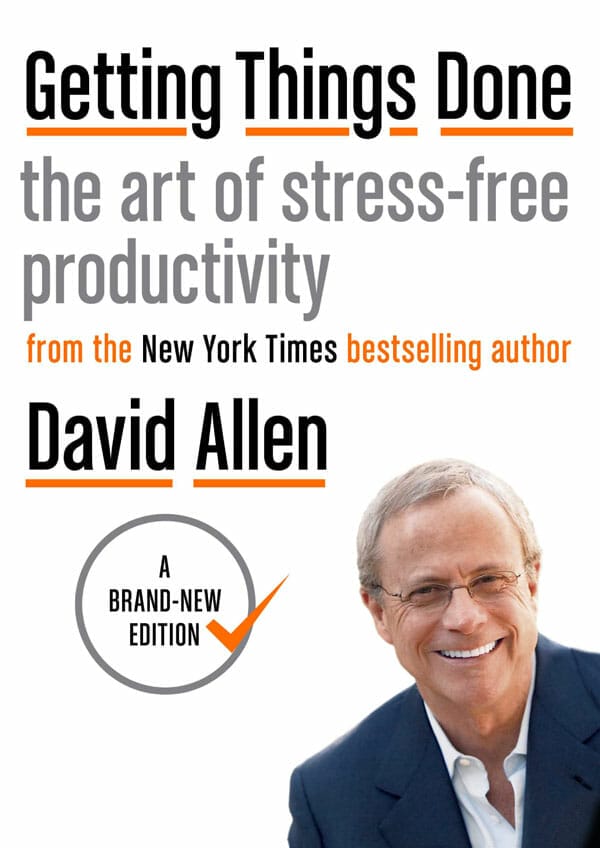
Mini Review: Getting Things Done is bigger than a book—it’s a bona fide movement. If you find it hard to focus because your mind is cluttered—with tasks, commitments, and other obligations—pick this book up.
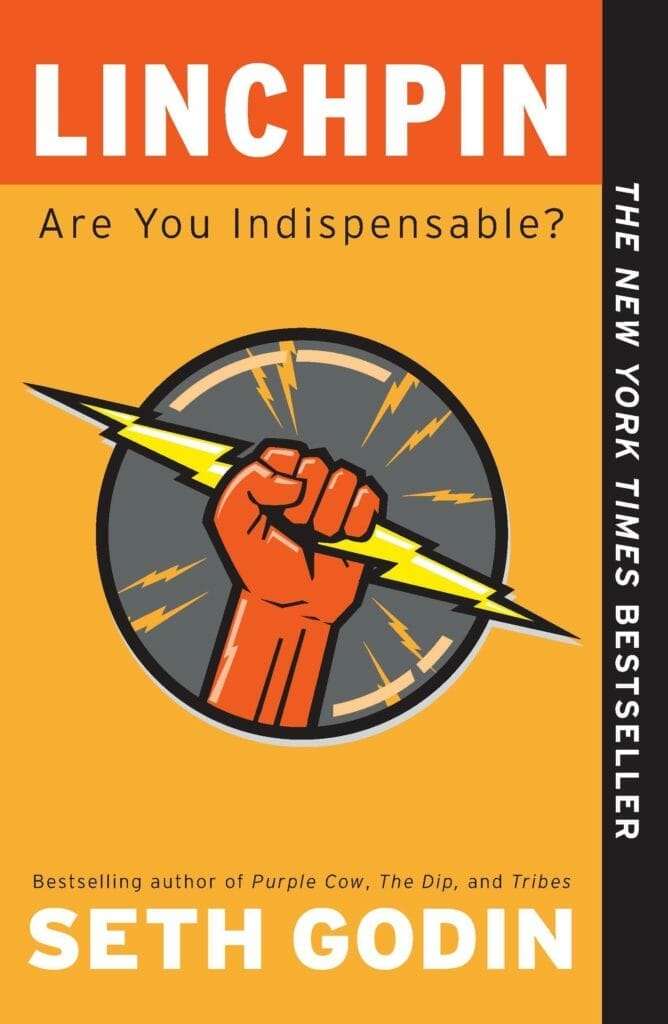
Mini Review: This book will teach you how to stand out at work—regardless of whether you work for someone or for yourself. Linchpin provides you with a blueprint for becoming indispensable, regardless of what your “art” happens to be.
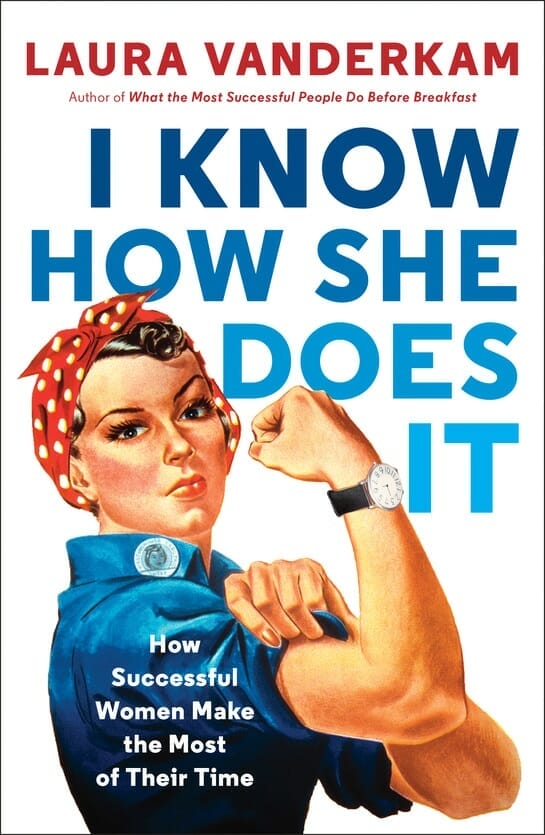
Mini Review: The concept behind this book is fascinating: Laura Vanderkam pored through the detailed time logs of highly-successful women who have kids at home, who also make over $100,000 a year. In the book, she shares the tips she learned from these women, including the importance of sleep, and what time wasters they didn’t invest in (like watching hardly any TV).
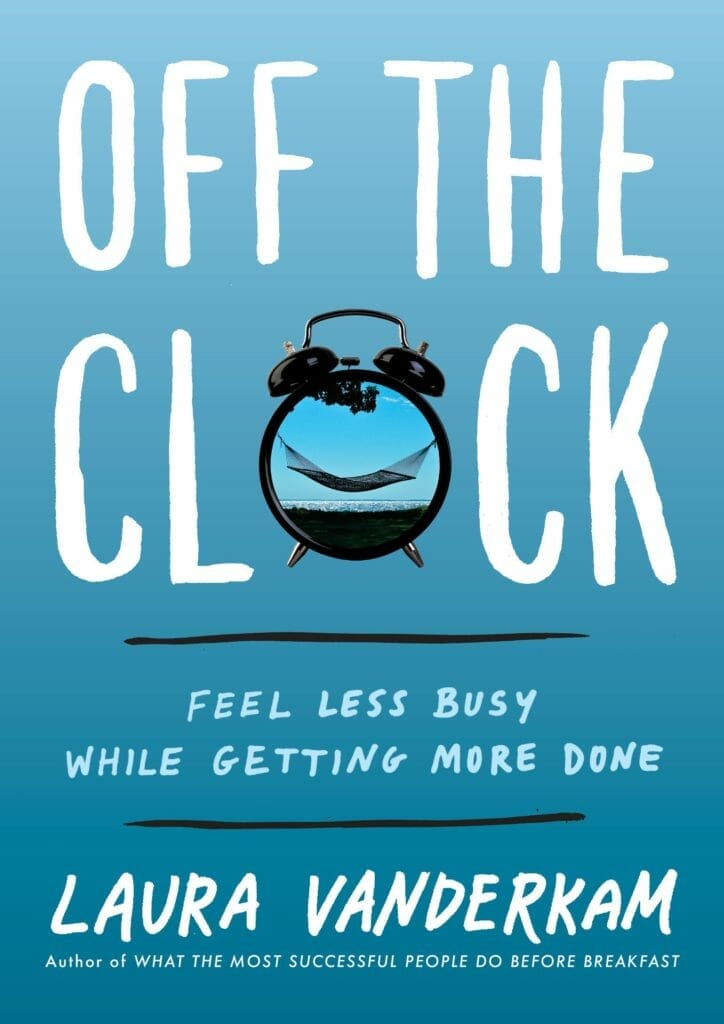
Mini Review: Another fantastic book from Laura Vanderkam, Off the Clock makes the case that, regardless of how busy we are, we have more time than we think we do. I walked away with countless strategies for developing deeper relationships and indulging in more intentional relaxation.
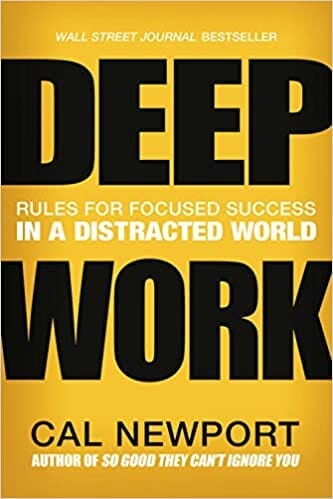
Mini Review: Deep Work digs into how we should structure our days in order to be most productive—and makes the compelling case that, when we do knowledge work for a living, the ability to focus on cognitively-demanding tasks is one of the most powerful skills we can develop. This book isn’t just worth reading once—it’s worth reading each time you find yourself surrounded by an increased number of distractions.
I’m not a fan of when authors include their own books in these roundups, so I don’t. If you’re looking for some reading beyond the books on this list, though, here’s a link to my books!
Mini Review: As Kelly McGonigal explores in the book, stress is not always a bad thing—if harnessed correctly, stressful situations can lead us to experience a more meaningful life. The Upside of Stress is an engaging, counterintuitive book that will change how you think about stress—as well as the challenges you face in general.
Mini Review: This book may add years to your life. In How Not to Die, Michael Greger explores the foods we should be eating in order to live the longest—and everything in the book is backed up by scores of academic research. This is what makes Greger’s books unique: he starts with the science, and works backwards to how we should live our lives in order to take advantage of the latest research.
Mini Review: If you’re able to buy just one book about habits, make it Atomic Habits. This book provides you with a comprehensive overview of how habits work, and the latest science behind forming new habits and breaking old ones—Atomic Habits is one of the most comprehensive guides to forming new habits available.
Mini Review: This book, by Winnifred Gallagher, explores how we can manage our attention in order to become happier. Years after reading Rapt, its lessons stick with me. If you’re looking for ways to become more present in your life, this book is a great place to start.
Mini Review: Mindset, by Carol Dweck, is another classic productivity book. It explores how we can develop a “growth mindset”—how we can see ourselves as someone capable of great change. The book not only digs into what a growth mindset is, it also explores how we can develop one in our own lives.
29: Yes, You Have Permission To Be Lazy Right Now
May 19, 2020
Show notes
Takeaway:Idleness, when practiced properly, can actually make you more productive and creative.
Podcast Length 22 minutes, 56s (link to play podcast at bottom of post).
Of course, not all of us have the luxury of being lazy during a pandemic. But regardless of your situation, I hope you check the article out. Even if you have less time than usual, right now we deserve a break more than ever—and we also deserve a bit more kindness from ourselves.
28: Flexibility as a Source of Inner Calm
May 05, 2020
Show notes
Takeaway:Henry Emmons’ book, The Chemistry of Calm, is a practical and tactical deep dive into what makes us anxious and what helps us find calm. In our interview, Henry talks about how flexibility and acceptance—with ourselves and with the world around us—can help us find calm in these stressful times.
Estimated Reading Time:1 minute, 26s.
Podcast Length 28 minutes, 45s (link to play podcast at the bottom of post).
We’ve spent the last few episodes of the podcast talking about calm—and how it can seem so elusive right now. All it takes is a quick glance at the news or social media to feel the onslaught of panic and anxiety.
There’s not always an obvious way to set aside our restless feelings and attain a sense of calm, especially when many of our normal coping mechanisms are off the table. I wanted to get another take, and was joined on the podcast by an expert on the topic: Henry Emmons, a clinical psychiatrist and the author of The Chemistry of Calm.
I was curious about how Henry views the relationship between calm and anxiety, especially at a time when the world is collectively so far down the “anxiety” end of the spectrum.
Interestingly, Henry considers calm to be our natural state. At the same time, he acknowledges it’s absolutely normal to be experiencing some level of stress or anxiety right now. At its core, the coronavirus crisis is a survival threat, and being alert and on guard is what we’re biologically programmed to do.
We’ve spoken a lot on this podcast about the tactics you can take to find calm, including active relaxation, stepping away from the digital world and into the analog one, and creating a gratitude list.
As Henry shared, flexibility is another trait he’s seen help people get through these recent lifestyle changes and attain a sense of calm. Flexibility and an openness to adapt can be a secret weapon against fear and anxiety—whether we’re dealing with a global pandemic or a stressful situation in the office. It’s what allows us to accept what is happening in the world around us, internalize and process that reality, and use it to guide life decisions.
This sense of flexibility doesn’t only apply to the external world—it also affects our inner mindset, too.
It offers us the ability to treat ourselves with kindness and be flexible with the expectations we place on ourselves, especially in the context of our current crisis. This self-acceptance and kindness can help us push back against the expectation that we should be working at 100% productivity, capable of balancing homeschooling with team video calls, or baking the perfect loaf of sourdough bread.
Henry sees rigidity as the enemy of joy and calm. Being kind to ourselves doesn’t mean settling for mediocrity and stasis. Instead, it grounds us in a mindset where we accept where we are, what our current limitations may be, and how we can realistically move forward.
The Chemistry of Calm looks at how we can use a whole host of tactics to reduce anxiety. Here are a few of the other topics our conversation touched on:
Meditation as a universal self-care practice. While it takes a bit of work to get started, a meditation ritual can help us respond to stressful situations effectively and with a sense of calm.
See this time as a personal retreat. This pandemic is a break from life as usual and, for those of us who are fortunate to be able to do so, we can view this as a chance to slow down and reconnect with our loved ones and the world around us.
We’ve got a lot to learn from nature. All other plant and animal species take the time to rest, regroup, and rebound—the opposite of our productivity mindset. Slowing down can be a good thing.
A big thanks to Henry for joining me on the show. He shared so many more interesting tidbits, and they’re really useful in changing the way we think about calm and anxiety, especially at a time like this. Enjoy our conversation and take care of yourself!
27: The 7 Triggers of Procrastination
Apr 21, 2020
Show notes
Takeaway:We procrastinate when a task is boring, frustrating, difficult, ambiguous, unstructured, or lacking in personal meaning or intrinsic rewards. By reversing these triggers—a few suggestions for how to do this are below—we can overpower our urge to procrastinate.
Estimated Reading Time:1 minute, 41s.
Podcast Length 23 minutes, 24s (link to play podcast at bottom of post).
Procrastination is a fascinating topic—and just as fascinating is the science behind it. Research suggests that there are seven attributes a task can have that make us more likely to put it off.
We’re far more likely to procrastinate when a task is:
Boring (e.g., doing our taxes);
Frustrating (e.g., learning a complicated new skill);
Difficult (e.g., solving a math proof);
Ambiguous (e.g., training for a marathon);
Unstructured (e.g., undertaking a home renovation project);
Lacking in intrinsic rewards (e.g., not getting feedback while we’re writing a 50-page report);
Not meaningful (e.g., cleaning up the home office).
The more of these attributes a task has, the more likely we are to put it off.
On this week’s podcast, we dig into how to flip these triggers so we can use the science of procrastination to our advantage. There are countless ways to do this, depending on which attributes a task has. For example, we can:
Form a simple plan to make boring tasks more fun (e.g., buying an audiobook for doing mindless chores around the house);
Set a time limit for frustrating tasks (e.g., making a game out of something we don’t want to do, by filing as many papers as we possibly can within 20 minutes);
Work with someone on difficult tasks, so we have more support while doing them (e.g., hiring a virtual piano teacher, instead of learning via an app);
Make a plan for ambiguous and unstructured tasks (e.g., taking 20 minutes to map out next steps for a home renovation project);
Treat ourselves while doing unrewarding tasks (e.g., putting $1 in a frivolous spending account for every five minutes we spend on our taxes);
Journal about tasks we find meaningless in order to connect with them on a deeper level (e.g., journaling about why cleaning our office will make us feel calm as we work).
Procrastination is a human phenomenon—everyone on the planet puts things off. The next time you notice yourself procrastinating on something, bring some awareness to what triggers the task is setting off, and form a simple plan to overcome them. You’ll get a lot more done as a result.
26: 5 Ways to Find Calm Right Now
Apr 07, 2020
Show notes
Takeaway:Calm is elusive right now. 5 ways to find it: become engaged with something every day, spend more time in the analog world, meditate (or journal), write down what you’re grateful for, and find something to savor every day.
Estimated Reading Time:3 minutes, 23s.
Podcast Length19 minutes, 53s (link to play podcast at bottom of post).
These days, calm can feel elusive. Anxiety comes and goes in waves, and, as I wrote about a couple of weeks back, it’s hard to be productive right now. It’s calm that we need most, not productivity.
While this is a blog about productivity, this article is about cultivating calm. Whether or not you’re working right now, investing in your calm can help you accomplish the things you want to do. Instead of forcing yourself to get work done, a calm mindset allows you to become kinder to yourself throughout the day. You’ll be able to focus with greater ease when your mind is settled, as your busy mind won’t generate distracting thoughts that derail your attention as you work.
If you’re looking for a few strategies to work more calm into your day, below are a few of the ways that I’m investing in myself (that we chat about on this week’s podcast). I’m confident they’ll work for you, too.
Become engaged with something (anything). We all need something to be engaged with throughout the day, regardless of whether we’re working or not. We rarely feel as unmotivated as when we have nothing to do. Right now, some of us have more time to spare, and others of us have less (especially those of us who have to work with kids at home). If you find yourself with more free time than usual, consider taking on a big, new project. Double down on learning a new programming language, or an instrument. Undertake a new home renovation project, or take an online class. If you’re looking for more calm, look for something to become engaged with. The busyness that comes with engagement crowds out feelings of anxiety.
Step away from the digital world and into the analog one. We all live two lives: an analog life (in the physical world), and a digital life (in, of course, the digital world). We have fewer activities to engage with in the physical world right now. The gym is closed, we don’t have to drive to work, and our favorite coffee shop is temporarily out of commission. This means that many of us are spending more time than we usually do in the digital world. Here’s the problem, though: right now, the digital world can be depressing as hell. If you’re finding yourself stressed out because of the time you’re spending on your devices, disconnect, and find analog activities to connect with instead—like getting physical activity, painting, cooking, or reading a book. Generally-speaking, the more time we spend engaging with the analog world, the calmer we feel.
Recall what you’re grateful for. Each night, with your partner, with a friend, or on your own, recall three things you’re grateful for. Or, after you finish reading this blog post, write down 10 things you appreciate in your life. Expressing gratitude is a shortcut to feeling a sense of abundance, and it allows you to train your brain into looking out for what’s positive around you—both useful skills right now. Here are 100 suggestions, for things to be grateful for, sent in by readers.
Meditate or journal, even if just for a few minutes. Meditation allows you to approach your day with equanimity, rather than a sense of anxiety. It also helps you come to terms with how things change. (If you don’t know where to start, I wrote this guide which has everything you need to get started. It’s easier than you think.) If you’ve tried meditation and it isn’t for you, try journaling, in order to reflect on how you’re feeling. Both practices have different effects, but they both allow you to create some distance between yourself and the current situation.
Find something to savor every day. It’s impossible to both savor something and to feel anxious at the same time. Write a list of things you savor—video chats with loved ones, delicious meals, or your daily workout—and make a deliberate effort each day to savor one thing on your list. Tonight, I’m going to savor me a delicious burrito.
The above strategies take a bit of effort, but they’re all proven ways of introducing more calm into your life.
If you’re feeling a bit anxious right now, pick a few things from this list and give them a shot. I’m confident they’ll help you out.

 Our TOPPODCAST Picks
  Stay Connected