TopPodcast.com
Menu
  • Home
  • Top Charts
  • Top Networks
  • Top Apps
  • Top Independents
  • Top Podfluencers
  • Top Picks
    • Top Business Podcasts
    • Top True Crime Podcasts
    • Top Finance Podcasts
    • Top Comedy Podcasts
    • Top Music Podcasts
    • Top Womens Podcasts
    • Top Kids Podcasts
    • Top Sports Podcasts
    • Top News Podcasts
    • Top Tech Podcasts
    • Top Crypto Podcasts
    • Top Entrepreneurial Podcasts
    • Top Fantasy Sports Podcasts
    • Top Political Podcasts
    • Top Science Podcasts
    • Top Self Help Podcasts
    • Top Sports Betting Podcasts
    • Top Stocks Podcasts
  • Podcast News
  • About Us
  • Podcast Advertising
  • Contact
Not in our directory?
Add Show Here
Podcast Equipment
Center

toppodcastlogoOur TOPPODCAST Picks

  • Comedy
  • Crypto
  • Sports
  • News
  • Politics
  • True Crime
  • Business
  • Finance

Follow Us

toppodcastlogoStay Connected

    View Top 200 Chart
    Back to Rankings Page
    Kids & Family

    The RV Atlas Podcast – RVFTA Podcast Network

    A weekly podcast from the writers of rvfamilytravelatlas.com, focusing on topics that relate to RV family travel. We review campgrounds, discuss tips and tricks for traveling with kids, and answer our readers’ most common questions. We also chat about food, gear, and those times when everything doesn’t quite go as planned.

    Advertise

    Copyright: © The RV Atlas, 2014-2021

    • Apple Podcasts
    • Google Play
    • Spotify

    Latest Episodes:
    A Beginner’s Guide to RVing in Colorado Part 2: Western Highlights Mar 13, 2026
    Show notes

    There’s a lot of hype about RVing in Colorado…for good reason! There are so many great towns, attractions, and amazing campgrounds that we couldn’t even fit it all in to one episode, so we are bringing you a two-part series packed full of recommendations. Last week, we told you all about the RVing highlights in Eastern Colorado, and this week we are continuing on to Western Colorado with information from our friend Kerri Cox from Travels with Birdy. Last week, we talked about Denver, Colorado Springs, Rocky Mountain National Park, but we aren’t quite done! This week, we will head west in the mountains of central Colorado west of the national park, learn about several more NPS sights, and hear about how the landscape changes near the Utah border. Here is a guest post from Kerri complete with all the information and links you’ll need as you begin thinking about RVing in Colorado: Last week, we talked about how the Colorado Tourism Office has divided the state into 8 regions, which we are using as our road map to journey through the state from east to west, starting in central Colorado. 6) Rockies Playground (NW Central CO) While towns like Aspen, Breckenridge, Vail, and Winter Park are usually associated with winter fun in Colorado, this region should not be overlooked in the summer. The cute mountain towns have pleasant summer weather and are super stroll-able, with lots of local shops, galleries, breweries, and restaurants. Plus, the views never end when you’re surrounded by this many peaks! Travel Highlights Great Towns Leadville – notable as the highest incorporated city in North America (at over 10,000 feet in elevation) Aspen, Vail, Breckenridge, Frisco, Winter Park – take your pick from any of the state’s most famous ski towns to enjoy walkable downtowns and outdoor recreation any time of year; the ski lifts operate and offer great views, and the mountainsides are covered in hiking trails Glenwood Springs – the drive on I-70 to this town on the western side is famous for the awe-inspiring cantilevered sections through the river canyon, and once you reach Glenwood Springs itself, you’ll find a lot to do centered around the town Attractions & Adventures Maroon Bells – these wine-colored peaks rise 14,000 feet in elevation, creating one of the state’s most iconic views Glenwood Springs hot springs – take in the waters in your choice of spots, with several resorts offering access to a variety of pool types and temperatures Great Campgrounds Tiger Run Resort – Expect to pay premium prices, but it’s hard to find full hookups and modern campgrounds in this region. Tiger Run is exceptionally well-maintained with lots of manicured landscaping. (hear my full review here) Prospector Campground White River National Forest – no hookups but has beautiful waterfront sites on Lake Dillon and easy access to I-70 and ski towns Carbondale-Crystal River KOA – located on the banks of the Crystal River and earns great reviews for natural beauty and services Rifle Gap State Park – offers some full hookup, waterfront campsites on a large reservoir Lots of other national forest campgrounds and dispersed camping with great reviews Press play on the media player above to hear a lot more details about RVing in Colorado. 6) Mystic San Luis Valley (SW Central CO) Photo by Shellie Bailey-Shah Surrounded by the San Juan and Sangre de Cristo mountains, this region is home to the world’s largest high-altitude desert valley, with the Great Sand Dunes being the top draw. You can find quirky spots around every bend. Travel Highlights Great Towns Crestone – teeny tiny town considered a spiritual hub Alamosa – the largest town in the region, close to GSDNP San Luis – the state’s oldest town; known for Hispanic culture Attractions & Adventures Great Sand Dunes National Park – home to the tallest dunes in North America, this park’s sand mounds are spellbinding. You can go sand sledding, float in a seasonal creek, or just take in the views. Certified Dark Sky Park for amazing stargazing (find lots of tips from Shellie Bailey-Shah) UFO Watchtower – if you’re like me and love a good roadside attraction, stop here and keep an eye on the skies Stations of the Cross – architecture, history, art, and landscape come together Lots of hot springs in the area Amazing wildlife opportunities, including bat and sandhill crane migrations Great Campgrounds in SW Central Colorado Piñon Flats Campground – there are no hookups, but you have the best access to the GSDNP and a beautiful view (hear a full review here) Woods & River RV Park – exactly as its name describes, this park offers spacious, shady sites along the headwaters of the Rio Grande 7) Mountains & Mesas (SW CO) The lush greenery of the Rocky Mountains eventually give way to scrubrush-covered mesas in Colorado’s southwestern corner, which borders southern Utah, Arizona, and New Mexico. In addition to cool mountain towns, this region has several National Park Service sites to explore. Travel Highlights Great Towns Ouray – called the “Switzerland of America” for its prime location right amid the towering peaks Durango – great basecamp for outdoor adventures across the region, especially the train Telluride – famed ski town, known for its Victorian & Wild West architecture Crested Butte – known for aspens in the fall and hillsides of wildflowers in the summer Grand Junction – largest town in Western Colorado; nearly on the Utah border; considered Colorado’s wine country Attractions & Adventures Photo courtesy of the National Park Service Black Canyon of the Gunnison National Park – from eastern Colorado, it takes extra time and effort to reach this park, but I’ve never heard anyone say it wasn’t worth it. This massive canyon is quite different from the Grand Canyon but awe-inspiring in its own right Mesa Verde National Park – Home to the cliff dwellings built by the Ancestral Pueblo people who have called this region home for over 700 years; make sure to book a tour in advance for the best access Durango & Silverton Narrow Gauge Railroad– the best way to travel between Durango and Silverton is on the steam train, which runs along the Animas River through some stunning scenery Colorado National Monument – when I picture the landscapes in old Western movies, this is the landscape that comes to mind Great Campgrounds in Southwest Colorado Camp Eddy – campground offering Airstream rentals, RV sits, and tiny homes; offers easy access to Grand Junction and the Colorado River (find a full review from Jeremy and Stephanie here!) Ouray KOA and Ouray Riverside Resort – both earn high marks for being nice campgrounds with great access to town (hear a full review of the Riverside Resort) Ridgway State Park – located between Ouray and Montrose, this park is great for visiting the towns, as well as Black Canyon of the Gunnison; offers nearly 300 campsites in a beautiful landscape Mesa Verde RV Resort – full-service campground near park entrance 7) The Great West (NW CO) Located in the northwest corner of the state, this region runs from the Utah border to the western edge of Rocky Mountain National Park. It offers a mixture of open frontiers, grand rivers, and charming mountain towns, with the most open, sparsely populated areas to the west and the mountainous region to the east. Side note: If you’re trying to decide whether to stay on the eastern side or western side of Rocky Mountain National Park, check out my post. There are true advantages to picking a basecamp on each side of the park. Travel Highlights Great Towns Grand Lake and Granby – popular base camps for RMNP adventures. Grand Lake is right outside the Kawuneeche Entrance to RMNP and appropriately named for a large lake that butts up against mountain peaks, while Granby is further out but has a lot to offer. Steamboat Springs and Winter Park – ski towns that offer year-round activities. Attractions & Adventures Dinosaur National Monument – showcases over 1500 fossilized dinosaur remains along the dramatic Yampa River Canyon. RMNP Kawuneeche Entrance – the quieter western side of this busy park is the best area for moose spotting Flyfishing, whitewater rafting, boating, and kayaking along the Colorado, Blue, and Yampa rivers and in beautiful alpine lakes Soaking in hot springs Hiking – The 16-mile Fraser-to-Granby trail connects cool towns and runs through beautiful scenery; many trails both in and out of RMNP Great Campgrounds in Northwest Colorado Sun Outdoors Rocky Mountains: Great for resort-level camping with beautiful open views, around 20 minutes from the western entrance to RMNP (hear a full review from me here) Winding River Resort: Just outside the western entrance of RMNP in the cute town of Grand Lake, has “natural” sites with hookups Gates of Lordore Campground: remote rustic camping with exceptional views and access to Dinosaur National Monument Final Thoughts As you can tell, RVing in Colorado is simply sublime! Though I’ve visited Colorado many, many times since our first trip back in 2011, I still haven’t come close to seeing the majority of the highlights! In fact, putting these posts together helped me find even more I want to see. For me, Colorado is more of a feeling than a vacation, and that’s what makes me go back again and again. Don’t forget to check out Part 1: Eastern Highlights to hear more recommendations for RVing in Colorado. And, if you haven’t already and make sure to click on the campground reviews linked above to find full descriptions of many of these awesome RV parks. The post A Beginner’s Guide to RVing in Colorado Part 2: Western Highlights appeared first on The RV Atlas.

    Full show notes at the publisher

    A Beginner’s Guide to RVing in Colorado Part 1: Eastern Highlights Mar 07, 2026
    Show notes

    On this week’s episode of The RV Atlas Podcast, we’re taking you to one of the absolute best RV vacation spots in the whole country: Colorado. If you think Rocky Mountain National Park is the only thing to see there, pay attention because our friend Kerri Cox from Travels with Birdy is here to give us an introduction to RVing in Colorado in this two-part series. In this episode, we’ll cover Denver, Colorado Springs, and locations in Eastern Colorado. Then, come back for Part 2 to hear about the mountain towns, national parks, and other highlights from Western Colorado. Here is a guest post from Kerri complete with all the information and links you’ll need as you begin thinking about RVing in Colorado: Deciding Where to Start Home to some of the highest peaks in the U.S., the tallest sand dunes in North America, charming mountain towns, epic outdoor adventures, AND cool cities, Colorado is just brimming with RV vacation potential. But, where do you begin when planning an RV trip to a state that is packed with as much potential as Colorado? Luckily, the Colorado Tourism Office gives us a head start by dividing the state into 8 regions, which I will use as a road map for sharing travel highlights and great campgrounds from each part of the state, going from east to west. Plus, I dug deep into the RV Atlas archives for some blast-from-the-past campground reviews! Getting the Lay of the Land First, let’s first get a grasp of Colorado’s layout and geography. Most travelers cross the state using interstate I-70, which cuts across Colorado somewhat north of the midline. The Rocky Mountains run perpendicular to the highway, bisecting the state. While the mountains dominate the middle of the state, the eastern half seems more like Kansas and the western half is more like Utah. Even within the mountains themselves, there is a lot of geographic diversity and plenty to explore outside of Rocky Mountain National Park. To hear more about RVing in Colorado, including travel highlights and campgrounds, click play on the media player above or look for The RV Atlas wherever you find your favorite podcasts. General Colorado RV Travel Tips Research roadways if you’ll be traveling through the mountains. Some are nice and wide with broad curves, while others have extreme switchbacks and open drop-offs. My pro tips: Use the Street View option in Google Maps to check out any roadways that resemble intestines, and if you see a “pass” marked on the map, do a little extra research. Cell phone coverage can be sketchy, especially deep in the mountains. Even with cell signal, you don’t always have reliable internet access. Many state or national park campgrounds book soon after reservations open. Pro tip: Being able to stay in popular parks during the week and not on weekends will help, as will being able to split your stay across multiple campsites. Otherwise, find out when reservations open and book immediately, if possible. The state offers a lot of free and cheap camping if you are willing/able to venture off grid. Check out BLM lands and national forests for dispersed camping. While most don’t offer hookups, the national forest campgrounds offer excellent views and some amenities. The weather varies by both season and by elevation. Fall leaf peeping usually starts in September for the golden aspens at higher elevations. Summer in the mountains is nice and cool, though daily rainstorms are common during the July/August monsoon season. Snow and freezing temperatures can persist during spring and fall at higher elevations. Winter camping requires extra prep due to extreme temperatures and precipitation, and be aware that roadways may be shut down, even I-70 at times. Take the elevation seriously! Read tips for avoiding altitude sickness. We usually drink a lot of water as we cross Kansas and then stay in Colorado Springs or Denver for a night or two before heading into higher elevations. Now, let’s begin look at RV travel attractions and campgrounds in Eastern Colorado. Remember, you can check out this map to see an overview of all 8 regions. 1) Pioneering Plains (Northeast CO) Bordering Kansas, this region is home to wide-open plains. If you’re driving along I-70 heading west, you won’t feel like you’re heading to the mountains for at least an hour past the border, though your RV will definitely be tilted skyward due to the incline. You may notice your gas stops gradually increasing in frequency well before you see any of Colorado’s famed mountains, but eventually, the silhouette of the Rockies will be barely visible on the horizon. Until then, explore the grasslands and pioneer history of northeast Colorado. Travel Highlights in Northeast Colorado Great Towns Limon – this is a good layover while crossing I-70 Sterling – one of the region’s largest towns, offers insight into the Overland Trail history Attractions & Adventures Colorado Welcome Center at Burlington – If you want a photo with the iconic “Colorful Colorado” state sign without endangering yourself on the side of the highway, make a pit stop here, which has its own sign. Plus, it has clean bathrooms, tons of brochures, and a giant map of Colorado. The nearby Old Town Museum looks like another great spot Pawnee National Grassland & Buttes – get out and explore the open prairie and trails surrounding the 300-foot-tall buttes for the best taste of Eastern Colorado’s landscapes South Platte River Trail – a 19-mile byway with many historic sites from pioneer days Great Campgrounds in Northeast Colorado Jackson Lake State Park: Certified by the International Dark-Sky Association, the park’s lakeside campgrounds offer a peaceful retreat. Sandy beaches line the reservoir, making this a good spot to cool off in the summer. Plus, some sites have hammock poles. Love’s RV Hookup-Burlington: Great for a super convenient resting spot on I-70. We have enjoyed our stays at Love’s new RV Hookup sites. Instead of simply being a side area of the parking lot, this one is a gated mini-RV park. 2) Canyons & Plains (Southeast CO) Photo in the public domain, courtesy of the National Park Service This is another wide-open landscape, with small towns dotting the plains. This area borders Kansas, the OK Panhandle, and northern New Mexico. It is a strong agricultural region, with historical highlights related to the Santa Fe Trail and frontiersman Kit Carson. Travel Highlights in Southeast Colorado Great towns: La Junta – explore railroad history, Native American culture, and dinosaur tracks Lamar – popular with birding enthusiasts, has a historic downtown Attractions & Adventures: Santa Fe Trail Byway – this 188-mile route connects several historic sites and helps you imagine the wagon trains of the 1800s Comanche National Grassland – explore 500,000 acres of grasslands Tarantula Trek – visit during the fall for the best chance to see tarantulas exploring the grasslands looking for mates Sand Creek Massacre National Historic Site and Bent’s Old Fort National Historic Site – Explore Native American and pioneer history Great Campgrounds in Southeast Colorado John Martin Reservoir State Park – located between La Junta and Lamar; has waterfront sites To hear more about these Colorado RV travel highlights and campgrounds, click play on the media player above or look for The RV Atlas wherever you find your favorite podcasts. 3) Denver City & the Rockies (North Central CO) If you want the perfect mixture of urban adventures and natural wonders, a trip to Denver and Rocky Mountain National Park can’t be beat. You get the best of both worlds! This region lies northeast of the state’s center, where the Rocky Mountains bisect the state. If you are heading east to the higher elevations, spend some time in Denver to get acclimated before you begin the climb into Estes Park. Also, if RMNP is too packed, there’s plenty of scenery to explore outside the park. Travel Highlights in Denver & the Rockies Great towns Denver – with attractions like museums, Red Rocks Amphitheater, Meow Wolf, the Denver Botanical Gardens, a historic downtown, and more, you can easily spend a week exploring and eating in this hip town Fort Collins – beer lovers already know Fort Collins as a brewery hotspot, but this cool college town has more to offer Boulder – another cool college town with easy access to outdoor adventures in the Flatirons rock formations Estes Park – you’ll hear this as the primary basecamp for entering RMNP from the east; the town itself is very cute, with the Big Thompson River creating a scenic focal point along the stroll-able shops and restaurants Attractions & Adventures This region is a popular spot for hiking, fishing, paddling, and more. Rocky Mountain National Park – known for its views, outdoor recreation, and high peaks (explore some of my favorites here); reservations required in the peak seasons Golden Gate Canyon State Park – 35 miles of trails in the foothills of the Rockies (very good for a taste of the mountains if you want to stay close to Denver or cannot get reservations to RMNP) Eldorado Canyon State Park – dramatic sandstone cliff walls; 100 miles of trails Great Campgrounds in Denver & the Rockies Moraine Campground in RMNP – Recently renovated, this gorgeous campground is the first to offer electric hookups right in RMNP, which is a game-changer! Of course, the other NPS campgrounds offer beauty and accessibility to the park. Plus, if you stay in the park, you don’t have to deal with timed-entry reservations or the crowds at the entrance gates Estes Park Campground at Mary’s Lake – If you want hookups and easy access to RMNP and Estes parks, this is one of the best spots in town (explore my full review). Chatfield and Cherry Creek State Parks – Both of these exceptional state parks are located right in the Denver suburbs, offering easy access to the city, as well as outdoor activities (check out Gretchen Holcombe’s full review of Cherry Creek and my review of Chatfield to find campground descriptions and learn about our favorite Denver attractions) Clear Creek RV Park – Located in the town of Golden, this city-run campground earns high marks for accessibility to the creek, mountains, and Denver. 4) Pikes Peak Wonders (South Central CO) Located in the southern Front Range, Colorado Springs makes a great hub for a Colorado vacation with much to see in and around the city, including one of the nation’s most iconic spots, Pikes Peak. To the west, you’ll find dramatic elevation changes, Old West towns, and many beautiful places to explore. Travel Highlights in the Pikes Peak Region Great towns Colorado Springs – Colorado’s 2nd-largest city is a hub of activity. Our favorite spot is Old Colorado City, a historic area with galleries and restaurants. Manitou Springs – located at the base of Pikes Peak, this is a charming spot to stroll. Don’t miss the Penny Arcade Cripple Creek – get a taste of the Gold Rush days, look for the roaming burros, or enjoy gambling Salida – notable as an artsy hub, with tons of galleries and a great whitewater park running along the downtown Attractions & Adventures Garden of the Gods – as beautiful as most national parks; walk amid towering red rock formations Pikes Peak Cog Railway – Dare I say this is the best way to reach the top of Pikes Peak? It is much more relaxed than driving, plus you can learn about the history and geology along the way. Make sure to get donuts at the top. (Warning: Altitude sickness is very common since you rise to such a great height at 14,000 feet) Royal Gorge Bridge – Not only does this pedestrian bridge cross the Arkansas River Canyon, with the waters 1000 feet below, but there are also tons of things to do onsite, including a gondola ride across the canyon, an amusement park, and more Eleven Mile Canyon Recreation Area – get away from the Colorado crowds in this gorgeous spot where the South Platte River tumbles through giant boulders Rita the Rock Planter – Artist Thomas Dambo has created massive troll sculptures using recycled materials across the whole world, and you can find one near the town of Victor. Whitewater rafting is huge across the region, along with hiking, fishing, and all the outdoor activities Great Campgrounds in the Pikes Peak Region Cheyenne Mountain State Park – It is almost unbelievable that a park this pretty is so close to the city! Many sites are situated along the mountainside, offering panoramic views of the city below. Sites are huge, and some have full hookups. Reservations can be difficult to snag! (Find a full review here.) Mueller State Park – As cheesy as it sounds, this place is magical to me. It has pine trees and peak views. Plus, it’s less than an hour from Colorado Springs (find full review here) Cripple Creek KOA – This park is situated in a broad open expanse with views of the surrounding mountains. It has a badge of honor for being the highest elevation KOA in the world, at 10,000 feet Final Thoughts Are you excited about great possibilities for RVing in Colorado? We’ve told you about two of the largest cities and the most popular national park, but that’s not all! We have a lot more to come in part 2, where we will talk about the travel highlights and great campgrounds in Western Colorado. We haven’t talked about the fascinating cliff dwellings, the Little Switzerland of America, or the highest sand dunes in North America. Make sure to check it out to hear about these attractions and more when we continue our discussion about RVing in Colorado with Kerri next time. The post A Beginner’s Guide to RVing in Colorado Part 1: Eastern Highlights appeared first on The RV Atlas.

    Full show notes at the publisher

    Epic Camping and Outdoor Cooking in West Kootenay, Canada with Brent from GOSO Cookware Feb 27, 2026
    Show notes

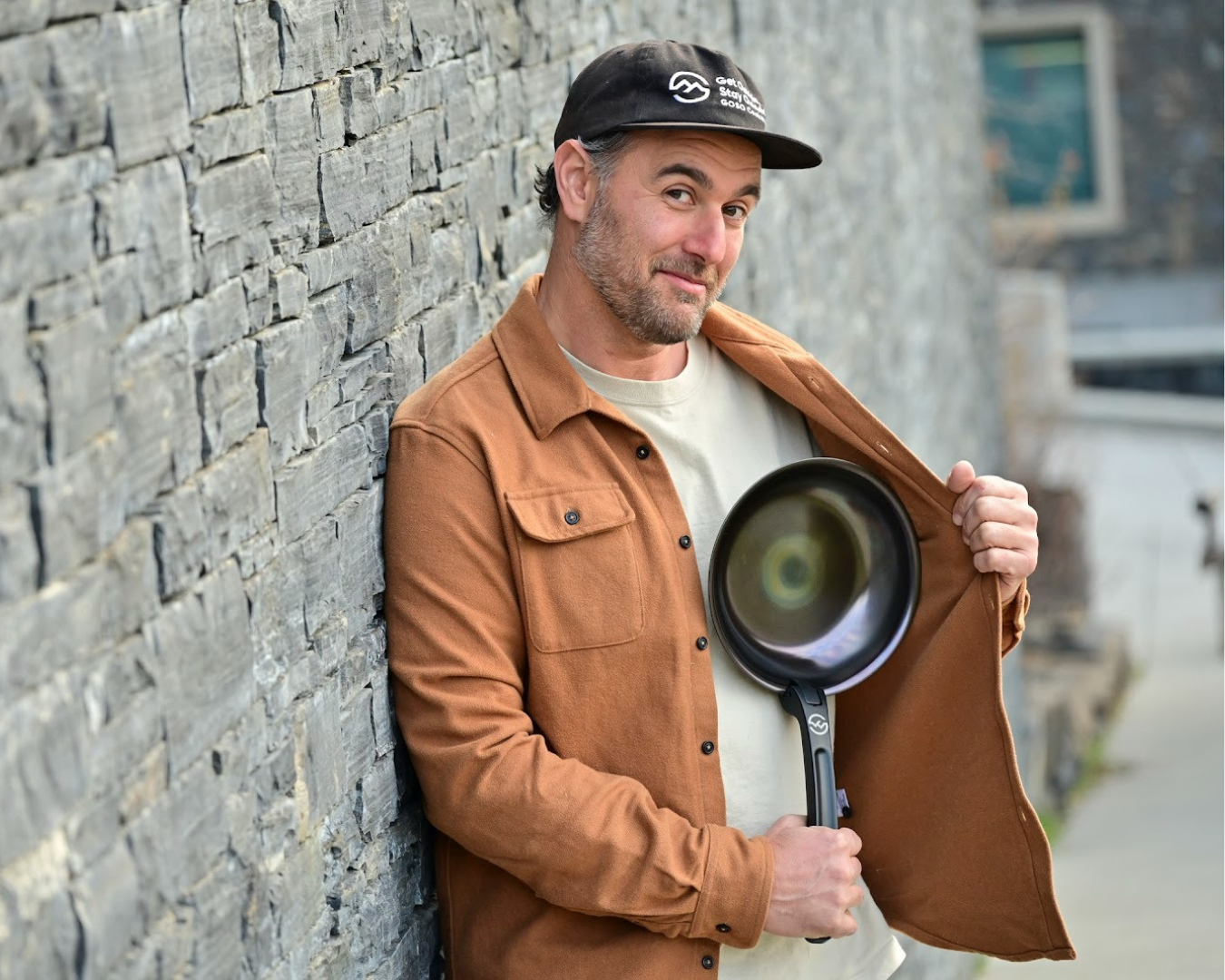
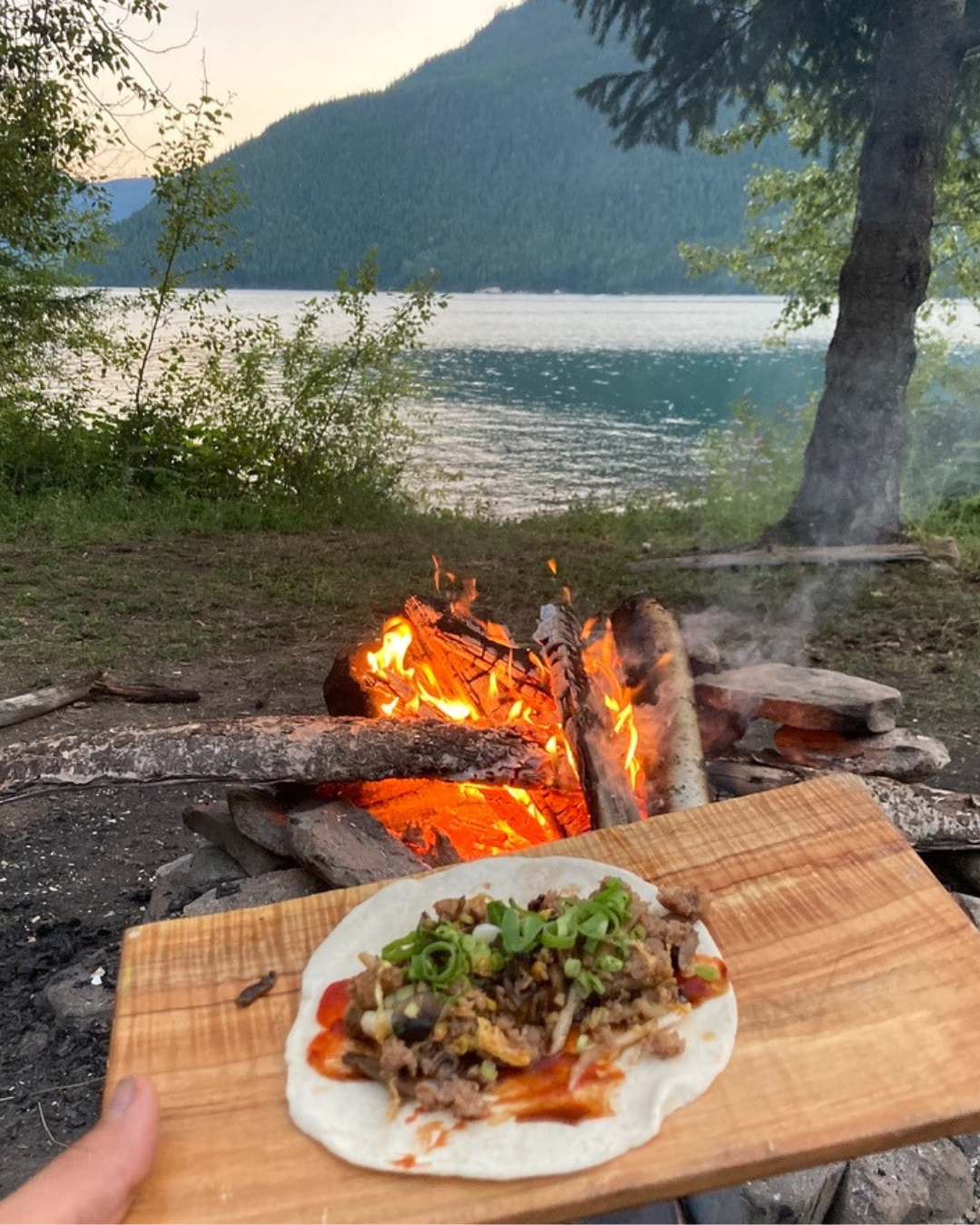
    On this week’s episode of The RV Atlas Podcast, we head north for a conversation that combines three of our favorite things: camping in Canada, outdoor cooking, and meeting passionate small business owners who are building something meaningful in the outdoor space.We’re joined by Brent from GOSO Cookware, a camper, snowboarder, mountain biker, former outdoor guide—and now founder of a young cookware company that’s making some of the most beautiful carbon steel pans we’ve ever used at the campground.

    This episode unfolds in three parts: first, Brent’s story and the origin of GOSO Cookware; second, six of his favorite campgrounds in British Columbia’s West Kootenay region; and finally, a handful of simple, delicious recipes that prove you don’t have to settle for mediocre meals just because you’re cooking outside.

    To listen to our interview with Brent from GOSO Cookware please click on the media player above or subscribe to the RV Atlas wherever you get your favorite shows.

    From South Africa to Ontario to the Mountains of British Columbia

    Brent’s love of camping and cooking didn’t start as a trend or a business idea. It started at home.

    His parents immigrated to Canada from South Africa, where outdoor cooking and gathering around food were already a big part of their culture. Once in Canada, they embraced canoe tripping and camping as an affordable way to explore their new country. Brent grew up camping, cooking outdoors, and learning how to make meals better—even when the camp menu felt “just okay.”

    That instinct followed him into adulthood. He worked as an outdoor guide, ran youth trips, and even earned a university degree in outdoor recreation, parks, and tourism. Camping wasn’t a hobby—it was a through line in his life.

    But the moment that truly pushed him into entrepreneurship came after his mom passed away unexpectedly. He shared that her death forced him to look at his own timeline and ask a hard question: If life is shorter than we think, what dreams am I waiting on?

    GOSO Cookware was the answer to that question.

    The Problem With Most Camp Cookware

    If you’ve ever bought a “camping pan” from a big-box store, you know the feeling: it’s lightweight, it packs small… and it cooks terribly.

    Brent described being frustrated for years by cookware that felt flimsy, had clunky removable handles, or just didn’t perform like the pans in his home kitchen. On the other end of the spectrum was cast iron—beautiful to cook with, but heavy, awkward to maneuver, and slow to cool down.

    What he wanted was simple:

    • A pan that cooked like professional kitchen equipment.

    • Something compact enough for camping.

    • A removable handle that didn’t feel unstable.

    • A product that could last decades.

    So he built it.

    Why Carbon Steel (And Why It’s Different From Cast Iron)

    If you’re familiar with cast iron but new to carbon steel, here’s the short version: it gives you many of the same benefits, with some key advantages for camping.

    Carbon steel is naturally non-toxic and develops a seasoned surface like cast iron. But it’s significantly lighter, heats up faster, and cools down faster. That last part is especially important at the campground, where you don’t want a blazing-hot pan sitting on a lightweight camp table long after dinner is done.

    Brent’s pans are made from thick 14-gauge carbon steel in the United States and shaped like traditional professional frying pans—with smooth curves that make it easy to manipulate food.

    The real innovation, though, is the removable handle. Instead of feeling loose and janky, the handle clicks securely into place and feels like a full restaurant-quality handle when attached. It’s ergonomic, stable, and designed to be moved easily between pans.

    The pan set that we tested (the outdoor gourmet 2-pan set) currently includes:

    • An 8-inch pan

    • A 10-inch pan

    • A removable “Big Bite” handle

    • Optional seasoning paste and leather scratch pad/trivet

    The pans nest together for compact storage, and the handle sits right on top—perfect for small RV kitchens, van builds, or overland rigs. Other set variation are available.

    Building a Small Business From Scratch

    GOSO Cookware launched through a Kickstarter campaign, allowing Brent to test demand and fund the first production run without overextending himself financially. After delivering to Kickstarter backers, the brand officially entered its first full summer season of direct-to-consumer sales.

    Right now, the pans are available through his website and at in-person events like the Overland Expos and Venture Van Expo. The long-term vision includes expanding into specialty retailers—but always with a focus on quality, durability, and intentional design.

    When we asked about what’s next, Brent mentioned:

    • Lids (currently in development)

    • A larger griddle-style pan

    • High-quality stainless steel pots

    • Eventually expanding the system while keeping the removable handle as the backbone

    It’s clear that the goal isn’t to make “more stuff.” It’s to make better gear for people who genuinely love to cook outside.

    Camping in the West Kootenay Region of British Columbia

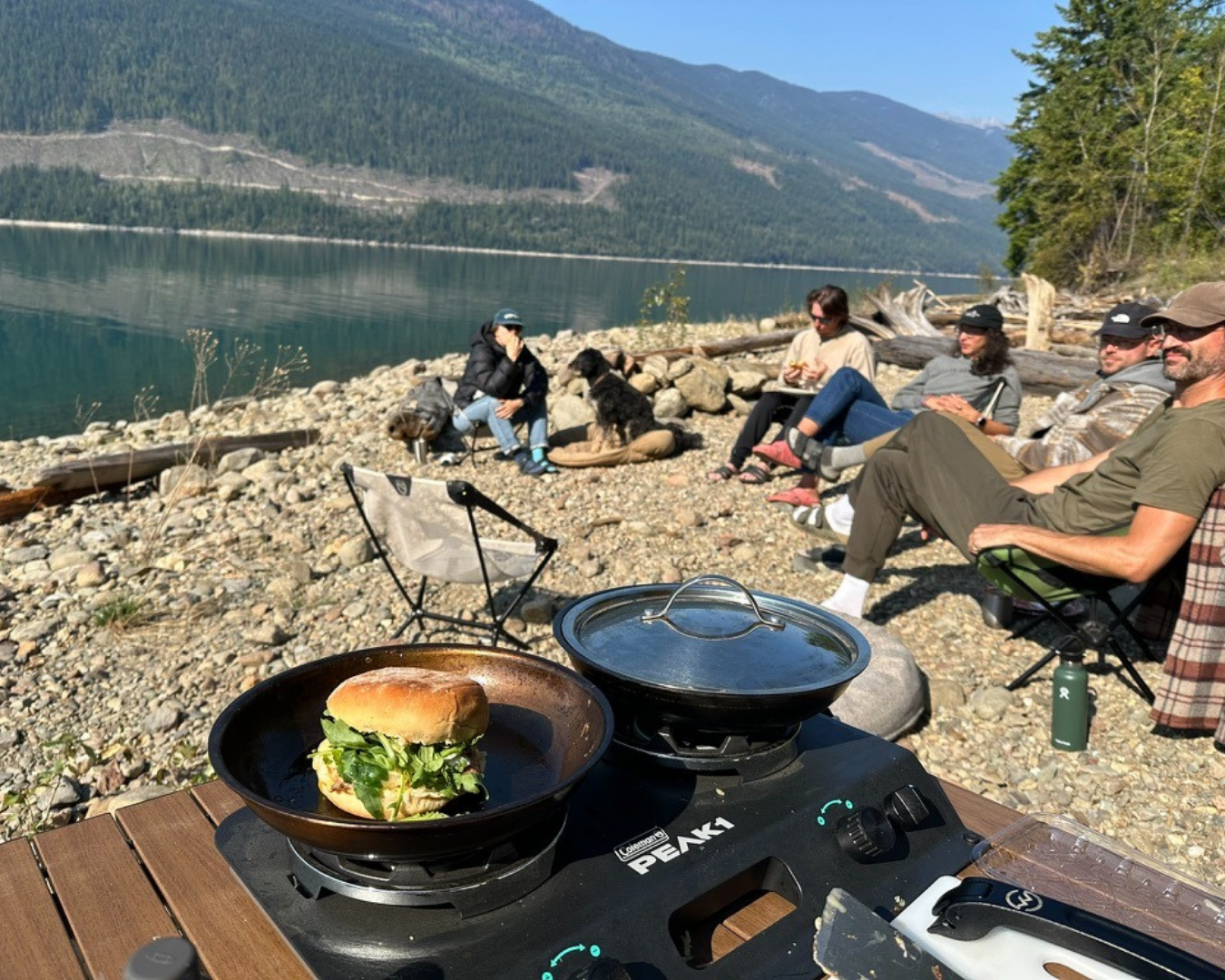
    If you’re not familiar with the Kootenays, here’s the headline: it’s one of the most beautiful—and least crowded—regions in western Canada.

    Located north of Spokane, Washington, the West Kootenay region is full of:

    • Mountain ranges

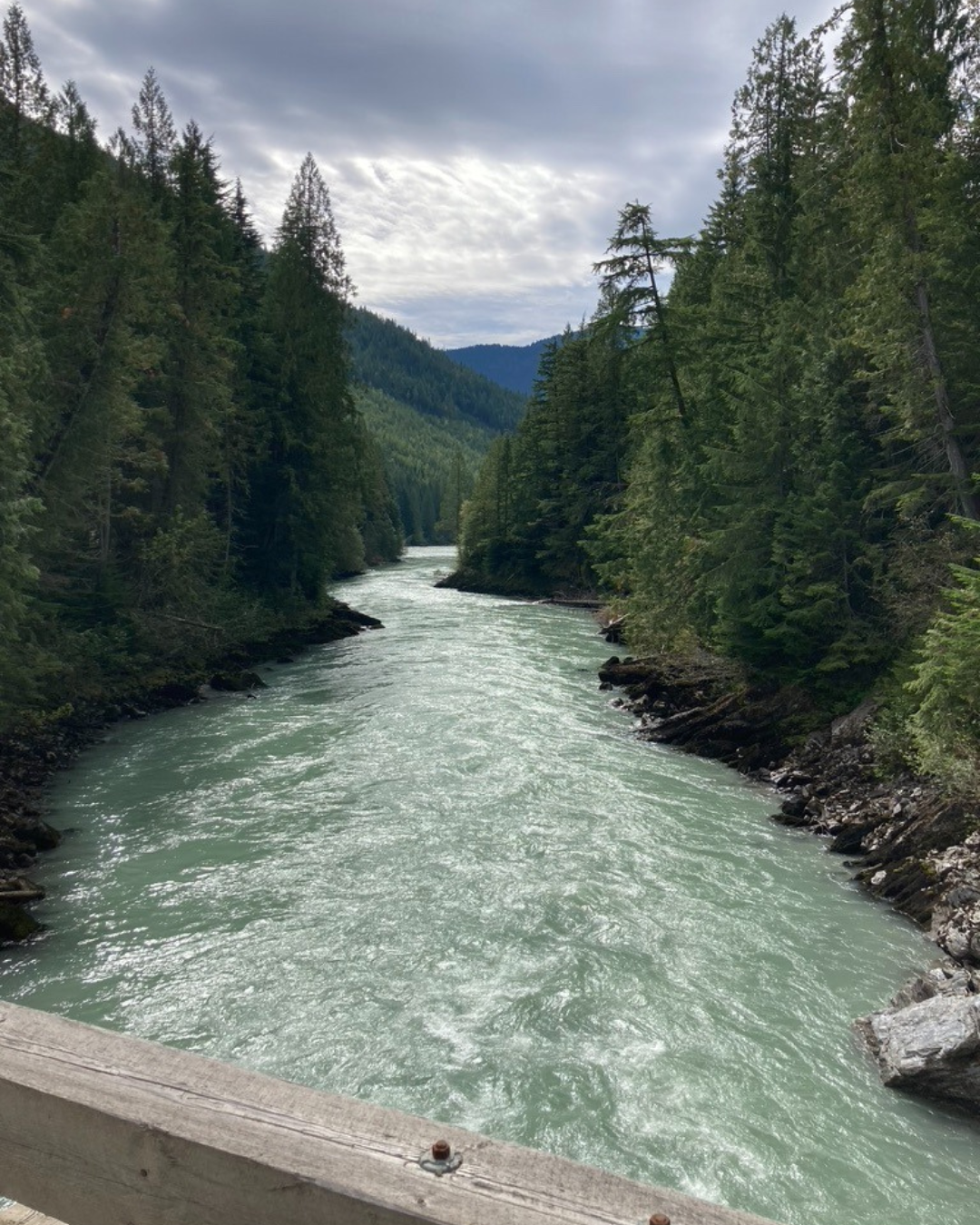
    • Glacier-fed rivers

    • Dam-created lakes

    • Remote rec sites

    • Small towns with strong outdoor culture

    The population density is low. Access to wilderness is easy. And the variety of camping options is remarkable.

    Here are six of Brent’s favorite campgrounds in the region.

    Glacier Creek Campground (Duncan Lake)

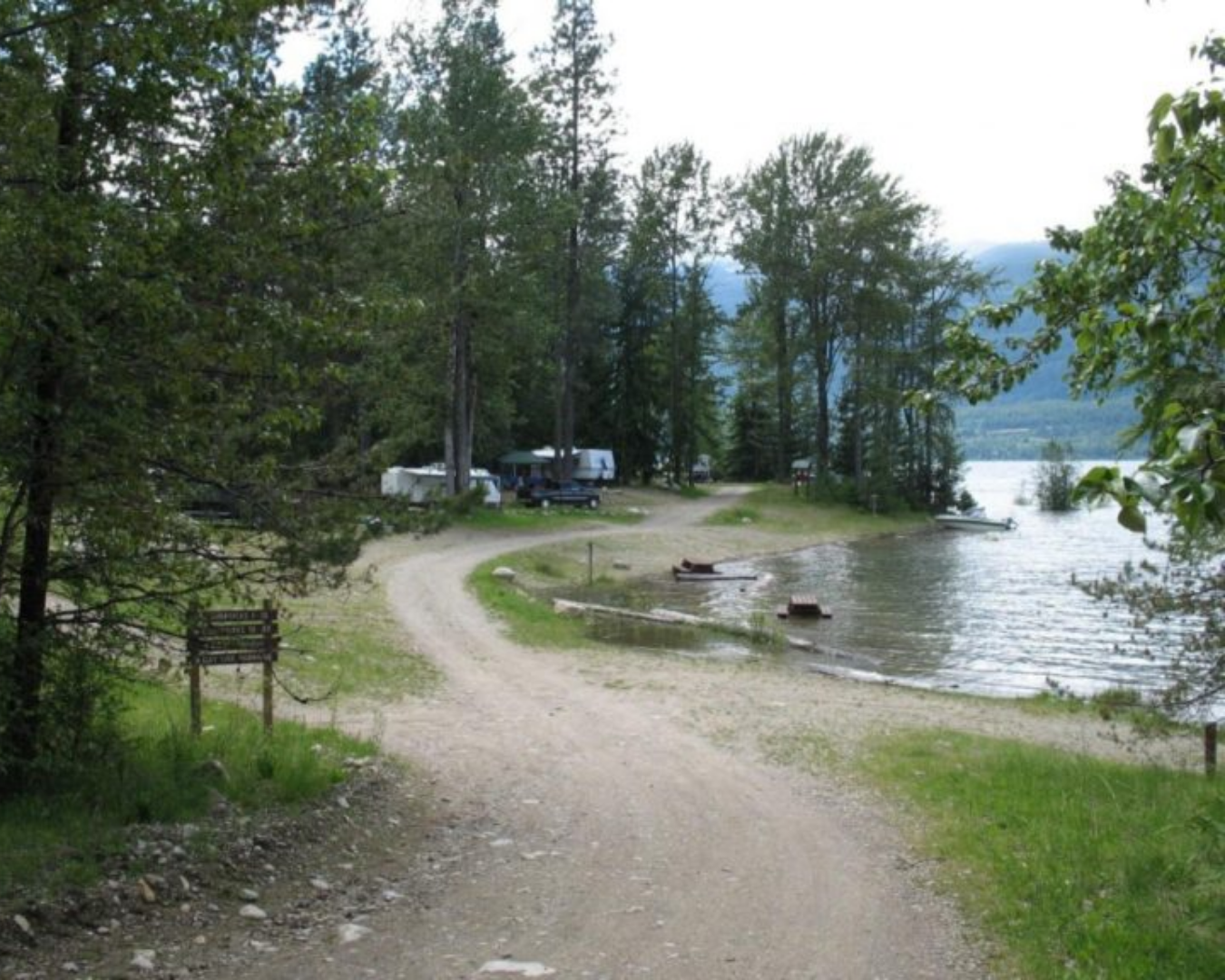
    This is a rec site—more primitive, but incredibly scenic. It sits along Duncan Lake, a warm, shallow, dammed lake surrounded by mountains.

    There are designated sites, picnic tables, and fire rings, but no hookups. It’s accessible via paved road followed by a well-maintained gravel road. Nearby are incredible day hikes like Monica Meadows and a historic fire lookout site currently being rebuilt after a wildfire.

    If you like quiet water, mountain views, and fewer crowds, this is a dream.

    Nakusp Hot Springs Resort

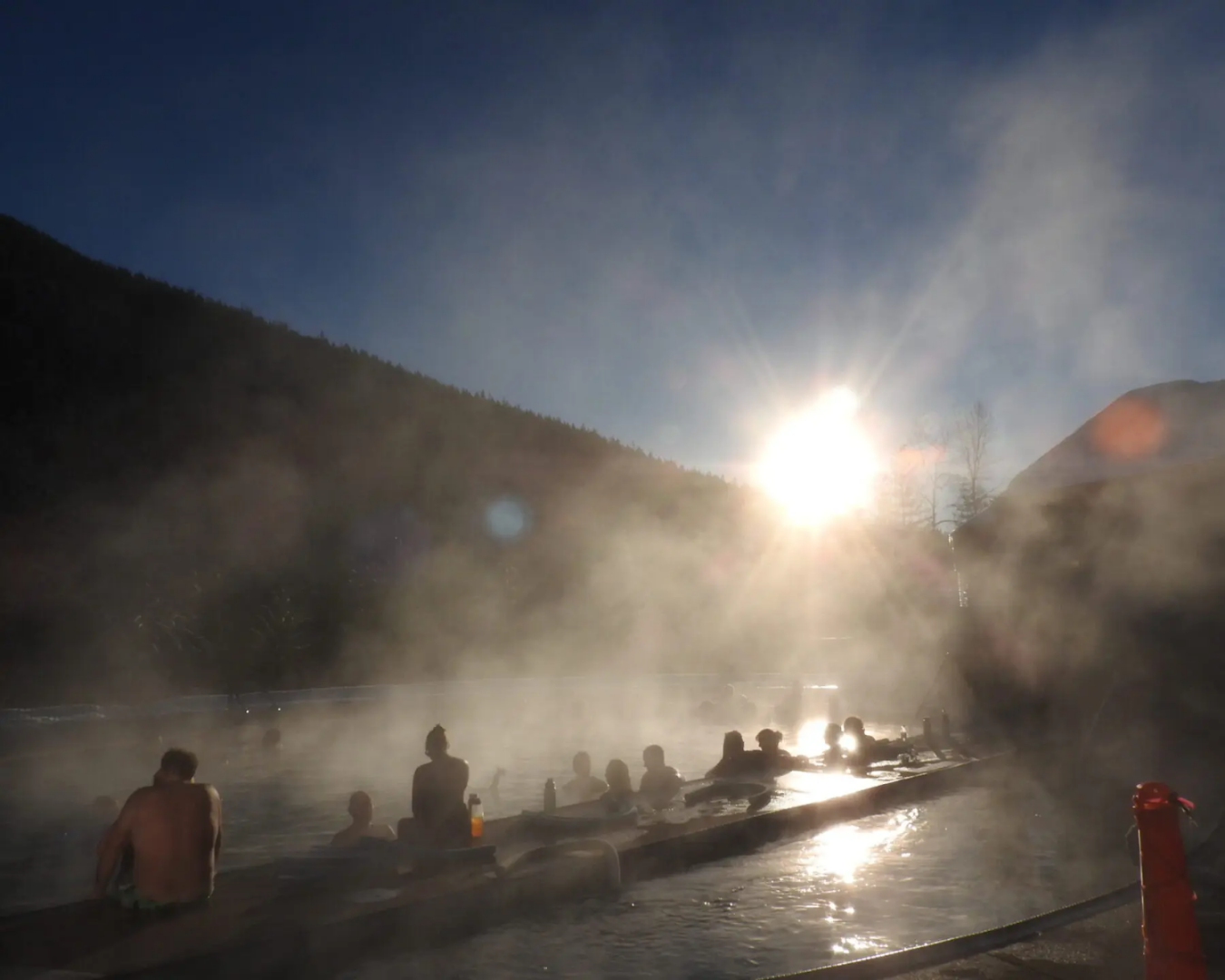
    This campground is attached to natural hot springs and operated by the town of Nakusp. It’s more developed, with RV sites and easy access to soaking pools, a restaurant, and nearby lake activities.

    The campground itself is simple but comfortable, and the real draw is soaking in hot mineral water while surrounded by mountain views. For RVers who love a good hot spring stop, this one’s hard to beat.

    Haddow Creek Rec Site

    If you want remote beauty, this is it.

    Accessible by logging road and best suited for 4×4 rigs or vans, Haddow Creek sits on a rocky bay overlooking a vast, undeveloped wilderness area. The sunsets are stunning, boat traffic is minimal, and the sense of isolation is real.

    It’s the kind of place where you feel like you’ve reached the edge of the map.

    Garland Bay Rec Site

    Garland Bay is another scenic, semi-remote campground on a lake, accessible via ferry and logging road. It offers classic rocky beaches, mountain views, and proximity to old mining communities.

    It’s quiet, scenic, and ideal for campers who like water access and exploration without resort-style infrastructure.

    Syringa Provincial Park

    This is a larger, more developed provincial park with electric sites, a dump station, a boat launch, and proximity to a small town.

    It’s great for fishing, boating, biking, and exploring nearby rail trails and forest service roads. If you want a blend of accessibility and adventure, Syringa delivers.

    Kokanee Creek Provincial Park

    kokanee creek

    Located about 25 minutes from Nelson, this park sits on a sandy beach with glacier views—an unusual and beautiful contrast.

    It features traditional provincial park amenities, playgrounds, an interpretive center, salmon spawning areas in the fall, and easy access to alpine hiking in Kokanee Glacier Provincial Park.

    It’s classic summer camping with just enough infrastructure to make it easy.

    Five Simple Recipes for Cooking Outside

    We wrapped up the episode by talking about Brent’s favorite camp-friendly recipes—proof that outdoor cooking can be elevated without being complicated.

    Warmed Olives with Citrus and Herbs

    A simple appetizer made by warming olives with garlic, rosemary, citrus peel, and olive oil. It’s elegant, shelf-stable, and perfect with a cold drink.

    Italian Sausage with Peppers and Onions

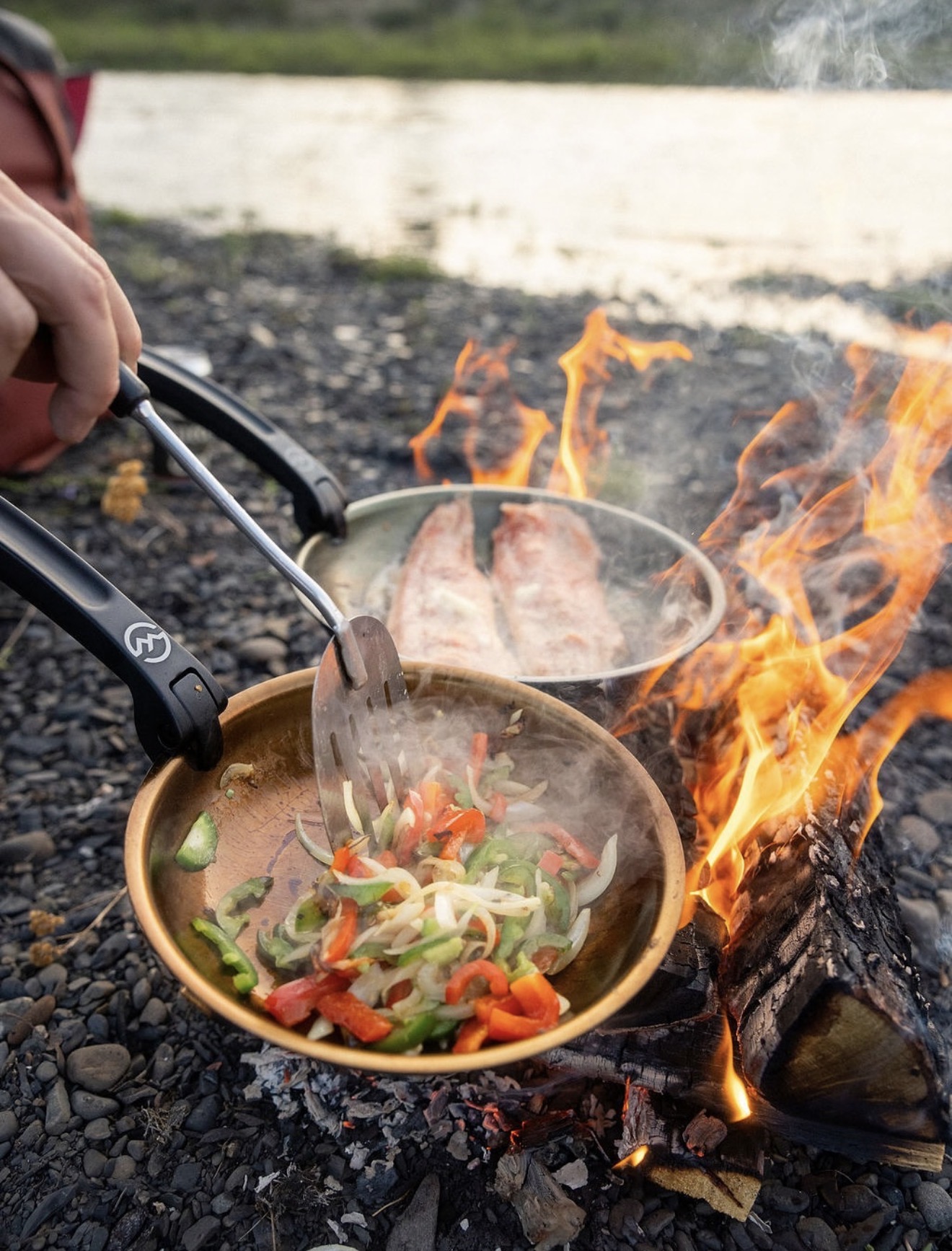
    Sautéed peppers and onions cooked in the same pan as sausage, topped with provolone or mozzarella on a crusty bun. Fast, hearty, and deeply satisfying.

    French Onion Grilled Cheese

    Caramelized onions and Gruyère cheese on sourdough, crisped in a carbon steel pan. A portable, camp-ready twist on French onion soup.

    Breakfast Sandwich Variations

    English muffins, eggs, ham or bacon, and cheese—plus optional upgrades like Brie and apple. Simple platform, endless variations.

    Crispy Gnocchi with Burst Tomatoes and Mozzarella

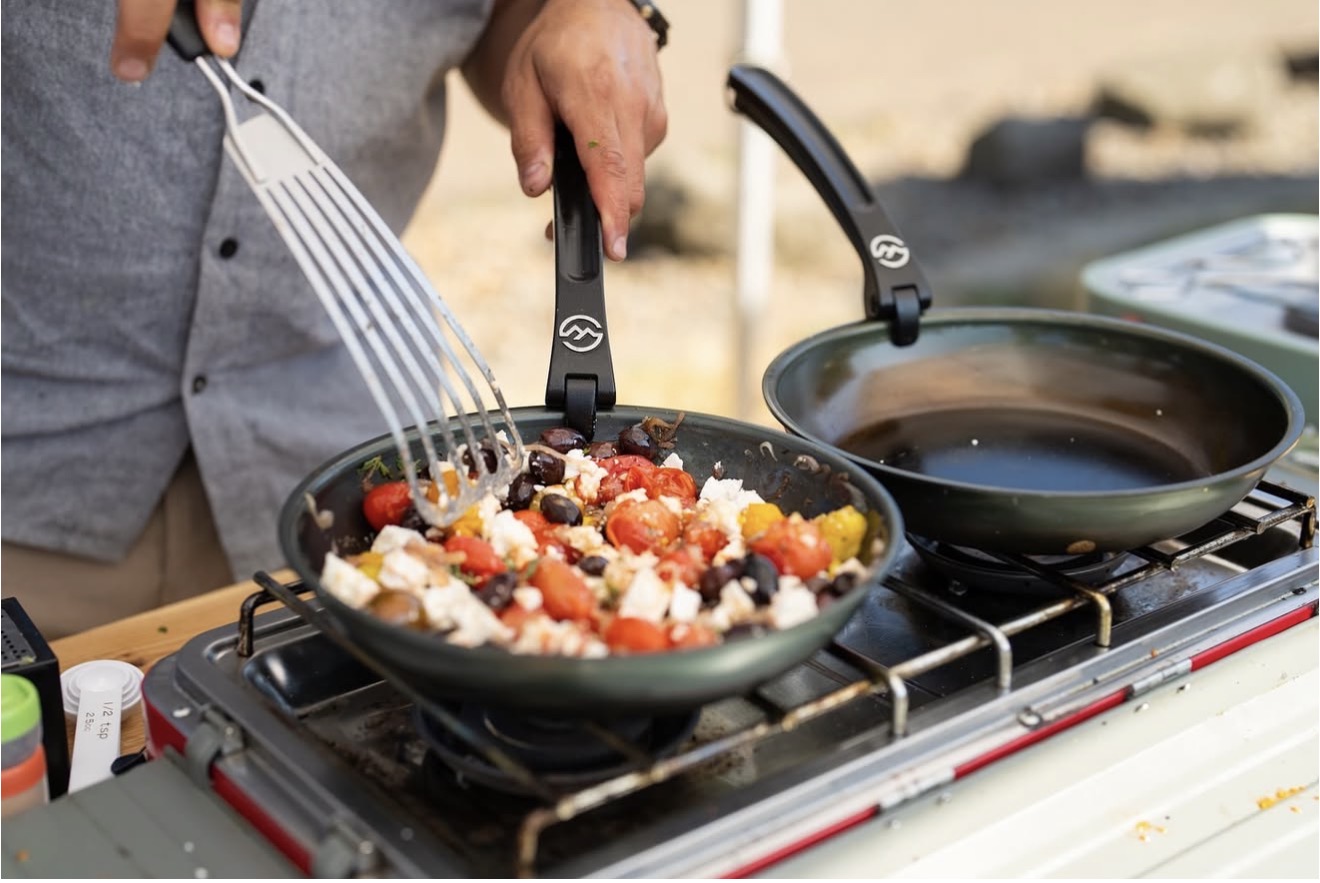
    Instead of boiling gnocchi, pan-fry it until crisp. Add blistered cherry tomatoes, basil, and mozzarella for a rich, comforting meal that feels gourmet but requires minimal ingredients.

    Final Thoughts

    This episode was one of our favorites because it reminds us what camping is really about: slowing down, cooking good food, exploring beautiful places, and building something meaningful.

    Brent’s story—from childhood canoe trips to launching a cookware company after a life-changing loss—is a powerful reminder that sometimes the thing you’ve been dreaming about is worth pursuing.

    And the West Kootenays? They’re officially on our list.

    If you want to follow along with Brent’s adventures, learn more about GOSO Cookware, or see where he’ll be exhibiting next, check out his website and social channels—and if you’re planning a Canadian road trip, consider adding British Columbia to your route.

    We’ll see you at the campground.

    The post Epic Camping and Outdoor Cooking in West Kootenay, Canada with Brent from GOSO Cookware appeared first on The RV Atlas.


    An Epic Summer RV Trip to Michigan: Part Three (Magnus Park Campground and Petoskey) Feb 20, 2026
    Show notes Bayfront Camping at Magnus Park Campground

    On this week’s episode of The RV Atlas Podcast, we wrap up an epic three-part Michigan series with our friend Casita Dean May—and we’re ending in a place that feels like it should be impossible to find in 2026: a municipal campground on Little Traverse Bay with walkability into town, a bike path that can take you 26 miles, and waterfront sites for $40–$50 a night. This episode is the final stop on Dean and Laura’s 23-night Michigan road trip: Holland State Park (beach camping), Interlochen State Park (Traverse City and Old Mission Peninsula), and now Petoskey—for nine nights at Magnus Park Campground.

    And the reason Petoskey was the “main event” is one of the best kinds of RV story: they were here because friends they love have been telling them for years, “You’ve got to come during the summer and spend some time in Petoskey.”

    To listen to our interview with Casita Dean May please click on the media player above or subscribe to the RV Atlas wherever you get your favorite shows

    Why This Trip Happened

    This Petoskey stop was inspired by a friendship. Dean shared that his retired dean and mentor, John Bonaguro, and John’s wife Ellen caught the camping bug after Dean and Laura did. One upgrade led to another (as it always does), and now they’re the kind of retirees who camp six months out of the year, book 90-day stays, and spend their summers in Petoskey at Magnus Park Campground before heading to places like Arizona, Texas, or Florida for winter.

    We love this kind of RV inspiration—because it’s not about gear. It’s about the way RVing deepens relationships and builds a life around places you want to return to again and again.

    More About Magnus Park Campground

    Magnus Park is a city park campground—a municipal park with RV camping, right on the bay. We’ve stayed in county parks and state parks and national park campgrounds, but city-park camping is rare enough that it still feels like a hidden category. And honestly? We wish more cities would do this. Because if you build a campground within walking distance of town, RVers don’t just camp—they spend money in local restaurants, cafes, grocery stores, and shops.

    Magnus Park is the kind of place that makes you think: why aren’t there 50 more of these?

    Where It Is and Why the Location Is the Whole Point

    Magnus Park Campground sits on Little Traverse Bay, which is essentially an extension of Lake Michigan. Picture this: bay out your front windows, campground road in front of you, and then a paved bike path running along the shoreline—and Petoskey is right behind you.

    Petoskey itself is a small city—about 6,000 people—but in summer it swells dramatically (Dean said it can jump up to 50,000 in peak tourist season). That combination is part of the charm: it has real small-town bones, but it’s set up for summer vacation life.

    Sites and Hookups

    Magnus Park Campground has 76 sites total. Of those, 36 are full hookups, and the remaining 40 are water + electric. The layout is a closed loop, and if you’re in the “right” line of sites facing the bay, you’re basically camping on the water with the kind of view that usually costs triple (or requires a year-in-advance booking strategy).

    Prices That Feel Old-Fashioned

    Let’s just say it: the pricing here is wildly reasonable.

    • Full hookup sites: $40/night (non-peak) and $50/night (peak)

    • Water + electric sites: $35/night (non-peak) and $45/night (peak)

    • One cabin: $200/night (non-peak) and $225/night (peak)

    • Peak season: Memorial Day through Labor Day

    We love “old-school pricing,” and this is the definition of it—especially for a waterfront location.

    Booking: The Quirkiest Reservation System We’ve Ever Heard Of

    Magnus Park Campground has a reservation system that is truly unlike anything else we’ve encountered. You can’t book far in advance throughout the year. Instead, everything opens up in early January, and the first people who get access are the long-stay campers.

    Here’s how it works:

    • Day 1: people booking 90 days or more get first pick

    • Day 2: people booking 30 days or more get next pick

    • Day 3: everyone else gets access

    So if you want a prime full-hookup bayfront site during peak season, you need to be ready when “day three” arrives—because the people doing the full summer up there are absolutely grabbing the best locations first.

    Dean also shared something practical: you can book by phone, but it often goes to voicemail and may take a couple of days for a call back—so online booking is the smoother route.

    How Dean Booked Nine Nights (Without Planning Until June)

    This is the part of the episode that makes us respect Dean even more. He didn’t decide to put this trip together until late June, which is practically “last minute” in the campground world—especially for a place this popular.

    The reason it worked:

    • Most of their nights were after Labor Day, when there’s more availability

    • They were willing to take a water + electric site instead of full hookups

    • They had a smaller rig (a 17-foot camper and a mid-size truck)

    Even with all that, they had to do the thing nobody wants to do on a longer stay: they switched sites mid-trip (four nights in one, five nights in another). It’s not ideal—but when the destination is this good, you can make peace with a little inconvenience.

    Dean also ended up in a “small site” the first part of the stay, and we actually love that the campground warned him ahead of time. That kind of truth-in-advertising changes your expectations and keeps you from arriving annoyed.

    Wi-Fi, Cell Service, and Staff

    Magnus Park offers Wi-Fi, and Dean said it worked well for the basics—email, checking info, normal everyday use. Cell service was also strong on AT&T.

    The staff at Magnus Park Campground stood out as friendly and present, but one funny detail Dean mentioned is that so many people return year after year that you can’t always tell who is staff and who is just a veteran camper chatting around a campfire. That’s a great sign of a loyal campground community.

    Why This Park Worked So Well for Dean and Laura

    One of the most heartfelt parts of the episode was Dean’s explanation of why this trip—and especially this park—fit their current season of life. Their dog, Gibbs, is older now. That changes the type of travel you can do. Hardcore hikes and long adventures aren’t always realistic.

    Magnus Park Campground gave them the best of both worlds: stunning views and easy movement without needing rugged terrain. The paved path behind the park meant they could still get fresh air and exercise, still explore, still sightsee—without pushing beyond what works for their family right now.

    The Little Traverse Wheelway: The Feature That Makes This Place a “Slam Dunk”

    The paved bike path is one of the biggest reasons Magnus Park Campground feels like a gem.

    The Little Traverse Wheelway runs right behind the campground along the shore. From the park:

    • Turn one direction and you can ride toward Charlevoix

    • Turn the other direction and you can ride through Petoskey, past Bayfront Park, toward Petoskey State Park, and even all the way up to Harbor Springs

    Dean said it’s about 26 miles end-to-end. He rode 12–15 miles in a day on a regular bike (and noted that many people were on e-bikes). This is the kind of summer RV travel we love most: park the rig, hop on a bike, stop for coffee or a beer, stare at the water for 15 minutes, and let the day move slowly.

    Petoskey Stones: The “Treasure Hunt” That Brings People Here

    Petoskey stones are the state stone of Michigan, and the history is fascinating. They’re fossilized coral shaped into pebble-like stones through glaciation. People come to the area specifically to hunt for them, and it’s gotten popular enough that you’re limited to 25 pounds of stones.

    Dean even mentioned a 93-pound Petoskey stone that’s on display elsewhere in Michigan. If you’re traveling with kids, this is an easy, memorable activity that doesn’t feel like “an attraction.” It’s a treasure hunt.

    Day Trips and Scenic Drives Near Petoskey

    Harbor Springs

    Harbor Springs is just north and feels like a magazine cover. The homes along the water are stunning—early-1900s architecture that looks like it belongs in design magazines. The downtown is small but charming, and the whole place feels like a summer escape.

    The Tunnel of Trees

    This is the “surreal beauty day.” Starting in Harbor Springs, you can drive north along the Tunnel of Trees—a 20-mile scenic stretch often listed as one of the most beautiful drives in America—ending in Cross Village. Along the way:

    • Good Hart General Store is a classic stop

    • Trillium Woods Coffee is an unforgettable roadside coffee shop in the woods (great coffee, but also a unique and quirky vibe)

    Charlevoix

    Dean didn’t get to spend time here due to weather and schedule changes, but the drive-through alone was enough to know it deserves a visit. Charlevoix has a lively, pedestrian-heavy downtown and is known for its whimsical mushroom houses—organic, fairytale-like architecture. It’s also close to Fisherman’s Island State Park (rustic camping only).

    Wilderness State Park and Mackinac Country

    If you keep going north past Cross Village, you can reach Wilderness State Park near Mackinac City. Dean described it as huge, with hundreds of sites and all kinds of camping options, plus a lighthouse and designation as a night-sky preserve. They didn’t push that far on this trip, but it’s clearly on the “next time” list—along with Mackinac City, the bridge, and the UP.

    Food, Beer, and Donuts: The Petoskey Short List

    If there’s one theme across this entire Michigan trilogy, it’s that great camp days start with coffee and end with something delicious.

    Johan’s Pastry Shop

    Old-school bakery energy, excellent donuts, and the kind of place you go twice in nine days. Dean and Laura made it a ritual—sometimes with a donut eaten on the walk back to camp (we will not judge).

    Petoskey Brewing Company

    A reliable stop for beer and food, located on the north end of town and easy to reach by bike.

    Side Door Saloon

    A recommended spot from the Bonaguros, with an old-school interior vibe (Dean described mahogany and red leather) and solid food.

    Duffy’s Garage & Grille

    Here’s the surprise: the best pizza of the entire trip. Pizza isn’t even in the name, but the pizza was exquisite. This is one of those “trust the local place” moments.

    Pond Hill Farm

    This was described as a “do everything” stop: café, winery, brewery, market, kid-friendly, farm animals, trails, pizzas, and a vibe that works for families and dog owners. It’s on the same route you’d take toward Harbor Springs.

    Dean’s Big Takeaways from the Whole Michigan Trilogy

    At the end of the episode, Dean shared that if he could only pick one area to revisit, he’d choose Traverse City, simply because they didn’t have enough time there.

    But if he had to pick a favorite campsite, he might actually choose Holland’s beach campground—even though it was on asphalt—because the surf was right there and beach camping was so unique for them.

    And for pure campground accessibility to town + water + biking + views, Petoskey (Magnus Park) felt like a slam dunk.

    Final Thoughts on Magnus Park Campground

    Magnus Park is the kind of place that reminds us why we love “hidden gem” public camping. It’s not flashy. It doesn’t need to be. It delivers on what matters: location, access, affordability, and a vacation rhythm that makes you slow down.

    This three-part Michigan series has done exactly what we hope a great RV podcast series does: it makes you want to pick a date, open a map, and start building your own version of this road trip. If you’ve been sleeping on Michigan as an RV destination, consider this your sign.

    We’ll see you at the campground.

    The post An Epic Summer RV Trip to Michigan: Part Three (Magnus Park Campground and Petoskey) appeared first on The RV Atlas.


    An Epic Summer RV Trip to Michigan: Part Two (Interlochen State Park and Traverse City) Feb 13, 2026
    Show notes

    Interlochen State Park Campground Review: A Classic Michigan State Park Near Traverse City

    On this week’s episode of The RV Atlas podcast, we’re back with the second installment in Casita Dean May’s epic three-part Michigan series—and this one takes us right into the heart of one of our favorite summer RV regions in the entire country: the Traverse City area. Last week, Dean walked us through Holland State Park. This week, he’s bringing us to Interlochen State Park, a campground that sits between two lakes, feels delightfully old-school, and offers an easy home base for exploring everything we love about Traverse City: beaches, breweries, coffee, small-town charm, and those long summer days that make you wish you could bottle August and save it for February.

    To listen to our interview with Casita Dean May please click on the media player above or subscribe to the RV Atlas podcast wherever you get your favorite shows.

    Why the Traverse City Area Feels Like “One of the Best Places in America”
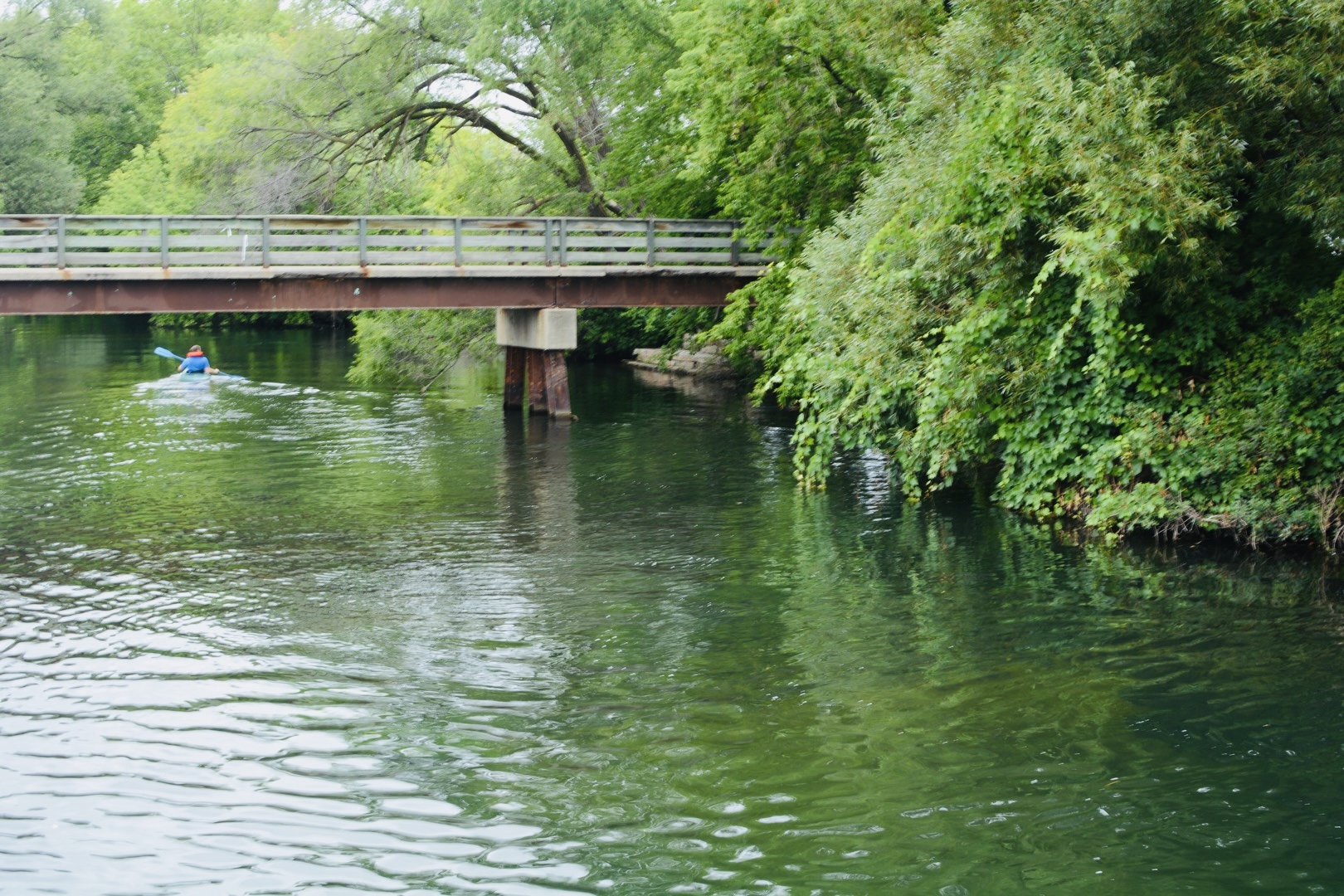
    Before we get into campsite loops and electrical hookups, we need to say out loud what we said in the episode: the Traverse City area has that rare “I could live here” energy. It’s not just beautiful—it’s livable. It’s the kind of place where you can imagine a slower, seasonal rhythm: summer on the water, fall color drives, and then maybe you escape the deep winter and come back when the cherries blossoms bloom.

    Dean and Laura even joked that they used to chuckle at the idea of being snowbirds… until Michigan made the case for it. Spend eight or nine months somewhere like Traverse City, Holland, or Petoskey, then head south for the hardest part of winter? That’s not a bad plan at all.

    Where Interlochen State Park Is Located
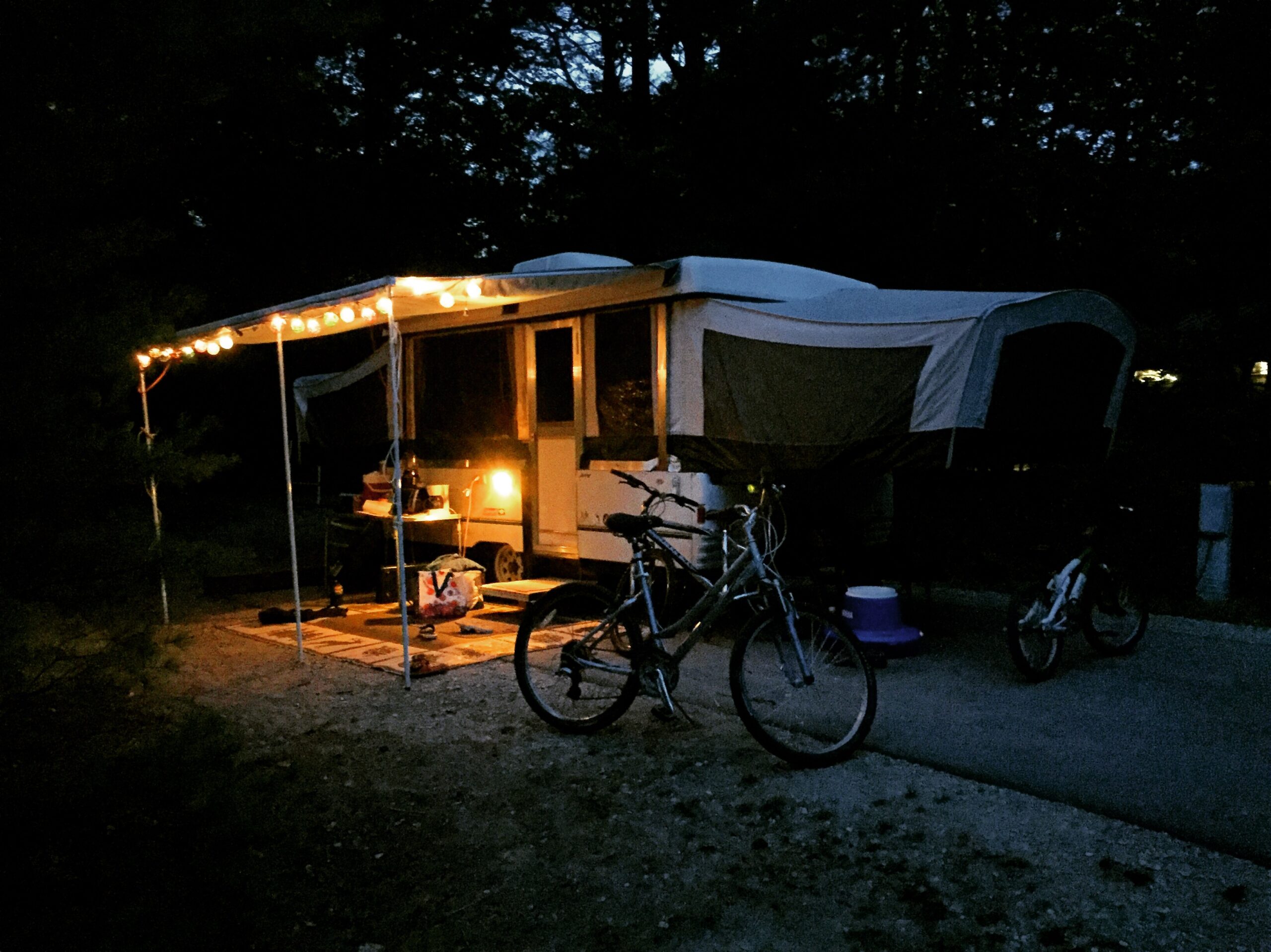
    Interlochen State Park is located about 15 miles from Traverse City, near the tiny community of Interlochen (we’re talking 500–700 people). It sits between Duck Lake and Green Lake, which gives the park its signature feel: water is always nearby, the air feels fresh, and the whole campground experience is wrapped in trees and shade.

    Dean and Laura headed north from Holland and took the direct route (they were meeting family), but whether you meander up US-31 along the coast or head inland, Michigan has one major advantage for RV travelers: you’re never far from another great state park. Dean put it perfectly—drive 30 minutes, and you’ll probably “bump into” another state park.

    Interlochen’s Secret Superpower: A World-Class Arts Scene

    Here’s one of the coolest “wait, what?” details from this stop: for a town that small, Interlochen has an enormous cultural footprint because it’s home to the Interlochen Center for the Arts, an internationally recognized institute for young musicians, dancers, and performers.

    In the summer, the arts center hosts rehearsals and performances—sometimes outdoors—and Dean described how you can even hear music “wafting” through the campground during peak season. Even if you’re not planning your trip around a concert, the idea that a world-class arts community is tucked into this small slice of northern Michigan is part of what makes this region feel so special.

    Two Campgrounds in One Park: Green Lake vs. Duck Lake

    Interlochen State Park is one of those parks we love because it gives you two distinct camping experiences within the same destination.

    Green Lake: Rustic and Quiet

    The Green Lake campground is the rustic option. It has two loops and 52 sites, and it’s surrounded by trees—including some of the park’s notable stands of virgin pine. If you love that classic, simple state park feel and you don’t need electricity, this is the “walk the loop and feel like you’re in the woods” kind of campground.

    Dean was candid here: they didn’t stay on the Green Lake side because they don’t do rustic camping. But it’s a great option for RVers and tent campers who want quieter loops and lower nightly costs.

    Duck Lake: The Modern Campground (and the One Dean Chose)

    The Duck Lake campground is the “modern” side, and it’s much larger—392 sites split between a North Loop and a South Loop.

    The North Loop offers both 30-amp and 50-amp electric, has about 20 pull-through sites, and includes several paved sites. The South Loop is 30-amp only, has just four pull-throughs, and includes about a dozen paved sites if you want that option.

    Even in the modern campground, Dean emphasized that you still get that Northern Michigan tree cover. In fact, he said it can be easier to find shade than sun—which is exactly what many families want in the heart of summer.

    Quick Clarification on Hookups (Because This Matters)

    At Interlochen the “modern” campground is electric with easy access to water spigots, not water at the site. Dean clarified that there are water spigots spaced throughout the campground—about every 50 yards or so—making it easy to fill a jug or top off tanks, even though you’re not connected directly at your site.

    For many RVers, that’s still a great setup: you can run the air conditioner if needed, and you can hit the dump station when it’s time to move on.

    Cabins and “Rent-a-Tents” for Non-RV Friends

    We love state parks that offer alternatives for friends or family who want to join the trip without owning an RV. Interlochen has a few options, especially on the Duck Lake side.

    Dean noted that there are three camper cabins in the modern campground. He described them as somewhat rustic in style, but still equipped with electricity and useful basics like heat, a refrigerator, microwave, and coffee pot.

    There are also two “rent-a-tents” on platforms that sleep up to six (with bunk beds and cots). They include electricity and lighting, but you bring your own bedding and cookware. These are a great option for families who want the camping experience without investing in all the gear.

    Rates: Classic State Park Pricing

    One of the most jaw-dropping parts of this episode was the pricing—because these are the kinds of rates many of us remember from when we first started camping.

    • Rustic sites: $20/night

    • Modern campground: $32/night (30 amp) and $37/night (50 amp)

    • Camper cabins: $120/night

    • Rent-a-tents: $60/night

    Dean called this “very reasonable,” and we agree. Even with electric-only camping, those rates are outstanding for a summer destination with lakes, shade, and easy access to a world-class vacation town like Traverse City.

    What It’s Like to Camp Here

    Dean described Interlochen as a traditional, old-school campground—in the best possible way. Walking the loops feels like a nature walk. Trees surround you. You can catch glimpses of the lake. The vibe is simple, classic, and comfortable.

    He also shared that the bathhouse was solid: clean, utilitarian, nothing fancy, nothing awful. Exactly what most of us expect at a state park campground.

    Cell service was good (Dean has AT&T), and there’s no campground Wi-Fi—which, honestly, feels pretty normal for state park camping and might be a bonus depending on your vacation goals.

    One Insider Tip About “Lakefront” Sites

    Dean shared a really helpful “manage your expectations” note: if you book a site labeled “lakefront,” be clear on what that actually means here.

    At the Duck Lake campground, you may have a view of the water, but you generally don’t step from your site directly onto the beach. Instead, there are access points at the ends of loops that lead down to a more primitive beach area.

    It’s not a negative—it’s just the kind of detail that can prevent disappointment if you’re imagining a private shoreline behind your picnic table.

    What to Do in Interlochen

    Even though Interlochen is tiny, Dean pointed out that it still offers what RV travelers need: coffee, casual food, and grocery supplies.

    He mentioned Bud’s Coffee, Ice Cream & Food as a great stop for coffee and a vibe check—and potentially a perfect family option after a day out exploring. He also called out Mimi’s Taqueria, a family-owned Mexican spot that looked like a great taco stop.

    And for groceries (because we’ve all had the “we forgot that one thing” moment), Dean was impressed with Tom’s Food Market, a full-service grocery store that’s surprisingly robust for such a small community.

    Traverse City: Start With the Water, Then Let the Day Unfold
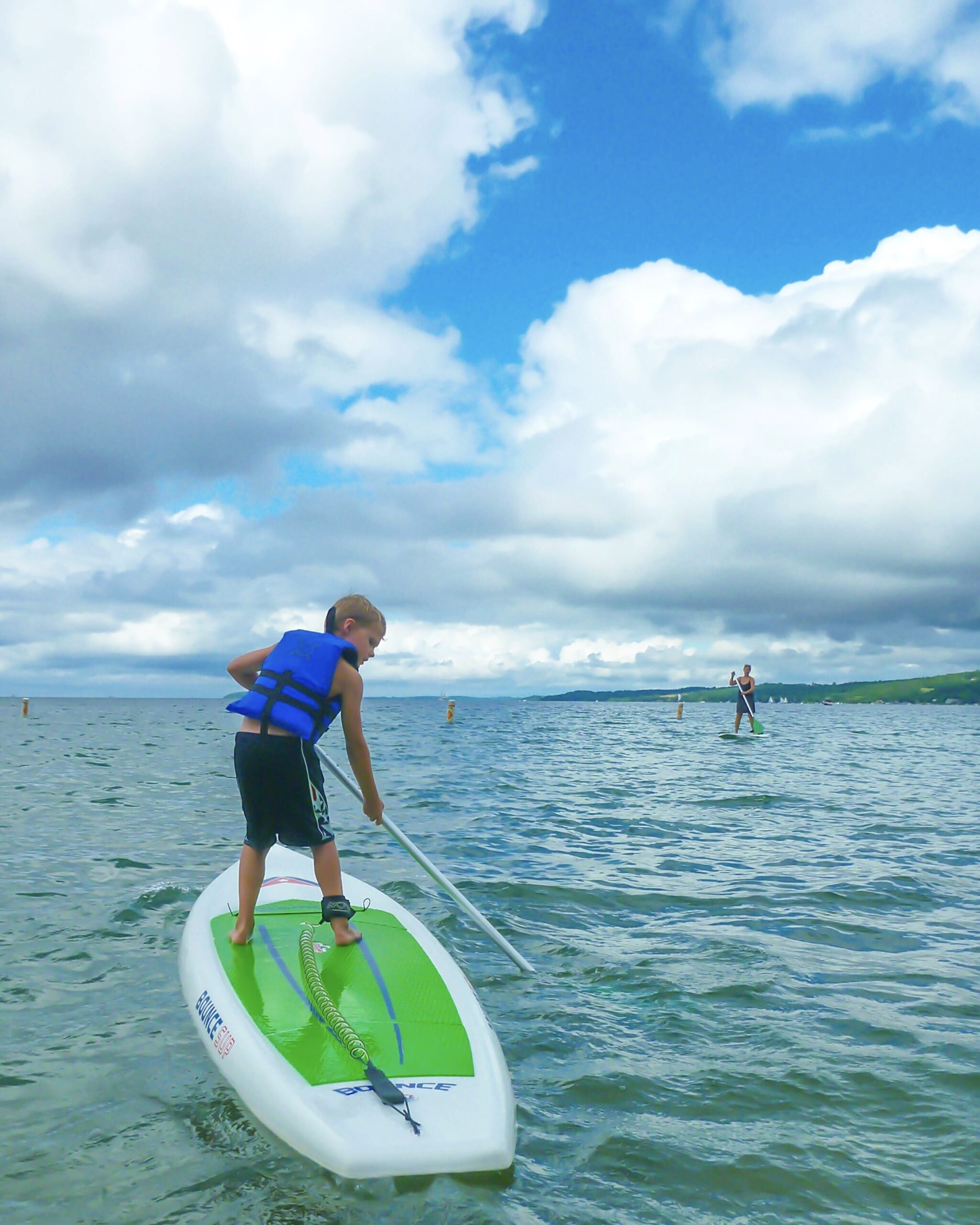
    Dean’s strategy for Traverse City was exactly how we like to do it: start at the waterfront, walk the parks, and then drift into town for food and drink.

    He recommended spending time near Clinch Park and West End Beach Park, where there’s a paved walkway, access points down to the water, and that “I can’t believe this is Michigan” Great Lakes feeling.

    Then, after you’ve had your fill of water views, you cross back toward town and suddenly you’re in the middle of Traverse City—shops, restaurants, breweries, coffee, and everything else that makes this place hum in the summer.

    Traverse City itself has about 16,000 residents, which surprises many people because it feels bigger. But it’s part of a broader four-county region of about 150,000 people—and then summer tourists flood in, creating that lively vacation energy without losing the small-town charm.

    Old Mission Peninsula: A Perfect Summer Day
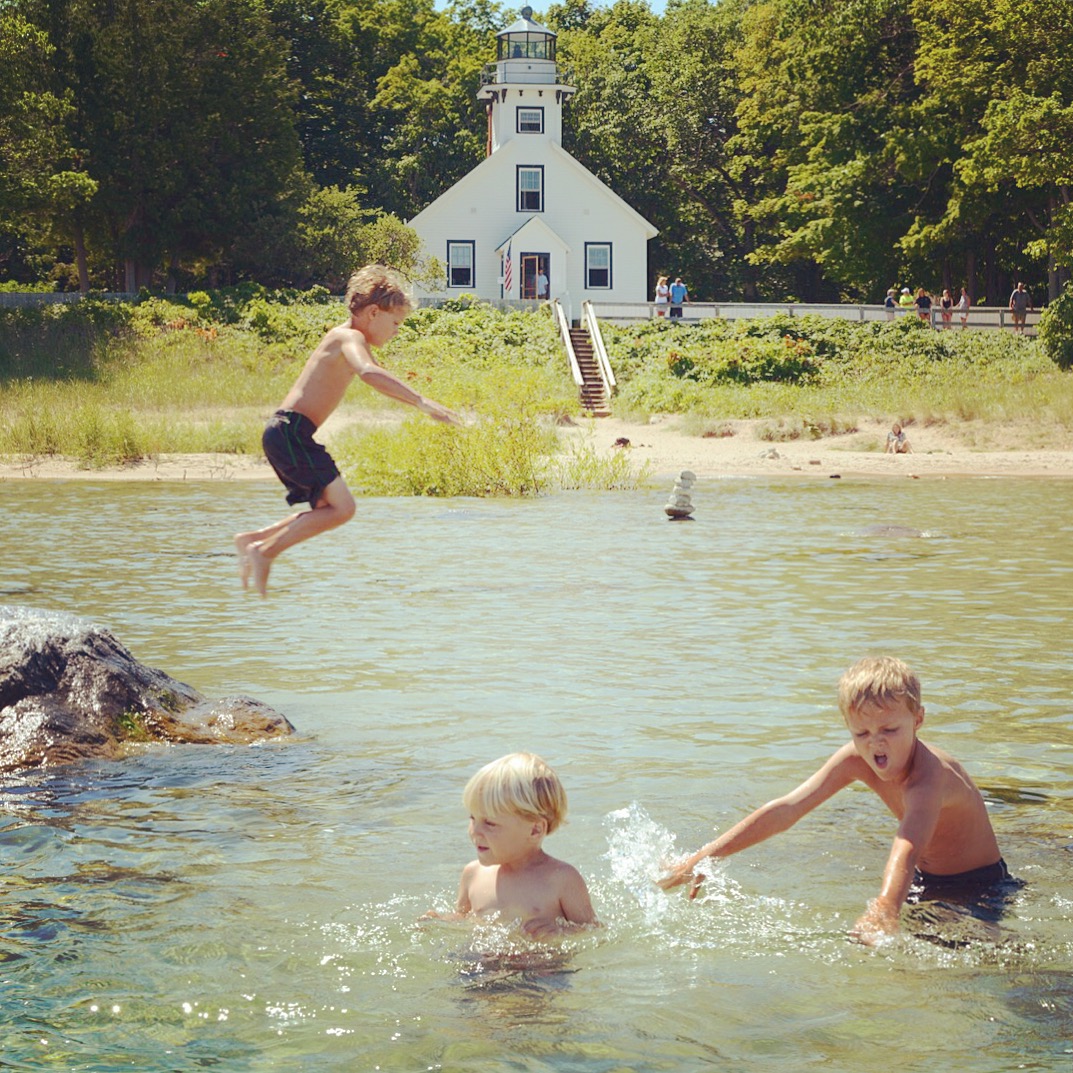
    This is the moment in the episode where we basically got poetic—because Old Mission Peninsula is that kind of place.

    The peninsula stretches 18 miles long and about three miles wide, jutting into the bay with wineries, parks, stunning views, and a pace that practically forces you to slow down. Dean and Laura spent a full day here, and it’s easy to understand why.

    Dean stopped at Bowers Harbor Park (a fun personal detail because it connects to Laura’s maiden name), noted the pickleball courts, and walked over to Bowers Harbor Vineyards, where they bought bottles to bring back.

    Farther up the peninsula, the day gets even better at Mission Point Lighthouse, where you can tour, explore a log cabin, and—if you’re traveling with kids—find the kind of rocks that basically demand jumping into the water. This is classic Northern Michigan summer energy: swim, lighthouse, winery, food, repeat.

    We said it on the show and we’ll say it again: Old Mission Peninsula is one of the most magical places in the country to spend a summer day. Take your time. Relax. Let it be an escape.

    Traverse City Food and Drink: One Easy “Everyone’s Happy” Option

    If you’re traveling with a group—or anyone who can’t agree on dinner—Dean offered a very simple solution: The Little Fleet.

    It’s a permanently set-up food truck court with a brewery/pub anchor and a U-shaped layout of food trucks around an open seating area. You don’t have to negotiate one restaurant choice. Someone can get tacos, someone can get pizza, someone can grab a smoothie, someone can go full hot-dog mode.

    Dean specifically mentioned enjoying an Asian dish from The Crocodile Palace with a beer under the picnic tables—comfortable temps, a little shade, and that easy summer rhythm that makes food truck courts feel like vacation.

    A Few Extra Traverse City Details We Love

    Dean mentioned one of those delightfully silly roadside-style attractions that makes travel fun: Traverse City’s claim to the world’s largest cherry pie pan. The twist? Another town farther north claims the same thing. So apparently there’s a friendly “largest pie pan” rivalry happening in Michigan, which feels very on brand for a state that takes cherries seriously.

    And yes—Traverse City really is cherry country. That theme shows up everywhere, and it’s part of what makes the region feel distinct.

    If We Went Back: What Would We Add Next Time?

    Dean said something we completely agree with: of the three regions on this Michigan trip, the Traverse City area is the one that demands more time. Three full days isn’t enough—not if you want to do it right.

    If he returned, the first stop on his list would be the Leelanau Peninsula (sometimes called “the little finger”), which is packed with small towns like Leland and Glen Arbor, wine trails, beaches, inland lakes, and of course Sleeping Bear Dunes National Lakeshore.

    He also rattled off what makes Traverse City irresistible: dozens of coffee roasters, a brewery scene that could fill your whole trip, independent pizza shops, donut stops for morning traditions, and enough day trips to stretch a one-week vacation into two.

    Final Thoughts

    Interlochen State Park is exactly what we want a state park campground to be: affordable, scenic, wooded, and close enough to a great destination town that you can do big adventures during the day and come home to quiet loops at night.

    Interlochen State Park may not have full hookups, but the electric access (plus easy water spigots) makes it comfortable for RVers, and the overall vibe feels like classic summer camping. Add in Traverse City’s beaches, breweries, and coffee culture—and the day trip magic of Old Mission Peninsula—and this becomes the kind of RV destination you dream about in January.

    Next week, we’ll wrap up the Michigan trilogy as Dean heads north to Petoskey for the final episode—nine nights at Magnus Park, the main event of his Michigan trip.

    We’ll see you at the campground!

    The post An Epic Summer RV Trip to Michigan: Part Two (Interlochen State Park and Traverse City) appeared first on The RV Atlas.


    An Epic Summer RV Trip to Michigan: Part One (Holland State Park and Beyond) Feb 05, 2026
    Show notes

    Holland State Park Campground Review: Beach Camping, Breweries, and Dutch Charm in Holland, Michigan

    On this week’s episode of The RV Atlas Podcast, we’re kicking off an epic three-part Michigan series with our friend Casita Dean May—and we’re starting in a place that feels like a postcard come to life: Holland State Park on the shores of Lake Michigan. If you’ve ever wanted a Great Lakes beach vacation that works beautifully for RVers (and doesn’t require flying across the country), this is it.

    Dean’s trip wasn’t a quick weekend loop. It was a 23-night road trip built around three Michigan campgrounds—Holland State Park first, then Interlochen State Park near Traverse City, and finally Magnus Park in Petoskey. Along the way, he and Laura mixed in time with family and friends—exactly the kind of “RV life at its best” itinerary we love.

    Why We’re So Excited About Michigan

    We’re going to make the call right up front: from everything we’ve learned over years of RV travel and campground research, Michigan has one of the best state park systems in the country—and it shows in this episode. Dean’s review reinforces something we’ve been saying for a long time: Michigan is wildly underrated as an RV destination, especially for anyone who loves beach camping, great small cities, and strong public campgrounds like Holland State Park and Interlochen State Park.

    Shenanigans and Stats: Dean’s Camping Year Was No Joke

    Before we even get to Michigan, we have to pause and applaud the mileage Dean and Laura put in last year: 96 nights of camping. That’s not “we stayed in the RV a few weekends.” That’s a lifestyle. And it’s why Dean’s reviews are so valuable—he’s not guessing what matters to RVers; he’s out there living it, week after week.

    Holland State Park Basics

    Holland State Park sits on the eastern shore of Lake Michigan, near the small city of Holland (about 35,000 people). It’s an easy-to-reach beach destination for RVers coming from places like Chicago, Indianapolis, and Detroit—especially if you’re driving north out of Indianapolis and aiming for the Lake Michigan coastline.

    Two Campgrounds, Two Totally Different Experiences

    One of the most helpful parts of Dean’s review is that Holland State Park isn’t a single campground. There are two distinct camping areas (plus a few cabins), and the difference between them matters.

    The Beach Campground

    The campground Dean chose—and the one that defines the Holland State Park experience—is the Beach Campground (also referred to as the “modern beach campground”). It’s not your typical wooded state park loop. It’s essentially a campground built into a large paved area near the dunes and beach access, with the kind of location that makes you immediately stop caring that you’re camping on asphalt.

    There are 98 sites total, with a mix of electric-only sites and a smaller number of full hookup sites. The setup is unique: instead of your truck being parked directly in front of your camper, your parking is more parallel beside your rig, and the picnic area is positioned so you still have a functional outdoor living space. Dean described it as “a bit tight,” but still workable—and for him, the beach access was absolutely worth it.

    If you’ve ever wanted to wake up and walk straight to sand, watch sunsets every night, and stay close to snack bars, bathhouses, and beach facilities, the Beach Campground at Holland State Park delivers.

    Lake Macatawa Campground

    The second option at Holland State Park is the Lake Macatawa Campground, about a mile away. This is the more traditional campground: 211 sites, more trees, more shade options, and a classic state park feel. You can choose between 30-amp and 50-amp electric, but there’s an important tradeoff: no water hookups at individual sites—you’ll use central water stations throughout the campground.

    Dean emphasized that if he were doing the trip again, he’d still pick the beach campground—but he would stay longer. That says a lot.

    Cabin Options

    Holland State Park also offers a few camper cabins. These are not luxury cabins with full kitchens and linens provided. They’re more of a simple, two-room, bring-your-own-stuff style option—more comfortable than rustic, but nothing fancy. They can work well for a family traveling with someone who doesn’t own an RV but still wants to be part of the trip.

    Reservations, Booking Windows, and What It Costs

    Michigan’s state parks use a six-month booking window, and Dean’s advice was crystal clear: if you want a full hookup site at the beach campground at Holland State Park during peak season, you should be ready to book as soon as that window opens—because those sites disappear fast.

    Pricing struck us as very reasonable for what you’re getting. Electric sites were around $45–$48 per night depending on amperage. Full hookup sites at the beach were around $60–$63 per night. Cabins were around $120 per night.

    What to Know Before You Arrive

    Here’s the “save yourself a headache” tip Dean learned the hard way: check-in for the beach campground happens at Lake Macatawa first. He drove all the way down to the beach campground and had to loop back a mile to check in, then return again. If you’re staying at the beach campground, head to Macatawa first for check-in.

    Cell service was strong (Dean had AT&T and reported good service), and staff were friendly—but this is a busy park, especially at the beach campground, with constant day use traffic and sunset visitors flowing in and out. It’s not a “linger at the gatehouse and chat” kind of park. It’s a well-oiled machine.

    The One “Con” That Isn’t Really a Con

    If you need trees, quiet loops, and forest vibes, the beach campground might not be your dream. You’re camping on pavement, in sun, with a lot of people. But if you go in knowing what you’re choosing, the payoff is huge: beach walks, sunsets, and that classic “Lake Michigan is basically an ocean” feeling every single day.

    What to Do Near Holland State Park

    Explore Holland’s Dutch Influence

    Holland has a strong Dutch history dating back to immigrants arriving in the mid-1800s seeking religious freedom. That influence comes through in the architecture, the food, and the cultural attractions—and it gives the town a distinct vibe compared to other Great Lakes beach cities.

    Downtown is about six miles from the campground, and it’s easy to turn a morning or afternoon into a “coffee + walk + brewery” kind of outing.

    The Big Red Lighthouse

    The Big Red Lighthouse is in the state park, and it’s a classic Michigan photo stop—especially at sunset, when the beach fills up with people watching the sky change over the water. It’s easy to fit into your beach routine because it’s right there.

    Windmill Island Gardens

    If you only do one attraction beyond the beach, Dean said it should be Windmill Island Gardens. This is where you’ll find the famous De Zwaan windmill and a full experience built around the area’s Dutch heritage—walking paths, gardens, reconstructed buildings, and a setting that’s perfect for photography.

    The park is also closely tied to Holland’s well-known Tulip Festival in the spring, which draws huge crowds.

    Hope College

    We love a good campus walk, and Dean does too. Hope College is near downtown and makes for a lovely stroll if you’re already exploring Holland on foot.

    Where to Eat and Drink in Holland

    Dean’s travel style includes what we value too: yes, camp cooking is great—but discovering local food and breweries is part of the fun.

    Dune Dogz

    Between the two campgrounds at Holland State Park, you’ll find Doon Dogs, a classic “hot dogs and ice cream” kind of stop that’s especially fun for families. What surprised Dean in the best way was the presence of fish options—one of those “you’re in Michigan, you’re on the water” reminders that shows up even in a casual roadside spot.

    Hops at 84 East

    Downtown, Hops at 84 East hit a perfect RV day-tripping combo: pizza for Laura and local beer for Dean. It’s a great “walk around downtown, then sit down somewhere comfortable” stop.

    Big Lake Brewing

    Another brewery stop Dean enjoyed was Big Lake Brewing, where he talked about a pasta dish that tasted like a lobster mac-and-cheese vibe—plus a family-friendly dining room that still feels like a brewery hang.

    New Holland Brewing

    For Dean, New Holland Brewing was a must and one of the main reasons he wanted to visit Holland in the first place. He’s been drinking their beer for 15–20 years, and visiting the brewery downtown was one of the highlight experiences of the stop.

    de Boer’s Koffee Roasters Bakkerii Restaurant

    Coffee matters. Dean recommended de Boer’s Coffee Roasters Bakery Restaurant—and we love the detail that the Dutch influence shows up even in the spelling (“bakkerij”). He grabbed coffee and donuts there and noted it would also be a great place for breakfast or lunch.

    Ottawa Beach General Store

    This spot sits between the two campgrounds and is walkable from the beach campground. It’s convenient for supplies and souvenirs, and Dean tried the coffee—but kept missing the homemade donuts because they sold out early.

    Bonus: Pickleball in Holland

    If you travel with paddles (or you’re pickleball-curious), Holland makes it easy. Dean found newer courts on the main route between the state park and town, with multiple courts and even wind mitigation mesh on the fencing. It was breezy when they played, but he got the sense there’s an active local pickleball community.

    Dean’s “If You Only Do Two Things” Picks

    If you’re passing through quickly, Dean’s top recommendations were simple. Grab a beer at New Holland Brewing and spend the day at Windmill Island Gardens.

    Final Thoughts

    Holland State Park is the kind of destination that makes a strong case for a week-long Great Lakes vacation. The beach campground may be paved, but the experience is Pure Michigan: sunsets over the water, quick access to town, and an easy blend of beach time, breweries, and sightseeing.

    We’re excited to keep this Michigan trilogy rolling. Next up, Dean takes us to Interlochen State Park near Traverse City, and then we’ll head north to Petoskey and Magnus Park.

    We’ll see you at the campground!


    The post An Epic Summer RV Trip to Michigan: Part One (Holland State Park and Beyond) appeared first on The RV Atlas.


    RV Vacations Vs. Cruise Vacations for Spring Break (Which One Wins and Why!) Jan 29, 2026
    Show notes

    RV Vacations Vs. Cruise Vacations

    For 12 years, we’ve made an RV podcast for RV people. We’ve driven all over North America with kids and dogs, chasing beach days, national parks, great food, and campfire nights. So when we tell you we did something wildly out of character last spring… we mean it.

    After a decade of spring break RV trips—Myrtle Beach, Charleston, and even one memorable spring break camping trip in Texas—we booked our first-ever cruise. We had never cruised as kids. We’d never cruised as adults. But the boys were cruise-curious (because how could they not be, with the commercials and the stories from friends?), and our spring break landed early in the calendar—right in that “South Carolina might still be brisk and the pools might not even be open” zone.

    So we tried it. And for an entire week, we couldn’t stop comparing it to RV travel.

    This isn’t a cruise review. We’re not cruise experts. This is simply what we learned when an RV family tried a classic spring break cruise—and why, even after a fun trip, we’re still firmly in the “RV vacation” camp as our family’s go-to for spring break each year!

    1) RV vacations can be far more affordable

    Cruises can be expensive, especially with five people—and we’re not talking about luxury suites. Between the rooms (we booked two rooms so we’d have two bathrooms), add-ons, and general travel costs, the total number adds up fast.

    What really struck us is what that same amount of money can buy in the RV world. Depending on how you shop, one cruise vacation can equal a significant down payment on an RV—or even the full cost of a used pop-up or used travel trailer. And once you have the RV, you have a travel style that lets you control costs in a way cruising simply doesn’t.

    2) Our RV setup is more comfortable than cruise ship rooms

    Cruise rooms were comfortable, but they’re small. RV travel has spoiled us: our own pillows, our own towels, more space to spread out, a kitchen, and a bathroom that actually feels more functional for a family than a cruise ship bathroom.

    The funny part is that RVing might be what made the cruise room feel manageable—because we’re used to small-space living. But if we’re choosing the most comfortable option for our family, RV travel wins.

    3) We prefer the RV food situation

    On an RV trip, we get the best of both worlds: we can cook (Blackstone griddle, Weber grill—whatever fits the vibe) and still go out for great meals when we want to.

    On a cruise, you’re eating out for everything. That can be relaxing in one way—no meal planning—but it also means constant eating, constant temptation, and fewer opportunities to reset with simple, familiar food. For us, the quality also felt like a consistent “B+.” Totally fine. Totally edible. But not the same as picking our favorite restaurants in a place like Charleston and building the vacation around truly great meals–and making our own great meals whenever we want.

    4) RV vacations are naturally more active

    On our spring break RV trips, we’re moving: walking, hiking, swimming, surfing, exploring towns, biking around campgrounds, and generally living outside.

    A cruise can be active if you make it active, but for our family it didn’t land that way. The rhythm felt more sedentary, and that’s not what we love most about vacation. RV vacations keep us naturally in motion.

    5) Cruise pool culture is intense

    We’ve been to crowded resort campgrounds during spring break. We know what pool crowds look like.

    But cruise pool crowds were next-level. Chair saving, early morning competition for seats, and a vibe that felt more stressful than relaxing. On an RV trip, the pool is part of a bigger day. On a cruise ship day, it can feel like the center of the universe—because, for many people, it is.

    6) The pools weren’t really “swimming pools”

    This surprised us. We expected pools where kids could swim. What we found were lots of shallow “lounging” pools—more “standing and sipping” than “cannonballs and laps.”

    We’re used to campground pools where the kids can actually swim, play, and burn energy. That style fits our family better.

    7) Seasickness is a thing (even if it only happens once)

    We’ll be honest: we didn’t expect seasickness. We’ve all spent time on boats. We didn’t think it would hit. But it did—one night—likely when the ship was moving faster in rougher conditions.

    It wasn’t a defining memory of the trip, but it is a unique downside that simply doesn’t exist in RV travel.

    8) RV travel offers more freedom and better day-to-day choices

    On an RV vacation, you wake up and choose: beach day, hike day, downtown day, live music, museums, tourist attractions, nothing at all. The itinerary can be loose, flexible, and responsive to weather and mood.

    Cruise excursions felt restrictive and expensive. Even if you want to create your own off-the-beaten-path day, you have to consider the biggest cruise anxiety of all: if something happens and you don’t make it back, the ship doesn’t wait. That reality changes how adventurous you might be and how far you might roam from the ship.

    9) RV travel feels more social and community-oriented

    Campground culture is friendly. People wave. People chat. People help. We’ve made friends RVing.

    On the cruise, it felt like most families stayed in their own bubbles. That may vary by cruise type and group demographics, but for our family experience, RV travel felt far more communal.

    10) You can bring your dog on an RV trip

    This one is huge—and it’s one of the most underrated reasons people choose RVing in the first place.

    Pets are family. And every vacation we took without Maggie and Maverick was time we didn’t have together. RV travel makes it simple: load up the dogs and go. Cruises don’t.

    RV Vacations Vs. Cruise Vacations: Where Cruises Win

    We’re not here to pretend cruising is awful. We had a great vacation. We laughed, relaxed, and made memories. And there are real ways cruising can be better—especially for certain families. When it comes to RV Vacations Vs. Cruise Vacations — cruises do win in certain areas.

    1) Food availability is convenient (especially with teens)

    Yes, the food can feel overwhelming. But the convenience is undeniable—especially with teenagers who are hungry at 9 p.m., then again at 10 p.m.

    On a cruise, they can grab pizza or snacks without us cooking a second dinner in the RV. That part is genuinely nice.

    2) The customer service is dialed in

    Cruise staff are trained hospitality professionals. Friendly, responsive, consistent.

    Campground hospitality varies wildly. Some resort campgrounds do it beautifully. Others charge resort prices without delivering resort-level service. Cruising reminded us what it feels like when hospitality is the core product. In the battle between RV Vacations Vs. Cruise Vacations this is definitely a win for cruising.

    3) Built-in entertainment is a real perk

    Shows. Comedy. Live music. Movies on deck. Poolside contests.

    We don’t expect that at a national park campground. But if you’re paying premium prices at an RV resort, it’s fair to say that live entertainment can elevate the experience—and cruises deliver it reliably. RV resorts? Not so much.

    4) You’re not responsible for fixing your accommodations

    This might be the biggest cruise advantage of all.

    If the hot water doesn’t work on a cruise, you tell someone and they fix it. RVing is the opposite: you bring your home with you, and you’re responsible for it. That’s part of the lifestyle—but it’s also why we believe RV vacations should remain more affordable than other vacation types.

    Final Thoughts on RV Vacations Vs. Cruise Vacations

    After one “classic” spring break cruise, we can say this with confidence: RV vacations are still our family’s favorite way to travel.

    We like freedom. We like choosing our own pace. We like the campground community. We like having our own stuff, our own food rhythms, and our dog with us. And we especially like that RV travel can be as simple or as adventurous as we want it to be.

    Would we cruise again? Probably—but not as our default spring break option. The cruises that intrigue us most are the ones that take you somewhere you wouldn’t reasonably take your own RV anyway (think Iceland, Norway, and other bucket-list regions of Europe). For our typical “get out of winter and make family memories” trip, we’ll take an RV vacation every time.

    The post RV Vacations Vs. Cruise Vacations for Spring Break (Which One Wins and Why!) appeared first on The RV Atlas.


    28 Tips for RV Newbies (Part Two): How to Make Your First Trips Easier, Safer, and More Fun Jan 18, 2026
    Show notes

    Last week, we shared the first 13 tips in our two-part series for RV newbies—and the response was a great reminder that the learning curve is real, even when you’re having a blast. This week, we’re back with 15 more tips to help you reduce stress, avoid common mistakes, and keep your focus where it belongs: on time outside with the people you love.

    We’re going to pick up right where we left off, and we’re going to stay true to the spirit of these episodes: no gatekeeping, no judgment, and no pretending that anyone is “born” knowing how to operate an RV.

    Tip 14: Camp your way and ignore the noise

    This is a cornerstone tip—and it applies to everything from meals to screen time to where you camp. Social media has created a very loud, very opinionated culture around what camping is “supposed” to look like. But the reality is that every family has different needs, comfort levels, budgets, and energy.

    If ordering pizza to the campground on Friday night keeps everyone happy, do it. If you want to keep limited screen time as part of your routine—especially with young kids—do it. If you want to cook on a Blackstone instead of mastering campfire cooking right away, do it. If you can only camp 20 minutes from home, do it. You will build memories whether you’re at Yellowstone or a county park that’s practically in your backyard—and you don’t need anyone’s permission to enjoy camping in the way that works for your family.

    Tip 15: Expect things to break, and don’t let repairs steal your weekend

    This one is blunt: things will break. Sometimes it’s your fault. Sometimes it isn’t. But either way, you don’t want to spend your precious campground time spiraling over a broken stereo, a cabinet latch, or a loose piece of trim.

    We’ve been there—especially early on, when buying an RV felt like this huge, exciting “we made it to middle class life” purchase and we wanted everything to be perfect. But the campground is the point. The RV is the delivery vessel. If something breaks and it doesn’t prevent you from safely camping, put it on a list, handle it later, and get back outside.

    Tip 16: Batch your warranty items so you don’t lose camping time to the dealer

    New RV owners often make the same mistake: they run back to the dealer for every little issue. The problem is that dealerships can keep your RV longer than expected—sometimes waiting weeks for parts—and you can lose a big chunk of your camping season.

    Instead, keep a list on your phone and batch the items. Unless it’s a safety issue or prevents the RV from rolling, wait until you have a real punch list. If possible, limit dealer visits to once a year. Your camping time matters, and “prime season” is not when you want your RV sitting behind a service bay waiting for a part you didn’t even know was backordered.

    Tip 17: Join the right Facebook groups and avoid the mean ones

    There are amazing RV Facebook groups… and there are “rage-baity” groups where people smell newbie blood and circle like sharks.

    Our recommendation: join manufacturer-specific groups and make/model subgroups. Those communities can be incredibly helpful when you have a problem and want a fast fix from people who own the same rig. Also look for smaller, niche regional groups where people actually share campground intel and want to help.

    If a group makes you feel stressed, embarrassed, or angry after you read it, leave. Protect your peace. RVing is supposed to be fun.

    And of course–join the RV Atlas group on facebook! We keep things friendly there!

    Tip 18: Make spare keys and consider an electronic RV lock

    At some point, most people lock themselves out of their RV. Don’t wait for that moment to realize you should have planned ahead.

    Get spare keys made and stash them in a smart place. And if you want to level up, consider an electronic RV lock with a keypad and fobs. We’ve used these across multiple RVs and love the convenience—especially when you can keep fobs in different vehicles so you’re never “one forgotten key” away from a campground puzzle you don’t want to solve.

    Tip 19: Replace the RV mattress immediately

    This tip is so popular because it’s so true: RV mattresses are, in general, terrible. Rock-hard. Thin. Uncomfortable. And the fastest way to improve your camping experience is to replace it right away.

    We’ve replaced mattresses in five or six RVs at this point, and the difference is always dramatic. One key pro tip: pay attention to mattress thickness. A thicker mattress can block bedside cubbies or storage areas, so measure before you buy. Also, don’t assume a pricey mattress pad is the cheaper answer—many pads cost almost as much as a new mattress and still don’t solve the problem.

    Tip 20: Make checklists for setup, teardown, and winterization

    Lists are your friend—especially in year one.

    A setup checklist prevents the classic mistakes: forgetting stabilizers, leaving steps down, not securing a TV, missing a latch, skipping a final walk-around. A teardown checklist reduces stress on travel day. And a winterization checklist can prevent very expensive “I thought we drained everything” surprises.

    Eventually, a lot of this becomes second nature. But in the newbie stage, checklists are your safety net.

    Tip 21: Try different camping styles

    There are more camping options than ever: KOAs, Jellystones, Spacious Skies Campgrounds, mom-and-pop parks, state parks, national parks, county parks, Harvest Hosts, Corps of Engineers, and more.

    If you’re new, don’t fall into a lazy pattern of doing only one type because you think it’s “the right one.” Try a few different styles. You might think you’re a boondocking person and discover you actually love state parks. You might think you’re a full-hookups-only person and realize you enjoy simpler camping more than you expected. Preferences are earned—not predicted.

    Tip 22: Don’t romanticize off-grid camping if it doesn’t fit your reality

    There’s a lot of “off-grid, off-grid, off-grid” noise out there, and it can create pressure—especially if you live in the eastern U.S., where BLM-style options are limited compared to the West.

    Campgrounds are not “less than.” In fact, campgrounds with infrastructure can be a more responsible way to enjoy beautiful places, because they’re designed to manage waste, protect the landscape, and keep camping sustainable. Off-grid camping requires skill and discipline—and not everyone using those spaces has treated them well. The takeaway is simple: don’t put a halo on one style of camping. Use the style that fits your life, your region, and your comfort level.

    Tip 23: A three-night trip is twice as good as a two-night trip

    This is one of our favorite “RV math” truths: a two-night weekend trip gives you one full day at the campground (Saturday). Friday and Sunday are mostly travel and setup/pack-up.

    Add one more night and suddenly you get two full campground days. If you can swing a long weekend, it’s a game changer.

    And here’s a hack if you can’t take the day off: book an extra night anyway. For example, if you can’t take Monday off, book Sunday night so you don’t have to leave at 11 a.m. on Sunday. You can enjoy a full Sunday and head out later. The extra night buys you time, flexibility, and a calmer weekend.

    Tip 24: Secure everything inside your RV before you drive

    Things shift and move inside an RV far more than most new owners expect. Cabinets can pop open. Items can fall. Glass can shatter. And it’s amazing how much damage one loose object can cause.

    We learned this the hard way when a dining table (that should have been secured) went flying in a brand-new toy hauler and caused serious damage. Lesson learned: nothing goes on countertops for travel, avoid glass in cabinets, and use tubs, sinks, blankets, and buffers to keep items from becoming projectiles.

    Tip 25: Check your speaker settings (the Finding Nemo rule)

    This one is funny… but also a warning!

    We once played Finding Nemo for our kids at 4 a.m., cozy and half-asleep—only to discover later that the outdoor speakers were blasting the movie through the entire campground. Nobody said anything, but the looks later in the day told the story.

    If your rig has indoor/outdoor speaker settings, double-check them before you hit play—especially in the early morning or late at night.

    Tip 26: Pick a camp kitchen setup that matches how you actually cook

    If you’re not sure whether you want a grill, a griddle, or a camp stove, we’ve got a full episode called “Should I Get a Grill, a Griddle, or a Camp Stove?” that walks through the differences.

    But the core tip here is simple: there is no universal “best.” Your ideal setup depends on how you like to cook, how much you want to prep, and what kind of camping you’re doing. Choose tools that fit your habits—not what the internet says you “should” have.

    Tip 27: Breathe, relax, and don’t carry your workweek stress into the campground

    One of the easiest mistakes to make is moving directly from a stressful workweek into a stressful camping weekend—because you’re still in that tense, problem-solving mode.

    Camping works best when you hit pause. Take a walk. Watch the sunset. Let the small stuff go. If you can’t solve a problem in the moment, put it on the list and move on. The campground is not where you want to fixate on everything that isn’t perfect.

    Tip 28: Don’t attend every argument you’re invited to

    This tip applies to camping and parenting and life.

    Kids will invite you into every emotional spiral: arguing, complaining, baiting, pushing buttons. You don’t have to RSVP yes. Sometimes the best move is to walk away, reset, and refuse the power struggle.

    Camping with very little kids can be hard. Camping with middle school kids can be hard. But every phase passes, and staying calm through it is one of the best skills you can build—especially when you’re trying to enjoy time outdoors as a family.

    The Big Picture: This investment pays off

    Here’s the part we care about most: getting your family outside is a long-term investment.

    There will be hard weekends. There will be grumbly kids. There will be moments you wonder if it’s worth it. But over time, those trips build something real. Our kids have grown into outdoor kids—kids who ask for hikes, request camping trips, and talk about outdoor adventures as part of who they are. Even after seasons where they resisted, the love for the outdoors stuck.

    That’s why we’re so passionate about helping RV newbies get started on the right path.

    If you’re looking for campground ideas for your first year (and beyond), check out our Where Should We Camp Next? guidebooks—three of the four are packed with campground recommendations all over the country. And if you’re new, go back and listen to last week’s “13 tips” episode so this full list of 28 tips fits together as one big, confidence-building roadmap.

    We’ll see you at the campground.

    The post 28 Tips for RV Newbies (Part Two): How to Make Your First Trips Easier, Safer, and More Fun appeared first on The RV Atlas.


    28 Tips for RV Newbies (Part One): How to Make Your First Trips Easier, Safer, and More Fun Jan 12, 2026
    Show notes

    On this week’s episode of The RV Atlas Podcast, we kicked off Season 12 (and celebrated the podcast’s 12th anniversary!) by talking directly to the newest members of the RV community—the RV Newbies. who just bought their first rig, are staring at it in the driveway with equal parts joy and trepidation, and are realizing that RVing has a real learning curve.

    We love the excitement of the newbie stage. We remember being RV Newbies quite vividly. That enthusiasm is part of the magic. It’s also the thing that can lead to some stressful decisions if you are not prepared.

    So we put together 28 Tips for RV Newbies, spread across two episodes. This week we’re sharing the first 13 tips—and we want you to think of these as your “calm, practical, take-a-deep-breath” checklist for getting through your first season with more confidence and less chaos.

    Tip 1: Start with only what you need (and add items with intention)

    This first tip for RV newbies came straight from Janet Piedmont in the RV Atlas Facebook Group, and it’s so perfectly stated that we’re adopting it as official policy: follow the “Stephanie School of Thought” and begin with only the essentials. Too much stuff makes loading and unloading stressful, and the “buy everything at once” approach is a guaranteed way to waste money—because, as an RV. newbie, you don’t actually know what you’ll use until you’ve camped a few times.

    There are true non-negotiables—things like a sewer hose, chocks, drinking water hose, and water pressure regulator. But beyond that, it’s easy to get sucked into a shopping spiral because every video and post makes it seem like you need a dedicated camping version of everything you already own. In reality, most RVers eventually build a hybrid setup that includes a few camping-specific pieces and a whole lot of “our favorite stuff from home.” Give yourself time to learn what your camping style really is before you buy the “nice-to-haves.”

    Tip 2: Camp close to home on your first trip (and treat it like a systems test)

    Your first trip is not the time to drive ten hours to the Great Smoky Mountains because the campground has a stone fireplace you saw on Instagram. The goal of trip #1 is to test everything: furnace, water, plumbing, electric, air conditioning, and all the “how does this work again?” systems that feel obvious after you’ve lived with them for a while.

    Camping close to home makes troubleshooting less stressful for an RV Newbie. If something leaks, breaks, or wasn’t winterized correctly, you’re not stuck far away from your house, a store, or your dealer. We’ve had that “water on the bathroom floor” moment. We’ve had the “pipe isn’t tightened” moment. And we’ve also taken a rig straight to a big destination only to discover something major was wrong—meaning we spent vacation time working around a problem instead of relaxing. Your first trip should be purposeful and forgiving.

    Tip 3: For your first trip, choose a private campground

    We love public campgrounds, but for trip #1, we strongly recommend a private campground (think KOA, Jellystone Park, Spacious Skies, or a solid mom-and-pop park). Private campgrounds are more likely to have full hookups (which you need for testing systems), wider roads, friendlier turning radiuses, and staff who actually expect to help RVers troubleshoot basic problems.

    At many public parks, you might have a wonderful camp host—or you might not. Rangers and staff at public parks aren’t necessarily RV experts, and helping you get your propane system to cooperate may not be in their wheelhouse. Private parks are built for RV customers, and that convenience is a big deal when you’re learning.

    Tip 4: Book a pull-through site for your first few trips

    We know back-in sites are often prettier. We also know back-in sites can be a source of stress on your very first trip. Pull-through sites take one huge anxiety factor off the table: backing up.

    If you’re one of the many RV newbies out there, give yourself the win. Pull in, breathe, get set up, and focus on learning your rig instead of having your first campground experience revolve around a high-stakes backing situation. You’ll get there. And yes, you absolutely should practice backing later (parking lot practice is your friend). But trip #1 isn’t the time to learn everything at once.

    Tip 5: Use pull-throughs for overnights (and avoid unhitching if you can)

    Roger in the RV Atlas Group made a great point: pull-throughs are especially valuable for overnight stops. If you can book a site long enough for your full setup (tow vehicle + trailer), you can sometimes skip unhitching altogether. That means you wake up, make coffee, and roll out—no morning hitching stress. This is one of those “once you discover it, you never go back” strategies. It’s not about being lazy—it’s about reducing the number of complicated steps on travel days.

    Tip 6: Divide and conquer during setup (especially if you have kids)

    Kids are amazing. Kids can also be extremely distracting during RV setup—and distraction is how expensive mistakes happen. Early on, we learned that we needed a system: one person sets up while the other takes the kids to the playground or keeps them safely out of the way. Over time, that evolves into kids having real jobs: chairs, rugs, door mat, whatever fits your routine.

    The point is to avoid the “everyone crowds the door while you’re trying to level” moment. Create roles. Keep it calm. And remember: you’ll get faster and smoother as you learn.

    Tip 7: Ask for help (and ignore the gatekeeping)

    This is the tip that sparked one of our most honest conversations of the episode: asking for help can feel harder than it should—especially for men who feel judged by “know-it-all RV guys.” But here’s the truth: most RVers are friendly, community-minded, and genuinely want to help you love RVing as much as they do.

    We still remember a night in the early pop-up years when we were RV newbies and couldn’t get the furnace running and the temperature was dropping fast. Experienced campers walked over and solved it quickly—by teaching us to bleed the propane lines (and one common trick: lighting the stove first). Today, that’s second nature. Back then, it was the difference between a cozy night and packing up. Asking for help is how you learn faster.

    Tip 8: Don’t let strangers help you back in

    Yes, we know we just said RVers are helpful. But there’s one area where “help” can make things worse: backing into your site.

    When strangers gather (sometimes with coldies cracked open like it’s live entertainment), it adds pressure. It makes you flustered. And it can interfere with the way you and your partner communicate. Our recommendation: have your own spotter for safety, but politely decline the crowd. You need practice and calm—not an audience.

    Tip 9: Find great camping buddies

    Camping is better with friends—especially friends who “get” your phase of life. Over the years we’ve been incredibly lucky to camp with families who became true camping buddies. The magic isn’t just social; it’s practical. When you camp together, you can share meals, share responsibilities, and make the whole weekend easier.

    If you have kids, camping with another family with similarly aged kids is like flipping a switch. The kids disappear into play, and parents get to exhale. And if you don’t have camping friends yet, don’t assume that’s permanent—people meet camping buddies through work, through campgrounds, and yes, through Facebook groups all the time.

    Tip 10: Find your towing “max” and respect it

    Everyone has a different towing limit. Some people can tow 16 hours and feel fine. Others are done at six. The key is to learn your personal max before you build an itinerary that depends on pushing past it.

    This can be a real tension point for families, especially when vacation days are limited and it feels like every extra stop “wastes” time. But exhaustion is expensive, too—fatigue leads to mistakes, frustration, and a trip that starts with stress instead of excitement. Start slow. Build confidence. You can always go farther later.

    Tip 11: Use your RV at rest stops (it’s one of the best perks of RVing)

    Roger’s tip here is simple but powerful: rest stops are better when your kitchen and bathroom are always with you. Instead of dragging kids into a gross bathroom, you can pull into a safe spot, use your own facilities, and eat snacks you already packed.

    It’s one of those moments where RVing feels like a cheat code: you’ve got a clean bathroom, your own table, and your own food—no lines, no chaos, no dirty rest stop bathrooms!

    Tip 12: Arrive before dark when you can

    We have arrived after dark many times. We do not recommend it—especially when you’re new. Finding your site can be harder than you expect, and everything takes longer in the dark: leveling, hookups, checking your surroundings, and just getting settled.

    If you can take a half day off, do it. Use the PTO. Arriving in daylight reduces stress and makes your first campground experience feel manageable.

    Tip 13: Find low-stress options within each trip

    This tip from Eric Hollis is one of the most important “long game” lessons in RVing: don’t overcomplicate everything. RVs make it possible to do a lot—full outdoor living room setup, gourmet meals, elaborate campfire cooking. That’s fun sometimes. But it shouldn’t be the baseline expectation every weekend.

    Some of the best camping advice we ever learned was giving ourselves permission to keep it simple. Pizza on Friday night is still camping. Subs on the way in still counts. Tossing down chairs and calling it a night is sometimes the most realistic path to actually enjoying the weekend. Your goal isn’t to impress anyone—it’s to have fun together and build memories.

    Wrapping Up

    Those are our first 13 tips for RV newbies, and we’re coming back in part two with the remaining 15. If you’re new to RVing, we’re genuinely excited you’re here—and we want to make sure your first season feels doable, not overwhelming.

    Join us in the RV Atlas Facebook Group for support, troubleshooting, and the friendliest RV community on the internet—and if you want an even deeper roadmap for getting started, check out Where Should We Camp Next? Camping 101.

    We’ll see you at the campground.

    The post 28 Tips for RV Newbies (Part One): How to Make Your First Trips Easier, Safer, and More Fun appeared first on The RV Atlas.


    Jeremy Goes Camping With Casey Webb from Man V. Food Dec 13, 2025
    Show notes

    On this week’s episode of The RV Atlas podcast, we finally did something that felt long overdue: we sat down with our old friend Casey Webb, the host of Man V. Food, to talk not just about food—but about camping, outdoor cooking, travel, and how a shared love of the outdoors can reconnect old friendships in unexpected ways.

    This conversation with Casey Webb wasn’t just an interview. It was a reflection on how camping has woven itself back into Casey’s life, how food and travel have shaped his career, and how saying “yes” to spontaneous adventures can open the door to deeper connection and joy.

    A Shared Past—and an Unexpected Reconnection

    Long before TV cameras, food challenges, and cross-country travel, our connection with Casey began in Red Bank, New Jersey, when we were all in our late teens and early twenties. Back then, Red Bank was a hub for young creatives—restaurants, coffee shops, improv comedy, live music—and Casey was right at the center of it. He was funny, encouraging, and clearly drawn to performing, whether it was on stage or in front of a crowd.

    Like many friendships from that era, life eventually pulled us in different directions. Years passed—nearly two decades—without much contact. Then one night, while watching TV with our son, a familiar face appeared on the screen: Casey Webb, hosting Man V. Food. The surprise lasted about five seconds before everything clicked. Of course he was doing this. Of course this was his path.

    We reconnected online, but it wasn’t until camping entered the conversation that things truly picked up again.

    A Lifetime Love of Camping—Rediscovered

    What we didn’t fully realize back then was how deeply camping shaped Casey’s childhood. Through Indian Guides, Boy Scouts, and winter camping trips with his dad and brother, he grew up learning how to live outdoors—often in cold, rugged conditions at Bass River State Park in New Jersey’s Pine Barrens.

    As adulthood pulled him toward New York City, restaurant work, acting, and eventually television, camping took a backseat. Living small, traveling constantly, and chasing opportunities meant less time in the woods. But when the pandemic hit something shifted. Like many people, Casey felt the pull to return to the outdoors. And when he did, he didn’t tiptoe back in. He dove headfirst.

    The first time we saw his winter camping videos pop up online, it was clear: this was someone who genuinely loved being outside.

    Camping Together: From Assateague to Shenandoah

    Our first real camping trip together happened at Assateague State Park, a place we have loved for many years. The weather was rough—howling winds, heavy rain, and powerful gusts—but the experience was unforgettable. Casey was tent camping on the ground with his dog Iggy Pup, while our camera guy Shawn stayed in Jeremy’s RTT.

    The night was intense, but the morning made it all worth it. Casey unzipped his tent to find wild horses grazing just feet away—dry, safe, and completely immersed in nature. That mix of challenge and magic is exactly what makes Assateague special, and it cemented his love for camping even more.

    Not long after, we met again at Big Meadows Campground in Shenandoah National Park, right as Casey had installed his brand-new iKamper rooftop tent—literally the day before the trip. The setup was quick, the views were stunning, and the proximity to Big Meadows Lodge meant we could grab dinner and watch the sunset before heading back to camp.

    That trip reinforced something we’ve said on the podcast many times: the best setup is the one that makes you want to get up and go.

    Discovering Overland East

    Camping together eventually led us to Overland East, where Casey experienced his first true overlanding event. The camping field was filled with every setup imaginable—from minimalist rooftop tents to six-figure expedition rigs.

    What stood out most wasn’t the gear—it was the community. People wandered freely, asking questions, comparing setups, and learning from one another. It reminded us of places like Fort Wilderness, where RVers casually “shop” other people’s rigs just by walking around the campground.

    For Casey, it was a chance to refine what worked best for his lifestyle. As someone who values a small footprint and quick setup, the rooftop tent—especially with an annex—made perfect sense. It offered flexibility, comfort, and motivation to camp more often.

    From Restaurants to Man V. Food

    Of course, we couldn’t have Casey on the show without talking about his career. His journey to Man V. Food wasn’t overnight. It was built on years of restaurant work, acting auditions, improv comedy, production jobs, and persistence.

    When he auditioned for the reboot of the show—originally under a different name—he didn’t even realize it was Man V. Food until he saw the contract. That moment launched six seasons, 90 episodes, and countless miles of travel.

    What made Casey such a natural host wasn’t just his on-camera presence—it was his respect for restaurant workers, his curiosity about people, and his ability to make others feel comfortable. Those skills came from years spent in kitchens, on sets, and behind the scenes. And they translate just as naturally to campground conversations and shared meals outdoors.

    What’s Next for Casey Webb: Live Fire, Hot Sauce, and More Camping

    These days, Casey Webb is leaning even further into outdoor cooking through Live Fire Republic, working alongside Chef David Olson on immersive live-fire cooking experiences around the world. He’s also launching his own product line, beginning with Casey Webb’s Inferno hot sauce, a small-batch project rooted in community, local sourcing, and hands-on connection.

    What ties it all together—camping, food, travel, storytelling—is a commitment to being present. Being outside. Paying attention. Sharing meals and moments that become memories.

    As we wrapped up the episode, it was clear this wasn’t a one-off conversation. We’re already dreaming about future camping trips—New England, the Smokies, more Shenandoah—and more time around the campfire together.

    Camping and Connection

    This conversation with Casey Webb reminded us why we love camping so much. It’s not just about destinations or gear—it’s about connection. Old friendships rediscovered. New traditions formed. Stories shared around a campfire.

    Whether you know Casey Webb from Man V. Food or are meeting him for the first time through The RV Atlas, one thing is certain: his love for the outdoors is real, deeply rooted, and still evolving. And we’re grateful that camping gave us the chance to reconnect, explore, and dream up what’s next.

    We’ll see you at the campground.

    The post Jeremy Goes Camping With Casey Webb from Man V. Food appeared first on The RV Atlas.


    Previous 1 2 3 4 5 6 8 Next

    Related Podcasts

    Tumble Science Podcast for Kids

    1

    Tumble Science Podcast for Kids Education for Kids
    The Longest Shortest Time: A Women’s Health Show for Everyone

    2

    The Longest Shortest Time: A Women’s Health Show for Everyone Government & Organizations
    Dream Big Podcast for Kids

    3

    Dream Big Podcast for Kids Education for Kids
    Brains On! Science podcast for kids

    4

    Brains On! Science podcast for kids Education for Kids
    The Purrrcast

    5

    The Purrrcast Kids & Family
    The Dog Trainer’s Quick and Dirty Tips for Teaching and Caring for Your Pet

    6

    The Dog Trainer’s Quick and Dirty Tips for Teaching and Caring for Your Pet Education
    footer-logo

    Contact Us

    Toll Free: 844-670-7747

    Links

    • Home
    • Top Charts
    • Networks
    • Apps
    • Independents Podcasts
    • Podcast Advertising
    • Podcast News
    • Contact Us
    • About Us
    • Analytics & Insights

    Stay Connected

      Privacy, Terms of Use & Our Code of Ethics Protecting Content Creators Copyrights