Your prescription for happier, healthier homeschooling. Christian psychologist, author, and homeschool mom of six Dr. Melanie Wilson shares research-backed, doable strategies for the things that steal your sanity — stress and burnout, time management, organization, motivation, and curriculum decisions — with plenty of encouragement along the way. For homeschooling parents who want calmer, more joyful days. Follow the show and homeschool with more sanity and grace.
We tend to think of homeschooling as something we do that requires God’s blessing, when the truth is we cannot do it without Him. This week I will share a powerful prayer for you to pray over your homeschool. I believe prayer can change us and our homeschools when nothing else can because God responds to our prayers.
We’ll start talking about prayer in a moment, but first I would love to have you join us in the homeschool sanity Facebook group. We have interesting discussions every day. It’s the perfect place for us to share our prayer requests as well. Look for the daily prayer graphic and we can be praying for one another and celebrating God’s answers to prayer.
Sponsor
Thank you to this week’s sponsor, KiwiCo, the maker of Kiwi learning crates for kids. Try it for free! Just pay shipping.
Special Thanks to our Network Sponsor, Kiwi Crate!
We’d like to thank our Ultimate Homeschool Radio Network sponsor, Kiwi Crate!
KiwiCo has monthly subscriptions of hands-on projects that make learning fun! Their core offering is projects that make learning about STEAM — science, technology, engineering, art, and math — accessible and are designed to spark creativity, tinkering, and learning. Some recent favorite crates are the Slime Lab, Physics Carnival, and Paper Circuits.
Ultimate Homeschool Radio Network is excited to be able to offer you the chance to try them for FREE. To learn more about their projects for kids ages 2 to 16 AND to redeem this exclusive offer, click here to get your first month free today (just pay $4.95 for shipping)
Special Replay: How to Help Your Homeschooler Transition to Middle and High School
Jun 21, 2022
Show notes
Hey homeschoolers!
The homeschooling parents I talk with are most likely to get panicky when the middle and high school years aren’t far off. My discussion today will put your minds at ease.
Let’s Connect
But first, I would love to have you follow me on Instagram at Psychowith6. I have recently begun sharing inspirational content there–inspiration for your faith, getting organized, your parenting, and of course, homeschooling. I am also enjoying having real conversations with you there.
How to Help Your Child Transition to Middle or High School with Sherri Seligson
Today’s guest is Sherri Seligson. I was so excited to talk with her as I’m a fan. Sherri is a 21-year veteran homeschool mom of four children, a degreed marine biologist, researcher, wife, and Christian. Before being promoted to motherhood, Sherri worked as a marine biologist at Walt Disney World’s Living Seas, publishing shark behavior research. She has authored Apologia’s Exploring Creation with General Science, Marine Biology and Internships for High School Credit, instructional video courses for Apologia’s science curricula, and companion curricula for feature films including Dolphin Tale and War Horse. An international conference and retreat speaker, Sherri uses transparency, truth, and humor, to encourage moms on their homeschool journey and to teach families and students the importance and excitement of studying God’s creation.
Sherri and I discussed:
what’s different about the middle and high school years
how we can help our students adjust and grow into these new seasons
how to get past the anxiety that often accompanies these changes
Resources for Helping Your Student Transition to Middle or High School
I hope Sherri gave you confidence about helping your kids make the transition to middle and high school. I am an affiliate for Apologia’s materials because I use and love them! Join me and my guest next week as we discuss how your high school student can make the most of the high school years.
How to Homeschool When Your Child Won’t Listen (Special Replay)
Jun 16, 2022
Show notes
Hey, homeschoolers! The most popular question I have gotten when I encourage parents to consider homeschooling is this: How can I homeschool if my child won’t listen to me? If you’re already homeschooling, you may have this question with a twist. How can I KEEP homeschooling if my child won’t listen to me? I want to respond to this question with a truthful answer that can be life changing.
But first, I would love to have you join me at Great Homeschool Conventions this year. I will be leading a Boundary Bootcamp for parents that you won’t want to miss. I’ll be in Greenville, SC and St. Charles, Missouri in March, Cincinnati in April, Ontario, California in June, and Round Rock, Texas in July. I hope you’ll stop by the Grammar Galaxy Books booth to say hello. I love talking with you in person.
Why solving the problem of a child who won’t listen to you is so important
But now I want to answer the question of homeschooling a child who won’t listen to you. There is a good reason to ask this question. If your child won’t pay attention to you when you’re speaking, how can you teach? How will your child learn if she can’t hear you reading or explaining how to do long division? If he walks out of the room or puts headphones on or just disconnects, how will he get an education? It’s frustrating and frightening to say the least.
Refusing to listen is a problem, but the question speaks to a broader issue of disrespect and disobedience. If your child won’t answer you respectfully or complete work when instructed to, all your beautiful homeschool plans are for nothing. What if your child simply doesn’t want to learn? Doesn’t even care? Is there really anything you can do?
It’s the same problem many classroom teachers have. They have some undisciplined students who won’t stop talking and will not follow instructions. Other students can’t hear and class is constantly being interrupted by unruly students. Classroom teachers have limited options for disciplining such students. They can be sent to the principal’s office or the whole class can leave the room while the problem child attacks the classroom like a Tasmanian devil. I wish this was a hypothetical situation, but unfortunately, it is not.
A child who won’t listen isn’t just a problem in the homeschool or traditional classroom, though. This child can wreak havoc on your marriage, your other children, and your home. In the process, a child who won’t listen can steal your joy and your sanity.
If your child is young, you may be hoping she’ll grow out of it. Unfortunately, she’s more likely to grow into it. She’ll realize that she can do whatever she wants because you both know there’s nothing you can do about it. She’ll steal your car, drain your bank account, and run off with a violent guy. Again, not hypothetical.
Now that I’ve terrified you, my point is this: Whether you choose to homeschool or not, a child who won’t listen is a serious problem. We have to respond to it in the same way we would to a diagnosis that threatens our child’s life. Because a disobedient child isn’t likely to live long. Here is what the Bible has to say:
Children, obey your parents in the Lord, for this is right. “Honor your father and mother” (this is the first commandment with a promise), “that it may go well with you and that you may live long in the land.” Ephesians 6:1-3.
The eye that mocks a father and scorns to obey a mother will be picked out by the ravens of the valley and eaten by the vultures. Proverbs 30:17
That gross image tells us that disobedience naturally leads to a shorter life. If we were told that our child had a medical condition that could lead to an early death unless we got the medication, the treatment, or the surgery, we would do it. But when it comes to a child not listening, we aren’t necessarily ready to take action. Why?
Why are we reluctant to take action when our child doesn’t listen to us?
The first reason is we think it’s natural for children to be disobedient, and we’re right. It is natural! It’s human to rebel, to disobey, to refuse to listen. Read about the Israelites in the Bible and you’ll see example after example of disobedience.
But it’s natural for weeds to grow in the garden too, and we don’t say to ourselves, “Oh, my plants will grow tall enough to overcome the weeds. No worries.” Natural behavior that is sinful needs to be rooted out before it weakens our young plants.
But our response to disobedience has to be measured according to our child’s age. To use a gardening analogy again, I wouldn’t quickly rip out a big weed growing next to a new sprout. I would have to be gentle. When a toddler tries to hit me when I ask him to stop doing something, I don’t slap him. I grab the hand in mid-air and say no very firmly. “You don’t hit mommy,” and I let my face communicate that I am serious about it.
While it’s natural for children not to listen, our response has to be to train them to obey–not ignoring it and hoping they change.
The second reason we don’t take action when our child doesn’t listen is we don’t believe we deserve respect. When I had my first baby, I was horrified that they were sending him home with me. I had no idea what I was doing, but they were going to trust me with this tiny creature? Yet they did, and I learned how to parent.
But as with anything learned, I made mistakes. Not only did I make mistakes in my parenting, but I made mistakes in my marriage, and my life. My kids didn’t know about many of those mistakes, but I did. I knew the things I’d said to my husband in anger. I knew that I put off church work that I’d committed to. I knew I wasn’t making good food choices.
So when it came time to ask my children to listen to me, to obey me, there was a part of me that thought, “Why should they? What a hypocrite!” But that’s not how parenting works. When a police officer pulls me over for speeding, do I ask, “Well, have you ever been speeding? If you have, I don’t have to give you my driver’s license then, do I?” I could follow that up by cranking up the music and driving away. Ridiculous, right? Yet this is how some of us think of ourselves as parents–only able to ask a child to listen if we are perfect.
We can expect respect and obedience because of our role. We are in authority in our children’s lives in God’s place. When we make mistakes, it is God’s job to correct us–not our children’s. Our authority is not dependent on our perfection. If it were, the family structure would fall apart. If our children do not learn to respect our imperfect authority, how will they ever make it in a world full of even more imperfect authorities?
A third reason we don’t take action when our child doesn’t listen is we don’t believe we have any power in the situation. Most often this comes from our own early experience of feeling powerless. You might have had a domineering or even an abusive parent. You might have been the victim of bullying or assault. You might even have continued to develop relationships with people who push you around. Or maybe it’s none of this and you just have a personality that hates conflict.
Regardless of the reason, know that you DO have the power to act if your child disrespects or disobeys you. If your child is small enough, you can physically remove or restrain your child. You can deny privileges. You can require restitution like doing extra chores, even if you have to get your spouse to back you up.
We must train our children to listen to us even though not listening is natural, even though we’re imperfect, and even though we feel powerless. This training is more important than anything academic. A brilliant, disrespectful child does not have a bright future and will make us miserable.
So how do we train our child to listen to us?
First, make it clear to your child that the disrespect of not listening will not be tolerated. Label the behavior as disrespect and be firm about it. “That was disrespectful.” Ask your child to give a respectful response instead. If your child puts ear buds in when you say it’s time for math, say, “That was disrespectful. Give me the ear buds. I’m going to say that it’s time for math again. This time, I want you to say, “Yes, Mom.” When your child does as you say, you should give praise like, “I appreciate your cooperation. Thank you.”
Teach your child to use the wise appeal. This approach is explained in the book Say Goodbye to Whining, Complaining and Bad Attitudes in You and Your Kids, by Scott Turansky and Joanne Miller. In the wise appeal, your child makes it clear that she is ready to obey but politely asks for a modification of your request. So you say, “It’s time for math” and your child says, “No! I’m going to read instead.” At the beginning of training, you would remind her that she’s being disrespectful and should use the wise appeal. In this case, her response would be, “I know you want me to do math now, but I’m in the middle of this chapter. Would it be okay if I finished the chapter first?” When your child uses the wise appeal, you also give praise like, “Thank you for agreeing to get your math done after you read. Yes, you may finish the chapter.”
Give a consequence for continued disrespect or disobedience. I always had a hard time coming up with a good consequence. Some things that have worked for me are fines, denial of the next request, and making it up to me. I had an app that tracked my kids’ money earned from allowance and gifts. I could deduct an amount from their account as they watched and ooh did it hurt. My kids still like money! We had a fun outing planned after my teen was disrespectful to me. He wasn’t allowed to go. You can extend this appoach by doing what Kevin Leman recommends in his book Have a New Kid by Friday. When your child doesn’t listen, the answer to their next request is no. No, you may not have candy, stay up late, or go over to a friend’s. When your child asks why, remind them of the disobedience. Stand firm even if the child does what was asked. Thank them for obeying, but make it clear that there are always consequences for not listening. Another consequence I used is “making it up to me.” I added this to telling my child that I was going to pray about a consequence for not their behavior, possibly discuss it with their father, but I assured them they wouldn’t like it. Their anxiety about the consequence was a punishment in itself. Making it up to me usually meant doing some of my work that I couldn’t do because I was dealing with their disobedience.
We want to give consequences without losing our temper. Anger tells our child that we feel out of control–the opposite of what we want to communicate. We keep our children’s respect by being firm and calm. If that’s a struggle for you, check out the Anger Antidote class at FunToLearnBooks.com.
Conclusion
One thing I want to make clear is that none of these consequences will instantly and for all time turn your child into an obedient little cherub. But with time, this training will have an impact. Most importantly, your commitment to training your child to listen will communicate more loudly than any words that you love your child. I remember watching an episode of Supernanny with my son. His eyes got big as he watched a young child scream and call his mom a witch with a b. I told my son that this is what he could be like if I hadn’t disciplined. Training our kids to listen ensures that our grandchildren grow up feeling loved, too.
Special Replay: How To Avoid Drill & Kill In Teaching Language Arts
Jun 14, 2022
Show notes
Hey homeschoolers!
If your students doesn’t enjoy some aspects of language arts, whether that is reading, spelling, vocabulary, grammar, or writing, there is a good chance you have succumbed to the age old approach of drill. Drilling means that we repeat the same exercises over and over in an effort to help our students master a subject. Unfortunately drilling is responsible for killing many students’ enthusiasm for language arts. I will explain how we can help our kids learn language arts without dangerous drilling in the podcast.
But first I would love to invite you to join my Grammar Galaxy email list. Every month I will send your student a calendar of fun and quick language arts exercises to complete. Your student will do short reading, short vocabulary exercises, will play fun grammar games, and will use some fun writing prompts. Much of the calendar is seasonal and is it is a great thing to add to your morning basket time.
Life changes overnight for coach John Harrison when his high school basketball team’s state championship dreams are crushed under the weight of unexpected news. When the largest manufacturing plant in town suddenly shuts down and hundreds of families begin moving away, John must come to grips with the challenges facing his family and his team. Urged by the school’s principal to fill-in and coach a sport he doesn’t know or like, John is frustrated and questioning his worth… until he crosses paths with a student struggling with her own journey.
Filled with a powerful mix of faith, a twist of humor, and a ton of heart, the Kendrick Brothers return to theaters with OVERCOMER, their newest feature following FACING THE GIANTS, FIREPROOF, COURAGEOUS, and the #1 box-office hit, WAR ROOM. The inspiring family film stars Alex Kendrick, Priscilla Shirer, Shari Rigby, Cameron Arnett, and introduces Aryn Wright-Thompson.
OVERCOMER dares to leave you filled with hope, inspired to dream, and asks the question: what do you allow to define you? View the trailer at OvercomerMovie.com.
Special Replay: Stop Worrying; Start Homeschooling (Part 2)
Jun 07, 2022
Show notes
Hey, homeschoolers! Were you worried that I had disappeared? I enjoyed an extended vacation that has made a huge difference in how I feel. Normally, I am exhausted at the beginning of summer and I don’t want to do anything. But this year, after two consecutive weeks off, I feel great. I highly recommend taking a real break from all the work and teaching you do, so you can be refreshed too.
This week we’ll discuss five more worries that can keep us from homeschooling with joy. Be sure to listen to part 1.
Sponsor
But first, I want to thank my sponsor for this episode, The Well Planned Gal, Rebecca Farris. She has various planners for every homeschool need. A planner is not a planner unless it is a Well Planned Day planner! The Well Planned gal, Rebecca Farris, is a homeschool mom who has a gift and she shares her talents with us in her planner series. A few of the amazing planners available are: The Well Planned Day, Student planners and even the high school 4-year planner. The newest planner is the Well Planned Prayer Planner with an all-in-one planner and organizer. Organize your day with a focus on placing God first. Journaling 101, as well as scripture verses, permeate this beautiful book. Take it everywhere and you will have all the information you need at your fingertips. Best of all it becomes a keepsake and wonderful guide for making prayer a priority. This journal is truly life-changing. Visit thewellplanedgal.com for more! I’ll also be giving you an inside look at her high school planner on my Facebook page at Facebook.com/psychowith6.
Special Thanks to Our Network Sponsor – Well Planned Gal
Rebecca from the Well Planned Gal understands the challenges of working within a budget, managing multiple children, and trying to keep up with a variety of information. That is why she created popular planner bundles!
Combine organizational tools with year long encouragement by bundling Well Planned Day planners with the popular Family Magazine. For a limited time, Save 30% with one of her popular planner bundles. Each bundle contains 2 planner products with a one-year subscription to Family Magazine.
Your Homeschool Finances With Scott LaPierre
May 31, 2022
Show notes
Hey, homeschoolers! We are living in a time of financial uncertainty, that’s for sure. That’s why I appreciate the biblical wisdom I got from my discussion with Scott LaPierre. You may remember him from a previous interview on Christian marriage. Scott is a father of 9 who has no debt on a pastor’s salary. He is the author of a new book called Your Finances God’s Way. In it and in our interview, he shares the principles that allowed his family to be debt free. They will work for us, too.
The truth is I don’t read a lot of finance books, so I wasn’t sure I would enjoy Your Finances God’s Way, but I loved it. It’s so well written and would make a wonderful, faith-affirming study for your church or small group.
Before I close, I want to let you know that I’m in the process of incorporating my Psychowith6 website intoto HomeschoolSanity.com. Part of that process was rebranding my social media accounts as Homeschool Sanity, even though the following audio doesn’t reflect that. This summer, I’ll be sharing a new website design and new podcast branding. But for now, it’s under construction–kind of like we all are.
I’ll be heading to GHC in Ontario, California this month. If you’re joining me, I do hope you’ll stop by the Grammar Galaxy Books booth.
How To Focus On The Things That Matter With Joshua Becker
May 17, 2022
Show notes
Hey, homeschoolers! Last week I shared my discussion with Dana White about decluttering. This week I am sharing my interview with Joshua Becker, who is known for his writing on minimalism. He recently published the book Things That Matter that you will want to get a copy of.
After our conversation about it, I found myself inspired to declutter the garage, focus on my family, and trust God with the crazy times we’re living in. To see the part of our conversation that inspired me most, check out my YouTube channel: YouTube.com/melaniewilson.
Decluttering For Homeschoolers With A Slob Comes Clean
May 10, 2022
Show notes
Hey, homeschoolers! Do you have too much clutter? Too many craft supplies? Too much stuff for science? Whatever you have too much of, I have help for you.
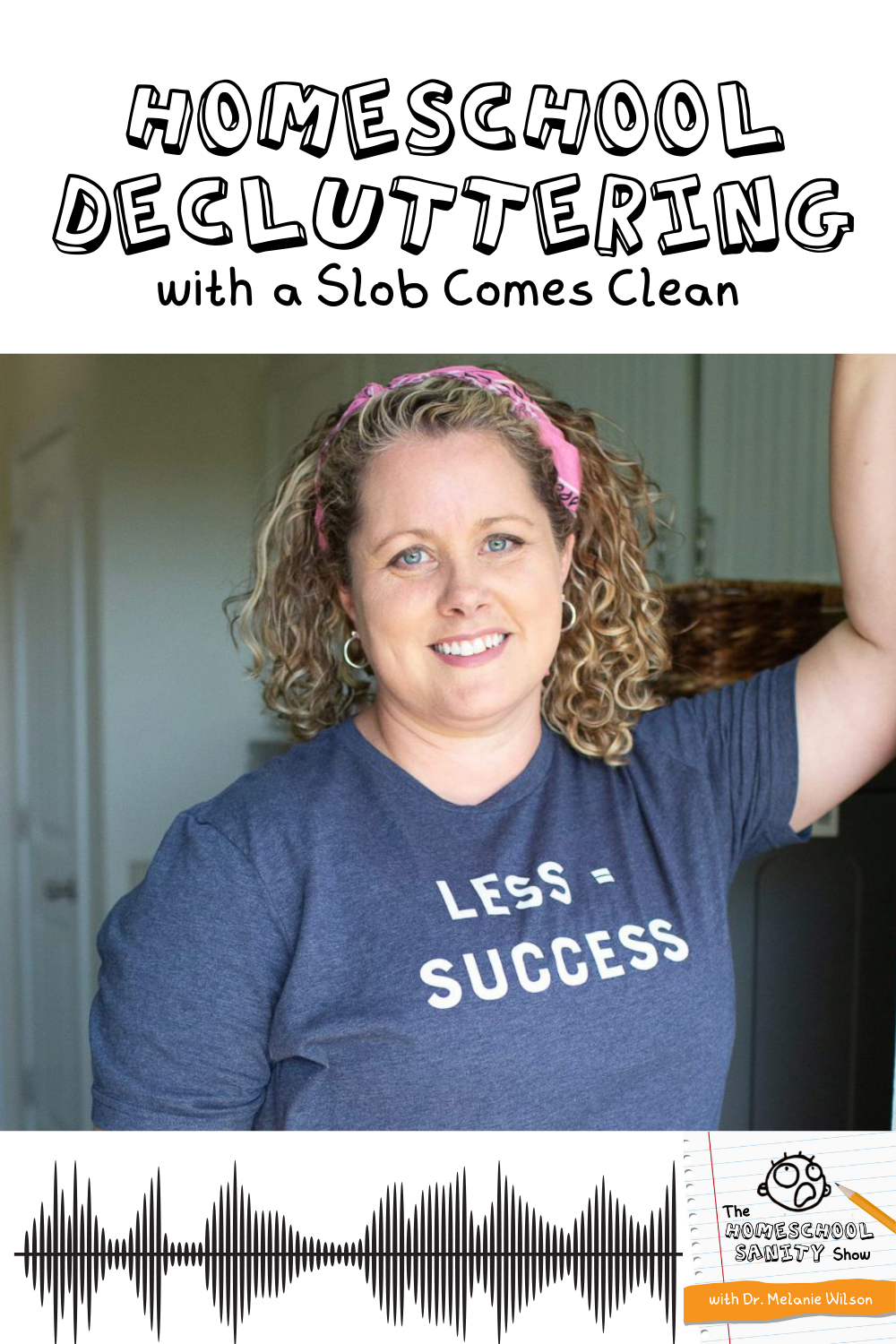
Now to introduce my guest for this episode–Dana K. White. She is the woman behind A Slob Comes Clean. She’s an author, speaker, podcaster, YouTuber, and (much to her own surprise) a Decluttering Expert.
She’s written three books:
Organizing for the Rest of Us
Decluttering at the Speed of Life
How to Manage Your Home Without Losing Your MindA Slob Comes Clean is the completely honest (and never-ending) story of her personal deslobification process. As she finds ways to keep her home under control, she shares the truth about cleaning, organizing and decluttering strategies that actually work in real life for real people.
I was thrilled when Dana agreed to come on the show. You are going to love the advice she gives us for dealing with clutter.
We discussed:
How To Edit Your Child’s Writing
May 03, 2022
Show notes
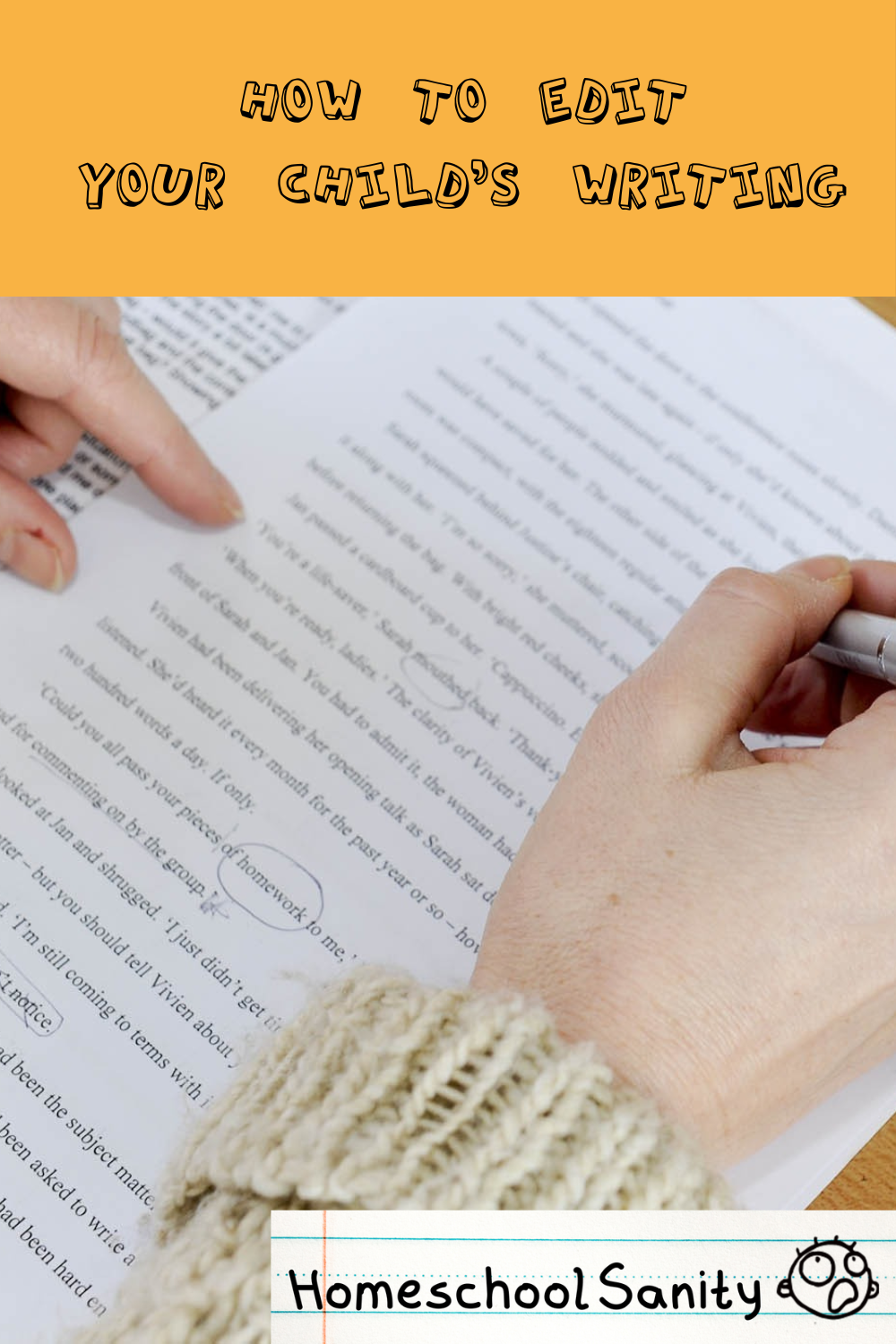
Hey, homeschoolers! My homeschool mom friends frequently asked me to edit their kids’ writing. If you don’t feel confident as a writer, it’s hard to feel confident as your child’s editor. In this episode, I hope to give you some simple tips for growing in your editing confidence.
Before I do, I want to announce the launch of the last volume of the Grammar Galaxy series called Supernova. This volume is for 8th graders or those who have completed the equivalent of Nova. Like Nova, Supernova is an extended review of material covered in previous volumes. It’s perfect for middle schoolers who need a grammar refresh. It also includes engaging, more advanced writing projects that you’ll be able to edit after listening to this episode. The volume and bundles that include it are 20% off for a limited time. Learn more at FunToLearnBooks.com.
If you struggle to edit your child’s paper, it’s not your fault. Here’s why: writing is subjective. Unlike math where there is typically a single correct answer, writing is more of an art than a science. We have preferences for writing just as we do for paintings. But the art forms we don’t enjoy aren’t wrong; they’re just not our style.
You may object that spelling and grammar can in fact be wrong.
For example, there is just one way to spell the word beautiful. But that’s not always the case with spelling. Take the word judgment. It can be correctly spelled with or without an e after the g.
British spelling also varies at times from American English spelling. I wrote an article for a British journal once that returned a draft in which they had changed the spelling of several of my words. At the time, I didn’t realize why they had changed the spelling, so I changed it back. I have students using Grammar Galaxy from countries who use British English, so I included a lesson on the spelling differences so they wouldn’t go on to look as foolish as I did.
What about grammar? Isn’t grammar clearly right or wrong? Some English grammar constructions are universally agreed to be errors. Like Me and Audrey went to the store. This sentence uses an object pronoun in place of the subject. However, as this construction is used more and more in casual conversation, that grammar rule may end up being applied more loosely. If you’re a grammar nerd like I am, you’re shuddering.
But let’s take comma usage as another example. There are sentences in which commas are required as when addressing someone. I bought you an ice cream cone, Lisa requires a comma before the name Lisa. But many other comma rules are preferences such as the last comma before and in a list. This comma is known as the Oxford comma. I’m a fan, but there are style guides that don’t require it.
Let’s move beyond grammar and spelling. Aren’t there agreed-upon metrics for good writing? Yes. Good nonfiction writing has a clear thesis statement, smooth transitions, and enough supporting details for each point. But again, each editor has a different definition of clear thesis, smooth transitions, and enough supporting details.
Have you ever had someone ask you how to homeschool? The question is so broad that you just laugh. When you stop laughing, you try break the process into very specific beginning steps. They are the steps you think are important, but another homeschooler may not agree. The question “how do you write well?” elicits the same reaction. If writing came naturally to you without specific step-by-step instruction, you may be at a loss to answer the question.
This subjective, broad nature of writing gave rise to teacher’s attempts to create a very specific, step-by-step structure for writing instruction.
Rules were developed for students to follow like you must use an adverb sentence-starter and no more than one linking verb per paragraph. These rules made editing and grading papers easier. If the student didn’t follow the rule, they lost points. But this imposition of structure did not advance the art of writing, in my opinion. I do agree with introducing writing practices like these and having students try them, but requiring adherence to the specific rules for an extended period can take away from students’ joy in creating. I have found them very restrictive for both student and teacher.
If we agree that writing is a subjective art form, how are we to edit our kids’ work so they can grow as writers? I know it’s possible because it’s how I’ve taught students of varying abilities to be excellent writers. That’s my opinion, but they’ve also earned A’s in college composition.
Our first and most important task as writing instructors is to faciliate enjoyment of the process.
Kids who don’t enjoy writing will not practice and will not improve. I’ve spoken about other aspects of writing education that interfere with enjoyment before:
How to Avoid Drill & Kill in Language artsWhy You Shouldn’t Worry About Your Child’s Writing
But specifically I want to address the editing process here.
Have you ever made something like a dish or a craft that you were excited about, only to have someone immediately tell you how to make it better? It’s deflating. When any of us creates, we want someone to celebrate with us. We put ourselves into that creation. We experimented and had fun. We want to enjoy the creation for a time without worrying about making it better. That’s especially true when we don’t have the developmental capacity to make it better. We wouldn’t chide a two-year-old for coloring outside the lines. We ooh and ooh over the color and all the scribbles and our toddler enjoys the adulation.
That’s appropriate for a two-year-old, you may well argue, but what about my eight-year-old who still isn’t capitalizing the first word in a sentence? I’ve been there. But here’s the interesting thing that we know from our own experience. When our child delights us with his writing, he will repeat the process again and again. Does a child ever tire of our attention and applause? The constant calls of “Mom, watch me. Watch this,” after we’ve been enthusiastic say no.
How can we delight in a child’s writing that has errors in spelling, grammar, and handwriting? We do not want to lie, but we can always find something to enjoy in a child’s writing. I see those enjoyable aspects as a child’s gift in writing. When a child believes she is a gifted writer, she will work to hone that skill.
I took my son for an initial drum lesson. The instructor kept marveling that he had never had a drum lesson before. He said he had never seen such natural quickness with a student’s hands. Every week it was the same praise and amazement at his skill. This approach, whether it was honest or not, worked beautifully to gain the instructor a new student, but it also inspired my son to play.
I also saw this work with a friend’s son who was my writing student. I saw an emotional depth, attention to detail, and uncommon maturity in his writing and told him so. He soon told his mother that writing was his new favorite subject. He paid close attention to my suggestions for improving his writing as we continued in class.
These are some gifts to look for in your child’s writing: sense of humor, excellent examples, use of statistics, detailed description, references to an area of interest, unique style, concise writing, illustrations, creative approach, strong vocabulary, humility, storytelling, and diligence in adjusting to a learning disability.
Praise of the gifts in our child’s writing should be foremost. I’m saying this as someone who immediately wants to edit and proof. But I push myself to take in the writing as a whole before I worry about the mechanics.
After we have enjoyed our child’s writing and praised the creation, we can focus on one established skill and one new one.
Here’s what I mean. If you have been working on run-on sentences, you can look for those in particular. If you told your child that in this writing assignment, you will be looking for descriptive language, then edit for that. Your student then has just one new thing to focus on and another that you’ve focused on before. We won’t overwhelm him with critiques.
Of course, if you aren’t confident in your own editing ability, this type of focus presupposes that you’ve reviewed or taught the lessons on run-on sentences and descriptive writing. You will be improving your own writing as you edit your child’s. If you aren’t sure you’re correct about an error, ask someone you know who’s a good writer for feedback. If you don’t have anyone else to ask, post the sentence in a question in a Facebook group like the Grammar Guardians group. You can also email it to me at grammargalaxybooks [at] gmail [dot] com. Eventually, you’ll have the confidence that you need.
But what about punctuation and spelling as you’re focusing on these two other areas? You can either ignore them or mark them without comment, depending on your child’s reaction to edits. Simply add the comma or write the correct spelling. You can also have your student add spelling errors to a list to review regularly. If it seems wrong to you to focus on just a couple of skills, I’d like to give you an analogy here.
I have taken tennis lessons for years. While I have hit forehands, backhands, overheads, volleys, lobs, and serves in one class, I have never gotten specific instruction and correction on all of those shots in one lesson. If I had, I wouldn’t have kept playing. I would have been overwhelmed and felt incapable of ever playing the game. Instead, classes consisted of instruction and correction on just one or two skills plus playing the game.
Conclusion
I want to end this episode with something for you to consider. If you don’t want to improve in your paper editing skills, why should your student want to improve her writing skill? Like you, your student could conclude that it’s just not her gift and stop trying.
Not every student was created to be a gifted writer, but every student has a gift that they bring to writing that can be developed and enjoyed. My hope is that you will work at editing your students’ papers to build your confidence and help your writers blossom.
I have created The Better Editor game you can use for this purpose. First, your student will do his own editing. You will see if you find more errors than he did!
Have a happy homeschool week!
How To Encourage Students To Be Responsible for Their Own Learning
Apr 26, 2022
Show notes
Hey, homeschoolers! Many of the homeschoolers I talk with at Great Homeschool Conventions want to know if Grammar Galaxy is good for independent learning. It absolutely is! A student reading at a strong 3rd grade level or above can read the story and complete the mission with very little teacher assistance.
When I heard about friend Dennis DiNoia’s book on teaching independently responsible learners, I thought that’s what he meant. How can we get our kids to do schoolwork on their own? But that’s not what he meant! He was talking about how to go beyond independent work to encouraging kids to be responsible for their own learning.
Before I share our interview, I want to thank my sponsor for this episode: College Prep Genius.
There is a huge gap when it comes to preparing and paying for college. Without proper guidance, most families (especially homeschoolers) are at a loss on where to begin for college entrance as well as scholarships and often end up with twenty years of college debt. If this is you, it’s a must to Register for the Path to College at www.CollegePrepGenius.com/PPU free ($2995 value)
Now for my interview with Dennis. Before he tells you more about himself, I want to say what a phenomenal teacher and positive, caring person he is. Four of my kids have taken math courses with him and have loved them. I have marveled that he always sounds happy to be teaching. I can’t claim the same! He has also been a huge encouragement and help to me as we’ve exhibited together at Great Homeschool Conventions. Now that I’ve bragged on him, here’s our interview that will help you raise independently responsible learners.

 Our TOPPODCAST Picks
  Stay Connected



 Hey, homeschoolers! The most popular question I have gotten when I encourage parents to consider homeschooling is this: How can I homeschool if my child won’t listen to me? If you’re already homeschooling, you may have this question with a twist. How can I KEEP homeschooling if my child won’t listen to me? I want to respond to this question with a truthful answer that can be life changing.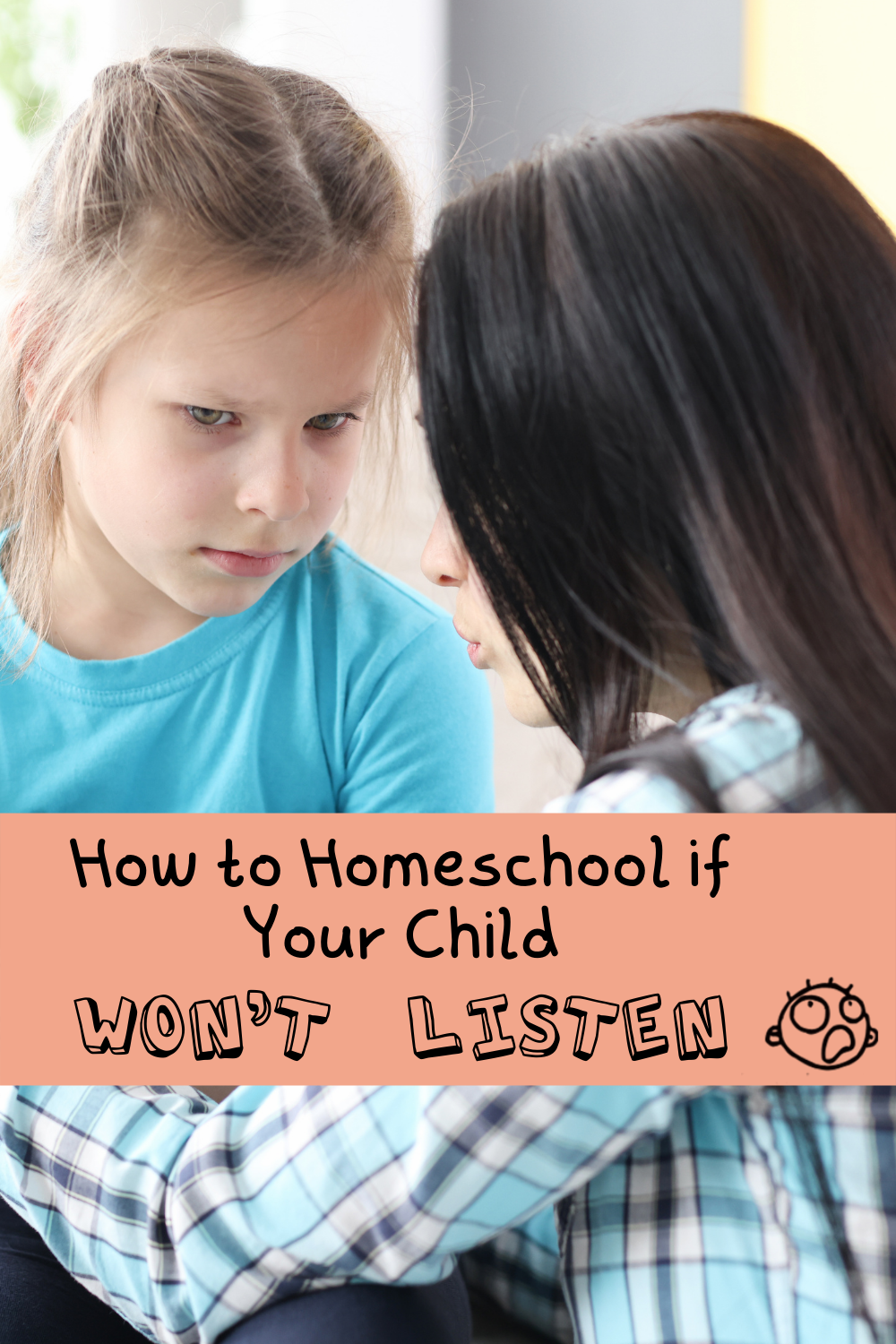


 Hey, homeschoolers! We are living in a time of financial uncertainty, that’s for sure. That’s why I appreciate the biblical wisdom I got from my discussion with
 Hey, homeschoolers! Last week I shared my discussion with
 Hey, homeschoolers! Do you have too much clutter? Too many craft supplies? Too much stuff for science? Whatever you have too much of, I have help for you.
Now to introduce my guest for this episode–Dana K. White. She is the woman behind A Slob Comes Clean. She’s an author, speaker, podcaster, YouTuber, and (much to her own surprise) a Decluttering Expert.
She’s written three books:
Hey, homeschoolers! Do you have too much clutter? Too many craft supplies? Too much stuff for science? Whatever you have too much of, I have help for you.
Now to introduce my guest for this episode–Dana K. White. She is the woman behind A Slob Comes Clean. She’s an author, speaker, podcaster, YouTuber, and (much to her own surprise) a Decluttering Expert.
She’s written three books:
 Hey, homeschoolers! My homeschool mom friends frequently asked me to edit their kids’ writing. If you don’t feel confident as a writer, it’s hard to feel confident as your child’s editor. In this episode, I hope to give you some simple tips for growing in your editing confidence.
Before I do, I want to announce the launch of
Hey, homeschoolers! My homeschool mom friends frequently asked me to edit their kids’ writing. If you don’t feel confident as a writer, it’s hard to feel confident as your child’s editor. In this episode, I hope to give you some simple tips for growing in your editing confidence.
Before I do, I want to announce the launch of 

 Hey, homeschoolers! Many of the homeschoolers I talk with at





