TopPodcast.com
Menu
  • Home
  • Top Charts
  • Top Networks
  • Top Apps
  • Top Independents
  • Top Podfluencers
  • Top Picks
    • Top Business Podcasts
    • Top True Crime Podcasts
    • Top Finance Podcasts
    • Top Comedy Podcasts
    • Top Music Podcasts
    • Top Womens Podcasts
    • Top Kids Podcasts
    • Top Sports Podcasts
    • Top News Podcasts
    • Top Tech Podcasts
    • Top Crypto Podcasts
    • Top Entrepreneurial Podcasts
    • Top Fantasy Sports Podcasts
    • Top Political Podcasts
    • Top Science Podcasts
    • Top Self Help Podcasts
    • Top Sports Betting Podcasts
    • Top Stocks Podcasts
  • Podcast News
  • About Us
  • Podcast Advertising
  • Contact
Not in our directory?
Add Show Here
Podcast Equipment
Center

toppodcastlogoOur TOPPODCAST Picks

  • Comedy
  • Crypto
  • Sports
  • News
  • Politics
  • True Crime
  • Business
  • Finance

Follow Us

toppodcastlogoStay Connected

    View Top 200 Chart
    Back to Rankings Page
    News & Politics

    The Forum

    The programme that explains the present by exploring the past.

    Advertise
    • Apple Podcasts
    • Google Play
    • Spotify

    Latest Episodes:
    The invention of numbers Jun 30, 2018
    Show notes

    Try and imagine a world without numbers. Telling people how many siblings you have, counting your wages or organising to meet a friend at a certain time would all be much more difficult. If you’re reading this on a digital screen, even these words are produced through a series of zero and one symbols. We take them so much for granted yet some cultures don’t count and some languages don’t have the words or symbols for numbers. This programme looks at when and why humans first started start to count, where the symbols many of us use today originate from and when concepts like zero and infinity came about.

    Joining Bridget Kendall to explore the history of numbers and counting are anthropological linguist Caleb Everett from the University of Miami, writer and historian of mathematics Tomoko Kitagawa, and Emeritus Professor of Mathematics at Warwick University in the UK, Ian Stewart.

    Photo: An abacus on a table.(CaoChunhai//Getty Images)


    The life and works of William Blake Jun 23, 2018
    Show notes

    William Blake is now one of England’s best-loved poets and artists, associated with the well-known poem “The Tyger” and the hymn “Jerusalem”, regularly coined England’s unofficial national anthem. But in his time he was an eighteenth century radical visionary who challenged the social order as well as political and religious orthodoxy at every turn. He was even tried for sedition.

    Rajan Datar discusses his life, works and remarkable legacy with Blake experts Dr. Linda Freedman, Dr. Susan Matthews, Prof. Jason Whittaker and artist Michael Phillips.

    Photo: 'Newton' by William Blake (Bettmann Collection)


    J. William Fulbright: Scholarships and Soft Power Jun 16, 2018
    Show notes

    In many countries, the word 'Fulbrighter' has become almost synonymous with US-sponsored scholarships. But what about the man whose idea it was to set up this international scholar exchange programme over 70 years ago: how did J. William Fulbright convince his fellow Senators to support this novel concept? After all, the aims of the programme were nothing if not ambitious: "the achievement in international affairs of a regime more civilized, rational and humane than the empty system of power of the past".

    To discuss the history of the Fulbright programme, Bridget Kendall is joined by Fulbright's biographer Randall Woods, Professor of History at the University of Arkansas; Joan Dassin, Professor of International Education and Development at Brandeis University in Massachusetts; and two recent Fulbright scholarship recipients: language teaching specialist Vitoria Prochet from Brazil and human rights activist from Afghanistan Nilofar Sakhi.

    Historic recordings of Fulbright speeches used in the programme courtesy of Special Collections, University of Arkansas.

    Photo: William Fulbright (Getty/Corbis Historical)


    The tales of Timbuktu Jun 09, 2018
    Show notes

    The fabled city of Timbuktu is a curiosity. To 16th century Muslim scholars, it was the cosmopolitan hub of Islamic learning in West Africa; to European explorers 300 years later, it was a place of mystery, whose name remains synonymous with being at the end of the Earth. Most recently, in 2013, Timbuktu was at the centre of the world's attention again, after Islamist militants threatened thousands of valuable historic manuscripts stored in the city's famous libraries. Believed to be the richest person in history, it was Mansa Musa - the emperor of the vast Mali Empire - who first developed the desert settlement into a place of intellectual debate in the 1300s. The golden age of Islamic learning he began still survives today.

    Joining Bridget Kendall to discuss the importance of Timbuktu in Islamic history are Dr. Gus Casely-Hayford, director of the Smithsonian National Museum of African Art in Washington, D.C., who has recently published a Ladybird Expert book about the city; Dr. Susana Molins-Lliteras, a researcher at the Tombouctou Manuscripts Project and postdoctoral fellow at the Department of Historical Studies, University of Cape Town; and Dr. Lansiné Kaba, Professor of History and Thomas M. Kerr Distinguished Career Professor at Carnegie Mellon University in Qatar.

    Photo: Sankore Mosque in Timbuktu, Mali (Getty Images)


    The piano: Hitting the right keys Jun 02, 2018
    Show notes

    What’s the secret to the 300 year-old success of the piano, an instrument that was hardly a huge hit when it was invented around the turn of the 18th century?

    Perhaps it’s the ability of the instrument to convey a vast range of styles from singing melodies to percussive rhythms, and from classical music to jazz, rock and pop. With the help of musical examples, Bridget Kendall and guests will explore how the piano has inspired music from composers on every continent.

    Joining Bridget will be the historic keyboard specialist Dr Elena Vorotko from the Royal Academy of Music in London, pianist and author Professor Kenneth Hamilton from the University of Cardiff, and the writer Stuart Isacoff in New York.

    Photo: Piano keys (Getty Images)


    Simone de Beauvoir: Feminist thinker for modern times May 26, 2018
    Show notes

    Simone de Beauvoir was a French philosopher and writer whose work exploring what it is to be a woman shaped feminist thinking today. A pioneering intellectual, she used her existential ideas around freedom and responsibility to shape her life, literature and politics. Rajan Datar discusses her life and work with writers Claudine Monteil and Lisa Appignanesi, and philosopher Tove Pettersen.

    Photo: Simone de Beauvoir (Getty Images)


    Catherine the Great of Russia May 19, 2018
    Show notes

    Famous for her lovers and satirised for her colourful personal life, Catherine the Great was in many ways one of Russia’s most progressive and moderate rulers, modernising 18th century Russia, improving educational standards and creating a flourishing arts and literature scene. But she also turned Russia into the biggest Empire on earth since the Roman Empire, which included the annexation of Crimea. So how far has her imperial mind set influenced Russia’s modern rulers, like President Putin?

    Joining Bridget Kendall to discuss the life and legacy of Catherine II of Russia, is Professor Andrei Zorin, cultural historian and Chair of Russian at the University of Oxford, Simon Dixon, Professor of Russian History at University College London and author of the biography “Catherine the Great”’ and Dr Viktoria Ivleva, who specialises in Catherine’s role as a woman ruler and her use of uniform and costume.

    Photo: Equestrian Portrait of Catherine II. Oil on canvas by Vigilius Eriksen, Denmark. After 1762 (The State Hermitage Museum, St. Petersburg)


    Material World: Making the Modern Factory May 12, 2018
    Show notes

    Bridget Kendall and guests discuss the key components of the global story of the factory, tracing its development from eighteenth century Britain to twenty-first century China and beyond. Exploring how the factory came to shape not just the material world but entire social worlds too, they share their expert knowledge on topics such as the lives of factory workers, the capitalist and communist factory, and the changing face of manufacturing in an age of robots and smart technology.

    Bridget is joined by Joshua B. Freeman, Martin Krzywdzinski, Alessandra Mezzadri and Nina Rappaport. The sociologist Ching Kwan Lee also shares her insights into factory life in Shenzhen as it transformed in the late twentieth century.

    Image: Illustration of an old 18th century factory. (Hulton Archive/Getty Images)


    Machu Picchu: The secrets of a forgotten city May 05, 2018
    Show notes

    The ancient Inca town Machu Picchu is now the most visited tourist attraction in Peru - and yet it lay nearly forgotten for over three centuries until American and Peruvian explorers drew the world's attention to it in the 1910s. And despite a century of excavations at the site, there are still many unanswered questions about Machu Picchu: why was it built in the first place, who were the immigrants that made up a large proportion of the town's population and why was it abandoned so quickly.

    To find out more about Machu Picchu, Bridget Kendall is joined by leading archaeologists of the Inca civilisation Lucy Salazar and Michael Malpass, the celebrated mountaineer and explorer Johan Reinhard and by writer Mark Adams who retraced the steps of the 1911 expedition led by Hiram Bingham that put Machu Picchu back on the map.

    (Photo: Machu Picchu, Peru. Credit: Eitan Abramovich/Getty Images)


    Plastic: How it Changed the World Apr 28, 2018
    Show notes

    The birth of modern plastic began in 1907 with the invention of Bakelite, one of the first plastics to be made from entirely synthetic components. But plastic in a particular form was being used many thousands of years ago by the Olmec, the earliest known civilisation in Mexico, who played with balls made of a natural polymer - rubber.

    Over the years the plastics industry has grown from the work of a handful of inventors to a global player whose products reach into almost every corner of our lives. Plastic has been at the heart of one of the most important changes in virtually all societies since the second world war: the consumer revolution. But while it is a force for good in many areas and a highly versatile material that appears in the most surprising places, plastic today is a major environmental preoccupation. Can we modify our use towards this wonder material, or can scientists rise to the challenge of creating a plastic that will break down completely when it has reached the end of its useful life?

    Rajan Datar is joined by nanoscientist Professor Ajay Mishra, chemist Professor Andrea Sella and journalist Susan Freinkel to explore the story of plastic.

    Photo: Plastic bottles on a production line (Getty Images)


    Previous 1 27 28 29 30 31 40 Next

    Related Podcasts

    Crimetown

    1

    Crimetown News
    Up and Vanished

    2

    Up and Vanished News & Politics
    The Joe Rogan Experience

    3

    The Joe Rogan Experience Comedy
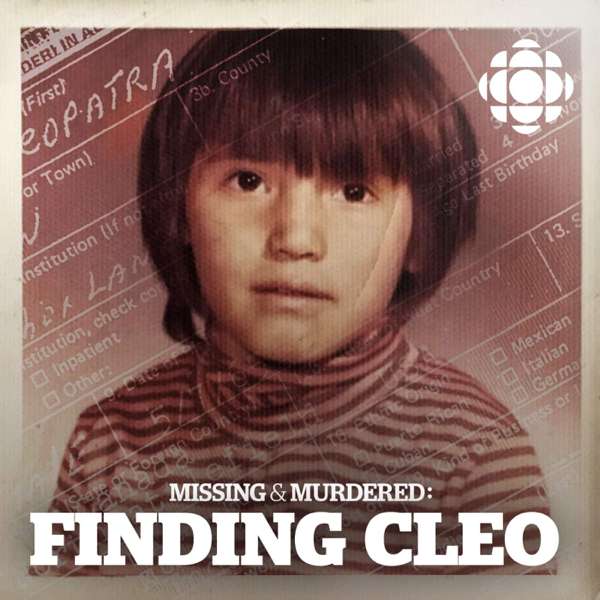
    Missing & Murdered: Finding Cleo

    4

    Missing & Murdered: Finding Cleo News & Politics
    Casefile True Crime

    5

    Casefile True Crime Games & Hobbies
    Code Switch

    6

    Code Switch News
    footer-logo

    Contact Us

    Toll Free: 844-670-7747

    Links

    • Home
    • Top Charts
    • Networks
    • Apps
    • Independents Podcasts
    • Podcast Advertising
    • Podcast News
    • Contact Us
    • About Us
    • Analytics & Insights

    Stay Connected

      Privacy, Terms of Use & Our Code of Ethics Protecting Content Creators Copyrights