TopPodcast.com
Menu
  • Home
  • Top Charts
  • Top Networks
  • Top Apps
  • Top Independents
  • Top Podfluencers
  • Top Picks
    • Top Business Podcasts
    • Top True Crime Podcasts
    • Top Finance Podcasts
    • Top Comedy Podcasts
    • Top Music Podcasts
    • Top Womens Podcasts
    • Top Kids Podcasts
    • Top Sports Podcasts
    • Top News Podcasts
    • Top Tech Podcasts
    • Top Crypto Podcasts
    • Top Entrepreneurial Podcasts
    • Top Fantasy Sports Podcasts
    • Top Political Podcasts
    • Top Science Podcasts
    • Top Self Help Podcasts
    • Top Sports Betting Podcasts
    • Top Stocks Podcasts
  • Podcast News
  • About Us
  • Podcast Advertising
  • Contact
Not in our directory?
Add Show Here
Podcast Equipment
Center

toppodcastlogoOur TOPPODCAST Picks

  • Comedy
  • Crypto
  • Sports
  • News
  • Politics
  • True Crime
  • Business
  • Finance

Follow Us

toppodcastlogoStay Connected

    View Top 200 Chart
    Back to Rankings Page
    News & Politics

    The Forum

    The programme that explains the present by exploring the past.

    Advertise
    • Apple Podcasts
    • Google Play
    • Spotify

    Latest Episodes:
    The Making of Modern Japan Sep 08, 2018
    Show notes

    In the mid-19th century Japan transformed itself from feudal state to economic powerhouse at breakneck speed. Taking their cue from Western imperial powers, the rebel samurai who seized power in 1868 implemented an astonishing programme of reform.

    By removing an entire ruling elite, introducing national conscription and compulsory education, the Meiji rulers set about building a brand new society. Even the measurement of time was changed, which led to considerable confusion between generations.

    Rajan Datar and guests will unpack the origins of this dynamic transformation, and examine how it led Japan to a period of drastic imperial expansion and the subsequent atrocities of World War II.

    Joining Rajan will be historians Naoko Shimazu from Yale NUS College in Singapore, Mark Ravina from Emory University in Atlanta, USA, and Barak Kushner from the University of Cambridge in the UK.

    Photo: Meiji Shrine In Tokyo, Japan. (Junko Kimura/Getty Images)


    The American author James Baldwin Sep 01, 2018
    Show notes

    Born in 1924, the prolific writer and thinker James Baldwin is a landmark figure in twentieth century American culture. The author of popular novels such as Go Tell It on the Mountain and bold essay collections such as The Fire Next Time, his works explored themes including race, sexuality, identity, democracy and love. An African-American man born in Harlem who spent much of his life in France, he became an important literary voice during his country’s civil rights movement. A critic and analyst of his country’s racial divide, he saw division as destructive and urged his fellow citizens to achieve a better future together.

    Rajan Datar and guests reflect on some of the key moments in James Baldwin’s life and work. With expert scholars Rich Blint, Ernest L. Gibson III and Magdalena Zaborowska.

    Photo: James Baldwin in 1964 (Jean-Regis Rouston/Roger Viollet/Getty Images)


    The Acropolis: Cradle of democracy Aug 25, 2018
    Show notes

    The Acropolis of Athens, with its crowning glory the Parthenon and its massive marble pillars, is one of the most recognisable sites in the world.

    In the 5th and 6th century BCE, it was where the concept of democracy – rule by the people – first developed, where modern- day theatre was born, and it gave the West the foundation of its politics, philosophy and history.

    But the Acropolis is also, like our humanity, a place of constant struggle and contradiction, from the pride and ambition of the ancient Athenians that led to its destruction, to its current status as a symbol of the Greek state.

    Joining Rajan Datar to look at the history and meaning of the Acropolis is Paul Cartledge, Emeritus Professor of Greek culture at the University of Cambridge and author of Democracy: A Life; Dr Andronike Makres, co-Director of the Hellenic Education and Research in Athens, and Demetrios Papageorgiou, Professor of Applied Mathematics at Imperial College London.

    Photo: The Acropolis (Anne Khazam)


    Friedrich Engels: The Man Behind Karl Marx Aug 18, 2018
    Show notes

    A champagne-loving industrialist who enjoyed hunting, a literary critic and an upstanding Victorian gentleman: this does not sound like a description of your typical advocate of proletarian revolution or the co-author of the Communist Manifesto. Yet Friedrich Engels was all those things and more. Deliberately keeping in the shadows of his comrade-in-arms Karl Marx, Engels led an eventful life, fighting in the 1848 German revolution, attending secret meetings with Chartists and keeping two homes in Manchester: a respectable one that fitted his image of a bachelor businessman, the other a boarding house where he lived with his working-class lover Mary Burns and her sister, and future wife, Lizzie. Rajan Datar charts the life and work of Friedrich Engels with the help of leading scholars of Marxism: Jonathan Sperber from the University of Missouri, Terrell Carver from Bristol University, Belinda Webb-Blofeld from Kingston University and Christian Krell from the Friedrich Ebert Foundation.

    Photo: Statues of Karl Marx and Friedrich Engels in Berlin. (Getty Images)


    Empress Nur Jahan: Leader of the Mughals Aug 11, 2018
    Show notes

    Empress Nur Jahan was the most powerful woman in 17th century India, wielding an unparalleled control over the Mughal Empire. Born as Mehr-un-Nissa, she came from a wealthy Iranian family who came to India and made their way up the imperial court. After the death of her first husband, a Persian soldier, she became the twentieth and final wife of Mughal Emperor Jahangir and her rise to the top really began. Often sitting beside her husband in court, she controlled trade routes, designed gardens and mausoleums, was said to be a skilled hunter and was the only Mughal Empress to have coins minted in her own name.

    Joining Rajan Datar to explore the life of Empress Nur Jahan is Ruby Lal, professor of South Asian Studies at Emory University and author of 'Empress: The Astonishing Reign of Nur Jahan'; Mehreen Chida-Razvi, Research Associate in the Department of Art History at SOAS, University of London; and Shivangini Tandon, Assistant Professor at the Department of Women's Studies, Aligarh Muslim University, India.

    Photo: a detail from the painting Jahangir and Prince Khurram with Nur Jahan, c1624-1625 (Fine Art Images/Heritage Images/Getty Images)


    Waiting for Godot: The play that changed the rules of theatre Aug 04, 2018
    Show notes

    Waiting for Godot is a play by the Irish writer Samuel Beckett that revolutionised 20th century theatre when it was first performed more than 60 years ago. Often referred to as a play in which nothing happens, it is about two characters who spend their time waiting for a mysterious person called Godot who never appears. Today it is one of the world's most important and best- known plays and has become a comment on our political and social climate, as its themes of hope and despair have led to it being re-interpreted in a number of conflict situations around the world, from South Africa to Sarajevo.

    Joining Rajan Datar is the South African theatre director Benjy Francis who was the first to stage Waiting for Godot with an all-black cast in Apartheid South Africa in 1976, the Irish theatre director Garry Hynes whose current production of Waiting for Godot is at the Edinburgh International Festival, and Professor of theatre at Reading University, Anna McMullan, who is also co-Director of the Beckett International Foundation.

    Photo:The Druid Theatre Company's production of Waiting for Godot (Matthew Thompson).


    Christina of Sweden: Queen of surprises Jul 28, 2018
    Show notes

    An accomplished young horsewoman who loved fencing and male attire, the 17th-century Swedish Queen Christina was anything but a conventional princess. And she kept springing surprises on her court and country: after just a decade on the throne she abdicated, converted to Catholicism and moved to Rome. Once there, she put herself forward as a candidate for the post of queen of Naples, opened a public theatre and scandalised the Holy See by a liaison with a cardinal. Bridget Kendall follows Christina's adventures with biographer Veronica Buckley, and historians Stefano Fogelberg Rota and Therese Sjovoll.

    Photo: Christina of Sweden by Jacob Heinrich Elbfas, 1640s


    Vincent van Gogh: The struggling artist Jul 21, 2018
    Show notes

    The Dutch post-Impressionist painter Vincent van Gogh is one of the most influential painters in western art. His series of still life sunflowers are known around the world today, but during his lifetime in the 1800s he lived in poverty, selling incredibly little of his work, some say just one painting, and suffered several serious breakdowns. One of his most famous paintings - The Starry Night - is said to be the view from his room in a French psychiatric hospital where he’d admitted himself shortly after severing his own left ear. This programme looks at the man behind these iconic paintings, explores how and why he became a painter and picks apart the various theories around his death from a gunshot wound at the age of just 37.

    Joining Bridget Kendall to discuss van Gogh’s life and work are Louis van Tilborgh, Senior Researcher at the Van Gogh Museum in Amsterdam and Professor of Art History at the University of Amsterdam, van Gogh biographer and co-author of van Gogh: The Life, Steven Naifeh, and British art historian Lucrezia Walker.

    Photo: Self-Portrait by Vincent van Gogh (Getty Images)


    Mark Twain: The 'father of American literature' Jul 14, 2018
    Show notes

    Mark Twain, born Samuel Langhorne Clemens, was known for his piercing wit, irreverent satire and social commentary. Leaving school early following the death of his father, he lived many lives in one: spending time as a journalist, steamboat pilot and world traveller, suffering significant personal and financial losses. These are just some of the experiences that would feed into his novels, articles, short stories, essays and the thousands of letters that are still being unearthed today.

    Best known for his book Adventures of Huckleberry Finn, which tells the story of a rebellious young boy called Huck floating down the Mississippi River with a runaway slave called Jim, Twain developed a style that led to him being credited as "the father of American literature". The work, like so much of Twain's other writing, tackles serious social issues and continues to be shrouded in controversy to this day.

    Bridget Kendall discusses his life and works with Twain scholars Shelley Fisher Fiskin, Thomas Smith, Jocelyn Chadwick and Mark Dawidziak.

    (Photo: Mark Twain (Donaldson Collection. Credit: Getty Images)


    Pioneers of surgical hygiene Jul 07, 2018
    Show notes

    The Hungarian obstetrician Ignaz Semmelweis, born 200 years ago this month, saved the lives of hundreds, possibly thousands, of new mothers with his forward-looking ideas about hospital hygiene. He insisted that junior doctors working for him wash their hands in chlorinated lime solution before examining expectant mothers. This simple procedure reduced mortality by something like 90 per cent at the Vienna maternity ward that he was in charge of. Many more deaths could have been prevented had other physicians followed his advice without delay. So why did many in the medical profession resist not just Semmelweis's findings but also similar ideas of his fellow hygiene pioneers, such as Joseph Lister? Quentin Cooper discusses the beginnings of surgical cleanliness with Dr. Sonia Horn from Vienna University, Dr. Andrew Cunningham from Cambridge University and Prof. Michael Worboys from the University of Manchester.

    Photo: presurgery sanitization. (PeopleImages/Getty Images)


    Previous 1 26 27 28 29 30 40 Next

    Related Podcasts

    Crimetown

    1

    Crimetown News
    Up and Vanished

    2

    Up and Vanished News & Politics
    The Joe Rogan Experience

    3

    The Joe Rogan Experience Comedy
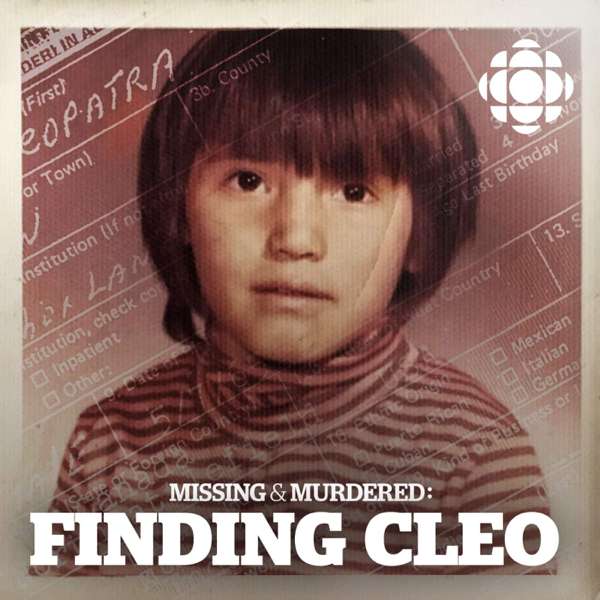
    Missing & Murdered: Finding Cleo

    4

    Missing & Murdered: Finding Cleo News & Politics
    Casefile True Crime

    5

    Casefile True Crime Games & Hobbies
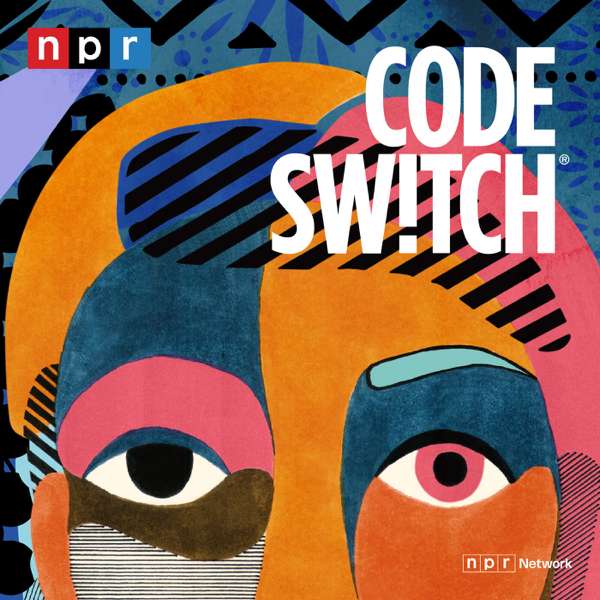
    Code Switch

    6

    Code Switch News
    footer-logo

    Contact Us

    Toll Free: 844-670-7747

    Links

    • Home
    • Top Charts
    • Networks
    • Apps
    • Independents Podcasts
    • Podcast Advertising
    • Podcast News
    • Contact Us
    • About Us
    • Analytics & Insights

    Stay Connected

      Privacy, Terms of Use & Our Code of Ethics Protecting Content Creators Copyrights