TopPodcast.com
Menu
  • Home
  • Top Charts
  • Top Networks
  • Top Apps
  • Top Independents
  • Top Podfluencers
  • Top Picks
    • Top Business Podcasts
    • Top True Crime Podcasts
    • Top Finance Podcasts
    • Top Comedy Podcasts
    • Top Music Podcasts
    • Top Womens Podcasts
    • Top Kids Podcasts
    • Top Sports Podcasts
    • Top News Podcasts
    • Top Tech Podcasts
    • Top Crypto Podcasts
    • Top Entrepreneurial Podcasts
    • Top Fantasy Sports Podcasts
    • Top Political Podcasts
    • Top Science Podcasts
    • Top Self Help Podcasts
    • Top Sports Betting Podcasts
    • Top Stocks Podcasts
  • Podcast News
  • About Us
  • Podcast Advertising
  • Contact
Not in our directory?
Add Show Here
Podcast Equipment
Center

toppodcastlogoOur TOPPODCAST Picks

  • Comedy
  • Crypto
  • Sports
  • News
  • Politics
  • True Crime
  • Business
  • Finance

Follow Us

toppodcastlogoStay Connected

    View Top 200 Chart
    Back to Rankings Page
    Government

    The Animal Law Podcast

    Join animal law professor and longtime activist Mariann Sullivan as she explores groundbreaking legal cases shaping the future of animal protection. Each episode features in-depth discussions with leading attorneys, scholars, and advocates about critical developments in animal law—focusing on significant court decisions and their enforcement. Whether you’re a legal professional, animal advocate, or concerned citizen, discover how case law is evolving to recognize and protect animals. From landmark litigation to emerging legal theories, the Animal Law Podcast makes complex legal issues accessible while examining their impact on animals and society.

    Advertise

    Copyright: © 2024 Our Hen House. All Rights Reserved.

    • Apple Podcasts
    • Google Play
    • Spotify

    Latest Episodes:
    Animal Law Podcast #56: The Case Of the Speedy Slaughterhouse Jan 29, 2020
    Show notes

    On this episode of the Animal Law Podcast, I speak with Cristina Kladis and Professor Delcianna Winders of the Lewis and Clark Law School Animal Law Litigation Clinic about the very first case filed by the clinic, Farm Sanctuary v USDA. This very important lawsuit seeks to invalidate the agency’s new rules eliminating line speed limits for pig slaughter, thereby putting pigs, workers and the environment at even greater risk from the horrors perpetrated in these slaughterhouses. If that were not enough, these rules also delegate much of the responsibility for oversight of the slaughter process from USDA inspectors to untrained slaughterhouse workers. Then, in addition to this groundbreaking lawsuit, we discuss the formation of this brand new clinic, which is devoted to litigation regarding farmed animals.

    Cristina Kladis is a third-year law student at Lewis and Clark Law School in Portland, Oregon, where she lives with her dog, Nyx. She came to law school with a plan to specialize in environmental and animal law, hoping to fight factory farming and other forms of environmental injustice. In addition to environmental and animal law, Cristina is interested in prisoners’ rights and free speech protections for protestors and media. After graduating from law school, she will be a litigation fellow at the Animal Legal Defense Fund.

    Delcianna J. Winders is a clinical professor of law and the director of the Animal Law Litigation Clinic at Lewis & Clark Law School, the world’s only law school clinic dedicated to farmed animal advocacy. Her scholarship has appeared in numerous law reviews, and she has also published extensively in the popular media. Prior to joining the Lewis & Clark faculty, Professor Winders was vice president and deputy general counsel for the PETA Foundation, the first academic fellow of the Harvard Animal Law & Policy Program, and a visiting scholar at the Elisabeth Haub School of Law at Pace University. She has also taught animal law at Tulane University School of Law and Loyola University New Orleans College of Law. She frequently gives talks on animal law subjects, has been interviewed by major national and international news outlets, and was featured in O, The Oprah Magazine as one of “Six Women Who Dare.” Winders received her BA in Legal Studies with highest honors from the University California at Santa Cruz, and her JD from NYU School of Law. Following law school, she clerked for the Hon. Martha Craig Daughtrey on the United States Court of Appeals for the Sixth Circuit.

    ***

    You can listen to our podcast directly on our website (beneath this paragraph!) or you can listen and subscribe on iTunes or your favorite podcatcher. Also, if you like what you hear, please rate it on iTunes, and don’t forget to leave us a friendly comment! Of course, we would be thrilled if you would consider making a donation, or becoming a member of our flock (especially if you’re a regular listener). Any amount is hugely appreciated and Our Hen House is a 501(c)(3) nonprofit organization, so it’s tax-deductible. Thank you for helping us create quality content!

    The graphics for the OHH podcasts are created by the wonderful Laurie Johnston of Two Trick Pony. Don’t forget to also listen to the award-winning, weekly signature OHH podcast — now in its ninth glorious year!


    Animal Law Podcast #55: A Case of Roadside Misery Dec 25, 2019
    Show notes

    On this episode of the Animal Law Podcast, I speak with Jessica Blome and Amanda Howell about the second chapter in the legal effort to close down Cricket Hollow Zoo, a sad roadside “attraction” where animals have been languishing in terrible conditions for years. I last spoke to Jessica on Episode 10 about some Endangered Species Act litigation that managed to free the animals covered by that law, but hundreds of animal remained, left to suffer merely because their species was not at risk. This time Jessica, along with the Animal Legal Defense Fund’s Amanda Howell, went back for the rest, suing on behalf of some deeply concerned citizens under Iowa Nuisance Law and basing their claim that this horrific facility was a public nuisance because it was in violation of the Iowa Anti-Cruelty statute. This is a fascinating case, with a (mostly) satisfying ending. But it also highlights some of the extraordinary gaps in current law “protecting” animals and the extraordinary lengths that must be gone to in order to get them out of obviously abusive situations.

    Jessica Blome is a senior associate at Greenfire Law where she primarily practices in the areas of environmental, animal, open government, and land use law. She represents clients in citizen suit enforcement, climate change, and strategic impact litigation. Her practice includes litigating and advising under the Clean Water Act, Safe Drinking Water Act, RCRA, CERCLA, NEPA, CEQA, Administrative Procedure Act, Animal Welfare Act, Endangered Species Act, FOIA, California Public Records Act, and Brown Act. Before Greenfire Law, Jessica worked as an Assistant Attorney General in the Missouri Attorney General’s Agriculture & Environment Division, Senior Staff Attorney for the Animal Legal Defense Fund, and Deputy Director of the San Francisco Ethics Commission. She earned her law degree from the University of Iowa and has a B.A. in Organizational Communication, with Minors in Journalism and Ethics, from the University of Northern Iowa. Jessica is passionate about public lands access, wilderness protection, and outdoor recreation. She spends her weekends in the wild spaces in and around the Bay Area.

    As a staff attorney for the Animal Legal Defense Fund Amanda Howell uses her background in strategic impact litigation to help us win big for animals. Prior to joining ALDF, Amanda’s career was focused on improving the food system and curbing the harmful practices of multinational corporations. She is dedicated to using her skills to combat iniquity and believes that changing how we view and treat animals will simultaneously improve life for all sentient beings and positively impact individual health, public health, and our environment. Amanda graduated from Northwestern University with a triple major in Political Science, International Studies, and Spanish. She received her law degree from Boston University, where she was the managing editor for the American Journal of Law and Medicine.

    ***

    You can listen to our podcast directly on our website (beneath this paragraph!) or you can listen and subscribe on iTunes or your favorite podcatcher. Also, if you like what you hear, please rate it on iTunes, and don’t forget to leave us a friendly comment! Of course, we would be thrilled if you would consider making a donation, or becoming a member of our flock (especially if you’re a regular listener). Any amount is hugely appreciated and Our Hen House is a 501(c)(3) nonprofit organization, so it’s tax-deductible. Thank you for helping us create quality content!

    The graphics for the OHH podcasts are created by the wonderful Laurie Johnston of Two Trick Pony. Don’t forget to also listen to the award-winning, weekly signature OHH podcast — now in its ninth glorious year!


    Animal Law Podcast #54: The Case of the Psychologically Unprotected Primates Nov 27, 2019
    Show notes

    On this episode of the Animal Law Podcast, I speak with Professor Katherine Meyer, Director of the Animal Law and Policy Clinic at Harvard Law School, along with two of her students, Boanne Wassink and Brett Richey. The three of them speak with me about the very first case filed by the Animal Law and Policy Clinic, New England Anti-Vivisection Society v Perdue, which involves a petition for rulemaking filed with the USDA way back in 2014 trying to get the agency to rewrite rules interpreting the requirements in the Animal Welfare Act requiring psychological enrichment for primates. We discuss the lack of enforcement of the Animal Welfare Act, the importance of considering the psychological well-being of primates, and how this case is affected by standards put forth by the National Institutes of Health for chimpanzees used in research. They also talk about the work that the Animal Law and Policy Clinic is doing and what it hopes to accomplish, including, such as in cases like this one, improved enforcement of the Animal Welfare Act.

    Katherine Meyer was a founding partner of the public interest law firm, Meyer Glitzenstein & Eubanks, which the Washingtonian Magazine hailed as “the most effective public interest law firm in Washington, D.C.” She has extensive federal and state court litigation experience, and is known for finding innovative ways to advance her clients’ interests. Professor Meyer has extensive experience litigating cases under the Endangered Species Act, National Environmental Policy Act, Animal Welfare Act, Freedom of Information Act, and other environmental and open government laws, and has also successfully litigated many cases to protect the wild horses in the West.
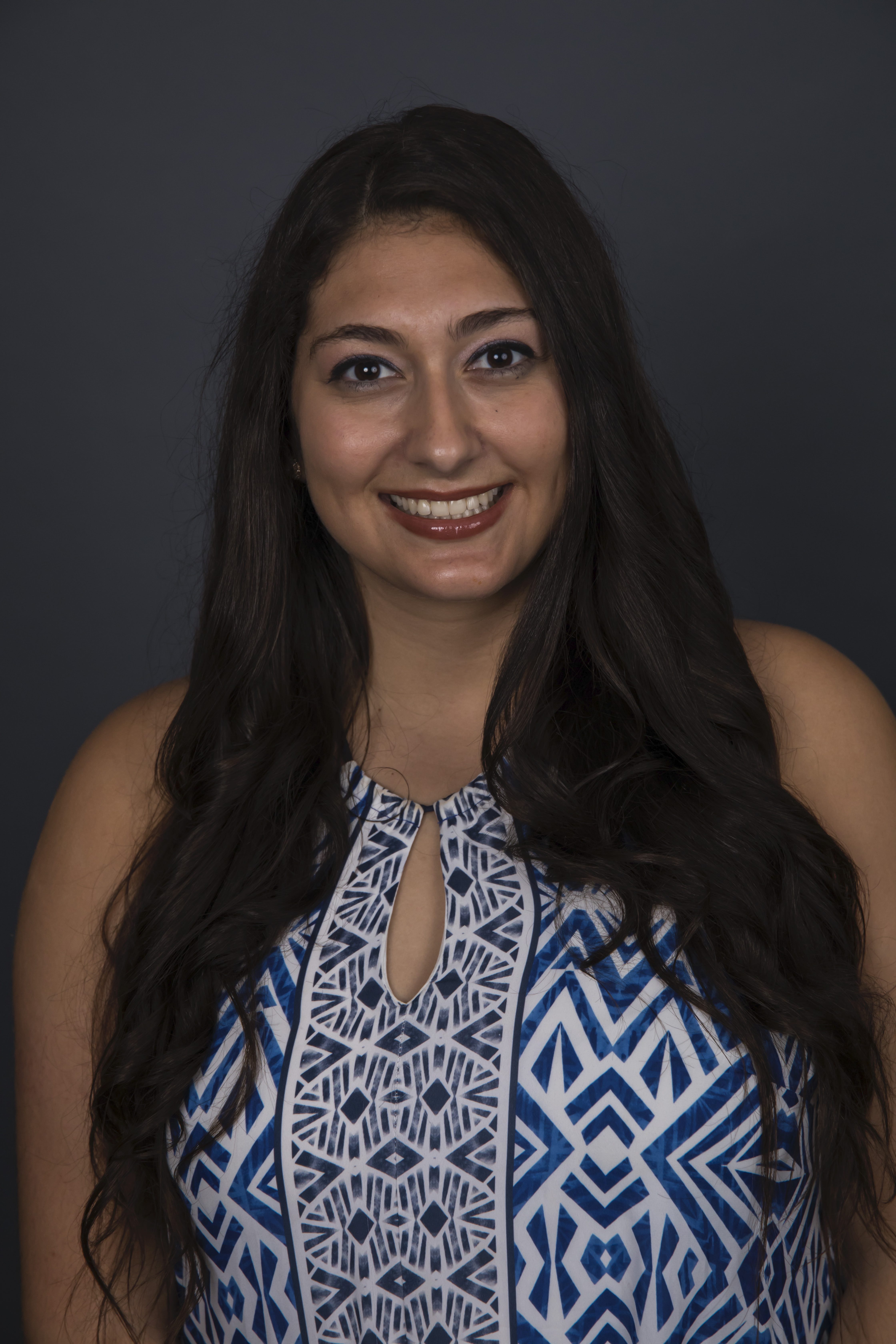
    Brett Richey, Harvard Law School ‘21, is a native of Pasadena, California. Brett graduated magma cum laude from Vanderbilt University in 2018, where she majored in Public Policy Studies and minored in Corporate Strategy. During Brett’s senior year at Vanderbilt, she wrote an undergraduate thesis analyzing the relationship between early childhood court involvement and future juvenile delinquency. Since coming to Harvard, Brett has become very interested in animal law, and particularly hopes to advocate for the wellbeing of captive animals kept in research labs and exhibitions. After graduating from law school, Brett plans to be a trial attorney in Washington, DC, and someday hopes to run for elected office. Outside of class, Brett enjoys supporting the Boston Red Sox, visiting local craft breweries, traveling to new countries, and winning escape rooms with her friends.
    Boanne Wassink, now a third-year student at Harvard Law School, graduated from Grinnell College in Grinnell, Iowa, where she majored in mathematics and physics. After planning for many years to be a research mathematician and earning her Master’s in Mathematics at the University of Iowa, Boanne made a career change to enroll in law school. During her 1L year at Harvard, Boanne discovered the field of animal law and quickly became involved through courses; research assistantships; the Animal Law Society, of which she is Vice President; and now the Animal Law & Policy Clinic. Along the way she decided to devote her career to helping animals through the legal system. After graduating this May, Boanne will clerk for two years at the Staff Clerk’s Office of the Seventh Circuit Court of Appeals. After that, she hopes to return to her native Iowa and join the fight against factory farming. When she’s not at school, Boanne spends her time relaxing with her husband, playing with their two young children, and telling their daughter bedtime stories about lawyers helping animals.

    ***

    You can listen to our podcast directly on our website (beneath this paragraph!) or you can listen and subscribe on iTunes or your favorite podcatcher. Also, if you like what you hear, please rate it on iTunes, and don’t forget to leave us a friendly comment! Of course, we would be thrilled if you would consider making a donation, or becoming a member of our flock (especially if you’re a regular listener). Any amount is hugely appreciated and Our Hen House is a 501(c)(3) nonprofit organization, so it’s tax-deductible. Thank you for helping us create quality content!

    The graphics for the OHH podcasts are created by the wonderful Laurie Johnston of Two Trick Pony. Don’t forget to also listen to the award-winning, weekly signature OHH podcast — now in its ninth glorious year!


    Animal Law Podcast #53: A Meaty Constitutional Discussion Oct 30, 2019
    Show notes

    On this episode of the Animal Law Podcast, I speak with Professor Sherry Colb of Cornell Law School along with one of her students, Jareb Gleckel. We’ll be speaking about a recent article they have co-written, “Labeling Alternative Meat: Constitutional Choices That Can Dictate the Future of Food,” __ Animal L. R. __ (forthcoming, 2020), that is about the constitutionality of legislation that seeks to limit, and in some cases criminalize, the types of labels that can be used for plant-based foods. We start by discussing a new decision on a motion for a preliminary injunction in Turtle Island Foods v Richardson, otherwise known as the Missouri Tofurky case (which I discussed with Amanda Howell on Episode 43) and move on to discuss the constitutional issues that are at issue in that and similar cases, some of the wide-ranging implications of these cases, and some potentially powerful alternative arguments. It’s a fascinating and lengthy discussion that you’re sure to find informative regarding a crucial issue for the future of food, and the future of animals.

    Sherry F. Colb is the C.S. Wong Professor of Law at Cornell University. She was valedictorian of Columbia
    College and received her law degree magna cum laude from Harvard. She then went on to clerk for Judge Wilfred Feinberg (on the U.S. Court of Appeals for the Second Circuit) and then Justice Harry A. Blackmun (on the U.S. Supreme Court). In addition to teaching courses in constitutional criminal procedure, evidence, and animal rights, she has published articles in a variety of law reviews, including Stanford, Columbia, N.Y.U., and G.W., and written two books about animal rights, Beating Hearts: Abortion and Animal Rights (co-authored with Michael C. Dorf) and Mind If I Order the Cheeseburger? And Other Questions People Ask Vegans. She composes a bi-weekly column on Justia’s Verdict as well as regular posts on the blog, Dorf on Law.

    Jareb Gleckel is a third-year law student at Cornell and lives in Ithaca with his dog, Gatsby. Before starting law school, he co-founded and ran Hamptons Chess, which became known for its local outreach in Suffolk County, New York. Jareb also writes literary fiction, and Trident Media Group will represent his first two novels. After graduating, he will clerk for Judge Richard Wesley (on the U.S. Court of Appeals for the Second Circuit) and Judge Paul Oetken (in the Southern District of New York).

    ***

    You can listen to our podcast directly on our website (beneath this paragraph!) or you can listen and subscribe on iTunes or your favorite podcatcher. Also, if you like what you hear, please rate it on iTunes, and don’t forget to leave us a friendly comment! Of course, we would be thrilled if you would consider making a donation, or becoming a member of our flock (especially if you’re a regular listener). Any amount is hugely appreciated and Our Hen House is a 501(c)(3) nonprofit organization, so it’s tax-deductible. Thank you for helping us create quality content!

    The graphics for the OHH podcasts are created by the wonderful Laurie Johnston of Two Trick Pony. Don’t forget to also listen to the award-winning, weekly signature OHH podcast — now in its ninth glorious year!


    Animal Law Podcast #52: The (Ongoing) Case of the USDA Records Blackout Sep 27, 2019
    Show notes

    On this episode of the Animal Law Podcast, I speak with Margaret Kwoka a professor at the Sturm College of Law at the University of Denver, about the Animal Welfare Act and the Freedom of Information Act, and how these pertain to the ongoing case of Animal Legal Defense Fund vs. The U.S. Department of Agriculture. This case involves the USDA’s blackout of various enforcement records, crucial to the work of animal protection organizations, that were formerly available via the USDA’s website and have now either disappeared or been redacted into uselessness. We’ll be discussing a recent successful decision in the 9th Circuit regarding the agency’s refusal to post these records. It’s an important case for people within the animal advocacy movement and beyond whose work relies on access to information from government agencies.

    Professor Kwoka’s research interests center on government secrecy, the Freedom of Information Act, procedural justice, and judicial review of agency actions. Her articles have appeared or will appear in the Yale Law Journal, Duke Law Journal, Boston University Law Review, and UC Davis Law Review, among others. She has also testified in Congress on government transparency, received the inaugural Society of American Law Teachers (SALT) Junior Faculty Teaching Award, and her research was featured in the New York Times. She teaches administrative law, civil procedure, federal courts, and national security law.

    ***

    You can listen to our podcast directly on our website (beneath this paragraph!) or you can listen and subscribe on iTunes or your favorite podcatcher. Also, if you like what you hear, please rate it on iTunes, and don’t forget to leave us a friendly comment! Of course, we would be thrilled if you would consider making a donation, or becoming a member of our flock (especially if you’re a regular listener). Any amount is hugely appreciated and Our Hen House is a 501(c)(3) nonprofit organization, so it’s tax-deductible. Thank you for helping us create quality content!

    The graphics for the OHH podcasts are created by the wonderful Laurie Johnston of Two Trick Pony. Don’t forget to also listen to the award-winning, weekly signature OHH podcast — now in its ninth glorious year!


    Animal Law Podcast #51: The Case of the Catastrophic Copper Mine Aug 28, 2019
    Show notes

    On this episode of the Animal Law Podcast, I speak with Marc Fink, a senior attorney with the Center for Biological Diversity and an expert in Public Lands Law and the Endangered Species Act. We discuss the recent decision in Save the Scenic Santa Ritas v US Army Corps of Engineers. This important case involves the potential construction of a huge copper mine right outside Tucson, Arizona. Marc explains how outdated mining law has been used in an attempt to justify the mine, as well as the many potential destructive ramifications for endangered species inhabiting the affected area, including the jaguar. We also discuss the increasing importance of the Endangered Species Act as more and more species are threatened by the climate crisis and other environmental disasters, how recent changes imposed by the current administration seek to limit the Act’s protective powers, and some of the litigation that is being initiated to fight those changes.

    Marc Fink is the Public Lands Legal Director and Senior Attorney at the Center for Biological Diversity. He oversees litigation in the Center’s Public Lands Program. His docket includes a variety of endangered species and public-lands cases across the country. Marc graduated from Lewis and Clark Law School with a certificate in environmental and natural resources law. Before joining the Center in 2007, he worked as a staff attorney at the Western Environmental Law Center.

    ***

    You can listen to our podcast directly on our website (beneath this paragraph!) or you can listen and subscribe on iTunes! Also, if you like what you hear, please rate it on iTunes, and don’t forget to leave us a friendly comment! Of course, we would be thrilled if you would consider making a donation, or becoming a member of our flock (especially if you’re a regular listener). Any amount is hugely appreciated and Our Hen House is a 501(c)(3) nonprofit organization, so it’s tax-deductible. Thank you for helping us create quality content!

    The graphics for the OHH podcasts are created by the wonderful Laurie Johnston of Two Trick Pony. Don’t forget to also listen to the award-winning, weekly signature OHH podcast — now in its ninth glorious year!


    Animal Law Podcast #50: Justin Marceau on Animal Law and Criminal Punishment Jul 24, 2019
    Show notes

    On this episode of the Animal Law Podcast, I speak once again with Justin Marceau, author of the controversial new book Beyond Cages: Animal Law and Criminal Punishment. We discuss why he believes there has been an overemphasis on criminal prosecution of animal abuse as a strategy for systemic change and what types of cruelty he believes are, and are not, appropriate for traditional forms of criminal prosecution and punishment. He also discusses the fundamental importance of informing the fight to protect animals with current thinking regarding racism and mass incarceration and how the the punishments we traditionally use for animal cruelty crimes are not only ineffective in addressing institutionalized violence, but potentially are counterproductive in that they can be responsible for causing increased criminal behavior.

    Justin Marceau is Professor of Law and the Animal Legal Defense Fund Professor at Sturm College of Law at the University of Denver. He also serves as the reporter for the pattern criminal jury instruction committee of the U.S. Court of Appeals for the Tenth Circuit, and as an inaugural member of the animal welfare committee (PAW) formed by a proclamation of the Governor of Colorado to advise the First Gentleman on strategies for improving the protection of animals in Colorado. He is the recipient of numerous awards, including the Justice for Animals Award and the Colorado Criminal Defense Bar’s Gideon Award.

    Marceau’s research focuses on criminal law and constitutional law, particularly as those areas intersect with social change. He specifically writes in the areas of Habeas Corpus, Constitutional Law, and Animal Law. His current research is at the intersection of animal law and criminal law.

    His work has appeared in some of the leading academic publications, including the Cambridge University Press, the Yale Law Review, and the Columbia Law Review. He has lectured on his research in the U.S. and in Europe, has been retained as an expert witness in criminal and civil cases, and received grants and awards for his research from a variety of organizations. He has also maintained a law practice while teaching at DU, representing indigent persons, persons sentenced to death, and a wide range of public interest non-profits.

    ***

    You can listen to our podcast directly on our website (beneath this paragraph!) or you can listen and subscribe on iTunes! Also, if you like what you hear, please rate it on iTunes, and don’t forget to leave us a friendly comment! Of course, we would be thrilled if you would consider making a donation, or becoming a member of our flock (especially if you’re a regular listener). Any amount is hugely appreciated and Our Hen House is a 501(c)(3) nonprofit organization, so it’s tax-deductible. Thank you for helping us create quality content!

    The graphics for the OHH podcasts are created by the wonderful Laurie Johnston of Two Trick Pony. Don’t forget to also listen to the award-winning, weekly signature OHH podcast — now in its ninth glorious year!


    Animal Law Podcast #49: The Case of Pilgrim’s Pride’s Shame Jun 26, 2019
    Show notes

    On this episode of the Animal Law Podcast, I speak with Laura Fox of the Humane Society of the United States about administrative efforts to address false and deceptive advertising from Pilgrim’s Pride regarding their treatment of chickens. These efforts include a complaint made to the Federal Trade Commission asking it to investigate the advertising and enjoin Pilgrim’s Pride from continuing to issue misleading claims pertaining to animal welfare, as well as subsequent requests for similar enforcement to state consumer protection agencies and attorneys general. Additionally, a complaint was made to the Securities and Exchange Commission about possible stakeholder fraud in violation of federal securities laws, also pertaining to the false and deceptive claims made by Pilgrim’s Pride about humane treatment.

    Laura Fox is a Staff Attorney in the Animal Protection Litigation program at HSUS, working to protect farm animals from the industrialized practices of factory farms, including by eliminating extreme confinement and unnecessary suffering and challenging their environmental impacts. A large aspect of her work involves filing complaints with federal and state agencies and litigating issues arising under the National Environmental Policy Act, the Administrative Procedure Act, the Freedom of Information Act, and other federal statutes, as well as litigating consumer protection cases at the state level. Laura is also an Adjunct Professor of animal law at George Mason’s law school, and has also taught courses in philosophy and ethics. Laura graduated from Vermont Law School with a J.D. and Master of Environmental Law and Policy and also holds a master’s in philosophy from George Mason University.

    ***

    You can listen to our podcast directly on our website (beneath this paragraph!) or you can listen and subscribe on iTunes! Also, if you like what you hear, please rate it on iTunes, and don’t forget to leave us a friendly comment! Of course, we would be thrilled if you would consider making a donation, or becoming a member of our flock (especially if you’re a regular listener). Any amount is hugely appreciated and Our Hen House is a 501(c)(3) nonprofit organization, so it’s tax-deductible. Thank you for helping us create quality content!

    The graphics for the OHH podcasts are created by the wonderful Laurie Johnston of Two Trick Pony. Don’t forget to also listen to the award-winning, weekly signature OHH podcast — now in its ninth glorious year!


    Animal Law Podcast #48: Service, Assistance, and Companion Animals are in the House May 29, 2019
    Show notes

    On this episode of the Animal Law Podcast, I speak to Abby Volin about how the issue of finding housing with pets is directly related to the complex legal issues surrounding both service and assistance animals (spoiler alert: they are not the same thing!). She tells me about how most housing providers haven’t kept up with the needs of renters who live with animals, creating a situation in which demand for animal-friendly housing is vastly outpacing supply, and in which landlords are missing out on great tenants for all the wrong reasons. She also explains how the Fair Housing Amendments Act and Americans with Disabilities Act define disability and in what ways they protect people trying to find, or keep, their service or assistance animals living with them in their homes. Adding to the confusion are different standards applying on airplanes to such animals and a good deal of publicity about some peculiar applications of those standards. As a result, this is an area that has become so fraught with misconceptions regarding how reasonable accommodation laws work and whether there is fraud within the system that state legislatures have started to pass laws that criminalize the fraudulent use of service and assistance animals. Abby explains how this creates further difficulties for people with disabilities who need access to housing for themselves and their animals.

    Abby Volin is President of Opening Doors, a consulting firm that helps housing professionals manage pets on properties and counsels tenants with their pet-related housing issues. She is a nationally recognized expert on animal accommodation law and frequently holds lectures for landlords, attorneys, tenants, animal welfare organizations, and healthcare providers. Prior to founding Opening Doors, Abby worked as a policy specialist at The Humane Society of the United States and started her career as a litigator. Abby earned her JD from Loyola University Chicago School of Law and BA from Tufts University.

    ***

    You can listen to our podcast directly on our website (beneath this paragraph!) or you can listen and subscribe on iTunes! Also, if you like what you hear, please rate it on iTunes, and don’t forget to leave us a friendly comment! Of course, we would be thrilled if you would consider making a donation, or becoming a member of our flock (especially if you’re a regular listener). Any amount is hugely appreciated and Our Hen House is a 501(c)(3) nonprofit organization, so it’s tax-deductible. Thank you for helping us create quality content!

    The Our Hen House theme song is written and sung by the incredible Michael Harren. The graphics for the OHH podcasts are created by the wonderful Laurie Johnston of Two Trick Pony. Don’t forget to also listen to the award-winning, weekly signature OHH podcast — now in its ninth glorious year!


    Animal Law Podcast #47: The Case of the Not-So-Natural Choice Apr 24, 2019
    Show notes

    On this episode of the Animal Law Podcast, I speak to Kelsey Eberly and David Muraskin about what the average consumer thinks when they see the words, “Natural Choice,” on a meat or poultry product and what the truth is about the products that carry that label. That’s the fundamental issue in the case that they have been litigating in the District of Columbia Superior Court — Animal Legal Defense Fund v Hormel Foods Corp. Unfortunately, as too often happens when it comes to animal law, after years of litigation that question was not even addressed in the court’s recent decision dismissing the case based on standing and preemption. Kelsey and Dave explain why they think that decision was wrong and likely to be overturned on appeal and why this case is so important, not only because it drastically narrows the District’s consumer protection law, which had been thought to be the strongest in the country, but because of what it means for the unseen victims here, the animals trapped in Hormel’s supply chain.

    Kelsey Eberly assists Animal Legal Defense Fund with its cases and projects. She graduated from UCLA Law School in May 2014, where she focused on animal, environmental, and administrative law. While attending law school, Kelsey was the chair of the UCLA Animal Law Society—that school’s Animal Legal Defense Fund Student Chapter. She was also a writing advisor to first year law students in UCLA’s Lawyering Skills clinical program. Prior to this, she earned a graduate certificate in Animal Policy and Advocacy from Humane Society University. In 2006, she received a bachelor’s degree magna cum laude from Middlebury College, with a double major in English and Spanish.

    David Muraskin is a Food Safety & Health Attorney at Public Justice, focusing on Public Justice’s efforts to promote sustainable animal farming agriculture and hold factory farms accountable for the negative social and environmental effects of their production methods. Prior to joining Public Justice, he worked on a variety of consumer litigation, first as the Alan Morrison Supreme Court Assistance Project Fellow with Public Citizen and then as an attorney in McKool Smith’s whistleblower practice. He has worked with the United States and numerous States to prosecute first-of-its-kind qui tam litigation and represented clients in cases from state trial courts to the United States Supreme Court concerning constitutional and statutory claims. From 2009-2011, he was a law clerk to Judge James L. Dennis on the United States Court of Appeals for the Fifth Circuit.

    ***

    You can listen to our podcast directly on our website (beneath this paragraph!) or you can listen and subscribe on iTunes! Also, if you like what you hear, please rate it on iTunes, and don’t forget to leave us a friendly comment! Of course, we would be thrilled if you would consider making a donation, or becoming a member of our flock (especially if you’re a regular listener). Any amount is hugely appreciated and Our Hen House is a 501(c)(3) nonprofit organization, so it’s tax-deductible. Thank you for helping us create quality content!

    The Our Hen House theme song is written and sung by the incredible Michael Harren. The graphics for the OHH podcasts are created by the wonderful Laurie Johnston of Two Trick Pony. Don’t forget to also listen to the award-winning, weekly signature OHH podcast — now in its ninth glorious year!


    Previous 1 7 8 9 10 11 14 Next

    Related Podcasts

    Inside Strategic Coach: Connecting Entrepreneurs With What Really Matters

    1

    Inside Strategic Coach: Connecting Entrepreneurs With What Really Matters Business
    WSJ Your Money Briefing

    2

    WSJ Your Money Briefing Business
    FORTUNE Unfiltered with Aaron Task

    3

    FORTUNE Unfiltered with Aaron Task Business
    FORTUNE OnStage Presents: The Most Powerful Women

    4

    FORTUNE OnStage Presents: The Most Powerful Women Business
    Slate Money

    5

    Slate Money Business
    In The Dark – The New Yorker

    6

    In The Dark – The New Yorker Business News
    footer-logo

    Contact Us

    Toll Free: 844-670-7747

    Links

    • Home
    • Top Charts
    • Networks
    • Apps
    • Independents Podcasts
    • Podcast Advertising
    • Podcast News
    • Contact Us
    • About Us
    • Analytics & Insights

    Stay Connected

      Privacy, Terms of Use & Our Code of Ethics Protecting Content Creators Copyrights