TopPodcast.com
Menu
  • Home
  • Top Charts
  • Top Networks
  • Top Apps
  • Top Independents
  • Top Podfluencers
  • Top Picks
    • Top Business Podcasts
    • Top True Crime Podcasts
    • Top Finance Podcasts
    • Top Comedy Podcasts
    • Top Music Podcasts
    • Top Womens Podcasts
    • Top Kids Podcasts
    • Top Sports Podcasts
    • Top News Podcasts
    • Top Tech Podcasts
    • Top Crypto Podcasts
    • Top Entrepreneurial Podcasts
    • Top Fantasy Sports Podcasts
    • Top Political Podcasts
    • Top Science Podcasts
    • Top Self Help Podcasts
    • Top Sports Betting Podcasts
    • Top Stocks Podcasts
  • Podcast News
  • About Us
  • Podcast Advertising
  • Contact
Not in our directory?
Add Show Here
Podcast Equipment
Center

toppodcastlogoOur TOPPODCAST Picks

  • Comedy
  • Crypto
  • Sports
  • News
  • Politics
  • True Crime
  • Business
  • Finance

Follow Us

toppodcastlogoStay Connected

    View Top 200 Chart
    Back to Rankings Page
    Courses

    Speech and Language Kids Podcast

    The Speech and Language Kids Podcast is BACK and better than ever! Learn how to treat communication challenges in children without losing yourself in the process. Speech-language pathologist Carrie Clark shares her best tips, tricks, and strategies to help children improve their communication skills in all areas: speech, articulation, phonology, language, literacy, social communication, stuttering, voice, AAC, functional communication, and more! Plus, Carrie will walk you through the best ways to save time and streamline what you do so your clients make faster progress and you can be more effective in less time (and stop taking work home)! Listen to the live recordings inside The Hub at Hub.SpeechAndLanguageKids.com

    Advertise

    Copyright: © Copyright: Speech and Language Kids 2013

    • Apple Podcasts
    • Google Play
    • Spotify

    Latest Episodes:
    Building Therapy Plans for Children with AAC May 05, 2025
    Show notes

    Building Therapy Plans for Children with AAC

    Do you work with children who use communication devices or systems to express themselves? Whether it’s a high-tech talker, sign language, or picture boards, AAC (Augmentative and Alternative Communication) comes in many forms—and it’s essential that we know how to support kids in using it effectively. In this episode, Carrie shares how to build therapy plans for children who use AAC, including practical strategies and step-by-step guidance based on the AAC Pathway inside the Speech and Language Kids Hub.

    You’ll also hear answers to live listener questions about AAC devices in the classroom, choosing apps, and working with parents and teachers to support communication across environments.

    AAC Curriculum for Speech/Language Therapy

    Free AAC Activity

    Teach the word “Help” using AAC

    Download for Free!

    Or, Get the Full AAC Curriculum

    Speech Therapy Demo Session for AAC

    Watch the AAC Therapy Session Demo

    Listen to the Podcast Here

    You can listen to the full podcast episode below:

    What is AAC and Who Uses It?

    Carrie starts by explaining what AAC is and the many ways children may use it to communicate, from low-tech tools like picture boards and gestures to high-tech devices with eye gaze or text-to-speech features. She also dispels the myth that AAC prevents speech development—spoiler alert: research says otherwise!

    Helpful resource: What is AAC?

    The Two Golden Rules of AAC Therapy

    Before jumping into therapy planning, Carrie shares the two biggest takeaways for anyone supporting a child who uses AAC:

    1. Focus on communication, not technology.
    2. Model, model, model!

    She explains why goals should center on meaningful interaction (not just button-pushing) and how modeling AAC use builds confidence and understanding.

    Beginner Level: Getting Started with AAC

    At this stage, the focus is on helping the child communicate basic wants and needs using core vocabulary. You’ll hear:

    • Why “go,” “more,” “stop,” and “all done” are more useful than “cracker” or “train”
    • Tips for modeling AAC use throughout the day
    • Strategies to help the whole team (SLPs, parents, teachers) stay on the same page

    Inside the Hub: Visual aids with core word boards and low-tech AAC tools

    Intermediate Level: Expanding AAC Use

    Once kids can express some wants and needs, it’s time to expand! Carrie discusses:

    • Moving beyond requesting to include labeling, describing, commenting, and more
    • How to support grammar and sentence growth through AAC
    • Examples of social and functional communication goals

    Advanced Level: Full Participation Through AAC

    At the advanced level, AAC becomes a tool for full participation in classroom and social life. Learn how to support:

    • Retelling past events and participating in conversations
    • Self-advocacy and problem-solving with AAC
    • Using AAC across different settings and environments

    Supporting Gestalt Language Processors (GLPs)

    Carrie briefly touches on how some AAC users may learn in chunks rather than word-by-word. She shares how you can support GLPs by incorporating full phrases and familiar scripts into AAC devices.

    Live Q&A Highlights

    Listeners asked some fantastic questions, including:

    • What to do when a child uses one AAC button repeatedly (hint: treat it like verbal babbling!)
    • Choosing a speech-generating app or device (Carrie recommends Grid by Smartbox and TouchChat)
    • Home strategies for encouraging AAC use with toddlers and teens
    • When AAC is (and isn’t) appropriate for speech-delayed children

    Resources Mentioned

    • The Hub Mobile App

    • AAC Pathway inside the Hub
    • Free Text-to-Speech Tool by Google
    • SLK Screening & Progress Monitoring Checklists – Inside the SLK Framework (for non-AAC speech/language concerns)

    Looking for low-tech AAC boards, full lesson plans, or more support? Join us inside the Speech and Language Kids Hub where you’ll find everything from downloadable materials to expert-led courses.

    AAC Curriculum for Speech/Language Therapy

    AAC Curriculum and Mini-Course

    Teach a child to start communicating using an AAC/Communication Device or System

    $19 ~ Buy Now!

    Or, Download the Free Sample

    The post Building Therapy Plans for Children with AAC appeared first on Speech And Language Kids.


    Cycles Approach for Language – Treating Multiple Areas of Language Simultaneously Apr 28, 2025
    Show notes

    Cycles Approach for Language: Treating Multiple Areas of Language Simultaneously

    When a child is struggling in more than one area of language, how do you decide what to work on first? In this episode, Carrie Clark, SLP and creator of the Speech and Language Kids Hub, shares her approach to tackling this common challenge—using a cycles approach for language therapy. Inspired by the classic cycles method for phonology, this flexible strategy helps SLPs target multiple areas of language without having to pick just one.

    Whether you’re working with Tier 2 kids, students with mild mixed delays, or children with more complex needs, this method can help you move the needle on progress without feeling scattered or overwhelmed. Keep reading (or listening!) for practical tips, real-life examples, and tools to get started.

    Listen to the Podcast Here

    You can listen to the full podcast episode below:

    Why Use a Cycles Approach for Language?

    Carrie introduces the idea of cycling through different language goals—just like we do with phonology. Instead of zeroing in on one skill until mastery, you rotate through a set of 2–4 key targets, giving students repeated exposure over time.

    Perfect for:

    • Students with scattered mild delays
    • Tier 2 intervention groups
    • Children with language disorders across multiple domains

    This method mirrors how language naturally develops and aligns beautifully with how school curriculums revisit and build on skills over time.

    Meet Lane + Parker: Real-Life Student Examples

    Carrie shares stories of two students who inspired her to rethink how she structured therapy. Both had mild delays across multiple language domains—but no single “big weakness” to focus on. Instead of choosing one goal and ignoring the rest, she tried a cycles-based approach… and it worked!

    What the Research Says

    Carrie highlights a study (from the ‘80s or ‘90s) that compared three therapy models: simultaneous targeting of phonology and language, block scheduling, and a cycling approach. Spoiler alert: cycling came out on top, reinforcing the value of this method for supporting progress across multiple skill areas.

    Why It Works

    Carrie describes a research study comparing three therapy methods:

    • Both phonology and language in every session
    • Blocked sessions (e.g., 6 weeks of just phonology, then 6 weeks of language)
    • A cycles approach (alternating weekly)

    The winner? The cycles model—students made more progress when targets were rotated!

    How to Set Up a Language Cycle

    Not sure where to start? Here’s Carrie’s simple setup:

    1. Pick 2–4 language goals (e.g., WH questions, sequencing, adjectives)
    2. Spend 1–2 weeks on each
    3. Cycle back to the beginning and repeat
    4. Adjust goals based on student progress and data

    There’s no “one right way” to do it—customize based on the child’s needs and your style!

    How to Write Goals + Track Progress

    Goal writing can feel tricky with a cycles model, but Carrie offers two great options:

    • Track one representative skill (e.g., retelling a past event) as a measure of overall language growth
    • Use a rubric to rate functional communication skills like understanding and expressing

    Inside the Hub, you’ll find screening checklists, rubrics, and goal-writing guides to make this super manageable.

    A Look Inside the Core Language Program

    A Look Inside the Core Language Program

    Carrie’s Core Language Program is a full-blown example of this approach in action. It’s a 16-week curriculum that cycles through every oral language skill for one grade level, with built-in foundational skills like:

    • Following directions
    • Asking and answering questions
    • Retelling
    • Producing narratives, information, or opinions

    Each lesson includes therapy activities + homework pages for families and teachers.

    Available inside the Hub (separate purchase required)

    Helpful Resources Mentioned

    • The Hub: Membership site with therapy checklists, lesson plans, data tools, and more
    • Core Language Program: Learn more + download a free sample
    • Cycles Approach for Phonology: Also inside the Hub

    Final Thoughts

    The cycles approach to language therapy is a flexible, effective way to support students with mixed needs—and it fits beautifully with how children learn naturally. Whether you’re brand new to this idea or already cycling through goals without realizing it, this episode will give you fresh ideas and next steps.

    Give it a listen, and let us know what you think!

    The post Cycles Approach for Language – Treating Multiple Areas of Language Simultaneously appeared first on Speech And Language Kids.


    Ahmad’s Story – Childhood Apraxia of Speech and the Motor Speech Pathway Apr 21, 2025
    Show notes

    Ahmad’s Story: Childhood Apraxia of Speech and the Motor Speech Pathway

    In this episode, Carrie shares the story of a sweet 5-year-old boy named Ahmad (name changed for privacy) and his journey with childhood apraxia of speech. From using AAC to working through early speech sounds, Carrie walks through the specific framework and strategies that helped Ahmad go from frustration to finding his voice.

    If you’re working with a child who struggles to speak but clearly has a lot to say, this one’s for you.

    Listen to the Podcast Here

    You can listen to the full podcast episode below:

    What is Childhood Apraxia of Speech (CAS)?

    Carrie kicks off the episode by explaining what childhood apraxia of speech is—a motor speech disorder where the brain knows what it wants to say, but the message doesn’t make it clearly to the mouth. Ahmad had CAS along with other developmental and medical challenges, which made early intervention even more important. Carrie talks about what apraxia can look like in a preschooler and how it can affect speech production in unpredictable ways.

    Learn more about Childhood Apraxia of Speech

    Free CV, VC, CVC, CVCV Flashcards and Worksheets

    Free Flashcards: CV, VC, CVC, CVCV Words

    Practice cards and worksheets for children with Apraxia and other motor speech disorders

    Download for Free!

    Or, Get the Full Motor Speech Curriculum

    Using the SLK Framework to Plan Therapy

    Carrie walks through how she applied the Speech and Language Kids Framework to Ahmad’s case. The first step? Identifying the areas of communication that needed the most support. For Ahmad, that meant:

    • Functional communication (getting needs met)
    • Speech production (expressing himself verbally)

    From there, she explains how they chose two primary therapy pathways:

    • AAC (Augmentative and Alternative Communication) for functional communication
    • Motor Speech Approach for targeting simple, early speech patterns

    Grab the SLK Therapy Framework

    Introducing AAC (and Managing Parent Concerns)

    Ahmad’s story isn’t just about the therapy—it’s about the people involved, too. Carrie shares how she encountered resistance from Ahmad’s mom about using AAC, particularly because of concerns around manipulation and behavior due to reactive attachment disorder.

    Instead of pushing her agenda, Carrie modeled collaboration by calling a team meeting. Together with a behavior specialist and the family, they developed a plan: Ahmad could use the AAC device, but would also be encouraged to attempt speech with each use. This balanced approach honored everyone’s concerns while still supporting Ahmad’s communication.

    Related Resource

    Targeting Early Speech Skills with Motor Speech Therapy

    With AAC in place, Carrie focused on Ahmad’s expressive speech. She used a motor speech approach, starting with simple word shapes like consonant-vowel (CV) and vowel-consonant (VC) patterns. Key strategies included:

    • Selecting core words that were functional (like “go,” “up,” “in,” “bye”)
    • Practicing with frequent, short sessions throughout the school day
    • Posting word lists in the classroom for consistent reinforcement
    • Collaborating with teachers and parents to embed practice into daily routines

    Try the Motor Speech Therapy Plan

    Practical Therapy Example: Real-Life Repetition

    Carrie describes how she used brief, frequent practice opportunities—like greeting Ahmad at the classroom door and reviewing his core words by his backpack. These mini-sessions, combined with play-based speech therapy and consistent home carryover, helped Ahmad make meaningful progress.

    Key Tip: Kids with apraxia benefit from distributed practice—short bursts of practice multiple times a day are more effective than one long session.

    Takeaways for SLPs and Caregivers

    • Collaboration is key—trust and teamwork with families and staff make interventions more successful.
    • AAC doesn’t mean giving up on speech—it can be a bridge to verbal communication.
    • Consistent, functional practice helps kids build motor speech pathways over time.

    If you’re working with preschoolers with CAS or complex needs, you’ll find loads of practical gems in this episode.

    Resources and Links

    SLK Therapy Framework

    Motor Speech Therapy Plan in the Hub

    AAC Overview for SLPs and Parents

    Apraxia-KIDS.org

    Free CV, VC, CVC, CVCV Flashcards and Worksheets

    Free Flashcards: CV, VC, CVC, CVCV Words

    Practice cards and worksheets for children with Apraxia and other motor speech disorders

    Download for Free!

    Or, Get the Full Motor Speech Curriculum

    AAC Curriculum for Speech/Language Therapy

    AAC Curriculum and Mini-Course

    Teach a child to start communicating using an AAC/Communication Device or System

    $19 ~ Buy Now!

    Or, Download the Free Sample

    The post Ahmad’s Story – Childhood Apraxia of Speech and the Motor Speech Pathway appeared first on Speech And Language Kids.


    Arianna’s Story: Preschool Speech and Language Apr 14, 2025
    Show notes

    Arianna’s Story: Preschool Speech and Language

    How do you know where to start with a preschooler who’s hard to understand? In today’s episode, I’m walking you through a real-life case study of a sweet little one (we’ll call her Arianna) who had significant speech and language challenges. I’ll share the exact process I used to figure out what to target first and how I built a therapy plan that made meaningful progress possible—even with limited time and resources.

    This episode is perfect for SLPs, teachers, and parents working with preschoolers who have unclear speech, multiple delays, or difficulty getting their message across.

    Listen to the Podcast Here

    You can listen to the full podcast episode below:

    Step 1: Identify the Main Areas of Impact

    We started by figuring out which areas of communication were causing the most trouble. For Arianna, that meant:

    • Speech sounds (especially final consonant deletion and velar fronting)
    • Syntax and grammar (telegraphic speech and missing grammatical markers) These were the pieces that were making her the hardest to understand.

    Tip: Narrow down to the areas that will give you the most bang for your buck—the ones that will make everything else easier once they improve.

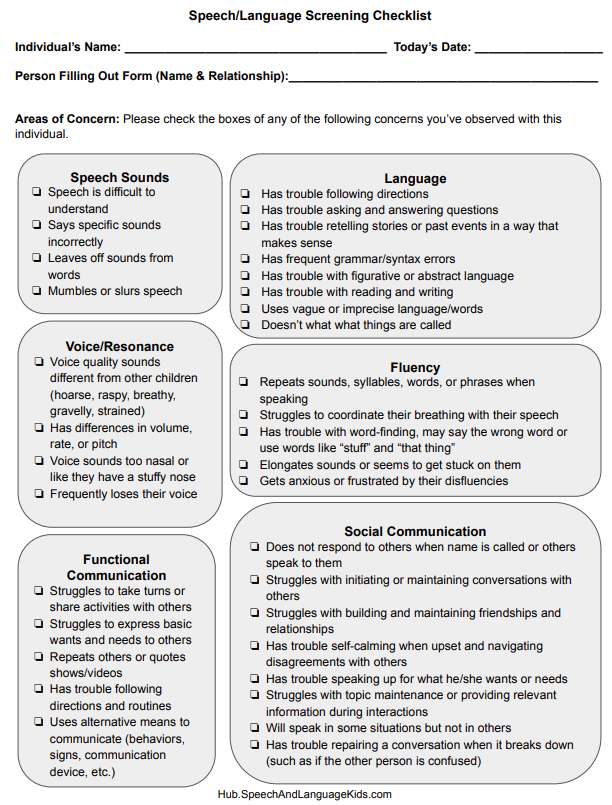
    SLK Screening Checklist (Free inside the Hub!)

    Step 2: Use Progress Monitoring Tools to Dig Deeper

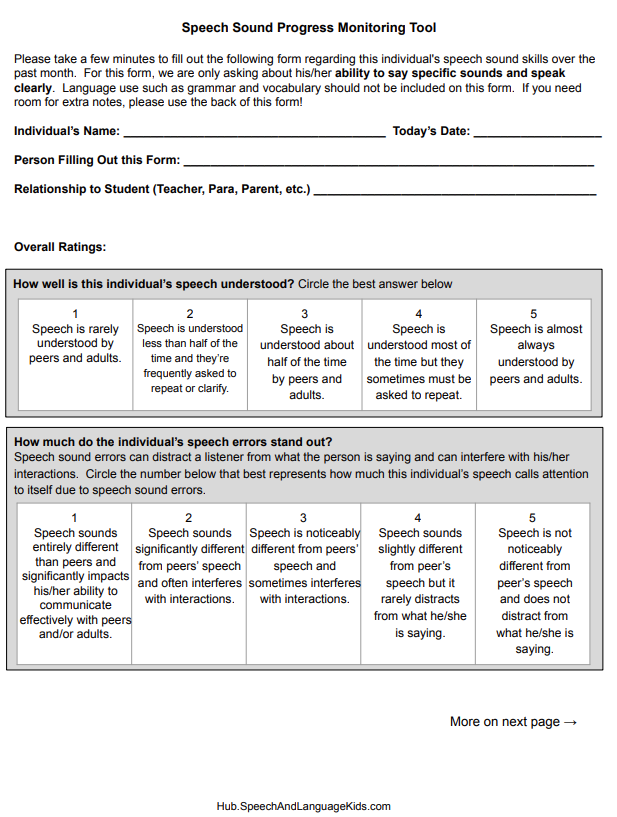
    Once we knew her biggest challenges, we used SLK’s progress monitoring checklists to pinpoint where she was breaking down:

    • Speech: We identified phonological processes (not just individual sounds) as the main issue.
    • Language: Grammar and sentence structure were the weakest spots—she was using very short, simplified utterances.

    These checklists helped us move from a broad area (like “speech”) to the exact patterns to target in therapy.

    Progress Monitoring Tools

    Step 3: Choose the Right Therapy Pathways

    We mapped Arianna’s goals onto SLK’s structured therapy pathways:

    • Phonological Processing Pathway: Targeting beginner-level patterns like final consonant deletion and velar fronting.
    • Syntax & Grammar Pathway: Starting with early-developing grammatical markers like present progressive “-ing.”

    This helped create a clear, step-by-step plan that fit her level and needs.

    Step 4: Target Specific, Functional Skills

    From there, we picked specific therapy goals:

    • Say words with final consonants (e.g., “cat” instead of “ca”)
    • Produce K and G sounds in the correct place in the mouth
    • Use basic grammatical forms like “jumping” or “eating”

    These were the skills that would have the biggest immediate impact on her intelligibility and communication success.

    Step 5: Make Therapy Play-Based and Flexible

    Since Arianna was just 4 years old, we kept our sessions fun and flexible:

    • Used toys and books for natural practice
    • Modeled target sounds and grammar during play
    • Adapted session length to her attention span
    • Mixed speech and language practice together in the same session

    We also collaborated with her teacher and sent simple homework activities home for carryover.

    Bonus: Troubleshooting Other Common Preschool Challenges

    In the second half of the episode, we tackled listener questions about similar preschoolers:

    • What to do when there’s echolalia and limited spontaneous language
    • How to support a preschooler using AAC/LAMP devices for communication
    • Choosing between speech vs. language vs. social goals when there are multiple areas of need

    I shared how the same SLK framework helps guide those decisions so you can confidently know what to target first.

    Resources and Links

    Join the Speech and Language Kids Hub – Free & Paid Plans

    SLK Screening Checklist

    SLK Progress Monitoring Tools

    Therapy Pathways & Materials ($25/month or $250/year)

    The post Arianna’s Story: Preschool Speech and Language appeared first on Speech And Language Kids.


    Speech/Language Therapy 101: Back to Basics for SLPs and Caregivers Mar 24, 2025
    Show notes

    Speech/Language Therapy 101: Back to Basics for SLPs and Caregivers

    Are you looking for the simplest, most effective way to teach communication skills to children and teens?

    Well, search no farther!

    I’m speech-language pathologist Carrie Clark and in today’s episode of The Speech and Language Kids Podcast, we’re diving into exactly how to make the most of virtual speech sessions so we can work on closing these gaps, one child at a time.

    Listen to the Podcast Here

    You can listen to the full podcast episode below:

    The Different Areas of Speech/Language/Communication:

    • Speech Sounds: Individuals with speech sound problems have difficulty pronouncing sounds correctly. Their speech is difficult to understand. Fill out the Speech Sounds Progress Monitoring Tool to dive deeper.
    • Language: Individuals with language difficulties struggle to understand or use words effectively. This can impact their ability to follow directions, express thoughts, or build sentences correctly. Fill out the Language Progress Monitoring Tool to dive deeper.
    • Voice/Resonance: Individuals with voice or resonance concerns may have voices that sound hoarse, too nasal, too quiet, or otherwise unusual. These issues can affect how others perceive and understand them. Fill out the Voice/Resonance Progress Monitoring Tool to dive deeper.
    • Fluency: Individuals with fluency difficulties may experience stuttering or interruptions in their speech. This can include repeating sounds, stretching out words, or having frequent pauses. Fill out the Fluency Progress Monitoring Tool to dive deeper.
    • Functional Communication: Individuals with functional communication difficulties struggle to get their needs met using speech, gestures, or other means of communication. They may have trouble making requests, answering questions, or using words effectively in daily life. Fill out the Functional Communication Progress Monitoring Tool to dive deeper.
    • Social Communication: Individuals with social communication challenges may struggle with conversational skills, understanding social cues, or using language appropriately in different social interactions. This can affect their ability to interact with others successfully. Fill out the Social Communication Progress Monitoring Tool to dive deeper.

    To Access the Specific Progress Monitoring Tools, Click Here!

    Therapy Pathways for Speech Sounds

    Articulation – Individuals with articulation challenges have difficulty with specific speech sounds, producing them incorrectly or with noticeable distortions. Choose the articulation pathway for traditional sound-by-sound therapy that targets one speech sound at a time.

    Phonology – Individuals with phonological challenges demonstrate consistent patterns of speech errors, such as omitting sounds at the beginning or end of words or struggling with whole categories of sounds (e.g., back sounds like /k/ and /g/). Choose the phonology pathway to teach sound patterns and eliminate phonological processes such as fronting, stopping, final consonant deletion, etc.

    Motor Speech – Individuals with motor speech difficulties have inconsistent speech errors, struggle more with longer words, appear to have difficulty physically producing speech sounds, and may sound choppy and robotic. Choose the motor speech pathway to treat motor-based speech disorders, such as apraxia, by teaching specific word structures, such as CV, VC, CVC, and multisyllabic words.

    Mumbling Pathway – These individuals may speak too quickly, too quietly, slurs their words, or are able to produce sounds correctly in isolation but become harder to understand in conversation. Choose this pathway for a structured approach to teaching over-articulation and increasing awareness of when they are not understood.

    To access these Therapy Pathways and the corresponding Therapy Plans, click here!

    Therapy Pathways for Language Skills

    Following Directions Pathway

    Individuals with following directions challenges have difficulty understanding and carrying out one-step or multi-step instructions. They may become easily distracted when given directions or struggle to process spoken information. Choose this pathway to target skills like following verbal and written directions, improving attention to instructions, and processing spoken language efficiently.

    Asking and Answering Questions Pathway

    These individuals have difficulty responding to basic WH-questions (who, what, where, etc.), struggle to ask meaningful questions, or have trouble answering questions about something they just heard. Choose this pathway to build skills in answering WH-questions, formulating clear and relevant questions, and improving comprehension through question-based interactions.

    Sequencing & Retelling Pathway

    Individuals with sequencing and retelling challenges have difficulty organizing events or stories in logical order. They may start retellings in the middle without context, leave out key details, or struggle to recall events accurately. Choose this pathway to focus on skills like sequencing steps, retelling stories with key details, and structuring a story clearly.

    Grammar & Sentence Complexity Pathway

    Individuals with grammar and sentence complexity challenges have speech that contains frequent grammar errors, sounds choppy and incomplete, or relies on shorter or simpler sentences than expected for their age. Choose this pathway to strengthen grammar use, expand sentence length and complexity, and improve overall sentence structure.

    Foundations for Literacy Pathway

    Individuals with literacy challenges have difficulty with early reading skills, such as phonological awareness, understanding written texts, or developing reading fluency and comprehension. Choose this pathway to build phonological awareness, strengthen early literacy skills, and improve reading comprehension and fluency.

    Abstract Language Pathway

    Individuals with abstract language challenges struggle to understand figurative language, such as idioms, sarcasm, and metaphors, or have difficulty making inferences from conversations and texts. Choose this pathway to develop skills in understanding and using figurative language, interpreting implied meanings, and making logical inferences.

    Vocabulary Pathway

    Individuals with vocabulary challenges have difficulty understanding and using new words, rely on vague or imprecise language, or struggle with remembering and using the correct words. Choose this pathway to enhance word knowledge, improve word retrieval, and build precise and meaningful vocabulary use.

    To access these Therapy Pathways and the corresponding Therapy Plans, click here!

    Therapy Pathways for Social Communication

    Social Awareness and Interaction Pathway

    Individuals with social awareness and interaction challenges have difficulty responding to others, understanding different perspectives, and engaging appropriately in social situations. Choose this pathway to build skills responding to others, joint attention, turn taking, topic maintenance, and perspective taking.

    Emotional Regulation & Self-Advocacy Pathway

    Individuals with emotional regulation and self-advocacy challenges have difficulty expressing their needs, managing emotions, and coping with social stressors. They may struggle to communicate boundaries or self-regulate in overwhelming situations. Choose this pathway to develop skills in emotional awareness, self-advocacy, coping strategies, and effective self-expression.

    Conversational Skills Pathway

    Individuals with conversational skills challenges have difficulty initiating, maintaining, and appropriately ending conversations. They may struggle to take turns, stay on topic, or understand conversational rules. Choose this pathway to improve an individual’s ability to initiate conversations, keep them going, and adapt them to a variety of situations.

    Abstract Language Pathway

    Individuals with abstract language challenges struggle to understand figurative language, sarcasm, idioms, and implied meanings in conversations. They may take things literally or have difficulty making inferences. Choose this pathway to strengthen skills in interpreting figurative language, understanding implied messages, and making logical inferences in conversations.

    Selective Mutism Pathway

    Individuals with selective mutism can speak in some situations but experience anxiety or difficulty speaking in specific social settings (such as speaking freely at home but remaining silent at school). Choose this pathway to build confidence in verbal communication, reduce anxiety around speaking, and support gradual exposure to new speaking environments.

    To access these Therapy Pathways and the corresponding Therapy Plans, click here!

    Therapy Pathways for Fluency/Stuttering

    Foundations for Fluency Pathway

    Individuals with fluency challenges may struggle with maintaining smooth, natural speech flow. They may benefit from strategies that support breath control, emotional regulation, and confidence in speaking. Choose this pathway to work on coordinating breathing with speech, increasing awareness of stuttering, and dealing with negative emotions or reactions related to stuttering.

    Stuttering Pathway

    Individuals with stuttering challenges experience interruptions in speech, such as repetitions, prolongations, or blocks. They may feel frustrated or anxious about speaking. Choose this pathway to develop structured strategies for smoother, more confident communication and to reduce tension associated with stuttering.

    Cluttering Pathway

    Individuals with cluttering challenges speak too quickly, in a disorganized way, or with reduced clarity, making their speech difficult to understand. They may struggle with self-monitoring and pacing their speech. Choose this pathway to improve speech clarity, regulate speaking rate, and enhance overall communication effectiveness.

    Word Finding/Word Retrieval Pathway

    Individuals with word finding challenges struggle to retrieve the right words, leading to frequent hesitations, pauses, or substitutions in conversation. Choose this pathway to strengthen word retrieval skills, reduce speaking delays, and increase ease and confidence in communication.

    To access these Therapy Pathways and the corresponding Therapy Plans, click here!

    Therapy Pathways for Functional Communication

    Early Interactions Pathway

    Individuals with early interaction challenges may need support with basic social engagement, responding to their name, following simple directions, and participating in early social routines. Choose this pathway to build foundational communication skills, increase social engagement, and support early language development.

    Analytic Language Processors (ALP) Pathway

    Individuals who are analytic language processors learn language through individual words and phrases. They may need help using words and short phrases effectively across different situations. Choose this pathway to teach a child to use short words for functional communication, build up their vocabulary, and begin to expand their utterance length to longer phrases.

    Gestalt Language Processors (GLP) Pathway

    Individuals who are gestalt language processors learn language through echolalia, scripts, or repeating chunks of language. They may need structured support in moving toward self-generated speech. Choose this pathway to guide the progression from echolalia to meaningful, spontaneous language use.

    Augmentative & Alternative Communication (AAC) Pathway

    Individuals who use AAC (such as picture boards, speech-generating devices, or gestures) may need support in developing functional and meaningful communication. Others may struggle with speech intelligibility and need alternative ways to express themselves without frustration. Choose this pathway to help a child learn to communicate using alternative means, such as pictures, sign language, or communication devices.

    To access these Therapy Pathways and the corresponding Therapy Plans, click here

    Therapy Pathways for Voice/Resonance

    Foundations of Healthy Voice Use Pathway

    Individuals with challenges in healthy voice use may experience vocal strain, fatigue, or difficulty maintaining a strong and clear voice. They may need to improve vocal hygiene, breath support, or voice care habits. Choose this pathway to build healthy vocal habits, reduce strain, and strengthen breath support for better voice production.

    Voice Pathway

    Individuals with voice challenges may struggle with vocal quality due to strain, tension, or inefficient voice use. Their voice may sound hoarse, breathy, or weak. Choose this pathway to improve vocal quality, develop better vocal control, and reduce strain or tension in speech.

    Resonance Pathway

    Individuals with resonance challenges may experience hypernasality, nasal emission, or other resonance differences that impact speech clarity. Choose this pathway to improve speech resonance, enhance clarity, and support balanced vocal tone.

    Prosody Pathway

    Individuals with prosody challenges may have difficulty with pitch, volume, or speech rate, leading to speech that sounds monotone, robotic, or unnatural. Choose this pathway to develop expressive, natural speech patterns by improving pitch variation, volume control, and pacing.

    To access these Therapy Pathways and the corresponding Therapy Plans, click here!

    The post Speech/Language Therapy 101: Back to Basics for SLPs and Caregivers appeared first on Speech And Language Kids.


    The Teletherapy Playbook: Proven Strategies for Faster Progress in Virtual Speech Sessions Mar 17, 2025
    Show notes

    The Teletherapy Playbook: Proven Strategies for Faster Progress in Virtual Speech Sessions

    It’s no secret that teletherapy speech/language therapy services soared during the pandemic.

    Telepractice use among SLPs jumped from just 3.9% pre-pandemic to 88% by 2021. (source)

    And while teletherapy services are not quite as prevalent now as they were at the height of the pandemic, we’re still seeing many turn to teletherapy for its convenience and accessibility.

    And for good reason!

    We’re also seeing a huge increase in the number of children needing services.

    One analysis found a 110% increase in speech disorder diagnoses in children aged 0-12 years in 2022 compared to the pre-pandemic rates. (source)

    When families and schools are struggling to find enough local SLPs to serve the needs, teletherapy is available to serve the gaps.

    I’m speech-language pathologist Carrie Clark and in today’s episode of The Speech and Language Kids Podcast, we’re diving into exactly how to make the most of virtual speech sessions so we can work on closing these gaps, one child at a time.

    Listen to the Podcast Here

    You can listen to the full podcast episode below:

    Teletherapy Strategy 1: Work WITH the Adults in the Child’s Life

    Seeing you once per week on a screen ain’t gonna cut it!

    (Sorry, midwest roots coming out there)

    The best therapy happens as part of a cohesive whole-team appraoch.

    Meet with parents, caregivers, teachers, educators, other therapists and stay in communication about the child’s progress.

    Your time during therapy sessions should be spent on figuring out which strategies work for that client.

    If possible, spend your sessions coaching and training the adults on how to implement the strategies all day long.

    If not, make sure you communicate!

    Teletherapy Strategy 2: Use a Systematic Approach to Teaching Skills

    Boom cards are fun and all, but they don’t always lead to a cohesive strategy.

    Therapy will be more effective if you’re following a systematic approach instead of just finding cutesy one-off activities that work well on teletherapy.

    Teletherapists using The Speech and Language Kids Framework use our pathways (larger plans for specific challenges) and our therapy plans (step-by-step workbooks for each skill).

    Share the workbooks with the “screenshare” tool and some platforms will even let you write on the worksheets.

    This forms the “drill” portion of your session where you can find the right strategies.

    Teletherapy Strategy 3: Keep it Fun with Reinforcers!

    All drill and no play makes teletherapy a dull….boy?

    Ok that one fell apart a bit, but you get what I’m saying.

    Keep your sessions fun and fresh by switching up your reinforcers (NOT your therapy materials).

    After you’ve introduced the skill, you can make the practice more fun by introducing reinforcers that are related to each client’s interests:

    • Use our AI-Powered Custom Material Generators to generate custom images, word lists, reading passages, or social scenarios that contain the target skill and are based around your client’s interests.
    • Play a clip from a YouTube video about their favorite topic and then talk about it (using their skill, of course!)
    • Play an online game
    • Find hidden objects or do other puzzles on the Highlights Kids website
    • Or have them do show and tell with something they love from their house!

    Keeping teletherapy fun and fresh doesn’t have to mean loads of time planning and prepping for you!

    Need More Materials for Teletherapy/Telepractice?

    Our therapy plans and the step-by-step workbooks are perfect for teletherapy!

    1. Follow our streamlined approach with our Pathways and Plans.
    2. Use our materials to explicitly teach skills
    3. Then use our Custom Material Generators to create additional practice materials on the spot!

    Available with the Full, Paid Hub Membership here

    The post The Teletherapy Playbook: Proven Strategies for Faster Progress in Virtual Speech Sessions appeared first on Speech And Language Kids.


    A Therapy Pathway for Frontal and Lateral Speech Errors (aka “Lisps”) Mar 10, 2025
    Show notes

    A Therapy Pathway for Frontal and Lateral Speech Errors (aka “Lisps”)

    Today we’re talking about “lisps”.

    But many professionals are moving away from using the term lisp because it often carries a negative or stigmatizing connotation, especially outside of clinical contexts.

    Instead, we’re focusing on describing speech patterns more precisely using phonetic terms. For example:

    • Frontal lisp is often described as interdental or dentalized productions of /s/ and /z/.
    • Lateral lisp is often referred to as lateralized productions of /s/, /z/, and sometimes other sibilants like /ʃ/ and /ʒ/.

    I’m speech-language pathologist Carrie Clark and in today’s episode of The Speech and Language Kids Podcast, I’ll going to give you a very clear Therapy Pathway that will lay out how to treat dentalized or lateralized productions of sibilants.

    Listen to the Podcast Here

    You can listen to the full podcast episode below:

    Therapy Pathway for Dentalized or Lateralized Productions:

    Here’s the plan for how to treat these speech sounds:

    1. Identify the type of lisp being used
    2. Establish correct placement and airflow for one sibilant sound (usually /s/ or /z/) in isolation.
    3. Expand use of that sibilant into words, phrases, sentences, and short response.
    4. Expand that same placement and airflow to a new sibilant sound, repeat steps 2-3.
    5. Continue this process until individual can say all sibilants correctly.
    6. Generalize to everyday conversation.

    How to Establish Correct Placement and Airflow

    • Find a word they can already say it in correctly
    • Watch in mirror: keep tongue behind teeth
    • Find “magic spot” using tactile feedback and start the sound with the tongue tip there
    • Start with /t/ sound, extend it out (exploding /t/)
    • Use /ts/ words
    • Start with “th” and pull back
    • Start with “sh” and move forward
    • Start with “ee” to stabilize back/sides of tongue and then slowly raise tongue tip
    • Use a straw – bite tip of straw and blow /s/ into the straw

    Need More Resources for Frontal and Lateral Productions?

    We have therapy materials, training videos, and full therapy plans inside The Hub.

    Get easy-to-follow plans that work for real kids in real sessions.

    Available with the Full, Paid Hub Membership here.

    The post A Therapy Pathway for Frontal and Lateral Speech Errors (aka “Lisps”) appeared first on Speech And Language Kids.


    From Chaos to Clarity: Why One-Off Activities Are Failing Your Therapy Sessions Feb 24, 2025
    Show notes

    From Chaos to Clarity: Why One-Off Activities Are Failing Your Therapy Sessions

    You spend all evening scouring the internet for the perfect activity for little Timmy.

    You print.

    You cut.

    You laminate.

    You velcro.

    He’s gonna love it.

    And then…

    …it lasts all of two seconds and then he’s bored.

    I’m speech-language pathologist Carrie Clark and in today’s episode of The Speech and Language Kids Podcast, we’ll be answering the question of “are one-off activities really working, or are they just filling time?” Plus, I’ll show you how you the power of having a start-to-finish plan that actually moves children toward success.

    Listen to the Podcast Here

    You can listen to the full podcast episode below:

    The Allure (and Problem) with One-Off Activities

    Why do we love one-off activities so much?

    Well…

    • They’re readily available
    • They’re easy
    • They’re super cute and fun-looking
    • And they’re what we see all around us on social media. Cause they’re catchy.

    But the downsides of one-off activities are numerous:

    • Lack of progression – no clear path from skill introduction to mastery.
    • SO MUCH time & effort – constant searching for new materials.
    • Difficult to track progress – activities don’t build on each other.
    • Can be overwhelming for kids – inconsistent approaches confuse learners.

    The Power of a Start-to-Finish Plan:

    So what’s the opposite of throwing together a bunch of one-off activities?

    A structured plan that takes you from introducing a skill to mastery in a systematic way.

    Think back to grad school, remember the Van Riper approach?

    First we work on sounds in isolation, then syllables, then words, etc. Remember?

    Imagine having a systematic plan like that for EVERY skill you teach!

    And then imagine having a systematic plan for which skills to teach in the first place!

    Start-to-finish plans are:

    • Intentional – every step builds toward mastery.
    • Predictable – clients know what to expect, which lowers stress.
    • Efficient – no scrambling to find the “next” activity.

    Two Types of Start-to-Finish Plans

    Think of this as two types of plans:

    1. Therapy Pathways: A sequence of skills that you’ll teach to treat or support a specific challenge
    2. Therapy Plans: Specific therapy lessons for specific skills that they need to master.

    A good therapy plan will include both of these. Think of them as the forest, and the trees. The pathway is made up of a whole bunch of therapy plan modules.

    For example, a therapy pathway for a child who stutters may include coordinating their breathing, dealing with negative emotions, and teaching them stuttering modification strategies.

    That’s the Pathway.

    And then there will be an individual therapy plan for each of those skills that breaks them down into manageable steps.

    How to Make a Therapy Pathway:

    Take a look at where the individual is now.

    How are they communicating?

    Where are they struggling?

    What are the individual skills that they would need to learn to overcome that particular challenge?

    Then, we map out the skills that they will need to get there.

    How to Make an Individual Therapy Plan:

    Once you know what skills they need to acquire, you can work on planning out how you’ll teach each individual skill.

    These will become your individual therapy plans.

    Again, think about where they are now with that skill and where you want them to be.

    Then, create a step-by-step plan that will walk them through learning the skill.

    You can…

    • Provide supports and remove them as you go along
    • Or, make the skill easier and then build it up as you go along

    Want Some Pre-Made Therapy Plans?

    Oh!

    I’m so glad you asked!

    Why am I so passionate about this?

    Because this is what I’m spending all of my time on right now.

    I’m building out the therapy plans for you so you don’t have to spend your free time coming up with structured plans.

    And I’ll be working on the Pathways next!

    All of our Therapy Plans are available inside the Full Hub Membership.

    Join Today to Access the Therapy Plans!

    The post From Chaos to Clarity: Why One-Off Activities Are Failing Your Therapy Sessions appeared first on Speech And Language Kids.


    Speech/Language Progress Monitoring Tools Now Available…Free! Feb 17, 2025
    Show notes

    Free Speech/Language Progress Monitoring Tools Now Available!

    Well, the flu has hit my house!

    Instead of a full podcast episode today, I’m giving you a quick update about our new progress monitoring tools located inside The Speech and Language Kids Hub.

    Here’s how it works:

    1. Fill Out the Free Speech/Language Screening Checklist

    Have everyone on the individual’s team fill out this screening checklist (parents, caregivers, teachers, therapists, SLP, etc.).

    free speech language screening checklist

    2. Fill Out the Free Progress Monitoring Tools:

    Look at the areas that came up as a concern on the screening checklist. Have the team members fill out the specific progress monitoring tool for each of those areas.

    This will give you a better idea of what skills need to be addressed. You can also use your formal assessment/evaluation results to fill these out.

    Free speech/language progress monitoring tool

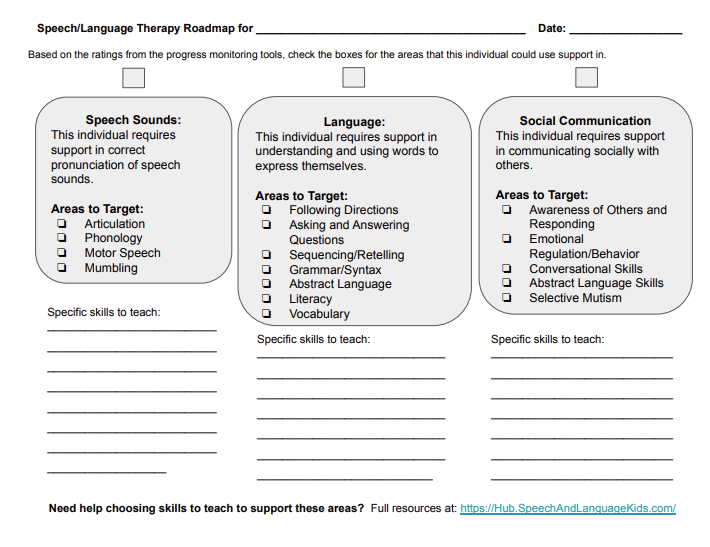
    3. Make a Custom Therapy Roadmap for this Individual

    Use the results of the individual progress monitoring tools to fill out the Therapy Roadmap. This will include all of the skills that the individual needs support with. Share this with everyone on the team!

    free therapy roadmap for speech/language therapy

    4. Grab the Therapy Plans for Those Specific Skills

    Now use your Therapy Roadmap to pick out specific skills/therapy plans that will best support the areas of need for that individual. Here’s how therapy works:

    1. Grab the therapy plan for the skill you need and put it in the child’s folder.
    2. Work on the first phase by doing the first page of the therapy plan workbook.
    3. Continue to practice by creating custom activities and materials with our session builder tools until they have mastered that phase.
    4. Move to the next phase once they’ve mastered the first.
    5. Repeat for all phases of the therapy plan.

    How to Access the Tools and Therapy Plans

    The screener checklist, progress monitoring tools, and the therapy roadmap are all available on our Freebies Plan to The Speech and Language Kids Hub.

    In order to access the Therapy Plans, you’ll need a Full, Paid Hub Membership.

    Click Here to Choose your Membership Level and Get Started!

    The post Speech/Language Progress Monitoring Tools Now Available…Free! appeared first on Speech And Language Kids.


    When Should Children be Able to Say Certain Sounds? (And How Can We Help?) Feb 10, 2025
    Show notes

    When Should Children be able to Say Certain Sounds? (And How Can We Help?

    One of the top questions I get is about whether or not a child should be saying certain speech sounds.

    Let me tell you, there is a WIDE range of normal when it comes to speech sound acquisition.

    But in general, we know that certain sounds (like /b/ and /m/) come in early…

    …and other sounds (like /r/ and /l/) come in later.

    And knowing those milestones can help us decide which children need speech therapy, and which can wait it out.

    I’m speech-language pathologist Carrie Clark and in today’s episode of The Speech and Language Kids Podcast, I’ll be telling you what ages certain sounds should come in by and I’ll be giving you a Therapy Roadmap for how to help them if they’re not.

    Listen to the Podcast Here

    You can listen to the full podcast episode below:

    Ages for Speech Sounds:

    But before we get to the roadmap, let’s answer the question that everyone is asking:

    When should children be able to say each speech sound?

    I’ve got it all laid out for you right here:

    Speech Sounds By Age:

    The following sound chart represent the age of acquisition for the English speech sounds. The age below indicates that 90% of children are saying this sound consistently when they turn that age. For example, for the /b/ sound, 90% of children are able to produce the /b/ sound correctly in everyday speech by their third birthday.

    Click here to view the research behind this speech sound age chart.

    /b/ Sound…………………….3 years

    /n/ Sound…………………….3 years

    /m/ Sound……………………3 years

    /p/ Sound…………………….3 years

    /h/ Sound……………………3 years

    /w/ Sound…………………….3 years

    /d/ Sound……………………..3 years

    /g/ Sound (as in “go”)…….4 years

    /k/ Sound………………………..4 years

    /f/ Sound………………………….4 years

    /t/ Sound………………………….4 years

    “ng” Sound (as in, “ring”)……4 years

    “y” Sound (as in, “yum”)……..4 years

    /v/ Sound………………………….5 years

    “j” Sound (as in, “jam”)……….5 years

    /s/ Sound………………………….5 years

    “ch” Sound…………………………..5 years

    /l/ Sound…………………………….5 years

    “sh” Sound…………………………..5 years

    /z/ Sound …………………………..5 years

    /r/ Sound……………………………6 years

    Voiced “th” (“they”)……………..6 years

    Soft “j” (“beige”)………………….6 years

    Voiceless “th” (“thumb”)……….7 years

    * Keep in mind, most state education departments have their own chart of when children in the public schools qualify for services based on sound. These ages may be different than the research presented here.

    But there is a Wide Range of Normal!

    Ok wait!

    Before you post a comment telling me I’m wrong….

    There is a wide range of “normal”.

    Many children acquire these sounds earlier or even later than these ages!

    Different research studies put these ages at different levels.

    This was a study done in 2020 but other studies have reported different findings.

    That’s because all children acquire sounds differently.

    How to Tell if the Child Needs Speech Therapy:

    Instead of getting hung up on the details…

    ….look for patterns.

    Is the child missing MANY of these sounds?

    Then there may be a problem.

    If the child is only slightly behind these ages, then we may not need to worry too much.

    A speech-language pathologist can do a full evaluation to see if there are enough red flags for us to feel that therapy is warranted.

    Therapy Roadmap for Speech Sound Therapy:

    So what do we do if we feel a child needs help with pronouncing speech sounds?

    We follow the roadmap.

    The first step of the roadmap is picking which road you want to follow first.

    There’s no wrong answer here, just go with the one that makes the most sense right now.

    (And revise your path later if they’re not making progress.)

    Choose a Road:

    1. Motor Speech Path: Choose this path if the child has motor speech problems, such as apraxia. These children tend to say words differently each time they try. Sometimes they can say a word clear as day and others not at all.
    2. Phonology Path: Choose this path if the child has trouble with certain classes or groups of sounds, such as “sounds at the ends of words” or “fricative sounds (long sounds like /s/ and /f/)”.
    3. Articulation Path: Choose this path if the child struggles with specific sounds, like the /r/ sound. Or if they have a lisp.
    4. The Mumblers Path: Choose this path if the child can say all speech sounds correctly in single words or shorter utterances but they’re hard to understand in conversational speech or when they start going fast.

    Motor Speech Roadmap:

    Instead of working on specific sounds, you’ll be working on specific word structures, like:

    • Consonant-Vowel words like “go” or “hi”
    • Vowel-Consonant words like “up” and “on”
    • Consonant-Vowel-Consonant words like “cup” and “hat”
    • etc.

    Choose one structure to practice at a time.

    When they can do those words, add a sound or add a new structure with sounds they can already say.

    Phonology Roadmap:

    Decide if you’ll work on one phonological process at a time or if you’ll use a Cycles Approach.

    Target that phonological process through these steps:

    1. Auditory Bombardment
    2. Auditory Discrimination
    3. Producing Class of Sounds in Single Words
    4. Producing Class of Sounds in Phrases
    5. Producing Class of Sounds in Sentences
    6. Producing Class of Sounds in Conversation

    Articulation Roadmap:

    Choose a sound to teach.

    Target that sound through these steps:

    1. Sound in Isolation
    2. Sound in Non-Sense Syllable
    3. Sound in Single Words
    4. Sound in Phrases
    5. Sound in Sentences
    6. Sound in Conversation

    Mumbling Roadmap:

    Teach the child how to overexaggerate their sounds and slow down.

    Teach over-articulation through these steps:

    1. Over-articulation in single words
    2. Over-articulation in phrases
    3. Over-articulation in sentences
    4. Noticing signs that someone doesn’t understand you
    5. Correcting by using over-articulation during moments that you aren’t understood

    Need Therapy Plans for These Skills?

    We have step-by-step therapy plans that will take you from start to finish on each of these skills.

    Get easy-to-follow plans that work for real kids in real sessions.

    Available with the Full, Paid Hub Membership here.

    The post When Should Children be Able to Say Certain Sounds? (And How Can We Help?) appeared first on Speech And Language Kids.


    Previous 1 2 3 4 10 Next

    Related Podcasts

    Coffee Break French

    1

    Coffee Break French Courses
    EconTalk

    2

    EconTalk Courses
    TED Talks Education

    3

    TED Talks Education Courses
    The Torch: The Great Courses Podcast

    4

    The Torch: The Great Courses Podcast Courses
    LSE: Public lectures and events

    5

    LSE: Public lectures and events Courses
    Homeschool Better Together

    6

    Homeschool Better Together Courses
    footer-logo

    Contact Us

    Toll Free: 844-670-7747

    Links

    • Home
    • Top Charts
    • Networks
    • Apps
    • Independents Podcasts
    • Podcast Advertising
    • Podcast News
    • Contact Us
    • About Us
    • Analytics & Insights

    Stay Connected

      Privacy, Terms of Use & Our Code of Ethics Protecting Content Creators Copyrights