TopPodcast.com
Menu
  • Home
  • Top Charts
  • Top Networks
  • Top Apps
  • Top Independents
  • Top Podfluencers
  • Top Picks
    • Top Business Podcasts
    • Top True Crime Podcasts
    • Top Finance Podcasts
    • Top Comedy Podcasts
    • Top Music Podcasts
    • Top Womens Podcasts
    • Top Kids Podcasts
    • Top Sports Podcasts
    • Top News Podcasts
    • Top Tech Podcasts
    • Top Crypto Podcasts
    • Top Entrepreneurial Podcasts
    • Top Fantasy Sports Podcasts
    • Top Political Podcasts
    • Top Science Podcasts
    • Top Self Help Podcasts
    • Top Sports Betting Podcasts
    • Top Stocks Podcasts
  • Podcast News
  • About Us
  • Podcast Advertising
  • Contact
Not in our directory?
Add Show Here
Podcast Equipment
Center

toppodcastlogoOur TOPPODCAST Picks

  • Comedy
  • Crypto
  • Sports
  • News
  • Politics
  • True Crime
  • Business
  • Finance

Follow Us

toppodcastlogoStay Connected

    View Top 200 Chart
    Back to Rankings Page
    Courses

    Speech and Language Kids Podcast

    The Speech and Language Kids Podcast is BACK and better than ever! Learn how to treat communication challenges in children without losing yourself in the process. Speech-language pathologist Carrie Clark shares her best tips, tricks, and strategies to help children improve their communication skills in all areas: speech, articulation, phonology, language, literacy, social communication, stuttering, voice, AAC, functional communication, and more! Plus, Carrie will walk you through the best ways to save time and streamline what you do so your clients make faster progress and you can be more effective in less time (and stop taking work home)! Listen to the live recordings inside The Hub at Hub.SpeechAndLanguageKids.com

    Advertise

    Copyright: © Copyright: Speech and Language Kids 2013

    • Apple Podcasts
    • Google Play
    • Spotify

    Latest Episodes:
    Voice/Resonance Curriculums for Speech Therapy Oct 24, 2025
    Show notes

    Voice/Resonance Curriculums for Speech Therapy

    Comprehensive Plans for Improving Vocal Quality and Resonance

    Our voice and resonance curriculums provide a clear, structured approach for helping children and teens improve their vocal quality, projection, and resonance in healthy, sustainable ways.

    Each plan includes practical strategies and guided activities that teach students how to use their voice effectively and comfortably across real-world settings—from the classroom to the stage.

    Give your students the confidence to speak clearly, comfortably, and with pride in their own voice.

    ✅ Structured. Evidence-based. Confidence-building.

    Voice/Resonance Curriculums for Speech TherapyStart your Free Trial to Access the Voice/Resonance Curriculums →

    Instant access. No risk. Cancel anytime.

    Who’s it For?

    • Children and teens whose voice quality sounds different from others (hoarse, raspy, breathy, gravelly, strained, etc.)

    • Those with differences in the volume, rate, or pitch of their speech

    • Those whose voices sound too nasal or like they have a stuffy nose

    • Those who frequently lose their voice

    • Those with diagnosed structural differences (vocal nodules, cleft lip/palate, etc.) or motor disorders (apraxia, dysarthria, etc.)

    Who Can Use It?

    • Speech-Language Pathologists and Professionals

    • Speech Language Therapy Assistants and SLPAs

    • Parents and Caregivers

    • Teachers and Educators

    Choose your Curriculum:

    Foundations of Healthy Voice Use

    Resonance (Nasality)

    Voice

    Prosody

    Foundations of Healthy Voice Use Curriculum:

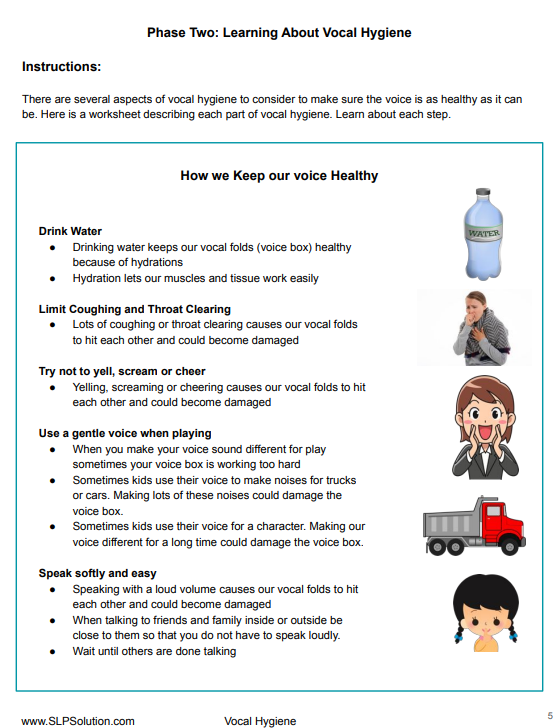
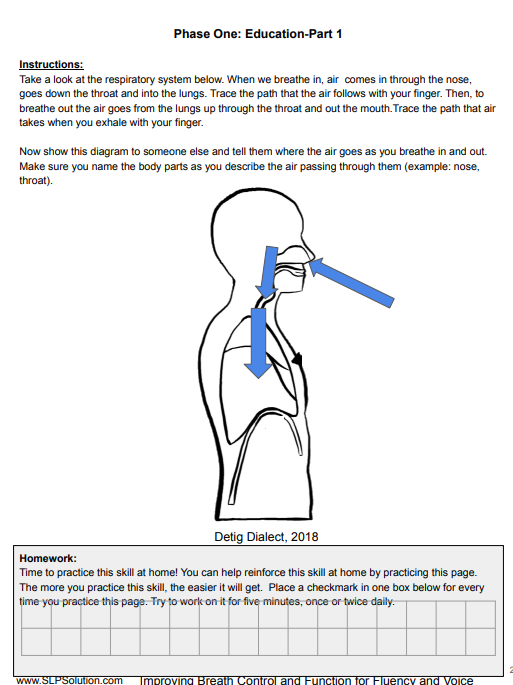
    What is it? A structured, easy-to-follow program that teaches healthy voice habits — guiding children and teens through vocal hygiene, breath control, and efficient voice use to support clear, confident communication.

    Who is it for?
    Children and teens who…

    • Cough or clear their throat frequently
    • Frequently yell, scream, or cheer loudly
    • Make a lot of loud or harsh sound effects while playing
    • Frequently speak very loudly or in an unnatural speaking voice
    • Frequently lose their voice
    • Frequently breathe through the mouth instead of the nose
    • Run out of breath when speaking or lack breath support
    • Have noisy or effortful breathing during speech

    How does it work?
    This Curriculum is broken down into three levels:

    Foundations for Healthy Voice Use Curriculum for Speech Therapy

    Beginner Level:

    Vocal Hygiene and Preventing Strain
    (Ages 5-12 yrs and beyond)

    • Eliminating Vocal Abuse

    Intermediate Level:

    Breath Control and Support
    (Ages 6-14 yrs and beyond)

    • Coordinating Breath with Speech

    Advanced Level:

    Self-Monitoring and Carryover of Voice Strategies
    (Ages 12 yrs – Adult)

    • Making Environmental Modifications to Prevent Vocal Strain
    • Using Preventative Strategies Across Environments
    • Using Proper Breathing Techniques throughout Day

    * Age ranges represent when children typically master these skills. However, this program can help older children/teens with these skills as well.

    Try the Foundations for Healthy Voice Curriculum Free for 7 Days

    Instant access. No risk. Cancel anytime.

    Resonance (Nasality) Curriculum:

    What is it? A structured program that helps children and teens develop balanced resonance for clearer speech — providing step-by-step guidance and practice to reduce hypernasality or hyponasality and improve overall voice quality.

    Who is it for?
    Children and teens who…

    • Speak too nasally or sound like they have a stuffy nose
    • Sound like they are talking through their nose
    • Have air puffing or rattling in the nose when they talk
    • Have certain speech sounds that are weak or muffled, especially on sounds like /p/, /t/, /k/

    How does it work?
    This Curriculum is broken down into three levels:

    Resonance/Nasality Curriculum for Speech Therapy

    Beginner Level:

    Developing Awareness & Discrimination
    (Ages 5-6 yrs and beyond)

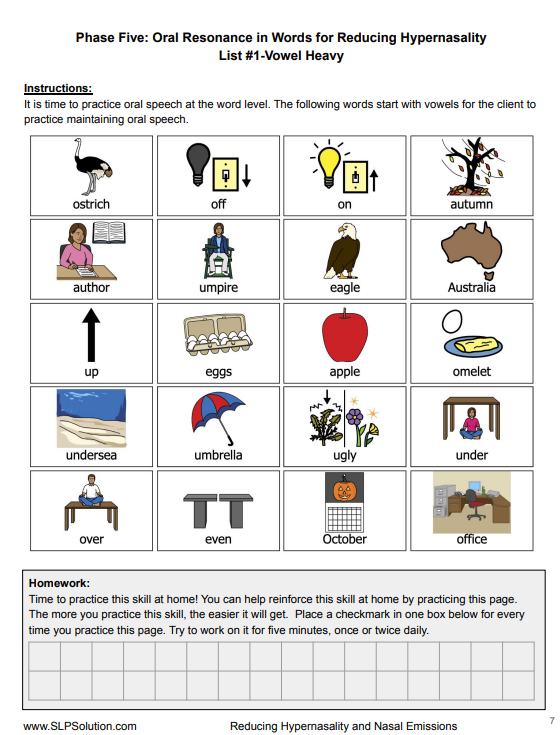
    • Discriminate Between Oral and Hypernasal Resonance

    Intermediate Level:

    Using Oral Resonance in Structured Speech Tasks
    (Ages 5-7 yrs and beyond)

    • Using Oral Resonance First in Words, then in Longer Utterances Up through Reading Aloud

    Advanced Level:

    Generalization and Carryover to Everyday Speech
    (Ages 5-8 yrs and beyond)

    • Using Correct Oral Resonance in Conversation
    • Generalizing Correct Oral Airflow to Other Environments

    * Age ranges represent when children typically master these skills. However, this program can help older children/teens with these skills as well.

    Try the Resonance Curriculum Free for 7 Days

    Instant access. No risk. Cancel anytime.

    Voice Curriculum:

    What is it? A structured, evidence-based program for addressing voice disorders by helping children and teens develop healthy, efficient voice use — providing clear, guided lessons to improve vocal quality and support confident, sustainable communication.

    Who is it for?
    Children and teens who…

    • Frequently speak with a hoarse/raspy voice
    • Frequently speak with a breathy/airy voice
    • Sound like they are straining or forcing their voice
    • Often sound gravelly, crackly, or growly in their voice

    How does it work?
    This Curriculum is broken down into three levels:

    Voice Curriculum for Speech Therapy

    Beginner Level:

    Reducing Vocal Strain and Tension
    (Ages 5-10 yrs and beyond)

    • Introduction to How the Voice Works
    • Relaxation Techniques (whatever works best for this client)
    • Yawn-Sigh
    • Easy Onset

    Intermediate Level:

    Improving Vocal Quality
    (Ages 10-14 yrs and beyond)

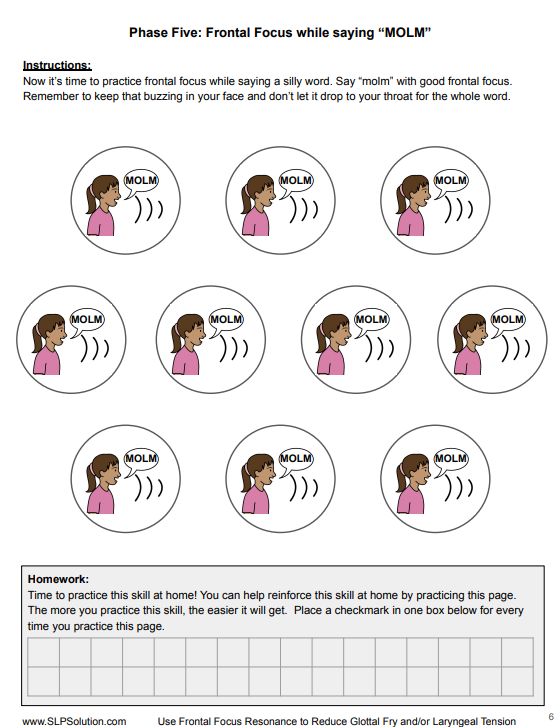
    • Using Frontal Focus Resonance to Improve Vocal Quality

    Advanced Level:

    Controlling Pitch, Loudness, and Endurance
    (Ages 12 yrs – Adult)

    • Controlling Pitch and Loudness to Reduce Strain
    • Building Vocal Endurance
    • Self-Monitoring Voice

    * Age ranges represent when children typically master these skills. However, this program can help older children/teens with these skills as well.

    Try the Voice Curriculum Free for 7 Days

    Instant access. No risk. Cancel anytime.

    Prosody Curriculum:

    What is it? A structured program that helps children and teens develop natural-sounding prosody — teaching control of volume, rate, and pitch to make speech more expressive, clear, and engaging.

    Who is it for?
    Children and teens who…

    • Sound choppy or robotic
    • Struggle with volume (too loud or too quiet)
    • Struggle with rate (too fast or too slow)
    • Struggle with pitch (too high, too low, or monotone with no pitch variability)

    How does it work?
    This Curriculum is broken down into three levels:

    Prosody Curriculum for Speech Therapy

    Beginner Level:

    Attending to Prosody in Sounds and Speech
    (Ages 4-6 yrs and beyond)

    • Demonstrate Prosody Concepts of Loud/Quiet, Fast/Slow, and High/Low

    Intermediate Level:

    Using Expected Prosody in Speech
    (Ages 5-8 yrs and beyond)

    • Using Expected Prosody in Phrases and Sentences

    Advanced Level:

    Generalizing Expected Prosody in Conversation
    (Ages 7-10 yrs and beyond)

    • Using Expected Prosody in Conversation and Across Environments

    * Age ranges represent when children typically master these skills. However, this program can help older children/teens with these skills as well.

    Try the Prosody Curriculum Free for 7 Days

    Instant access. No risk. Cancel anytime.

    You Don’t Have to Do This Alone.

    Every child’s communication journey is unique — but you don’t have to reinvent the wheel for each one.

    Our Speech Sound Curriculums are just the beginning. Inside the SLK Curriculum, you’ll find comprehensive therapy plans for every major area of communication:

    • Language (vocabulary, grammar, comprehension, etc.)
    • Speech sound pronunciation
    • Social communication and pragmatic skills
    • Fluency and stuttering
    • Voice and resonance
    • Functional Communication

    Each curriculum walks you through the therapy process step-by-step — from first session to mastery — so you can spend less time planning and more time helping children and teens succeed.

    confident slp using the SLK Curriculum to Save Hours on Planning Each Week

    Because when you have a clear plan, children make faster progress.

    And when children start communicating clearly and confidently… everything changes.

    Sneak Peek! 👀👇

    Learn More about the Curriculum →

    The post Voice/Resonance Curriculums for Speech Therapy appeared first on Speech And Language Kids.


    Fluency Curriculums for Speech Therapy Oct 24, 2025
    Show notes

    Fluency/Stuttering Curriculums for Speech Therapy

    Comprehensive Plans for Helping Children who Stutter

    Our fluency curriculums provide a clear, organized framework for helping children who stutter or have other disfluencies develop the tools they need to communicate effectively.

    Each plan teaches practical, real-world strategies that help students navigate speaking situations with greater comfort, confidence, and control—whether they’re in the classroom, with friends, or out in the community.

    Give your students the support they need to speak freely and feel understood.

    ✅ Structured. Supportive. Real-world results.

    Fluency/Stuttering Curriculums for Speech TherapyStart your Free Trial to Access the Fluency Curriculums →

    Instant access. No risk. Cancel anytime.

    Who’s it For?

    • Children and teens who repeat sounds, syllables, words, or phrases when speaking

    • Those who struggle to coordinate their breathing with their speech (gasping or running out of air)

    • Those who have trouble with word-finding, may say the wrong words or use vague words like “stuff” or “that thing”

    • Those who elongate sounds or seem to get stuck on them

    • Those who get anxious or frustrated by their disfluencies

    Who Can Use It?

    • Speech-Language Pathologists and Professionals

    • Speech Language Therapy Assistants and SLPAs

    • Parents and Caregivers

    • Teachers and Educators

    Choose your Curriculum:

    Foundations for Fluency

    Stuttering

    Cluttering

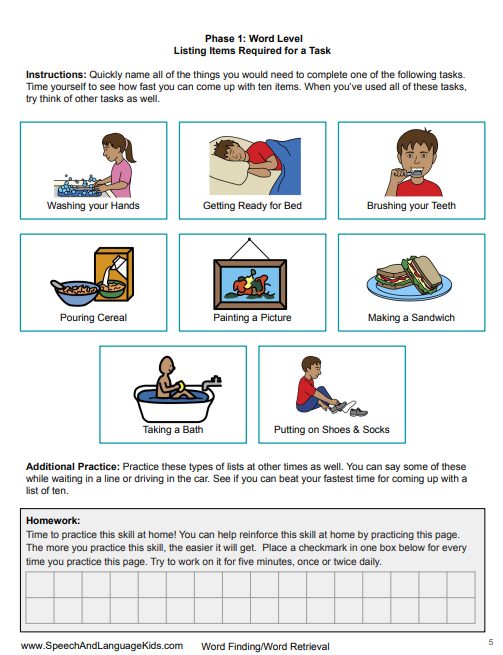
    Word Finding/Word Retrieval

    Foundations for Fluency Curriculum (Breathing and Emotional Reactions):

    What is it? A structured, supportive program that helps children and teens build the foundations for fluent speech — teaching them to coordinate breath with speech, increase awareness of disfluencies, and manage emotional responses with confidence and self-acceptance.

    Who is it for?
    Children and teens who…

    • Seem unaware that they are stuttering or have disfluencies
    • Seem upset by their stuttering/disfluencies
    • Have negative thoughts about self or low self confidence due to stuttering/disfluencies
    • Get visibly anxious or upset when stuttering/ having disfluencies
    • Refuse to talk about their stuttering/ disfluencies
    • Struggle to coordinate breathing with speech
    • Stop in the middle of sentences or phrases to breathe

    How does it work?
    This Curriculum is broken down into three levels:

    Foundations for Fluency Curriculum for Speech Therapy

    Beginner Level:

    Breath-Speech Coordination
    (Ages 5-8 yrs and beyond)

    • Coordinating Breath with Speech

    Intermediate Level:

    Managing Reactions to Fluency Struggles
    (Ages 7-10 yrs and beyond)

    • Improving Awareness of Stuttering
    • Dealing with Negative Emotions Regarding Stuttering

    Advanced Level:

    Self-Monitoring and Carryover of Fluency Strategies
    (Ages 10-15 yrs and beyond)

    • Integrating Fluency Strategies into Real-World Communication

    * Age ranges represent when children typically master these skills. However, this program can help older children/teens with these skills as well.

    Try the Foundations for Fluency Curriculum Free for 7 Days

    Instant access. No risk. Cancel anytime.

    Stuttering Curriculum:

    What is it? A comprehensive, easy-to-follow program that takes the guesswork out of stuttering therapy — giving clinicians a clear roadmap and ready-to-use materials to plan effective, confidence-building sessions for children and teens who stutter.

    Who is it for?
    Children and teens who…

    • Are younger than 5 years old with disfluency that comes and goes

    OR

    • Repeat whole words and phrases or revises what they were saying frequently
    • Use filler words like “um, uh”
    • Repeat parts of words or single sounds
    • Elongate sounds
    • Seem to get stuck where no sound is coming out
    • Sometimes use movements or muscle tension to seemingly “push” through moments of stuttering

    How does it work?
    This Curriculum is broken down into three levels:

    Stuttering Curriculum for Speech Therapy

    Beginner Level:

    Indirect Therapy for Young Children
    (Ages 2-6 yrs and beyond)

    • Improve Fluency through Indirect Strategies and Parent Training
    • Teaching Fast/Slow and Bumpy/Smooth

    Intermediate Level:

    Fluency Shaping Techniques
    (Ages 4-8 yrs and beyond)

    • Slow Rate
    • Easy Onset
    • Continuous Voicing
    • Light Articulatory Contact
    • Prolongation

    Advanced Level:

    Stuttering Modification Techniques
    (Ages 7-10 yrs and beyond)

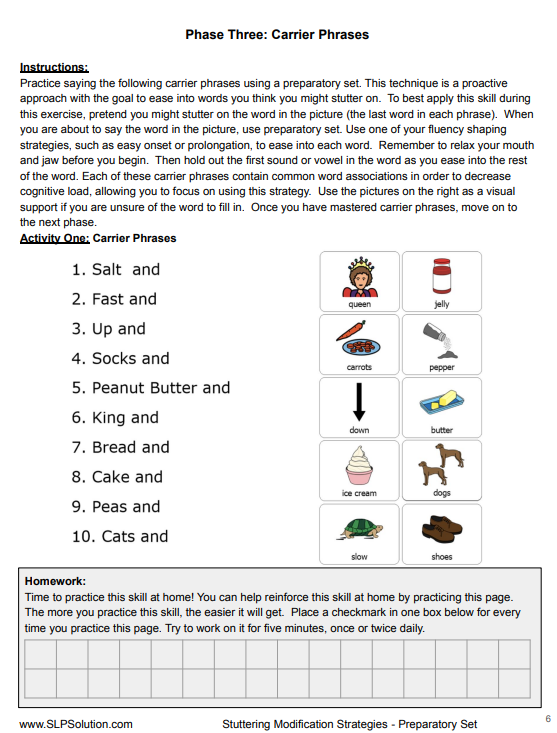
    • Preparatory Set
    • Pull Out
    • Cancellation

    * Age ranges represent when children typically master these skills. However, this program can help older children/teens with these skills as well.

    Try the Stuttering Curriculum Free for 7 Days

    Instant access. No risk. Cancel anytime.

    Cluttering Curriculum:

    What is it? A structured, step-by-step program that helps children and teens who clutter develop clearer, more organized speech — with a systematic approach that makes therapy focused, effective, and easy to follow.

    Who is it for?
    Children and teens who…

    • Speak very quickly, causing speech to become more disfluent
    • Sound more clear and fluency when told to speak more slowly
    • Leave out many sounds or word endings in conversational speech, sounds like words all run together
    • Frequently use filler words like “um” and “like”
    • Often revise what they are saying mid-sentence (e.g., “I need to go…I mean I’m out of cheese”)

    How does it work?
    This Curriculum is broken down into three levels:

    Cluttering Curriculum for Speech Therapy

    Beginner Level:

    Specific Strategies for Slow, Clear Speech
    (Ages 7-10 yrs and beyond)

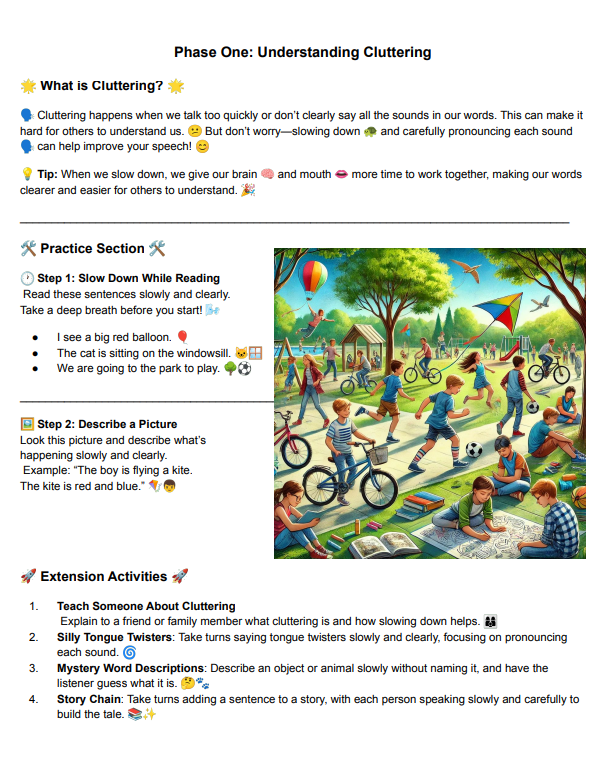
    • Understanding Cluttering
    • Learning and Practicing Specific Strategies for Slowing Rate and Increasing Intelligibility

    Intermediate Level:

    Increasing Mastery of Strategies
    (Ages 9-12 yrs and beyond)

    • Understanding and Identifying Communication Breakdowns
    • Demonstrating strategies for slow, clear speech in practice scenarios

    Advanced Level:

    Correcting Intelligibility Issues in Conversations
    (Ages 10-12 yrs and beyond)

    • Using slow, clear speech strategies in the natural environment as needed

    * Age ranges represent when children typically master these skills. However, this program can help older children/teens with these skills as well.

    Try the Cluttering Curriculum Free for 7 Days

    Instant access. No risk. Cancel anytime.

    Word Finding/Word Retrieval Curriculum:

    What is it? A structured, easy-to-implement program that helps children and teens strengthen word finding and retrieval skills — using clear, systematic lessons to improve communication speed, accuracy, and confidence.

    Who is it for?
    Children and teens who…

    • Overuse non-specific words like “that thing” and “stuff”
    • Struggle to come up with the word they’re looking for
    • Sometimes say the wrong word for things
    • Talk around words (ex: “the red fruit that grows on trees”)

    How does it work?
    This Curriculum is broken down into three levels:

    Word Finding Curriculum for Speech Therapy

    Beginner Level:

    Semantic Strategies
    (Ages 4-7 yrs and beyond)

    • Identifying semantic aspects of words, such as category, attributes, and associations

    Intermediate Level:

    Phonological Strategies
    (Ages 4-8 yrs and beyond)

    • Identifying phonological aspects of words, such as number of syllables/words, rhyming, and imagery

    Advanced Level:

    Conversational Strategies
    (Ages 6-10 yrs and beyond)

    • Use strategies during word-finding struggles in conversational speech

    * Age ranges represent when children typically master these skills. However, this program can help older children/teens with these skills as well.

    Try the Word-Finding Curriculum Free for 7 Days

    Instant access. No risk. Cancel anytime.

    You Don’t Have to Do This Alone.

    Every child’s communication journey is unique — but you don’t have to reinvent the wheel for each one.

    Our Speech Sound Curriculums are just the beginning. Inside the SLK Curriculum, you’ll find comprehensive therapy plans for every major area of communication:

    • Language (vocabulary, grammar, comprehension, etc.)
    • Speech sound pronunciation
    • Social communication and pragmatic skills
    • Fluency and stuttering
    • Voice and resonance
    • Functional Communication

    Each curriculum walks you through the therapy process step-by-step — from first session to mastery — so you can spend less time planning and more time helping children and teens succeed.

    confident slp using the SLK Curriculum to Save Hours on Planning Each Week

    Because when you have a clear plan, children make faster progress.

    And when children start communicating clearly and confidently… everything changes.

    Sneak Peek! 👀👇

    Learn More about the Curriculum →

    The post Fluency Curriculums for Speech Therapy appeared first on Speech And Language Kids.


    Social Communication Curriculums for Speech Therapy Oct 24, 2025
    Show notes

    Social Communication Curriculums for Speech Therapy

    Step-by-Step Plans to Help Children and Teens Build Real Connections

    Our social communication curriculums provide a clear, structured pathway for teaching social skills in a logical progression — from foundational interaction skills to complex communication and relationship-building.

    Each plan is designed to help children and teens make real-world improvements in everyday conversations, social interactions, and their ability to connect meaningfully with others.

    You’ll have everything you need to teach social communication with clarity, confidence, and purpose.

    ✅ Structured. Evidence-based. Real-world results.

    Social Communication Curriculums for Speech TherapyStart your Free Trial to Access the Social Communication Curriculums →

    Instant access. No risk. Cancel anytime.

    Who’s it For?

    • Children and teens who don’t respond to others when spoken to

    • Those who struggle with initiating and maintaining conversations

    • Those who struggle with building and maintaining friendships and relationships

    • Those who have trouble self-calming when upset and navigating disagreements with others

    • Those who have trouble speaking up for themselves

    • Those who struggle with topic maintenance or providing relevant information

    • Those who will speak in some situations (like home) but not in others (like school)

    • Those who have trouble repairing a conversation when it breaks down (such as when the other person is confused)

    Who Can Use It?

    • Speech-Language Pathologists and Professionals

    • Speech Language Therapy Assistants and SLPAs

    • Parents and Caregivers

    • Teachers and Educators

    We are neurodiversity-affirming! Our Curriculums honor every learner’s unique brain and communication style. Our lessons encourage each person to communicate in ways that feel comfortable, authentic, and true to who they are.

    Choose your Curriculum:

    Social Awareness and Interaction

    Emotional Regulation and Self-Advocacy

    Conversational Skills

    Abstract Language

    Selective Mutism

    Social Awareness and Interactions Curriculum:

    What is it? A neurodiversity-affirming, step-by-step program that supports social growth from early interaction skills like responding and joint attention to higher-level abilities like perspective taking and social understanding — helping children and teens connect and communicate in authentic, meaningful ways.

    Who is it for?
    Children and teens who…

    • Do not respond to others or look when their name is called
    • Struggle with joint attention and turn taking
    • Have trouble with proximity/giving personal space
    • Struggle to stay on topic or provide relevant information
    • Have difficulty with perspective-taking or understanding others

    How does it work?
    This Curriculum is broken down into three levels:
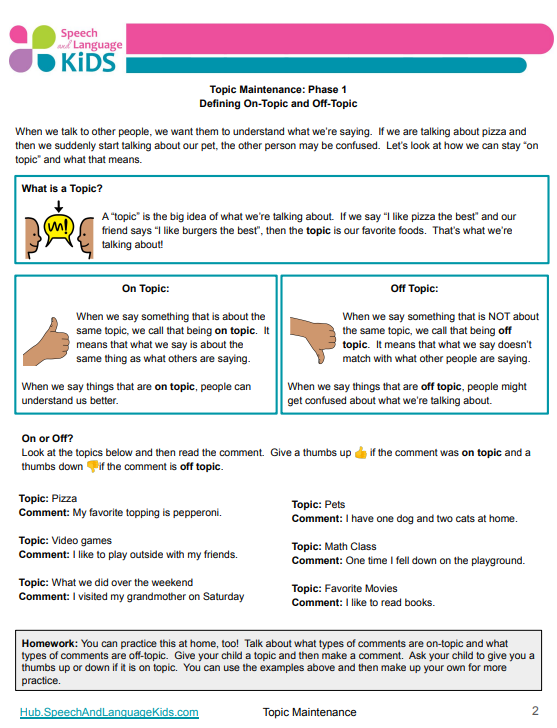
    Social Awareness and Interaction Curriculum for Social Skills Therapy

    Beginner Level:

    Building Social Awareness
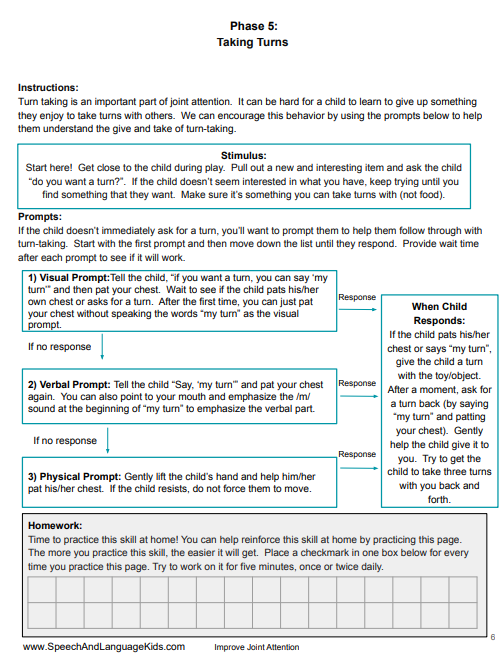
    (Ages 1-2 yrs and beyond)

    • Responding when Name is Called
    • Sharing Joint Attention
    • Basic Turn-Taking
    • Early Social Routines and Games

    Intermediate Level:

    Strengthening Social Engagement
    (Ages 3-6 yrs and beyond)

    • Topic Maintenance and Providing Relevant Information
    • Understanding Proximity/Personal Space

    Advanced Level:

    Perspective-Taking and Social Understanding
    (Ages 4-10 yrs and beyond)

    • Understanding that Others may have Different Perspectives and Feelings
    • Using Perspective Taking to Understand Others
    • Using Perspective Taking to Resolve Conflicts and Misunderstandings

    * Age ranges represent when children typically master these skills. However, this program can help older children/teens with these skills as well.

    Try the Social Awareness and Interaction Curriculum Free for 7 Days

    Instant access. No risk. Cancel anytime.

    Emotional Regulation and Self-Advocacy Curriculum:

    What is it? A neurodiversity-affirming, developmentally layered program that helps children and teens build emotional regulation and self-advocacy skills — starting with replacing challenging behaviors with communication (for younger children), then progressing to self-calming, proactive coping, and self advocacy (for older children and teens).

    Who is it for?
    Children and teens who…

    • Have trouble self-calming when upset
    • Have trouble managing highs and lows in mood and behavior
    • Resort to challenging/unexpected behaviors when struggling with social interactions, such as being aggressive or saying hurtful things
    • Have trouble speaking up for what they need or taking action to get their needs met

    How does it work?
    This Curriculum is broken down into three levels:
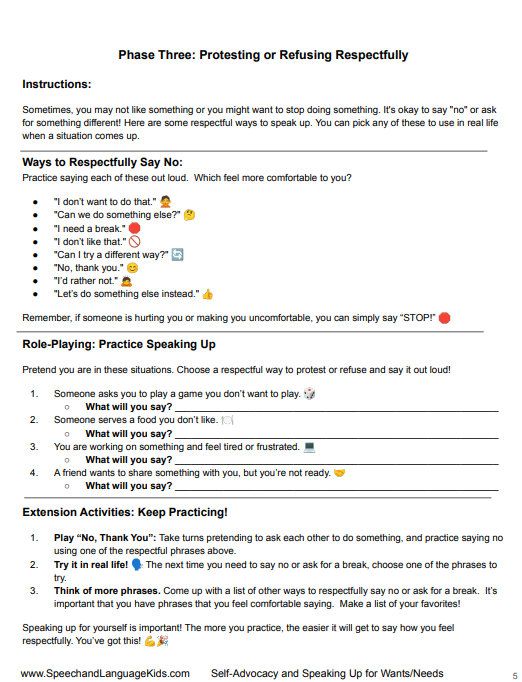
    Emotional Regulation and Self-Advocacy Curriculum

    Beginner Level:

    Replacing Challenging Behaviors with Communication
    (Ages 3-7 yrs and beyond)

    • Replacing Challenging Behaviors with Communication

    Intermediate Level:

    Emotional Understanding and Self-Calming
    (Ages 5-10 yrs and beyond)

    • Regulating Emotions and Self-Calming

    Advanced Level:

    Self-Advocacy and Proactive Regulation
    (Ages 5-12 yrs and beyond)

    • Self-Advocacy and Speaking Up for What you Want/Need

    * Age ranges represent when children typically master these skills. However, this program can help older children/teens with these skills as well.

    Try the Emotional Regulation and Self-Advocacy Curriculum Free for 7 Days

    Instant access. No risk. Cancel anytime.

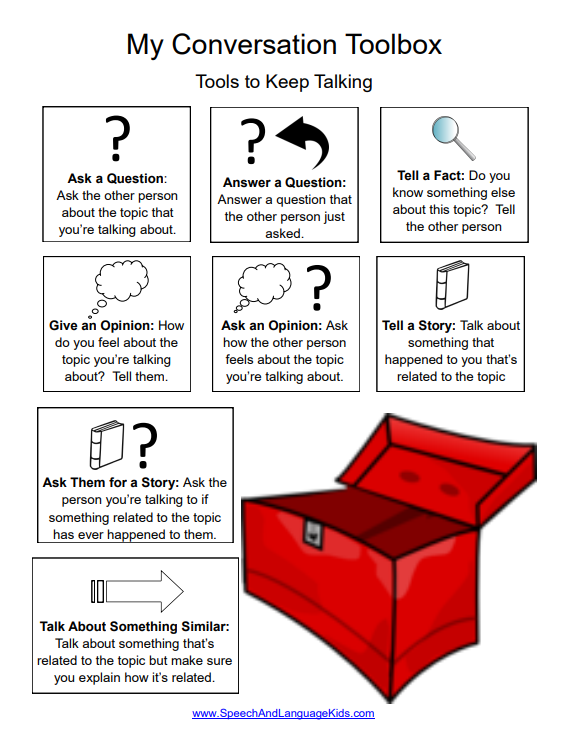
    Conversational Skills Curriculum:

    What is it? A systematic, ready-to-use program that makes it easy to teach conversational skills — providing a clear framework and pre-made materials to help children and teens build confidence and success in real conversations.

    Who is it for?
    Children and teens who…

    • Struggle with initiating interactions with others
    • Struggle with topic maintenance or providing relevant information during conversations
    • Don’t always speak up for what they want or need
    • Have trouble continuing an interaction through responding, commenting, asking questions, etc.
    • Have trouble repairing a conversation when it breaks down (such as if the other person is confused)
    • Have trouble navigating disagreements with others

    How does it work?
    This Curriculum is broken down into three levels:
    Emotional Regulation and Self-Advocacy Curriculum

    Beginner Level:

    Initiating and Responding in Conversations
    (Ages 4-6 yrs and beyond)

    • Initiating Interactions with Others
    • Responding to Others

    Intermediate Level:

    Maintaining Conversations and Topic Management
    (Ages 5-11 yrs and beyond)

    • Continuing/Maintaining an Interaction
    • Topic Maintenance and Providing Relevant Information

    Advanced Level:

    Navigating Complex Conversations
    (Ages 6-12 yrs and beyond)

    • Repairing Communication Breakdowns
    • Navigating Disagreements with Others
    • Self-Advocacy and Speaking Up for What you Want/Need
    • Code Switching

    * Age ranges represent when children typically master these skills. However, this program can help older children/teens with these skills as well.

    Try the Conversational Skills Curriculum Free for 7 Days

    Instant access. No risk. Cancel anytime.

    Abstract Language Curriculum:

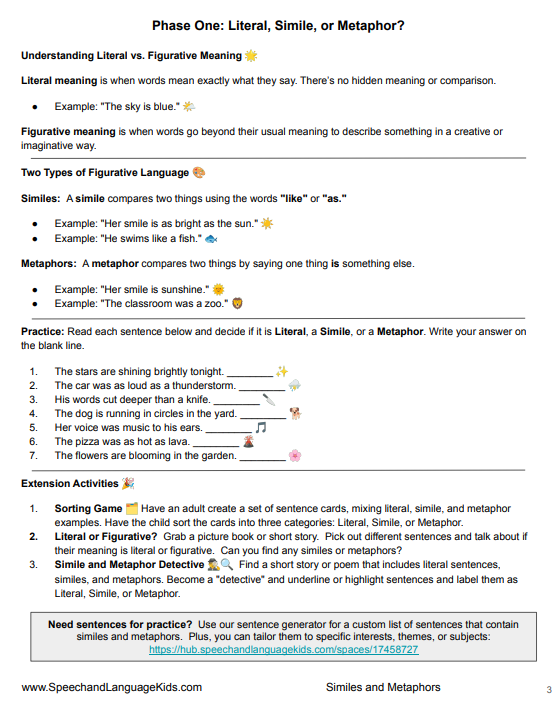
    What is it? A structured, low-prep program that helps children and teens understand and use abstract language in social contexts — building the skills to interpret figurative meanings, humor, and nuance so they can connect and communicate more naturally with others.

    Who is it for?
    Children and teens who…

    • Struggle with figurative language (idioms, sarcasm, similes, metaphors, etc.)
    • Struggle with making inferences

    How does it work?
    This Curriculum is broken down into three levels:
    Abstract Language curriculum for Speech/Language Therapy

    Beginner Level:

    Literal vs. Nonliteral Language
    (Ages 5-7 yrs and beyond)

    • Identify literal vs. nonliteral language

    Intermediate Level:

    Figurative Language
    (Ages 6-10 yrs and beyond)

    • Idioms and Figures of Speech
    • Similes and Metaphors

    Advanced Level:

    Inferencing and Social Nuance
    (Ages 7-12 yrs and beyond)

    • Inferencing in Text and Social Inferencing
    • Understanding Sarcasm and Irony

    * Age ranges represent when children typically master these skills. However, this program can help older children/teens with these skills as well.

    Try the Abstract Language Curriculum Free for 7 Days

    Instant access. No risk. Cancel anytime.

    Selective Mutism Curriculum:

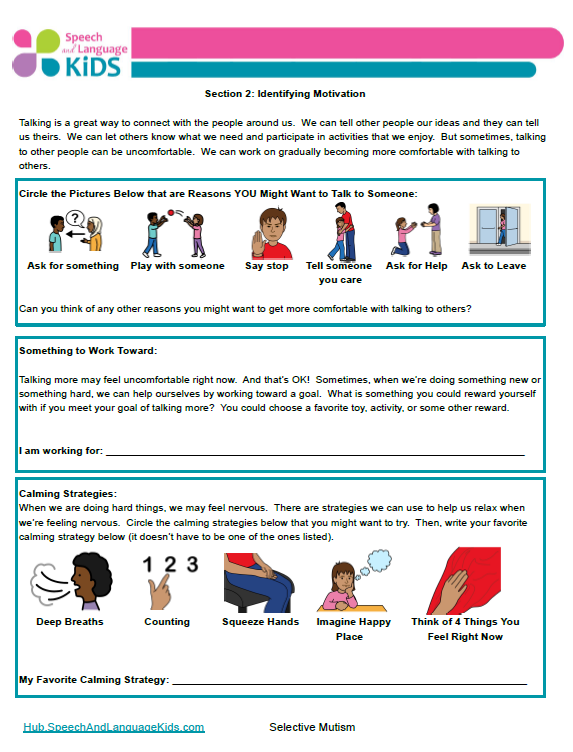
    What is it? A structured, evidence-based program that helps therapists and teams confidently support children with selective mutism — providing clear guidance for creating supportive environments, fostering motivation, and gradually increasing speech across settings.

    Who is it for?
    Children and teens who…

    • Will speak in some situations with some people but not in others (For example, will speak at home but not at school or in public)
    • Show anxiety about speaking or social interactions

    How does it work?
    This Curriculum is broken down into three levels:
    Selective Mutism Curriculum for Social Skill Therapy

    Beginner Level:

    Modifying the Environment for Communication Success
    (Ages 3 yrs and beyond)

    • Increasing Predictability in their Day
    • Increasing their Sense of Control
    • Increasing Independence and Confidence

    Intermediate Level:

    Establishing Motivation for Speech and Calming Strategies
    (Ages 3 yrs and beyond)

    • Identifying Internal Motivators for Speech
    • Self-Calming Strategies

    Advanced Level:

    Increasing Communication Success
    (Ages 3 yrs and beyond)

    • Increasing Verbal Communication for Children with Selective Mutism

    * Age ranges represent when children typically master these skills. However, this program can help older children/teens with these skills as well.

    Try the Selective Mutism Curriculum Free for 7 Days

    Instant access. No risk. Cancel anytime.

    You Don’t Have to Do This Alone.

    Every child’s communication journey is unique — but you don’t have to reinvent the wheel for each one.

    Our Speech Sound Curriculums are just the beginning. Inside the SLK Curriculum, you’ll find comprehensive therapy plans for every major area of communication:

    • Language (vocabulary, grammar, comprehension, etc.)
    • Speech sound pronunciation
    • Social communication and pragmatic skills
    • Fluency and stuttering
    • Voice and resonance
    • Functional Communication

    Each curriculum walks you through the therapy process step-by-step — from first session to mastery — so you can spend less time planning and more time helping children and teens succeed.

    confident slp using the SLK Curriculum to Save Hours on Planning Each Week

    Because when you have a clear plan, children make faster progress.

    And when children start communicating clearly and confidently… everything changes.

    Sneak Peek! 👀👇

    Learn More about the Curriculum →

    The post Social Communication Curriculums for Speech Therapy appeared first on Speech And Language Kids.


    Functional Communication Curriculums for Speech Therapy Oct 23, 2025
    Show notes

    Functional Communication Curriculums for Speech Therapy

    A Step-by-Step Plan to Help Children Communicate Their Basic Wants and Needs

    Give children the tools to express themselves — even if they’re just starting to find their voice.

    Our functional communication curriculums guide you through teaching real-world communication skills that help children connect, request, protest, and share with others — in therapy, at home, or in daily routines.

    You’ll have clear, ready-to-use plans that make every session meaningful and progress easy to see.

    ✅ Practical. Evidence-based. Life-changing.

    Functional Communication Curriculums for Speech TherapyPurchase Individual CurriculumsStart your Free Trial to Access the Functional Communication Curriculums →

    Instant access. No risk. Cancel anytime.

    Who’s it For?

    • Children and teens who struggle to take turns or share activities with others

    • Those who struggle to express basic wants and needs

    • Those who repeat things they’ve heard others say or quote shows/videos

    • Those who have trouble following directions and routines

    • Those who use alternative means to communicate with others (behaviors, sign language, pictures, communication devices, etc.)

    Who Can Use It?

    • Speech-Language Pathologists and Professionals

    • Speech Language Therapy Assistants and SLPAs

    • Parents and Caregivers

    • Teachers and Educators

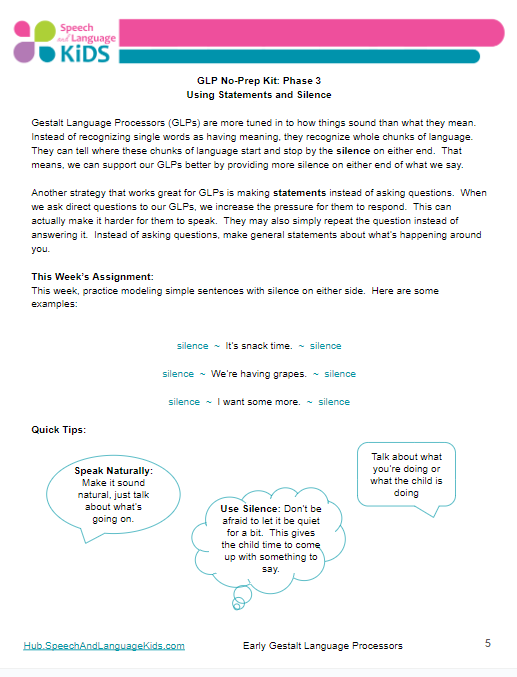
    Choose your Curriculum:

    Early Interactions

    First Words

    Shaping Echolalia
    (For Gestalt Language Processors)

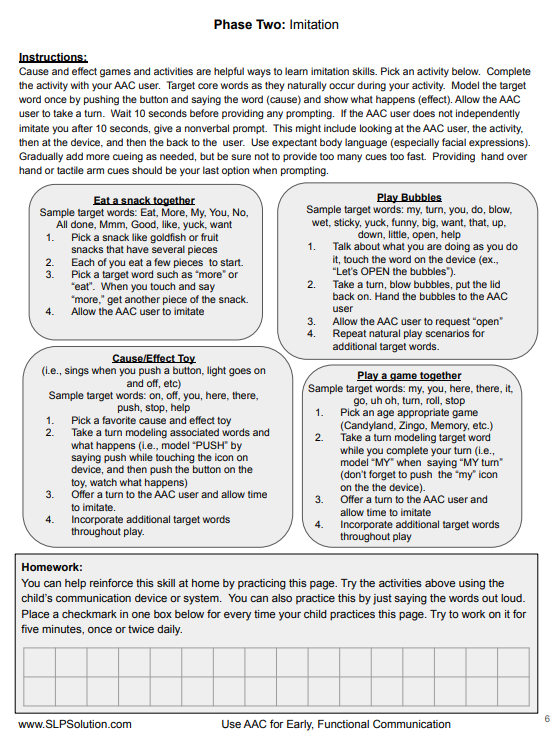
    Augmentative/Alternative Communication (AAC)

    AAC Curriculum for Speech/Language Therapy

    AAC Curriculum and Mini-Course

    Teach a child to start communicating using an AAC/Communication Device or System

    $19 ~ Buy Now!

    Or, Download the Free Sample

    Early Interactions Curriculum:

    What is it? A systematic, step-by-step program for helping children learn to engage and connect with others — providing a clear pathway for building early social interaction skills with confidence.

    Who is it for?
    Children and teens who…

    • Don’t allow others to take turns with them in play
    • Don’t pay attention to others who try to interact with them
    • Don’t respond to others or turn when their name is called
    • Struggle to follow one-step directions
    • Struggle to follow multi-step directions
    • Struggle to follow and participate in familiar routines
    • Struggle to handle new routines or changes in routine
    • Don’t answer simple questions, such as “yes/no” questions or “do you want ____ or ____?”
    • Don’t engage in early social routines, such as peek-a-boo, high fives, or greetings

    How does it work?
    This Curriculum is broken down into three levels:

    Early Interactions Curriculum for Functional Communication

    Beginner Level:

    Building Awareness and Engagement
    (Ages 9-15 mos and beyond)

    • Responding to Name
    • Joint Attention
    • Basic Turn Taking

    Intermediate Level:

    Understanding and Responding to Communication
    (Ages 1-2 yrs and beyond)

    • Following Basic Directions
    • Answering Yes/No Questions
    • Making a Choice Between two Options

    Advanced Level:

    Expanding Social Participation and Interaction
    (Ages 1-3 yrs and beyond)

    • Participating in Early Social Routines
    • Increasing Interaction Length
    • Answering Wh- Questions

    * Age ranges represent when children typically master these skills. However, this program can help older children/teens with these skills as well.

    Try the Early Interactions Curriculum Free for 7 Days

    Instant access. No risk. Cancel anytime.

    First Words Curriculum (For Analytic Language Processors):

    What is it? A systematic, no-prep program for teaching children their first words — giving them the building blocks for functional communication and helping them express their wants, needs, and ideas with confidence.

    Who is it for?
    Children and teens who…

    • Use single words to communicate (e.g., “milk,” “ball,” “go”) rather than long, memorized phrases.
    • Show a gradual buildup of vocabulary, learning one word at a time instead of repeating whole scripts.
    • May attempt to combine words into short phrases as their vocabulary grows (e.g., “want cookie,” “big truck”).
    • Don’t rely on echolalia or repeating scripts to communicate.

    How does it work?
    This Curriculum is broken down into three levels:

    First Words Curriculum for Speech/Language Therapy

    Beginner Level:

    Encouraging First Words
    (Any Age)

    • Modeling language in a way that supports language development
    • Vocabulary-building activities

    Intermediate Level:

    Producing Early Word Shapes
    (Ages 1-3 yrs and beyond)

    • Imitating Actions and Sound Effects
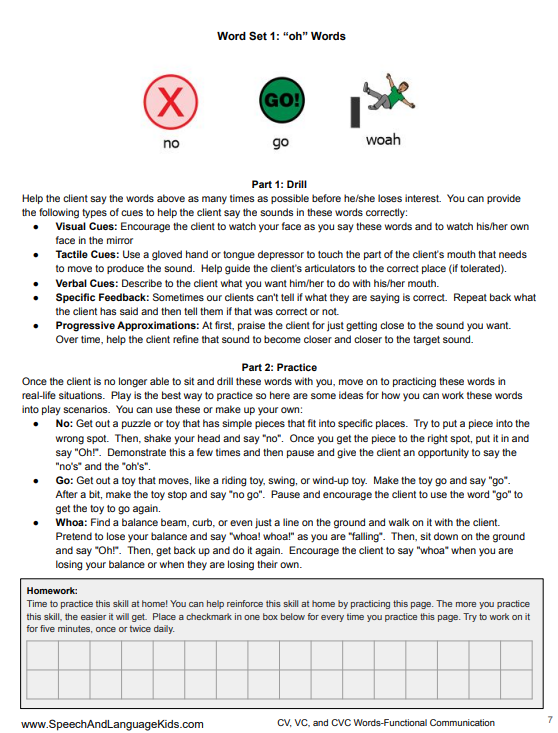
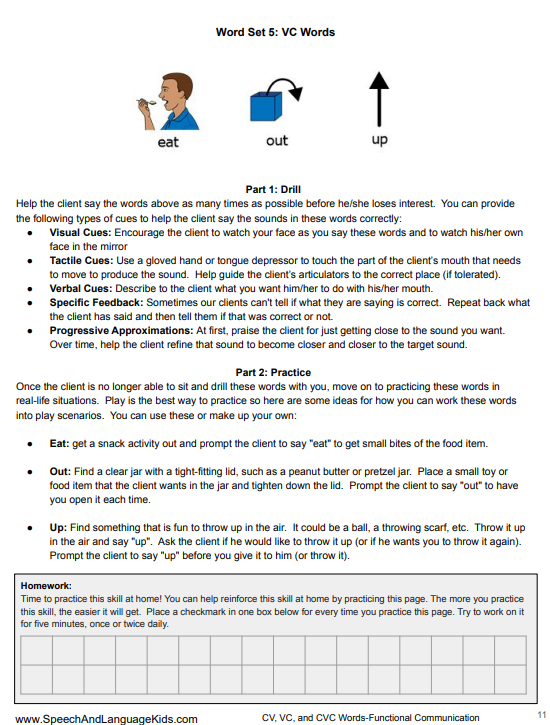
    • Imitating and Producing CV, VC, and CVC Words (like “no”, “up”, and “dog”)

    Advanced Level:

    Expanding Vocabulary and Combining Words
    (Ages 1.5-3 yrs and beyond)

    • Building an Expressive Vocabulary of First 50 Words
    • Producing 2-Word Utterances

    * Age ranges represent when children typically master these skills. However, this program can help older children/teens with these skills as well.

    Try the First Words Curriculum Free for 7 Days

    Instant access. No risk. Cancel anytime.

    Shaping Echolalia Curriculum (For Gestalt Language Processors):

    What is it? A systematic, neurodiversity-affirming program that works with children who use echolalia to communicate — honoring their natural language development process while guiding them toward flexible, self-generated speech.

    Who is it for?
    Children and teens who…

    • Speak in full phrases or scripts they’ve heard before (e.g., from a show or caregiver).
    • Use melodic speech with varying intonation but may have unclear articulation.
    • May sound like they’re “speaking gibberish” with lots of emotion or intonation variability.
    • Repeat phrases the same way every time they say it (e.g., says “Do you want it?” to request something because they’ve heard others say it to them).
    • Love songs, quotes, and categories like numbers, letters, or shapes.
    • Like to play the same way every time or seems to re-enact the same scenes over again.
    • May get upset when others try to change the play or the routine.

    How does it work?
    This Curriculum is broken down into three levels:

    Shaping Echolalia Curriculum for Gestalt Language Processors

    Beginner Level:

    Using Early Gestalts
    (Ages 1.5-3.5 yrs and beyond)

    • Finding meaning in echolalia
    • Modeling gestalts

    Intermediate Level:

    Mitigated Gestalts
    (Ages 2.5-5 yrs and beyond)

    • Breaking Down Gestalts
    • Recombining Pieces of Different Gestalts

    Advanced Level:

    Developing Self-Generated Language
    (Ages 3-7 yrs and beyond)

    • Using Single Words
    • Combining Words Together to Build Longer Utterances

    * Age ranges represent when children typically master these skills. However, this program can help older children/teens with these skills as well.

    Try the Shaping Echolalia Curriculum Free for 7 Days

    Instant access. No risk. Cancel anytime.

    Augmentative/Alternative Communication (AAC) Curriculum:

    What is it? A clear, structured program that gives therapists and parents a clear roadmap for teaching AAC — helping children build functional, independent communication step by step.

    Who is it for?
    Children and teens who…

    • Use gestures/behaviors to express what they want/need
    • Use sign language to express what they want/need
    • Will point to pictures to show what they want/need
    • Can use a communication device or other type of Alternative/Augmentative Communication (AAC) system to express what they want/need
    • Have speech that is very hard to understand and/or are making slow progress toward intelligible speech
    • Get frustrated because speech is not easily understood or seem upset that they aren’t speaking like others

    How does it work?
    This Curriculum is broken down into three levels:

    AAC Curriculum for Speech/Language Therapy

    Beginner Level:

    Using AAC for Basic Communication
    (Ages 2-4 yrs and beyond)

    • Modeling Core Vocabulary Words on an AAC Device/System
    • Using Core Words on an AAC Device/System to Communicate Basic Wants and Needs

    Intermediate Level:

    Expanding AAC Use to Different Communicative Functions
    (Ages 3-5 yrs and beyond)

    • Using AAC to communicate: rejection, recurrence, actions, descriptors, possession, locatives, self-advocacy

    Advanced Level:

    Using AAC for Independent Functional Communication
    (Ages 4-6 yrs and beyond)

    • Using AAC Throughout the Day and Expanding Language Skills with the AAC Device/System

    * Age ranges represent when children typically master these skills. However, this program can help older children/teens with these skills as well.

    Purchase the Beginner AAC Curriculum

    ~ OR ~

    Join the Hub and Get All Curriculums (Free Trial)

    Instant access. No risk. Cancel anytime.

    AAC Curriculum for Speech/Language Therapy

    AAC Curriculum and Mini-Course

    Teach a child to start communicating using an AAC/Communication Device or System

    $19 ~ Buy Now!

    Or, Download the Free Sample

    You Don’t Have to Do This Alone.

    Every child’s communication journey is unique — but you don’t have to reinvent the wheel for each one.

    Our Speech Sound Curriculums are just the beginning. Inside the SLK Curriculum, you’ll find comprehensive therapy plans for every major area of communication:

    • Language (vocabulary, grammar, comprehension, etc.)
    • Speech sound pronunciation
    • Social communication and pragmatic skills
    • Fluency and stuttering
    • Voice and resonance
    • Functional Communication

    Each curriculum walks you through the therapy process step-by-step — from first session to mastery — so you can spend less time planning and more time helping children and teens succeed.

    confident slp using the SLK Curriculum to Save Hours on Planning Each Week

    Because when you have a clear plan, children make faster progress.

    And when children start communicating clearly and confidently… everything changes.

    Sneak Peek! 👀👇

    Learn More about the Curriculum →

    The post Functional Communication Curriculums for Speech Therapy appeared first on Speech And Language Kids.


    Language Curriculums for Speech Therapy Oct 23, 2025
    Show notes

    Language Curriculums for Speech TherapyComprehensive Plans for Boosting Language Skills Stop spending hours hunting for language activities that only partly fit your students’ needs. Our comprehensive language curriculums give you ready-made therapy plans to help children understand others, express themselves clearly, and thrive in every setting—in therapy, at home, or in the classroom. You’ll know exactly what to teach next, without second-guessing your plan. Evidence-based. Organized. Ready to use. Purchase an Individual CurriculumStart a Free Trial and Access All CurriculumsInstant access. No risk. Cancel anytime. Who’s it For? Children and teens who have trouble following directions Those who struggle to ask and answer questions Those who have trouble retelling past events in a way that makes sense Those with grammar/syntax errors Those who struggle with figurative language Those who struggle with reading and writing Those who use vague or imprecise language/words or don’t know what things are called Who Can Use It? Speech-Language Pathologists and Professionals Speech Language Therapy Assistants and SLPAs Parents and Caregivers Teachers and Educators Choose your Curriculum: Following Directions Asking and Answering Questions Sequencing/Retelling Grammar/Syntax Abstract Language Vocabulary Literacy Middle/High School Language Curriculum BundleVocabulary, Syntax, and Literacy for Middle Schoolers and High Schoolers $45 ~ Buy Now!Following Directions Curriculum:What is it? A comprehensive, step-by-step program that helps children strengthen their ability to follow directions — from simple one-step tasks to complex, multi-step instructions — building the attention, comprehension, and confidence they need to succeed in everyday tasks. Who is it for?Children and teens who… Struggle to follow one-step directions Struggle to follow multi-step directions Are easily distracted when following directions How does it work? This Curriculum is broken down into three levels: Beginner Level: Basic Directions(Ages 1-4 yrs and beyond) Following One-Step Routine Directions Following One-Step Novel Directions Following Two-Step Directions (Routine and Novel) Following Directions with Spatial Concepts Intermediate Level: Expanded Directions(Ages 4-7 yrs and beyond) Following 3-Step Directions (Routine and Novel) Following Directions with Temporal Words: Before and After Advanced Level: Functional Directions(Ages 5-8 yrs and beyond) Following Classroom and Academic Instructions Managing Larger, Functional Directions * Age ranges represent when children typically master these skills. However, this program can help older children/teens with these skills as well. Try the Following Directions Curriculum Free for 7 DaysInstant access. No risk. Cancel anytime. Asking and Answering Questions Curriculum:What is it? A ready-to-use, systematic program that saves you hours of prep time with pre-made lessons for every question type — teaching children to ask and answer questions in a clear, structured way that leads to faster success. Who is it for?Children and teens who… Have trouble answering basic wh- questions like “who, what, where,” etc. Have trouble asking questions in a way that makes sense Struggle to answer questions about something they just heard, such as a story being told or information provided How does it work? This Curriculum is broken down into three levels: Beginner Level: Answering Yes/No and Individual “Wh-” Questions(Ages 2-6 yrs and beyond) Yes/No Questions What Questions Who Questions Where Questions When Questions Why Questions How Questions Which Questions Intermediate Level: Asking and Answering Mixed Questions in Conversation(Ages 4-7 yrs and beyond) Asking Questions with Correct Syntax Answering Mixed Questions Answering Questions about Past Events Advanced Level: Using Questions in Classwork and Daily Activities(Ages 5-10 yrs and beyond) Asking and Answering Questions in Academic Work: Asking and Answering Questions for Self-Advocacy Asking and Answering Questions in Conversations with Others * Age ranges represent when children typically master these skills. However, this program can help older children/teens with these skills as well. Try the Asking and Answering Questions Curriculum Free for 7 DaysInstant access. No risk. Cancel anytime. Sequencing/Retelling Curriculum:What is it? A scaffolded, ready-to-use program that makes it easy to teach children how to sequence and retell past events — and even stories — clearly and coherently, helping them build stronger narratives and faster communication progress. Who is it for?Children and teens who… Struggle to retell a past event or story Struggle to retell events in a logical sequence or order Start in the middle when retelling paste events or stories, or don’t provide enough background information How does it work? This Curriculum is broken down into three levels: Beginner Level: Sequencing and Retelling Common Tasks(Ages 4-6 yrs and beyond) Sequencing and Describing Steps to Common Activities Intermediate Level: Retelling Past Events(Ages 4-7 yrs and beyond) Answering Questions about Past Events Sequencing and Retelling Past Events Advanced Level: Using Sequencing and Retelling in Classwork(Ages 5-8 yrs and beyond) Understanding, Retelling, and Producing Narratives Using Temporal Concepts: Before, During, After * Age ranges represent when children typically master these skills. However, this program can help older children/teens with these skills as well. Try the Sequencing and Retelling Curriculum Free for 7 DaysInstant access. No risk. Cancel anytime. Grammar and Syntax Curriculum:What is it? A systematic, results-driven program for teaching grammar and syntax — replacing scattered, one-off lessons with a clear, structured progression that helps children and teens build lasting language skills. Who is it for?Children and teens who… Have syntax grammar errors in their conversational speech Have speech that sounds telegraphic (missing words or grammar so they sound choppy) Use sentences/utterances that are shorter or less complex than others their age How does it work? This Curriculum is broken down into three levels: Beginner Level: Foundational Grammar Skills(Ages 2-5 yrs and beyond) Articles (a, an, the) Present progressive (-ing verbs) Pronouns (he, she, they, it, we, etc.) Plurals (regular and irregular) Past tense (-ed endings, irregular verbs) Auxiliary verbs (is, am, are, was, were, has, have) Possessive forms (‘s) Simple conjunctions (and, but, because) Basic Sentence Structure: Subject + Verb + Object Intermediate Level: Expanding Sentence Complexity(Ages 4-8 yrs and beyond) Compound sentences (and, but, or, so, yet) Complex sentences (because, although, unless, while, after) Matching verb tense to subject (e.g., He runs vs. They run) Comparatives and superlatives (bigger, biggest) Prepositional phrases (“The cat sat under the table.”) Modal verbs for polite requests or hypotheticals (can, could, should, would, might) Advanced Level: Mastering Grammar for Effective Communication(Ages 6-13 yrs and beyond) Correcting sentence fragments and run-ons Expanding, combining, or reducing sentences Active vs. passive voice Relative clauses (“The boy who won the race is my friend.”) Conditional sentences (“If I had studied, I would have passed.”) Parallel sentence structure (“She likes to swim, to bike, and to run.”) Transition words (therefore, however, consequently, in contrast) * Age ranges represent when children typically master these skills. However, this program can help older children/teens with these skills as well. Purchase the Beginner Grammar/Syntax Curriculum~ OR ~ Join the Hub and Access All Curriculums (Free Trial)Instant access. No risk. Cancel anytime. Not ready for a membership yet? Purchase a single Curriculum Early Grammar and Syntax CurriculumEverything you need to teach early grammar and syntax skills to children $19 ~ Buy Now!Abstract Language Curriculum:What is it? A structured, low-prep program that makes it easy to teach abstract language skills systematically — helping children and teens understand and use figurative and nuanced language with clarity and confidence. Who is it for?Children and teens who… Struggle with figurative language (idioms, sarcasm, similes, metaphors, etc.) Struggle with making inferences How does it work? This Curriculum is broken down into three levels: Beginner Level: Literal vs. Nonliteral Language(Ages 5-7 yrs and beyond) Identify literal vs. nonliteral language Intermediate Level: Figurative Language(Ages 6-10 yrs and beyond) Idioms and Figures of Speech Similes and Metaphors Advanced Level: Inferencing and Social Nuance(Ages 7-12 yrs and beyond) Inferencing in Text and Social Inferencing Understanding Sarcasm and Irony * Age ranges represent when children typically master these skills. However, this program can help older children/teens with these skills as well. Try the Abstract Language Curriculum Free for 7 DaysInstant access. No risk. Cancel anytime. Vocabulary Curriculum:What is it? A comprehensive, developmentally layered program that teaches vocabulary the smart way — starting with key words for younger children and progressing to powerful word-learning and word-attack strategies for older students, so they can confidently grow their vocabulary long after therapy ends. Who is it for?Children and teens who… Use vague or imprecise language/words Have trouble following directions that contain unfamiliar words/concepts Don’t know what things are called or struggle to understand words that they read/hear How does it work? This Curriculum is broken down into three levels: Beginner Level: Building a Core Vocabulary(Ages 1-2.5 yrs and beyond) Building a Vocabulary of the First 50 Words Producing 2-Word Combinations Expanding Vocabulary of Nouns Intermediate Level: Increasing Word Knowledge and Usage(Ages 2-6 yrs and beyond) Spatial Concepts Adjectives Comparing and Contrasting Temporal Concepts Quantitative Concepts Advanced Level: Academic Vocabulary and Independent Word Learning(Ages 5-12 yrs and beyond) Understand and Use Multiple Meaning Words Understand and Use Antonyms and Synonyms Using Affixes (Prefixes and Suffixes) and Roots to Decode Unknown Words Other Word Attack and Word Learning Strategies as Appropriate * Age ranges represent when children typically master these skills. However, this program can help older children/teens with these skills as well. Try the Vocabulary Curriculum Free for 7 DaysInstant access. No risk. Cancel anytime. Language Foundations for Literacy Curriculum:What is it? A structured, step-by-step program for building the language foundations that support reading and writing success — giving children the skills they need to understand text, express ideas, and thrive in literacy. Who is it for?Children and teens who… Struggle with phonological awareness skills (like rhyming, alliteration, etc.) Struggle with understanding texts (such as identifying story elements or main idea/details) Struggle to produce their own writings Are not meeting literacy expectations in academic work/school How does it work?This Curriculum is broken down into three levels: Beginner Level: Pre-Literacy Foundations(Ages 2-6 yrs and beyond) Phonological Awareness Print Awareness Basic Story Structure Intermediate Level: Understanding and Using Discourse Structures(Ages 4-9 yrs and beyond) Understanding, Retelling, and Producing Narratives Identifying Main Idea and Detail Understanding, Retelling, and Providing Information Understanding, Retelling, and Stating Opinions Advanced Level: Critical Thinking for Reading and Writing(Ages 5-14 yrs and beyond) Inferencing Making Predictions Understanding abstract language Identifying author’s purpose and perspective Synthesizing information from multiple sources Organizing and Expressing Ideas in Writing * Age ranges represent when children typically master these skills. However, this program can help older children/teens with these skills as well. Try the Language for Literacy Curriculum Free for 7 DaysInstant access. No risk. Cancel anytime. Middle/High School Language Curriculum BundleVocabulary, Syntax, and Literacy for Middle Schoolers and High Schoolers $45 ~ Buy Now!You Don’t Have to Do This Alone.Every child’s communication journey is unique — but you don’t have to reinvent the wheel for each one. Our Speech Sound Curriculums are just the beginning. Inside the SLK Curriculum, you’ll find comprehensive therapy plans for every major area of communication: Language (vocabulary, grammar, comprehension, etc.) Speech sound pronunciation Social communication and pragmatic skills Fluency and stuttering Voice and resonance Functional Communication Each curriculum walks you through the therapy process step-by-step — from first session to mastery — so you can spend less time planning and more time helping children and teens succeed. Because when you have a clear plan, children make faster progress. And when children start communicating clearly and confidently… everything changes. Sneak Peek! Learn More about the Curriculum → The post Language Curriculums for Speech Therapy appeared first on Speech And Language Kids.

    Full show notes at the publisher

    Speech Sound Curriculums for Speech Therapy Oct 23, 2025
    Show notes

    Speech Sound Curriculums for Speech Therapy

    Step-by-Step Plans to Help Children Speak Clearly and Confidently

    Stop piecing together random articulation activities. Our comprehensive speech sound curriculums give you ready-to-use therapy plans that make it easy to improve speech clarity—in therapy, at home, or in the classroom.

    Save time, reduce planning stress, and start seeing faster progress in your students or clients.

    ✅ Designed by SLPs. Evidence-based. Easy to follow.

    Speech Sound Curriculums for Speech Therapy and Sound ClarityPurchase and Individual CurriculumStart your Free Trial to Access All Speech Sound Curriculums →

    Instant access. No risk. Cancel anytime.

    Who’s it For?

    • Children and teens who are difficult to understand

    • Those with distortions on certain sounds like /r/

    • Those who mumble or slur their speech

    • Those with motor speech conditions such as apraxia

    Who Can Use It?

    • Speech-Language Pathologists and Professionals

    • Speech Language Therapy Assistants and SLPAs

    • Parents and Caregivers

    • Teachers and Educators

    Choose your Curriculum:

    Articulation

    Phonology

    Motor Speech

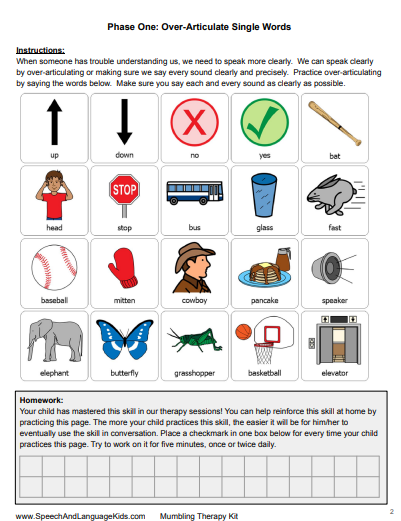
    Mumbling

    The Hardest Sounds: /r/, /s/, and “sh”

    Therapy Program + Mini-Course:
    Strategies and materials for teaching the /r/, /s/, and “sh” sounds

    $19 ~ Buy Now!

    Articulation Curriculum:

    What is it? A complete, step-by-step curriculum that takes the guesswork out of articulation therapy — helping you save hours of prep time while guiding kids to faster, lasting progress.

    Who is it for?
    Children and teens who…

    • Say specific sounds incorrectly
    • Say some sounds with distortions or differences
    • Don’t say sounds correctly that are expected for their age

    How Does it Work?

    This Curriculum is broken down into three levels:

    articulation curriculum for speech therapy

    Beginner Level:

    Early-Developing Sounds
    (Ages 2-3 yrs and beyond)

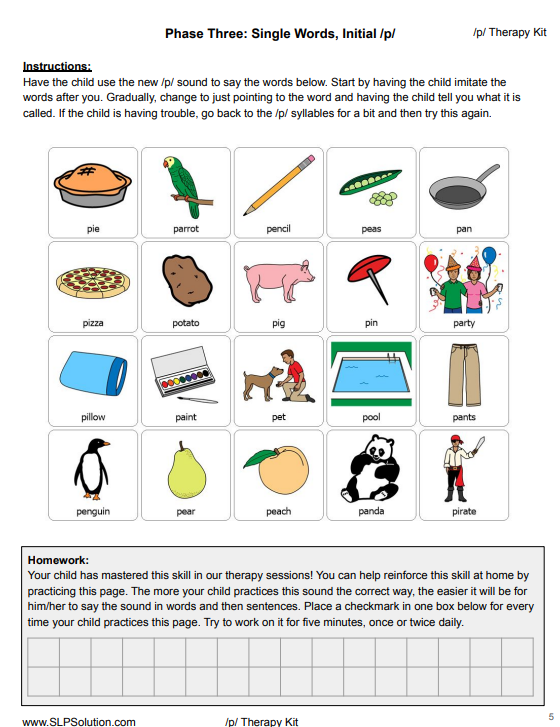
    • Producing the following sounds: /b, n, m, p, h, w, d/ and vowels

    Intermediate Level:

    Mid-Developing Sounds
    (Ages 3-4 yrs and beyond)

    • Producing the following sounds: /ɡ, k, f, t, ŋ (“ng”), “y”/

    Advanced Level:

    Later-Developing Sounds and Clusters
    (Ages 4-7 yrs and beyond)

    • Producing the following sounds: /v, ʤ (“j”), s, ʧ (“ch”), l, ʃ (“sh”), z, /r/, “th” (voiced and voiceless), ʒ (“zh” as in “measure”) /
    • Producing Consonant Clusters

    * Age ranges represent when children typically master these skills. However, this program can help older children/teens with these skills as well.

    Purchase the Curriculums for /r/, /s/, and “sh”

    ~ OR ~

    Join The Hub to Access Curriculums for Every Sound (Free Trial)

    Instant access. No risk. Cancel anytime.

    The Hardest Sounds: /r/, /s/, and “sh”

    Therapy Program + Mini-Course:
    Strategies and materials for teaching the /r/, /s/, and “sh” sounds

    $19 ~ Buy Now!

    Phonology Curriculum:

    What is it? An easy-to-follow system for teaching phonology skills to children and teens ~ includes all therapy materials along with training and support.

    Who is it for?
    Children and teens who…

    • Leave off sounds at certain positions of the word (beginning, middle, or end)
    • Have trouble with whole classes of sounds, like long sounds (fricatives) or ones made in a particular place in the mouth (back sounds like /k/ and /g/)
    • Can say certain sounds in some positions/words but not others
      (ex: can say at the beginning of a word but not at the end)

    How Does it Work?

    This Curriculum is broken down into three levels:

    Phonology Curriculum for Speech Therapy

    Beginner Level:

    Early Phonological Processes
    (Ages 3-4 yrs and beyond)

    • Initial Consonant Deletion (e.g., “at” for “cat”)
    • Final Consonant Deletion (e.g., “do” for “dog”)
    • Unstressed Syllable Deletion (e.g., “nana” for “banana”)

    Intermediate Level:

    Mid-Developing Phonological Processes
    (Ages 4-5 yrs and beyond)

    • Velar Fronting (e.g., “tat” for “cat”)
    • Backing (e.g., “gog” for “dog”)
    • Stopping of Fricatives (e.g., “toap” for “soap”)
    • Cluster Reduction (e.g., “poon” for “spoon”)

    Advanced Level:

    Later-Developing Phonological Processes
    (Ages 4-7 yrs and beyond)

    • Gliding (e.g., “wabbit” for “rabbit”)
    • Prevocalic Voicing (e.g., “big” for “pig”)
    • Postvocalic Devoicing (e.g., “pick” for “pig”)

    * Age ranges represent when children typically master these skills. However, this program can help older children/teens with these skills as well.

    Purchase the Beginner Phonology Curriculum

    ~ OR ~

    Join the Hub to Access Curriculums for Every Phonological Process (Free Trial)

    Instant access. No risk. Cancel anytime.

    Early Phonology Curriculum - final consonant deletion, initial consonant deletion, unstressed syllable deletion

    Early Phonology Curriculum Bundle

    Initial Consonant Deletion, Final Consonant Deletion, Unstressed Syllable Deletion

    $19 ~ Buy Now!

    Motor Speech Curriculum:

    What is it? A guided therapy framework that takes the mystery out of treating motor speech disorders, giving you clear steps to help kids move from frustration to confident communication.

    Who is it for?
    Children and teens who…

    • Have speech sound errors are inconsistent
    • Have more trouble with sounds in longer words
    • Seem to physically struggle to get the sounds out
    • Sound robotic/choppy
    • Struggle with drooling or excessive saliva buildup

    How Does it Work?

    This Curriculum is broken down into three levels:

    Motor Speech Curriculum for Speech Therapy

    Beginner Level:

    CV, VC, CVC Words
    (Ages 1-3 yrs and beyond)

    • Produce consonant-vowel (CV), vowel-consonant (VC) and consonant-vowel-consonant (CVC) words

    Intermediate Level:

    Expanded Word Structures and Utterance Length
    (Ages 1.5-4 yrs and beyond)

    • Produce Expanded Word Structures, such as CVCV, CCVC, etc.
    • Produce 2-Word Utterances

    Advanced Level:

    Coordination and Connected Speech
    (Ages 3-7 yrs and beyond)

    • Improving oral proprioception and coordination for speech
    • Producing multi-syllabic words
    • Improving prosody (pitch, volume, rate)

    * Age ranges represent when children typically master these skills. However, this program can help older children/teens with these skills as well.

    Purchase the Curriculum for CV, VC, CVC Words

    ~ OR ~

    Get Access to All Curriculums with a Free Trial

    Instant access. No risk. Cancel anytime.

    Free CV, VC, CVC, CVCV Flashcards and Worksheets

    Free Flashcards: CV, VC, CVC, CVCV Words

    Practice cards and worksheets for children with Apraxia and other motor speech disorders

    Download for Free!

    Or, Get the Full Motor Speech Curriculum

    Mumbling Curriculum:

    What is it? A structured, confidence-building program that helps children and teens who mumble learn to project their voice, articulate with intention, and communicate with confidence in any setting.

    Who is it for?
    Children and teens who…

    • Mumble or slur their speech
    • Speak too quickly
    • Speak too quietly
    • Can say sounds correctly in single words but intelligibility reduces in conversational speech

    How does it work?

    This Curriculum is broken down into three levels:

    Mumbling Curriculum for Speech Therapy

    Beginner Level:

    Over-Articulation in Structured Tasks
    (Ages 3-5 yrs and beyond)

    • Overarticulate in Single Words
    • Overarticulate in Phrases
    • Overarticulate in Sentences

    Intermediate Level:

    Speaking Clearly in Structured Conversation
    (Ages 5-7 yrs and beyond)

    • Overarticulate in Structured Conversation
    • Overarticulate conversational speech when prompted

    Advanced Level:

    Self-Correcting in Conversation
    (Ages 7-10 yrs and beyond)

    • Identify signs of a communication breakdown
    • Overarticulate during communication breakdown

    * Age ranges represent when children typically master these skills. However, this program can help older children/teens with these skills as well.

    Try the Mumbling Curriculum Free for 7 Days

    Instant access. No risk. Cancel anytime.

    You Don’t Have to Do This Alone.

    Every child’s communication journey is unique — but you don’t have to reinvent the wheel for each one.

    Our Speech Sound Curriculums are just the beginning. Inside the SLK Curriculum, you’ll find comprehensive therapy plans for every major area of communication:

    • Language (vocabulary, grammar, comprehension, etc.)
    • Speech sound pronunciation
    • Social communication and pragmatic skills
    • Fluency and stuttering
    • Voice and resonance
    • Functional Communication

    Each curriculum walks you through the therapy process step-by-step — from first session to mastery — so you can spend less time planning and more time helping children and teens succeed.

    confident slp using the SLK Curriculum to Save Hours on Planning Each Week

    Because when you have a clear plan, children make faster progress.

    And when children start communicating clearly and confidently… everything changes.

    Sneak Peek! 👀👇

    Learn More about the Curriculum →

    The post Speech Sound Curriculums for Speech Therapy appeared first on Speech And Language Kids.


    Special Announcement! Jun 03, 2025
    Show notes

    🎙 Special Announcement: Speechie Summer Camp Is Here!

    🏕 This Summer, Get Organized and Have Fun!

    In this special announcement episode of the Speech and Language Kids Podcast, Carrie Clark shares exciting news about what’s happening this summer inside The Hub. If you’re a school-based SLP, SLPA, or SaLT looking to get your systems in place before the school year chaos returns, this one’s for you!

    Listen to the Podcast Here

    You can listen to the full podcast episode below:

    🔥 What You’ll Learn in This Episode:

    • Why now is the best time to get organized for next school year
    • What the new Speechie Summer Camp includes (spoiler: it’s full of camp-themed fun and prizes 🎉)
    • How to participate—even with just a free Hub membership!
    • What to expect from our new Teams Program launching this fall
    • Why getting your whole workplace on one therapy system can transform your outcomes and reduce burnout

    🎯 Highlights:

    • Weekly assignments that walk you through The Way, our step-by-step therapy system
    • Discussion board activities, scavenger hunts, and points-based rewards
    • Chance to win lifetime memberships and other awesome prizes
    • Flexible format: complete activities on your own time (no live calls!)
    • Special invitation to get your whole team covered under a Teams Plan

    💼 New! Join Our Teams Program for 2025-2026

    Is your organization ready to simplify therapy planning and improve outcomes across the board?

    Our SLK Teams Program is designed for schools, clinics, and teletherapy companies that want every SLP, SLPA, or SaLT on the same powerful system. When your team uses our research-backed framework together, you’ll see:

    • Better therapy outcomes
    • Stronger collaboration across colleagues
    • Less burnout and higher retention
    • Increased credibility with parents, administrators, and partners

    ✨ Bonus: Organizations that join the Teams Program also receive exclusive marketing opportunities and recognition in our SLK-Certified Directory.

    📩 Ready to get your team signed up?

    Email carrie@speechandlanguagekids.com today to reserve your spot for the 2025–2026 school year!

    👉 How to Join the Summer Camp:

    1. Go to hub.speechandlanguagekids.com

    2. Sign up for a free membership to access the first 3 weeks of camp
    3. Check your email and the discussion board on June 9th for your first assignment

    🔔 Don’t Miss What’s Coming in August:

    We’re putting a pause on our podcasts and live webinars for the Summer while we run our Summer camp and get ready to launch our Teams Program! We’ll be back with new podcast episodes, live webinars, and a BIG launch of our Teams Program in August—designed to help whole teams of SLPs get better therapy results with less stress.

    The post Special Announcement! appeared first on Speech And Language Kids.


    Announcing: Summer Camps and Teams Program May 26, 2025
    Show notes

    Announcing: Summer Camps and Teams Program

    In this short and exciting update episode, Carrie Clark announces two brand new virtual summer camp experiences inside the Speech and Language Kids Hub—one for parents & caregivers, and one for SLPs and related professionals! Plus, get an exclusive sneak peek at the upcoming SLK Teams Program, designed to support speech teams with tools, training, and marketing benefits.

    Listen to the Podcast Here

    You can listen to the full podcast episode below:

    ☀ Virtual Summer Camps Are Here!

    Two interactive, themed camps—one for parents and one for professionals:

    1. Language Catch-Up Camp (Parents & Caregivers)
      • 💵 $75 ticket includes 1 grade level of the Core Language Program ($99 value)
      • 📆 Runs June to mid-July
      • 🧒 For kids entering K–6th grade with language challenges
      • 🎯 Goal: Help your child catch up on essential oral language skills at home this summer
      • 📬 Weekly emails with lessons + fun “camp” activities
      • 🎁 Prizes, badges, and access to a private camp discussion space
    2. SLP Summer Camp (SLPs, SLPAs, SALTs, etc.)
      • 📆 Launching early July
      • ✏ Get organized for the school year with fun activities
      • 🧠 Training on the SLK Framework, therapy planning, data collection, goals, and space/session organization
      • 🎯 Designed to make next school year smoother and less stressful

    💼 Sneak Peek: SLK Teams Program

    • 🌟 New offering for organizations with multiple SLPs
    • 🎯 Streamlined, systemized therapy approach to improve outcomes
    • 💡 Includes full Hub membership, Core Language Program, team training, consultation, and SLK-Certified directory listing
    • 🏢 Ideal for private practices, school districts, and staffing agencies
    • ✉ Interested orgs can contact Carrie at carrie@speechandlanguagekids.com

    📌 Quick Links Mentioned:

    • 🔗 Join the Hub: hub.speechandlanguagekids.com
    • 🏕 Sign Up for Camp: Visit speechandlanguagekids.com and look for the summer camp banner
    • 📧 Email Carrie: carrie@speechandlanguagekids.com

    Join the Conversation:

    • Want to attend future live podcast recordings or join the discussion board? It’s free to sign up!
    • Already a member? Log in to access the summer camp registration page inside the Hub.

    The post Announcing: Summer Camps and Teams Program appeared first on Speech And Language Kids.


    How to Do Speech Therapy at Home May 19, 2025
    Show notes

    How to Do Speech Therapy at Home

    Do you want to help your child improve their communication skills at home but aren’t sure where to start? Whether you’re on a waiting list for services or just want to boost your child’s progress between sessions, this episode is for you.

    Carrie Clark, SLP and founder of Speech and Language Kids, breaks down exactly how to do speech therapy at home without feeling overwhelmed. She walks you through how to figure out what to work on, how to break it down into bite-sized steps, and how to sneak practice into your daily routine (even with a busy schedule).

    This episode was recorded live inside the SLK Hub, and you’ll hear about how the tools and resources inside the Hub can make this whole process even easier.

    Listen to the Podcast Here

    You can listen to the full podcast episode below:

    Step One: Figure Out What to Work On

    If you’re not sure where to begin, Carrie shares a simple framework to help you narrow down your child’s communication challenges. She explains the six main areas of communication:

    • Speech Sounds
    • Language
    • Social Communication
    • Fluency
    • Voice/Resonance
    • Functional Communication

    Not sure which one fits? Grab the free screening checklist included in the free Hub membership to help you pinpoint where your child needs support:

    👉 hub.speechandlanguagekids.com

    Free Speech/Language Screening Checklist!

    Free Speech and Language Screening ChecklistGet the Free Screener!

    Pick One Skill to Focus On

    Once you’ve identified the general area, it’s time to zoom in on a single skill. Carrie explains how to pick a specific, meaningful skill that will have a big impact—like answering “where” questions or producing the R sound.

    You’ll hear why it’s important to:

    • Choose just one skill to avoid overwhelm
    • Start with the easiest version of the skill
    • Work your way up gradually

    How to Teach a New Skill (Without Overwhelm)

    Carrie explains how to make practice feel easy and doable:

    • Find the version of the skill your child can do
    • Practice that first
    • Then baby step your way up from there

    She also explains how to apply this to both speech and language goals, using real-life examples like:

    • Teaching “where” questions starting with “Where’s your nose?”
    • Teaching R by starting with just the “er” sound

    Inside the full SLK Hub membership, therapy plans are laid out step-by-step for each skill, but Carrie shows how to do this process on your own, too.

    5 Minutes a Day is Enough

    You don’t need hours of therapy time. Carrie recommends:

    • Doing just 5 minutes of focused practice per day
    • Setting a timer to keep it short and motivating
    • Reinforcing the skill in little moments throughout your day (like in the car or during play)

    And yes, it’s okay if it doesn’t go perfectly! Carrie reminds us that working with your own child is way harder than working with anyone else’s. Do what you can, when you can—and take breaks when needed.

    Resources Mentioned

    • Free Hub Membership + Screening Checklist
    • Full Therapy Plans inside the SLK Hub

    Got questions or want support on what to work on at home? Join us in the Hub and post in the discussion board—we’re here to help!

    The post How to Do Speech Therapy at Home appeared first on Speech And Language Kids.


    Teaching Children to Follow Directions May 12, 2025
    Show notes


    Teaching Children to Follow Directions

    Does your child (or student) struggle to follow directions? You’re not alone! In this episode of the Speech and Language Kids Podcast, Carrie Clark, SLP and founder of SpeechAndLanguageKids.com, walks you through how to teach children to follow directions—step-by-step. Whether you’re working with toddlers just starting to understand basic commands or older kids struggling with multi-step instructions, this episode has got you covered.

    You’ll learn practical strategies for teaching one-step, two-step, and even complex multi-step directions, plus how to support kids using play, visuals, repetition, and more. We’ll also dig into why following directions is hard for many children (even those without speech or language delays!) and what you can do to help them succeed.

    Listen to the Podcast Here

    You can listen to the full podcast episode below:

    Why Following Directions is Hard for Kids

    Following directions requires listening, understanding, memory, attention, and execution—sometimes all at once! Carrie explains why even neurotypical kids can struggle and how communication delays, ADHD, or autism can make this even more challenging.

    Beginner Level: Teaching One-Step Directions

    Start here with your toddlers and early learners! Carrie explains how to teach:

    • Routine directions (like “put your shoes on”)
    • Novel directions (like “touch your nose”)
    • How to use play-based therapy, visual cues, gestures, and prompt fading
    • Why giving clear, concrete instructions is critical (no more “take a seat”—say “sit down”!)

    Moving to Two-Step Directions and Spatial Concepts

    Once kids are getting the hang of simple directions, it’s time to build up! Learn how to teach:

    • Two-step routine and novel directions
    • Directions using spatial concepts like “on,” “under,” “next to,” and “in”
    • How to embed these skills into daily routines or classroom settings

    Intermediate Level: Multi-Step and Temporal Directions

    Now we’re stepping it up with:

    • 3- and 4-step directions
    • Temporal concepts like “before” and “after”
    • Tips for older preschoolers and elementary-aged kids who need extra support due to memory, attention, or processing challenges

    Advanced Level: Real-Life, Real-World Directions

    This is where the rubber meets the road. Carrie covers how to help students follow complex directions in:

    • Academic settings (like classroom tasks or worksheets)
    • Daily life (like routines at home)
    • Noisy, distracting environments

    Resources and Tools Mentioned

    • Therapy Pathways and Therapy Plans – Step-by-step guidance on teaching following directions at all levels. Available in the Speech and Language Kids Hub
    • Session Builder Tools (AI-Powered Prompts) – Generate custom one-step, two-step, or three-step directions on any topic.
    • Discussion Boards in the Hub – Ask questions, share challenges, and get feedback from the SLP community. Available on all membership levels.
    • Search the Hub for “Following Directions” to find therapy kits, materials, and more.

    Want to Join the Next Live Podcast?

    This episode was recorded live inside the Speech and Language Kids Hub. Join us in the Hub to attend future live episodes and ask your questions in real-time!

    Learn more and join by clicking here.

    The post Teaching Children to Follow Directions appeared first on Speech And Language Kids.


    1 2 3 10 Next

    Related Podcasts

    Coffee Break French

    1

    Coffee Break French Courses
    EconTalk

    2

    EconTalk Courses
    TED Talks Education

    3

    TED Talks Education Courses
    The Torch: The Great Courses Podcast

    4

    The Torch: The Great Courses Podcast Courses
    LSE: Public lectures and events

    5

    LSE: Public lectures and events Courses
    Homeschool Better Together

    6

    Homeschool Better Together Courses
    footer-logo

    Contact Us

    Toll Free: 844-670-7747

    Links

    • Home
    • Top Charts
    • Networks
    • Apps
    • Independents Podcasts
    • Podcast Advertising
    • Podcast News
    • Contact Us
    • About Us
    • Analytics & Insights

    Stay Connected
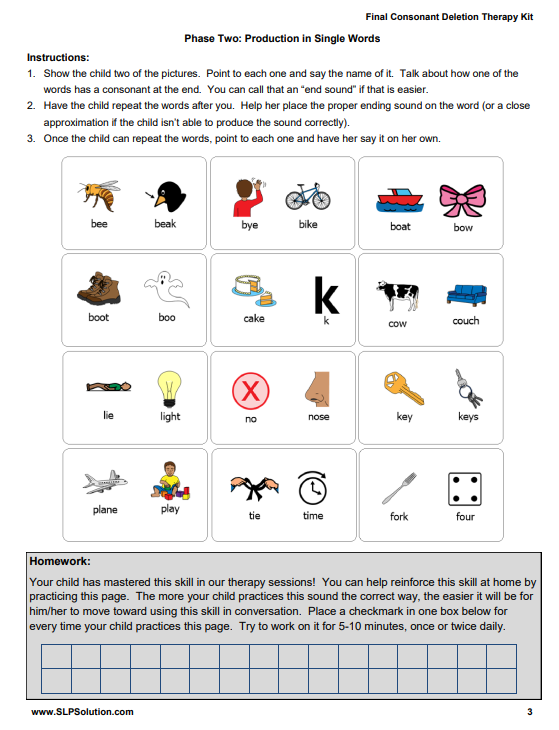
      Privacy, Terms of Use & Our Code of Ethics Protecting Content Creators Copyrights