TopPodcast.com
Menu
  • Home
  • Top Charts
  • Top Networks
  • Top Apps
  • Top Independents
  • Top Podfluencers
  • Top Picks
    • Top Business Podcasts
    • Top True Crime Podcasts
    • Top Finance Podcasts
    • Top Comedy Podcasts
    • Top Music Podcasts
    • Top Womens Podcasts
    • Top Kids Podcasts
    • Top Sports Podcasts
    • Top News Podcasts
    • Top Tech Podcasts
    • Top Crypto Podcasts
    • Top Entrepreneurial Podcasts
    • Top Fantasy Sports Podcasts
    • Top Political Podcasts
    • Top Science Podcasts
    • Top Self Help Podcasts
    • Top Sports Betting Podcasts
    • Top Stocks Podcasts
  • Podcast News
  • About Us
  • Podcast Advertising
  • Contact
Not in our directory?
Add Show Here
Podcast Equipment
Center

toppodcastlogoOur TOPPODCAST Picks

  • Comedy
  • Crypto
  • Sports
  • News
  • Politics
  • True Crime
  • Business
  • Finance

Follow Us

toppodcastlogoStay Connected

    View Top 200 Chart
    Back to Rankings Page
    Natural Science

    Rationally Speaking Podcast

    Rationally Speaking is the bi-weekly podcast of New York City Skeptics. Join host Julia Galef and guests as they explore the borderlands between reason and nonsense, likely from unlikely, and science from pseudoscience. Any topic is fair game as long as we can bring reason to bear upon it, with both a skeptical eye and a good dose of humor!
    We agree with the Marquis de Condorcet, who said that in an open society we ought to devote ourselves to “the tracking down of prejudices in the hiding places where priests, the schools, the government, and all long-established institutions had gathered and protected them.”Rationally Speaking was co-created with Massimo Pigliucci, is produced by Benny Pollak, and is recorded in the heart of New York City’s Greenwich Village.

    Advertise

    Copyright: © Copyright 2020 New York City Skeptics

    • Apple Podcasts
    • Google Play
    • Spotify

    Latest Episodes:
    Rationally Speaking #33 - Live at NECSS: New Dilemmas in Bioethics Apr 24, 2011
    Show notes

    In this one hour episode, recorded live at the 2011 Northeast Conference on Science and Skepticism, Massimo and Julia discuss bioethics with two special guests: Jacob Appel, doctor, author, lawyer and bioethicist; and Jennifer Michael Hecht, poet and historian of science. Topics covered included: Should parents be allowed to select the gender and sexual orientation of their babies? Should pharmacists and physicians be allowed to refuse to provide treatments that violate their own religious or ethical principles? And when is assisted suicide acceptable?


    Rationally Speaking #32 - Value-free Science? Apr 10, 2011
    Show notes

    We all think that science is about objectivity and "just the facts, ma'am." Not so fast, philosophers, historians and sociologists of science have been arguing now for a number of decades.

    To begin with, there are values embedded in the practice of science itself: testability, accuracy, generality, simplicity, and the like. Then there are the many moral dimensions of science practice, both in terms of ethical issues internal to science (fraud) and of the much broader ones affecting society at large (societal consequences of research and technological advances). Then there is the issue of diversity, where until very recently, and in many fields still today, science has largely been an affair conducted by white males. Finally, the issue of which scientific questions we should pursue and, often, fund with public money. And to complicate things further, should scientists consider the societal consequences of their research before deciding to publish?


    Rationally Speaking #31 - Vegetarianism Mar 27, 2011
    Show notes

    Vegetarianism is a complex set of beliefs and practices, spanning from the extreme "fruitarianism," where people only eat fruits and other plant parts that can be gathered without "harming" the plant, to various forms of "flexitaranism," like pollotarianism (poultry is okay to eat) and pescetarianism (fish okay). So, what does science have to say about this? What is the ethical case for vegetarianism? And, is it true that vegetarians are more intelligent than omnivores? Not unexpectedly, the answers are complex, so the debate will rage on.


    Rationally Speaking #30 - Cordelia Fine on Delusions of Gender Mar 13, 2011
    Show notes

    Cordelia Fine joins us from Melbourne, Australia to discuss her book: "Delusions of Gender: The Real Science Behind Sex Differences." Sex discrimination is supposedly a distant memory, yet popular books, magazines and even scientific articles increasingly defend inequalities by citing immutable biological differences between the male and female brain. That's the reason, we're told, that there are so few women in science and engineering and so few men in the laundry room — different brains are just better suited to different things. Drawing on the latest research in developmental psychology, neuroscience, and social psychology, Fine sets out to rebut these claims, showing how old myths, dressed up in new scientific finery, are helping to perpetuate the sexist status quo.

    Cordelia Fine studied Experimental Psychology at Oxford University, followed by an M.Phil in Criminology at Cambridge University. She was awarded a Ph.D in Psychology from University College London. She is currently a Senior Research Associate at the Centre for Agency, Values & Ethics at Macquarie University, and an Honorary Research Fellow at the Department of Psychological Sciences at the University of Melbourne. Her previous book is "A Mind of Its Own: How Your Brain Distorts and Deceives."


    Rationally Speaking #29 - Q&A Live! Feb 27, 2011
    Show notes

    In a continuation of episode 28, Massimo and Julia sit down for a Q&A session in front of a live audience at the Jefferson Market Library in New York City. The audience's questions include whether economics and evolutionary psychology are really science, what's the deal with the placebo effect, the influence of corporate money on scientific research, and how can some scientists publish legitimate research and still believe in pseudo-science. Also, vegetarianism: is it about science, ethics, or both?


    Rationally Speaking #28 - Live! How To Tell Science From Bunk Feb 13, 2011
    Show notes

    Massimo and Julia sit down in front of a live audience at the Jefferson Market Library in New York City for a conversation about science, non-science, and pseudo-science. Based on Massimo's book: "Nonsense on Stilts: How to Tell Science from Bunk" the topics they cover include whether the qualitative sciences are less reliable than quantitative ones, the re-running of the tape of life, and who is smarter: physicists, biologists, or psychologists? Also, why are evolutionary psychologist so fixated on sex?

    The live Q&A follows in episode 29


    Rationally Speaking #27 - The Perihelinox Episode, With Historian Timothy Alborn on Anniversaries Jan 30, 2011
    Show notes

    In honor of our first anniversary we invited Historian Timothy Alborn to help us understand the arbitrary nature of anniversaries, both those that mark events of personal significance and those that have a wider societal impact. We chose to record this episode on a very special "holiday": Perihelinox. If you've never heard of it it's because it was recently made up by our producer, Benny Pollak, to celebrate the night of the year when the earth is closest to the sun. Nothing is sacred in this episode, from Christmas to Kwanza, to Hanukkah, to Royal Jubilees. And, the Sex Pistols?

    Timothy Alborn is a historian and the Dean of Arts and Humanities at the City University of New York—Lehman College (and, incidentally, Massimo's boss). He has a Ph.D. in History of Science from Harvard University. His recent publications include "Regulated Lives: Life Assurance and British Society, 1840-1920" and "Conceiving Companies: Joint-Stock Politics in Victorian England."


    Rationally Speaking #26 - Is Anthropology Still a Science? Jan 16, 2011
    Show notes

    In a recent article in the New York Times, Nicholas Wade reported that the American Anthropological Association had decided "to strip the word 'science' from a statement of its long-range plan." Is this just a reflection of the long standing division between physical and cultural anthropology or is there more here? The revised statement says that "the purposes of the association shall be to advance public understanding of humankind in all its aspects," a wording that opens the possibility for cultural anthropologists to engage in public advocacy on behalf of cultures they are studying. So, what kind of discipline is anthropology, after all? And, more broadly, should scientists cross the line from research into public advocacy?


    Rationally Speaking #25 - Q&A With Massimo and Julia Jan 02, 2011
    Show notes

    Massimo and Julia answer listeners' questions, as they try to stay away from politics. In this installment the topics include: is quantitative research more scientific than qualitative one, can philosophers really claim to have expertise on something, is skepticism just another name for intelligence, what about feminist philosophy, bayesian reasoning, and what are M&J's anti-akracia strategies?


    Rationally Speaking #24 - Memetics! Dec 19, 2010
    Show notes

    The term meme was introduced by Richard Dawkins in his 1976 bestseller "The Selfish Gene."Dawkins was trying to establish the idea that Darwinian evolution is a universal, almost logically necessary phenomenon. He couldn't, however, point to exobiological examples to reinforce the concept of universal Darwinism, so he turned to cultural evolution, renamed "ideas" as "memes" (in direct analogy with genes), and voilà, the field of memetics was born.

    Despite staunch support by authors such as Susan Blackmore and Daniel Dennett, among others though, serious questions can be raised about memes and memetics as a viable concept and field of inquiry. To begin with, how is this different from classical studies of gene-culture co-evolution? Second, what, exactly are memes, i.e. what is their ontological status? Third, how do memes compete with each other, and for what resources? Is it even possible to build a functional ecology of memes, without which the statement that the most fit memes are those that spread becomes an empty tautology? Could this explain why the "Journal of Memetics" closed shop, or is it that they discovered everything there was to discover about memes?


    Previous 1 22 23 24 25 26 27 Next

    Related Podcasts

    Radiolab

    1

    Radiolab Documentary
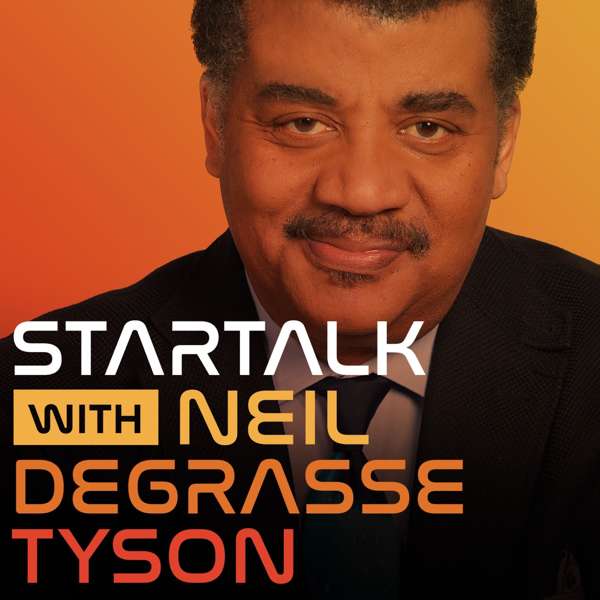
    StarTalk with Neil deGrasse Tyson

    2

    StarTalk with Neil deGrasse Tyson Natural Science
    footer-logo

    Contact Us

    Toll Free: 844-670-7747

    Links

    • Home
    • Top Charts
    • Networks
    • Apps
    • Independents Podcasts
    • Podcast Advertising
    • Podcast News
    • Contact Us
    • About Us
    • Analytics & Insights

    Stay Connected

      Privacy, Terms of Use & Our Code of Ethics Protecting Content Creators Copyrights