TopPodcast.com
Menu
  • Home
  • Top Charts
  • Top Networks
  • Top Apps
  • Top Independents
  • Top Podfluencers
  • Top Picks
    • Top Business Podcasts
    • Top True Crime Podcasts
    • Top Finance Podcasts
    • Top Comedy Podcasts
    • Top Music Podcasts
    • Top Womens Podcasts
    • Top Kids Podcasts
    • Top Sports Podcasts
    • Top News Podcasts
    • Top Tech Podcasts
    • Top Crypto Podcasts
    • Top Entrepreneurial Podcasts
    • Top Fantasy Sports Podcasts
    • Top Political Podcasts
    • Top Science Podcasts
    • Top Self Help Podcasts
    • Top Sports Betting Podcasts
    • Top Stocks Podcasts
  • Podcast News
  • About Us
  • Podcast Advertising
  • Contact
Not in our directory?
Add Show Here
Podcast Equipment
Center

toppodcastlogoOur TOPPODCAST Picks

  • Comedy
  • Crypto
  • Sports
  • News
  • Politics
  • True Crime
  • Business
  • Finance

Follow Us

toppodcastlogoStay Connected

    View Top 200 Chart
    Back to Rankings Page
    Natural Science

    Rationally Speaking Podcast

    Rationally Speaking is the bi-weekly podcast of New York City Skeptics. Join host Julia Galef and guests as they explore the borderlands between reason and nonsense, likely from unlikely, and science from pseudoscience. Any topic is fair game as long as we can bring reason to bear upon it, with both a skeptical eye and a good dose of humor!
    We agree with the Marquis de Condorcet, who said that in an open society we ought to devote ourselves to “the tracking down of prejudices in the hiding places where priests, the schools, the government, and all long-established institutions had gathered and protected them.”Rationally Speaking was co-created with Massimo Pigliucci, is produced by Benny Pollak, and is recorded in the heart of New York City’s Greenwich Village.

    Advertise

    Copyright: © Copyright 2020 New York City Skeptics

    • Apple Podcasts
    • Google Play
    • Spotify

    Latest Episodes:
    Rationally Speaking #63 - Consilience: The Unity of Knowledge Jun 17, 2012
    Show notes

    Will all knowledge eventually be united? And what does that even mean, anyway? In this episode of Rationally Speaking, Massimo and Julia explore the topic of consilience, or the "unity of knowledge," a concept popularized by biologist and theorizer E. O. Wilson. Along the way they discuss whether all phenomena can be explained in terms of physics, the importance of precise language, and the seductive dangers of the "deepity."


    Rationally Speaking #62 - Patricia Churchland on What Neuroscience Tells Us About Morality Jun 04, 2012
    Show notes

    The Rationally Speaking podcast is proud to feature another certified genius: Patricia Churchland, a philosopher well known for her contributions to neurophilosophy and the philosophy of the mind, was professor at the University of California San Diego from 1984-2010, and won the MacArthur Genius Grant in 1991. In this episode, she, Massimo, and Julia discuss what philosophy has to say about neuroscience, what neuroscience has to say about philosophy, and what both of them have to say about morality.


    Rationally Speaking #61 - Willpower May 20, 2012
    Show notes

    This episode of Rationally Speaking is all about the age-old problem of willpower: why don't we do what we know is best for us? Massimo introduces some of the early philosophical approaches to this puzzle, and then Massimo and Julia go over more recent scientific research on the issue (for example: does resisting temptation deplete your reserves of willpower, or does it strengthen your willpower "muscle"?). They also examine possible solutions to the problem, including betting and precommitment, and online programs that can help.


    Rationally Speaking #60 - Q&A With Massimo and Julia May 06, 2012
    Show notes

    Massimo and Julia answer listeners' questions. In this installment the topics include: how much do works of fiction affect people's rationality, Bayesian vs. frequentist statistics, what is evidence, how much blame do people deserve when their actions increase the chance of them being targeted, time travel, and whether a philosophically examined life is a better life. Also, all about rationality in the movies, from Dr. Who to Scooby-Doo.


    Rationally Speaking #59 - Live at NECSS: David Kyle Johnson on the Simulation Argument Apr 25, 2012
    Show notes

    In this special live episode recorded at the 2012 Northeast Conference on Science and Skepticism, Massimo and Julia discuss the "simulation argument" -- the case that it's roughly 20% likely that we live in a computer simulation -- and the surprising implications that argument has for religion. Their guest is philosopher David Kyle Johnson, who is professor of philosophy at King's College and author of the blog "Plato on Pop" for Psychology Today, and who hosts his own podcast at philosophyandpopculture.com. Elaborating on an article he recently published in the journal Philo, Johnson lays out the simulation argument and his own insight into how it might solve the age-old Problem of Evil (i.e., "How is it possible that an all-powerful, all-knowing, and good God could allow evil to occur in the world?"). As usual, Massimo and Julia have plenty of questions and comments!


    Rationally Speaking #58 - Intuition Apr 08, 2012
    Show notes

    When your intuition tells you something, should you listen? That depends! Relying on intuition can be anything from a highly effective strategy used by experts, to an excuse not to require evidence for your beliefs. In this episode, Massimo and Julia talk about what people mean by "intuition," where our intuitions come from, and when intuition can beat careful reasoning.


    Rationally Speaking #57 - Peer Review Mar 25, 2012
    Show notes

    If you value scientific evidence you're probably familiar with the idea that having "peer-reviewed" studies is crucial to the legitimacy of any new claim. But what does "peer-reviewed" entail, anyway? In this episode, Massimo and Julia open up the black box of peer review, explaining how the process originated, how it works, and what's wrong with it. They also try brainstorming ways it could be fixed, and ask: how is the Internet changing the way we do research?


    Rationally Speaking #56 - Howard Schneider on Science News Literacy Mar 11, 2012
    Show notes

    M & J discuss science communication with Howard Schneider, dean of the school of journalism at SUNY Stonybrook and former editor of Newsday. A guest at previous skeptic events, including the first annual Northeast Conference on Science and Skepticism, Schneider has argued in the past that skeptics lay too much blame at the feet of the media for public misunderstandings and misconceptions about science. Julia and Massimo question him on this point, and ask him for his thoughts on what *can* be done to improve scientific literacy. As the founder of the Center for News Literacy and the Center for Communicating Science, Schneider has plenty of thoughts to share -- including making scientists take improv classes. Should science communication involve more storytelling? And is there any way to take advantage of new, online media formats to remedy some of the weak points in the science communication process?


    Rationally Speaking #55 - Spirituality Feb 27, 2012
    Show notes

    Is "rational spirituality" a contradiction? In this episode, Massimo and Julia try to pin down what people mean when they call themselves "spiritual," what inspires spiritual experiences and attitudes, and whether spirituality can be compatible with a naturalist view of the world. Are there benefits that skeptics and other secular people could possibly get from incorporating some variants on traditional spiritual practices -- like prayer, ritual, song, communal worship, and so on -- into their own lives? Massimo and Julia examine a variety of attempts to do so, and ask: how well have such attempts worked, and do they come with any potential pitfalls for our rationality?


    Rationally Speaking #54 - The 'isms' Episode Feb 12, 2012
    Show notes

    n this episode Massimo and Julia ask, "Is the fundamental nature of the world knowable by science alone?", looking at the issue through the lenses of a series of related philosophical positions: determinism, reductionism, physicalism, and naturalism. All of those "isms" take a stance on the question of whether there are objectively "correct" ways to interpret scientific facts -- like physical laws, or causality -- and if so, how do we decide what the correct interpretation is? Along the way, Massimo and Julia debate the nature of emergent properties, whether math is discovered or invented, and whether it's even logically possible for "supernatural" things to exist.


    Previous 1 19 20 21 22 23 27 Next

    Related Podcasts

    Radiolab

    1

    Radiolab Documentary
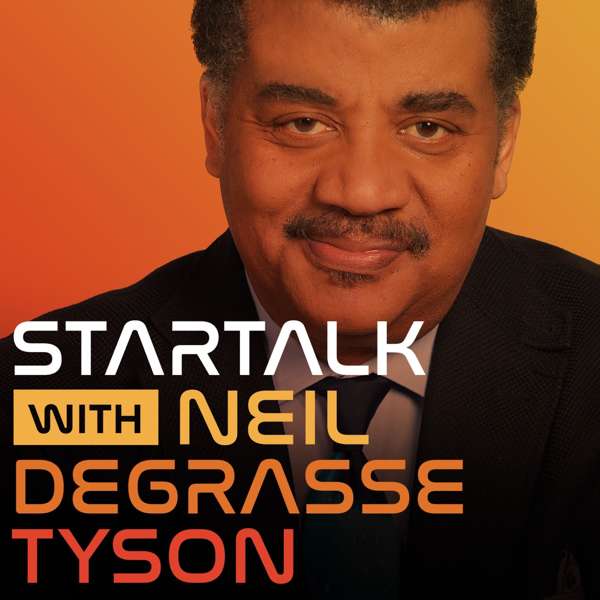
    StarTalk with Neil deGrasse Tyson

    2

    StarTalk with Neil deGrasse Tyson Natural Science
    footer-logo

    Contact Us

    Toll Free: 844-670-7747

    Links

    • Home
    • Top Charts
    • Networks
    • Apps
    • Independents Podcasts
    • Podcast Advertising
    • Podcast News
    • Contact Us
    • About Us
    • Analytics & Insights

    Stay Connected

      Privacy, Terms of Use & Our Code of Ethics Protecting Content Creators Copyrights